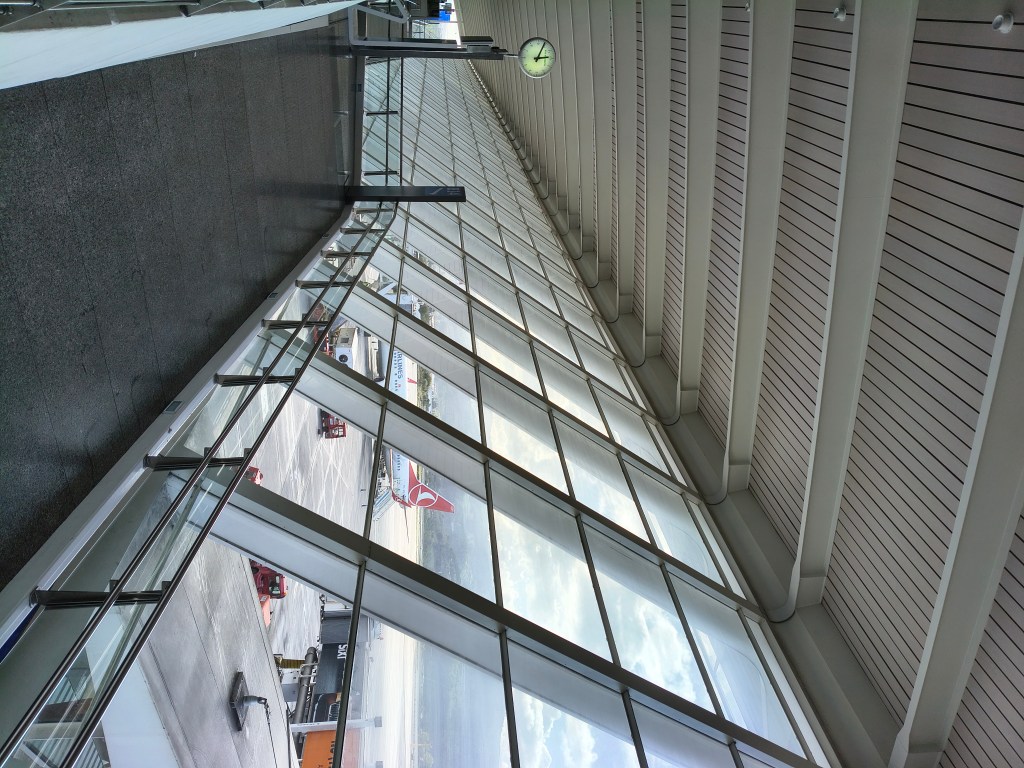
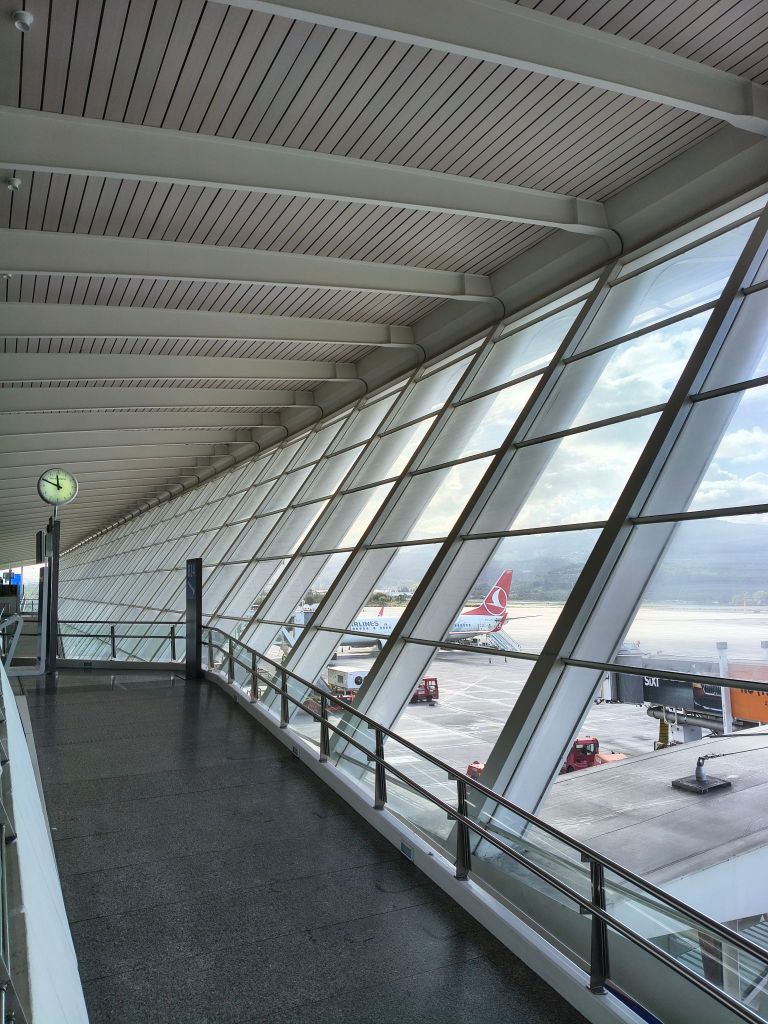
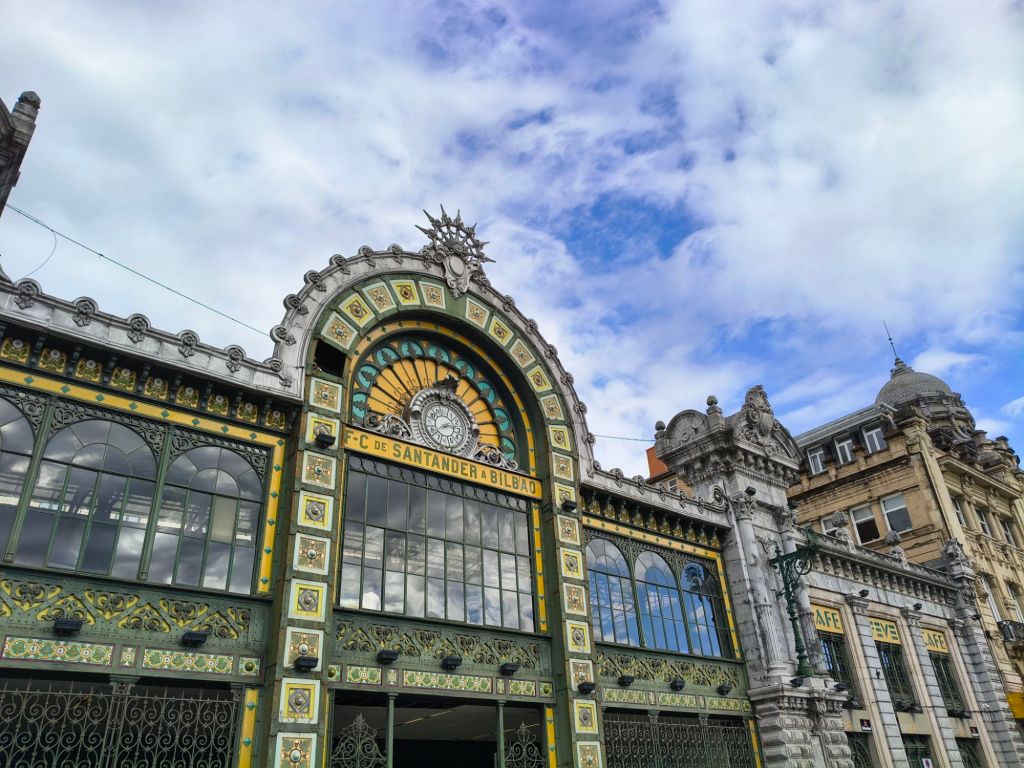
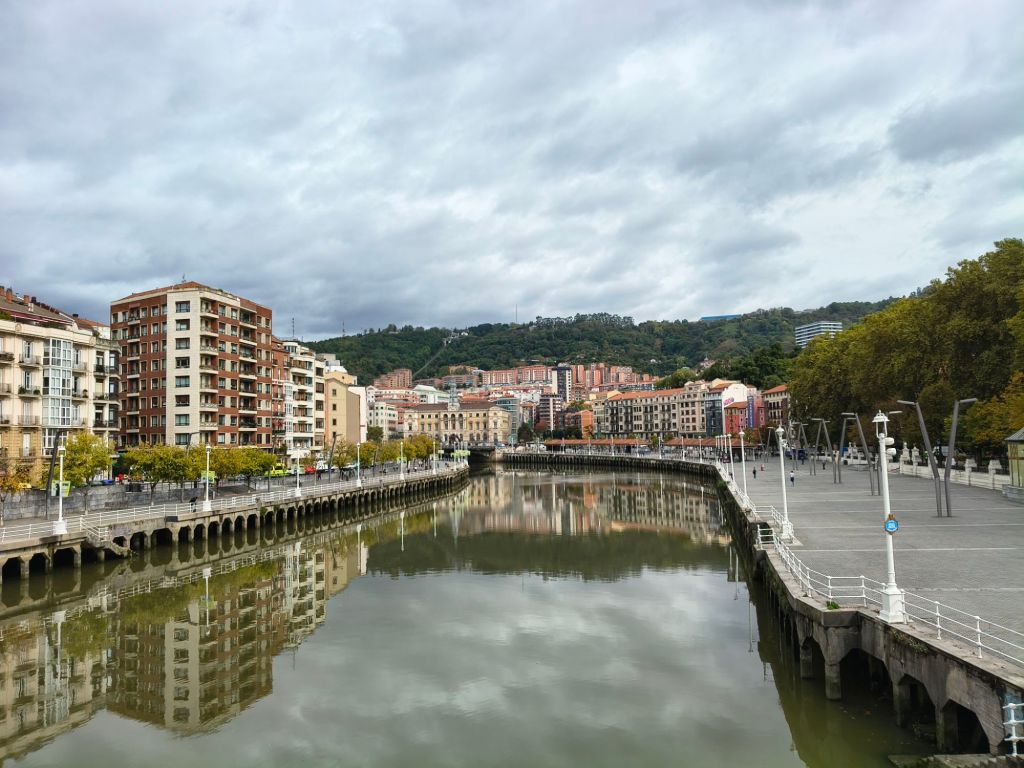
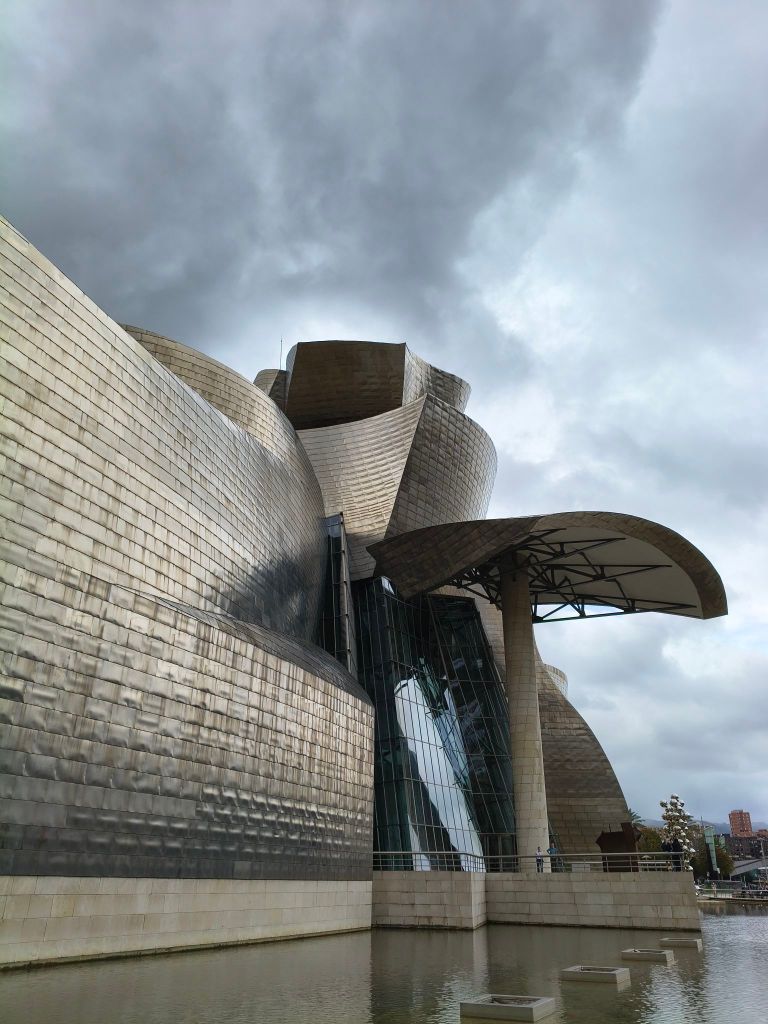
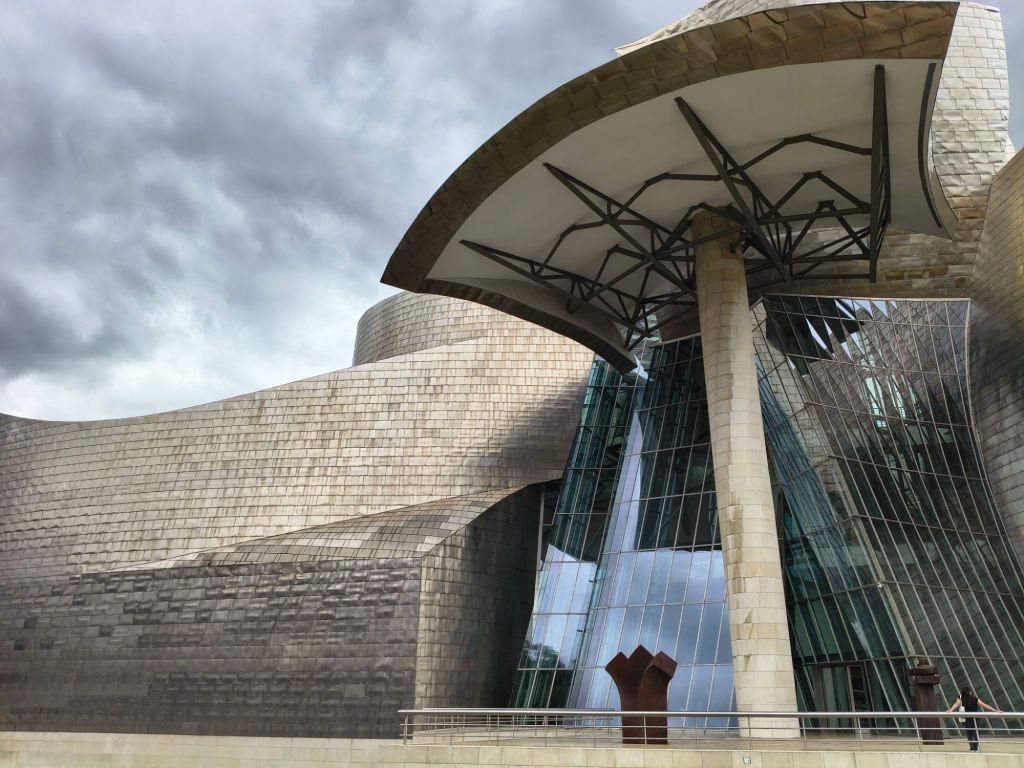
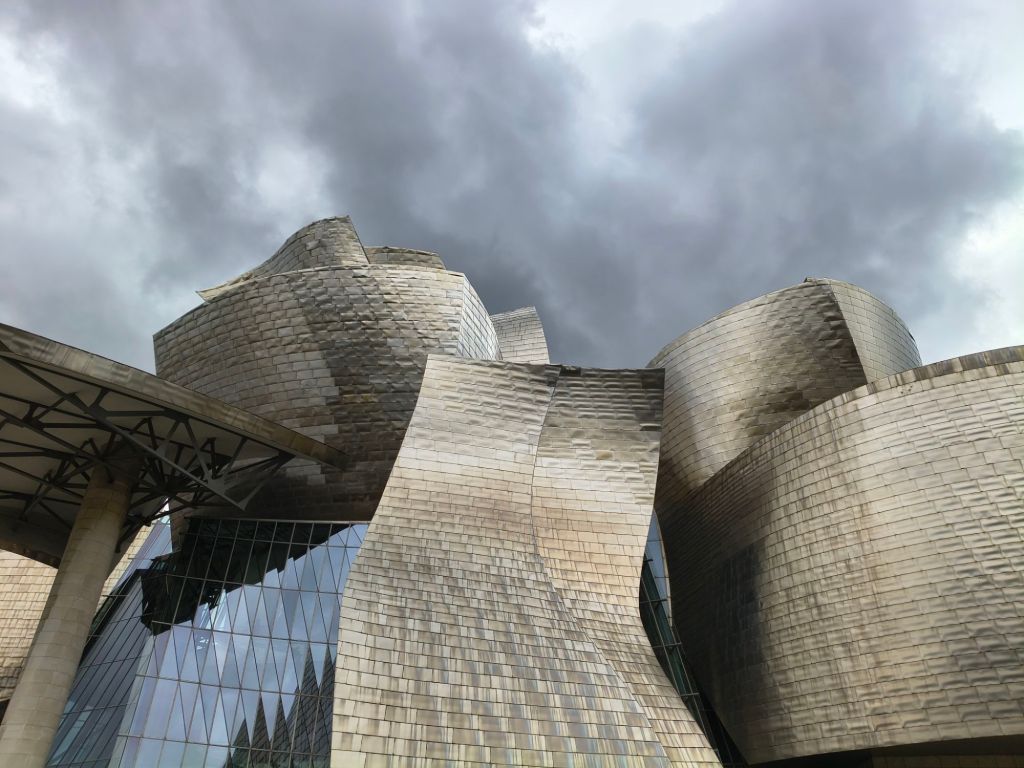
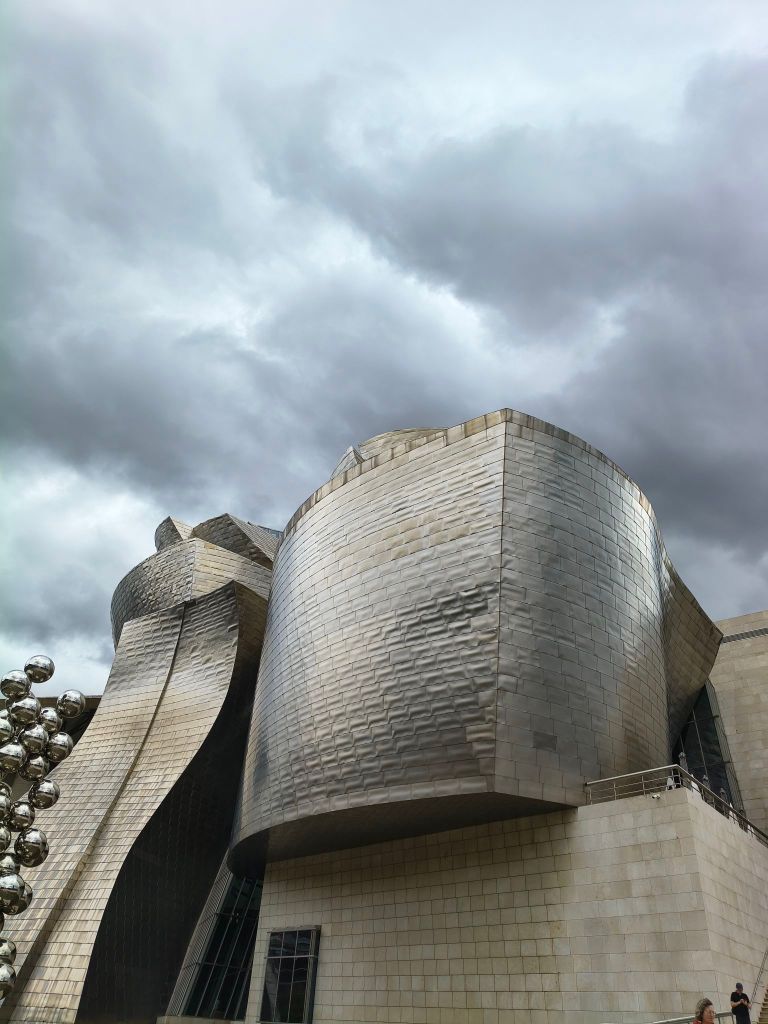
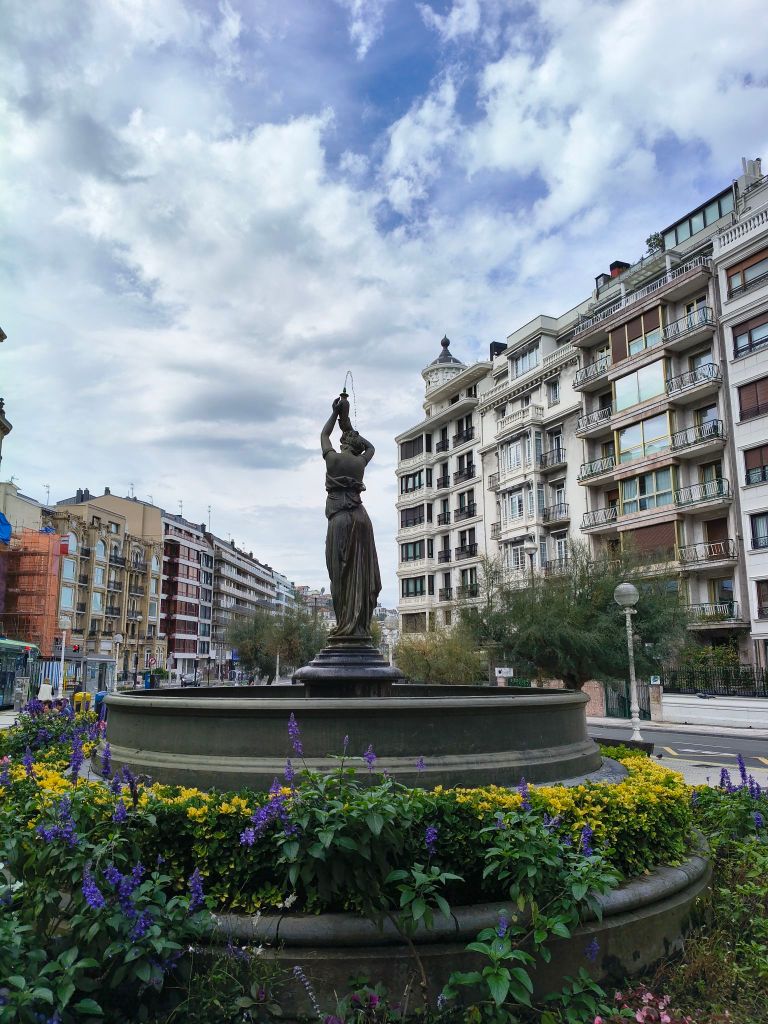
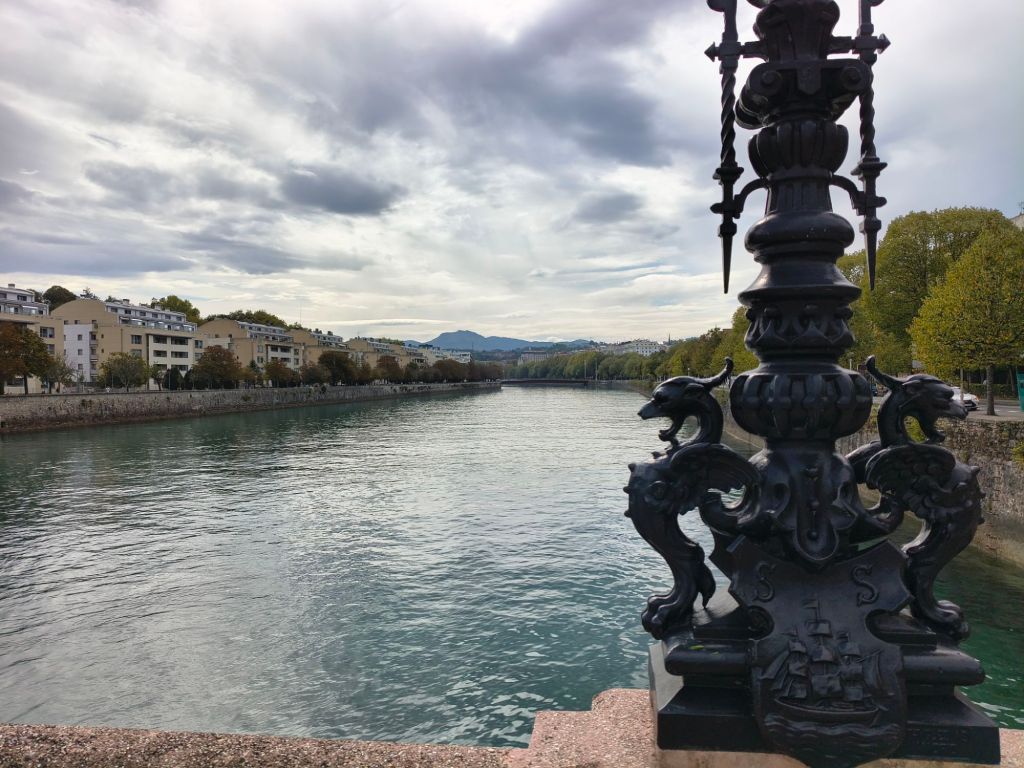
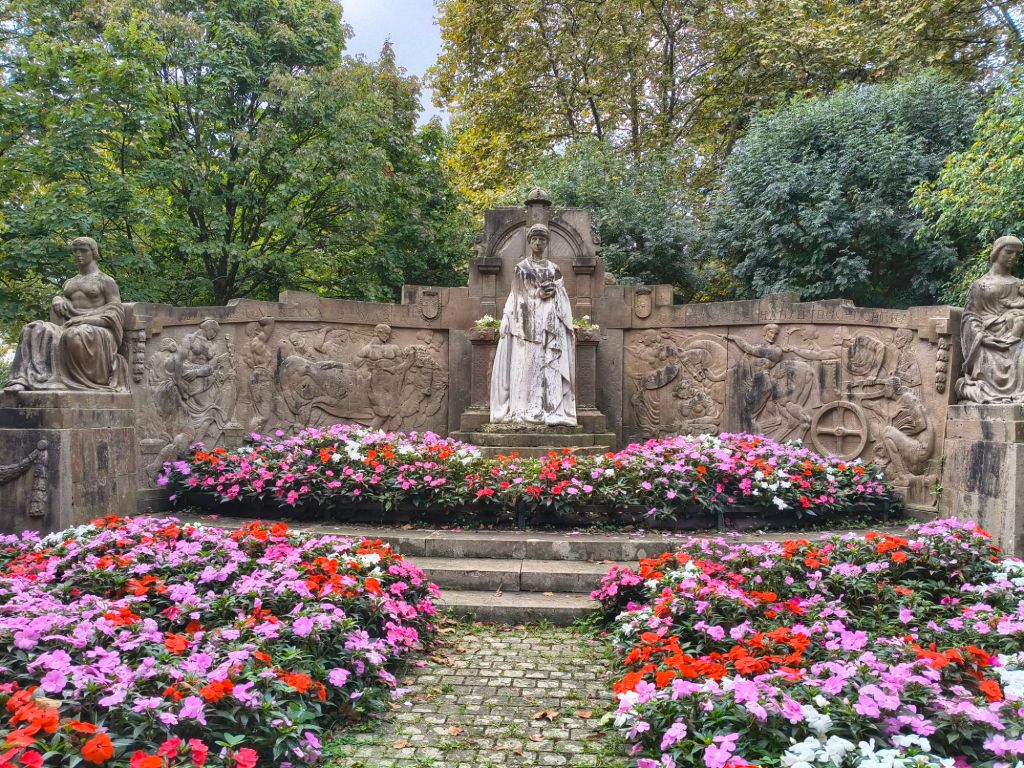
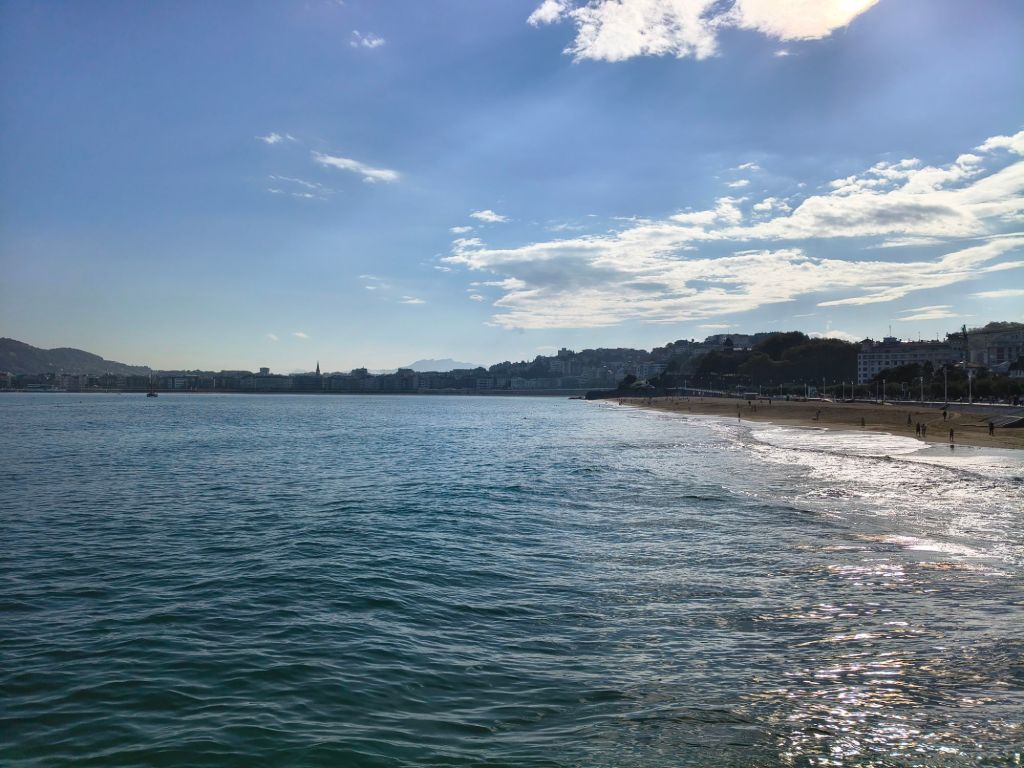
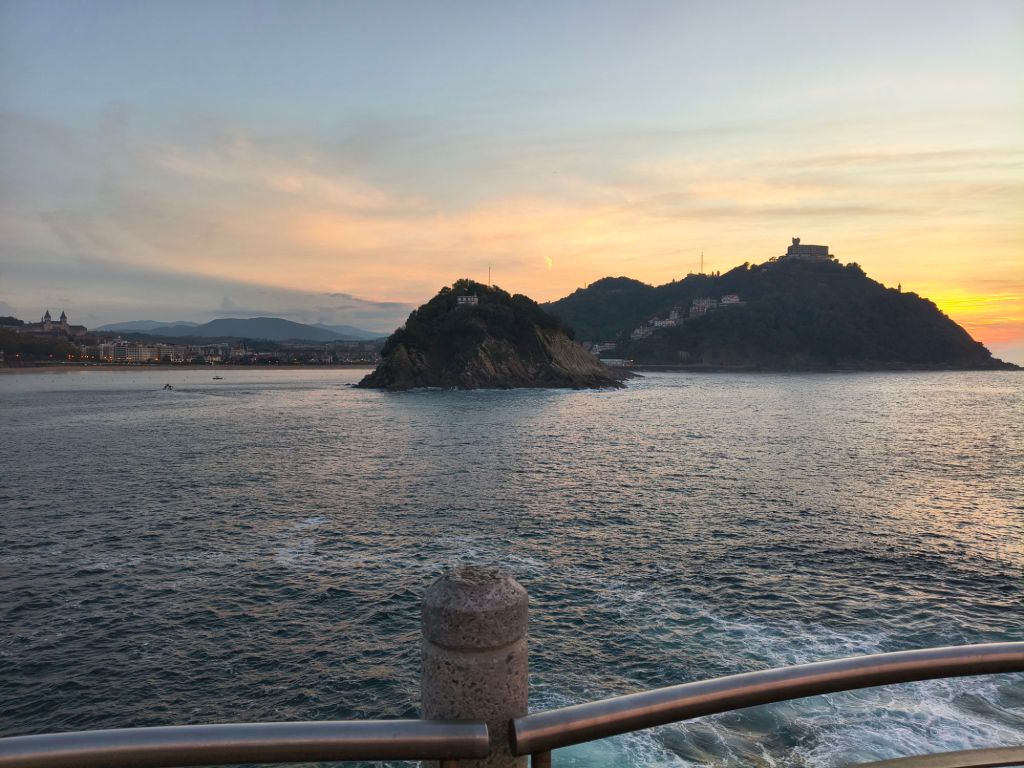
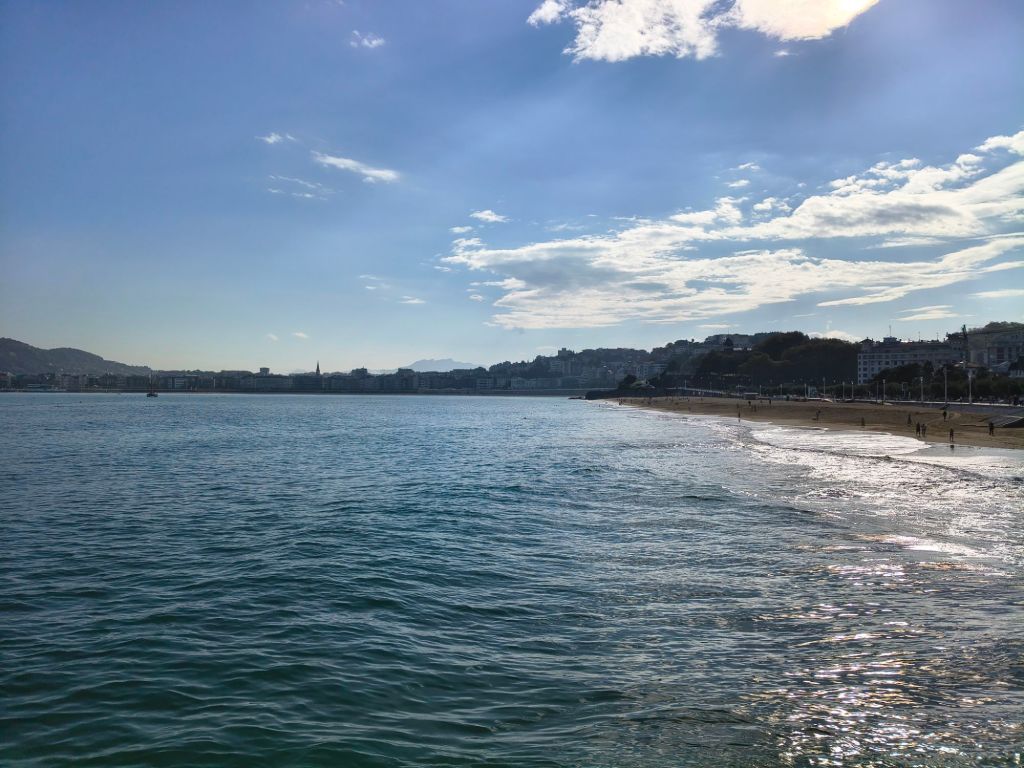
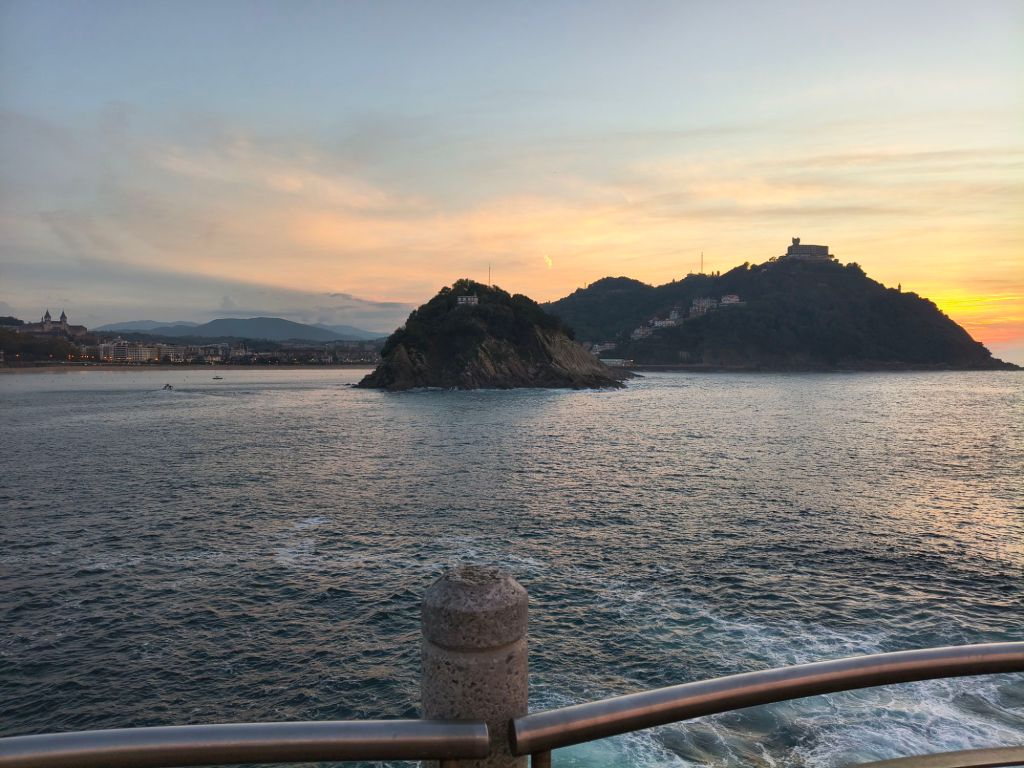
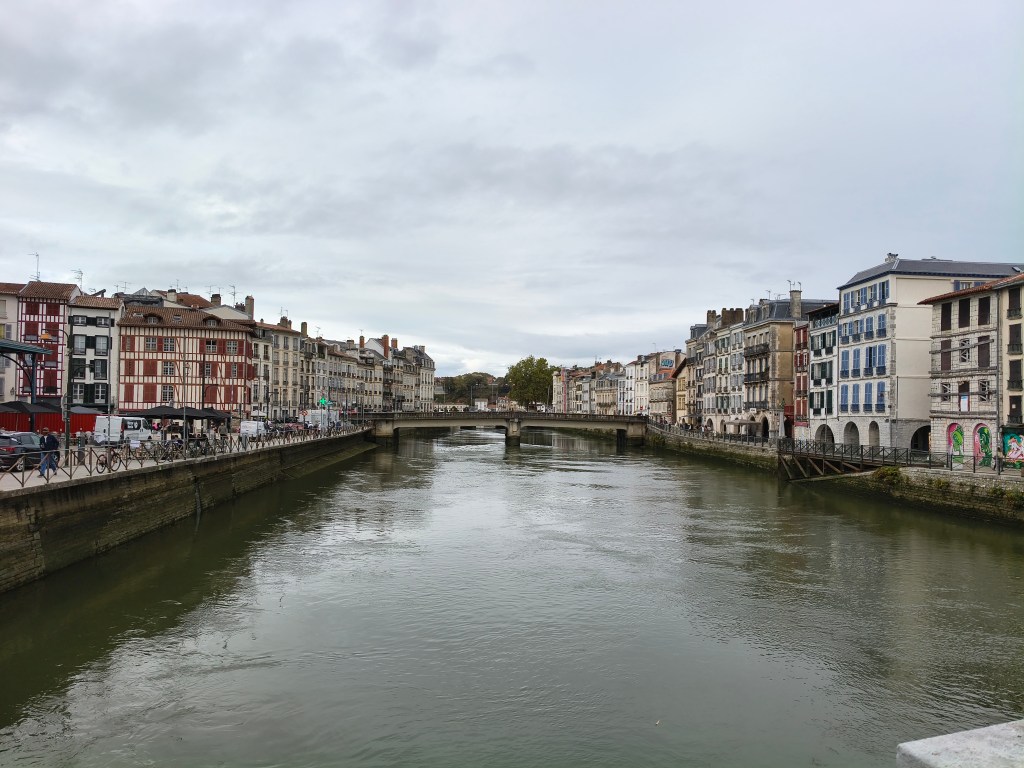
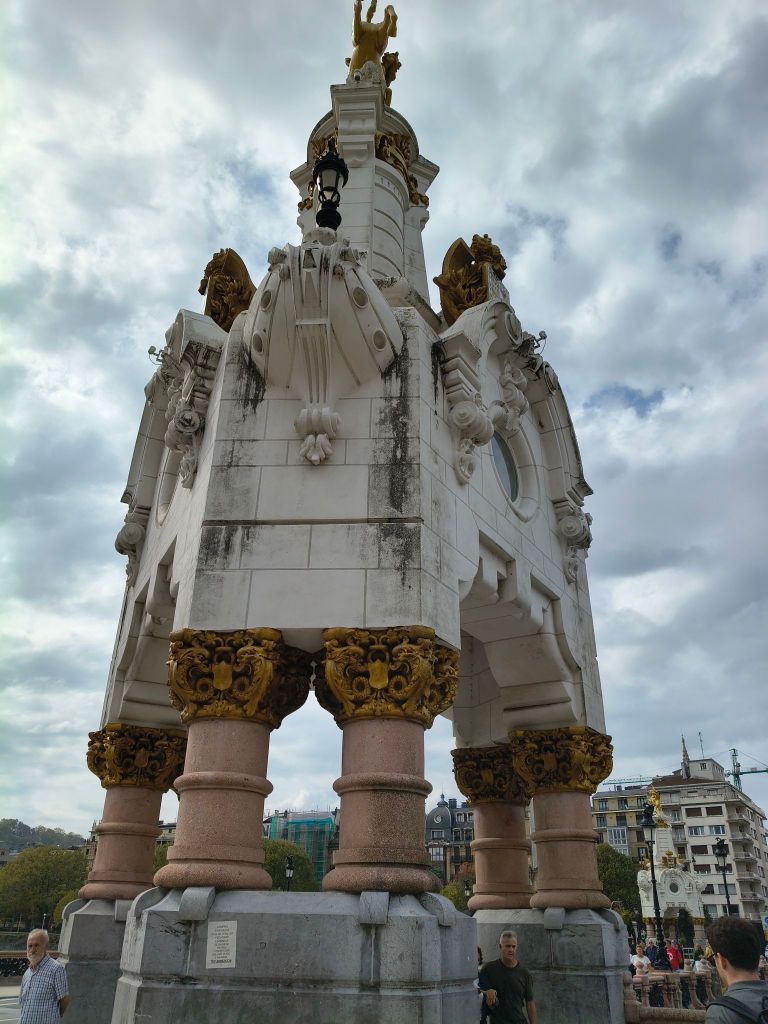
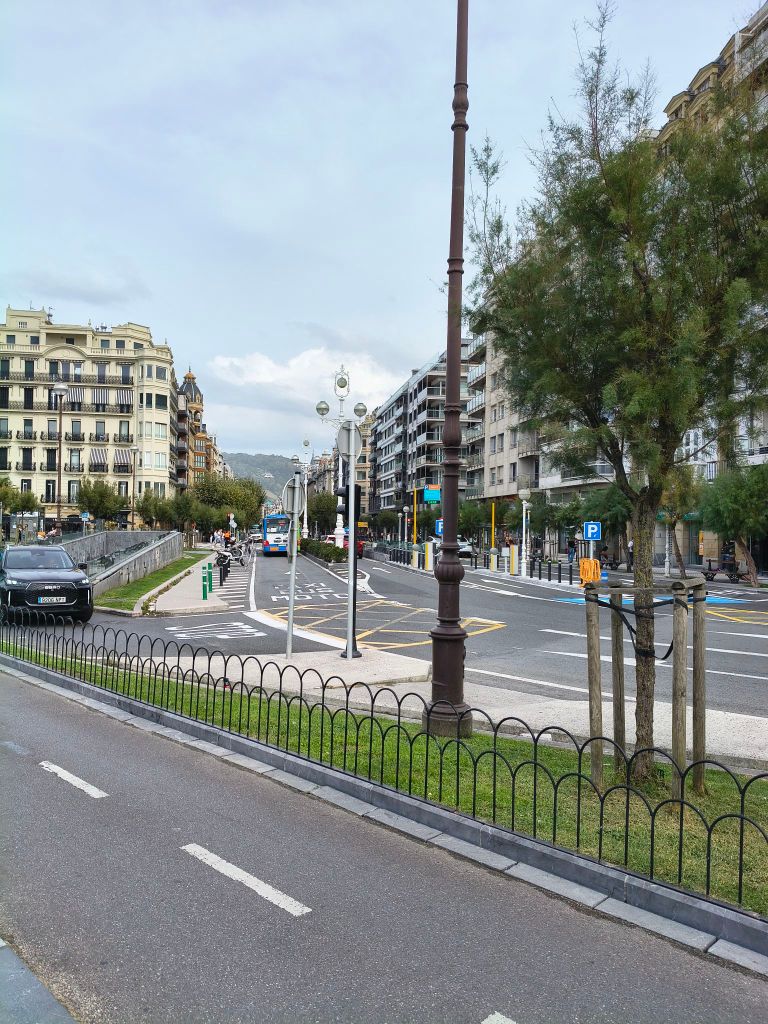
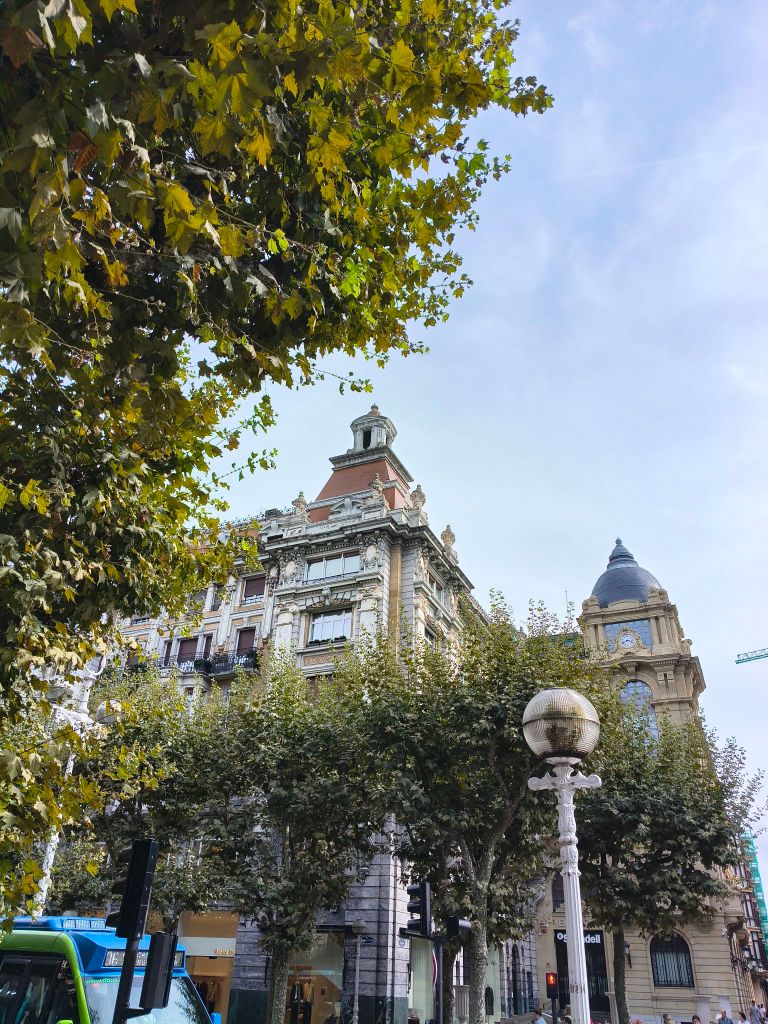
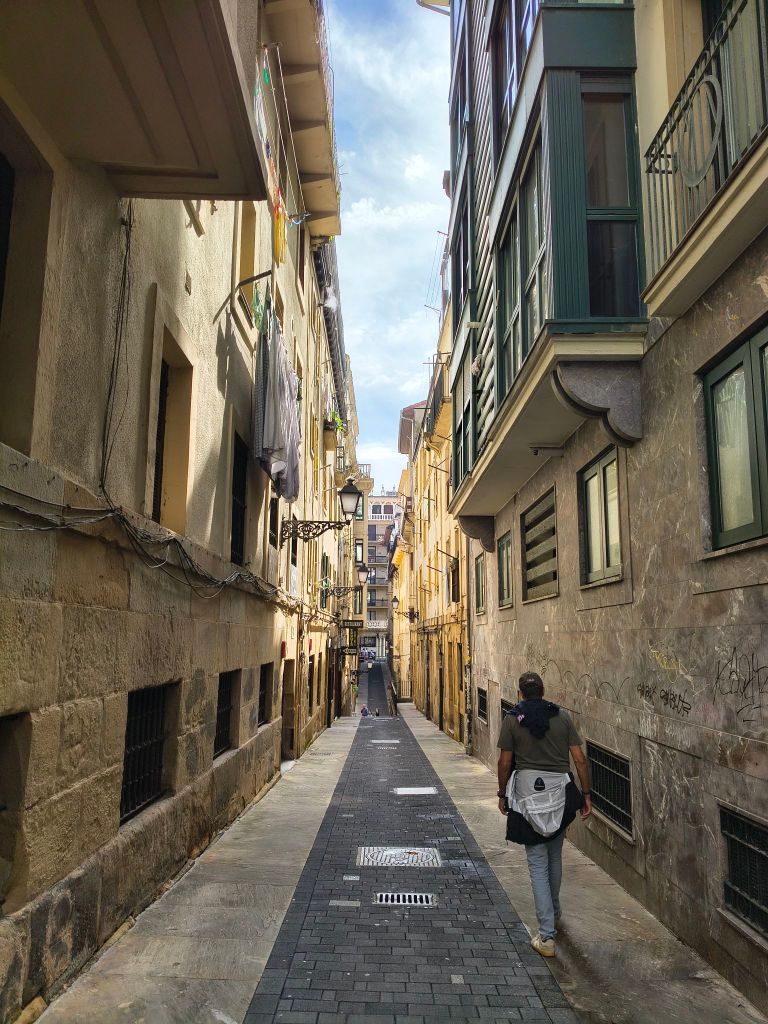
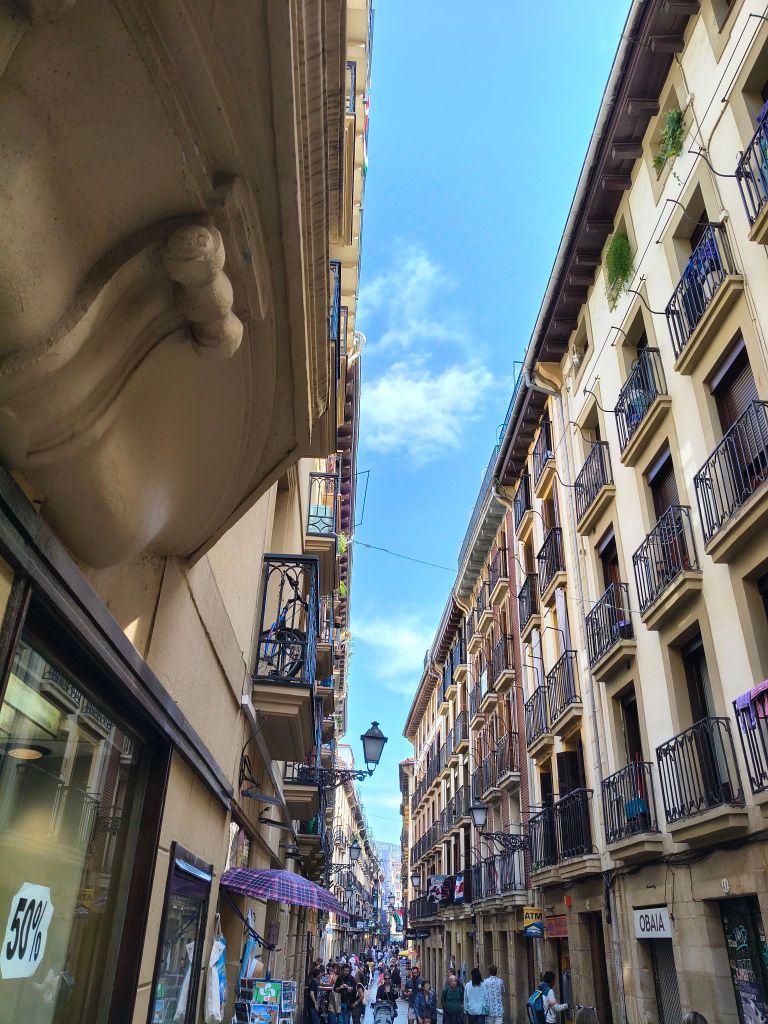
One more piece of innovative Bilbao starchitecture to go, and it really is the last. Because it’s the main airport terminal, designed by Santiago Calatrava and built in 2000. The locals call it La Paloma (the dove) because of its swooping shape. You don’t really get that from inside but the departure lounge has a big window.
And that was it. As it’s the last post of the trip I thought it would be a good idea to round up some observations and tips that have come to me over the past couple of weeks. And to do it as though someone else had been asking the questions. Well, it seemed like a good idea.
Where’s the best place to go for a lovely, chilled afternoon meal in Bordeaux?
Easy one. Try McDonalds or KFC, or do what I did and find a cheap-and-cheerful noodle place.
I keep forgetting that French restaurants don’t serve food from about 2-3 in the afternoon until seven in the evening. It’s quite a shock when you’ve been doing some exploring and mid-afternoon finds you ravenous, but once you adjust and prepare for it it’s fine.
That cross-border train journey from Bayonne to San Sebastián must have been special
That journey was glorious. As I’ve said, the Basque Country is verdant and mountainous, and while “verdant” spells “generally rainy”, that day the sky was blue and the green hills shimmered with light. It was good in a way that the bus kept stopping and running into traffic, it helped take in the beauty of the surroundings.
Yes, it was all by bus. There seemed to be engineering works on the Spanish side that Saturday.
But bus travel is almost as comfortable and convenient as rail travel these days?
The bus terminal was very modern and well-equipped, true. That was in San Sebastián. To get there I had to get to a simple bus stop about twenty minutes walk from Bayonne train station, past the dilapidated old port buildings, a bus stop with nothing except some dodgy-looking buildings. When the bus comes, if you’re not dragging your luggage down the narrow path at approaching the speed of light, some unpleasant old local behind you will complain. Next time I’ll check the railway engineering timetable.
You seem to be a bit of a …troublemaker?
No it was her and she was very snotty…oh hang on, you mean …you mean all that stuff…the other, civil disorder stuff…
It was just timing, believe me. I arrived in France just as school students were leaving class and taking to the streets to protest against underfunding in education. While it got seriously nasty in various French cities, the demo I saw in Bayonne looked rather free-spirited and good-natured, rather like the town itself. If there was any trouble later on, I didn’t see it.
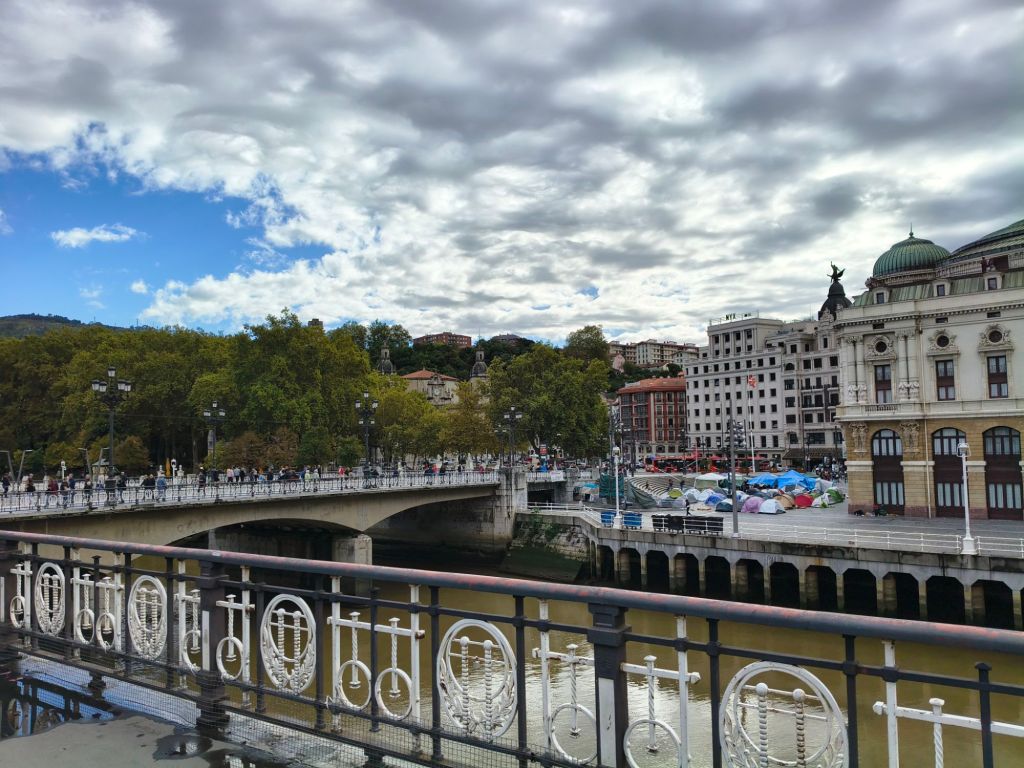
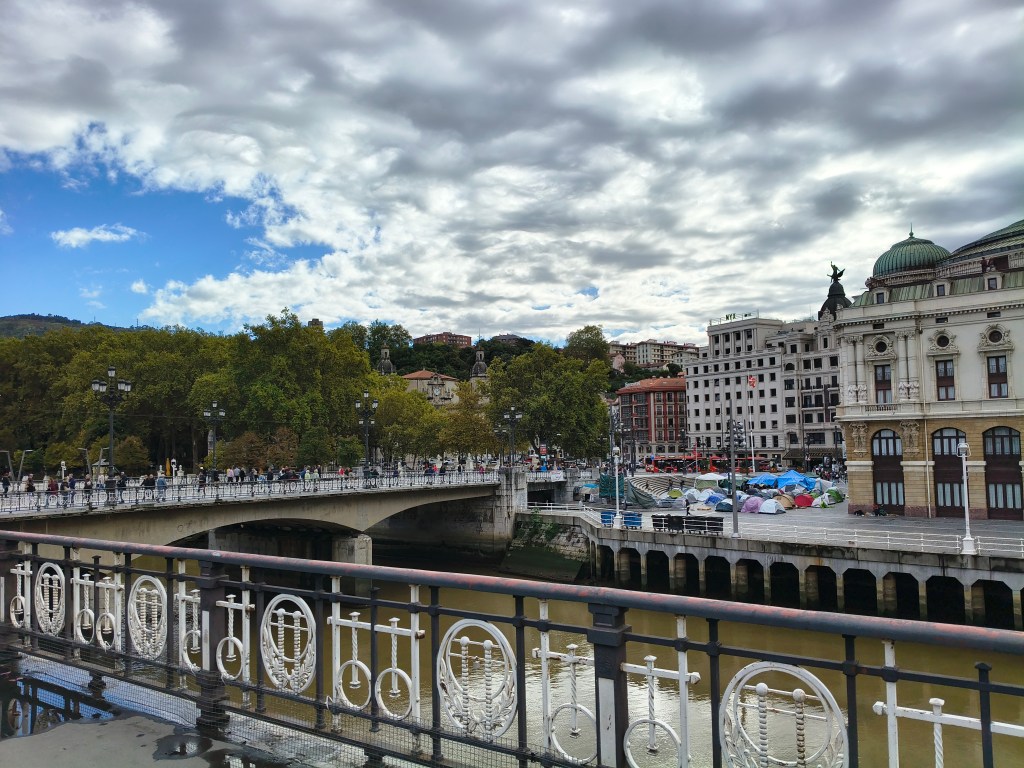
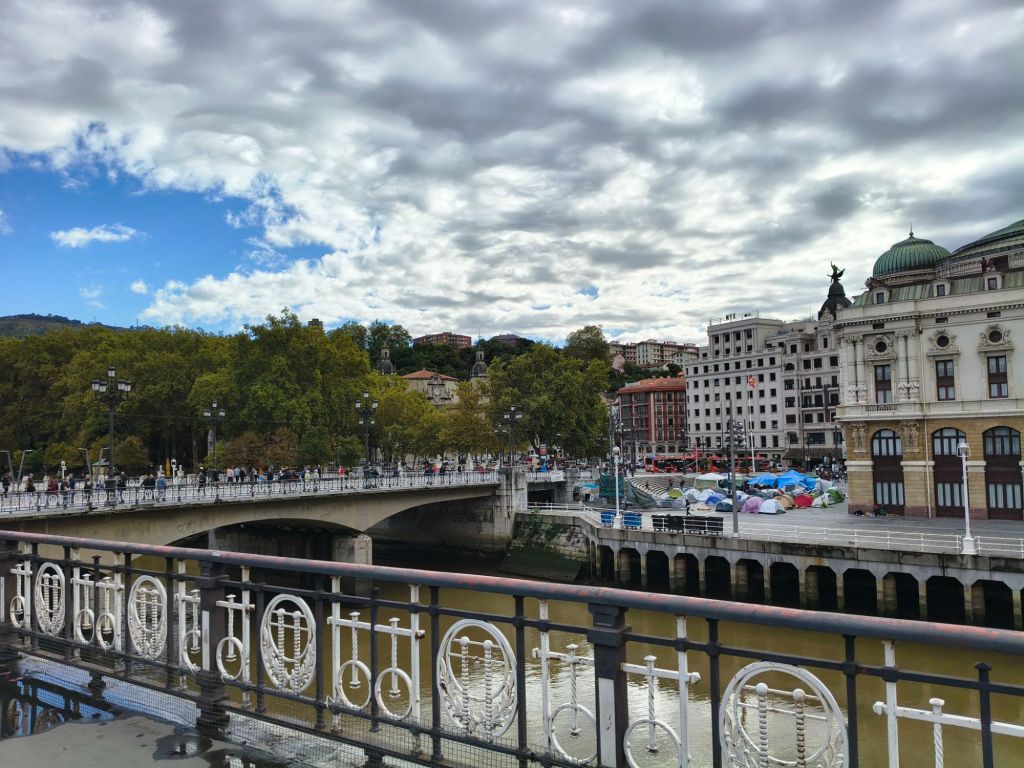
I then crossed over into Spain. Was that the end of it? Take another look at this photo of Bilbao I put up in the previous post.
Do you see the tents?
Earlier this year a woman was evicted from her apartment in Madrid when the investment fund that owned it jacked up her rent to get rid of her. It’s a common practice in Spain that was causing a lot of aggro, but this one broke the camel’s back. The woman was 87 years old.
After the uproar the fund invited her back but she never returned, sadly passing away while I was in Spain. Meanwhile the uproar had turned into protests that eventually forced the government to call a general election. Tent cities appeared throughout Spain, including this one, to highlight the housing crisis.
It just shows you that the great places don’t stop for us, the crises go on as we stroll the lovely streets, admire the great sites, enjoy the fabulous cuisine. All we can do is briefly enter into the lives of the people who privilege us with their hospitality and respect them and listen to them. And thank them, as I do here, for such a lovely time in France and Spain.
I knocked out those last three paragraphs on the train home from the airport. No sign of British public order breaking down into mass rioting yet. But give it time…
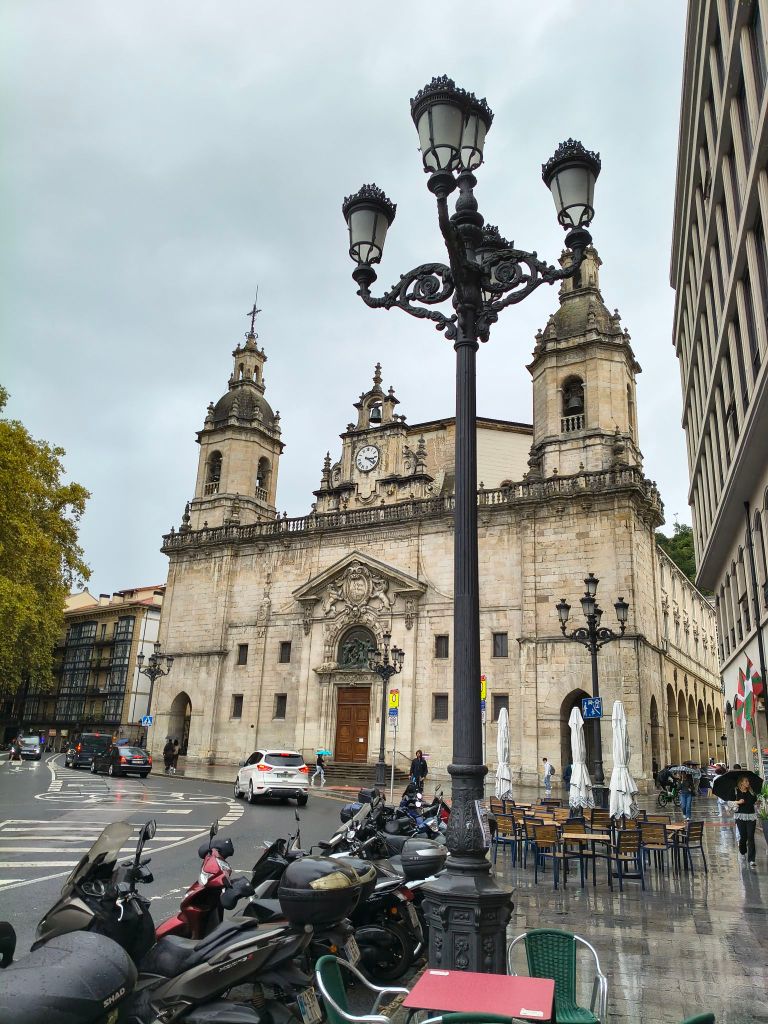
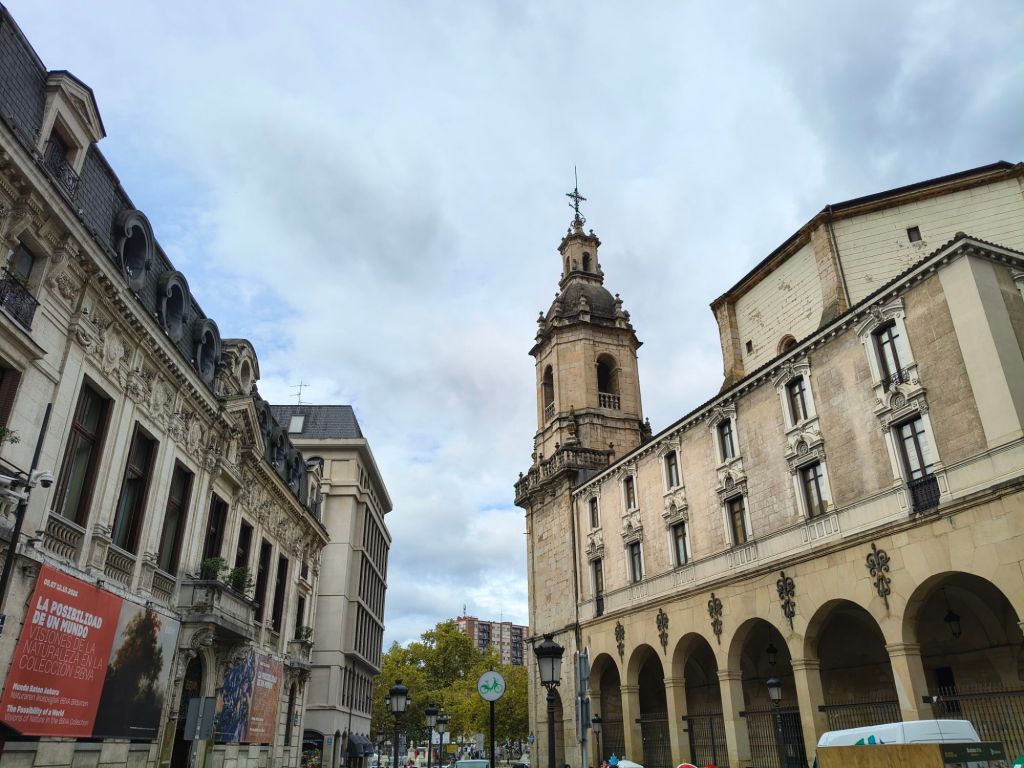
As I dodged the showers I did manage to take a couple of photos around the Casco Viejo.
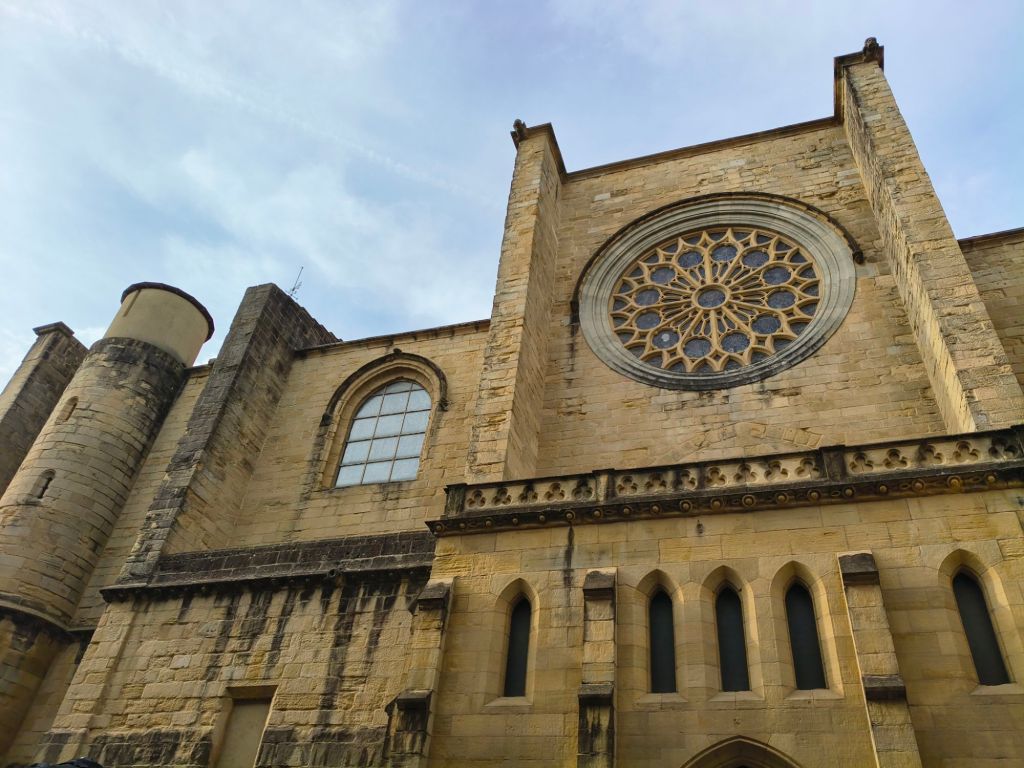
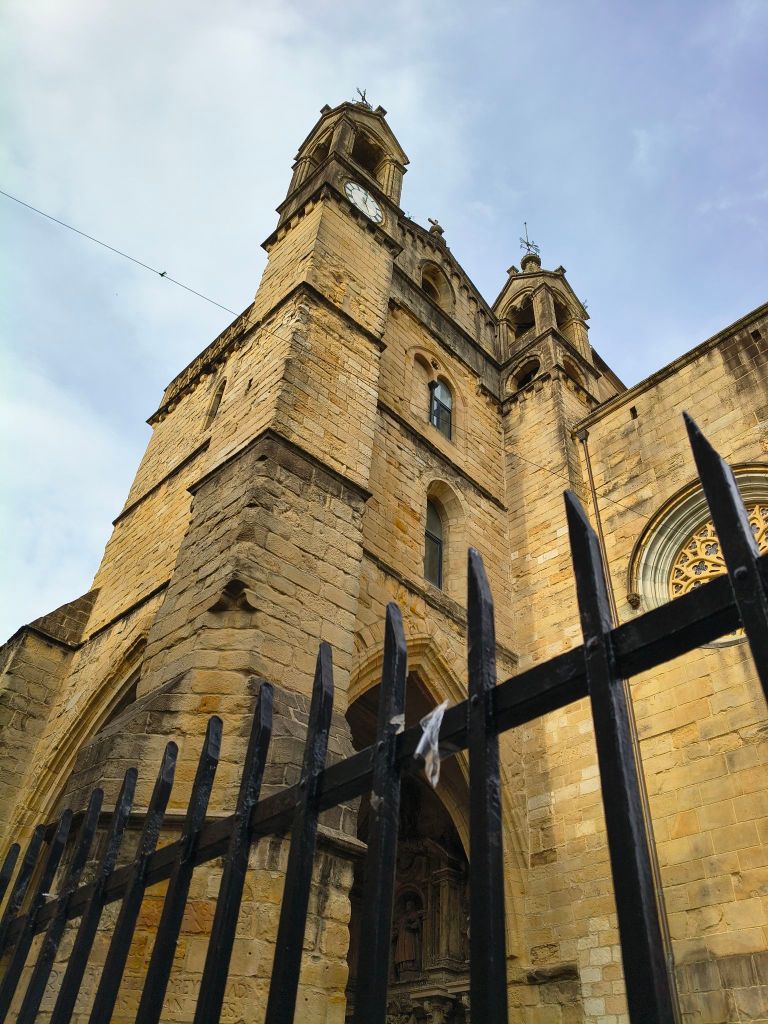
Dating from the 14th century the Iglesia de San Nicolás de Bari is a very beautiful church that wouldn’t look out of place in Mexico City or Lima, so essentially colonial Spanish it looks. I really need to go to those places to see if I’m right.
But it’s more proof how rampantly over-commercialised things have got. We’re not even halfway through October yet and we’re already seeing an Iberian church dedicated to St Nicholas.
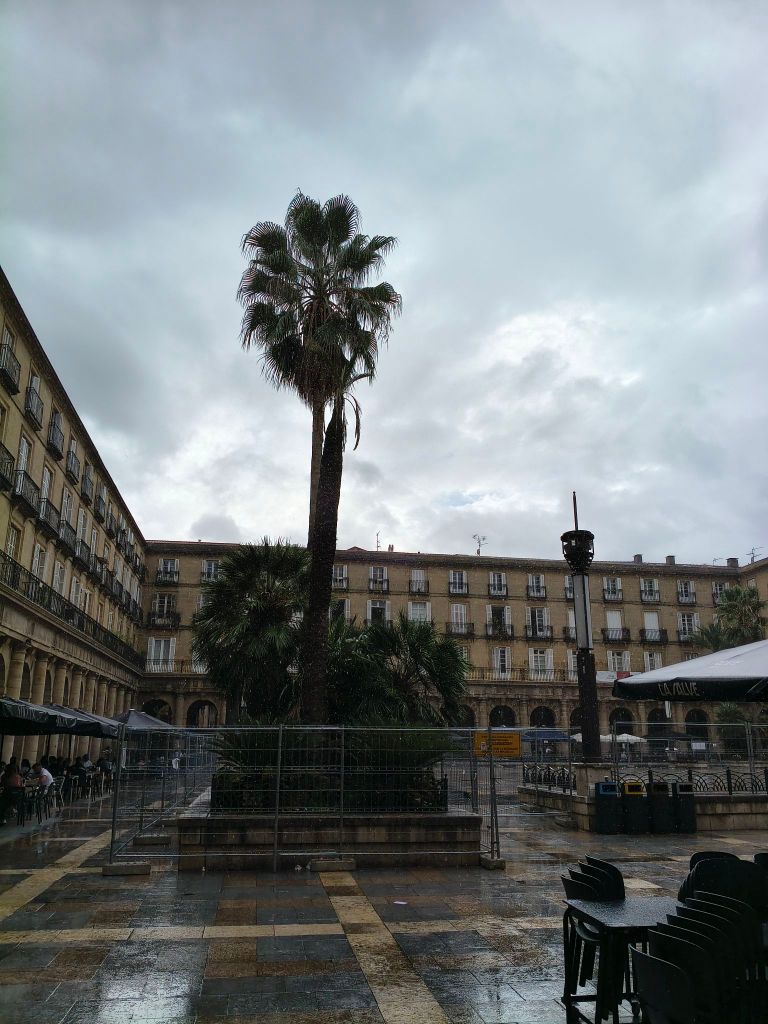
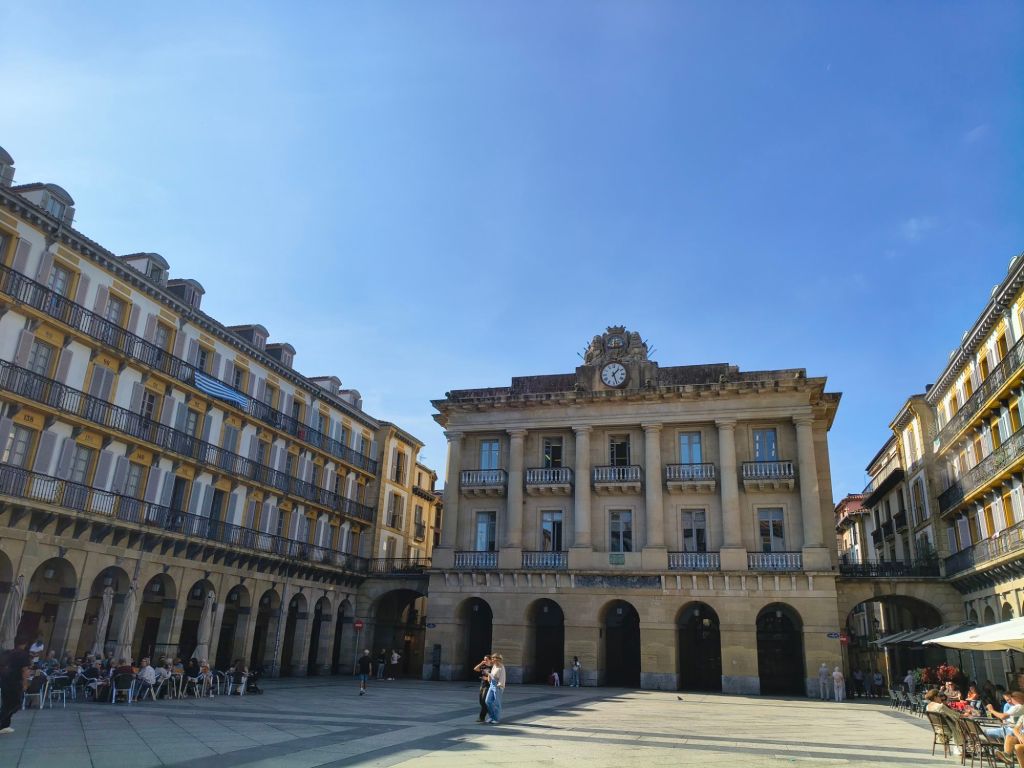
Pintxos central in Bilbao, the neoclassical arcades of the Nueva Plaza. There are pintxos bars everywhere in town, but (checks all the online guides) all the best ones are here! To be honest, the tourists are most likely to gather here so, just like the Old Town in San Sebastián on weekdays, the vibe will make up for any drop in food quality.
This photo was taken as everyone was diving into the bars to take shelter from the heavy rain. I raise a cerveza to that palm tree and its misplaced optimism.
The rain cleared overnight, and the last day of the trip began under calm skies of broken clouds.
The main train station
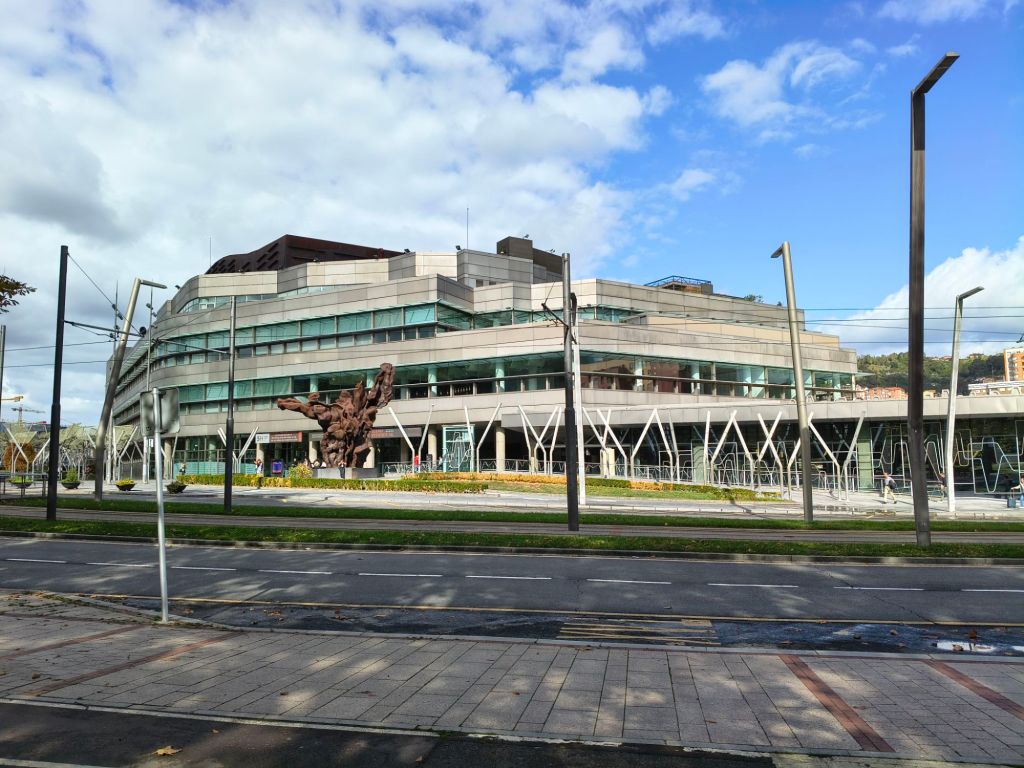
I wanted to get back to the Guggenheim and was at a slight loss how to get there by public transport. The Urban Architecture section of the Bilbao Metro’s tourist guide suggested starting the tour from San Mamés station, but they were just guiding you to see the Euskalduna conference centre. But I went over anyway, as the Guggenheim wasn’t too far from there.
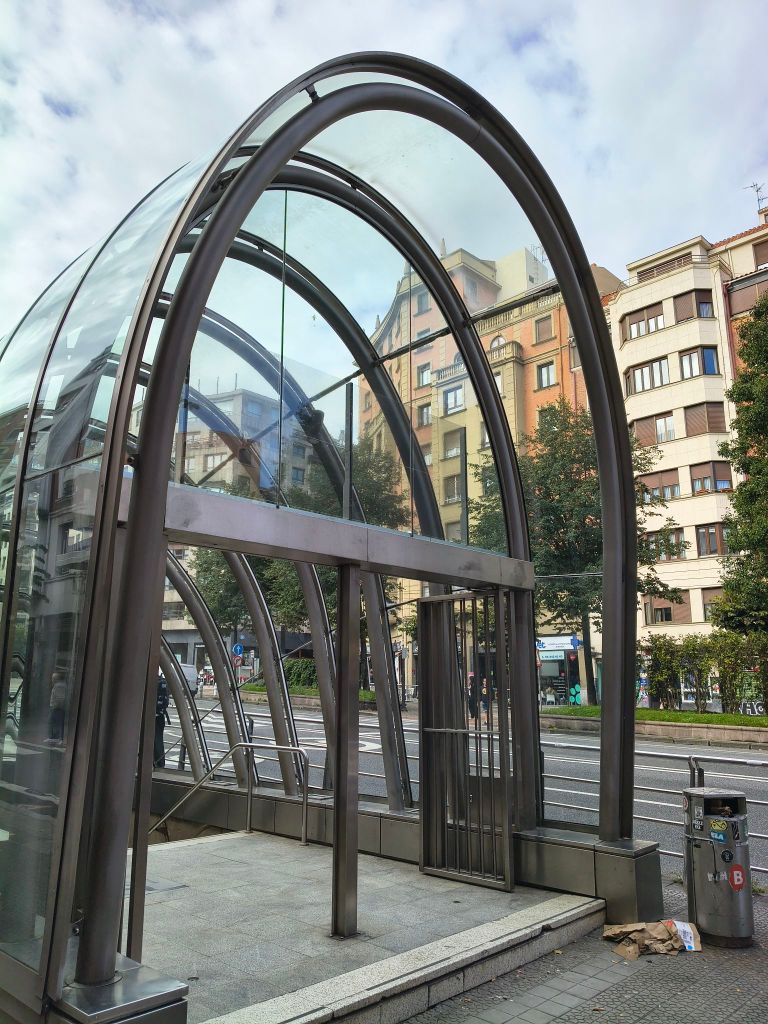
A lot of the Metro stations have these armadillo-like entrances. They’re known locally as “Fosteritos” after the renowned British architect Sir Norman Foster, who designed the metro.
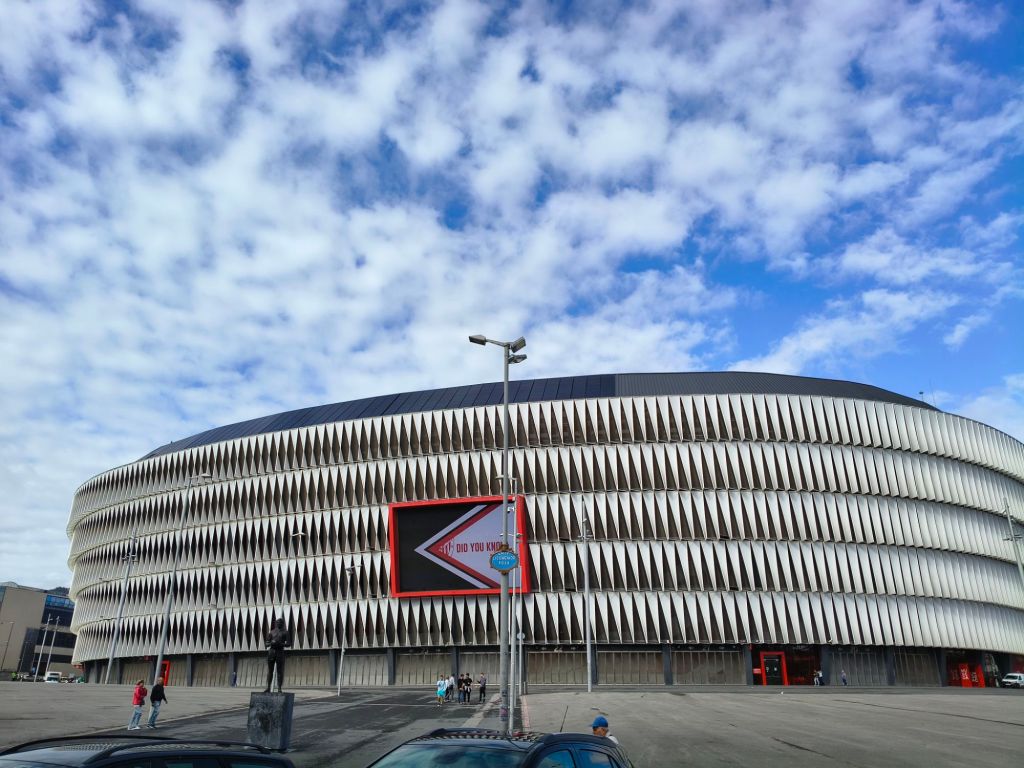
There’s another reason why I was happy to go to San Mamés.
Athletic Bilbao, one of Spain’s oldest football clubs were founded in 1898. It traces its origins to two sources. Bilbao was at the time a major shipbuilding and industrial town – it was the decaying area around the old ports that the Guggenheim Museum was built to revitalise. But back in the 1890s it was boomtown, enough to attract British migrant workers from similar towns such as Sunderland and Southampton who brought football with them. The other source were the sons of prosperous locals who were sent to study in Britain.
As for the strip, the story goes that, once the club was up and running, a local student had been asked to look for some new shirts while he was in London but couldn’t find any in the team’s blue-and-white colours. Waiting at Southampton for the boat home, he avoided the shame of returning home empty-handed by picking up some shirts in the local team’s red-and-white stripes. The club liked them so much that they decided to change, and Bilbao play in red-and-white stripes to this day. That’s one story; but more recent research points the finger at Bilbao’s links to the migrants from Sunderland, who also play in red-white stripes. What is true though is that Atletico Madrid were once a satellite club of Athletic, which is why they play in the same kit.
Note the difference: Atletico vs Athletic. The Bilbao team have retained the English spelling possibly to honour those formative links. One more thing makes this team unique; their selection policy. Throughout most of their history they have only picked players born or trained in the Basque region – whether in Spain or France. That must make this place a true cauldron of emotion during home games.
One last tidbit: the team are known as Lehoiak – The Lions – due to a controversial European fixture that St Mammes himself was involved with many years ago. Drawn to play crack Roman opposition, somehow there was a last-minute change from the team sheet and the Romans sent out some lions instead. It’s not clear whether St Mammes tamed the lions and was stabbed later, or whether they just ate him. VAR is taking a long time to decide.
The conference centre itself was alright I suppose…
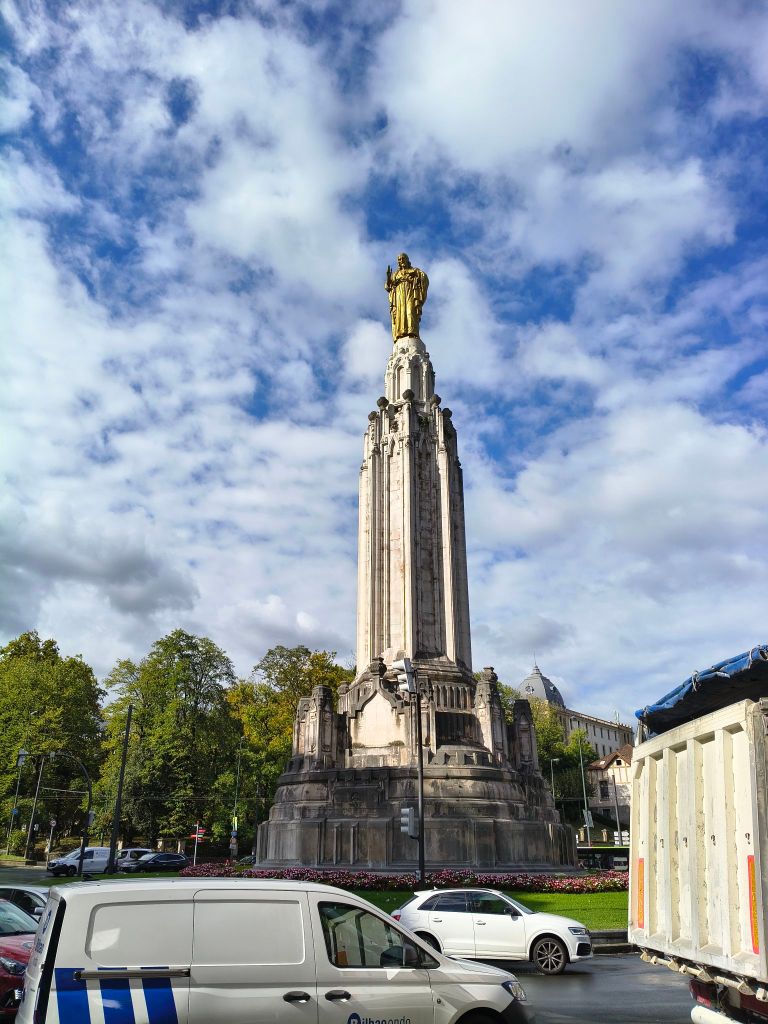
…once you get past the Big Scary Jesus at the Plaza Sagrado Corazon.
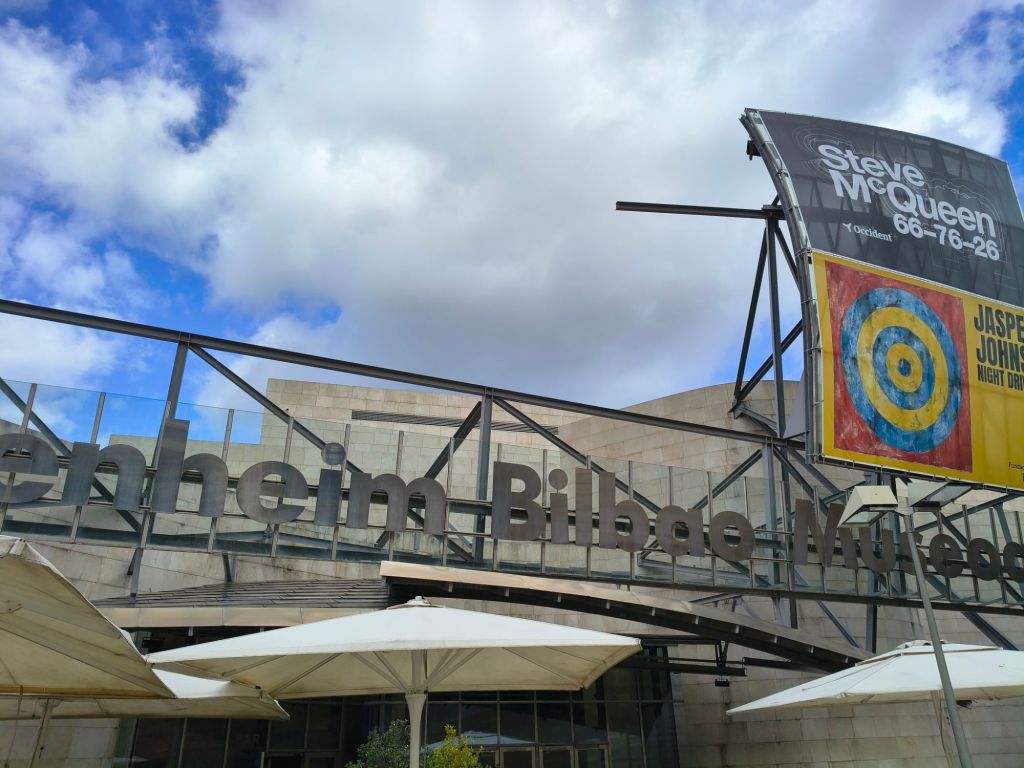
But the Guggenheim is indeed a short walk away.
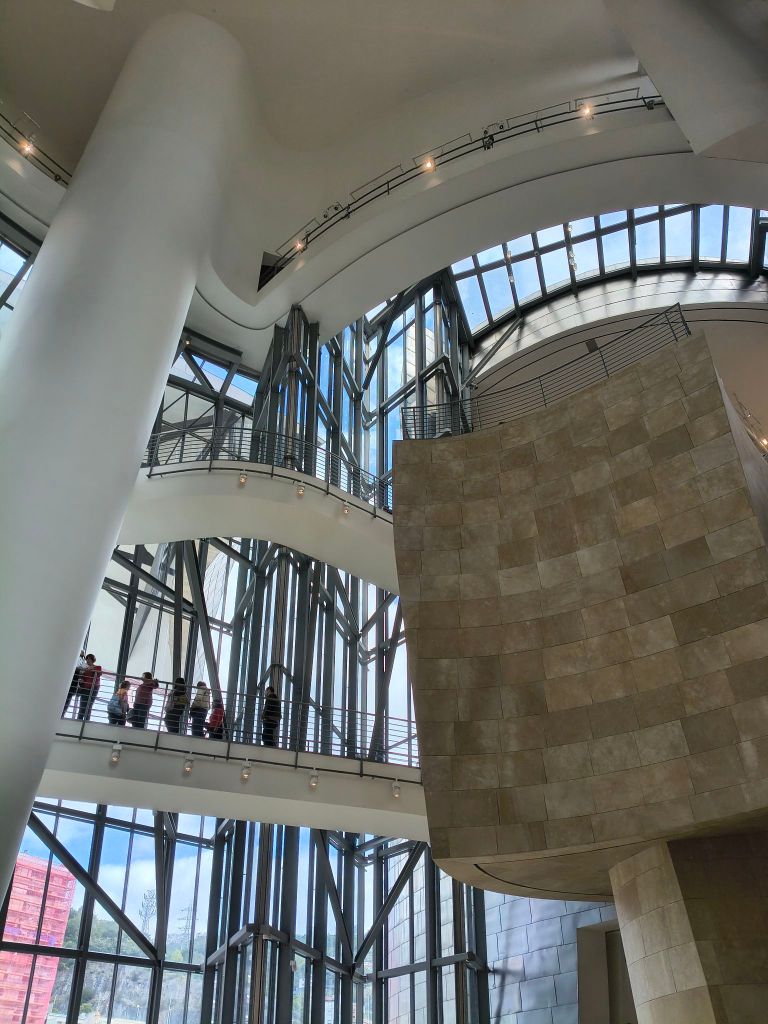
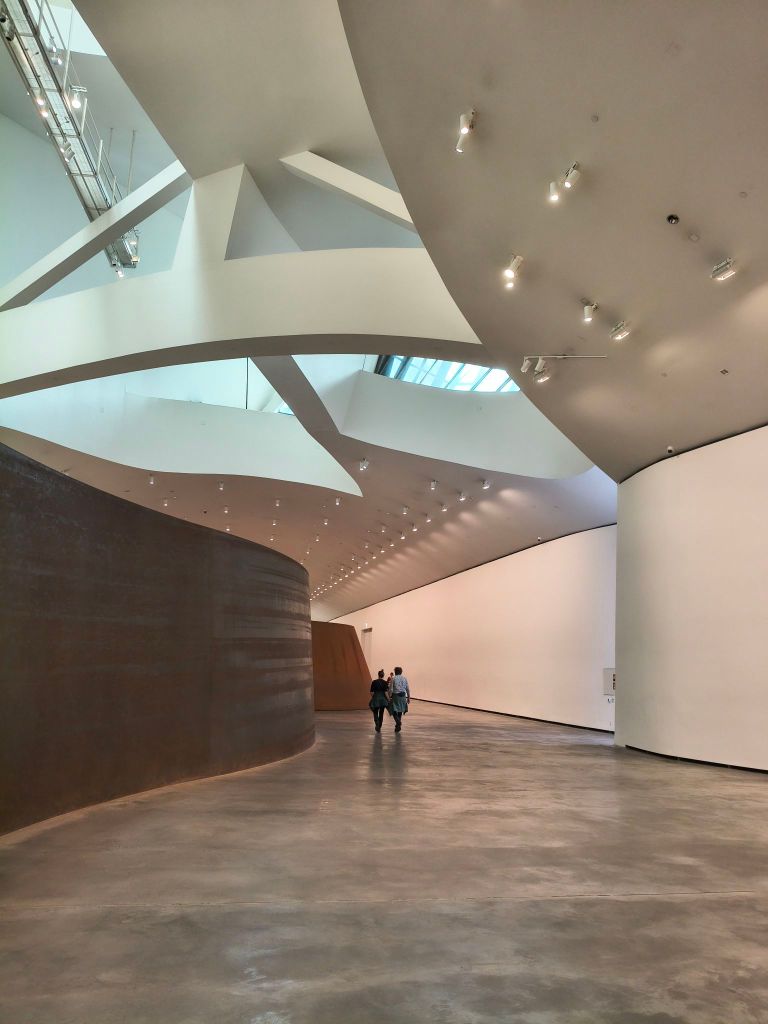
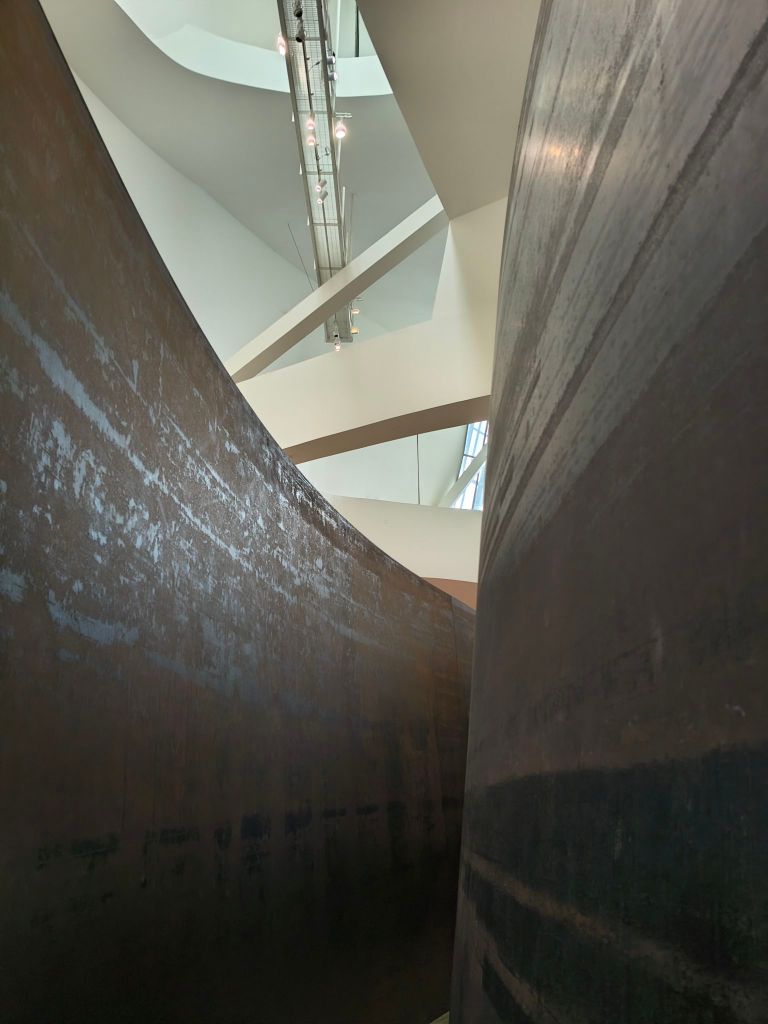
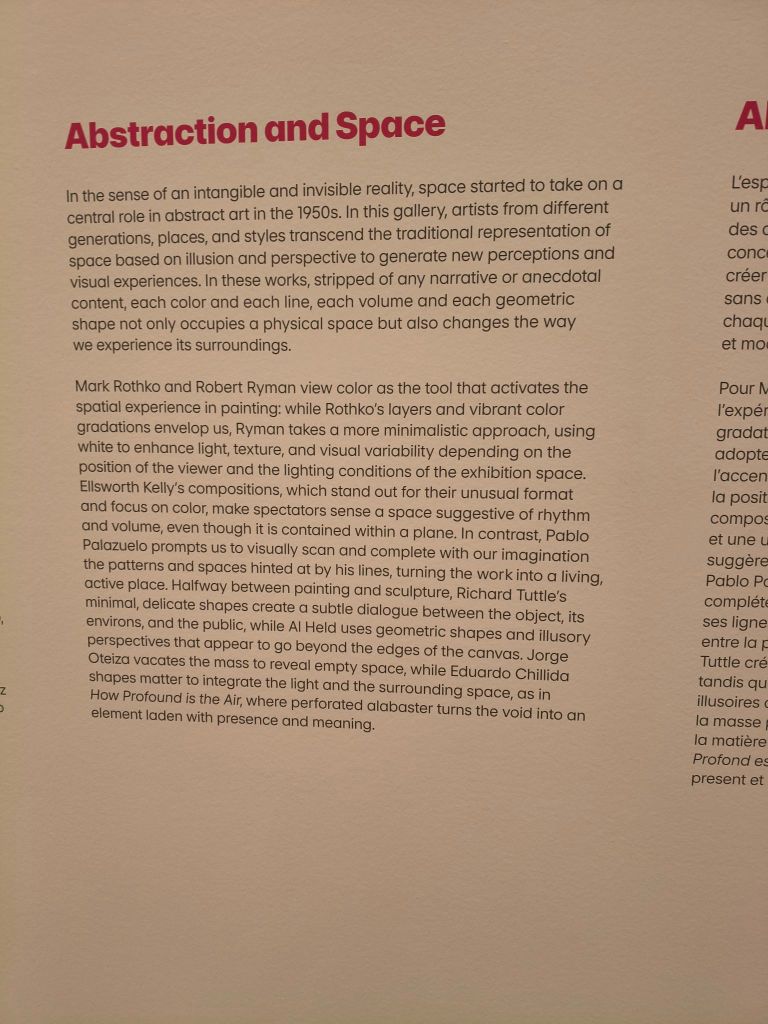
As befits the most famous modern art museum there is, a lot of the big names are here – Jasper Johns, Jeff Koons, Basquiat, Warhol, Rothko, Hirst, looking impressive in the great, winding interior spaces. One work that takes full advantage of what Gehry’s architecture gives you is on the ground floor, A Matter of Time by Robert Serra. Great walls of steel warped into spirals and toruses that you are invited to walk through, the artwork actually being your sensations as space and time deform around you.
Looking at the artwork and reading the descriptions, it was made clear to me why we think a cultured, well-rounded person should be au fait with art and literature but need to know very little about maths or the sciences. In fact, the more you protest your ignorance of STEM the more cultured you might appear. The answer is simple: science and engineering are hard, complex concepts that can be very specialised and take a lot of explanation. One wouldn’t be expected to appreciate the beauty of maths, it’s far too much like hard work. However one would be expected to understand the beauty and meaning of high art of course, as it’s much simpler and straightforward to get your head around.
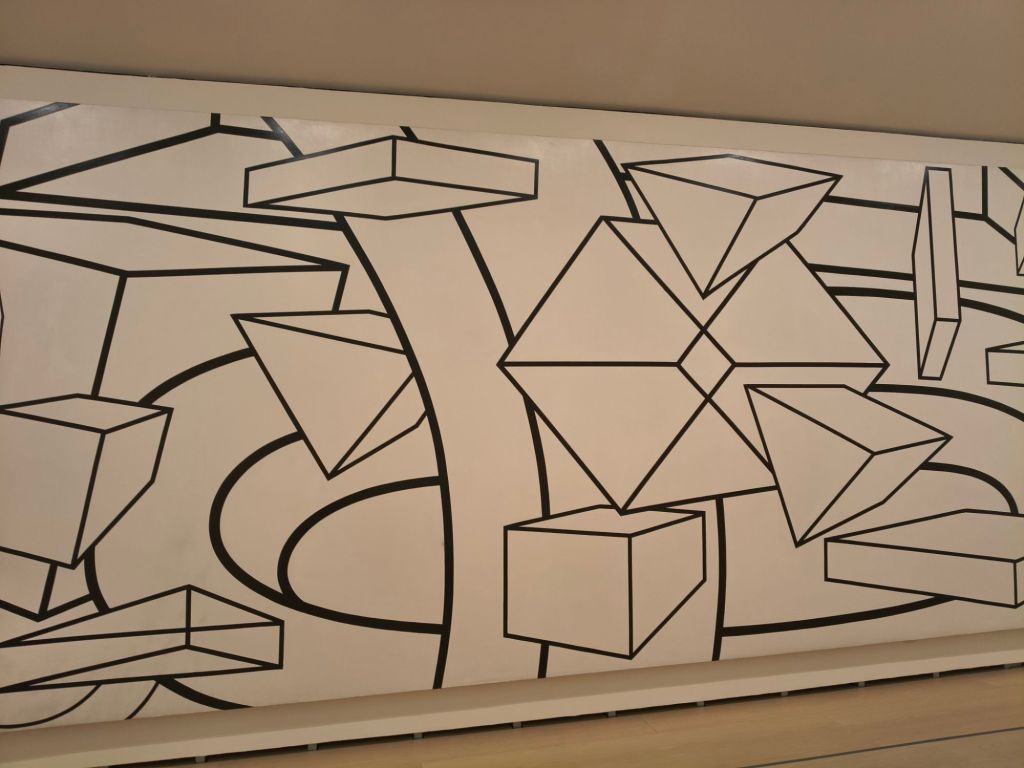
Al Held: I quite liked this one. Dunno why.
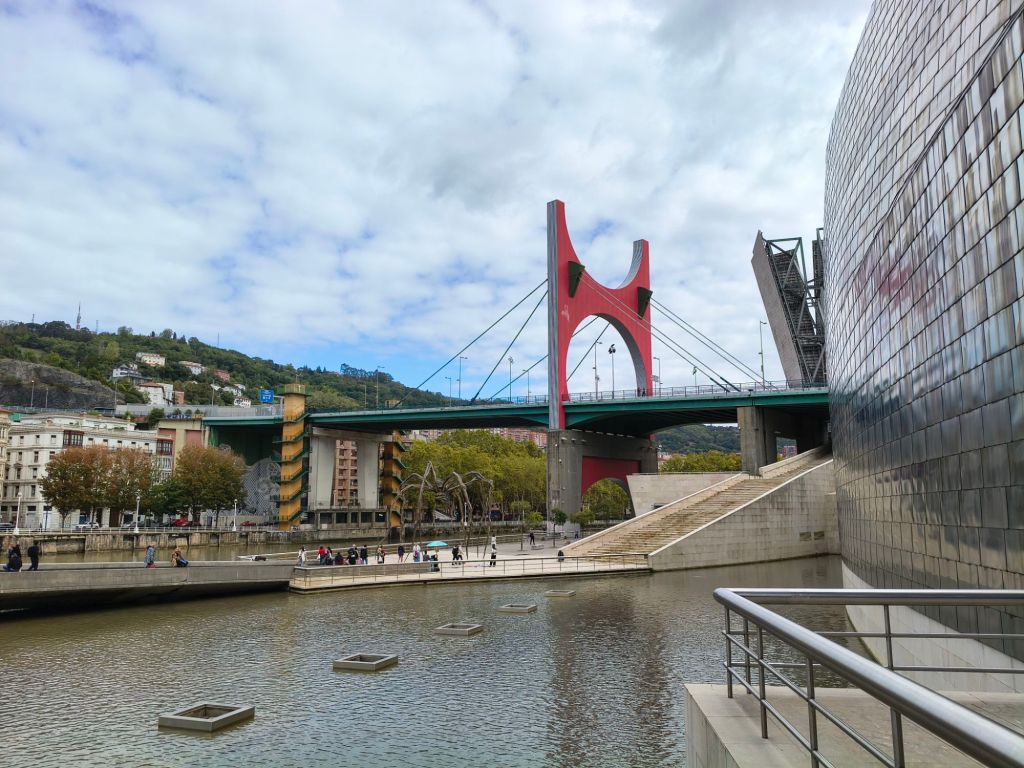
You have to appreciate the ambition of the Guggenheim though, not just inside but outside.
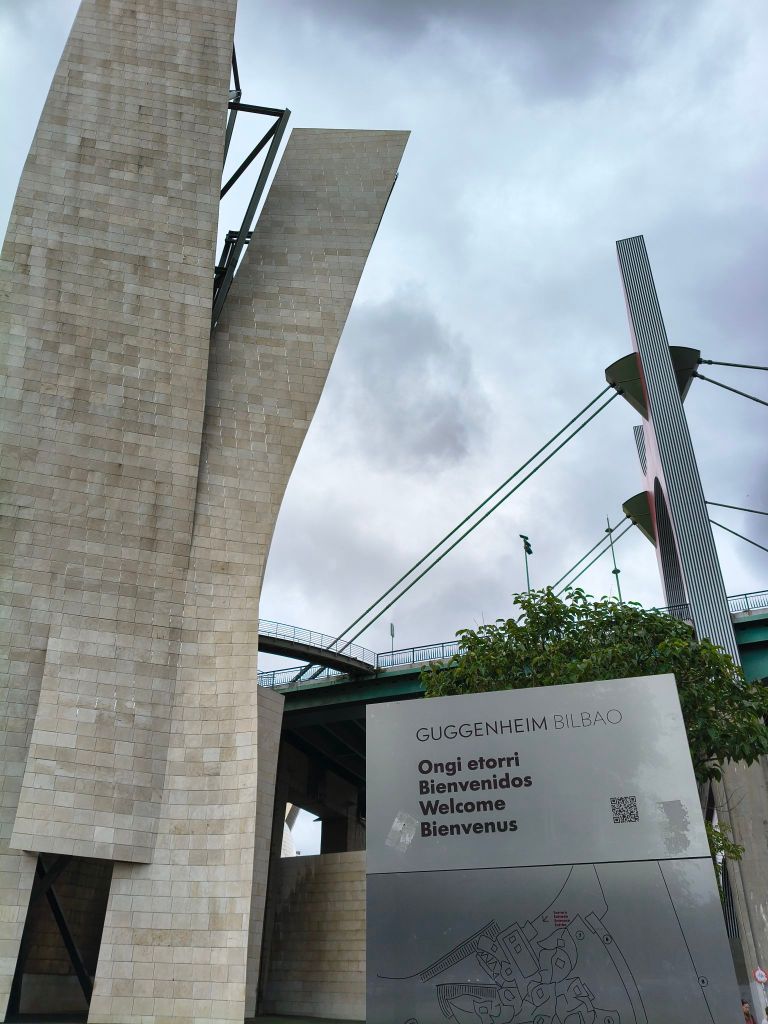
That tower on the bridge, amazingly enough, is also an artwork – Red Arches by French artist Daniel Buren. The “Bilbao Effect” taken literally?
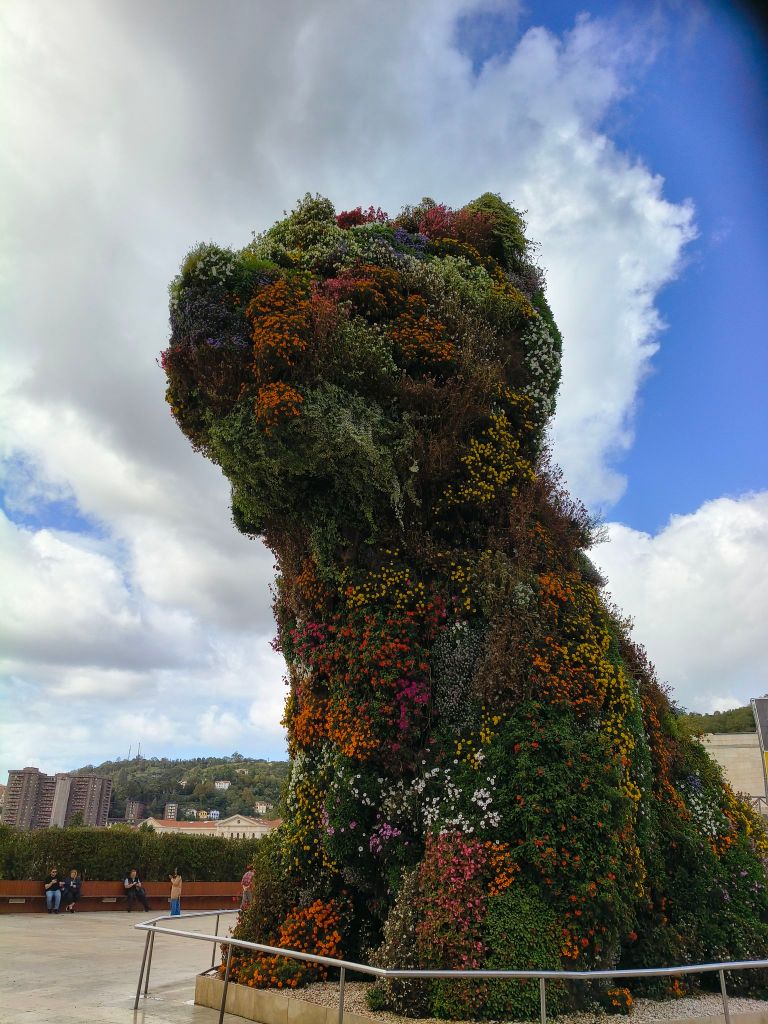
Oh and Jeff Koons stuck a giant puppy made of flowers outside as well.
Seriously though, whether you’re an art connoisseur or just curious about what it’s all about, an hour or two in a museum like the Guggenheim is a truly invigorating, stimulating experience. And, depending on where you live, you might have a museum around the corner to you, large or small, world-renowned or just purely local, that you would find just as rewarding – whatever the subject.
But I read what I’ve written and it all seems a rather crude summary of such an august institution, and it deserves a more refined description. Fortunately, the role of the artist is to invoke critical, cultural and ascetic responses in the viewer as they participate in the dialogue, and I took on the challenge of mounting and presenting my own cultural response…
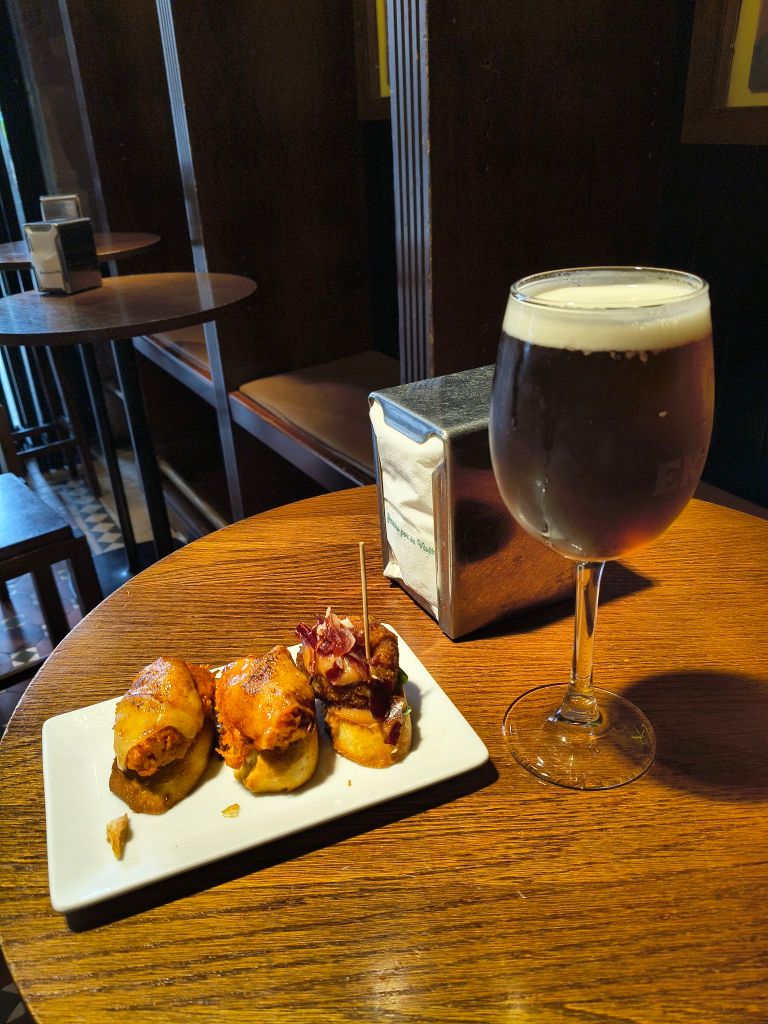
Rather than align with the conventional notions and paradigms of human physiology as codified by Western scientific and medical institutions, I created a unique creative and personal challenge by first collaborating with a tram, and then forming a new creative collaboration with a pintxos bar in the Plaza Nueva. This temporary installation, entitled After all that art I need a drink, consisted of a stemmed glass filled with fermented yeast product, and some delicious pastries. Participating and engaging with the glass allows the user to challenge their own unconscious, so-called “commonsense” understanding of space, time, and most significantly, balance, while giving the possibility of reasserting a human experience that goes beyond the socialised boundaries of language and relocates the participant into the space we could call “drunken babble”.
Engaging with the still life was however so profound that I just had the one, which left me coherent enough to start thinking about one last blog post to round up the whole trip.
I left San Sebastián under grey clouds. The sunshine of the last few days couldn’t hold off the autumn forever, especially here in the rainiest, coolest part of Spain. And, to be honest, it wasn’t just the weather that was making me think of home; it had been a long week and a half of travelling – diverting, delightful travelling, certainly – but I was feeling ready to cash in the memories and bank them back home, and have a lie down.
There are really two half-practical ways of getting from San Sebastián to Bilbao. There is a two-and-a-half-hour stopping service run by Euskotren, the regional train service, which winds its way slowly around the hills and stops everywhere. The most sensible option though is the bus, which takes just over an hour. You can guess what I did.
…and it was an absolutely fascinating train journey I have to say, a slow roll through verdant hills and steep valleys, passing through the surprisingly urbanised towns squeezed between the mountains of the Basque Country, a local metro-style train with hard seats and no canteen car doing a journey that felt like it should have been chugged along by a rustic old steam engine with multiple gears and a backup donkey if needed.
Eventually I reached the station in the Casco Viejo, the old town district of Bilbao.
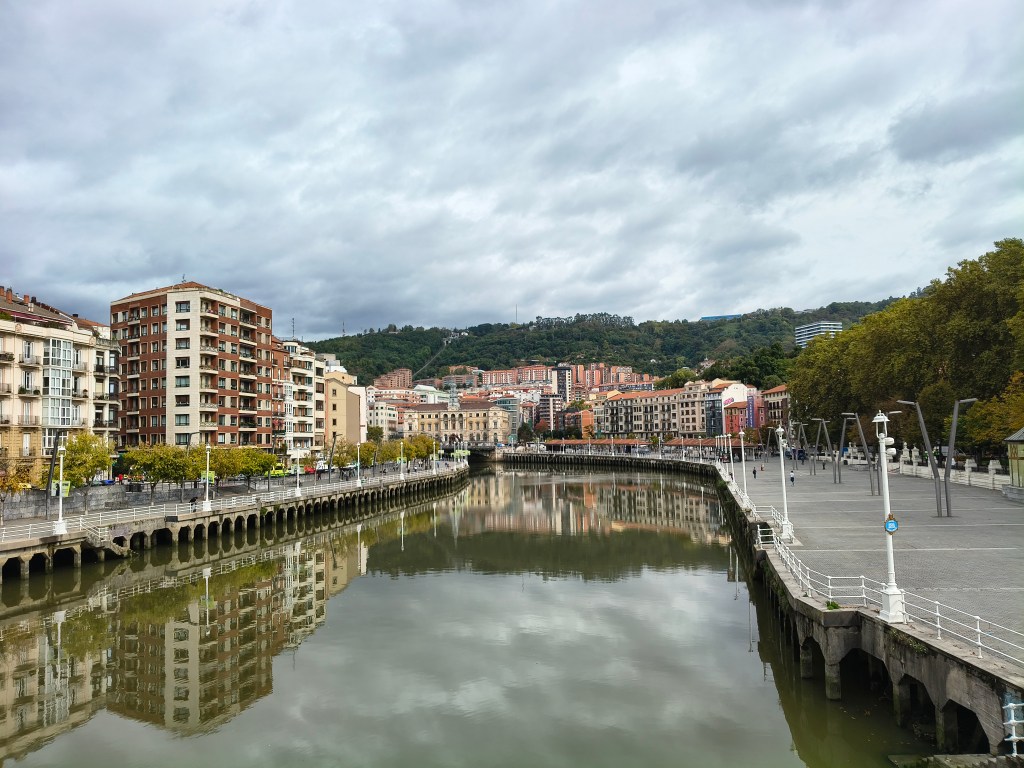
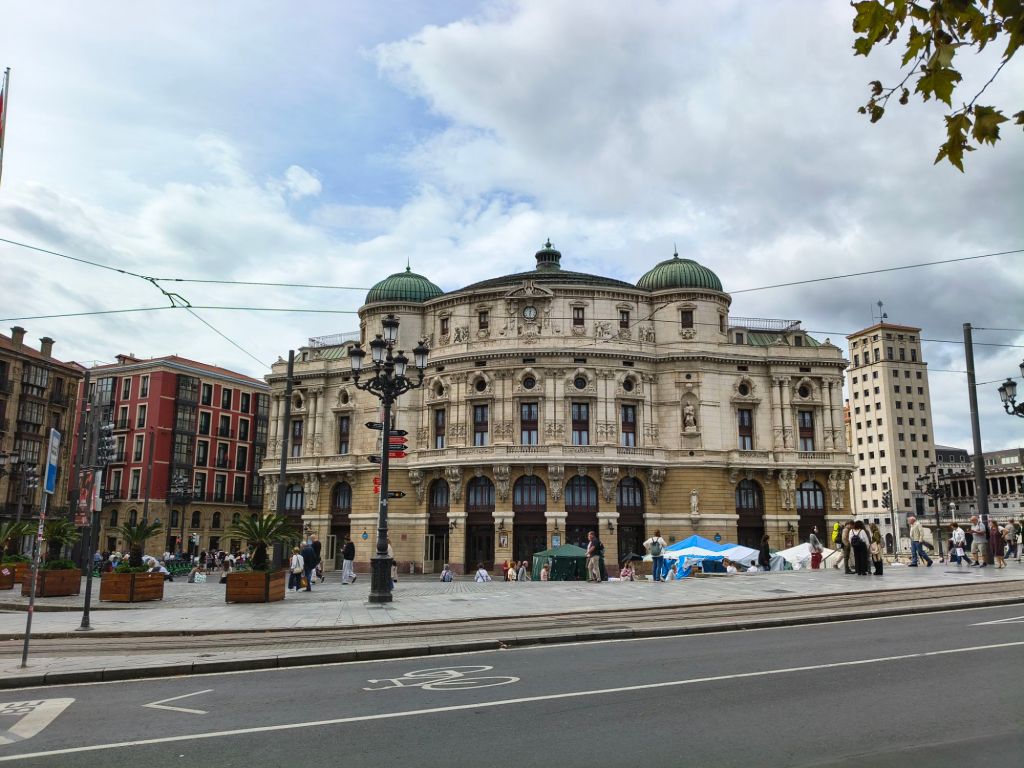
The Arriaga Theatre above is what used to pass for a fine arts center in Bilbao, but times have changed. So with no further ado it’s straight down the Nervion river to see Bilbao’s most famous attractions, and one of the landmarks of modern architecture.
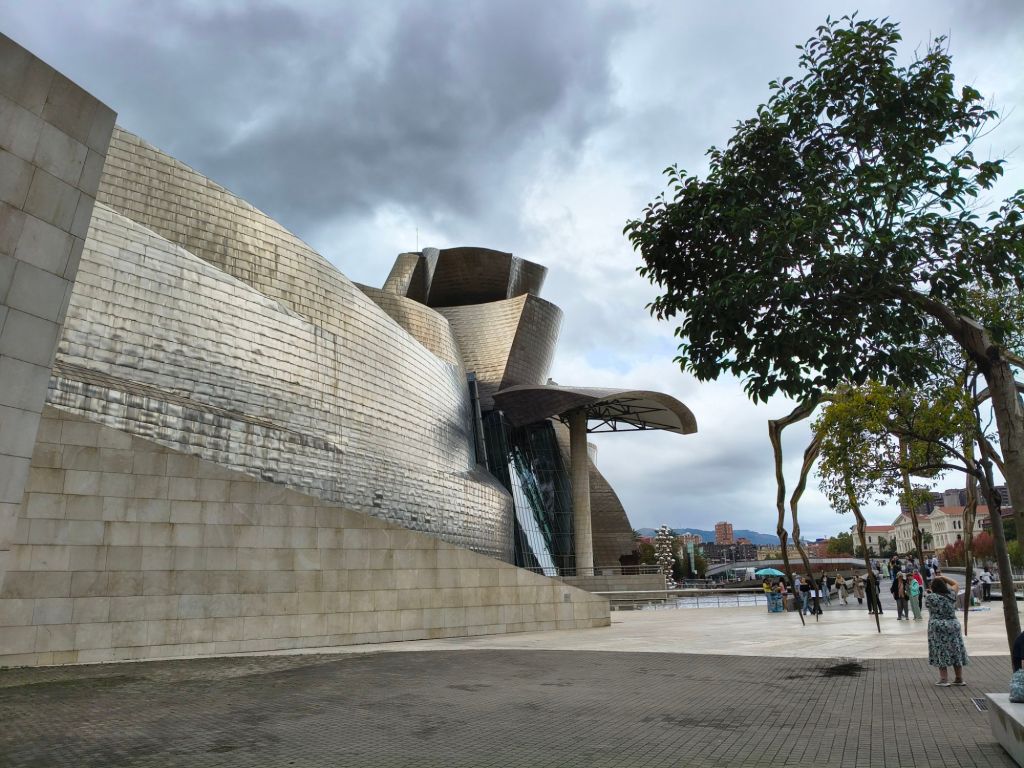
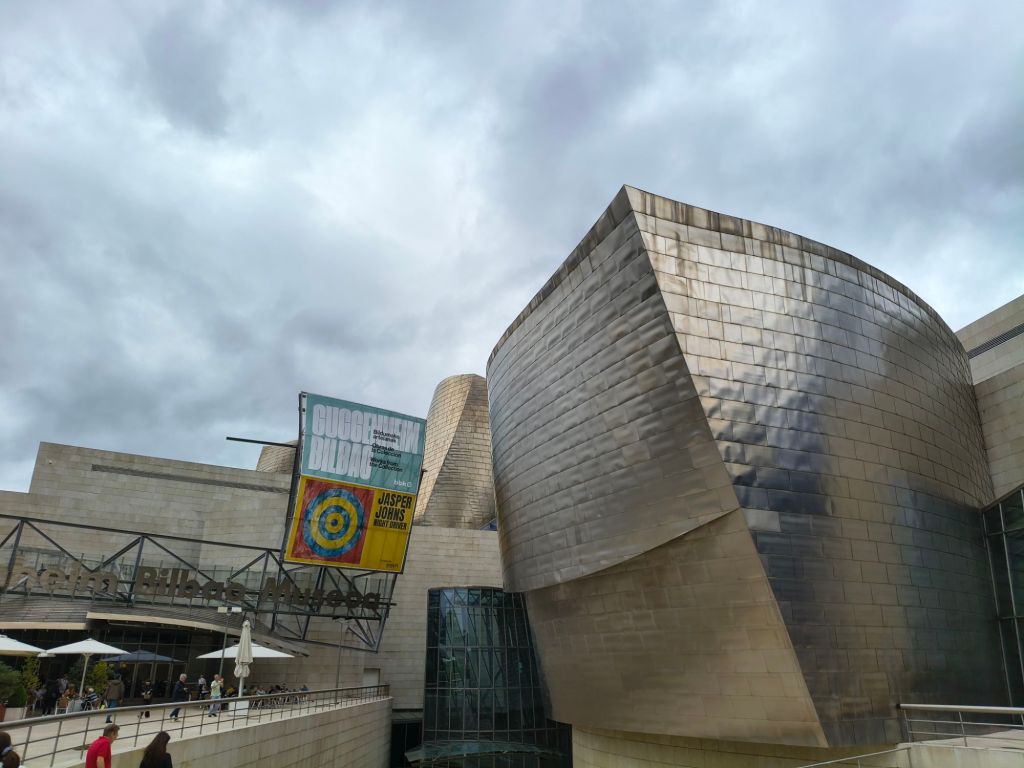
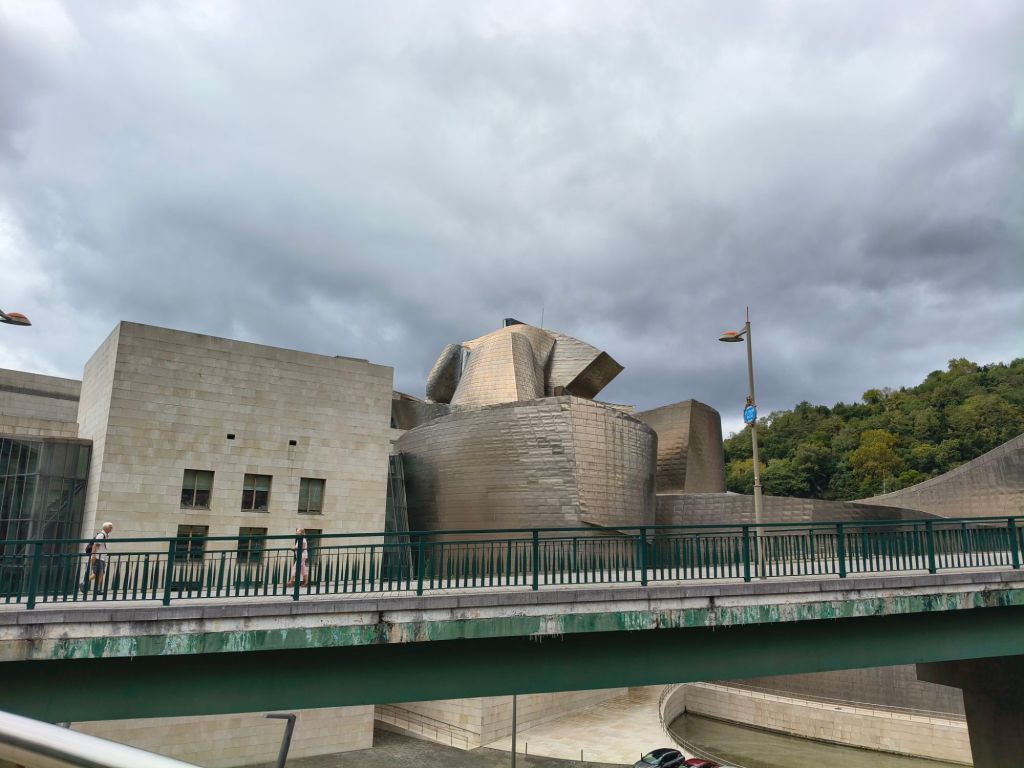
The Guggenheim Museum, designed by “starchitect” Frank Gehry, was opened in 1997 in the dilapidated old port area of Bilbao, the Basque government keen to rejuvenate the area big-time. In fact it created the controversial cliche of the “Bilbao effect”, changing the image of a city by dolloping a flashy iconic building in the middle of it.
But the Guggenheim takes “flashy” to a different level. That’s not it, by the way.
This is.
It’s a stupendously-scaled whirl of titanium. I took several pictures because the thing just kept looming over me with different perspectives as I walked around it.
One of Gehry’s aims – apart from making a statement piece of starchitecture – was to reference Bilbao’s maritime heritage. And as you go around it, you can start to make out titanium prows of titanium ships, flapping titanium sails frozen in time.
And I didn’t even go inside to look at the art. Maybe tomorrow, the last day of the trip.
Impressed, flabber well and truly gasted, I headed back to the centre of town, ready to take some more snaps of the more traditional styles of architecture and, as usual, draw out some history and stories.
And then the rainclouds opened.
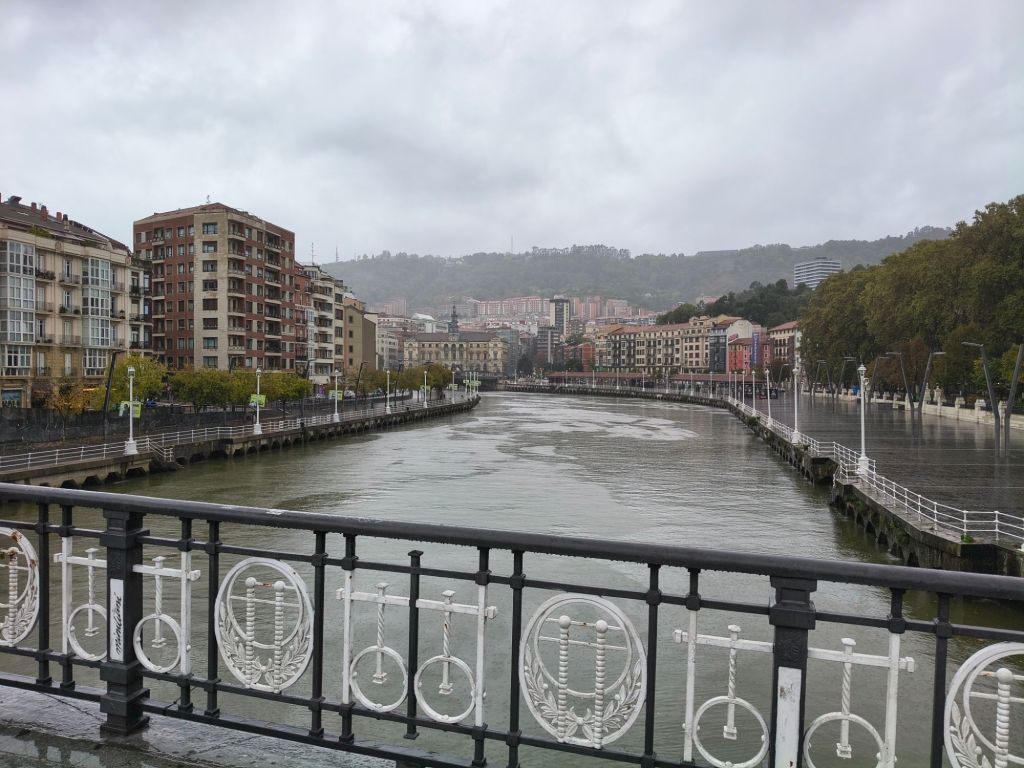
This is the same view of the Nervion that you can see earlier in the post, this one taken four hours later. It was dry, then all of a sudden it was torrential rain. Since then it’s either been raining or absolutely chucking it down. As I write, some more angry clouds are barrelling over…and here it comes again.
If the weather clears, I’ll try tomorrow.
Meanwhile, stand by for titanium nightmares about titanium Titanics…
The weekdays in San Sebastian are indeed quieter than the weekends, the daytrippers having left town or gone back to work in the great working city beyond the beaches. Instead of constantly dodging other pedestrians, a promenade under the benign, warm October sun is now a more relaxing stroll with the prospect of, say, a local vino blanco to come. Well, it’s arrived for me anyhow, and I need the sit-down to recharge my energy levels for one last day in San Sebastian before I head to my final stop tomorrow. My vantage point takes in the whole shoreline, and similarly this post will pull in the remaining points of interest that so far haven’t made it to the blog.
And a few more photos.
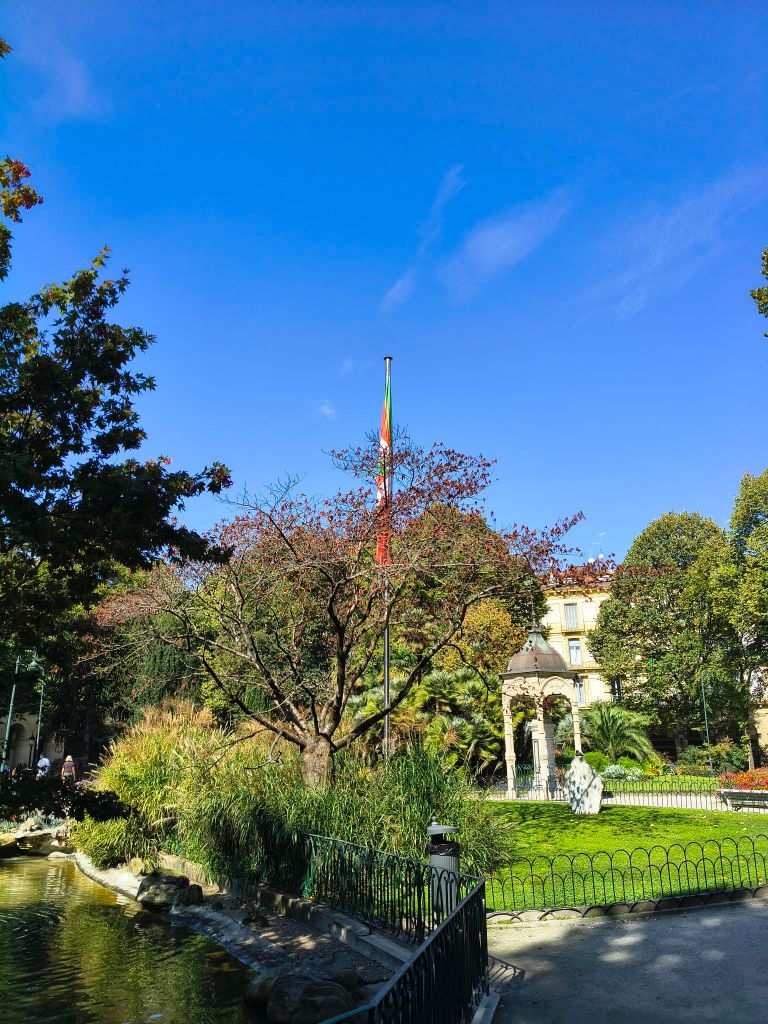
Plaza de Gipuzkoa
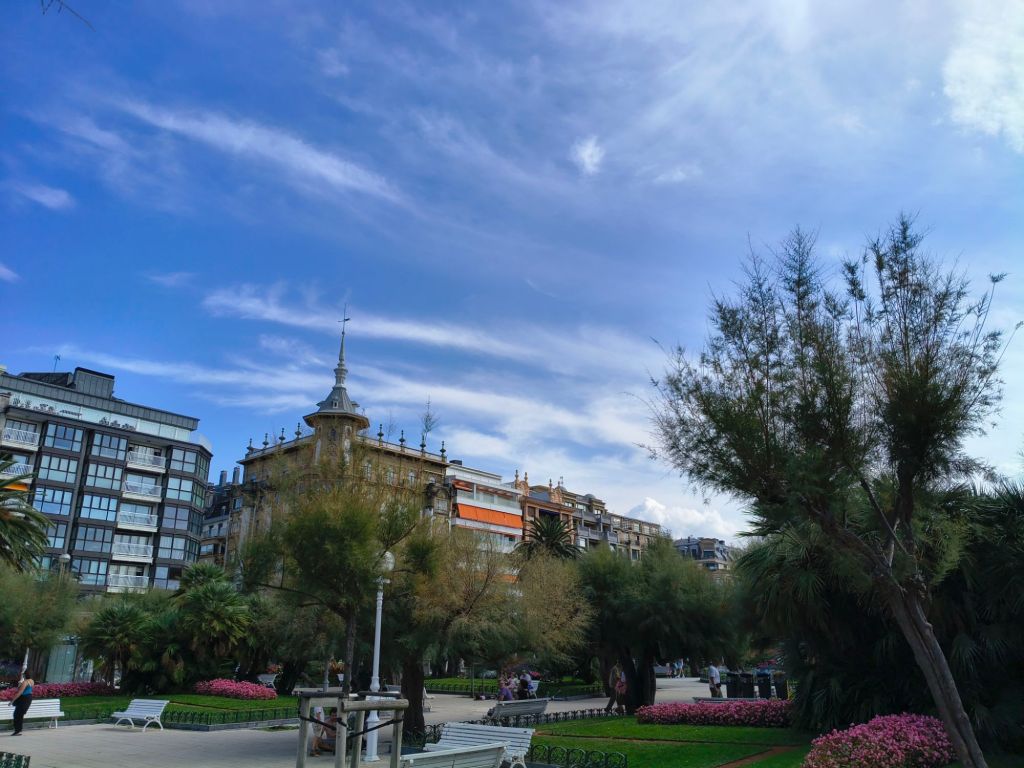
Hidden in the central commercial district, not far from the Old Town, sits the delightful Plaza de Gipuzkoa, more of an ornamental garden than a formal plaza, and a nice place to gently waste the hours.
It’s in the blog for informational purposes, rather than as a destination in its own right.
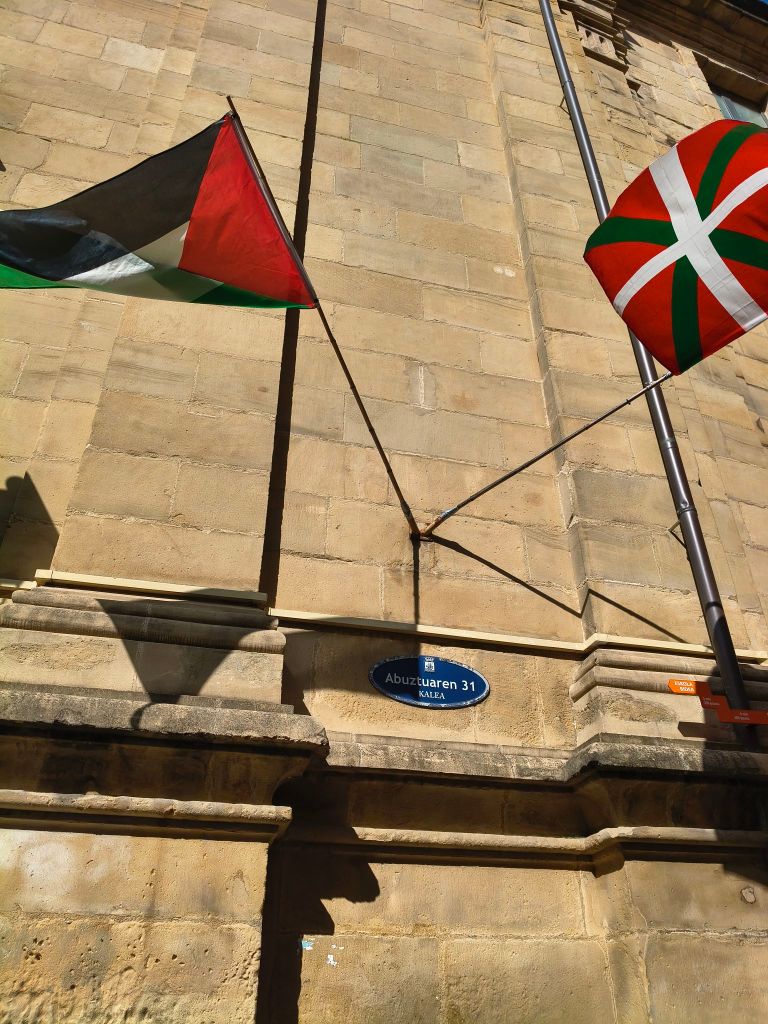
San Sebastián is the capital of the Province of Gipuzkoa, a province of the Basque Autonomous Community. That’s the Basque flag you can see flying there, the Ikurrina. You’ll see many Basque flags in town, but hardly any Spanish ones. Although you’ll hear more Spanish on the street than Basque, just as you’ll hear more English than Welsh in Wales, the people here feel Basque first, Spanish second – if at all.
The Basques in Spain have had a more troubled recent history than their French cousins. Basque Nationalists sided with the Republicans during the Spanish Civil War, and the Francoists responded brutally. Guernica, infamous for the terrible bombing inflicted by the Luftwaffe in 1937 and forever commemorated by Picasso’s famous painting, is a Basque town on the outskirts of Bilbao. Upon winning the war Franco doubled-down on repressing Basque identity and the language, and in 1959 this led some Basque nationalists to take up arms, forming the feared paramilitary organisation ETA. Political violence carried on after Franco’s death in 1975, the question confronting the new democratic state being whether the Basque country should be fully independent or regain its pre-Franco autonomy within Spain. ETA disbanded in 2017, the argument currently settled in favour of an autonomous state that is clearly and proudly Basque, with multilingual signage everywhere, Basque TV and radio channels, and either one of three flags on display on the balconies of many apartments around town; the Basque flag, the blue-and-white stripes of Real Sociedad, the local football team – and, because of a perceived connection with their own cause, the Palestinian flag.
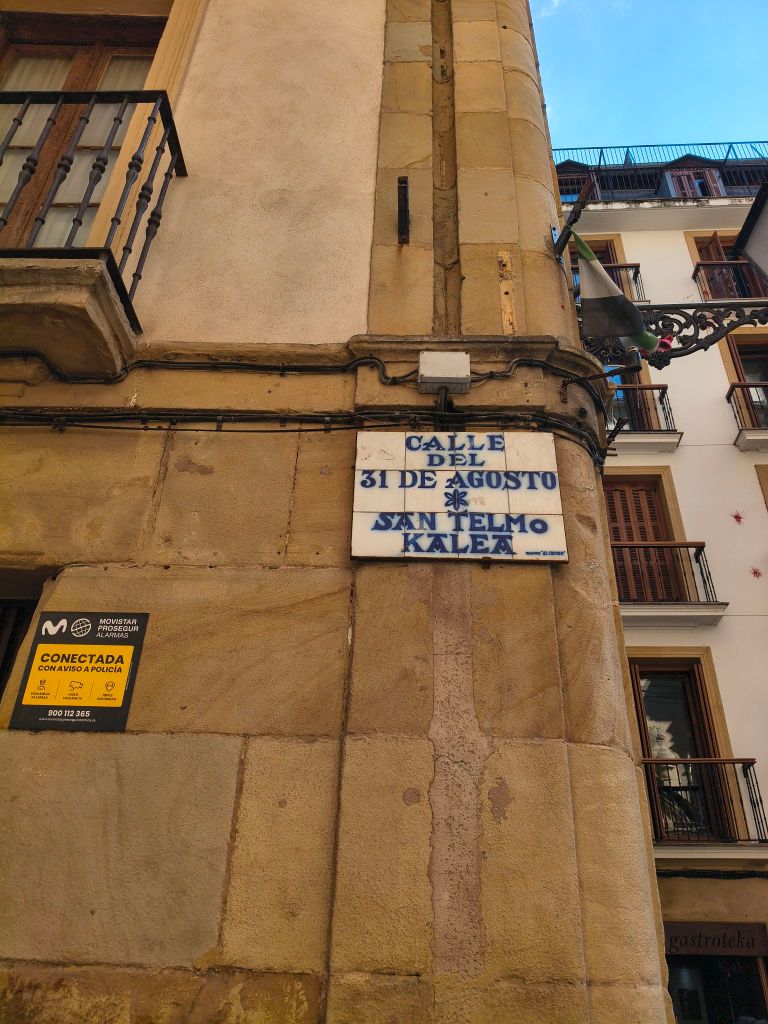
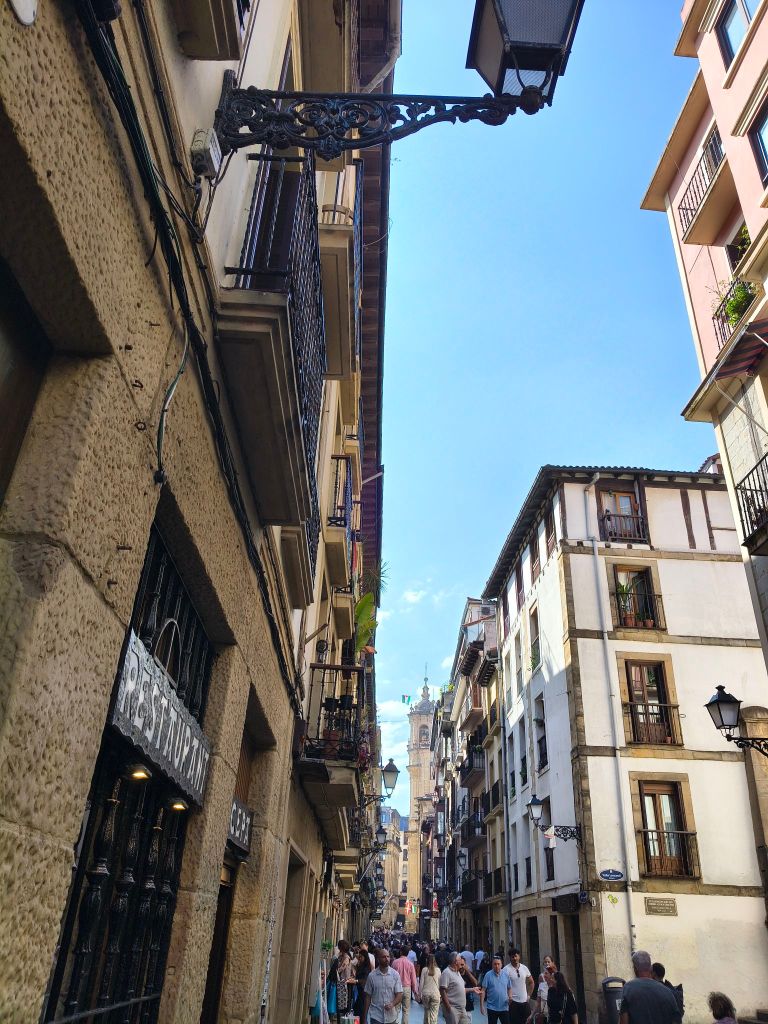
31st August Street
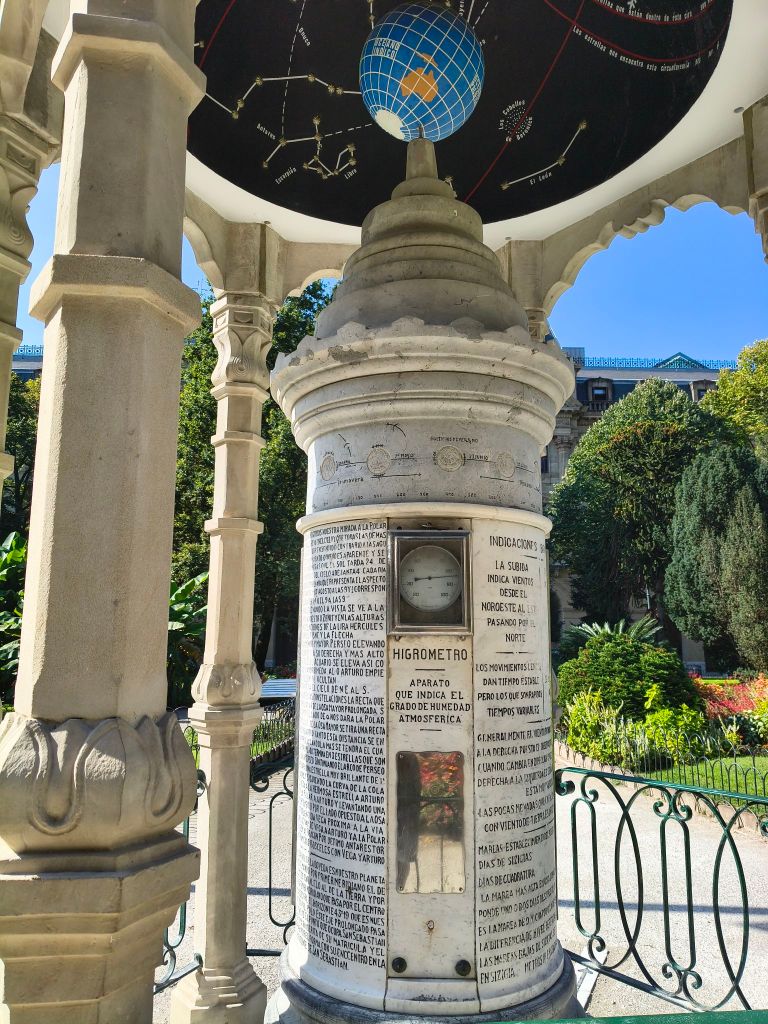
Anyway, the Plaza is a delight. There’s even an ornate-looking weather station. I’ll leave you to read all the details about it on the column. You’ll have to translate it yourselves though.
It’s in Spanish.
The flash bit
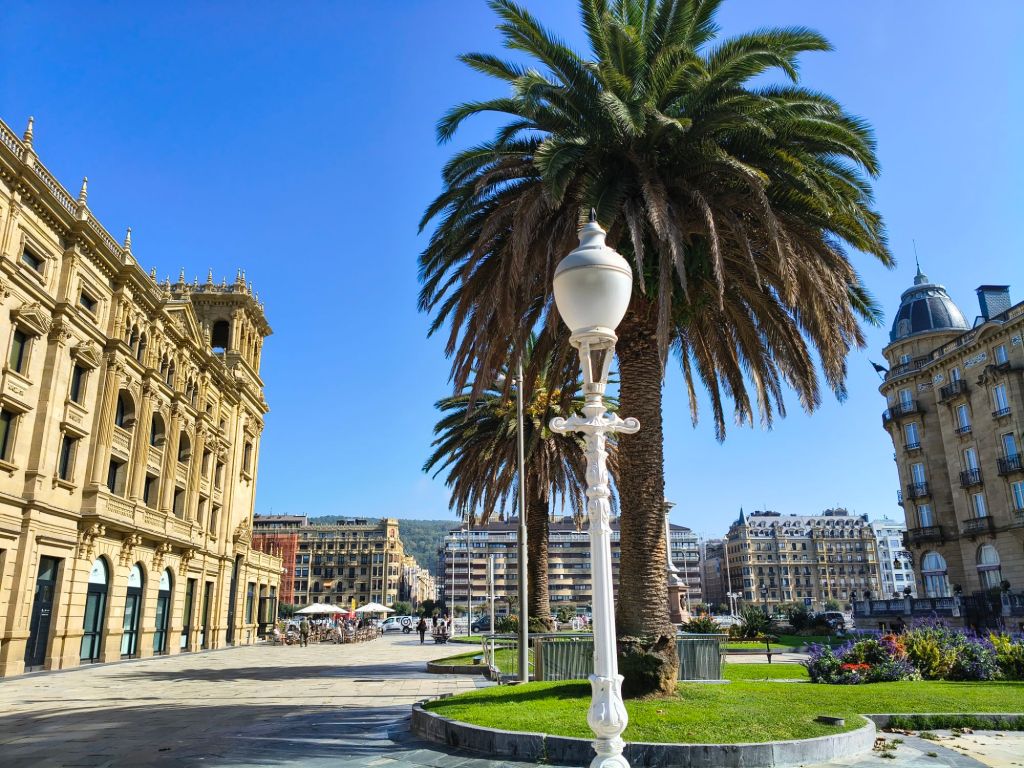
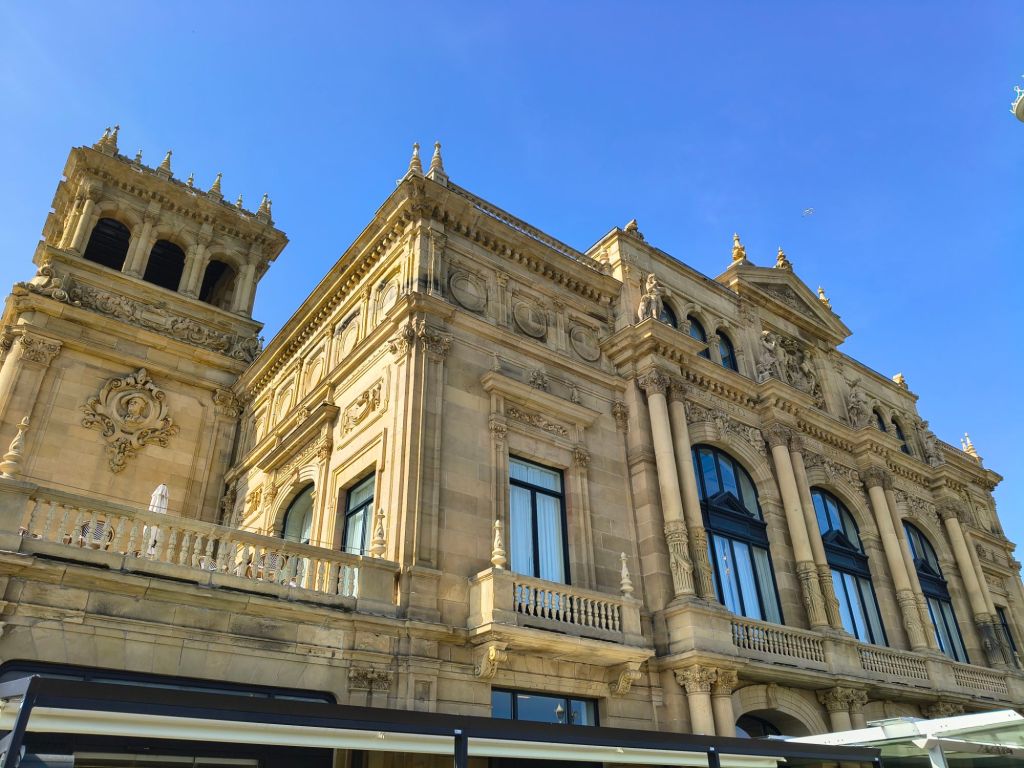
Near the river, in the centre of town, we close in on some serious swank. On the right is the Maria Cristina Hotel, expensive even by San Sebastián standards. On the left is the Victoria Eugenia Theatre (named after Maria Cristina’s daughter -in-law) which used to be where they held the film festival.
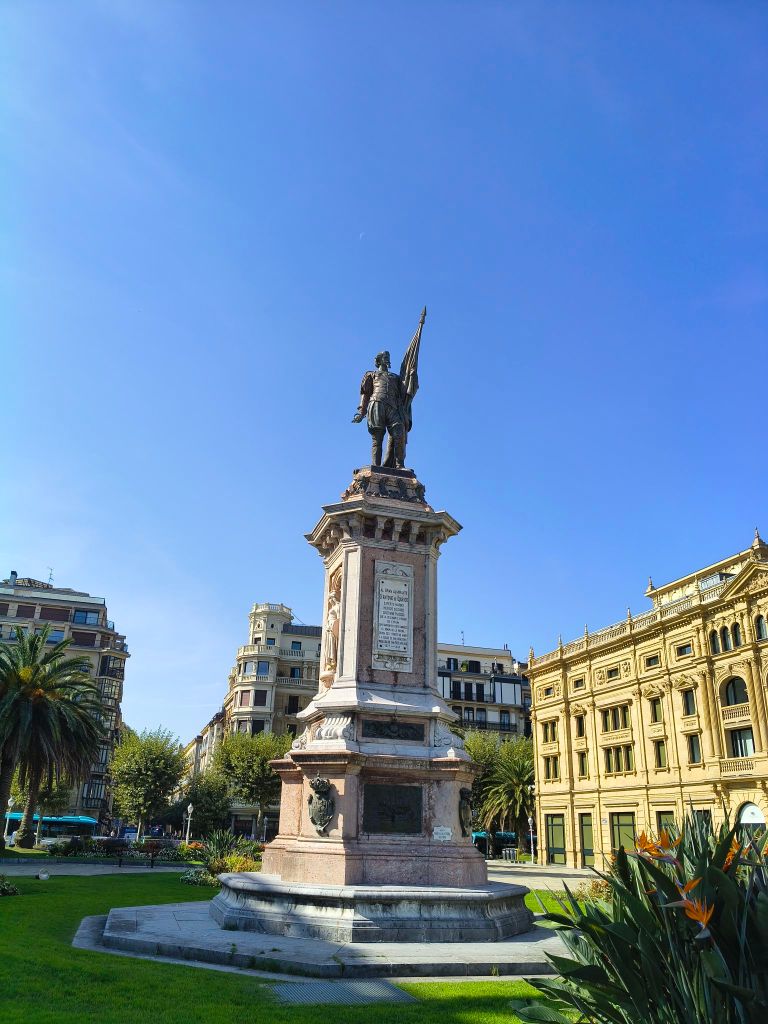
Between the two is an 1894 statue to one Antonio de Oquendo, a 17th-century San Sebastián-born admiral.
The Spanish plaque lauds him as an expert sailor, heroic soldier, faithful Christian, upholding the honour of his homeland in various combats. Presumably the Basque plaque says the same, in which case they’re both being rather reticent about how he got on in the Battle of the Downs in 1639 during the Thirty Years War between Spain and the Dutch.
These Downs are in the Kent area but they’re the watery variety. They’re a sheltered stretch of sea in the Channel just off Deal, and at the time England was neutral. Oquendo, trying to get to Dunkirk to supply the Spanish forces, sheltered here, benefiting from a secret agreement with Charles I. But the Dutch fleet ignored England’s “neutrality”, invaded the Downs anyway, and smashed the Spanish fleet. Oquendo escaped back to Spain, a broken man, heroic career finished.
Sorry, town worthies everywhere, if you’re going to put up a puffed-up statue for me to look at, I’m going to dig out the full story myself.
Plaza de la Constitución
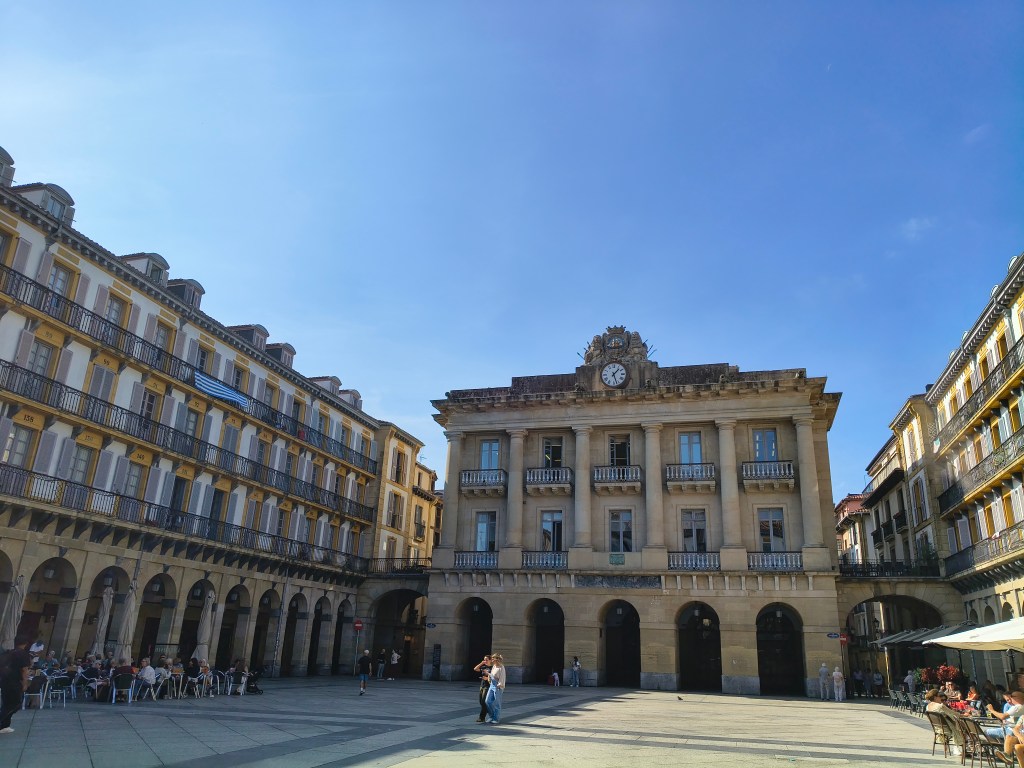
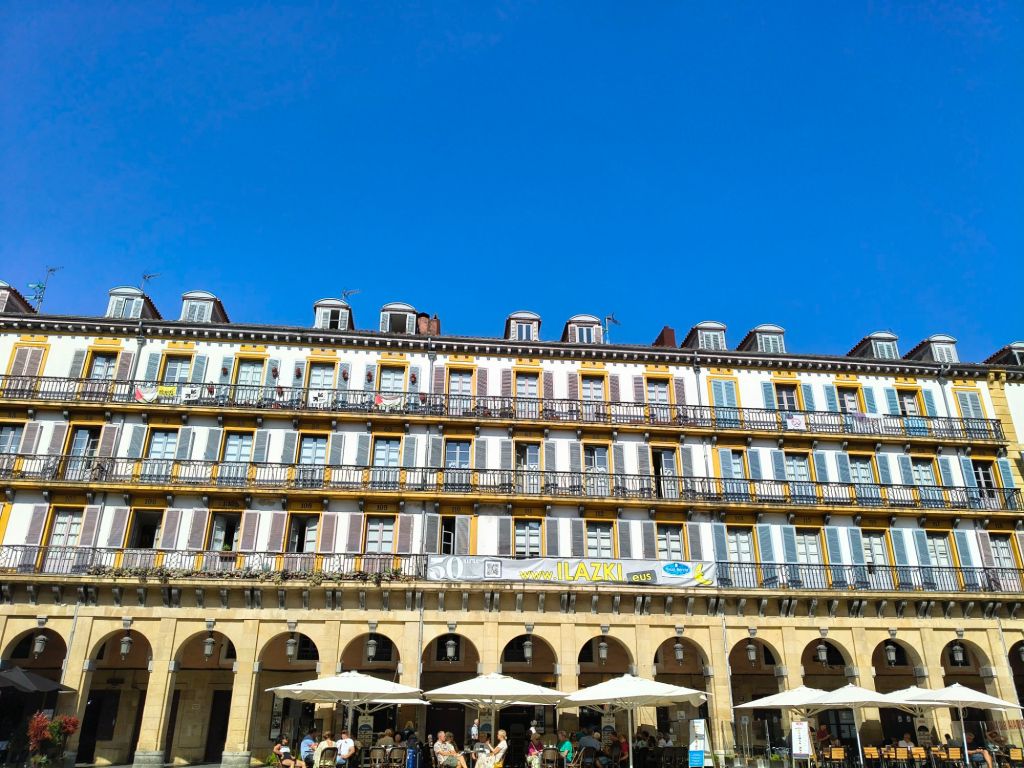
An impressive open space on the edge of the Old Town, the Plaza de la Constitución replaced an earlier version that was destroyed in the 1813 fire. Today it’s still a vibrant hub for social events, but mostly spends its time feeding the visitors via its restaurants and pintxos bars.
Try expanding the pictures. Can you see the numbering? This used to be a bullring, and behind the windows were spectator boxes – each with its own number.
Iglesia de San Vicente
At the other end of 31st August St to the Basilica stands the intimate Iglesia de San Vicente, an even older, 16th century church.
I kept turning up here when either it was closed, or there was a wedding, but finally on my last day here they were just opening the doors.
And it was well worth the wait, just to see the altarpiece.
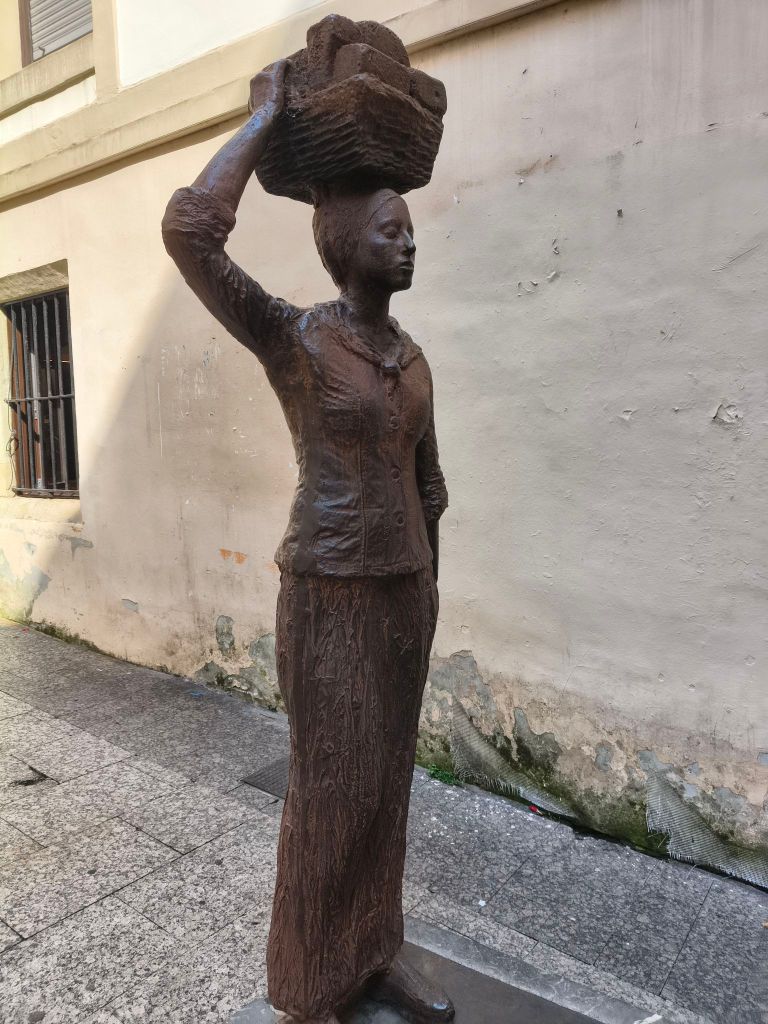
Halfway along the street there’s a very moving statue of a slim woman carrying a load of bricks on her head.
As I mentioned, most of the Old Town was rebuilt from scratch after its destruction in 1813. This statue commemorates the multitude of unnamed men and women who carried the bricks and rebuilt the town, one stone at a time. The sort of people who never get the statues they deserve. Their only monument are the glorious places they help create, maintain, and bring to life with their hard work, inventiveness and skill, and the energy of the community they – we – make.
The Bridge
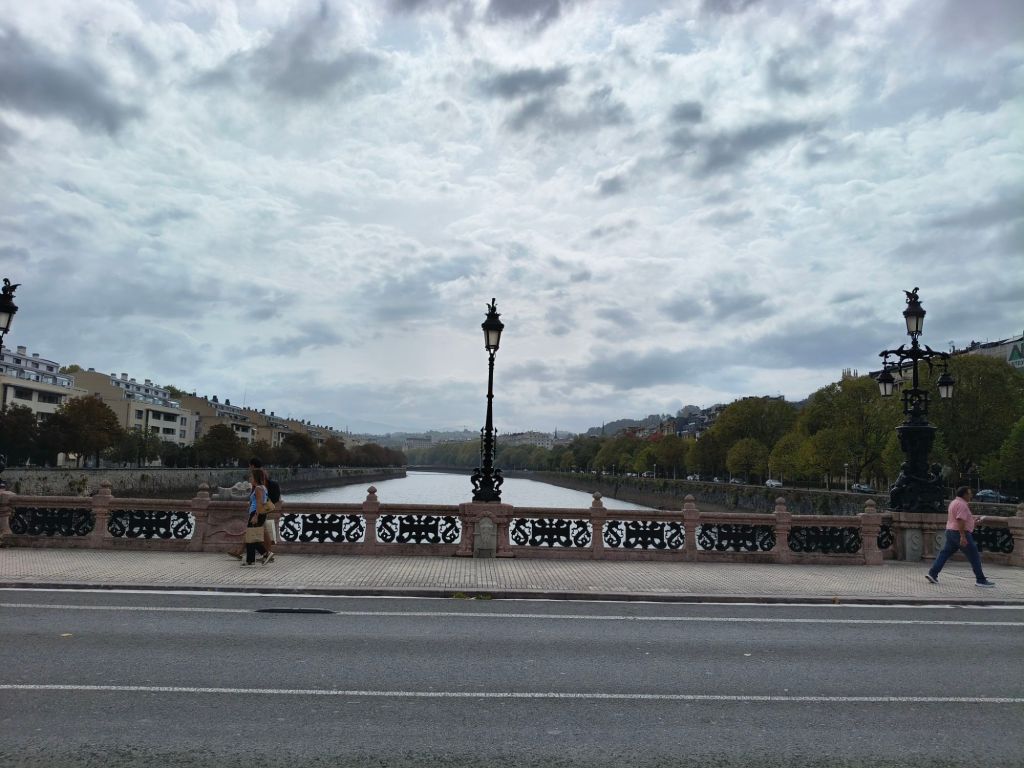
Do you remember the photos of the bridge from my first post? Here they are again.
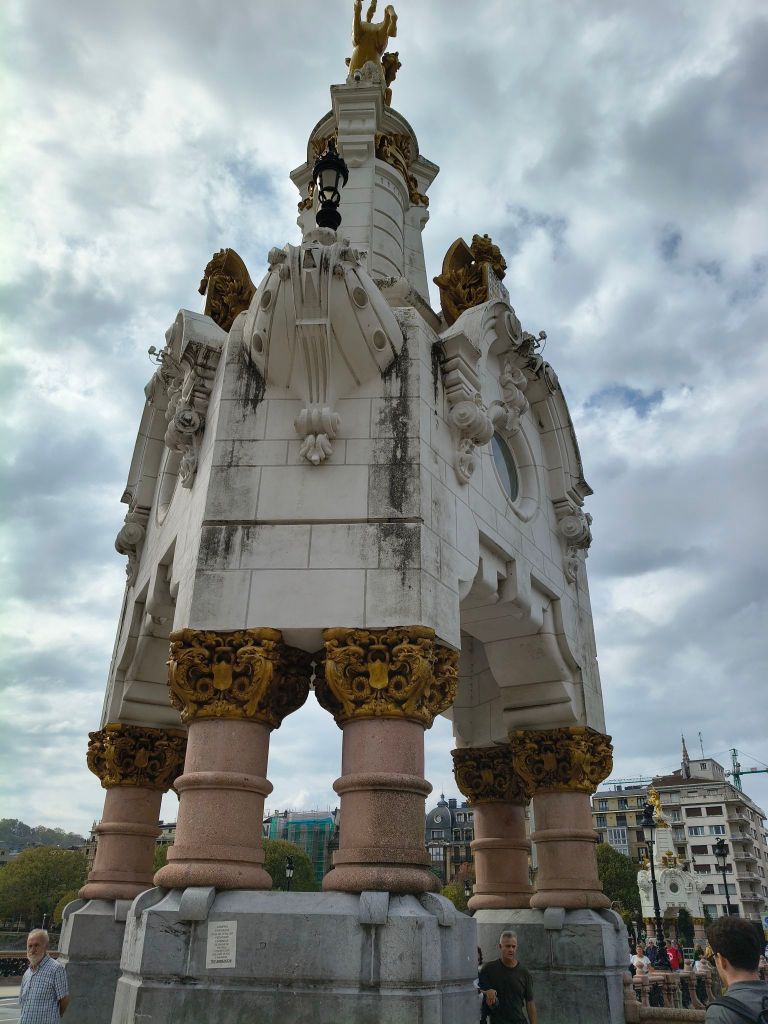
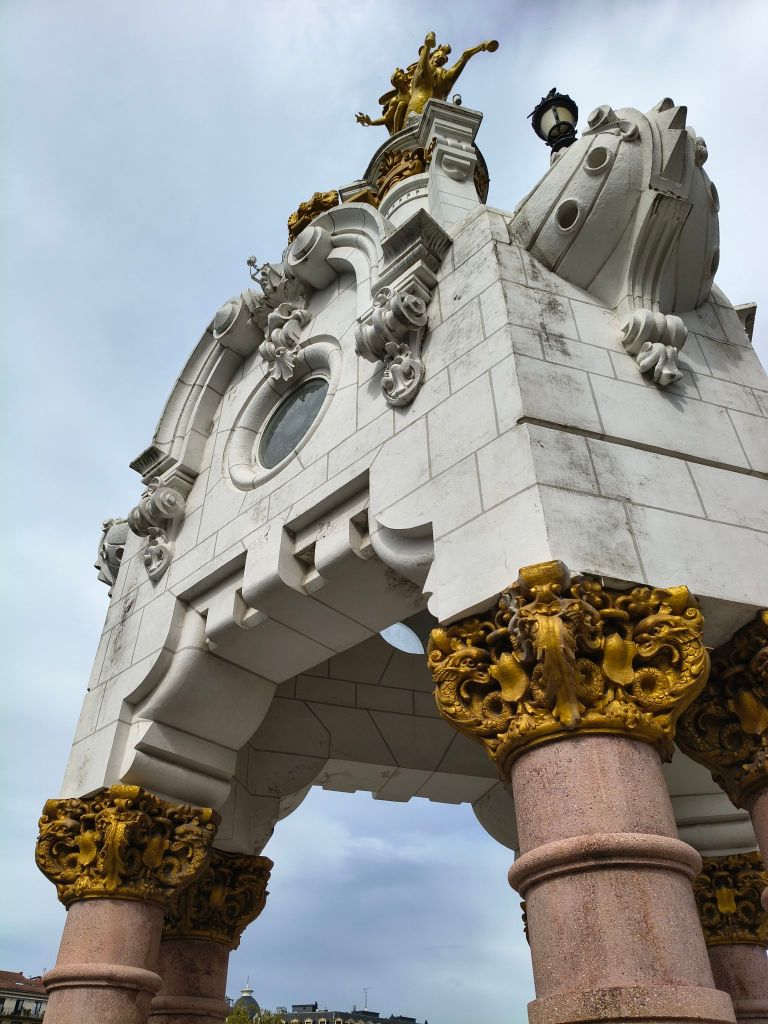
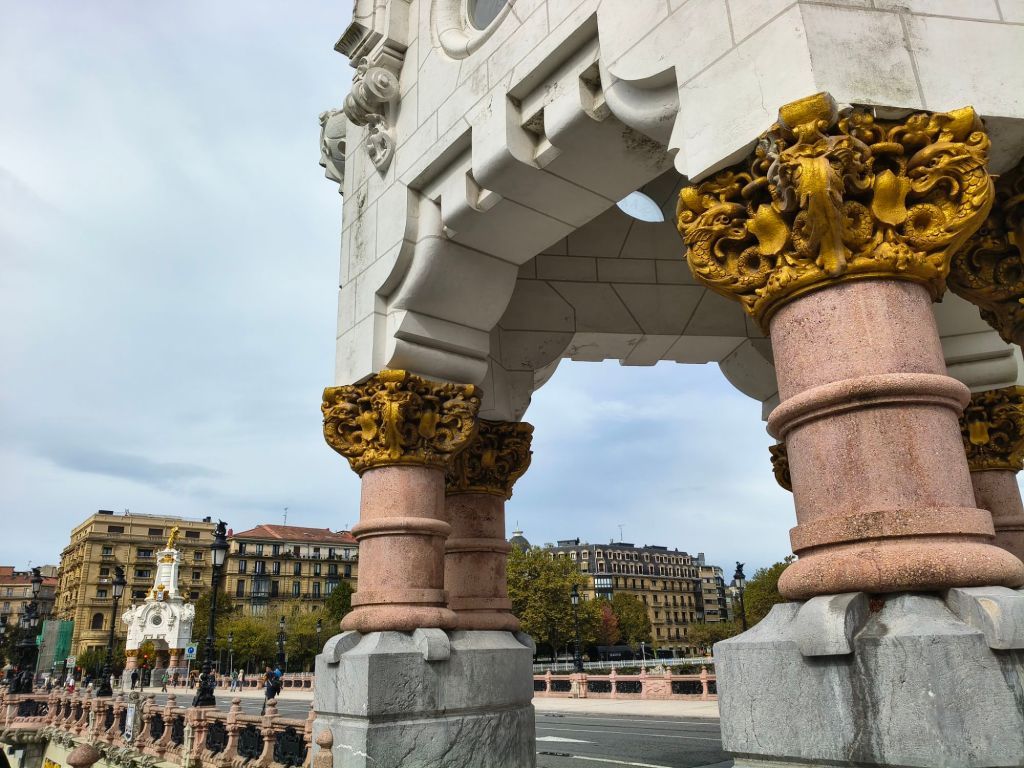
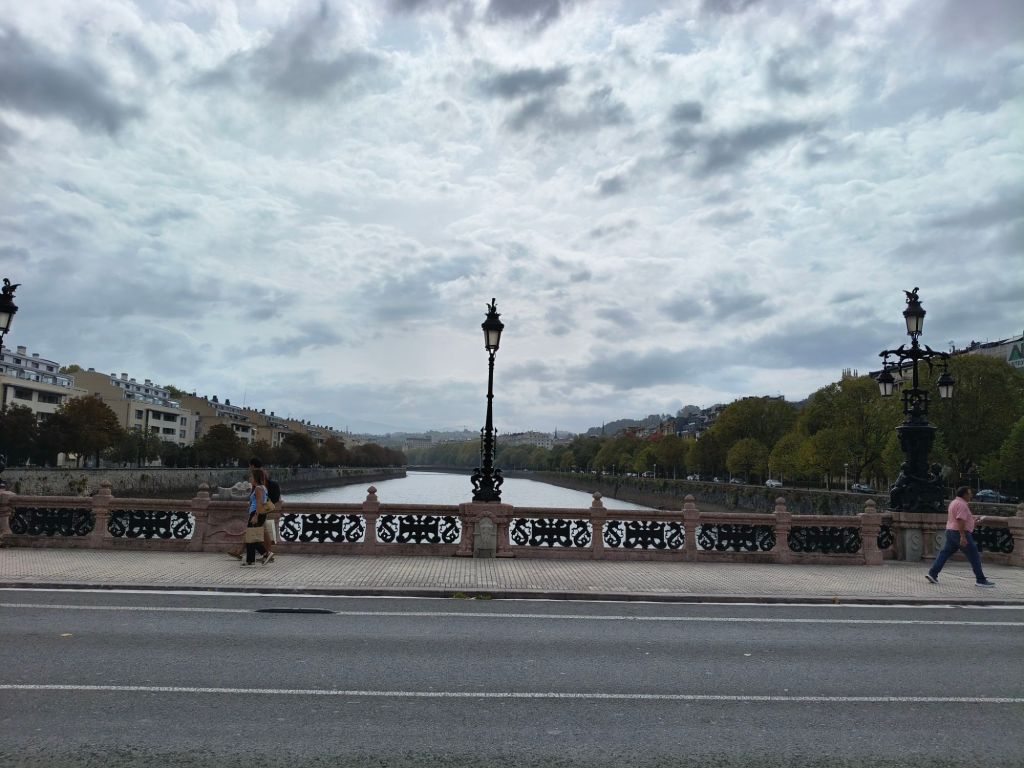
It turns out this is the Maria Cristina bridge, near the hotel that bears her name.
There are four large obelisks on each corner, paying artistic homage to the Pont Alexandre III in Paris. That’s if the word “homage” means repeating an idea from somewhere else but with much less taste.
A bridge, a hotel, the odd statue here and there…
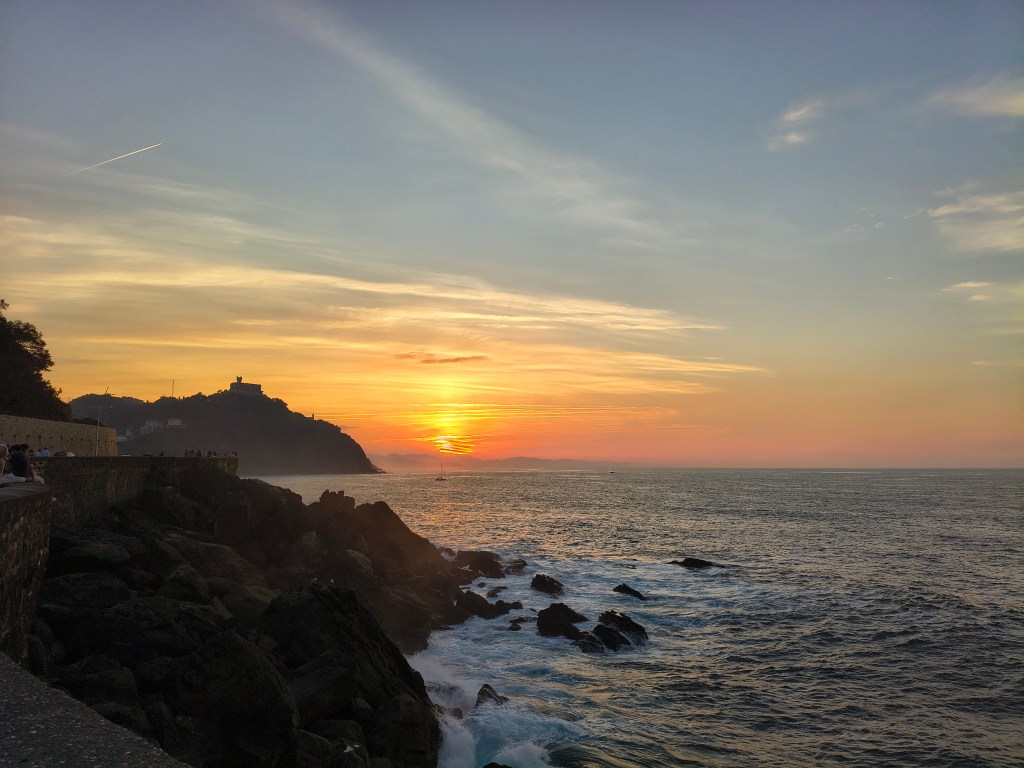
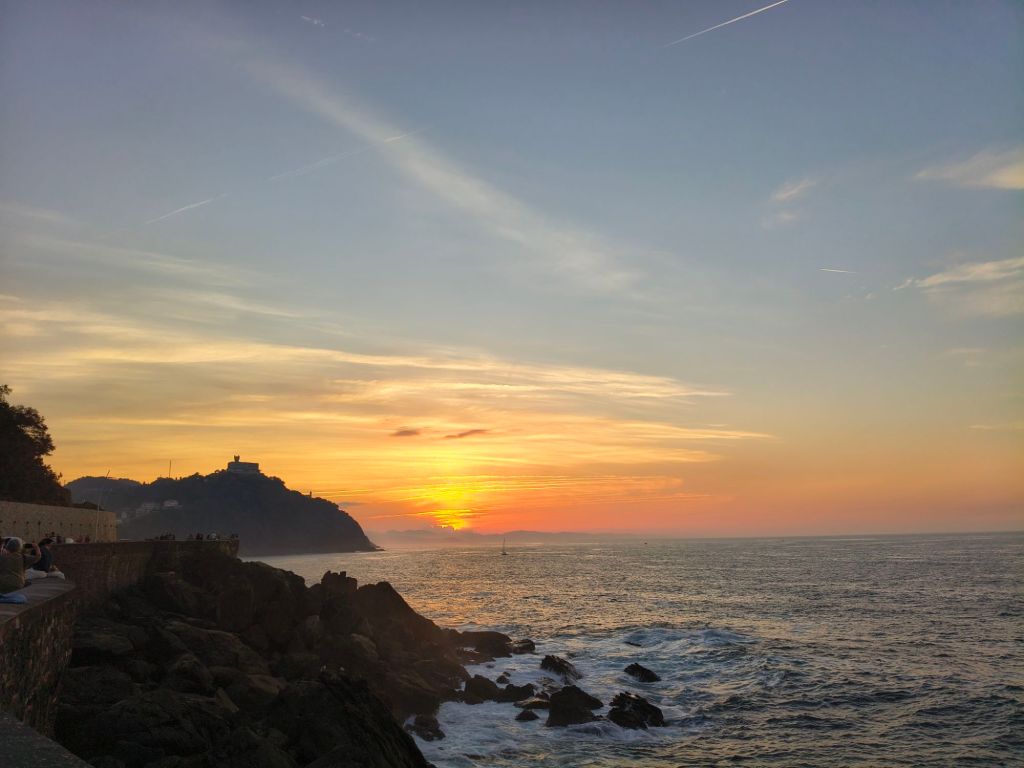
…it’s clear the notables of San Sebastián back in the day wanted us to remember queen Maria Cristina and her contribution to the city where she spent her summers in her later years. And she did make a contribution. But for me? I’ll remember San Sebastián for other things – the gorgeous bay and the shimmering sandy beaches, the green promontories set against the blue sea, or the blue sky, or the magical sunset…the effortlessly elegant resort architecture, the vibrant charm of the Old Town once the numbers had reduced and the tourists could relax…the pintxos, the relaxed buzz…
And just forgetting the Basque/Spain thing, and just being in – Iberia.
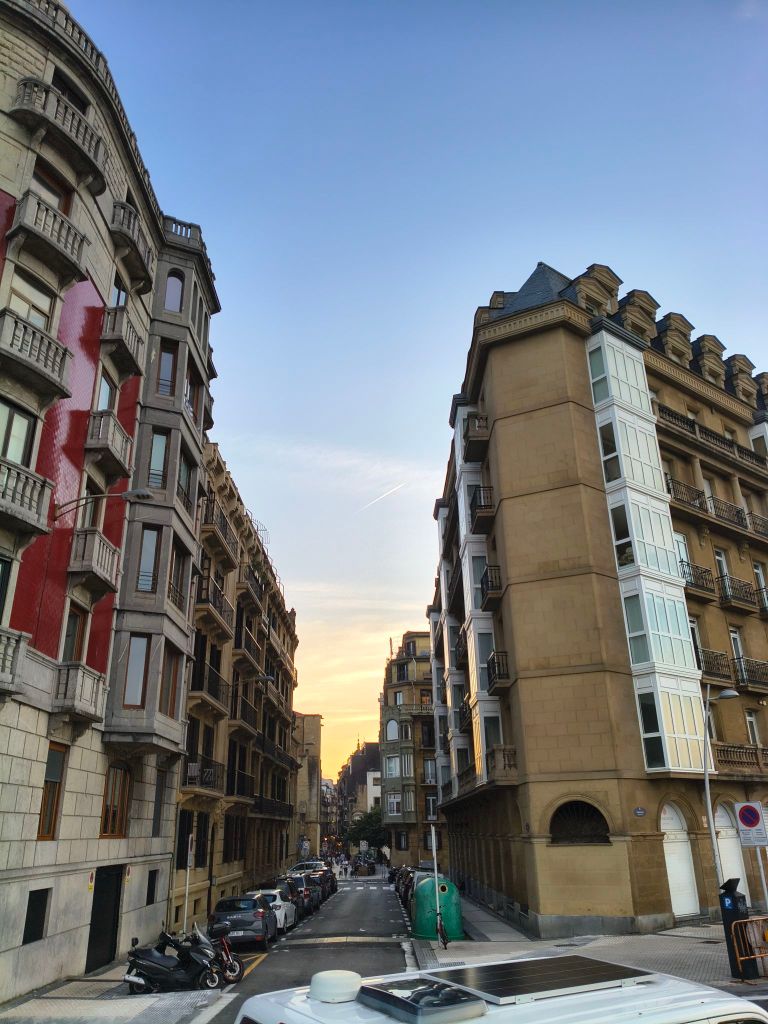
As the hours drifted by, I realised just how stunning San Sebastián is. You could spend days, long, bright, fragrant Spanish days, wandering along the shoreline, snaking around the dramatic headlands, looking out to sea or inland to the dramatic mountains framing the fine, Belle Epoque architecture of the beachfront, or maybe you’d prefer promenading along the banks of the River Urumea, itself flanked by flamboyantly-styled fin-de-siecle hotels. And you would not have seen the end of it. Or, if you had, you’d want to do it all over again.
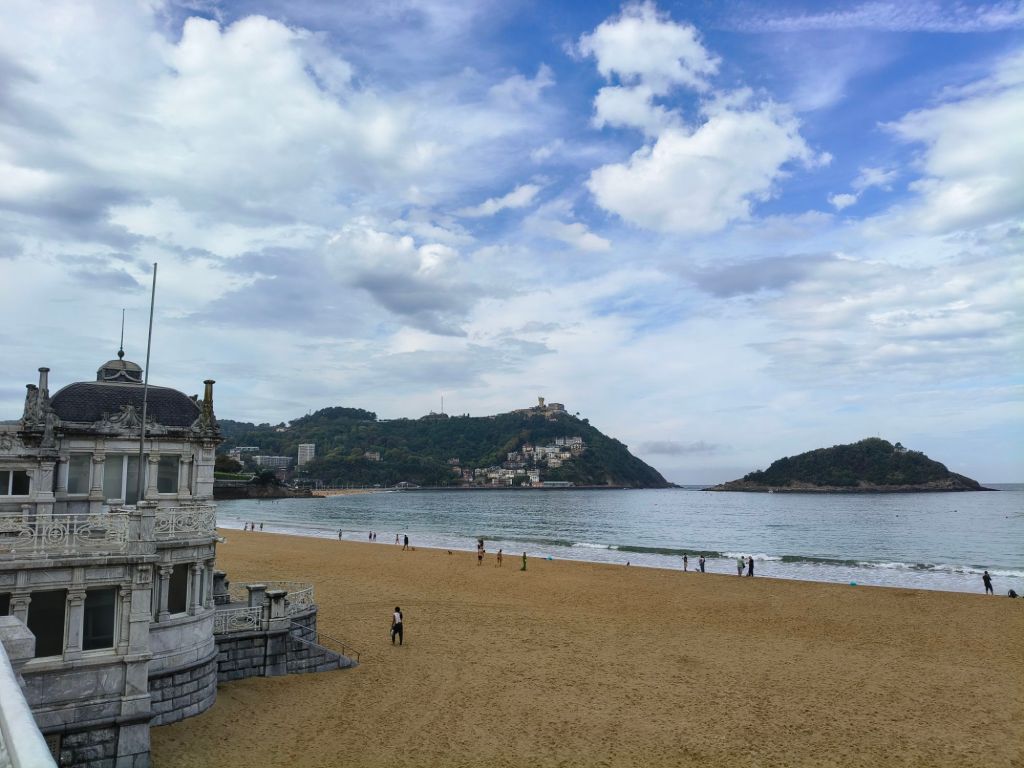
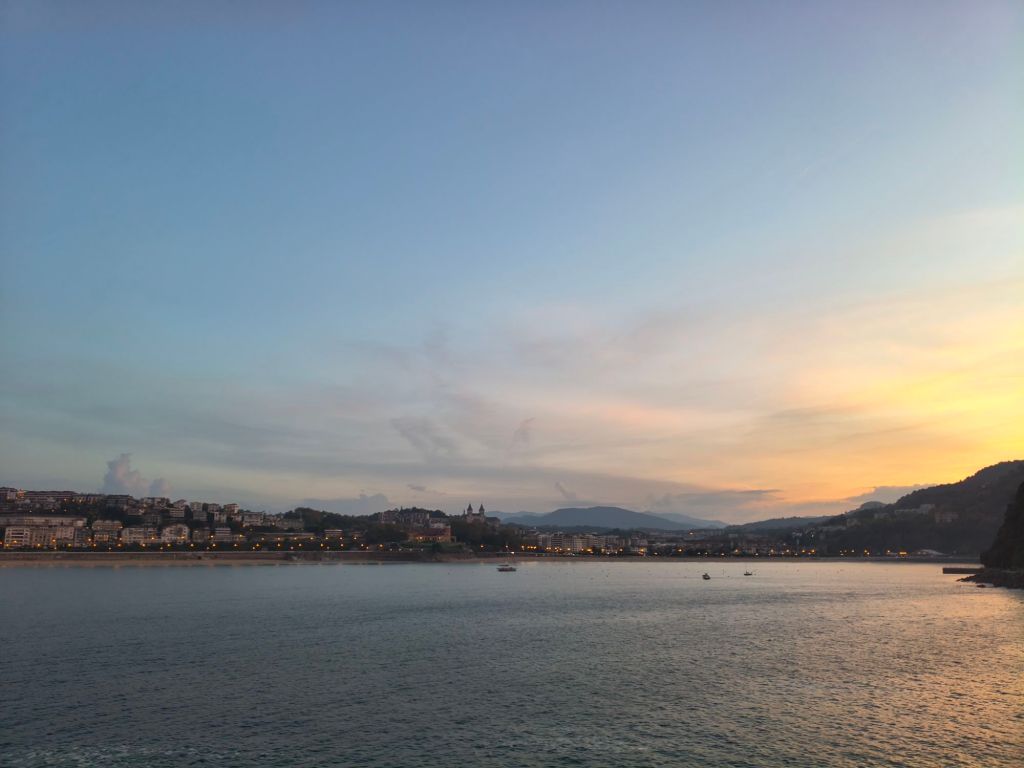
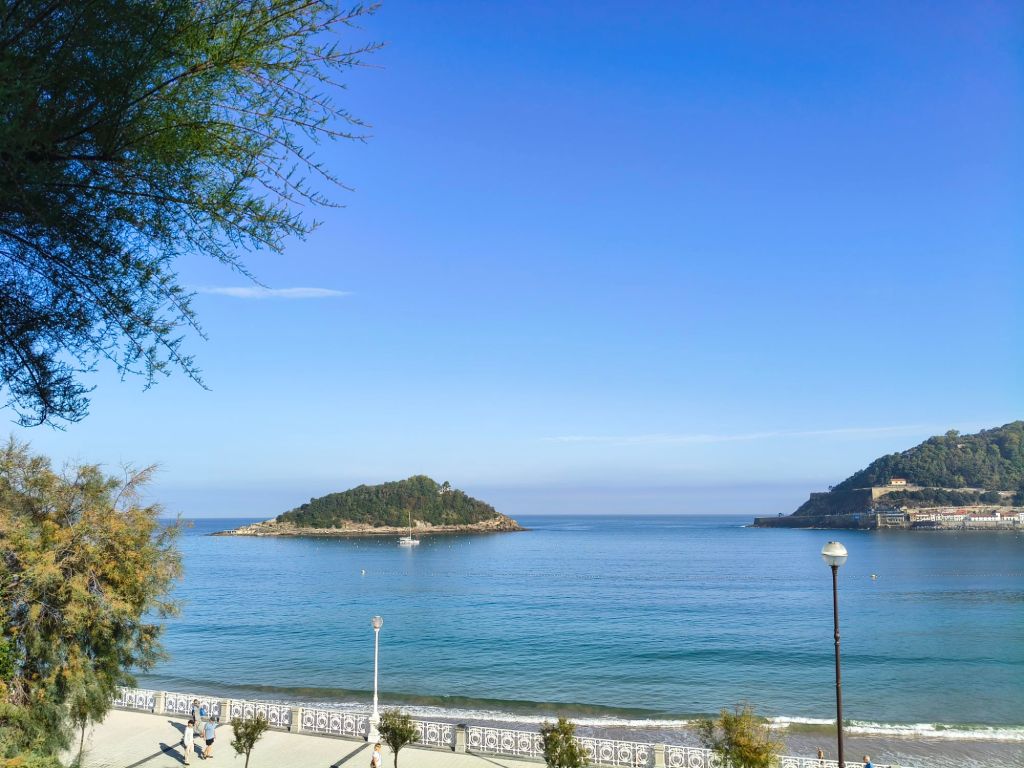
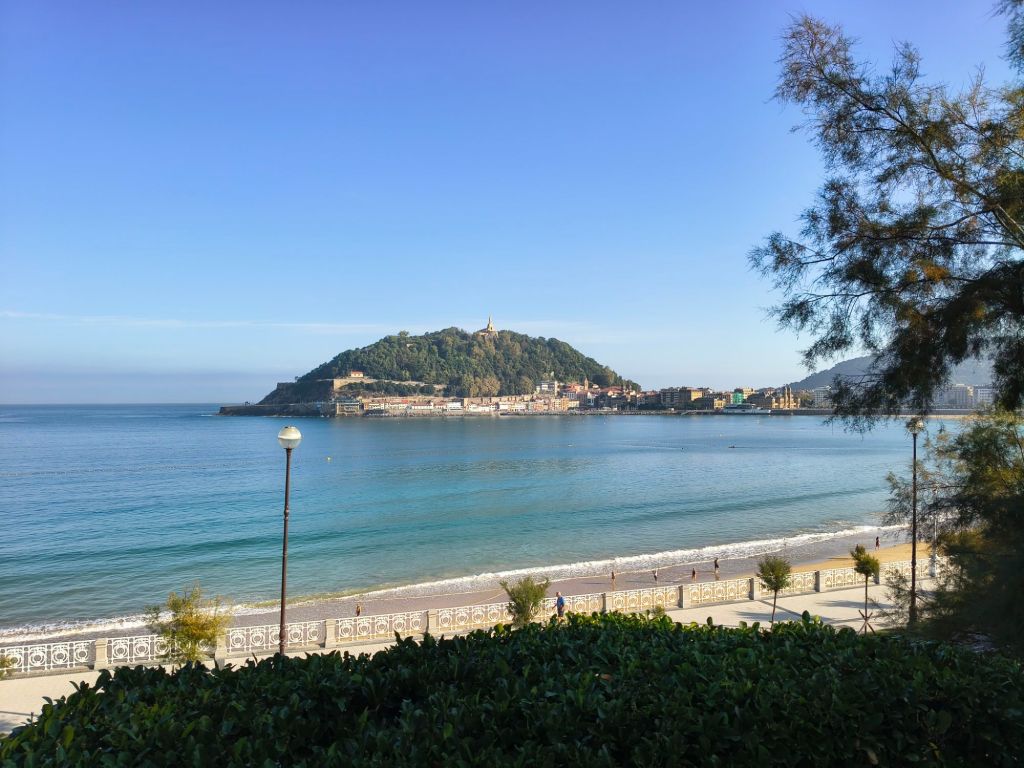
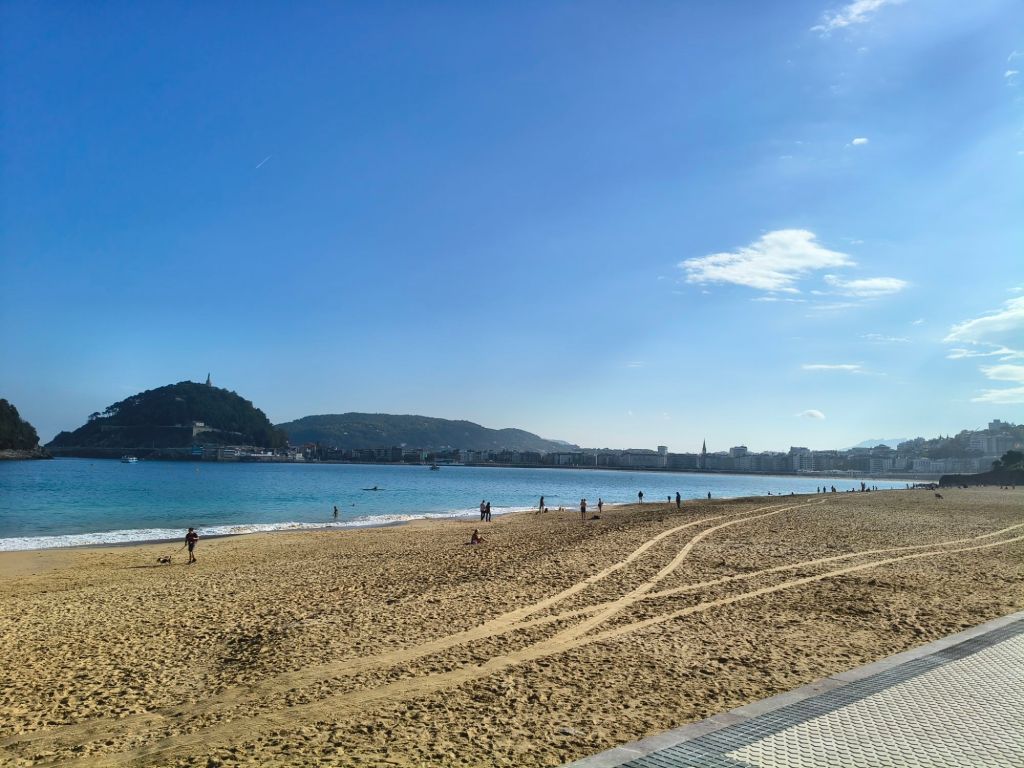
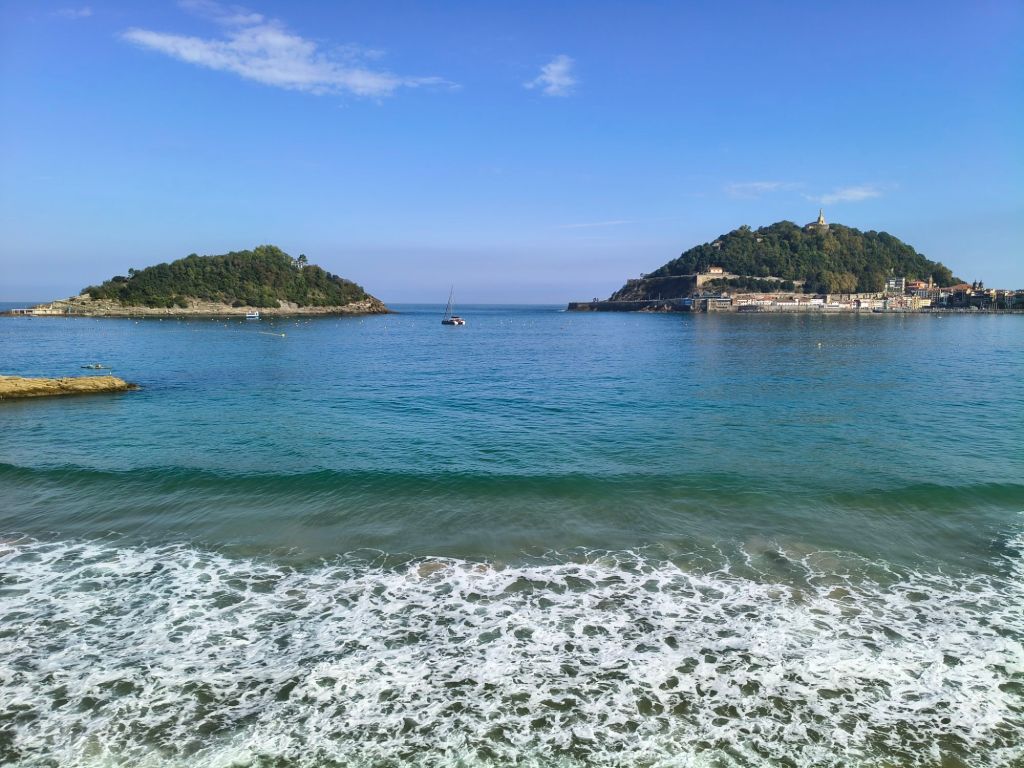
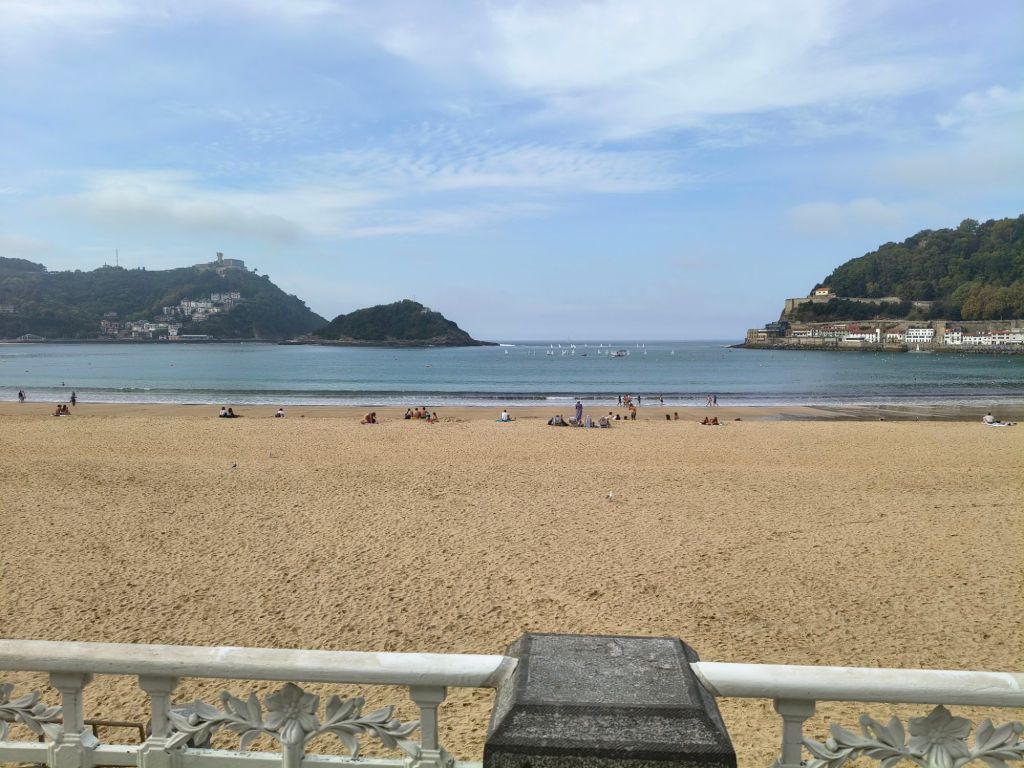
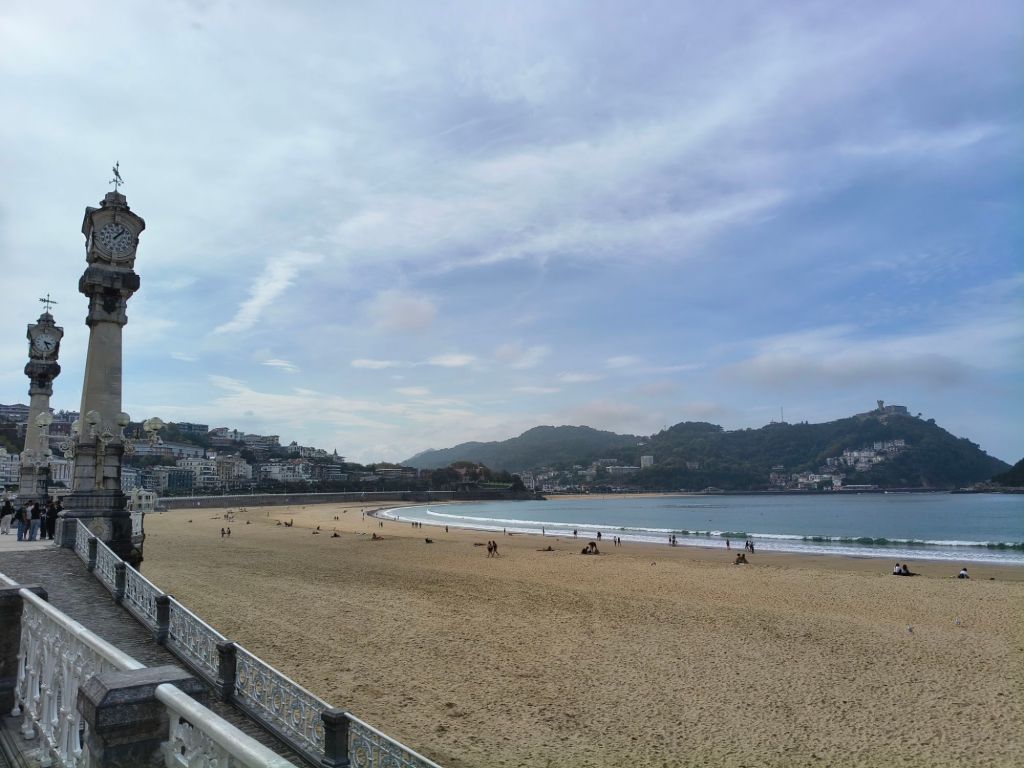
Known as Donostia in Basque – which actually does translate as “Saint Sebastian” – the city is based around a horseshoe-like, conch-shaped beach appropriately called La Concha. The two points of the conch rise to seriously precipitous headlands, and the Old Town arose in the shadow of the easternmost of these, Mt Urgell. In the middle of the bay sits the atmospheric-looking Santa Clara island. Atmospheric – unless you were a British officer in the Napoleonic War of 1813. You would have instead thought of it as “a jolly decent base”. At the time, San Sebastián was held by Napoleon, and the British wouldn’t have given much time to my dreamy description of the town at the beginning of this post. After launching an assault from Santa Clara, they turned the town into something that wouldn’t read quite as well in Lonely Planet – “kindling”, “embers” and “ruins”. Only one street remained after the Anglo-Portuguese makeover, and today it’s called 31 August Street – the date of the attack.
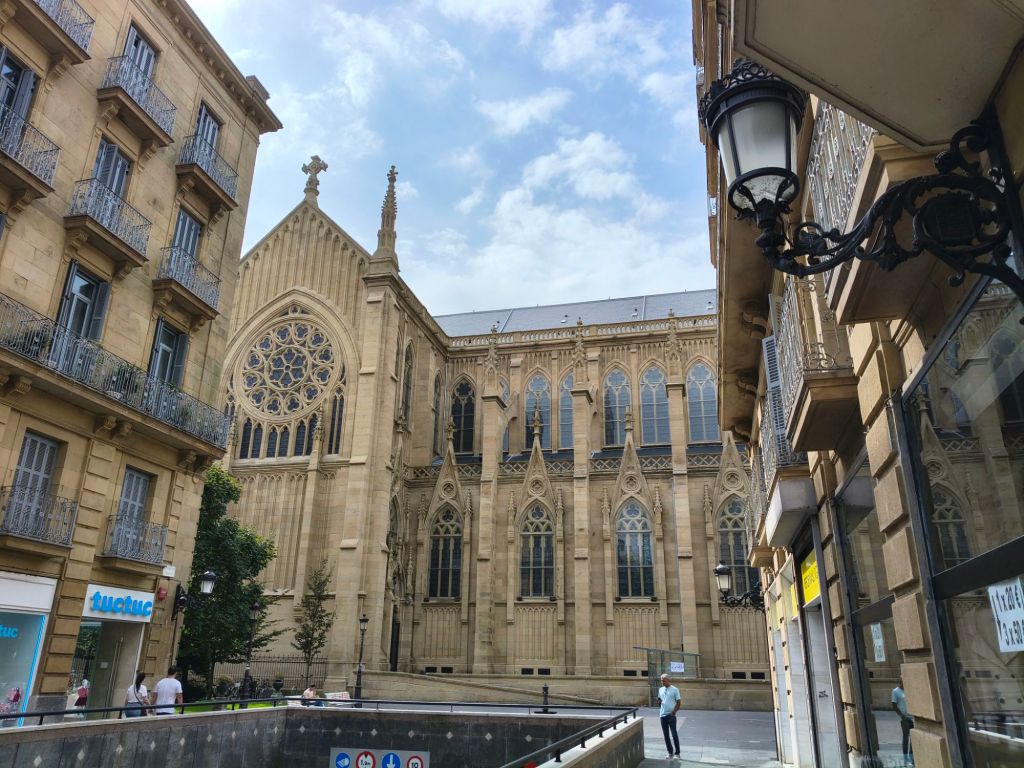
The 31st August Street is actually the one the Basilica of Mary is on, the basilica we saw in our first post. There it is in the distance.
Leaving the Old Town a smouldering ruin was bad enough, but it also meant the local brandy and wine was all on the house. The allied soldiers turned into a drunken, rampaging, pillaging mob, and according to some estimates half the town’s population was killed. The Old Town was eventually recreated as it was, but you can’t just build away the emotional scars, and to this day there’s a candlelight procession every 31st August on the surviving street. It’s difficult to be completely certain, but British tourists still seem to be welcome here.
But you see that everywhere nowadays, to be fair
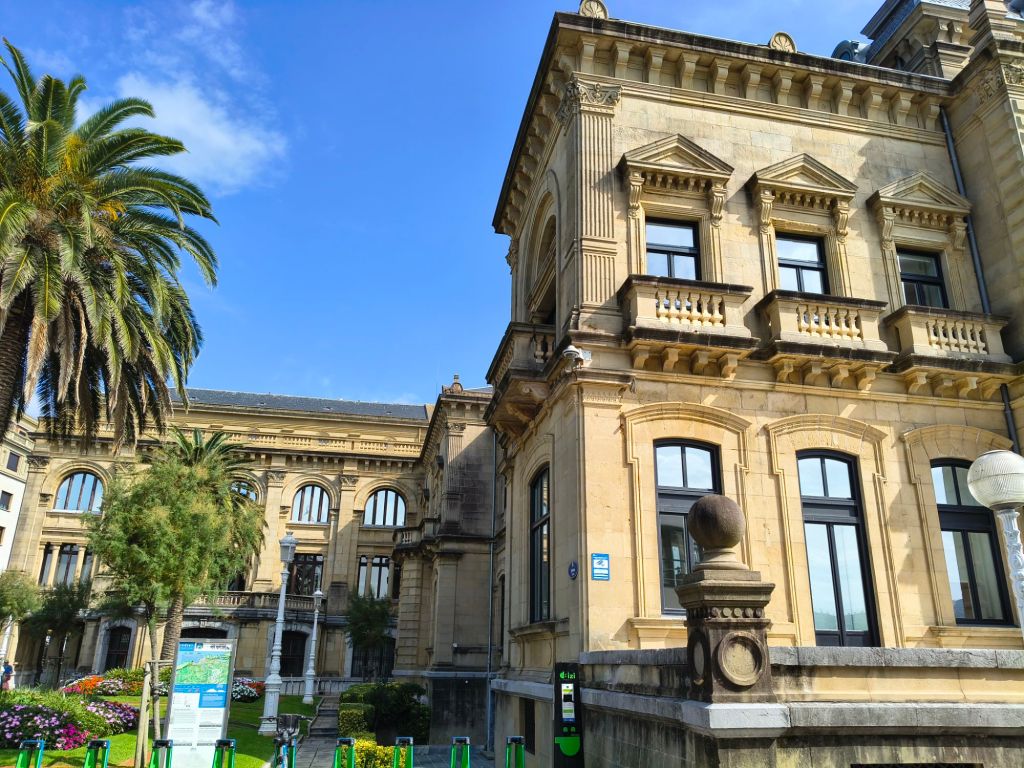
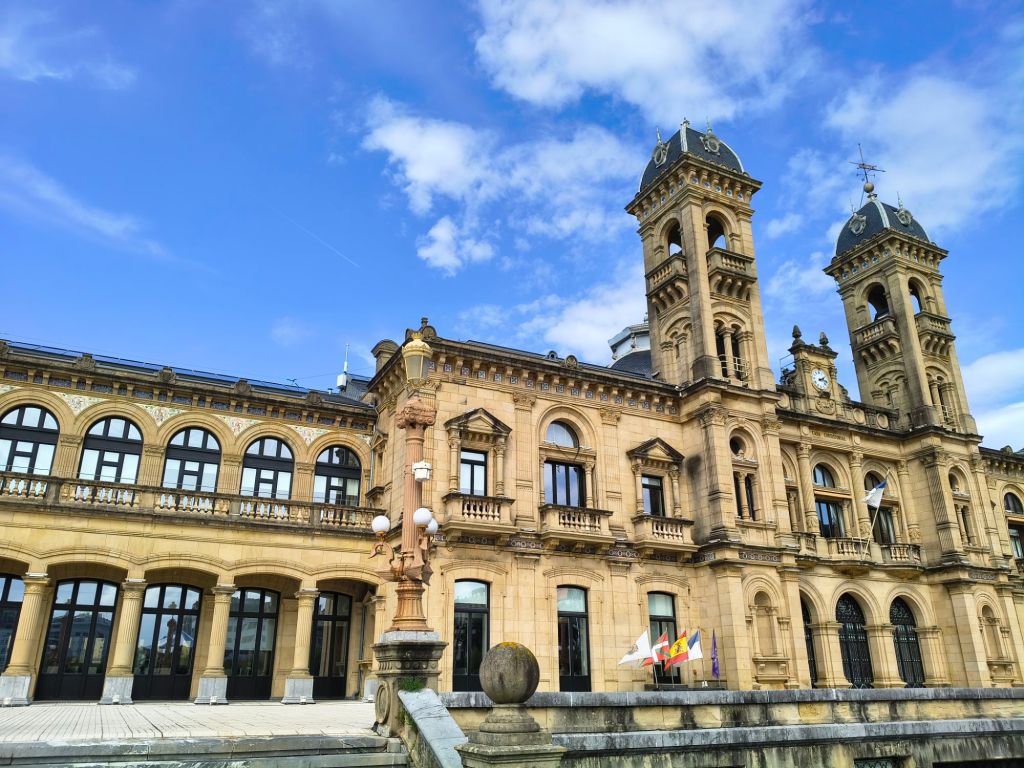
You can usually spot the Old Town from most vantage points by looking out for the twin towers of the Ayuntamiento de San Sebastian, the city hall.
The 19th century, as we’ve seen, had its wars, but when San Sebastián wasn’t fighting it was sprucing itself up as an elegant resort destination for the well-to-do of the Victorian era. The city hall was originally a Belle Epoque casino, a place for the well-to-do to become much-less-well-to-do if they wanted. Unfortunately Spain banned gambling for a time in 1924, and the building eventually found its municipal function. Unfortunately it also found itself a target during the Spanish Civil War. I didn’t get close enough to see them, maybe try expanding the image, but there are still bullet holes in the flamboyant stonework.
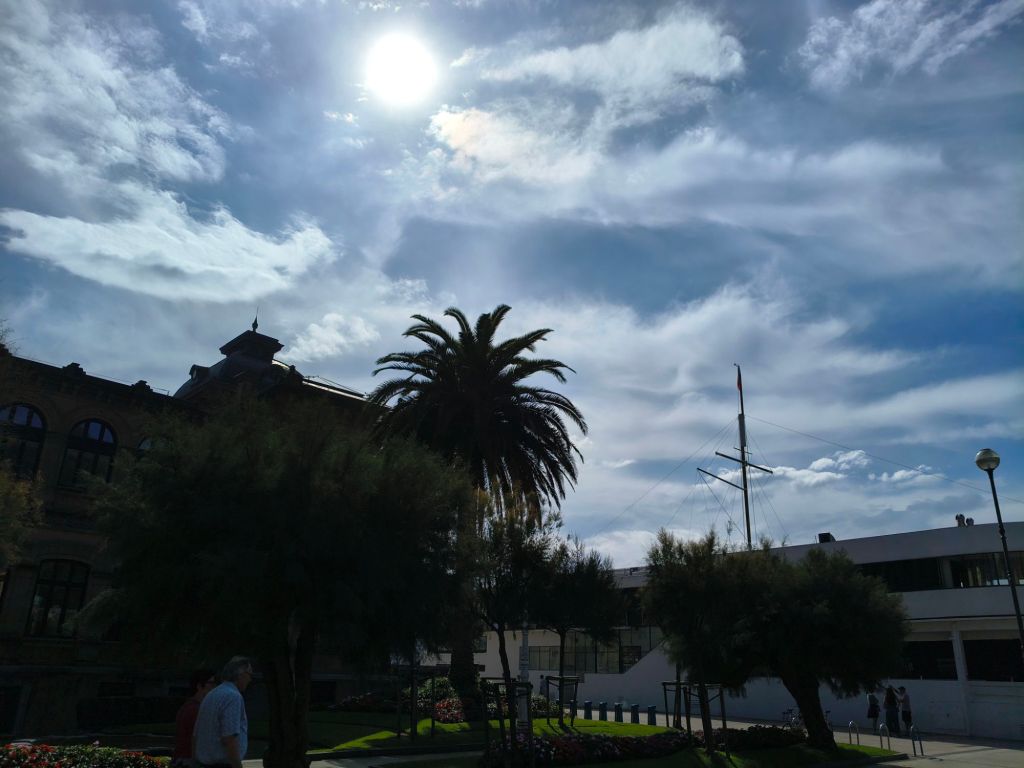
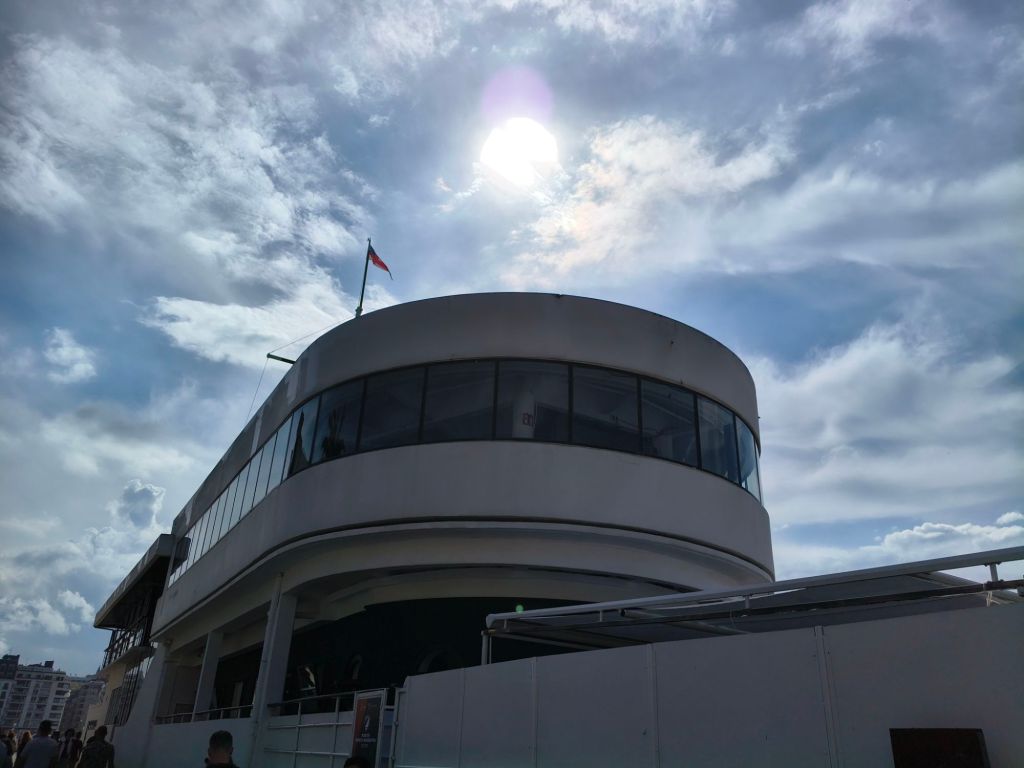
Next to the city hall is a ship. Sort-of.
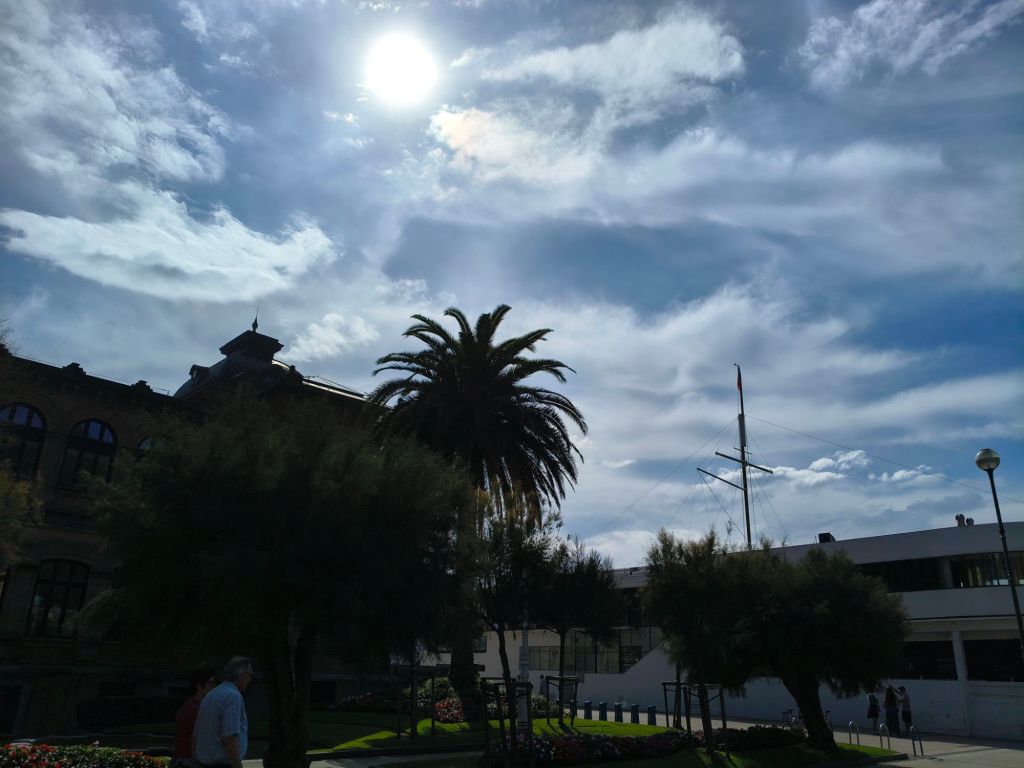
Built in the 1920s as a yacht club, the Real Club Náutico de San Sebastián is actually a seafront building that references the city’s seaborne heritage. Well, I suppose it’s…a yacht club. Having such a Modernist design so close to the Old Town was sailing too close to the wind for some residents, who called it an “unsightly box”. The building would receive a better reception as the years rolled on, but sadly this came too late for one of the architects, Alzpurua; at just 33 years old he came face-to-face with his most formidable architectural critic, a bullet from a Republican gun during the Civil War.
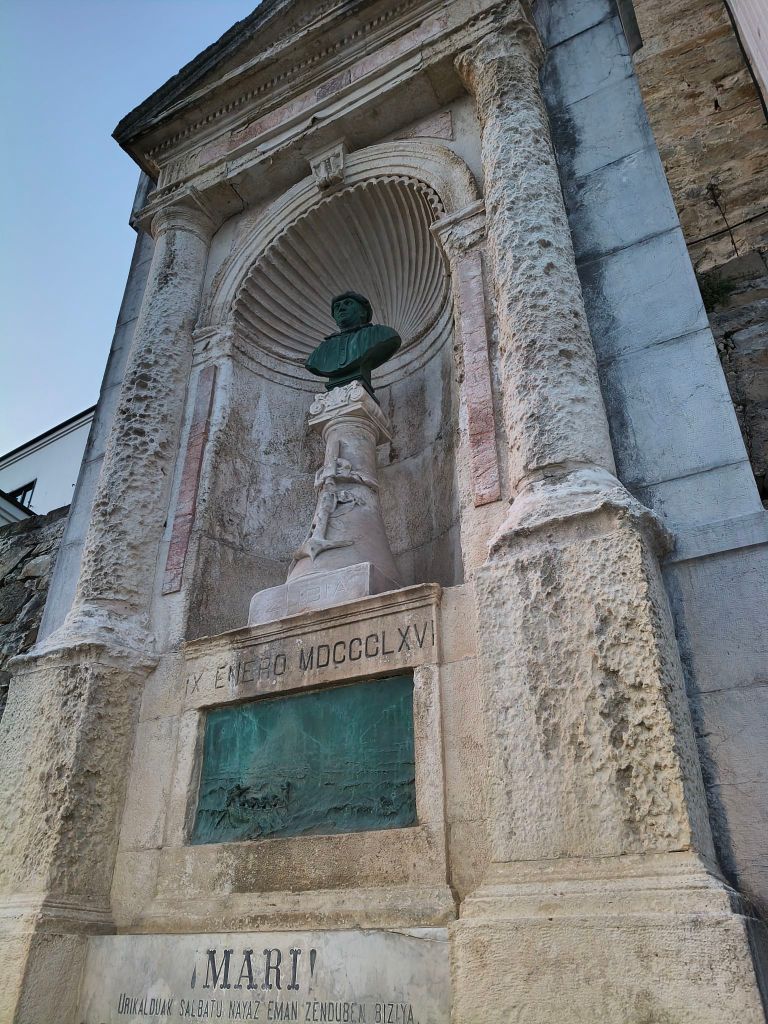
Heading along the harbour front as the headland grows to Mont Urgell, we find this memorial to one Aita Mari. Born José María Zubía into a fishing family in 1809, Mari himself became a fisherman, but became famous and adored for his selflessness and bravery in helping other sailors in distress on the high seas. On July 22nd 1861 a particularly nasty gale blew up and a fishing boat was seen from the city to have been overturned. Four men were seen to be clinging on to the upturned keel, but the waves were surely too high to launch a rescue. Mari thought otherwise, got some volunteers together, ventured out and managed to save three of the four men. For this act he and his friends were awarded high honours across Spain.
But then came January 9th, 1866, another storm, a boat struggling to enter La Concha. Once again Mari sailed out to help, and got all the men aboard. But this time our hero’s luck ran out. To the horror of the people watching from the city, a wave swept Mari into the sea, and he was never seen again. But he is still remembered; a humanitarian migrant rescue ship carries his name as it conducts its own sad mission in the Mediterranean.
Time to lighten the mood? I agree.
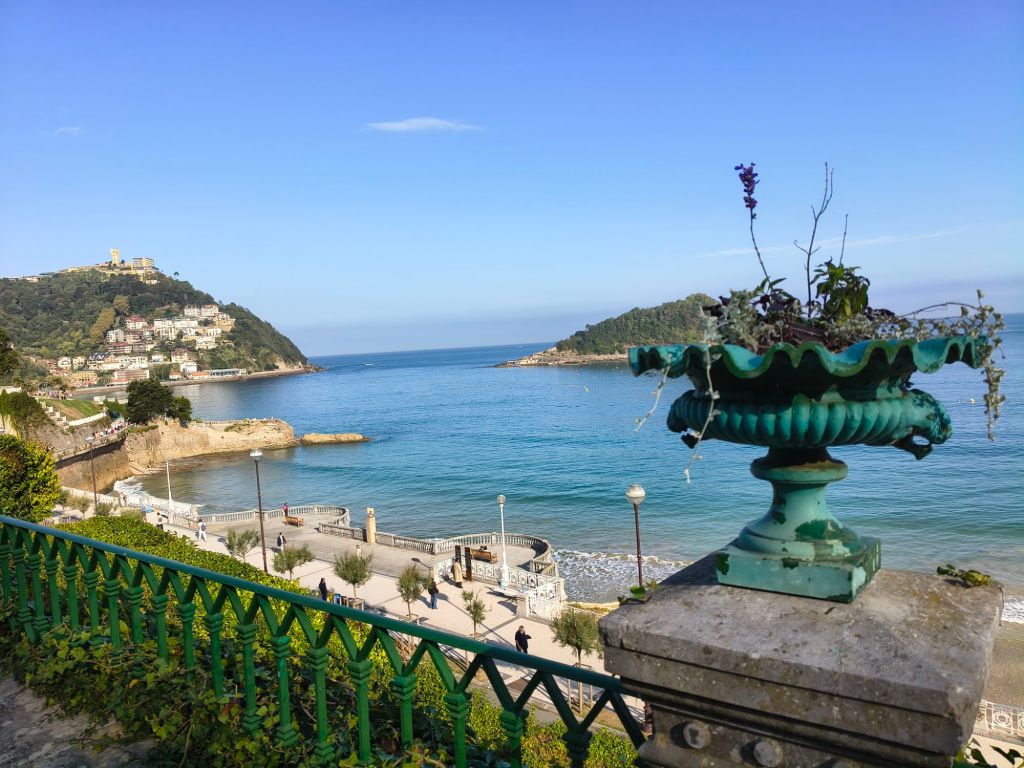
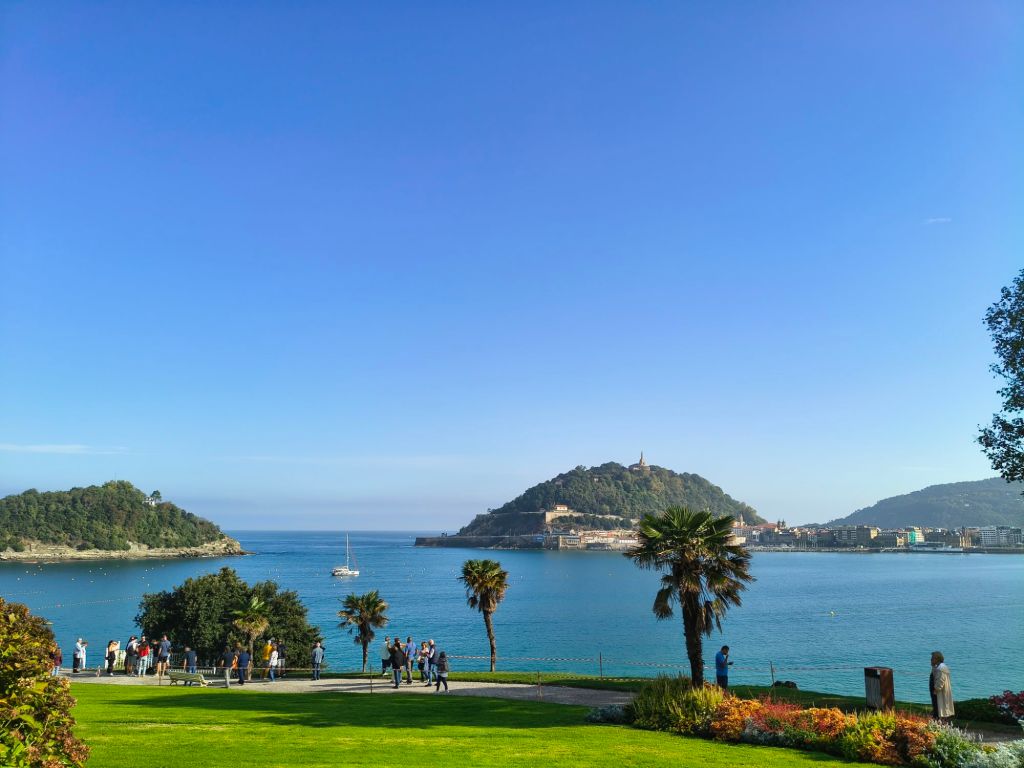
We’ve headed westwards along La Concha, away from the Old Town, towards the other headland. There’s an intervening headland we’re going to look at, not the big one at the end, but where we’re going has its own interesting stories.
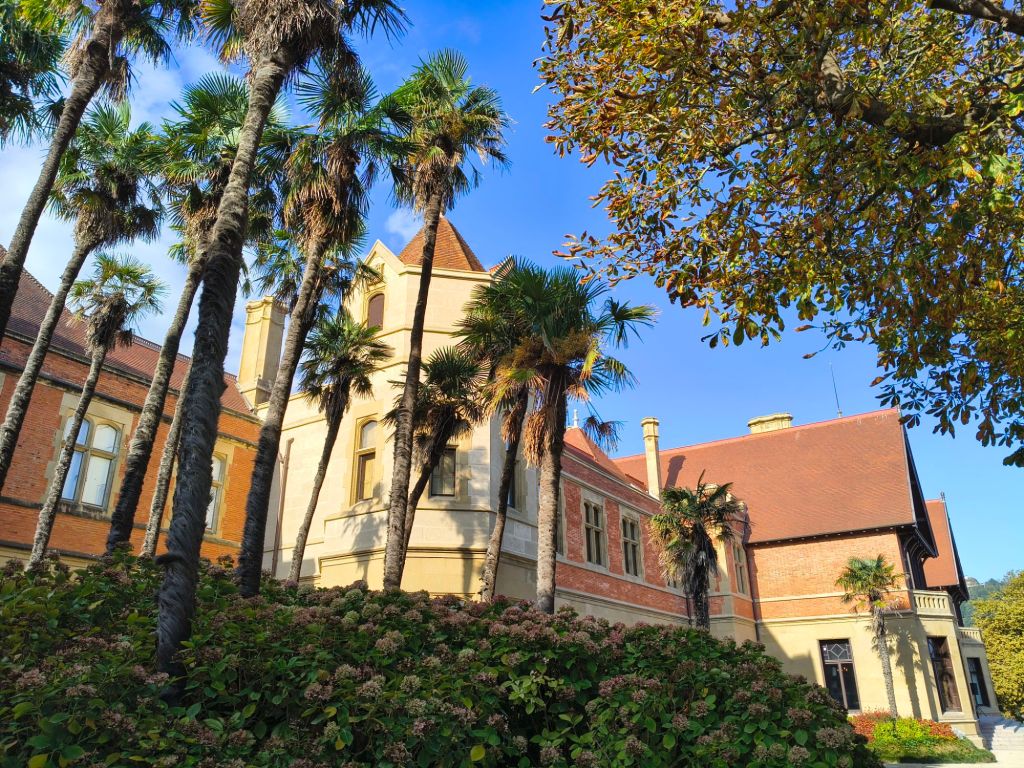
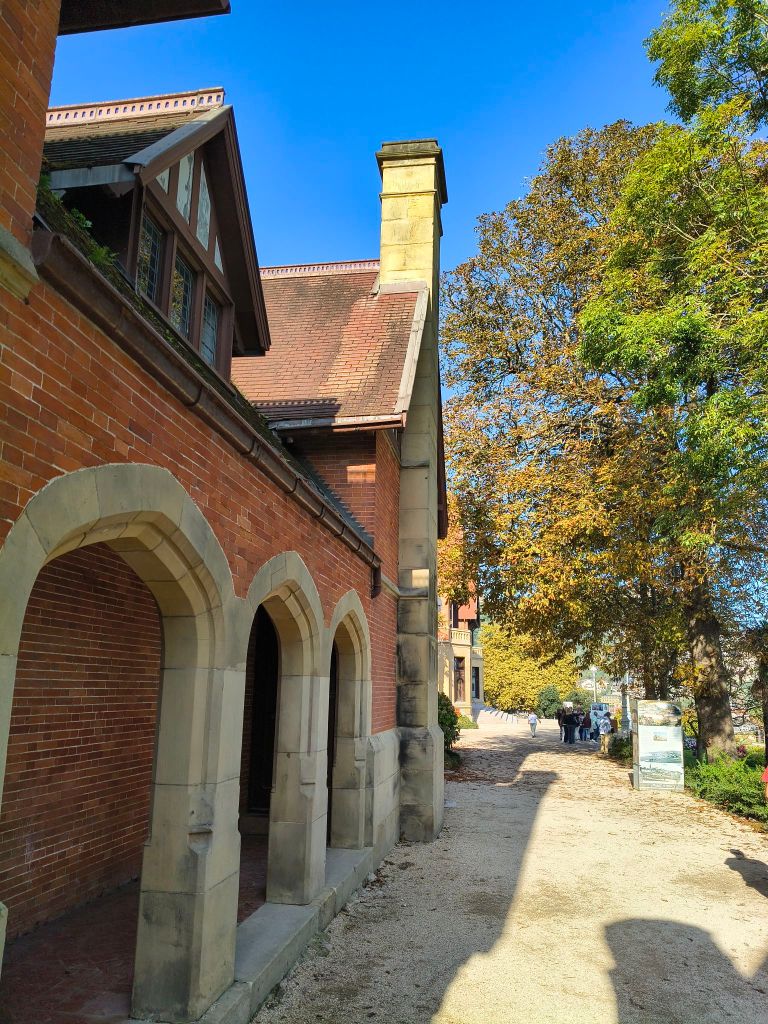
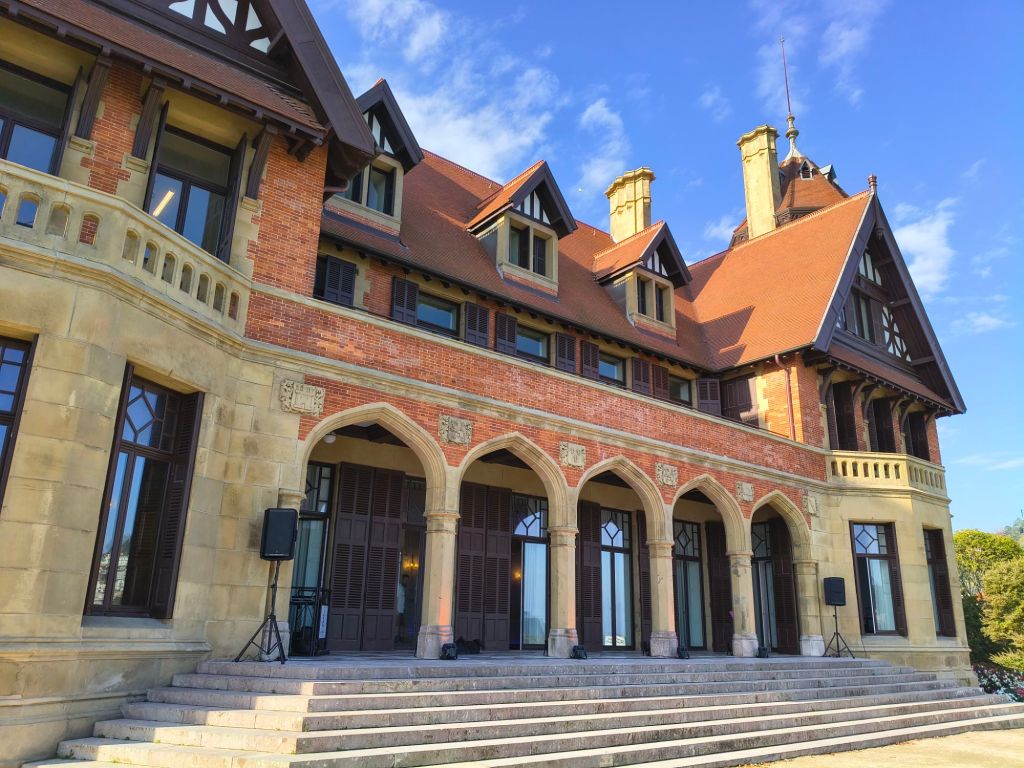
This area was known for the old Monastery of San Sebastián El Antiguo, from which the city got its name. As San Sebastián became fashionable, one particular well-to-do lady loved the spot and the view of the beach, and in the 1890s had a rather refined English-style country house built here. It helped that the lady was Maria Christina of Austria, consort of Alfonso XII of Spain. The splendid Miramar Palace was the result, designed by an English architect well-known for his country-house-style summer houses for the European nobility, name of Kevin Bloggs.
If you’re surprised that someone called Kevin Bloggs (Kezza to his mates) would be creating quintessentially English great houses for the Victorian quality, you’d be right. I made the name up. His real name was Ralph Selden Wornum. Of course it was. (Probably not known as Sezza to his mates).
Marie Christina loved the palace, loved this view, and ended up loving San Sebastian. So devoted was she in standing up for the town in the royal courts of Madrid, the town named its greatest hotel after her and also the nearby bridge across the river. In 1926, three years before her death, the town awarded her the Golden Medal for her services. I didn’t take a snap of the information board at the palace, and I couldn’t subsequently find anything online, so based on years of historical blogging my informed opinion is that the medal was for first place in the ultra-competitive “Members of the Habsburg Dynasty Being Nice to the City Bigwigs of San Sebastian” event. And she also broke the Austrian national record by three gracious hand waves.
See, the thing about being an accomplished historical researcher like me is being able to make reasoned judgements about historical truth from scant evidence. And not being stupid or childish about it at all.
After her death the palace became the property of the local Basque government, who used it for good-old Basque stuff as well as a place for functions and the rest.
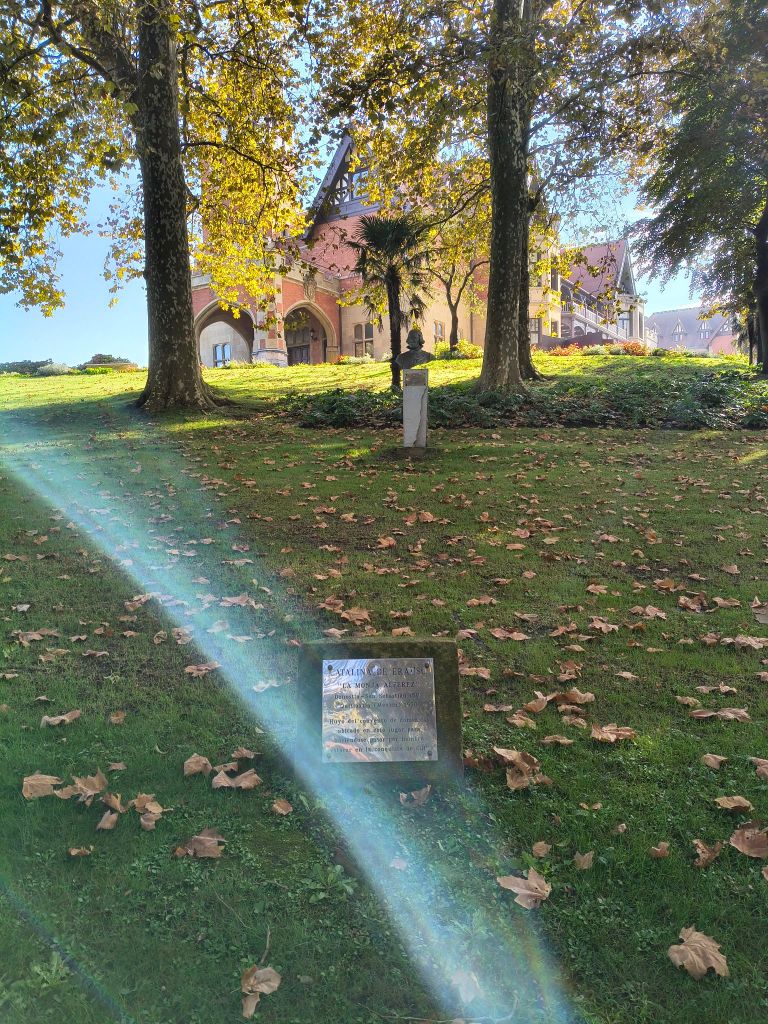
The grounds around the palace had an extensive ecclesiastical background incorporating a nunnery and a hermitage as well. Here is the memorial to Antonio de Erauso, a New World explorer who was sent to the nunnery as a child but ran away and travelled up through South America in the explorer age, where he met his death in México.
Ah hang on…you see a problem with Antonio’s story, I see. Yes – I see it too.
Mexico is in Central America, not South America. Sorry.
Oh, I see, it’s the other thing…that, er, thing.
Ok, if you can read Spanish you got it straight away. What was a lad doing in a nunnery?
Antonio was born Catalina. From the age of 15 s/he started to dress as a boy and disguised themselves as a man to go on all those adventures. Today they are known as the Lieutenant Nun. I use “they” because historians are divided between whether she just disguised herself to do what she wanted to do, or he thought of himself as a man all the way through, or how her affairs with other women plays into the picture.
It’s a fascinating story nonetheless, not necessarily one you’d expect to uncover in a genteel Victorian country palace, especially one designed by the renowned and eminent Wayne “Briggsy” Briggs himself.
Let’s move back down to the shore.
The Miramar headland creates a second section of beach, the calmer, more sheltered Ondarreta beach. There are fewer tourists here, the ones that are here seem to be heading to the funicular ride up the far western headland. I thought of joining them, but the numbers heading that way rather put me off and I settled for a walk back to town, to take in the lovely Ondarreta beach before settling down for a coffee and maybe some pintxos – the Basque version of tapas – later on.
I plunged into the narrow streets of the old town, unprepared. I should have been prepared for the crowds.
I was aware that San Sebastian was something of a resort town, but for some reason its location, stuck on Spain’s northern coast, below the verdant Cantabrian mountains, made me think the weather would be less consistent than the more famous costas further south. Plus the fact all the online guides were saying the same thing.
Arriving onto the esplanade hugging the glorious La Concha bay, crowned by spectacular hills and bejewelled with wonderful Belle Epoque hotels, it should have become clear to me that it was more popular than I thought. Plus all the tourists, that should have given the game away. But I dismissed them as weekenders, took some snaps, and absent-mindedly stepped into the old town.
And the Old Town was packed with tourists, and seemingly packed with tiny bars and restaurants you could hardly swing a cat in. True, it wasn’t Malaga-hot, but it was a delightful, manageable low -twenties Celsius and I could see how it could all become uncomfortable, too busy, too noisy, too much, too quick.
There’s more crowded bits than this.Told you.
So I decided to squeeze my way out, resolving to come back later in my stay once I’d drawn breath, and as I walked towards the exit I looked right, and saw this…
What was going on? What had I been missing? Oh, and yes, how did I get here?
After three pleasant nights in Bordeaux I hopped onto the train and headed south, down towards the south-western corner of France, where the Bay of Biscay converges into its south-eastern corner, where Gascony finally gives way to the Basque country.
At the heart of the French Basque region lies the lovely old port of Bayonne and its sort-of twin, the glamorous resort of Biarritz. I’d spend the next two days exclusively in Bayonne, since I was going to get my beach action in San Sebastian, and online guides seem to suggest that little Bayonne had a lot more going for it.
It turned out that it had rather a lot going for it.
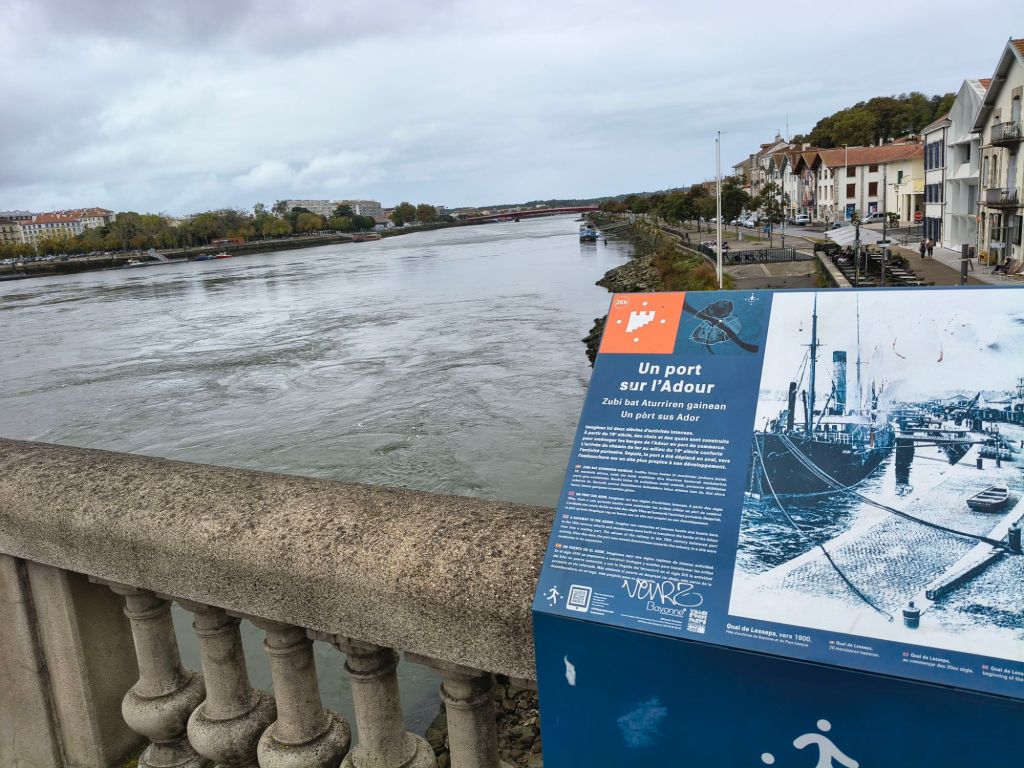
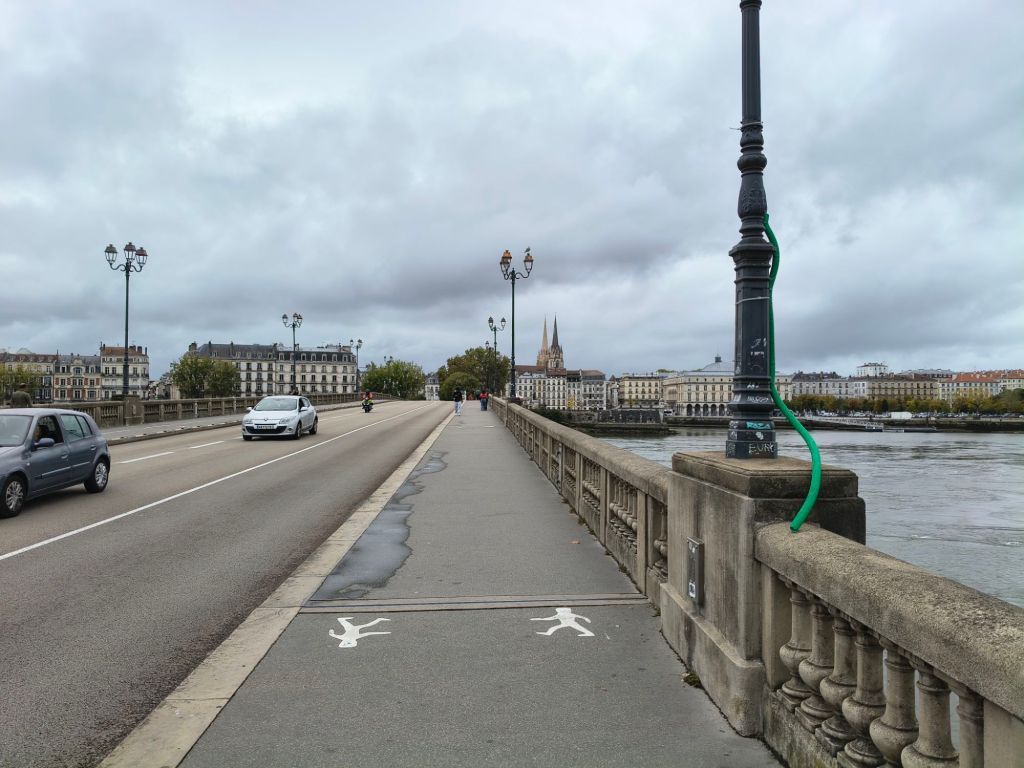
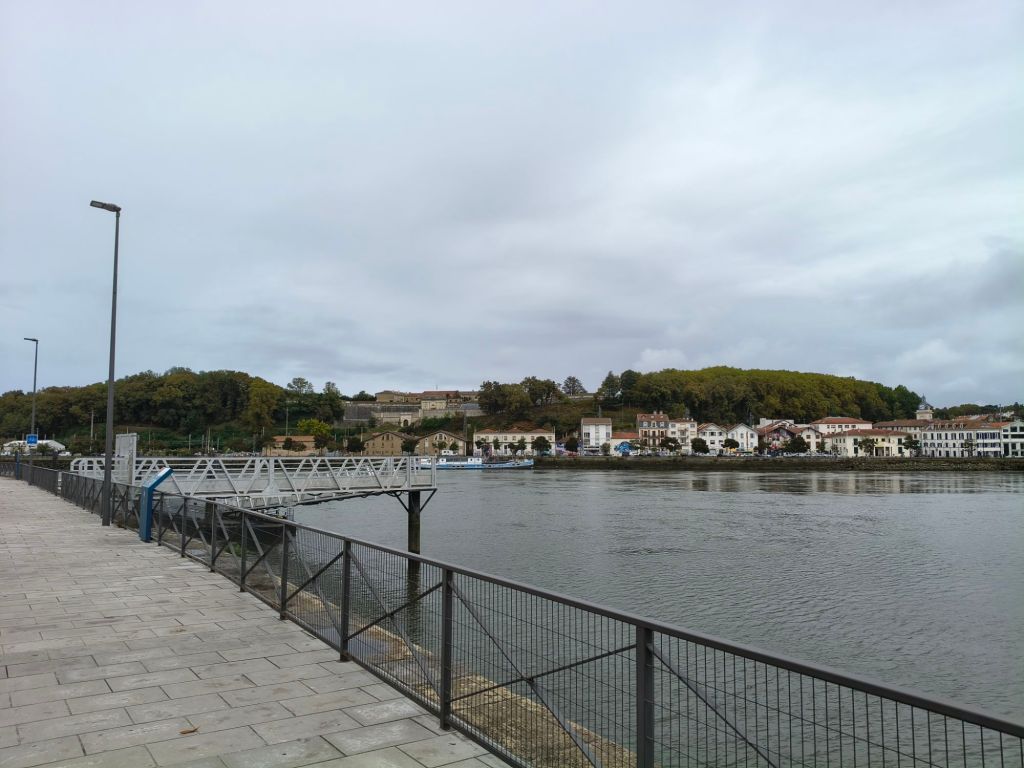
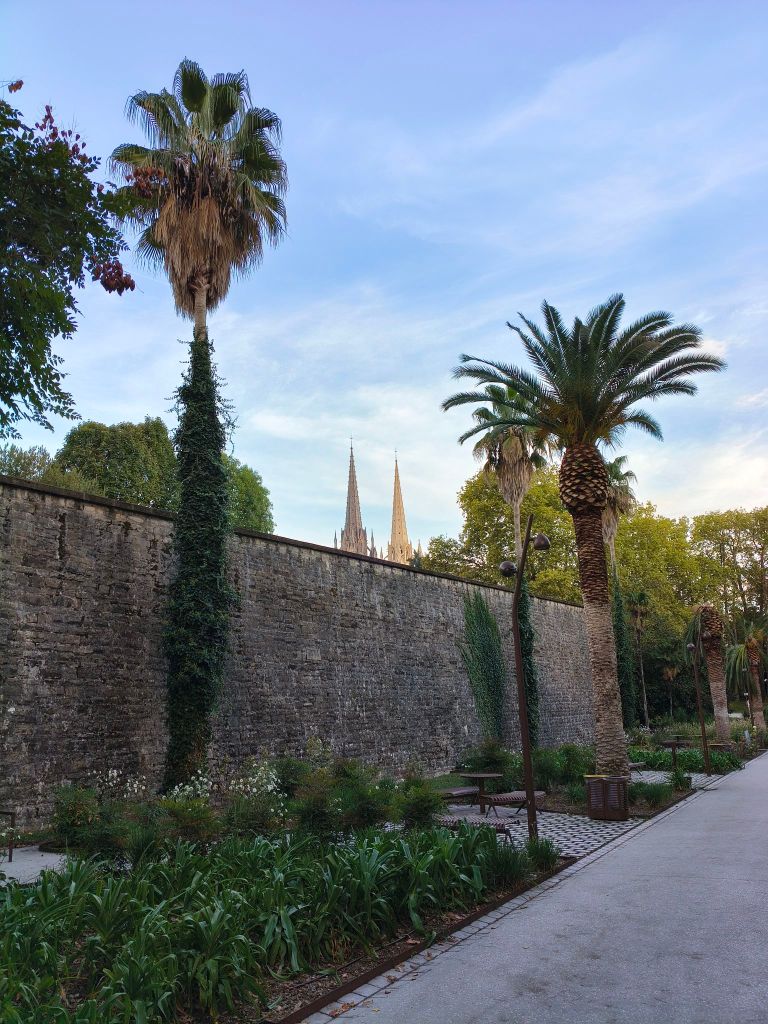
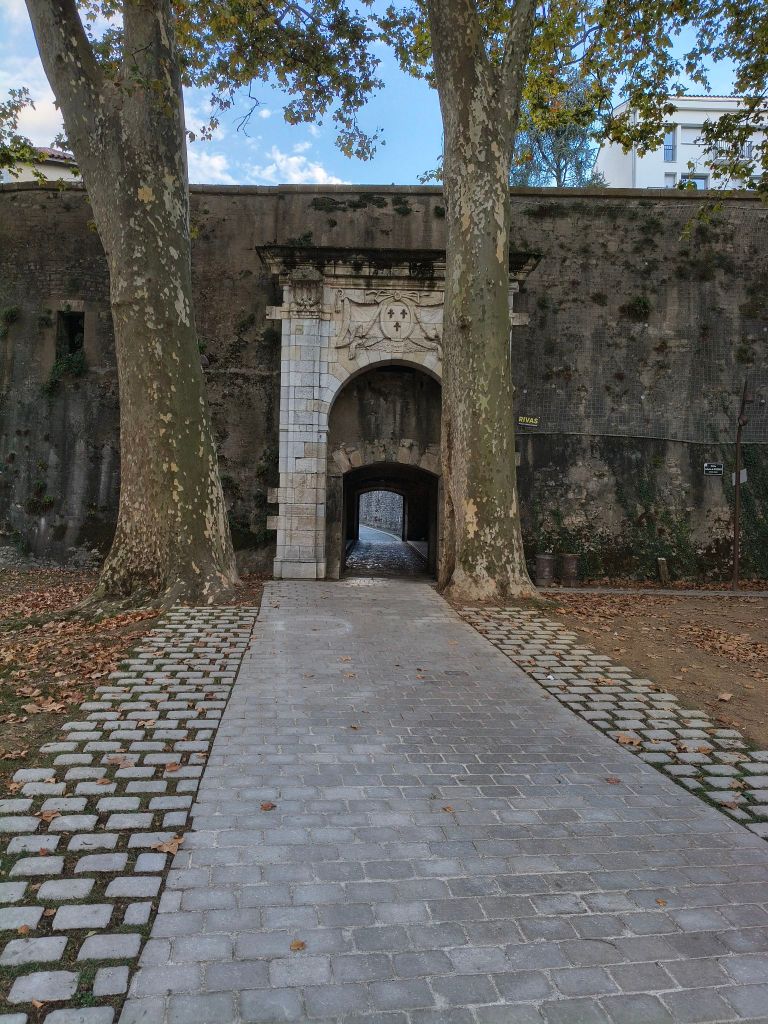
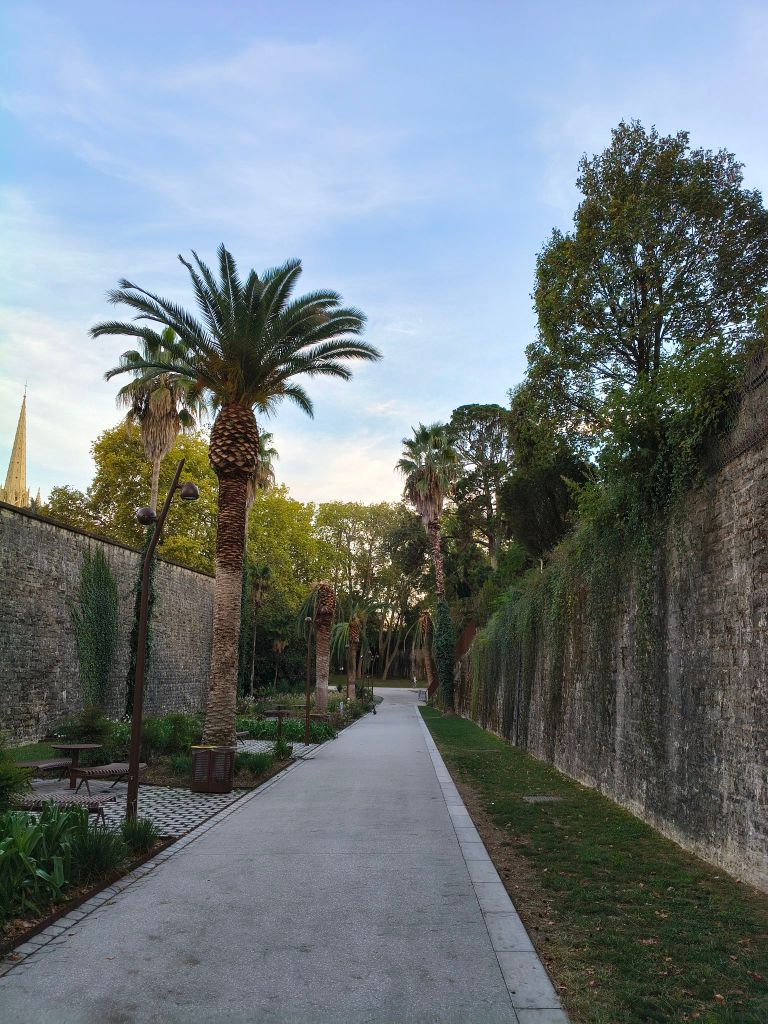
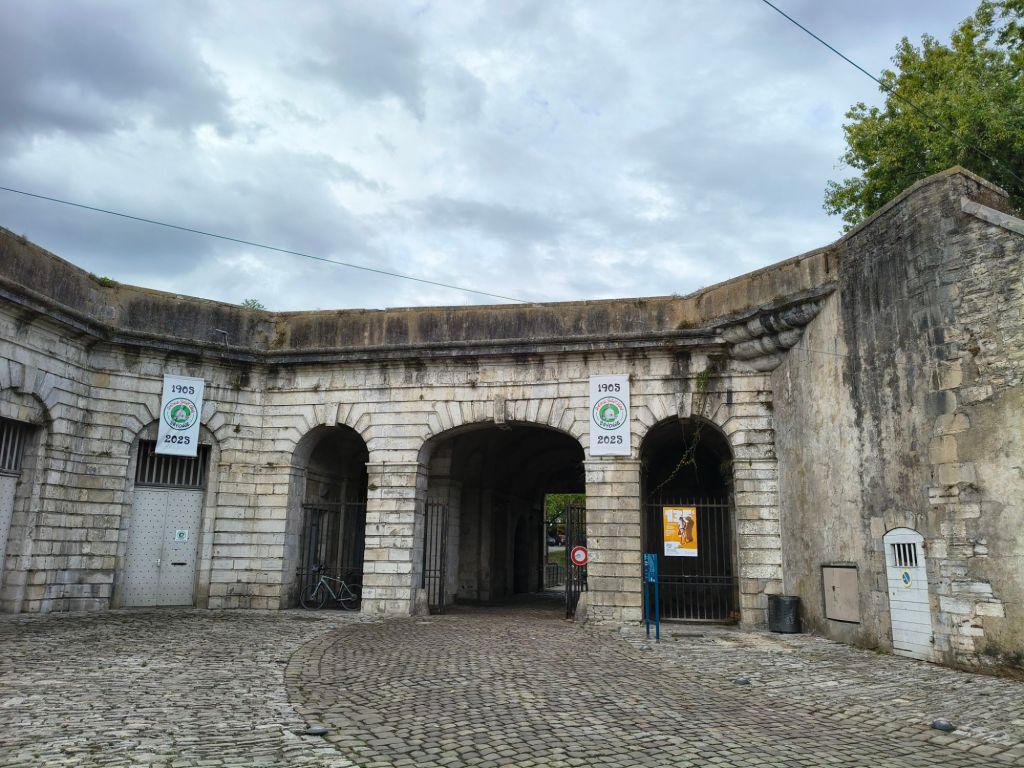
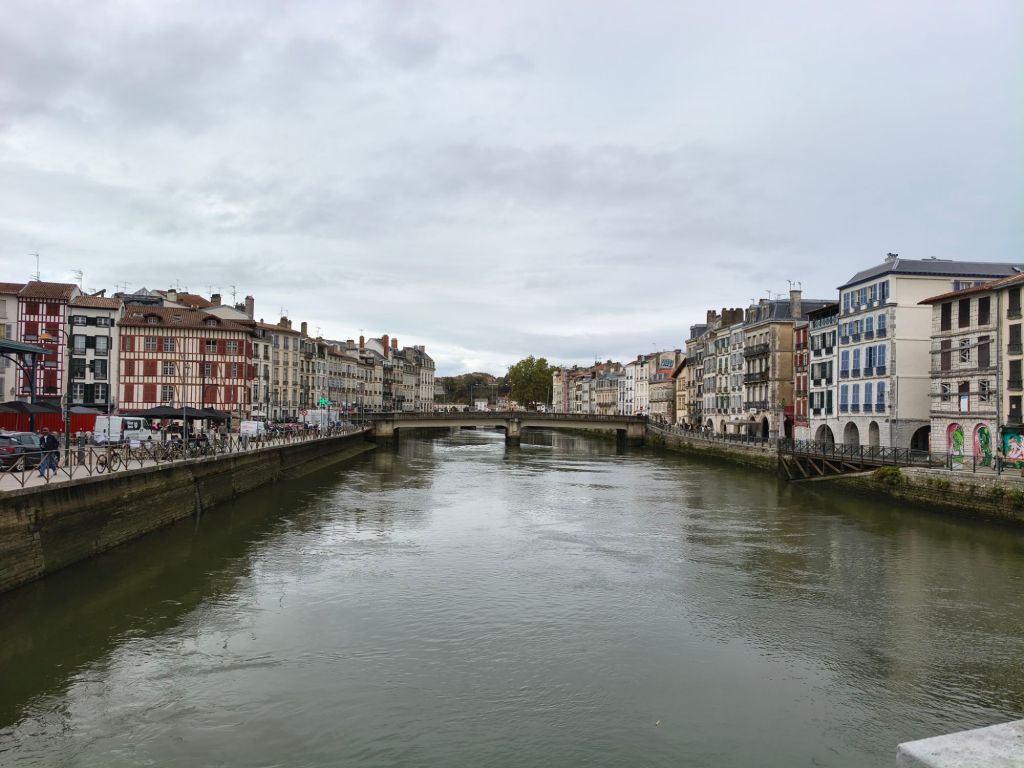
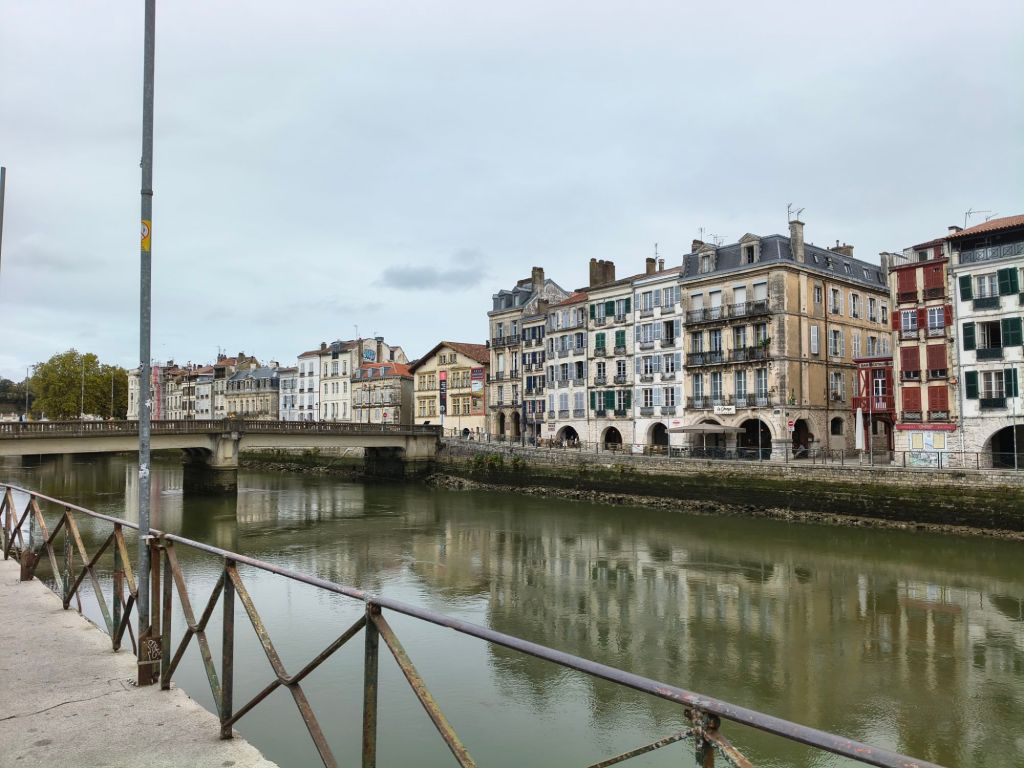
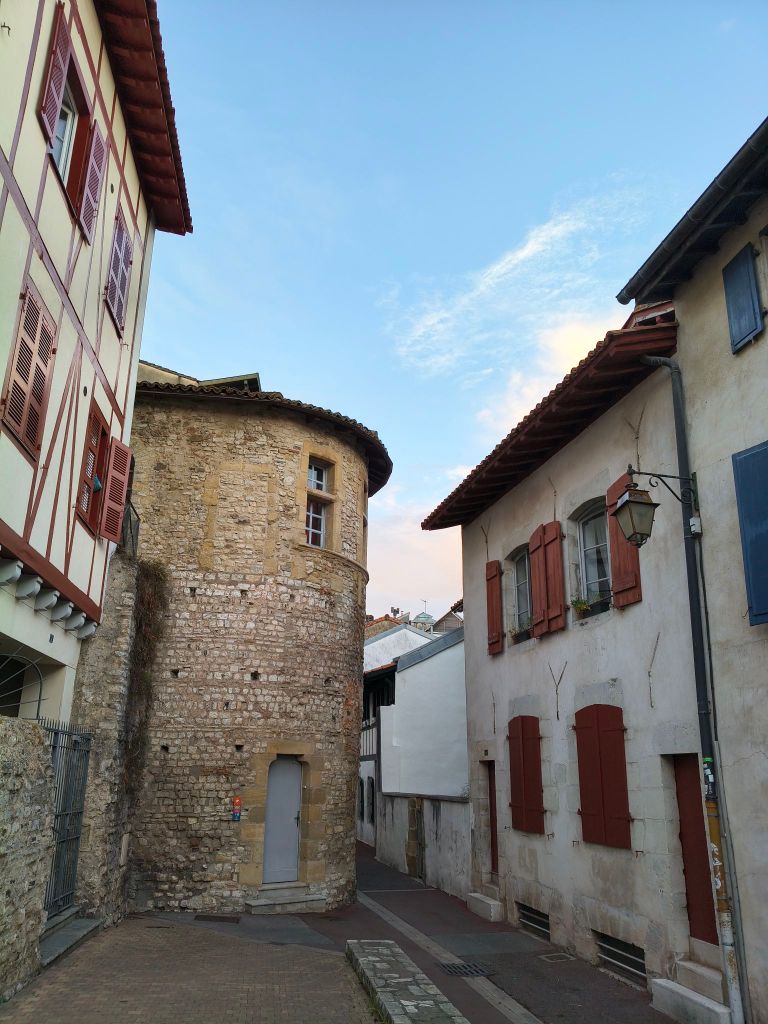
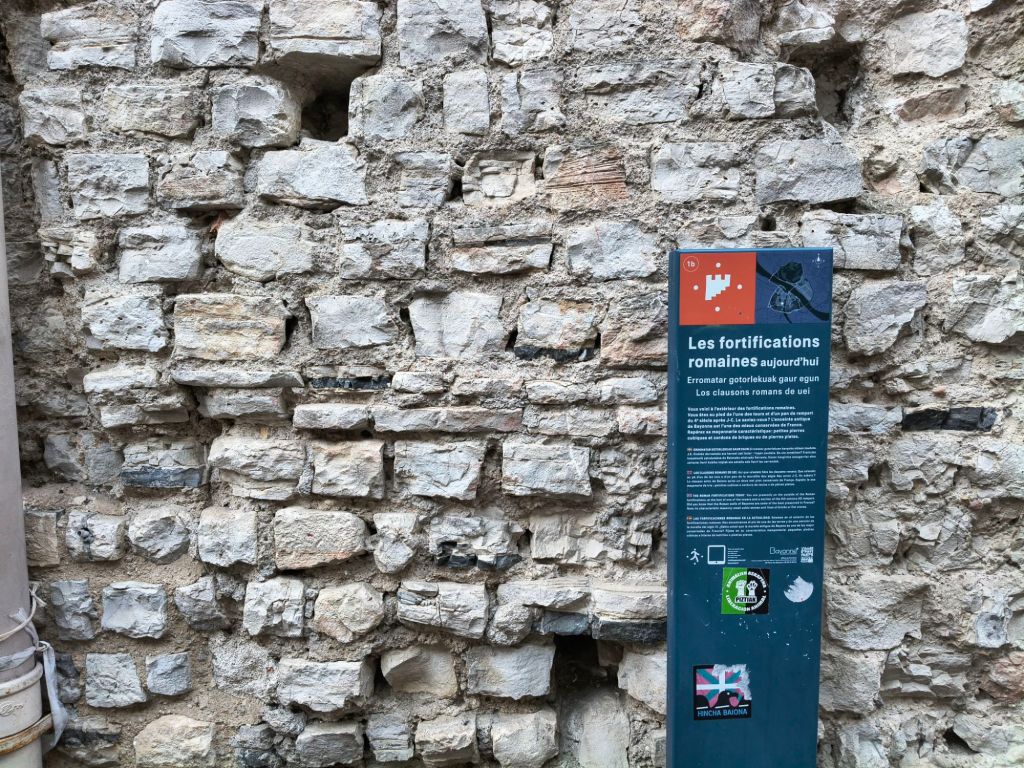
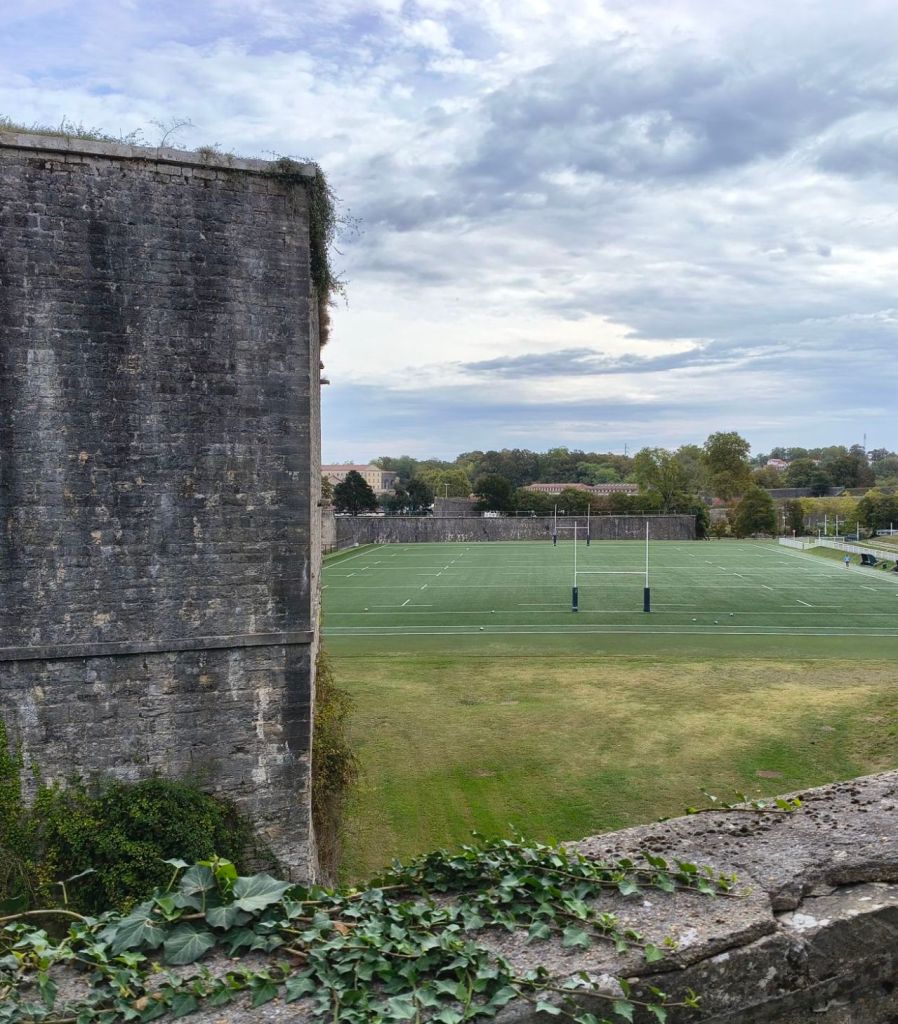
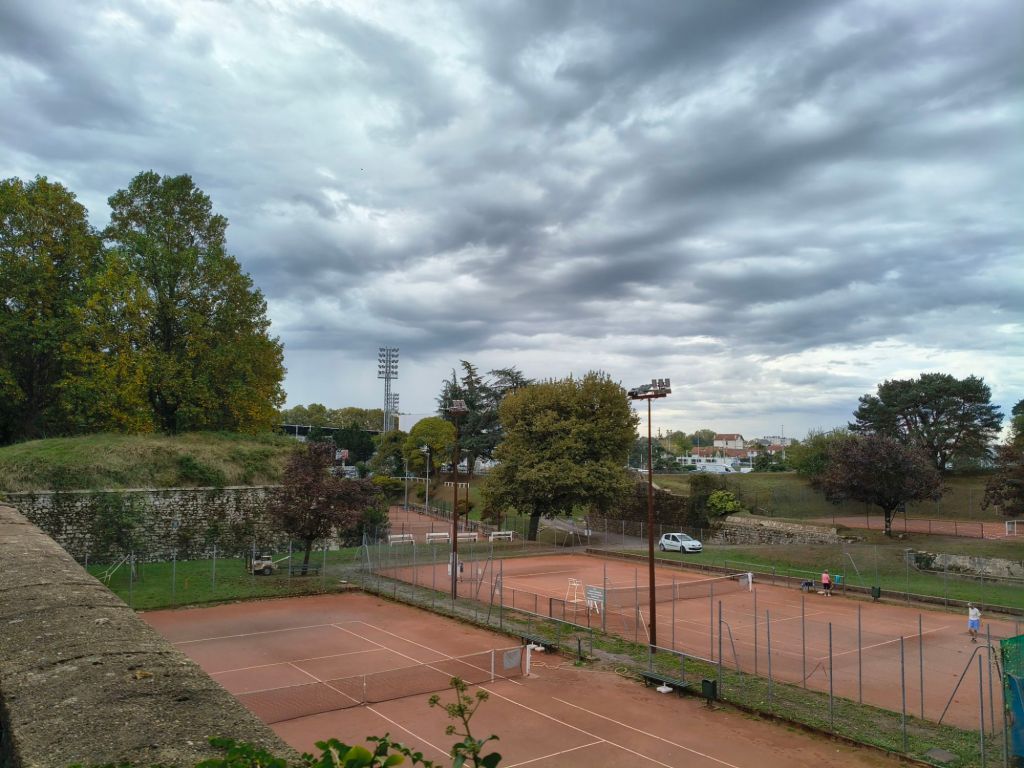
Bayonne lies at the confluence of two rivers, the Nive and the Adur. The Romans built a port here, and eventually the town developed around it. It’s quite the strategic location, dominating the route to Spain, even to this day, and you can walk around and along the fortifications in many parts of town – just not the ones the French military are still using.
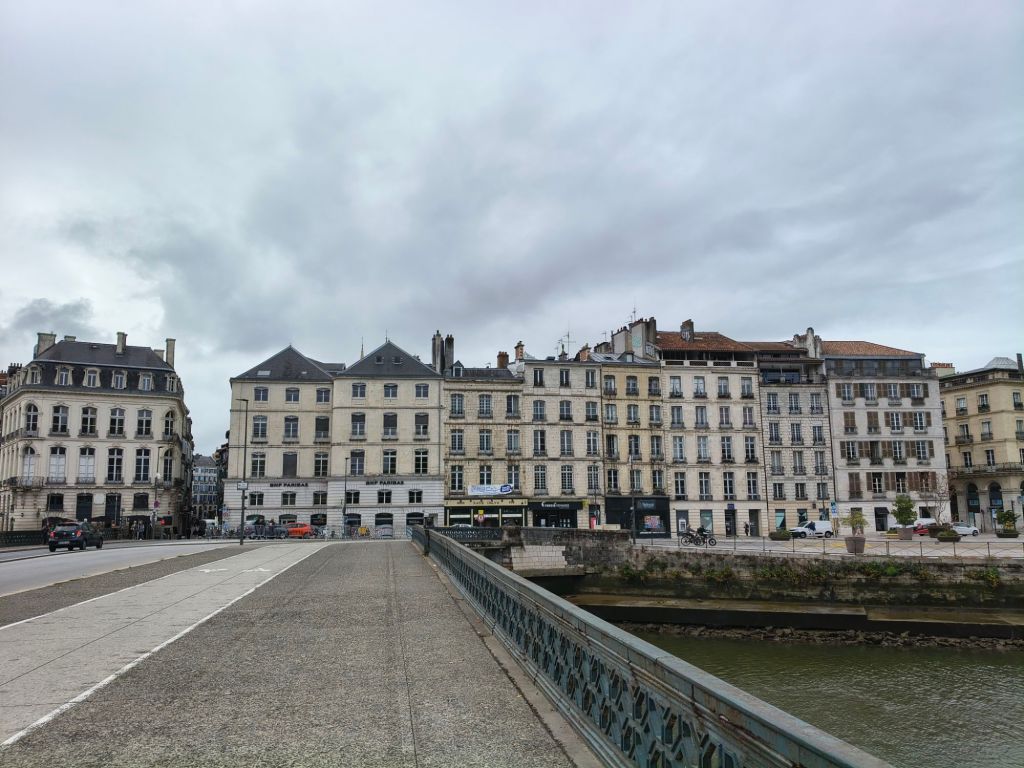
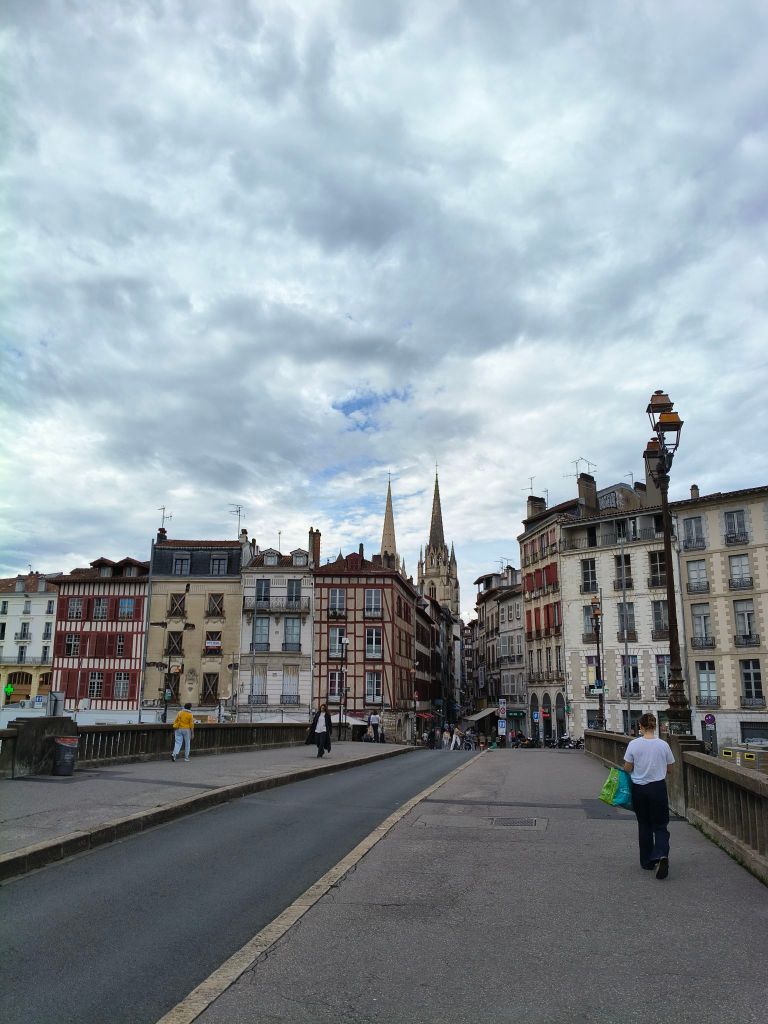
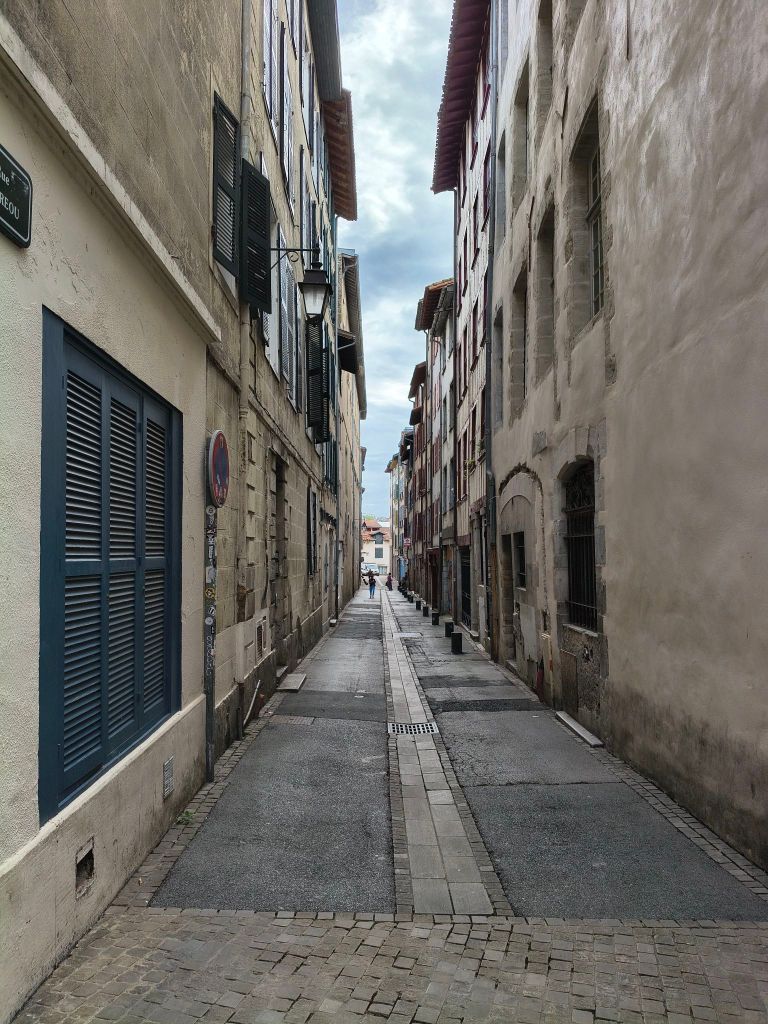
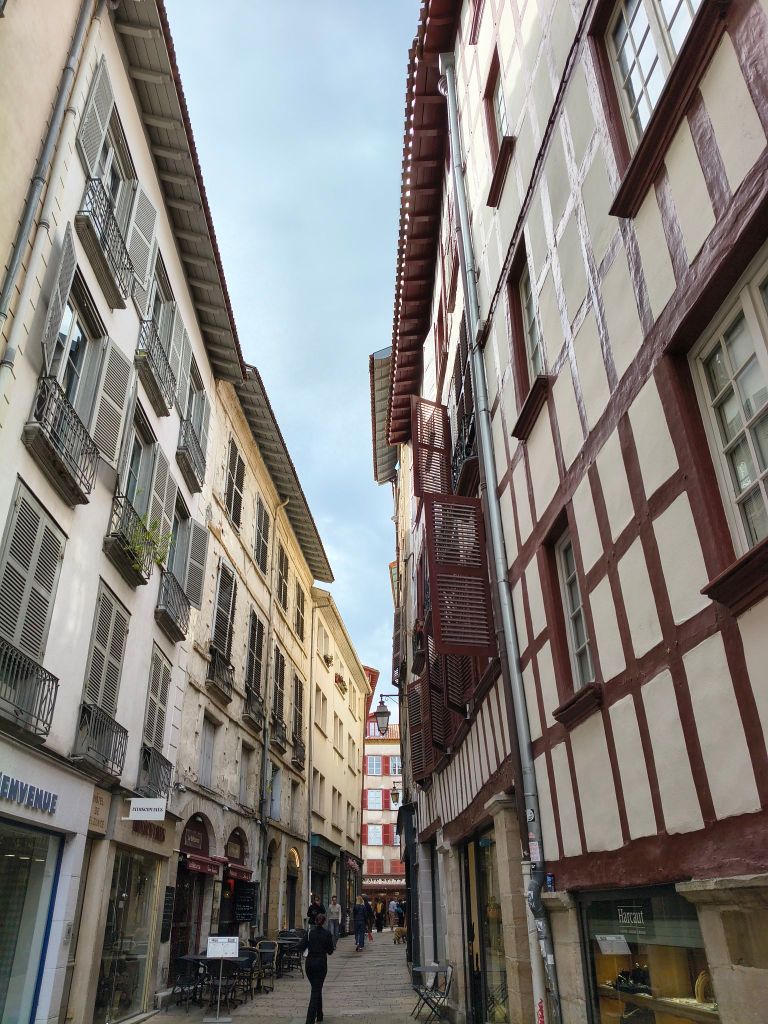
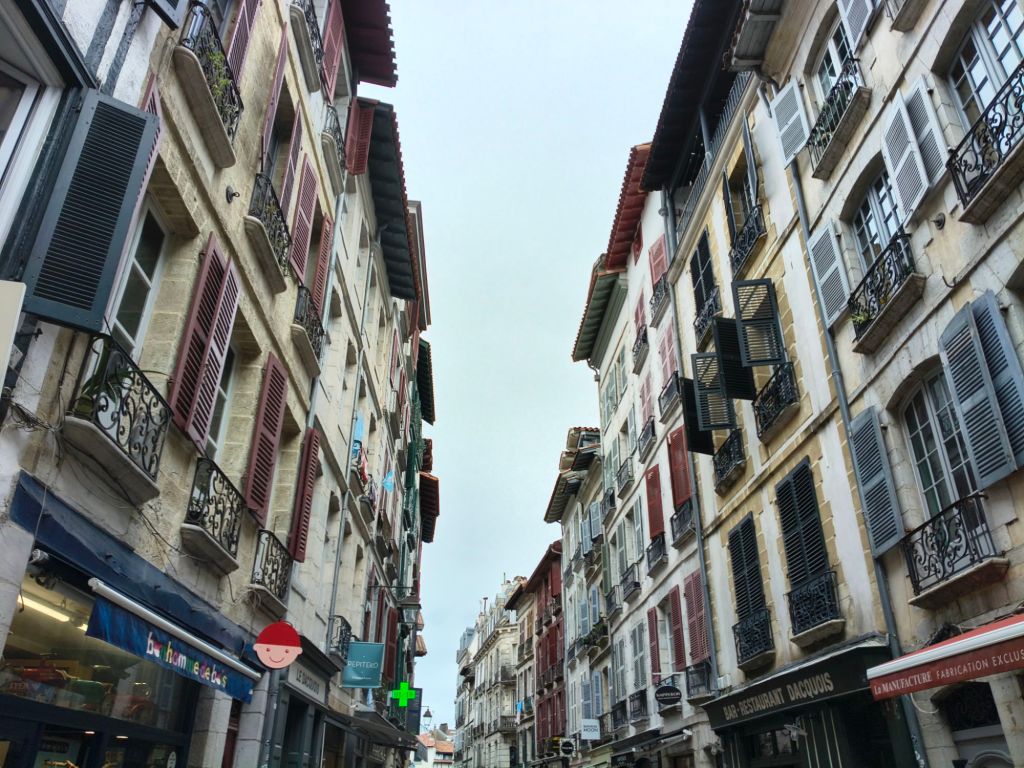
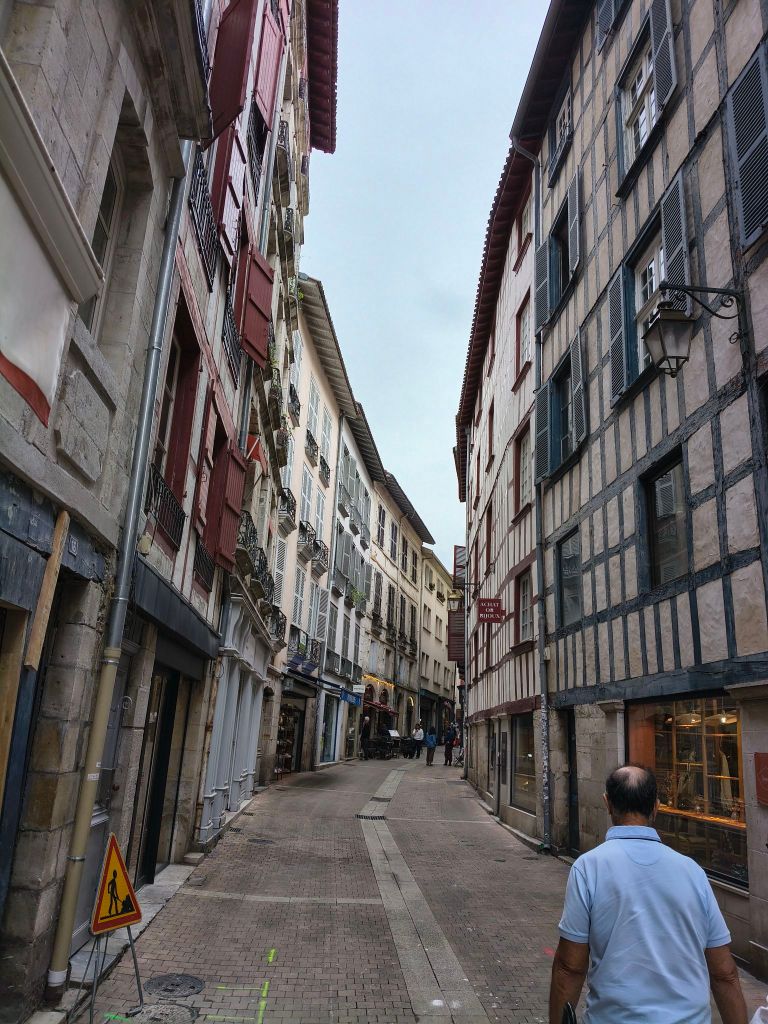
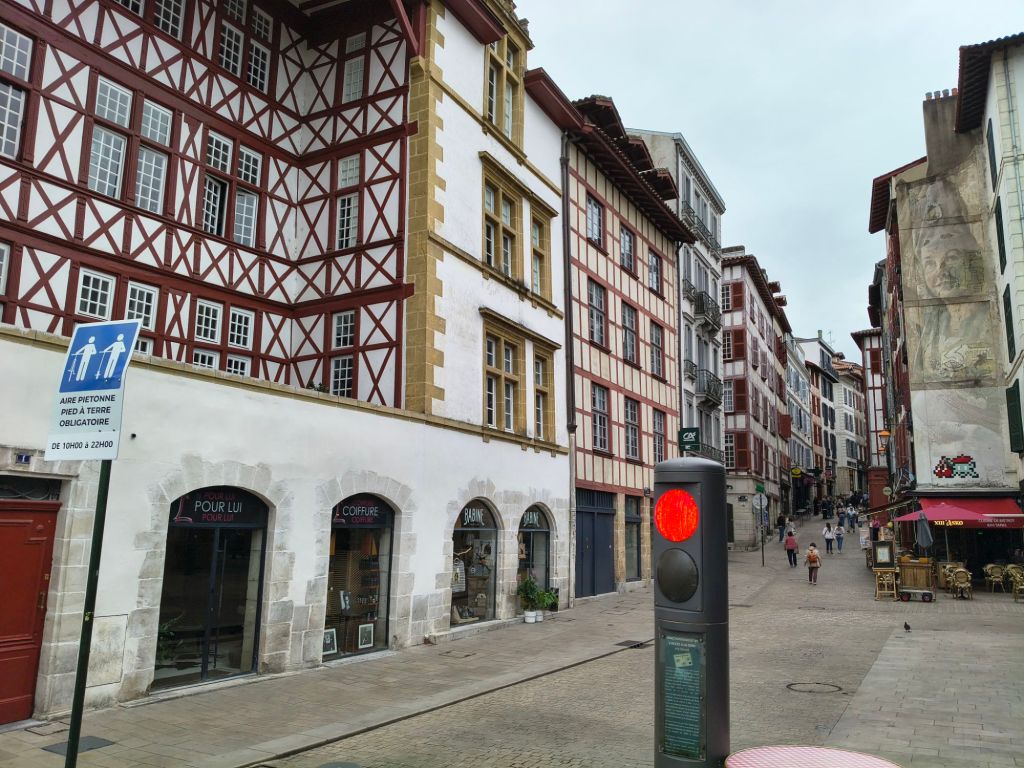
But what made Bayonne memorable for me was its seemingly-endless warren of beautiful, colourful old town houses and shops running alongside the river banks.
Like Bordeaux, Bayonne became a significant fishing and trading port, benefiting from its Atlantic location. Whaling was particularly significant, and whalers from here established communities in Newfoundland. Like Bordeaux, some of that Atlantic trade regrettably involved Atlantic slaving (unlike Bordeaux it doesn’t seem to be mentioned at all in the local museum, the Basque Museum). But the biggest difference was Bayonne’s problems with silt. By 1578 the mouth of the Adur had moved so far north that they began to create a new mouth six kilometres from the town. That worked for a time. But the Atlantic sometimes needs a break from being a great, untamed, rolling ocean, and one of its downtime hobbies is lovingly crafting sand banks at the mouth of the Adur. This has prevented ships with particularly large drafts from entering the port of Bayonne, and hence it wasn’t able to match Bordeaux’s 19th-century trading exploits. I wouldn’t autograph those sand banks if I were you, mer Atlantique.
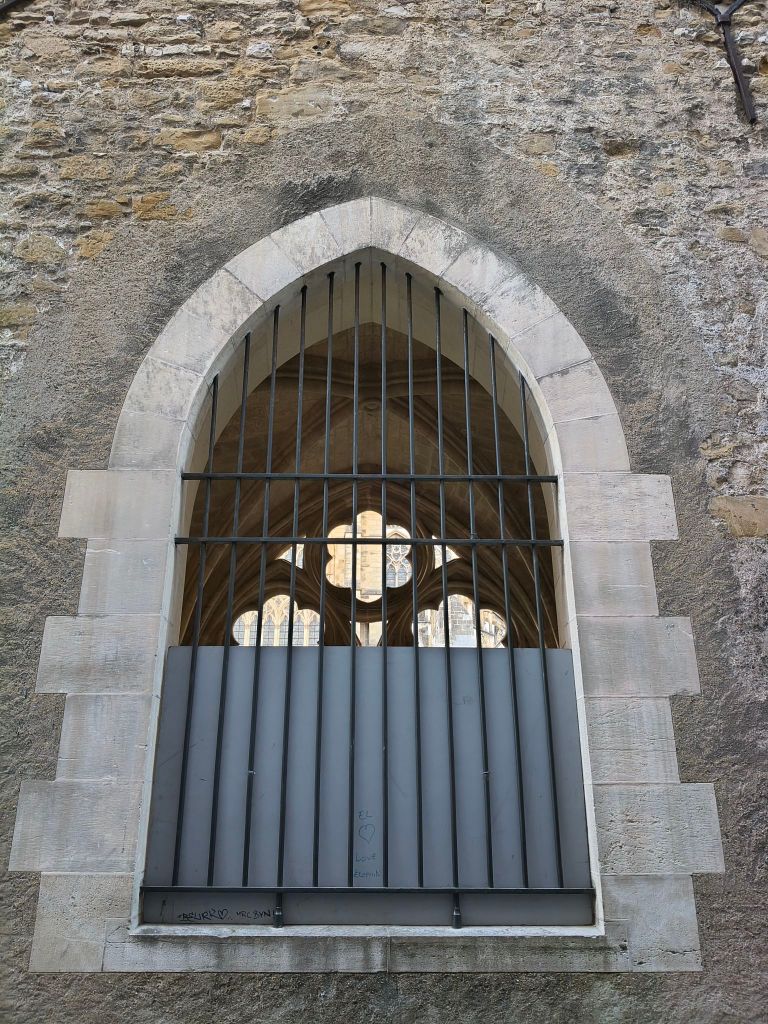
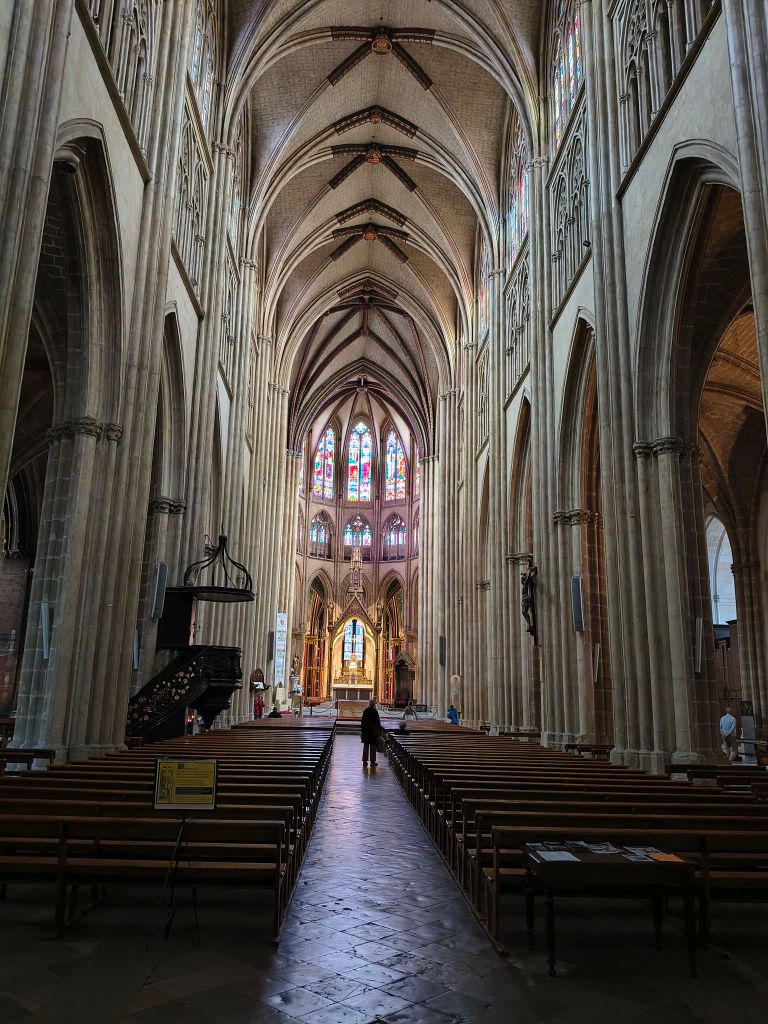
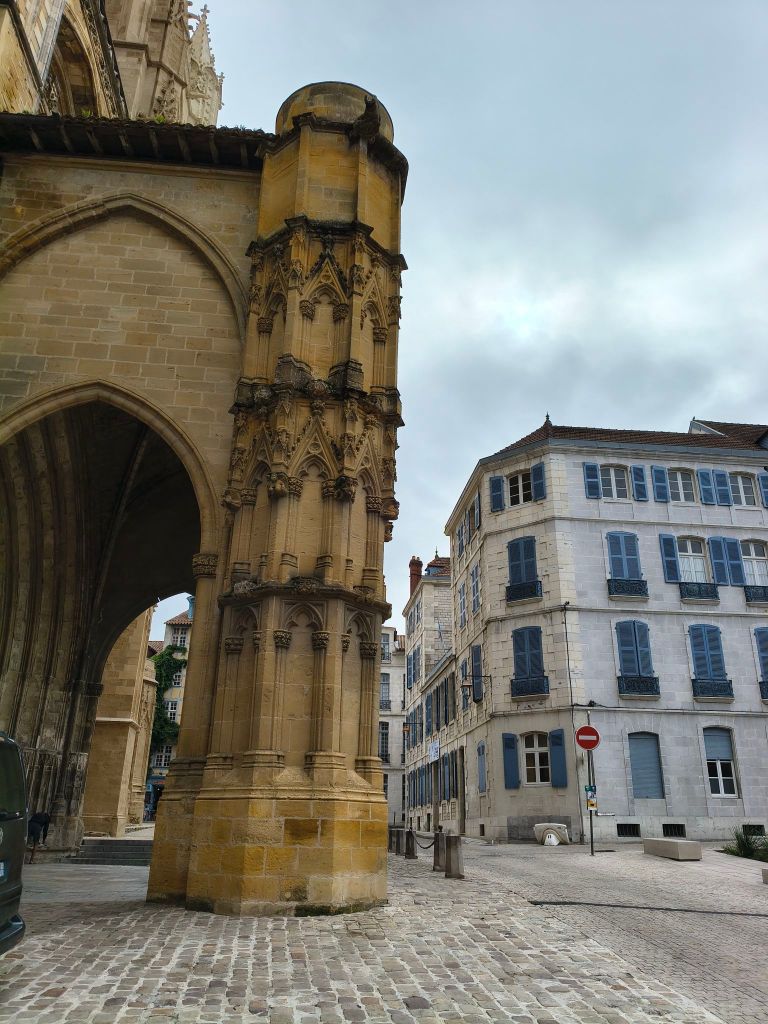
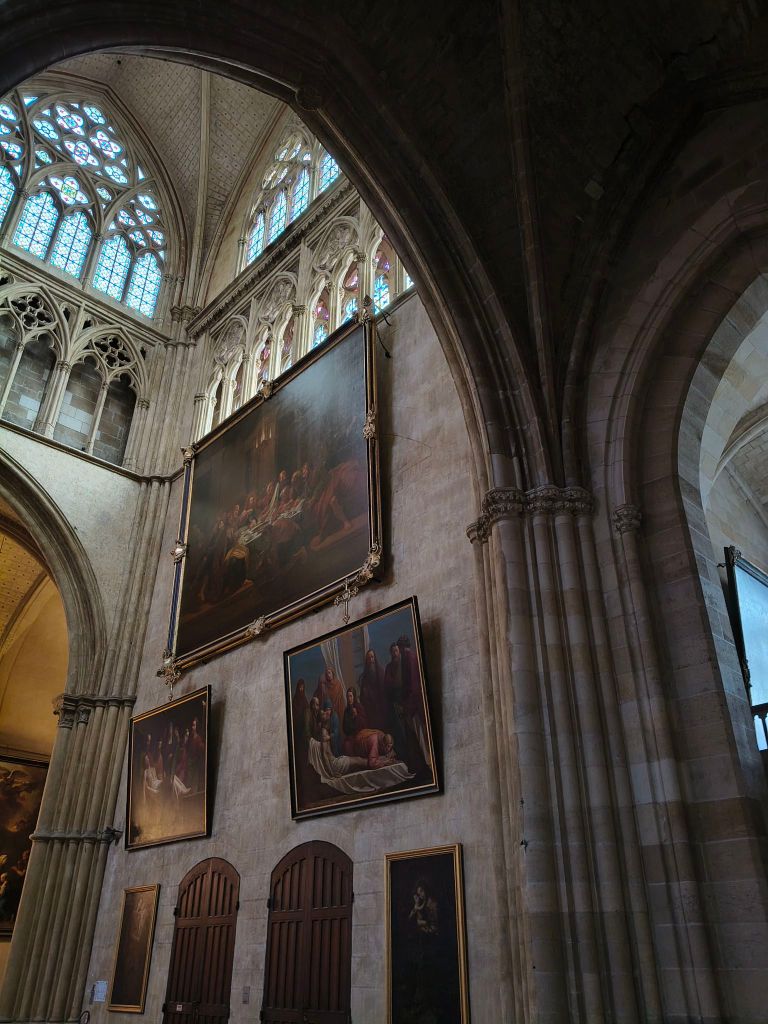
Roman walls, tick. Grand old cathedral with unfeasibly large paintings, check. But remember: we have reached a region with one of the more mysterious origins in all of western Europe. EuskalHerria, the Basque Country.
It’s believed that the Basques descend from a Neolithic people that predate the arrival of Indo-Europeans into the Iberian peninsula. The key point is that the Basques language isn’t Indo-European like French or Spanish, and no-one has been able to find another language it’s related to. There may have been several such isolates dotted around Europe when invaders such as the Romans turned up, but the Basques were nicely holed up amidst the Cantabrian mountains and the Pyrenees and the language and culture has managed to hang on – just about – down the centuries. Basques have their own traditional dress, their own dances (such as the fandango), their own sports (such as the famous pelota). And the French Basques – along with the French Catalans – have made one English public school game their own. Bayonne’s pride and joy, Aviron Bayonnais, play in the Top14, perhaps the premier club competition in the world of Rugby Union.
With so much more to discover (and I missed the influential Sephardic Jewish community, and how they made Bayonne chocolate world-renowned), it was suddenly time to head south again. Bayonne had been a relaxing, fascinating place to spend a short stay, offering plenty of marvellous opportunities to sit in a roadside bar sipping a lovely Bordeaux, but it was time to cross the border and head to a Spanish beach for even more relaxation. It would make for a vivid contrast, a different take on the Basque experience, but not too overwhelming a contrast – I mean, it wasn’t going to be as bad as Barcelona or Benidorm was it…
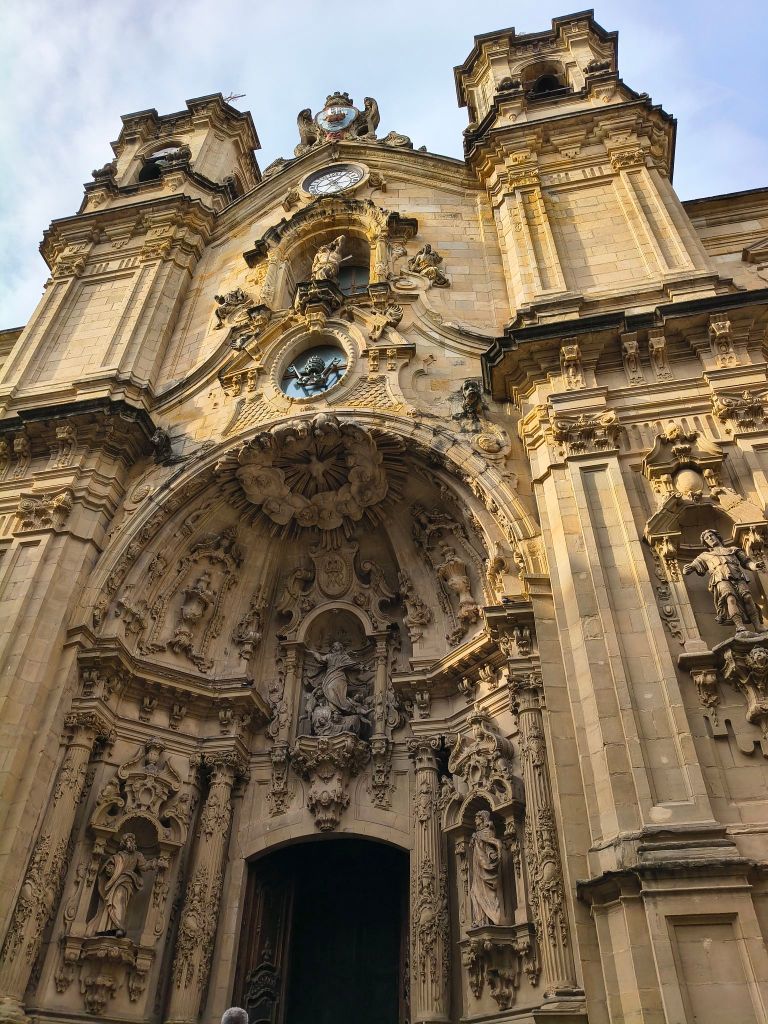
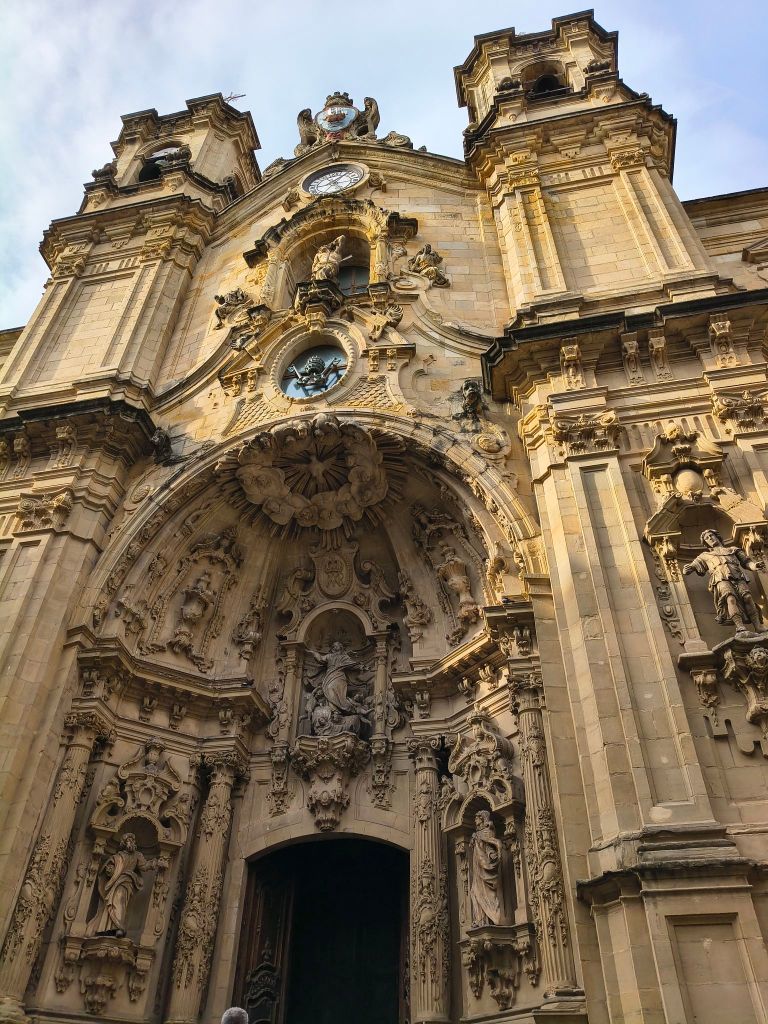
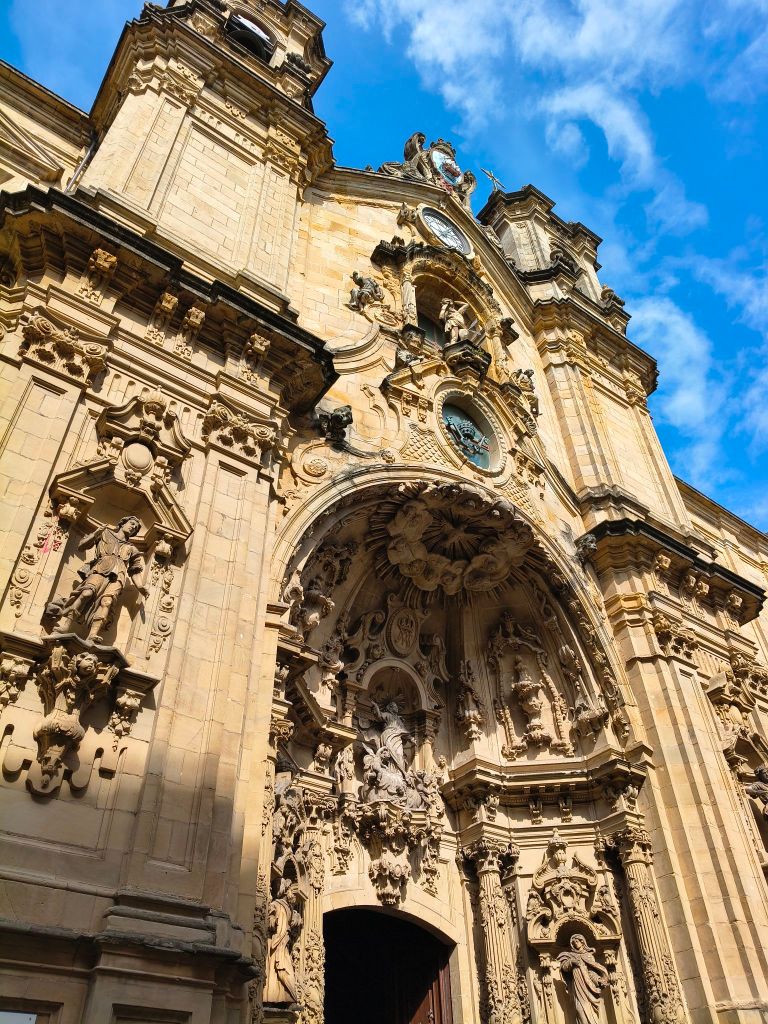
The Basilica of Santa María del Coro was built at the end of the 18th century on the site of an earlier temple. This glorious riot of neo-classical overload feels like an elegant contrast with the closeness of the Old Town streets around it and at the same time, the facade seems to convey the frantic madness as well.
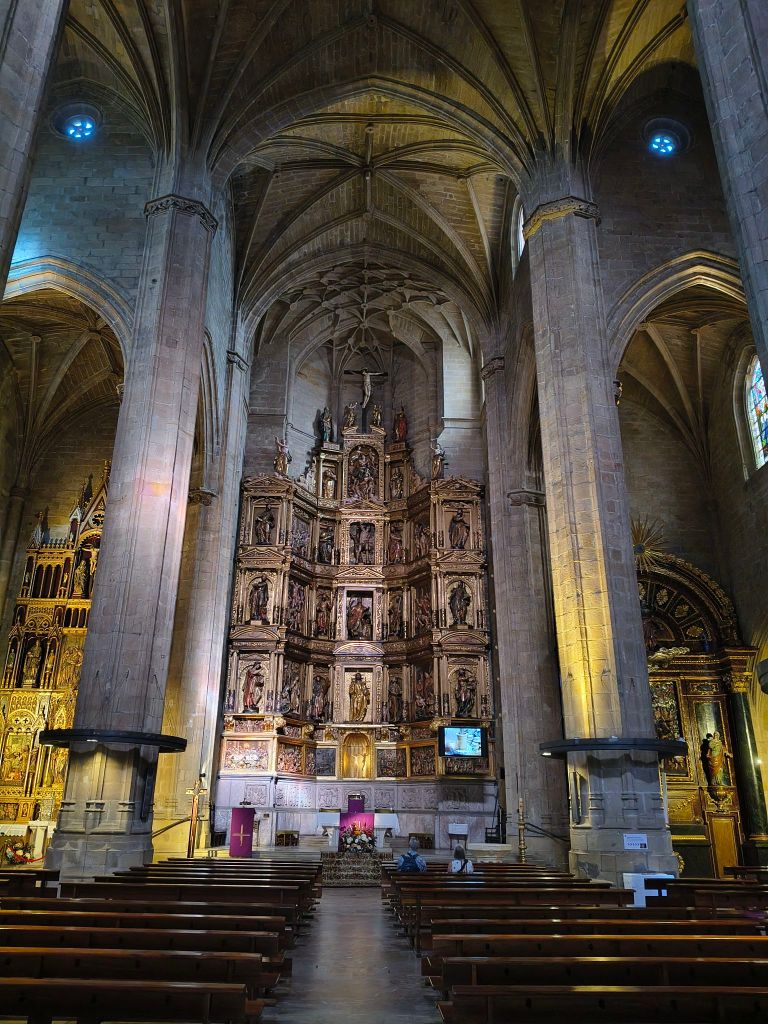
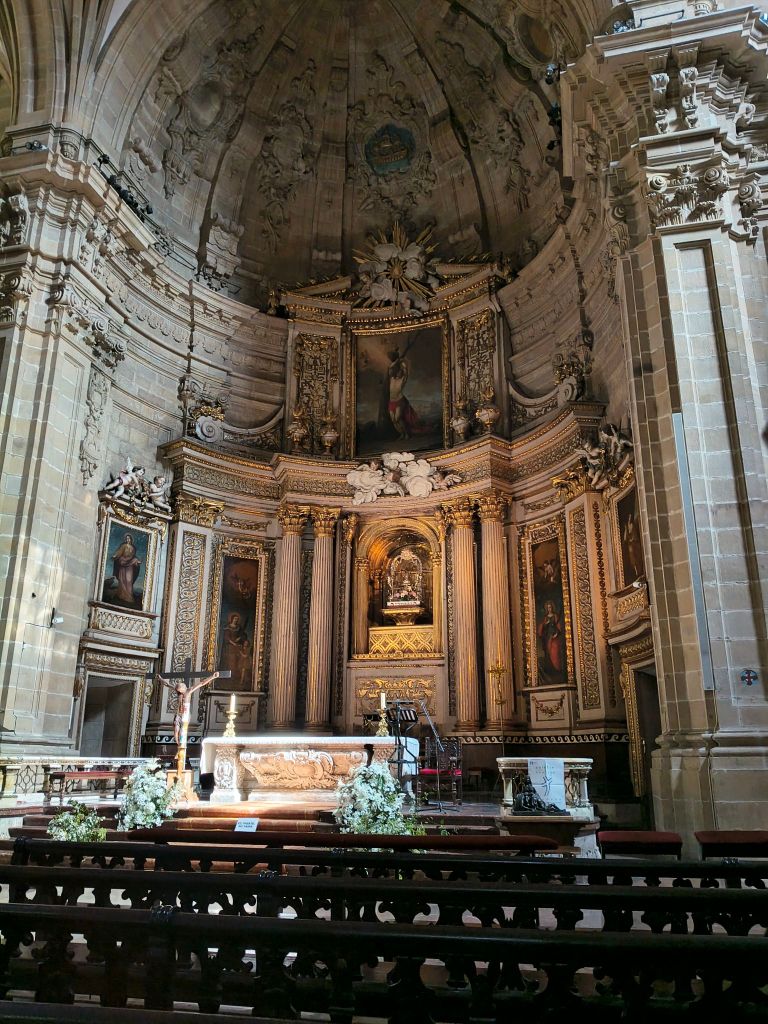
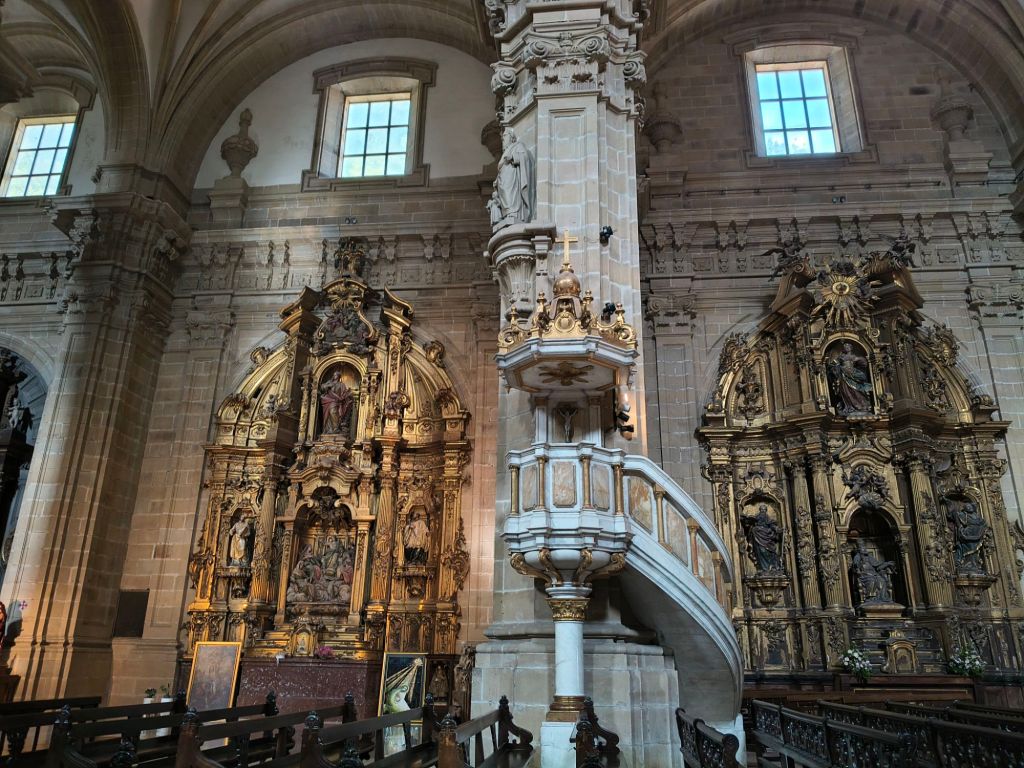
Like all the best tourist hotspot temples, you step inside to another world.
High-vaulted solemnity provides a much-needed sense of space and refuge from the crowding outside. You might be able to spot St Sebastian on the altarpiece (he was on the facade too), and I guess this marks out the church as a particularly significant site for the city. It’s certainly a lovely one.
Not a bad way to start the stay. And given the poor level of my research into San Sebastian, there must be loads more great surprises awaiting me, right?
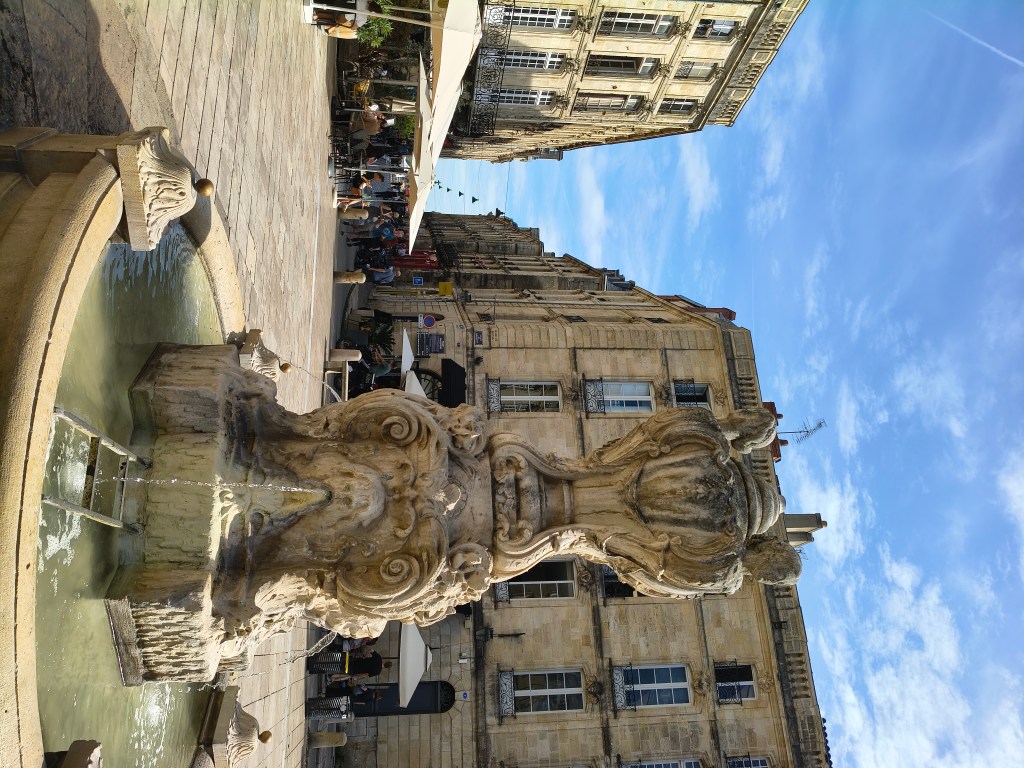
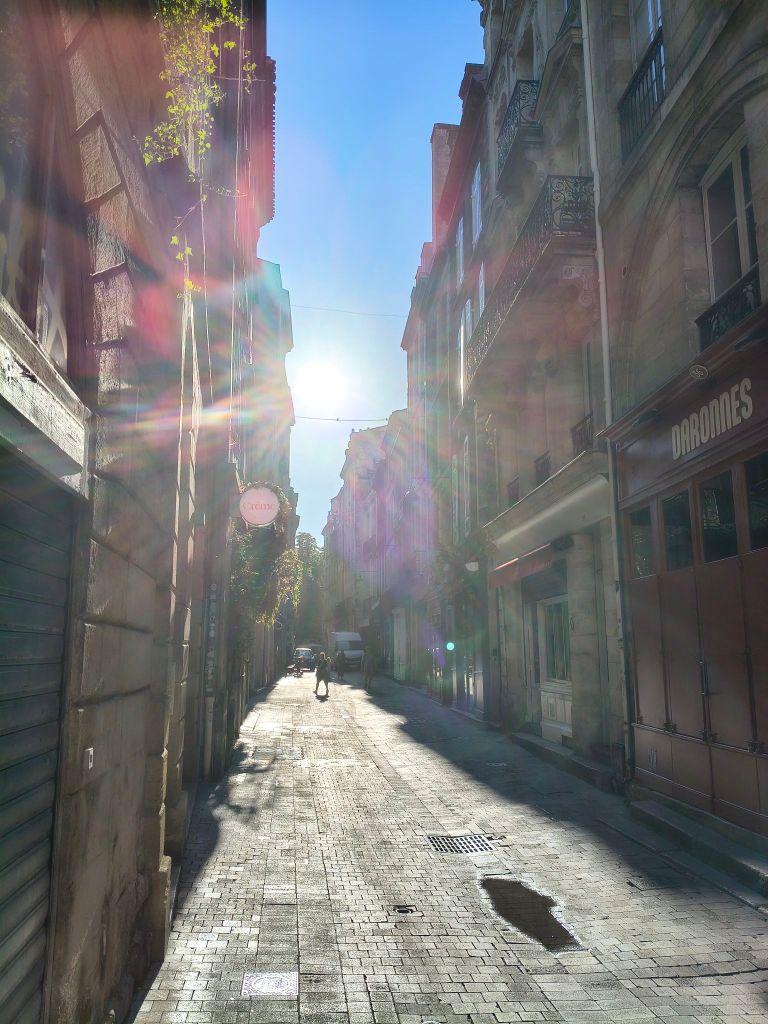
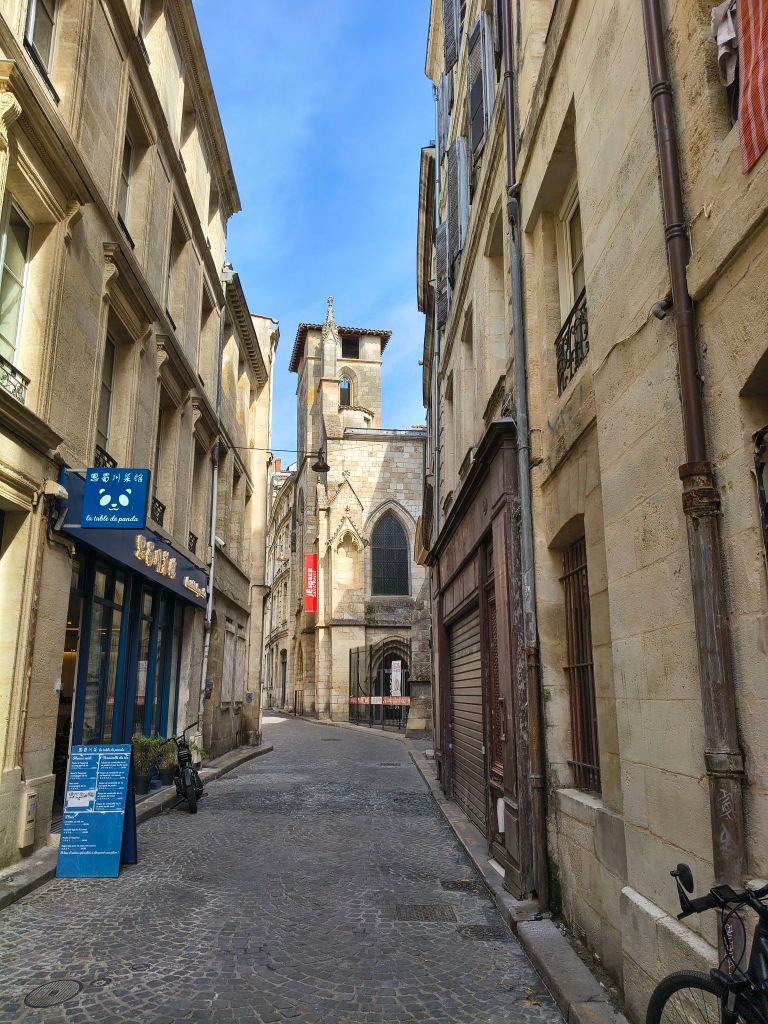
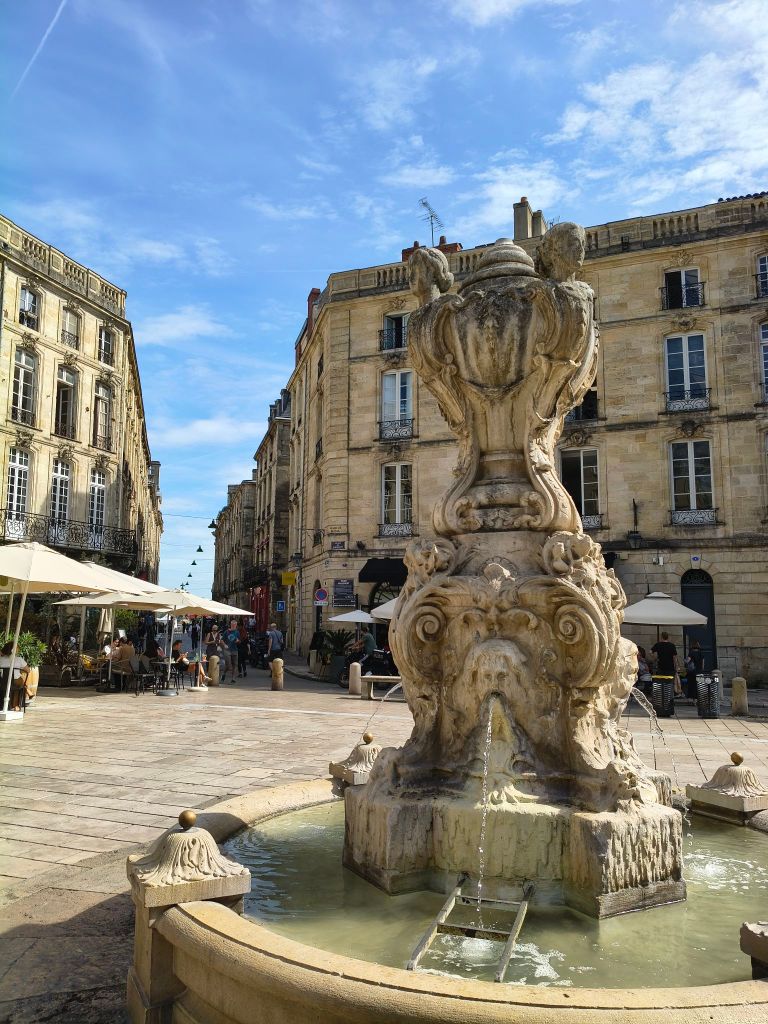
Walking the atmospheric cobbled alleyways of old Bordeaux on a sunny morning, the early-autumnal southern European sun gleaming across the ornate stony frontages of the age-worn buildings, the hustle of the maitres d’ putting out the tables at the cafes and brasseries, it all feels like nothing less than la belle France at its most profunde. The glorious architecture, the deep history and refined culture etched into every stone and polished into every wrought-iron balcony railing, the laid-back buzz of the streets, the elegant, good life, all feels unmistakably, utterly French. I even saw one guy in a beret at a restaurant. He might have been a visitor though.
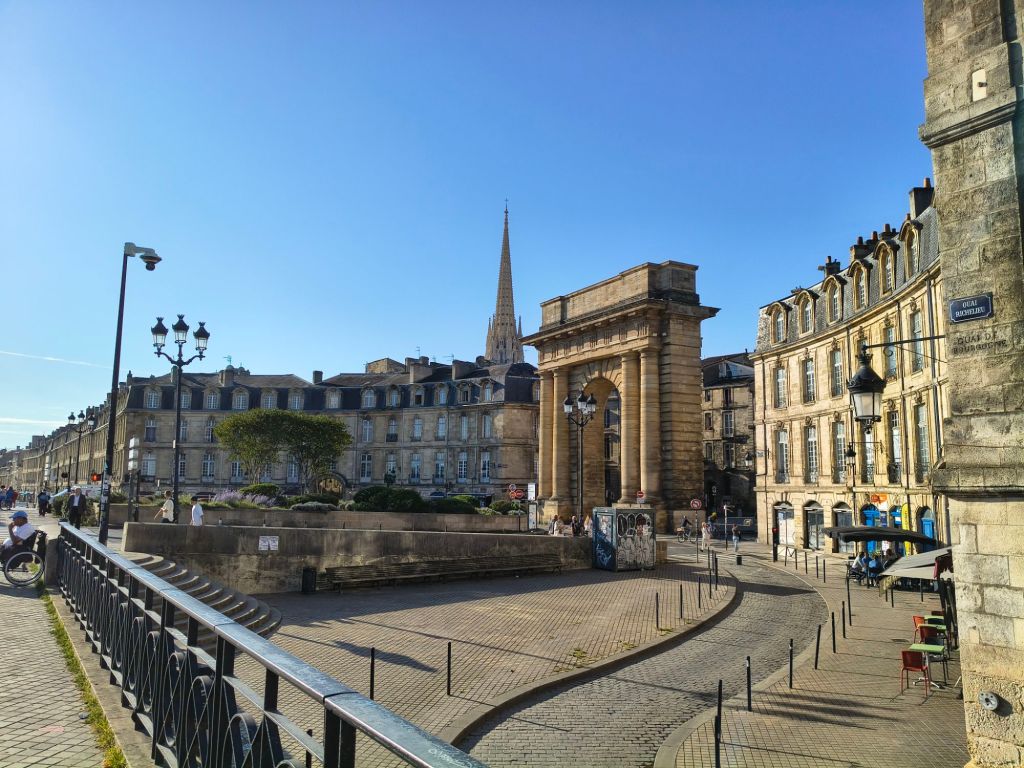
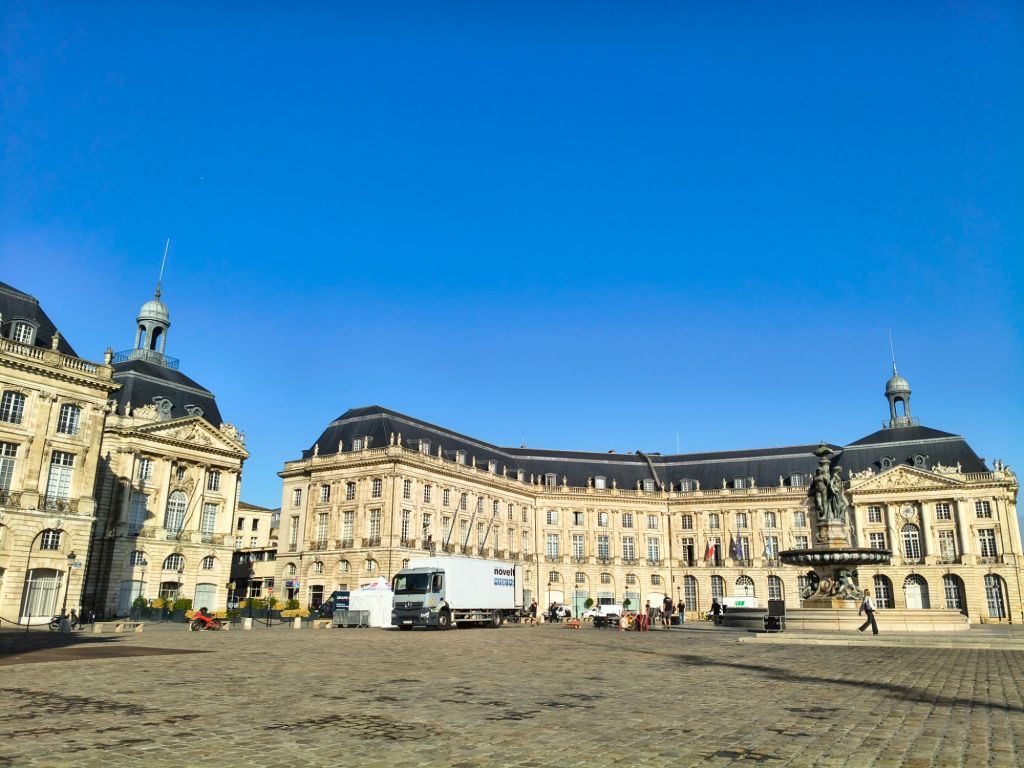
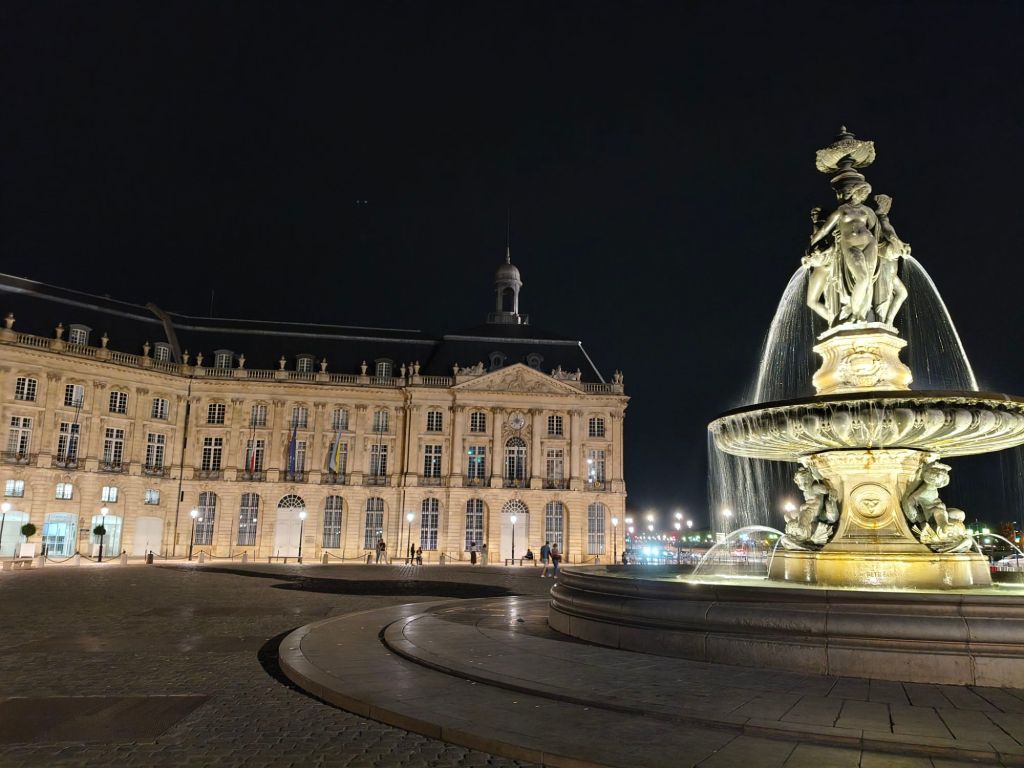
We haven’t even mentioned Bordeaux’s most defining ingredient yet. Bordeaux’s defining ingredient is, of course, Bordeaux wine. The Romans started the vineyards, but the local clairet became a particularly nice little earner when the future Henry II of England married Eleanor of Aquitaine in 1154. Aquitaine became part of the English crown and the wine became part of English livers. Bordeaux prospered, eventually establishing other trade links with the Hanseatic League ports of Northern Europe, and a fine medieval port city developed. The French took over in 1453, but after a lull and the odd rebellion against the crown, Bordeaux kicked on again and many marvellous buildings appeared in the 18th century. Perhaps the most notable and well-known is the Place de Bourse, a magnificent semicircular frontage that opens out onto to the river Garonne.
It’s an impressive sight. Just a pity that Bordeaux mounted its recovery with the profits of the Atlantic slave trade…
Apologies. Slavery again. Or colonialism. If it’s not that, it’s war. Or Nazism. If it’s not Nazism, it’s Stalinism. If it’s not Stalin’s slave camps, it’s the transatlantic slave plantations again…
We go travelling to these places partly for the culture and the historical sights, and writing about these places relies on their histories, their context, the lives lived and the things done, the colour, things to bring the reader along with you. Even if I just wrote “here I am in Paris and wow, there’s this big iron tower thing!”, just writing “Wonder how it got there?” invokes and invites an engagement with history.
Unfortunately the history of our world is, let’s be honest, rather crap.
For every fine medieval cathedral, look for the bones of the people forced into the faith or persecuted for disagreeing. A fascinating, atmospheric castle over there, but why all the cannons? Why does every Eastern European capital city seem to have a museum about the Soviet occupation? Unfortunately I like writing about the history of the places I visit, so I can’t avoid the dark stuff, sorry. And a lot of it is still very relevant. That might actually cheer you up if you get jealous of all my travelling, at least you know I have to look into the history of an attraction I’m blogging about and suddenly end up wallowing in misery.
Close enough to the Bay of Biscay but snuggled nicely downstream on the Garonne, Bordeaux was well placed to profit from the burgeoning Atlantic trade and this accelerated after the American Revolution in 1776. Bordeaux became France’s principal port in the infamous triangular trade – European goods to African slave traders, in exchange for humans in chains dispatched to the Americans, the sugar, cotton etc. sent back down the Garonne. Bordeaux traded out its own local produce but it was the Atlantic stuff that was the real money earner. The excellent Musee d’Aquitaine in the centre of town is unsparing and unflinching in cataloguing Bordeaux’s outsized role in the slave trade and its cruelties, and the unresolved legacy.
In 1789 yet another export from the Americas barreled across the Atlantic and through French ports. Revolution itself. The local Girondin faction from the Gironde departement around Bordeaux were at the head of the barricades, but they were more moderate than the other factions that eventually took power, and in 1793 the Reign of Terror proved extremely liberal in disposing of Girondin heads. Meanwhile slavery was abolished, then Napoleon brought it back, and once it went for good Bordeaux turned its attention to good old colonial rapaciousness. Unfair maybe; it wasn’t just that, it’s a very agricultural region, Aquitaine. Plus there was always the wine…
Bordeaux developed over the subsequent two centuries (I must have missed the section on the German occupation in the second world war…) and today stands as France’s six biggest city. A busy, vibrant university city, it’s a charming destination for a three-or-four night stay.
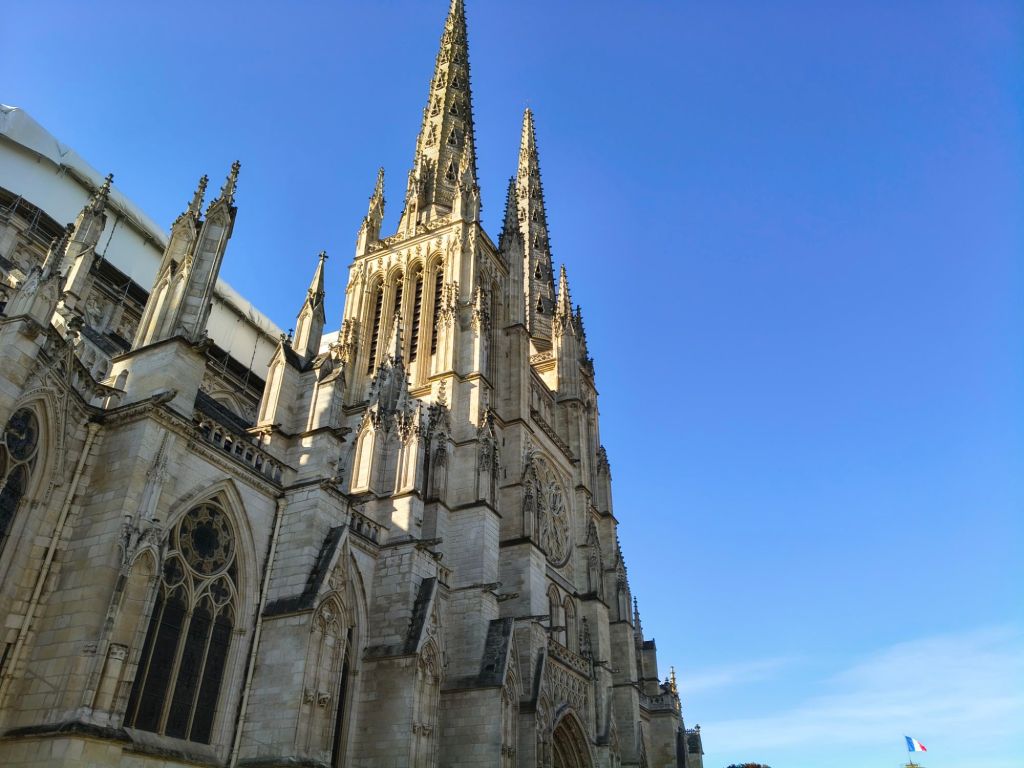
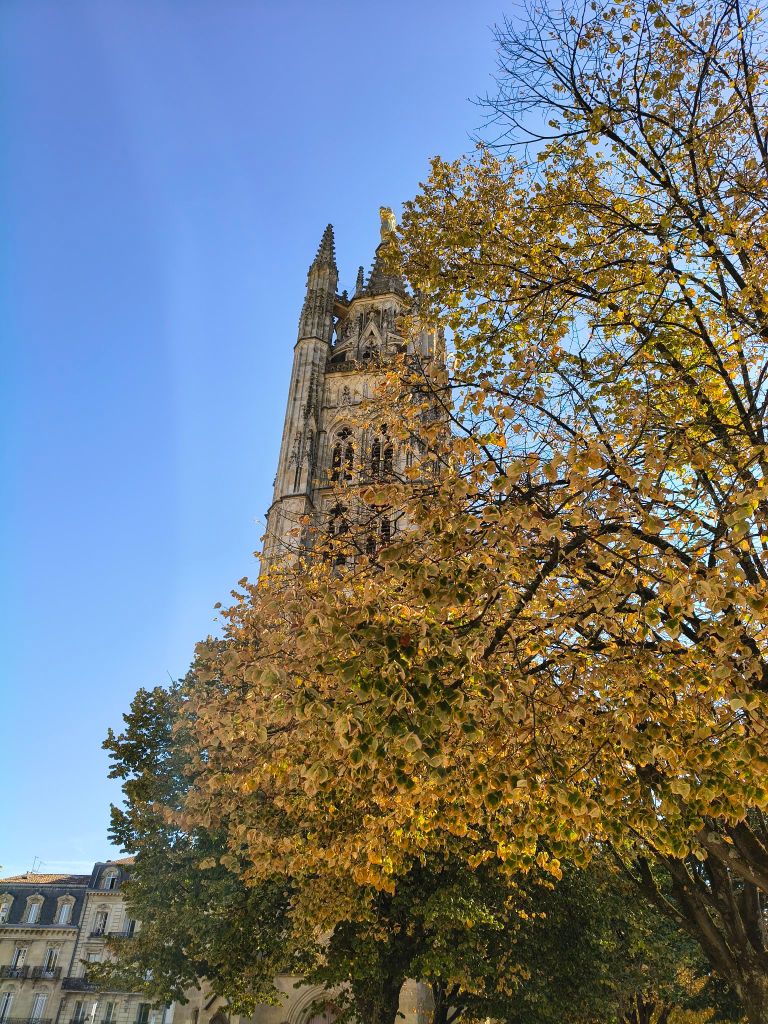
The medieval Cathedral Saint-Andre……and its belfry, the Pey Berland
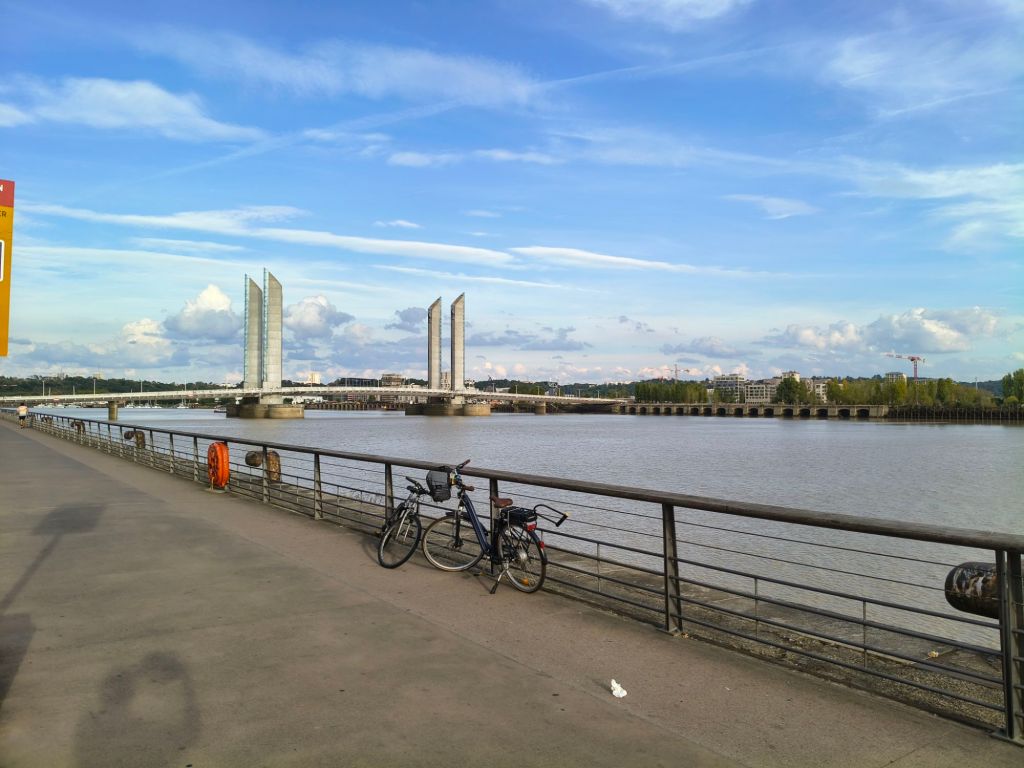
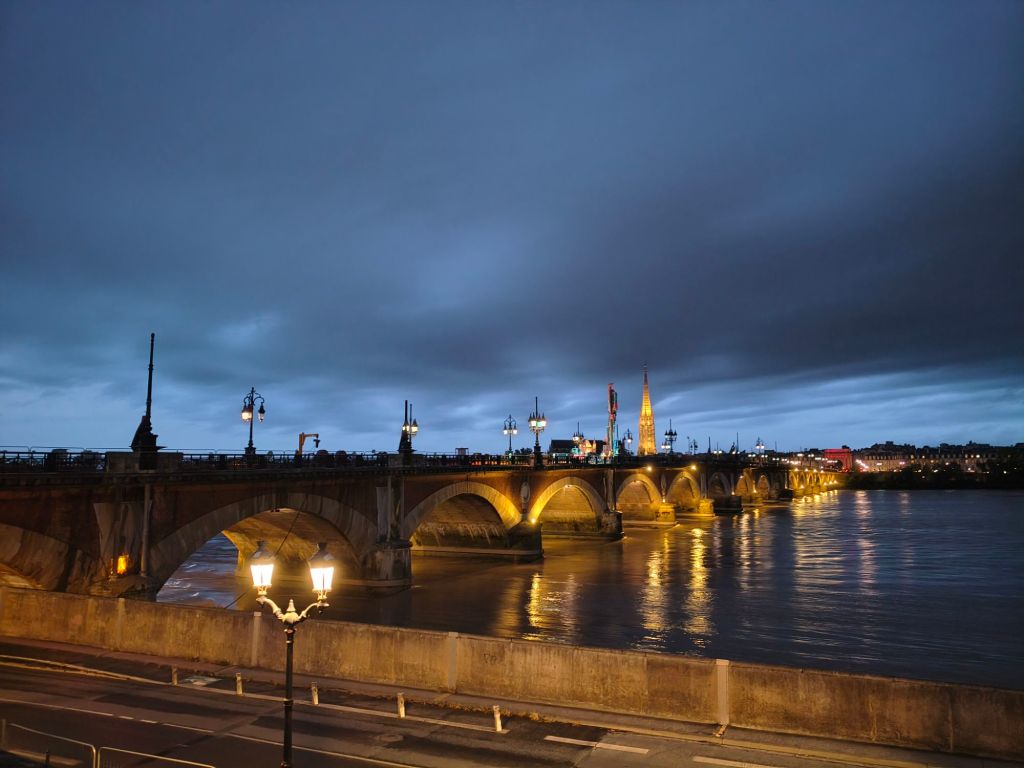
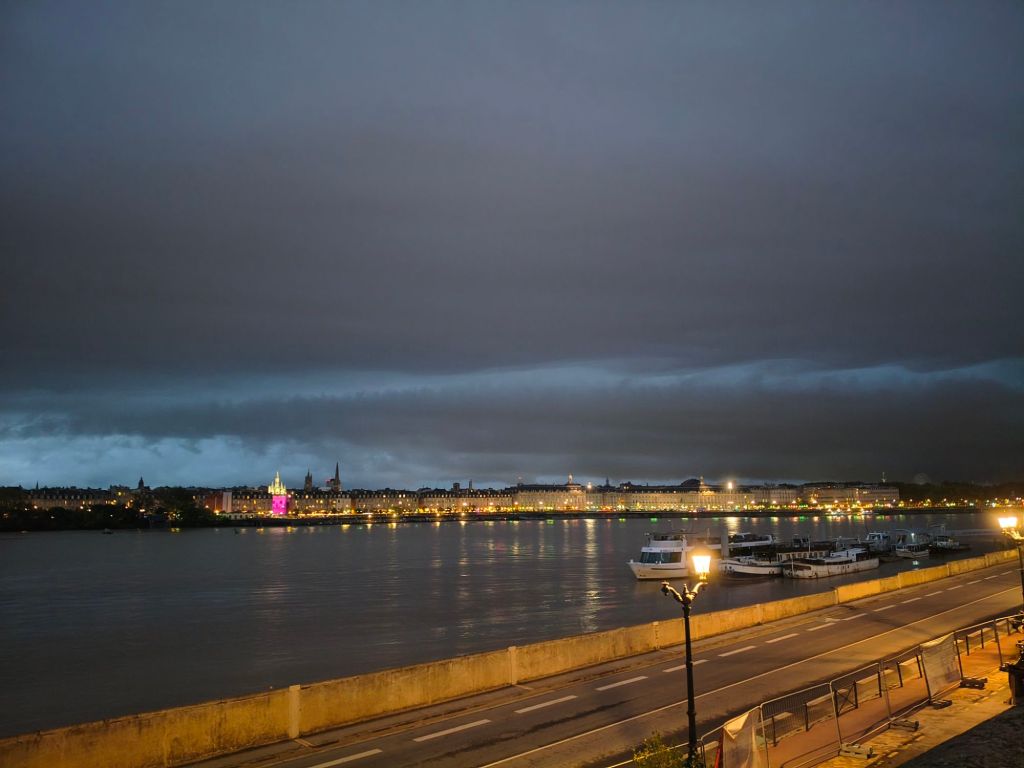
Bordeaux developed on the western bank of the Garonne, from which this view is taken. Even today all the good interesting stuff is on the left bank; the right bank is rather nondescript. It’s not surprising when you consider that the Garonne is almost 500 metres wide here. The Romans considered the Garonne as the border between their provinces of Gaul and Aquitaine, and there wouldn’t be a bridge across it until the 19th century, when it proved such an impediment to moving his troops into Spain that Napoleon had had enough. Completed soon after Napoleon’s death, it’s called the Pont de Pierre because it’s made of stone.
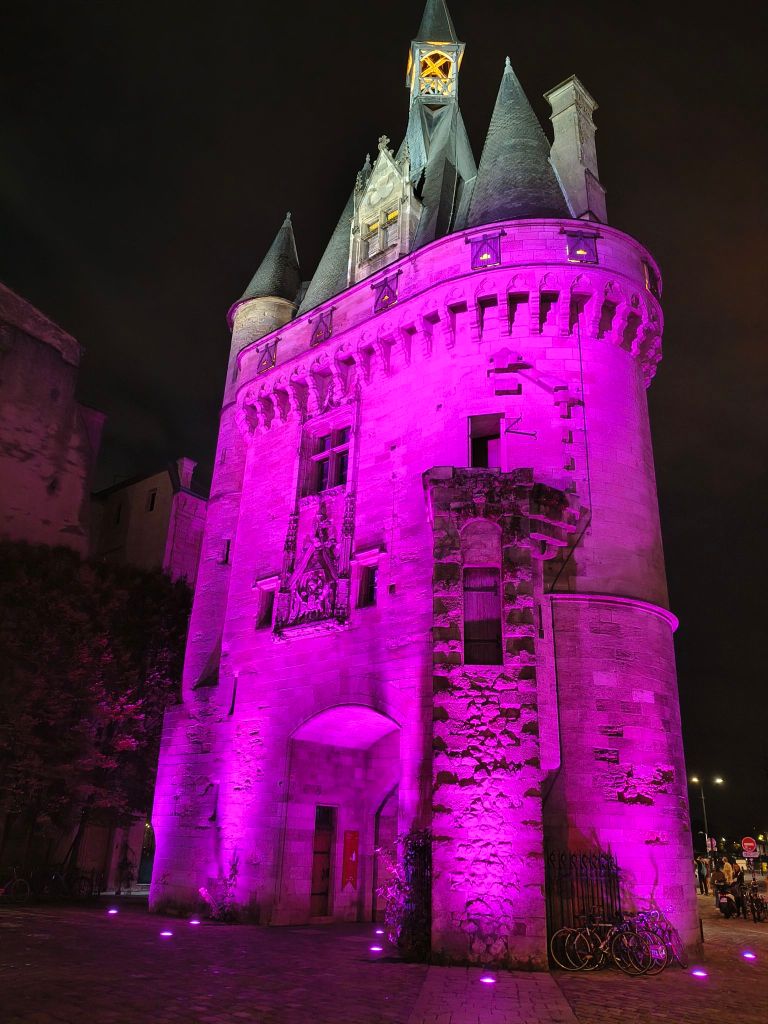
The Pont de Pierre from the rubbish right bankThe Porte Cailhau, part of the old city wall
There’s probably much more to say about this lovely city, but there ended my camera reel after my short stay and it was time to move on.
Where next? I’ve just had a thought about something I wrote just there…
As the sign says, the city of Riga was celebrating its 825th anniversary when I turned up. That’s 825 years since the papal emissary Bishop Albert of Bremen forced the local Livonian people to accept a bishopric here and turn to Christianity. So not quite your quaint old town charter with fancy seals, then. There would be a lot more forcing going on here over the centuries.
The pagan, Finnic-speaking Livonians would over time be supplanted by Indo-European-speaking Latvians. But that was only to win the dubious second prize of “being underlings to the Baltic Germans”. In Bishop Albert’s wake, generations of Germans would arrive and set up a good living exporting timber down the Daugava river. It was the Germans who would build the Old Town and its many fine houses and cathedrals.
The famous Old Town of Riga, then, was essentially a German town, more connected to other Hanseatic ports such as Lübeck than to the rest of what became Latvia. And its Germans were prosperous, merchant types, finding faith in their Lutheranism and companionship in the various guilds of the city.
Before a young German man of good standing could find himself in a proper guild, there had to be a way he could connect up with other young men on the same pathway. And this is where Riga’s most famous – and curious – landmark, the House of the Blackheads, came in.
Erected in 1334, the House of the Blackheads was the opulent home of the Brotherhood of the Blackheads, a guild for bachelor merchants who would work here and meet here. There were strict rules on behaviour to prevent it turning into a medieval frat party, and to be honest, the religious convictions of the members would have been a moderating factor anyway.
The Blackheads took their name from St Maurice (or St Moritz if you like your skiing). St Maurice was a Roman legionnaire officer who refused the order to slaughter as many Christians as his unit could get their hands on. That was partly because he was one of them. This hacked off the Romans so much that they hacked off his head and that of the rest of his men. It’s likely the Blackheads identified with a devout Christian in a pagan Roman empire doing the right thing by the true faith, seeing they were a Christian community amongst a sea of recently-pagan Balts.
St Maurice, legend has it, was an Egyptian and he is traditionally depicted as an African. The House of the Blackheads is full of shiny carved and painted black heads, they’re all over the place amongst the ornate panelling, the fine painting, the splendid collection of silver. Some of the depictions of St Maurice show his honourable nobility, other, ahem, less so. Obviously they went for authenticity against Nineties sensitivity when they built the House of the Blackheads in 1999.
Yes. They built this in 1999. There had been a House of the Blackheads here for centuries, and you can see it in the old photographs. The Brotherhood had kept going, mainly as a ceremonial thing, and the House hosted concerts by famous musicians and the like (Richard Wagner stayed here for a bit). The Brotherhood only moved out when the Baltic Germans left for occupied Poland and Germany when Stalin was granted the Baltic states in 1940. The House wasn’t so lucky. The Germans invaded in 1941, and it was destroyed in the fighting. After the war, the occupying Soviets ignored the feelings of the locals and just blew up the ruins in 1948.
Building on earlier assiduous research, the building was rebuilt in the 1990s once Latvia gained its independence. The old photos helped with the facade, but the Brotherhood were a private lot and hadn’t allowed too much photography inside their lovely interior. So if you do visit, remember what you’re seeing is not even a restoration, it’s a reimagining based on historical judgement. Today the House is used for many ceremonies and official occasions, even taking over as the presidential office when the castle was being renovated in the 2010s. Nice place, regardless of the authenticity.
So given the context, the more apposite juxtaposition you’re looking for isn’t the way the House of the Blackheads is presented in the official tourist photographs. It’s this one. That rather ominous slab of black is in fact the sobering Museum of the Occupation of Latvia.
Riga had been occupied before, notably by the Swedes and the Russian Tzars, and Latvia would only emerge as an independent nation after the First World War. Twenty years of democracy, democratic chaos, and autocracy followed until in 1940, Stalin took up his side of the bargain that was the Hitler-Stalin pact and annexed all three Baltic states. The repression, deportations and executions that followed left many Latvians greeting the German armies as liberators when Hitler tore up the contract in 1941. “Liberation” of course meant liberating the Latvians from their freedom and the Jewish and Roma communities from the bothersome business of existence. Back came the Soviets in 1945, and Stalin’s brutality continued. Adding up the deaths, the purges, the deportations, the refugee flows, Latvia had lost a third of its population by the end of the war.
The Museum of the Occupation tells the sad story of all three occupations in great, moving detail, the fate of the deported families, the apparatus of repression, how people survived in the gulags – or didn’t.
Try as it might, the Soviets couldn’t crust the Latvian desire for freedom and self-determination, and all the Baltic states won their independence in 1991 as the Soviet Union crumbled. Today Latvia is a fully-operational democracy, looking to the West as a member of NATO and the EU, while nervously looking over its shoulder at Putin’s Russia and its depredations in Ukraine. A few hours in this museum and you will be made fully aware of why the Baltic states are so twitchy.
Back to the quaint stuff.
You can see the famous wooden tower of St Peter’s church from most spots in the Old Town. It’s the thing to do in town to go up to the viewing platform of this venerable old tower and look out over old Riga. The Soviets even put in a lift for you when they built it.
I promise, that was the last time I’ll do that. The fighting in 1941 was concentrated around the banks of the Daugava river, which is why the Blackheads and St Peter’s got smashed. What we see of St Peter’s is mainly reconstruction, and reconstruction of a very-reconstructed church at that. But even if it had been left alone in the war, to me it seemed that the best thing about this rather dour, cold, serious Lutheran church would be the tower.
I didn’t go up the tower by the way, I didn’t realise there was a lift.
Moving away from the Old Town to the east, you come across a ring of lovely parks, and between them, the Freedom Monument.
The Freedom Monument was erected in 1935 to commemorate the Latvians killed in the 1918-1920 War of Independence. As “AI-Me” mentioned in my previous post, this caused a problem for the Soviets after 1945, and required some reinterpretation (see “Directing the Narrative”). But Gemini-Me didn’t cover events beyond 1991. The Freedom Monument still sees regular commemorations of those who struggled for Latvian independence down the decades, and rather unfortunately, about twenty years ago that meant members of the Latvian branch of the Waffen-SS who fought against the Soviets in the Second World War. Which understandably caused a reaction in Moscow. You still see the police keeping watch around the monument, making sure no-one does anything contentious here.
Bear in mind that in 2017 ethnic Latvians made up 44% of Riga’s population. 33% were ethnic Russians, mainly the result of immigration during the Soviet years. The Occupation Museum is rather sniffy about the ethnic Russians, claiming they were brought in to dilute Latvian national identity, and complaining that they haven’t embraced Latvian-ness. This whole area of Latvian – indeed Baltic – life is very sensitive stuff. Expect to hear more about it in the next few years – particularly from the Kremlin.
There were some Russians here before that. Riga’s 19th-century German businessmen saw the way the wind was blowing and went all-in on industrialisation. That required manpower, and in they came – Latvians, Poles, Russians, Jews, making Riga quite the multicultural city. And making the businesspeople lots of money, which they partly spent on turning Riga into one of the world’s great treasuries of Art Nouveau architecture – nowhere more so than on famous Albert Street.
There’s more about it in Fake-Me’s Gargoyles and Heavy Spirits section from the previous post. (I haven’t felt up to trying out the black balsam though.)
Art Nouveau pops up in the rest of the city too…
…and not just in the city. On my last day I took the 30-minute train ride to the resort town of Jūrmala, westwards along the Gulf of Riga. It turned out that Jūrmala is strung out for 20km along the coast and there was a town centre I’d missed. But I saw enough of the delightful early 20th-century resort houses and churches to see what the rich were doing with their money once they’d made it.
Jūrmala was a fine place to spend a sunny day. There is some dark history here about an antisemitic massacre in 1941 when Latvian nationalists burned down a synagogue, but I wanted to end on an upbeat note. A note that acknowledges history but points a way forward. So, refreshed by the sea air, we head back to the city, and St Peter’s.
Links between Riga and Bishop Albert’s old stomping ground of Bremen remain strong, and here we see Bremen’s famous four musicians. According to the Brothers Grimm, four ageing farm animals – a donkey, a dog, a cat and a rooster – have had enough of the farm and set out on the road to become musicians. At some point they find robbers in their forest home. They’re all too small to fight them off one-by-one, so they decide to make one big animal by standing one each other’s back and howl at them. This does the trick and the robbers flee.
There is an original in Germany so what we have here is a copy by the German artist Krista Baumgärtel and presented to Riga in the interesting year of 1990. Because in the original, the animals are not looking through an iron curtain. Especially not an “Iron Curtain”. And in 1990 Latvia is still the Latvian Soviet republic, but the Berlin Wall has fallen and the Baltic states are sensing an opportunity, peering through the darkness and blinking in the light of a possible future.
There’s something else too. The animals are too small to fight off their oppressors individually, so they decide to make one big animal. And if you read my blog post from Vilnius in 2023, you’ll see that this is what the Baltic nations put into practice to win their freedom, most starkly with their great human chain from Tallinn in Estonia, through Latvia and down to Vilnius in Lithuania.
And it worked. Pulling together, co-operating to face the great challenges of the moment paid off in 1991, and it’s still a model for us all. Riga hasn’t always got it right in its multilayered history but sometimes – the guilds, the Blackheads, the independence movement – it’s shown that we’re stronger together than when we’re on our own. And that’s not a bad point at which to leave this rather fascinating, delightful, bewildering little city.
(Particularly delightful when the beer bikes in the Old Town have passed by and gone.)
So I did the thing, and I’m just going to have to admit to it now.
It was a very warm day. The heat will do things to you, if you’re not careful. And it was the hot European summer of 2026. Northern Europe wasn’t built for heat. The Old Town of Riga is a narrow cocoon of high-sided Germanic shops and residences, charming and old-time, but constricting and unyielding when the heat builds, although they do offer some shade from the high Latvian summer sun.
And it was a humid sort of heat, down on the banks of the yawning Daugava river through which Riga’s fortune flowed. When the humid air meets the flower beds in the picturesque ring of parks on the Old Town’s north-east edge, there’s a sweet, languid fragrance in the air, a tropical feel that belies the image of a stolid, reserved Baltic city. The bitter northern winter would probably feel very different. But it was summer. And warm. And I was knackered, and there I was in the Old Town, beer in front of me, trying to come up with ideas for my blog.
A set of conditions that might tempt you to cut corners…
So I pressed the button and did the thing. And I was overcome with an intense bout of shame, a shame that burned fiercer than the late July sun.
A shame greater than that of those medieval missionaries who’d failed to bring the pagan peoples of the Gulf of Riga to the true faith of the Holy Roman Empire…
A shame greater than that of the Latvian functionaries of the Soviet era, forced to facilitate the ongoing oppression of their own people and work against their national aspirations…
A shame greater than that of a visiting stag lad when videos of his behaviour in the Old Town started appearing online…
…ok not as shameful as the last one, but it was bad enough. Because I’d decided to cut a corner and come up with a quicker way of blogging. And also get down with the kids, and more importantly our new tech tyrants.
So I did the thing. I opened Google Gemini on my phone, and typed in
“create a blog post about riga in the style of orwelliantwo.com”
And it did – well sort-of. See what you think.
AI-GENERATED
Parallel lines
July 31, 2026 Step out of the monolithic concrete cavern of Riga Central Station and you are immediately confronted by a city that doesn’t just display its history; it layers it like a complex, geological strata. It is a metropolis of stark architectural dualities, where the fragile, swirling whimsy of German Art Nouveau aggressively collides with the heavy, unyielding grey stone of Soviet occupation.
The Daugava River splits the city cleanly in two, a wide ribbon of slate-grey water rolling out toward the Gulf of Riga. It’s a body of water that has brought Riga its immense trading fortunes since the days of the Hanseatic League. But looking across the banks today, it’s hard not to feel that the river is a physical fault line between competing versions of the European century.
The Gothic and the Grey
Start your wandering in the Vecrīga—the old town—where the narrow, cobbled alleyways are so tightly packed that the tour groups seem to bleed into one another. Here stands the massive Riga Cathedral, its dark towering spire defining the skyline. Like its counterparts in Bruges or Zurich, this place was built on the supreme self-confidence of medieval merchants who got very rich, very quickly.
But walk just a few blocks east, and the romantic illusion evaporates. The House of the Blackheads, a beautifully reconstructed Gothic fantasy of Dutch gables and ornate carvings, sits directly opposite the dark, brooding concrete block of the Museum of the Occupation. It is a jarring, brilliant, and deeply uncomfortable juxtaposition.
The original medieval square was completely flattened by German artillery during the Second World War. When the Soviets moved in, they didn’t bother restoring the merchant glitz. Instead, they erected an unyielding monument to the Red Latvian Riflemen. Are we looking at a celebration of revolutionary heroes, or a stone-faced reminder of who owned the town? It depends entirely on which calendar year you choose to look through.
Directing the Narrative
Speaking of monuments that make people nervous, a short walk down Brīvības Bulvāris brings you to the Freedom Monument. At the top, “Milda” stands high and proud, holding her three golden stars to the sky, representing the historical regions of Latvia.
During the Soviet era, the authorities desperately wanted to pull her down or rewrite her story. Propaganda is a funny thing; when you can’t demolish a symbol, you simply change the script. The official narrative was swiftly reverse-engineered: the public was told Milda was actually Mother Russia, and the three stars represented the Baltic republics safely gathered under her protective embrace. Talk about an impressive bit of political doublethink! [1, 2, 3]
The local Rīdzinieki knew better, of course, keeping a quiet, subversive counsel as they walked past under the watchful eyes of the state.
Gargoyles and Heavy Spirits
To clear the head of all that heavy political baggage, take a walk into the Quiet Centre. Riga possesses the highest concentration of Art Nouveau architecture anywhere in the world, largely thanks to Mikhail Eisenstein—father of Sergei, the famous Battleship Potemkin director.
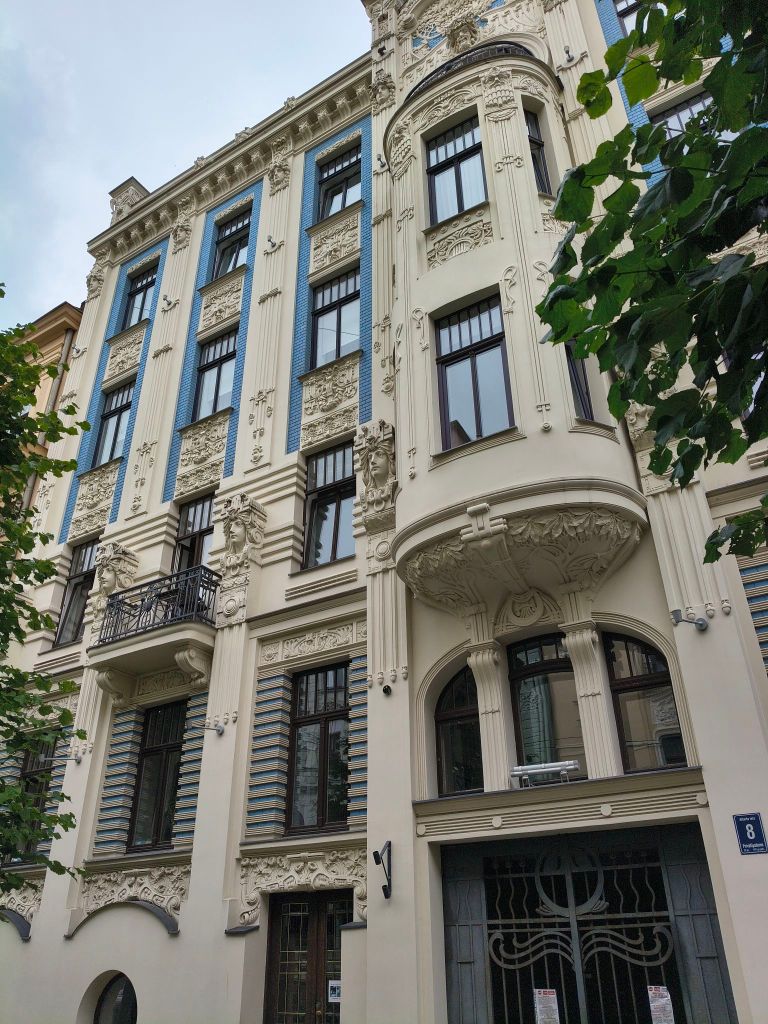
Alberta Iela is an absolute riot of human and animal faces staring down at you from blue-brick facades. Screaming sphinxes, bloated lions, and elongated stone maidens twist out from the stone. It feels like stepping into a manic, turn-of-the-century dreamscape. It’s gorgeous, but like John Nash’s Royal Pavilion in Brighton, it is eye-wateringly over-the-top, a showy statement of late-Empire wealth built just before the entire world fractured in 1914.
My time was drawing to a close, so I ducked into a quiet basement tavern to try the local cure-all: Riga Black Balsam. A thick, jet-black herbal liquor that dates back to the 18th century, it was originally brewed by a pharmacist to cure Empress Catherine the Great of a stomach ache.
Drinking it neat in the damp Latvian afternoon is a profoundly humanizing experience—partly because it burns your throat with the intensity of pure jet fuel, and partly because it forces you to sit entirely still while the tram rattles past outside.
Two nights here is barely enough to scratch the surface of a place that has been conquered, liberated, rewritten, and redesigned so many times. But as you walk back to the station, passing the colossal, repurposed Zeppelin hangars that now house the Central Market, you realise that Riga doesn’t hide its scars. It simply incorporates them into the architecture.
END AI-GENERATED
And maybe I can just travel now without having to spend too much time on the blog? Well, as I say, sort-of.
It’s captured something of my style I think, the titles, the attempt to summarise what’s happened in a place and blend it in with what you feel when you’re there. And to me it looks like it goes further, it’s more comprehensive and authoritative than my witterings, it’s a complete summary of the whole place in one go. And – ahem – maybe it reads better?
But if generative AI can maybe build something out of what you feed it, at the moment it can’t capture you. And there’s nothing here that captures my stick – the corny jokes, the old-man milieu, the attempt to work in as much sport as possible. And I think that what I try to do is put my experiences out in this blog, my own internal dialogue as I work out my own spin on what’s around me – sometimes fun, sometimes serious – and I’m not seeing that in the AI version. A good thing or a bad thing? Up to the reader.
Interestingly the three links it’s given as its source material (see the bottom of my post) are all about George Orwell’s version of “Orwellian”, whereas I’m just mainly channeling the East Anglian river in my handle (the same one Orwell took as his penname). Obviously it’s been asked to use “Orwelliantwo.com” to write about a place that’s undergone Stalinism and added two plus two together.
And very appropriately, if you know your Orwell, come up with five.
Oh, and there’s no pics. And, come on, where are the statues?
The main shortcut here is that I’ve now told you all about the basics of Riga’s history in something that’s based on my style rather than a cut-paste from Wikipedia. There are a few bits missing that could be brought out, but this is a city – and region – with a complex, challenging past which I hope to bring out as we wander around over the next two-and-a-bit days (I don’t know where Gemini got two nights from. I’m here for four. Still not enough to get the complete picture across).
And I promise it’ll all be good old human rubbish as usual from here.
The wind was high and the water rolled as the sails billowed and billowed well. We slipped anchor with the sun high on the yardarm and the fellows gave a hearty cheer and a Yo Ho Ho!, as hearty a Yo Ho Ho! as would awaken the quick and the dead, as great a cheer as the good old, wicked old town of Brigstow had ever heard.
“Timbers shivered, mainbrace spliced, rum bottled! We sail for the Main!” boomed our great captain, no less a blackbeard than Sir Edward Tench himself. “To the Main, to fortune, to adventure!” And so we slipped away across the harbour, Spike Island receding to the stern, just as John Cabot himself had done (if we’d followed his route we’d have to call it Foundagainland)…
“To adventure!” shouted back the hearty lads, breaking out into jolly shanties that involved lots of rum and other stuff that can’t go into a respectable travel blog.
“To fortune I hope, good Sir” whispered our well-deserved, well-renumerated sailing companion, the great Sir Edward Colston himself. “Remember”, he sneered, ” that I am the great and respectable benefactor of the city and my generosity requires the safe passage of my, err, special helpers here”. As he shook their chains he went on. “My dear captain, you are a mere, dastardly pirate. On the other hand a look at the calendar will show you that everything I get up to will be perfectly fine for another three hundred years or so and absolutely nobody will have a problem with it in this port until then. Well apart from that Clarkson fellow. And that Sancho chap. And all their friends. Anyway, as I was saying… nobody will have a problem…”
But as we sailed into the Avon and passed through the great gorge of Clifton, things became…suspenseful. The special helpers suddenly broke free of their chains, grabbed Colston and threw him over the side, and it made quite the splash. The last time I saw him he was sinking to the bottom of the rolling Avon, a balaclava in one hand, a spray gun in the other.
“Aha! He’s made it!” Tench exclaimed to my astonishment. “He made it to the shore and he’s… he’s spraying something onto the rocks over there.”
I couldn’t see him, so Tench got tetchy. He pointed to the shoreline.
“Not the river!” he shouted “Bank! See!”
Suddenly the sea shanties changed and the ship went to action stations. We’d come under a massive attack…
And then I woke up.
Fortunately I decided not to leave it to my fever dream and instead I got out and about and did my own exploration of Bristol. I’m not here for long, and this can only be a very short snapshot of what I encountered so if I missed anything out we’ve already captured the main points. Let’s see what else we can find.
Bristol is a great port city at the mouth of the River Avon, just upstream from the great gorge at Clifton. The port made Bristol’s fortune from the Middle Ages onwards, and its site near the western Atlantic approaches made it highly convenient as a starting point for great exploratory ventures such as John Cabot’s famous trip to Newfoundland.
Then Bristol got greedy. Atlantic exploration led to the Atlantic slave trade, and they went all-in in this town. Wikipedia claims that around 2000 Bristolian ships carried 500 000 African souls to enslavement and misery between 1700 and 1807, and there were over 200 slave traders here, almost twice as many as London. Bristol also got in on the smuggling and piracy business, and together with the slavers, the abolitionists, the pirates, the odd legitimate trader, it must have been a rollicking old town to be in at times. Unless you were in chains.
Eventually the slave trade was abolished, the pirates were all hanged, and Bristol moved on. Isambard Kingdom Brunel built his railway from London, designed the SS Great Britain and scribbled up the plans for the Clifton Suspension Bridge over the Avon Gorge. Bristol remained an important port into the 20th century, important enough for the Germans to bomb it heavily during the second world war. The port moved out further downstream but the rollicking continues in this student city, with the Bristol Sound of EDM groups like Massive Attack, and the street art movements led by the town’s most famous son(s?), Banksy.
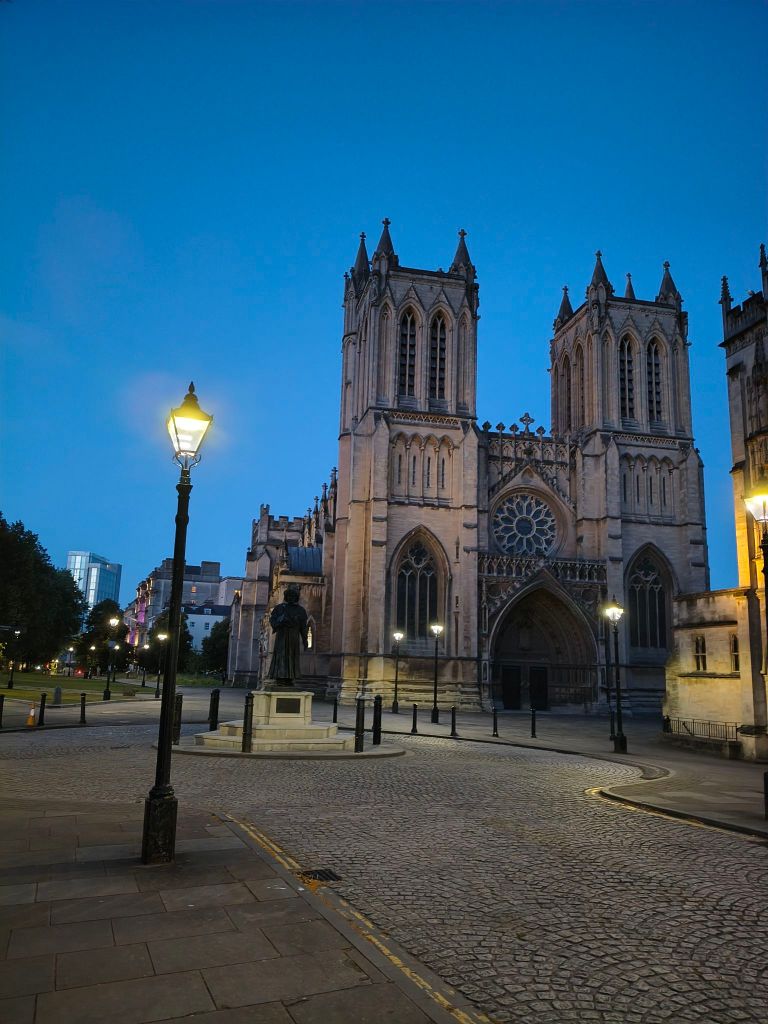
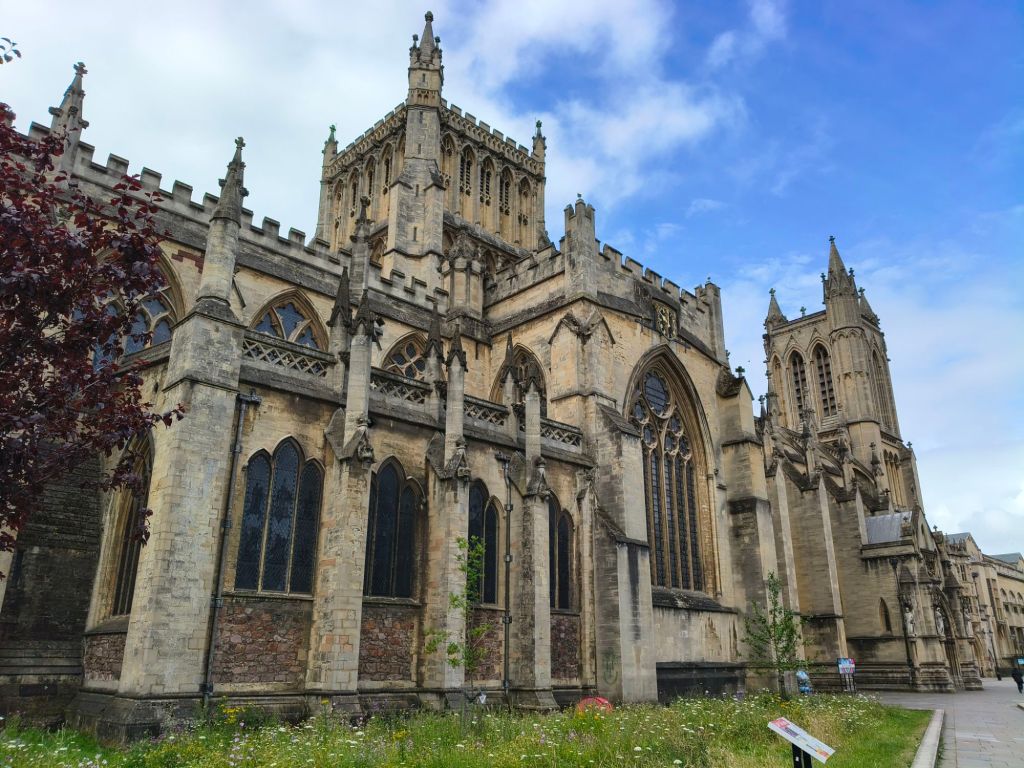
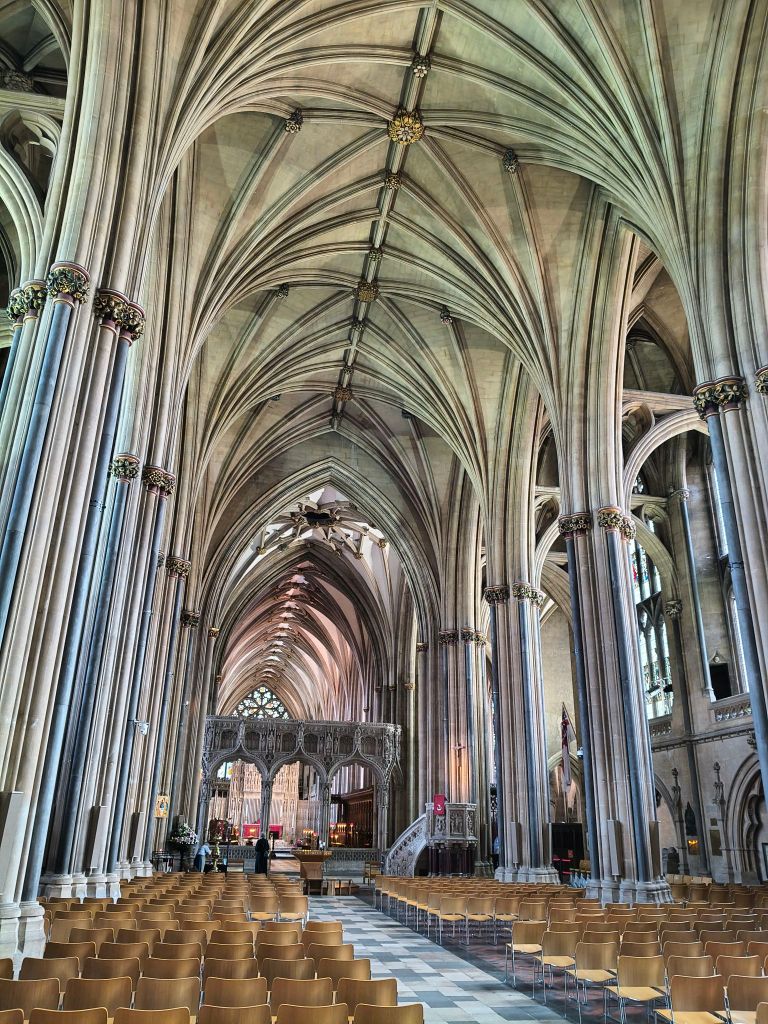
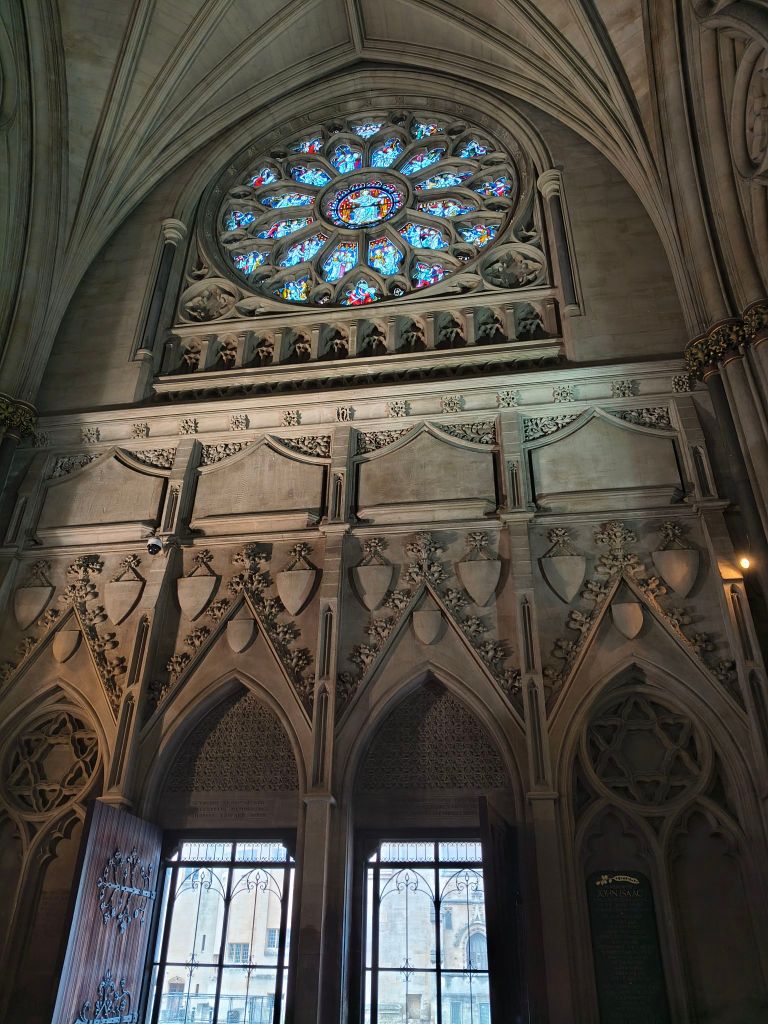
Befitting a great city of discovery, my own revelation was that Bristol had a great mediaeval cathedral and here it is, right on the corner of genteel College Green in the centre of town.
It’s a grand space, a convenient retreat from the city buzz around it, well the sedate collegiate hum anyway, we’re not far from Bristol University. The cathedral is particularly worth checking out if only for the memorials to the local worthies and the great and good. This being Bristol though, many of the “great-and-good” were active in slavery.
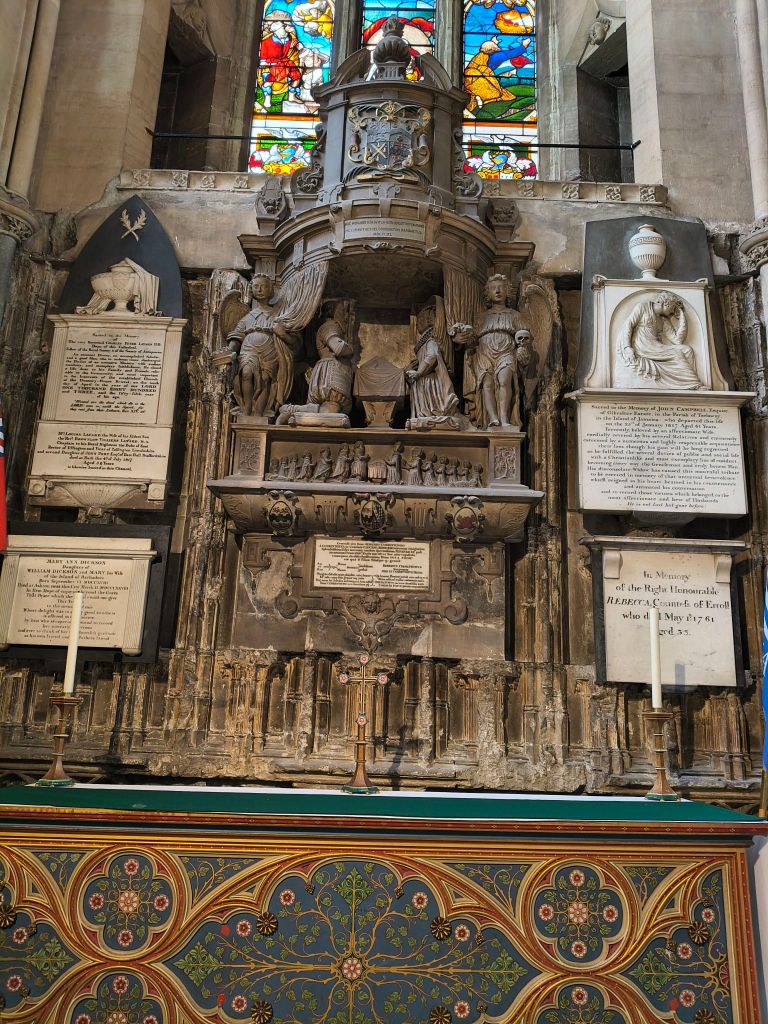
The grandiloquent Codrington Memorial commemorates one of the great plantation-owning families in the British colonies in the Caribbean. What struck me as well were the unctuous memorial plaques to their fellow slaveowners to the sides, where we read about just how wonderful, honest, devout these people were, no finer men etc. It’s so brazen it feels like a showy statement of the power and influence of the plantation interest, and maybe the later plaques acted as a cynical middle finger to the abolitionists? “Well, we think we’re God’s gift, and we own this town, so whaddya gonna do about it?”
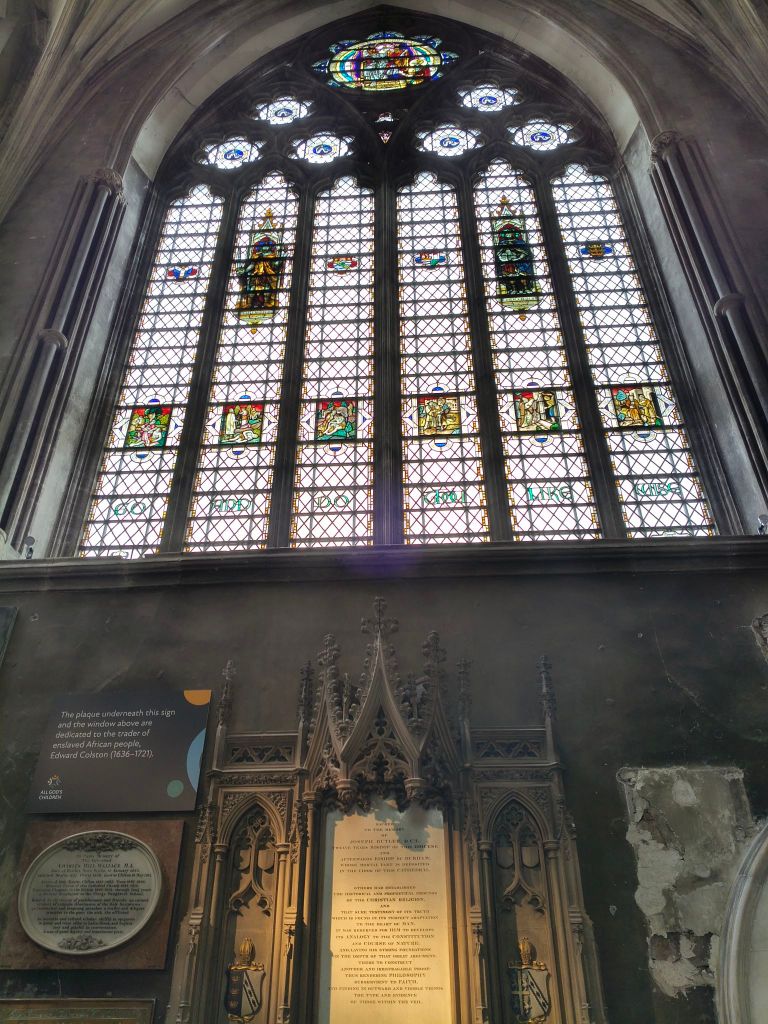
Which leads us to the Colston Window.
Sir Edward Colston, 1636-1721. Merchant, philanthropist, great Bristol benefactor, and humongous slave trader. A man of many talents, in 2020 he became Britain’s greatest diver since Tom Daley after a famous aquatic feat at the harbour. Here’s his commemorative window, and to the left you can see the modern plaque that covers up the original unctuousness. They’re looking at replacing the window, by the way.
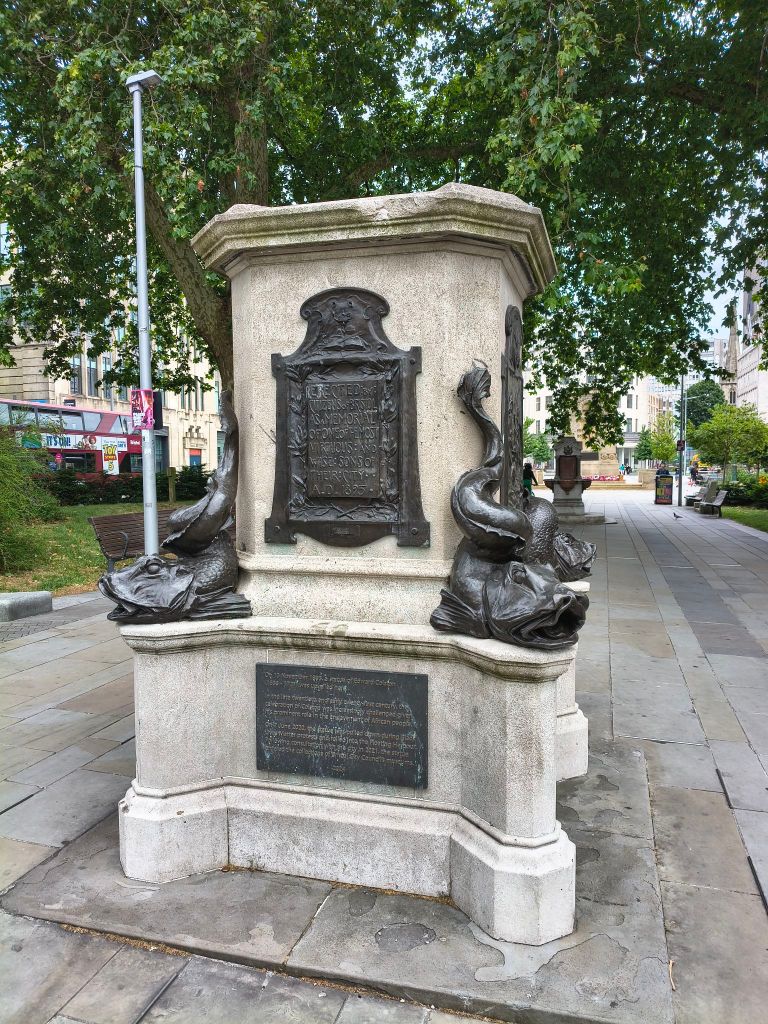
If you think that’s cancelling, you should see what happened to his statue.
It’s the 7th of June in the febrile, COVID year of 2020, and a crowd has gathered around Colston’s statue in the centre of town. They’re not tourists – COVID has put a stop to travel. It should have put a stop to public gatherings of any sort, but this is the spring of worldwide Black Lives Matter protests that have followed the murder of George Floyd by US policemen. People are angry and will come out regardless. Bristol has a notorious slaving history, a large Afro-Caribbean community – and a rebellious, rollicking streak. A community that had already seen off a public transport employment colour bar in the Sixties by boycotting the buses. The name of Colston is memorialised everywhere in the city, it’s upset people for decades, and now is the time to do something about it.
Eventually people clamber around, get some ropes, and the statue is hauled to the ground. It’s defaced and hauled a hundred metres or so to the harbour wall, where it is unceremoniously dumped into the water – not before someone re-enacts George Floyd’s death by kneeling on its neck.
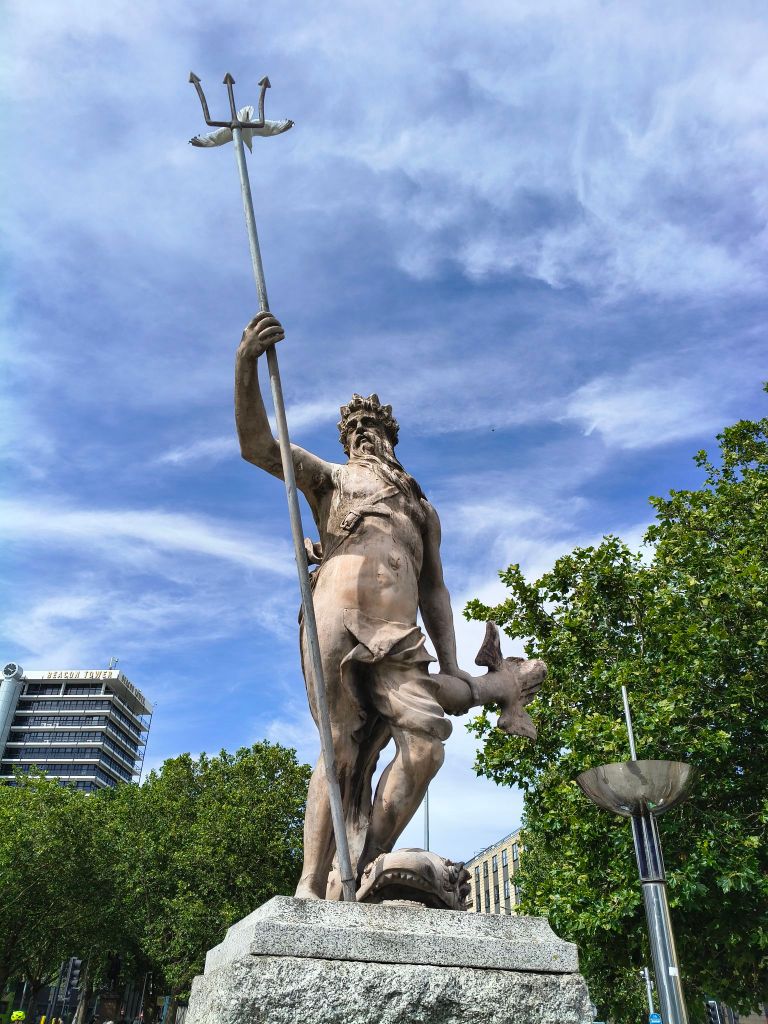
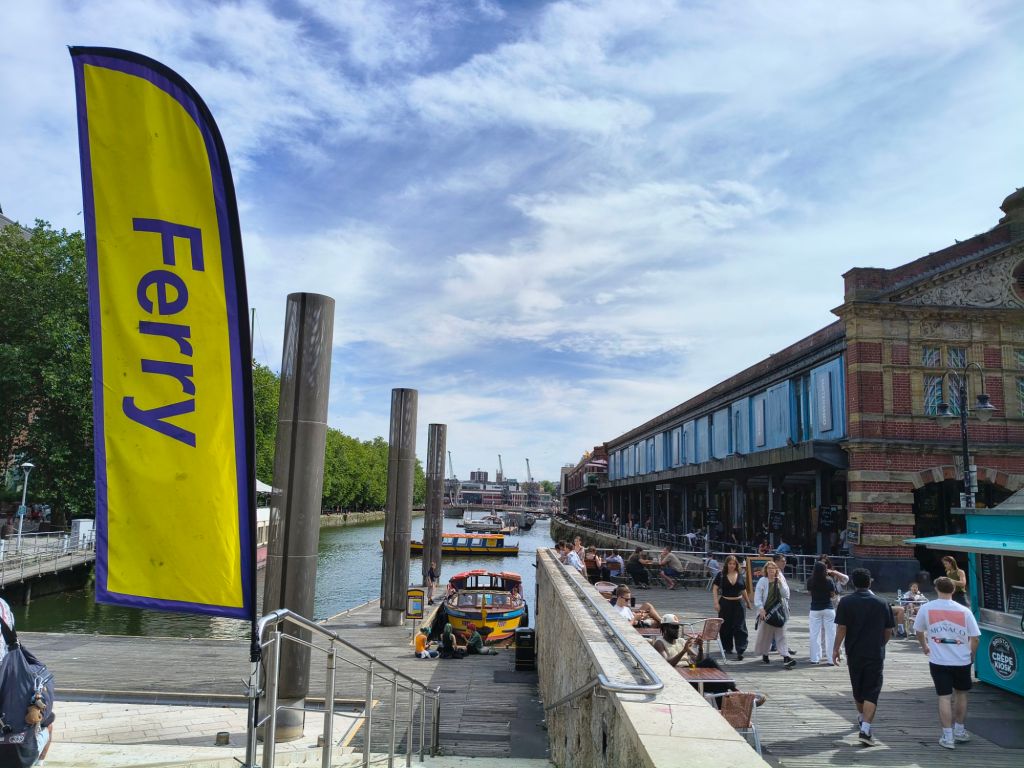
Somewhere near here
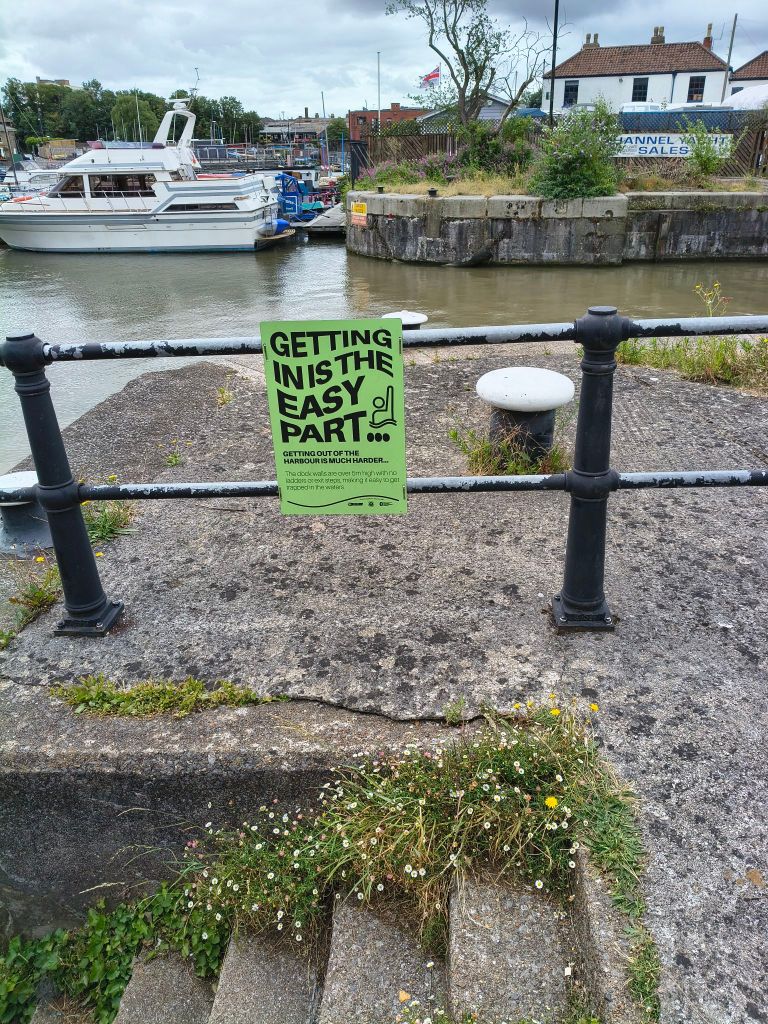
Quite so, just ask Edward Colston.
(This is somewhere else in the harbour. I just liked the sign).
Bristol is still dealing with that hard part. The council fished out the statue and stuck it in the M Shed museum, leaving the plinth empty. But it kicked off a period of statue removal across the world, with the inevitable controversy.
What to do about how men like Colston are remembered is still a sensitive issue in Bristol. Are we erasing history, or uncovering marginalised voices? What do we do with memorials to tainted figures? How can we say that we shouldn’t apply the standards of today, when those standards were very similar to the ones being fought for by contemporary abolitionists? But if we agree with taking down outright bad eggs like Colston, where do we stop? Admiral Lord Nelson had pro-slavery views and links to the plantation interest. What does that mean for Nelson’s Column?
And of course, if we want to “restore” history by restoring the statue, isn’t that also erasing the historical reality of the events of June 7th 2020?
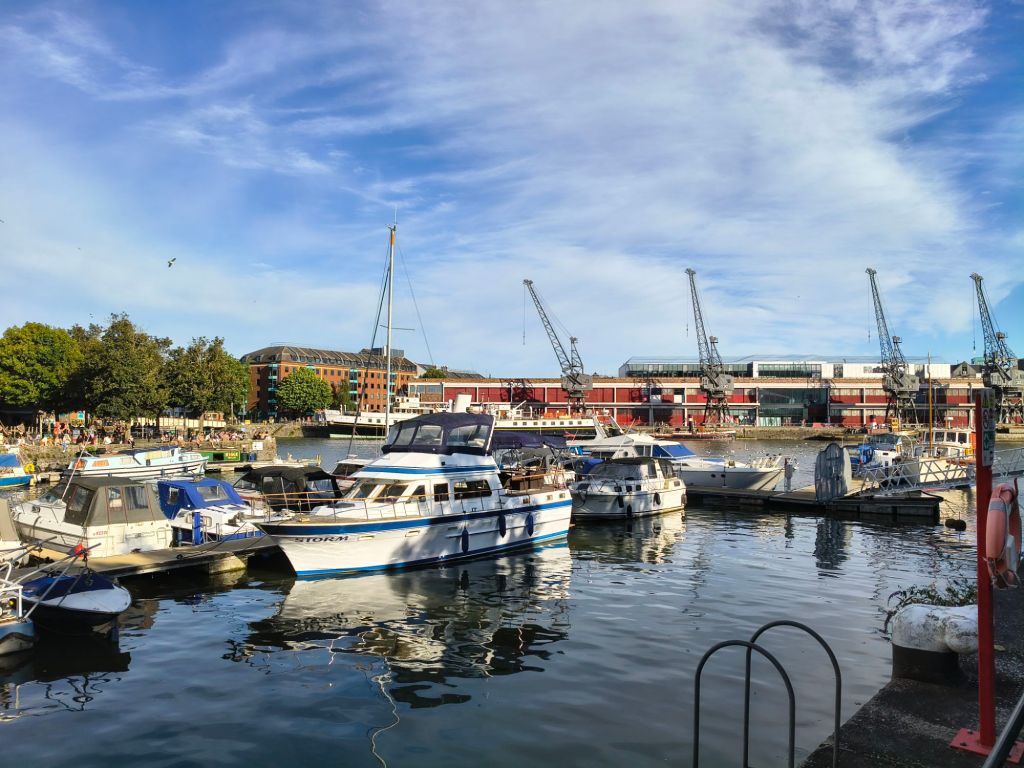
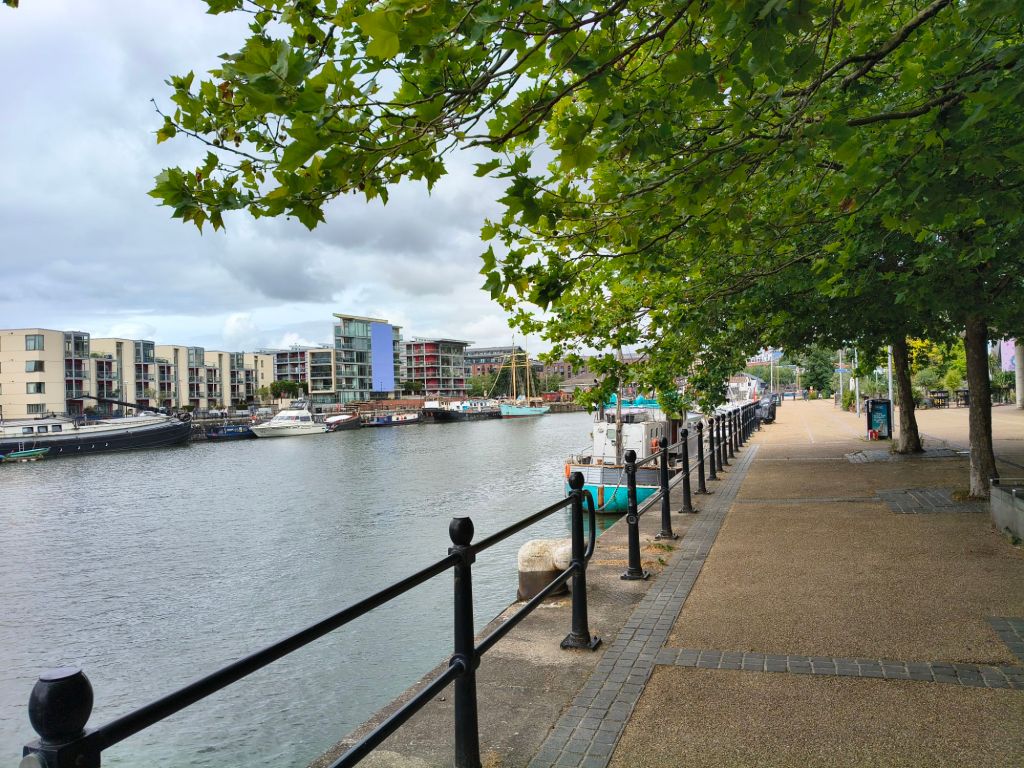
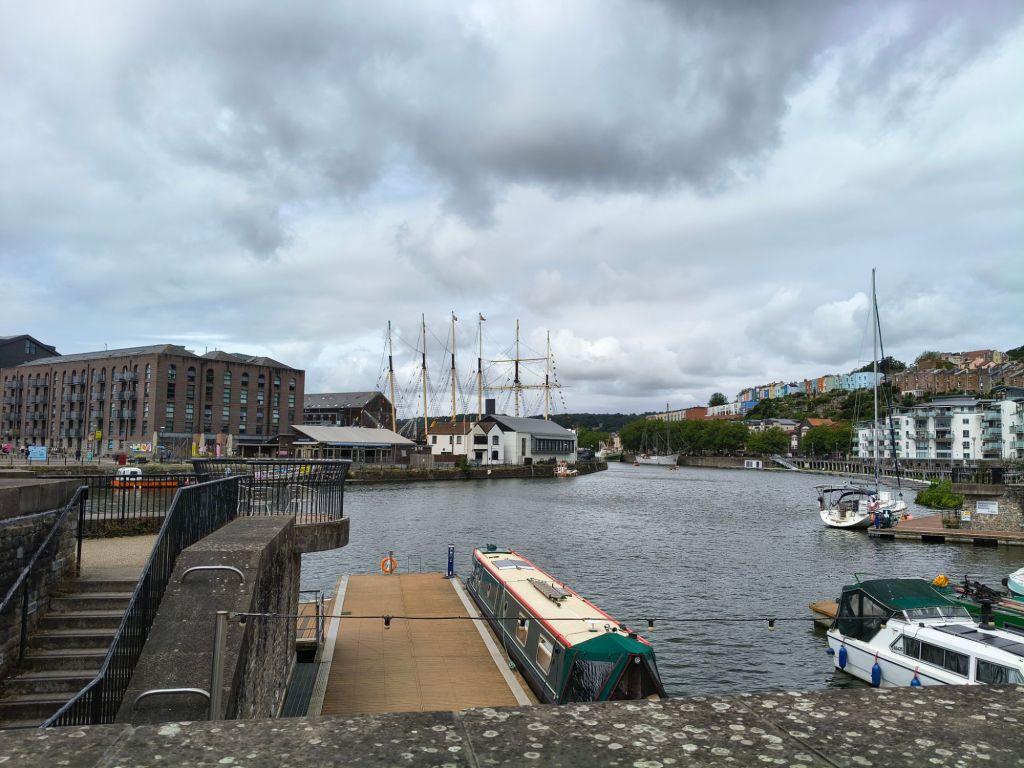
Time for a short walk along the harbour after all that heavy stuff.
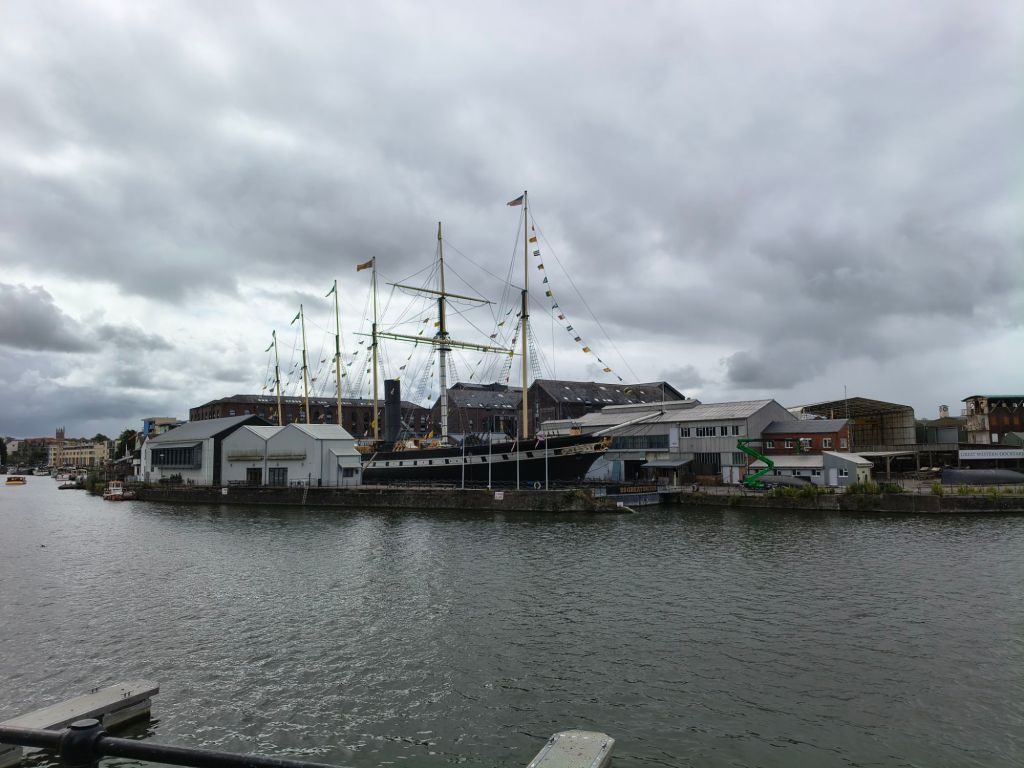
Brunel’s SS Great Britain, the first iron steamer to cross the Atlantic (1845) and the largest passenger ship in the world when built. It’s now a museum ship. After a chequered career (it bankrupted the builders, for example) it was scuttled in 1937, then repaired before being brought back home to Bristol to great fanfare in 1970.
It’s half-an-hour’s walk along the quayside to another Brunel landmark.
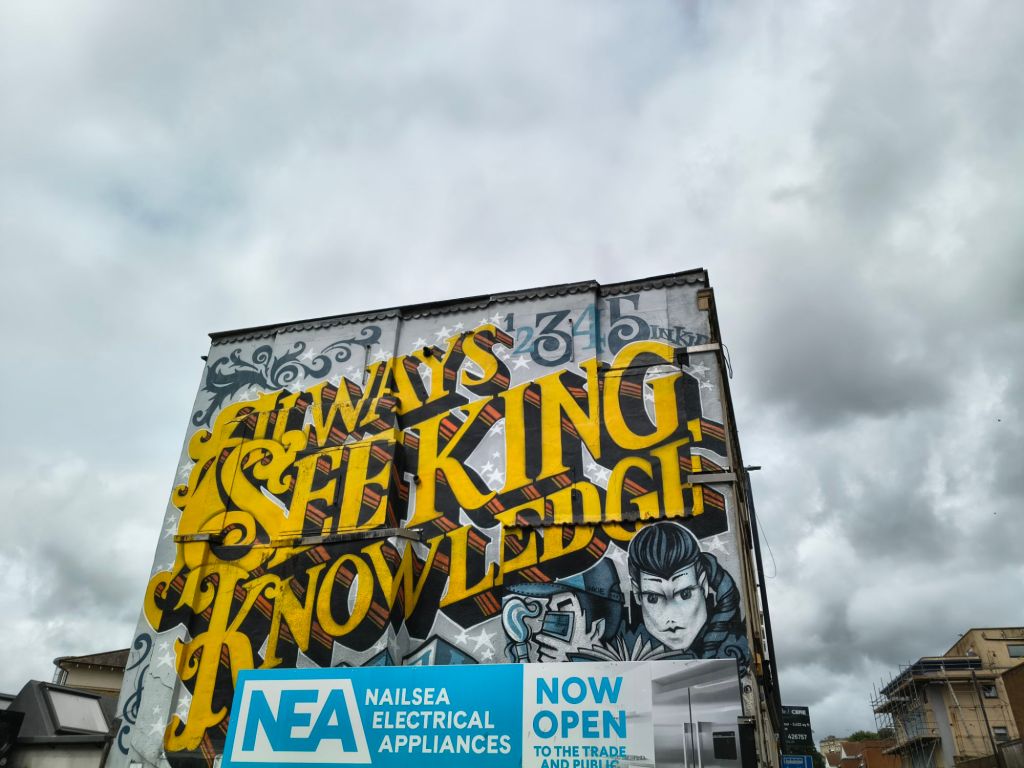
No, not that, that’s just some Bristol street art.
It’s this.
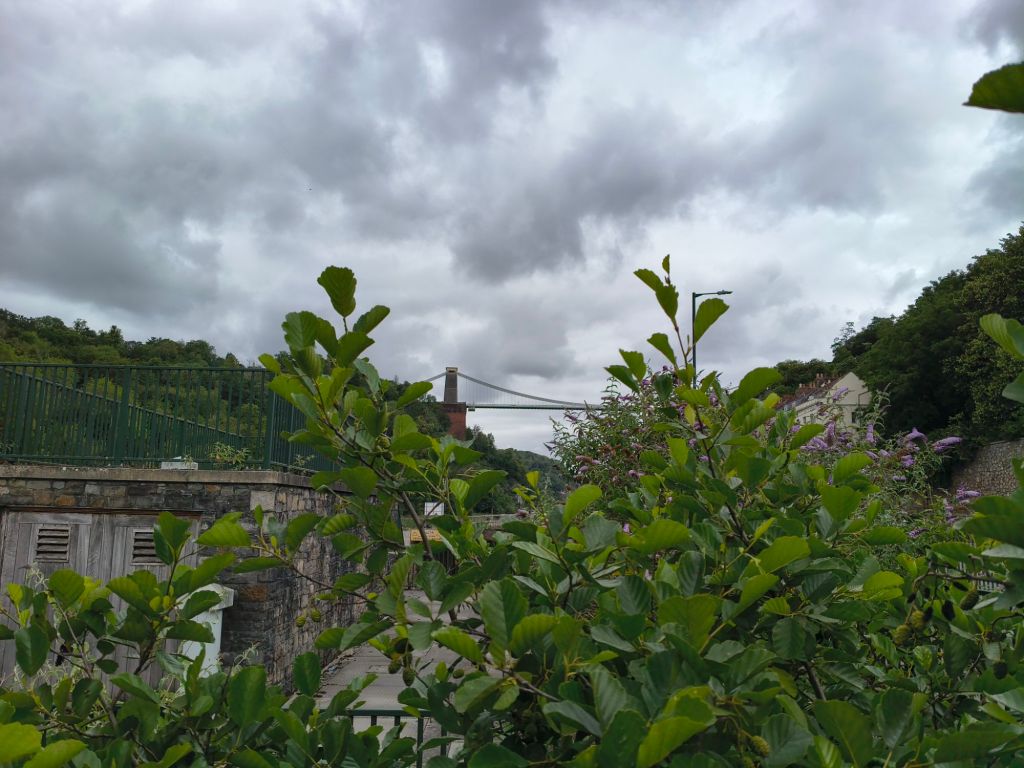
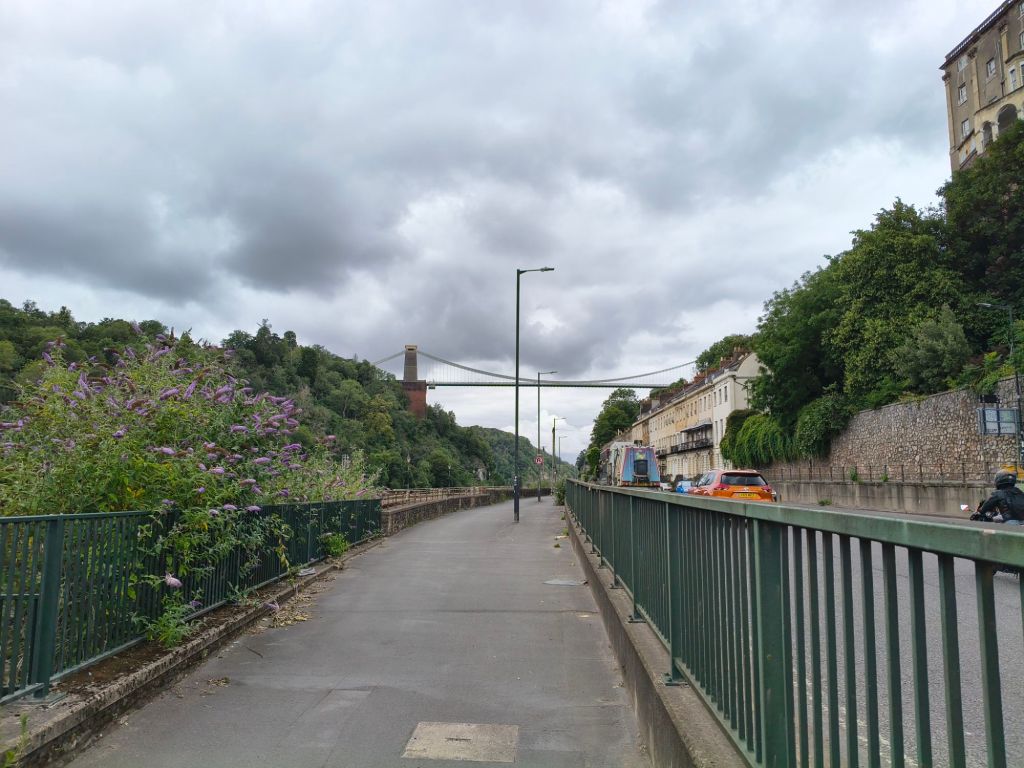
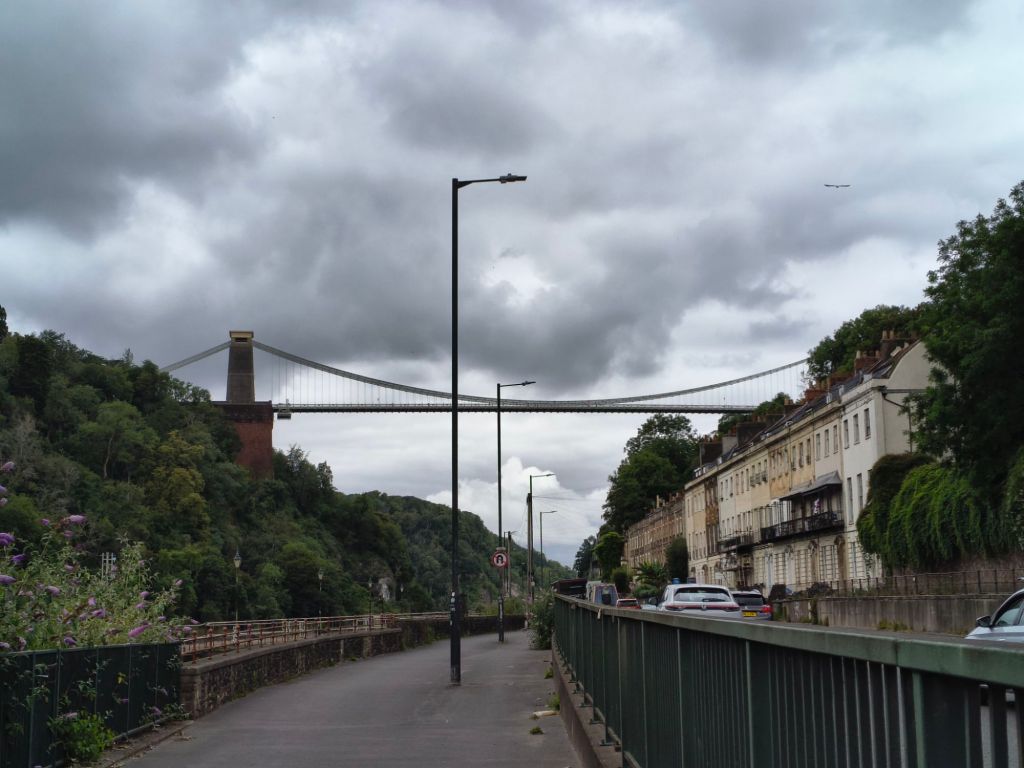
If there is one definitive Bristol landmark, it’s the looming, monumental Clifton Suspension Bridge. The deck spans the Avon Gorge at 75 metres above high water level, and unfortunately you weren’t going to get me walking across it for you. Or even going to the famous viewpoint high up on the rocks. I think it has an awesome, chilling feel as you approach it from ground level and it suddenly rises over you, like a silent giant.
The beautifully elegant 412 metre long construction is based on Brunel’s design but he unfortunately didn’t live to see this icon being opened in 1864. Shout out to William Henry Barlow and John Hawkshaw, who carried out the redesign. (Work was scheduled during Brunel’s lifetime, but it was cancelled after Bristol rioted when the second Reform Bill was voted down by the Lords in 1831. Rebellious, remember…)
My time was running short and I returned to the centre…
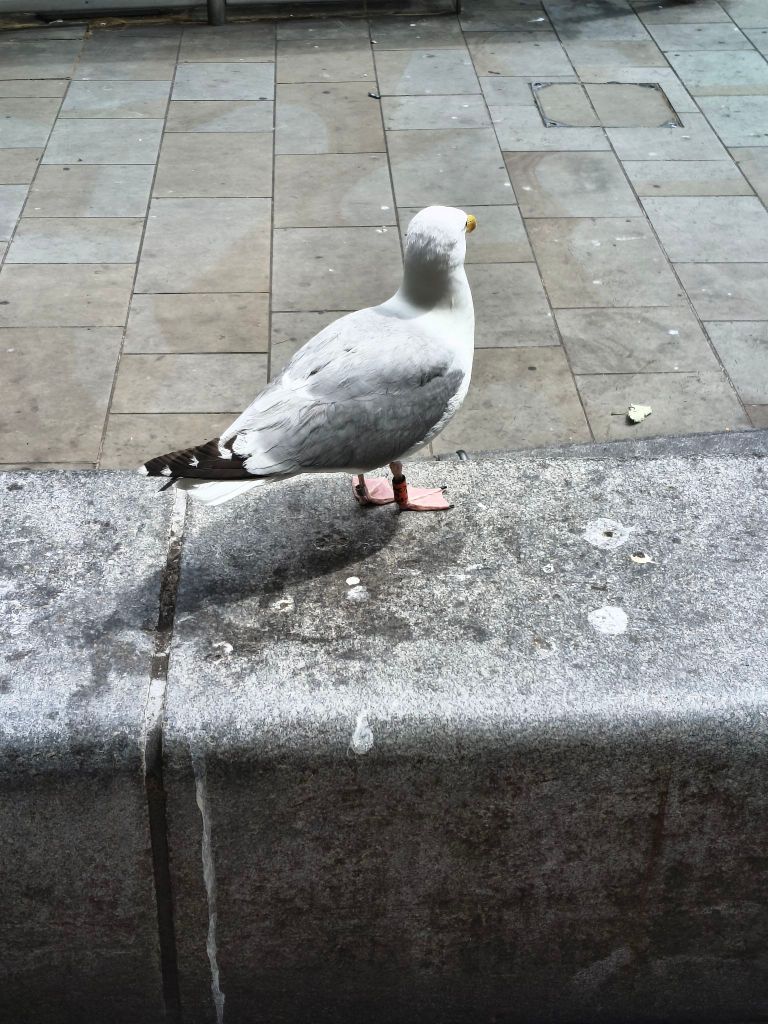
…and its unfeasibly-large seagulls.
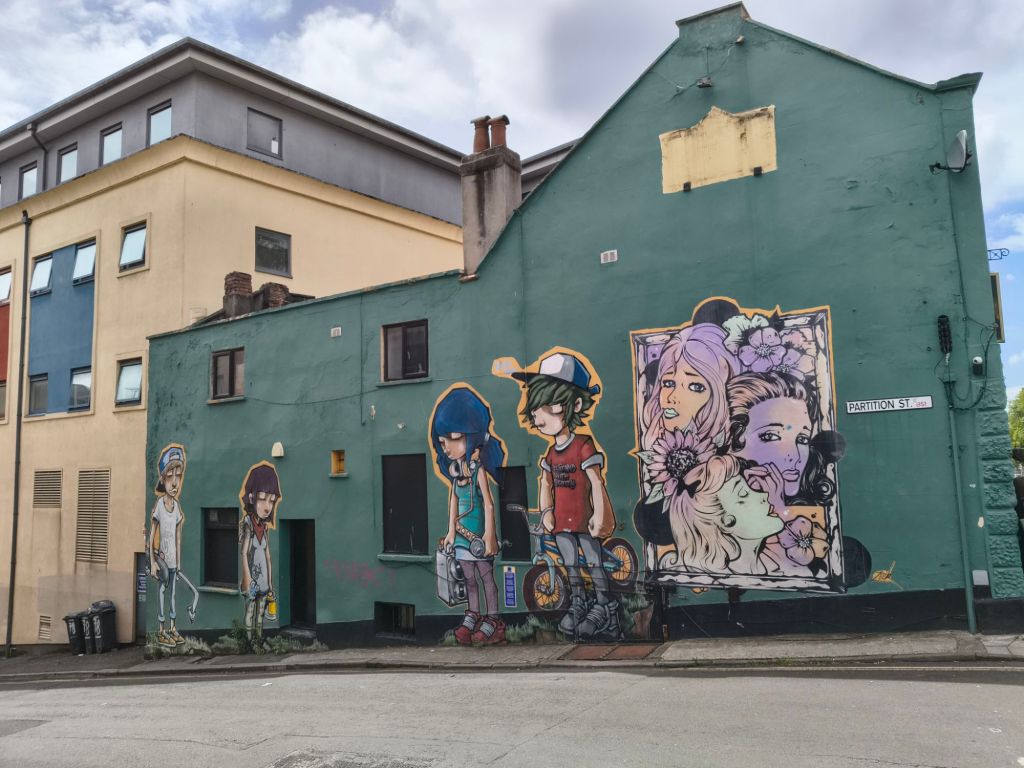
There was just time for some more street art
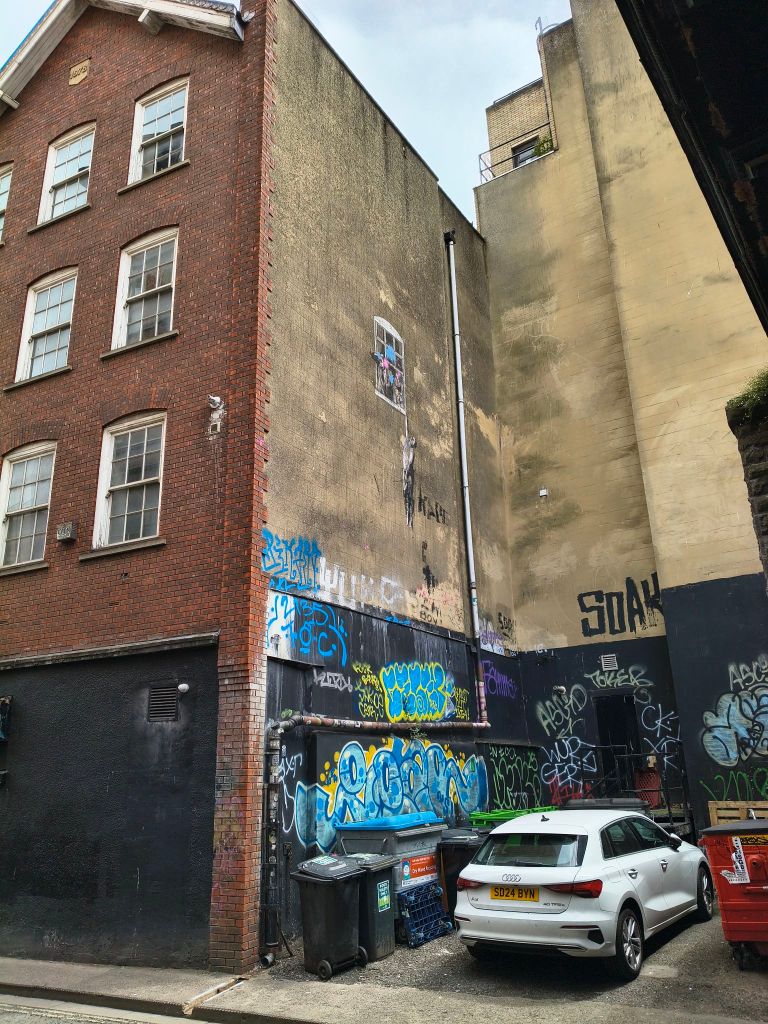
And of course, a Banksy.
Well Hung Lover appeared in 2006. It’s had a chequered history, mainly at the hands of rival street artists who have defaced it with paintballs in the past. It’s the first legally-recognised piece of street art in the country, and a condition of the lease of the building is that the mural must be maintained. I didn’t get out to see much more of the street art of Bristol, there’s lots more, and more Banksy’s, and it does make a visit here worthwhile.
For me two nights was enough, but there are enough channels of interest – the nautical history, the social history, the dark stuff, the modern vibe – to keep you interested and reward a longer stay in one of the more underrated destinations in the UK.
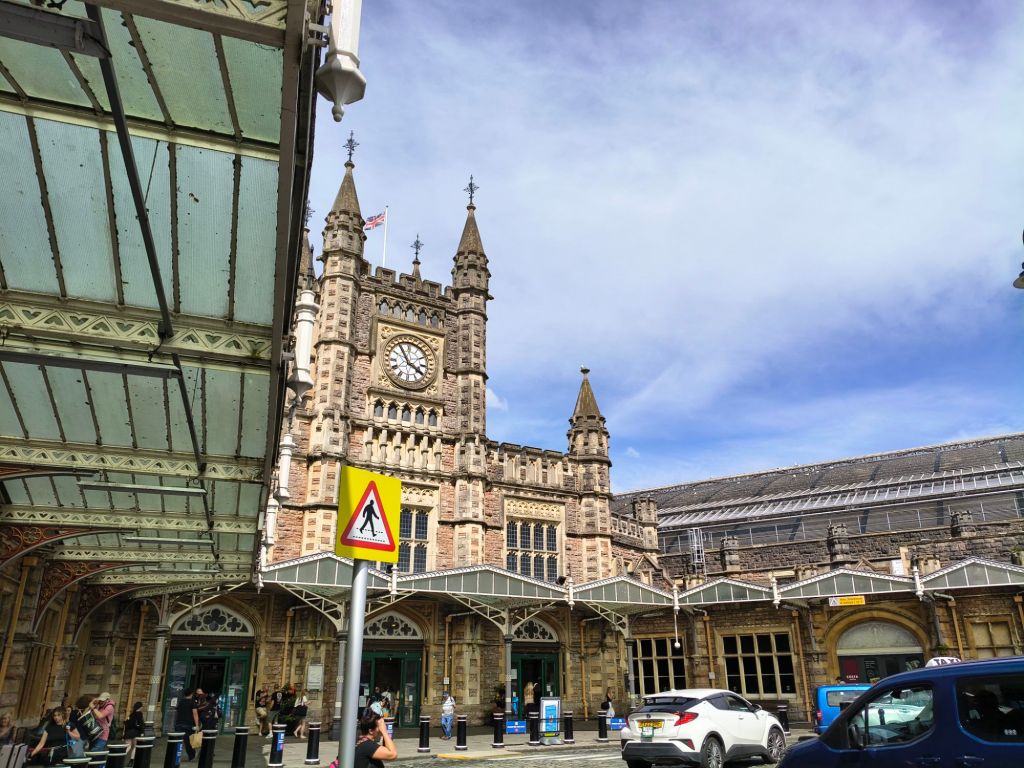
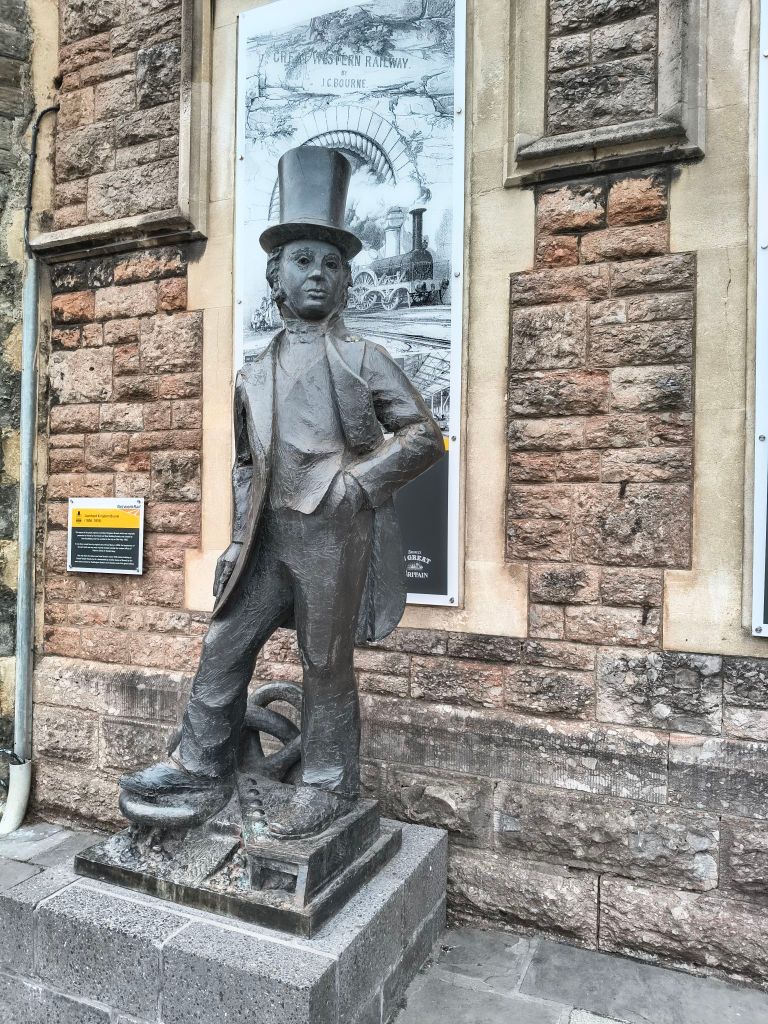
As you pass through the Gothic fantasy palace that is Temple Meads station, you pass an old friend standing outside the engine shed that formed his original station.
Isambard Kingdom Brunel, engineering icon, visionary, a man who did as much as anyone to create the Bristol of today.
I don’t think this statue is coming down anytime soon.