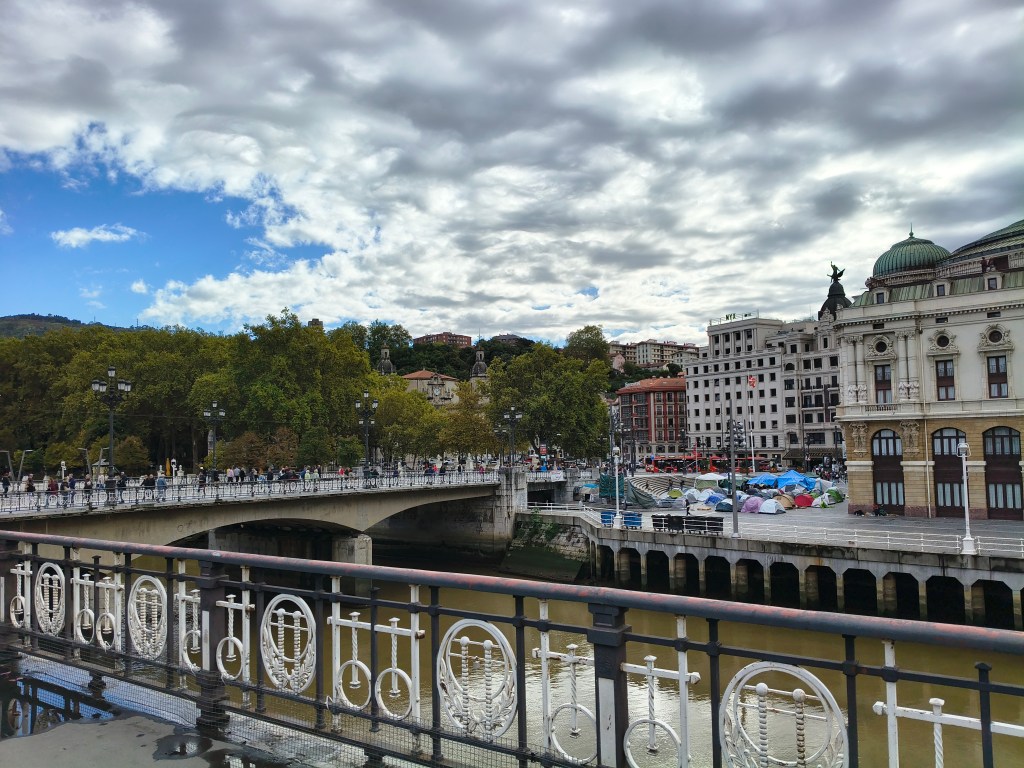
As I dodged the showers I did manage to take a couple of photos around the Casco Viejo.
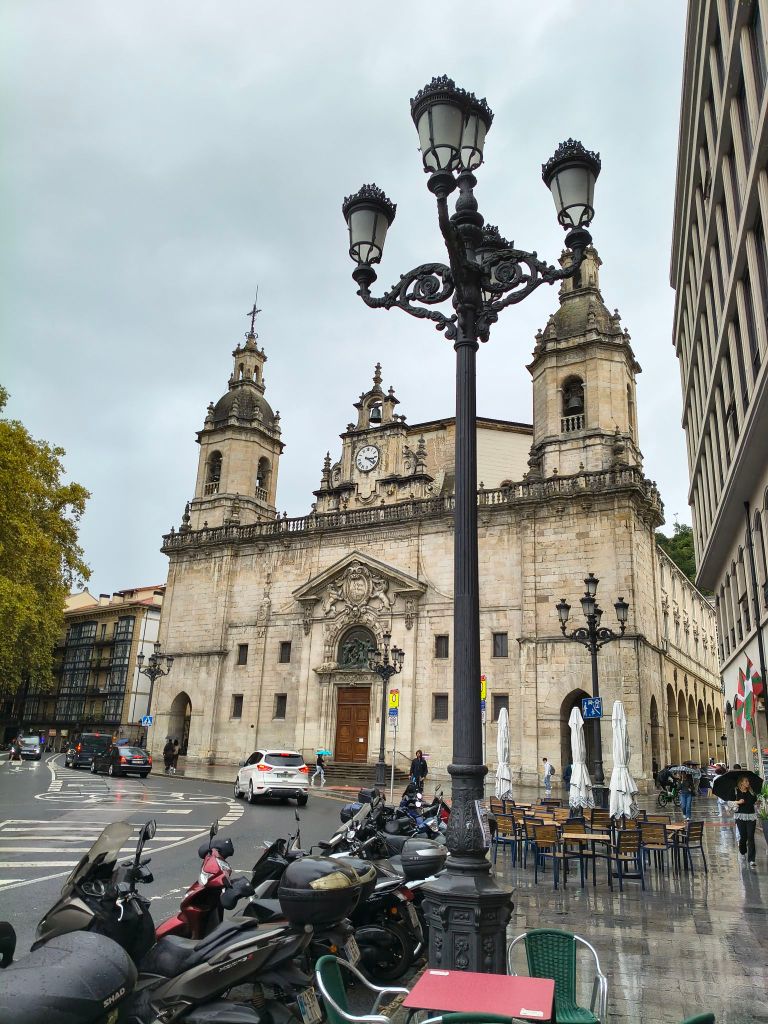
Dating from the 14th century the Iglesia de San Nicolás de Bari is a very beautiful church that wouldn’t look out of place in Mexico City or Lima, so essentially colonial Spanish it looks. I really need to go to those places to see if I’m right.
But it’s more proof how rampantly over-commercialised things have got. We’re not even halfway through October yet and we’re already seeing an Iberian church dedicated to St Nicholas.
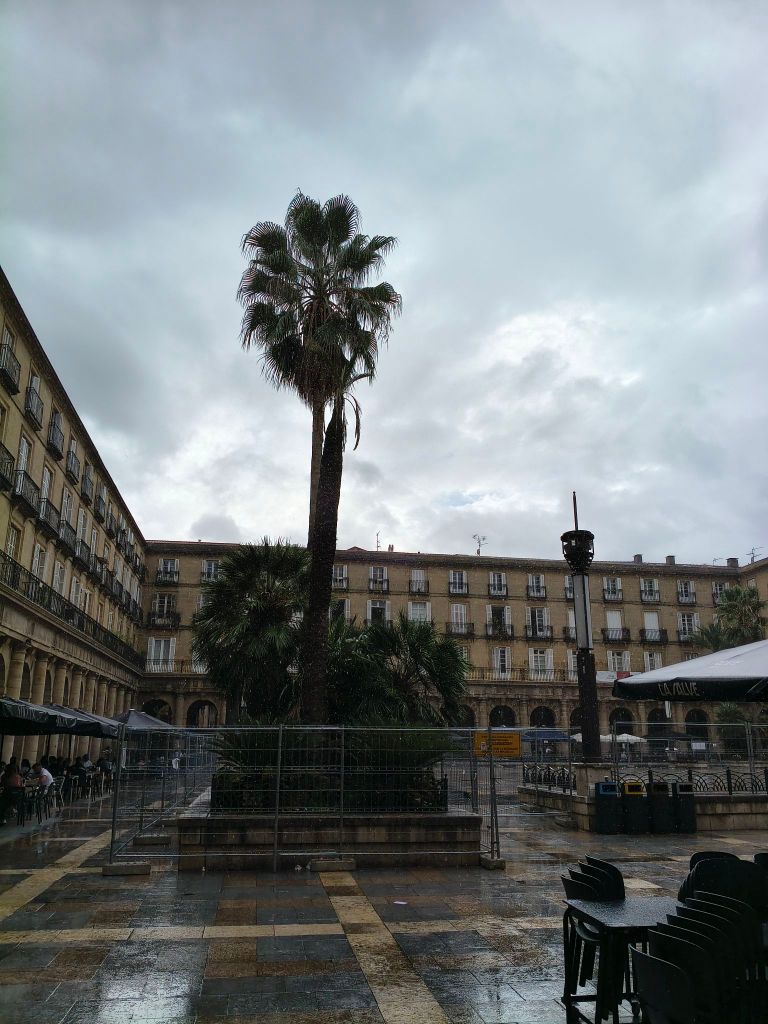
Pintxos central in Bilbao, the neoclassical arcades of the Nueva Plaza. There are pintxos bars everywhere in town, but (checks all the online guides) all the best ones are here! To be honest, the tourists are most likely to gather here so, just like the Old Town in San Sebastián on weekdays, the vibe will make up for any drop in food quality.
This photo was taken as everyone was diving into the bars to take shelter from the heavy rain. I raise a cerveza to that palm tree and its misplaced optimism.
The rain cleared overnight, and the last day of the trip began under calm skies of broken clouds.
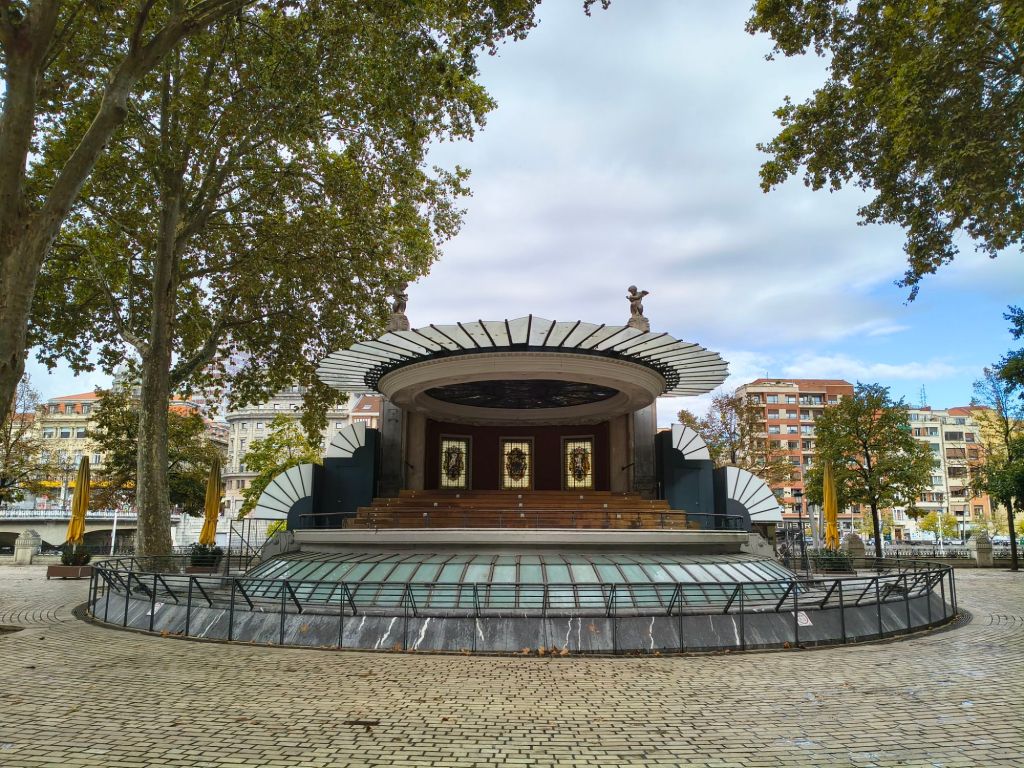
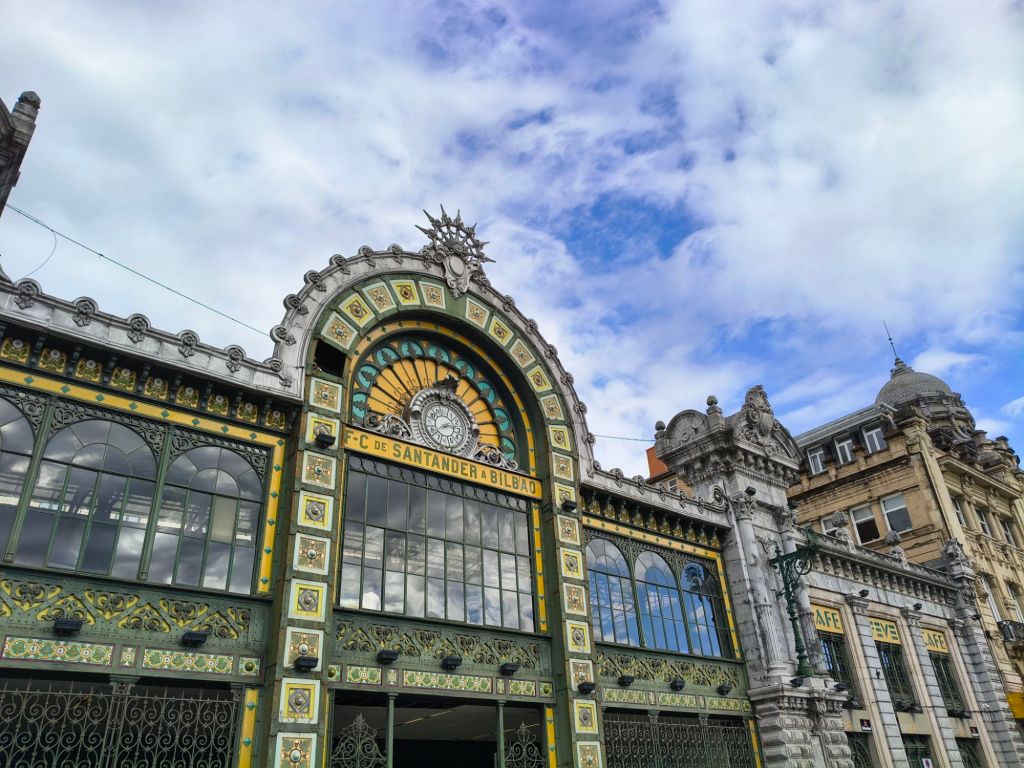
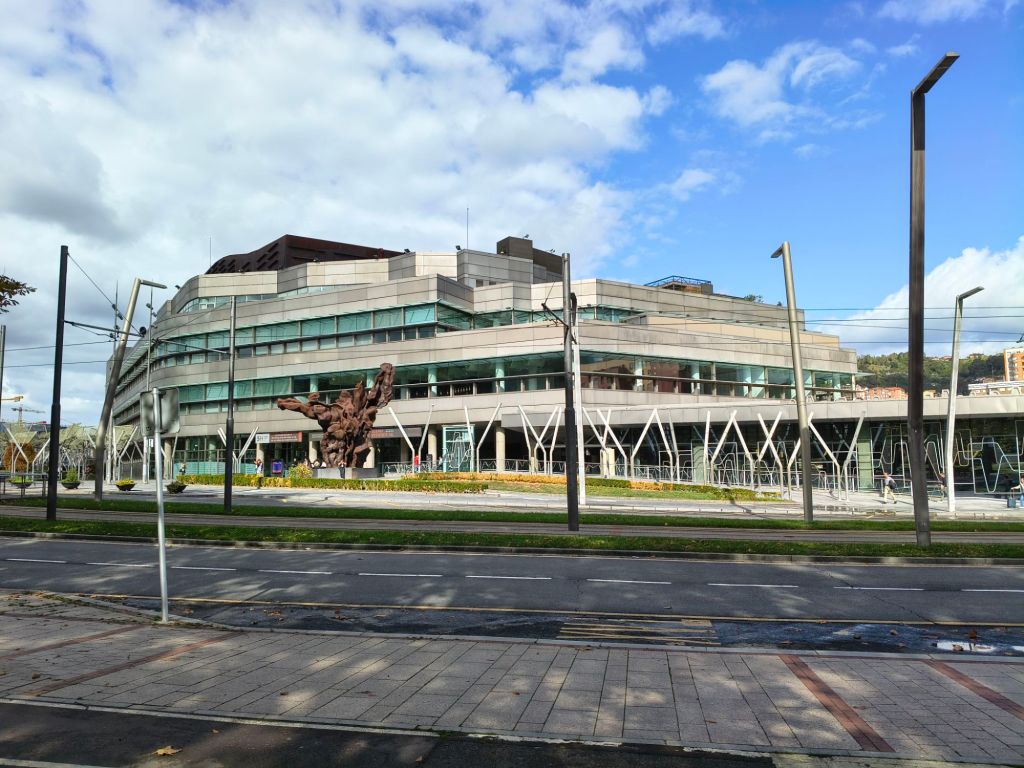
I wanted to get back to the Guggenheim and was at a slight loss how to get there by public transport. The Urban Architecture section of the Bilbao Metro’s tourist guide suggested starting the tour from San Mamés station, but they were just guiding you to see the Euskalduna conference centre. But I went over anyway, as the Guggenheim wasn’t too far from there.
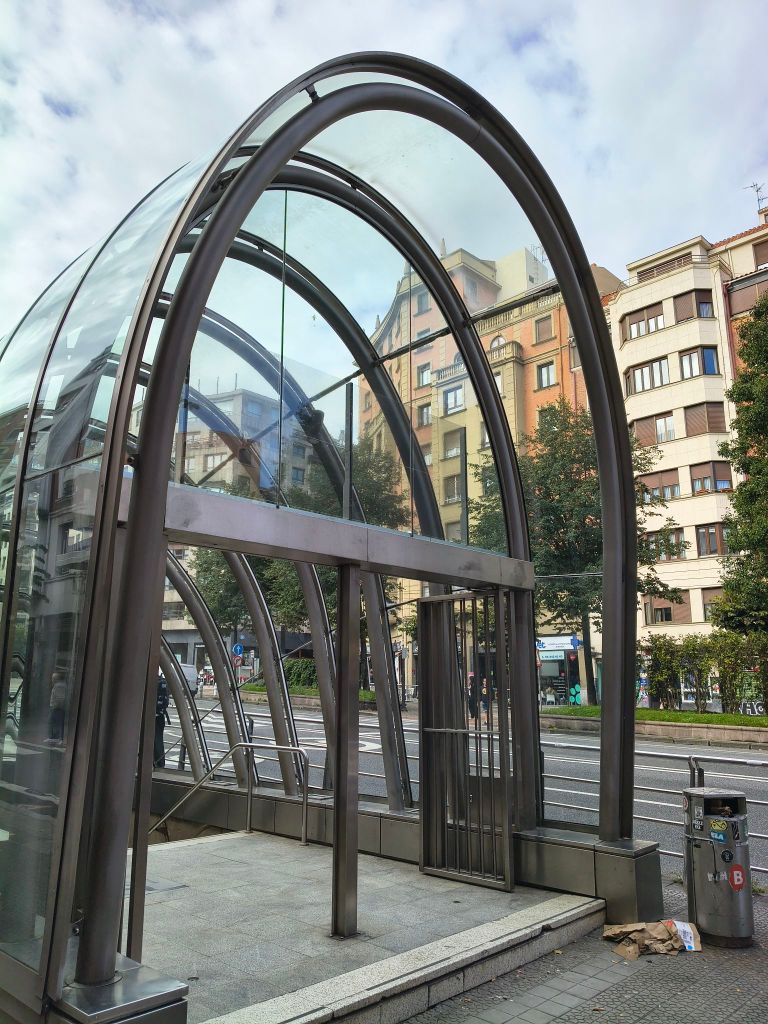
A lot of the Metro stations have these armadillo-like entrances. They’re known locally as “Fosteritos” after the renowned British architect Sir Norman Foster, who designed the metro.
There’s another reason why I was happy to go to San Mamés.
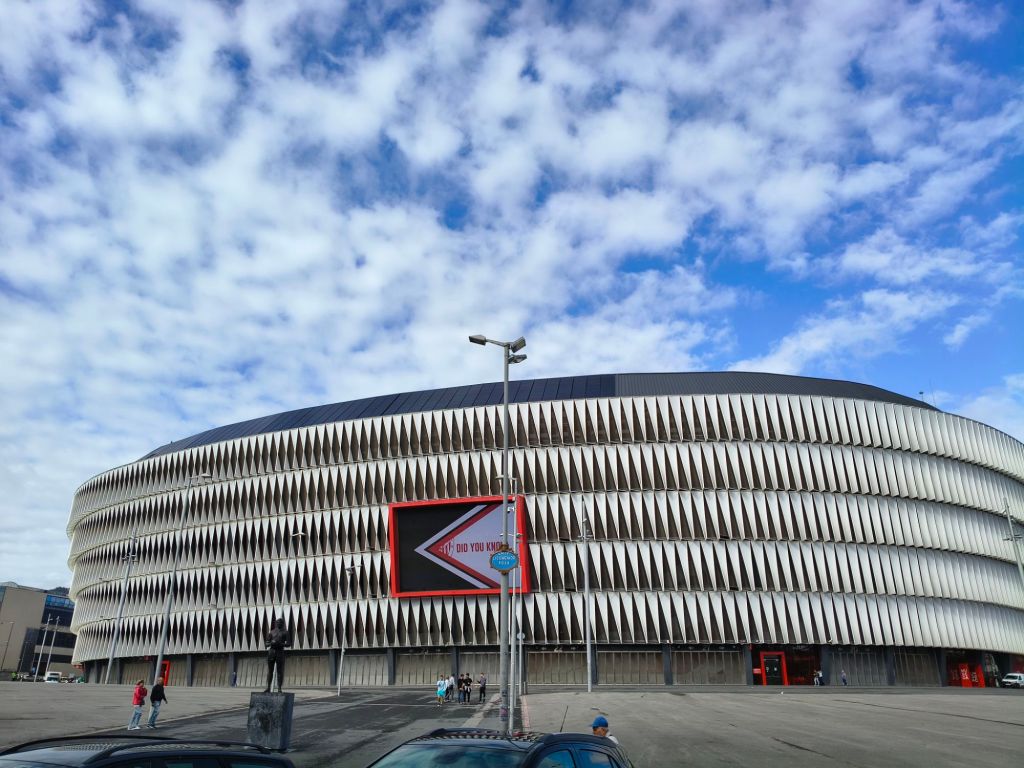
Athletic Bilbao, one of Spain’s oldest football clubs were founded in 1898. It traces its origins to two sources. Bilbao was at the time a major shipbuilding and industrial town – it was the decaying area around the old ports that the Guggenheim Museum was built to revitalise. But back in the 1890s it was boomtown, enough to attract British migrant workers from similar towns such as Sunderland and Southampton who brought football with them. The other source were the sons of prosperous locals who were sent to study in Britain.
As for the strip, the story goes that, once the club was up and running, a local student had been asked to look for some new shirts while he was in London but couldn’t find any in the team’s blue-and-white colours. Waiting at Southampton for the boat home, he avoided the shame of returning home empty-handed by picking up some shirts in the local team’s red-and-white stripes. The club liked them so much that they decided to change, and Bilbao play in red-and-white stripes to this day. That’s one story; but more recent research points the finger at Bilbao’s links to the migrants from Sunderland, who also play in red-white stripes. What is true though is that Atletico Madrid were once a satellite club of Athletic, which is why they play in the same kit.
Note the difference: Atletico vs Athletic. The Bilbao team have retained the English spelling possibly to honour those formative links. One more thing makes this team unique; their selection policy. Throughout most of their history they have only picked players born or trained in the Basque region – whether in Spain or France. That must make this place a true cauldron of emotion during home games.
One last tidbit: the team are known as Lehoiak – The Lions – due to a controversial European fixture that St Mammes himself was involved with many years ago. Drawn to play crack Roman opposition, somehow there was a last-minute change from the team sheet and the Romans sent out some lions instead. It’s not clear whether St Mammes tamed the lions and was stabbed later, or whether they just ate him. VAR is taking a long time to decide.
The conference centre itself was alright I suppose…
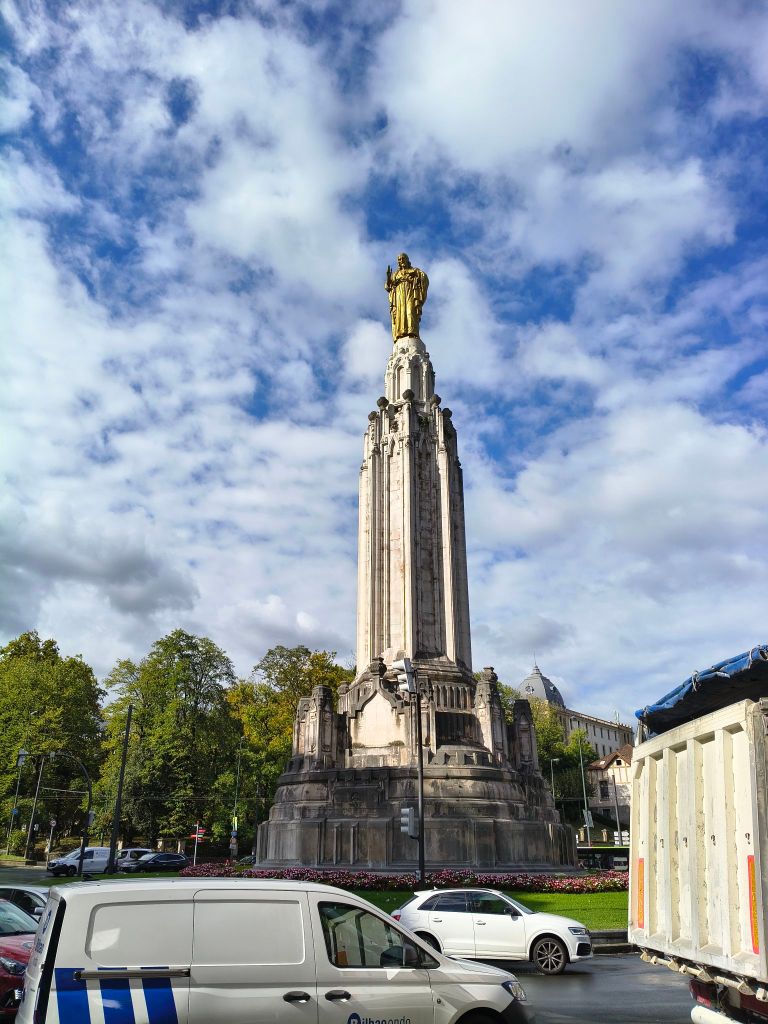
…once you get past the Big Scary Jesus at the Plaza Sagrado Corazon.
But the Guggenheim is indeed a short walk away.
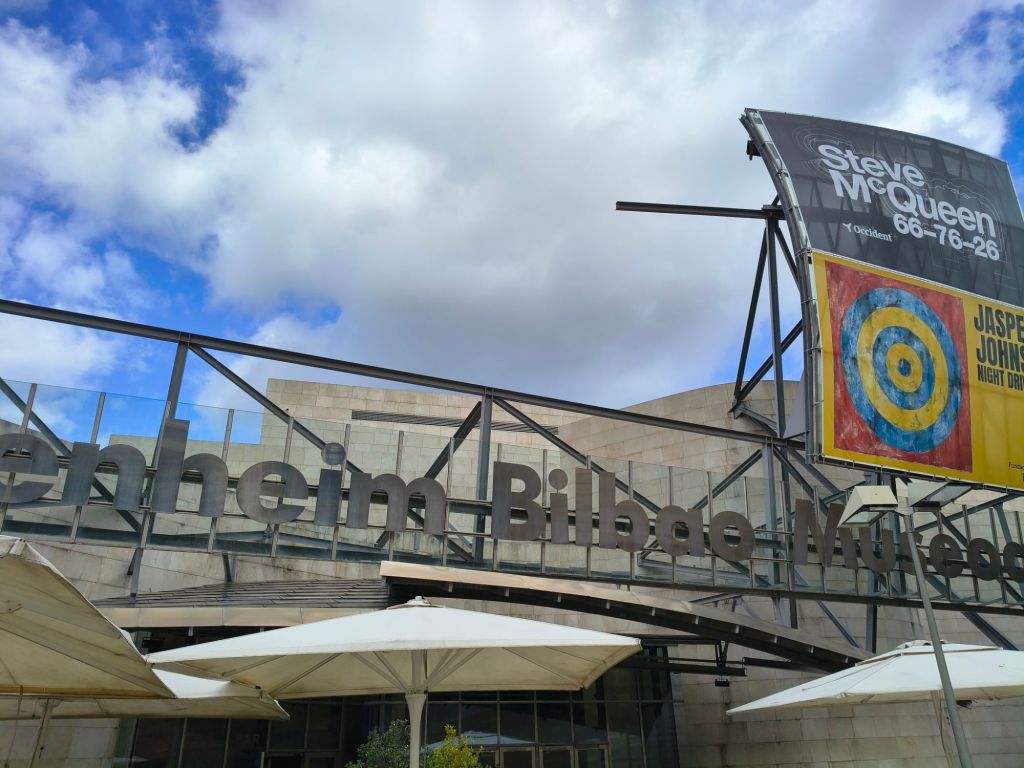
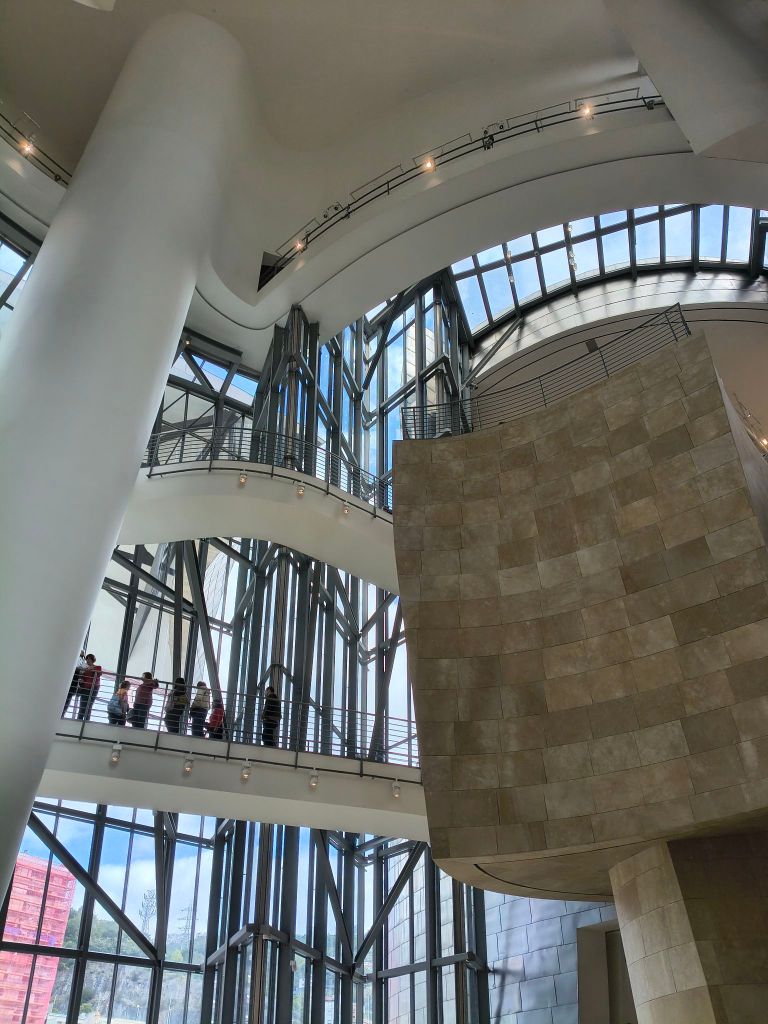
As befits the most famous modern art museum there is, a lot of the big names are here – Jasper Johns, Jeff Koons, Basquiat, Warhol, Rothko, Hirst, looking impressive in the great, winding interior spaces. One work that takes full advantage of what Gehry’s architecture gives you is on the ground floor, A Matter of Time by Robert Serra. Great walls of steel warped into spirals and toruses that you are invited to walk through, the artwork actually being your sensations as space and time deform around you.
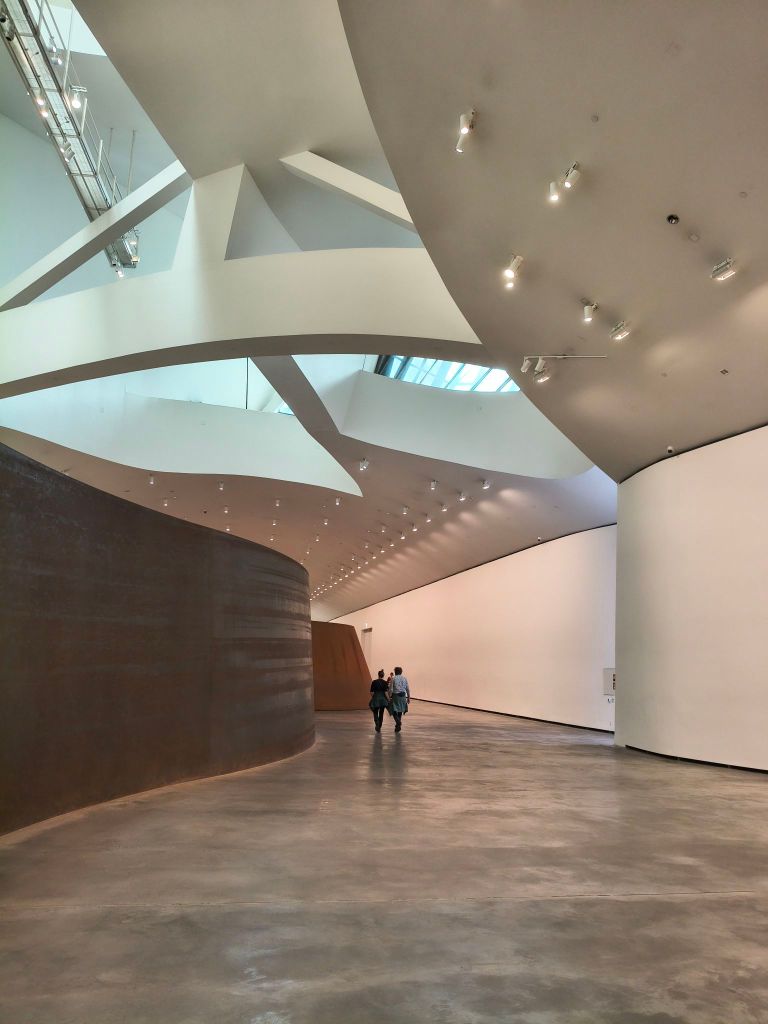
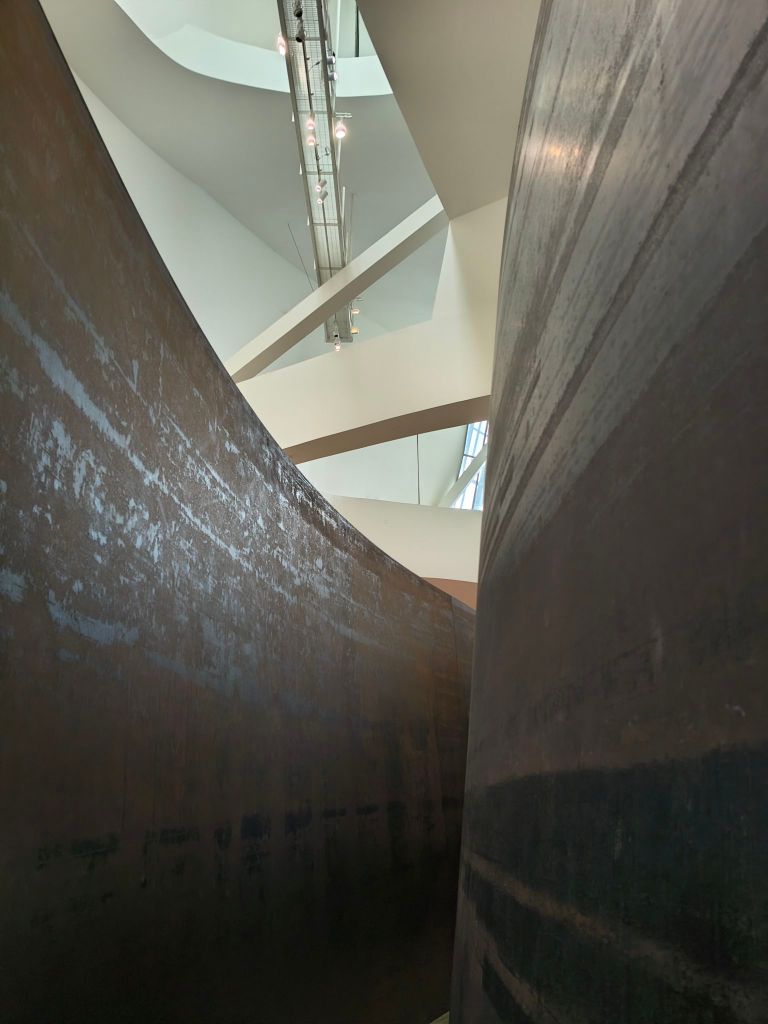
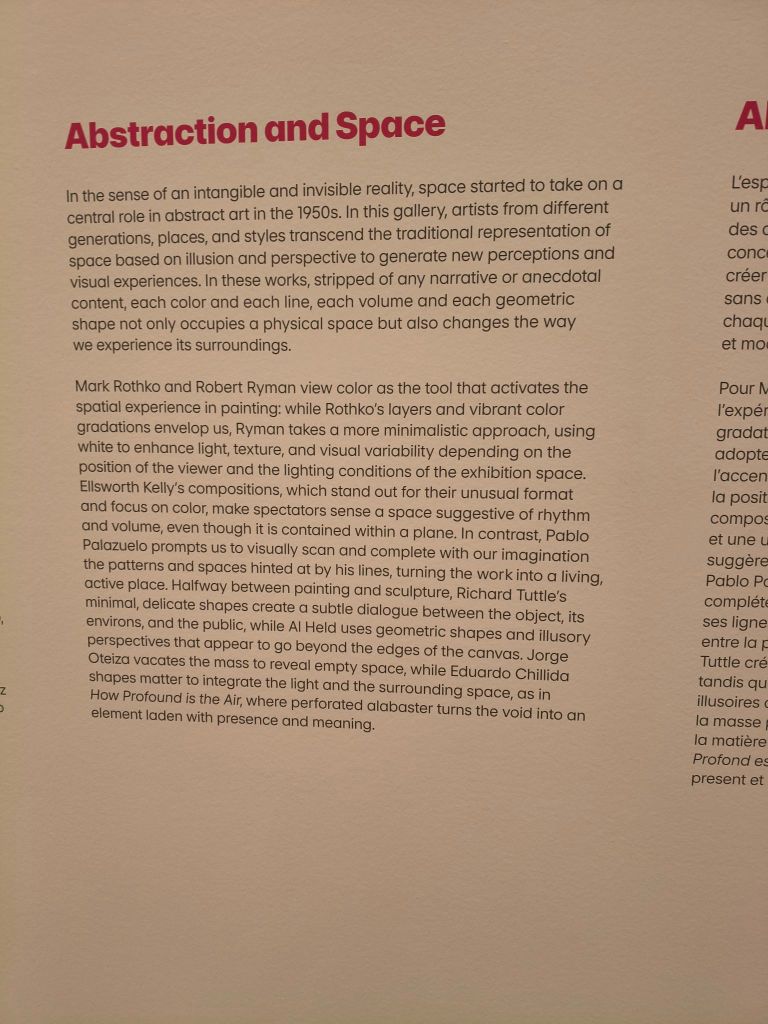
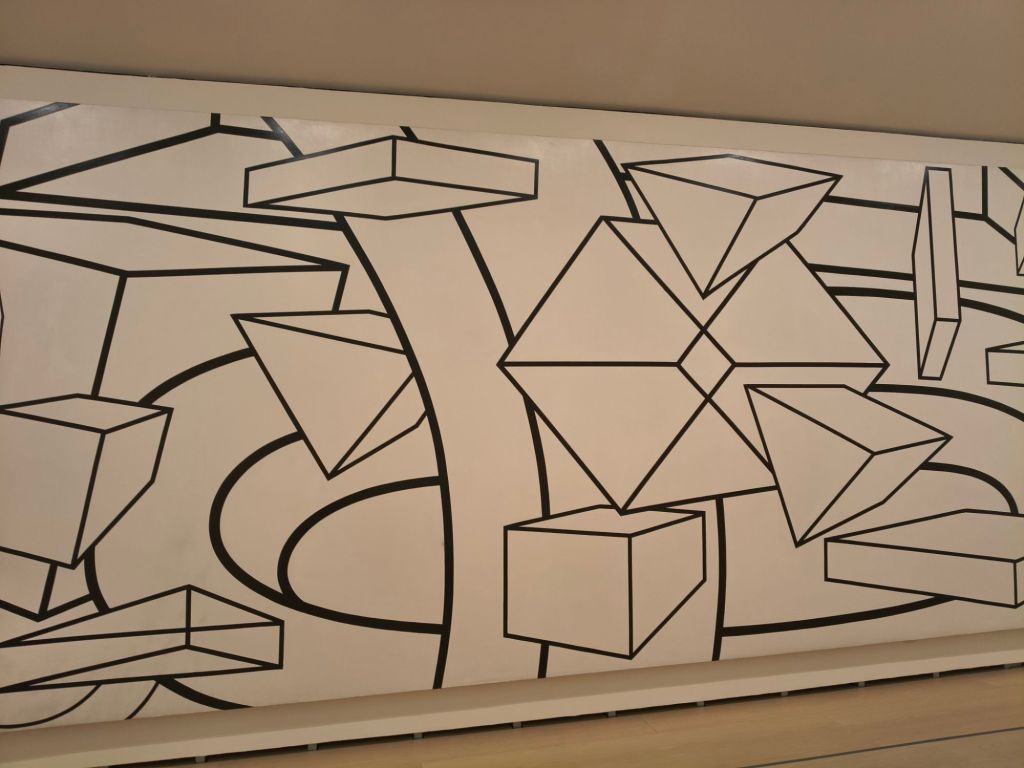
Looking at the artwork and reading the descriptions, it was made clear to me why we think a cultured, well-rounded person should be au fait with art and literature but need to know very little about maths or the sciences. In fact, the more you protest your ignorance of STEM the more cultured you might appear. The answer is simple: science and engineering are hard, complex concepts that can be very specialised and take a lot of explanation. One wouldn’t be expected to appreciate the beauty of maths, it’s far too much like hard work. However one would be expected to understand the beauty and meaning of high art of course, as it’s much simpler and straightforward to get your head around.
You have to appreciate the ambition of the Guggenheim though, not just inside but outside.
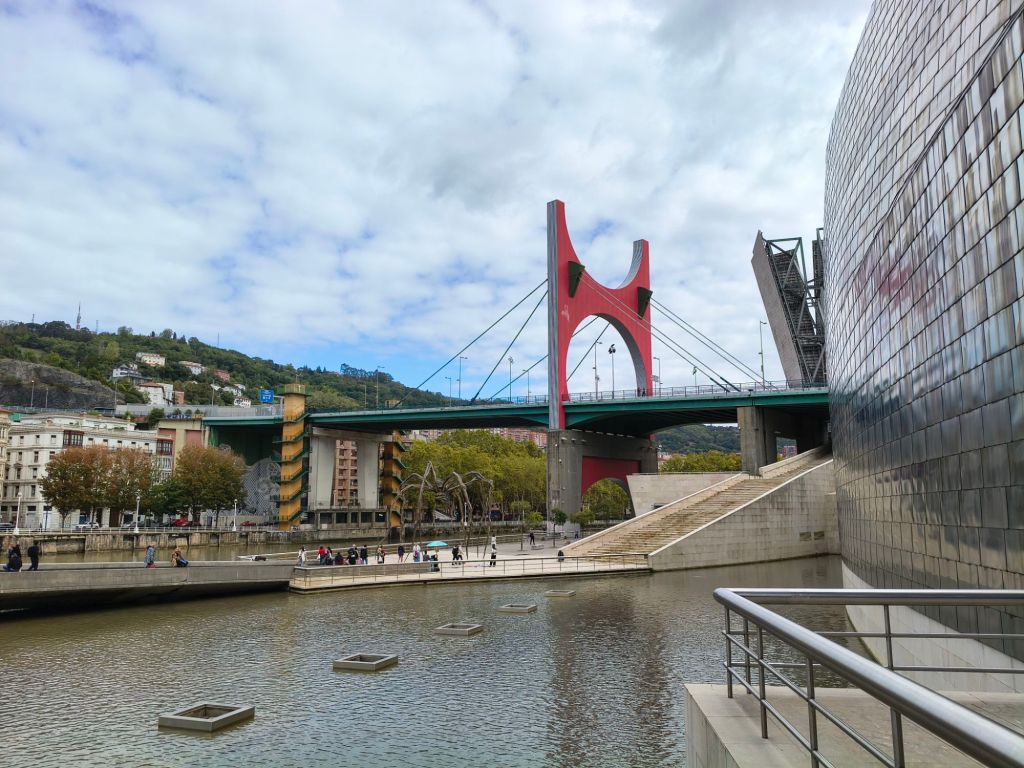
That tower on the bridge, amazingly enough, is also an artwork – Red Arches by French artist Daniel Buren. The “Bilbao Effect” taken literally?
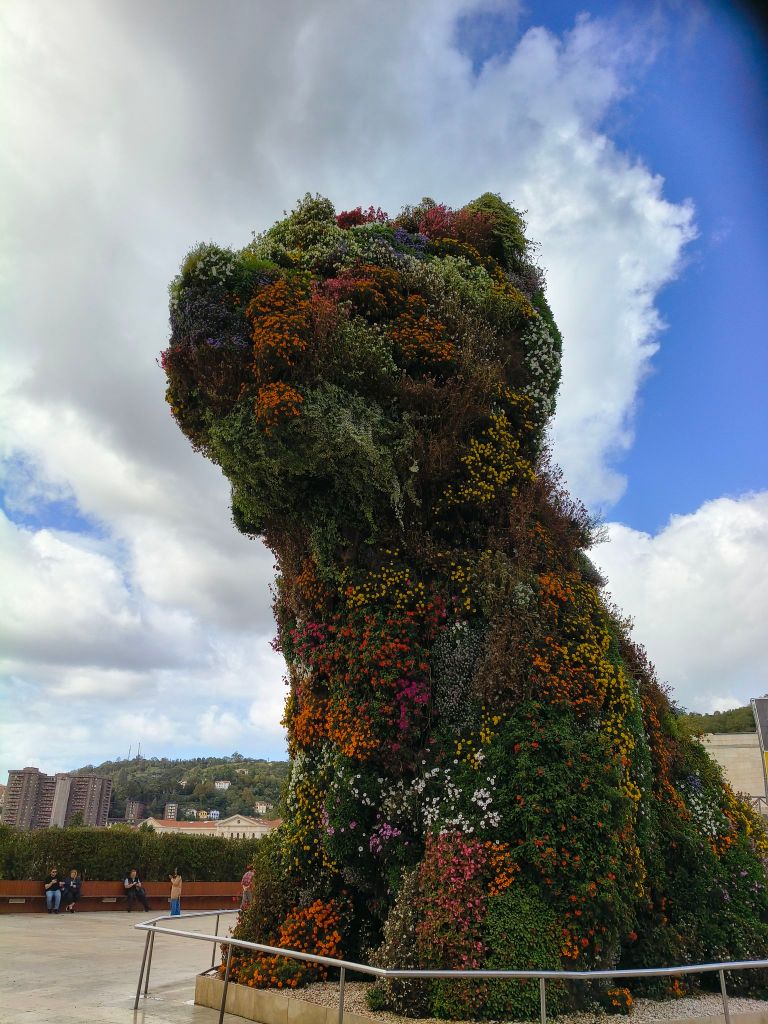
Oh and Jeff Koons stuck a giant puppy made of flowers outside as well.
Seriously though, whether you’re an art connoisseur or just curious about what it’s all about, an hour or two in a museum like the Guggenheim is a truly invigorating, stimulating experience. And, depending on where you live, you might have a museum around the corner to you, large or small, world-renowned or just purely local, that you would find just as rewarding – whatever the subject.
But I read what I’ve written and it all seems a rather crude summary of such an august institution, and it deserves a more refined description. Fortunately, the role of the artist is to invoke critical, cultural and ascetic responses in the viewer as they participate in the dialogue, and I took on the challenge of mounting and presenting my own cultural response…
Rather than align with the conventional notions and paradigms of human physiology as codified by Western scientific and medical institutions, I created a unique creative and personal challenge by first collaborating with a tram, and then forming a new creative collaboration with a pintxos bar in the Plaza Nueva. This temporary installation, entitled After all that art I need a drink, consisted of a stemmed glass filled with fermented yeast product, and some delicious pastries. Participating and engaging with the glass allows the user to challenge their own unconscious, so-called “commonsense” understanding of space, time, and most significantly, balance, while giving the possibility of reasserting a human experience that goes beyond the socialised boundaries of language and relocates the participant into the space we could call “drunken babble”.
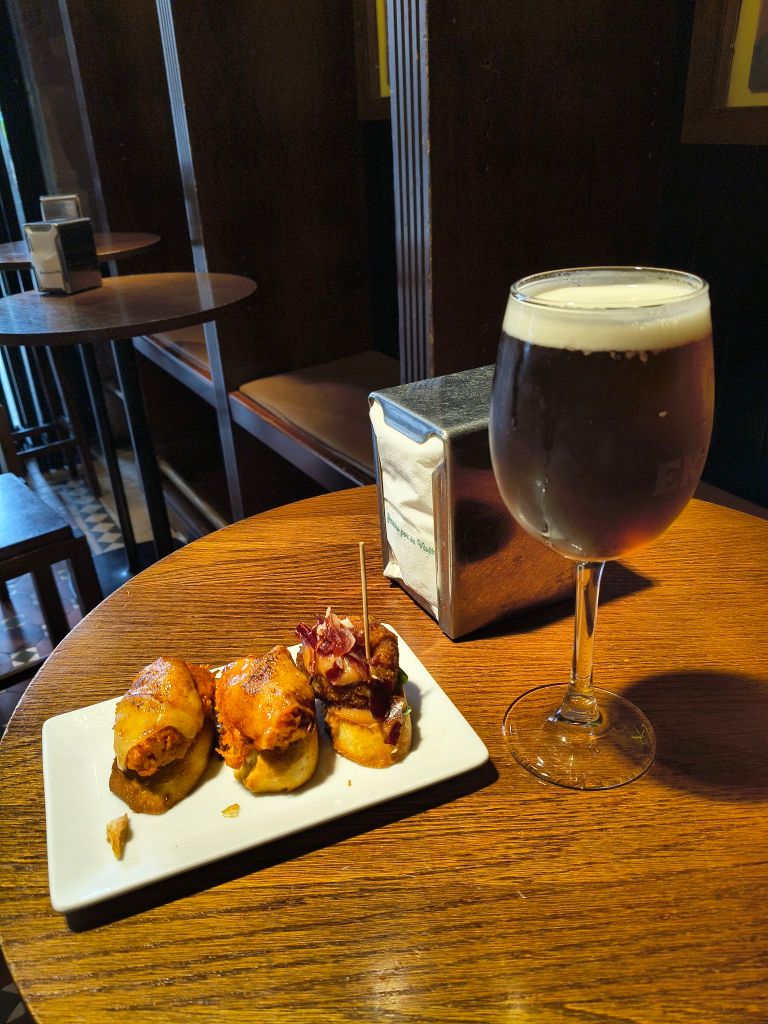
Engaging with the still life was however so profound that I just had the one, which left me coherent enough to start thinking about one last blog post to round up the whole trip.


Leave a Reply