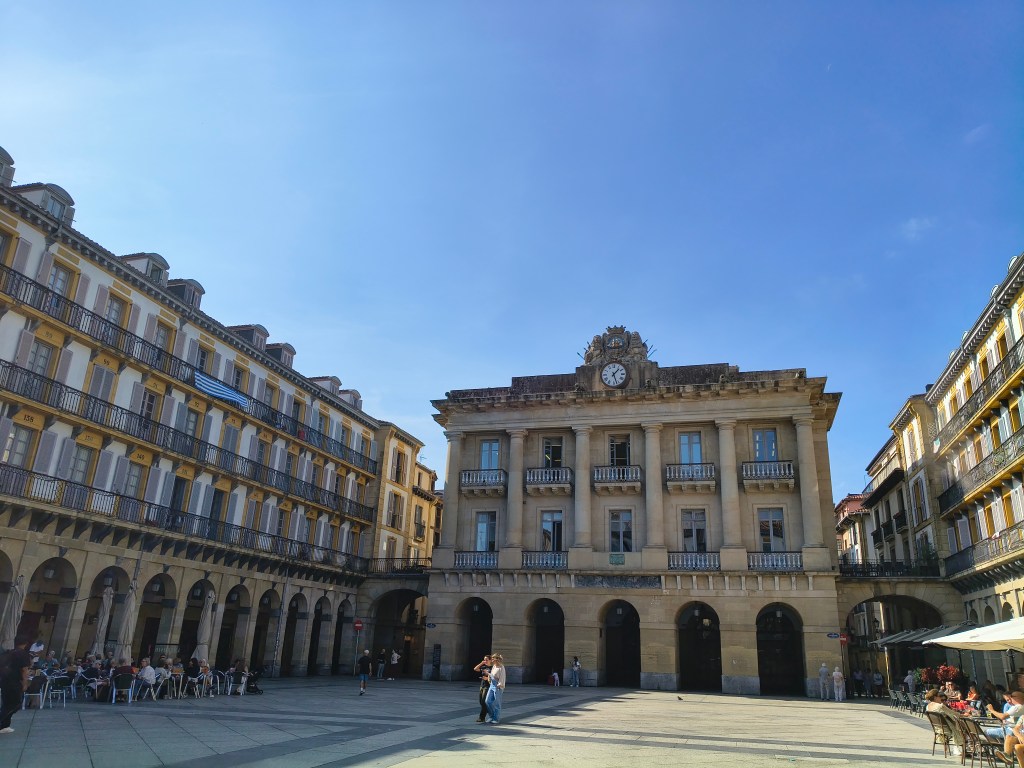
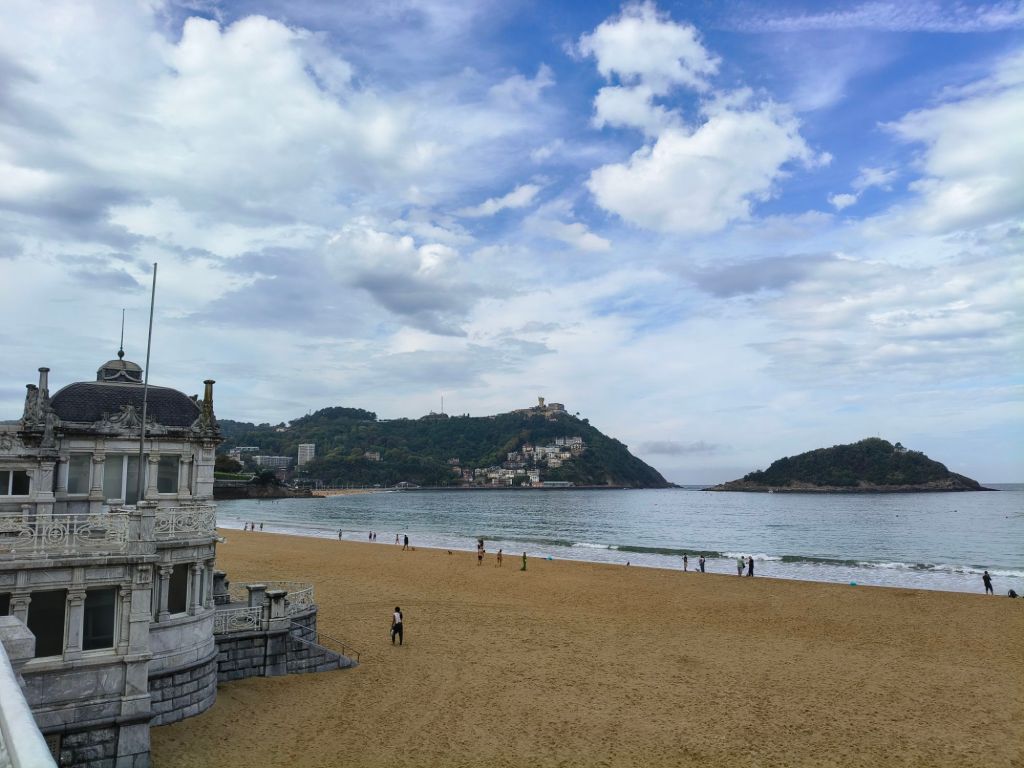
The weekdays in San Sebastian are indeed quieter than the weekends, the daytrippers having left town or gone back to work in the great working city beyond the beaches. Instead of constantly dodging other pedestrians, a promenade under the benign, warm October sun is now a more relaxing stroll with the prospect of, say, a local vino blanco to come. Well, it’s arrived for me anyhow, and I need the sit-down to recharge my energy levels for one last day in San Sebastian before I head to my final stop tomorrow. My vantage point takes in the whole shoreline, and similarly this post will pull in the remaining points of interest that so far haven’t made it to the blog.
And a few more photos.
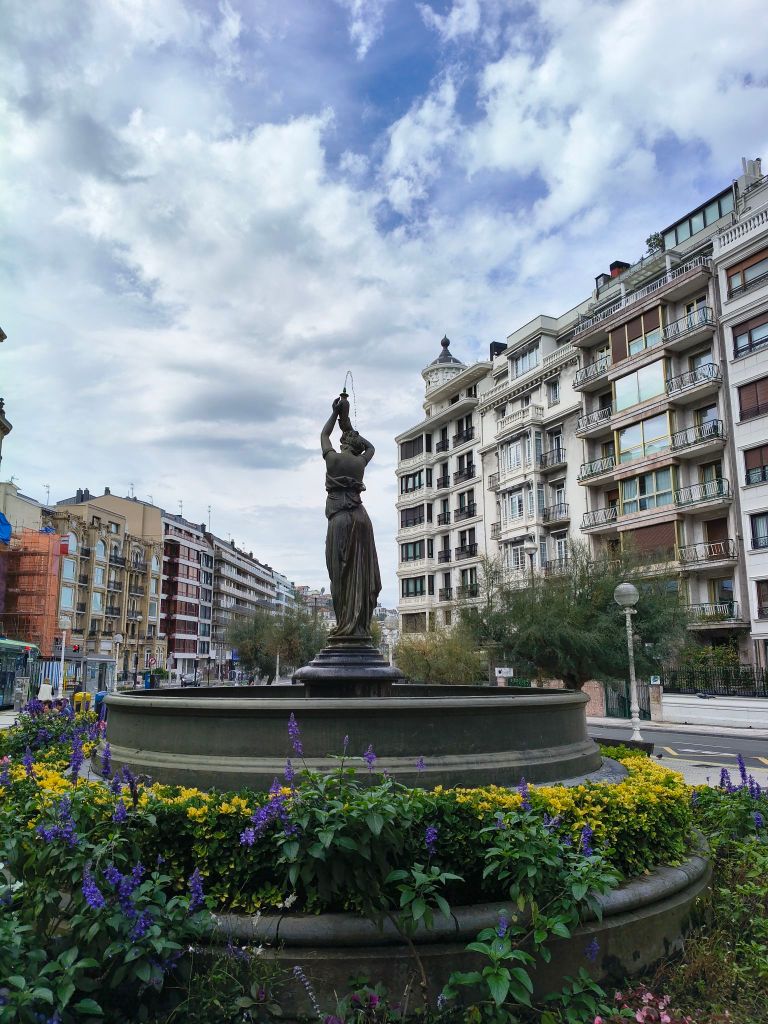
Plaza de Gipuzkoa
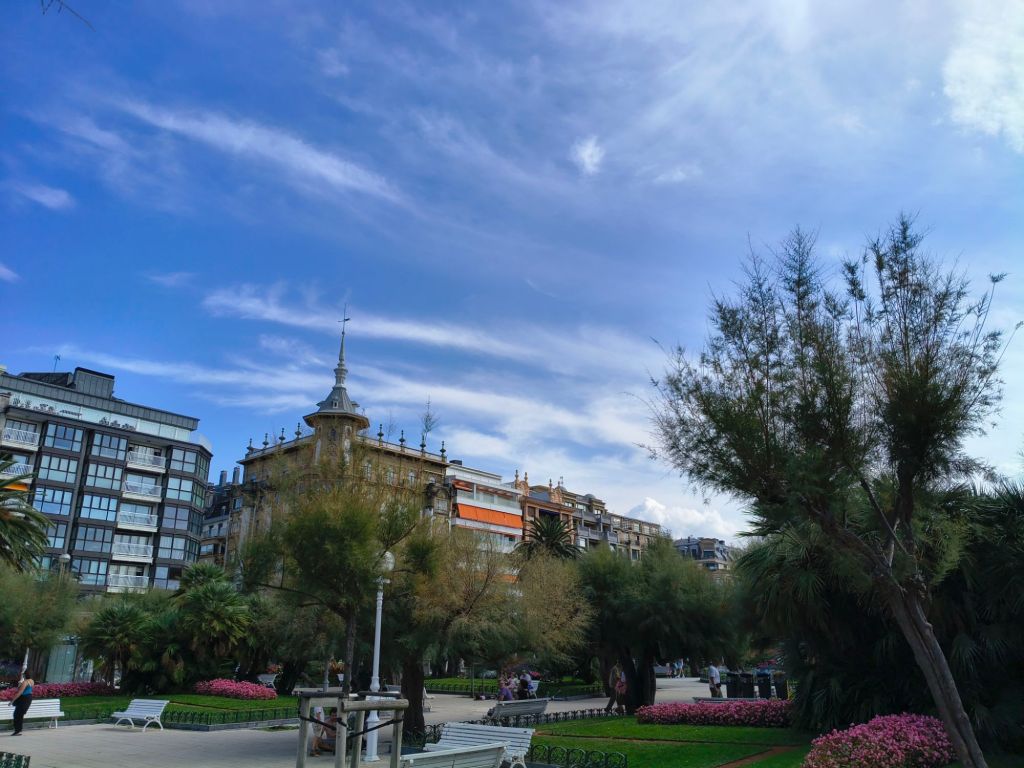
Hidden in the central commercial district, not far from the Old Town, sits the delightful Plaza de Gipuzkoa, more of an ornamental garden than a formal plaza, and a nice place to gently waste the hours.
It’s in the blog for informational purposes, rather than as a destination in its own right.
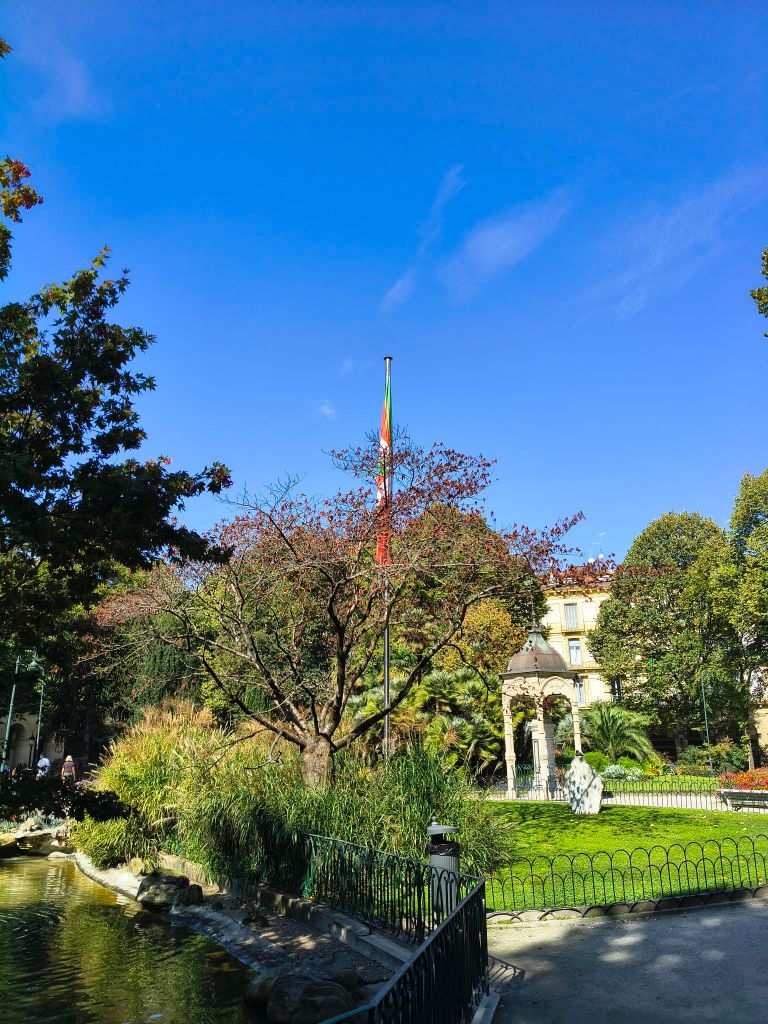
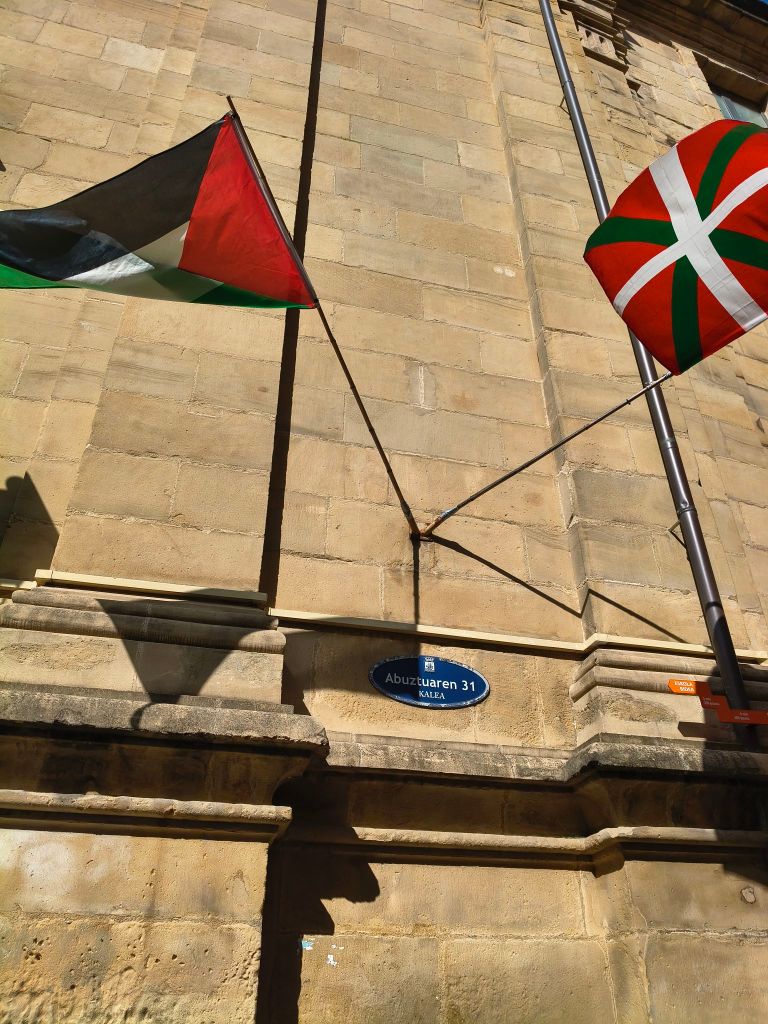
San Sebastián is the capital of the Province of Gipuzkoa, a province of the Basque Autonomous Community. That’s the Basque flag you can see flying there, the Ikurrina. You’ll see many Basque flags in town, but hardly any Spanish ones. Although you’ll hear more Spanish on the street than Basque, just as you’ll hear more English than Welsh in Wales, the people here feel Basque first, Spanish second – if at all.
The Basques in Spain have had a more troubled recent history than their French cousins. Basque Nationalists sided with the Republicans during the Spanish Civil War, and the Francoists responded brutally. Guernica, infamous for the terrible bombing inflicted by the Luftwaffe in 1937 and forever commemorated by Picasso’s famous painting, is a Basque town on the outskirts of Bilbao. Upon winning the war Franco doubled-down on repressing Basque identity and the language, and in 1959 this led some Basque nationalists to take up arms, forming the feared paramilitary organisation ETA. Political violence carried on after Franco’s death in 1975, the question confronting the new democratic state being whether the Basque country should be fully independent or regain its pre-Franco autonomy within Spain. ETA disbanded in 2017, the argument currently settled in favour of an autonomous state that is clearly and proudly Basque, with multilingual signage everywhere, Basque TV and radio channels, and either one of three flags on display on the balconies of many apartments around town; the Basque flag, the blue-and-white stripes of Real Sociedad, the local football team – and, because of a perceived connection with their own cause, the Palestinian flag.
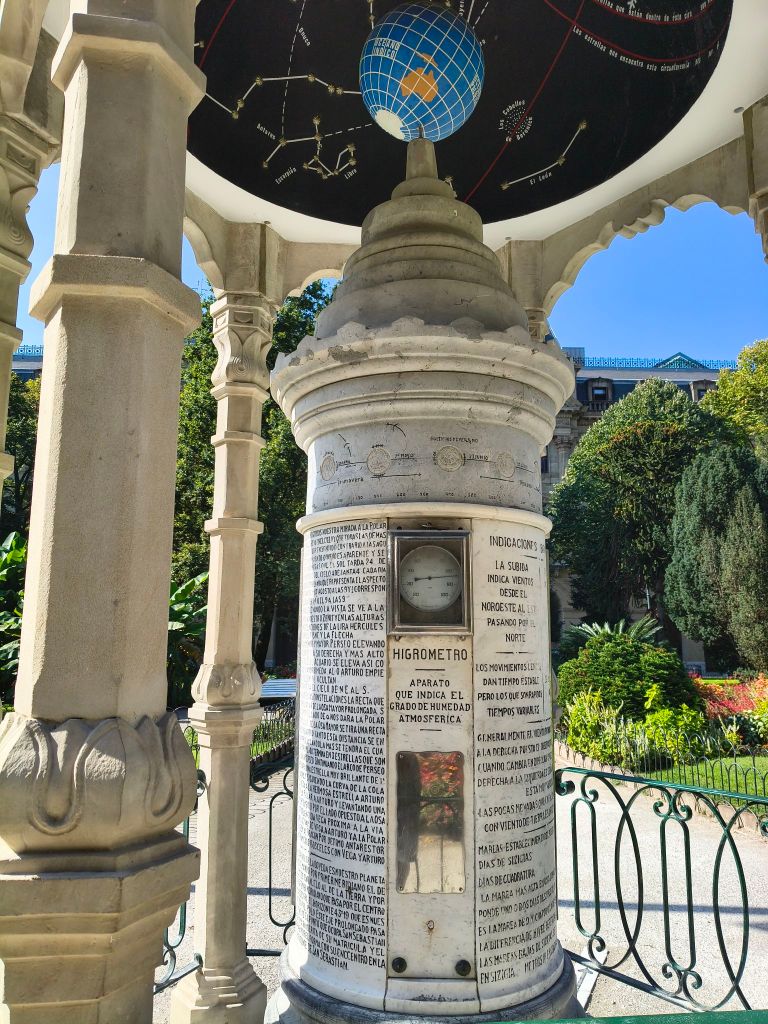
Anyway, the Plaza is a delight. There’s even an ornate-looking weather station. I’ll leave you to read all the details about it on the column. You’ll have to translate it yourselves though.
It’s in Spanish.
The flash bit
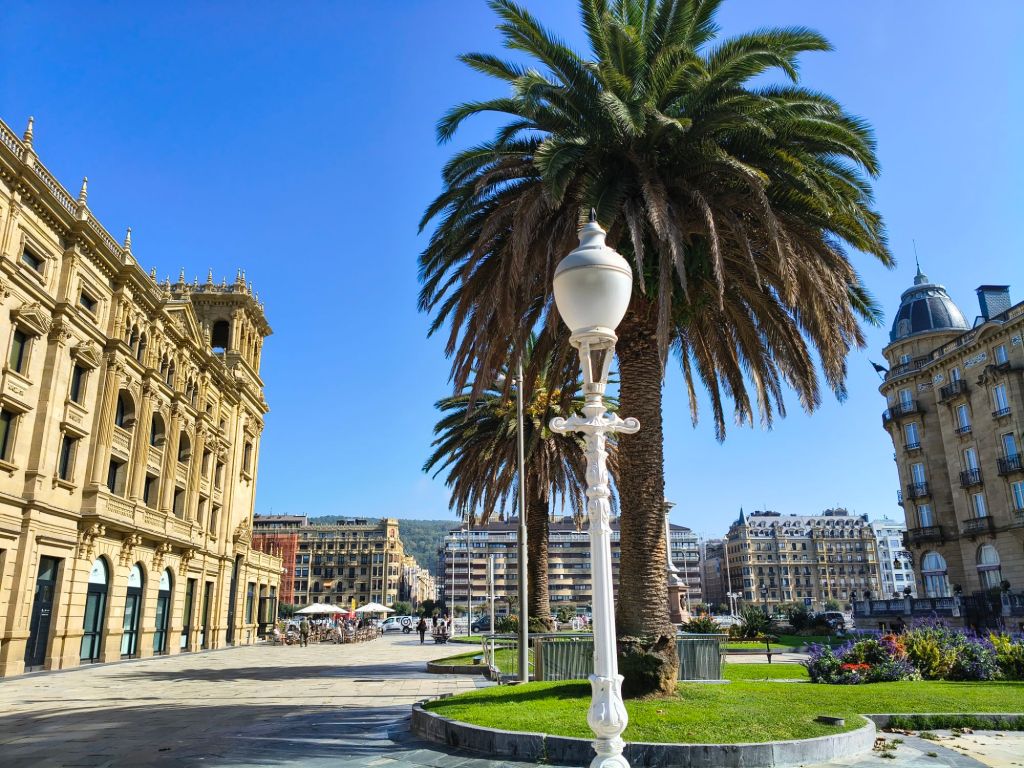
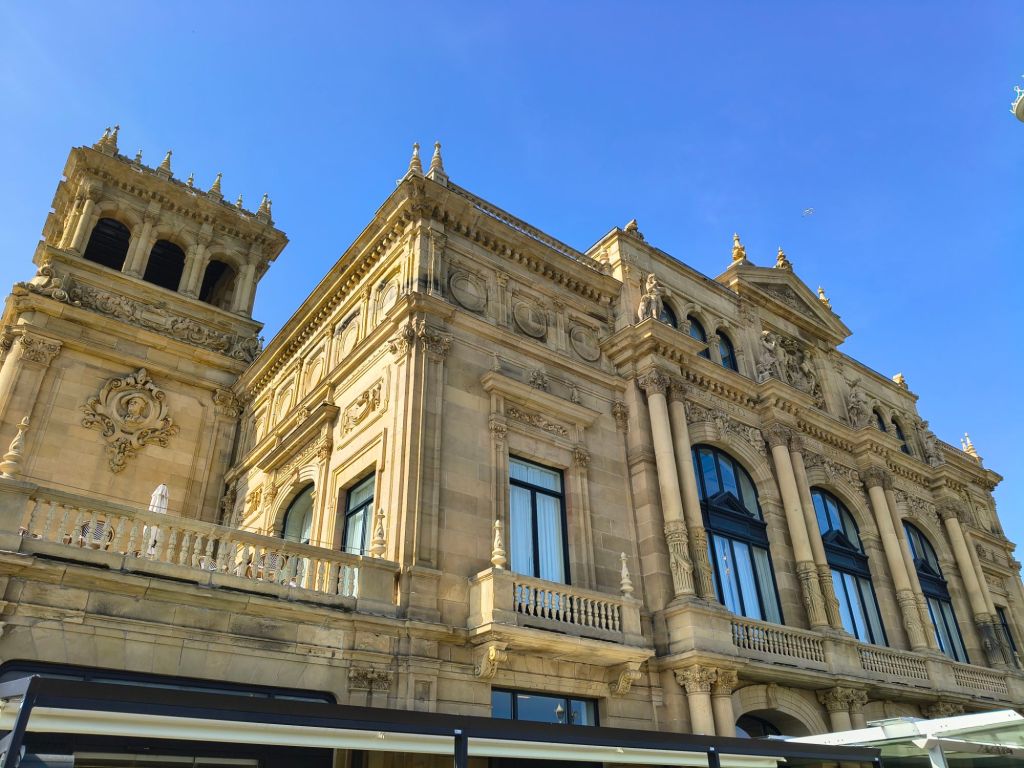
Near the river, in the centre of town, we close in on some serious swank. On the right is the Maria Cristina Hotel, expensive even by San Sebastián standards. On the left is the Victoria Eugenia Theatre (named after Maria Cristina’s daughter -in-law) which used to be where they held the film festival.
Between the two is an 1894 statue to one Antonio de Oquendo, a 17th-century San Sebastián-born admiral.
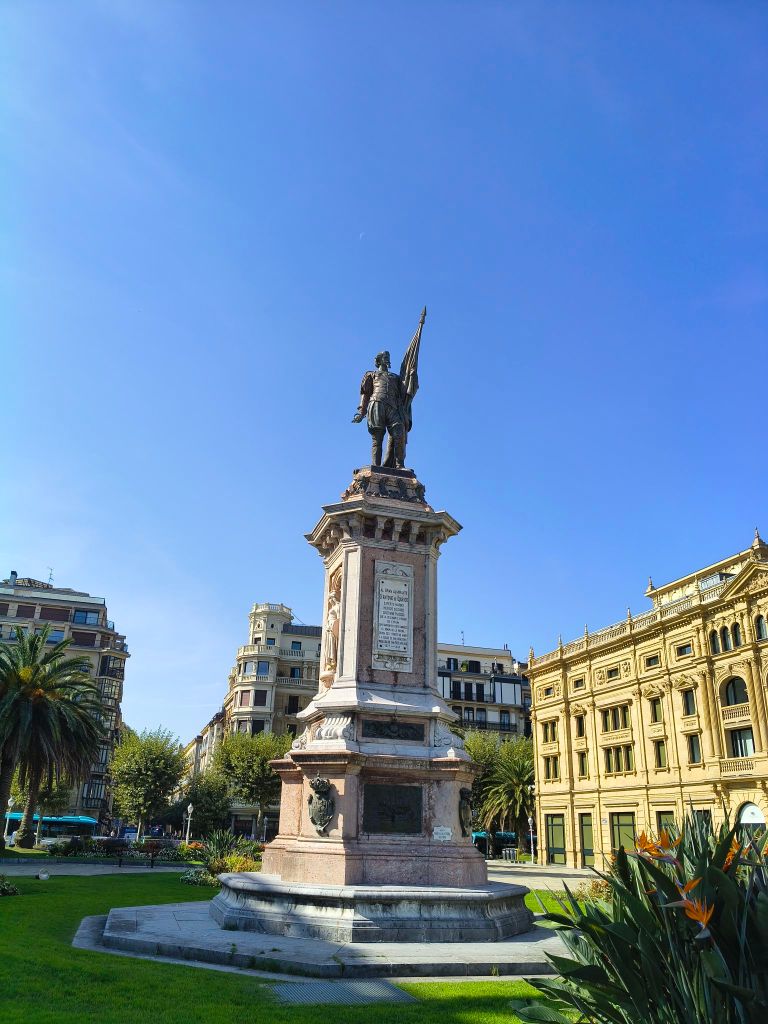
The Spanish plaque lauds him as an expert sailor, heroic soldier, faithful Christian, upholding the honour of his homeland in various combats. Presumably the Basque plaque says the same, in which case they’re both being rather reticent about how he got on in the Battle of the Downs in 1639 during the Thirty Years War between Spain and the Dutch.
These Downs are in the Kent area but they’re the watery variety. They’re a sheltered stretch of sea in the Channel just off Deal, and at the time England was neutral. Oquendo, trying to get to Dunkirk to supply the Spanish forces, sheltered here, benefiting from a secret agreement with Charles I. But the Dutch fleet ignored England’s “neutrality”, invaded the Downs anyway, and smashed the Spanish fleet. Oquendo escaped back to Spain, a broken man, heroic career finished.
Sorry, town worthies everywhere, if you’re going to put up a puffed-up statue for me to look at, I’m going to dig out the full story myself.
Plaza de la Constitución
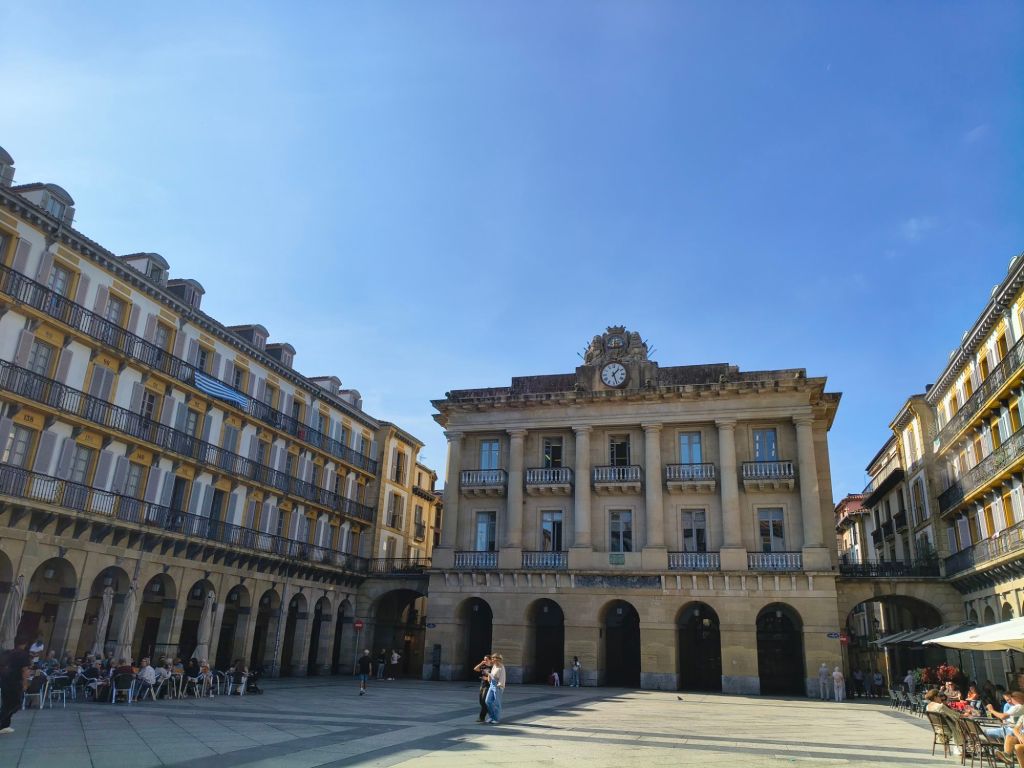
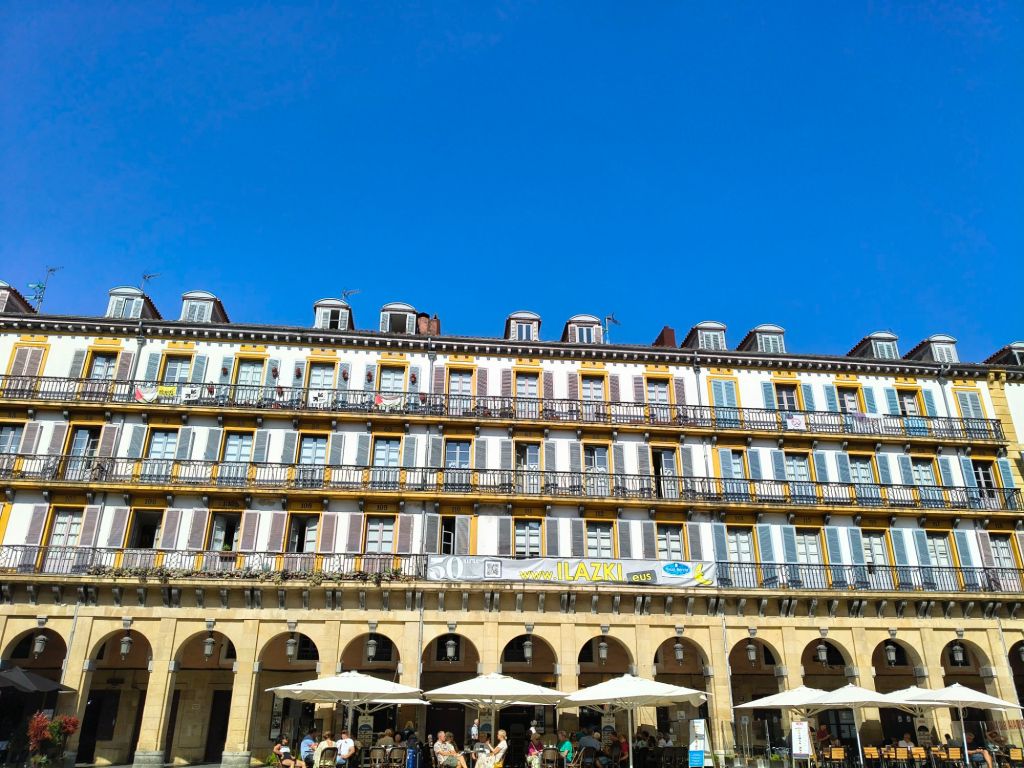
An impressive open space on the edge of the Old Town, the Plaza de la Constitución replaced an earlier version that was destroyed in the 1813 fire. Today it’s still a vibrant hub for social events, but mostly spends its time feeding the visitors via its restaurants and pintxos bars.
Try expanding the pictures. Can you see the numbering? This used to be a bullring, and behind the windows were spectator boxes – each with its own number.
Iglesia de San Vicente
At the other end of 31st August St to the Basilica stands the intimate Iglesia de San Vicente, an even older, 16th century church.
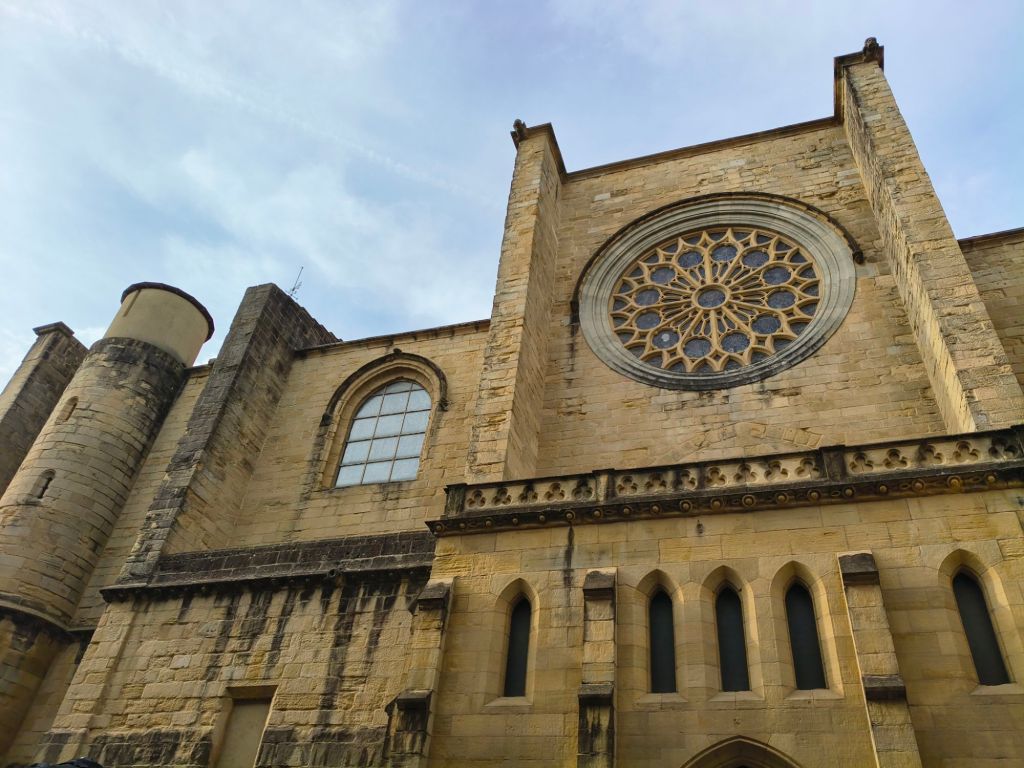
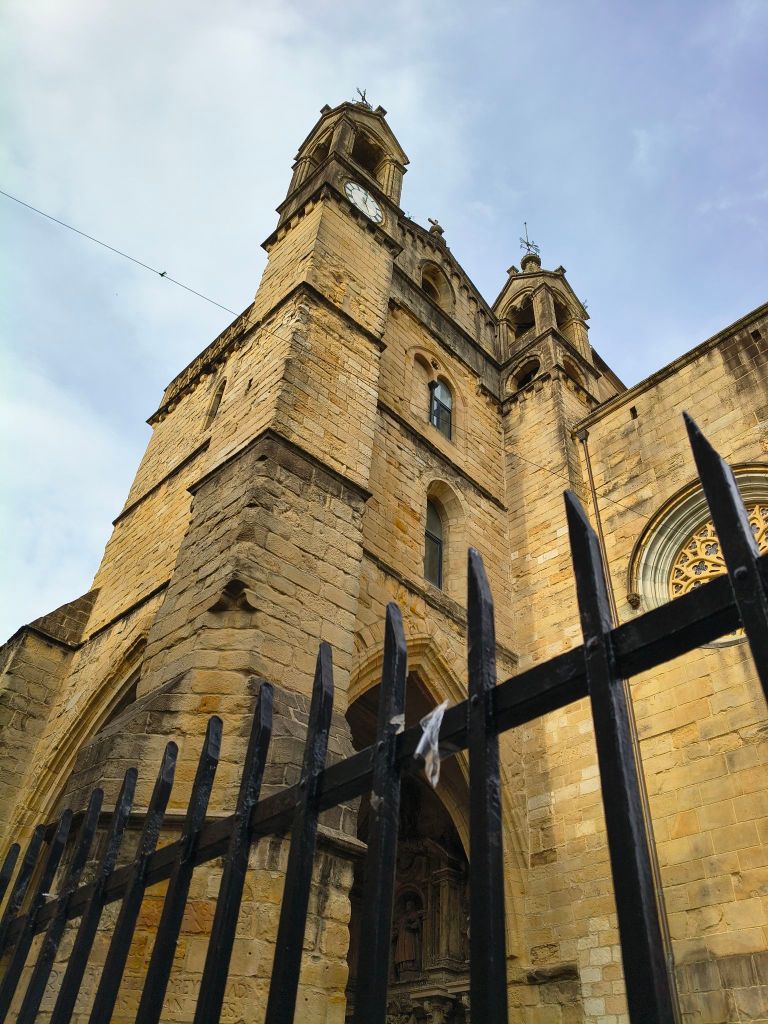
I kept turning up here when either it was closed, or there was a wedding, but finally on my last day here they were just opening the doors.
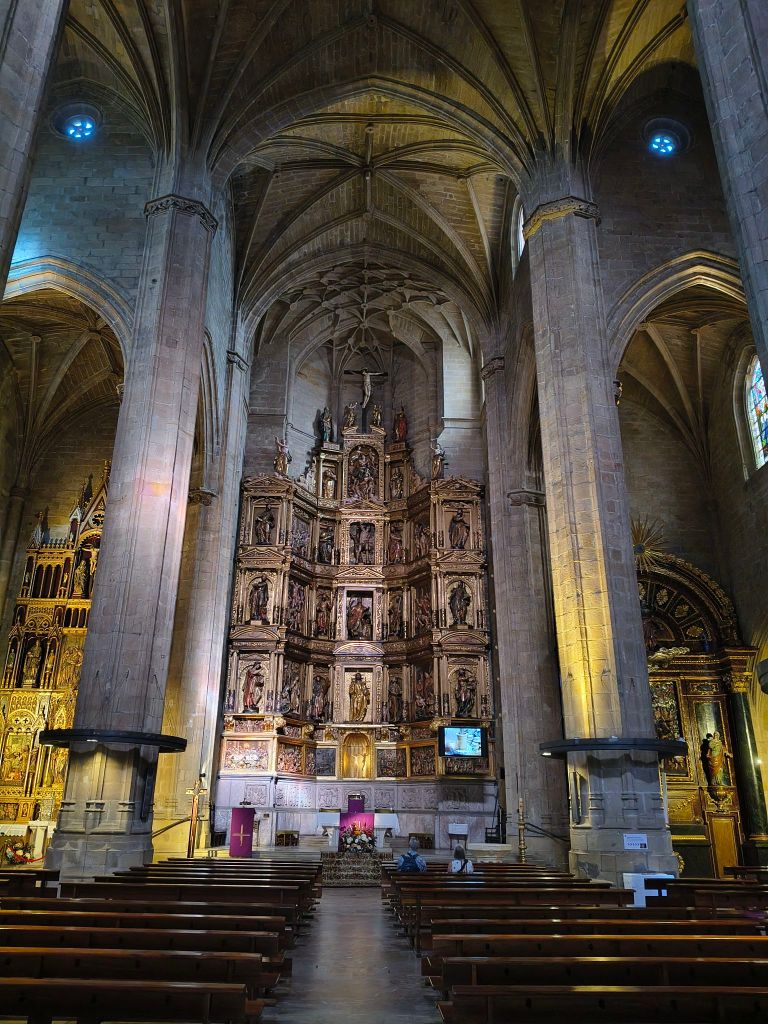
And it was well worth the wait, just to see the altarpiece.
Halfway along the street there’s a very moving statue of a slim woman carrying a load of bricks on her head.
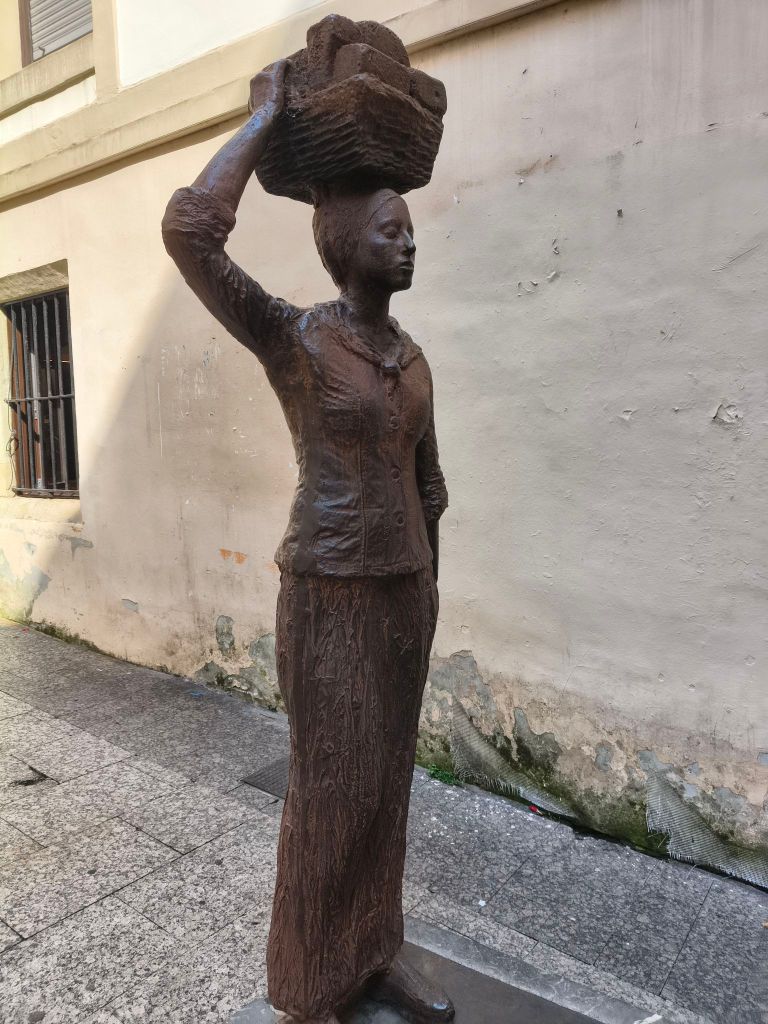
As I mentioned, most of the Old Town was rebuilt from scratch after its destruction in 1813. This statue commemorates the multitude of unnamed men and women who carried the bricks and rebuilt the town, one stone at a time. The sort of people who never get the statues they deserve. Their only monument are the glorious places they help create, maintain, and bring to life with their hard work, inventiveness and skill, and the energy of the community they – we – make.
The Bridge
Do you remember the photos of the bridge from my first post? Here they are again.
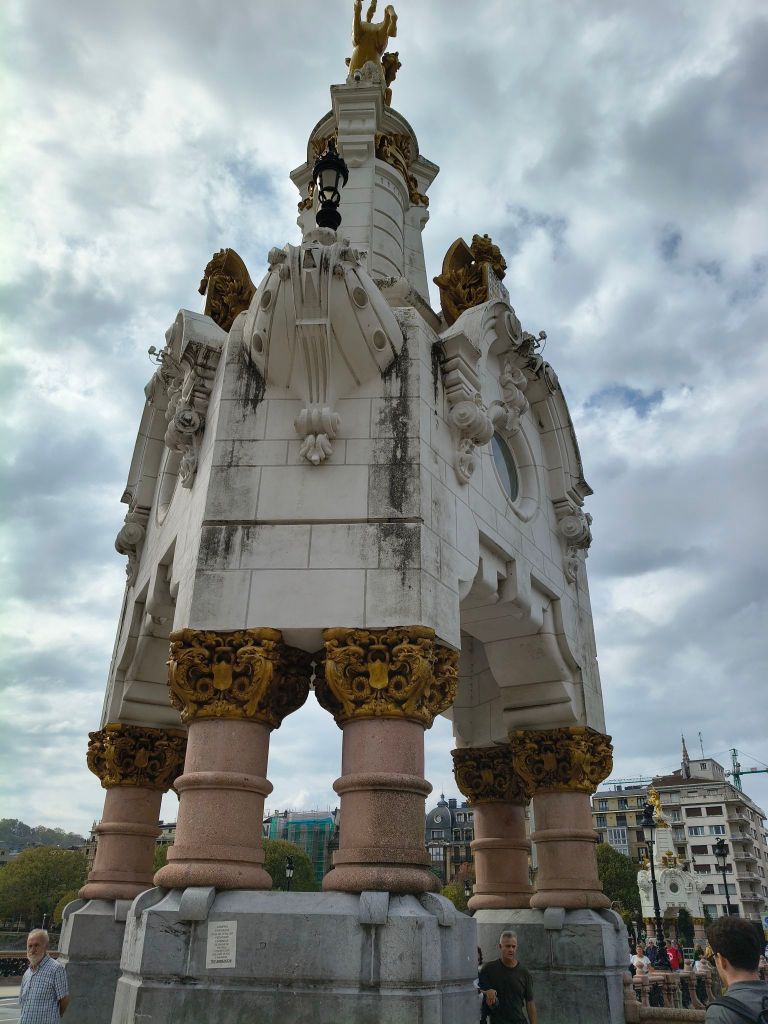
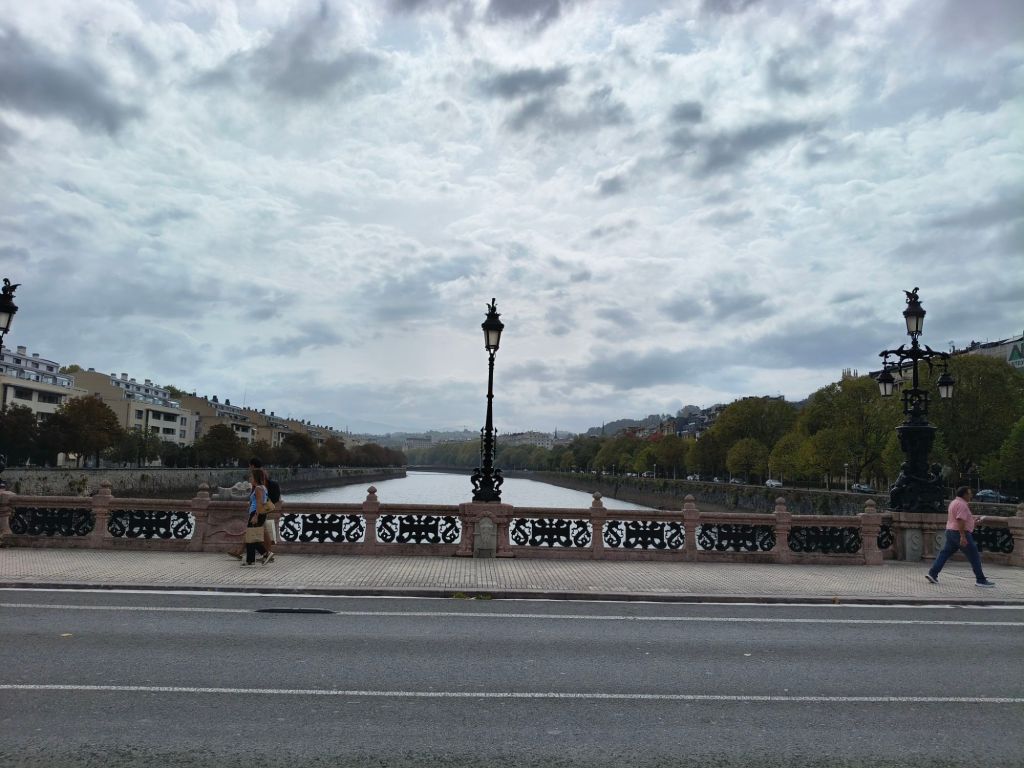
It turns out this is the Maria Cristina bridge, near the hotel that bears her name.
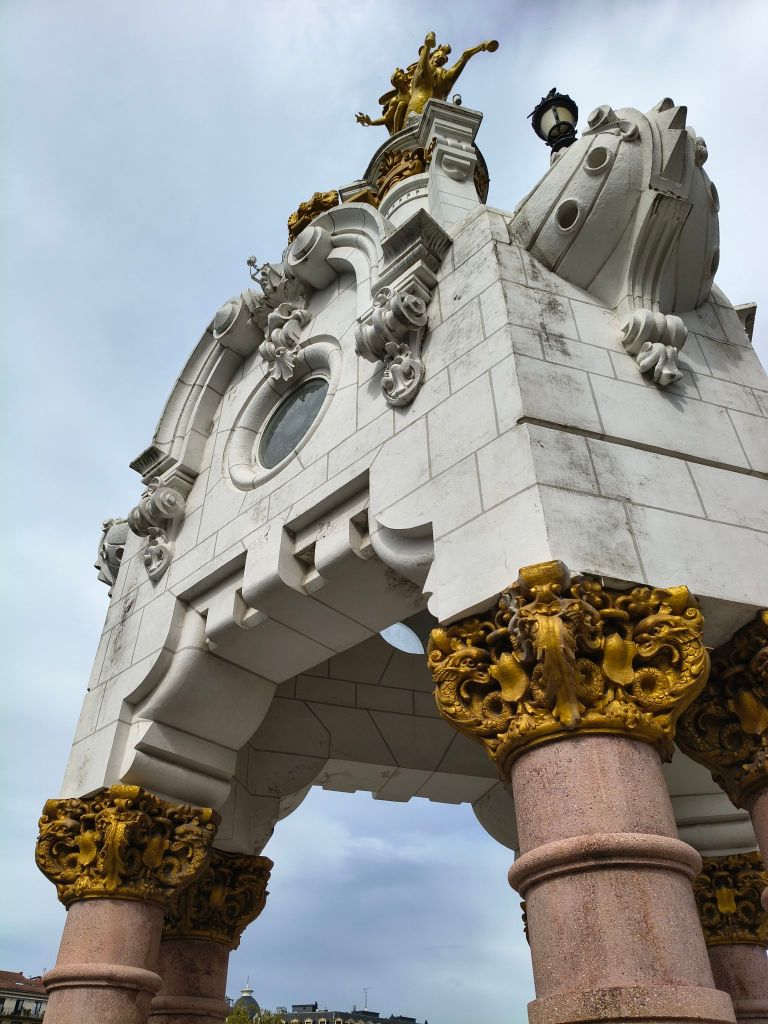
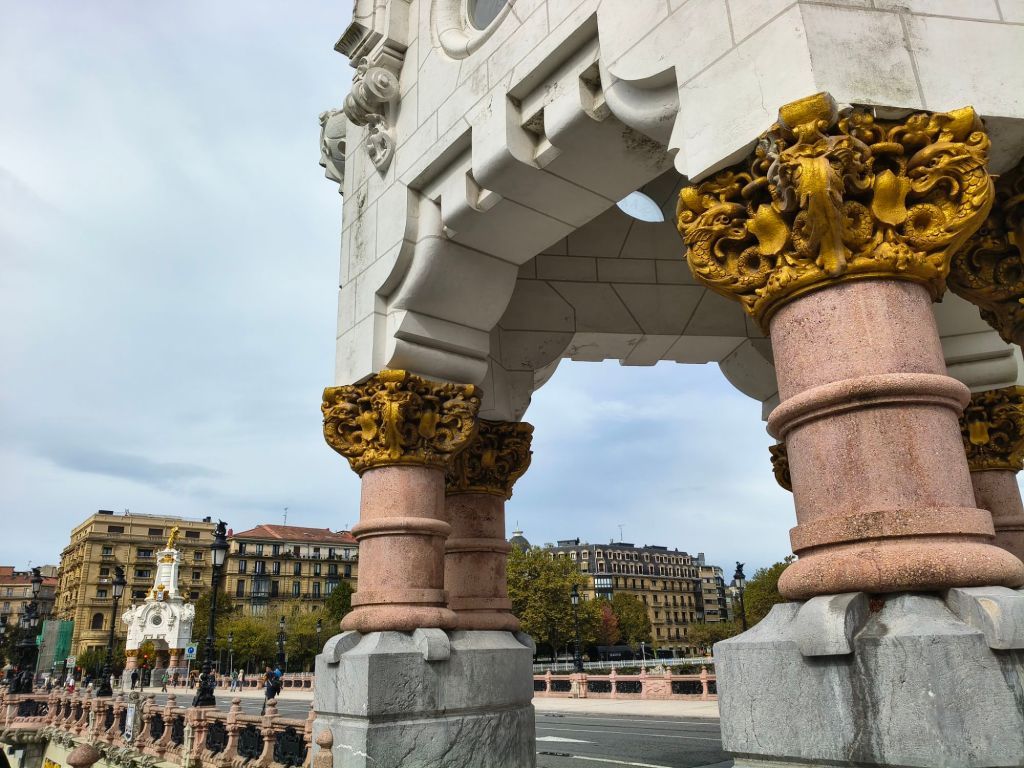
There are four large obelisks on each corner, paying artistic homage to the Pont Alexandre III in Paris. That’s if the word “homage” means repeating an idea from somewhere else but with much less taste.
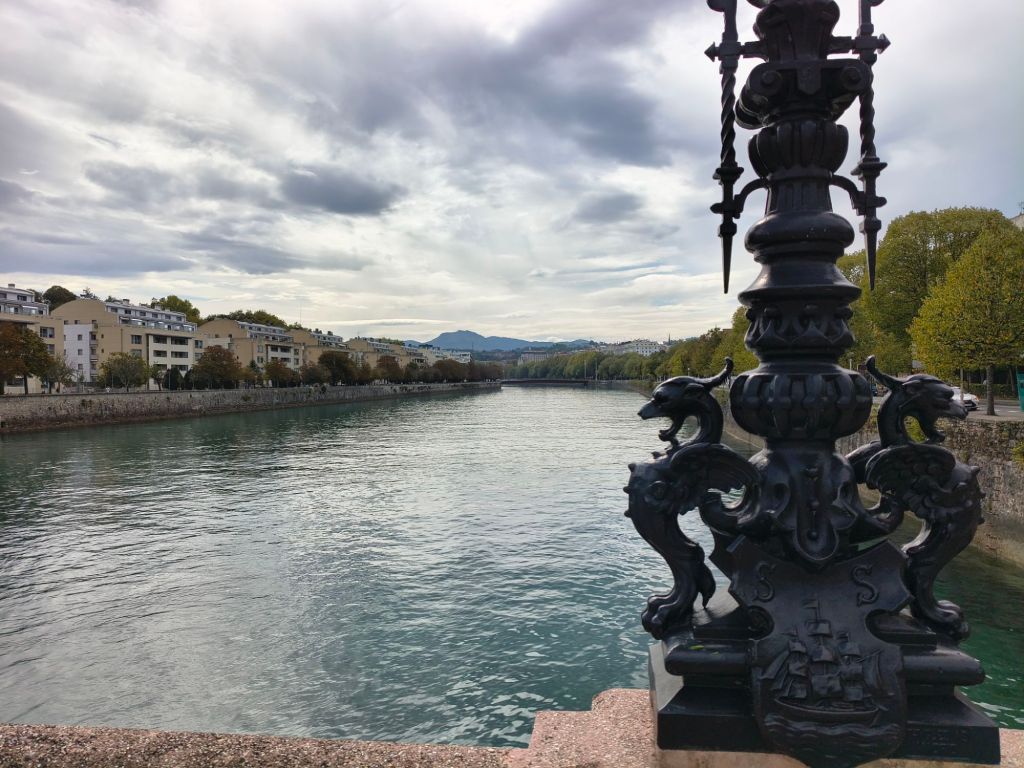
A bridge, a hotel, the odd statue here and there…
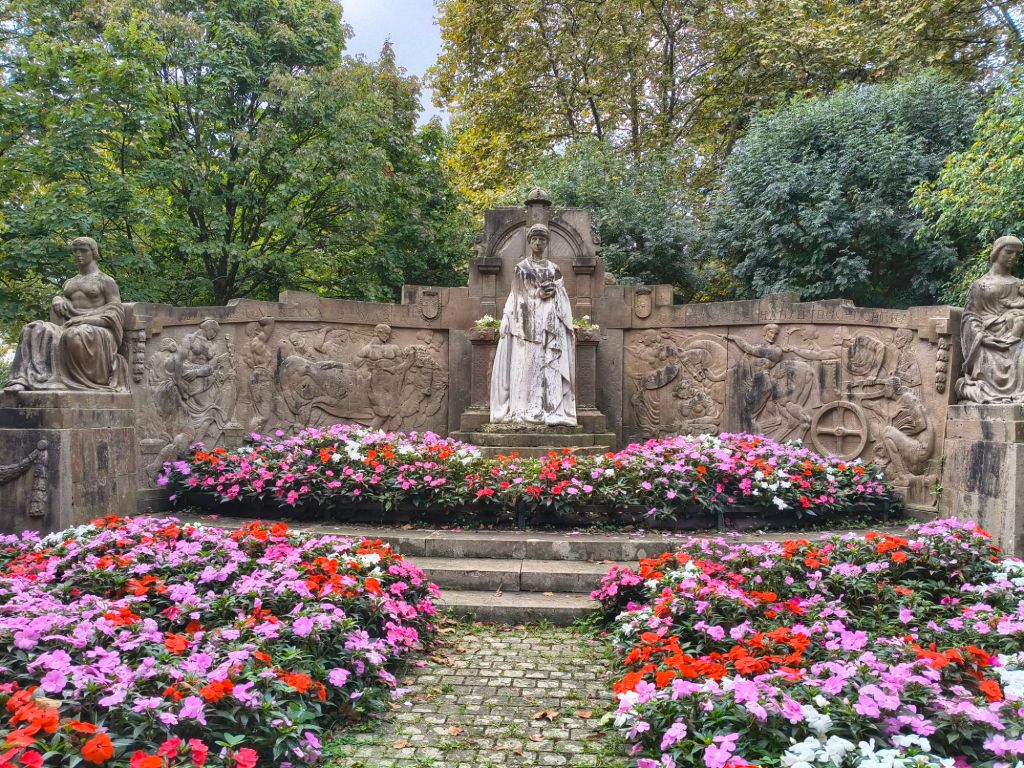
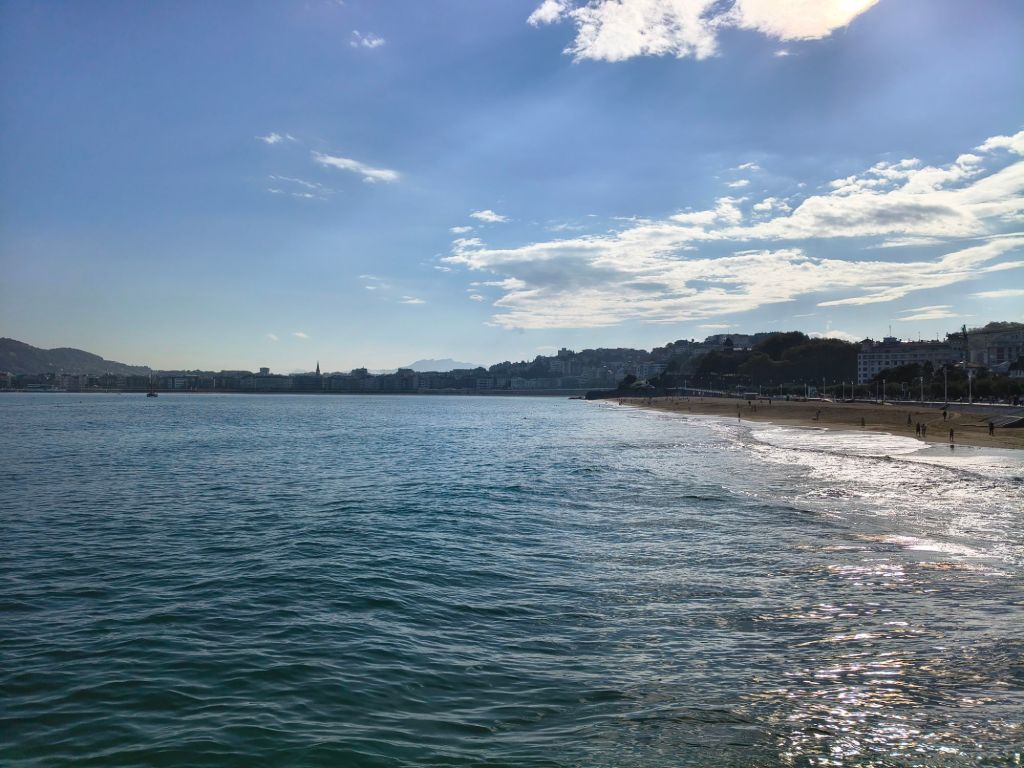
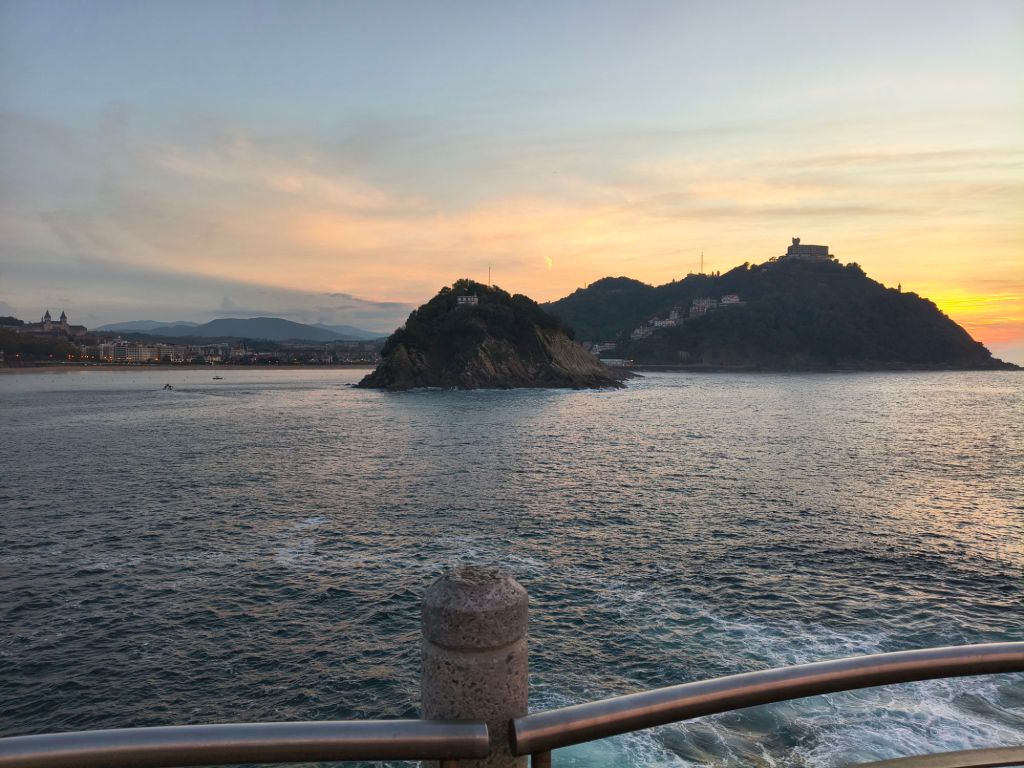
…it’s clear the notables of San Sebastián back in the day wanted us to remember queen Maria Cristina and her contribution to the city where she spent her summers in her later years. And she did make a contribution. But for me? I’ll remember San Sebastián for other things – the gorgeous bay and the shimmering sandy beaches, the green promontories set against the blue sea, or the blue sky, or the magical sunset…the effortlessly elegant resort architecture, the vibrant charm of the Old Town once the numbers had reduced and the tourists could relax…the pintxos, the relaxed buzz…
And just forgetting the Basque/Spain thing, and just being in – Iberia.


Leave a Reply