The wind was high and the water rolled as the sails billowed and billowed well. We slipped anchor with the sun high on the yardarm and the fellows gave a hearty cheer and a Yo Ho Ho!, as hearty a Yo Ho Ho! as would awaken the quick and the dead, as great a cheer as the good old, wicked old town of Brigstow had ever heard.
“Timbers shivered, mainbrace spliced, rum bottled! We sail for the Main!” boomed our great captain, no less a blackbeard than Sir Edward Tench himself. “To the Main, to fortune, to adventure!” And so we slipped away across the harbour, Spike Island receding to the stern, just as John Cabot himself had done (if we’d followed his route we’d have to call it Foundagainland)…
“To adventure!” shouted back the hearty lads, breaking out into jolly shanties that involved lots of rum and other stuff that can’t go into a respectable travel blog.
“To fortune I hope, good Sir” whispered our well-deserved, well-renumerated sailing companion, the great Sir Edward Colston himself. “Remember”, he sneered, ” that I am the great and respectable benefactor of the city and my generosity requires the safe passage of my, err, special helpers here”. As he shook their chains he went on. “My dear captain, you are a mere, dastardly pirate. On the other hand a look at the calendar will show you that everything I get up to will be perfectly fine for another three hundred years or so and absolutely nobody will have a problem with it in this port until then. Well apart from that Clarkson fellow. And that Sancho chap. And all their friends. Anyway, as I was saying… nobody will have a problem…”
But as we sailed into the Avon and passed through the great gorge of Clifton, things became…suspenseful. The special helpers suddenly broke free of their chains, grabbed Colston and threw him over the side, and it made quite the splash. The last time I saw him he was sinking to the bottom of the rolling Avon, a balaclava in one hand, a spray gun in the other.
“Aha! He’s made it!” Tench exclaimed to my astonishment. “He made it to the shore and he’s… he’s spraying something onto the rocks over there.”
I couldn’t see him, so Tench got tetchy. He pointed to the shoreline.
“Not the river!” he shouted “Bank! See!”
Suddenly the sea shanties changed and the ship went to action stations. We’d come under a massive attack…
And then I woke up.
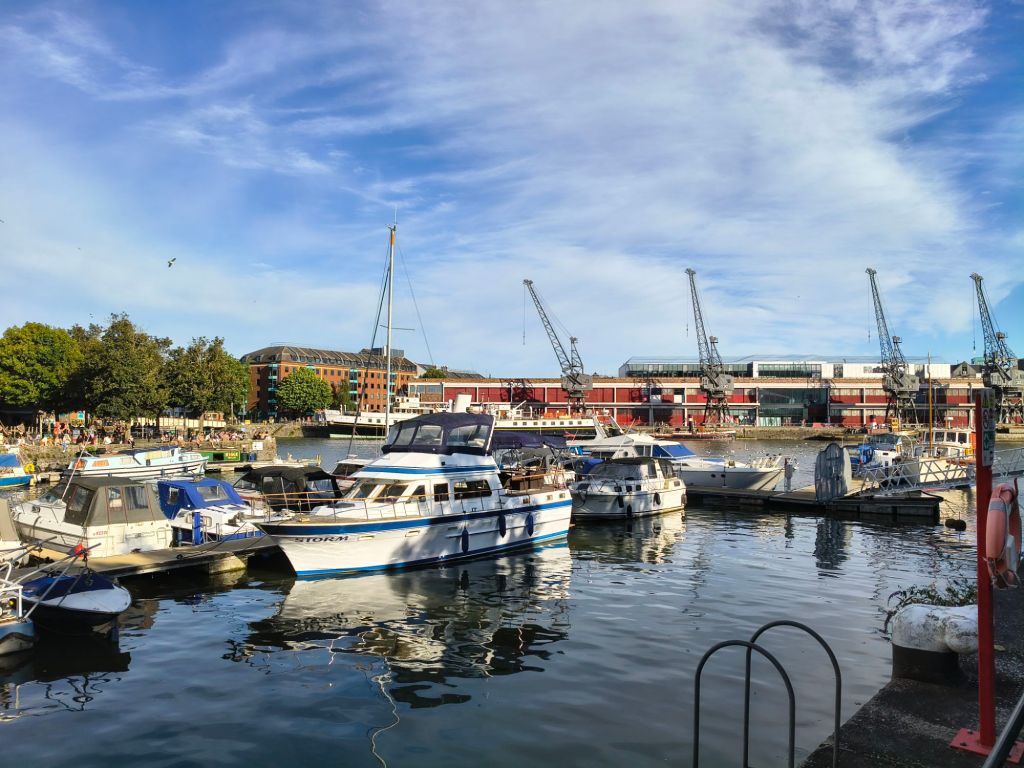
Fortunately I decided not to leave it to my fever dream and instead I got out and about and did my own exploration of Bristol. I’m not here for long, and this can only be a very short snapshot of what I encountered so if I missed anything out we’ve already captured the main points. Let’s see what else we can find.
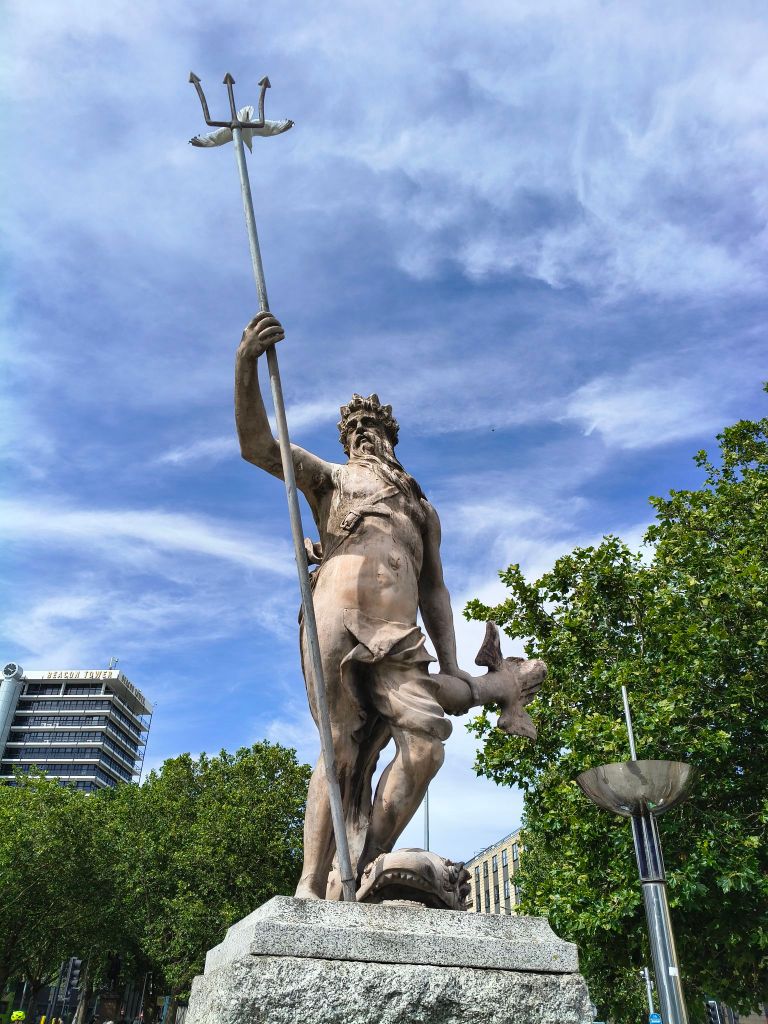
Bristol is a great port city at the mouth of the River Avon, just upstream from the great gorge at Clifton. The port made Bristol’s fortune from the Middle Ages onwards, and its site near the western Atlantic approaches made it highly convenient as a starting point for great exploratory ventures such as John Cabot’s famous trip to Newfoundland.
Then Bristol got greedy. Atlantic exploration led to the Atlantic slave trade, and they went all-in in this town. Wikipedia claims that around 2000 Bristolian ships carried 500 000 African souls to enslavement and misery between 1700 and 1807, and there were over 200 slave traders here, almost twice as many as London. Bristol also got in on the smuggling and piracy business, and together with the slavers, the abolitionists, the pirates, the odd legitimate trader, it must have been a rollicking old town to be in at times. Unless you were in chains.
Eventually the slave trade was abolished, the pirates were all hanged, and Bristol moved on. Isambard Kingdom Brunel built his railway from London, designed the SS Great Britain and scribbled up the plans for the Clifton Suspension Bridge over the Avon Gorge. Bristol remained an important port into the 20th century, important enough for the Germans to bomb it heavily during the second world war. The port moved out further downstream but the rollicking continues in this student city, with the Bristol Sound of EDM groups like Massive Attack, and the street art movements led by the town’s most famous son(s?), Banksy.
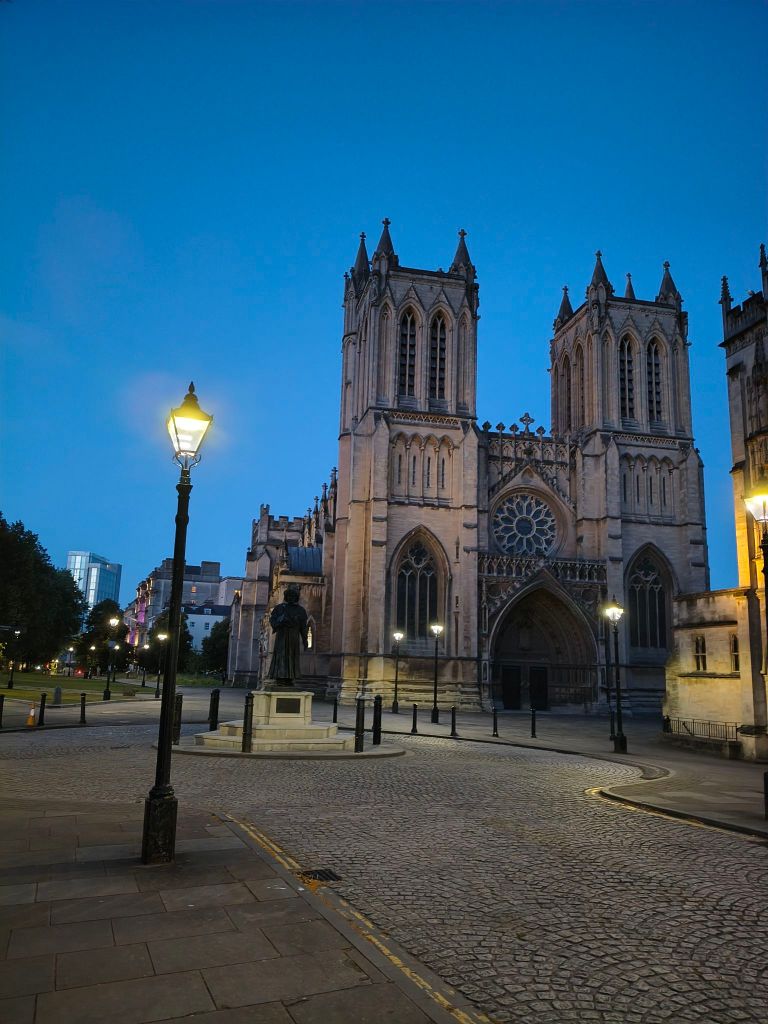
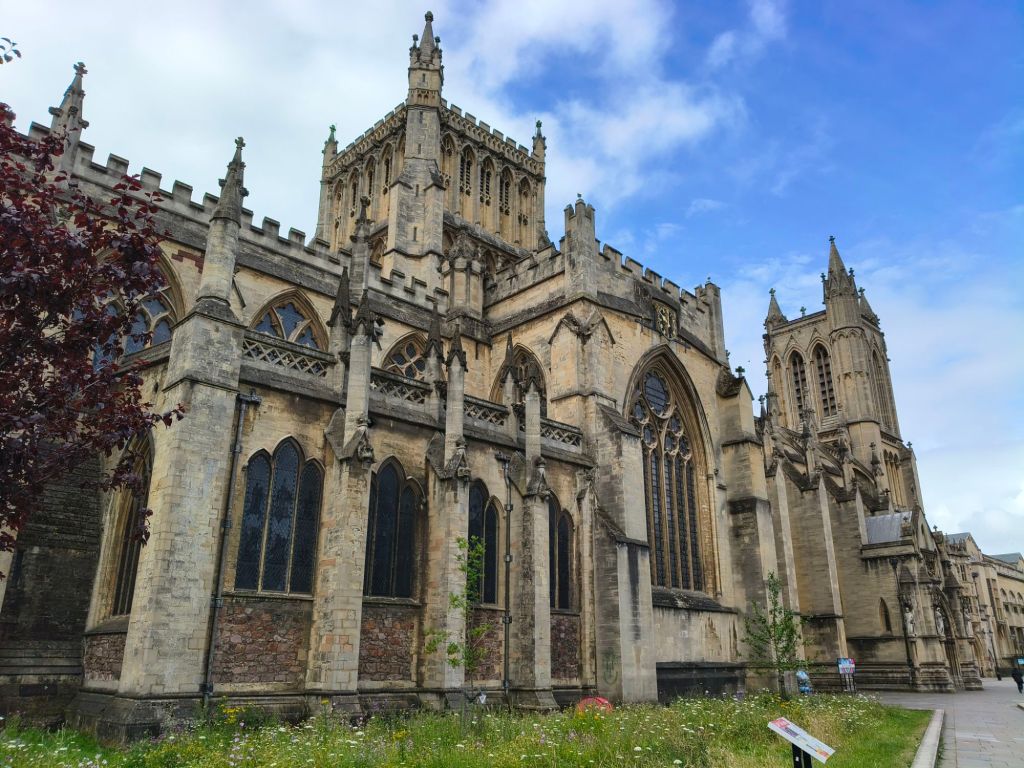
Befitting a great city of discovery, my own revelation was that Bristol had a great mediaeval cathedral and here it is, right on the corner of genteel College Green in the centre of town.
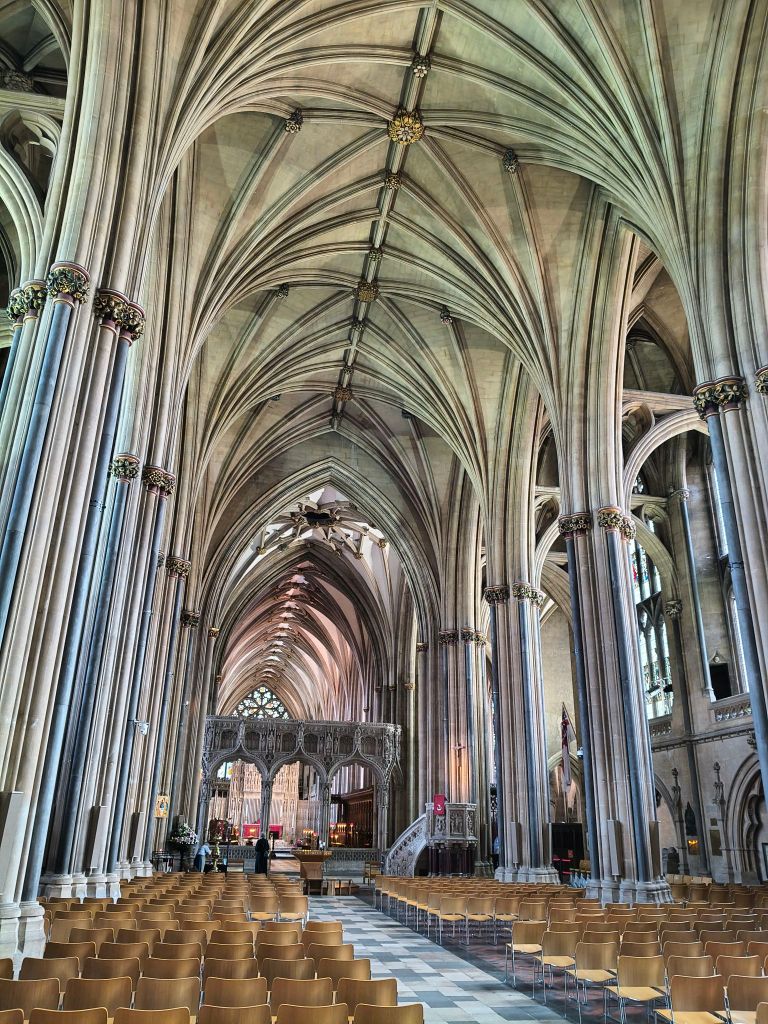
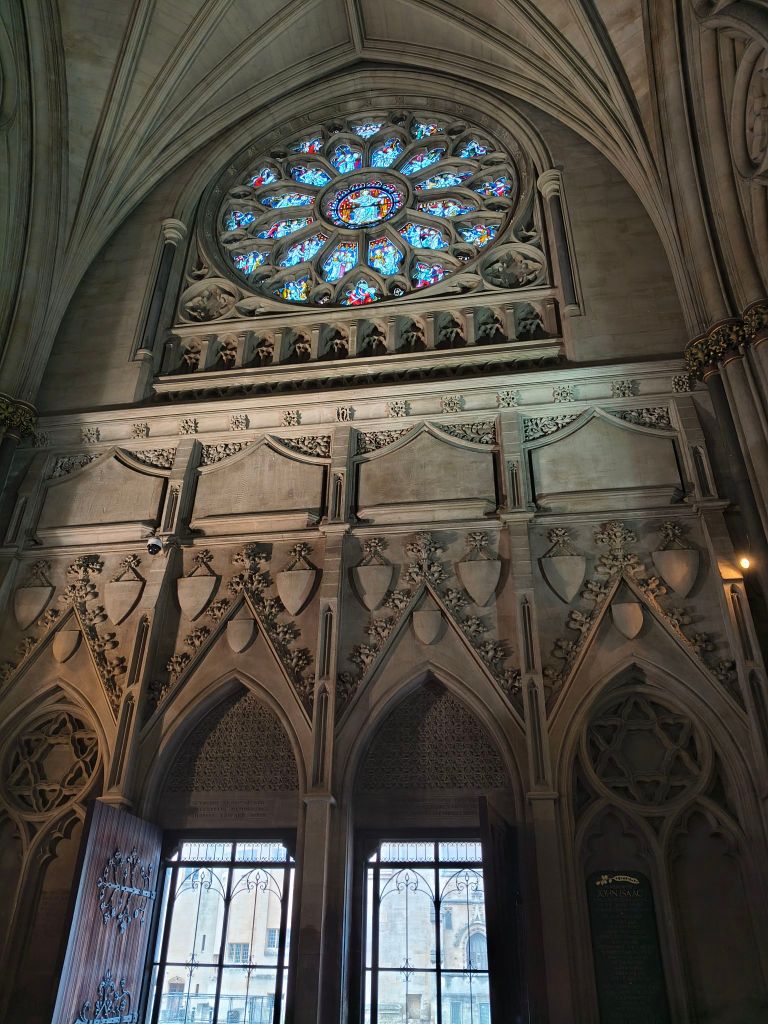
It’s a grand space, a convenient retreat from the city buzz around it, well the sedate collegiate hum anyway, we’re not far from Bristol University. The cathedral is particularly worth checking out if only for the memorials to the local worthies and the great and good. This being Bristol though, many of the “great-and-good” were active in slavery.
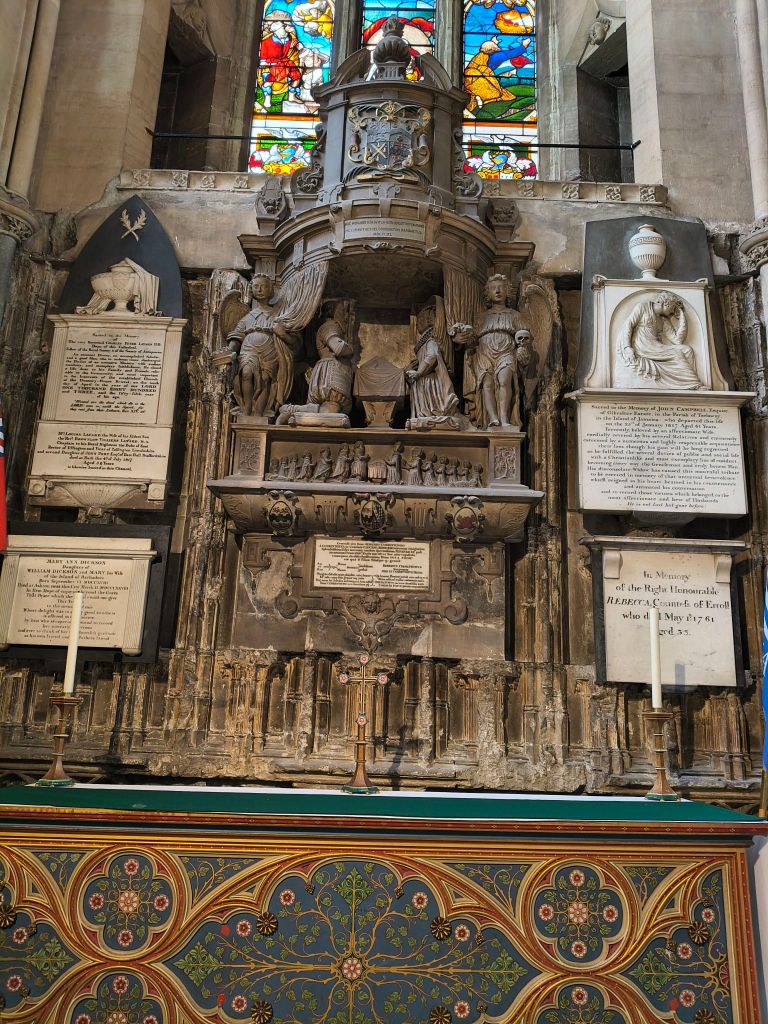
The grandiloquent Codrington Memorial commemorates one of the great plantation-owning families in the British colonies in the Caribbean. What struck me as well were the unctuous memorial plaques to their fellow slaveowners to the sides, where we read about just how wonderful, honest, devout these people were, no finer men etc. It’s so brazen it feels like a showy statement of the power and influence of the plantation interest, and maybe the later plaques acted as a cynical middle finger to the abolitionists? “Well, we think we’re God’s gift, and we own this town, so whaddya gonna do about it?”
Which leads us to the Colston Window.
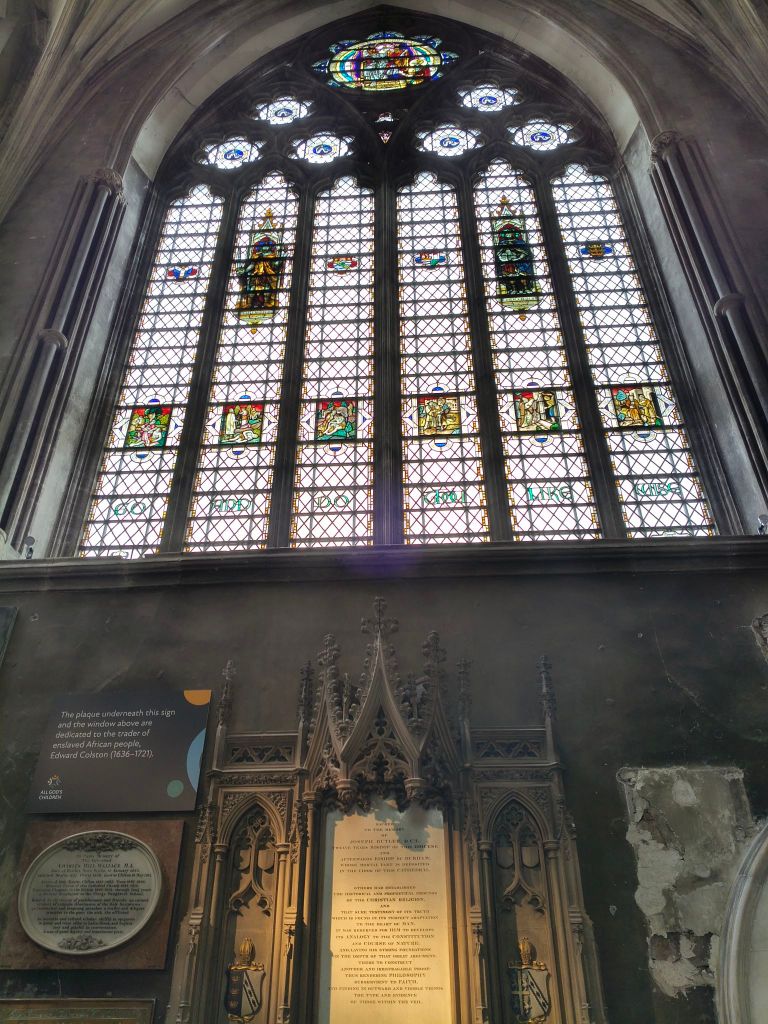
Sir Edward Colston, 1636-1721. Merchant, philanthropist, great Bristol benefactor, and humongous slave trader. A man of many talents, in 2020 he became Britain’s greatest diver since Tom Daley after a famous aquatic feat at the harbour. Here’s his commemorative window, and to the left you can see the modern plaque that covers up the original unctuousness. They’re looking at replacing the window, by the way.
If you think that’s cancelling, you should see what happened to his statue.
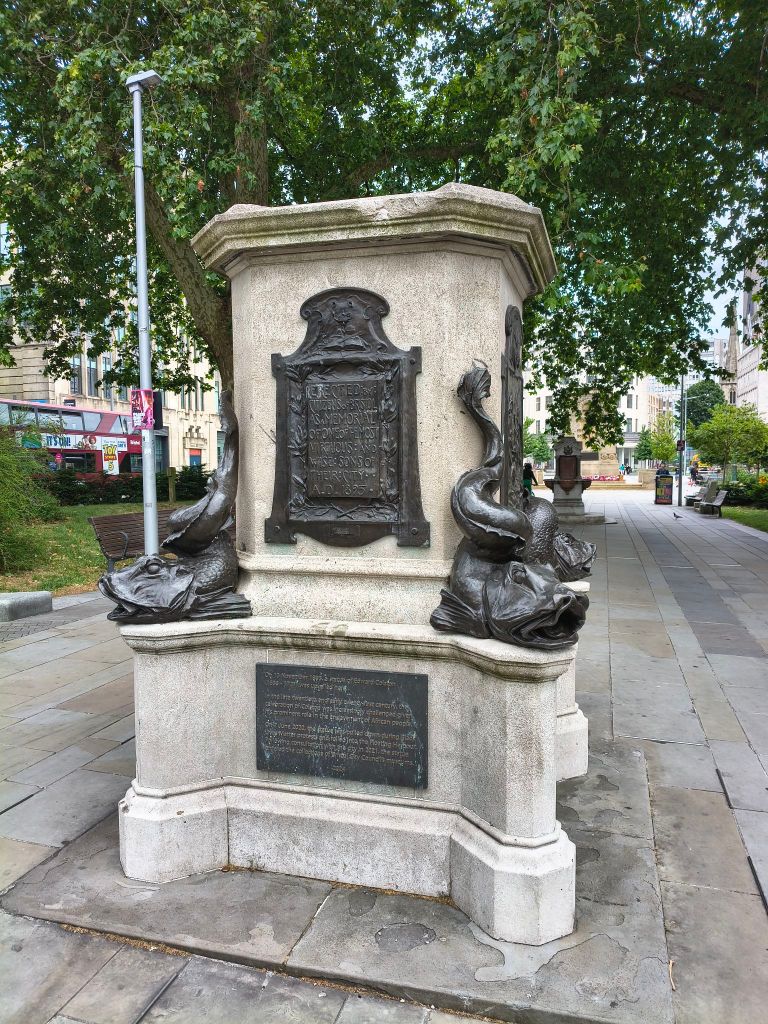
It’s the 7th of June in the febrile, COVID year of 2020, and a crowd has gathered around Colston’s statue in the centre of town. They’re not tourists – COVID has put a stop to travel. It should have put a stop to public gatherings of any sort, but this is the spring of worldwide Black Lives Matter protests that have followed the murder of George Floyd by US policemen. People are angry and will come out regardless. Bristol has a notorious slaving history, a large Afro-Caribbean community – and a rebellious, rollicking streak. A community that had already seen off a public transport employment colour bar in the Sixties by boycotting the buses. The name of Colston is memorialised everywhere in the city, it’s upset people for decades, and now is the time to do something about it.
Eventually people clamber around, get some ropes, and the statue is hauled to the ground. It’s defaced and hauled a hundred metres or so to the harbour wall, where it is unceremoniously dumped into the water – not before someone re-enacts George Floyd’s death by kneeling on its neck.
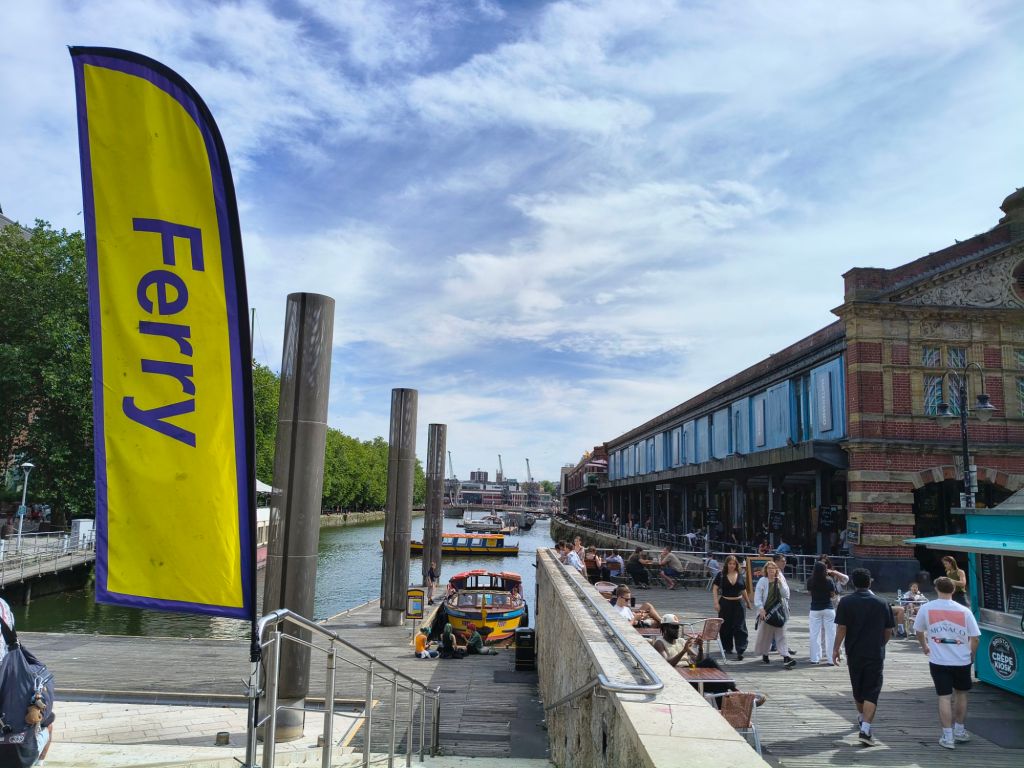
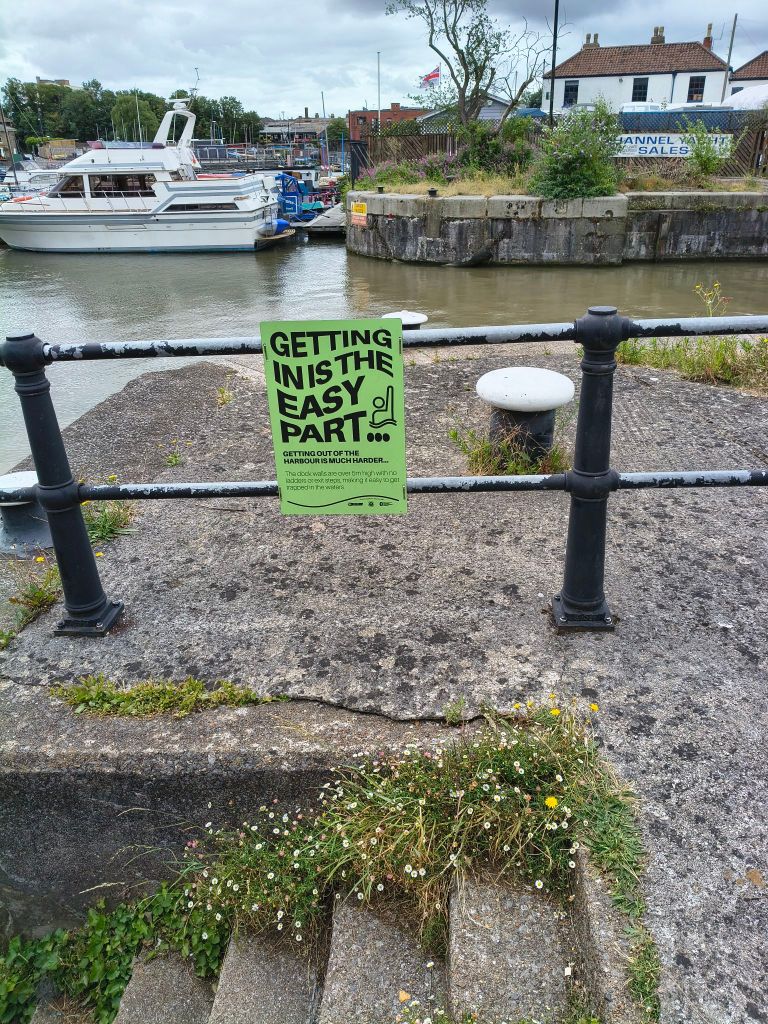
Quite so, just ask Edward Colston.
(This is somewhere else in the harbour. I just liked the sign).
Bristol is still dealing with that hard part. The council fished out the statue and stuck it in the M Shed museum, leaving the plinth empty. But it kicked off a period of statue removal across the world, with the inevitable controversy.
What to do about how men like Colston are remembered is still a sensitive issue in Bristol. Are we erasing history, or uncovering marginalised voices? What do we do with memorials to tainted figures? How can we say that we shouldn’t apply the standards of today, when those standards were very similar to the ones being fought for by contemporary abolitionists? But if we agree with taking down outright bad eggs like Colston, where do we stop? Admiral Lord Nelson had pro-slavery views and links to the plantation interest. What does that mean for Nelson’s Column?
And of course, if we want to “restore” history by restoring the statue, isn’t that also erasing the historical reality of the events of June 7th 2020?
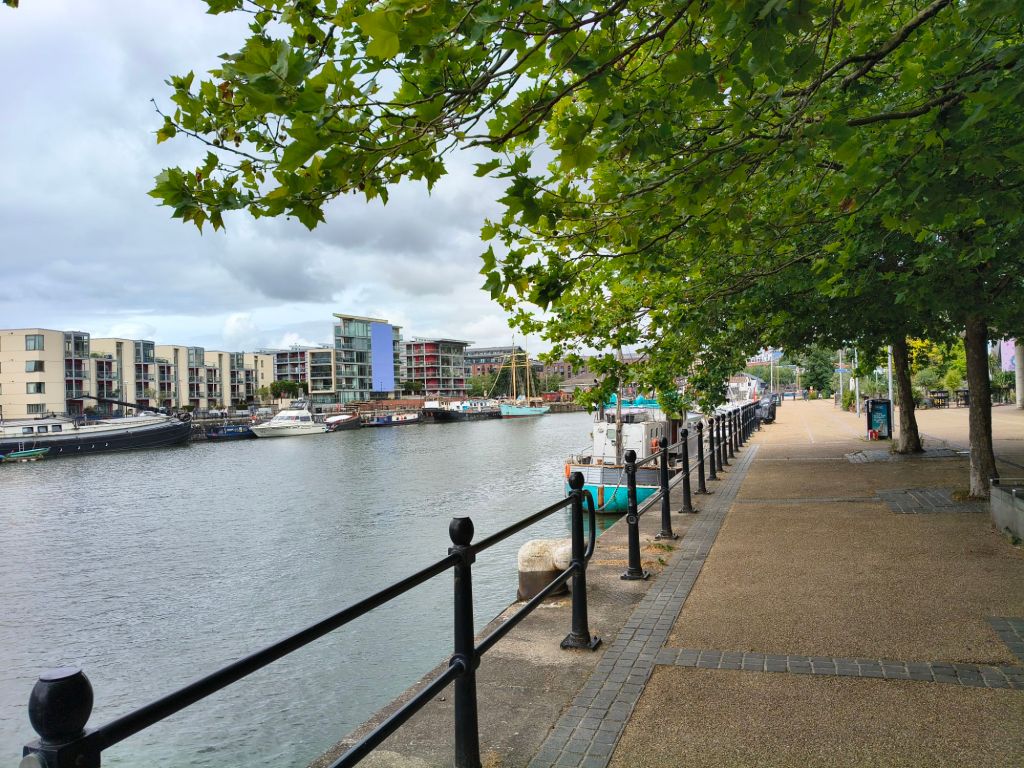
Time for a short walk along the harbour after all that heavy stuff.
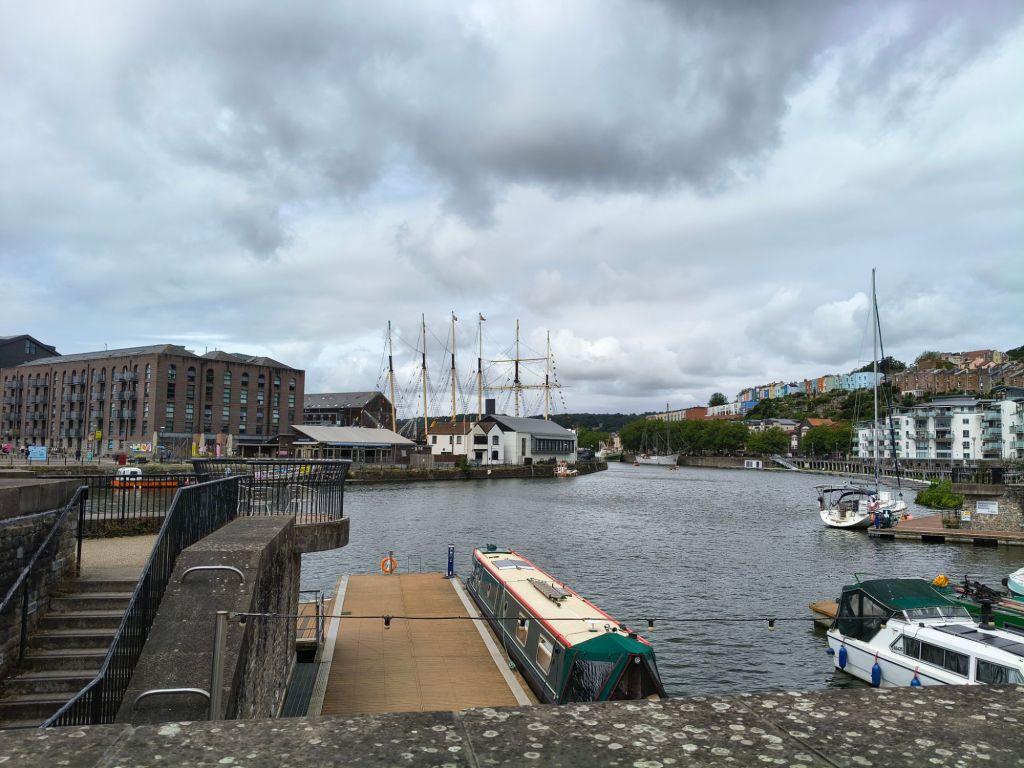
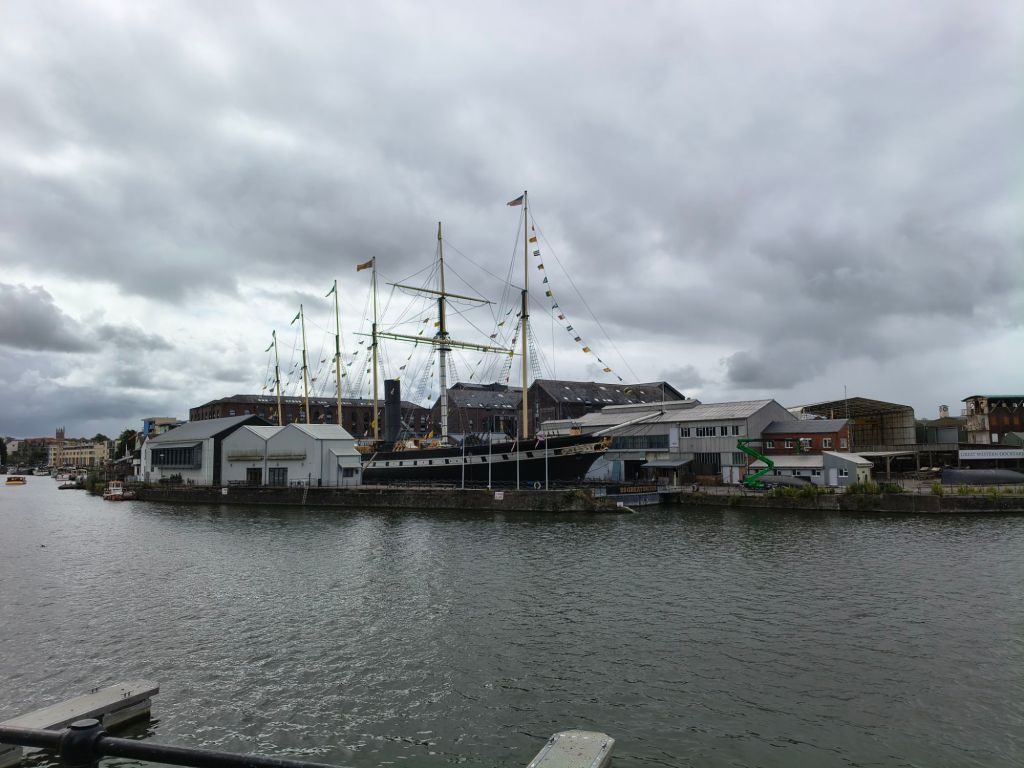
Brunel’s SS Great Britain, the first iron steamer to cross the Atlantic (1845) and the largest passenger ship in the world when built. It’s now a museum ship. After a chequered career (it bankrupted the builders, for example) it was scuttled in 1937, then repaired before being brought back home to Bristol to great fanfare in 1970.
It’s half-an-hour’s walk along the quayside to another Brunel landmark.
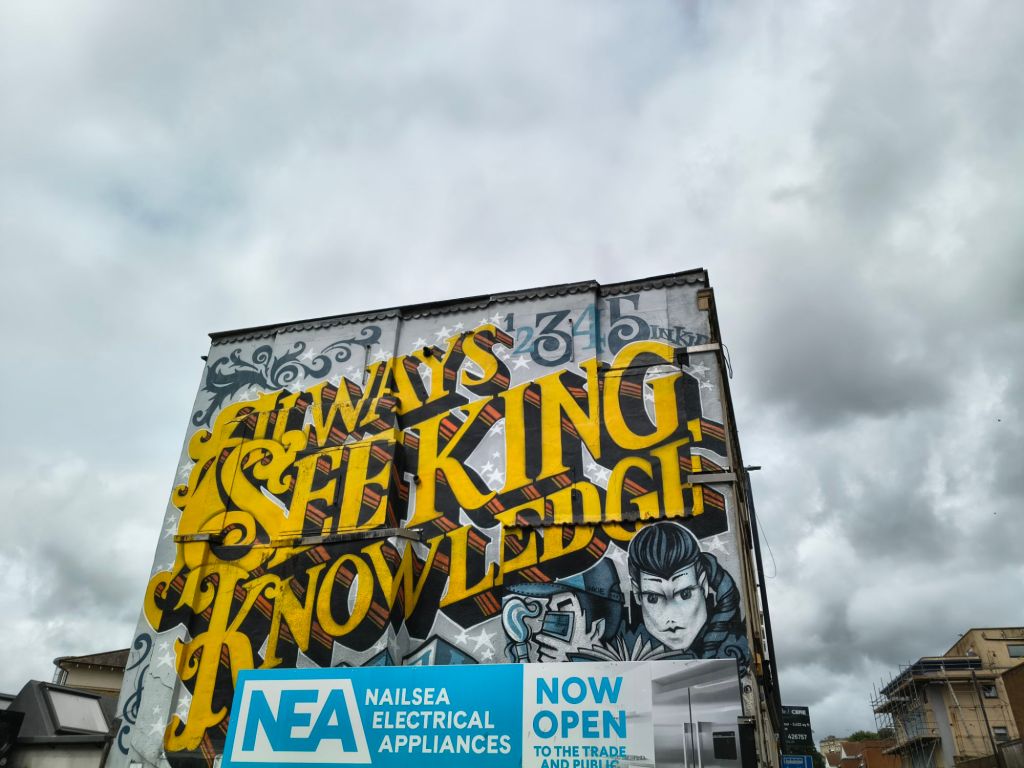
No, not that, that’s just some Bristol street art.
It’s this.
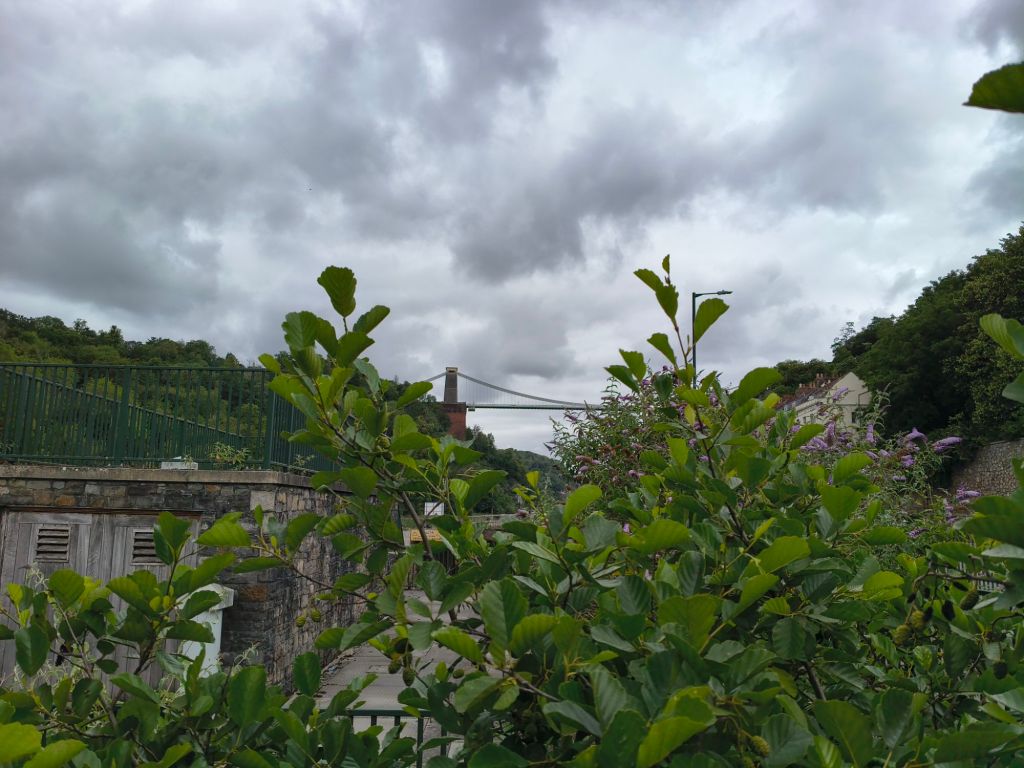
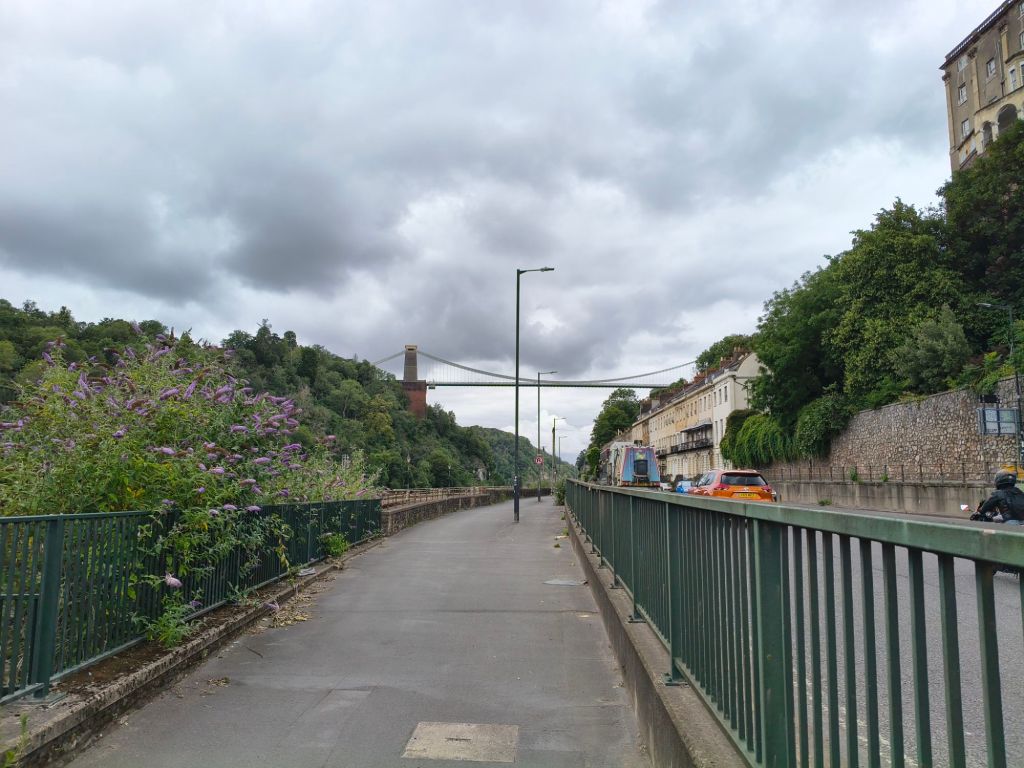
If there is one definitive Bristol landmark, it’s the looming, monumental Clifton Suspension Bridge. The deck spans the Avon Gorge at 75 metres above high water level, and unfortunately you weren’t going to get me walking across it for you. Or even going to the famous viewpoint high up on the rocks. I think it has an awesome, chilling feel as you approach it from ground level and it suddenly rises over you, like a silent giant.
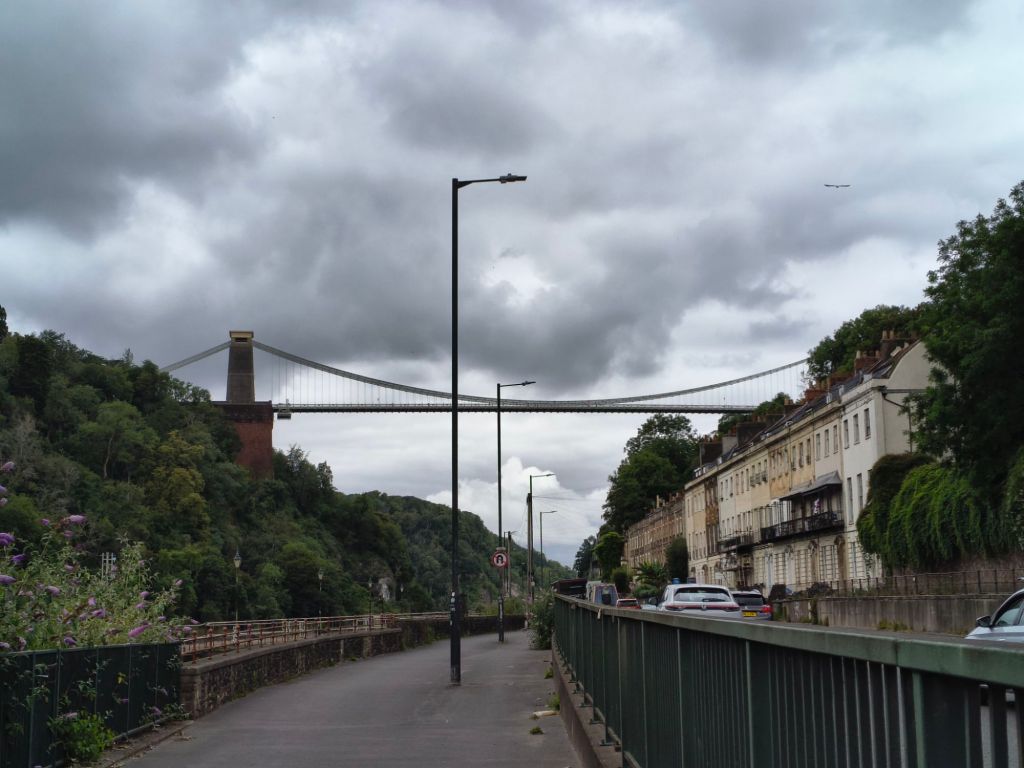
The beautifully elegant 412 metre long construction is based on Brunel’s design but he unfortunately didn’t live to see this icon being opened in 1864. Shout out to William Henry Barlow and John Hawkshaw, who carried out the redesign. (Work was scheduled during Brunel’s lifetime, but it was cancelled after Bristol rioted when the second Reform Bill was voted down by the Lords in 1831. Rebellious, remember…)
My time was running short and I returned to the centre…
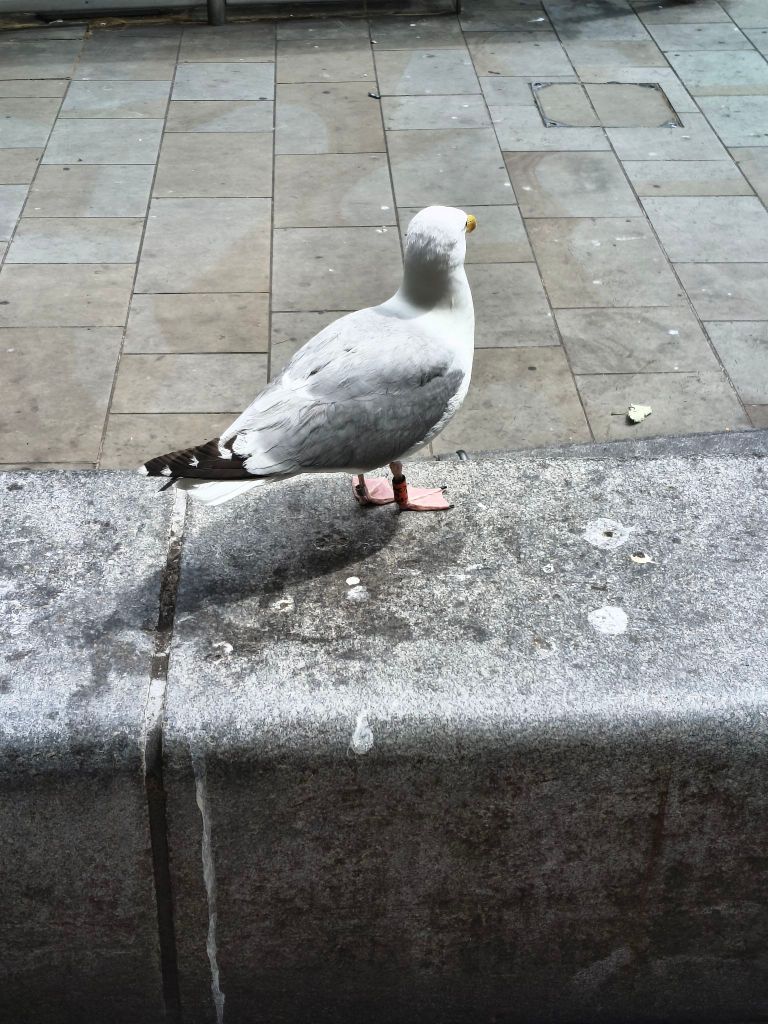
…and its unfeasibly-large seagulls.
There was just time for some more street art
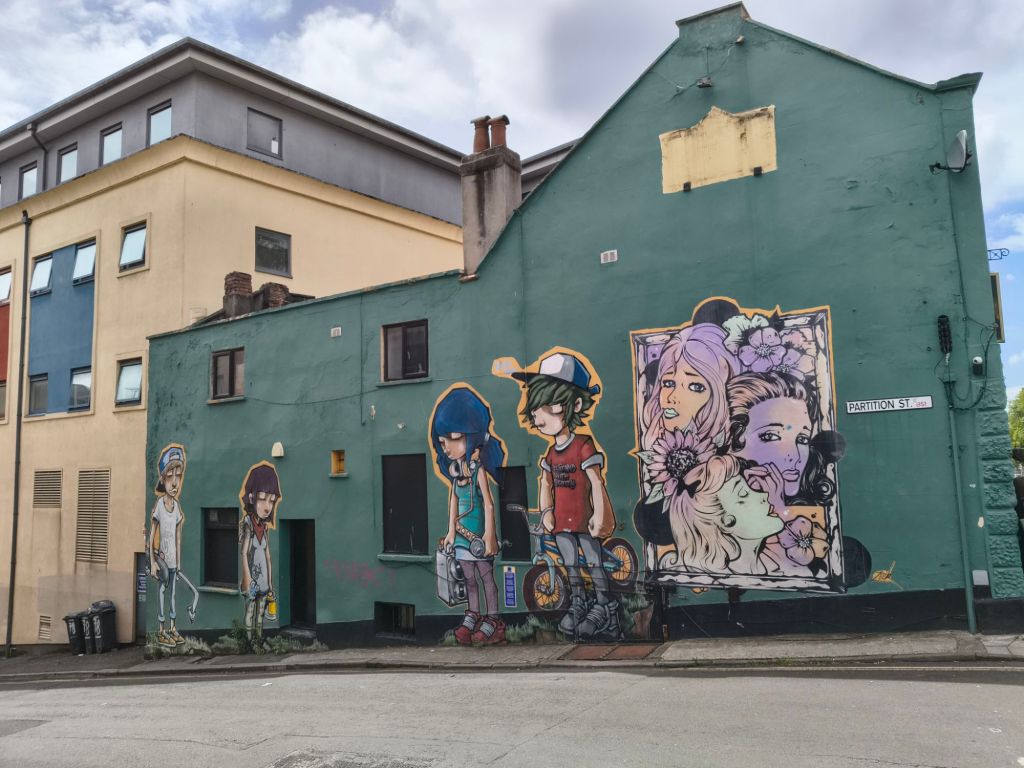
And of course, a Banksy.
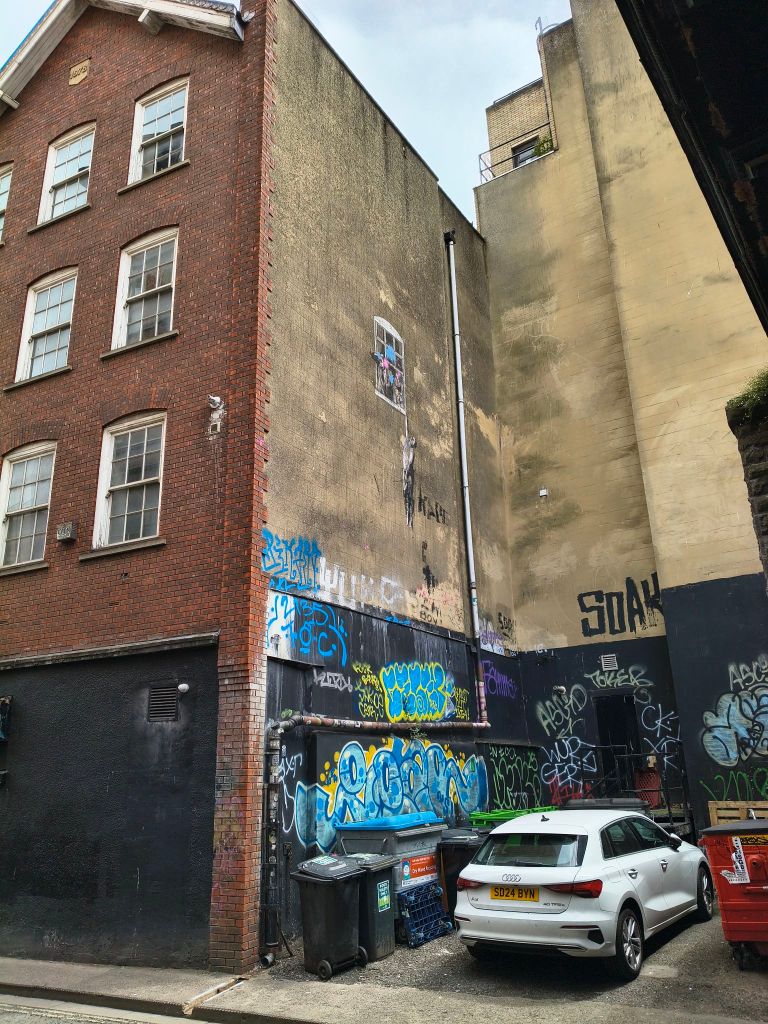
Well Hung Lover appeared in 2006. It’s had a chequered history, mainly at the hands of rival street artists who have defaced it with paintballs in the past. It’s the first legally-recognised piece of street art in the country, and a condition of the lease of the building is that the mural must be maintained. I didn’t get out to see much more of the street art of Bristol, there’s lots more, and more Banksy’s, and it does make a visit here worthwhile.
For me two nights was enough, but there are enough channels of interest – the nautical history, the social history, the dark stuff, the modern vibe – to keep you interested and reward a longer stay in one of the more underrated destinations in the UK.
As you pass through the Gothic fantasy palace that is Temple Meads station, you pass an old friend standing outside the engine shed that formed his original station.
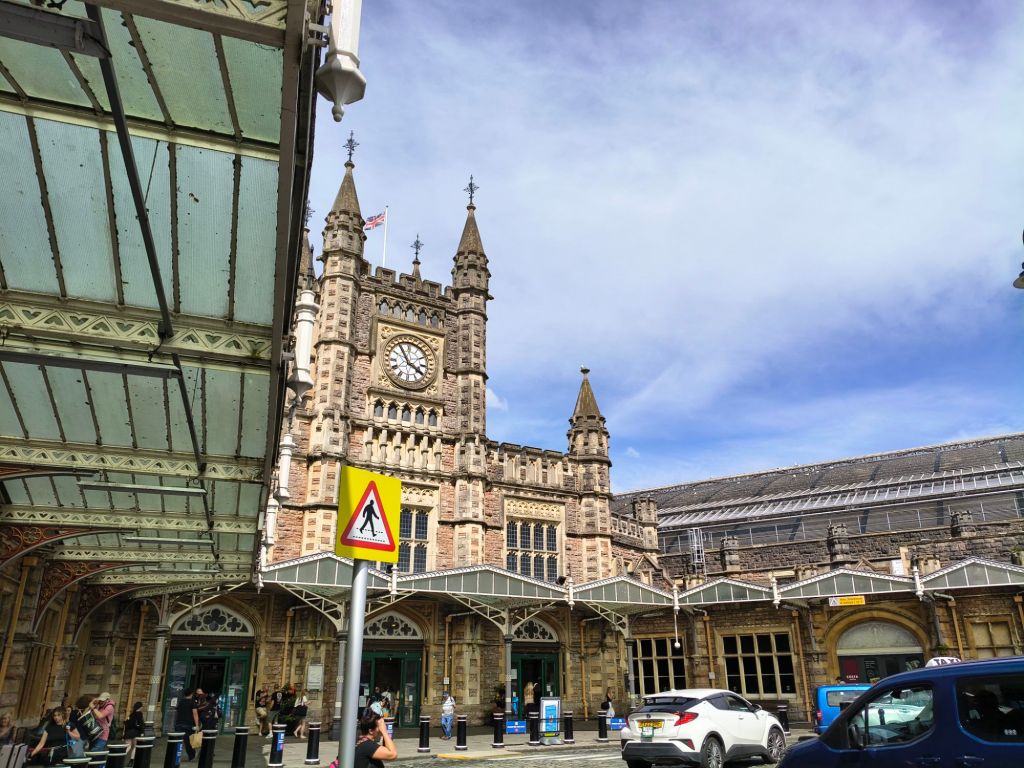
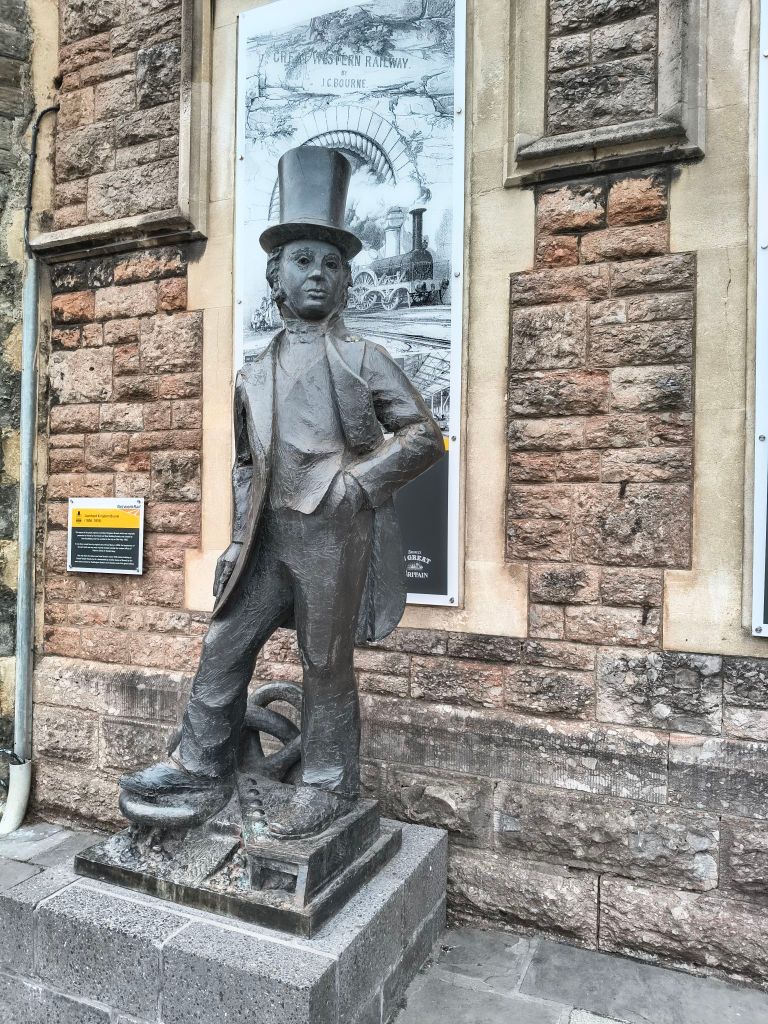
Isambard Kingdom Brunel, engineering icon, visionary, a man who did as much as anyone to create the Bristol of today.
I don’t think this statue is coming down anytime soon.


 orwellianTwo
Leave a comment