After four pleasant, if slightly pitching and rolling, hours, the ferry from Newhaven eventually glides into the harbour at Dieppe. And most passengers will immediately step on the gas – or in many cases the bike pedal – and head on into lovely Normandy to reach Paris and the warmer parts of France. But Dieppe is worth some more of your time if you can spare it; it’s a rather picturesque port town, the nearest beach resort for the Parisians, and a place redolent with poignant 20th-century events that should be better known.
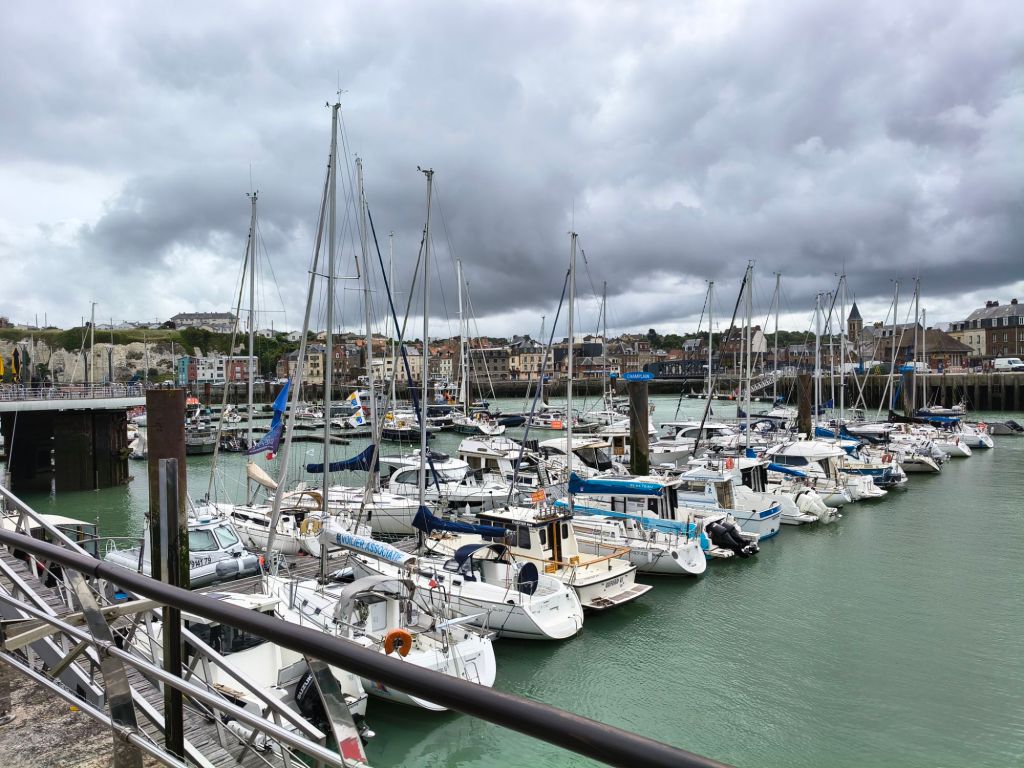
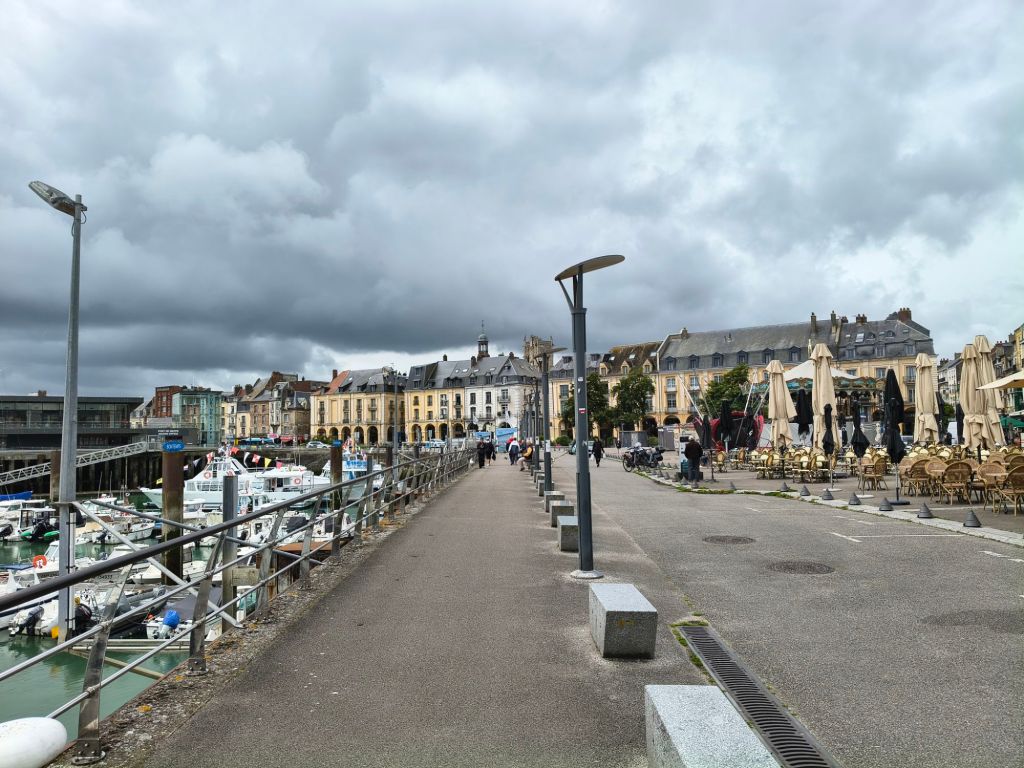
Dieppe sounds “deep”, and so it should; the name derives from the Anglo-Saxon or Norse for, well, “deep”. The river was the deep thing, and the Normans who lived here were descended from Norse-speaking Viking settlers. One day the local Norman duke, William, fancied doing the reverse of my journey across the Channel. I’d booked ahead, but William turned up on spec – it was frankly one in the eye for King Harold. Afterwards the Normans ruled England as well as Normandy, and Dieppe was able to profit from the increased trade between the two.
Dieppe got caught up in the Anglo-French wars and – after a bit of Agincourting and Joan-of-Arcing – Normandy arrived in the Renaissance as a fully paid-up member of France. And it’s in the early 16th century that we meet the redoubtable figure of one Jehan Ango. Born into a rich ship-owning family, Ango got even richer by getting in on the new start-up industry involving European ships sailing over unknown oceans, meeting unknown peoples, and taking everything they had. Under Ango’s patronage sailors from Dieppe reached Brazil, Africa, the Pacific, and the eastern coast of North America, and the port had grown to a town of 40000 people and was quite “cosmopolitan” according to a placard in the main church.
Church? Let me lead you down through the quaint streets (look out for the not-so-quaint e-scooter riders…) and show you the Eglise Saint-Jacques.
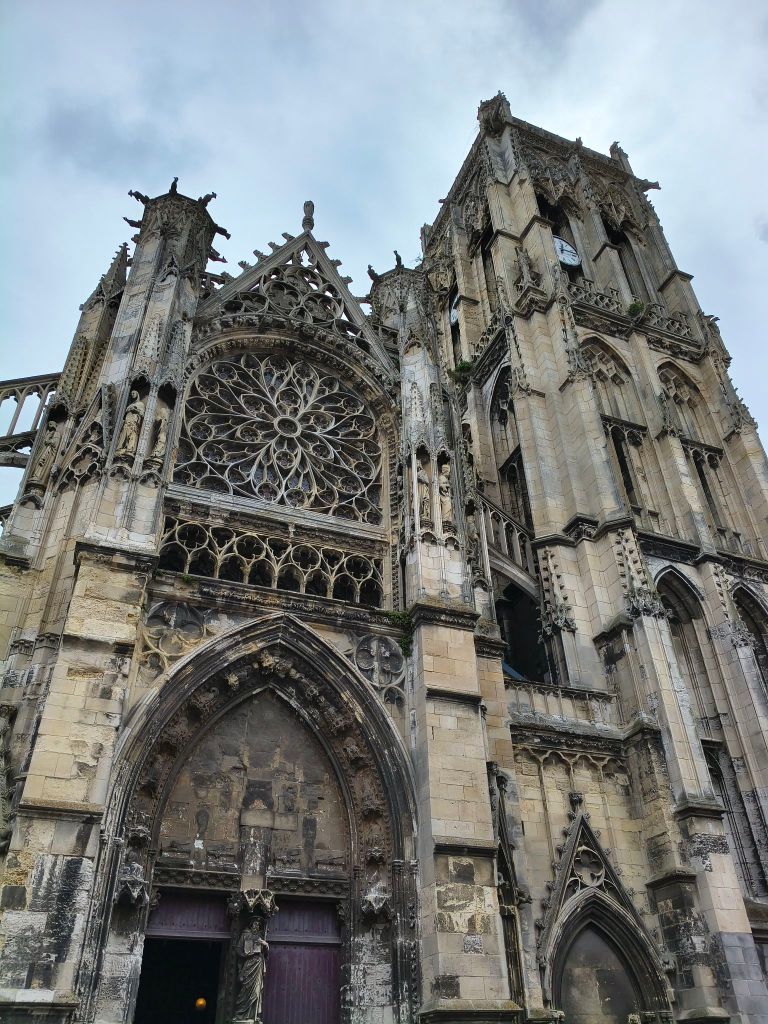
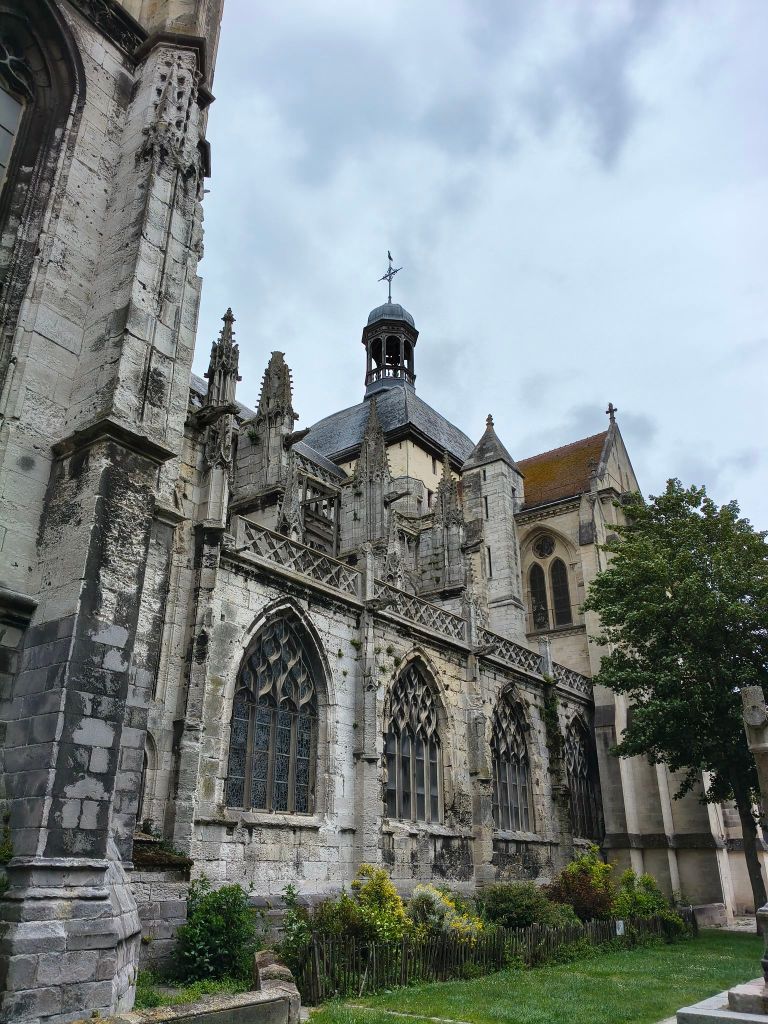
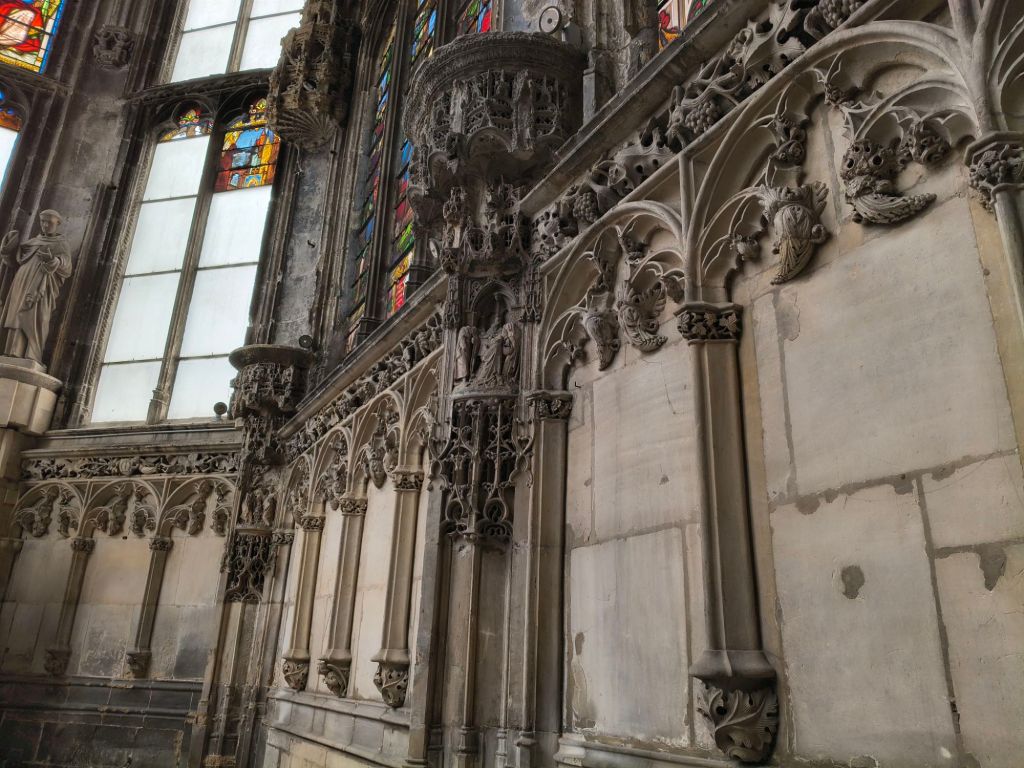
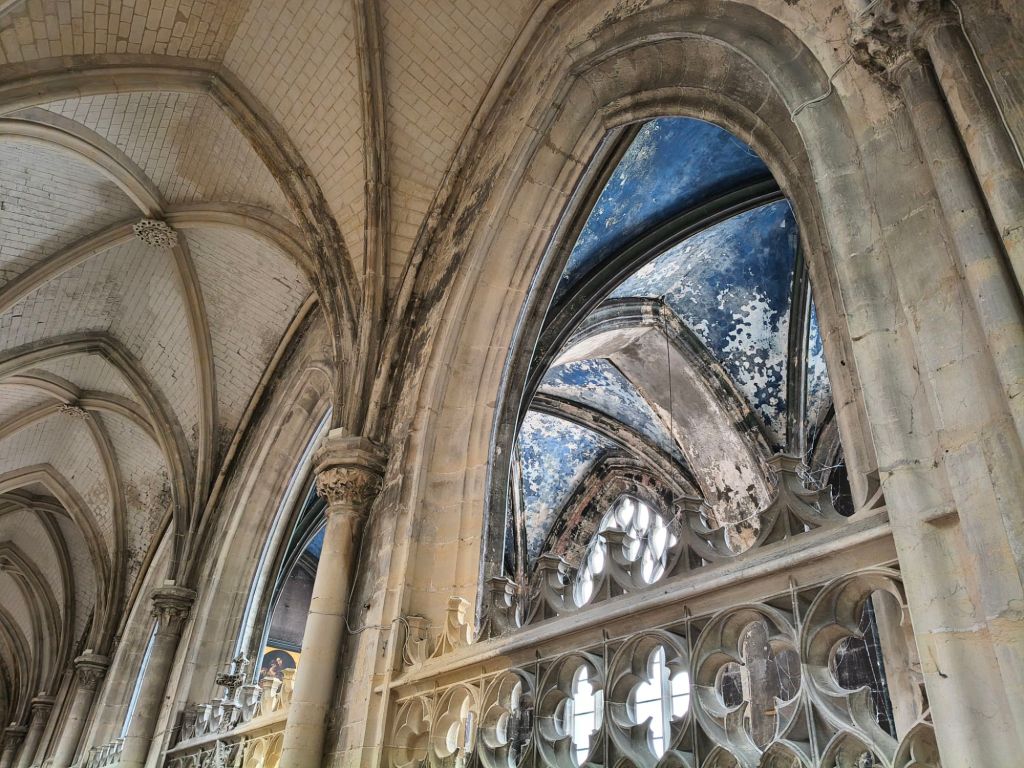
Rebuilt, after a fire, between the 13th and late-14th centuries, the church was dedicated to St James and hence became a fixture on the pilgrim’s route to Compostela in Spain. It looks a little worse-for-wear now, but during Dieppe’s golden years of exploration, the money was there to embellish it, to add a tower and some chapels. And at the heart of the benefaction was our favourite rich Dieppe bloke, Jehan Ango.
The church’s most notable feature is a frieze that Ango had commissioned to commemorate all the great explorations he’d been financing. In honour of all the peoples the explorers were encountering, they charmingly called it the Frieze of Savages.
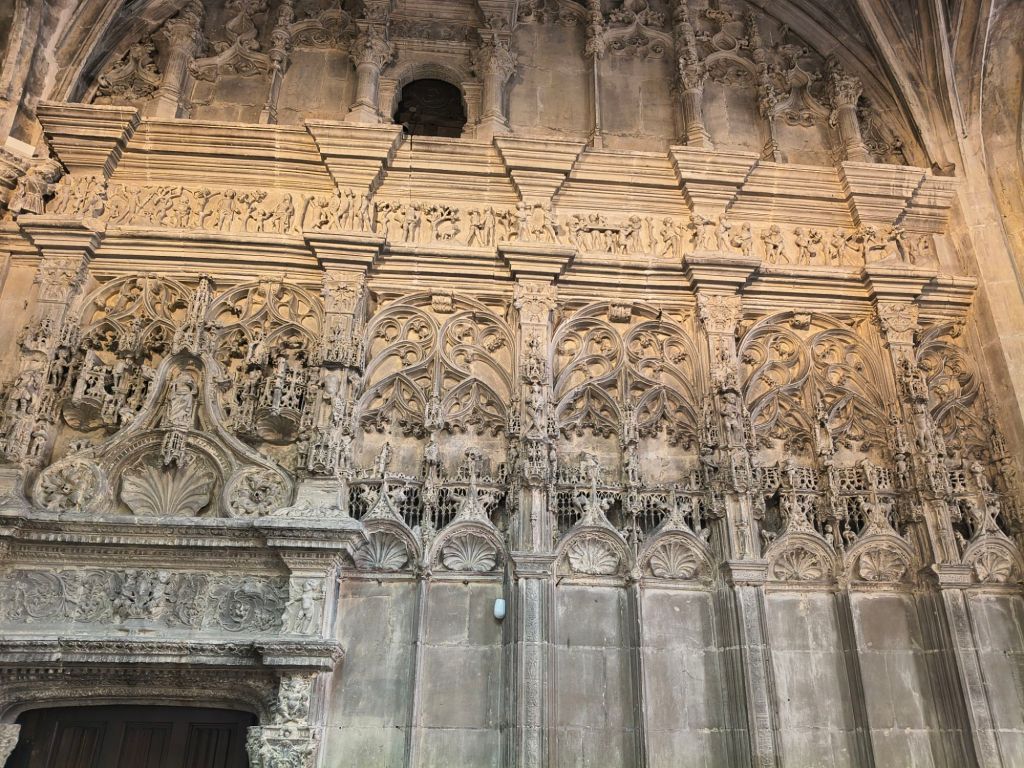
It’s the narrow strip above all the flowery Gothic arches, look closely and you can make out figures representing indigenous people from the Americas, Africa and Asia. They’re not easy to spot, I didn’t have a selfie stick with me, sorry, but there’s a handy placard nearby that goes through it all in French.
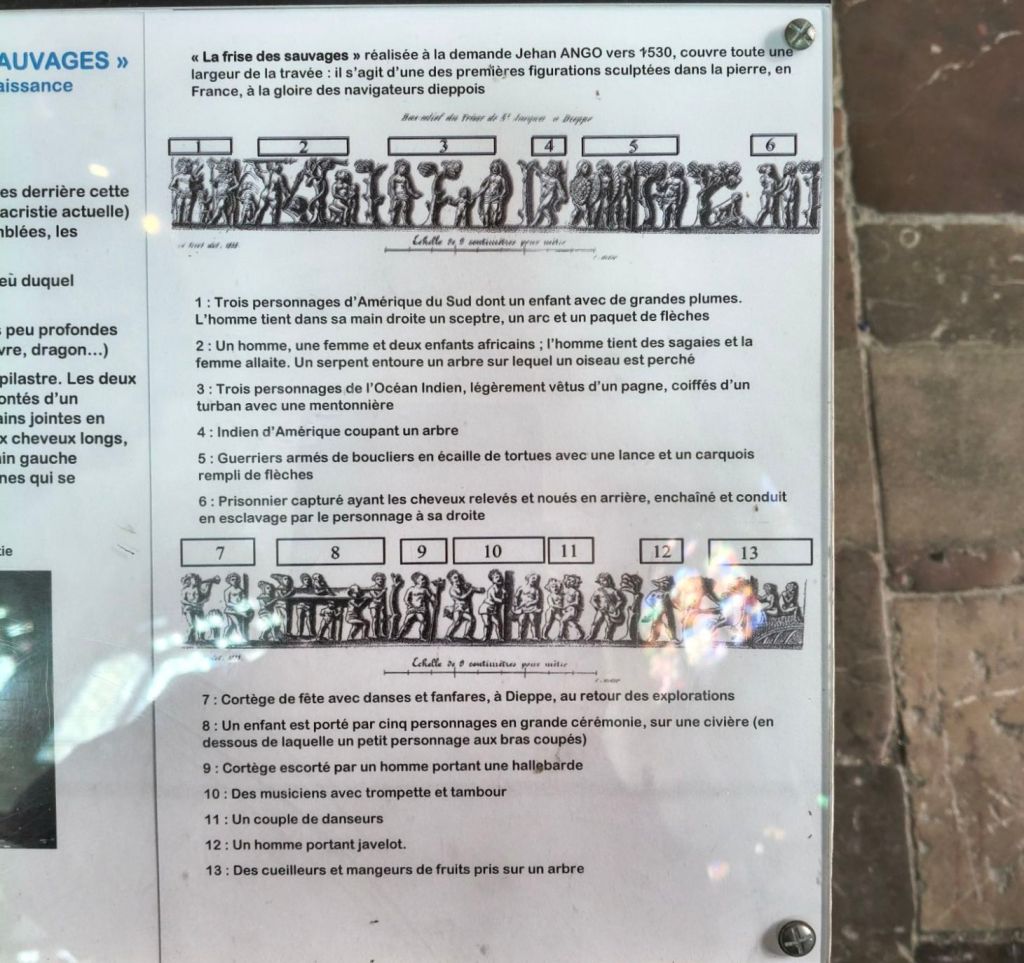
By the way the plain empty stones below the arches do not represent what was left of those folk once the explorers had finished with them, but anyway it’s an impressive piece of work, capturing this pivotal moment at the beginning of the colonial encounter between Europe and the wider world, the lands and islands across the Atlantic and Pacific. Victor Hugo was a fan of the frieze, the well-known hunchback botherer calling it “stone lace”.
Dieppe didn’t, er, “frieze” its voyaging, and sailors from here would be key to the colonialisation of Canada and the French West Indies. On one occasion European ships came to a place, bombarded it, and turned the inhabitants’ wooden houses to smoking firewood. The Europeans were English and Dutch, the year was 1694, and unfortunately for Dieppe, the place was Dieppe. Following the cataclysm of 1694 the town was rebuilt, but it never recaptured the glories of its seafaring past.
But, sadly, history hadn’t forgotten about Dieppe.
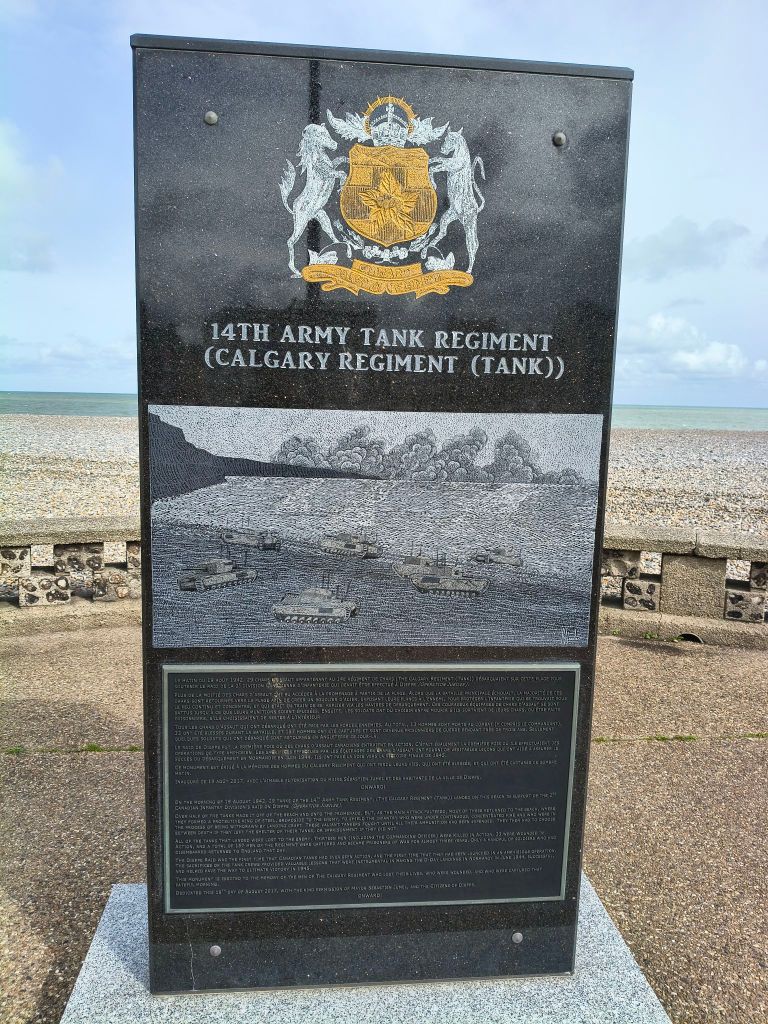
It is the summer of 1942. Normandy, and Dieppe, are under Nazi occupation. As is common along much of the northern French coastline Dieppe is heavily fortified with German coastal batteries and bunkers.
Meanwhile the Allies are in a fix. The Battle of Britain has kept Hitler’s forces constrained to the southern banks of the Channel, but he has now turned his attention to the Soviet Union. Stalin is demanding that his western allies relieve the pressure by attacking the Germans in the west to force them to fight on two fronts. The Americans under Roosevelt are more keen than the British, but in desperate need of some sort of propaganda victory they come up with an interim plan. Why don’t we raid a port in occupied France and bring the guys back that same day? We could use it to see if we could capture and hold a port when it came to the real thing. Plus we could destroy some German defences and radar stations and while we’re at it, the Germans would be forced to drag in some of their air squadrons from the Eastern Front and that would make Stalin happy. Sounds like a plan…
The Allies chose Dieppe for the raid, partly because of its proximity to RAF and naval bases in England. The date: July 1942, eventually moved to 19th August because of the weather. Codename: Operation Jubilee. The outcome…well…
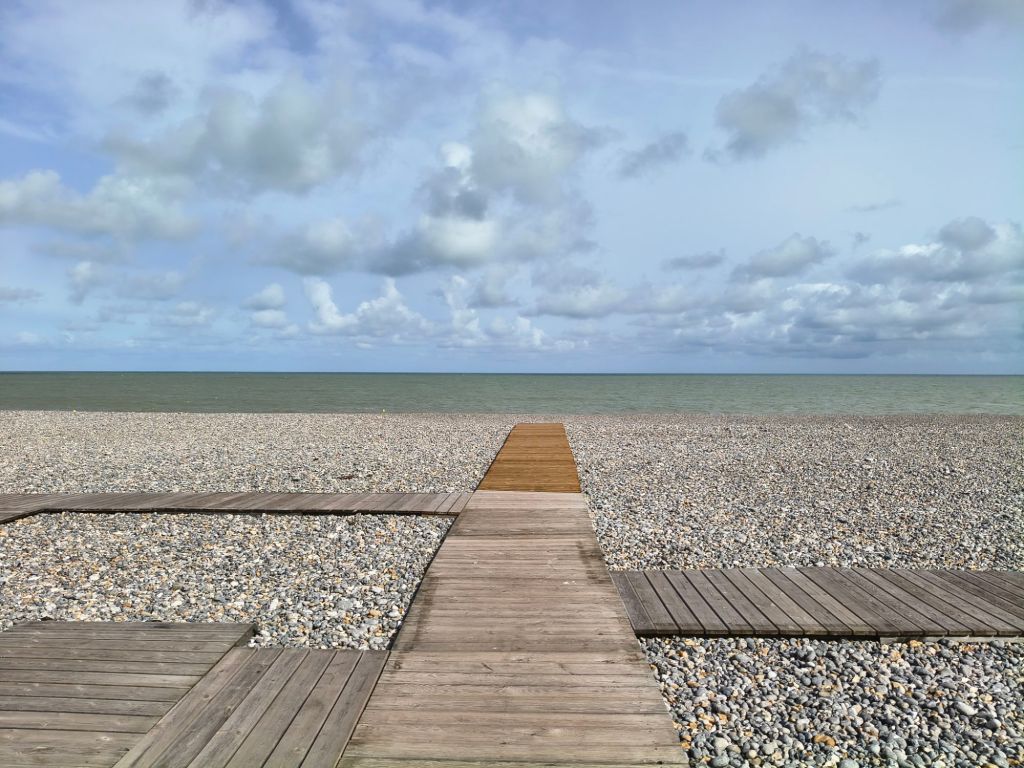
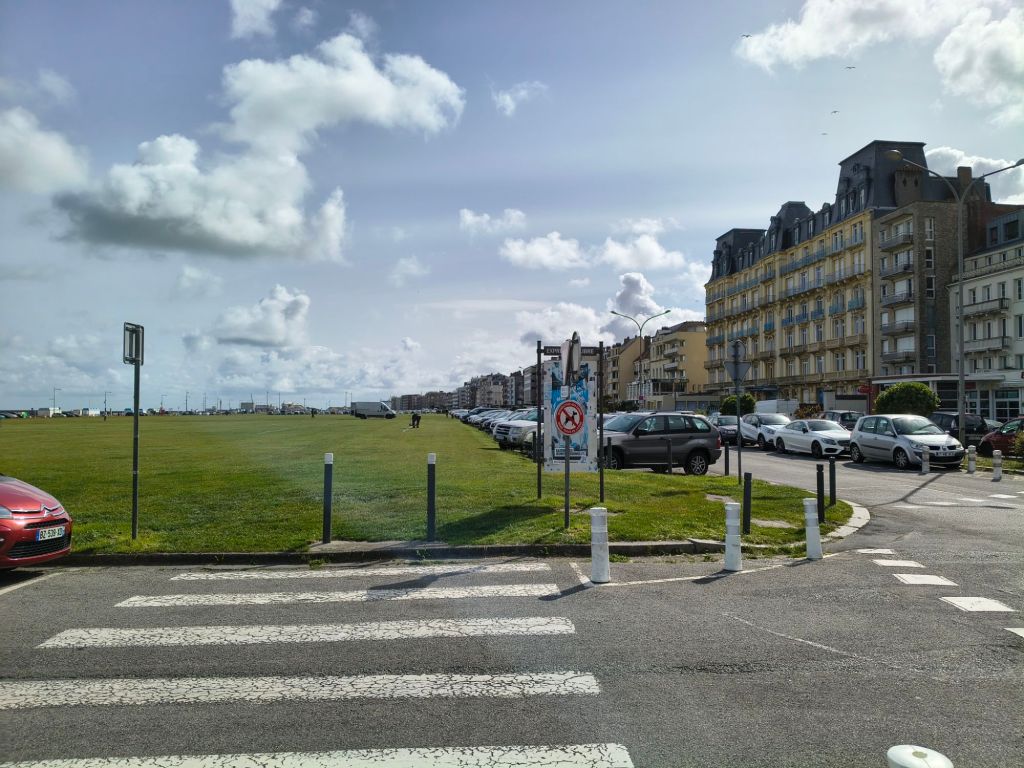
It is later in the day on the 19th August 1942. The raid has been going on now since the early morning, hundreds of amphibious boats have landed – or tried to land – about 6000 mostly Canadian men on this beach in Dieppe and on four points to the east and west of the town. And…it’s been a disaster. The Germans had not been unaware of what was going on and have engaged the Allies across most of the landing sites. The odd objective here and there has been met, but most haven’t. The Luftwaffe has been called up, and above the skies are raging with an air battle on the scale of the Battle of Britain, but the Allies are losing far more planes than the enemy. Some Canadians get across the esplanade and reach the town, but most don’t get that far. Amid the chaos, the only thing is to call a retreat.
And so on this beach that you see above, survivors are battling their way to get inside a corral of tanks that has formed on the pebbly shore. Look at the photo above and try to imagine the horrific sights and sounds of that day in 1942 – explosions, smoke, fire, screams, cries, death…
Over half the 6000 men who landed were either killed, wounded or taken prisoner. The Canadians – some of whom might have been descendants of those settlers from Dieppe – suffered a 68% casualty rate. Was it worth it? Well the Allies knew that good intelligence was going to be key before the big one, and they changed their mind about the importance of capturing ports (but they were already developing the famous floating “Mulberry harbours”). Whether the Allies learnt anything at all from Dieppe that they didn’t learn from other landings is still controversial. How much did the sacrifices at Dieppe pave the road to D-Day? Not sure.
If history didn’t forget about Dieppe, Dieppe hasn’t forgotten the Canadians and the other heroes of the raid. Le Memorial du 19 Aout 1942, a little museum staffed by extremely knowledgeable and enthusiastic young staff, tells the moving story, showcases military memorabilia, and asks the questions about the how and the why. There is a cemetery near the town where many of the Canadians are buried. And along the beach you run into many memorials to the companies and battalions that fought so bravely that day.
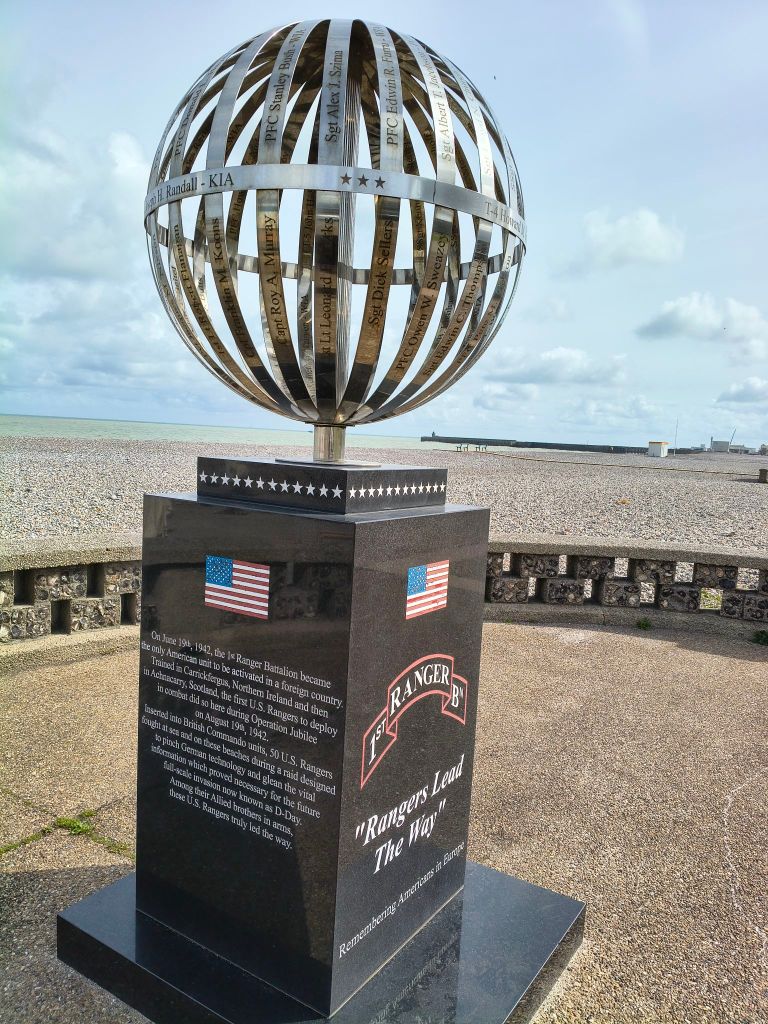
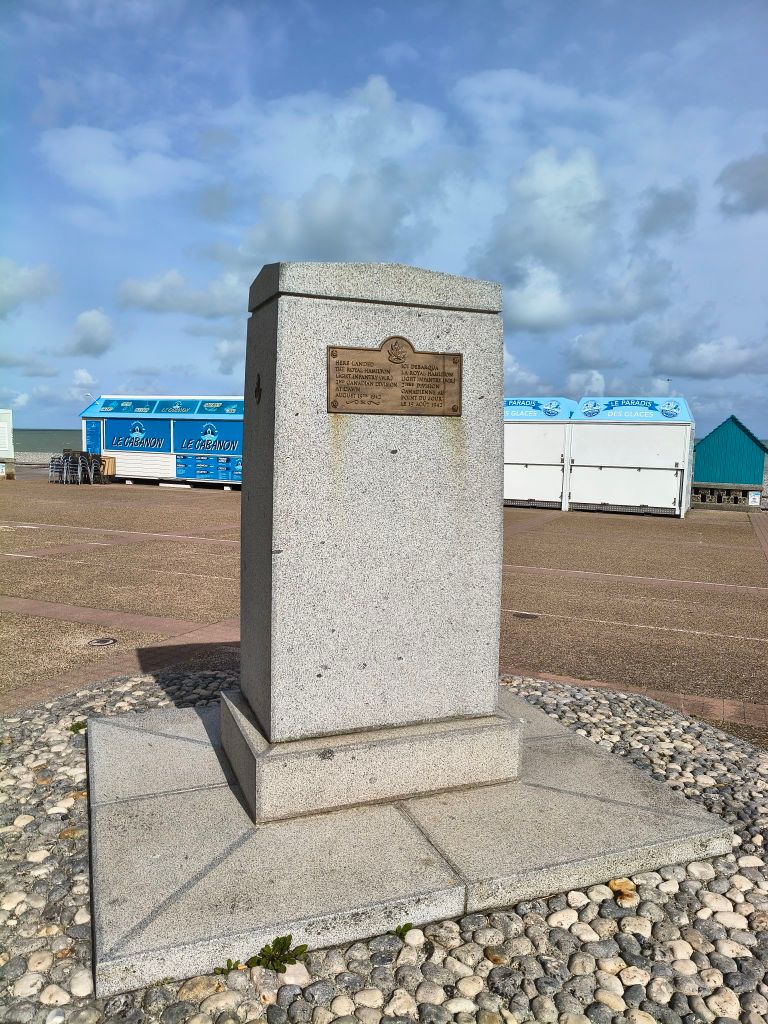
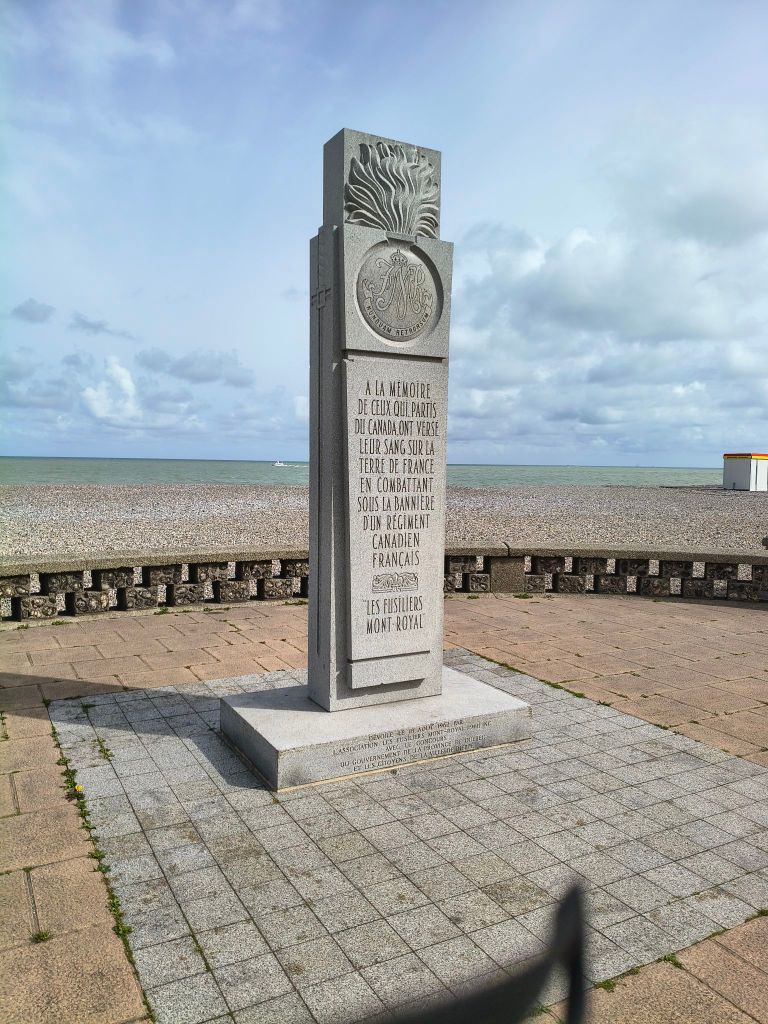
I’ll leave you with the memorial on Red Beach. Each of the five landing sites were given a colour. Red Beach was in the centre of Dieppe, reaching to the harbour wall. 553 men of a Canadian regiment, the Essex Scottish Regiment, stormed up this beach. Only 51 of them made it home that day, and two of those men would succumb to their wounds.
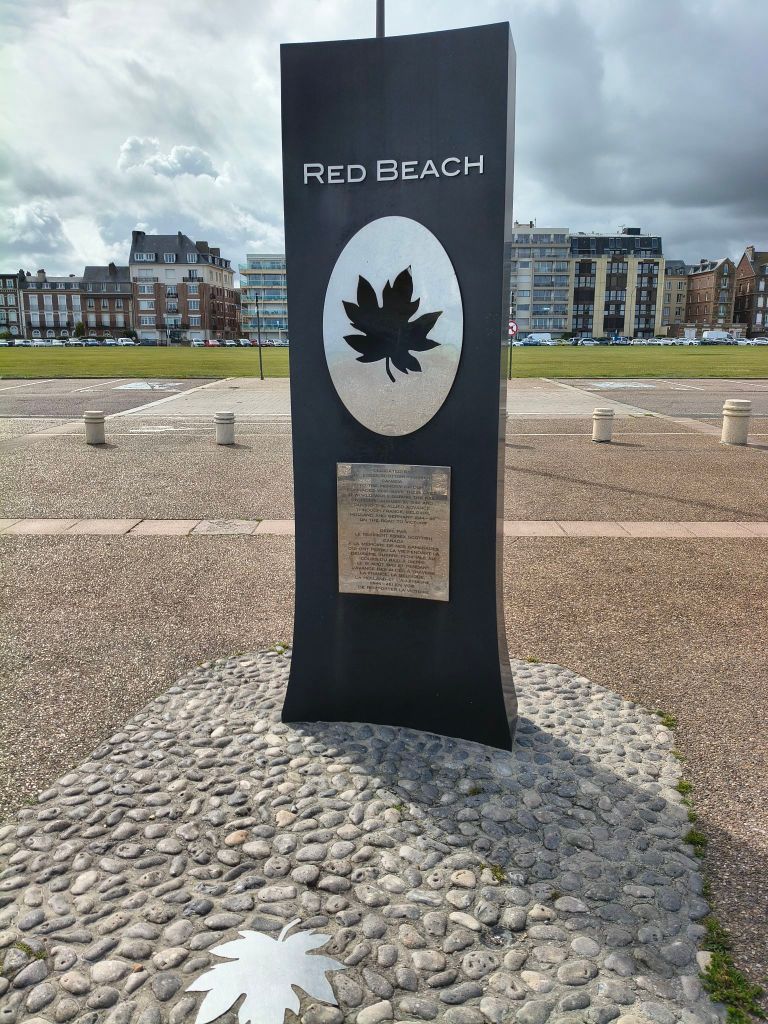
Designed by a Canadian student called Rory O’Connor and dedicated in 2006, the memorial has a maple leaf cut-away in the plinth and an inlay in the ground. At 1pm every 19th August, the moment the Dieppe Raid was called off, the cut-away focusses a beam of sunlight onto the silver leaf, illuminating it.
It was chilly in Dieppe when I took the photos and, later on, the clouds rolled in. But I hope it will be bright enough on the 19th August for the leaf to once again shine, and remind us of what it took to defeat the darkness of fascism. The same dark clouds are engulfing us again. The world needs to find a light to lead the way home.
 orwellianTwo
Leave a comment