The last time I was in Brighton was in the summer of 2021. COVID restrictions were easing as vaccine coverage steadily improved across the nation, but the virus was still prevalent enough to make foreign travel pretty tricky. I had intended to therefore take a short break in York, and was all set to leave the house when I checked the train times – and found that things were still so tricky that every train out of London seemed to be fully reserved. Fortunately most trains to the south coast allow you to turn up on spec, and with the weather hotting up that July weekend I ripped up my plans, and headed for Brighton instead. It was that sort of time.
That was a glorious weekend, sunny and glorious enough to encourage a wander up and down the famous Seven Sisters cliffs between Seaford and Eastbourne, and even a fascinating afternoon in the small port of Newhaven, as well as wandering around the lovely seafront and quirky back streets of Brighton, one of the most vibrant cities in the country.
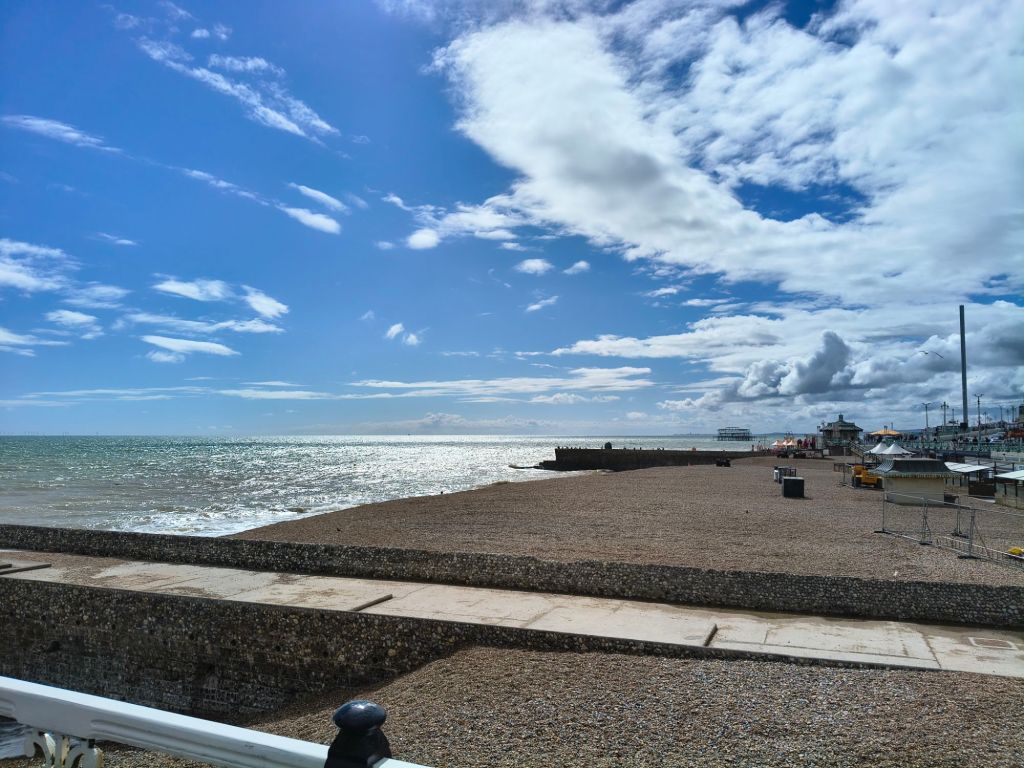
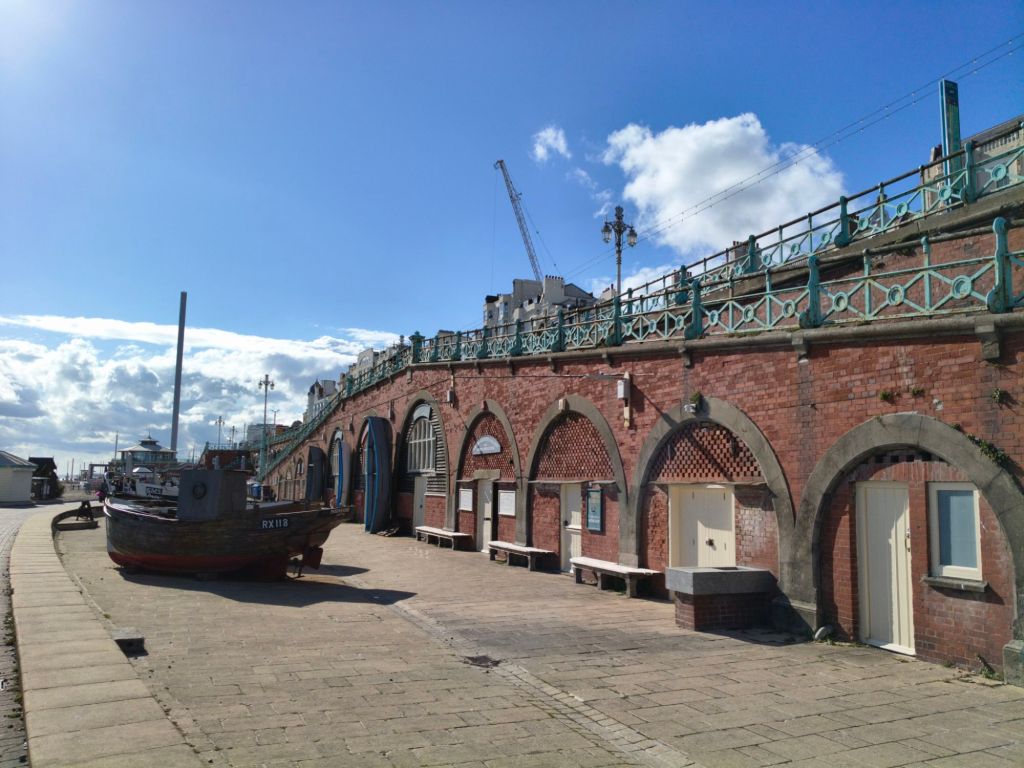
I’d always wanted to come back, and suddenly the opportunity has presented itself this unusually chilly June. Well at least the blustery, temperamental conditions have kept away the crowds that were there five years ago, plus the fact these are workdays. But despite it all the sun is managing to break through the stormy clouds, and it still looks like summer if you’ve wrapped up well enough.
And when it looks like summer here, it looks glorious.
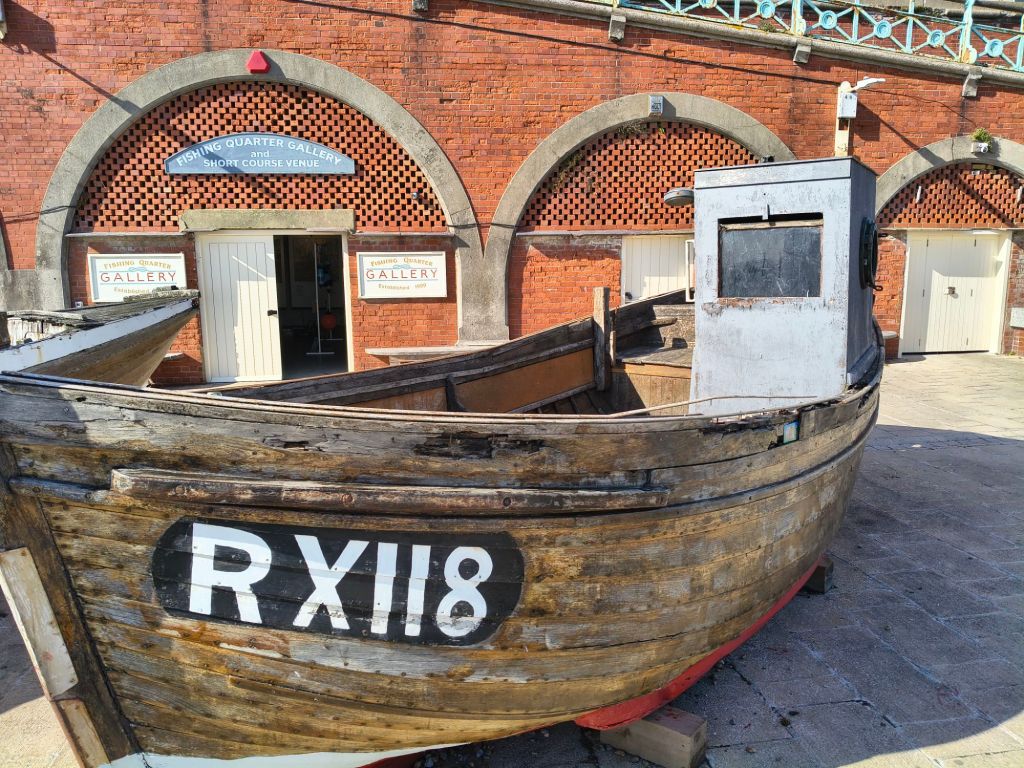
Around the first half of the 18th century, Brighton was a fishing town down on its luck. Fishing was mackerel fishing, and it was profitable enough to support a growing town as it started to boom from the 16th century onwards. But that appears to have been partly because the French had stopped attacking it for a bit. They came back for more during the 17th century, and the town was also subject to devastating storms of nature (I told you it was blustery).
As the town’s population halved to 2000 by the 18th century, along came one Dr Richard Russell, of nearby Lewes. Dr Russell believed that seawater could cure many illnesses, just by bathing in it – and drinking it. He wrote a book about it. And a lot of the well-to-do of the time believed him. Dr Russell moved to Brighton (which was well-stocked with seawater) just as transport connections were improving and other docs such as Dr Mahomed from India were cottoning on to the growing popularity of the place for the not-so-feeling-so-well-to-do (Dr Mahomed opened a steam bath here).
One keen fan of the health fads was a chap called George. That’ll be George, Prince of Wales if you please, subsequently Prince Regent, then more subsequently George IV. Now George was a bit of a good-time guy who wasn’t too careful with his money – sorry, with our money. Having rented out a farmhouse in the centre of town for whenever he wanted to come down here and live it up – sorry, I mean take the waters for his gout – he decided to really go to town and have it rebuilt in the most flashy Orientalist fantasy you could imagine.
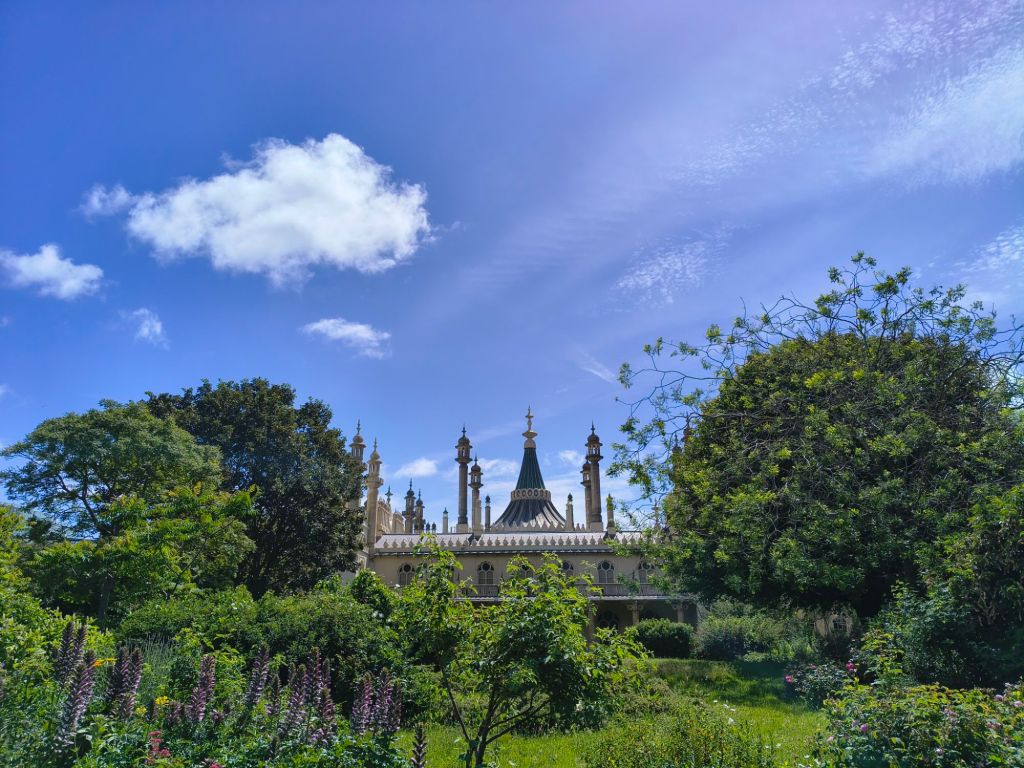
By the early 1820s, after about £145 million pounds (in modern money) had been spent by the taxpayer, John Nash had completed the Royal Pavilion.
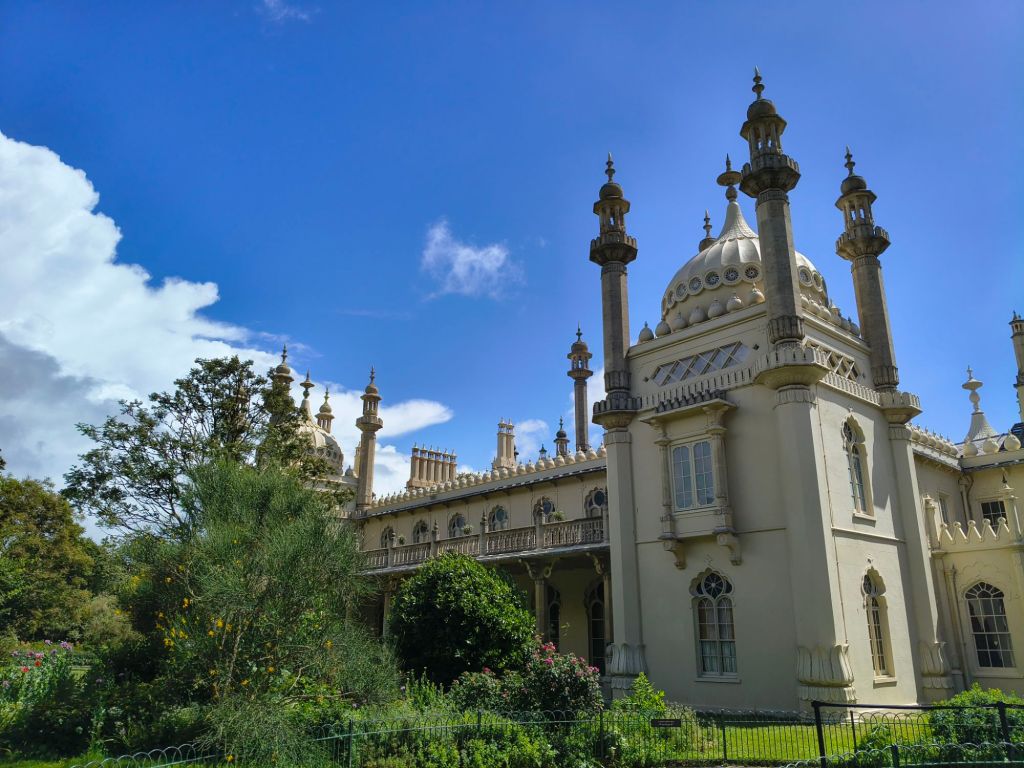
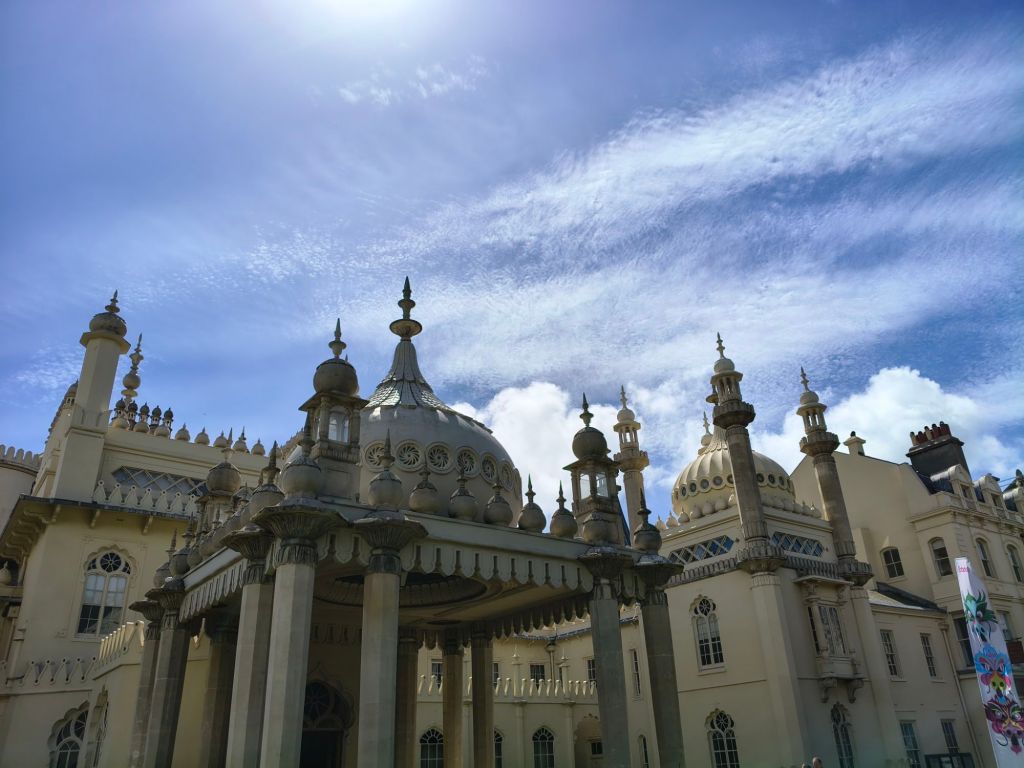
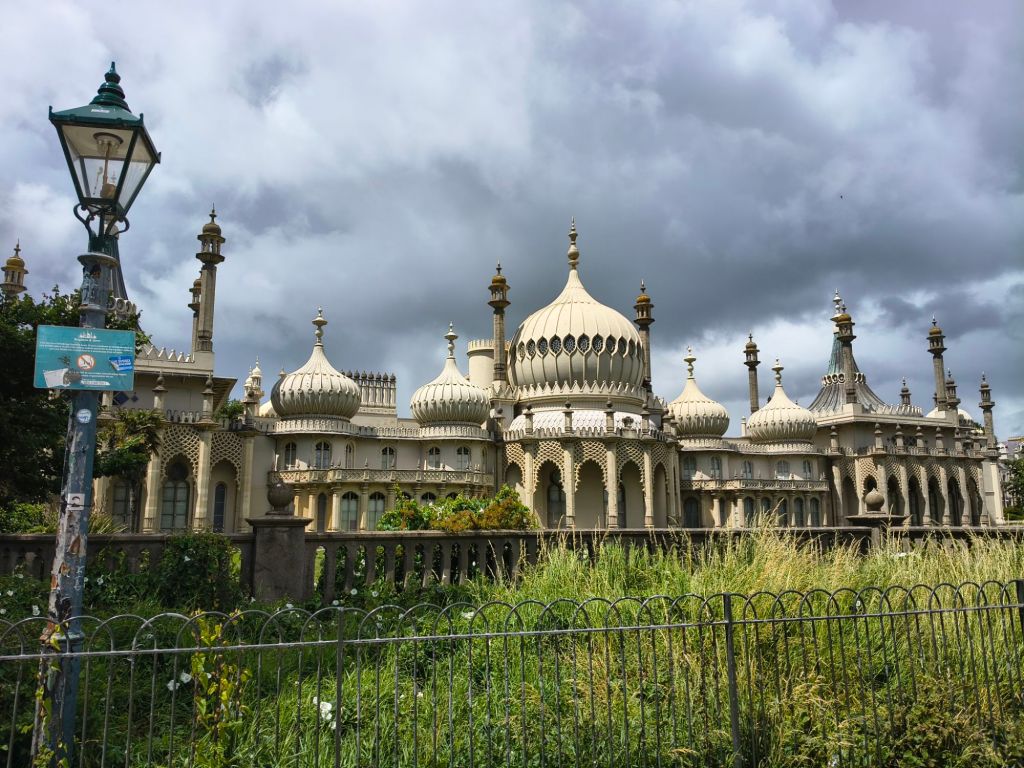
A royal palace that is like no other in the country, it was built as a fantasy riff on Indian Mughal architecture. At least that’s what the exterior tells you. Go inside and it all turns very, very Chinese.
And very, very, over-the-top.
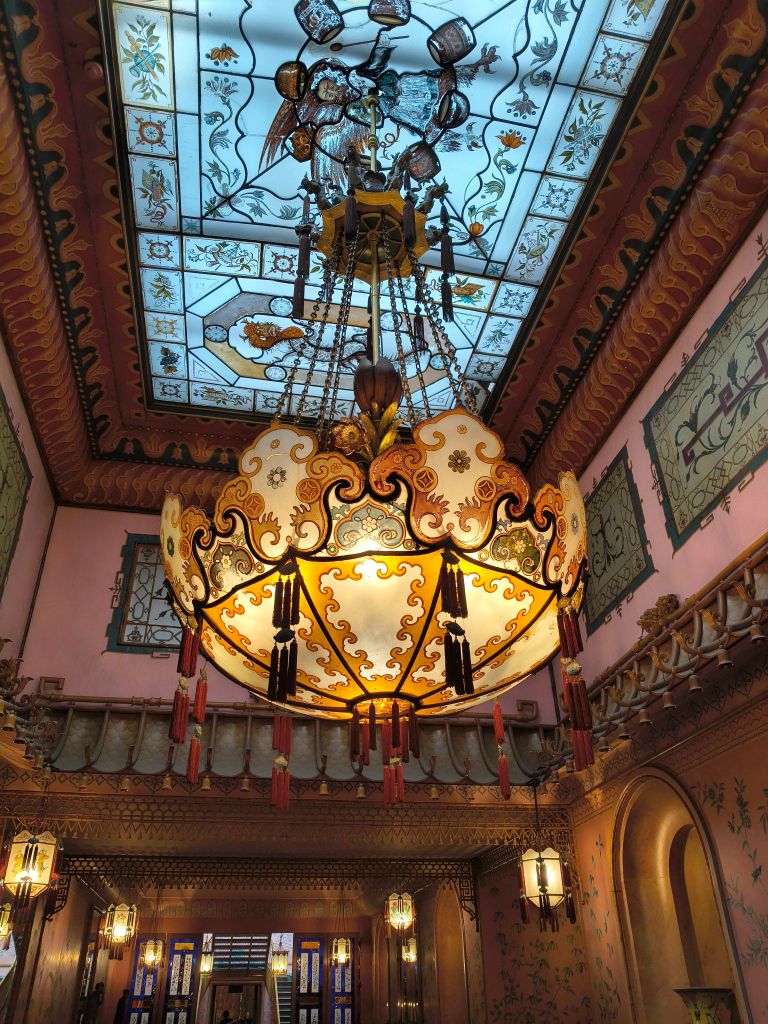
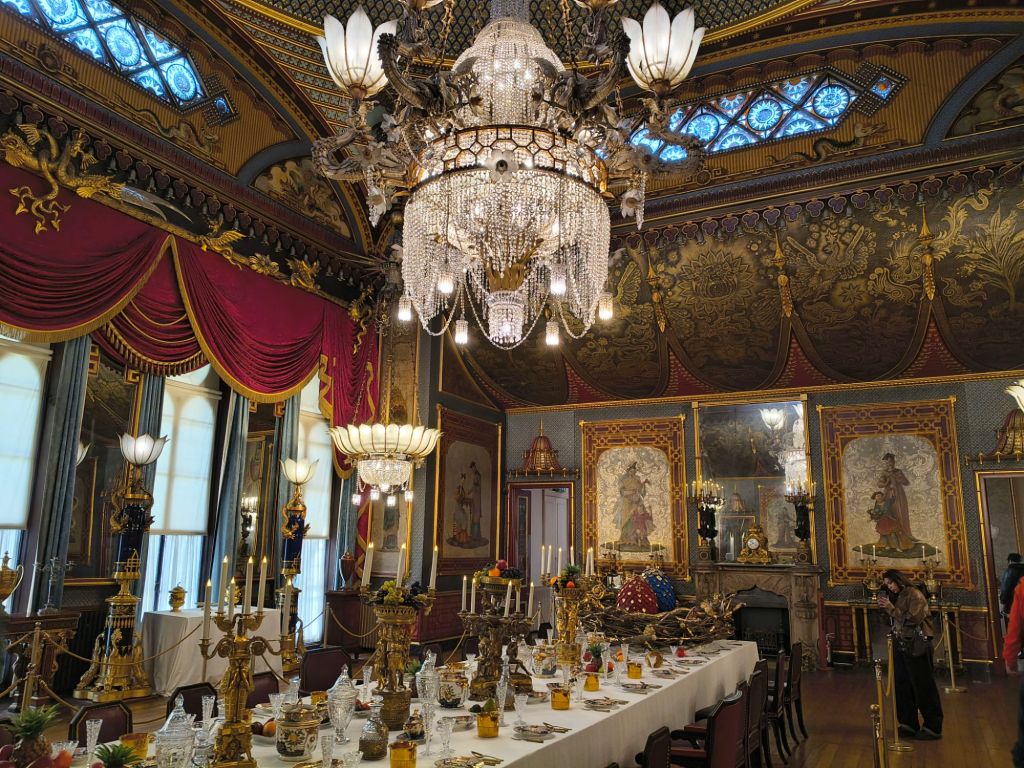
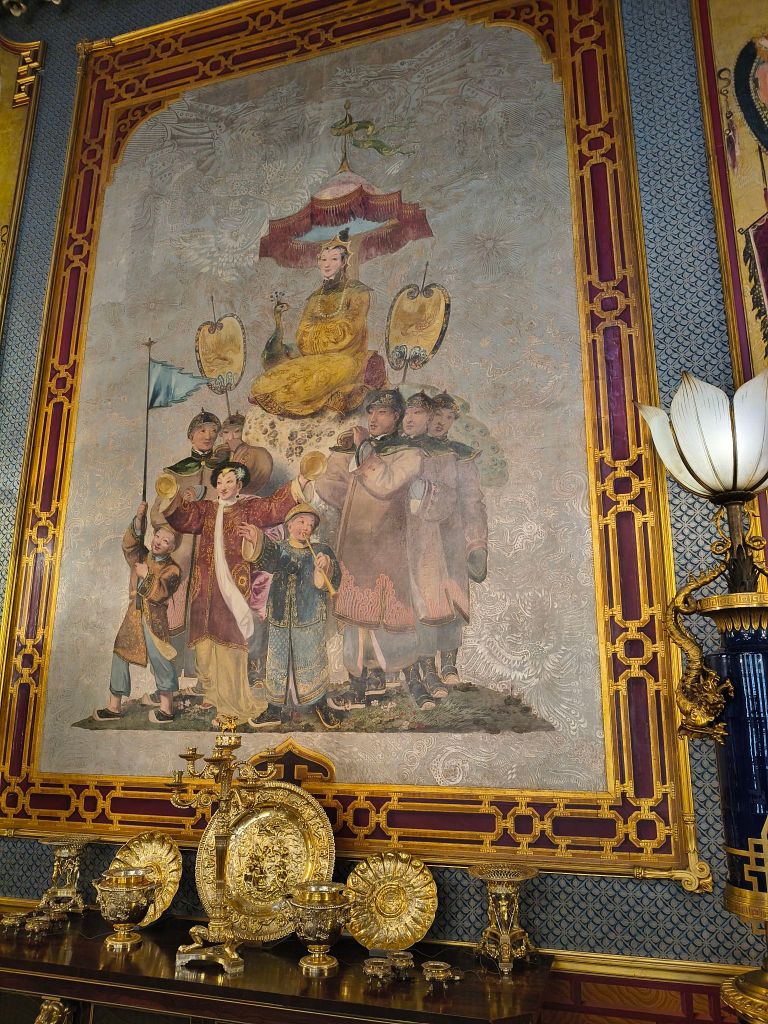
Lotuses. Fake bamboo fittings, amongst the royal red and gold, the glittering and the dazzling. One-tonne chandeliers above the royal banqueting table. 18th-century chinoserie at its most eye-wateringly extravagant – and expensive.
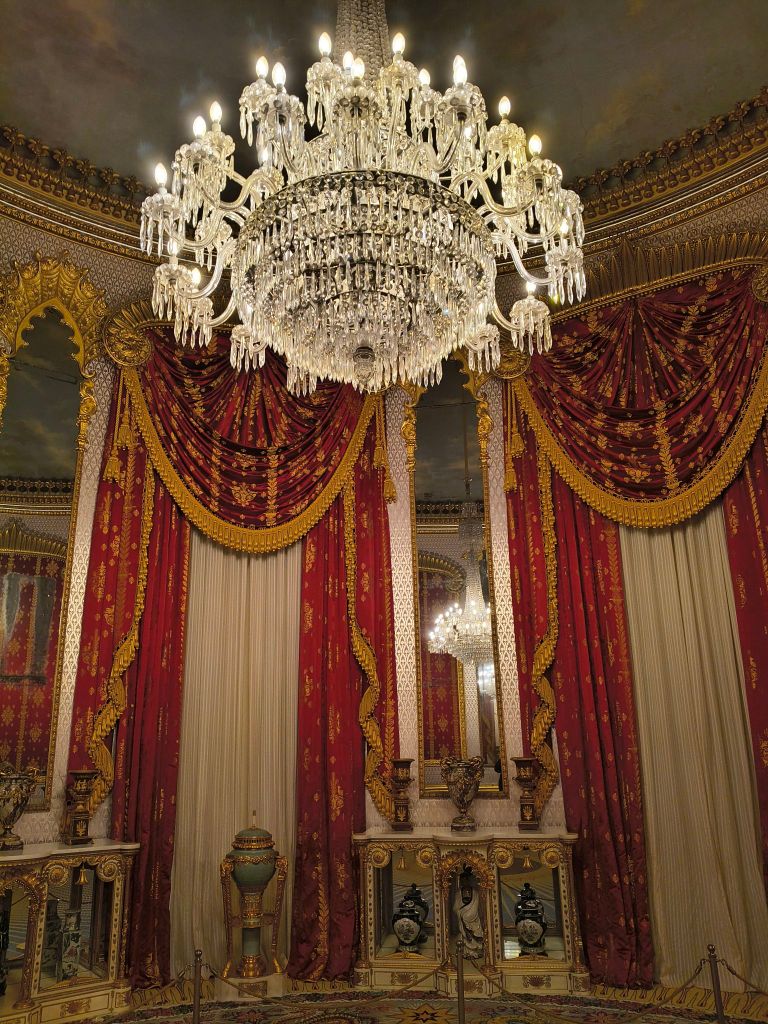
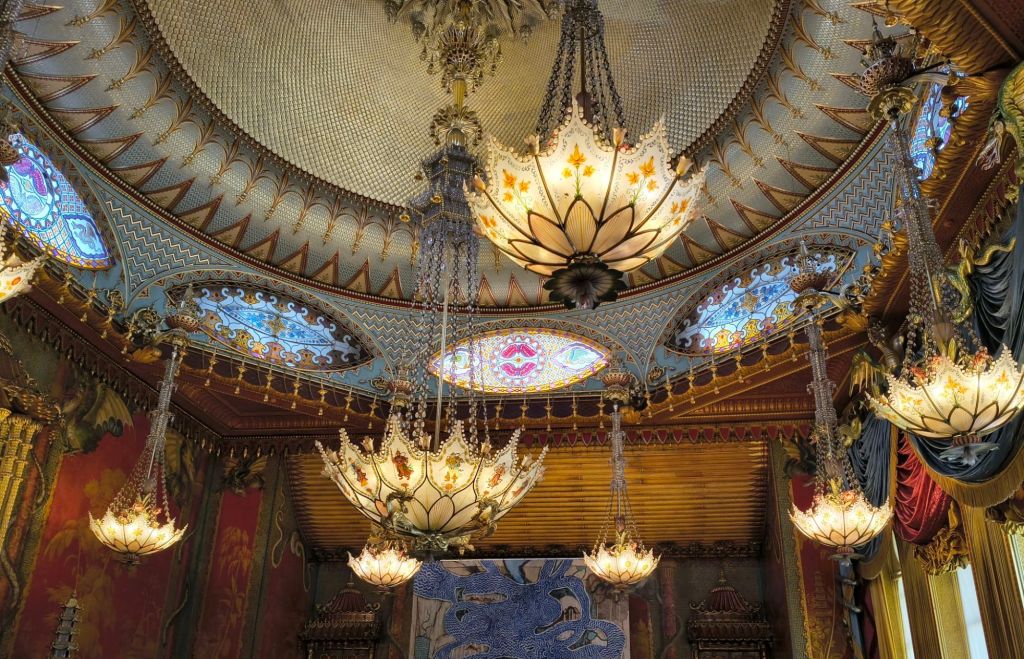
Oh, and there’s dragons. I nearly forgot the dragons. They’ve got dragons everywhere. Chandeliers, ceilings, walls, there’s Chinese dragons everywhere, flying about on their big old elaborate wings. All the dragons.
Good point, well spotted. Chinese dragons don’t have wings. European dragons do, not Chinese ones.
Although you feel that you’ve stepped from Europe into Asia, remember that virtually the whole palace was decorated by European artists and craftsmen, people who’d never seen a proper Chinese dragon and assumed they’d have wings like their scaly Celtic or Greek friends. Yes, the whole place is a fake, a grand folly, and that’s the sort of thing I think Georgie boy, the dissolute, debt-ridden Playa Of Wales would absolutely be there for. A later exhibit in the palace tour details how much maintenance would be required down the ages to keep the rather shoddy, leaky, dry-rot-ridden place in one piece.
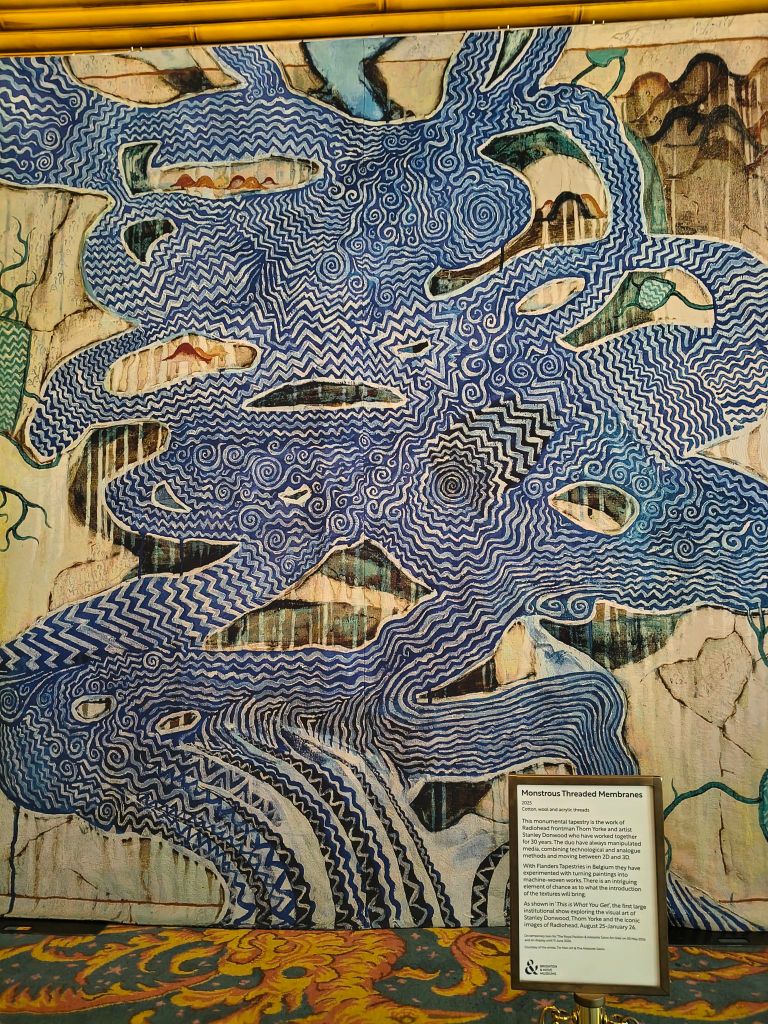
Indeed not only is the whole interior something of a pastiche, it’s all been rather reassembled and restored down those same ages. When Victoria ascended to the throne in 1837, you can imagine that such gaudiness would have rather affronted the original Victorian. Well it wasn’t so much the Brighton Pavilion she objected to as much as Brighton itself. Privacy was a problem, and after she and Prince Albert ran across a group of likely lads who tried to stare up into her bonnet one day, that was it and she upped sticks. But not before stripping all the decorations and shipping them up to Buckingham Palace (some of it has come back). The pavilion was sold to the town council, who still own it, making it the only royal palace in the country that’s owned by the people and not the crown.
And so it stood, for decade after decade, a gloriously fake extravaganza of fantasy Asia, right in the centre of Brighton
And then the real Asia turned up in 1914.
And the nonsense took a back seat.
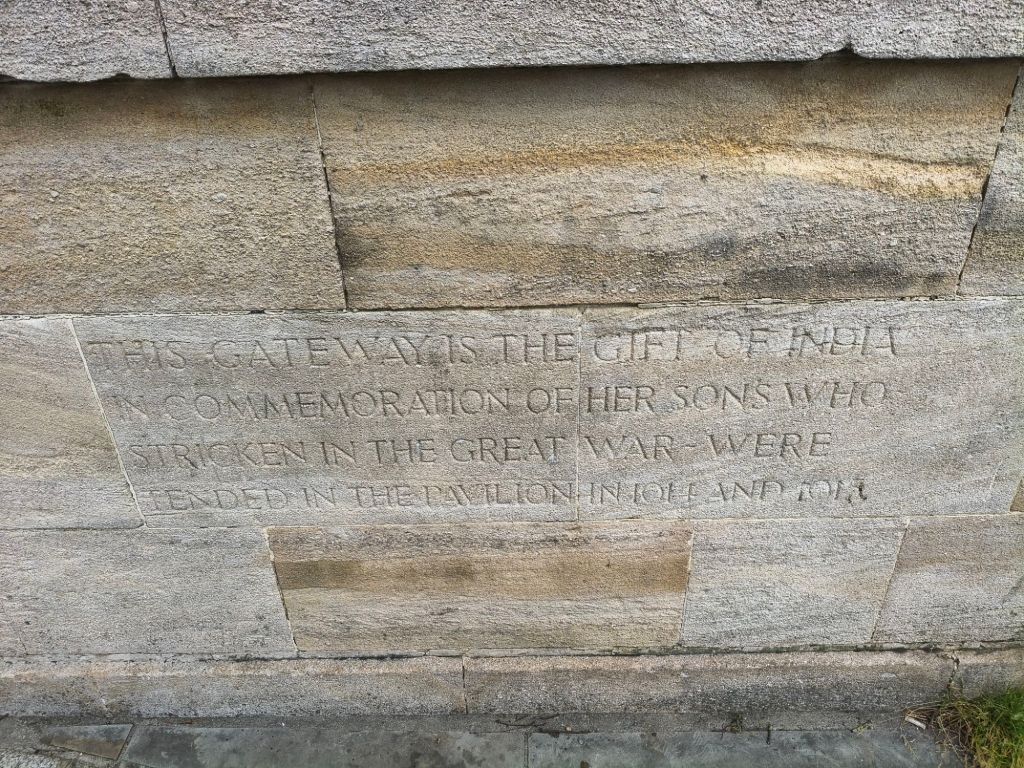
As the First World War broke out and wore on through the late months of 1914, Britain found itself short of soldiers to hold off the German advance through Belgium and towards Northern France. That meant Britain had to turn to its Empire, and around 140000 men of the Indian Army would serve on the Western Front. These men were trained – and dressed – to keep the borders of their homelands secure (for the empire of course) and here they were, fighting for their imperial masters, in a cold Northern European climate, having swapped imperial police actions for warfare as wholesale industrial slaughter. There were, of course, thousands of casualties, but fortunately just across the Channel the British had a rather Oriental-like property that would make any hospitalised Indian soldier feel right at home…
Over 2000 Indian soldiers were treated in the Royal Pavilion between 1914 and 1916 when the Indian Army was redeployed to Mesopotamia. The old photographs show these men’s beds were laid out in some of the same opulent rooms built for the pleasure of a Prince Regent a century before. And incredibly, only about 30 men lost their lives here.
To their credit, the British took every care to do right by the Indians, from employing British-based Indian doctors as well as British, to ensuring the specific dietary and devotional requirements of Hindu, Muslim and Sikh soldiers were adhered to. Well-meaning intent? Or good PR to offset any protests from the Indian independence movement and counter German propaganda about poor treatment being dished out to Indians? I’ll leave that to yourselves to decide – and for you to maybe read more about this story to make up your mind.
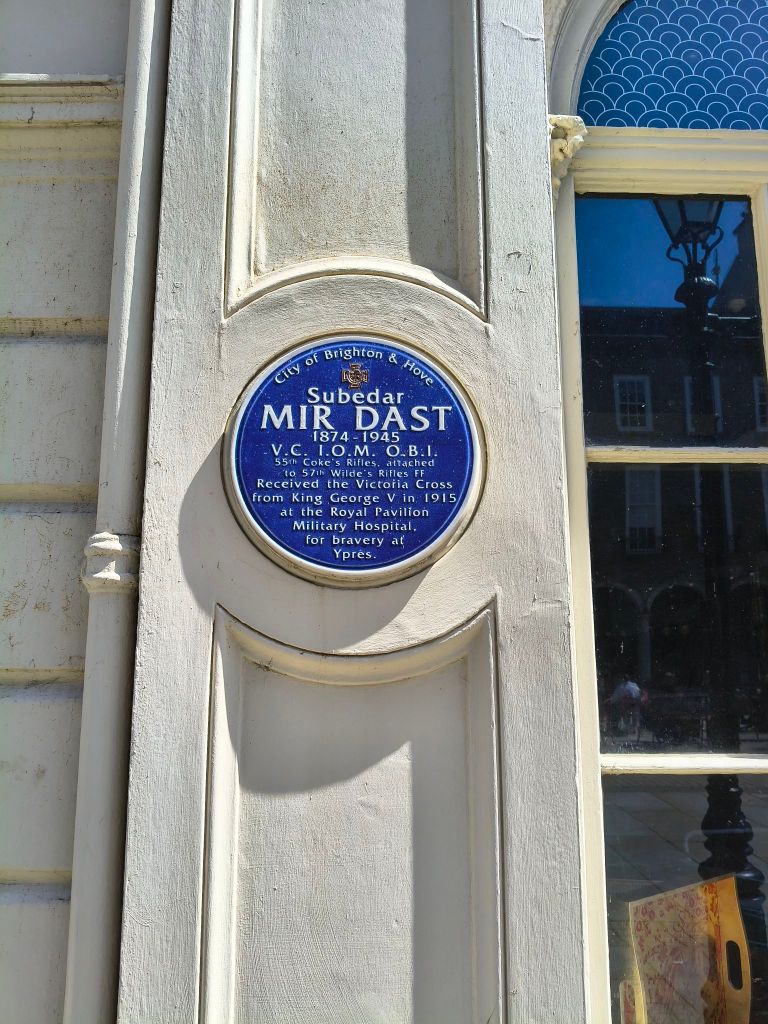
Because in the turbulent, hate-filled days of 2026, this is a story that should be better known.
Where the King goes, the fashionable and the fanciful are bound to follow, and they certainly did follow down to Brighton. And grand hotels such as the, er, Grand, were built on the seafront to cater for them. And where the railway goes, everyone will end up going, the hoi-polloi will end up pushing the posh noses out of joint, and eventually the Mods and the Rockers will end up pushing each other’s noses out of joint. (Literally.)
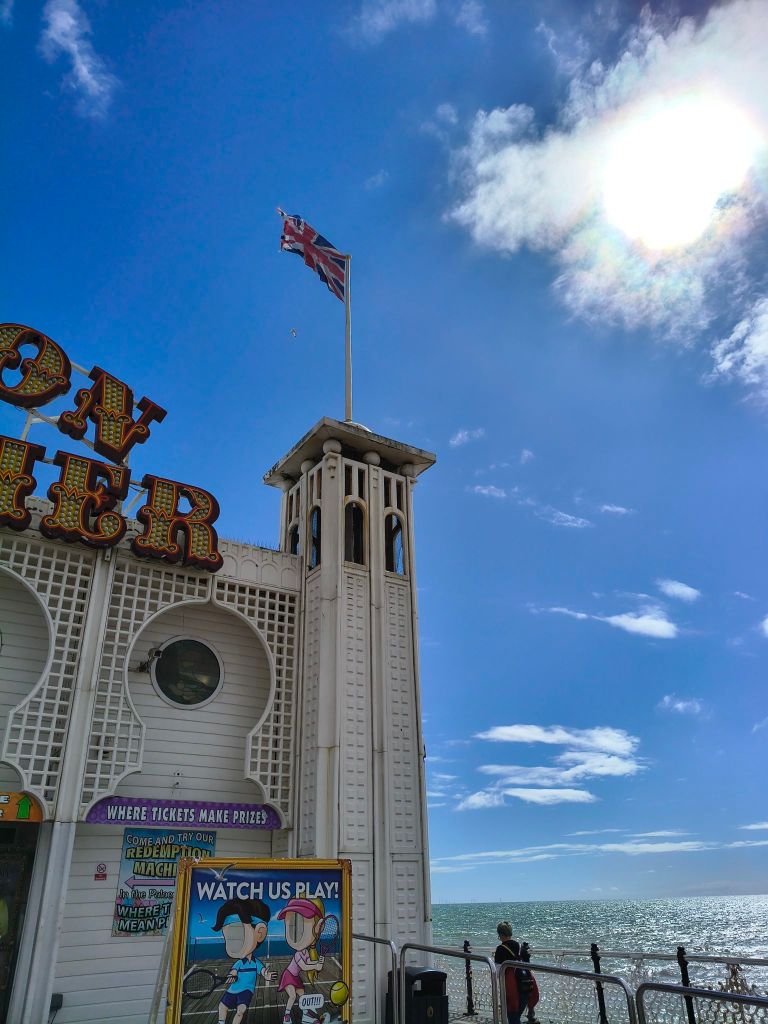
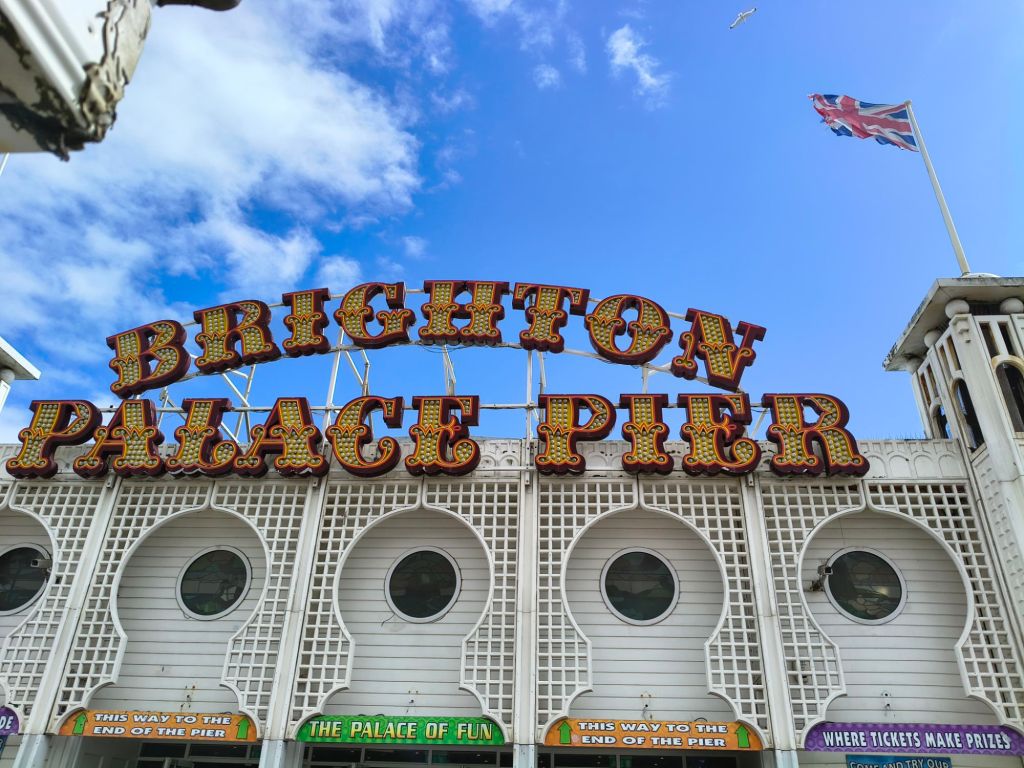
At one time in the Victorian period there were three piers along Brighton beach. Only one, the Palace Pier, survives.
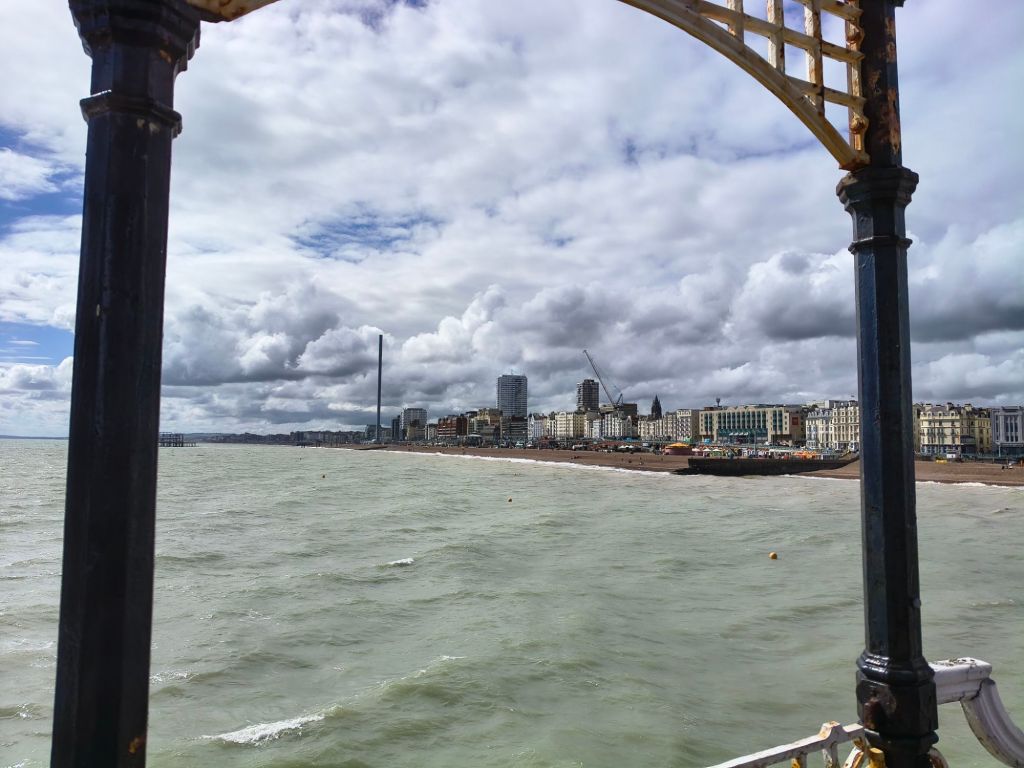
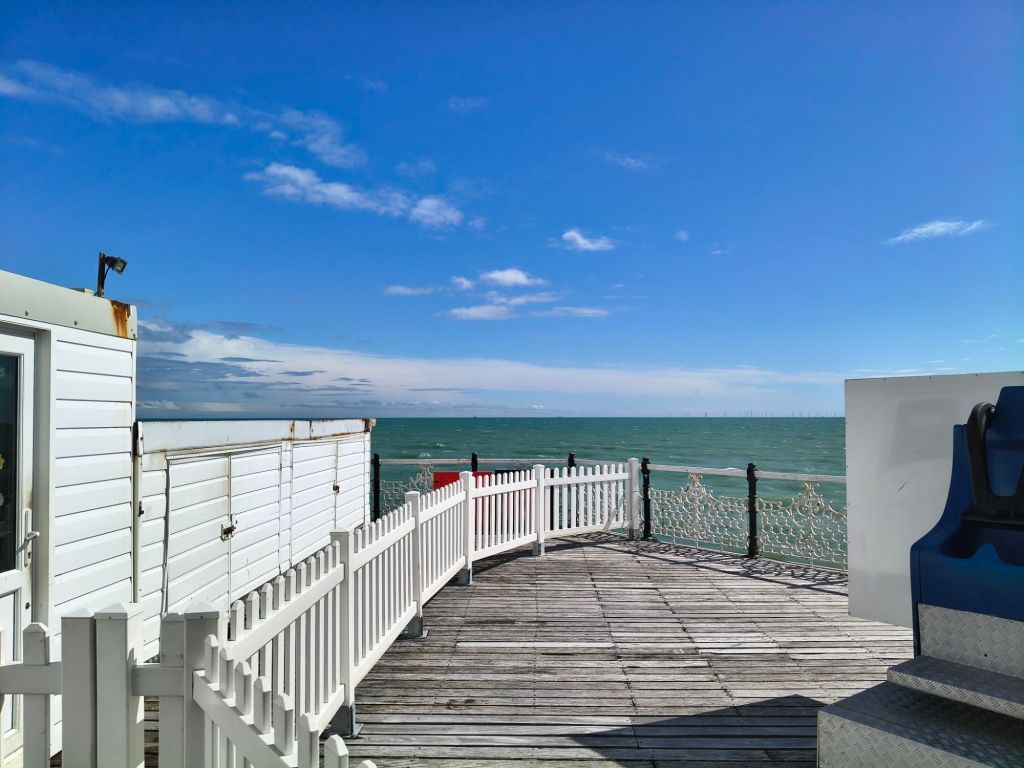
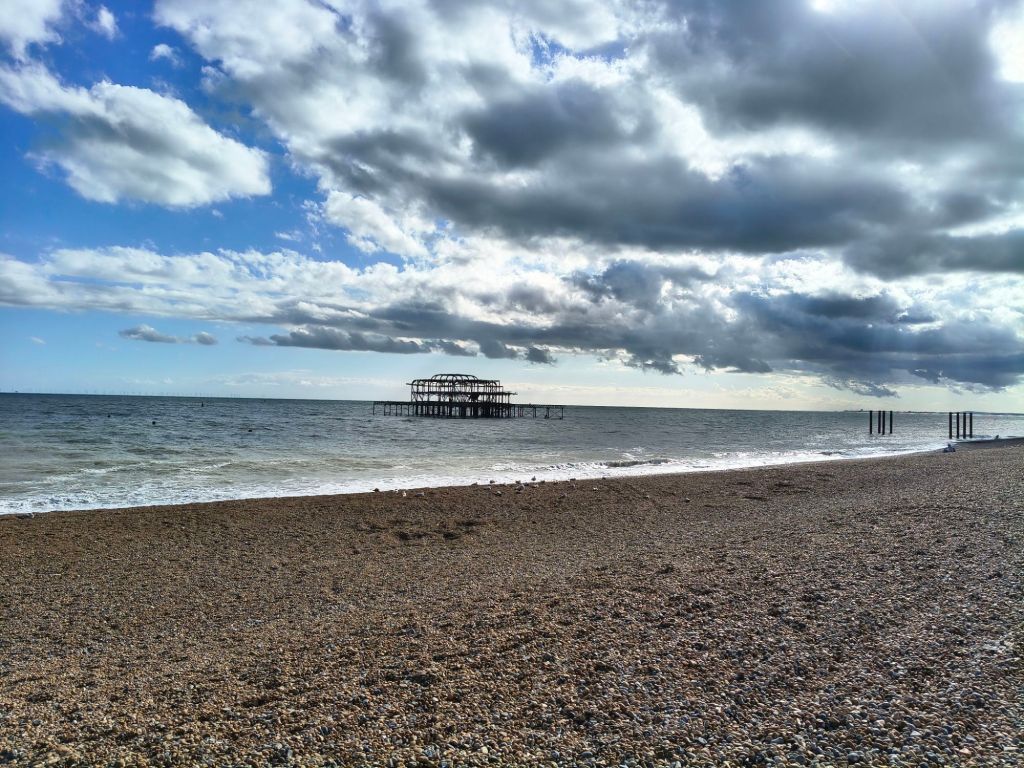
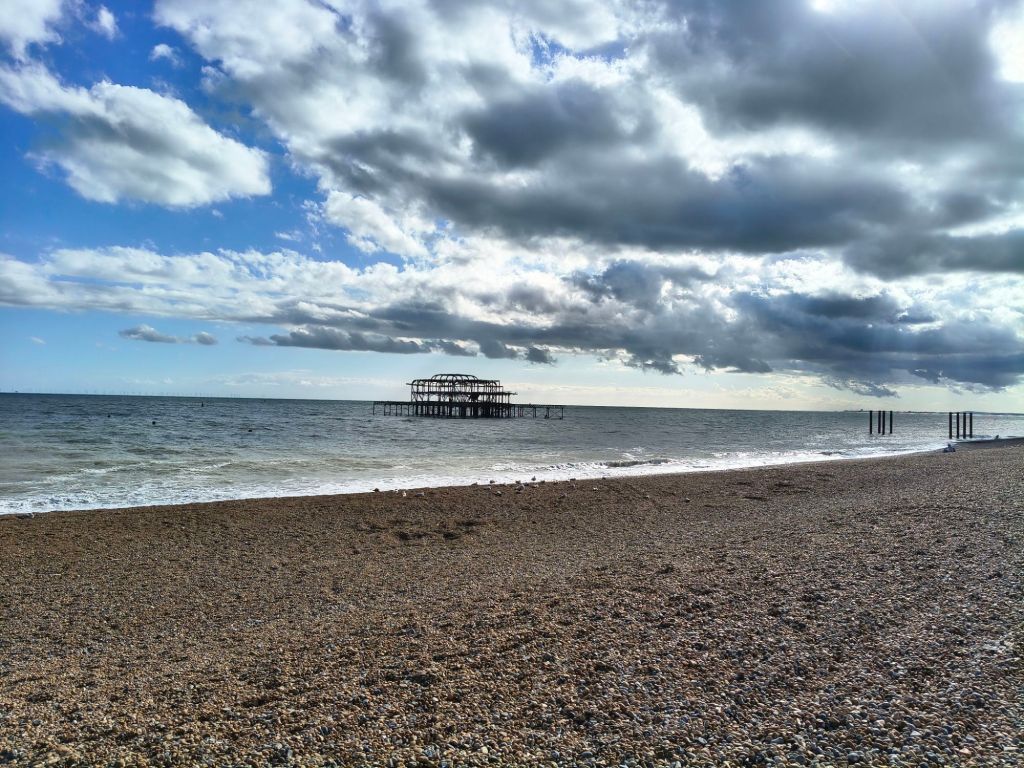
Amazingly enough, the West Pier is still a Grade I structure – despite being abandoned in the 1970s and suffering storms and fires since then.
Brighton, then. One of Britain’s most popular seaside resorts, a short hop from London, a pulsating nightlife centre, a university town. A liberal, off-beat, indie sort of place, a byword for tolerance and a centre of the LGBT+ community.
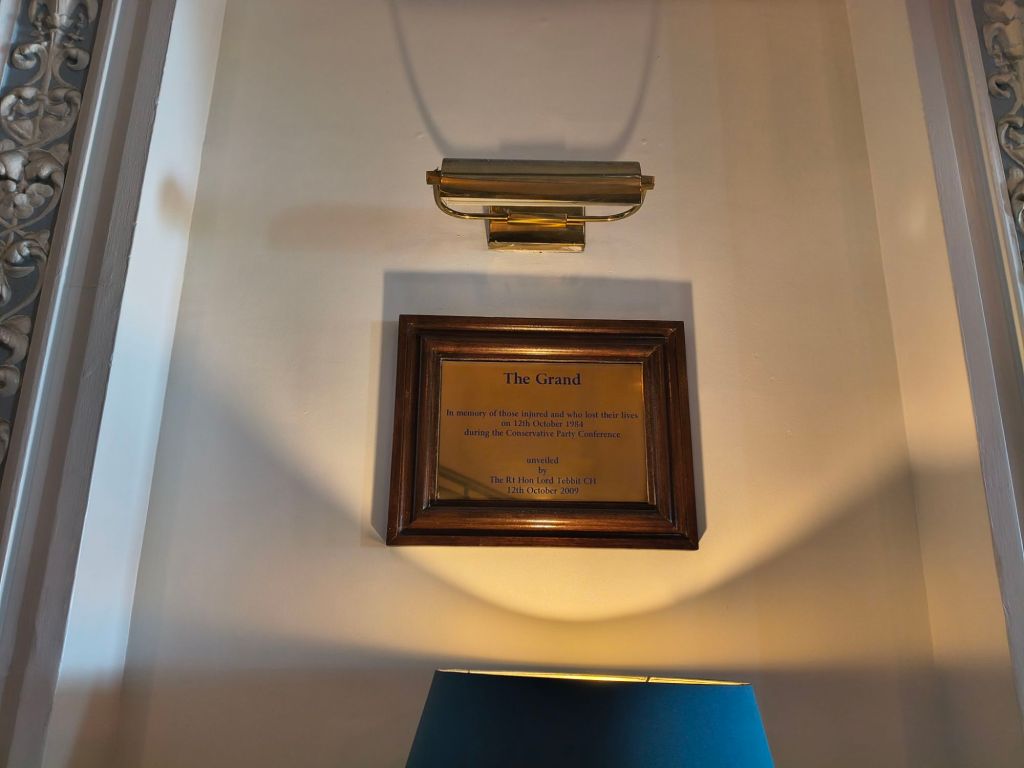
Brighton, a seaside town, that despite all the good stuff hasn’t escaped the blight of deprivation that afflicts many old resort towns. In the same way the Grand Hotel didn’t escape the attentions of the IRA on the 12th October 1984, when they bombed the attendees at the Conservative Party Conference and killed five people.
Brighton, a town centre that well rewards a wander through the weird and wonderful places that seem to line the nooks and crannies, especially in the charming old rabbit warren of the Lanes.
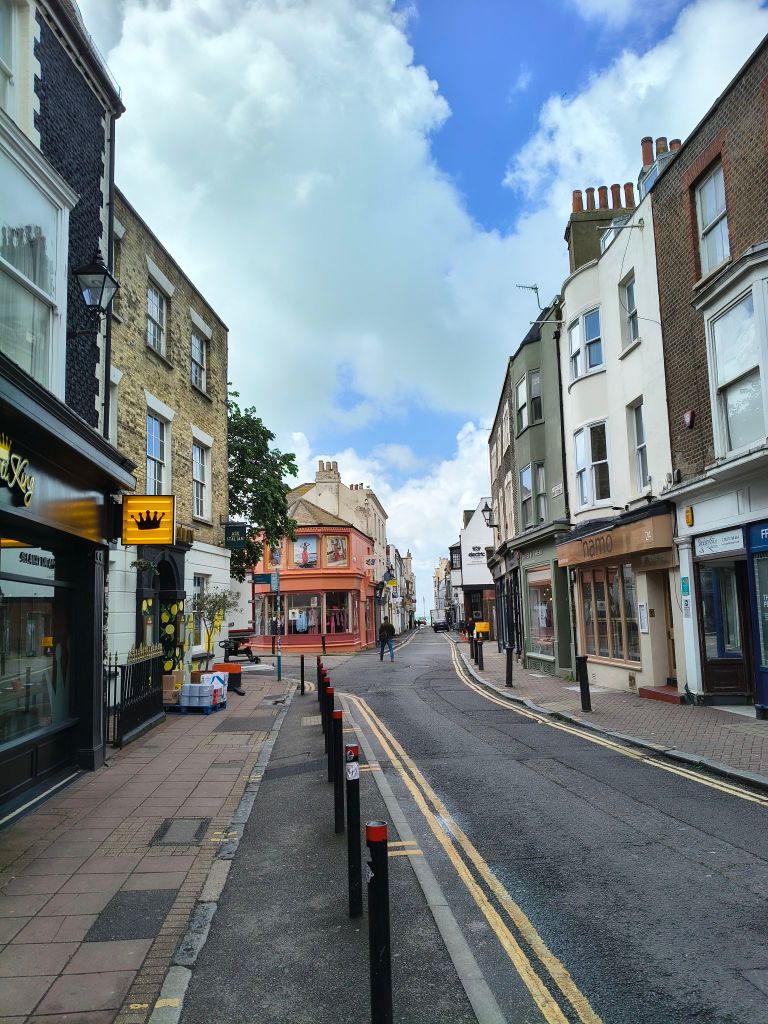
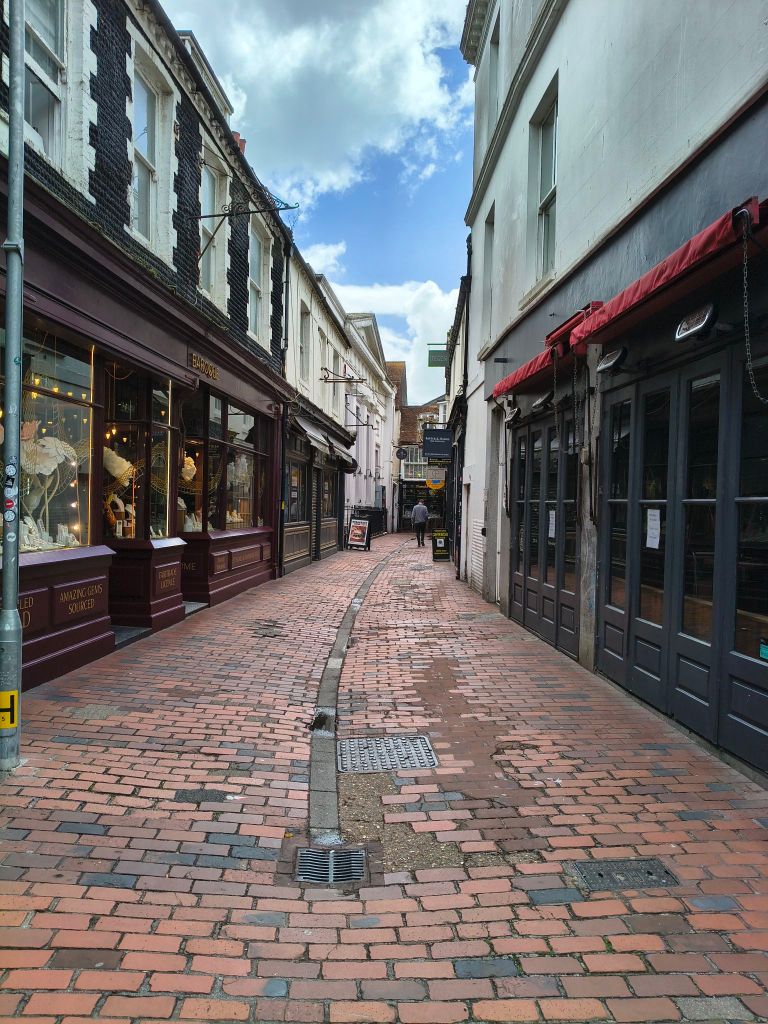
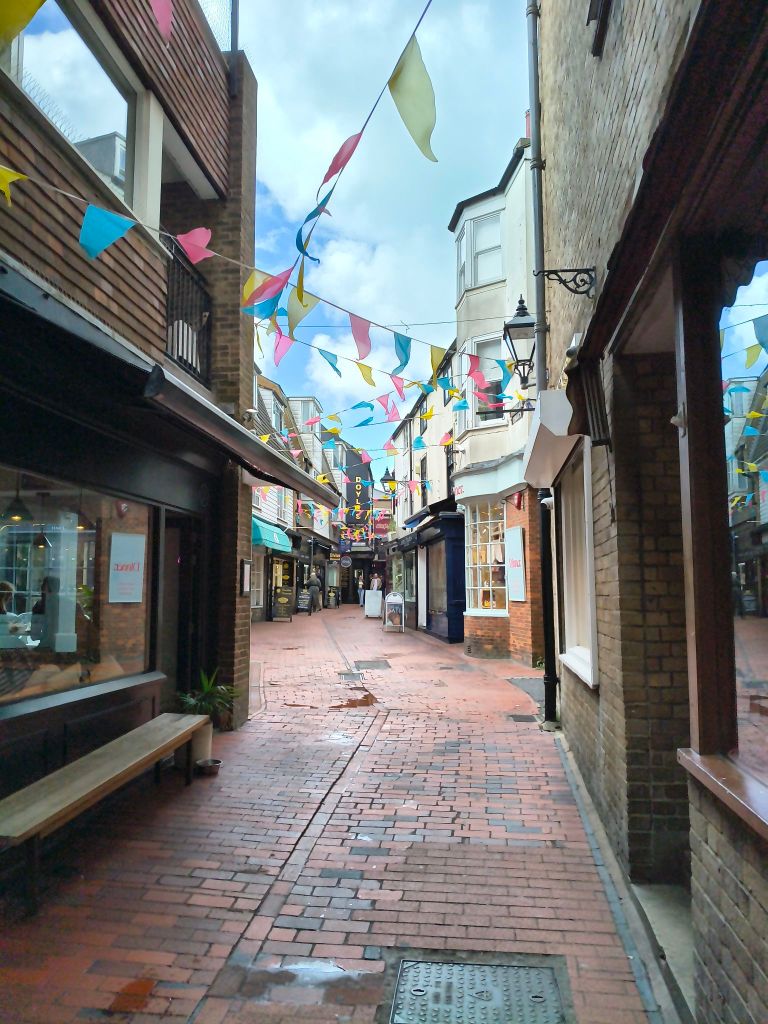
Especially welcoming if it’s blustery by the seafront.


Leave a Reply