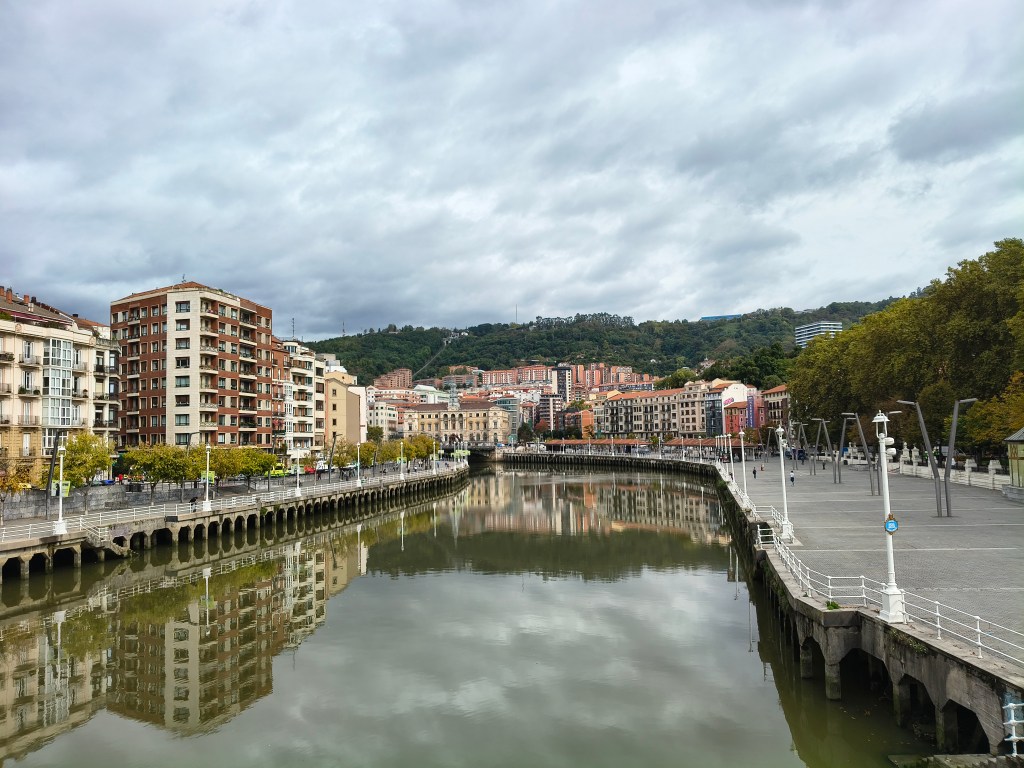
I left San Sebastián under grey clouds. The sunshine of the last few days couldn’t hold off the autumn forever, especially here in the rainiest, coolest part of Spain. And, to be honest, it wasn’t just the weather that was making me think of home; it had been a long week and a half of travelling – diverting, delightful travelling, certainly – but I was feeling ready to cash in the memories and bank them back home, and have a lie down.
There are really two half-practical ways of getting from San Sebastián to Bilbao. There is a two-and-a-half-hour stopping service run by Euskotren, the regional train service, which winds its way slowly around the hills and stops everywhere. The most sensible option though is the bus, which takes just over an hour. You can guess what I did.
…and it was an absolutely fascinating train journey I have to say, a slow roll through verdant hills and steep valleys, passing through the surprisingly urbanised towns squeezed between the mountains of the Basque Country, a local metro-style train with hard seats and no canteen car doing a journey that felt like it should have been chugged along by a rustic old steam engine with multiple gears and a backup donkey if needed.
Eventually I reached the station in the Casco Viejo, the old town district of Bilbao.
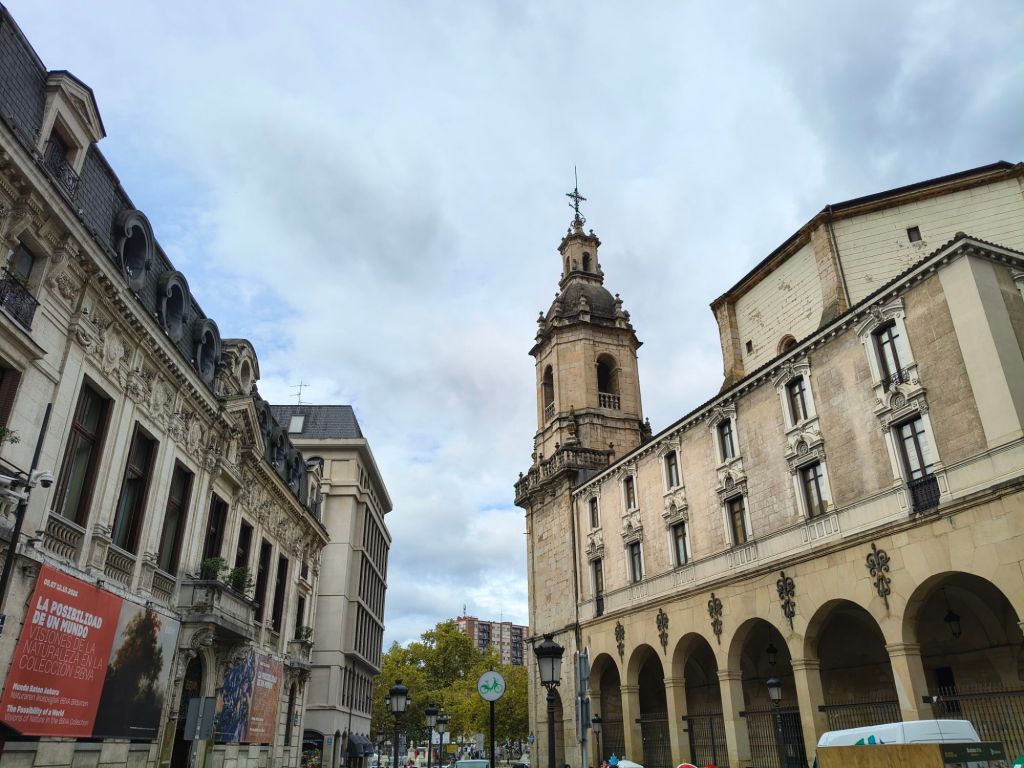
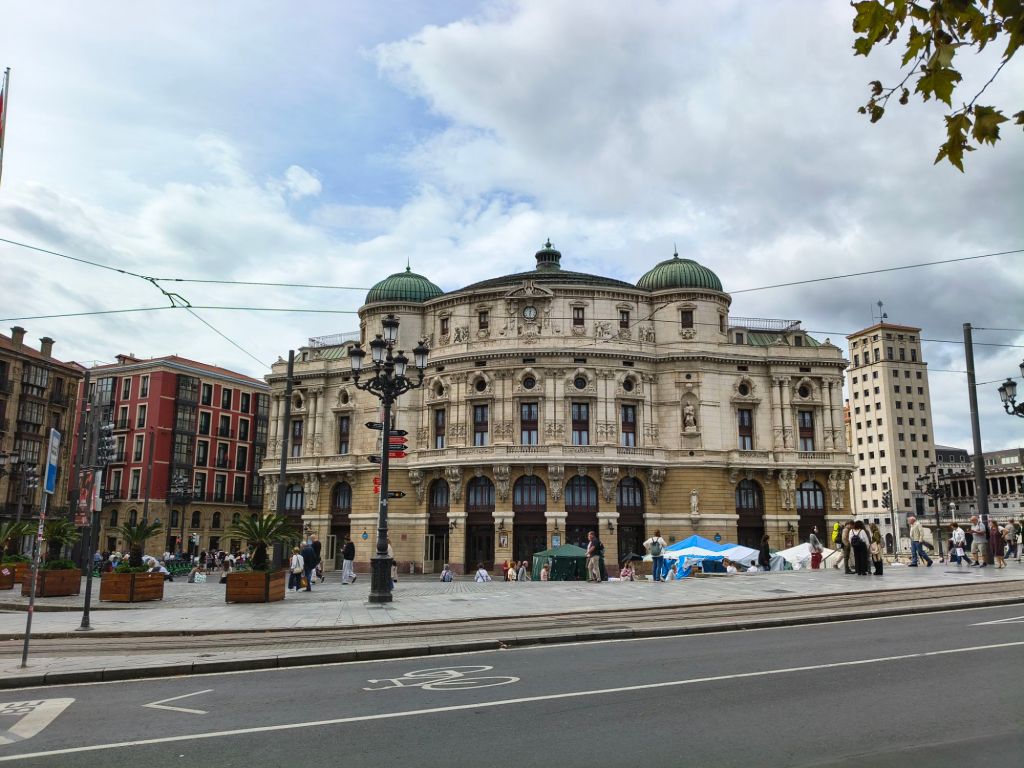
The Arriaga Theatre above is what used to pass for a fine arts center in Bilbao, but times have changed. So with no further ado it’s straight down the Nervion river to see Bilbao’s most famous attractions, and one of the landmarks of modern architecture.
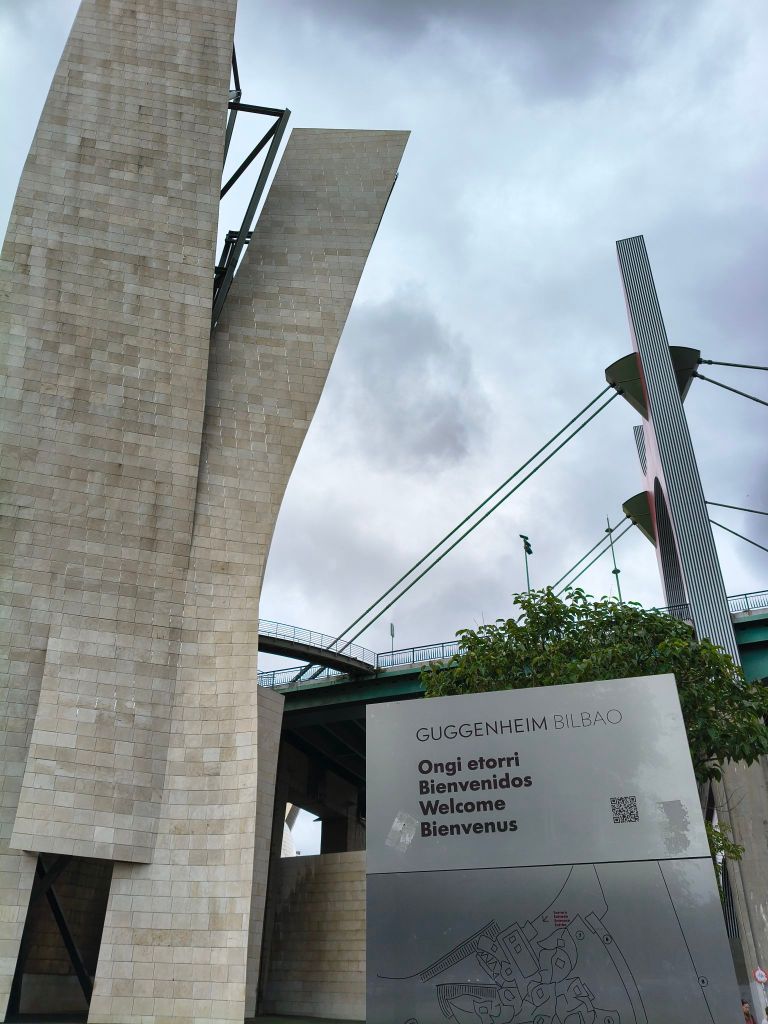
The Guggenheim Museum, designed by “starchitect” Frank Gehry, was opened in 1997 in the dilapidated old port area of Bilbao, the Basque government keen to rejuvenate the area big-time. In fact it created the controversial cliche of the “Bilbao effect”, changing the image of a city by dolloping a flashy iconic building in the middle of it.
But the Guggenheim takes “flashy” to a different level. That’s not it, by the way.
This is.
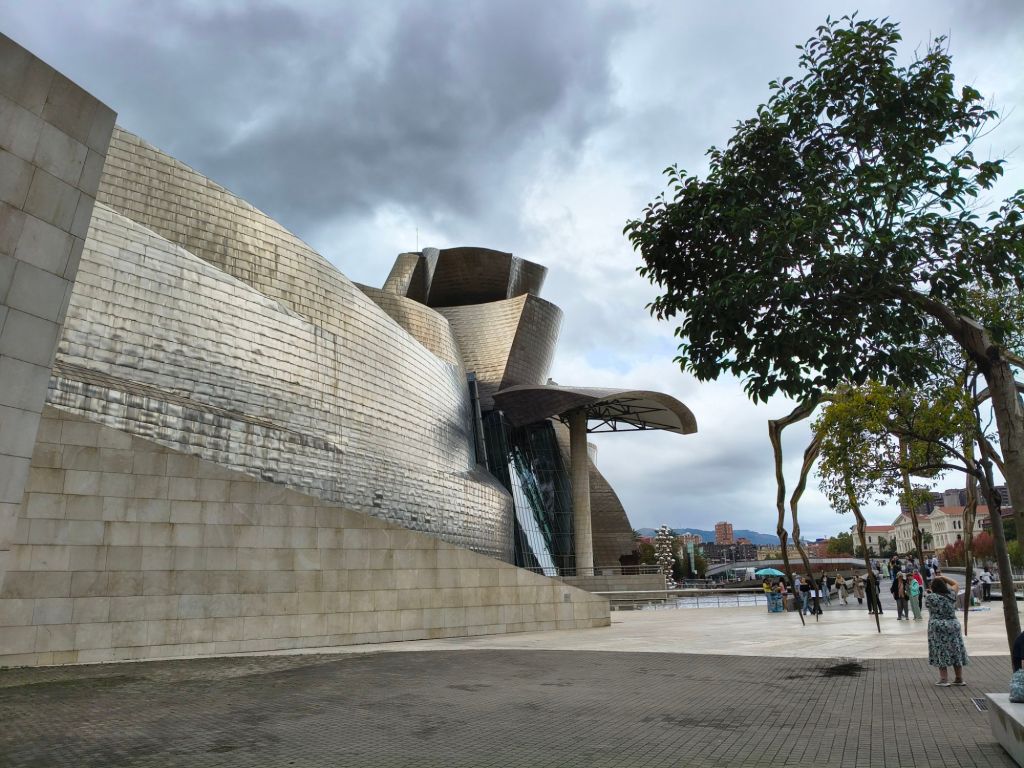
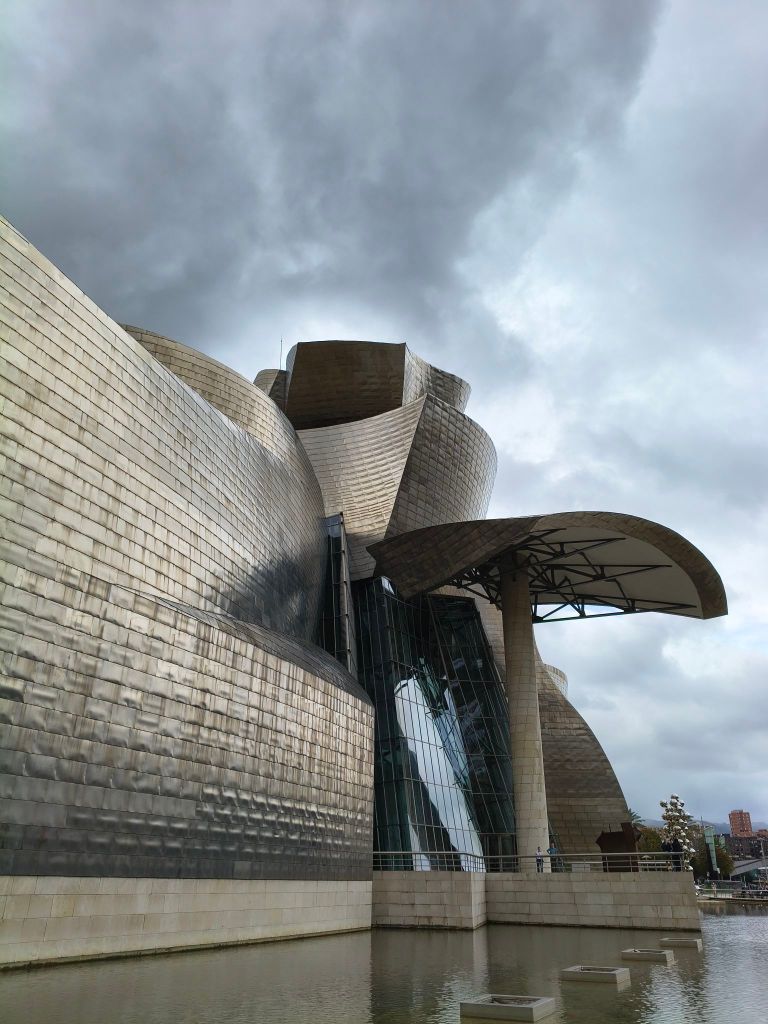
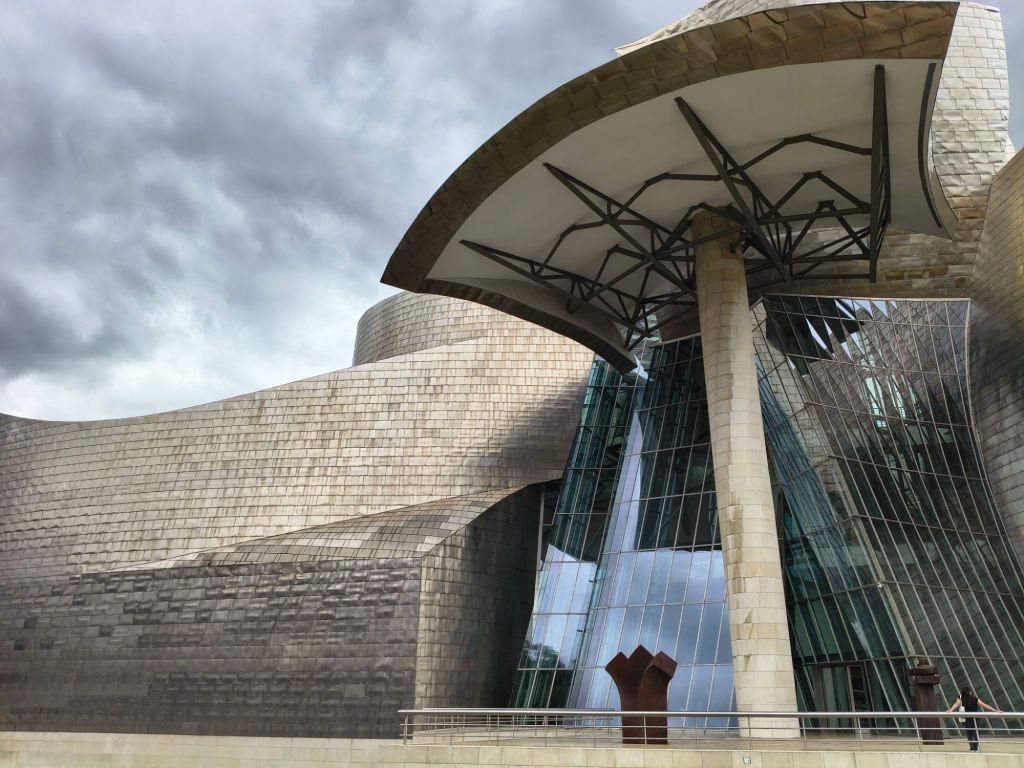
It’s a stupendously-scaled whirl of titanium. I took several pictures because the thing just kept looming over me with different perspectives as I walked around it.
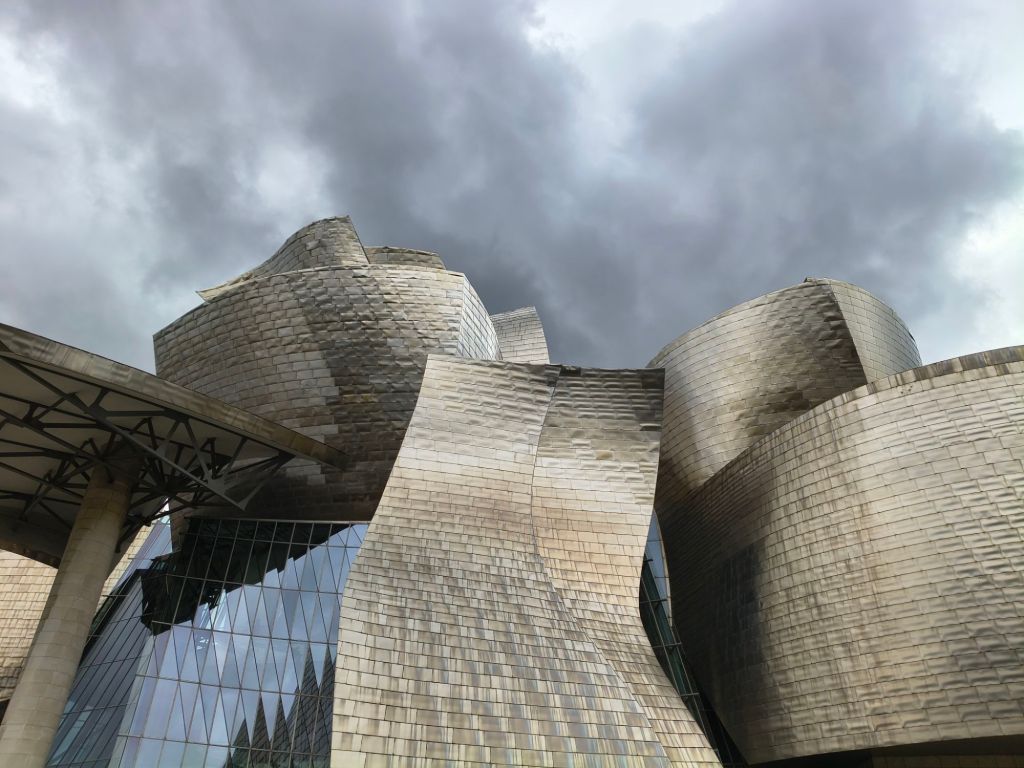
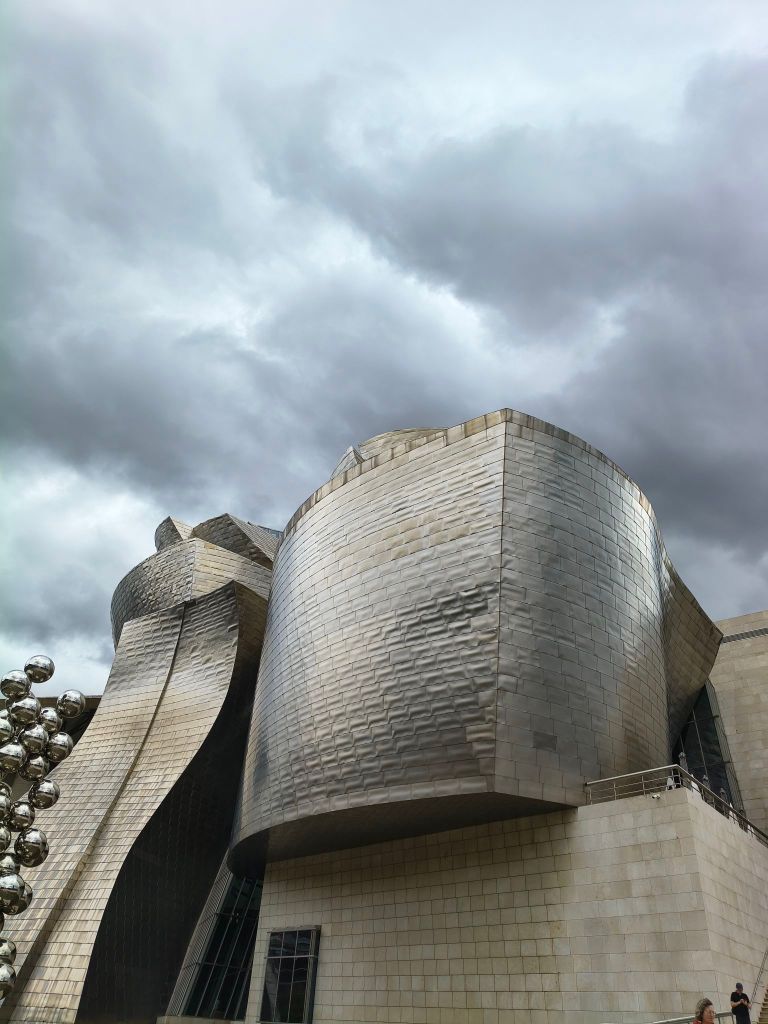
One of Gehry’s aims – apart from making a statement piece of starchitecture – was to reference Bilbao’s maritime heritage. And as you go around it, you can start to make out titanium prows of titanium ships, flapping titanium sails frozen in time.
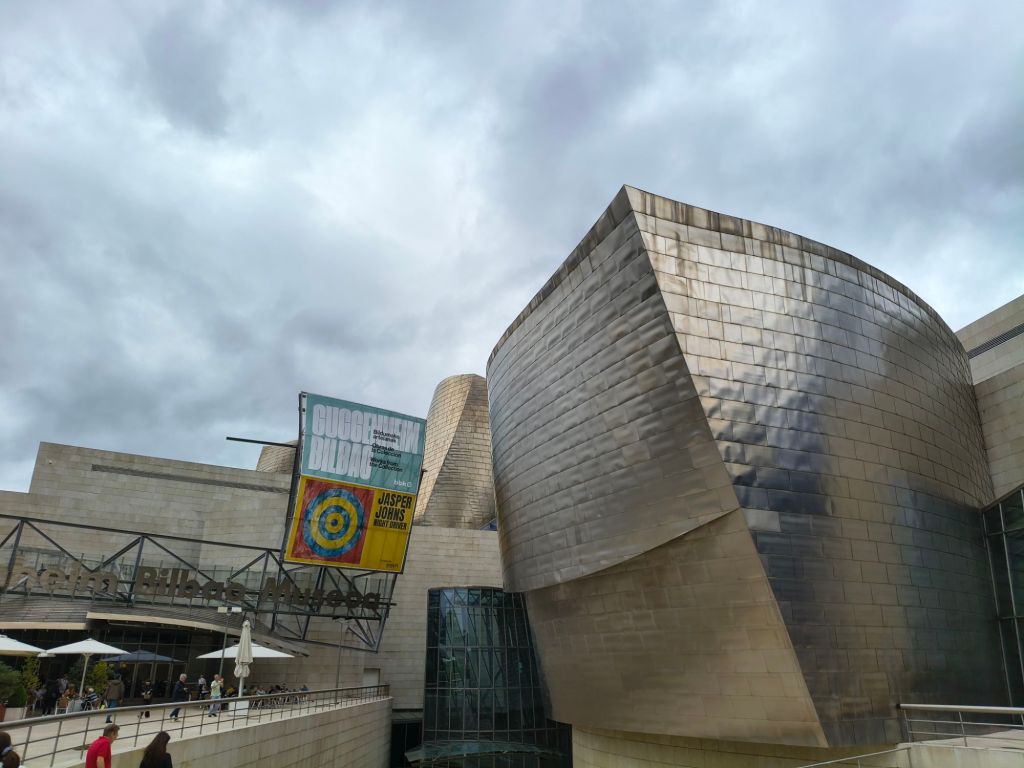
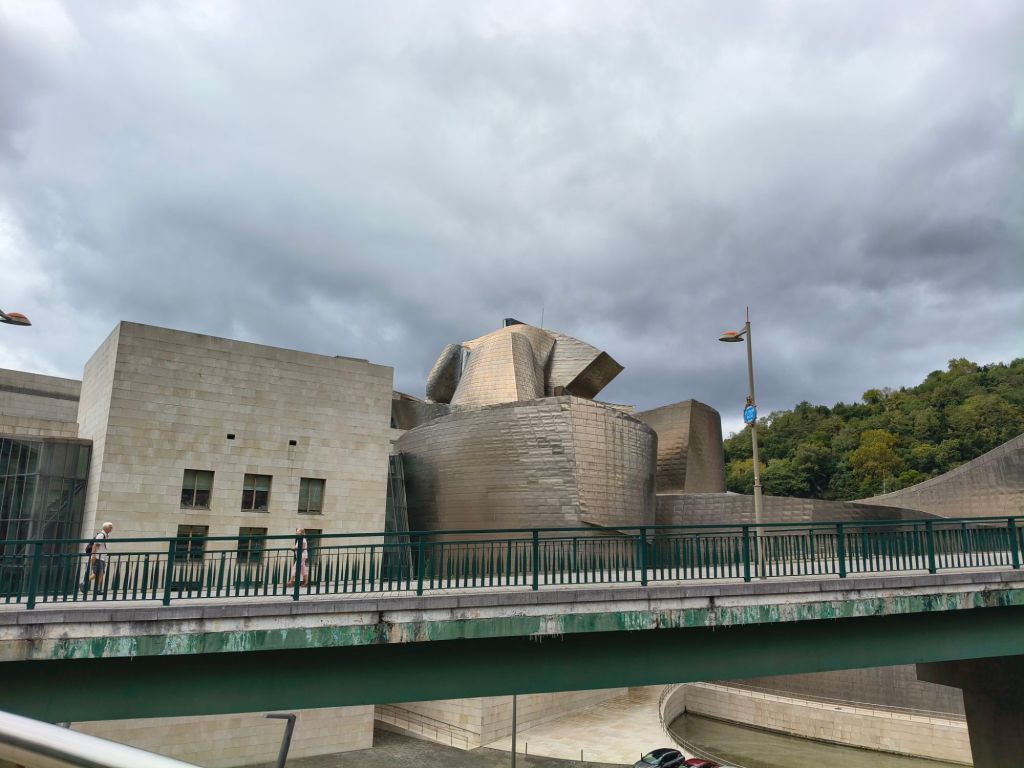
And I didn’t even go inside to look at the art. Maybe tomorrow, the last day of the trip.
Impressed, flabber well and truly gasted, I headed back to the centre of town, ready to take some more snaps of the more traditional styles of architecture and, as usual, draw out some history and stories.
And then the rainclouds opened.
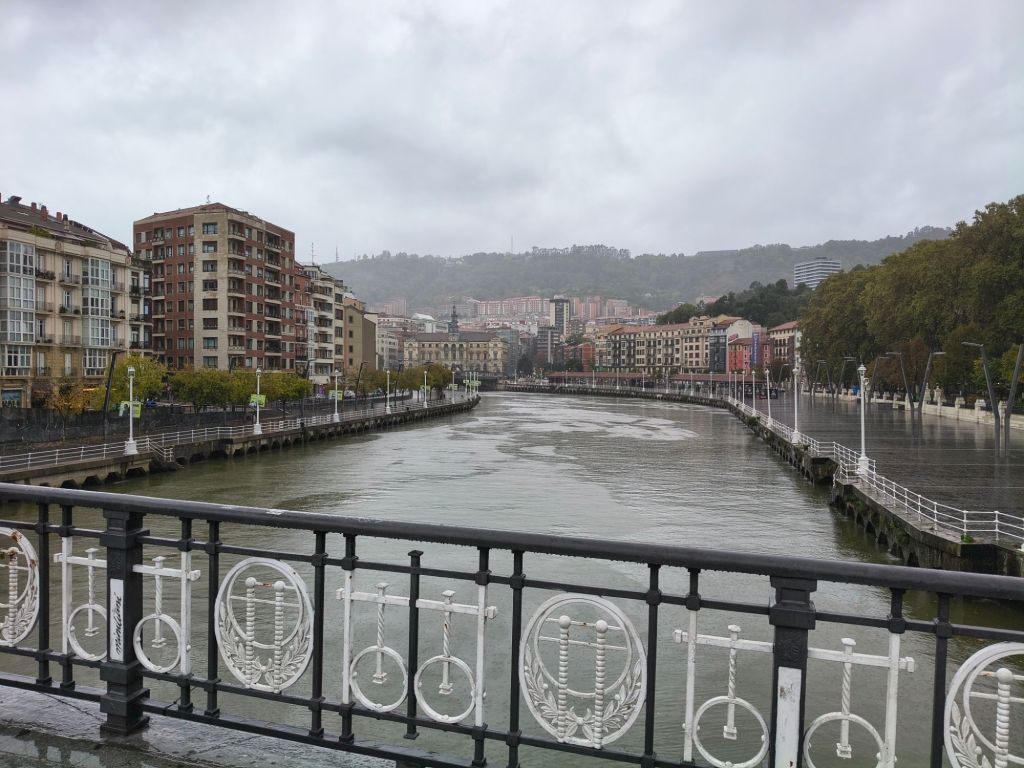
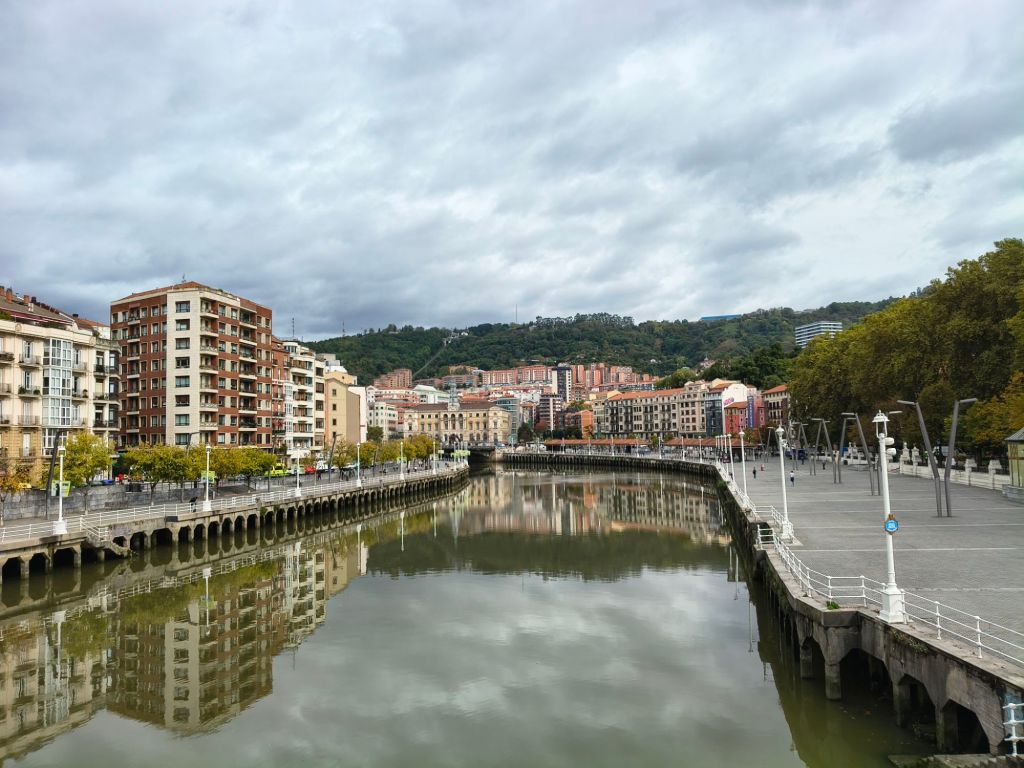
This is the same view of the Nervion that you can see earlier in the post, this one taken four hours later. It was dry, then all of a sudden it was torrential rain. Since then it’s either been raining or absolutely chucking it down. As I write, some more angry clouds are barrelling over…and here it comes again.
If the weather clears, I’ll try tomorrow.
Meanwhile, stand by for titanium nightmares about titanium Titanics…


Leave a Reply