Amidst the ghostly swamps and forests of the north-eastern corners of Europe, as the night sweeps in across the wetlands, the princely knight grows tired from the day’s hunting and looks for somewhere to lay his head. It has been a worthwhile excursion from his ducal seat at Trakai, and out here by the banks of the lazy Vilna river he and his party have managed to bag a wolf. But it’s time for rest.
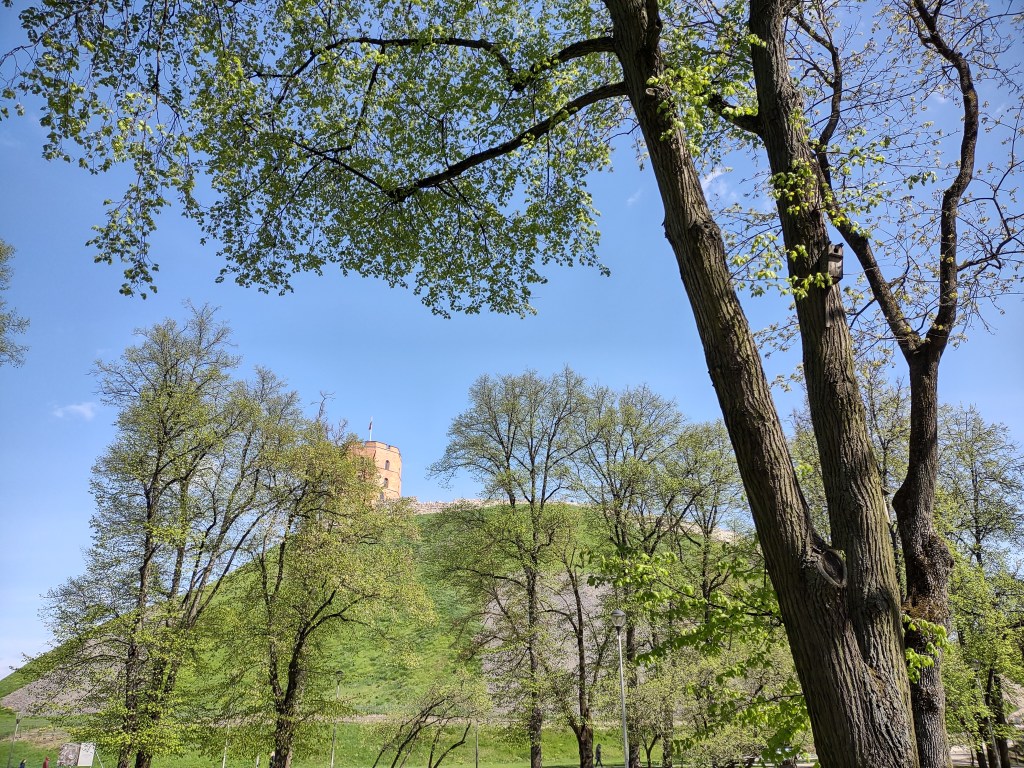
And sleep brings dreams, dreams to the brow of peasant and princely knight alike. And not even a Grand Duke of Lithuania can control what the night will show him in his slumber. As Gediminas sleeps, suddenly the wolf appears atop a great hill by the river. And apparently made of iron. And inside the iron wolf appear a hundred more, all howling, and such a howling had never been heard since the pagan gods had created the great pagan world…
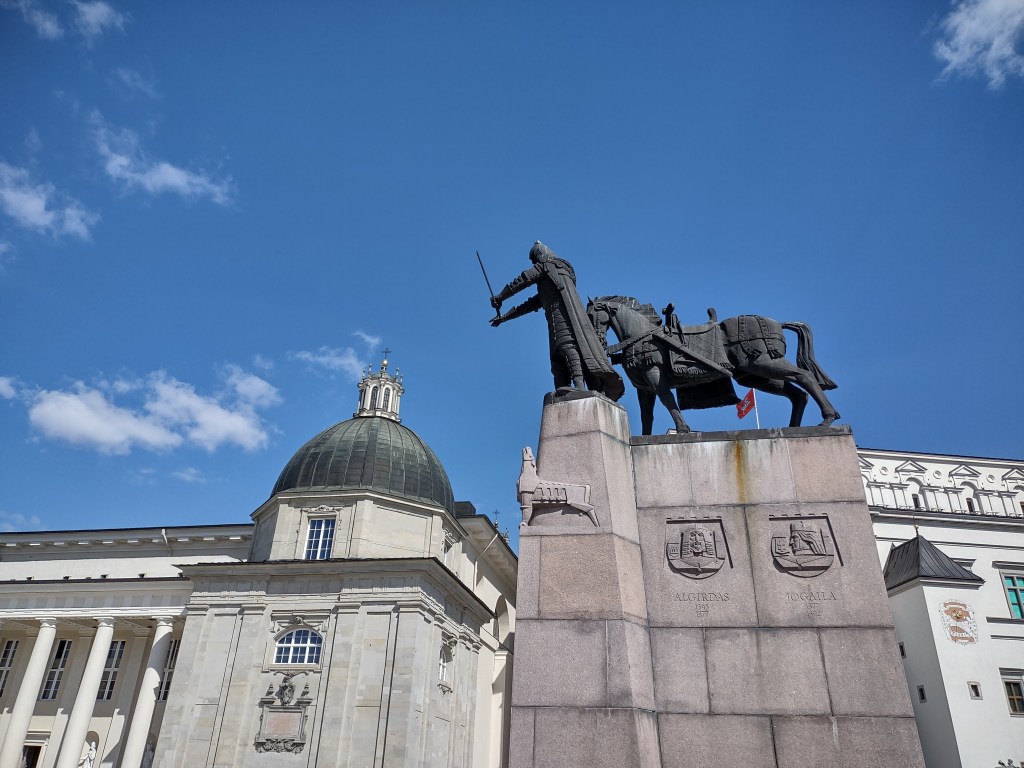
What could it mean! In the morning Gediminas wisely consults with his krivis, his pagan priest. The priest replies; the iron wolf represents the castle you will build on this hill, and the great city that will grow around it. And the howling? That’s the sound of the city’s deeds and accomplishments bellowing across the world, echoing across history. That and “thanks for sticking that arrow up my how’s-yer-father, you’re a charmer aren’t you?”
I made that last bit up. And so Gediminas built the city of his dream, the city named after the river, the city that we know of as Vilnius in English. It was then opened up to German immigrants, religion not a problem, and over the centuries Vilnius developed a reputation as a multicultural centre of trade and learning, a place where one of the most significant Jewish communities in Europe sat alongside Muslim Tartars, Eastern Orthodox and Polish Catholics. Gediminas remains a hero here, though clearly they’re willing to forgive his rather indelicate funeral arrangements – as his body was cremated, they didn’t invite his best friend and some of his slaves to the wake. They were invited onto the funeral pyre instead.
To this day Vilnius’ symbol is the iron wolf, and over the last four or five hundred years or so the inhabitants must have felt like they were too being slowly barbecued over a roasted spit. Incorporated into the Russian Empire in the 1700s, breaking free in 1918 only to have to fight off the Poles, ending up with Stalin and the Soviet Union, despite a brief period of Nazi, er, freedom (a good number of Lithuanians willingly joined in with the Holocaust). Today Lithuania has been independent for just over 30 years, but as I write this in 2023 old ghosts are arising, ghosts of invasion and war, arising again over the eastern borders, echoing through the troubled sleep of today’s Vilnius…
By the way, it’s a lovely city. Fancy a look? See you soon.
 orwellianTwo
Some learned scholars and famous musicians would have loved to have read your comments. They echo through the ages…
LikeLike
Thanks Jasha. By the way I passed the place where you studied back in the day. Now where was it…
LikeLike