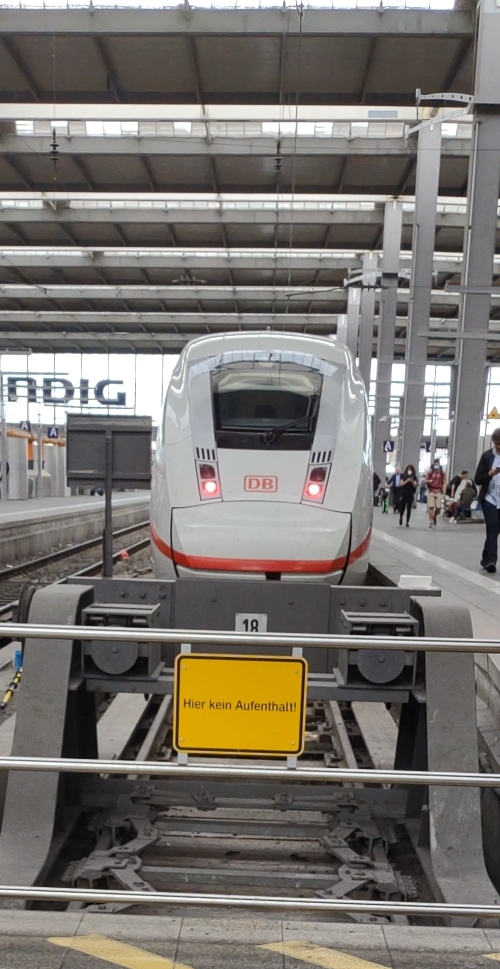
The final stop on my train trip is Munich. Busy, business-like, full of office workers rushing past, tourist crowds wandering along the streets and through the cavernous station subways. Distinctive Munich, capital of a Bavarian duchy that became a kingdom under Napoleon and stayed that way until 1918. Even within the modern Federal Republic, Bavaria stands apart, linguistically and culturally closer to Austria than to the rest of Germany. Munich, the place where the chic shops start selling Lederhosen and Dirndl for Oktoberfest. Where the blue-and-white colours of Bavaria are everywhere, including the logo of the local carmaker Bayerisches Motor Werke. (Or BMW for short.)

Like most great European cities Munich has its share of lovely churches and monumental avenues, but much of the built environment has had an eventful recent past. Indirectly, this was because Munich was also the birthplace of Adolf Hitler’s Nazi movement. The famous bierkellers were a good place for meetings in the formative days, and in 1923 it was here that he launched his Beer Hall Putsch. His grab for power failed and he ended up in jail, but he was handed easy time and soon he was back on the scene, leading to a war that caused the destruction of 45% of Munich’s buildings.
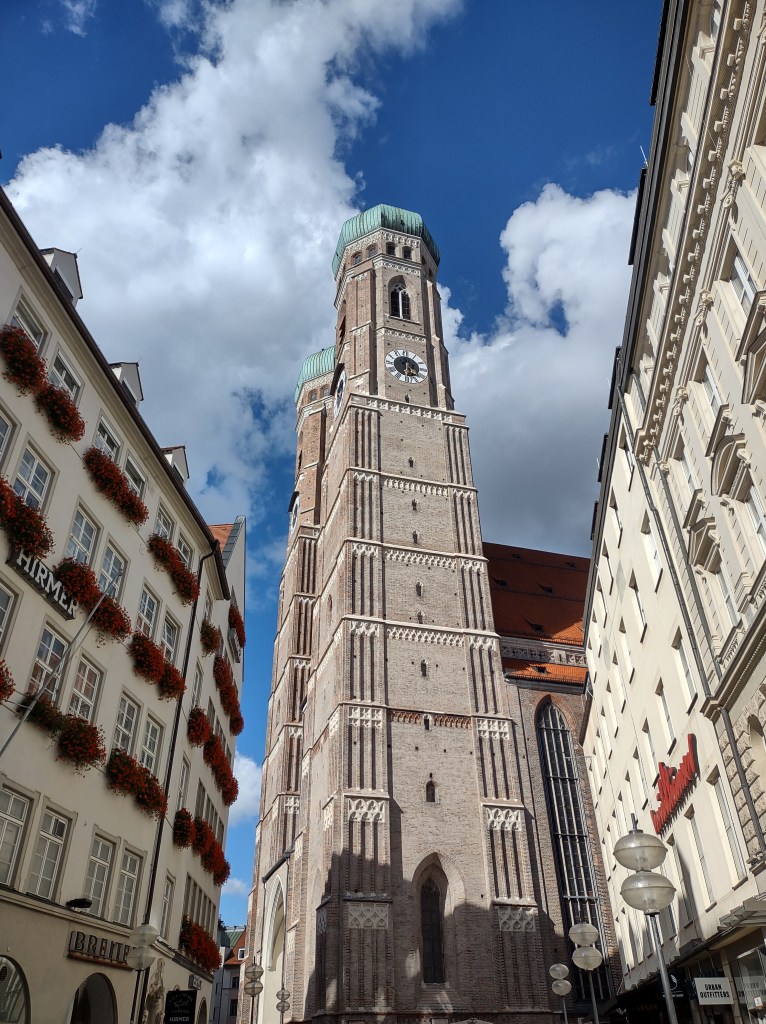
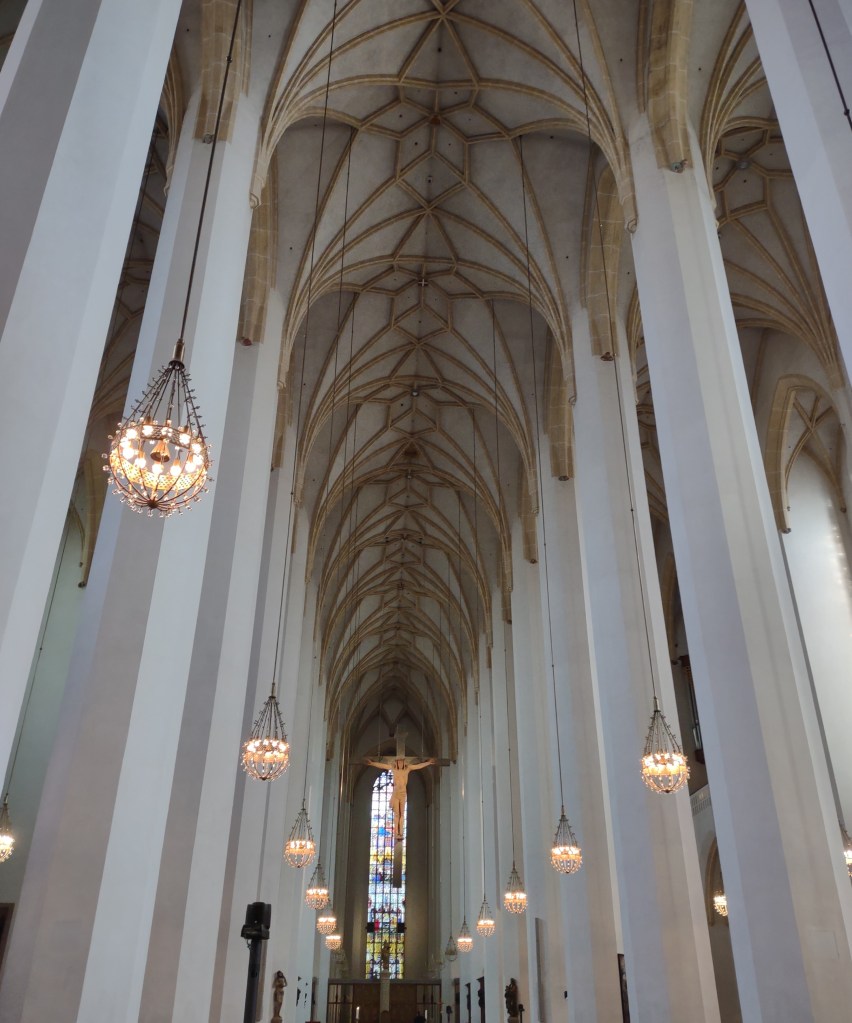
As in Cologne, Munich’s great icon is its cathedral, the Frauenkirche. And once again those two great towers were great navigational aids for Allied bombers. So they both escaped the serious damage the rest of the church suffered. Personally I prefer the flamboyant Gothic stylings of Cologne’s Dom to the more austere redbrick on show here, although there’s something deeply moving and restrained about those two towers, as though they’re monuments to events that must not be forgotten.
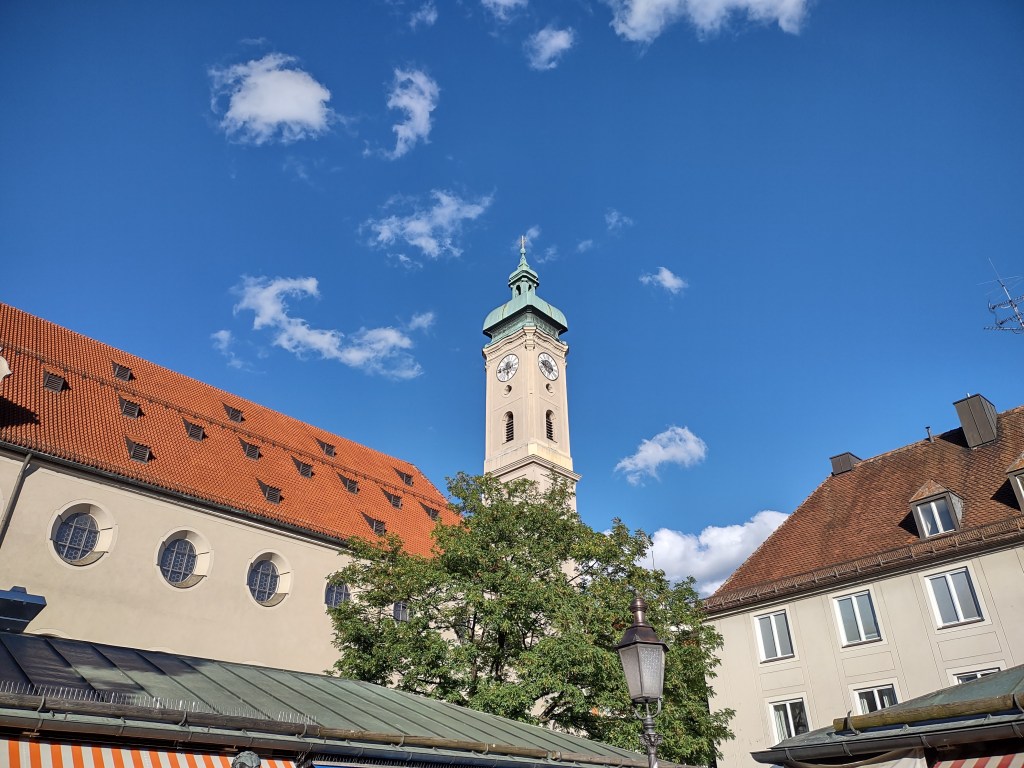
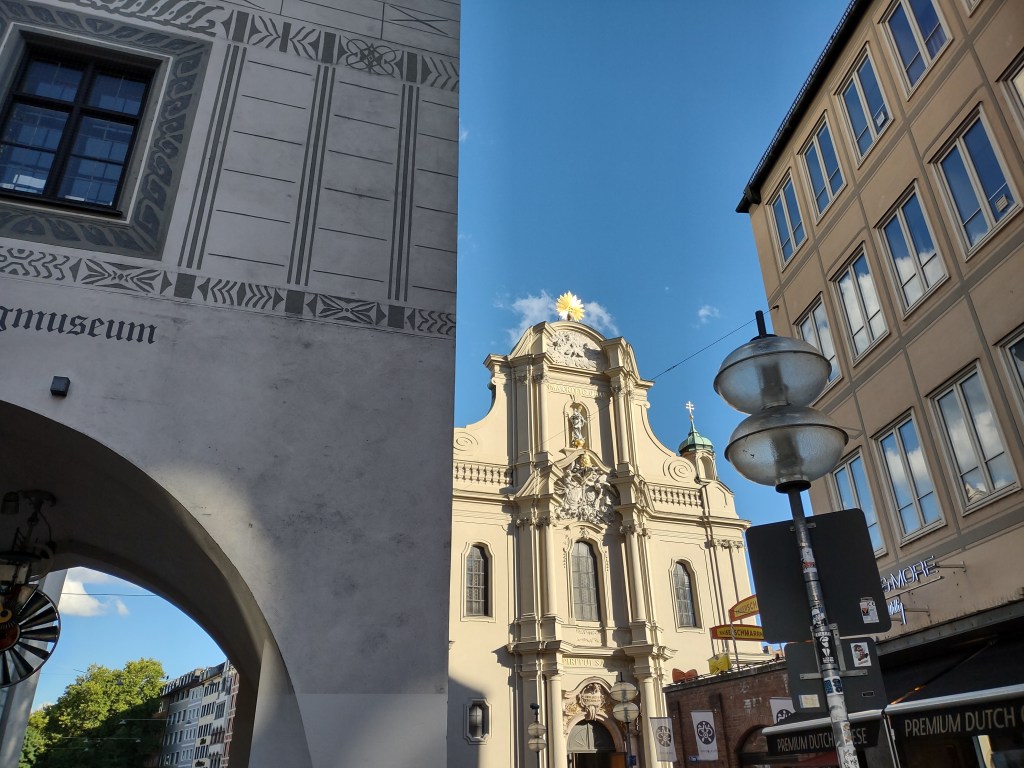
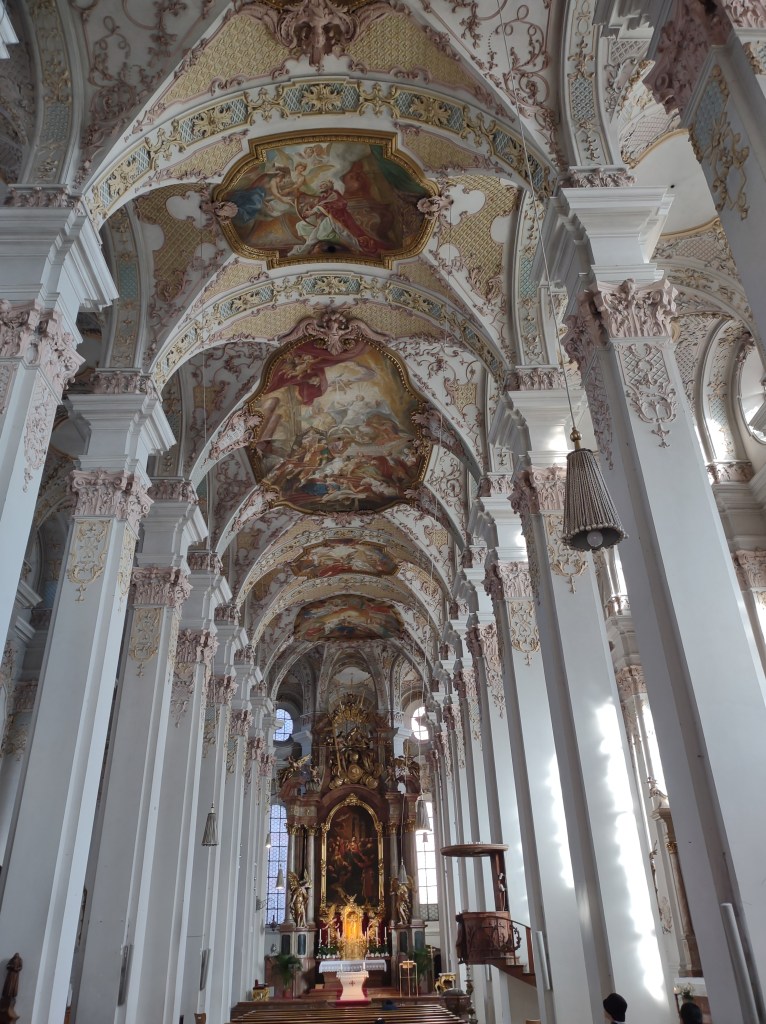
This jolly ceiling belongs to the Holy Ghost church and it’s quite the riot of guilded rococo stylings and grand Biblical narrative. A stunning revelation when you step in from the busy Mariaplatz area – and nearly all of it a post-war reconstruction.
Soon it was time to indulge in that other Munich, beery Munich, bierkellers and steins, oompah bands, lederhosen-heavy fun. I was a month early for the city’s most famous festival, but it’s always Oktoberfest in the kellers, and the most famous is the Hofbräuhaus.
Starting out as the state brewery in the 16th century, it was remodelled exclusively as a tavern at the end of the 19th when the brewing moved to the suburbs. Much of the building was destroyed in the war but that’s of little concern when visitors come to get destroyed every night. I made my way in, looked for a spare space on one of the trestle tables, ordered a beer and got stuck in.
Bierkellers are a great way to talk to strangers because the tables are long enough for different groups to sit alongside each other in an extremely convivial setting. So I got chatting to an American couple, sometimes mentioning the rather worrying news story I was following on my phone, but otherwise the fun continued, the in-house oompah band struck up again, and I settled down to my Hofbrau beer. A quick look at that news feed.
…and the Queen was dead.
I can still recall the seat, the wooden panel opposite, at a stretch my subconscious might even recall every graffito scratched into the table by the generations of visitors to the Hofbräuhaus. The oompah band played on, but it’s a blur. I passed on the news, the nice Americans passed their condolences. Soon I left, not knowing what you should do when your monarch dies (like most Britons under 75). And I’m not even a royalist.
I headed out into the Munich night, my head spinning, a central and unifying backdrop to all our lives having been ripped down, wondering what this meant for my homeland when terrible crises were already heading our way this autumn. Meanwhile back home, the well-practiced Operation London Bridge swung into action, old public figures got new titles, and I would spend much of the following day watching it unfold on TV.


Leave a Reply