A great and beautiful medieval Flemish town, towering churches laden with masterpieces, opulent guildhalls and atmospheric spaces overlooking dreamy rivers and canals, and the best thing about it… it’s not Bruges.
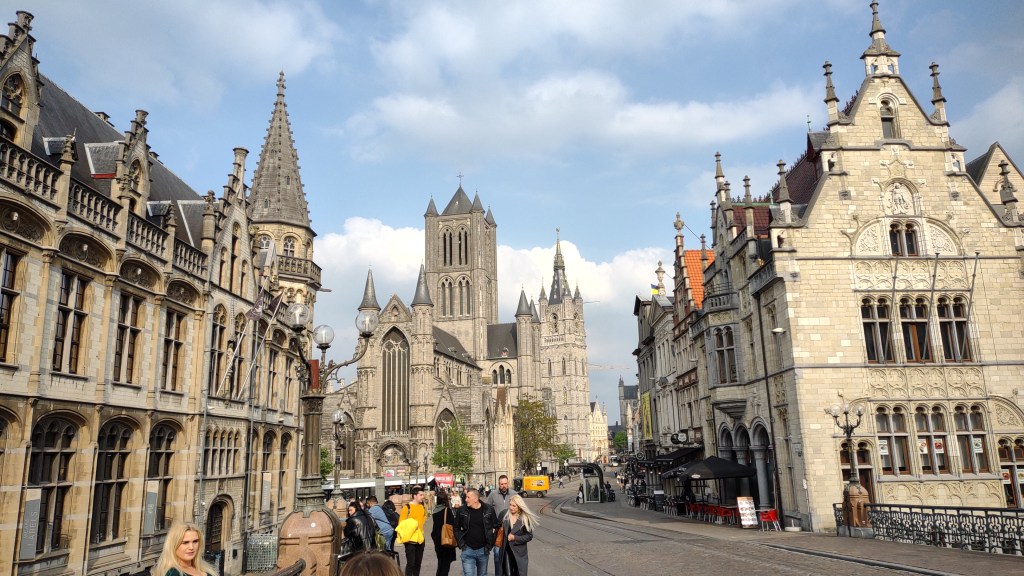
When I mentioned to people that I was in Ghent, someone responded that it looked good from my photos but they had had to Google it first. Everyone has heard of Bruges, and the result is that you can hardly move for your fellow visitors. Ghent gets its share of tourists, but to date this vibrant university city has been thriving happily under the broader travel radar and that means the place feels manageable and – unlike Bruges when I was there three years ago – you can actually move.
Maybe it helps that the center of Ghent is more expansive and the streets wider, but then again that itself is a case against the sheep-like nature of tourism. The reason Ghent is bigger is that at one time during the Middle Ages it was just about the most significant European city north of the Alps. But we’re getting ahead of ourselves.
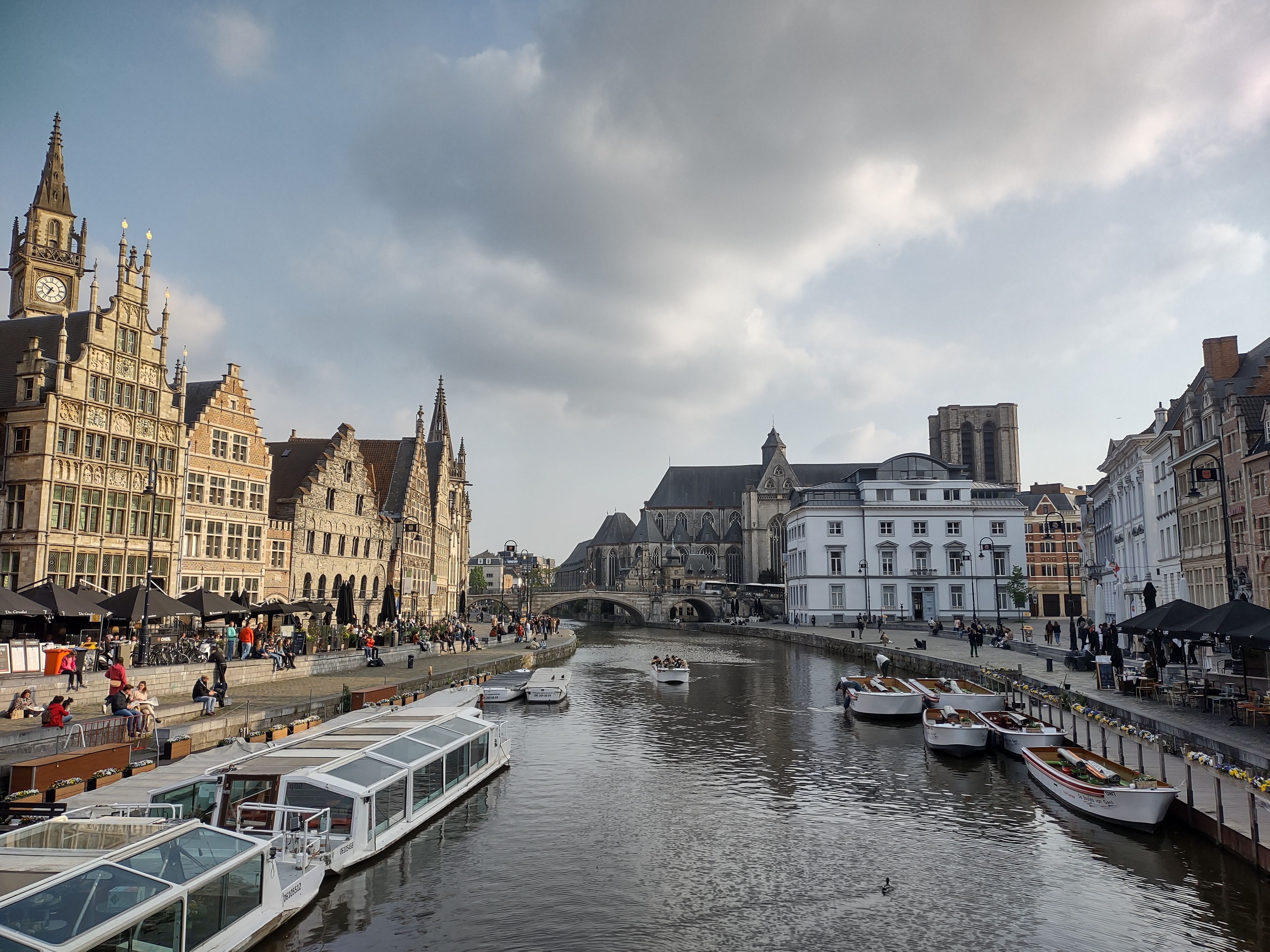
You usually find a long-standing settlement near rivers, and there has been a settlement at the confluence of the Lys and Scheldt rivers since prehistoric times. The Celts were recorded here first, and a Celtic word for confluence is Ganda. The French still call it Gand. You see where I’m going here. The Romans moved in, followed by the Franks, followed – terrifyingly – by the Vikings.
The settlement recovered and prospered, and by 1180, under the protection of the Count of Flanders, its notable citizens were rich enough to start building their houses in stone. The Count, one Philip of Alsace, found the city nobles to be, well, right city burghers. To put them in their place in 1180 he built his own collosal stone house, and in a style that would dissuade them from chatting over the garden fence about house prices.
The Gravensteen.
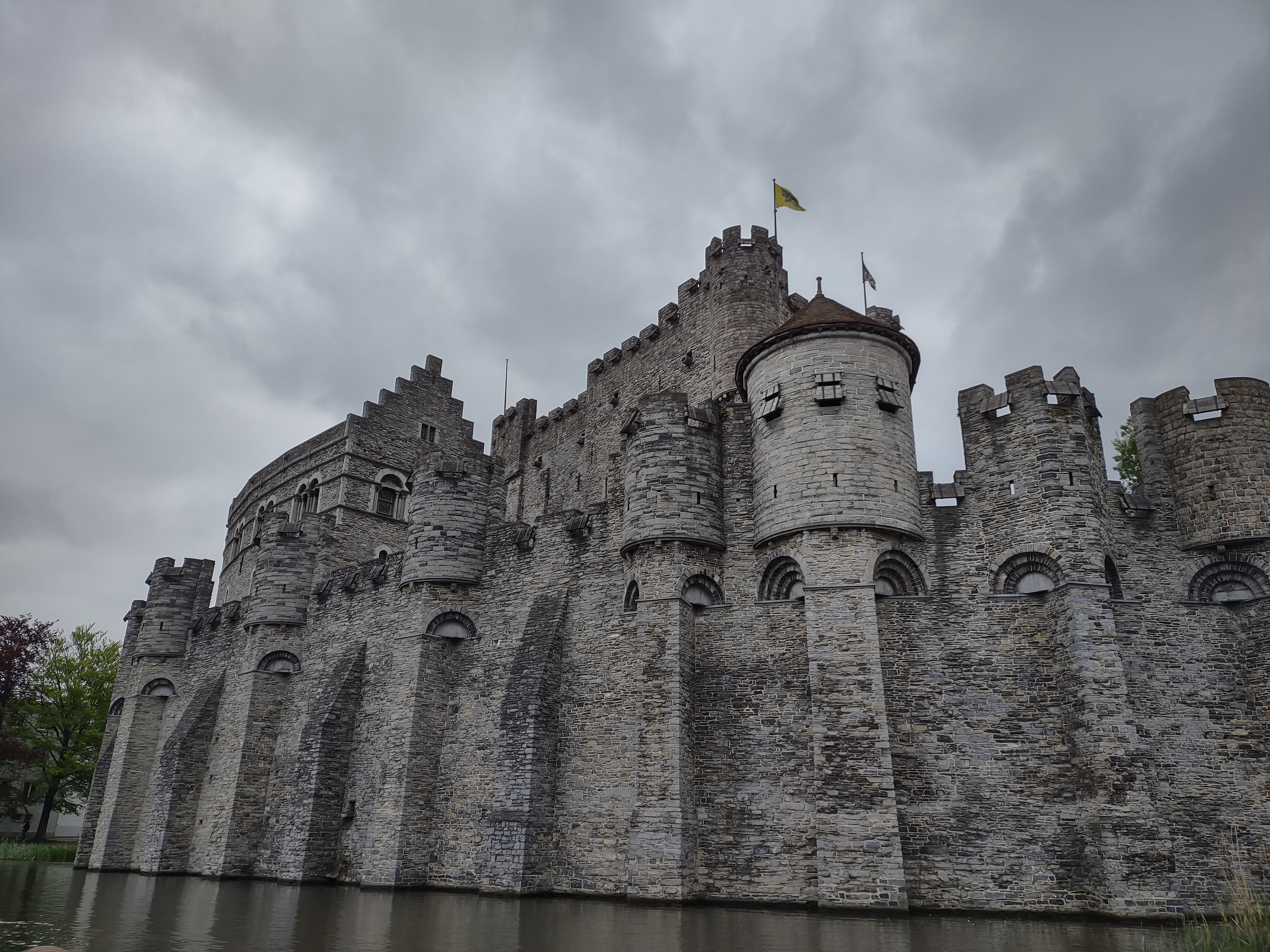
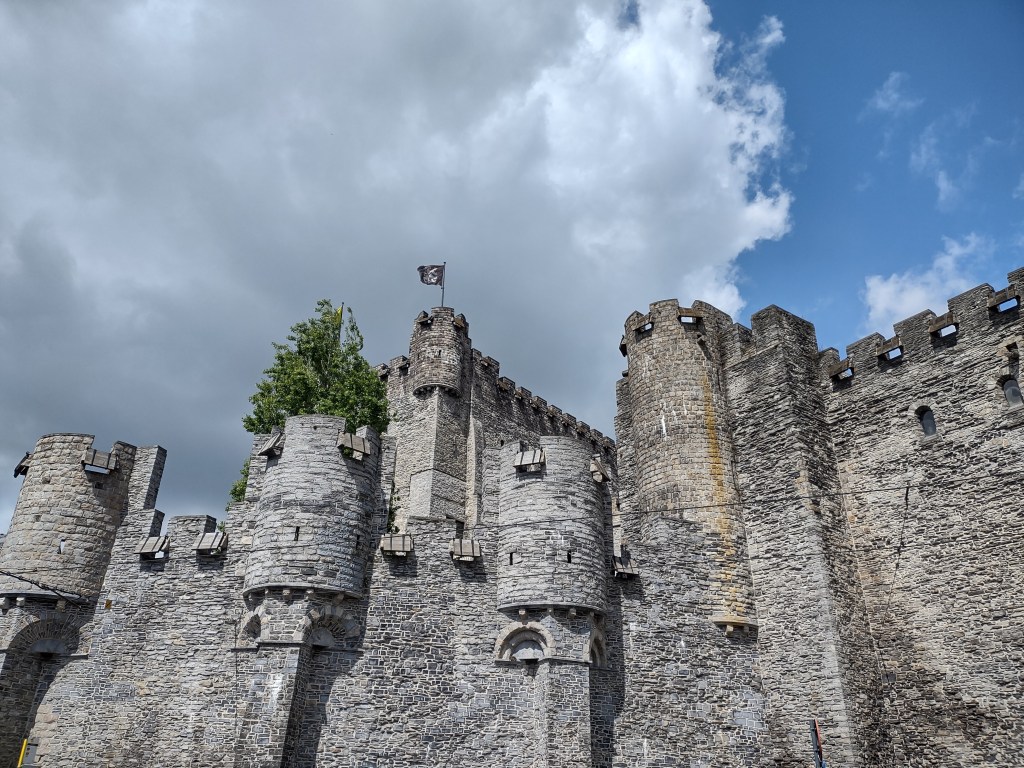
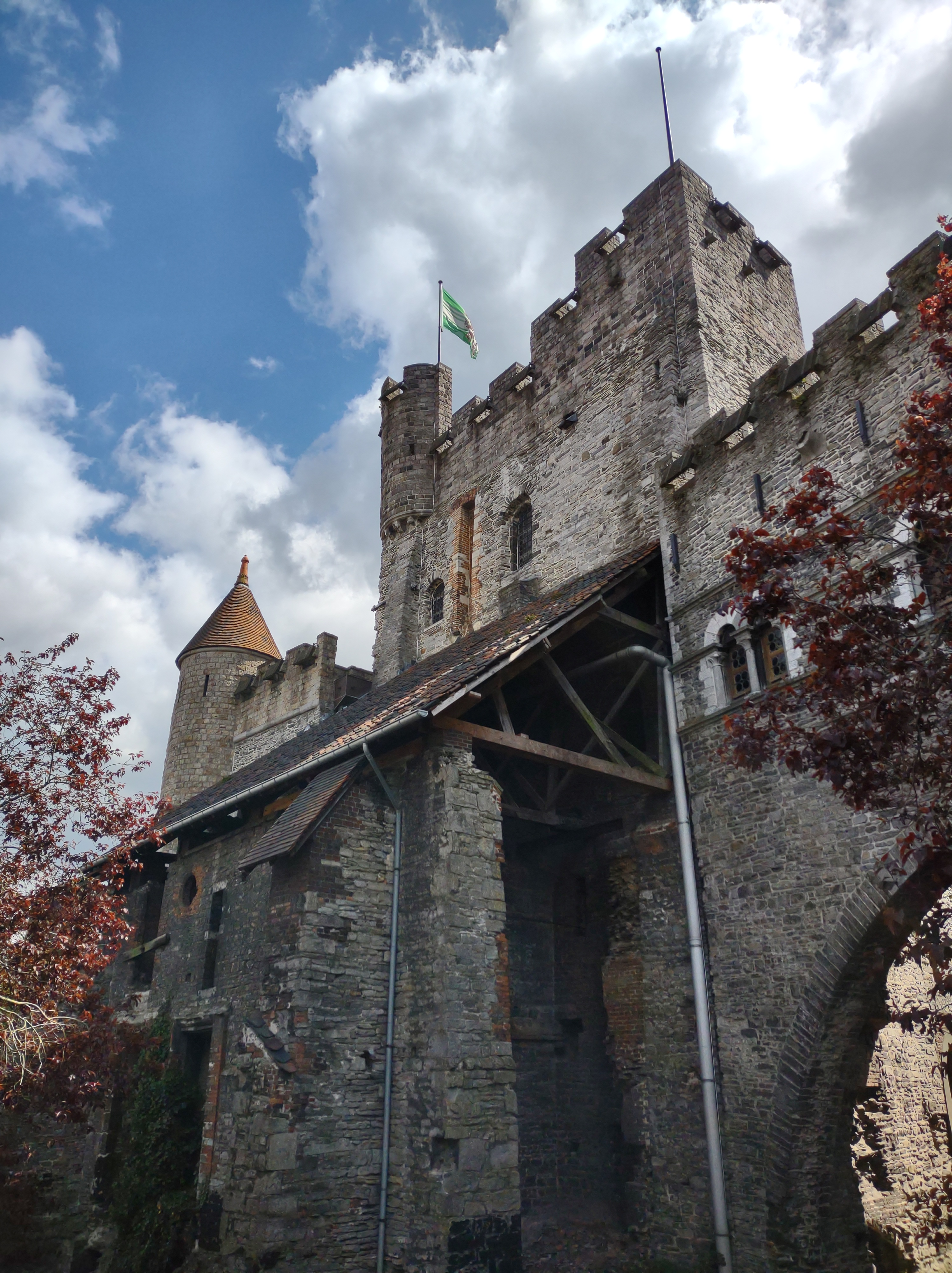
“No cold-callers please, the burning oil from the ramparts will not keep you cold for long.”
The Stone Castle of the Counts was used as their residence until 1353, from which point it was variously used as a court, prison, torture chamber, and nice stuff like that. Today’s Gravensteen is one of Ghent’s most popular attractions, which pays the bills until it manages to hire out its name to a villain in the next Harry Potter franchise blockbuster.
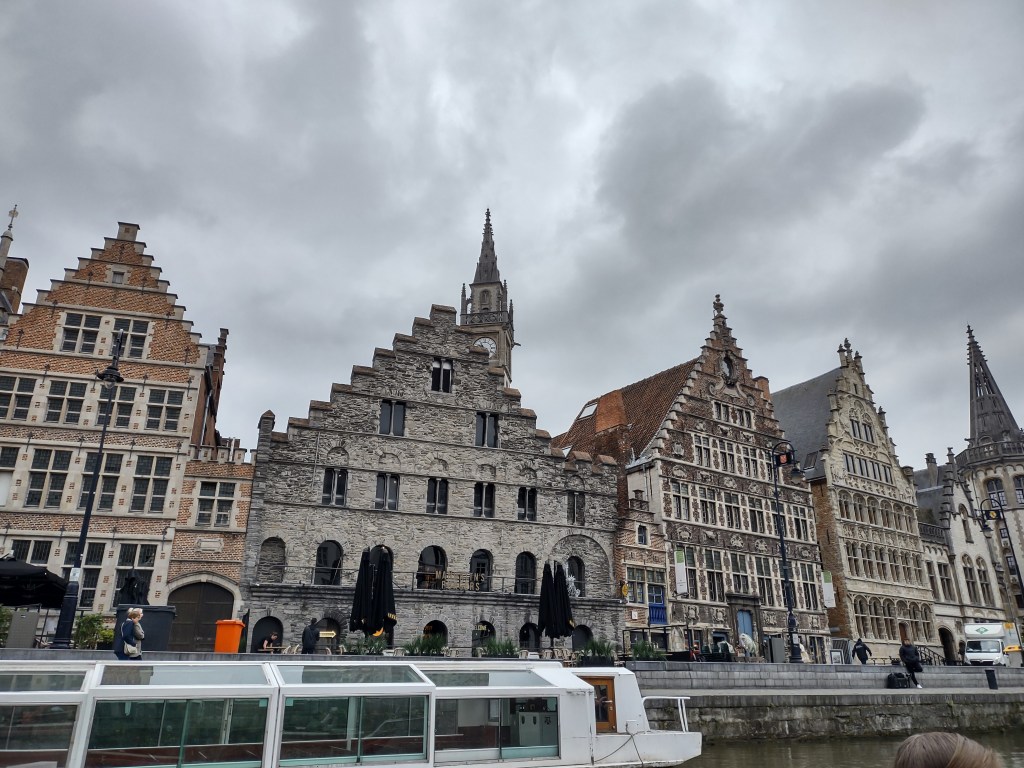
Message received, the city notables went on with their own business. And their own business was booming. There were plenty of sheep in the marshland of Flanders and Ghent got super-rich on making cloth out of the wool. The city-state grew and by the 13th century there were 60,000 people living here.
And if you got it, you flaunt it.
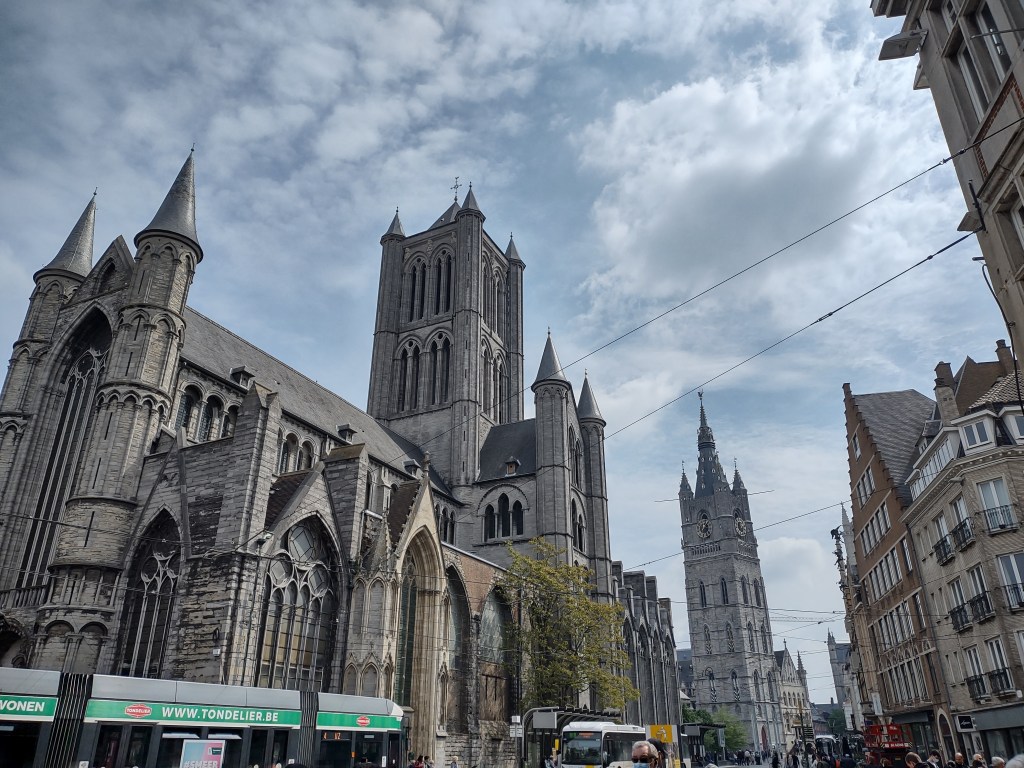
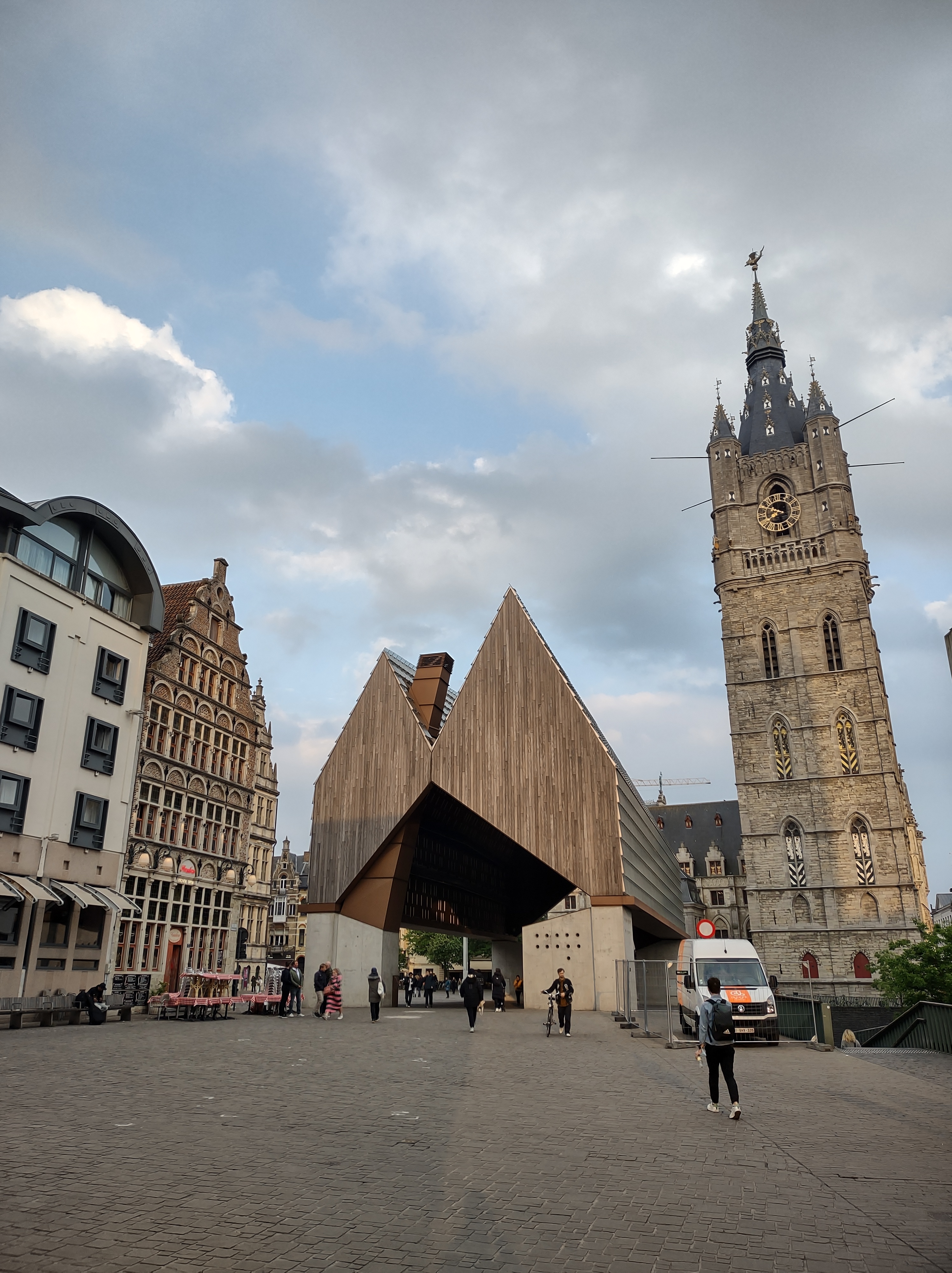
The historic centre of Ghent has two great cathedrals, St Nicholas and St Bavo. Here’s old Nick in all its glory, and behind it the Belfort, the great belfry symbolising Ghent’s independence and power.
And as was common at the time, with great money came great art. St Bavo’s has the jewel, the world-famous Ghent Altarpiece and its Mystic Lamb, a precursor of the Renaissance and considered one of the most significant masterpieces in Western art.
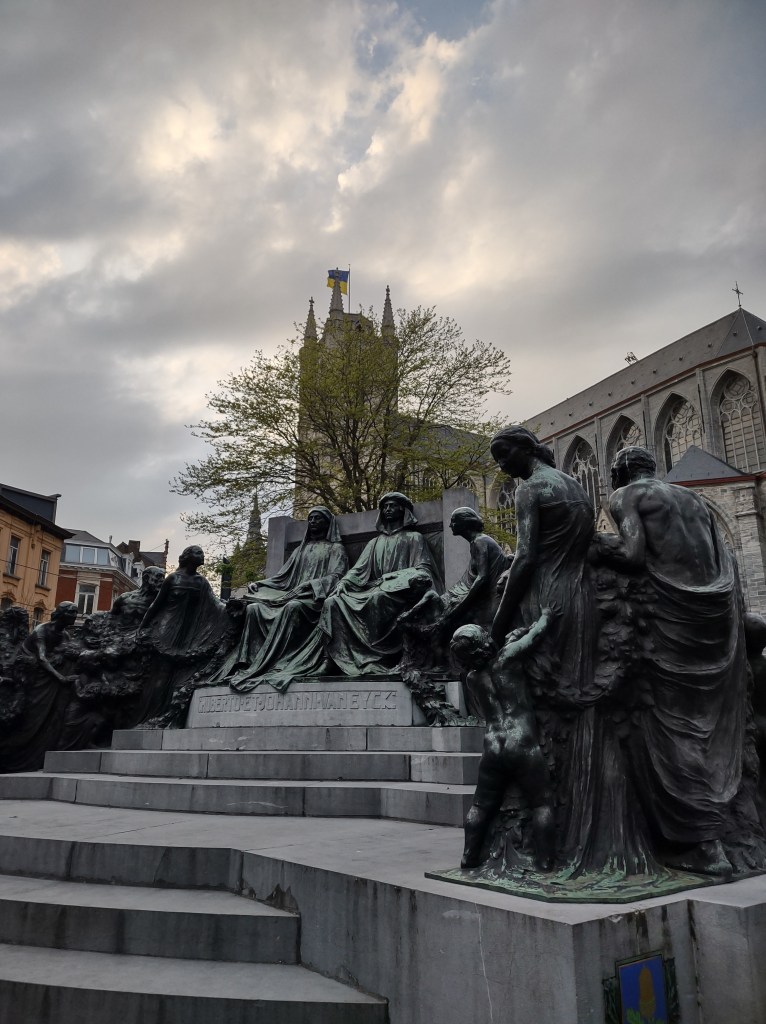
Its creators, the Van Eyck brothers, sit proudly in front of the cathedral in this sculpture dating from Ghent’s hosting of the World’s Fair in 1913. The city of Ghent has always produced sublime artists, from the Van Eycks of the late Middle Ages all the way down the years to their modern equivalent, Kevin de Bruyne.
But all that wealth couldn’t protect Ghent from the dynastic struggles of the time – nobles against counts, city against city, France vs Flanders, the Hundred Years War (Ghent sided with England because it needed the wool). There was the odd battle, the odd defeat, and so forth, and it ended up the hands of the Dukes of Burgundy. In the late 15th century Flanders passed from Burgundy to the House of Habsburg, just in time for the coming of Protestantism and religious war.
And that’s where the fun started.
 orwellianTwo
Excellent post Phil, a lovely historical blog.( a Google searcher! )
LikeLike
Glad you liked it! Another one coming soon
LikeLike