First there were the Guanches.
Probably of North African Berber descent, the original inhabitants of the Canaries were cave-dwelling folk but more sophisticated than that might sound. Unfortunately for them, in the 15th century their island home off the coast of North Africa was right on the route to India and the Spice Islands that the Spanish and Portuguese were finding useful for getting around the pesky Turks in the eastern Mediterranean.
In 1478 the Castilians decided to take Gran Canaria for themselves. A naval man called Juan Rejón led the expedition and on 24th June they disembarked at a decent spot near a river mouth at the north-east end of the island. There’s a very slight rise away from the river, and for strategic reasons Rejón based his camp upon it.
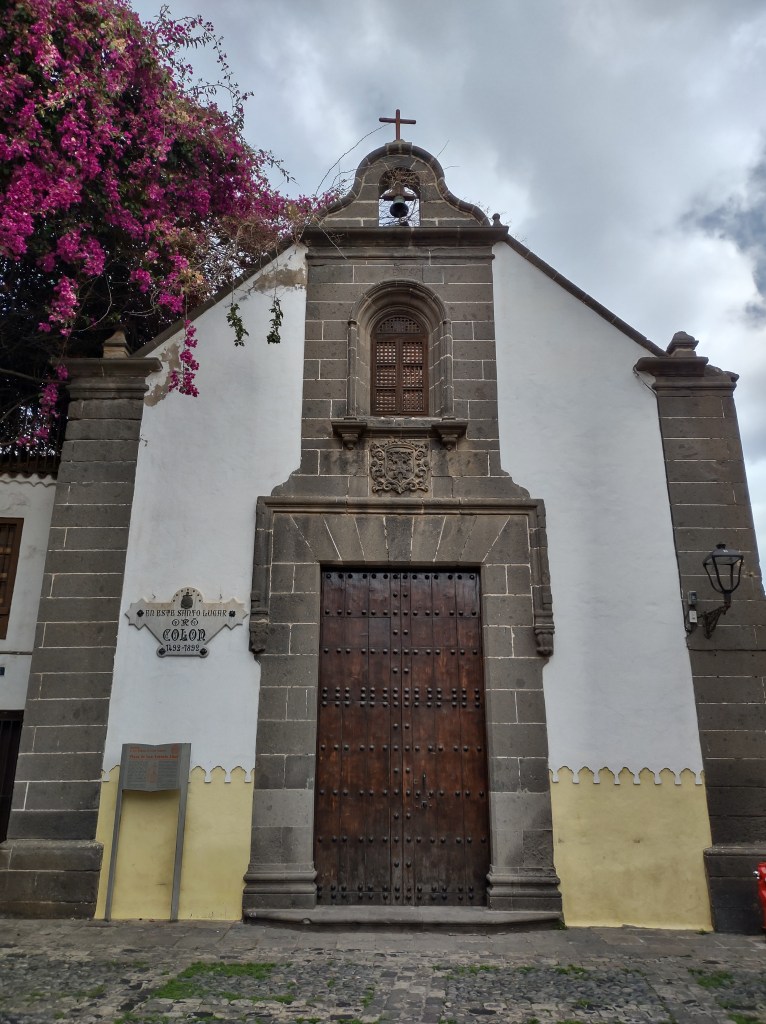
There was another reason why the special Juan liked the spot. Just down the road to the right of the church there was a little grove he could use as a landmark wherever he was on site.
Easily spotted. It had three palm trees.
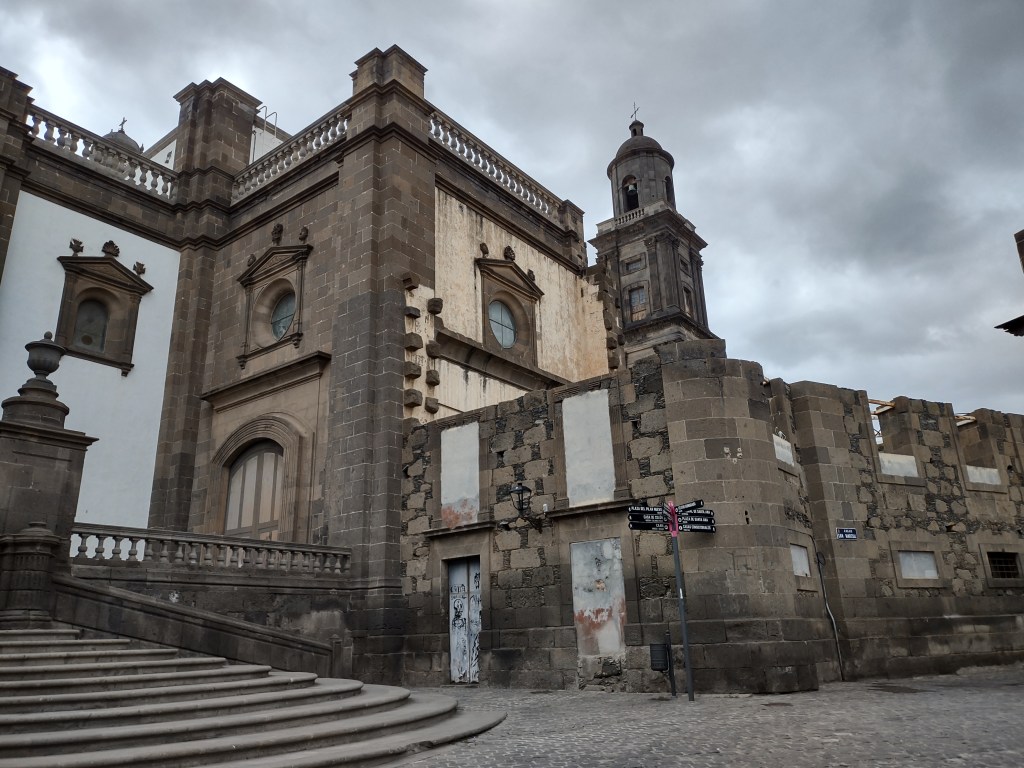
With the poor Guanches finally dealt with in 1483, El Real de Las Palmas, as the city came to be known, developed and soon the devout, Inquisition-loving Spaniards were building themselves a cathedral and a nice square to go with it just to show who’s boss.
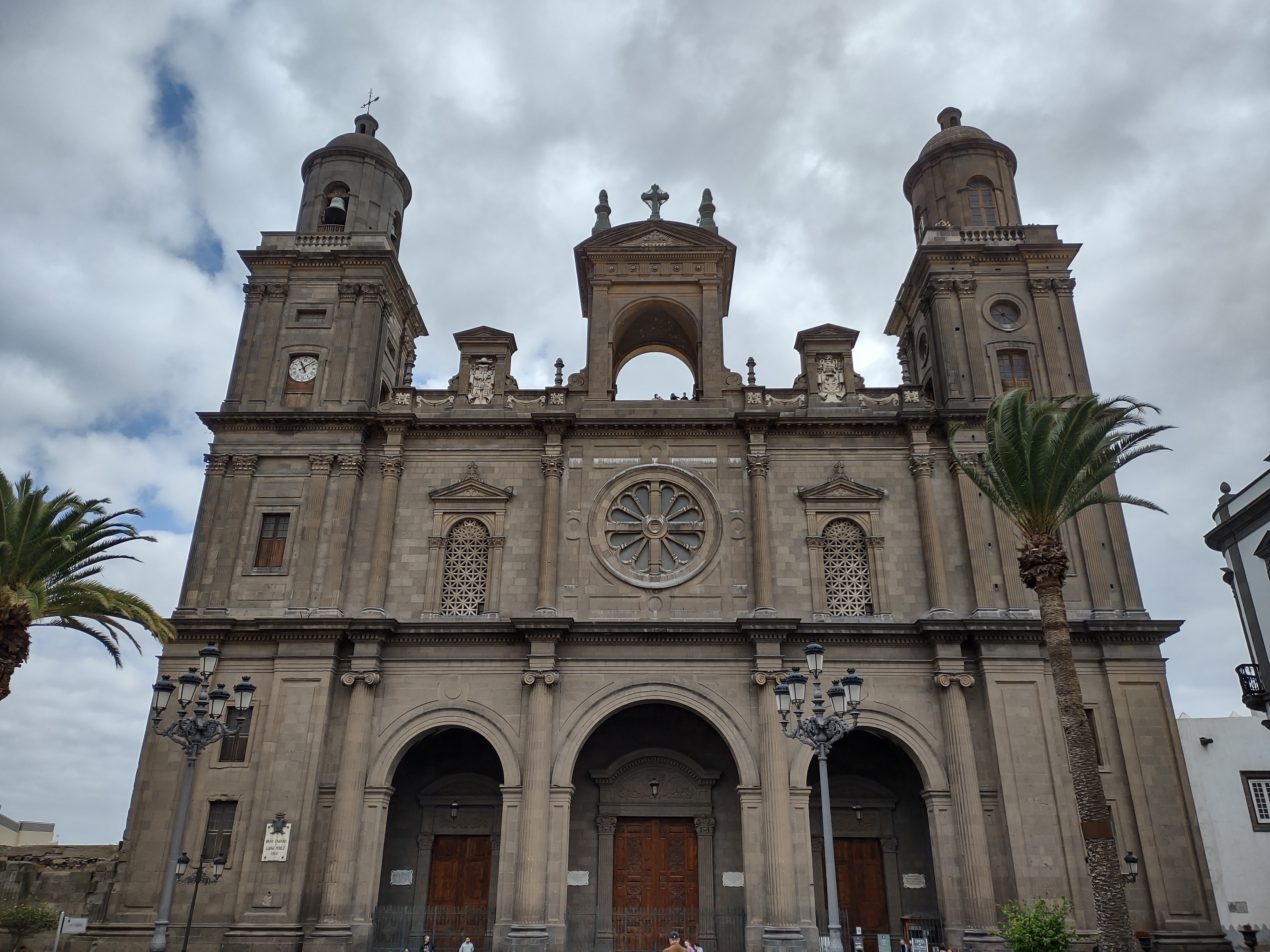
The Catedral de Santa Ana began construction in 1497 but for various reasons it wasn’t completed until the 20th century. Reasons ranged from financial difficulties all the way to the Dutch – no, not architects or subcontractors, but a raiding party in 1599 who managed to destroy some of the town before being kicked out.
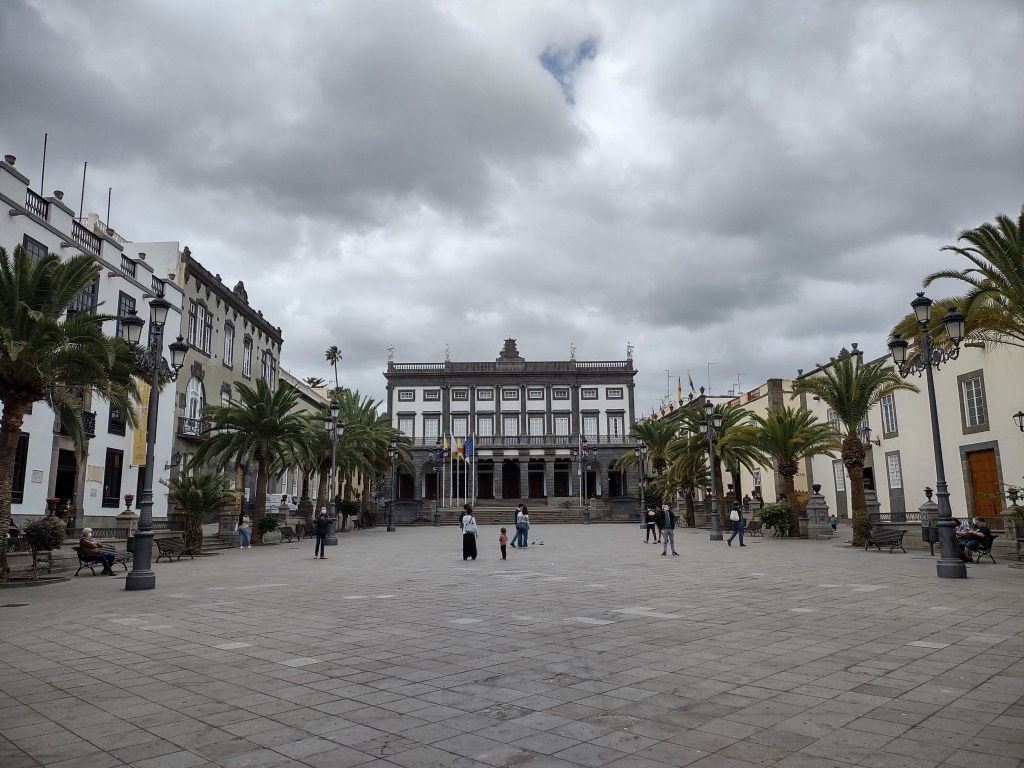
Turning away from the cathedral we see Plaza de Santa Ana, with its bishop’s seat to the right, town hall in front, very much the seat of power in the island.
Soon Christopher Columbus was popping by on his way to, er, “India”. He met some local officials in the house below to discuss getting supplies for his ships, and other matters.
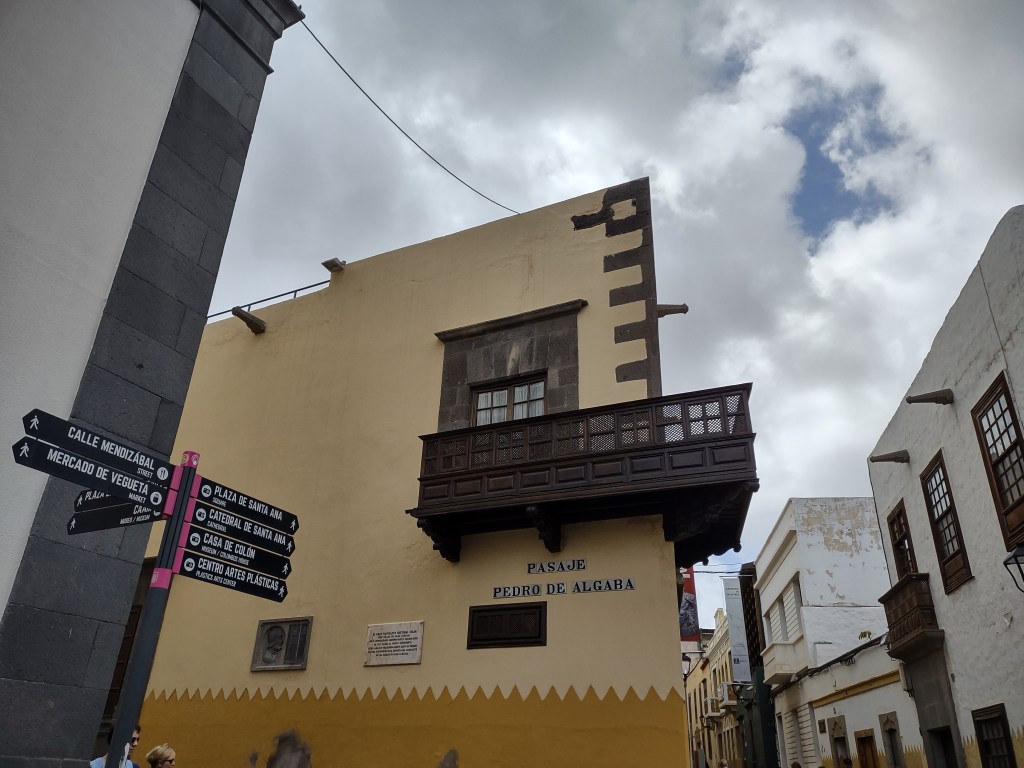
Expert opinion seems to think that all he did here was talk and he actually stayed somewhere else, most likely on his ship. But put Columbus’ name to anything and you have a tourist attraction, and the Casa de Colón is now a museum dedicated to the man and the connection between Las Palmas and the exploration of America.
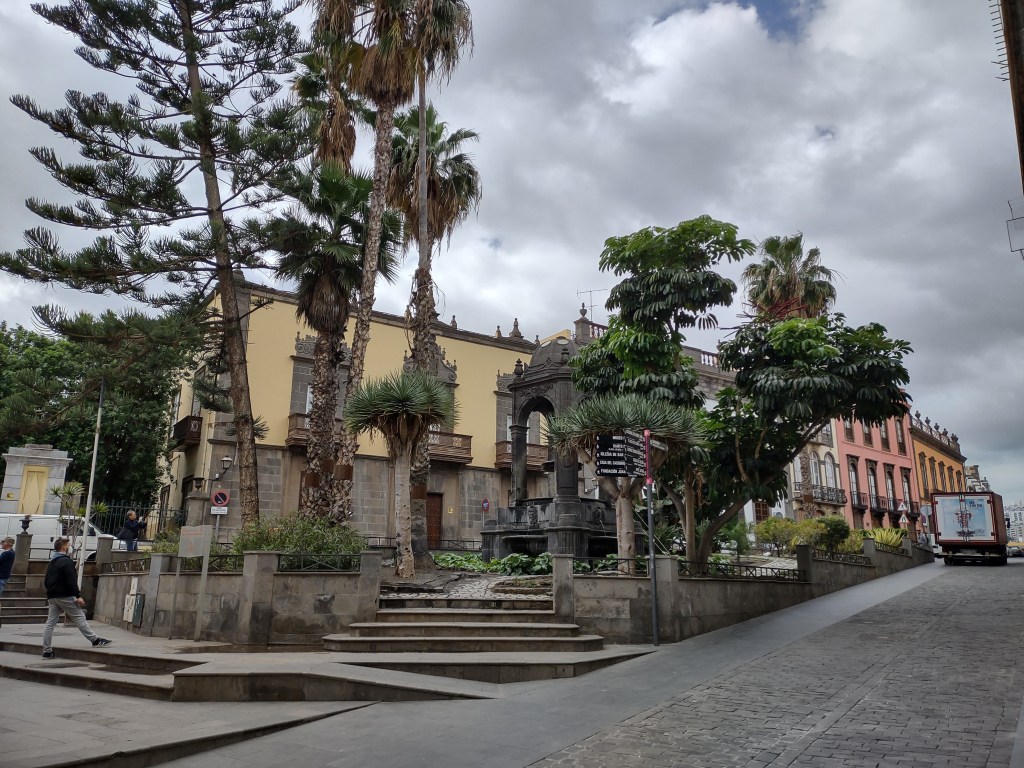
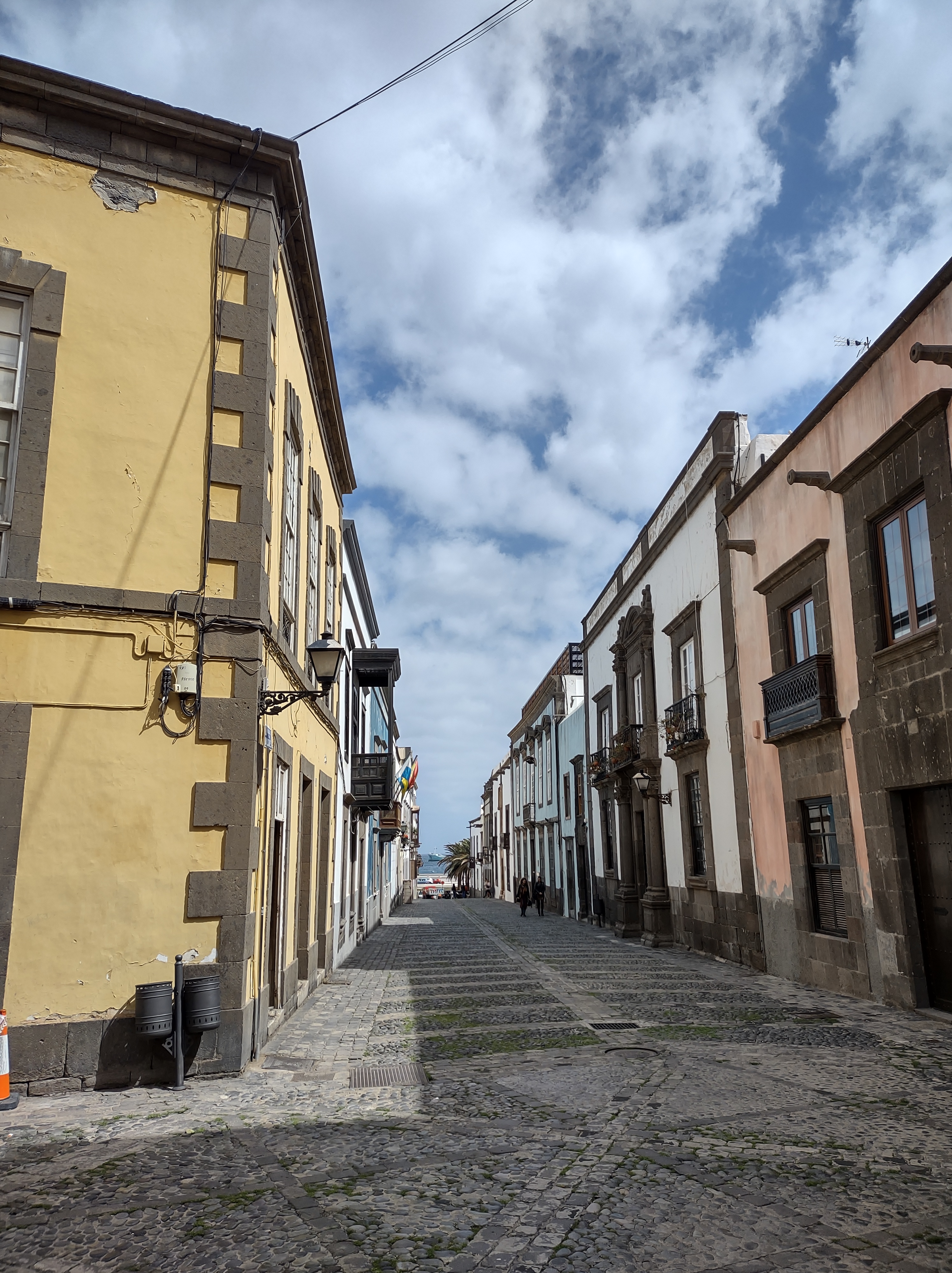
Over time a major port was developed a mile or two north and the new Las Palmas developed around it. The old capital rather vegetated into a lovely old quarter called Vegueta, full of atmospheric stone-washed alleyways overhung by wooden colonial-style balconies.
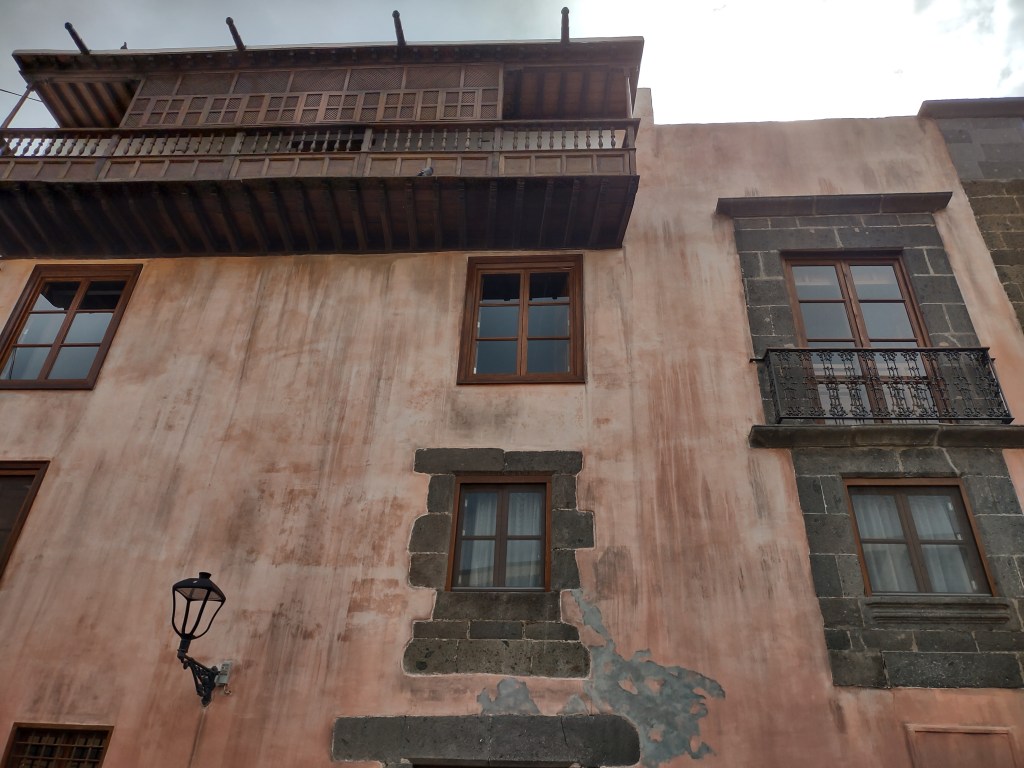
And apparently loved by the stars too. The old town is well preserved, so the tattiness of this house must be intentional. At the time they were using it as a film backdrop for something set in Havana but there was no sign of a film crew when my walking tour passed through, nor the main star – Jennifer Lopez.
If you’re in Las Palmas, or on the island, Vegueta is well worth half a day of your time. But soon I was back on the sightseeing bus to the new big city, camera in pocket…

 orwellianTwo
Leave a comment