Taking a Ganda

A great and beautiful medieval Flemish town, towering churches laden with masterpieces, opulent guildhalls and atmospheric spaces overlooking dreamy rivers and canals, and the best thing about it… it’s not Bruges.
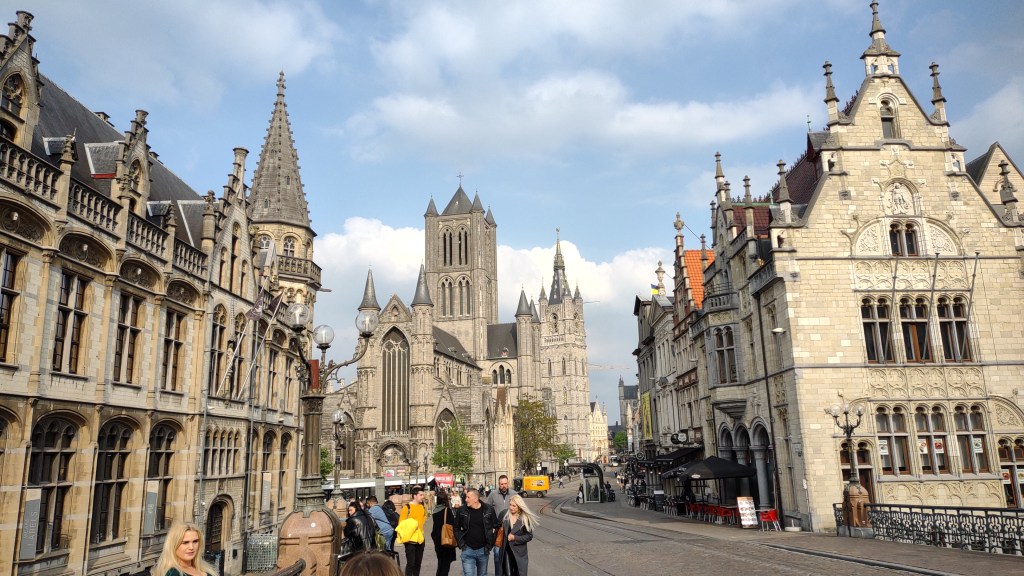
When I mentioned to people that I was in Ghent, someone responded that it looked good from my photos but they had had to Google it first. Everyone has heard of Bruges, and the result is that you can hardly move for your fellow visitors. Ghent gets its share of tourists, but to date this vibrant university city has been thriving happily under the broader travel radar and that means the place feels manageable and  – unlike Bruges when I was there three years ago – you can actually move.

Maybe it helps that the center of Ghent is more expansive and the streets wider, but then again that itself is a case against the sheep-like nature of tourism. The reason Ghent is bigger is that at one time during the Middle Ages it was just about the most significant European city north of the Alps. But we’re getting ahead of ourselves.
You usually find a long-standing settlement near rivers, and there has been a settlement at the confluence of the Lys and Scheldt rivers since prehistoric times. The Celts were recorded here first, and a Celtic word for confluence is Ganda. The French still call it Gand. You see where I’m going here. The Romans moved in, followed by the Franks, followed – terrifyingly – by the Vikings.

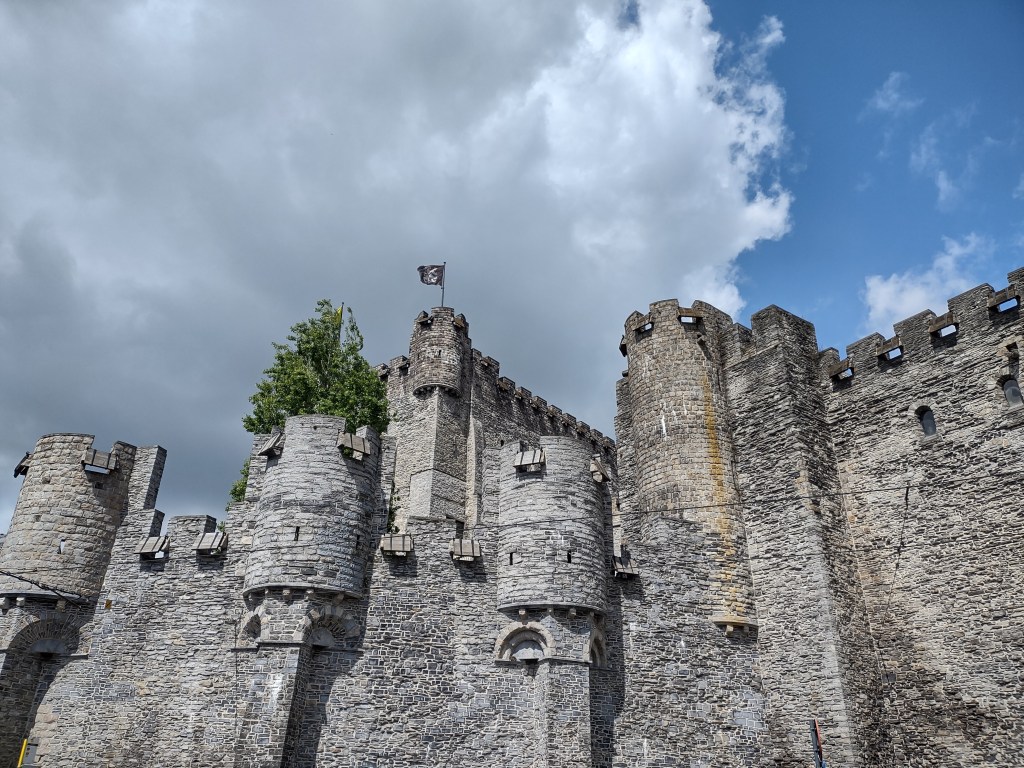
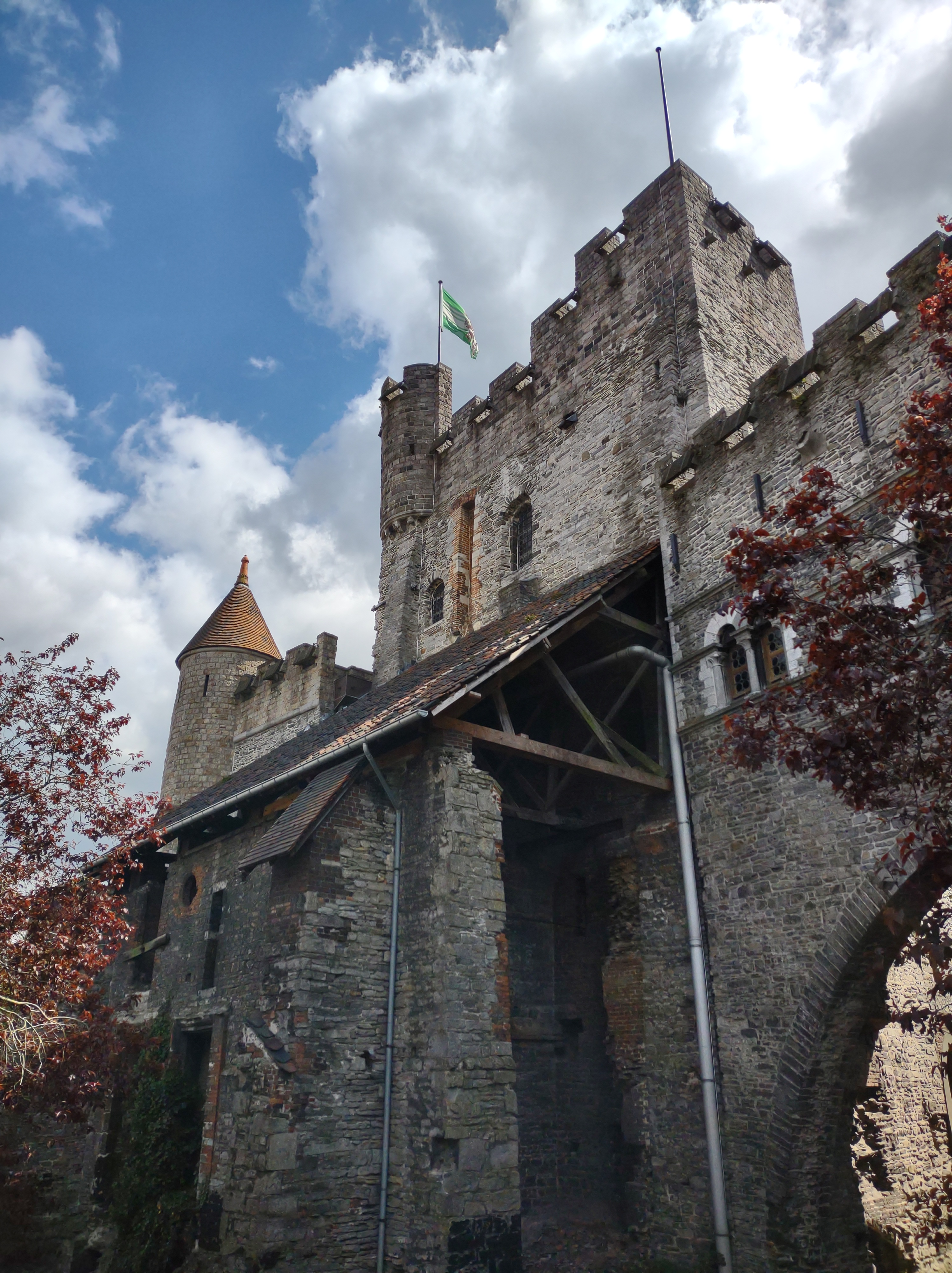
The settlement recovered and prospered, and by 1180, under the protection of the Count of Flanders, its notable citizens were rich enough to start building their houses in stone. The Count, one Philip of Alsace, found the city nobles to be, well, right city burghers. To put them in their place in 1180 he built his own collosal stone house, and in a style that would dissuade them from chatting over the garden fence about house prices.

The Gravensteen.
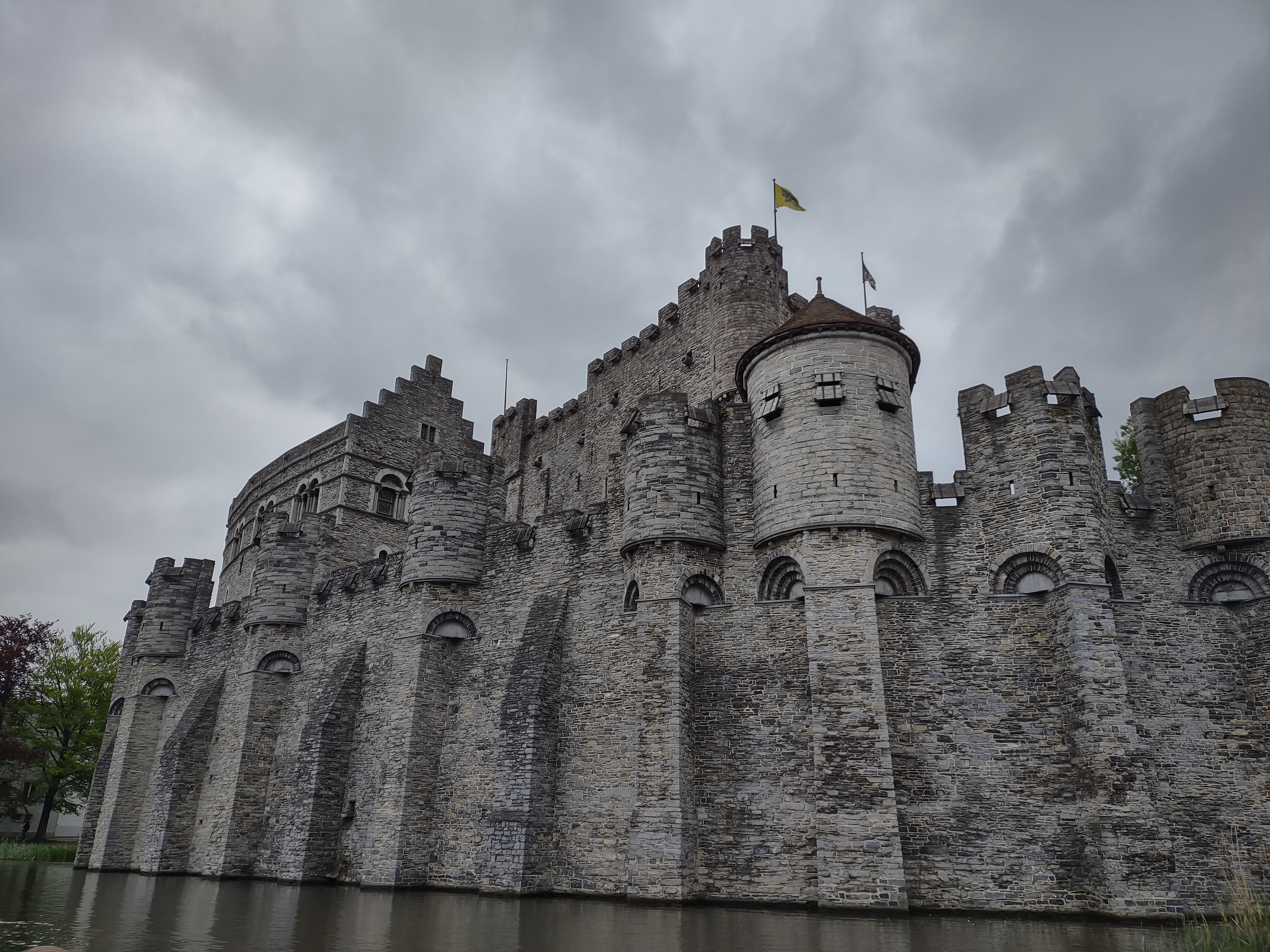
“No cold-callers please, the burning oil from the ramparts will not keep you cold for long.”

The Stone Castle of the Counts was used as their residence until 1353, from which point it was variously used as a court, prison, torture chamber, and nice stuff like that. Today’s Gravensteen is one of Ghent’s most popular attractions, which pays the bills until it manages to hire out its name to a villain in the next Harry Potter franchise blockbuster.

Message received, the city notables went on with their own business. And their own business was booming. There were plenty of sheep in the marshland of Flanders and Ghent got super-rich on making cloth out of the wool. The city-state grew and by the 13th century there were 60,000 people living here.

And if you got it, you flaunt it.
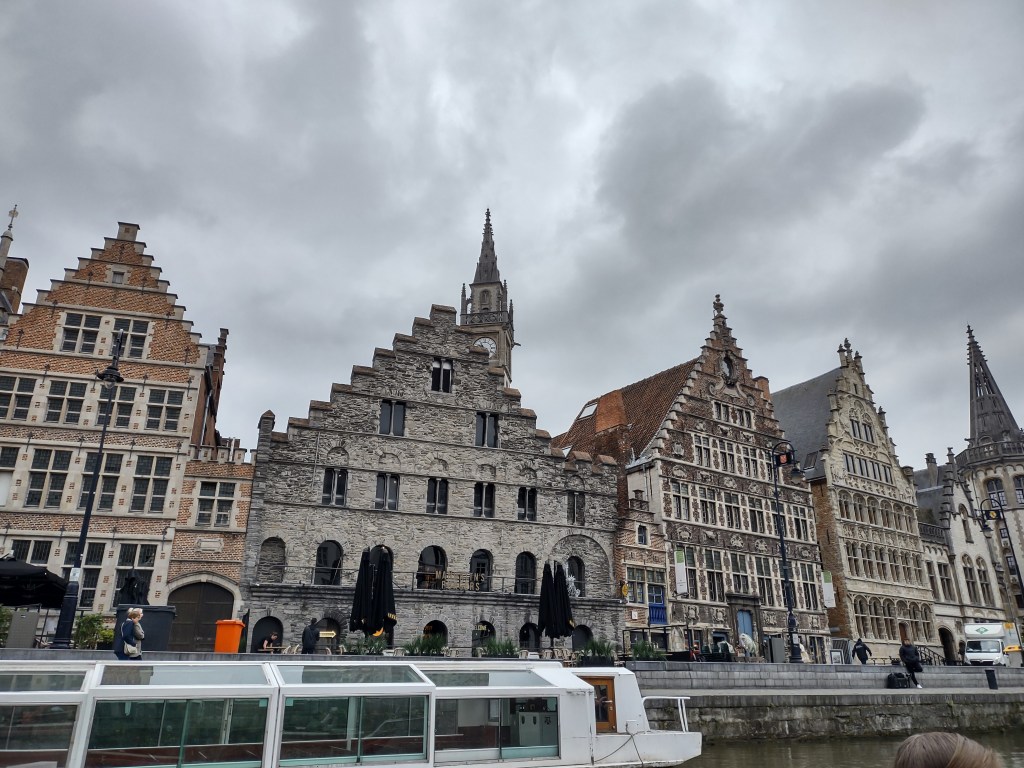
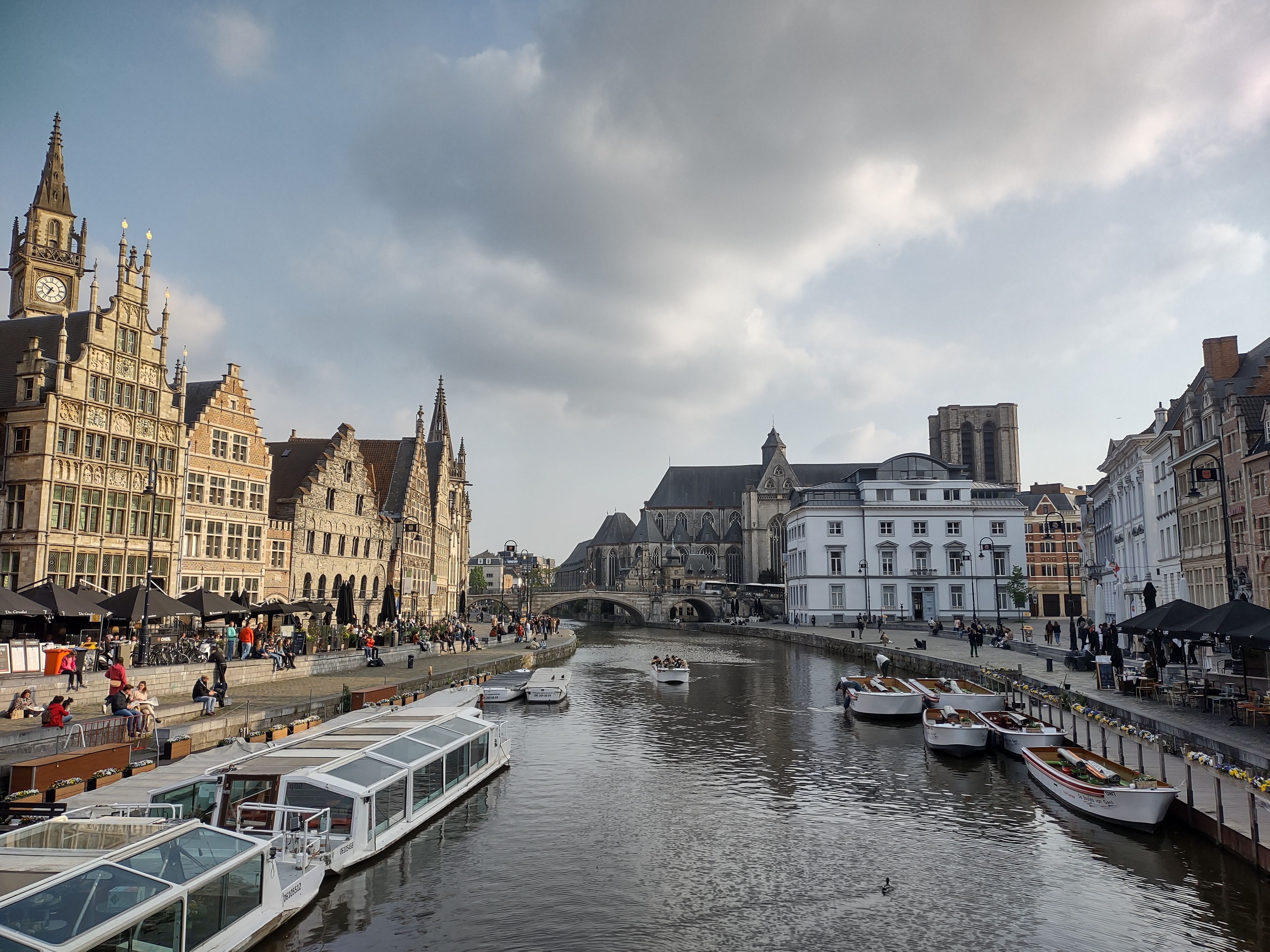
The splendid guildhalls of the Graslei

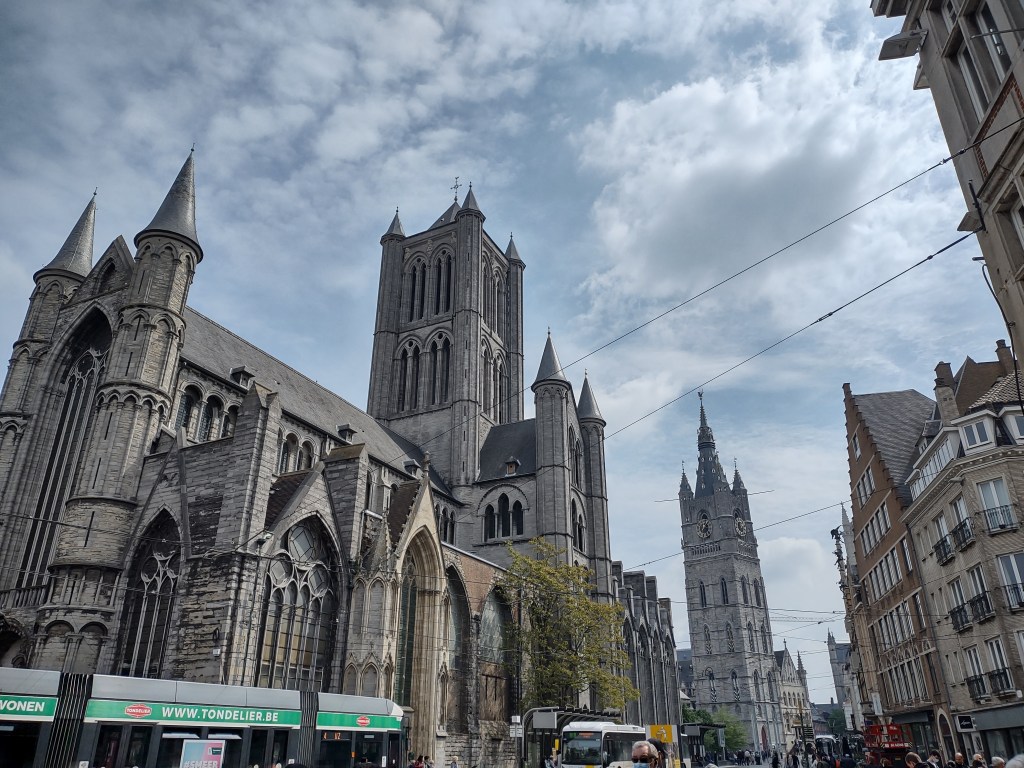
The historic centre of Ghent has two great cathedrals, St Nicholas and St Bavo. Here’s old Nick in all its glory, and behind it the Belfort, the great belfry symbolising Ghent’s independence and power.
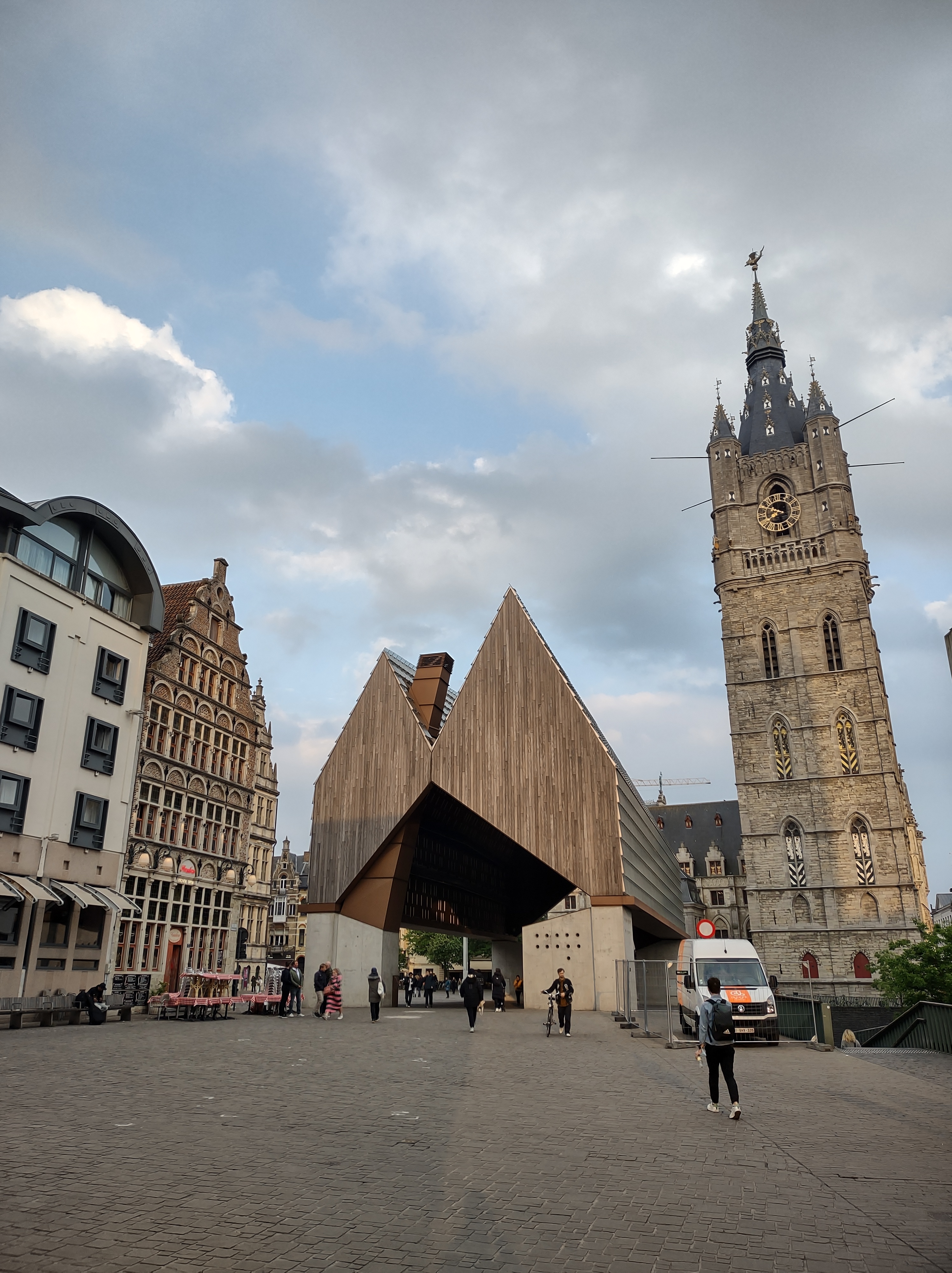
Belfort again, with the Stadhals, some modern thing

And as was common at the time, with great money came great art. St Bavo’s has the jewel, the world-famous Ghent Altarpiece and its Mystic Lamb, a precursor of the Renaissance and considered one of the most significant masterpieces in Western art.
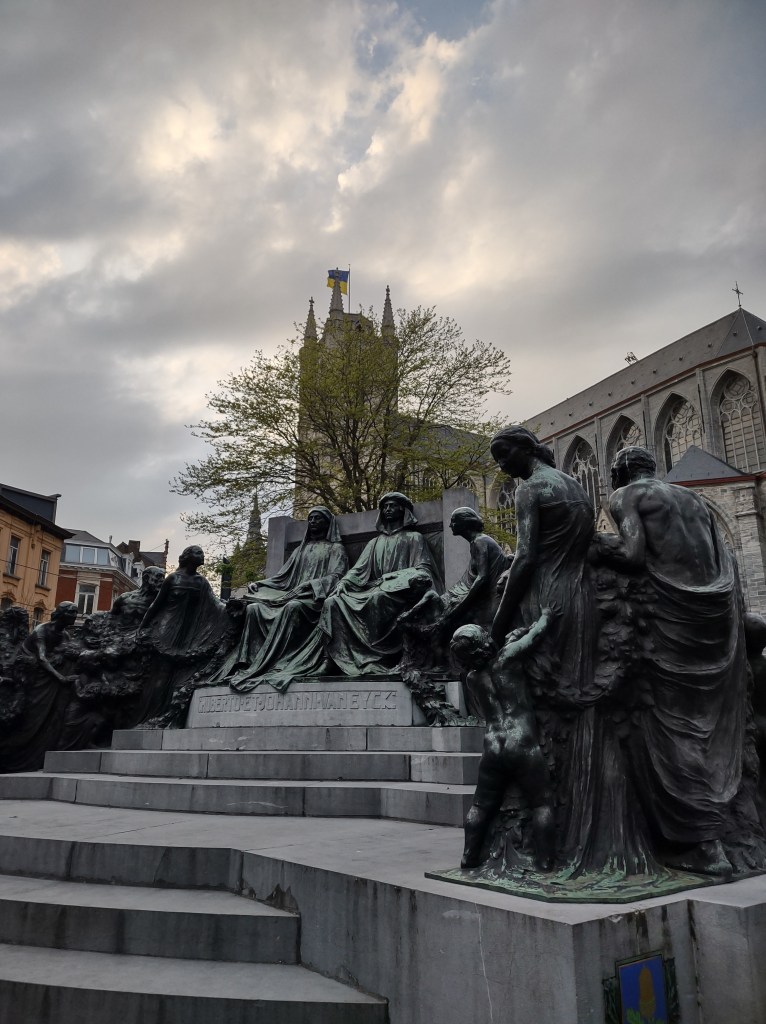
Its creators, the Van Eyck brothers, sit proudly in front of the cathedral in this sculpture dating from Ghent’s hosting of the World’s Fair in 1913. The city of Ghent has always produced sublime artists, from the Van Eycks of the late Middle Ages all the way down the years to their modern equivalent, Kevin de Bruyne.

But all that wealth couldn’t protect Ghent from the dynastic struggles of the time – nobles against counts, city against city, France vs Flanders, the Hundred Years War (Ghent sided with England because it needed the wool). There was the odd battle, the odd defeat, and so forth, and it ended up the hands of the Dukes of Burgundy. In the late 15th century Flanders passed from Burgundy to the House of Habsburg, just in time for the coming of Protestantism and religious war.

And that’s where the fun started.
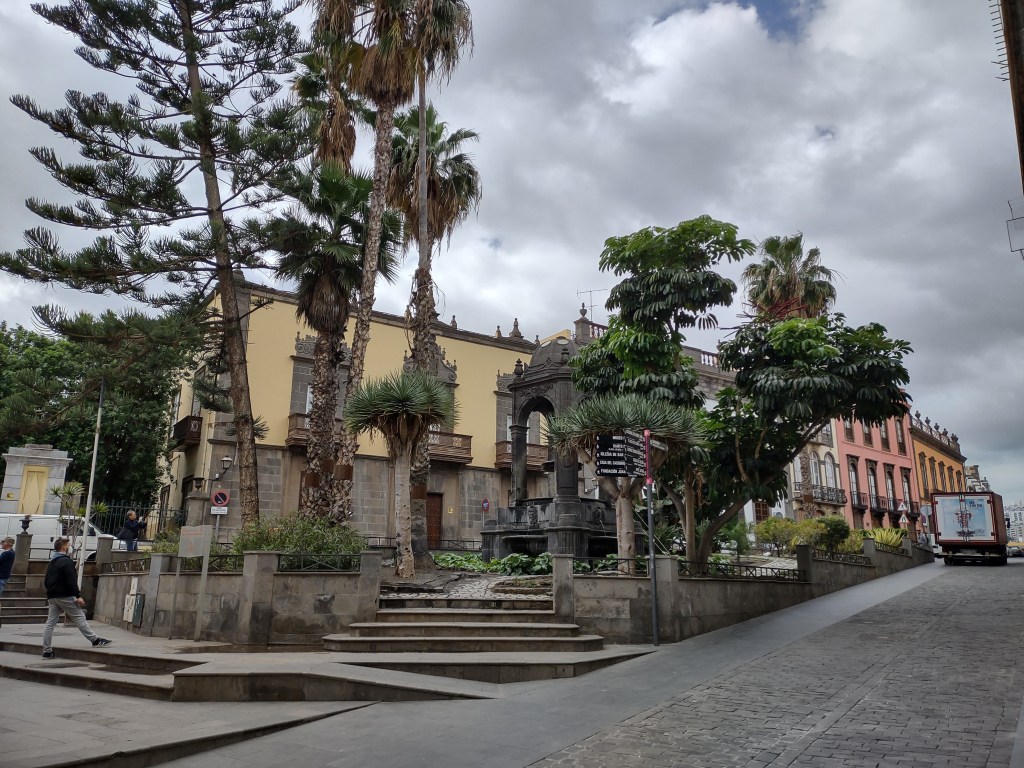
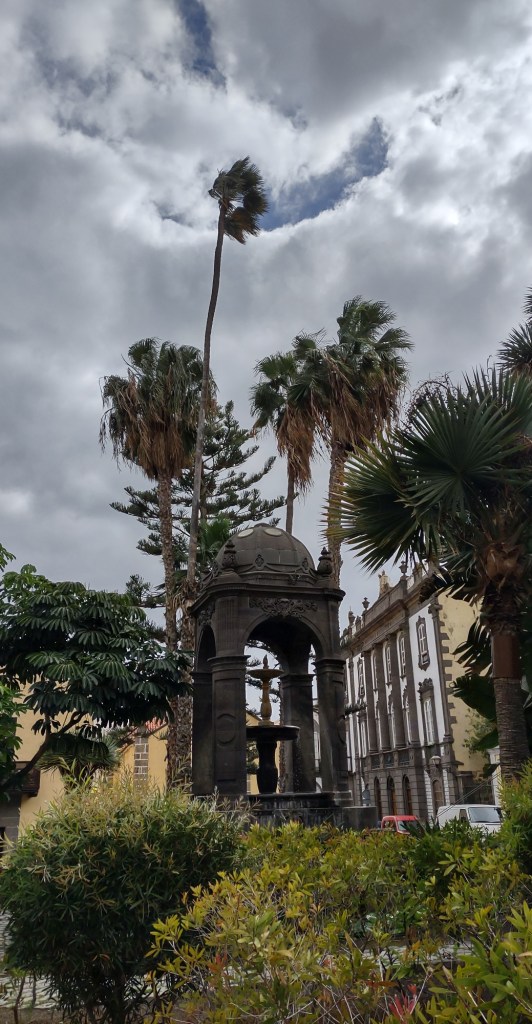
The three palms

First there were the Guanches.

Probably of North African Berber descent, the original inhabitants of the Canaries were cave-dwelling folk but more sophisticated than that might sound. Unfortunately for them, in the 15th century their island home off the coast of North Africa was right on the route to India and the Spice Islands that the Spanish and Portuguese were finding useful for getting around the pesky Turks in the eastern Mediterranean.

In 1478 the Castilians decided to take Gran Canaria for themselves. A naval man called Juan Rejón led the expedition and on 24th June they disembarked at a decent spot near a river mouth at the north-east end of the island. There’s a very slight rise away from the river, and for strategic reasons Rejón based his camp upon it.

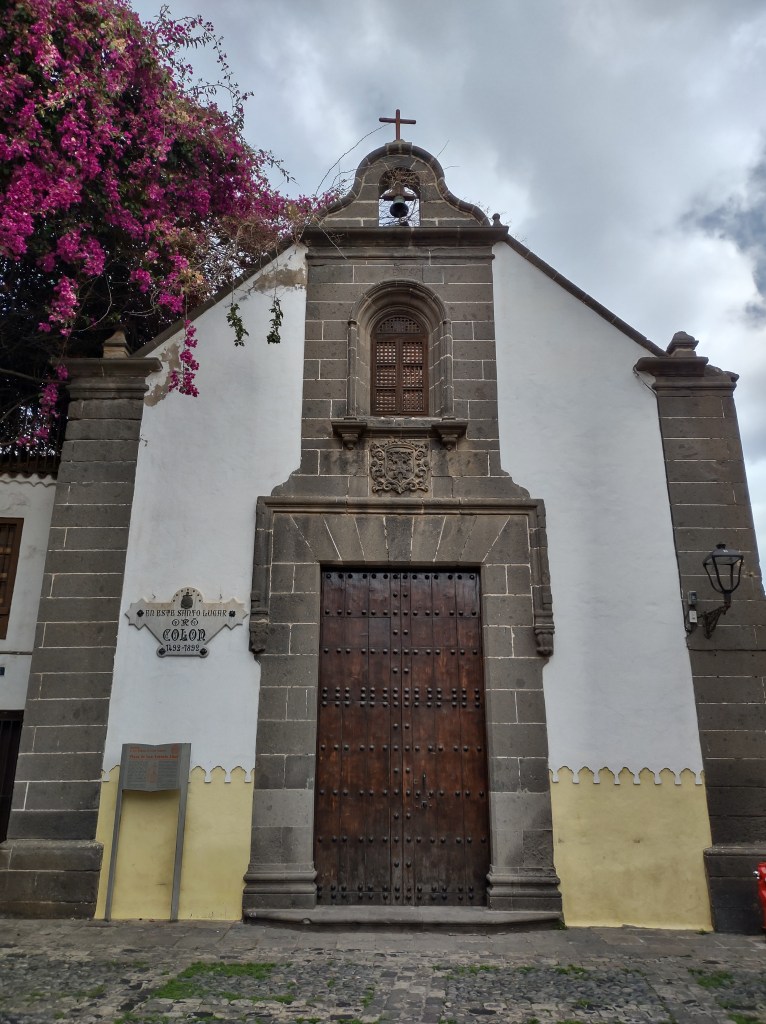
San Antonio Abad hermitage, a rebuild of the first church on Gran Canaria

There was another reason why the special Juan liked the spot. Just down the road to the right of the church there was a little grove he could use as a landmark wherever he was on site.

Easily spotted. It had three palm trees.
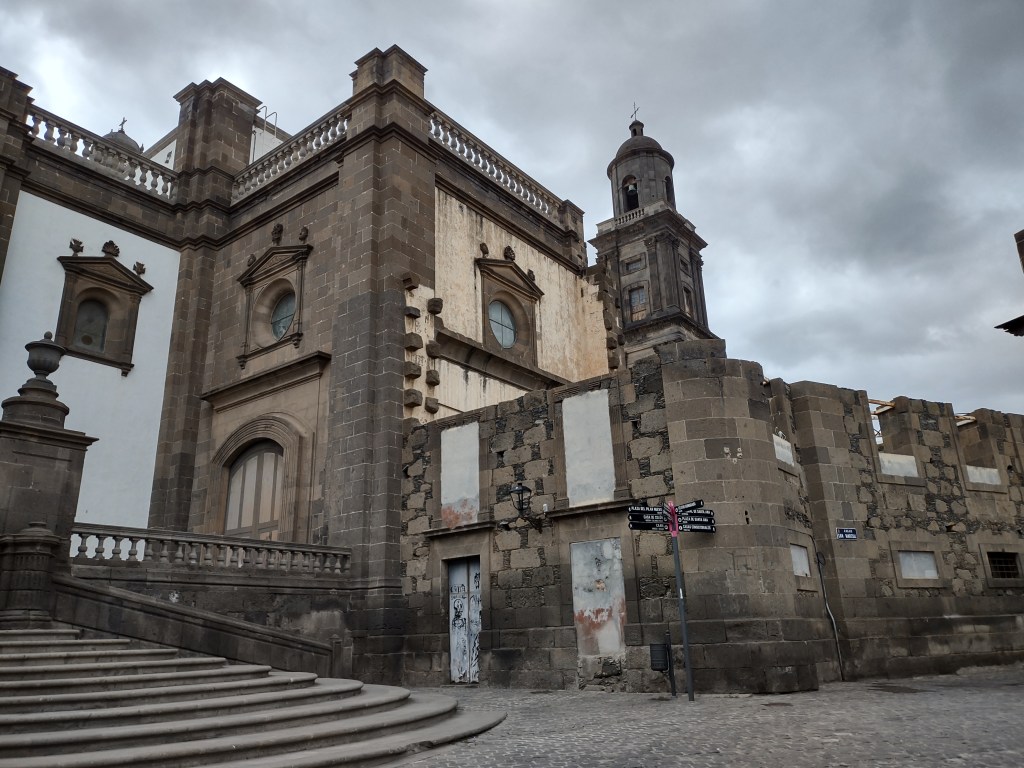
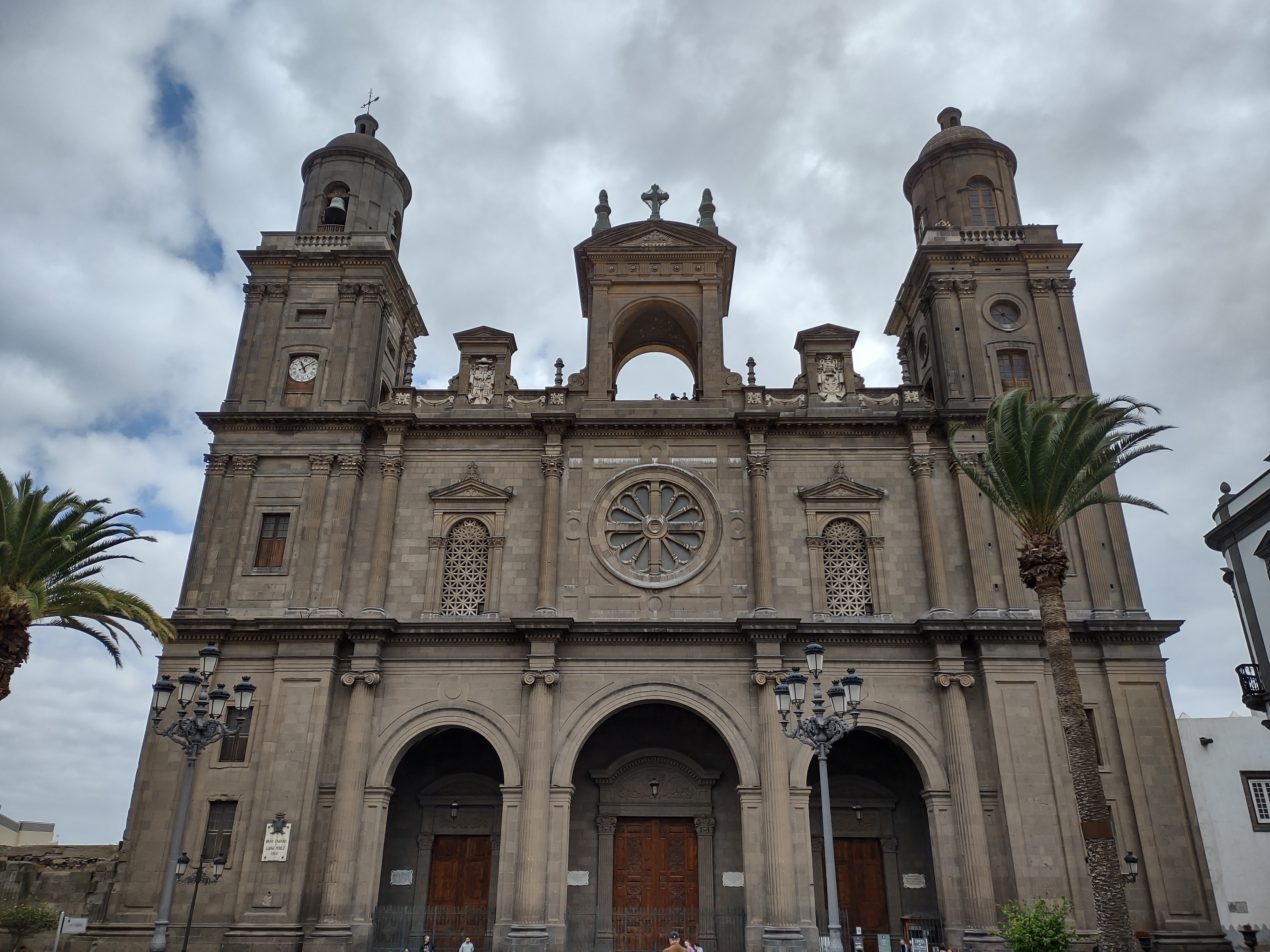
With the poor Guanches finally dealt with in 1483, El Real de Las Palmas, as the city came to be known, developed and soon the devout, Inquisition-loving Spaniards were building themselves a cathedral and a nice square to go with it just to show who’s boss.

The Catedral de Santa Ana began construction in 1497 but for various reasons it wasn’t completed until the 20th century. Reasons ranged from financial difficulties all the way to the Dutch – no, not architects or subcontractors, but a raiding party in 1599 who managed to destroy some of the town before being kicked out.

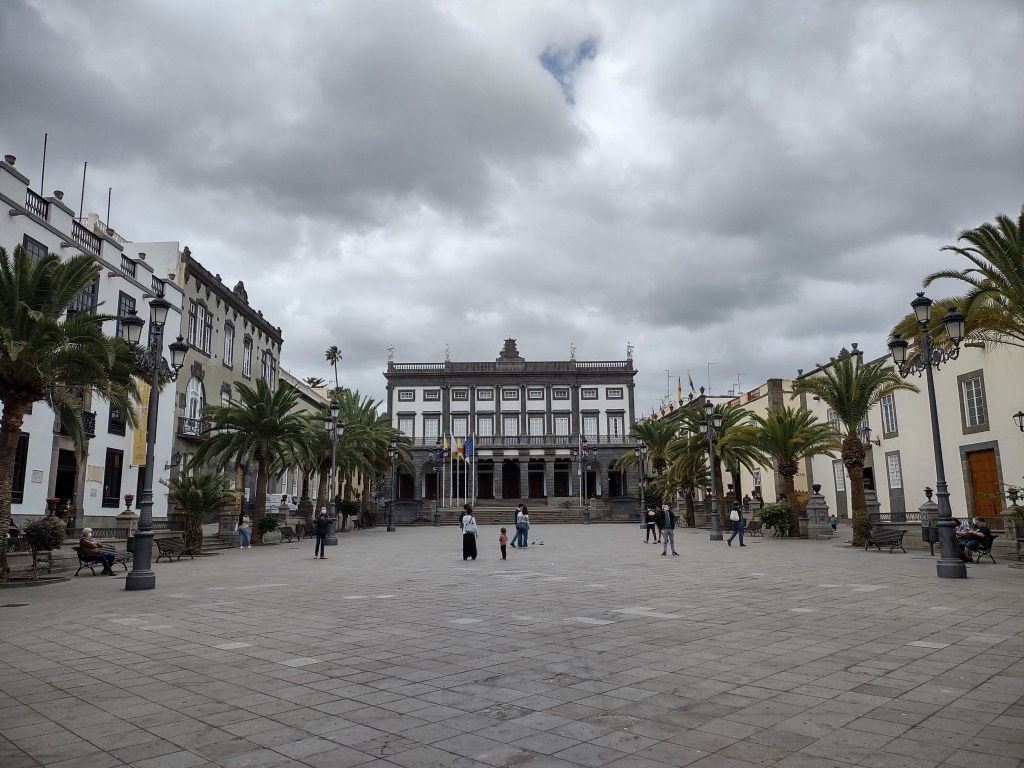
Turning away from the cathedral we see Plaza de Santa Ana, with its bishop’s seat to the right, town hall in front, very much the seat of power in the island.

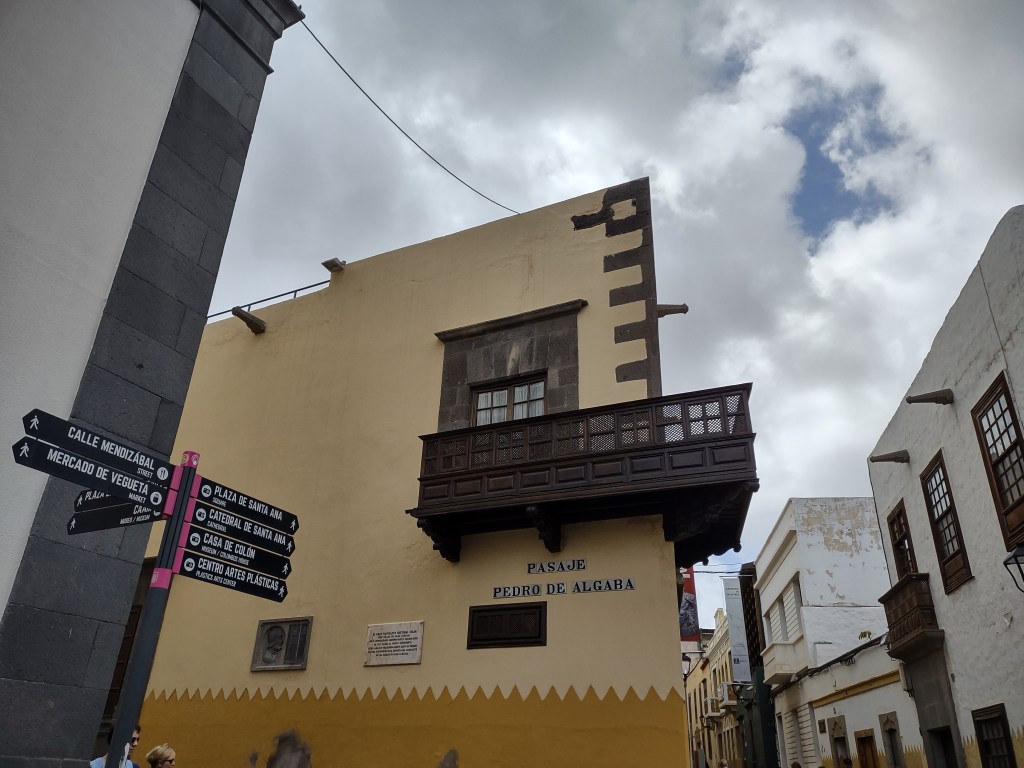
Soon Christopher Columbus was popping by on his way to, er, “India”. He met some local officials in the house below to discuss getting supplies for his ships, and other matters.

Expert opinion seems to think that all he did here was talk and he actually stayed somewhere else, most likely on his ship. But put Columbus’ name to anything and you have a tourist attraction, and the Casa de Colón is now a museum dedicated to the man and the connection between Las Palmas and the exploration of America.

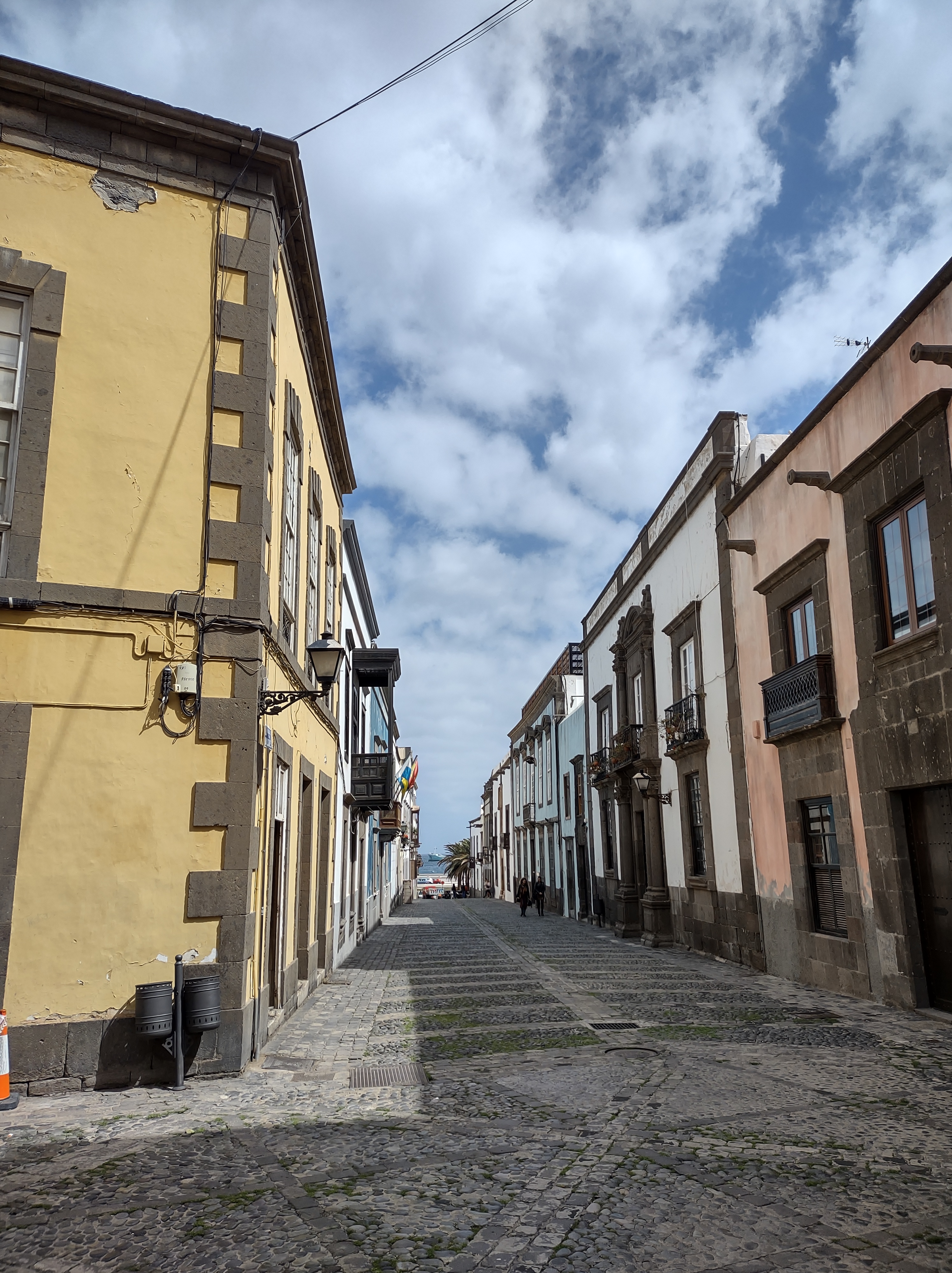
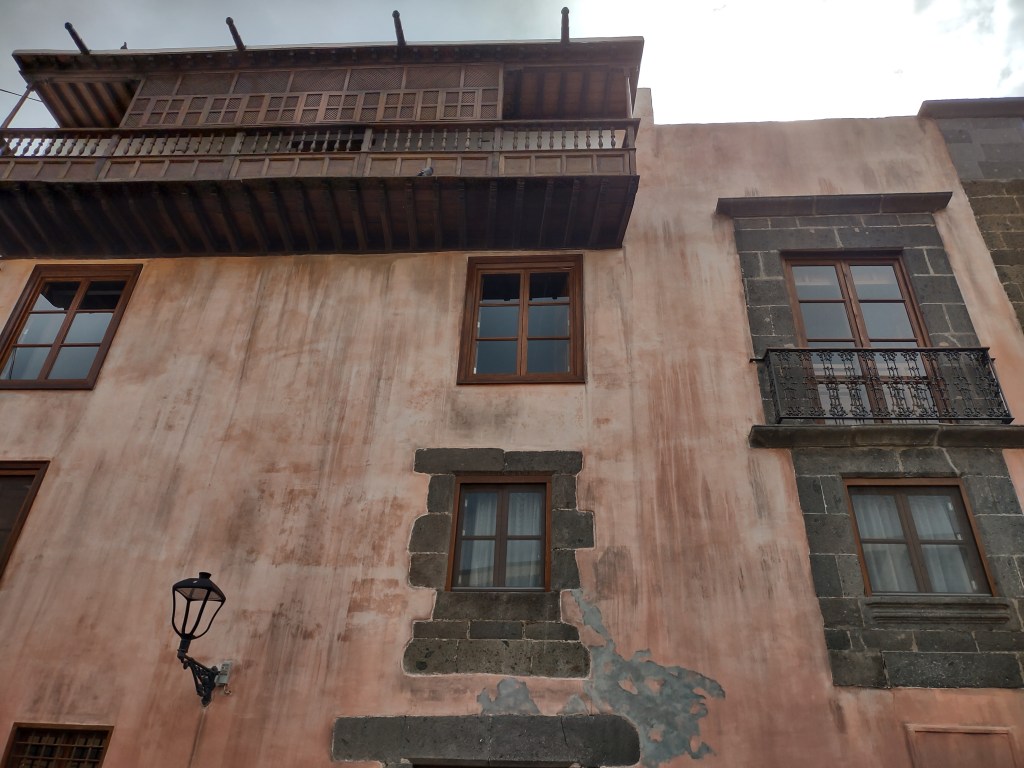
Over time a major port was developed a mile or two north and the new Las Palmas developed around it. The old capital rather vegetated into a lovely old quarter called Vegueta, full of atmospheric stone-washed alleyways overhung by wooden colonial-style balconies.

And apparently loved by the stars too. The old town is well preserved, so the tattiness of this house must be intentional. At the time they were using it as a film backdrop for something set in Havana but there was no sign of a film crew when my walking tour passed through, nor the main star – Jennifer Lopez.

If you’re in Las Palmas, or on the island, Vegueta is well worth half a day of your time. But soon I was back on the sightseeing bus to the new big city, camera in pocket…

Gran Canaria

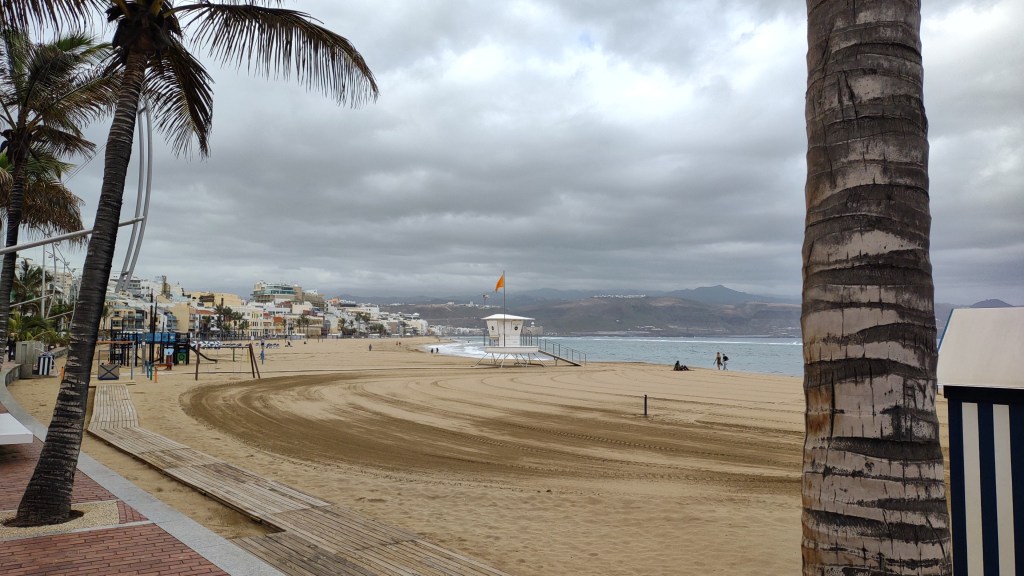
When going to the Canary Islands,  where you decide to stay depends on how you feel about the weather.

No not the chilly blast of late-February in Britain, but the weather on the islands – particularly across an island. On the two largest islands, Tenerife and Gran Canaria, the north-easterly trade winds coupled with the mountainous interior mean that southern resorts like Playa de las Americas and Maspalomas are usually slightly warmer and less windy than northern towns like Puerto de la Cruz and Las Palmas. There you go, winter sunseeker, time to take off those gloves and let your fingers do the booking.

But of course, life is never that simple. Because where you will base yourself for those precious days or weeks away will also depend on how you feel about the resort itself. On Gran Canaria, the warmer south offers sun, sand (lots of it in the sand dunes of Maspalomas), sea and of course, err,…Playa dos Ingles, party magnet for thirsty kids from across Northern Europe with youthful mischief in mind.

That’s perfectly fine. But if you would like a bit more history and authenticity – sorry, any history and authenticity, unless you’re researching the boom in Spanish tourism in the 60s and 70s – dig out that extra layer and come north. Las Palmas is not only the largest city on Gran Canaria, it’s one of the largest in the whole Spanish nation, a vibrant, living cosmopolis that includes a beautiful old town alongside all you’d expect of a great city. In other words, rather more material to blog about.

Of course I hope to see more of this fascinating island than just Las Palmas and I’m hoping to share as much of it with you as possible. But next up, we’ll introduce the big city. So wrap up… actually, don’t overdo it – even up here in the north it’s mild and spring-like in February.

COVID and the Riviera

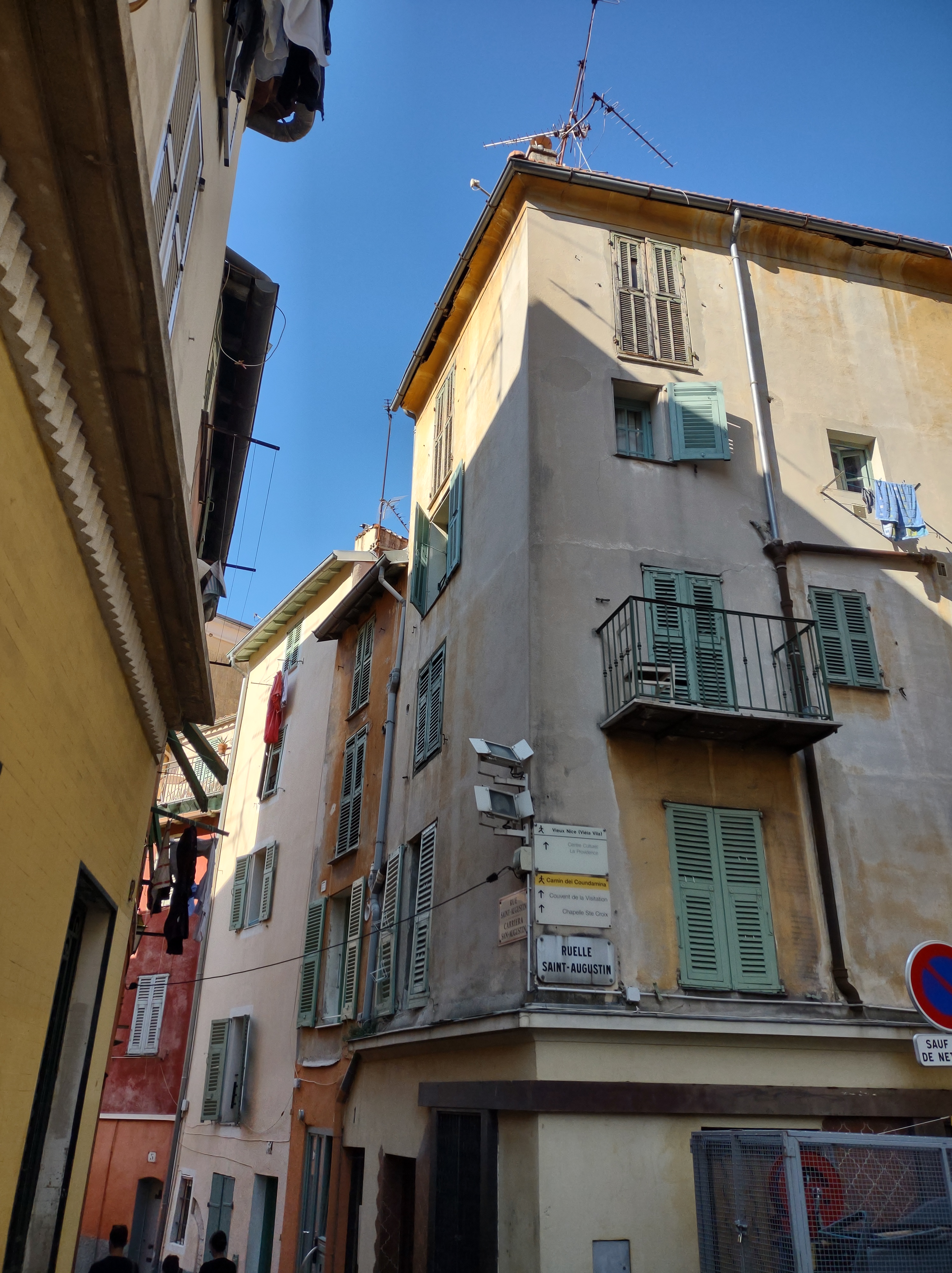
Strolling along the grand promenades and charming side-streets of Nice, you could be forgiven for thinking that the pandemic had melted away just like the clouds in the shimmering blue sky above. But just try going inside any public space – shop, restaurant, tram, hotel – and it’ll be back quicker than you can say “masque obligatoire“. In this post let’s take a moment to look at where France is with COVID right now and how it’s affecting the lives of residents and travellers.

And we’ll do it through the medium of photos and tidbits of information that have nothing to do with COVID whatsoever.

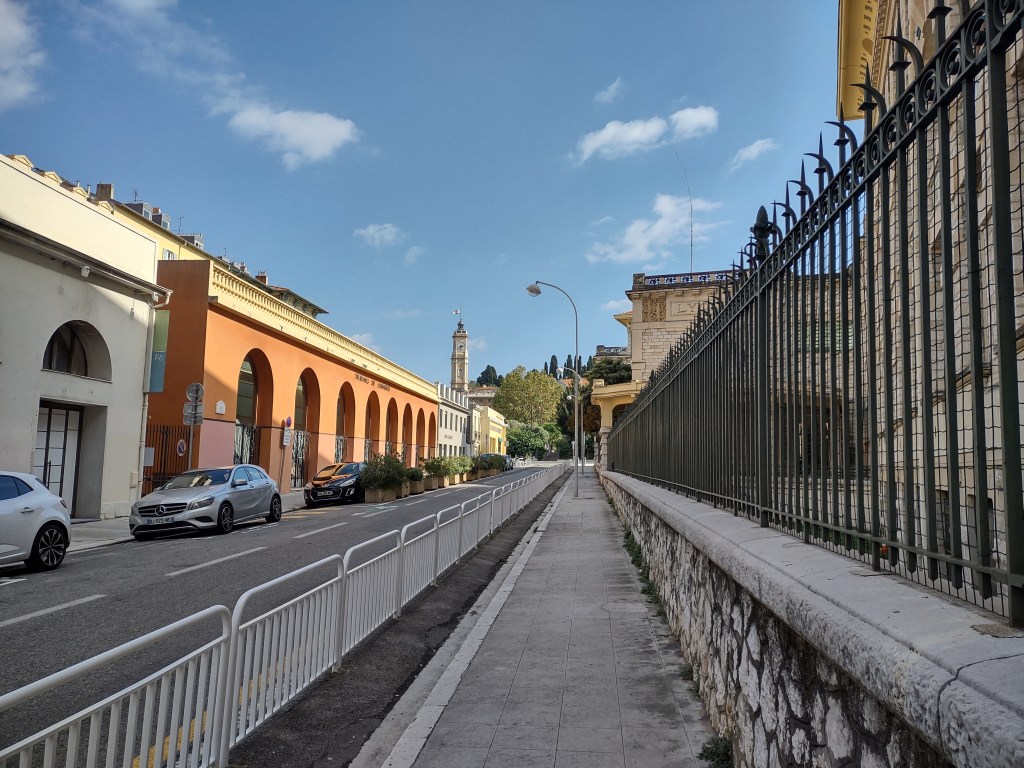
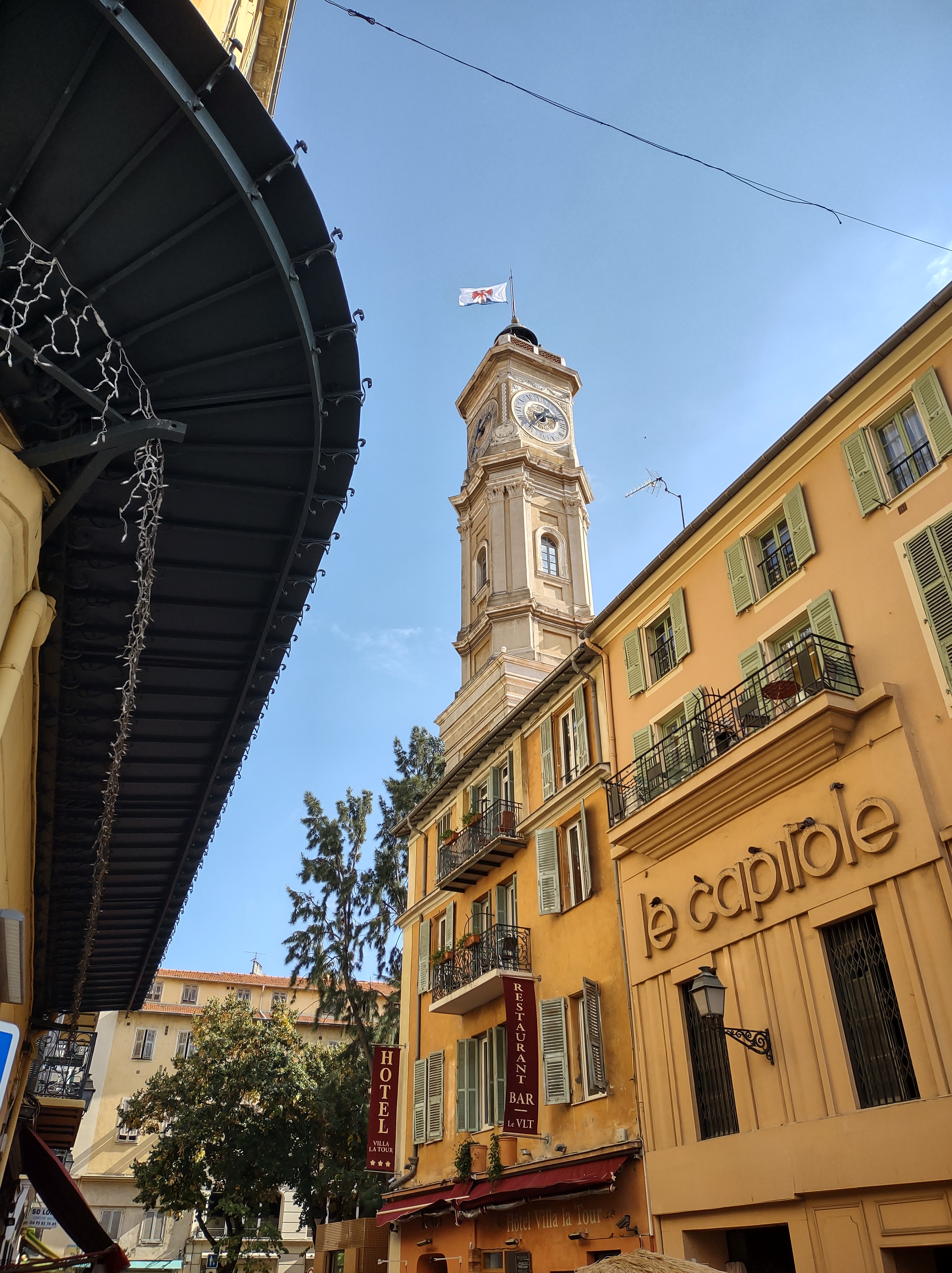
At 50 metres, the Tour St Francois has long stood proud as a symbol of the city below, which it affords fine views of. It was originally built as a clock tower for the adjacent Franciscan monastery before it was dissolved during the Revolution.

I don’t think there’s a bell in there anymore so I can’t tell you how it tolls, but we do know that the toll of COVID on France has been severe.  At time of writing a total of over seven million cases had been reported, and the final bell had been rung on the lives of 118,000 souls. France was one of the European nations that became the epicentre of the pandemic in March 2020 and its approach has usually been more forthright than in the UK (during the first lockdown for example, you needed a letter to be able to leave to your house).

Time to move on. I am happy to take requests and recommendations from readers and others while I’m travelling, and someone I know suggested I take a look at the small neighbouring resort of Villefranche-sur-mer to the east. So off I went and hopped on the 100 bus at the stop by the Vieux Port.

And promptly hopped off again when the driver told us waiting passengers we needed to go to some obscure stop “derriere l’eglise“, for some inexplicable reason. Eventually some minutes later another bus did indeed turn up at one of the two stops by the nearby church and we were on our way.

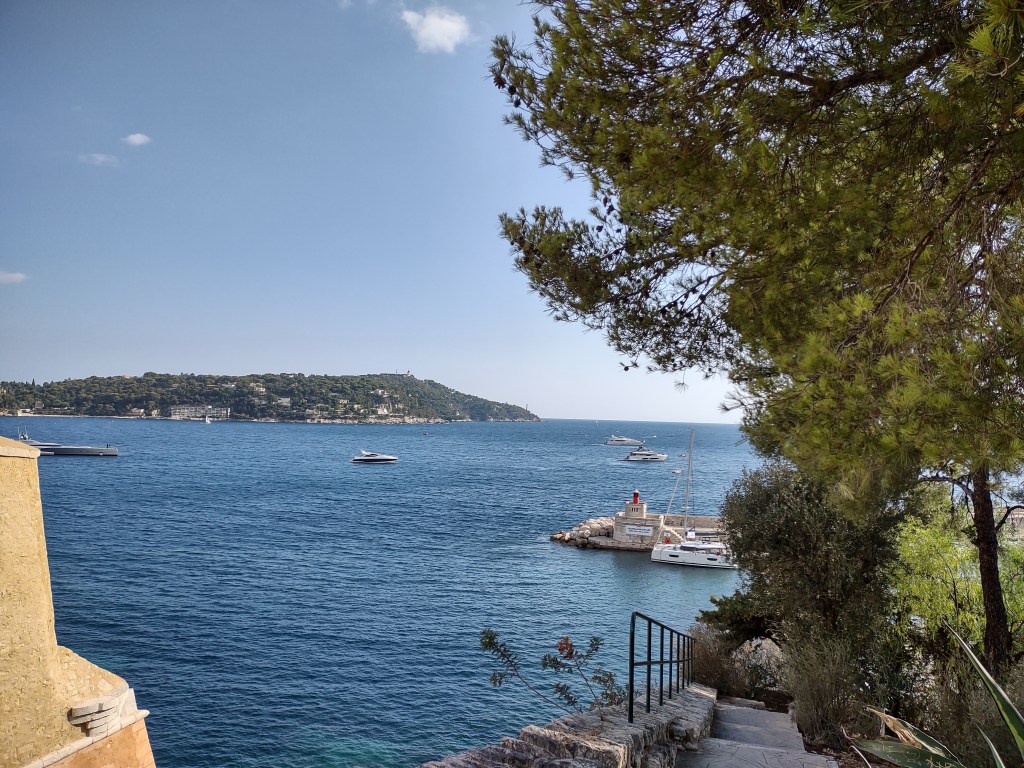
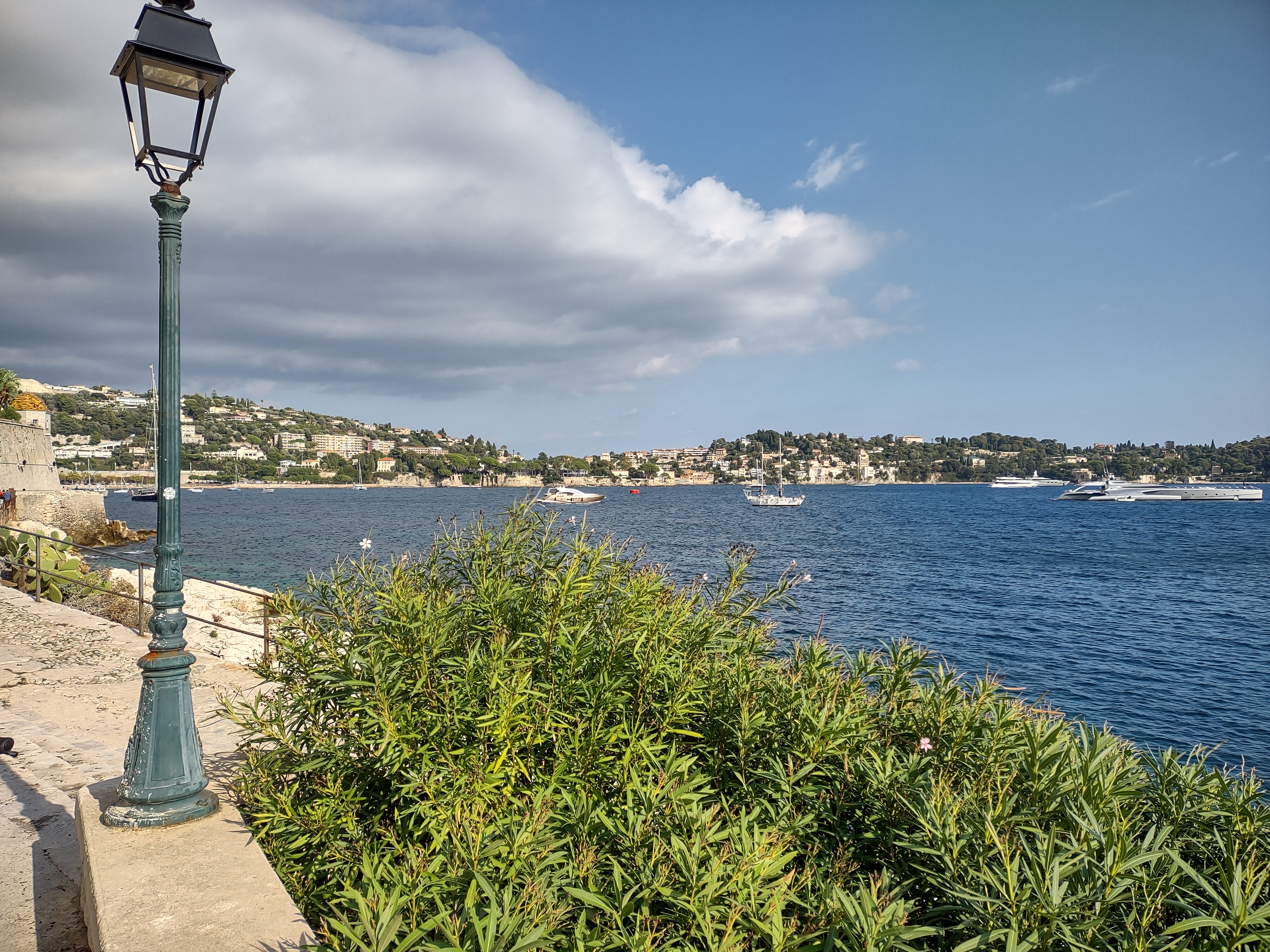
A delightful but busy haven contrasting with the all-out energy of pulsating Nice, steep-lying Villefranche-sur-mer was another of those old sleepy fishing communities that discovered tourism and went for it, in a sleepy fishing village way of course. But the pleasant mask (obligatoire, remember) of relaxed good-times hides another reality. The city of Villefranche has had a surprisingly rich military history down the centuries, and its deep harbour has allowed the French to invite the old Imperial Russian Navy and the US Sixth Fleet to set up shop here in the past.

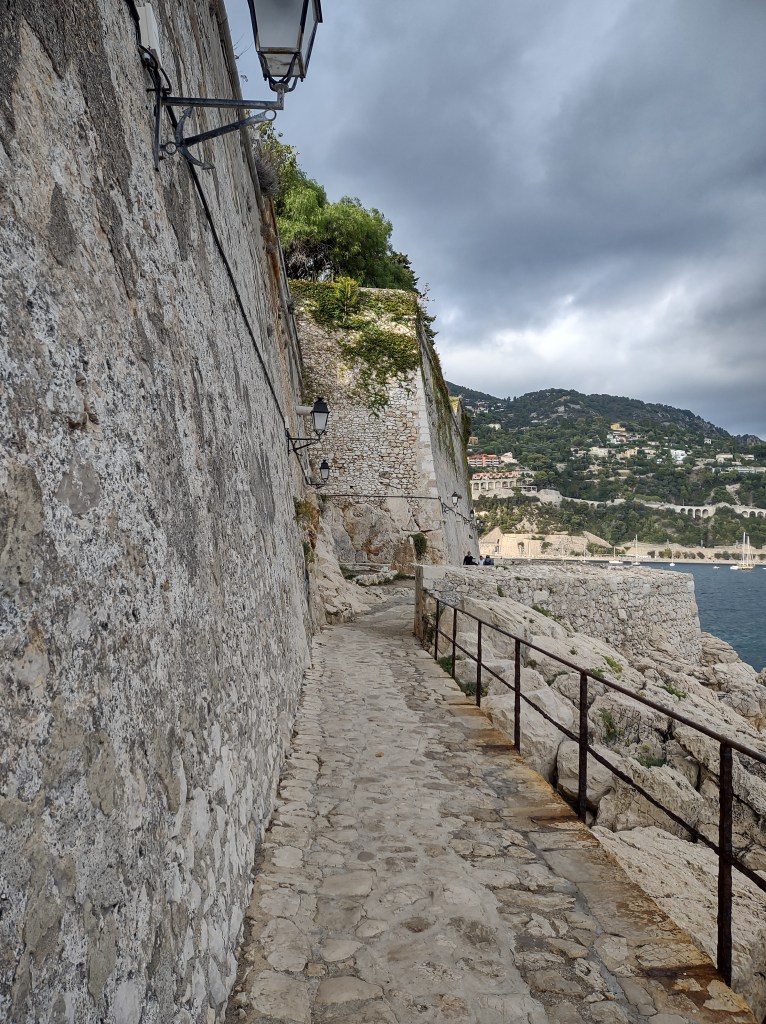
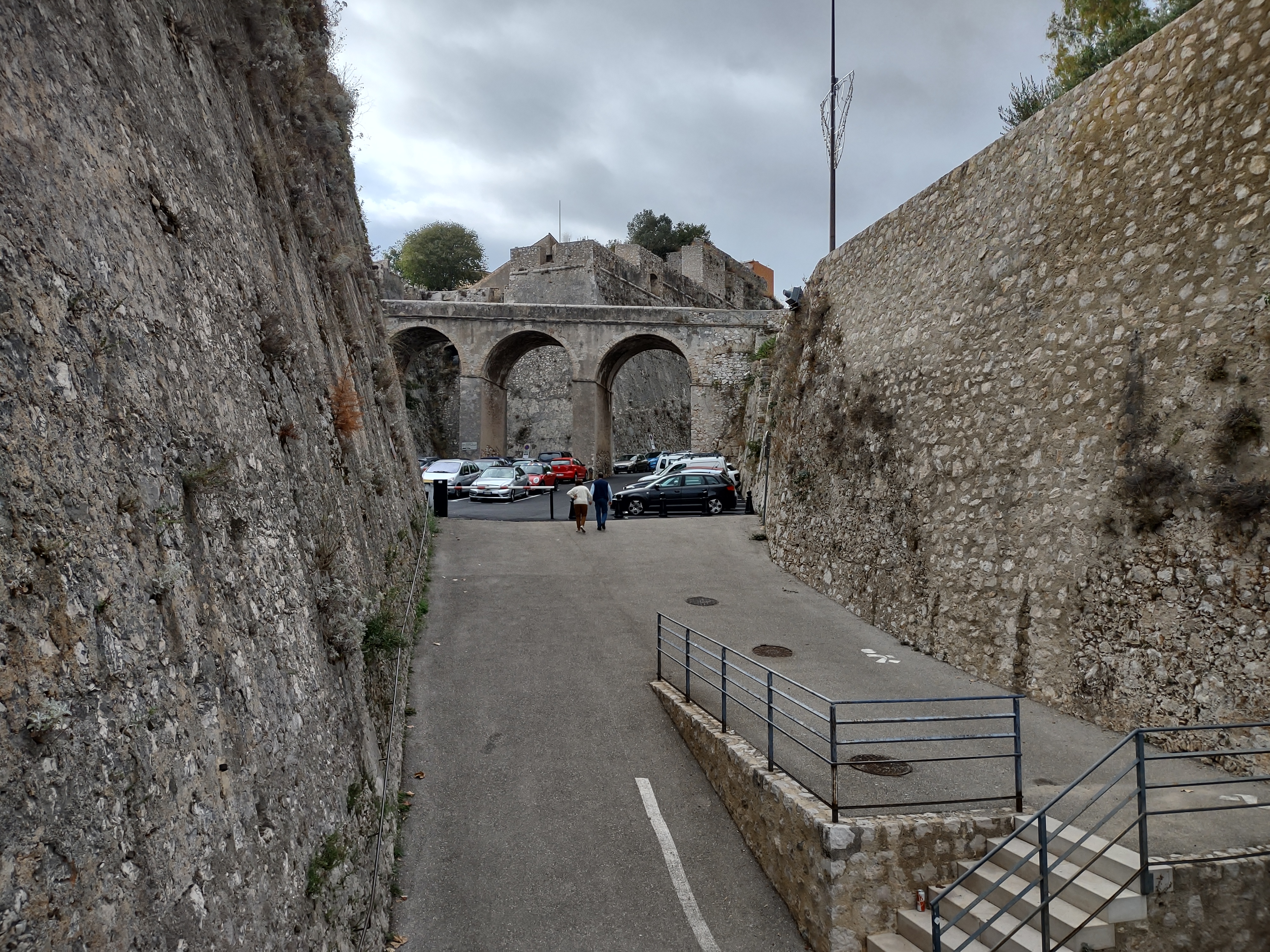
Another aspect of this heritage came after the French and Turks sacked the city in 1543. Remember that this region didn’t belong to France at the time. It was the Duke of Savoy’s, and no-one else was having it. Once the invaders had gone the Duke strengthened the defences with some impressive fortifications which are very much still there.

Modern France’s citadel against COVID-19 is the passe sanitaire, the health pass, without which you cannot enter most bars, restaurants, or other indoor spaces. The idea of this phone app is you download or scan in the QR code detailing your (fully)-vaccinated status or your recent recovery from infection. Now that some design issues have been addressed I found it easy to use TousAntiCovid to scan in my own NHS England vaccination QR code (sitting on the screen of another device) and away I went – able to pull it out when any member of staff wanted to check my status. It has been controversial in France, a land wedded to the idea of individual liberty, and there have been demonstrations against it. From my standpoint, whenever I was asked to show it (virtually everywhere I went for food or a drink) I took it out and the scanning was instant. There are human rights issues around it, and personal choice questions, but it was great sitting in enclosed spaces knowing that the chance of COVID-19 floating around in there was much reduced.
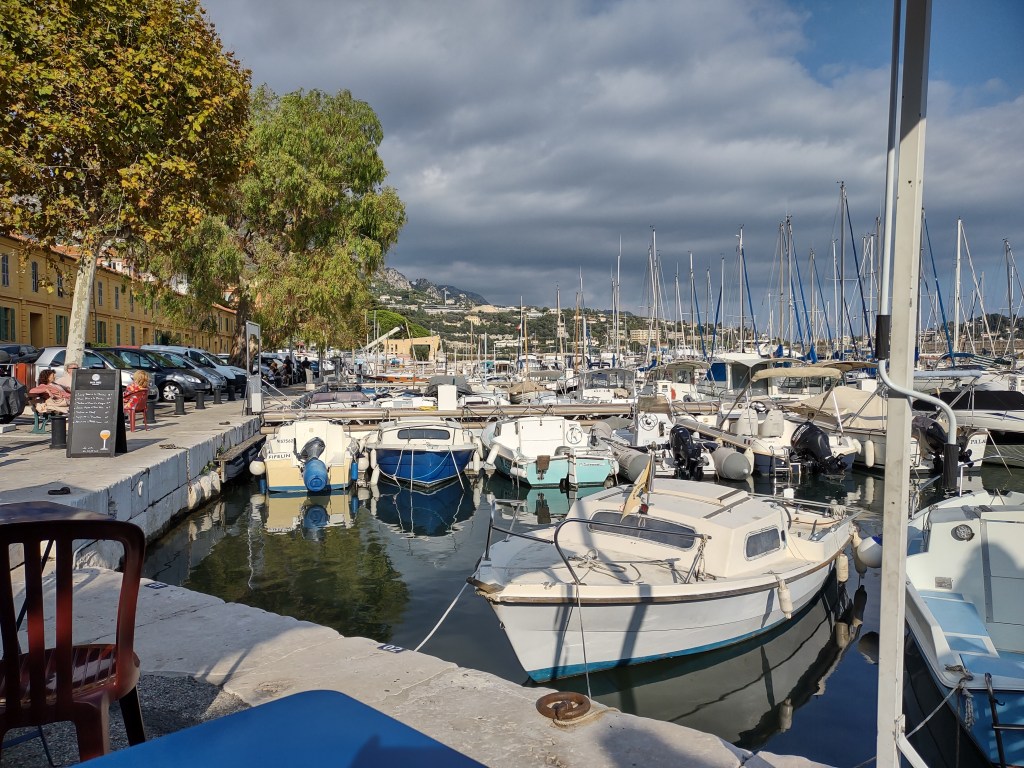
The boats bob around in the harbour at Villefranche, and so do the COVID case numbers. Over the last two or three months the incidence of cases (number per 100000 people) has fallen to 50 in France as a whole. Around Nice it’s been a little higher, around 80, but in the UK we’re about 300. So Nice is doing well. Meanwhile let’s hope we in Britain are not hanging ourselves at the end of a long rope – of the sort they used to make for the sailing ships in that long yellow building to the left.

It was now time to leave Villefranche, having had an interesting couple of hours, and time to hop on the 100 bus again to return to Nice.

…and hop off at speed again when the driver closed the doors on me as I was getting on.

How else was I to know that that gesture he made as he drove in didn’t mean “go to the back doors”? The bus was crowded, but some people got off so I assumed there was space to get on. The driver had other ideas, he’d meant “wait for the next bus”. And also “I’ll slice you like salami if you try to get on!” Luckily the doors were soft.

Like the drivers of the no. 100 bus between Nice, Monaco and Menton, COVID-19 remains an unpredictable and implacable foe, quiet and manageable one moment, dangerous and out-of-control the next. But like the passengers of the no. 100 bus between Nice, Monaco and Menton, the people of Nice – and probably France – are getting on with it, going with the flow, enjoying the new normality while they wait for the next bus, destination The End Of This Thing. The Cote d’Azur throbs with life, the restaurants are full enough, laughter and fun ring out from the bistros and the bars, the beaches and the promenades, the sun is still out and after a good night tonight we know it will be up and about again tomorrow.

We just have to wait.

Very nice

Ah, la belle France, land of life, country of culture, bounteous home of fine food and fine wine, home of very amenable entry requirements for fully-vaccinated Brits…

(… sorry, I meant to say “…and that special quintessential je ne sais quoi that is at the romantic heart of all that is French”.)

Anyway, we’ve come to spend an all-too-few nights in sumptuous Nice, a jewel on the Cote d’Azur, lying between those notorious slum-ridden shanty towns of Monaco and Antibes. Well, you gotta go somewhere y’know…

Founded in antiquity by the Greeks, who named it after the goddess Nike (in honour of the knock-off gear they all picked up in the flea markets around the Vieux Port), Nice has been an Italian place for much of its history. Which is not surprising as we are about 20 miles from the modern border. I say “modern” because the region actually belonged to various dukedoms up until the mid-19th century and that was before Italy became a unified state.

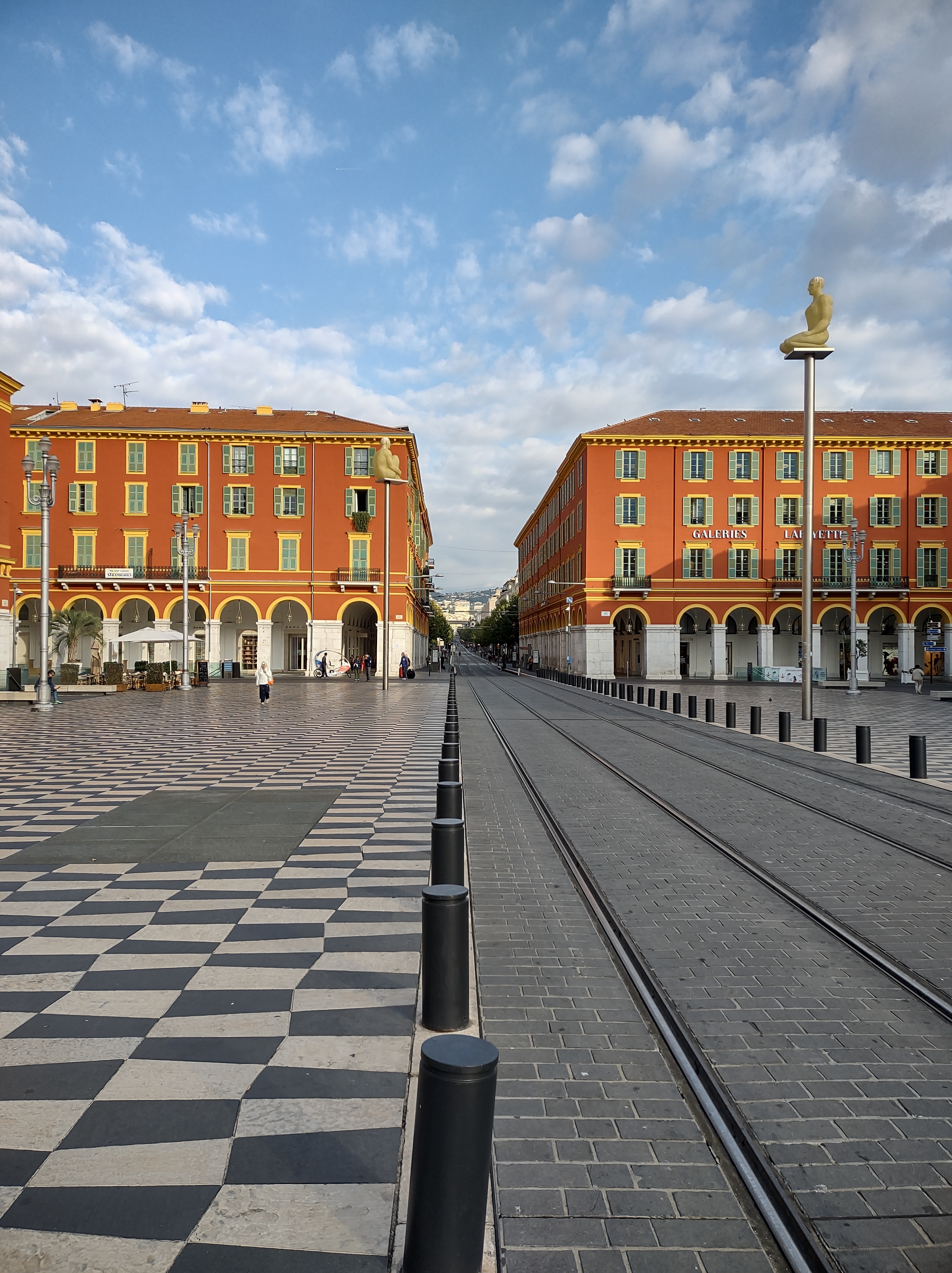
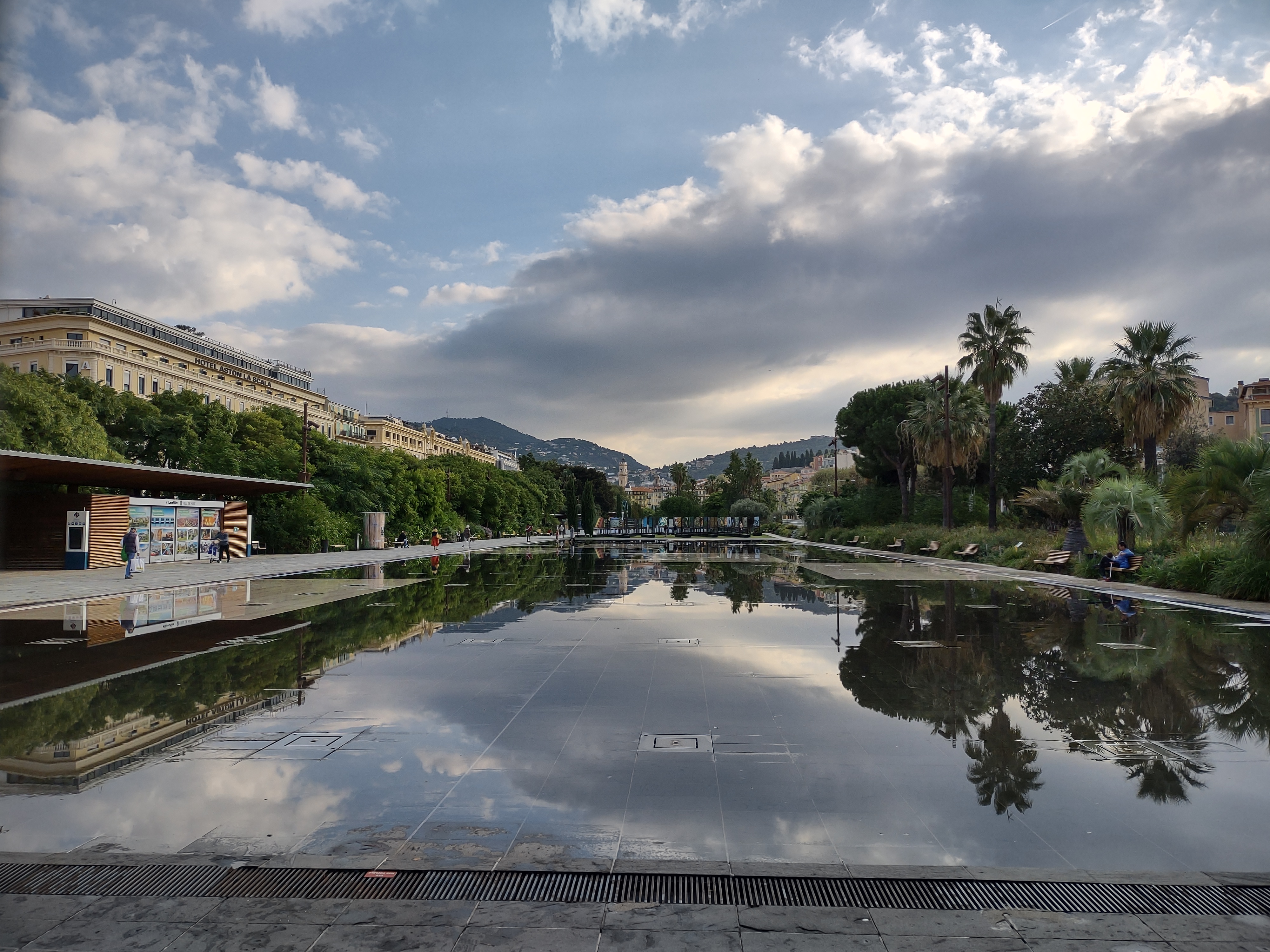
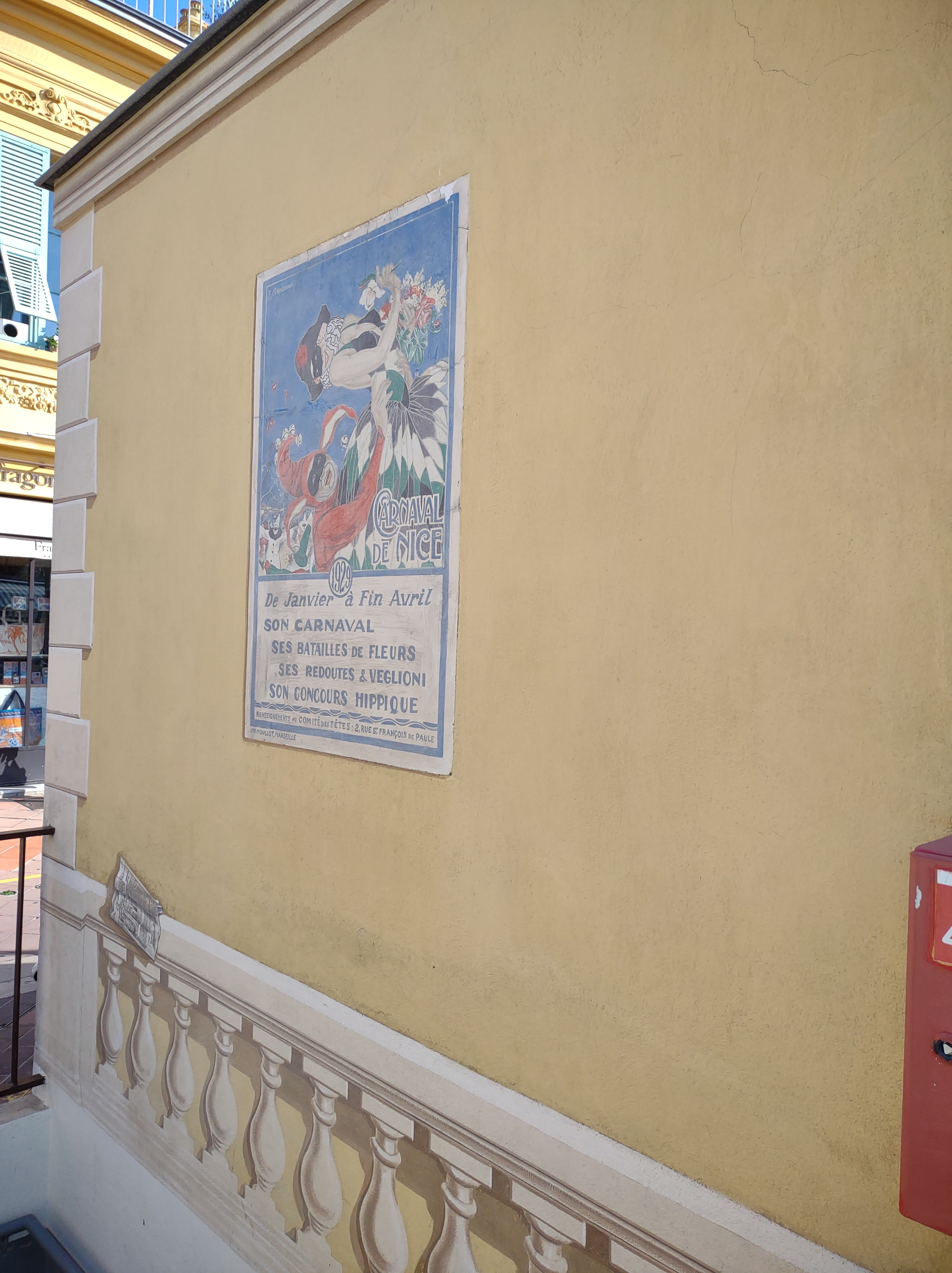
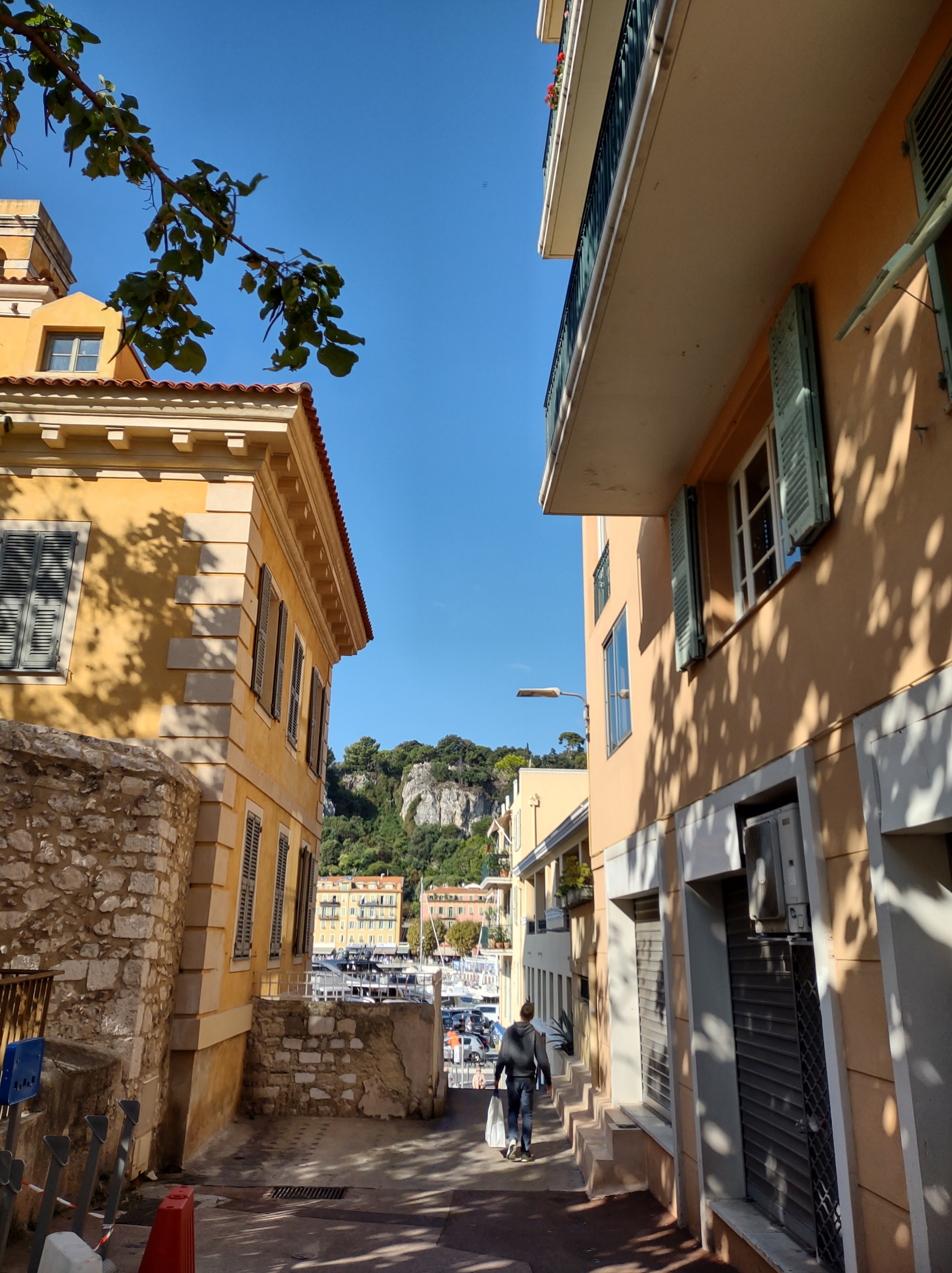
I’d go into more detail of how it flip-flopped between Italians and French and how the locals didn’t speak either language (they spoke Occitan), but, as I said I don’t have much time here and it’s lovely outside, so here are some more piccies…

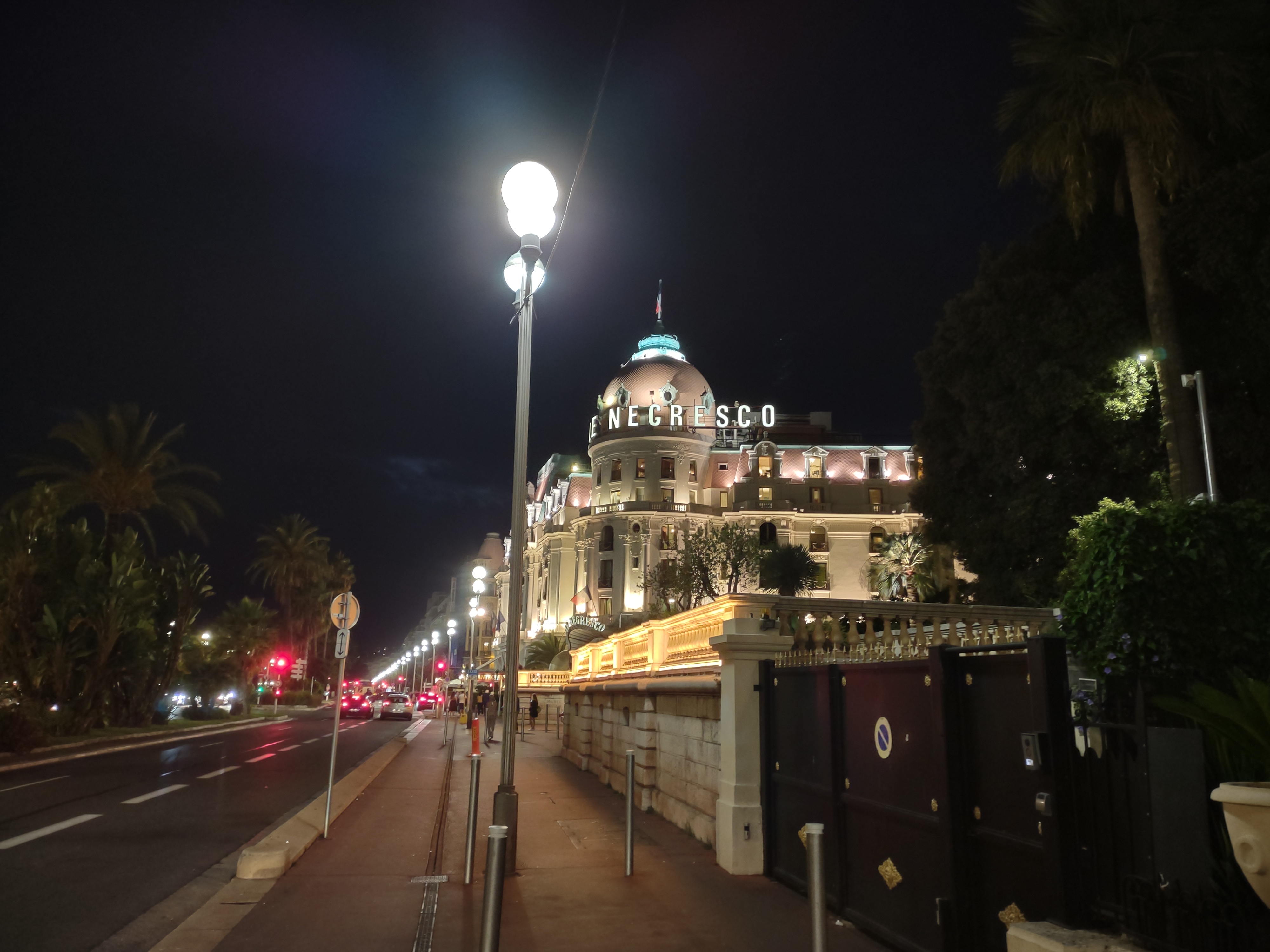
By the way, in the top photo you can see the world-famous Hotel Negresco, cheapest rooms this week around €300 a night. (Let me know when you’re coming). Like most of the big hotels it lies right on the Mediterranean shoreline, just as the British well-to-do liked it when they discovered the French Riviera in the 18th and 19th centuries. Staying over the winter months before the summer heat got too much for them, the poor dears, they kick-started tourism here and the legendary shoreline still bears witness to them – Promenade des Anglais.

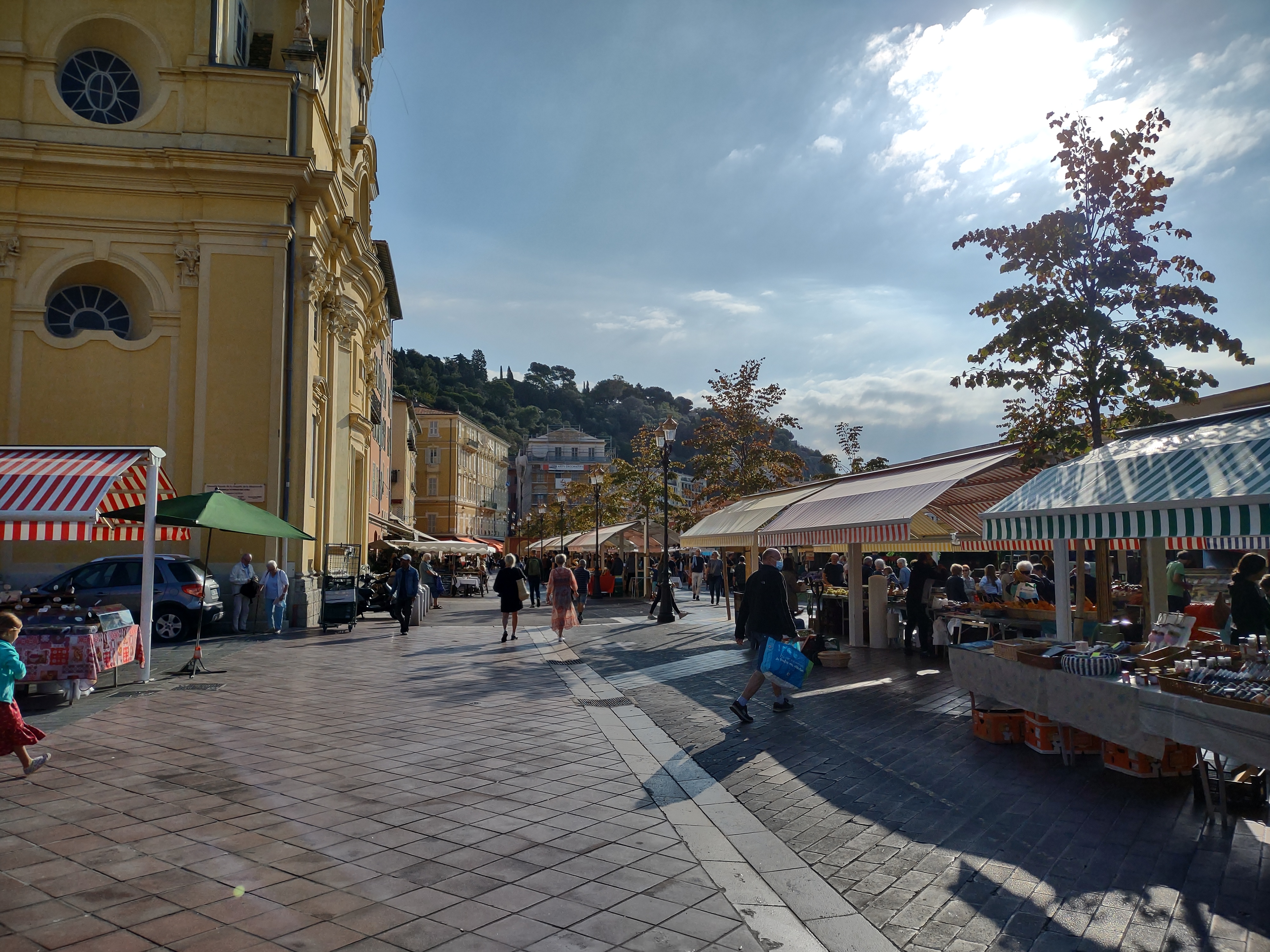
Market day on the Cours Saleya
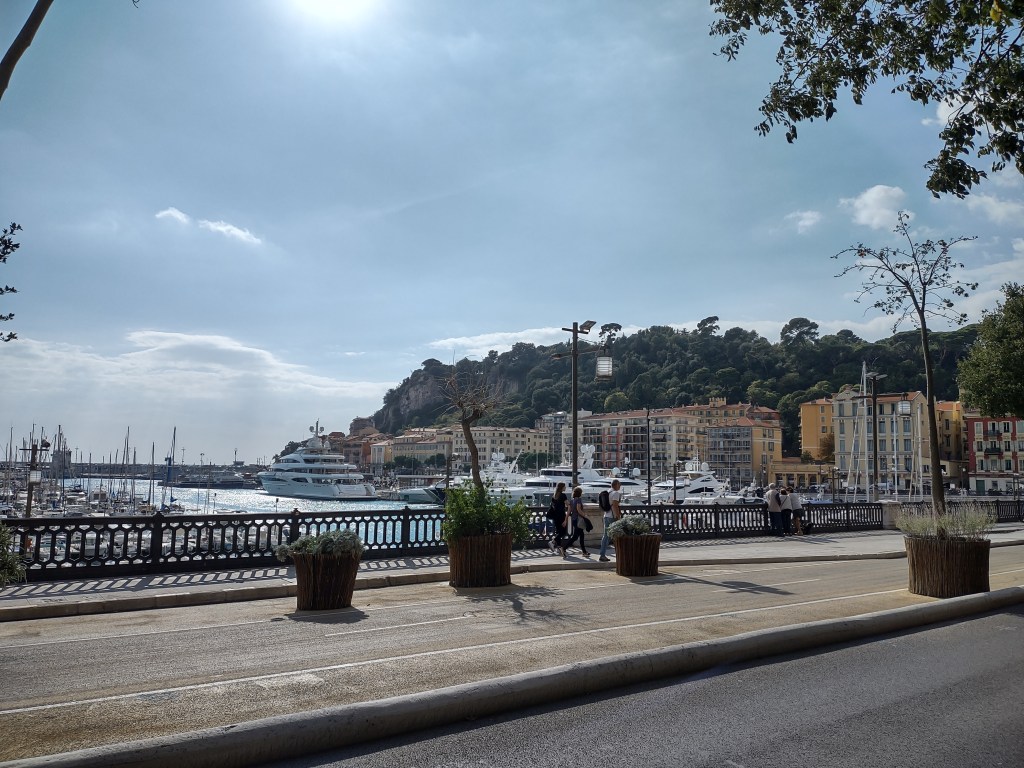
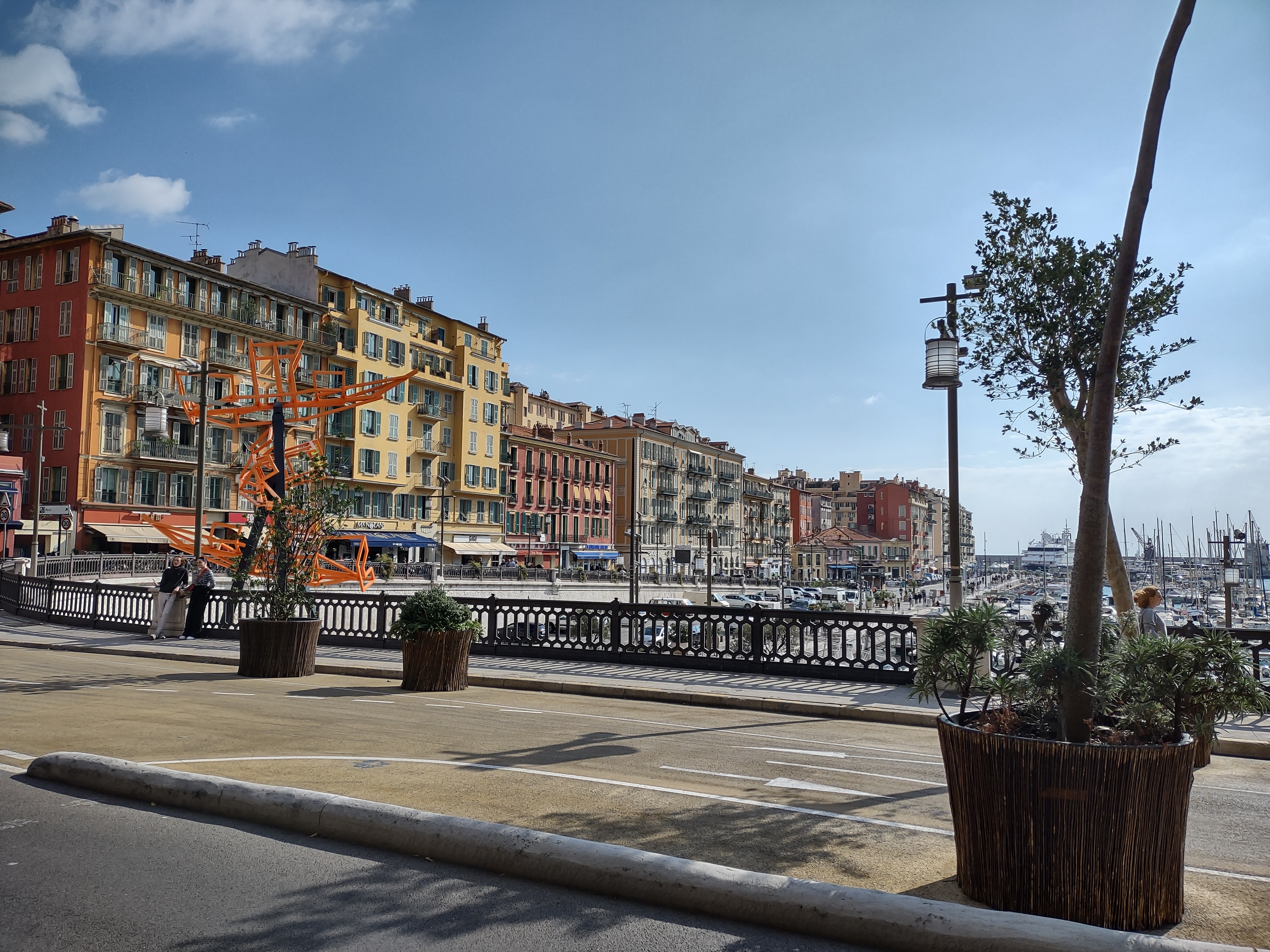
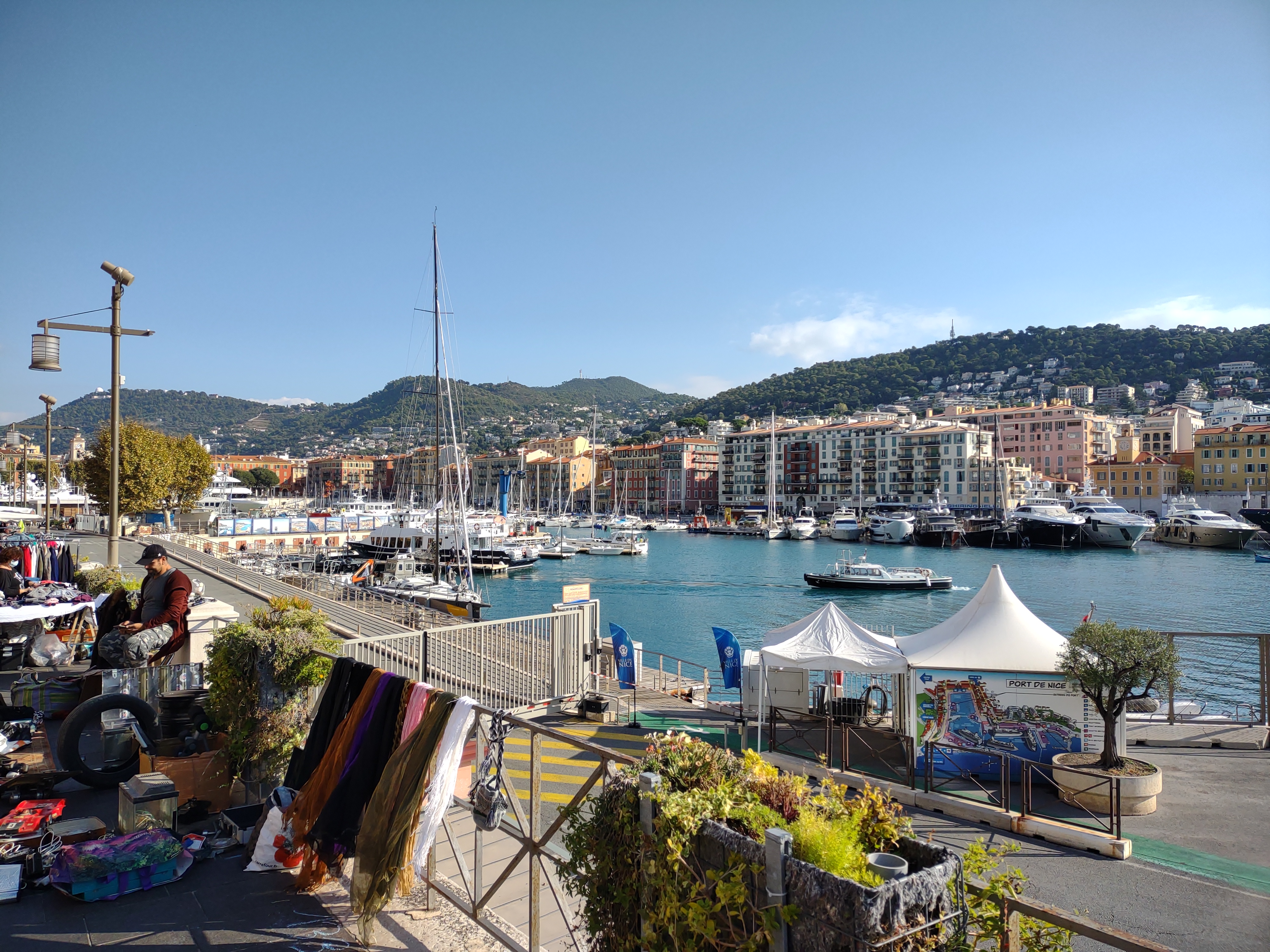
The Vieux Port, to the east of the Promenade and just below the Castle Hill. (I missed out Castle Hill. Maybe later. Note: there’s no Castle there any more. You can relax)
The green bit is Castle Hill. See the Castle? Didn’t think so.

Appetit whetted? Good. Look, I really have to go now, the Mediterranean’s happening outside. I promise I’ll be back later with more photos, more stories, more stuff. Until then, enjoy the pics. Au revoir!
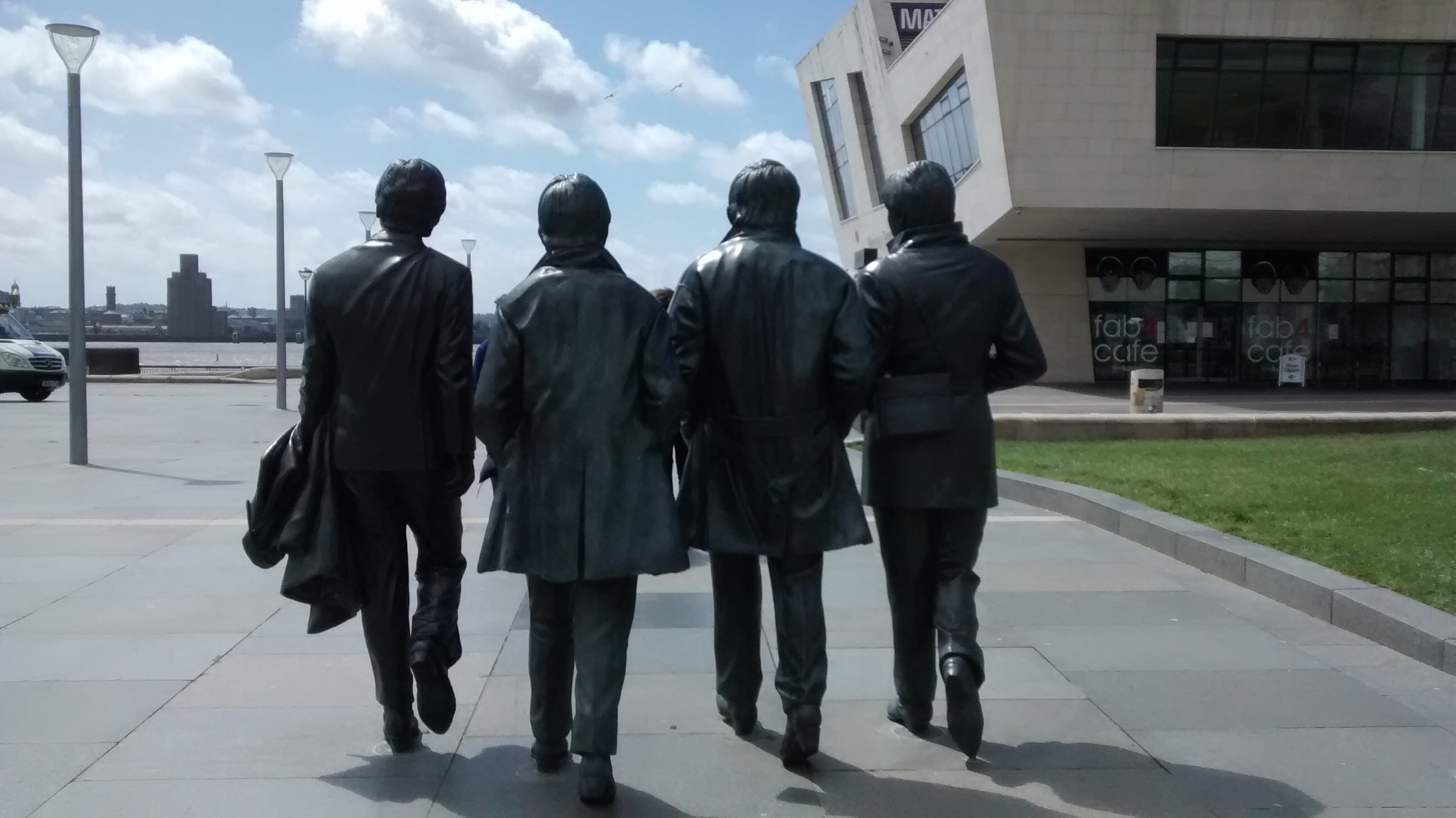
Flight of fancy?

Well…going through security is as bad as ever – “go over there please” where’s the plastic bags?… “no take that out as well please sir…no more liquids, sir?” – crowded, panicky, pressurised. And that was just fast-track.

Maybe it doesn’t help that most of the people here have forgotten how to do flying. Including me. You can tell from the blog that I travel a fair deal. Normally. Today would be my first flight in a year and a half. Eighteen months of forced contemplation, sometimes wondering when I get to go on the road again, wondering if I’d ever want to. Until that is the COVID vaccination numbers rose and case numbers dropped, and travel restrictions across Europe started to un-buckle. And I realised how much I missed foreign travel.

So here I am again, through security now, Masked-up, vaccine-passported to death, did I download everything I needed to? Will my phone run out of charge before the border? OMG where’s the passport?Ah got it, now on board, about to jet off into a pandemic era of seeing old and new places, comparing their life and culture with what I had seen back home, but also bearing the new weight of paranoia about all the documentation the border guards would want to see and whether I’d missed something…

…too late now, we’ve taxied out, those two clear beeps have sounded to announce we are about to accelerate down the runway, the whole plane thundering and shuddering as it reaches rotation speed and the ground becomes the land below us as we lift away…

(Don’t tell Greta.)

A day in the history of…

Unless you were someone peaceably living your life somewhere in West Africa when you were kidnapped and led in chains to the stinking hold of a slaver, to be transported (if you survived) to a life of back-breaking servitude in a West Indian sugar plantation, making fortunes for Liverpool merchants, well with that slight caveat the Georgian era was a golden era for the city of Liverpool. A fishing town that had taken advantage of its sheltered location at the banks of the Mersey, its traders had made themselves big players in the triangular trade between Europe, Africa and the Americas. I’m no expert in the economics of employee relations, but if you can get away without the bother of “employee relations”, treat your employees like animals, and stop them from seeking alternative employment – or retirement – you’re onto a winner.

And Liverpool was onto a winner. The centre of the city is still replete with fine Georgian-era buildings and terraces – Rodney Street is one of the longest Georgian terraces in the country – as the slave trading interest rolled in it and flaunted it. But they didn’t stand still. Rather than let their ships suffer the elements and the tides of the Mersey, they came up with the idea of sheltered docks. And as trade flourished into the 19th century, Liverpool kept pushing the envelope.

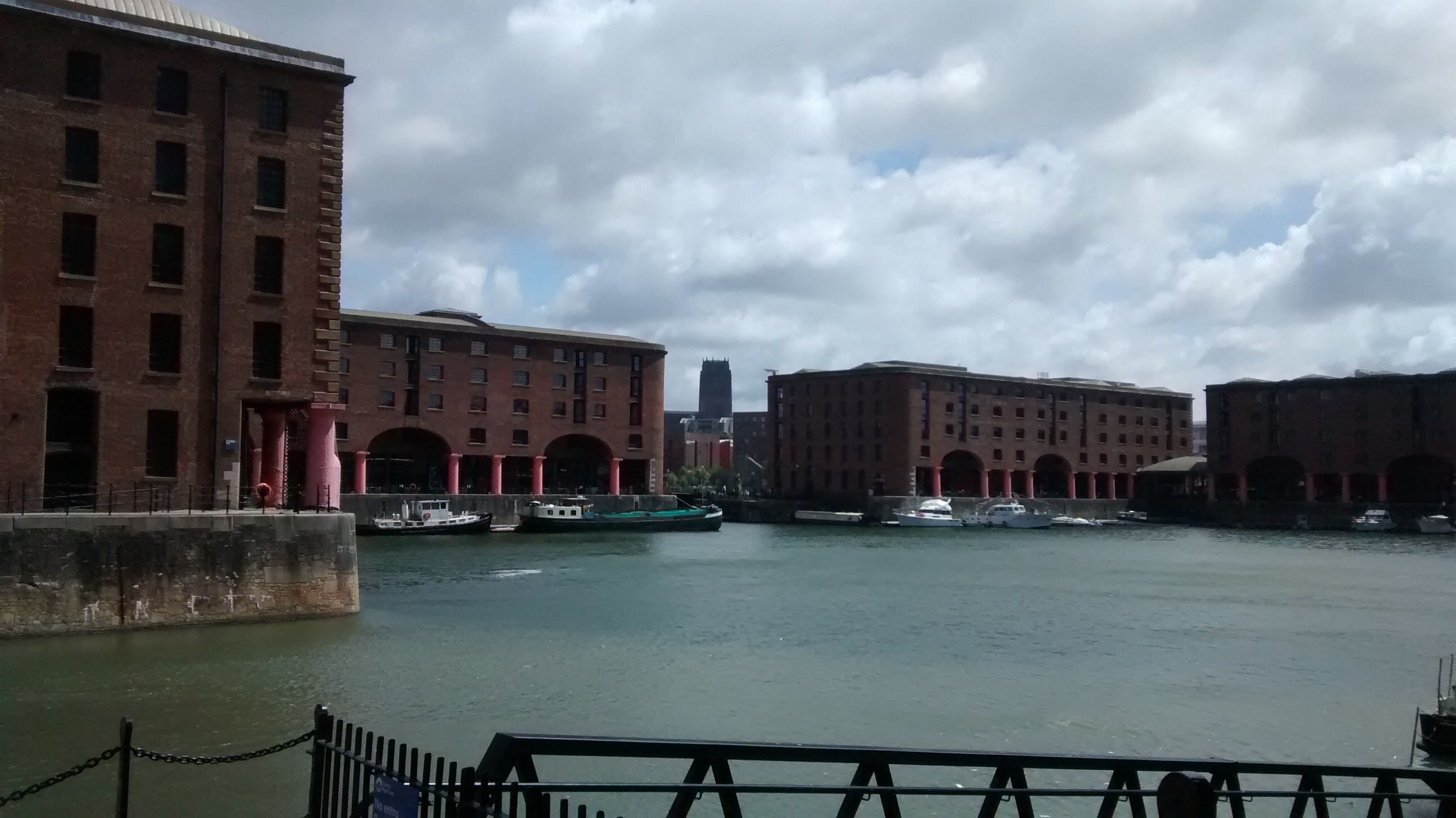
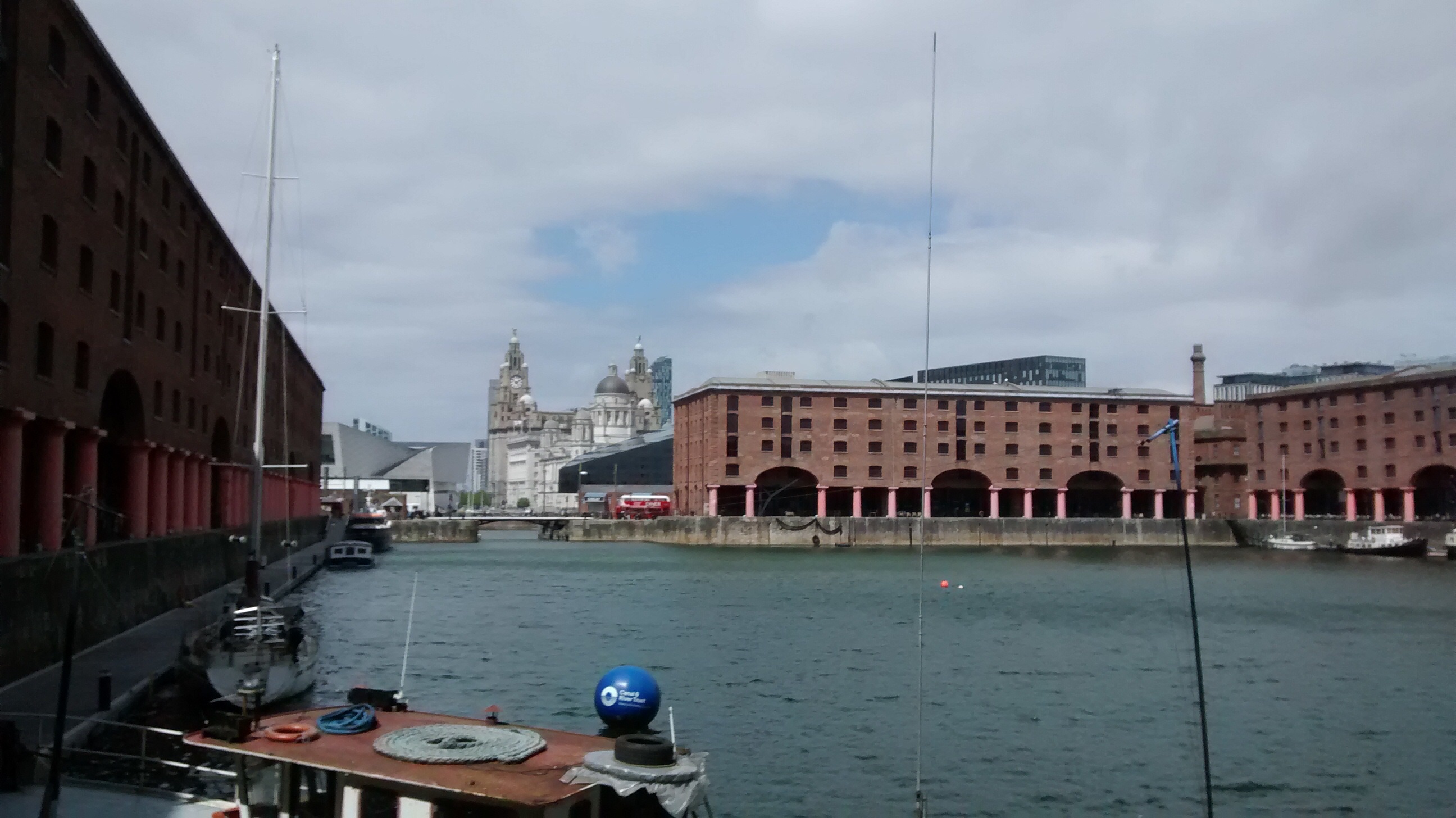
In the mid 1800s, one of their most prominent dock engineers, Jesse Hartley, came up with an idea to eliminate the effort involved in transporting goods between dock and warehouse. Why not build a dock with the warehouses on the dockside? Literally sail the ships to the warehouse door! By 1849, he had constructed a dock surrounded by a stunning set of fireproof warehouses which could store goods for long enough to avoid import taxes, and with the help of hydraulic cranes, loading times were cut in half. All at a snip of the equivalent of £41 million today. On July 30th the Albert Dock was ready for its opening, by the man himself, Prince A.

Sounds great, and it was. Until steamships started replacing the old sailing boats twenty years later. And the Albert Dock wasn’t big enough for steamers. Oops.

The warehouses were still used for storage, but the shipping itself disappeared from the docks until the second World War, when warships and support craft sailed in. Soon the Luftwaffe took an interest, and the south-west corner of the dock took a battering. That’s near where we’re standing.

There was no peace dividend for the Dock, and its days looked numbered. The board responsible for it didn’t clean up the bomb damage and really wanted rid of it. Plans to knock it down and build flats and shops here came and went, until the Thatcher government in the 80’s decided to facilitate its regeneration. Granada TV moved in and filmed breakfast telly here. Over the last twenty years or so this superb site has become the most-visited multi-use site in the country outside London, hosting museums, restaurants, bars, shops. In short, it’s great.

A good story of how one part of Liverpool has bounced back from long-term decline. But long-term decline was what was in store for the rest of Liverpool’s docks, and for the city itself. Right up to the 60s the docks were busy, and the army of dockers could find employment – however precarious. But then along came containerisation, along with the emergence of European markets across the North Sea, and Britain’s decline as a maritime power. The dockers lost their jobs, the city fell into poverty. However much it would recover some of its prosperity, the great seagoing, outgoing city of Liverpool had lost its place at the centre of the world.

Until four local lads came along…

Back on the bike

At first, the train edged gracefully away from platform 2 at London Paddington, a stately roll-out befitting a grand express service heading out onto an iconic route. Gradually it sped up as it glided through West London, and accelerated a little more, and more, imperceptibly, until you couldn’t avoid the fact this thing was absolutely flying! The whole carriage, the whole train, recklessly shooting along the narrow iron tracks below at an insane speed. Could they contain this bullet? Was this safe?

Down the years, I’d been on too many high-speed trains to count. If I’d ever even noticed how fast they were going it was only as subconscious reassurance that I’d be getting to where I was going in good time. Today, I needed reacquaintance with the experience. Over the last five months, I had only been taking suburban train journeys. And there had only been ten of them. All in the last two months. One long car journey, and maybe one bus. The rest of my world, suddenly constrained to the three or four miles I could comfortably walk until I could turn back and make for the safety of my own home, a refuge from an outside world that had suddenly, shockingly, turned deadly…

As I write this, it may still be too early to definitively assess how the Covid-19 pandemic has broken our world. We can count the bodies, think of the millions still struggling with the disease and its aftermath, feel for the millions more who have been ruined financially and psychologically, the lost businesses, the lost futures. But we are currently still in the middle of this thing. And it even seems trivial to fuss about travel and blogging while a global catastrophe continues to unfold, especially as the world of travel itself lies in ashes. We should at this point and in this place consider above all, what is going to become of all those fabulous tour guides, hotel staff, bar staff, etc, without whom none of us could meet the world with such ease and joy, without whom none of these posts could exist.

For now, the best we can do is rehearse the old lesson; take nothing, nothing, for granted. And look with a keener eye at those fundamental components of your life when they eventually reappear. What had you missed before through overfamiliarity, what had you overlooked, like the dawn chorus you never noticed on the way to work until the competition from the daily hubbub was taken away?

One thing I had become overfamiliar with, was Britain. In the summer of 2020, the pandemic had essentially made foreign travel impossible or impractical. As much as I could have sat the whole thing out at home, home was virtually the only place I’d been for months and it was time for a change of scenery. But if I was going anywhere I would have to take on the risk I had gone out of my way to avoid before, that I would find myself somewhere that felt too much like home, while all around was grey and bucketing down with rain.

I knew, of course, that I lived on a stunning island, with an almost unmatched resource of rich green landscape, tumultuous seascape, and a place that was a witness to centuries of stories that shape and shake the world. And now, with nowhere else to go, I had the opportunity to explore some of it. So off I went to Paddington, on my way to the West Country. And why not join me, socially-distanced of course, just grab your face mask, find your seat..there you go, strap yourself in nice and tight please – these things are fast!

And now…?

I’ll let you into a secret. I had not been overexcited about doing that last trip to Dominican Republic. For all the tropical beauty and the ancient colonial history, DR had always seemed to be the home of the all-inclusive. The idea of spending virtually your whole holiday trapped inside one great sanitised all-you-can-eat restaurant complex had never appealed before, and although it had its moments (like not being the office) I missed the local touch of staying somewhere more amenable near the main drag.

It hadn’t helped, I guess, that I was beginning to wonder whether I’d seen all the places I wanted to see, had gorged on all the travel excitement I wanted to indulge in, sat in all the departure lounges I ever wanted to sit in (easy really, because there’s only one departure lounge. And it’s in every airport. Ever built.)

So why did I go? Well, the original plan at the beginning of the year was Vietnam, but the beginning of the year is far too late to start planning for a trip there near the beginning of the year. I’d had a hankering to see the bigger Hispanic islands of the Caribbean, but Southeast Asia is one place I do still find endlessly beguiling and going back to Thailand was a strong and achievable backup plan.

But in the end it came down to reducing risk. At the time I was looking to book, January 2020, it appeared that a new variant of the SARS coronavirus of 2002 had reappeared in the region and cases were being reported in Thailand. So DR it was.

Far better to stay safe and keep yourself well away from something like that.

Thoughts from the Departure Lounge

A reader has requested that I end my blogging from DR with a detailed description of the departure lounge and the flight back. Maybe they’re just very bored. (I nearly wrote “boring”). Writing up the flight might be tricky as I hope to be asleep for most of it. But here we go with a description of Punta Cana Terminal B, Departures.

Sort of.

Ambience

My flight is one of only three to leave tonight, so it feels refreshingly empty and relaxed for an airport.

And the Dominican Republic is a relaxing place to come, as long as you’re firm with the persistent offers from taxi drivers, souvenir sellers, masseuses, both the good sort and…the other sort. The people are for the most part welcoming. Tourism is the number one industry here so they will go out of their way to make you feel at home.

As I say that, the airport staff behind me are making one hell of a racket with their chatter. Dominicans are ebullient, which can be engaging, but not that time in Puerto Plata old town when that woman started hurling abuse at someone for a good few minutes…I don’t know why, maybe he’d said something about the fact she only had one hand.

Green chairs

It all gets a bit green once you pass security – green chairs, big green disks on the tops of the pillars, green tea-table-things-you-only-see-in-airports.

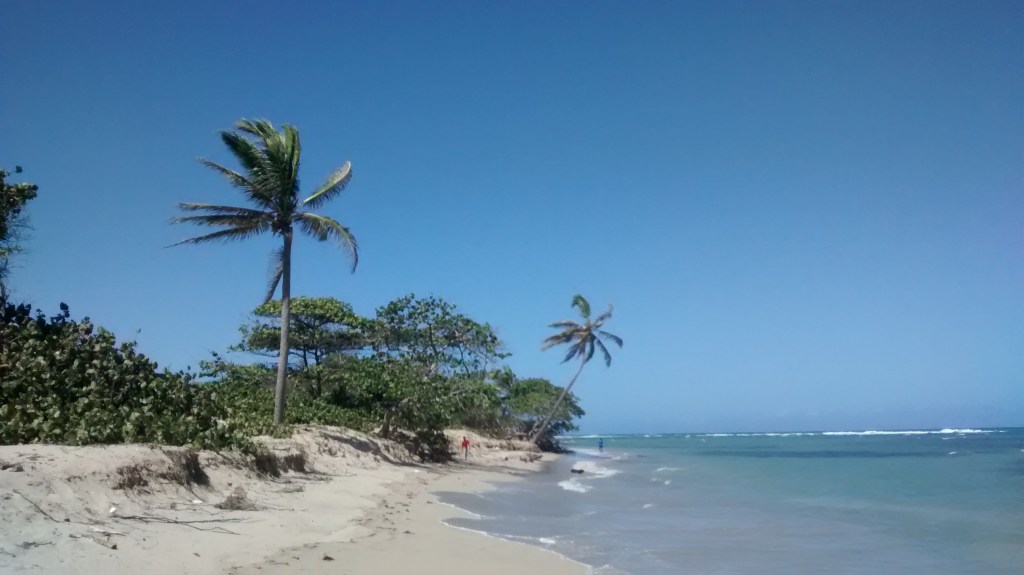
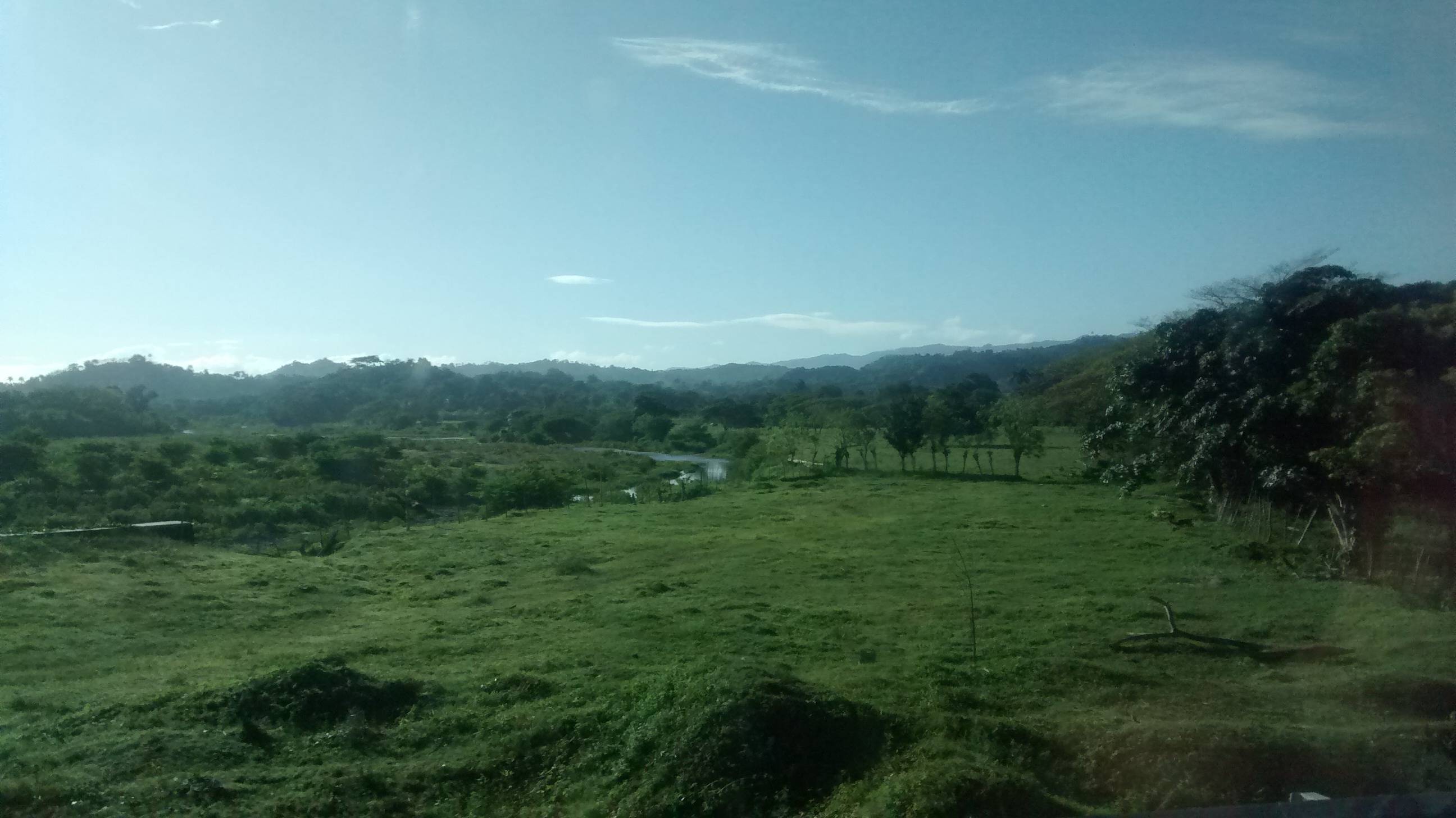
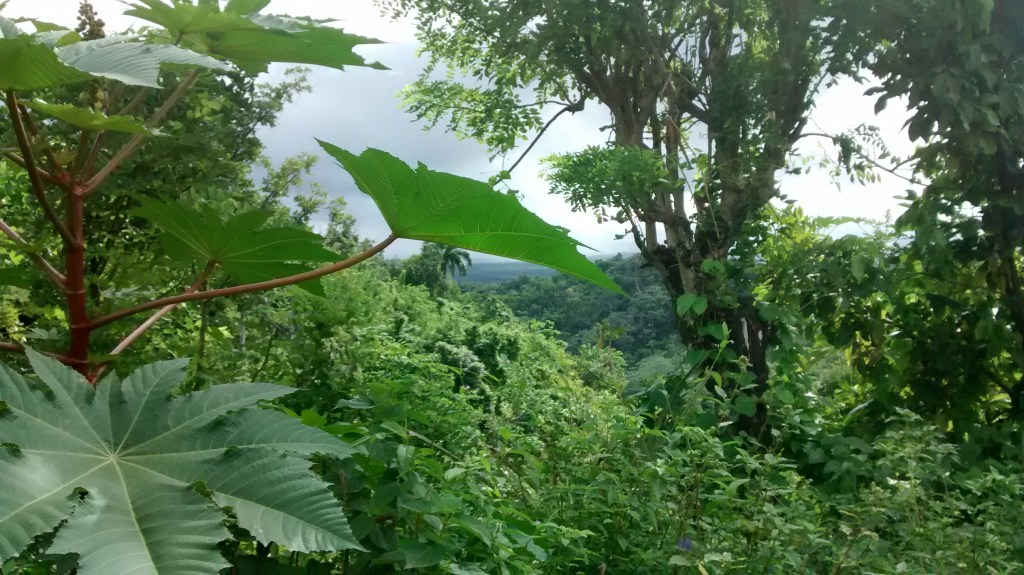
It reminds us that, like many tropical paradises, DR is brought to you by the colours Blue and Green. The stunning run through the mountains between Santo Domingo and Puerto Plata is particularly verdant but the scenery is engaging in most places I went through.

Recycling points

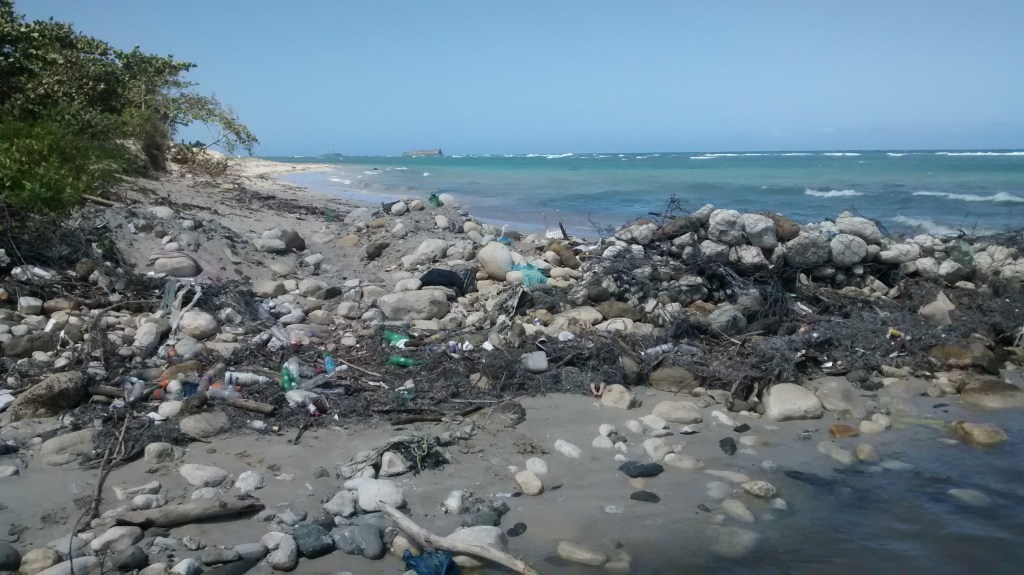
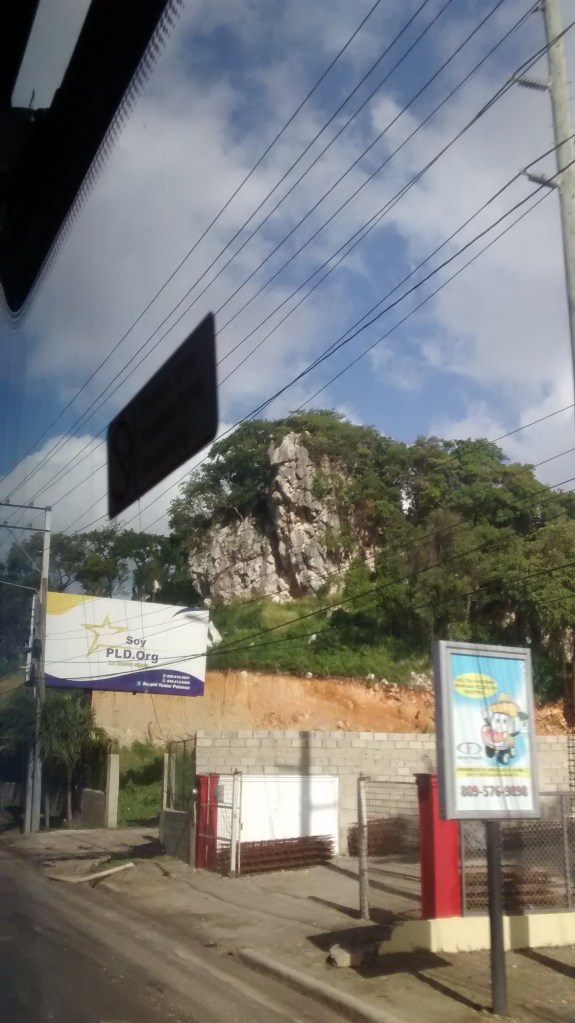
I’ve spotted a recycling bin to drop off my drink cup when I’m done here. And that’s not something the country is great at to be honest. You can take a photo like this

walk along a bit, and see this…

Some could argue that the environment is not the priority in a country where 40% live in poverty, but is it really either/or? And it’s a country heavily dependent on tourism, what do we go there for? It’s certainly not the driving.

Ah, still some time before my flight. Time to chill out and relax before the return to the cold drear of reality. And, in the same way, that’s what a holiday here is all about, general recuperation and fun in the sun. Not everything is as efficient as it could be, but don’t worry if your 3-hour bus ride to Santo Domingo takes an extra hour to negotiate three bus stops in Santiago de los Caballeros, just go with the flow and relax. And enjoy.

Adios!