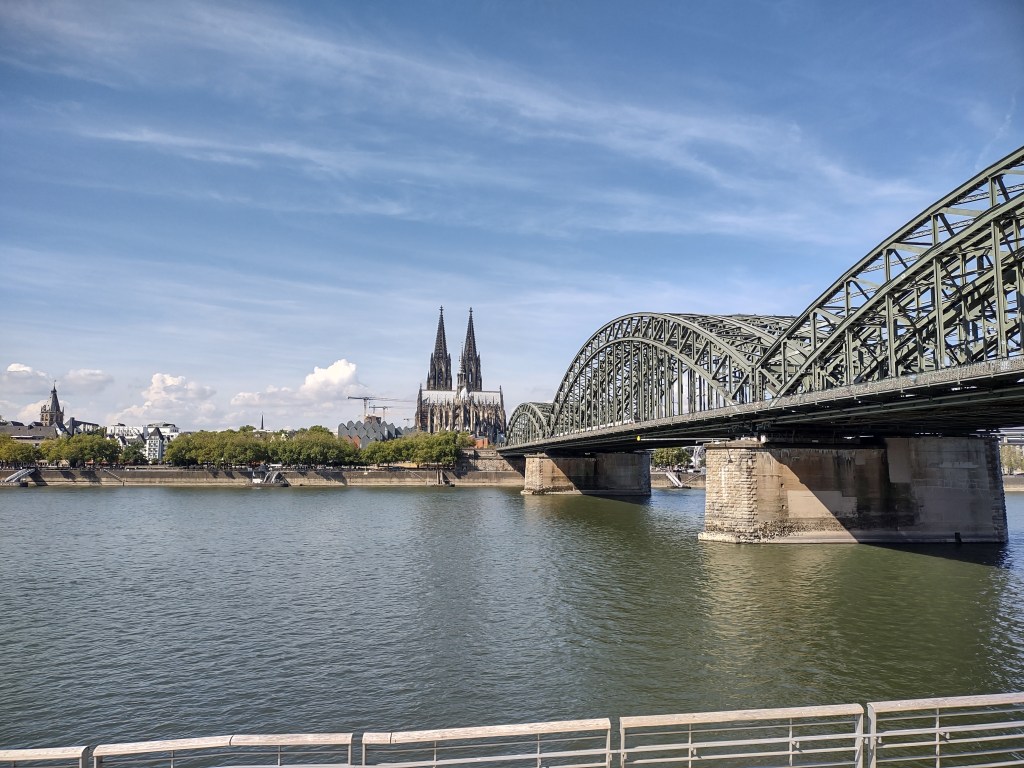
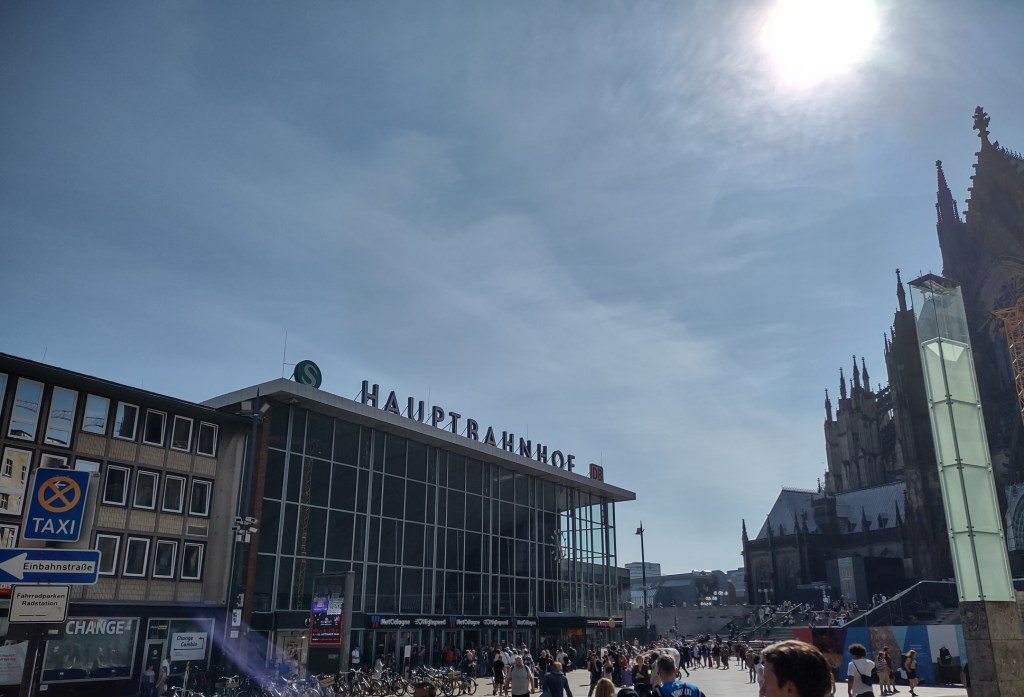
It might have been because of the sunny weather (better than forecast) but Cologne really appealed to me. Set by the gracefully flowing Rhine, Cologne has two thousand years of history going for it, back from when the Romans established their Colonia Claudia Ara Agrippenensium here on the banks of the mighty river.
The city thrived during the Middle Ages and became renowned for its twelve Romanesque churches, as well as a few markets in the bustling old town. The churches and the markets are still there, but the bustling nowadays bustles between modern buildings. Cologne was one of the most bombed cities anywhere during the Second World War, and the city was completely destroyed. They chose not to restore the market places or the old town, just the churches.
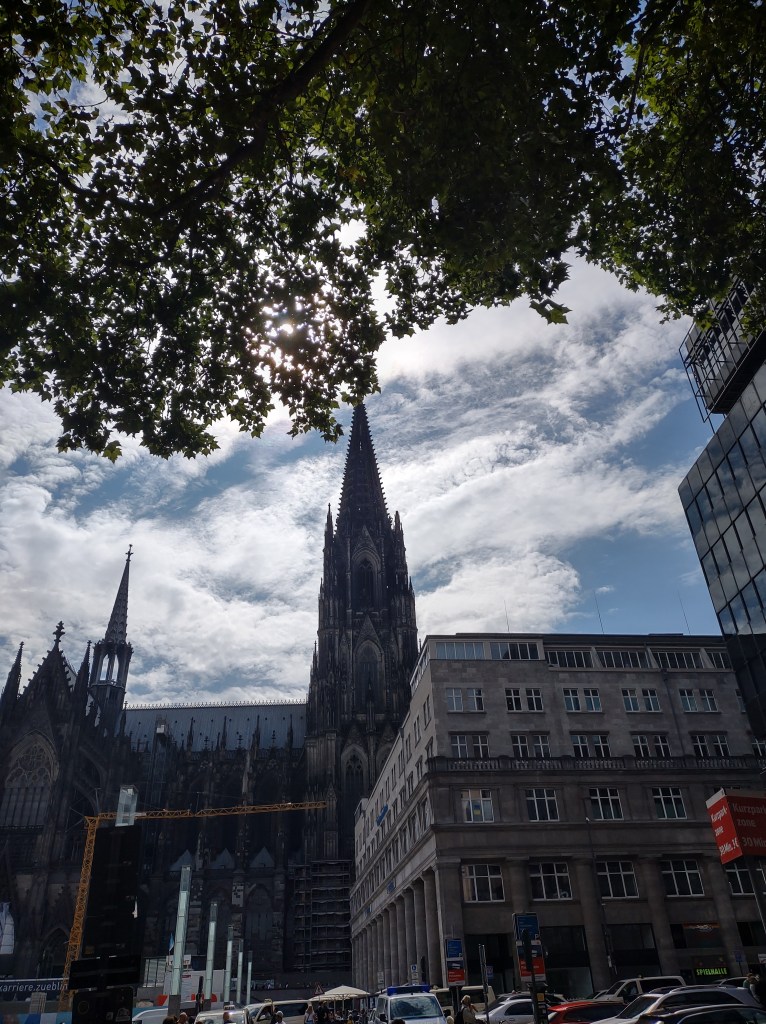
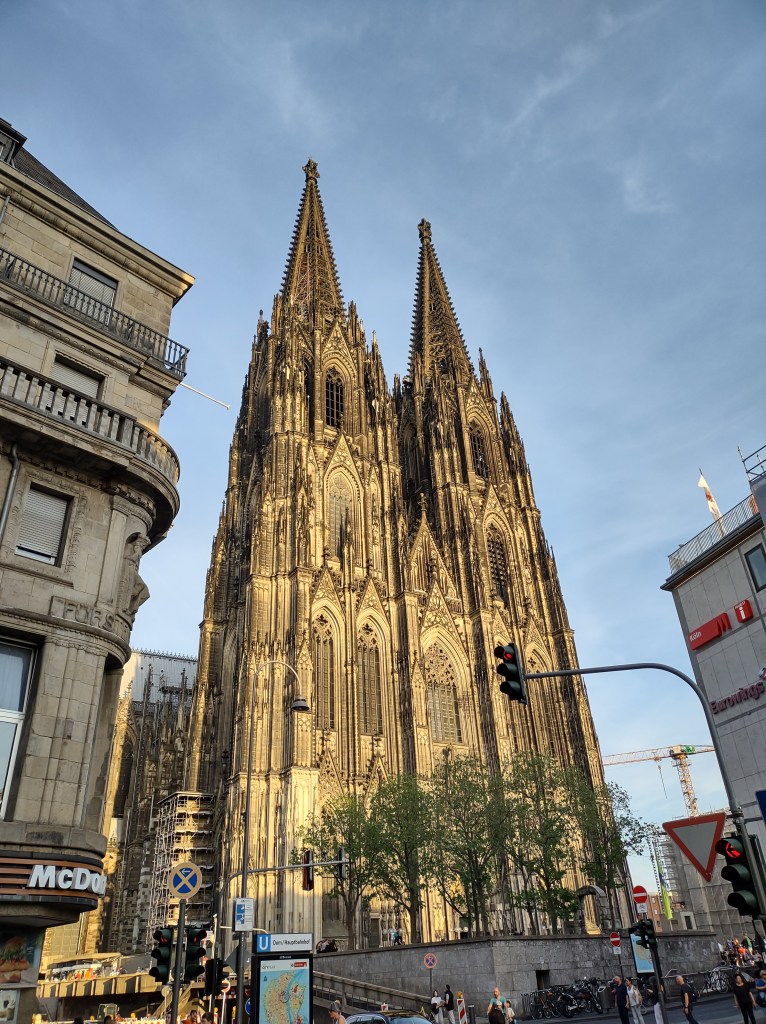
One place that just about survived was the city’s symbol, the Dom.
Cologne Cathedral.
In 1248 they wanted somewhere to store a reliquary of the Three Kings. And in those days, for that sort of thing you tended to go large. That way the Amazon delivery people would know where to leave it.
They went so large that the money ran out in 1560. In 1814 they found something behind an equally big sofa and started up again. By 1880 they’d finally finished. The towers are 157 metres high, making it the third tallest church in the world. Truly impressive, visible for miles around, and built to the original plan.
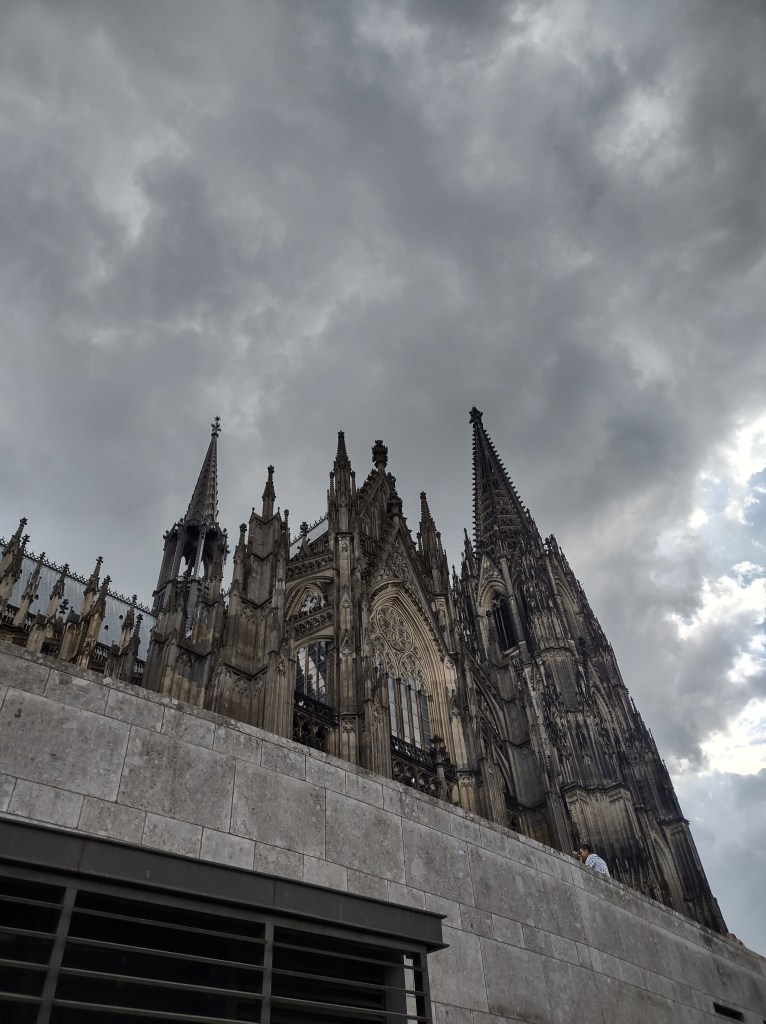
Unfortunately, members of the Allied air forces in the 1940s had strong views about the German ecclesiastical architectural ascetic. In general, towers were good for navigation purposes, but the rest really had to go. So the Dom was bombed fourteen times, but repaired over subsequent decades. And of course Air Vice-Marshalls Erosion and Pollution are still scrambling their forces, and the work goes on.
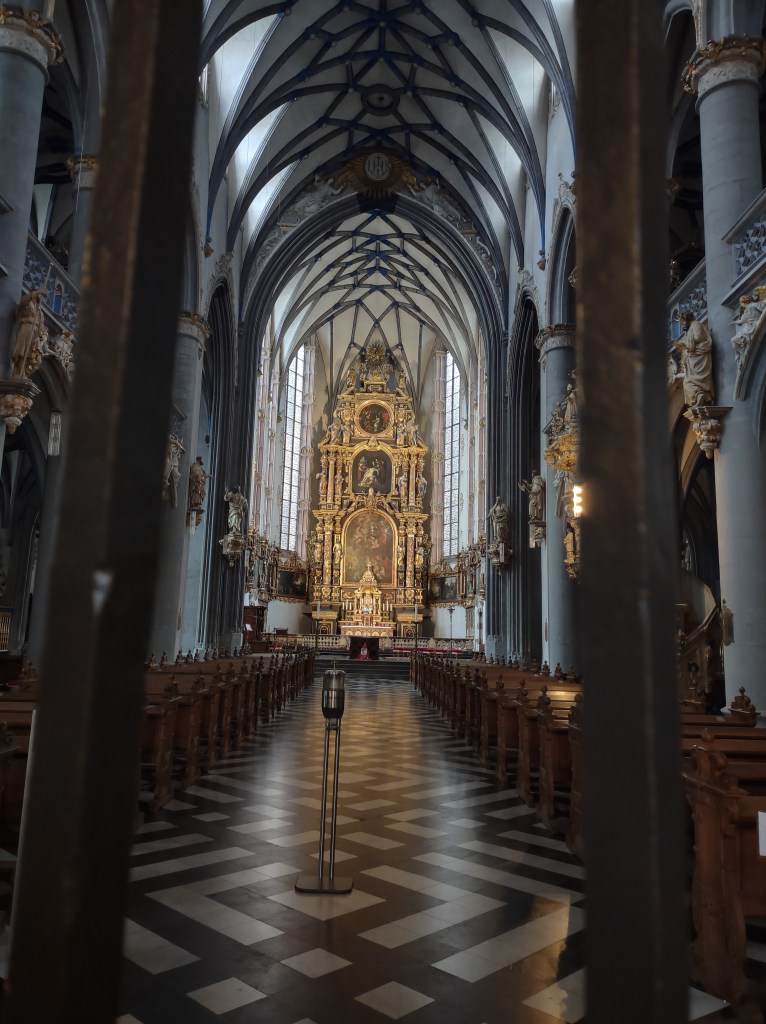
As you see, I took lots of photos but stayed outside so as to avoid the queues and enjoy the city a little more. I did get inside the porch of the Church of the Assumption nearby…
…but the gate to the nave was locked. A pity because the church houses some works by one of Rembrandt’s pupils…
…Bernhard Fuckeradt.
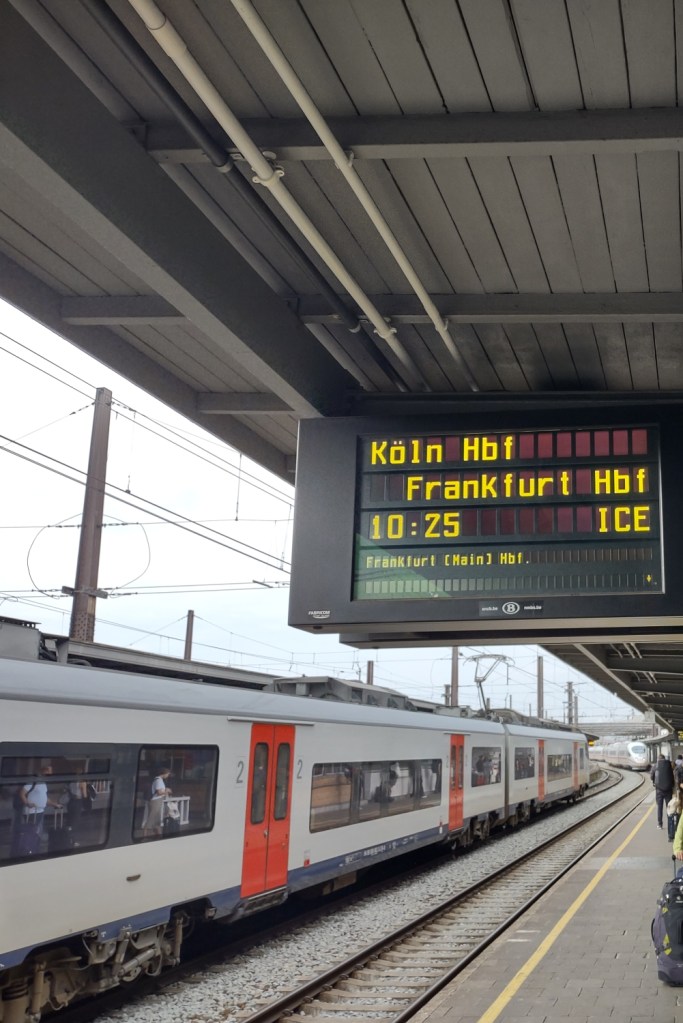
And after that, it was time for even more of the local Kölsch beer, before packing my stuff, catching the train and heading to Bavaria.
You will have noticed from my posts that I’d done a bit of travelling since COVID travel restrictions had begun to roll back in 2021. And it’s something I love and I hope I’ll always be grateful for having the opportunity to go off and enjoy these adventures.
As 2022 rolled into view I hoped that some decent degree of normality would have returned by summertime and there were a stack of places I wanted to see. But normality wasn’t quite, well, normal. It wasn’t just the insanity in Ukraine and the consequent hike in fuel prices, although they didn’t help. As demand picked up again, the airline industry had real problems getting in the staff they needed. Some airports cut their slots and airlines cancelled whole tranches of summer flights. And for those passengers who managed to get a flight, the staff shortages meant their problems were only beginning.
In the distant past, in other words three years ago, it was simple. You’d look for somewhere to go, you booked a trip at a reasonable price, and then you’d sit back and look forward to the whole magical sequence of arriving at your swanky departure terminal, ready to be whisked through check-in and security and through to your gate, giddy with anticipation. Now, after finding one of the few flights available and paying the extra cost, you sit back and wait for the worrying email from the airline recommending that you better check your wheelie bag in. Once the morning arrives, your excitement on discovering that your flight hasn’t been cancelled is tempered when you remember that email. Why would they want to put more pressure on the understaffed baggage handling? Could it be … good God! … and then you remember those social media photos of humongous security queues stretching back out of the terminal all the way back to the gates of Hell itself.
So you resolve to take the advice you never had to take seriously before, and get to the airport three hours before your flight. Shaken with stress you survive security and eventually you get to the gate, and they are indeed carrying out a purge of the wheelie bags. Fortunately your seat is not affected and you, lucky traveller, are granted the humbling privilege of being allowed to take your cabin luggage into the cabin. But unfortunately the flight is late. After all that, you eventually limp down the jetty and make it to your seat, time to relax at last, sit back, and smile, as the plane pushes back, roars down the runway…and helps destroy the planet with its carbon emissions.
Some of these things had happened to me this year and I got to the point of not wanting to see the inside of an airport terminal for a long, long time. I’d had enough.
But I still wanted to do one more foreign trip this year, and it was going to have to involve the Eurostar from London St Pancras. And yes, it did mean my options were limited to northwestern Europe (even if I was going to compromise by flying back home from my final stop). But travelling by train offers many benefits of flying, if you’re happy with the extra travel time. It’s more relaxed, more flexible, and you feel more connected to the environment you’re travelling across when you travel through a place instead of over it – the changing landscape as Europe develops before you, the great towns, the pretty villages, the countryside, farms and forests, hills rising above and around you. It’s easier to believe your destination has grown around you organically while you’ve been travelling, rather than something you’ve been plonked into from a great height.
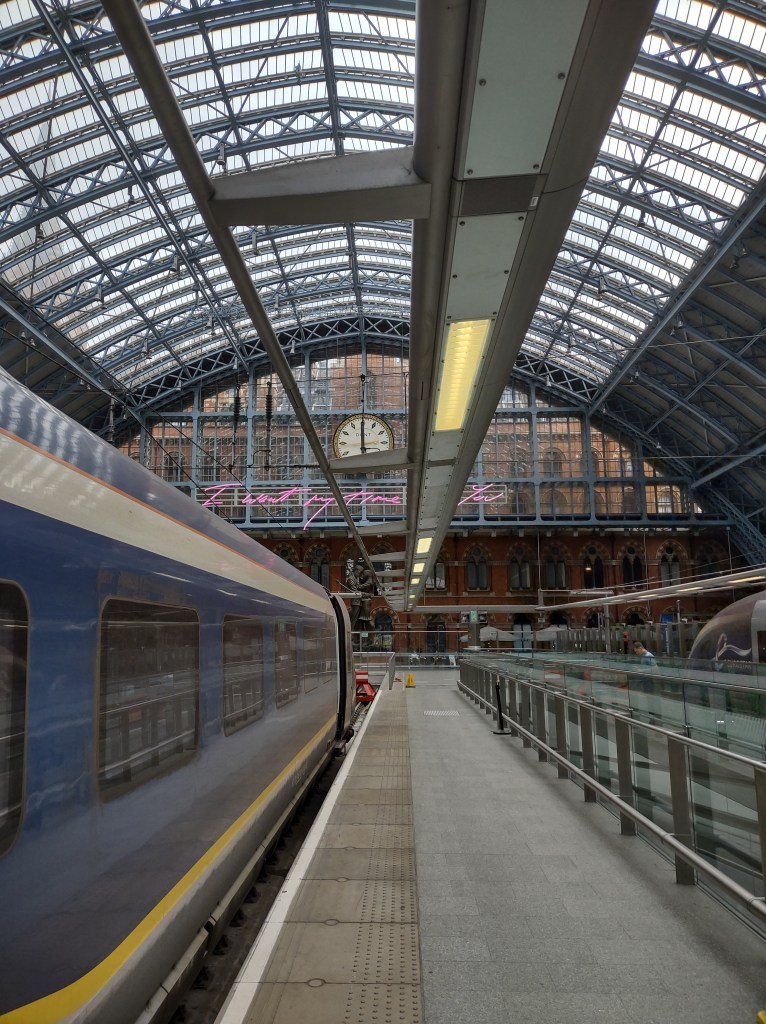
So it was with some excitement that I reached St Pancras and then left the dingy, overcrowded departure hall for the gleaming Eurostar to Brussels, underneath the still glorious station canopy.. A couple of hours later I was skipping off the train and heading for my hotel in the equally dingy Belgian capital for my one-night stay.
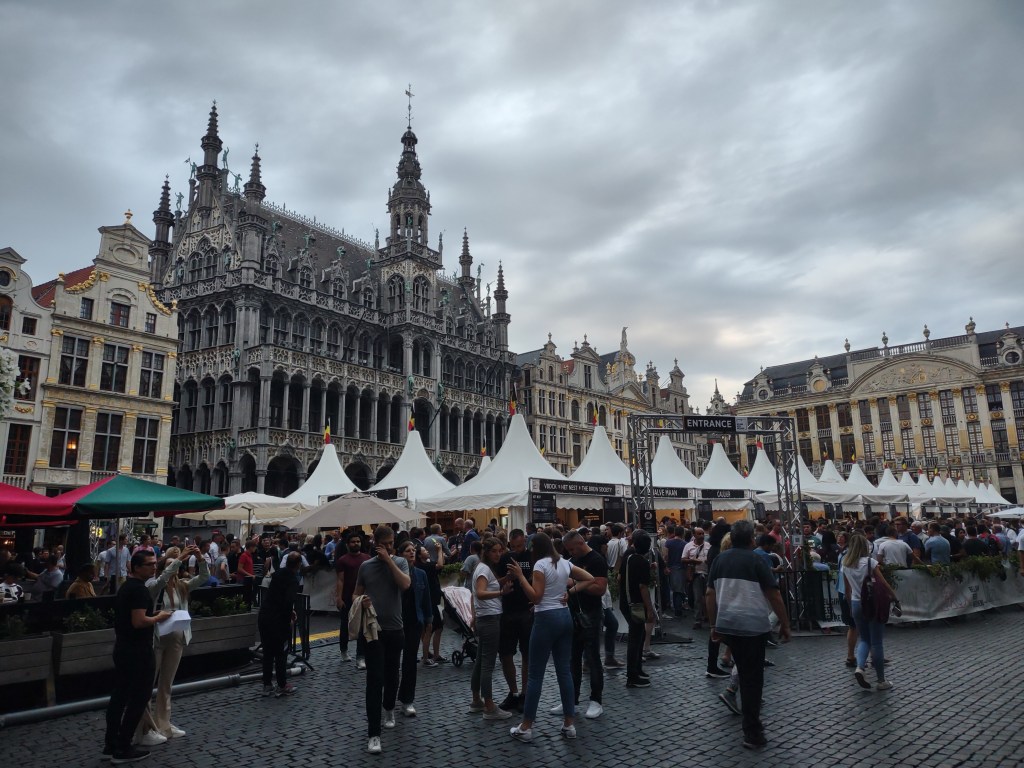
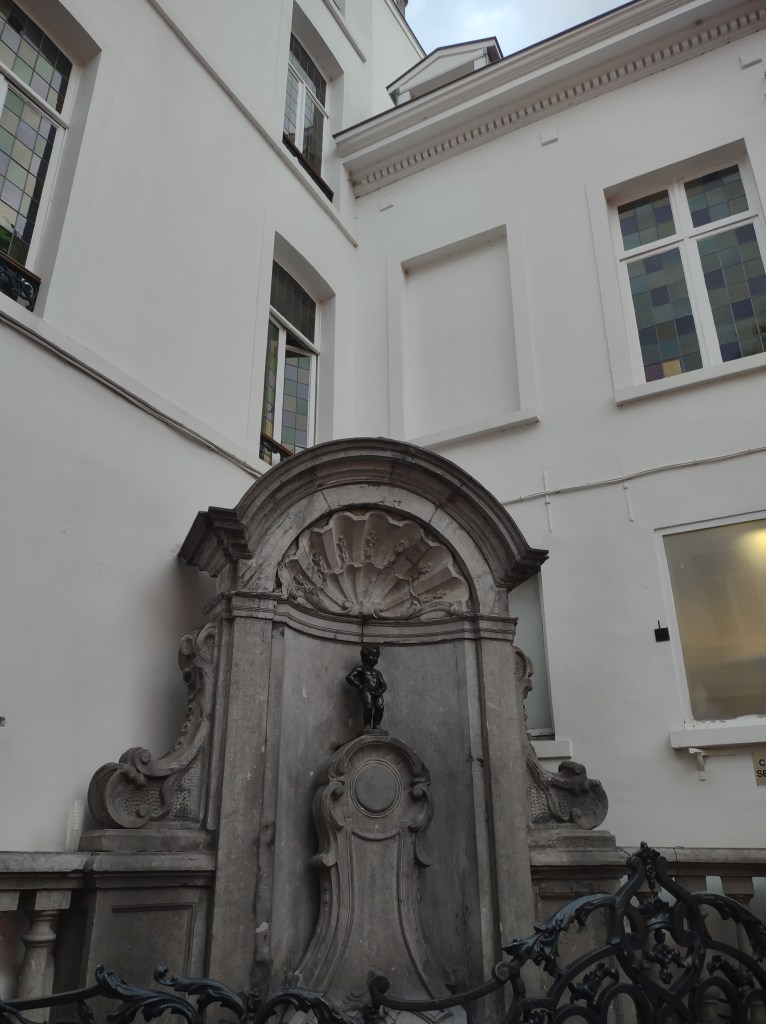
A quick peek at the Grand Place, and then around the corner to the most overrated tourist attraction in all Europe, and back to the hotel. The following morning, I was on my way to Cologne for the first of two nights there before heading off into deepest Germany.
My last few hours in Milan before heading to the airport, and home. Mid-afternoon, thirty degrees, hot, sticky, big city, crowds. Shattered. Time to sign off.
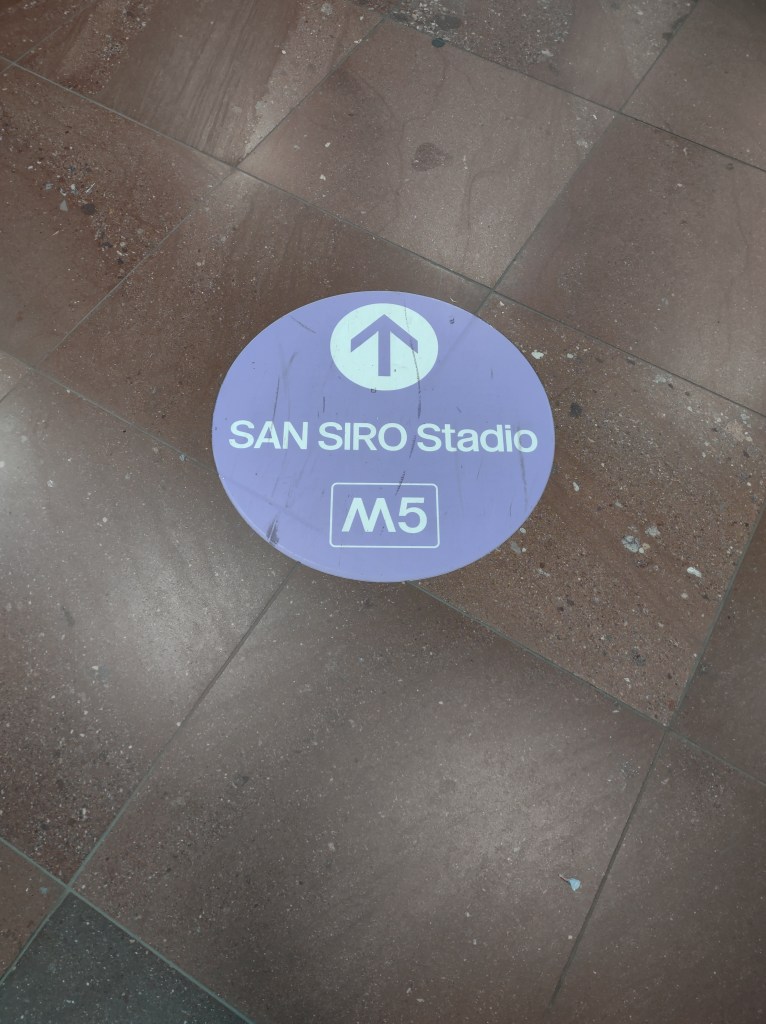
Yesterday I did manage to fit in a couple of extra sights before the heat became unbearable. First it was onto the metro and out to the west.
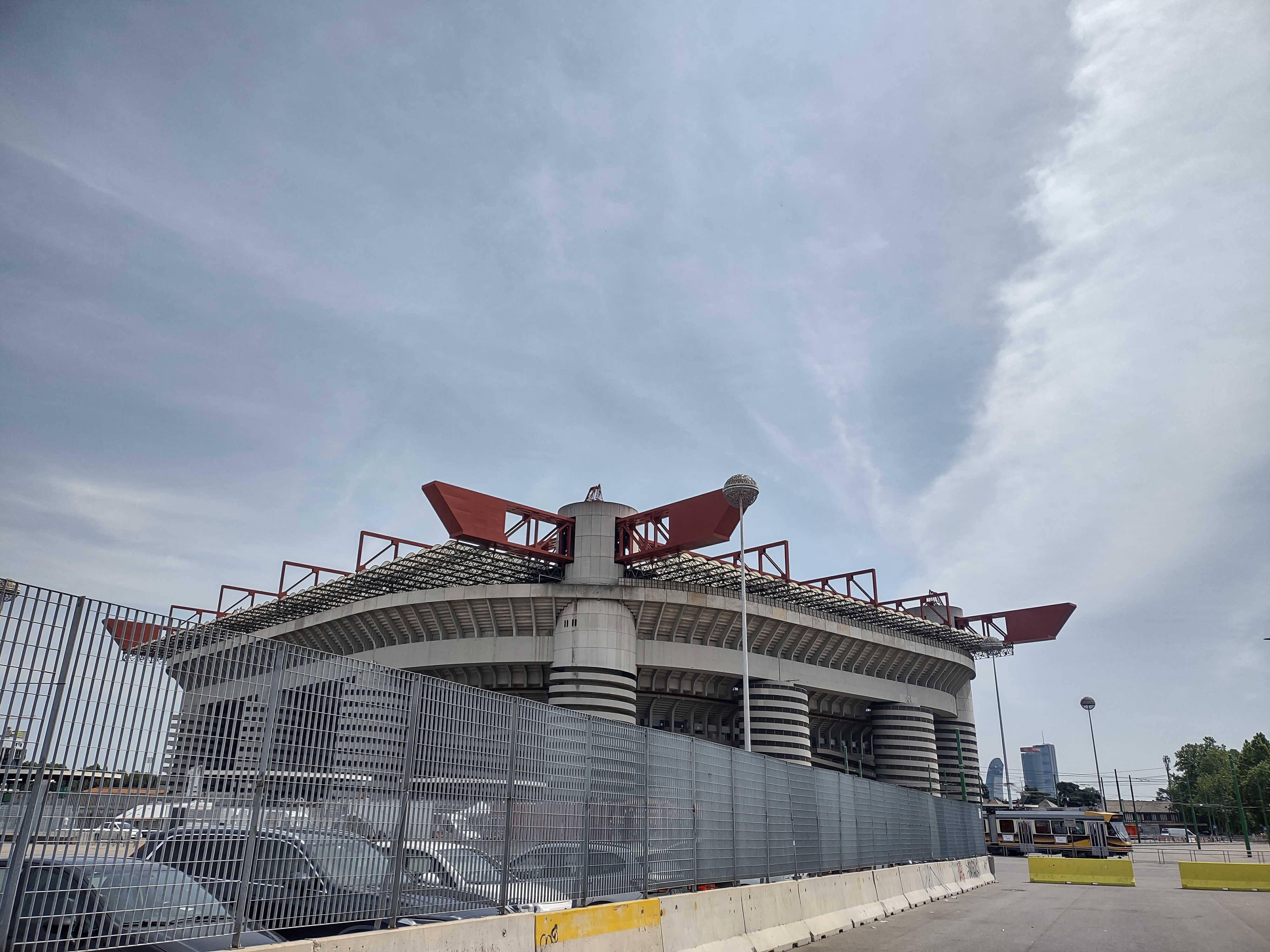
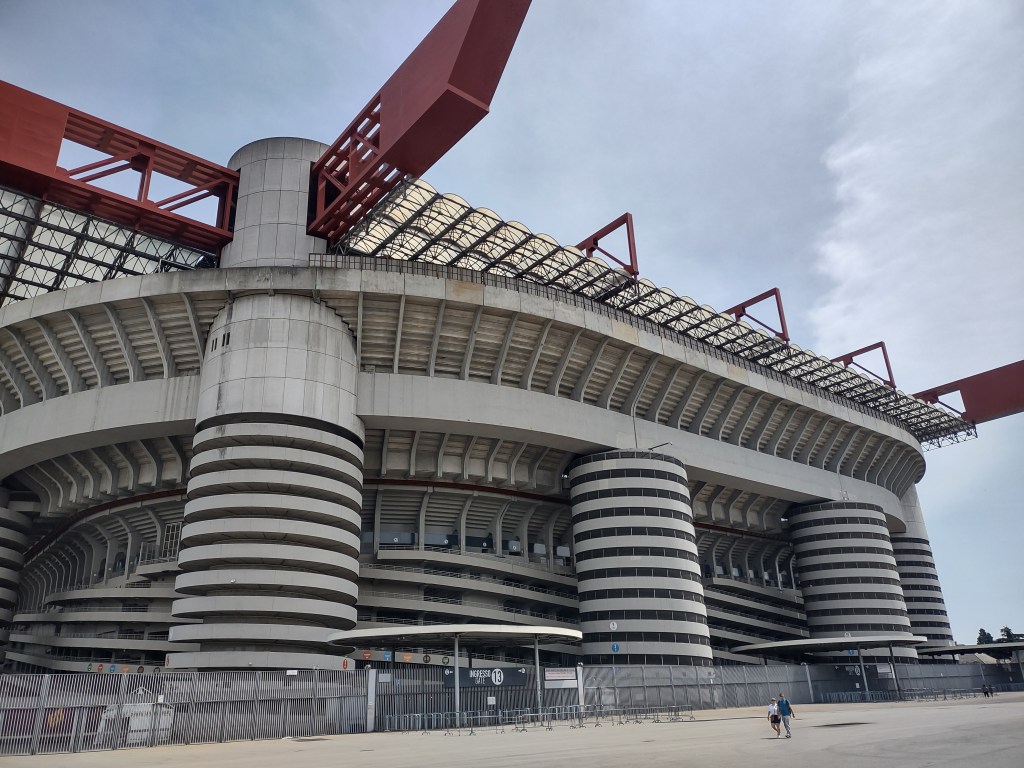
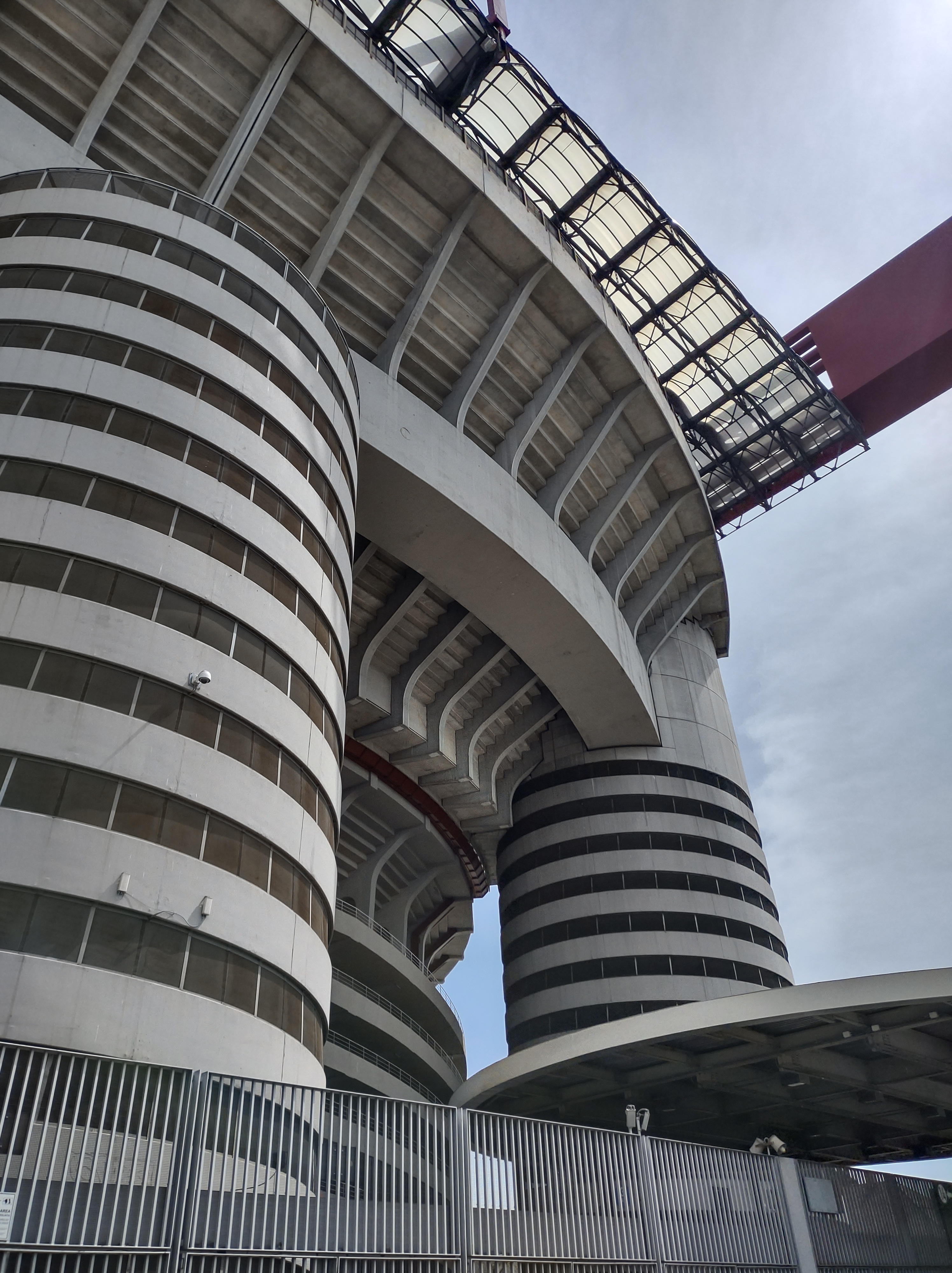
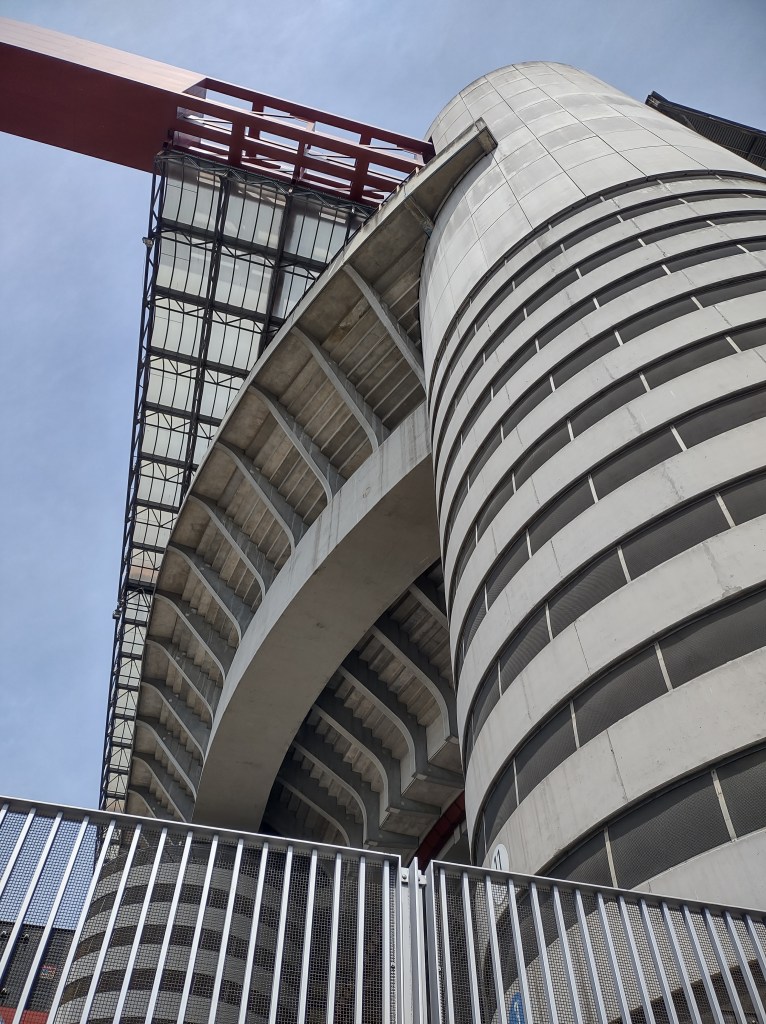
The San Siro Stadium wax originally named as such to reflect the district it’s in, but in 1980 noit was actually renamed after Guiseppe Meazza, one of the great figures of post-war Italian football. So although it’s commonly called the San Siro Stadium – even by the public transport people – it should probably be known by its new name, the Guiseppe Meazza Stadium. The San Siro Stadium was originally opened in 1926, but the iconic renovation incorporating the famous swirly towers was undertaken in the 1980s as a facelift ahead of Italy’s hosting of the 1990 World Cup.
It must be one of few great stadia that look truly awe-inspiring and monumental from the outside, but I of course wanted to go inside to take in the views familiar to football fans the world over for thirty years, and to sense something of the place that AC Milan and Inter Milan players and fans call their home.
And that was the tricky bit today.
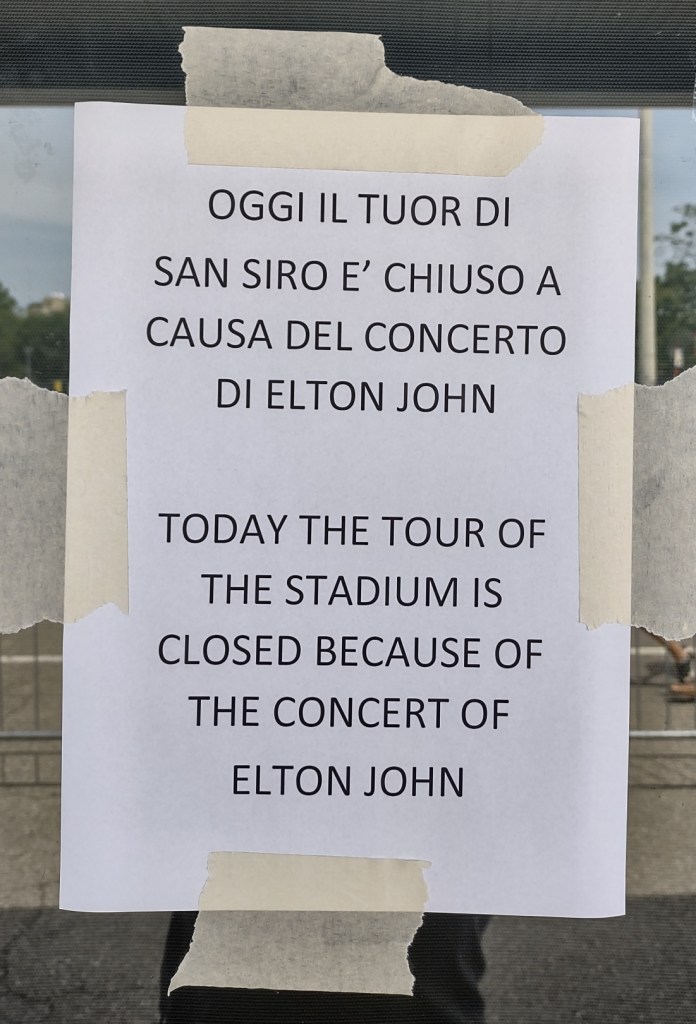
Sure, they do a stadium tour you can book at the gate, and there were a number of tourists milling around the vast concourse and various food concessions were setting up, but the tourists were milling around confused because the gates were shut. And all the food outlets were just setting up, not actually serving anyone, although it was nearly midday…as if they were preparing for something else…
What was going on? The Italian domestic football season had been wrapped up a couple of weeks before. The national team were indeed playing that night, but down the road in Bologna. I kept wandering around, and eventually found the ticket office. Which had a sign up.
Never heard of him.
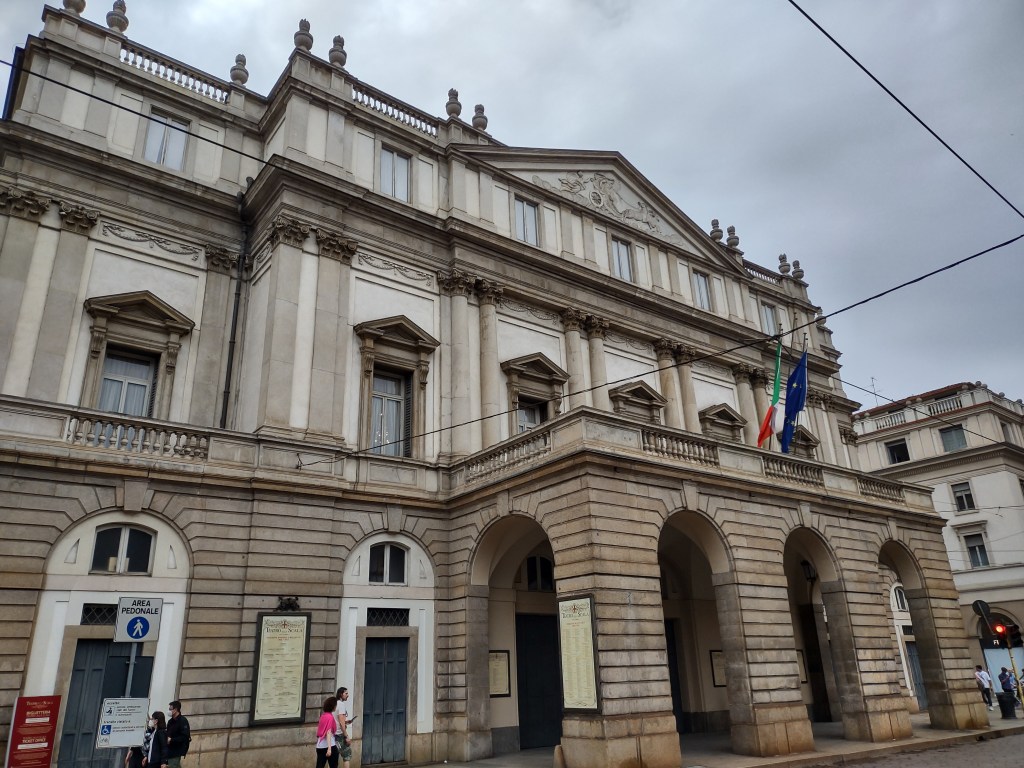
Having made the, ahem, sacrifice of going out all that way, I came back into town and tried my luck at La Scala. They do a museum tour that includes a visit to the auditorium itself, a place familiar to opera lovers the world over since its opening in 1778. You yourself can experience something of the place that great composers such as Verdi and Puccini have graced, that all the great artistes like Caruso, Callas, Pavarotti…
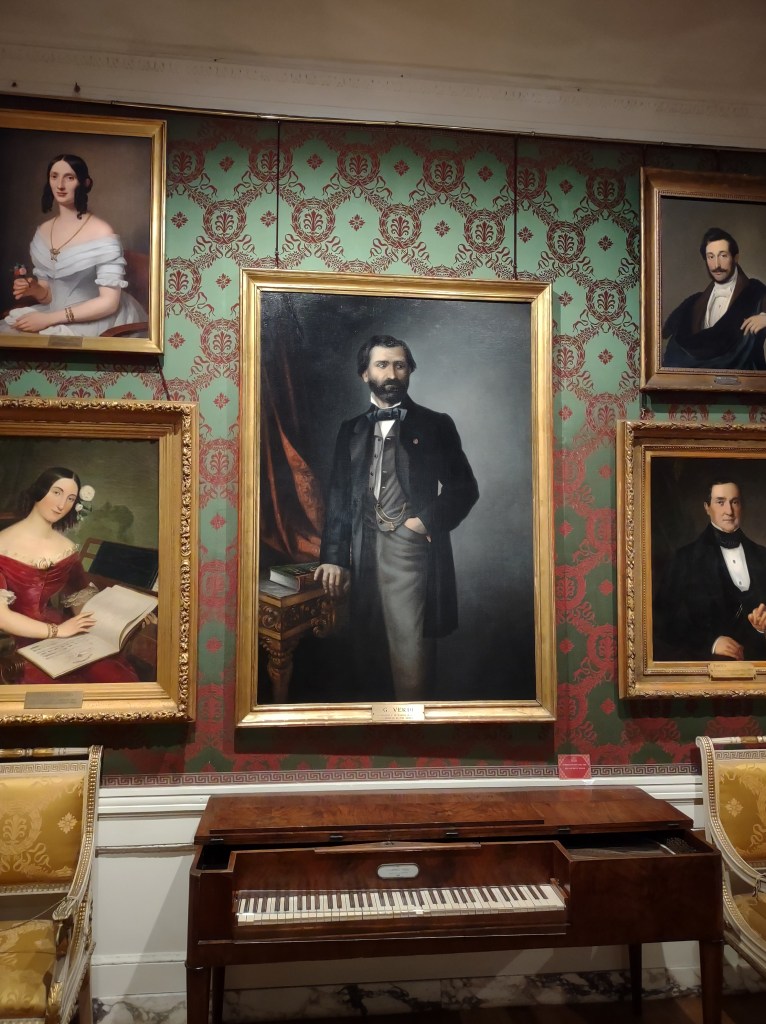
You can see where we’re going with this. The museum was open but the auditorium was not; there was some matinee performance of something going on and they closed that part of the tour. I’d even booked ahead for this one, but maybe once again I hadn’t done the research. So I was just left with the paintings and sculptures of the greats in the museum. Here’s Verdi.
From that point I stopped trying to get into anything that required tickets – museums, churches – and as it got hotter I resorted to looking for a bite to eat and something to drink.
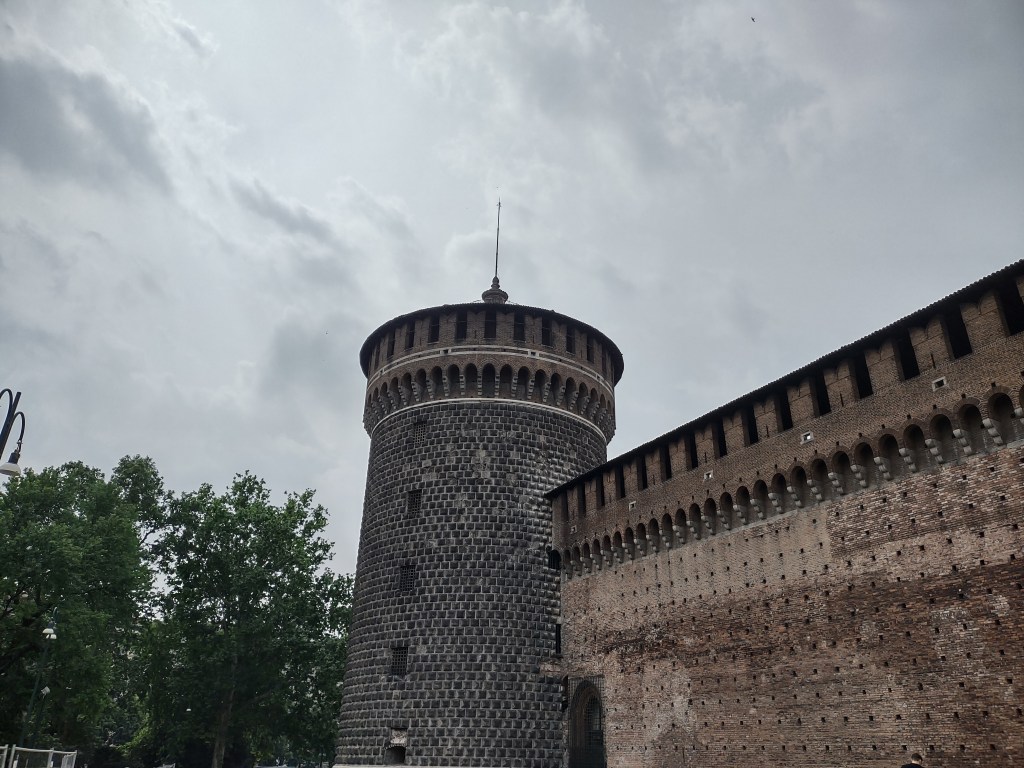
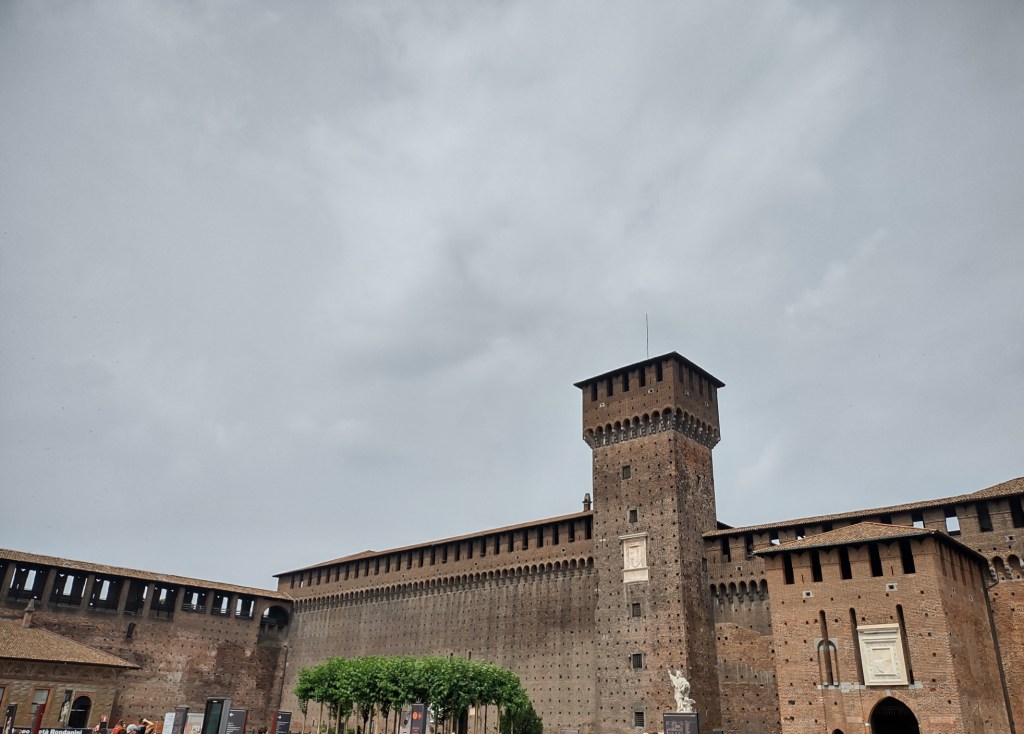
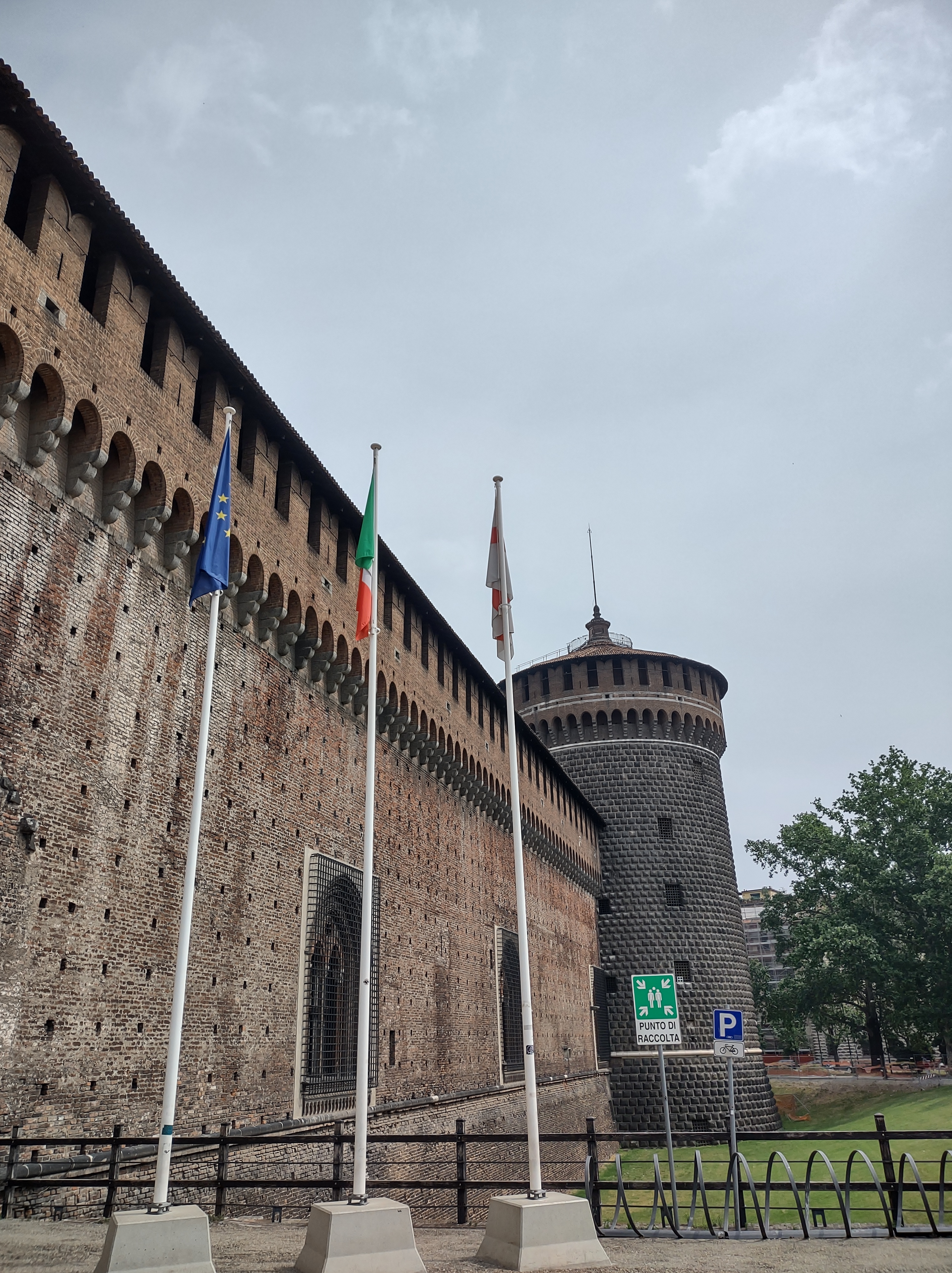
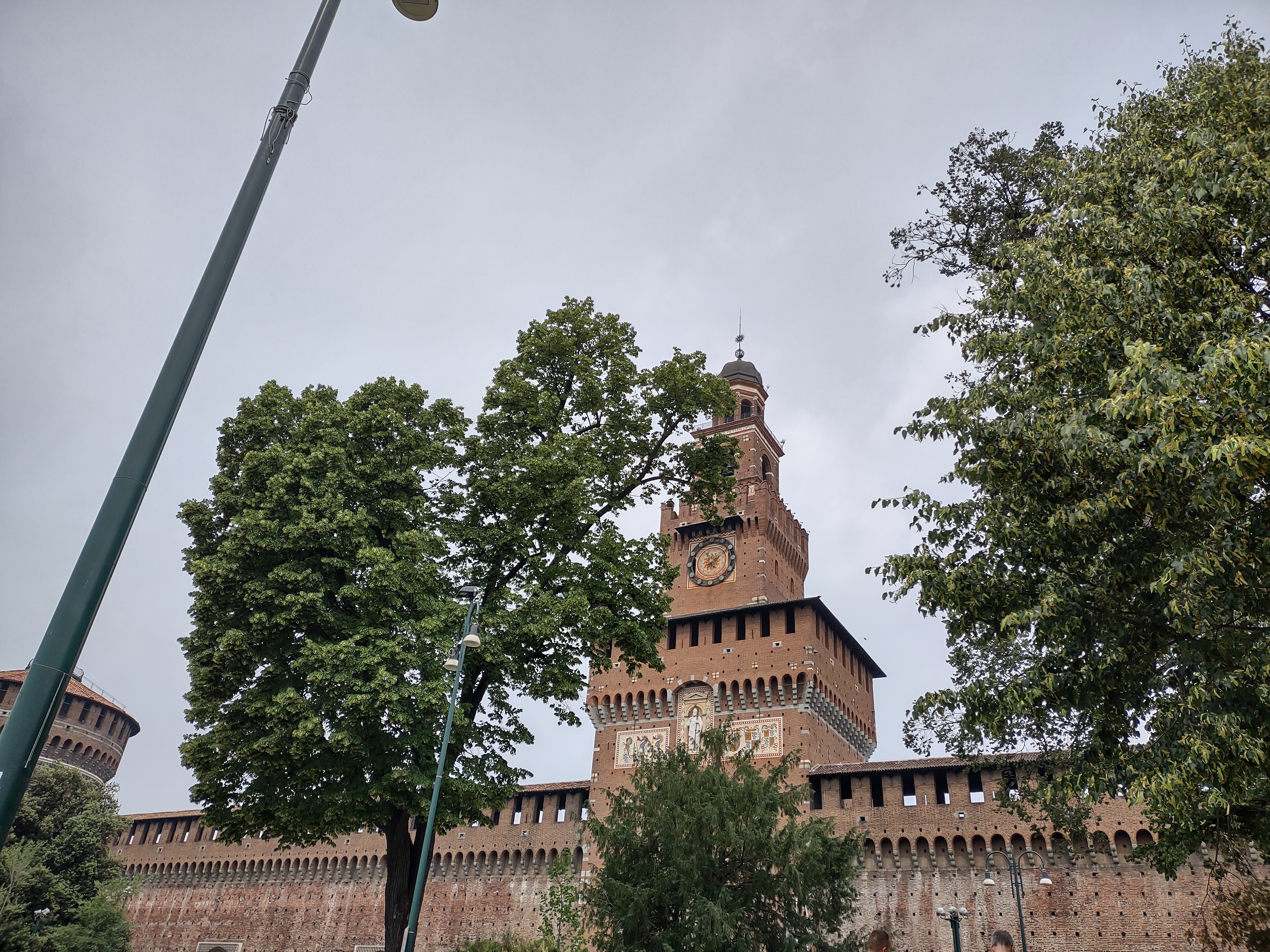
My last day was much the same. With a late flight booked I had time to do some strolling through the Castello Sforzesco…
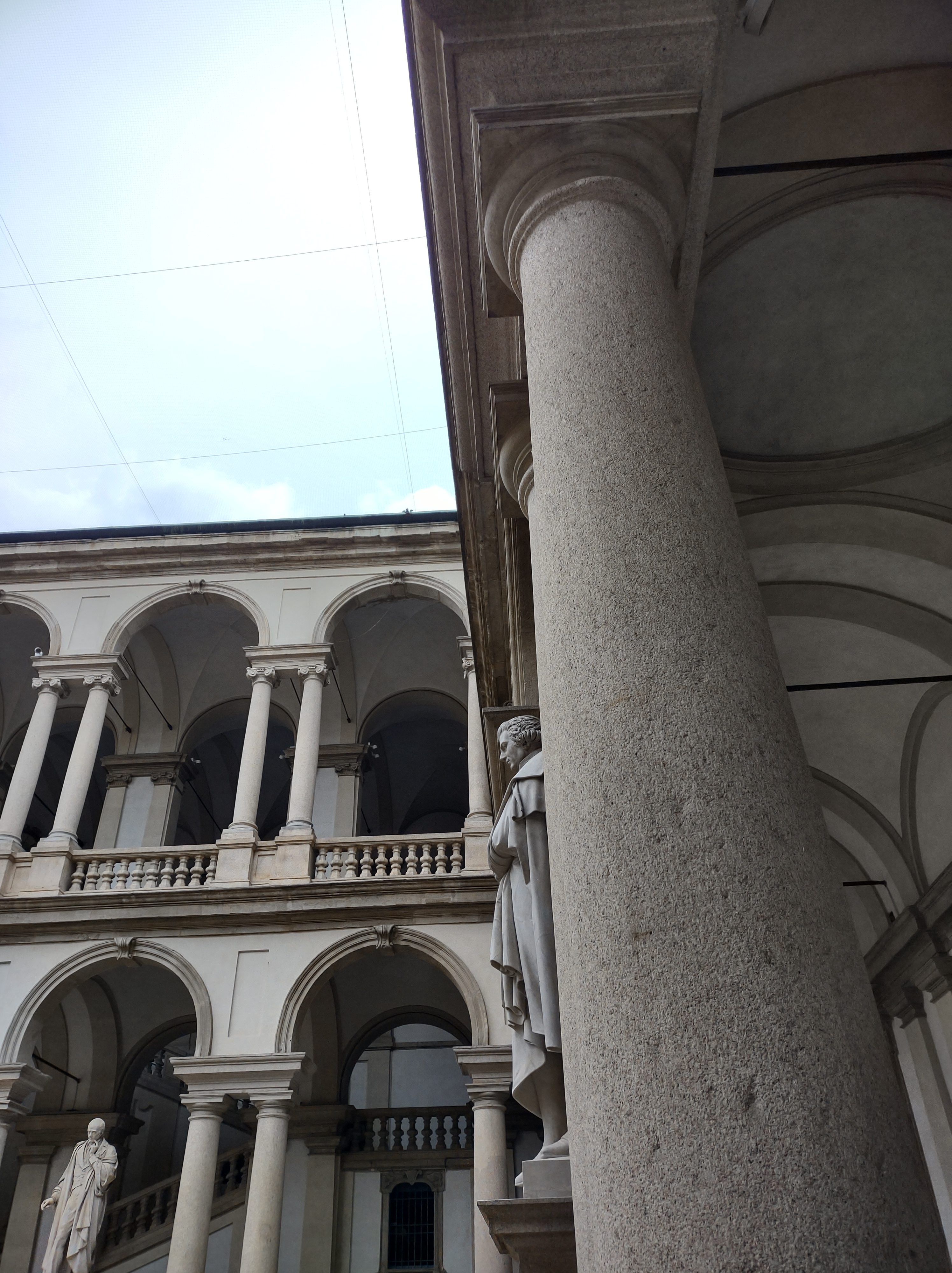
…and the courtyard of the Brera Museum…
…before I realised it was all too crowded and steamy for me.
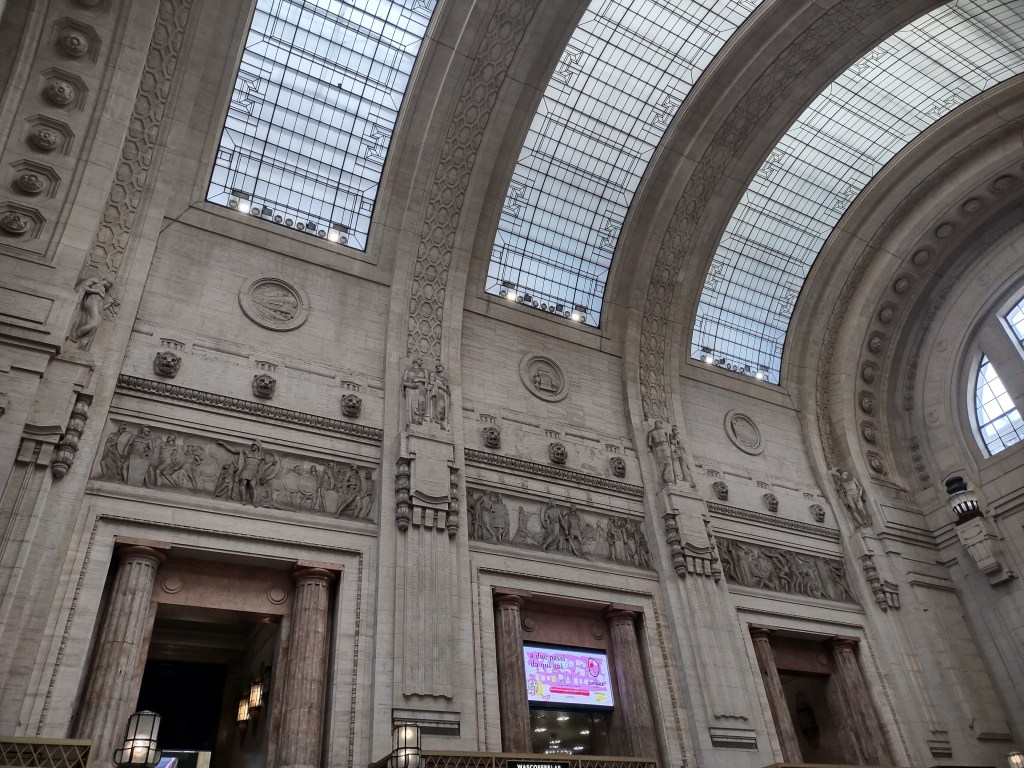
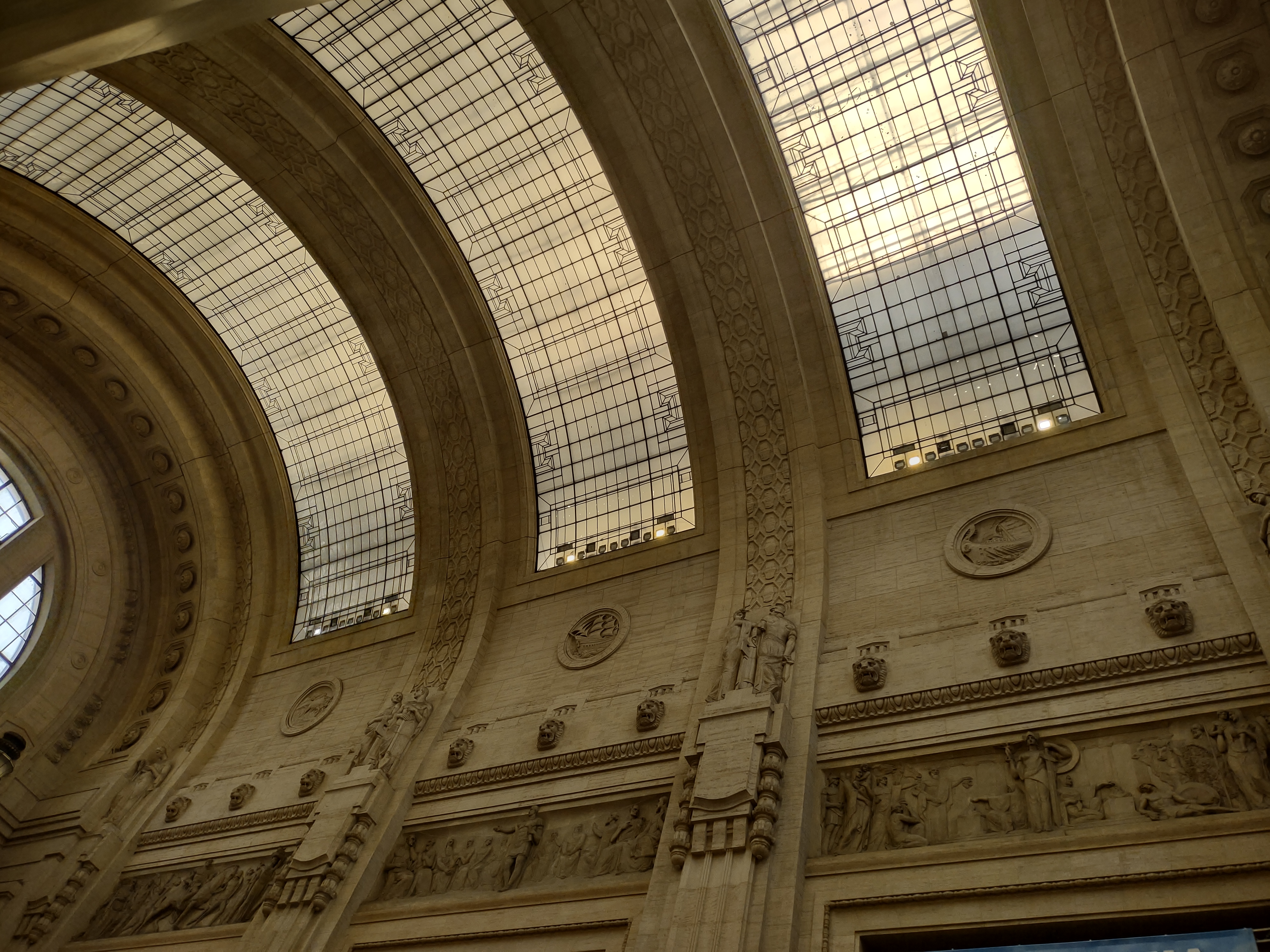
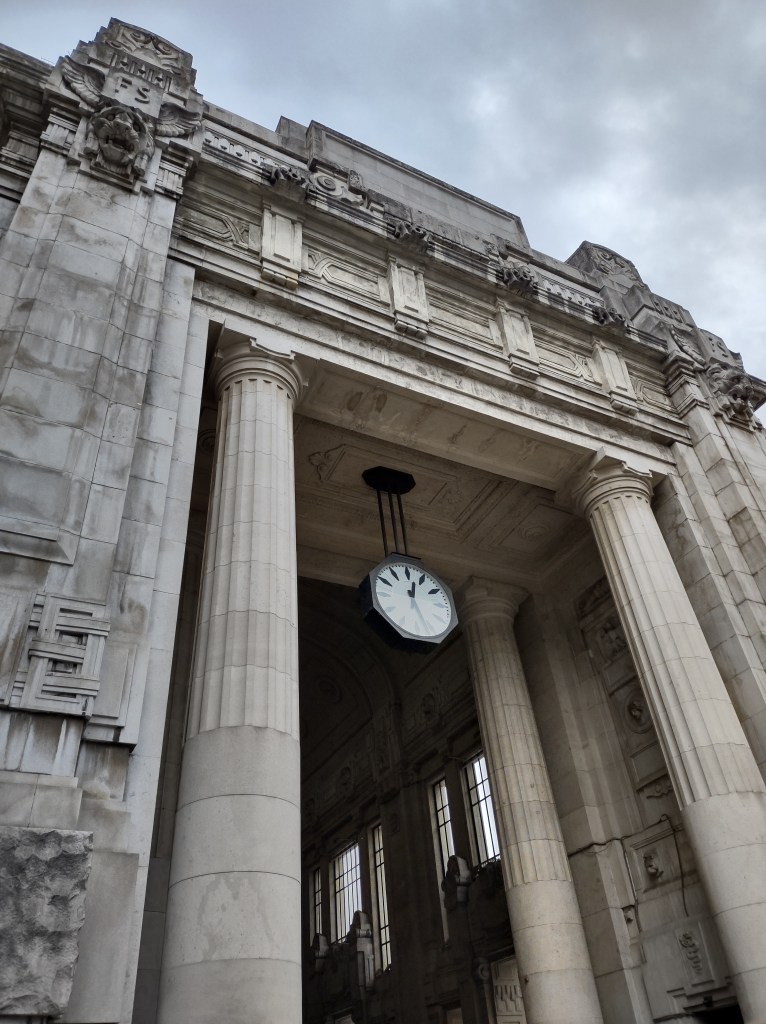
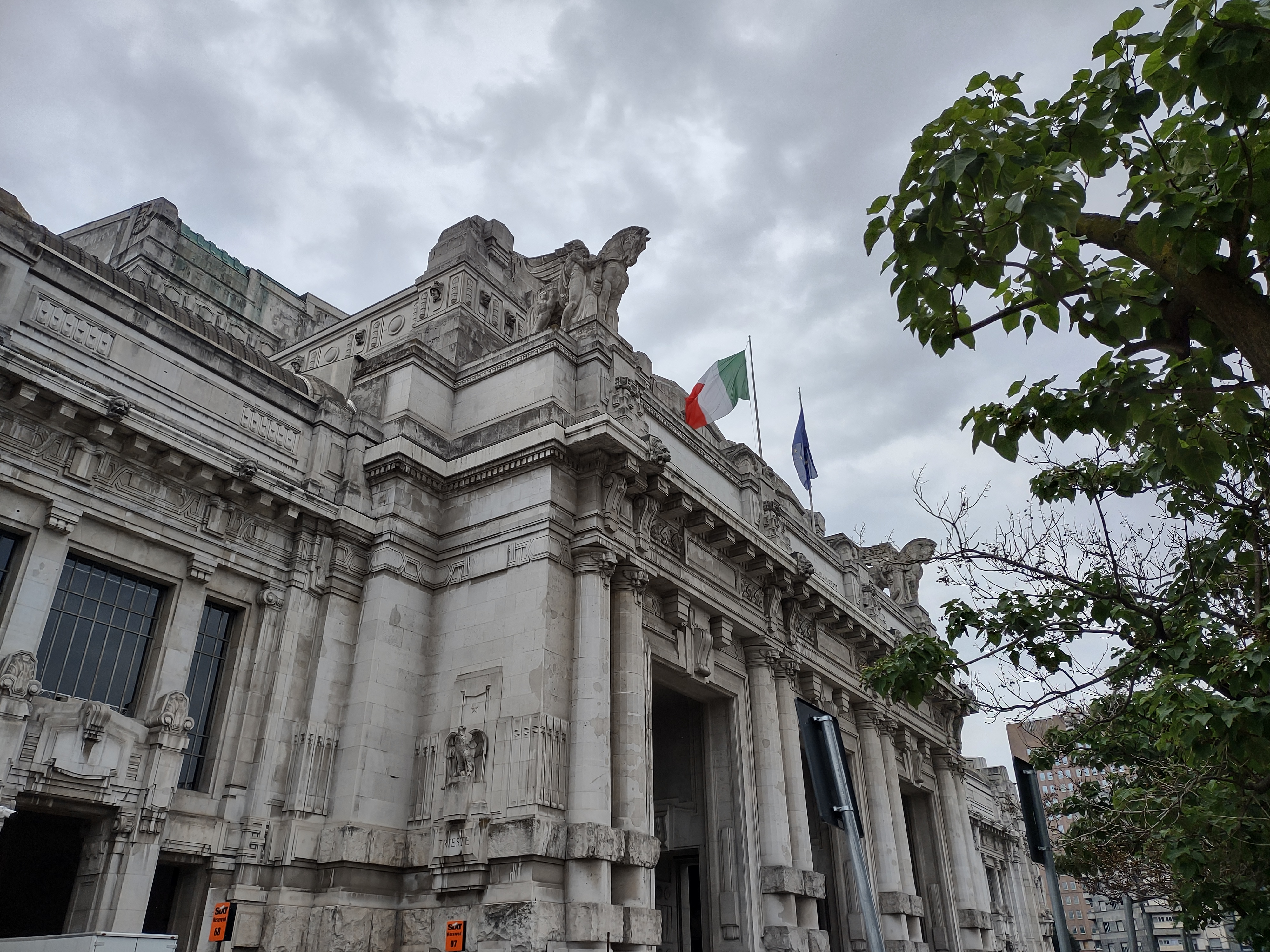
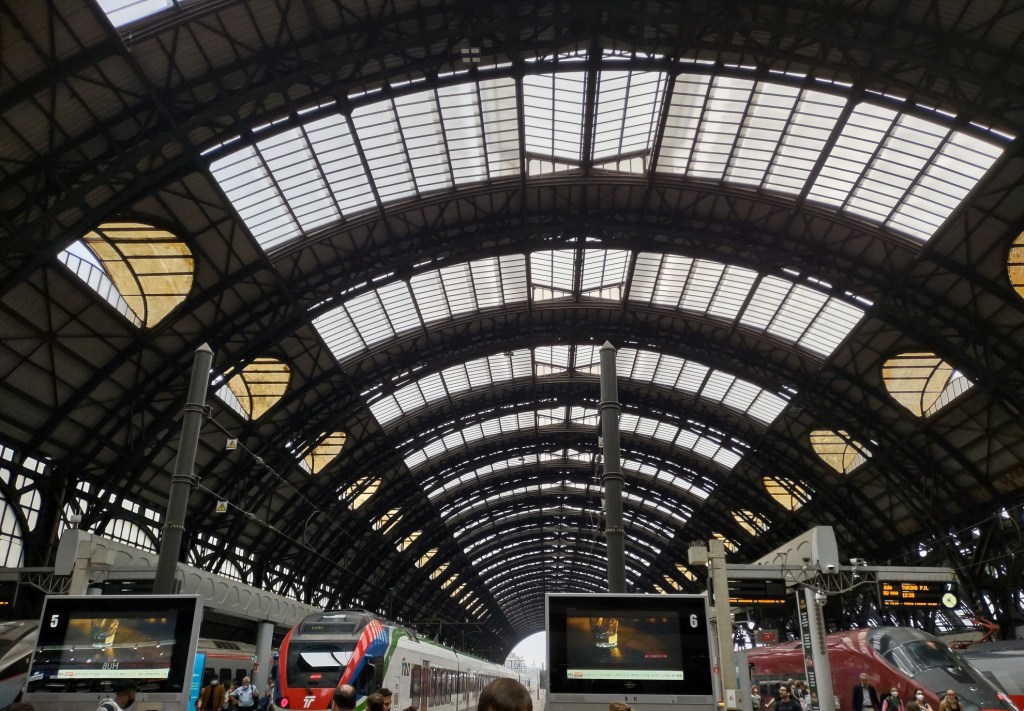
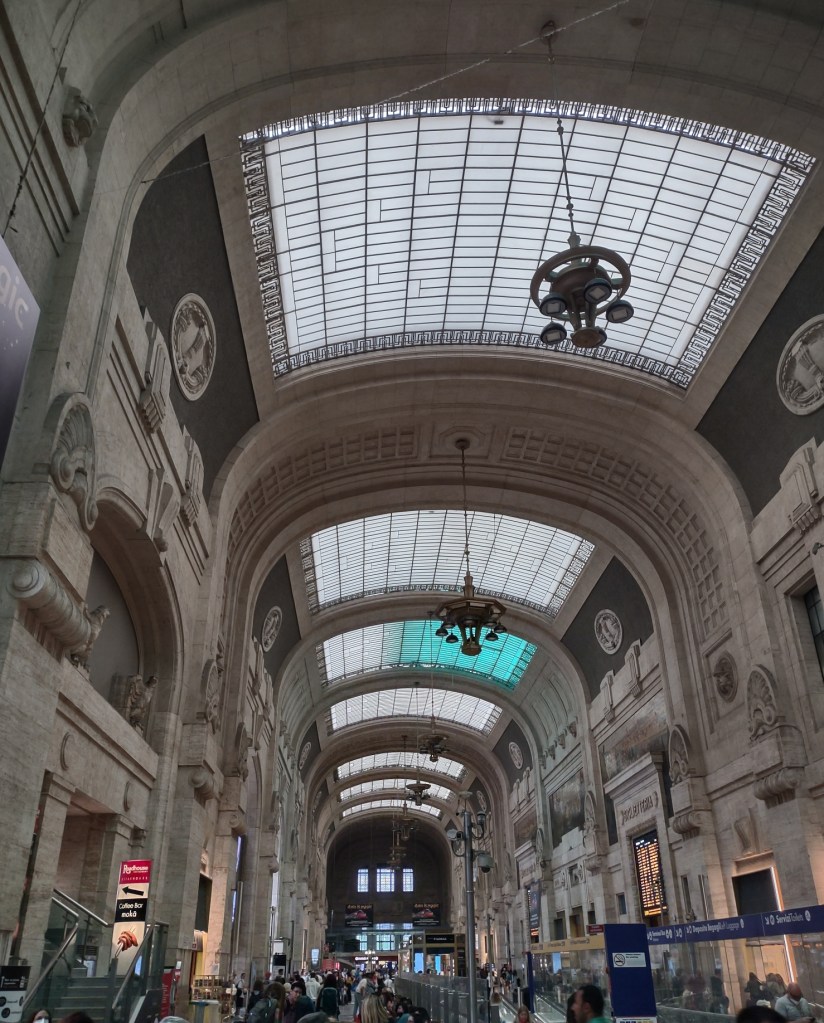
So now I’m near the station waiting for the moment to head to the airport. Which gave me time for some new snaps to, ahem, admire Centrale Station’s Futuristic motifs and its Fascistic oppressiveness.
I don’t like ending my tour on such a downer, but it had to end somewhere and we have all already been treated to some fantastic places during this tour. These last photos show us that when our species tries to outdo the eternal grandeur and majesty of the natural world with our own bombast, not only do we fall far short, we become prisoners of our own lack of humility, and – as happened here – millions of our fellow citizens end up becoming real prisoners, or worse.
Hunkered by a massive archway at the station exit, dwarfed by the scale of this monument to war-mongering dictatorship, the authorities had set up a little tent to receive refugees from the Russian invasion of Ukraine. I prefer the natural mountains to the man-made ones. They represent peace, not war.
Milan. High-class fashion, yes, top football, yes, but otherwise on first sight it’s just another big city, with lots of busy people, loads of tourists, rush rush rush.
With only a couple of nights here I’ve zoomed in on a couple of sights and I’ll use the rest of the time to see if anything else crops up and see what else I can pick up about this huge city. Oh, and chill out before the flight home.
Out of the central station we go, and it’s … well, grand…
Surprise, surprise, its grandiose monumental feel was the result of the Fascists getting hold of the design towards the end of construction. Frank Lloyd Wright liked it. It must be the interior he liked. Which is cool.
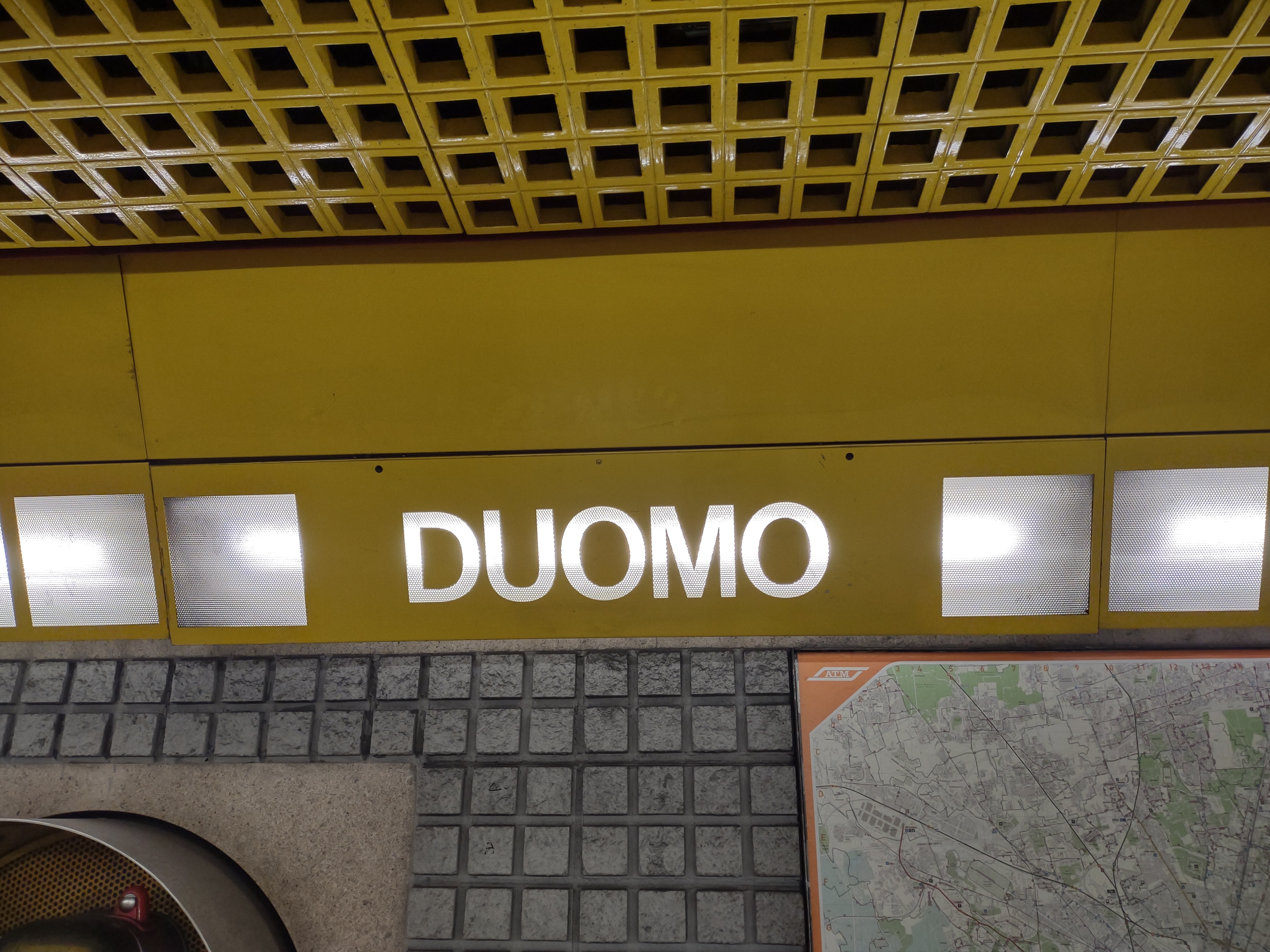
Getting over the shock, it’s off to the hotel, then out on the underground. And the first thing to head to?
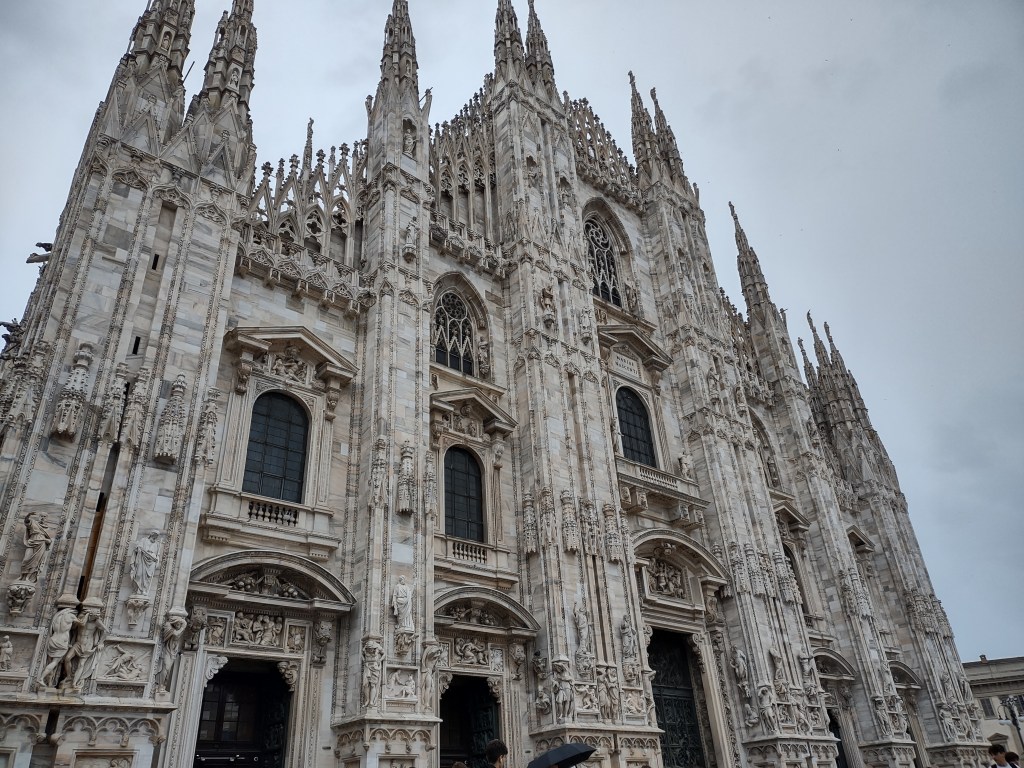
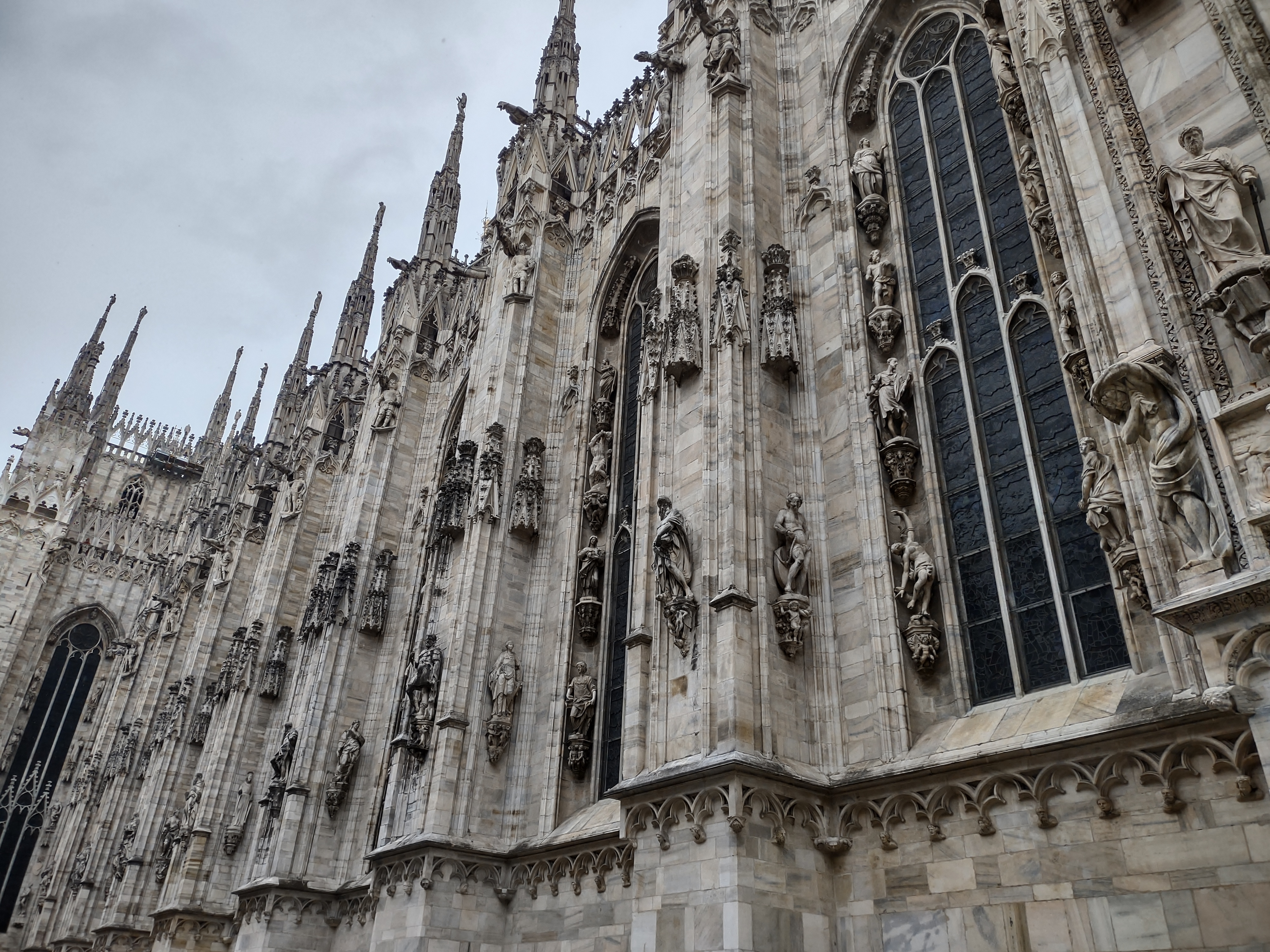
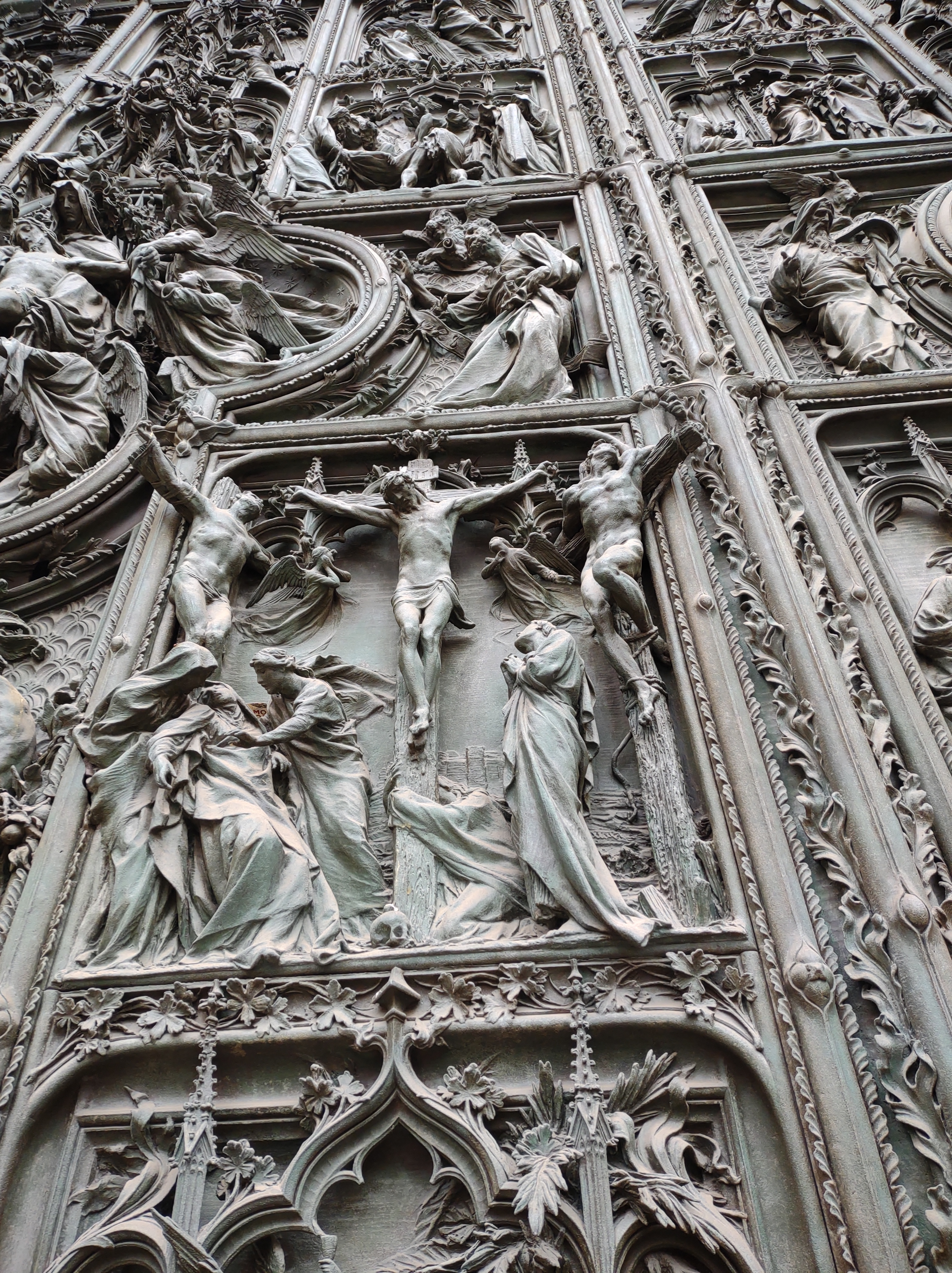
It’s one of those great sights that still takes your breath away once you see it for real, however many times you’ve seen it on TV and the like. The other surprise is that, although work started on it in the 14th century, it continued on and off through subsequent centuries until the last portal, the very last detail, was completed. In 1965. A living cathedral in more ways than one.
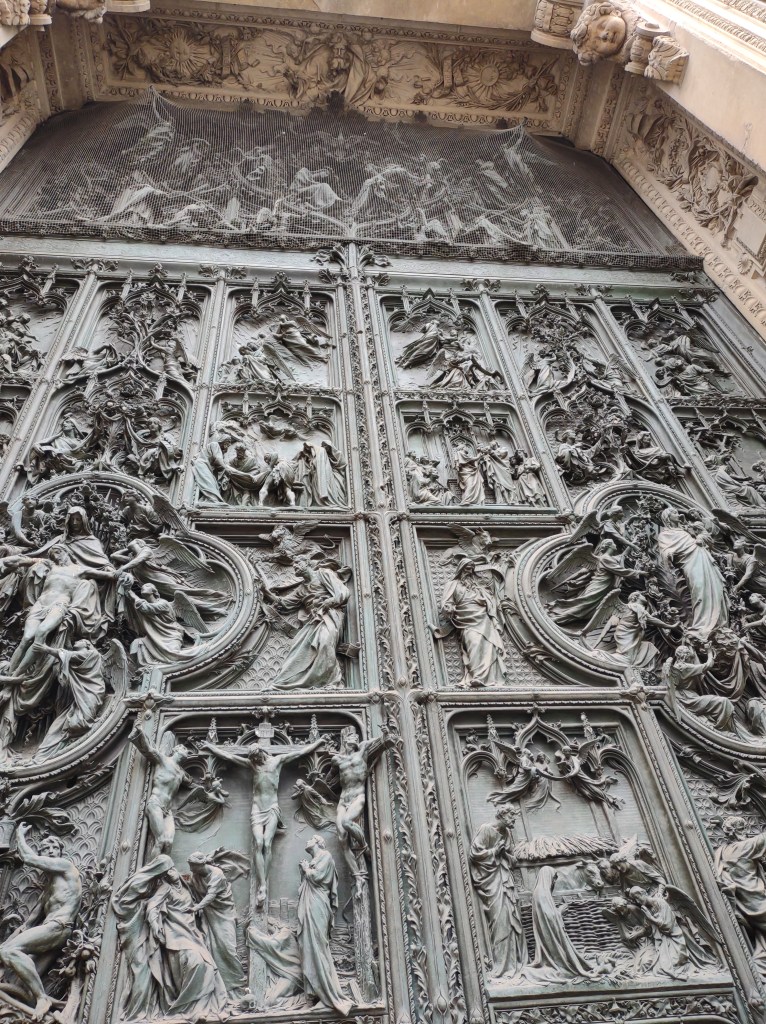
Details from the main door. While fitting in well with this great Gothic pile, it was actually inaugurated in 1908.
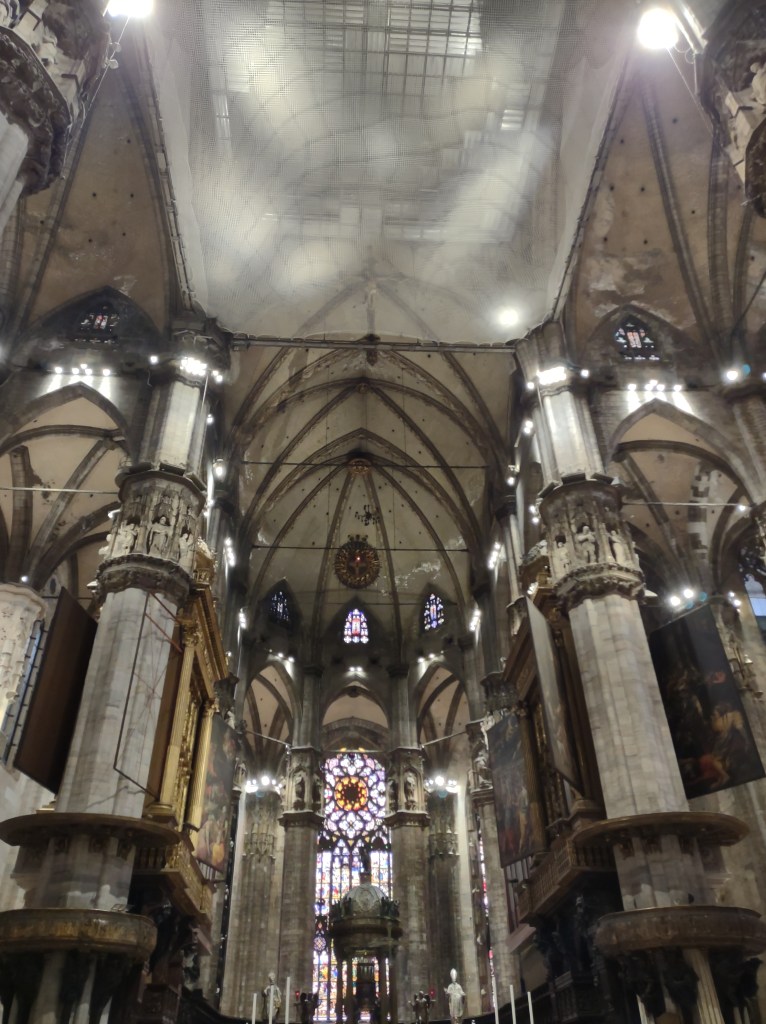
Fancy a look inside? If you’re nervous following your Lucerne bridge trauma, don’t worry, you’re in for a lovely, innocent Gothic/Baroque treat. Here we go!
The apse. You might just be able to pick out the red light of the medallion in the ceiling. This is where the Holy Nail is kept, a nail from the Crucifixion. Once a year the archbishop removes the nail and parades it amongst the people. I think he gets up there by way of the Holy Jetpack. Anyway, what a lovely story!
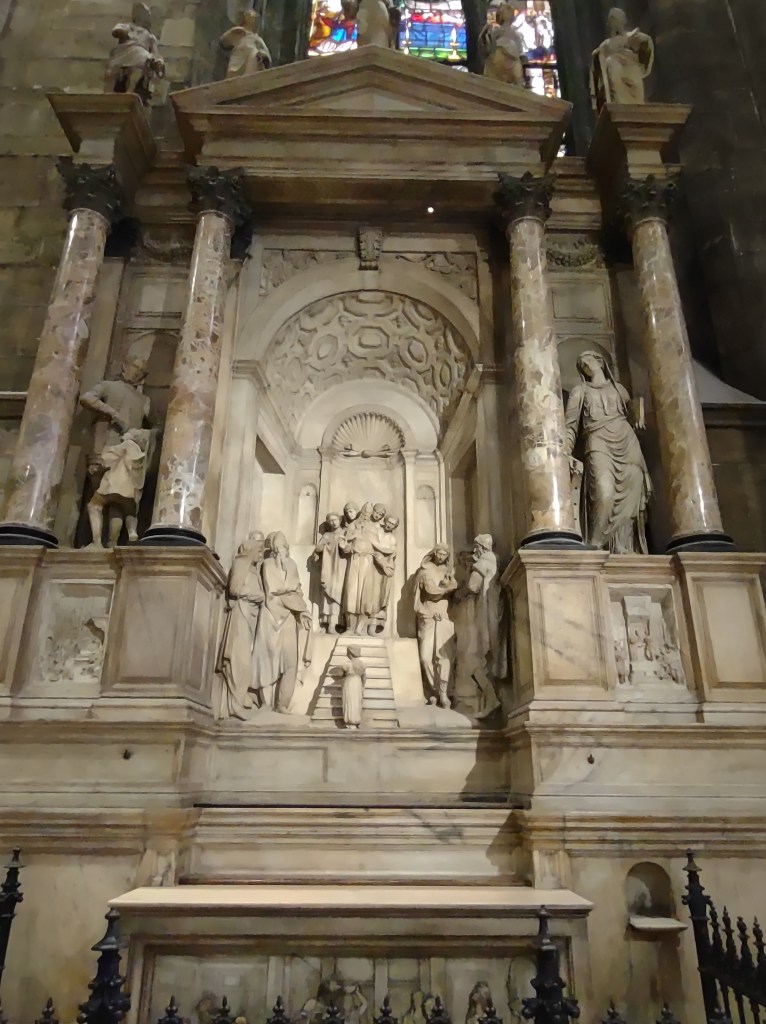
Here’s an alterpiece depicting the presentation of Mary to the Temple. At the top of the stairs waits a rabbi with his faithful, while the proud parents Anne and Joachim stand to the left. And Mary? She’s the adorable little girl at the foot of the stairs. How sweet! How innocent! How not gruesome at all!
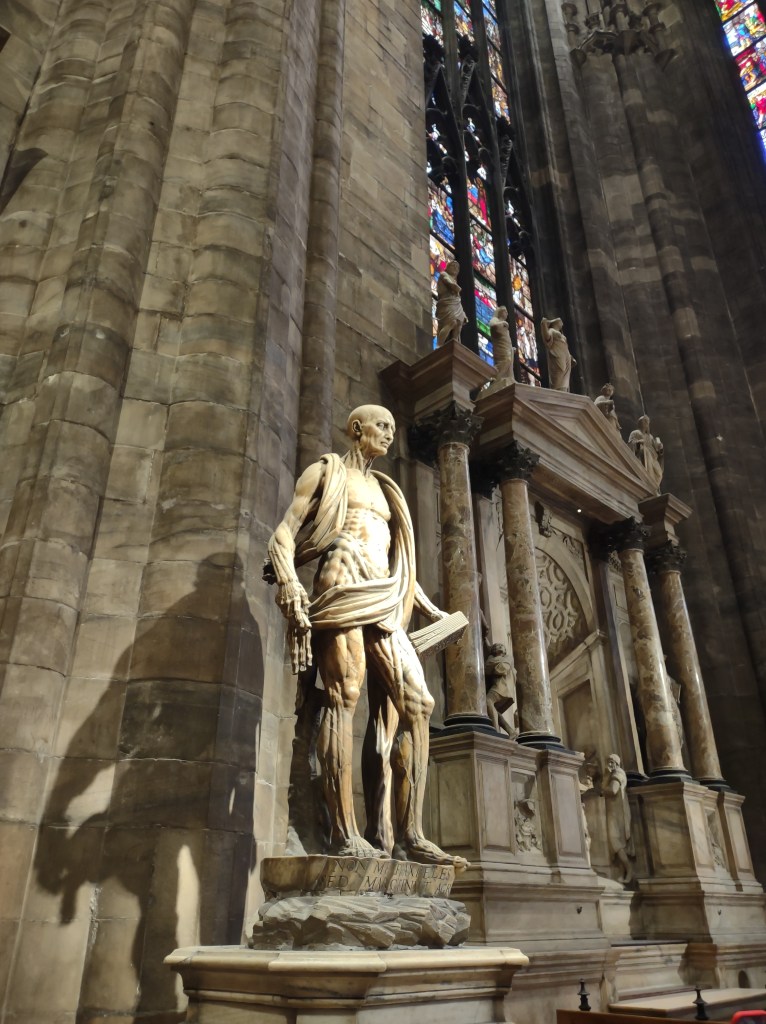
And that’s not the most famous piece of art in the Duomo either.
Here it is, St Bartholomew, in the middle of his martyrdom, having been flayed so – that – his – skin…is…err…hanging off – his – body before – his beheading … err…
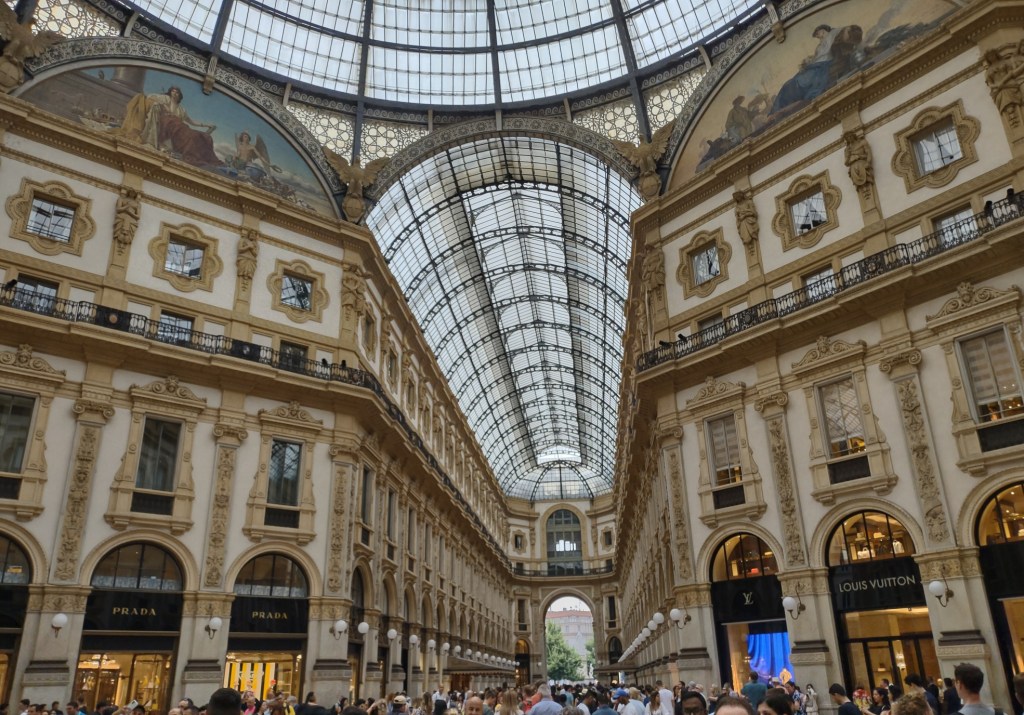
…and next door to the Duomo is the world-famous Victor Emmanuel arcade. Retail therapy?
La Scala.
Unfortunately there were not many concerts going on that I could sing about during my stay. Worse, that final meal I mentioned last time I was going to have to skip. Bookings to see Da Vinci’s Last Supper were filled some time ago, and rightly so.
So it looks like I can be choosy about what I take a look at tomorrow, which isn’t a bad thing. More later!
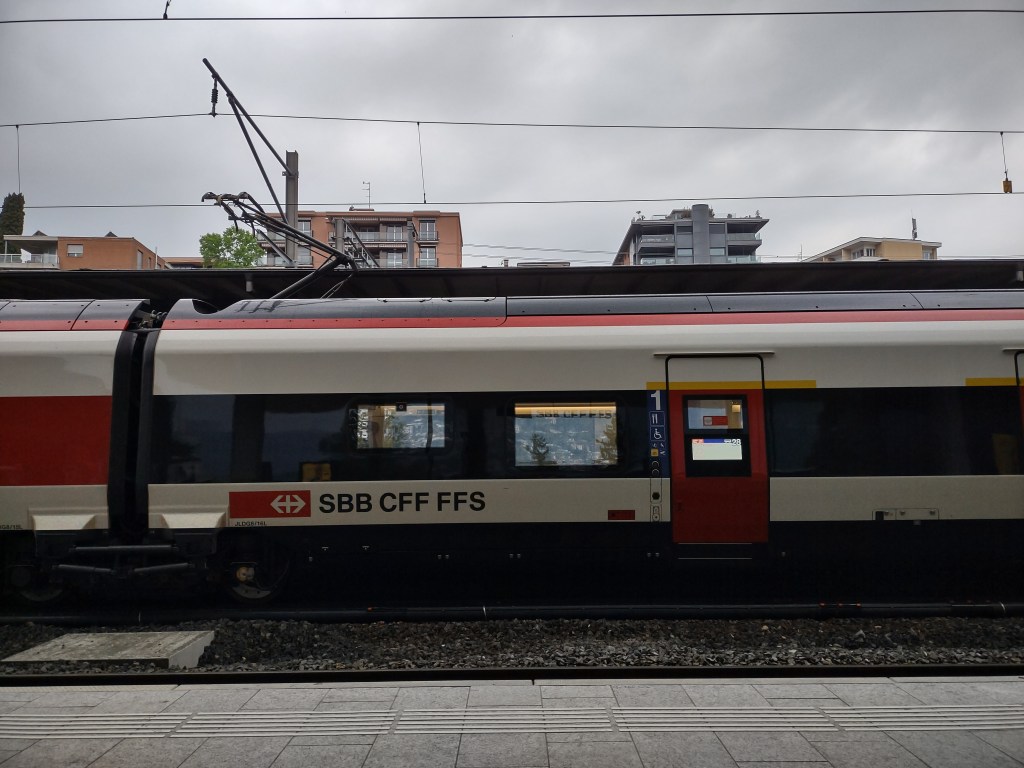
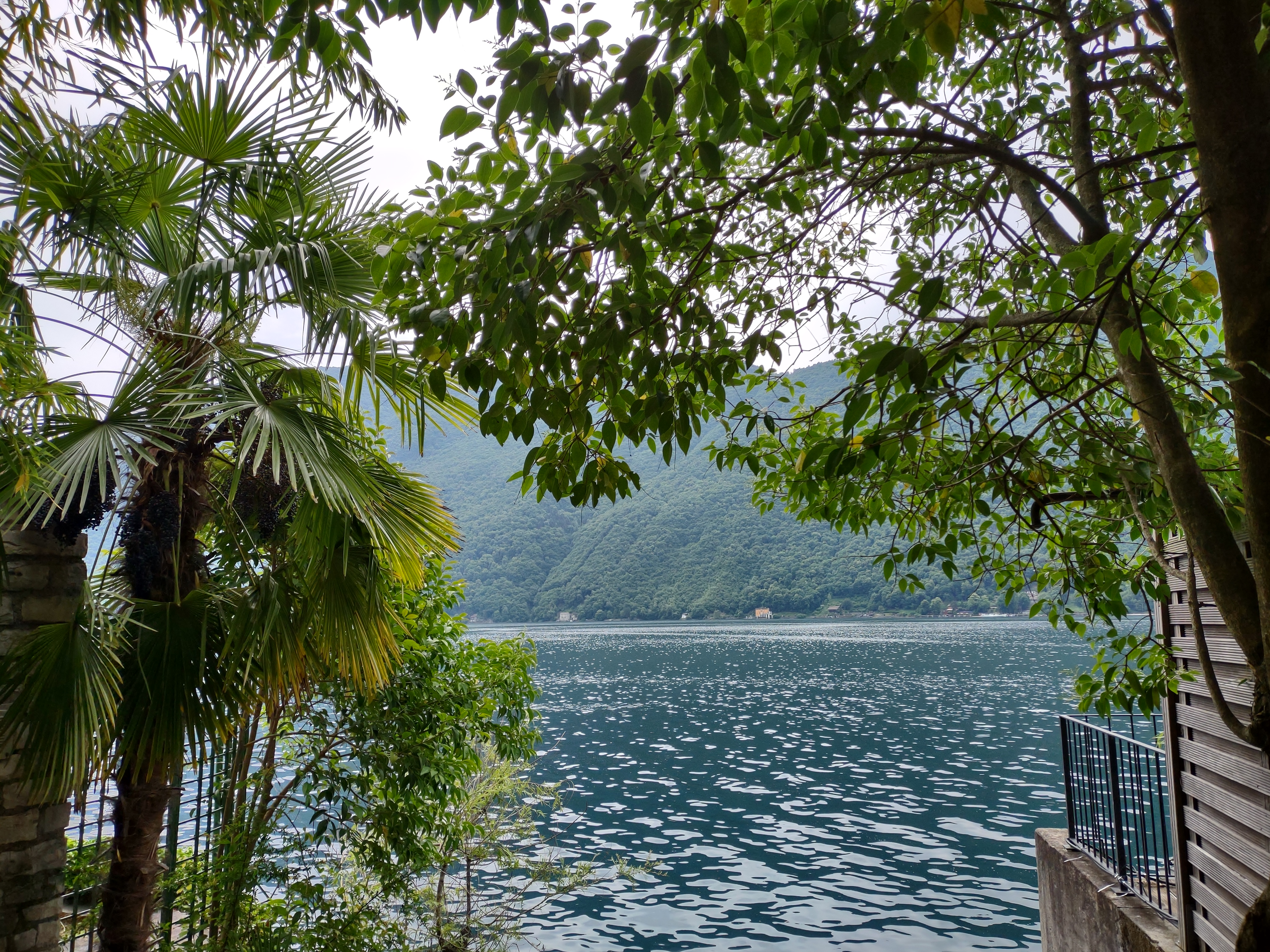
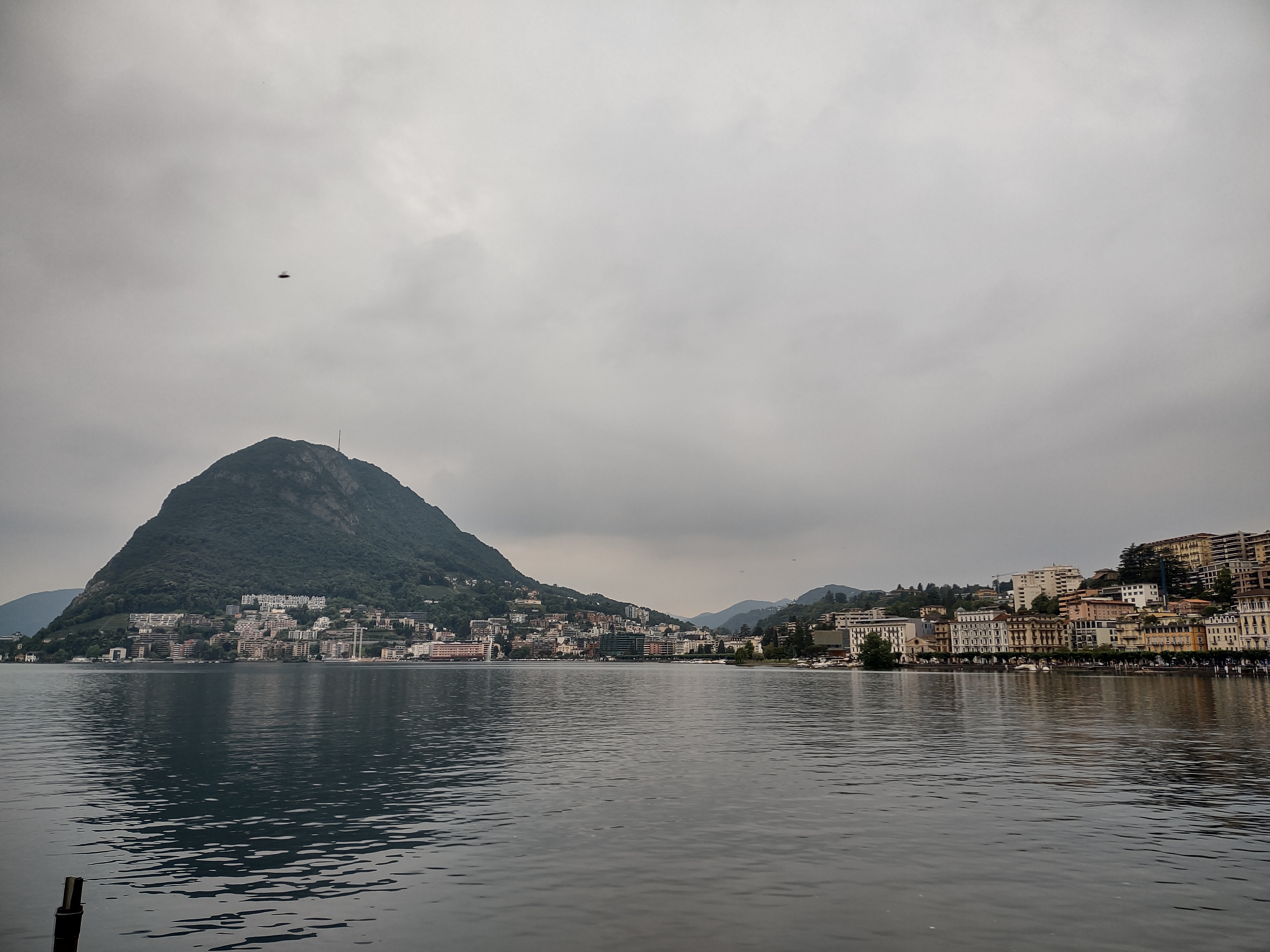
I’m writing this post as I sit on a grey platform at Lugano station. I normally love travelling by train but today is a grey day, a drizzly day, and I’m waiting for the train that will take me away from warm, lovely Lugano to my final destination, and after that back home, and back to work.
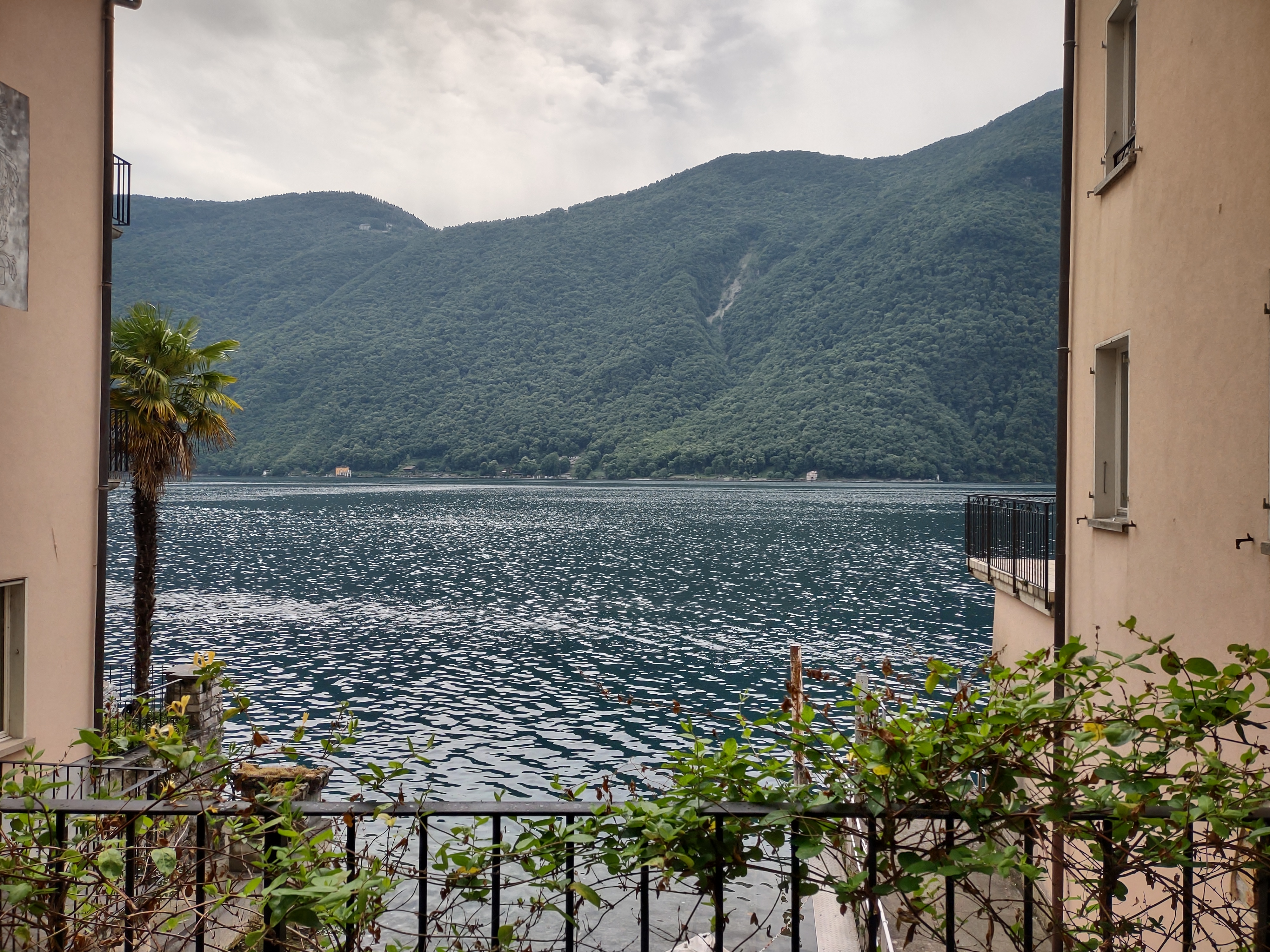
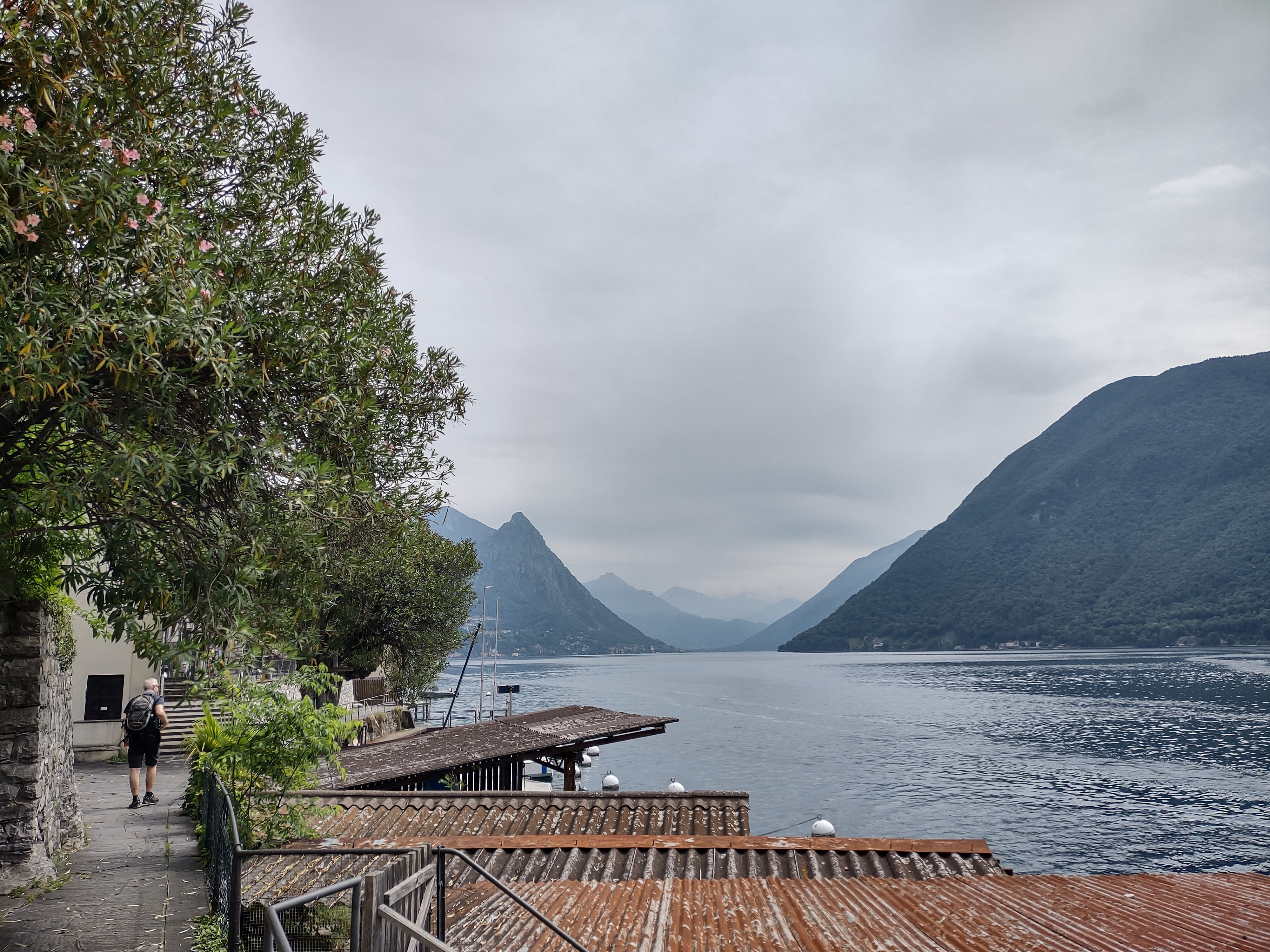
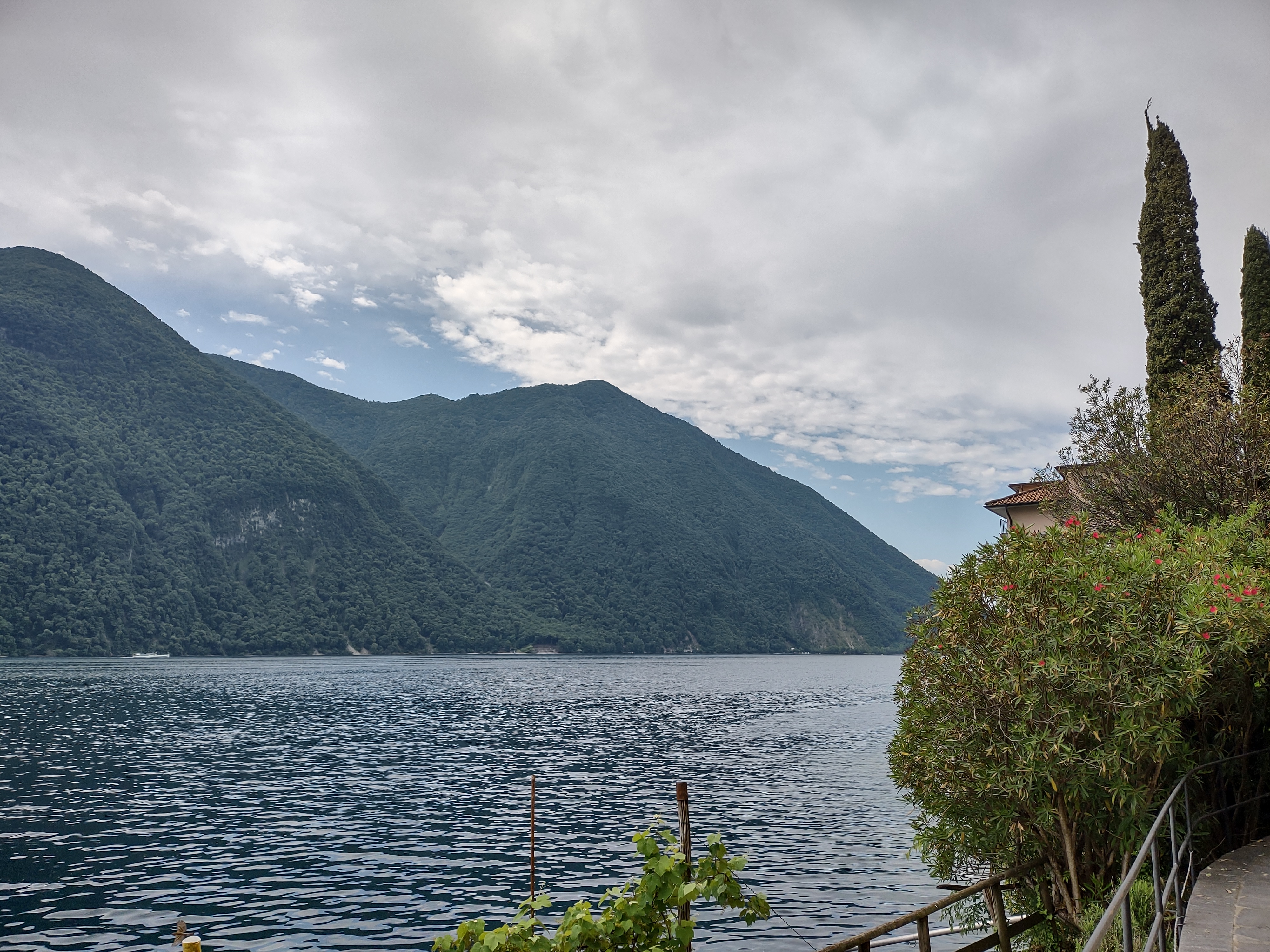
But as the train clickety-clacks me back to the crushing normality of the everyday, I will be dreaming of this place, dreaming of towering wooded peaks framing the soft, blue lake, dreaming of the lazy piazzas and warm strolls under the pines, dreaming of the brown rooftops bathing in the soft afternoon sun.
And dreaming, dreaming, of Gandria…
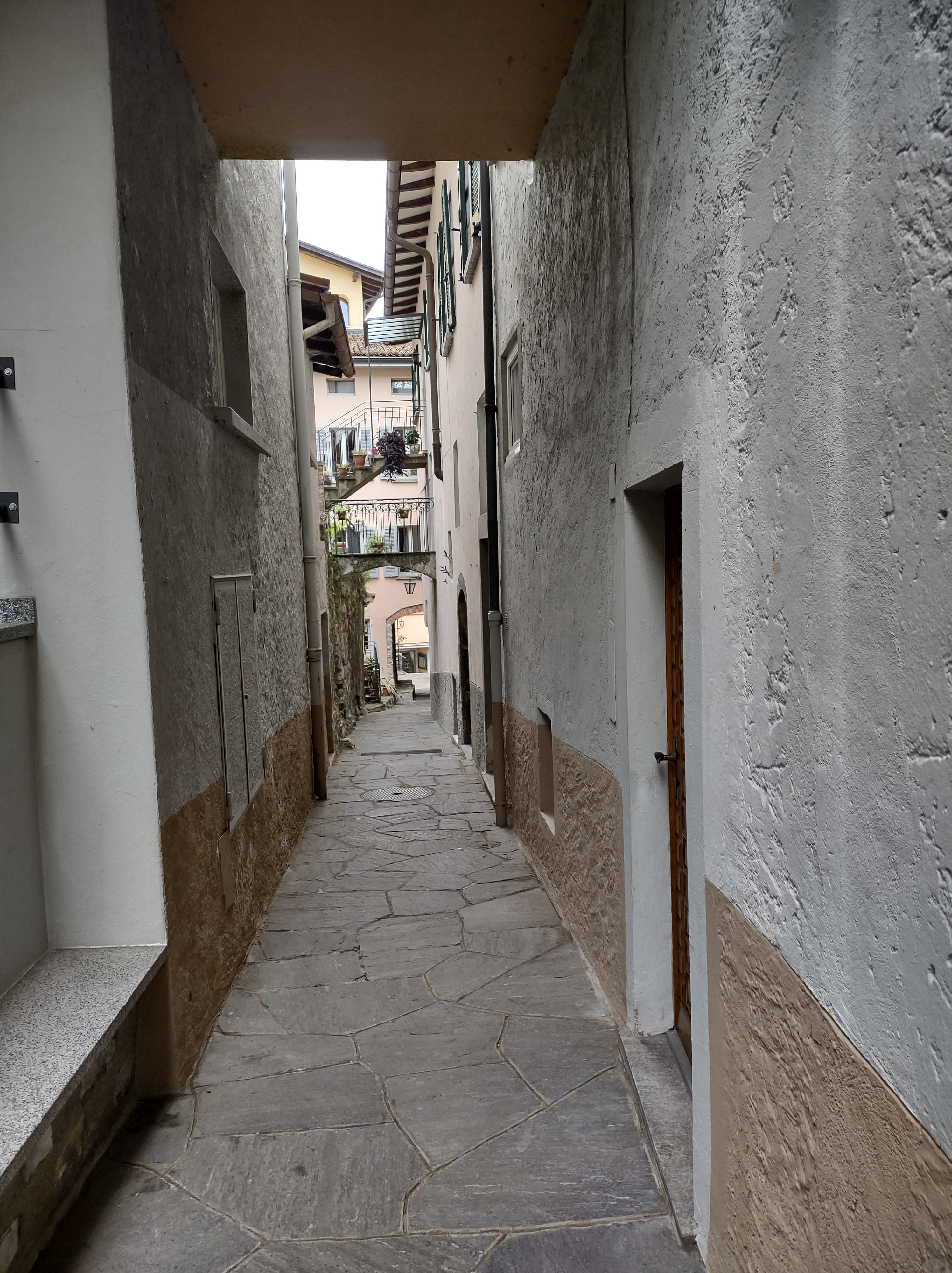
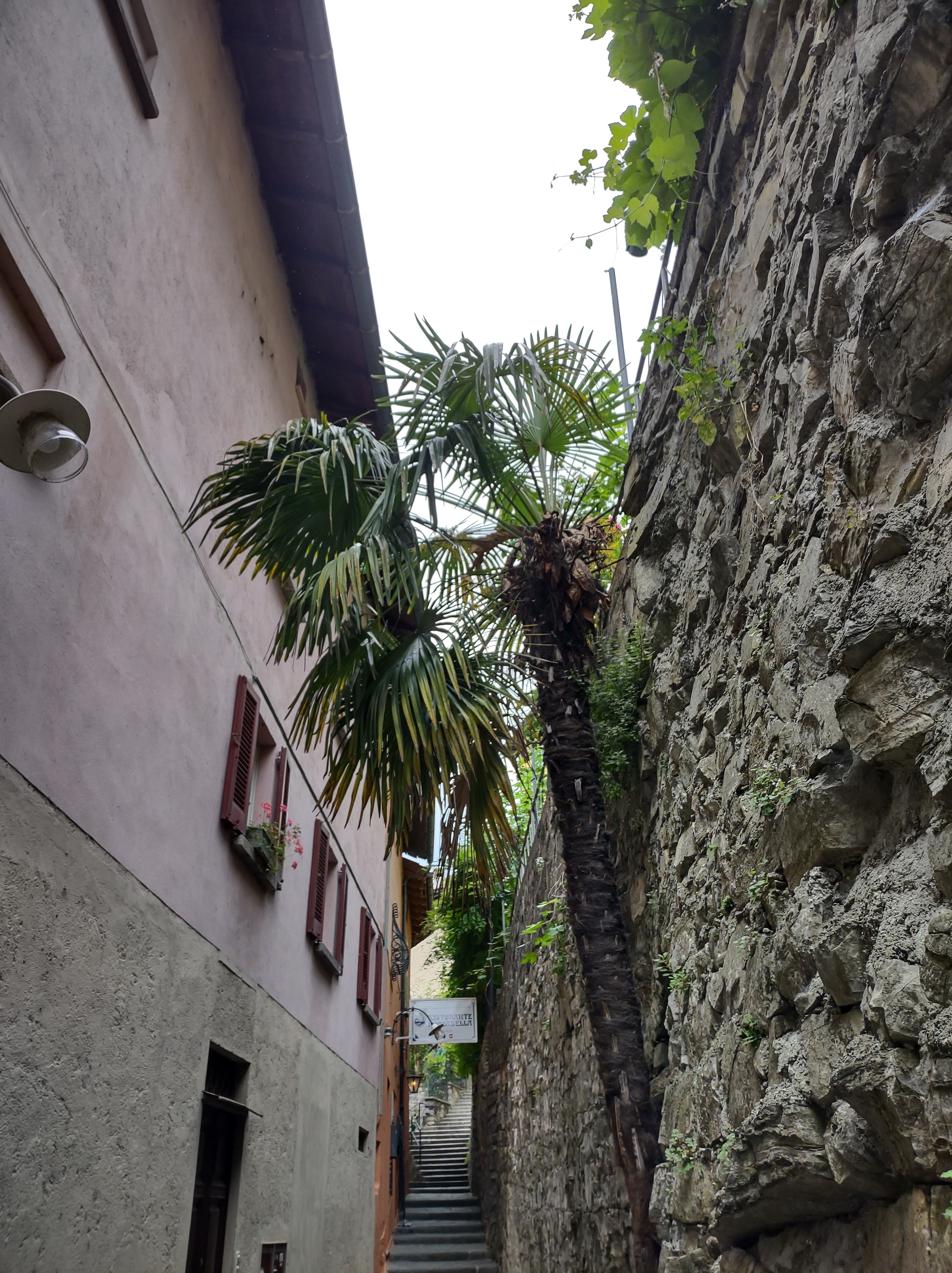
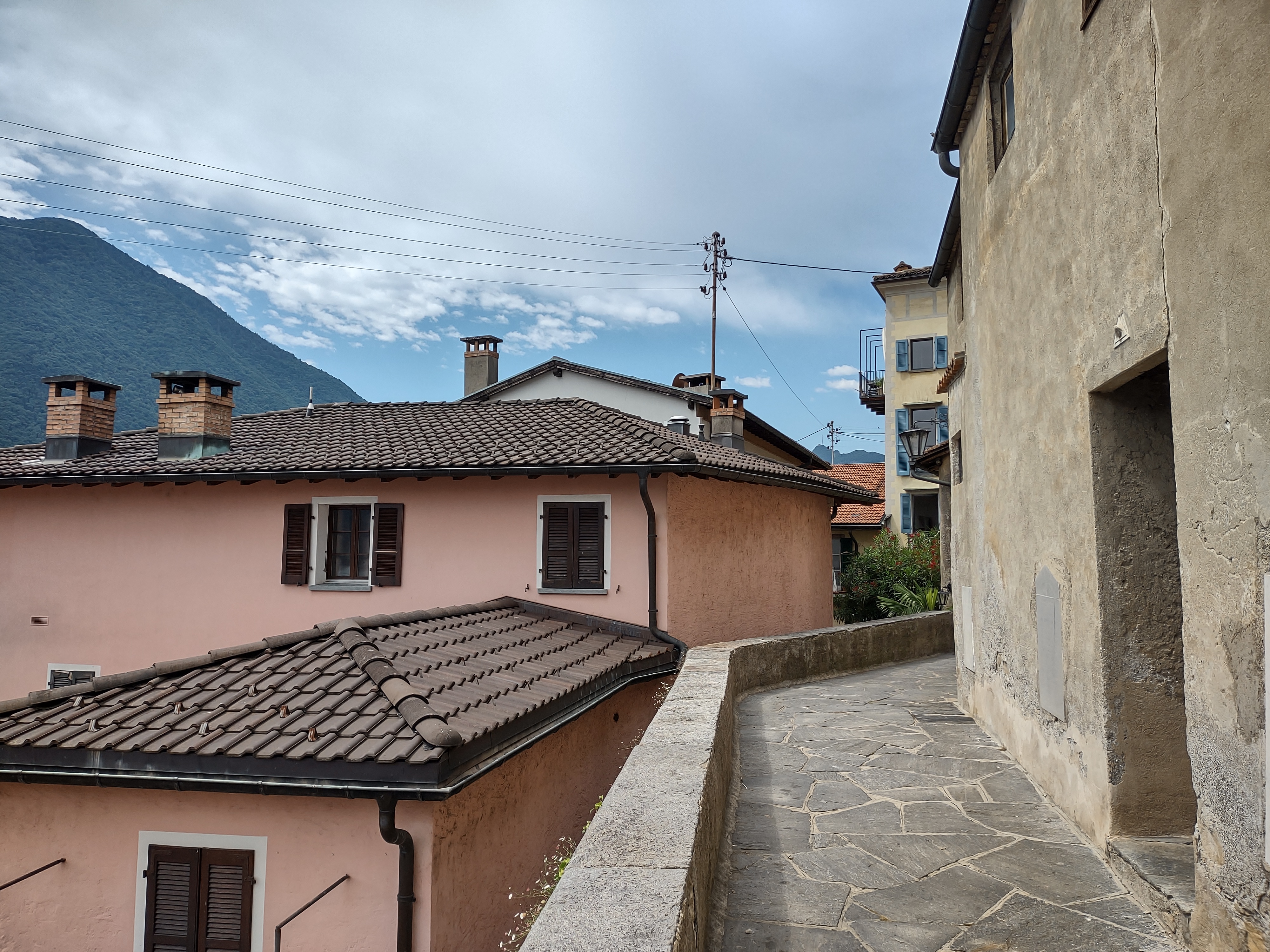
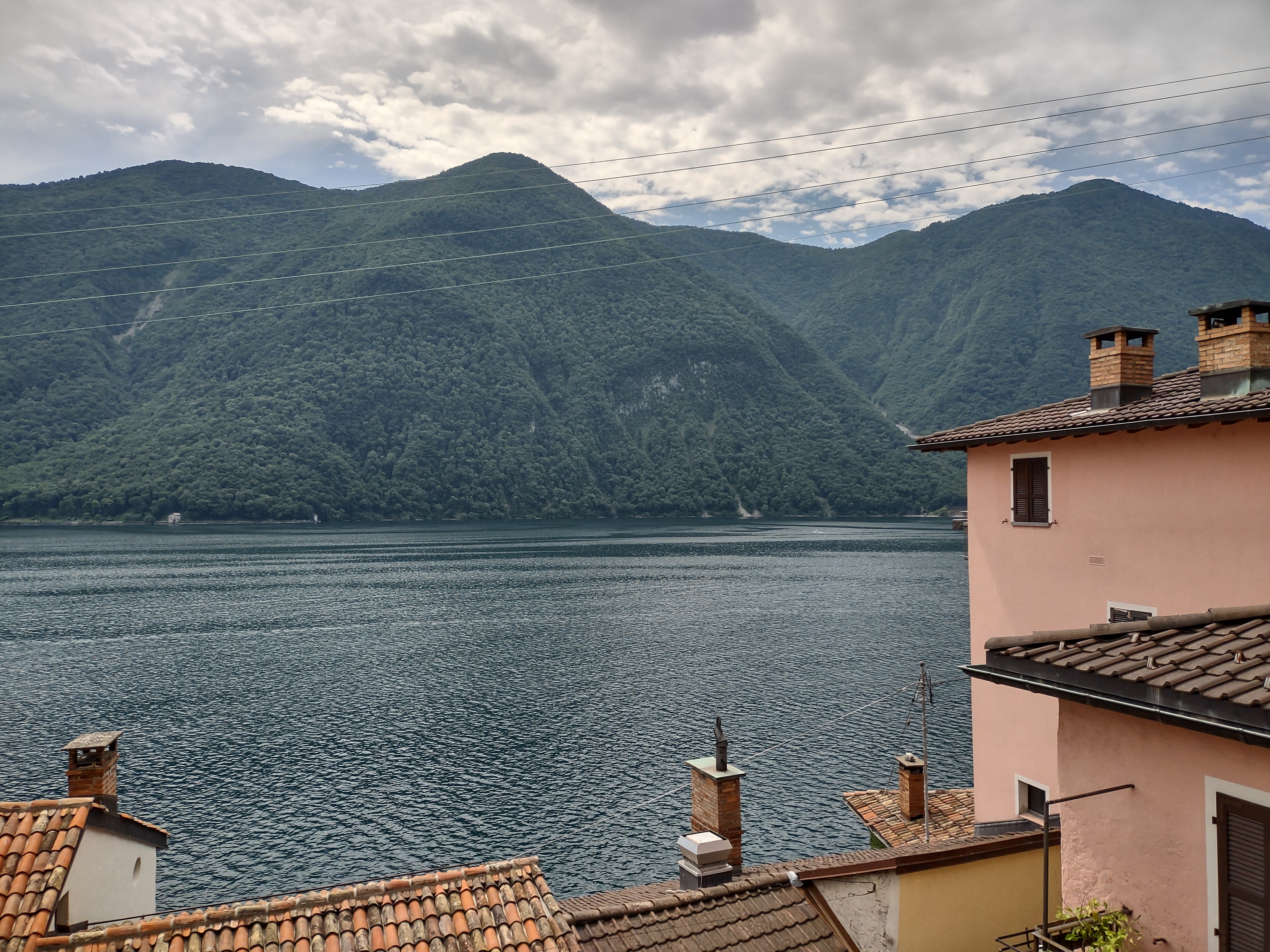
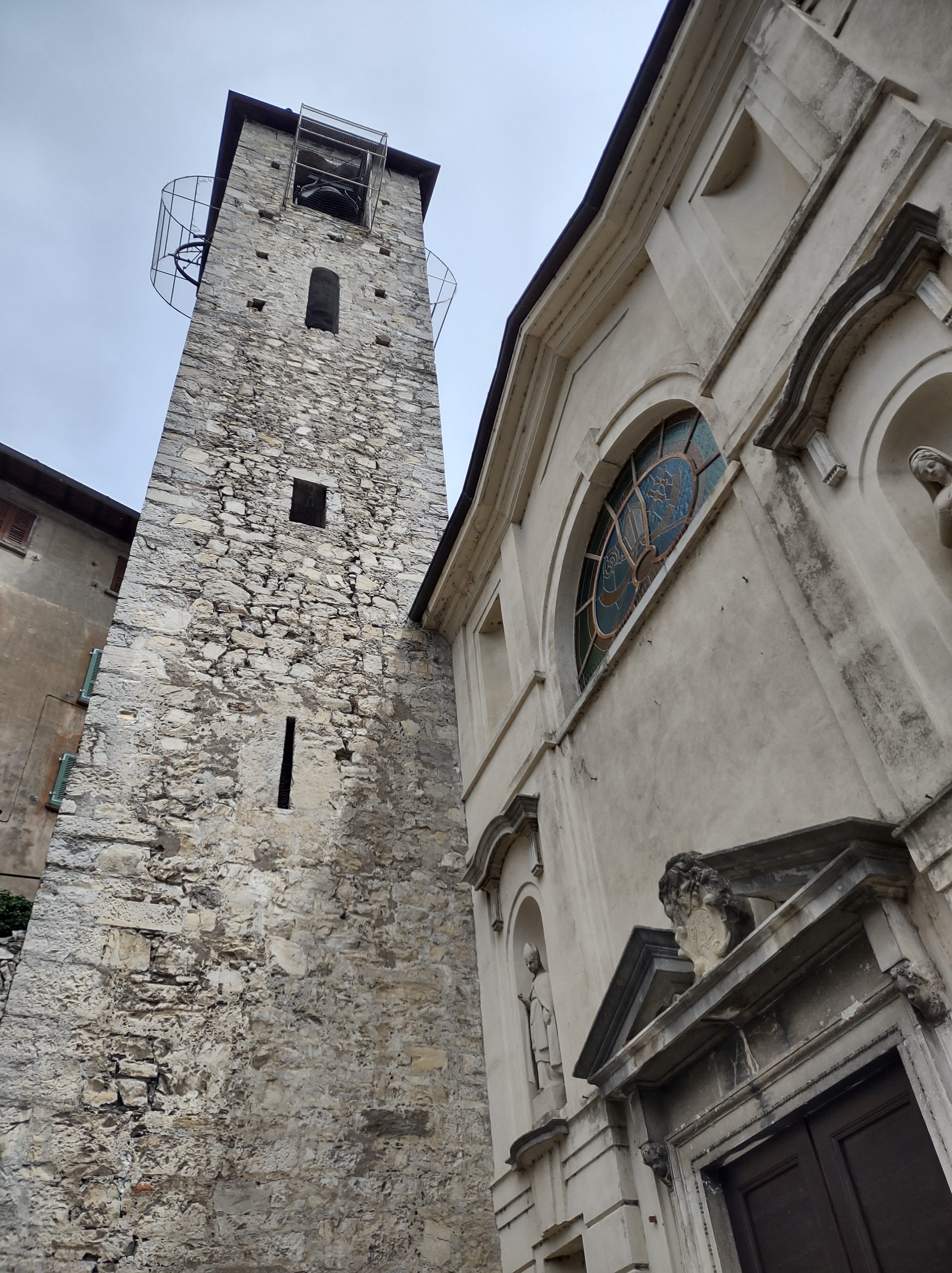
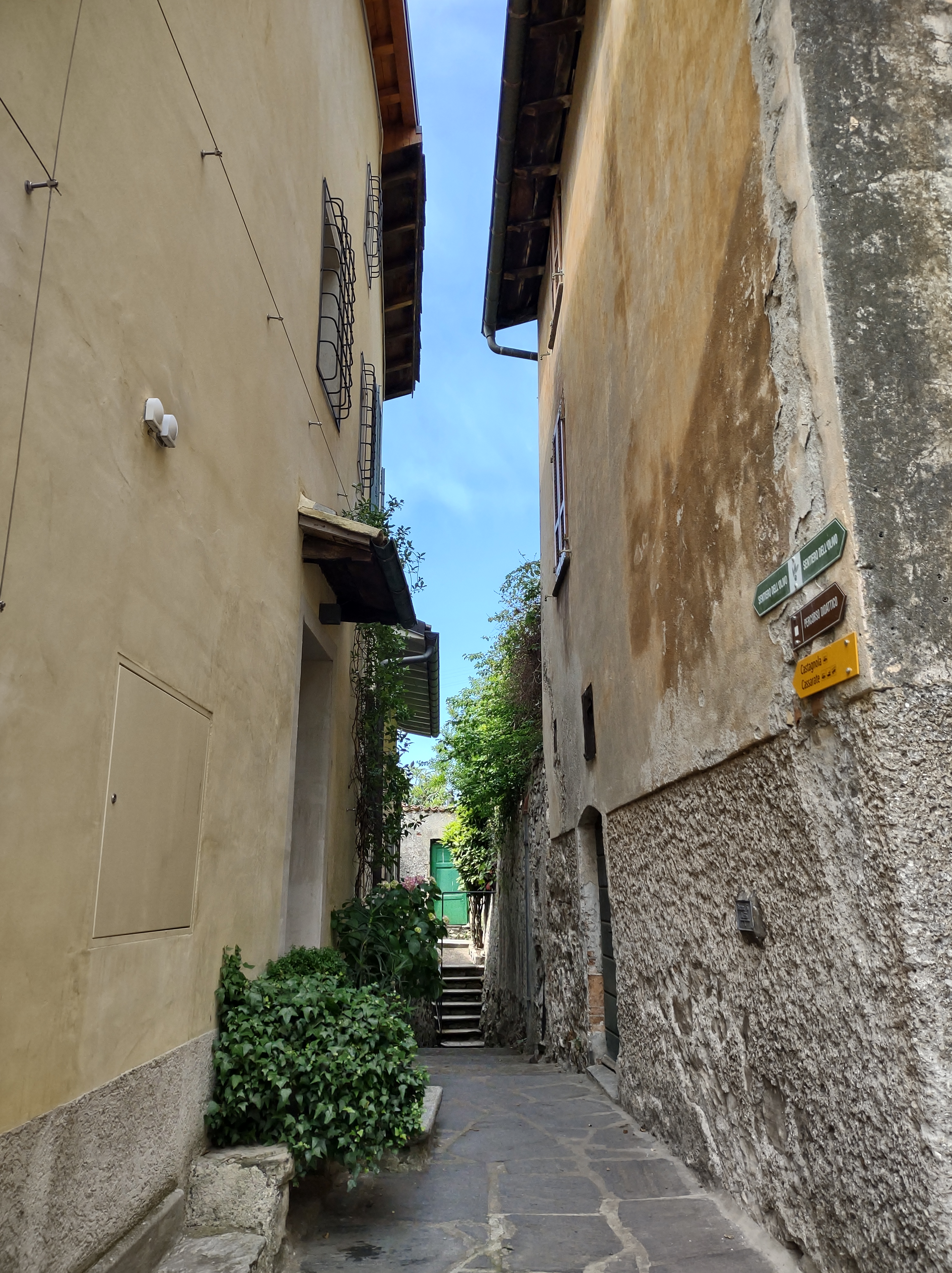
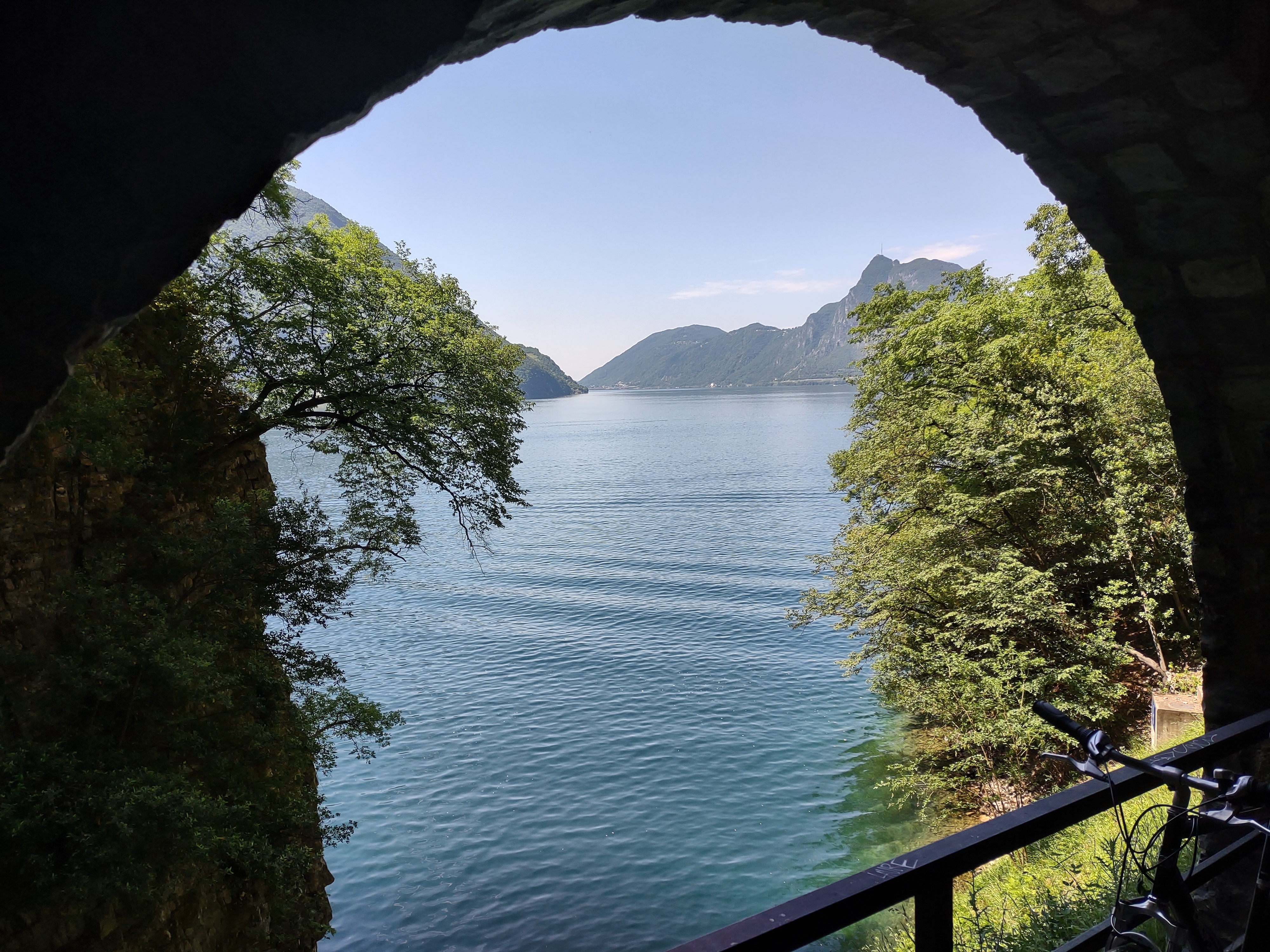
A small village stretched along the lakeside along the other side of Mount Bre, Gandria makes for a hugely popular short trip from Lugano. You can get there by boat in about twenty minutes, or you can walk it. My boat was pretty full, but like the best village destinations it seemed to absorb the crowds away, and it felt like I had the steep, narrow pathways to myself.
Gandria is right on the border, and in the 19th century it did a roaring trade in smuggling ciggies and booze across it to avoid the high Swiss customs duties (there’s a customs museum on the other side of the lake. Apparently it’s even got a submarine they used).
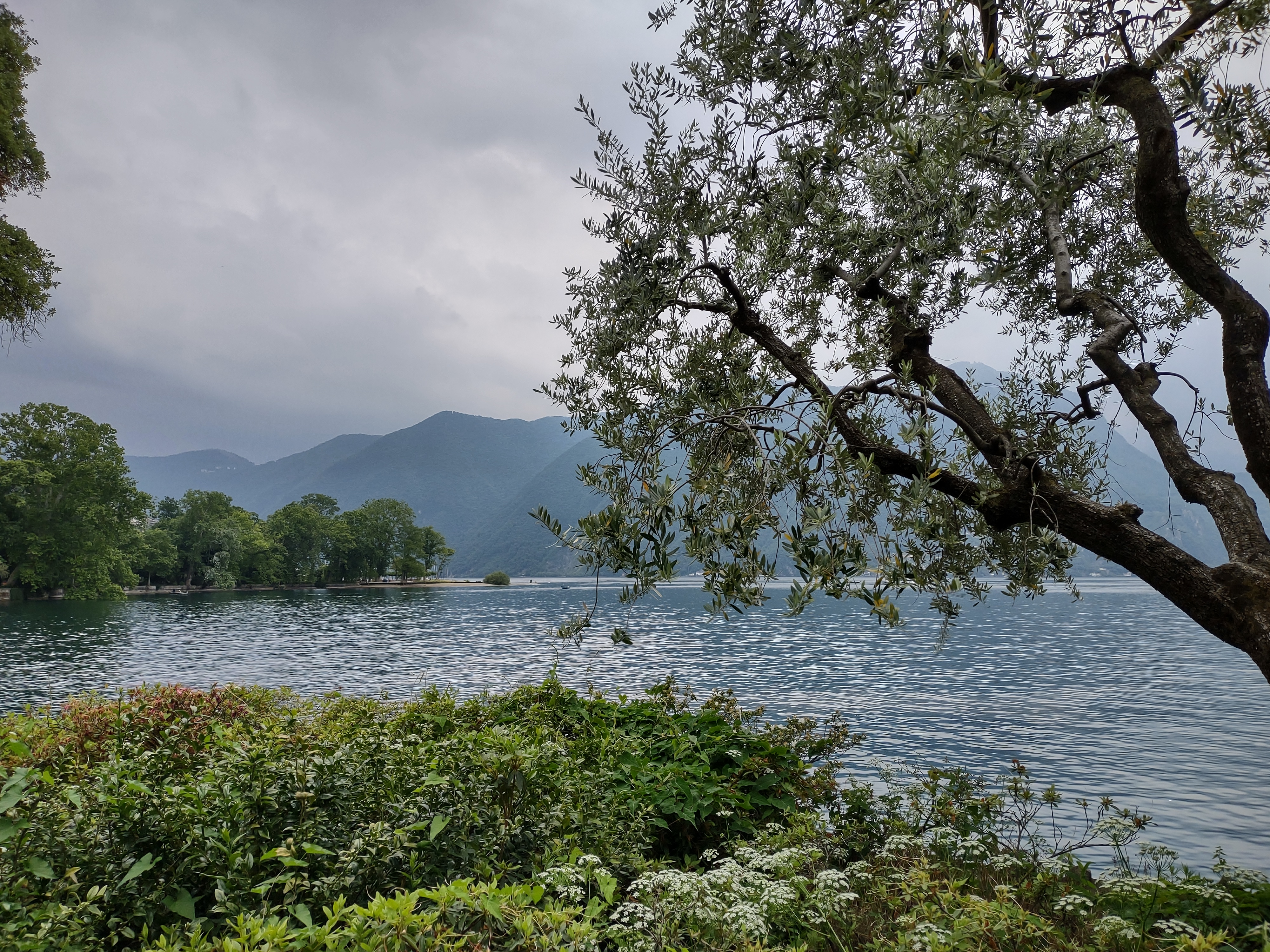
But before then Gandria’s main business was fortunately much more respectable – olive oil. A hard winter in 1709 killed the trees, but they have been replanted along the path back to Lugano – which we’re following – along with notices describing all you need to know about olive oil cultivation. Rather shockingly they’ve named this path which is all about olives Il Sentiero dell’olivo. The Olive Path.
And it’s gorgeous.
Well, the clock isn’t as windy as the Olive Path, it’s much less interested in whiling the day away, and my train is a few minutes away. My final destination will have its interests, like any big city, maybe something to sing about, and I may get a look a having a final meal.
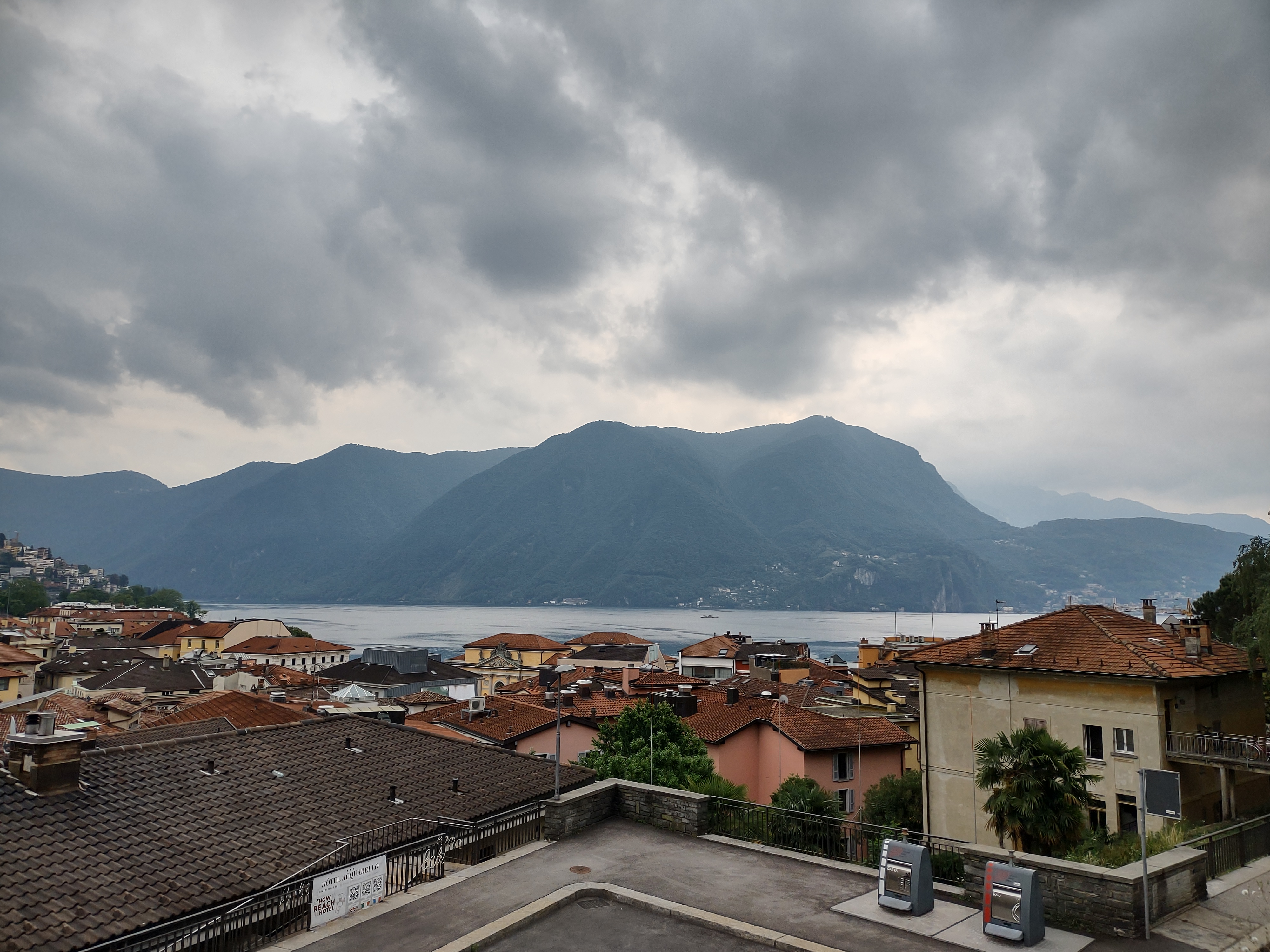
A curious place, Lugano. The canton of Ticino is a sliver of Italian in a predominantly German- and French-speaking nation-state, and it slivers right up against and into Italy itself.
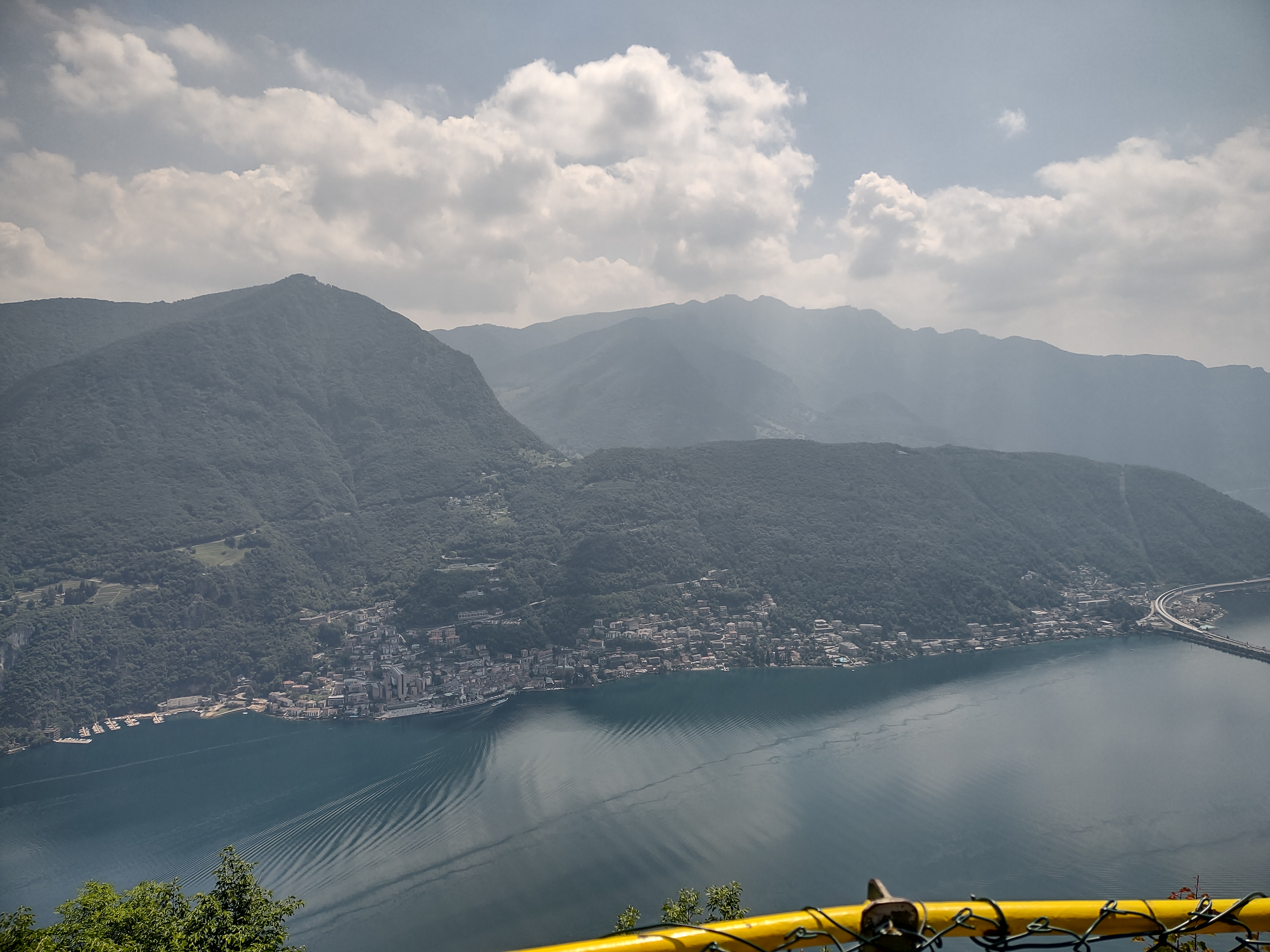
Across Lake Lugano you can see the Italian town of Campione d’Italia. Then you see the hills of Switzerland that completely surround it – Campione d’Italia being an Italian exclave. And looking beyond those hills and woods you see the hills and woods of proper Italy that surround them.
And then there’s the weather. I mentioned the Mediterranean feel in my last post. But Lugano is roughly at the same latitude as Lyon in France. The difference is the Alps; it blocks all that cold northern rubbish so Lugano can literally bask in the sun.
And that’s the thing to do here. Bask in the sun, walk along the lake, ride up the mountains and enjoy the view, have a coffee in the piazzas, live la dolce vita!
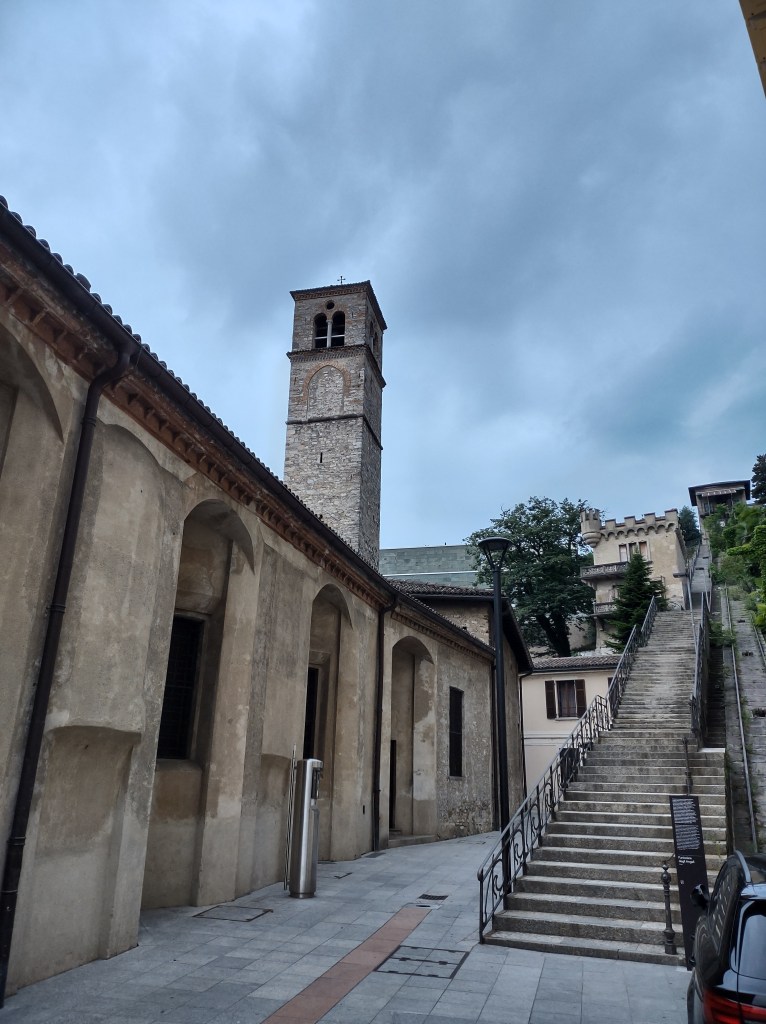
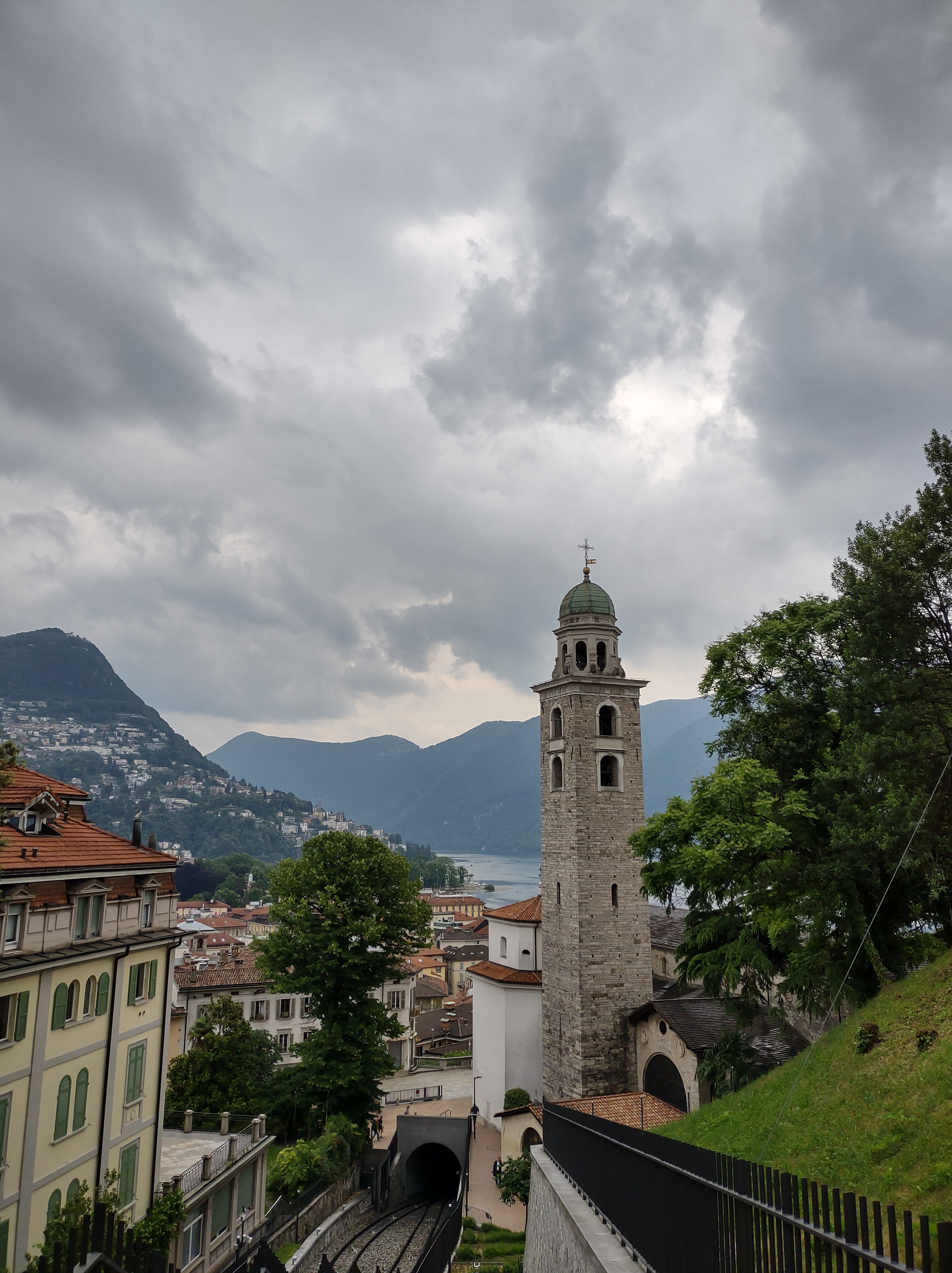
Lugano has a number of lovely Romanesque churches hidden amongst the piazzas, and the church of Santa Maria degli Angioli is known for its fresco of the Crucifixion. Note the stairway. The town itself appears to be built on three levels, and it’s a steep walk – or funicular – up to the main train station.
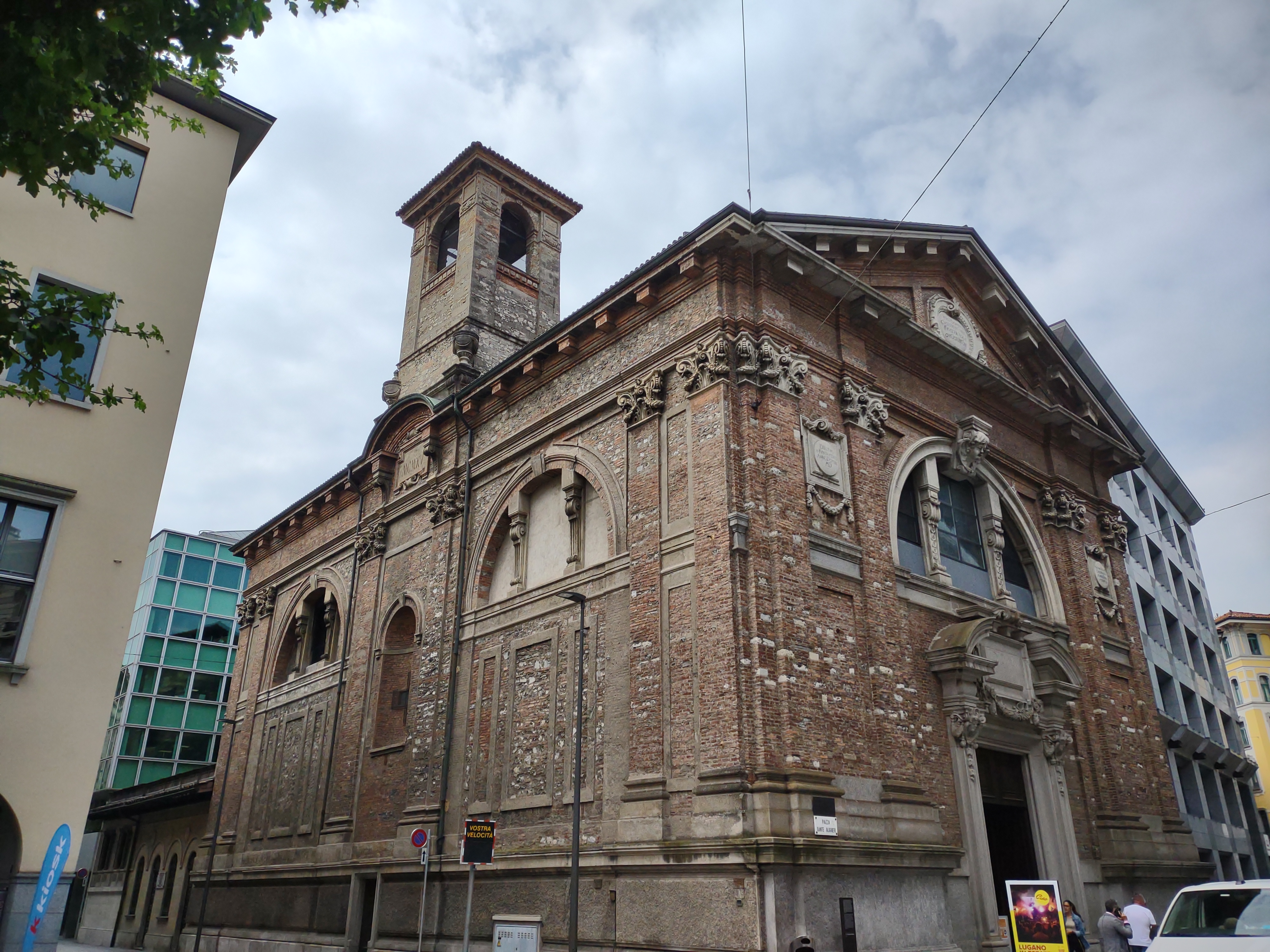
Here’s another little gem, the church of San Antonio Abate in the Piazza Dante Alighieri. It was built between 1633 and 1676. By that time Lugano had been part of the Swiss Confederation for over a hundred years, having got tired of being constantly disputed over by the dukes of Como and Milan.
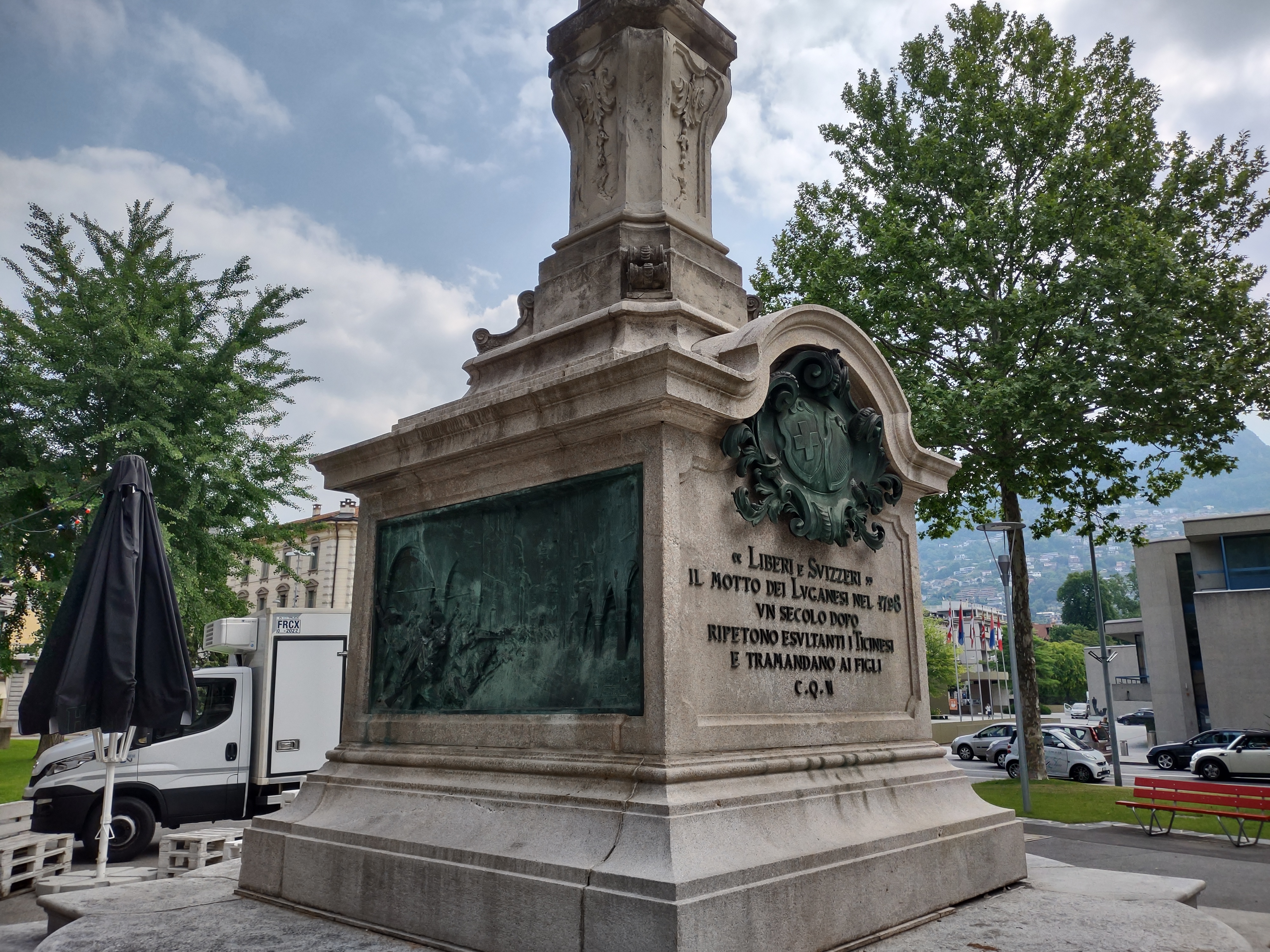
And that’s all there is to say about Lugano’s history, in terms of things that really grab the attention. A prosperous community that became Swiss, and got on with it. There was that little bother when Napoleon conquered the Confederation in 1798 and some Lugano residents rose up against it in 1799, proclaiming themselves to be “Free and Swiss”…
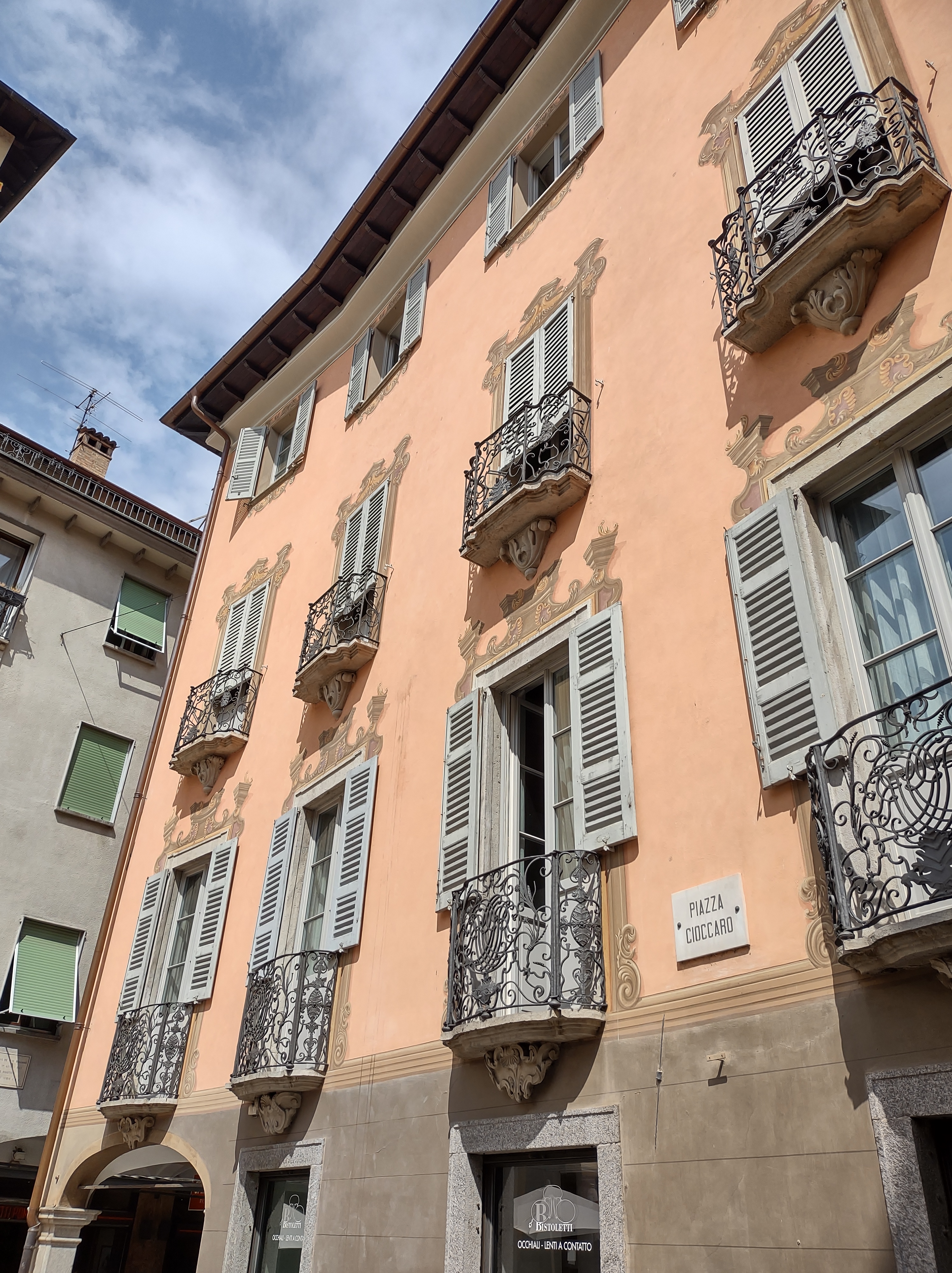
…then there are the four great Palazzi Rivas, of which this one, the Palazzo Riva-Ghioldi, is apparently the oldest…
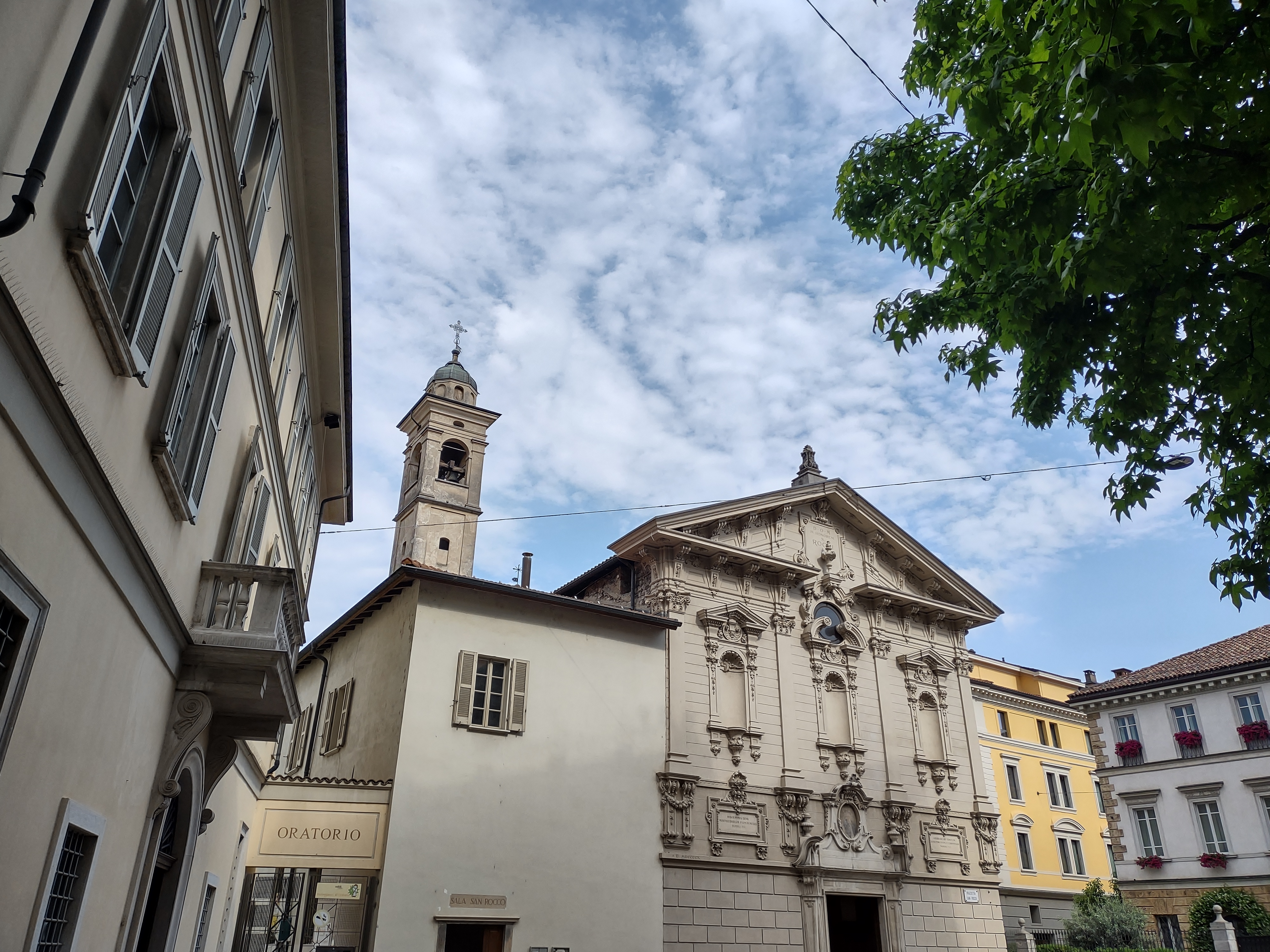
…there’s the outside of the church of San Rocco…
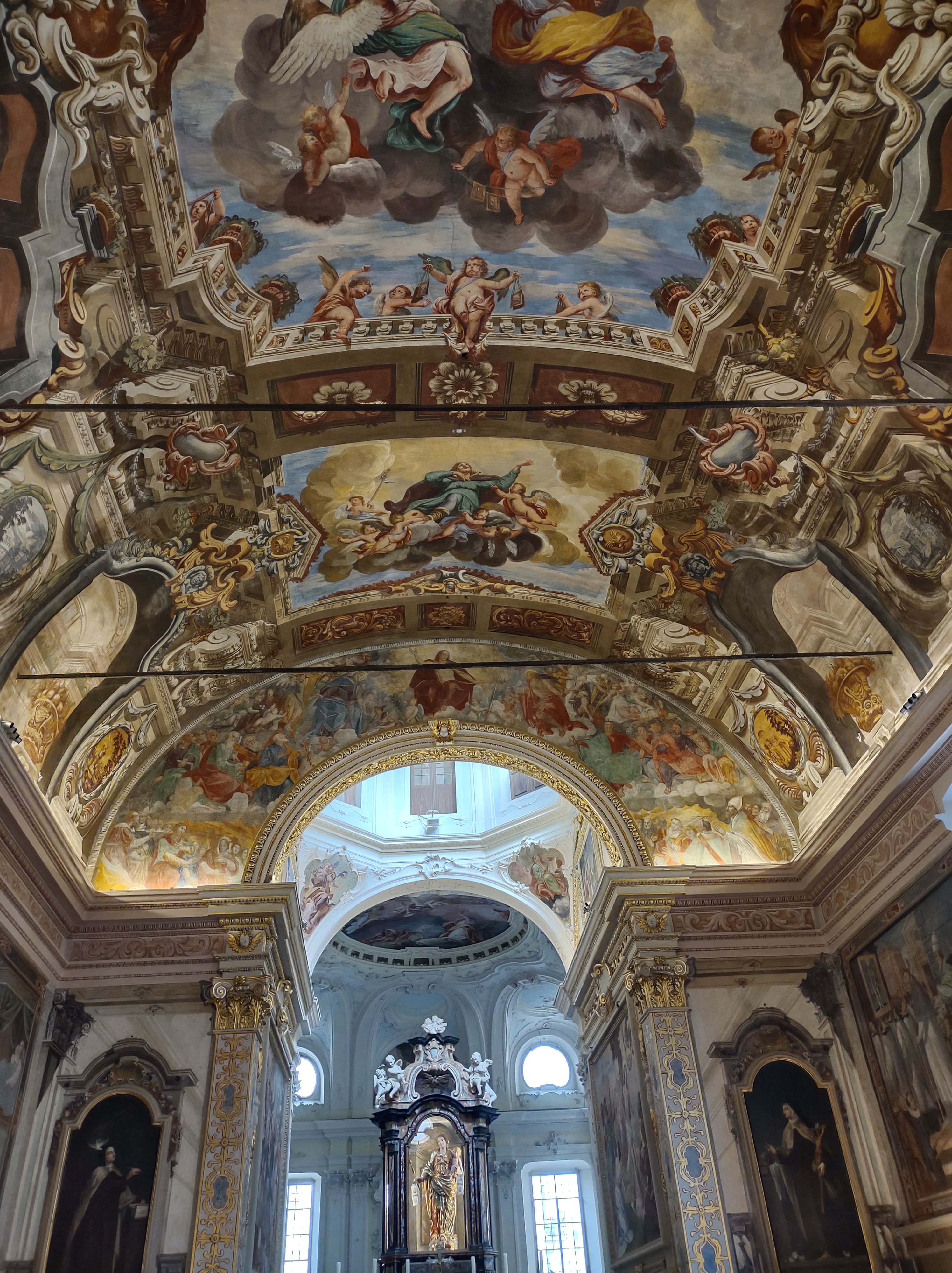
…and the inside
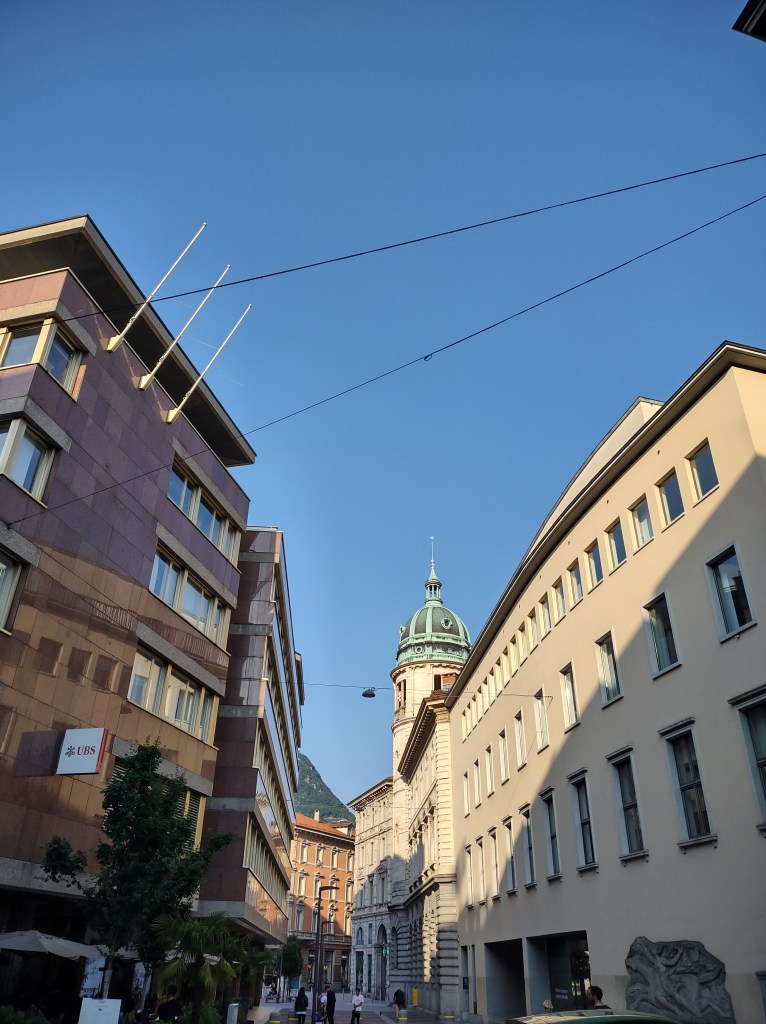
…and it’s a rather nice town to wander around on a warm sunny day.
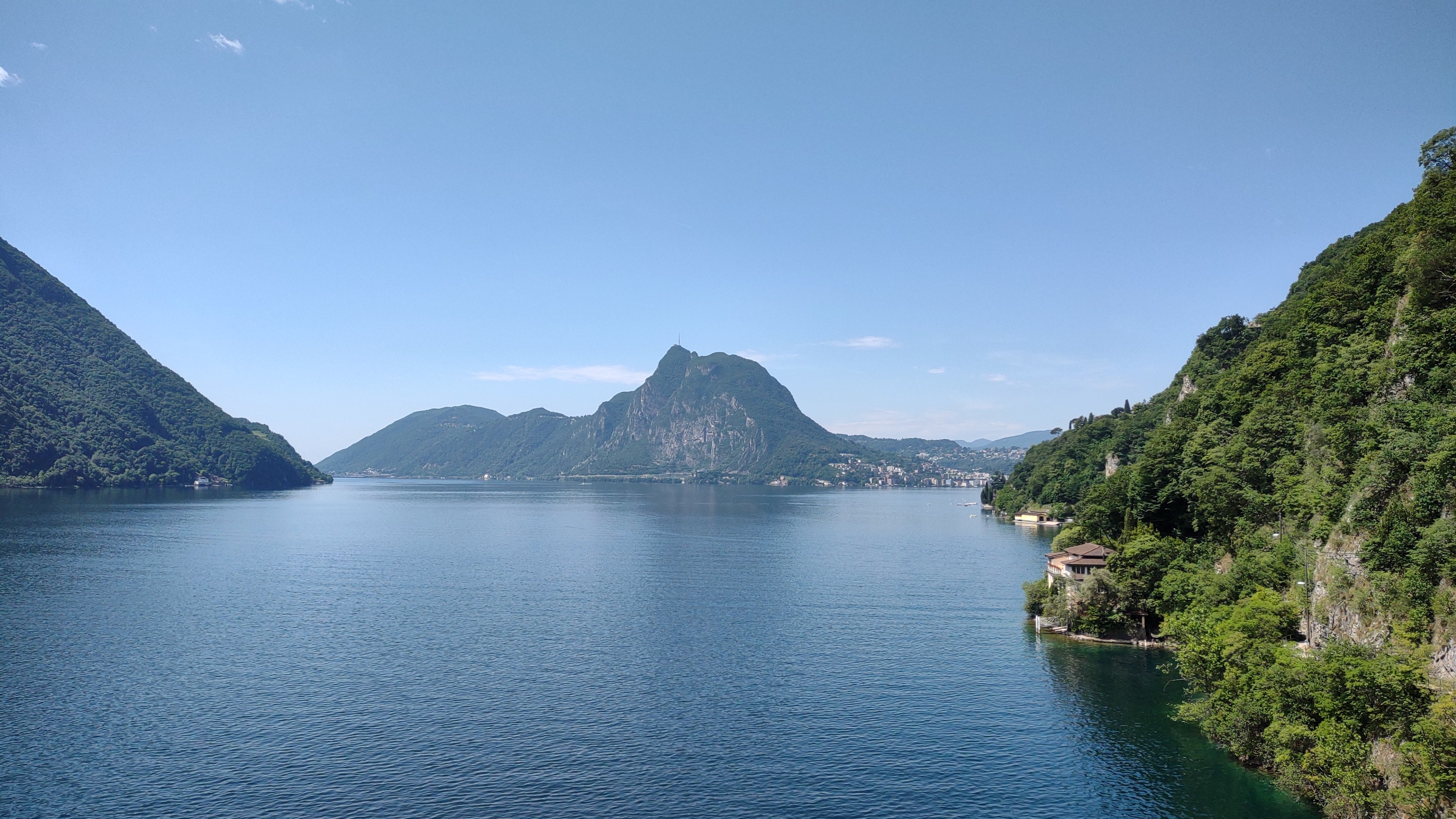
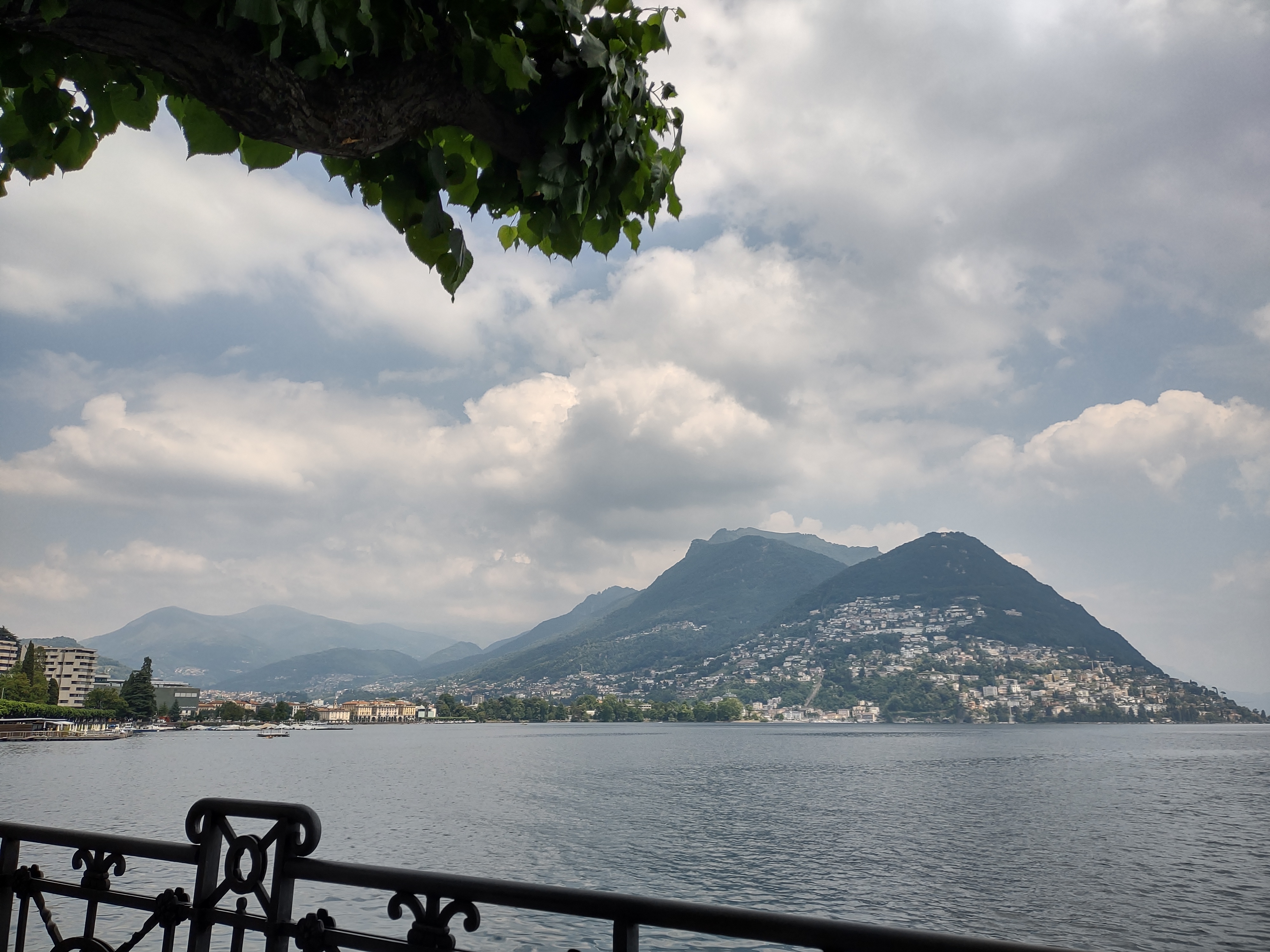
But it’s time to show you more of that incredible natural backdrop. Situated on a lake surrounded by verdant mountains on all sides, there are two hills that particularly dominate proceedings here. The peak of Mount Bre, seen here to the right, is allegedly the sunniest place in Switzerland.
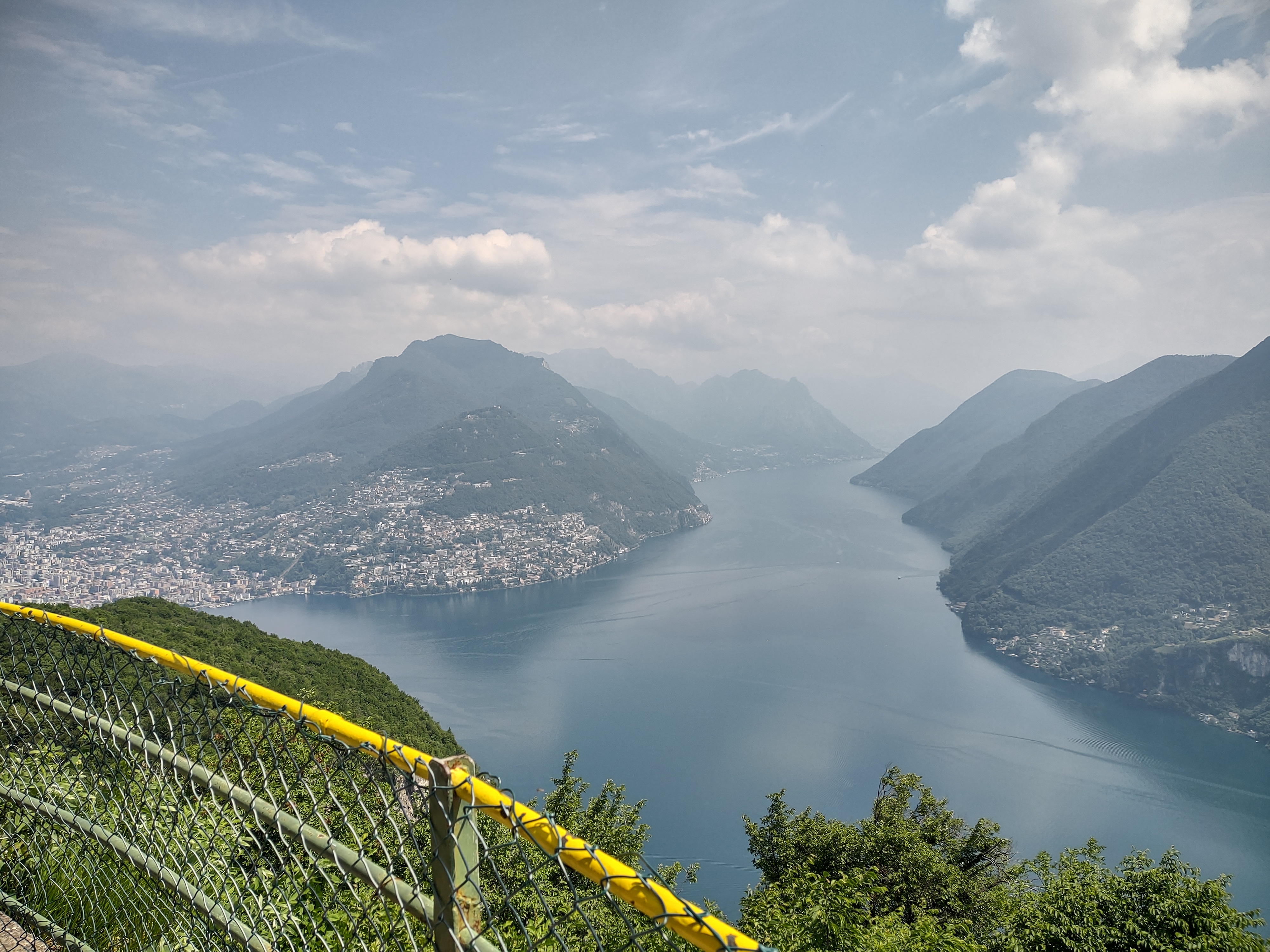
The other one is Mt. San Salvatore. It’s the sugar-loaf mountain in the picture at the end of my last blog. Both offer funicular rides, and to end this post I’m going to indulge you with some photos I took when I took a ride to the top of San Salvatore yesterday.
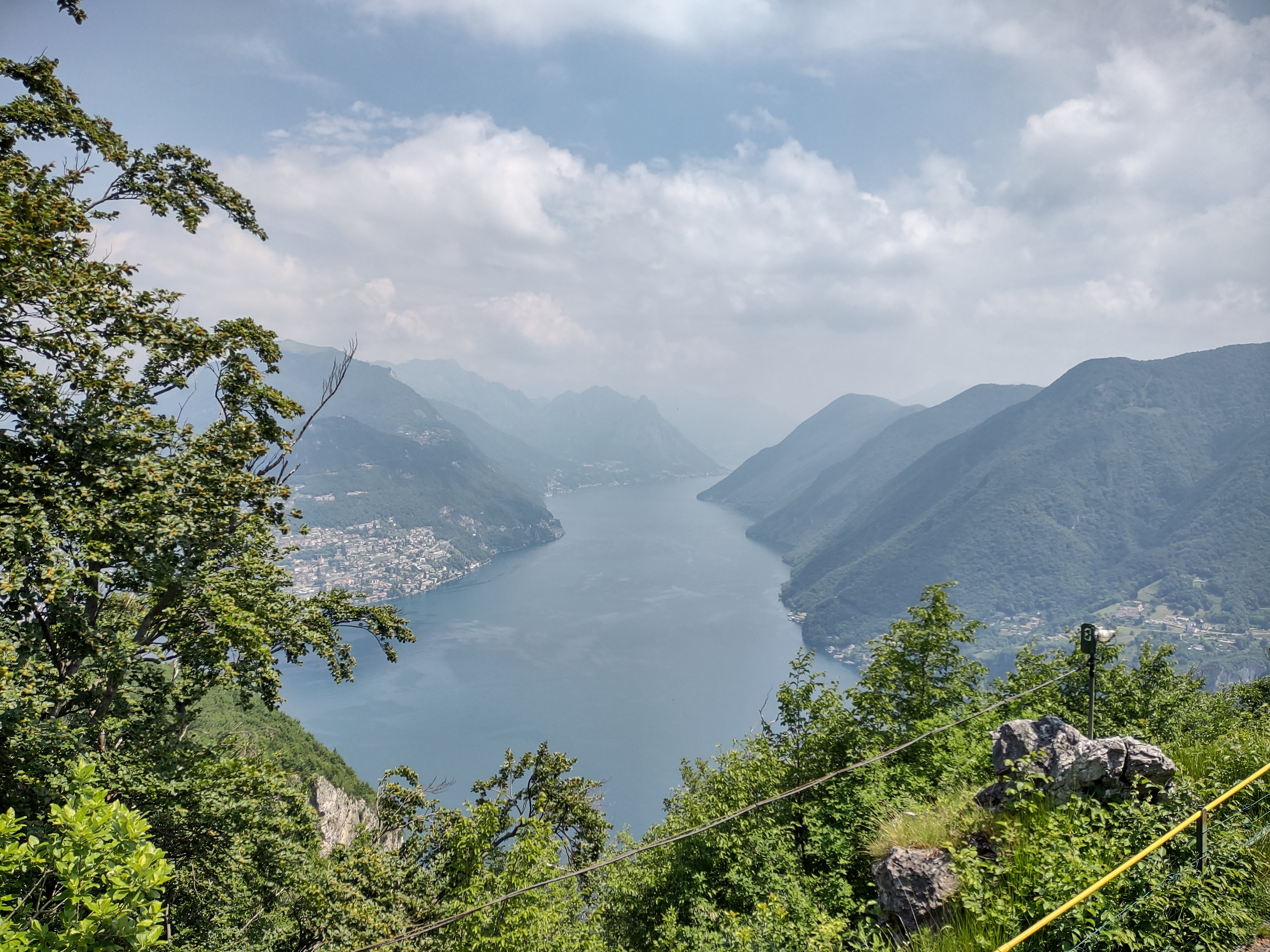
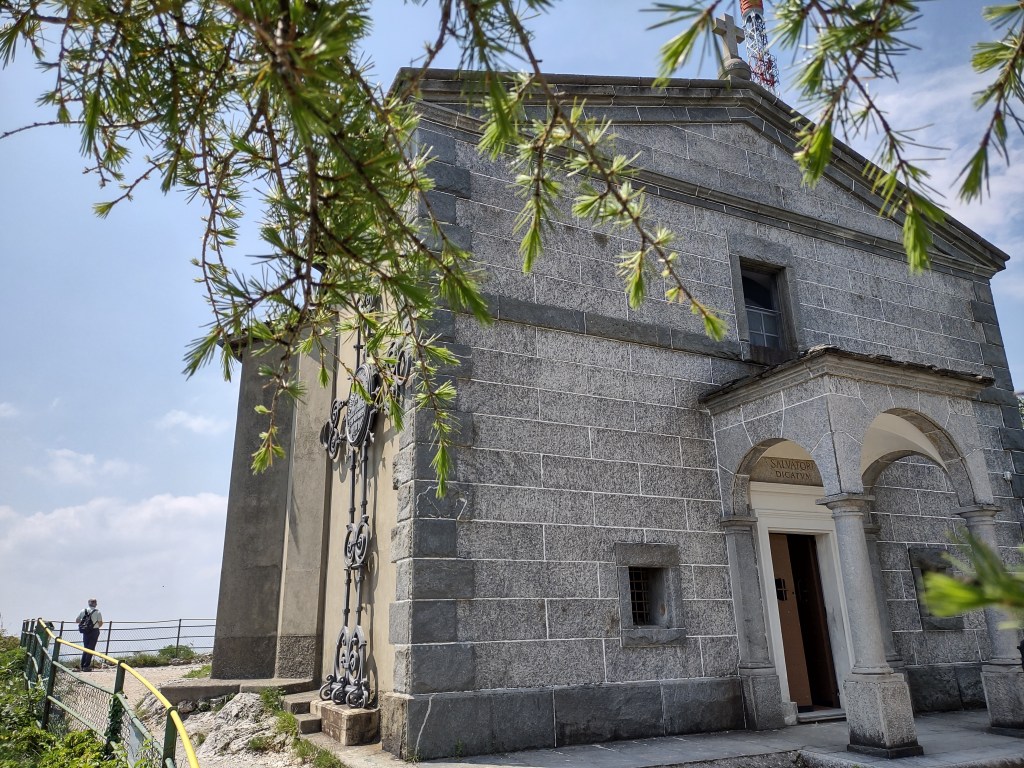
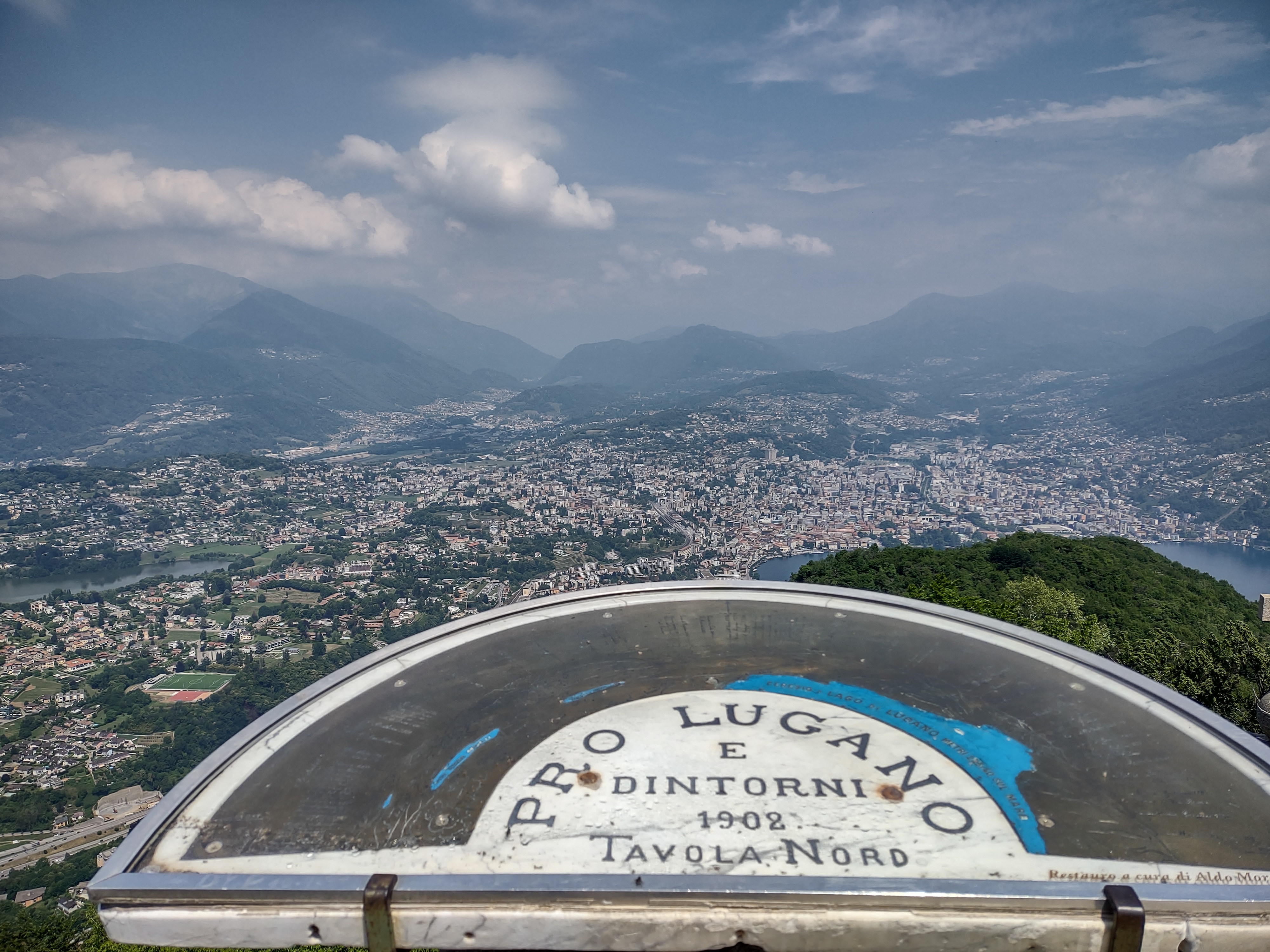
The view north. Lugano is on the left, curving around the slope of Mt Bre. Draw a line halfway up the waterway receding to the top and you roughly have the border between Switzerland (bottom) and Italy (top)Campione d’Italia, the exclave, at the bottom, Switzerland above it, Italy above that. Used to be called Campione until an obviously respected Italian politician added the Italia bit. They’ve kept it so they must respect him for the idea. His name was Mussolini.The other view again.The little church at the topVery nice, eh?
It’s time to leave Lucerne, and what better way to do so than by boat.
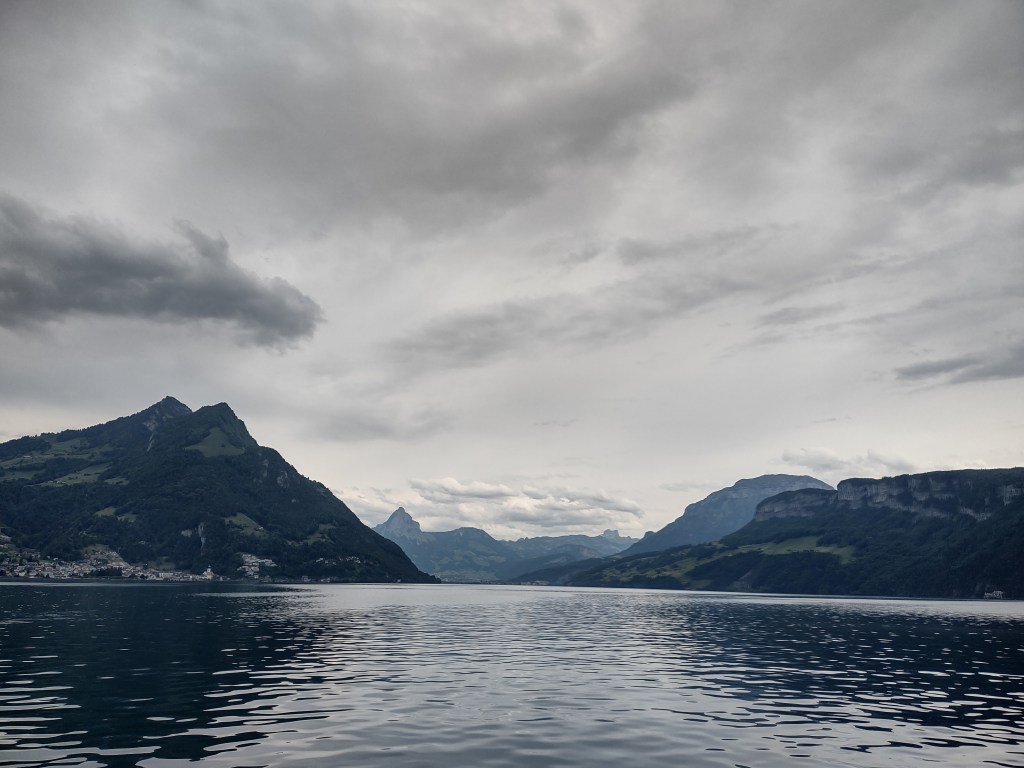
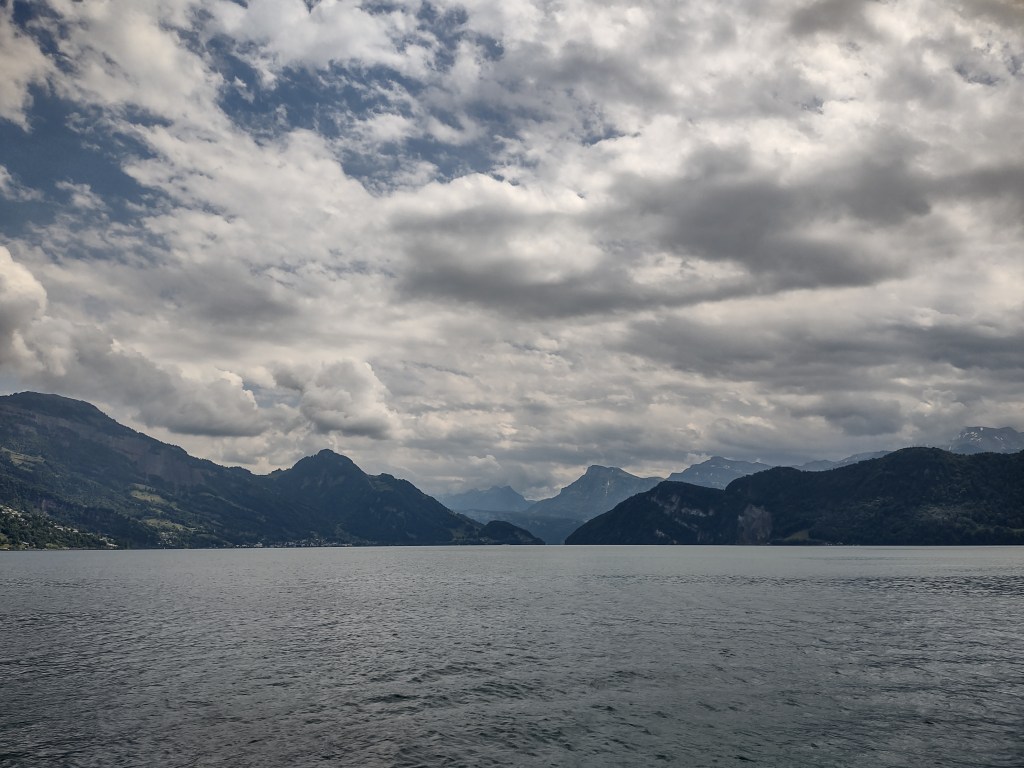
Lake Lucerne is about thirty kilometres long from its north-western point at Lucerne to its southern tip near Altdorf, which is where we’re heading. With the various jetty stops the ride will take over two and a half hours and every minute will be glorious.
About, ooh, halfway through we reach one notable stop, at Rütli.
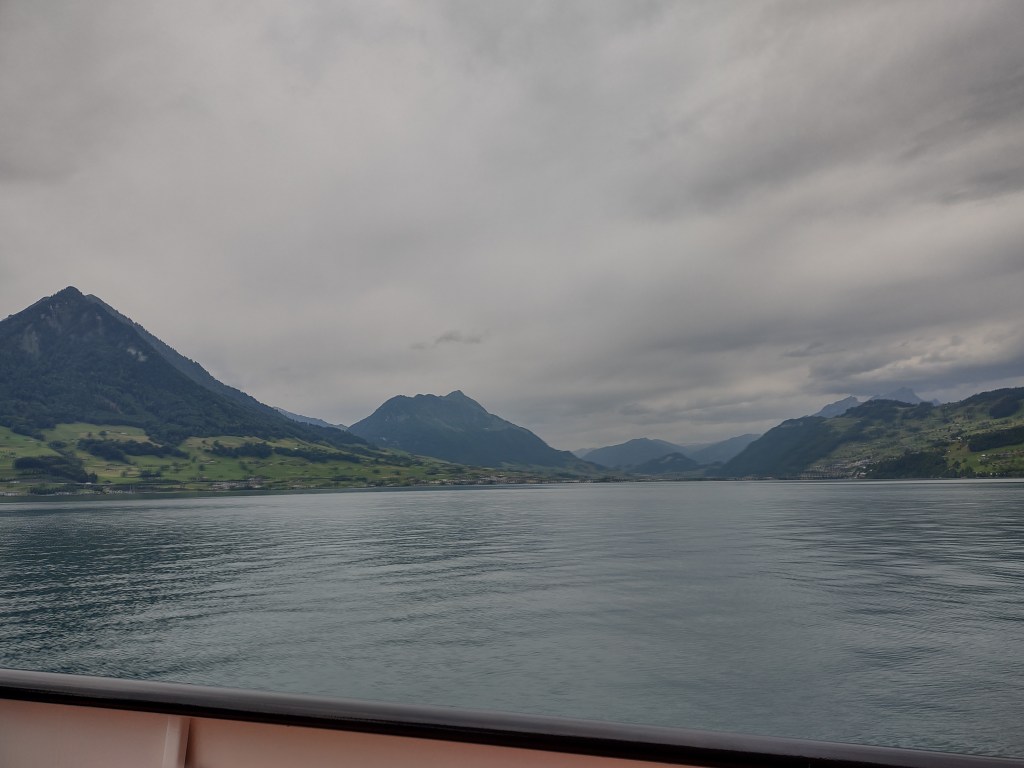
Just to the left of this photo, rather rushed as the ships crew were organising the deck in preparation for anchor, there is a patch of open ground called the Rütli Meadow. A sacred spot for the Swiss, it was where, legend relates, representatives of the three founding cantons swore the Rütlischwur, the Rütli Oath, that marked the creation of the Swiss Confederation. A big photo to get for a blog that purports to talk about the history of places, so I tried to grab the shot as the boat moved in towards the jetty
Useless I am.
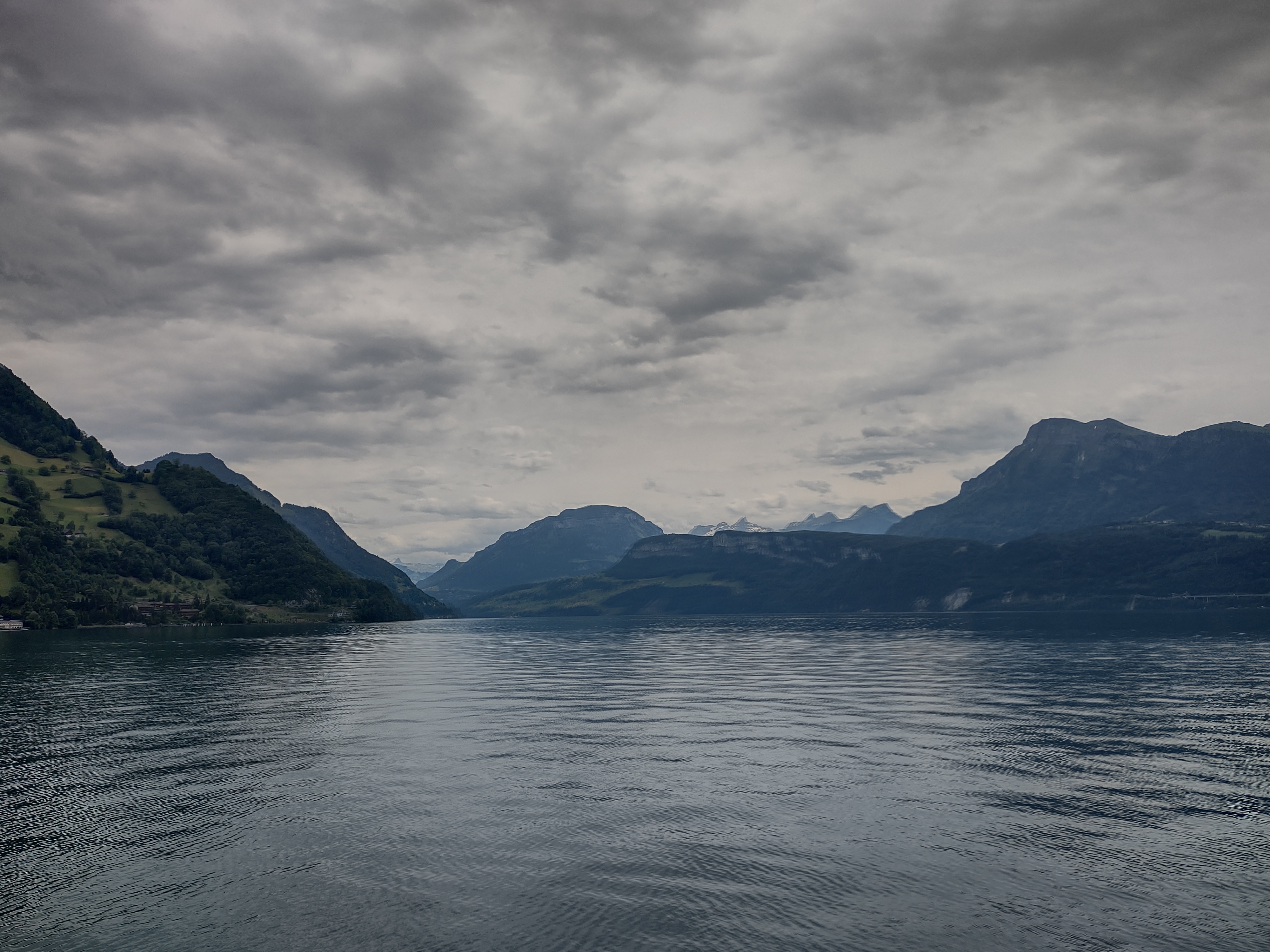
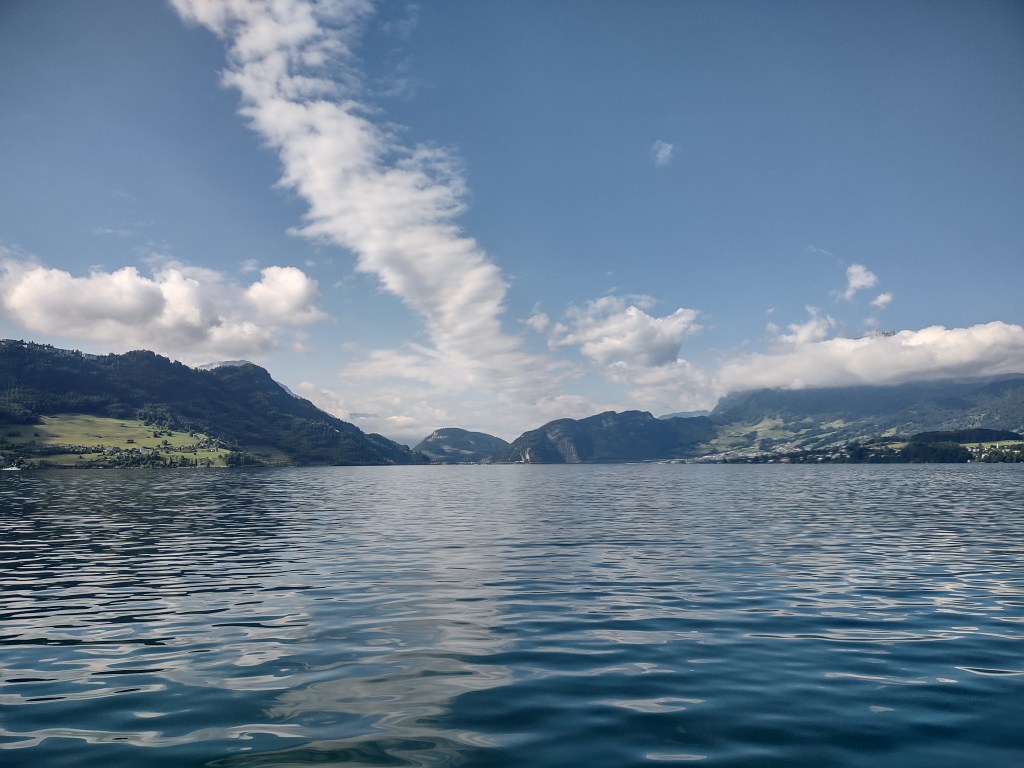
Fortunately, the scenery here never disappoints.
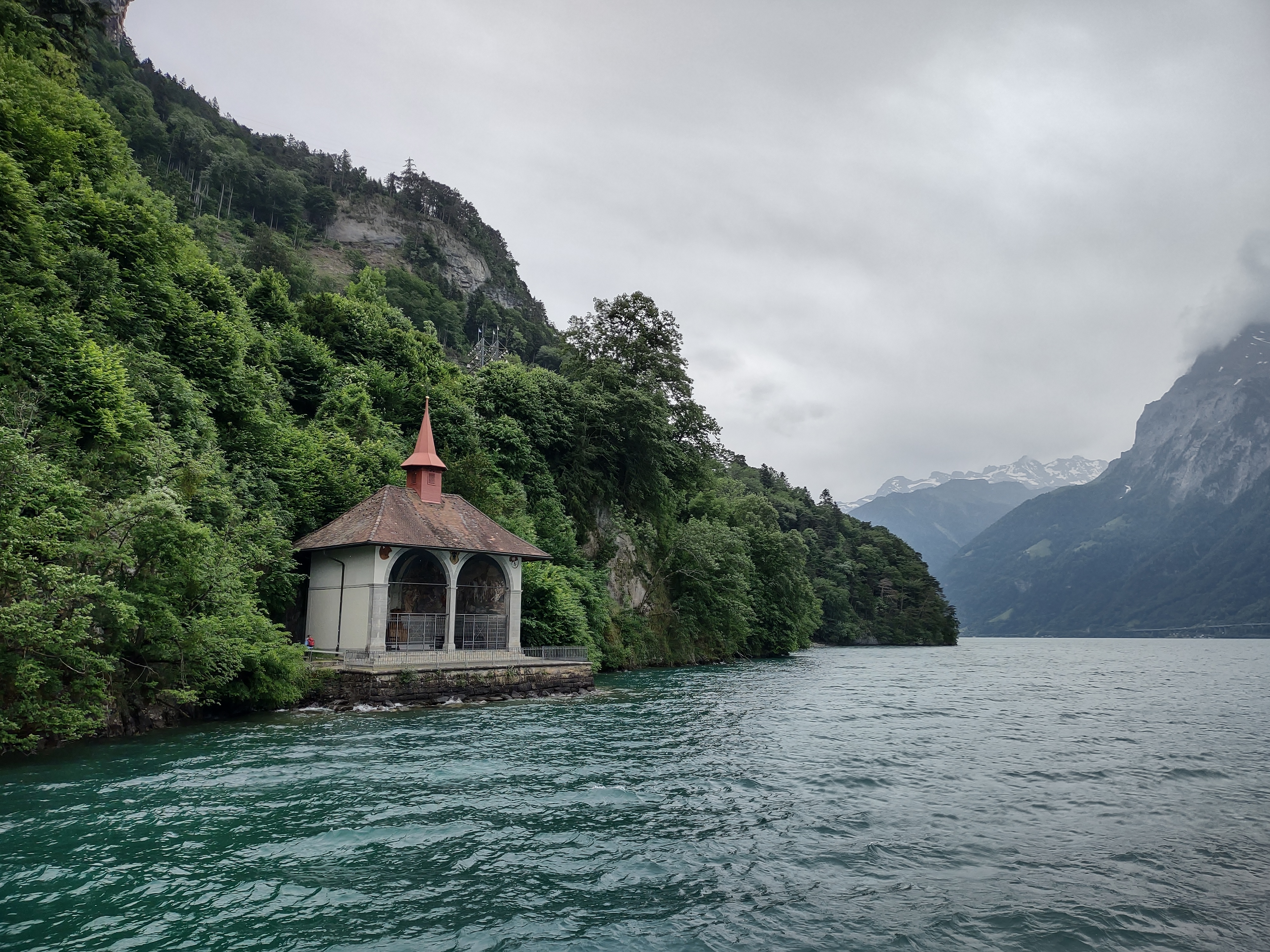
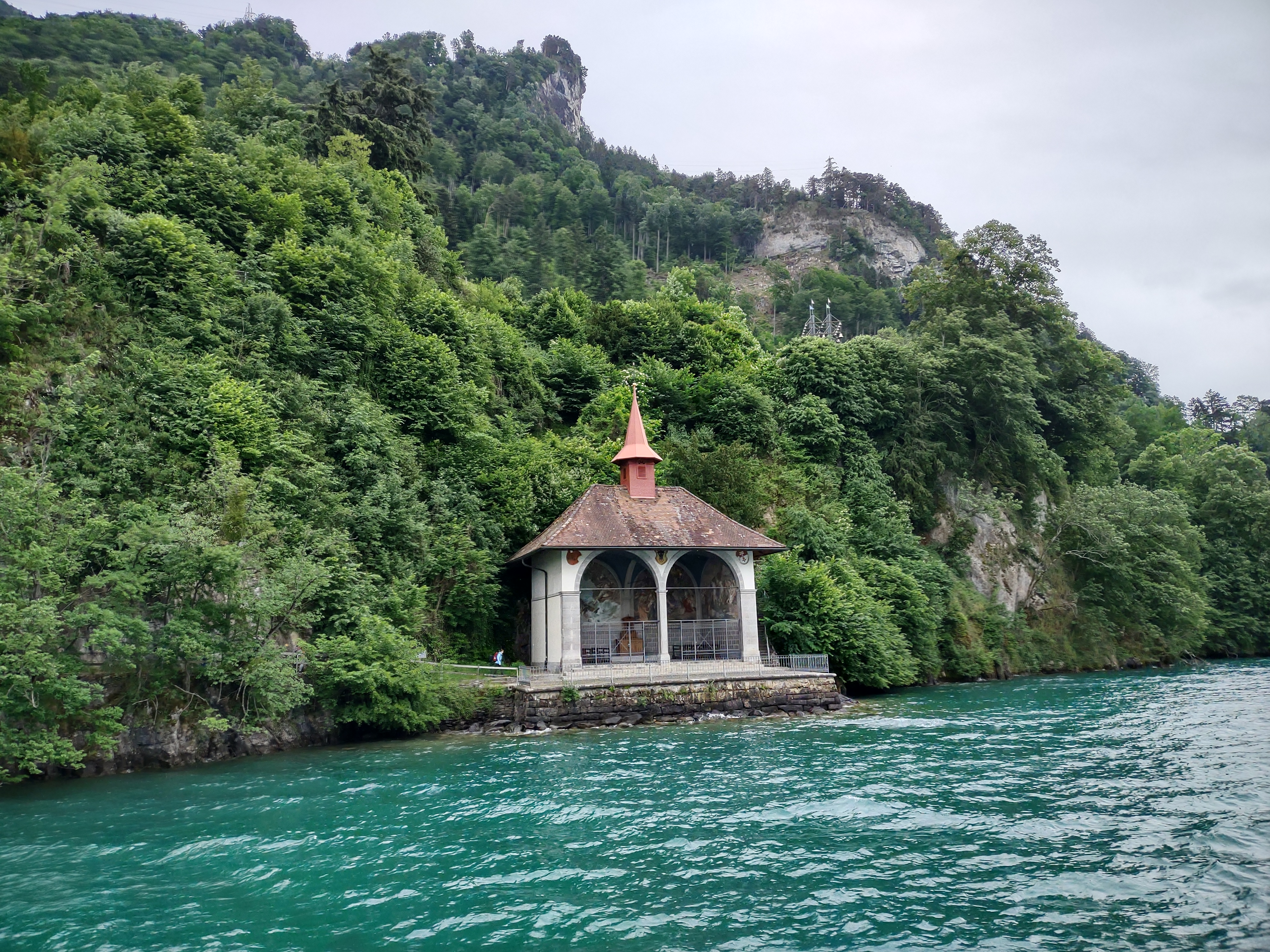
A few minutes out from my destination, we reach the chapel at Tellsplatte.
The Tell relates to that man again.
Once Tell had split the apple and saved himself and his son, Gessler noticed that he had an extra arrow in his quiver and asked him why. Tell, who had either no legal representation or a very bad lawyer, replied that if he had hit his son he would have fired the second bolt at Gessler. Who was not impressed.
Tell was therefore led away to lifetime imprisonment and taken onto Gessler’s boat. A storm broke and Tell, being a hero and brilliant at everything, was allowed to take the helm to get the boat to safety, whereupon he steered it into the rocks here and escaped, leaping onto this spot, Tellsplatte, Tell’s Slab.
The chapel marking the spot is sixteenth-century and note the paintings, they describe the legend. There’s a boat stop nearby and Swiss youngsters are dutifully led down to the slab to learn all about it. See the two arrow-like structures above and to the right of the chapel? Once Tell got away from his captives he followed the light from a torch held by his close companion, Robin Hood, and the arrows mark the spot where he met his secret lover Marilyn Monroe. The two shared a passionate kiss, jumped onto Shergar’s back, rode into the forest and were never seen again. No, I don’t know what those structures are for. Probably the top of a staircase.
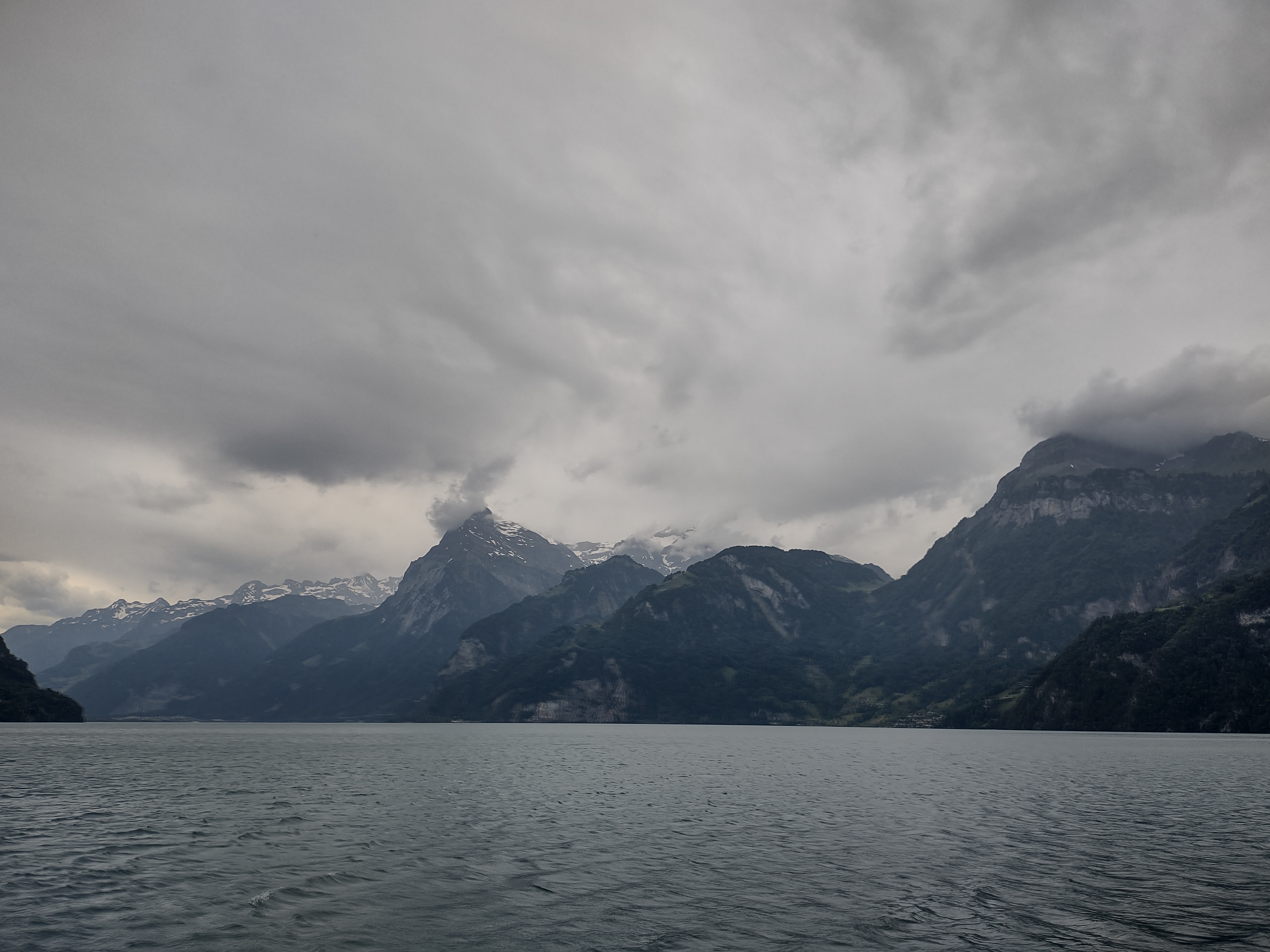
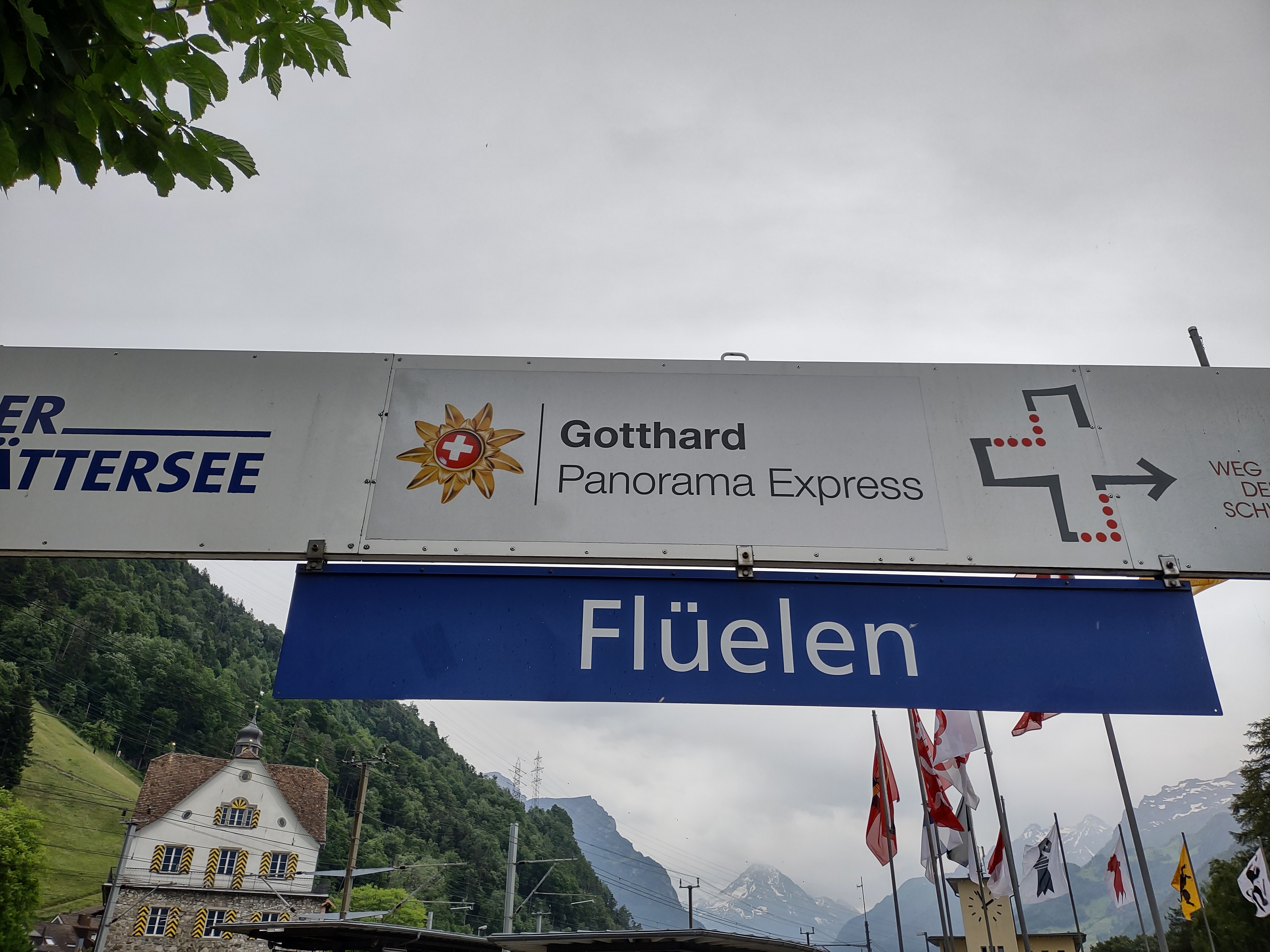
And so we reach the shore near Altdorf, and the end of our wonderful ride. To the left is the small settlement of Flüelen. Ahead of us the mountains lead down into the Gotthard, the rugged massif that separates central, German-speaking Switzerland from the Italian-speaking south. Home of the famous Gotthard Pass that connected the two, it was of enormous key strategic and commercial importance as the Gotthard is almost impossible to traverse by other means.
Unless you build a railway through it.
The nineteenth century came along and with it, the railway. There had to be a faster way of connecting northern and southern Switzerland, otherwise for one thing trade between the North Sea and the Mediterranean would bypass the country. So the great Swiss industrialist and railway builder Alfred Escher decided to build a railway through the Gotthard and down to Lugano.
And our train is here and it’s time to get onboard.
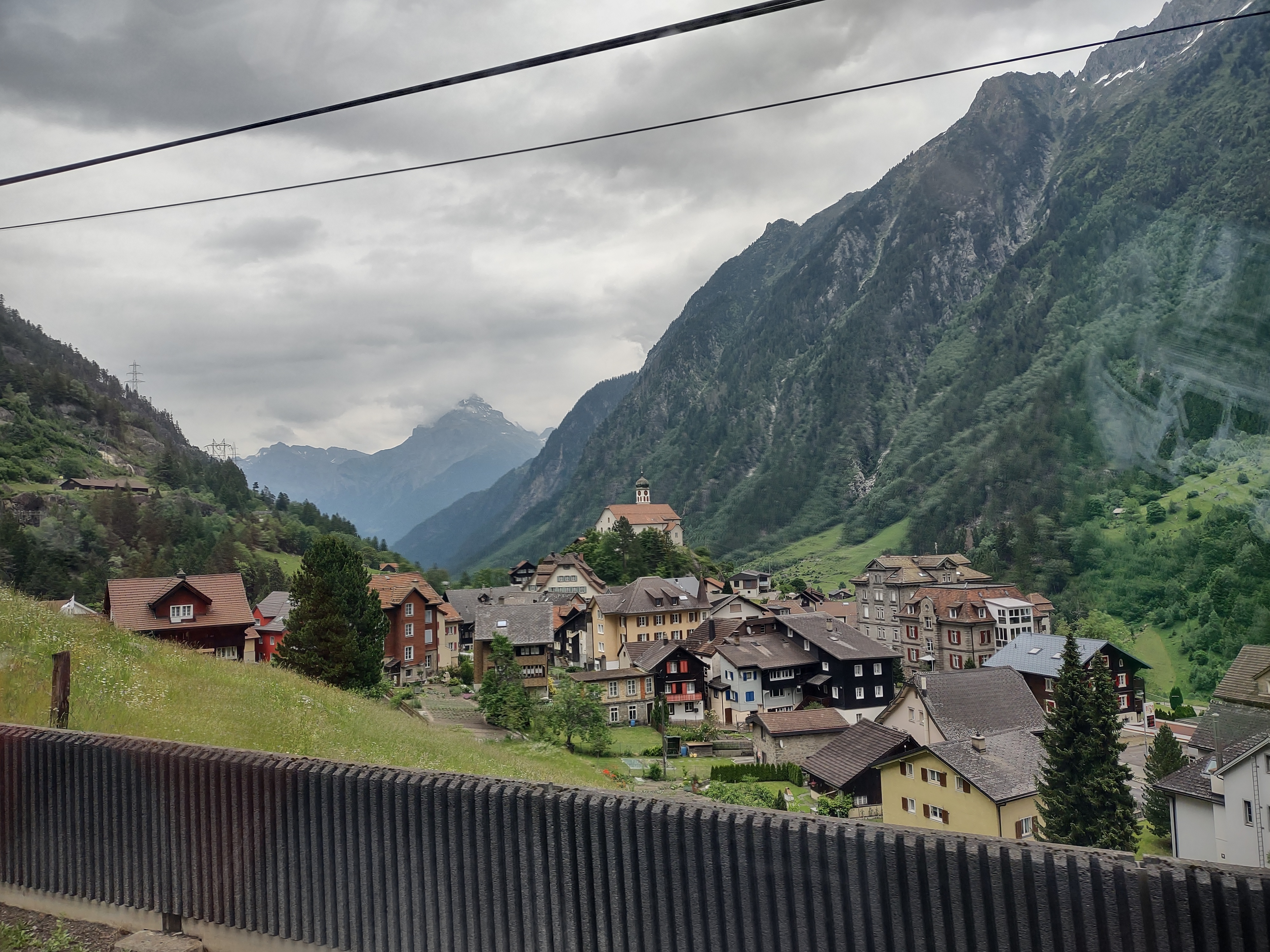
The Panorama Express tourist train runs along the original line and is one of the world’s great railway experiences, another two and a half hours of your life that you won’t regret. The main coaches have large wrap-around windows so you can take it all in, but they are a little reflective so I didn’t manage to get many great snaps. The best place to take photos is to go to their special carriage with open windows, but be careful about leaning out. Here’s the church at Wassen.
And here it is again!
No, that isn’t a model railway, that really is the line we were on in the first photo.
Built between 1872 and 1882, the Gotthard Railway was recognised at the time as a world-class feat of engineering. Here at Wassen they had to wrap the line around the mountain in three spiralling levels of tunnels and embankments, meaning you get to see the church at three different levels. There’s another example of a switchback loop south of the main tunnel.
Main tunnel? At some point on the route engineering ingenuity was no match for the geography, and they had to roll up their sleeves and dig. When they were done, they had created the Gotthard Tunnel, at 15 kilometres the longest in the world at that time. When the tourist express reaches twelve kilometres in, it slows to a crawl, they turn the lights down and an audio-visual show plays out on the tunnel wall; sounds of workers digging, clunk of axe and spade on hard wall, pictures of diggers, pictures of Louis Favre, the engineer responsible for its design.
An interesting display, and sobering. Like any such undertaking at the time conditions were difficult and the work was dangerous. 199 workmen perished during the construction. Favre sadly died of a heart attack in the tunnel inspecting the work, and never saw its completion. Even Alfred Escher, overworked and stressed-out trying to get the thing finished, died in 1882 before he could take a ride himself.
Over a hundred years later, an even longer tunnel was built – the Gotthard Base Tunnel, at 57km the longest in the world, and the tunnel that carries the scheduled service between Lucerne and Lugano. The old tunnel is only used for this tourist train as well as a few local services. But of course, travelling in a 35-mile long tunnel means you miss a lot of the incredible views.
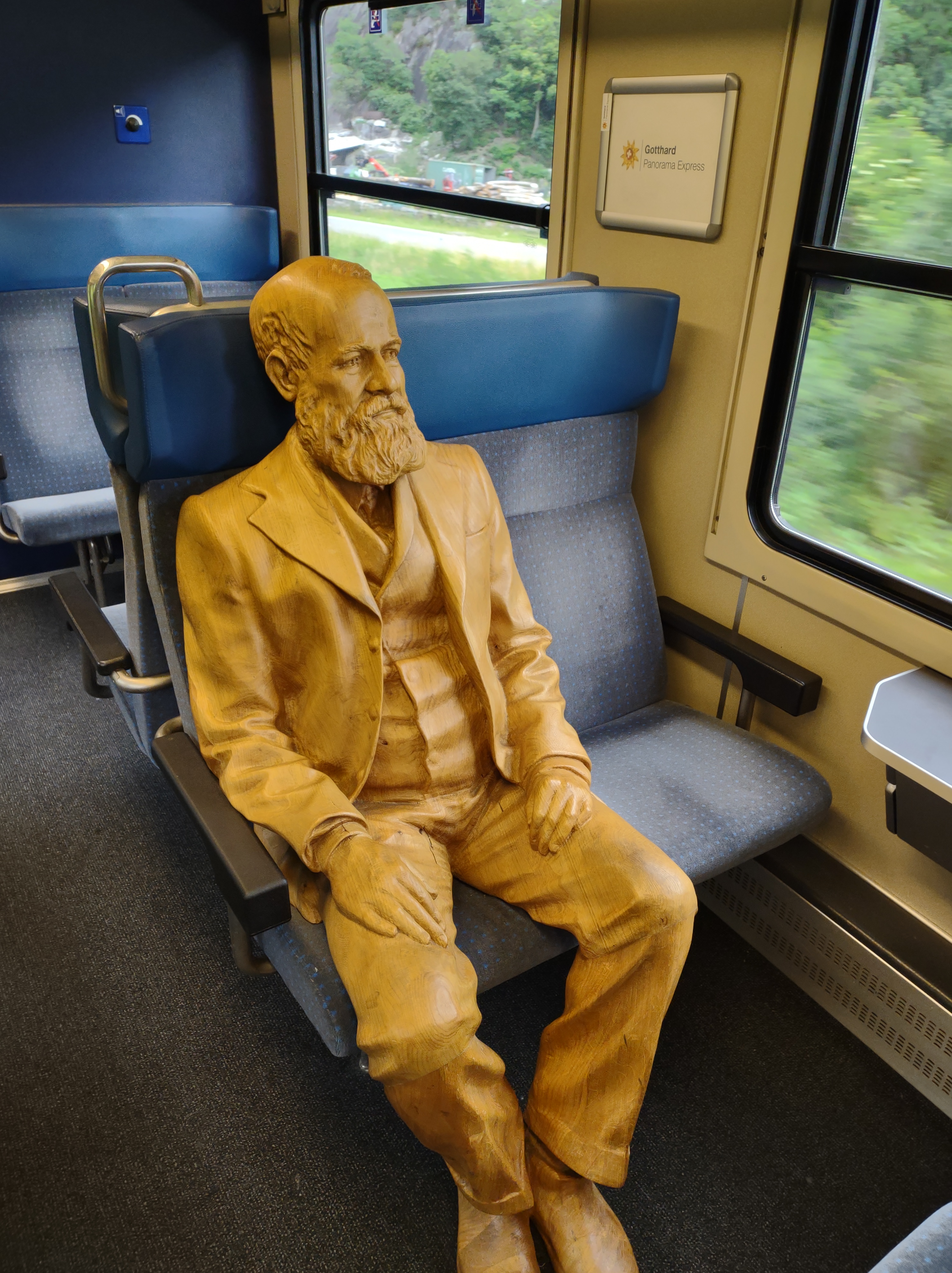
Which, well yes, I apologise for not taking more photos of. I eventually managed to make it to the photo car, but then I met up with a fellow passenger and got distracted, sorry.
To be honest he didn’t say much. But then again Herr Escher had already spoken loudly enough by giving us the magnificent railway we were travelling on. Good to see he had been given the chance to ride along it after all.
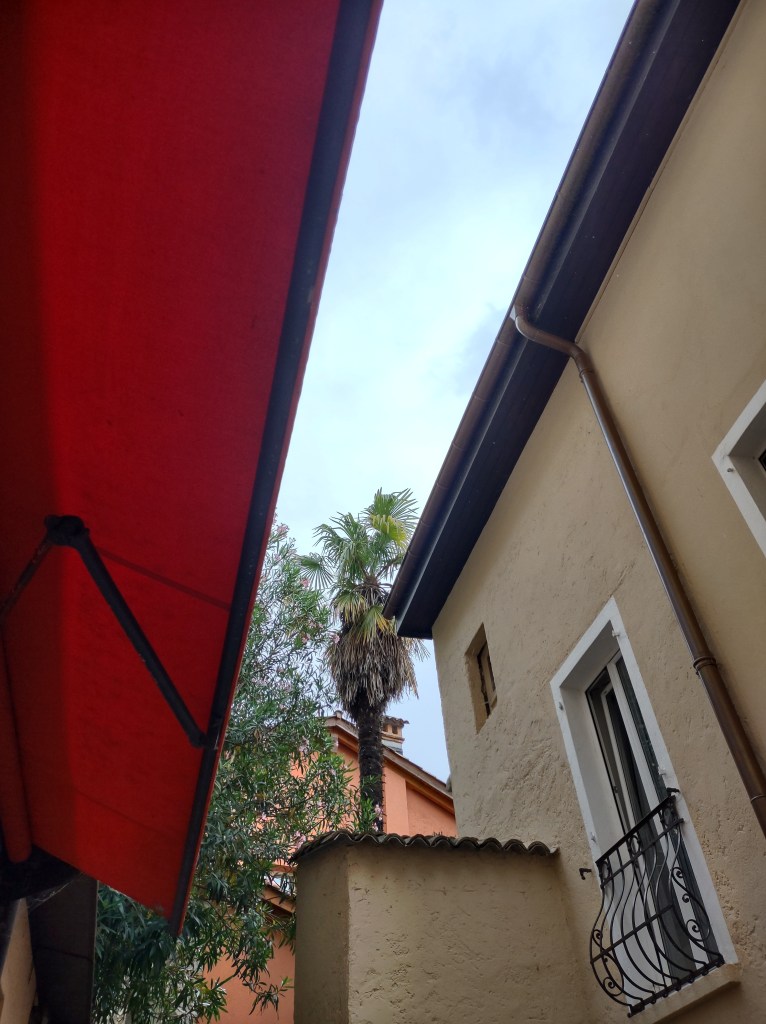
Eventually the train rolls into Lugano, in the Italian-speaking canton of Ticino, at the very southern tip of Switzerland. Warm, Mediterranean feel, palm trees. Some photos from Lugano to make up for the lack of pics from the train.
And there’ll be a few more to come as I’m here for a couple of days. Ciao!
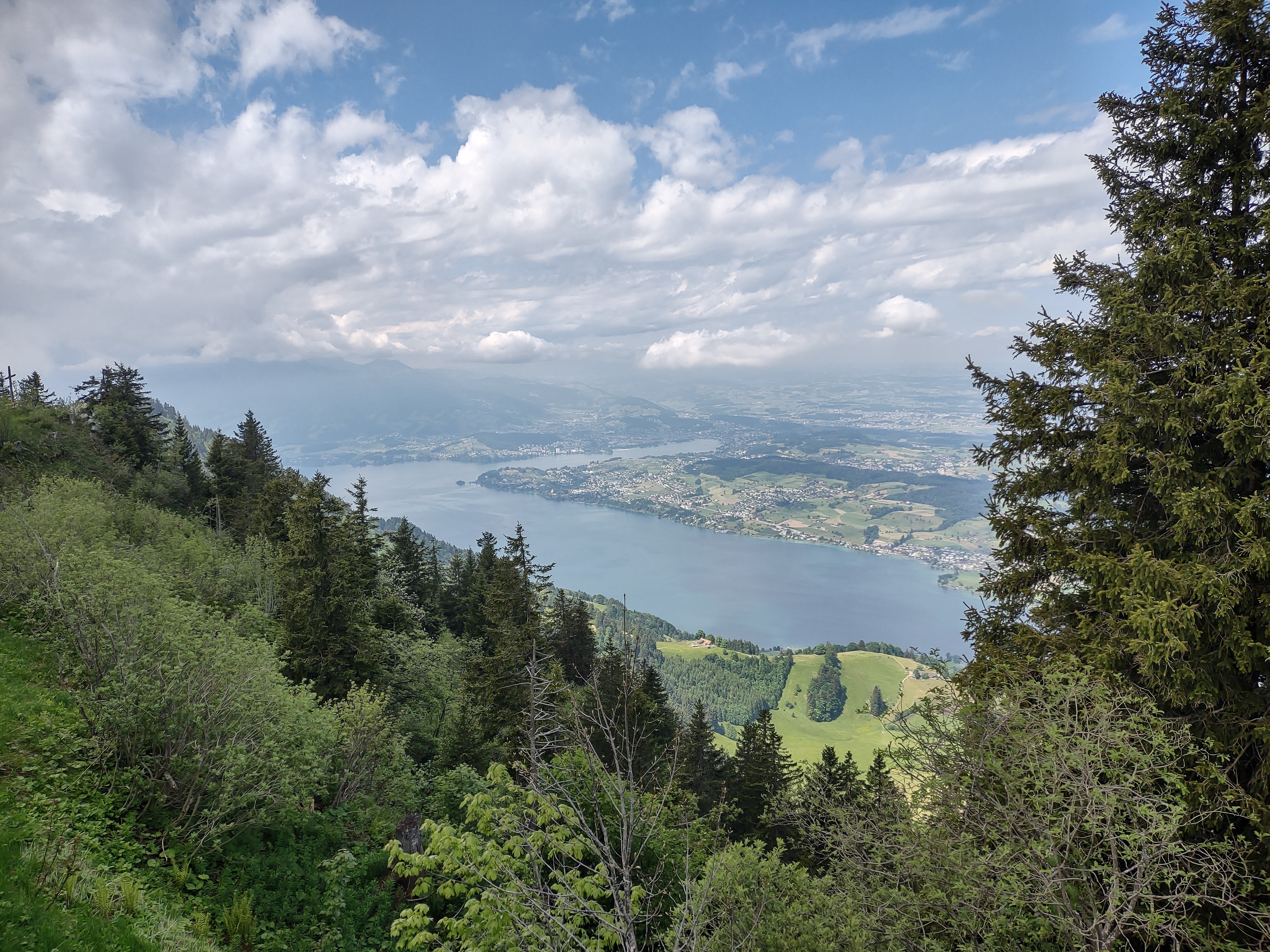
While the old town of Lucerne is worth seeing in itself, the real jewel here is natural – the glorious expanse of Lake Lucerne, gliding its way through magnificent mountain scenery.
We’re now going out on the lake, and when we get off we’ll join a mountain railway and head to one of the local peaks. Then do a short recce at the top, short because the clouds are in and it’s chilly up there. Then head back. Along the way I’ll talk a little more about the area and, at the end, introduce you to a very sad lion.
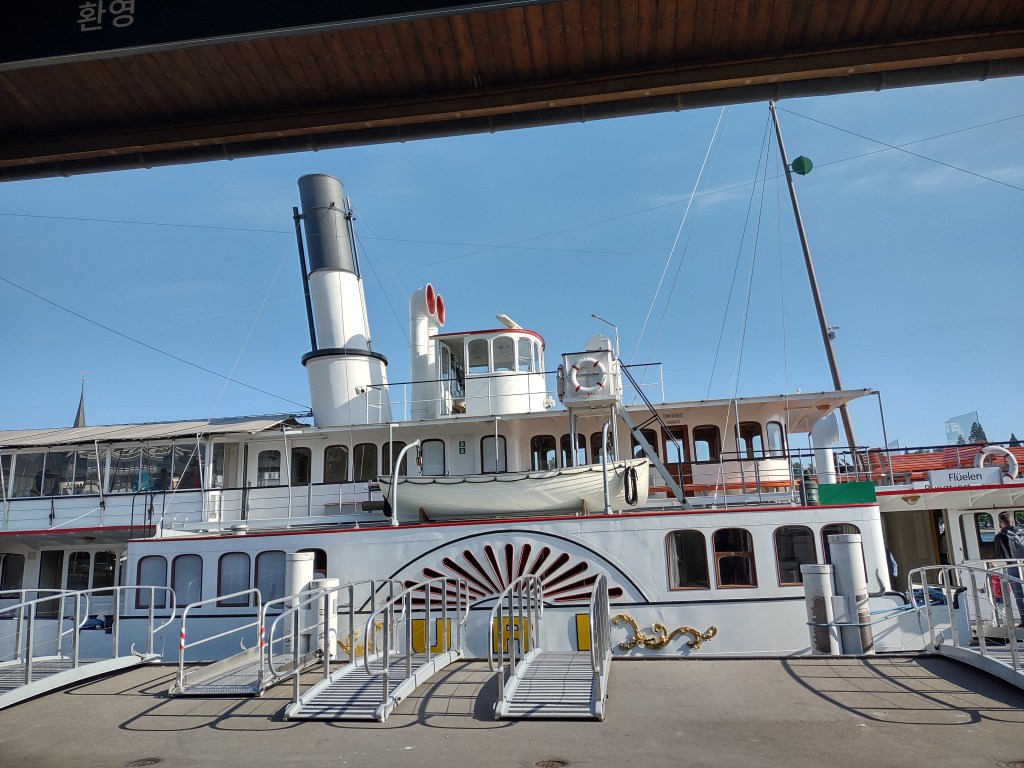
Here’s our boat, built in 1901, the oldest of the paddle steamers that work the tourist trips up and down the lake. It’s name, Uri is taken from a lakeside settlement (Stätt), one of the four (Vier) that border the lake (See). They are all heavily-forested (Wald) which adds to the beauty of the landscape. And also gives us the Swiss-German name for Lake Lucerne – Vierwaldstättersee. Not such a mouthful really. No, really.
In the last post I said that Lucerne joined the nascent Swiss Confederation in 1332. The three other lakeside settlements had already signed up, they were similarly hacked-off with the Habsburgs and their federation was up and running by 1309. Uri was one of the three, Unterwalden another.
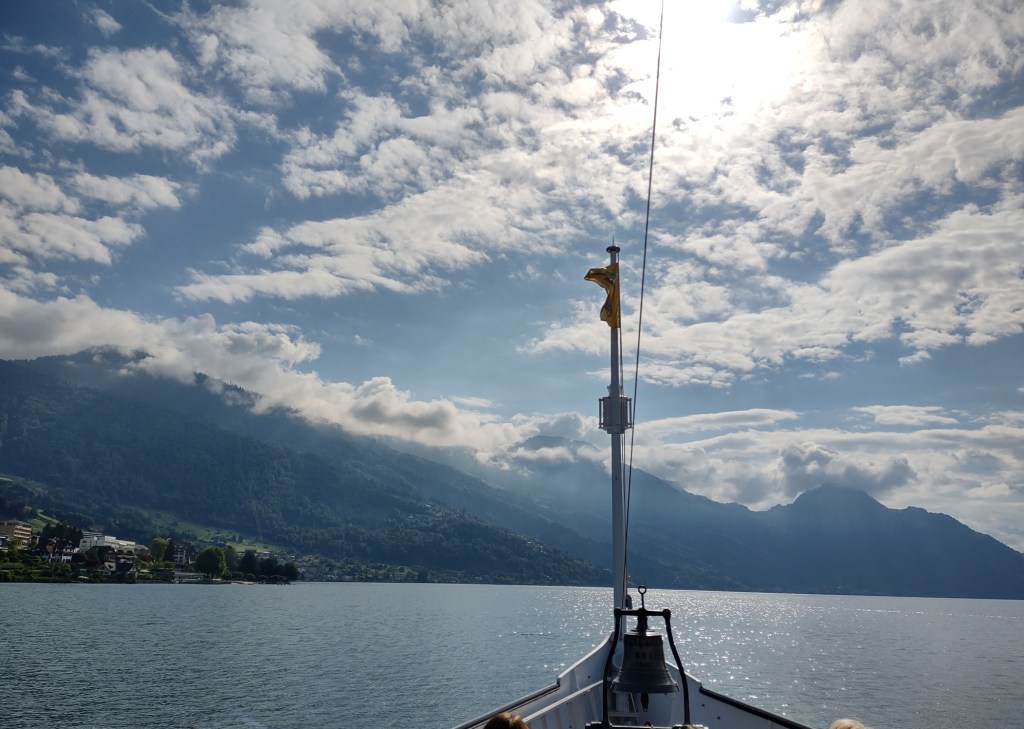
Making our way south-eastwards along the lake now, and to the right you can just make out the town of Küssnacht am Rigi, which lies in a canton that was the remaining founder member of the federation.
Schwyz.
It’s lucky that Schwyz was there at the beginning in some ways. Unterwaldenland has a ring to it but sounds unwieldy, while Uriland sounds like a theme park full of lots of bent spoons. “Uriland has declared its neutrality!” “Wow, I bet they didn’t see that coming!”
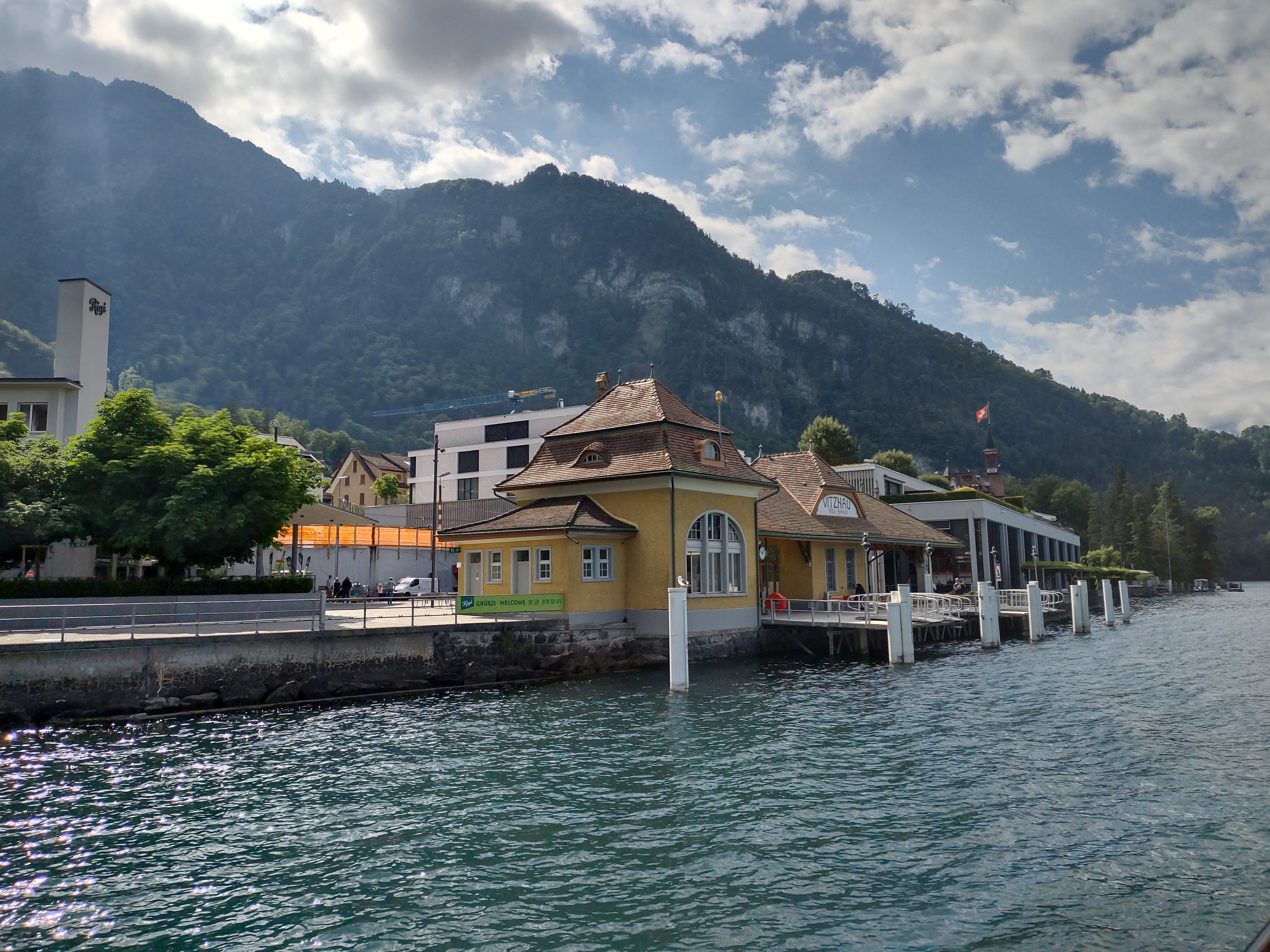
Nearly there now. Out of shot to the left (sorry, I was having problems getting all the right shots) is Mount Rigi, at 6000 feet one of the peaks that overlook Lucerne and a major attraction. The boat slides gently into the stop at Vitznau, where one of the remarkable mountain railways the Swiss specialise in takes you on a 45-minute ride to the top.
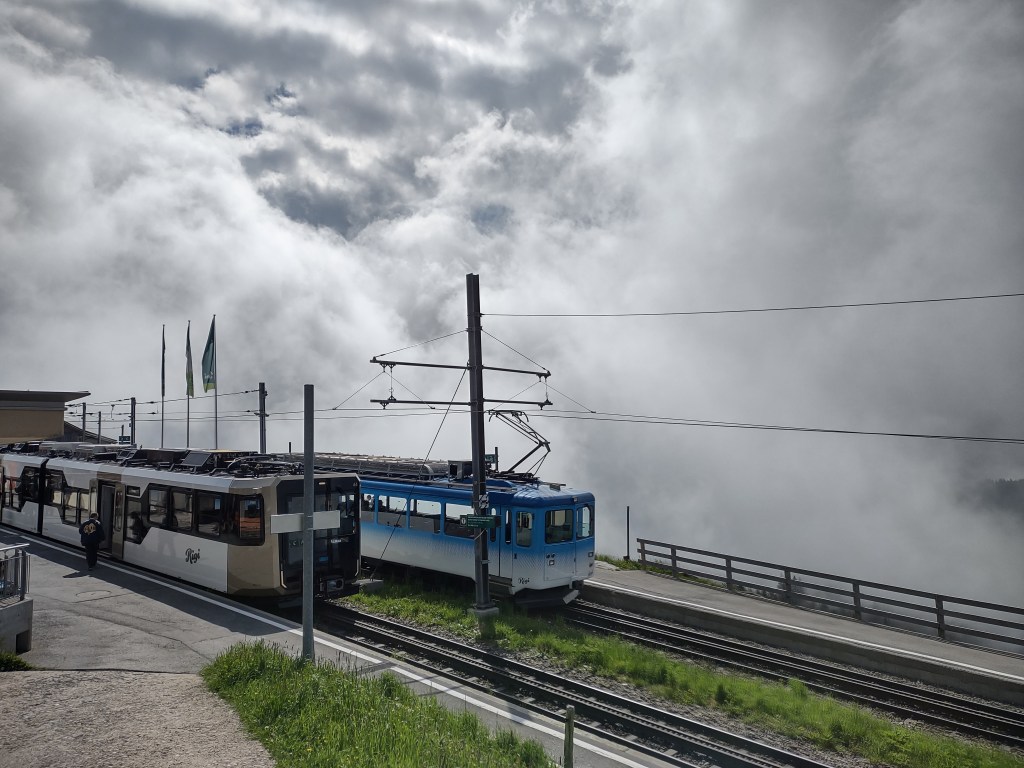
Here’s the station at the top but a warning; the journey up is steep. Really steep! In fact it’s around 60 quid and I bitterly regretted not getting the visitor’s card that would have earned a discount. The line runs at a high gradient in places as well.
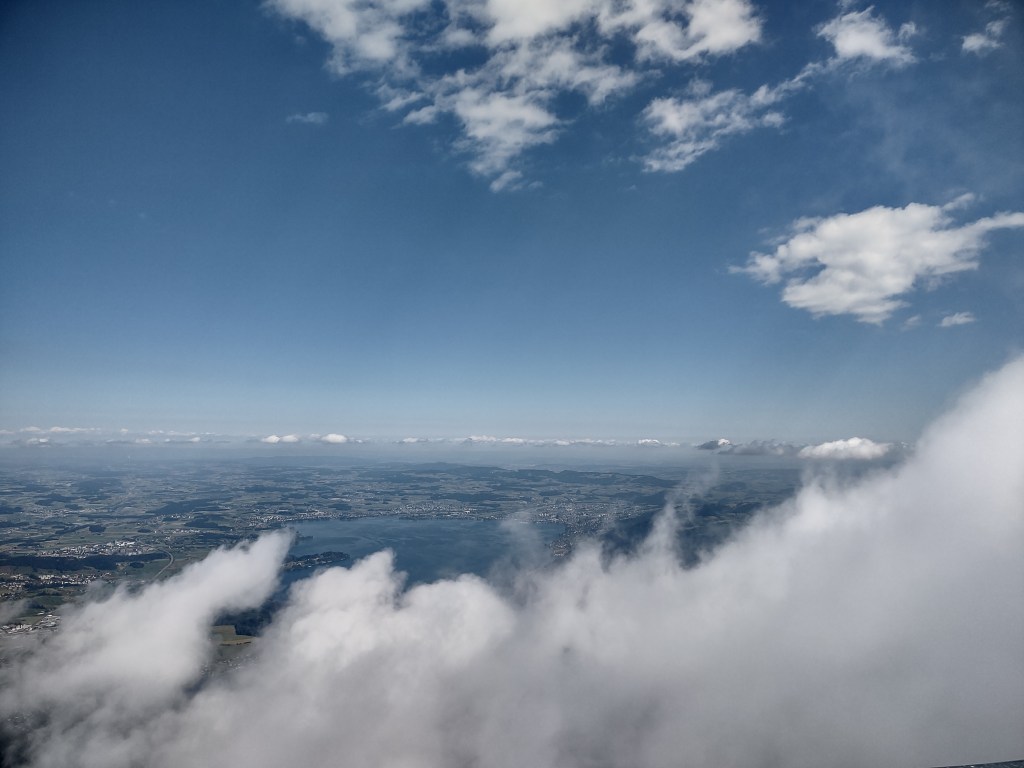
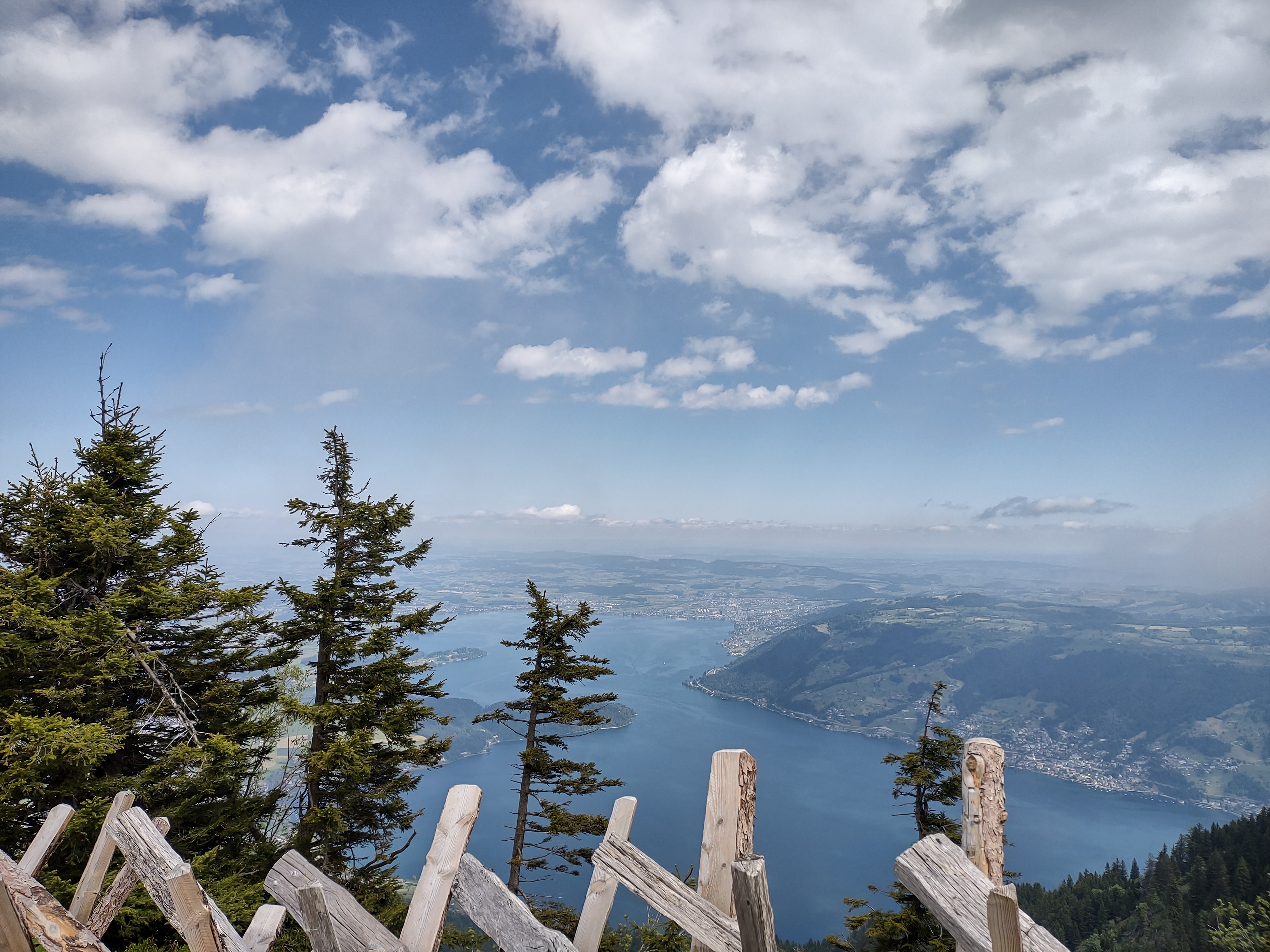
Notice the cloud cover; had I stayed a bit longer it would have cleared and conditions would have been a bit more amenable for a bit of a hike, but I decided to take a couple of pictures and get the next train down to the warmth of the boat. So here they are.
As Switzerland grew in influence during the Middle Ages and more communities joined, stories began to appear claiming to chronicle the origins of this powerful nation. Mountains, forests, glistening lakes, hardy independent mountain people…you can almost see the legendary and the mythological arise from the hillside like mists burning off in the noonday sun. And sure enough, by the late 15th century the chronicles were starting to refer to one particular name, one particular resident of Altdorf in Uri, who was apparently there at the birth of the Confederation, and a dab hand with bow and arrow.
His name was William Tell.
Looking astern as the ship heads home, looking roughly in the direction of Altdorf (although it’s much further down the lake at its southern end). By the 18th century their boy’s legend was all in place – the struggle against the evil Habsburg representative Gessler, his refusal to bow to Gessler’s hat, Tell being punished by being forced to shoot the apple on his son’s head, Tell eventually killing Gessler and helping to found the confederation. Soon Schiller had written his play, Rossini his opera and overture and the Lone Ranger was riding off to it.
Surprisingly early you might say, by the mid-eighteenth century, scholars started to raise doubts. It turns out that various Germanic peoples told stories of heroes forced to shoot stuff off their sons’ heads. One such was the Danish figure of Palnatoki, and when a book appeared in 1760 making the link, one of the authors was invited to re-critique his historical analysis from a different textual perspective. The perspective of being put to death unless he withdrew his claims. Funnily enough he agreed with this line of argument. Meanwhile they burnt the book in the main square in Altdorf.
To this day – as we’ll see in the next post – Tell’s story is at the heart of Swiss national foundation myth and Swiss self-identify, despite it being as full of holes as Swiss cheese. But it’s a great story, and it goes well with the dramatic, epic landscape. Which we’ve come to the end of, as our boat has returned to Lucerne
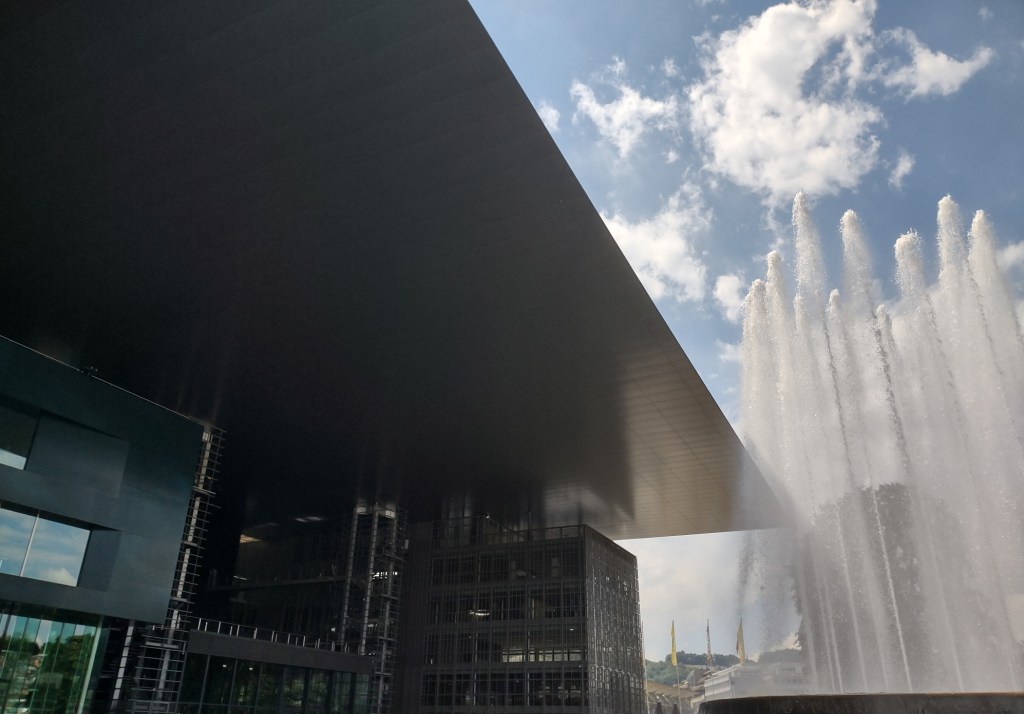
By the jetty we find that the old town isn’t stuck in the past – this is KKL Luzern, the cutting-edge cultural centre designed by Jean Nouvel and opened in 1998. There’s one other landmark I want to show you, we didn’t see it last time as it’s a few minutes away from the other places.
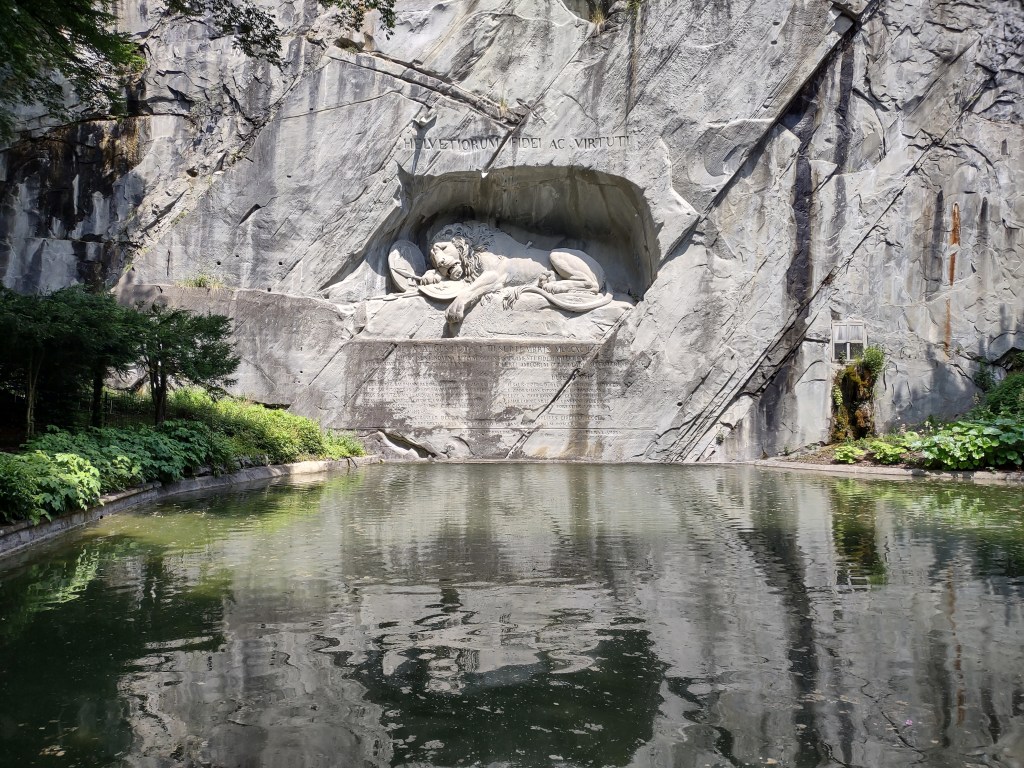
Switzerland is known for its neutrality, but that doesn’t mean it doesn’t know how to fight a good war. From the medieval period onwards its mercenaries were prized across Europe – for example the Swiss Guards that ceremonially guard the pope to this day (they didn’t always stand on ceremony). The Swiss also guarded the French royal family, until the revolutionaries ran into them in 1792. About 800 Swiss Guards were killed or massacred, and in 1820 the Lion Monument was carved in their memory.
Look closely and you’ll see the broken spear in the side of the brave but dying lion, as he draws his last breaths over shields bearing the fleur-de-lis and the Swiss coat-of-arms. Mark Twain was particularly moved by this monument, and coming from a great humorist writer that’s saying something.
Whatever your views about the French Revolution – and Swiss liberals were enraged when it was first displayed – it’s an incredibly moving piece of work. And however much you cherish your William Tell stories, this is one tale of Swiss heroism that is definitely true.
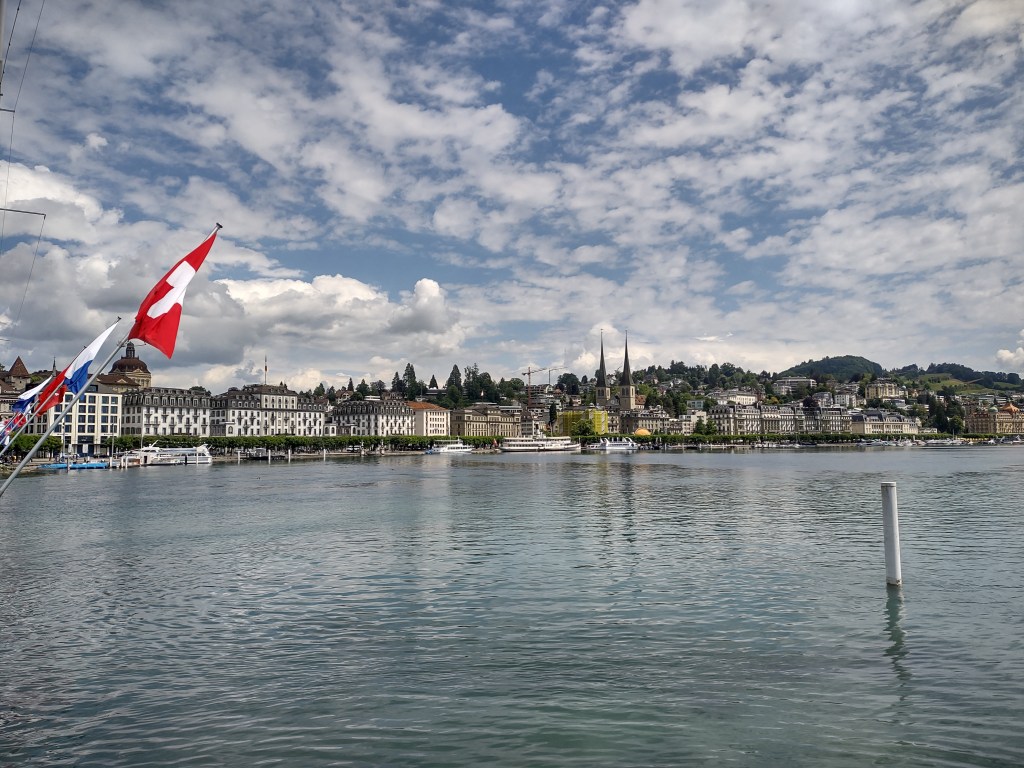
A short train ride down from Zurich takes you to Lucerne, historic, stunningly-placed, beautifully well-preserved, Switzerland’s most touristed city.
First off there was a medieval monastery somewhere around here, the point where Lake Lucerne drains into the River Reuss, and eventually a prosperous little trading town grew up. The Habsburgs acquired the locality, but the locals didn’t fancy any of that so they joined the Swiss Confederacy in 1332.
There were plagues, religious tensions with neighbouring Protestant cantons, and a temporary takeover by revolutionary France, but Lucerne continued to grow. Industry came, so did the railway, and that brought extremely fashionable Victorian tourists, including Queen Vic herself, to enjoy the city’s spectacular location. And Lucerne remains an upmarket destination.
To start off, let’s take a quick whizz through the main sights.
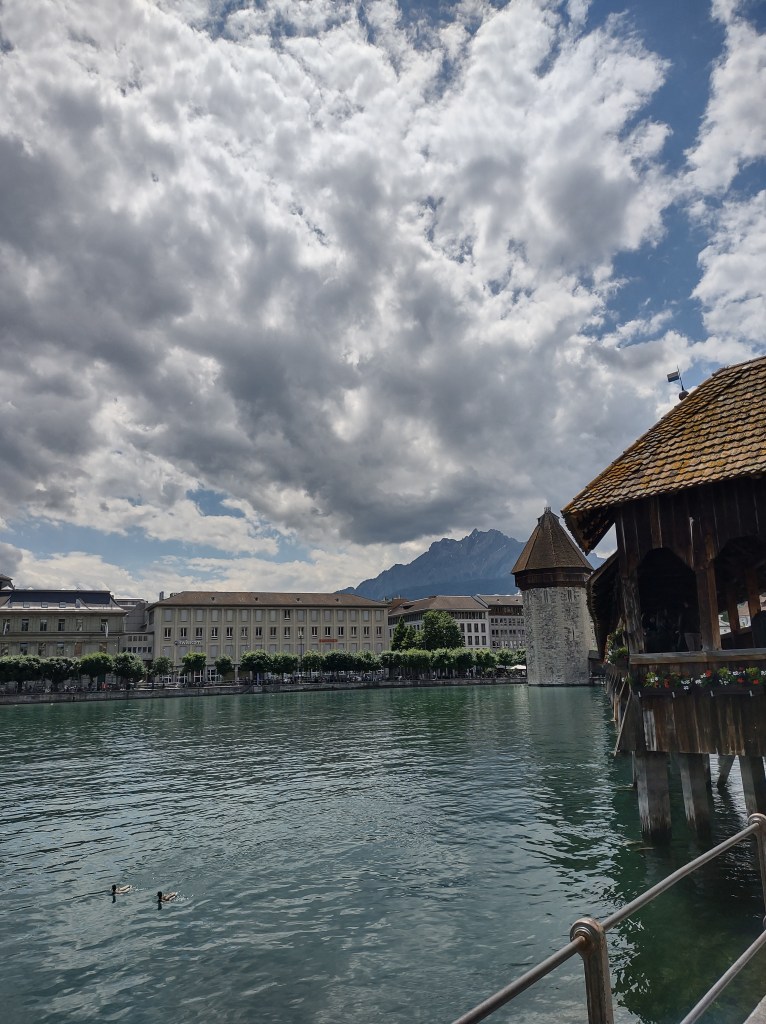
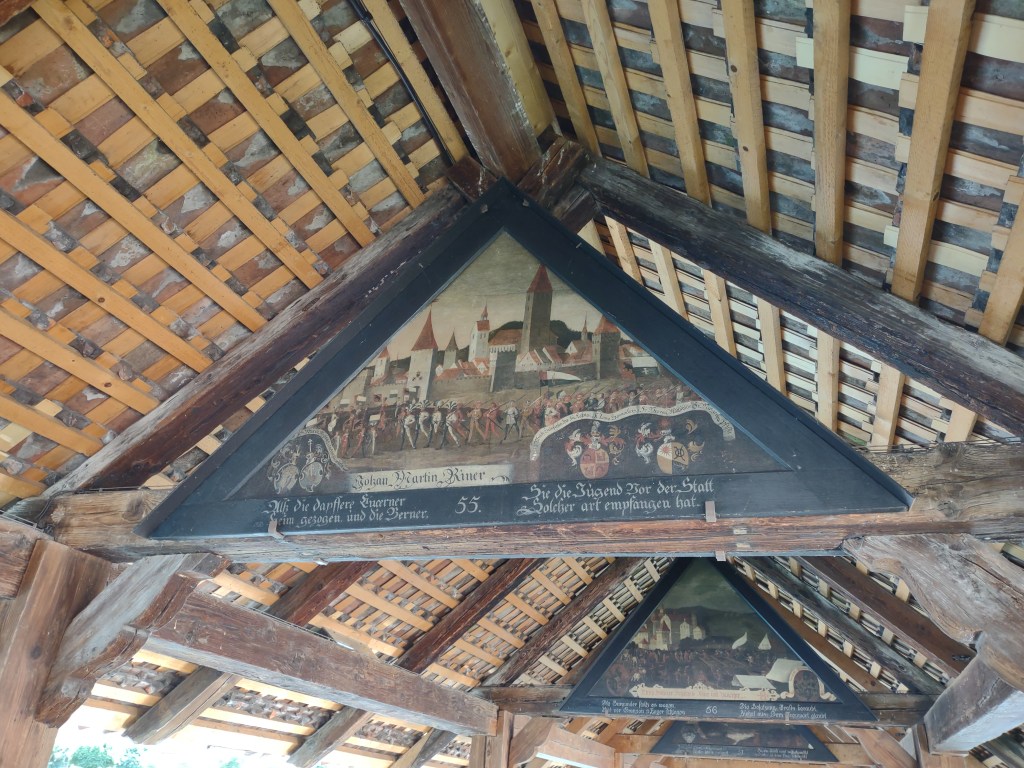
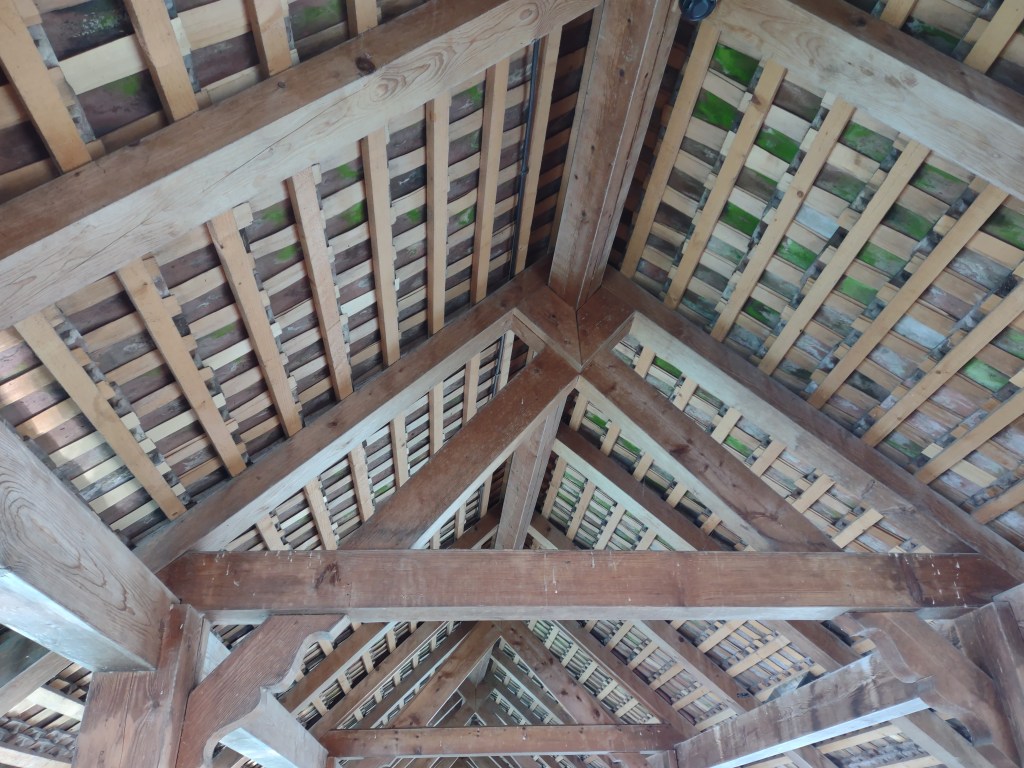
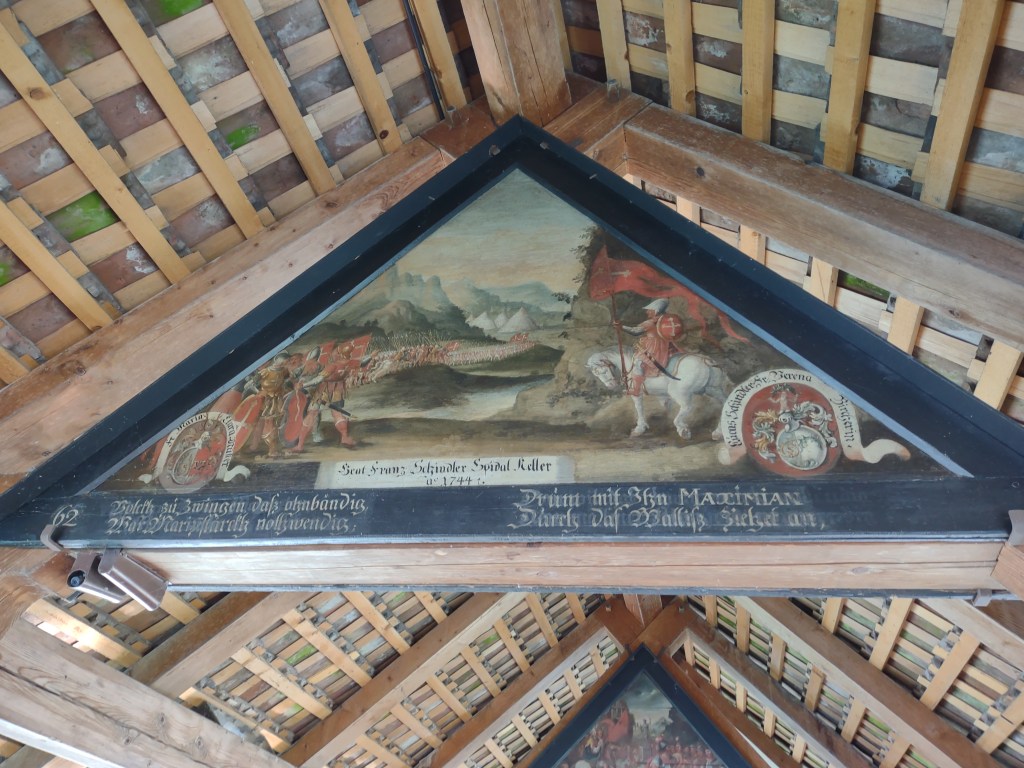
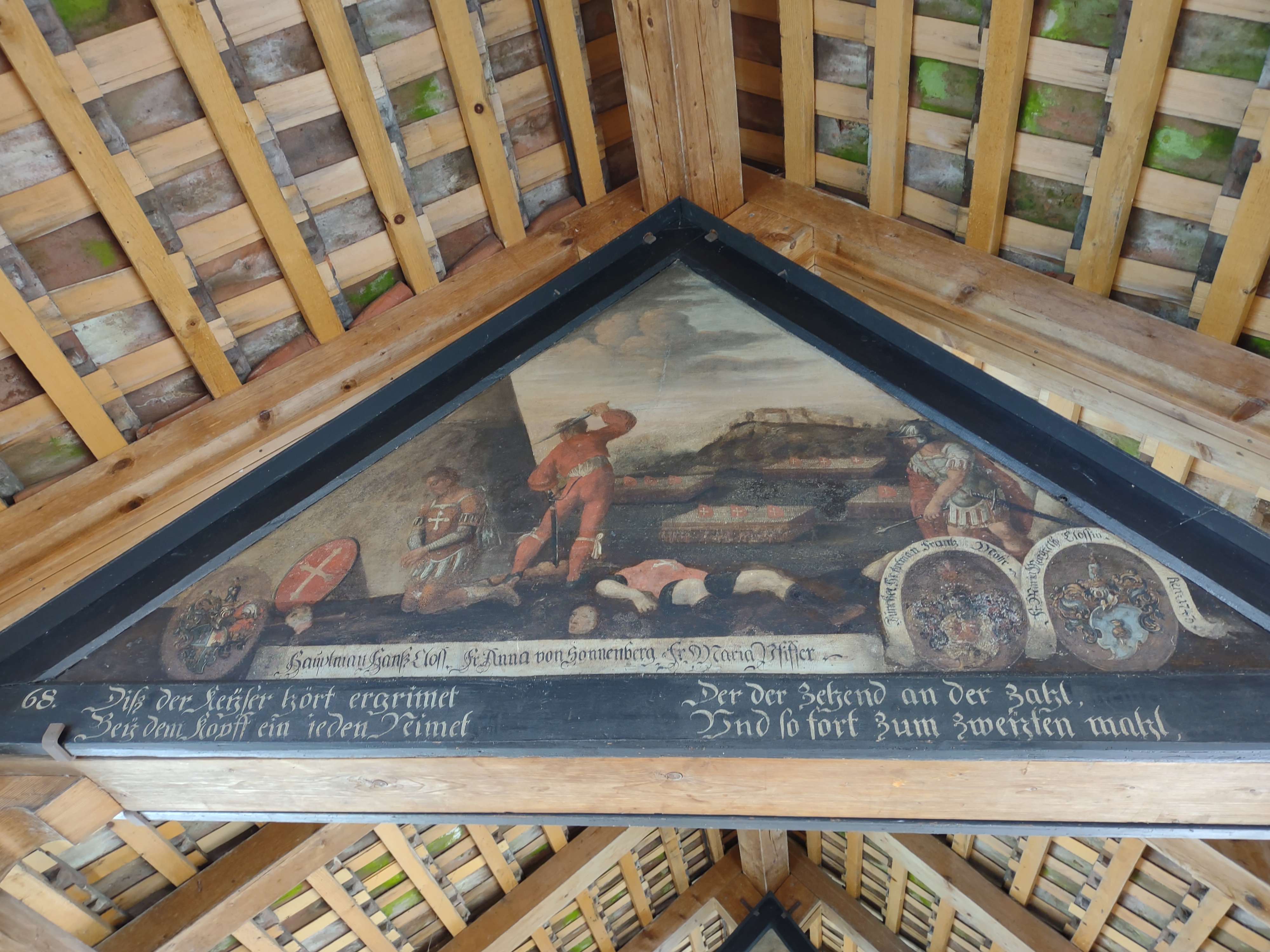
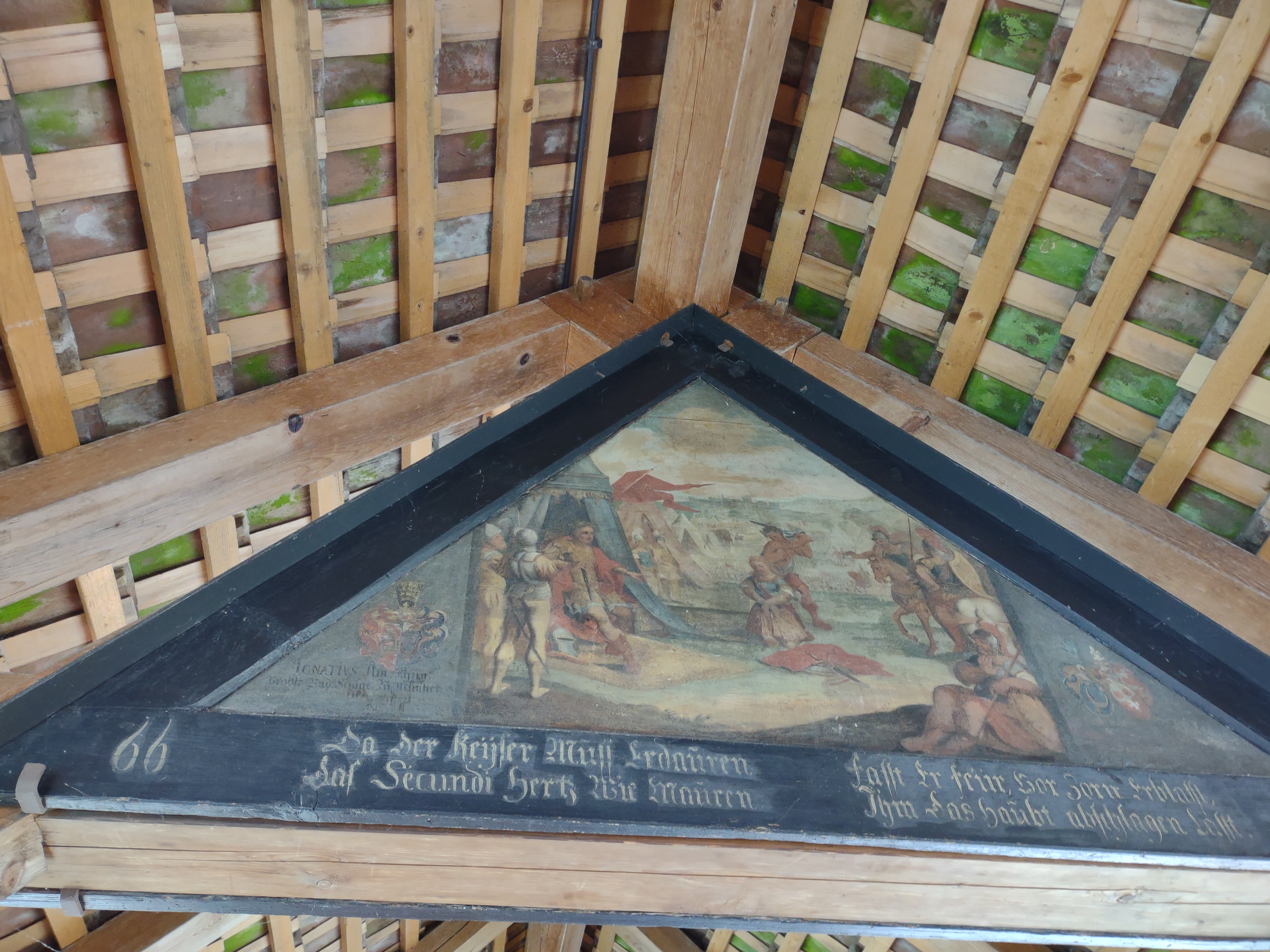
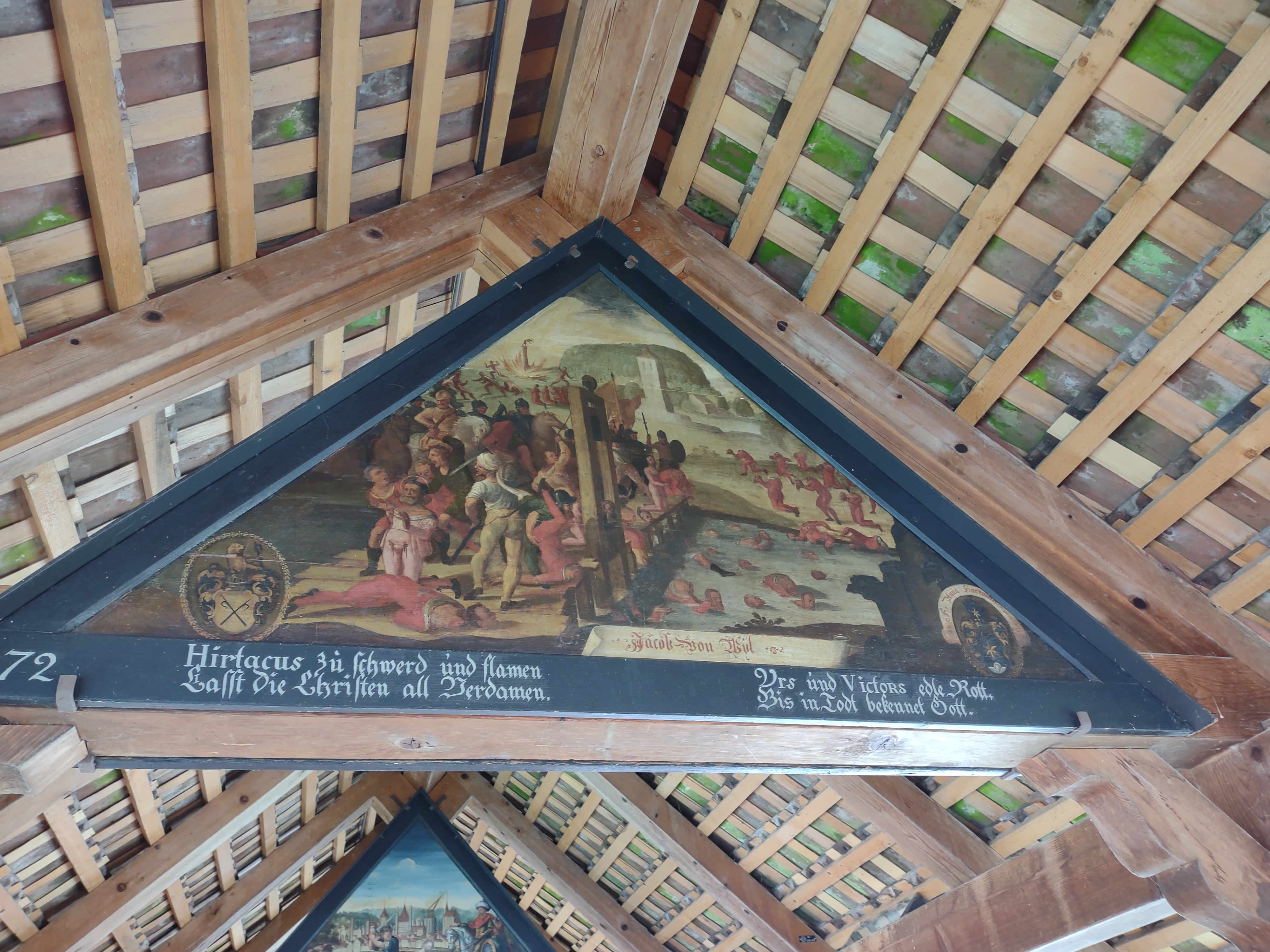
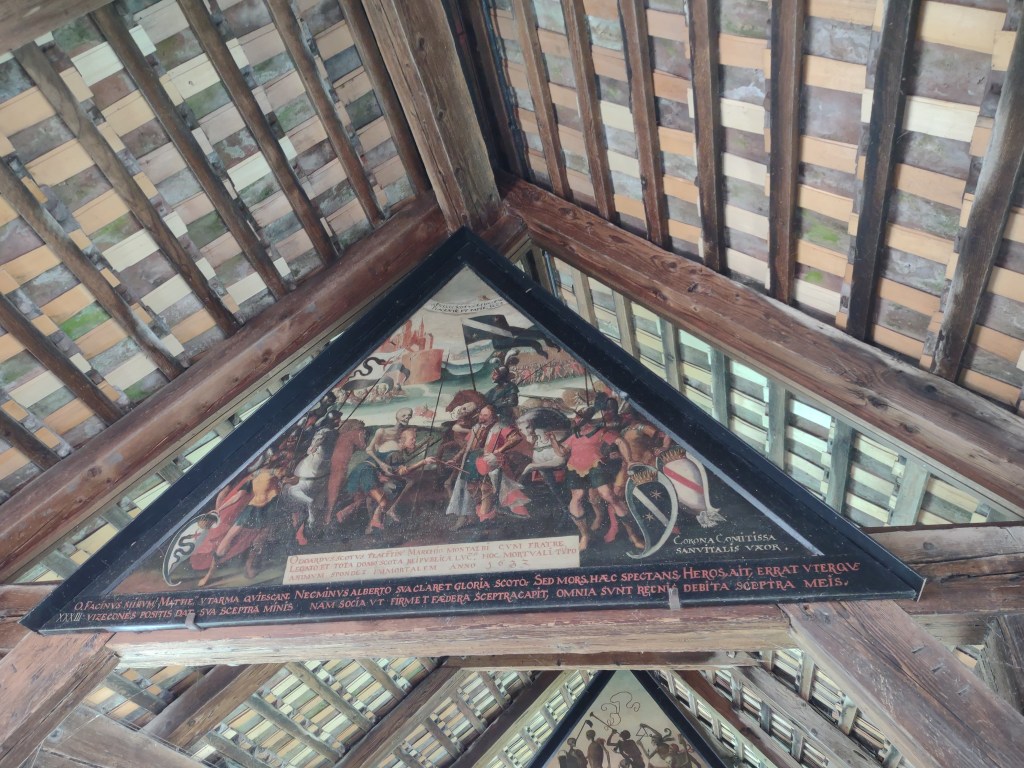
We’re in the Altstadt, the Old Town, and we’re heading onto the Kapellbrücke, the Chapel Bridge. One of the symbols of the town this 14th-century covered wooden bridge is almost unique in Europe in the paintings lodged in the triangular gables in the roof. In fact only one other bridge in Europe has this feature. Commissioned in the 17th century the Chapel Bridge’s paintings show scenes from the town’s history and the lives of locally-venerated saints.
And there’s a gap. Not because the citizens forgot to keep making their payments to their Seventeenth Century Netflix account and missed out on Series II.
The bridge almost burned down on 18 August 1993. It had 147 paintings beforehand but was left with only 47 and they only restored 30.
That’s the sad story behind these empty gables. But it could also represent a deep breath to prepare you for the remaining paintings.
The ones about martyrdom, beheadings and dismemberment.
Apparently one of the saints martyred in these paintings is Leodegar, or St Leger. The result of the stewards’ inquiry is, sadly, not shown.
Rather missing from the tourist blurb about Lucerne and its lovely bridge don’t you think?
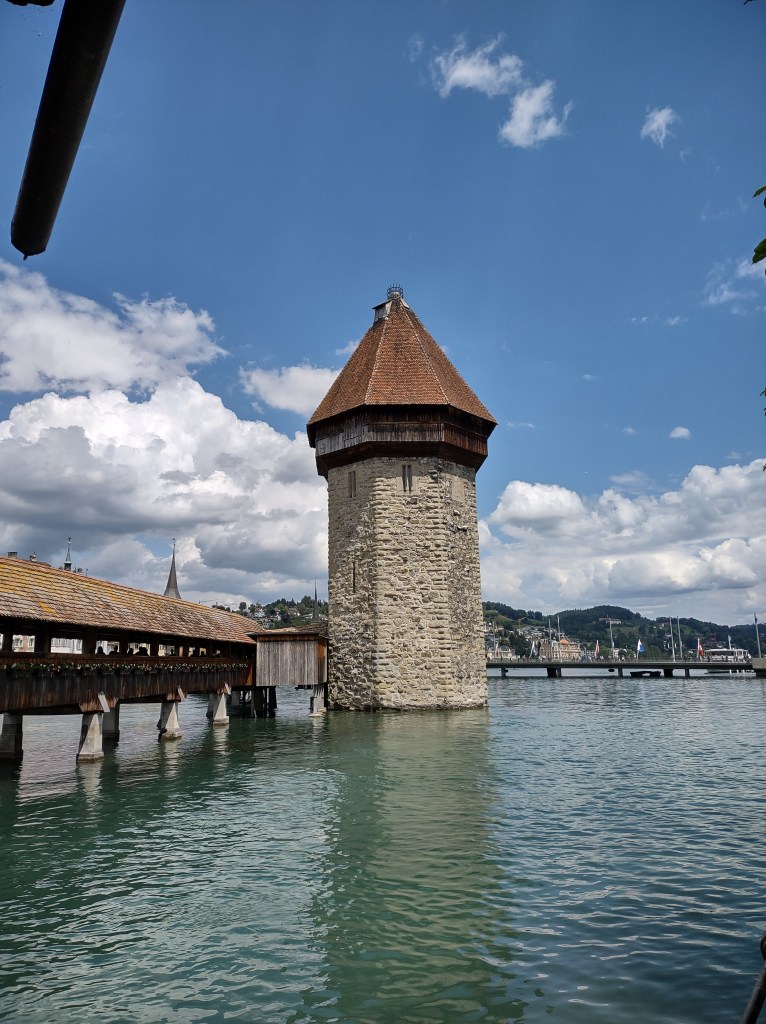
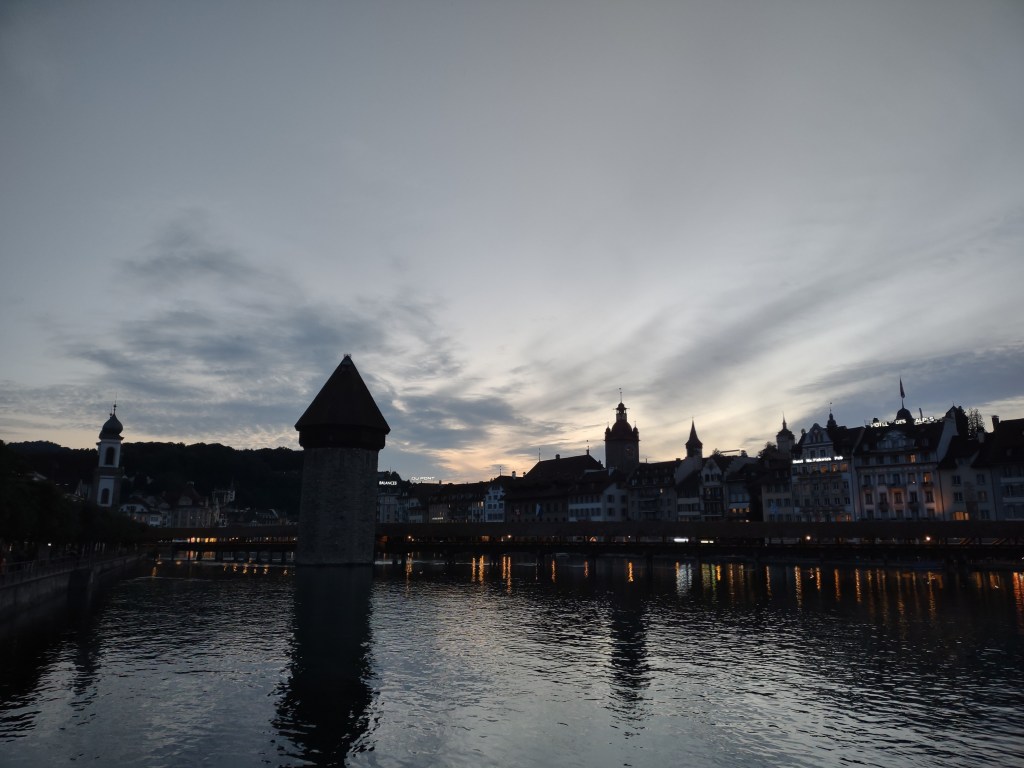
But what you certainly do see is the sight that thankfully greets us at the other end, the Kapellbrücke paired up with its lifelong pal, the Wasserturm, the Water Tower. Together with the bridge, built thirty years afterwards, this stalwart of the town’s fortifications is not only Lucerne’s most famous sight, but Switzerland’s.
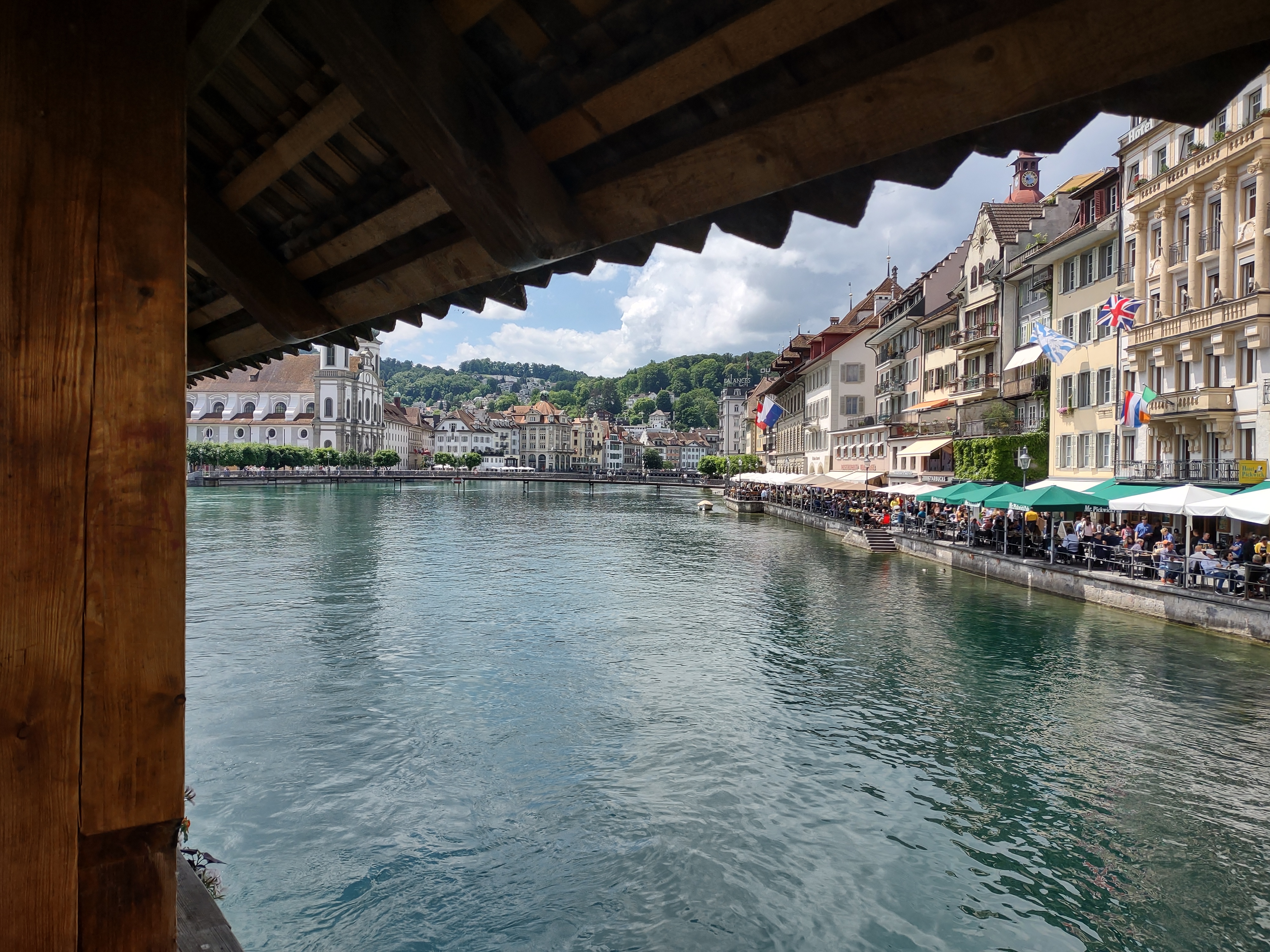
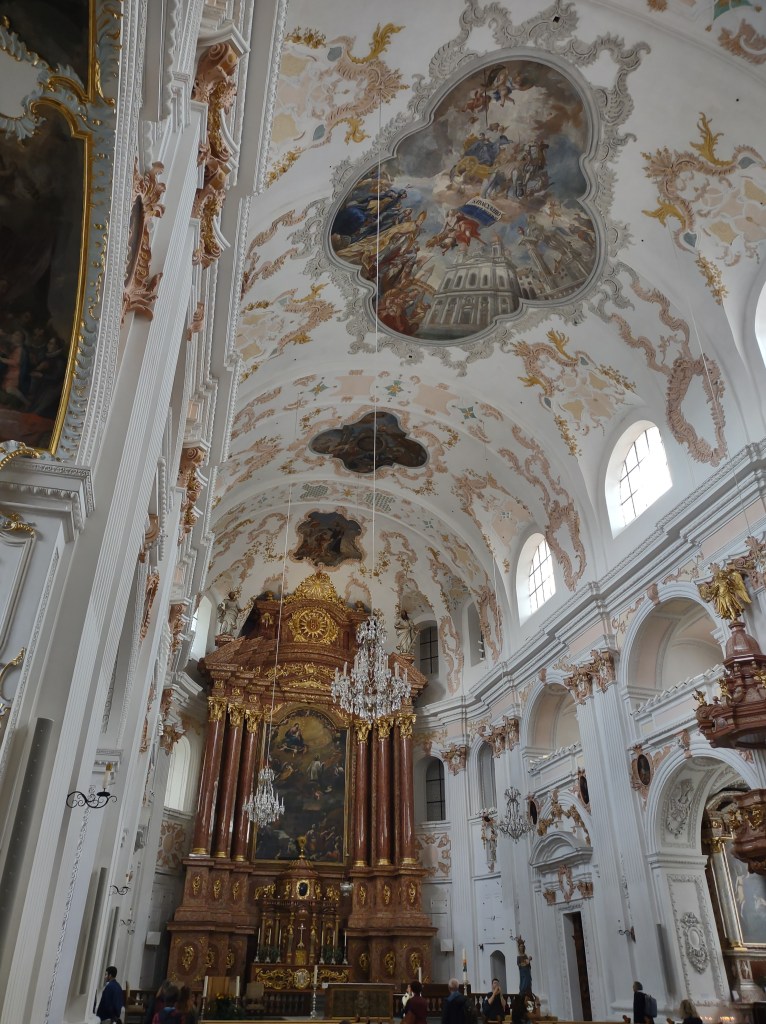
Now, on the south bank of the Reuss let’s pop into the Jesuit Church. It’s a Counter-Reformation offering built in 1666, and Counter-Reformation churches are all about lavish, gold-plated restatements of Catholic doctrine to get the waverers back onside.
And that means magnificent interiors and above all, eye-popping ceilings.
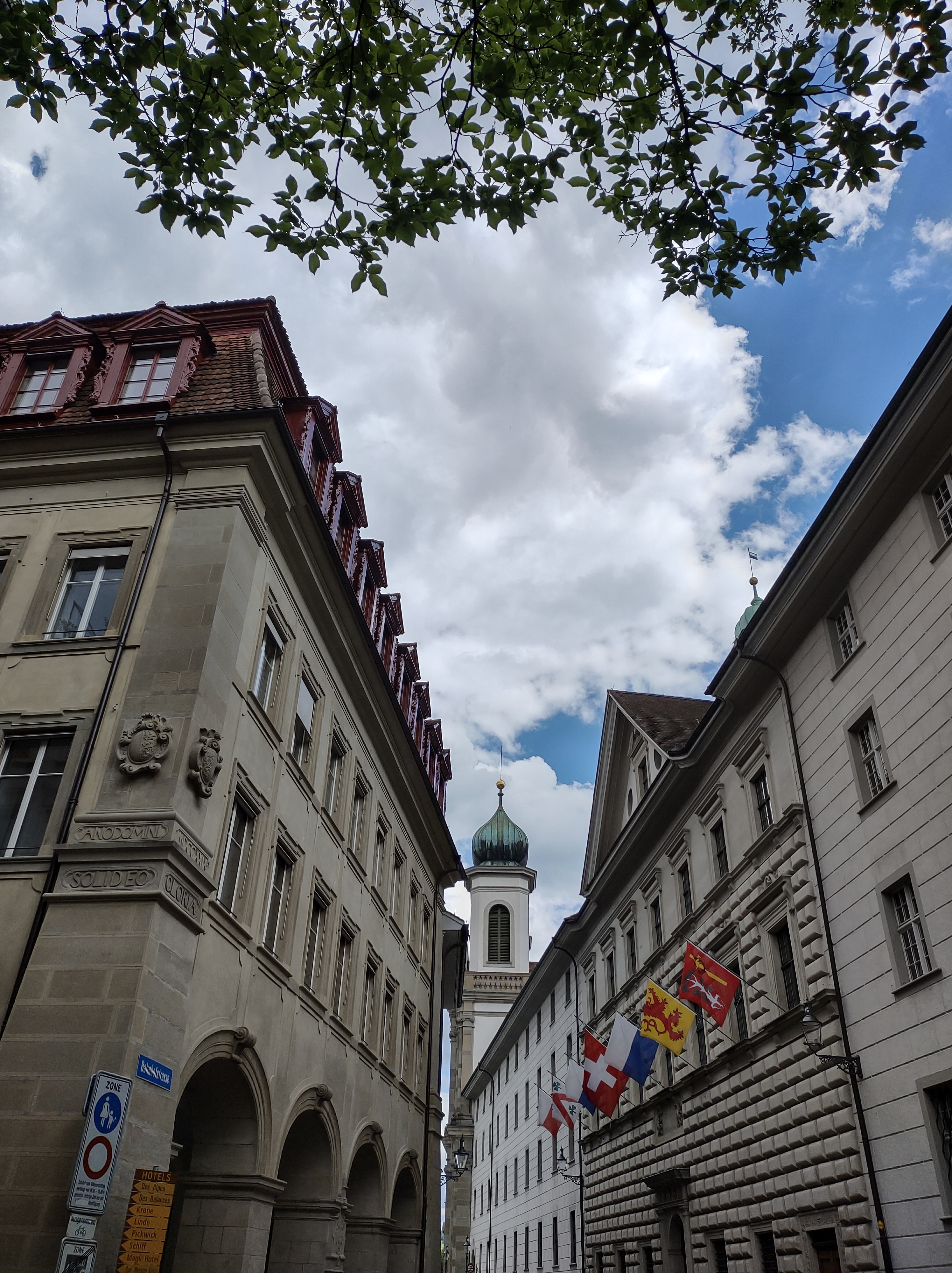
One of the towers of the Jesuit Church
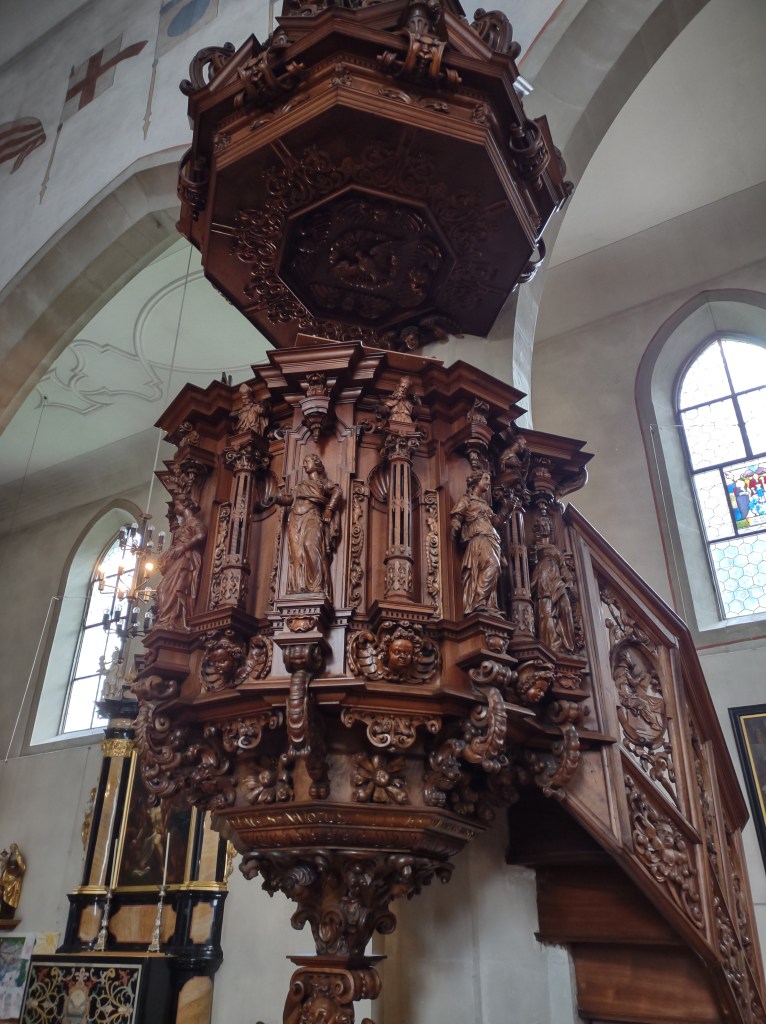
Nearby is the Franciscan Church with its stunning pulpit
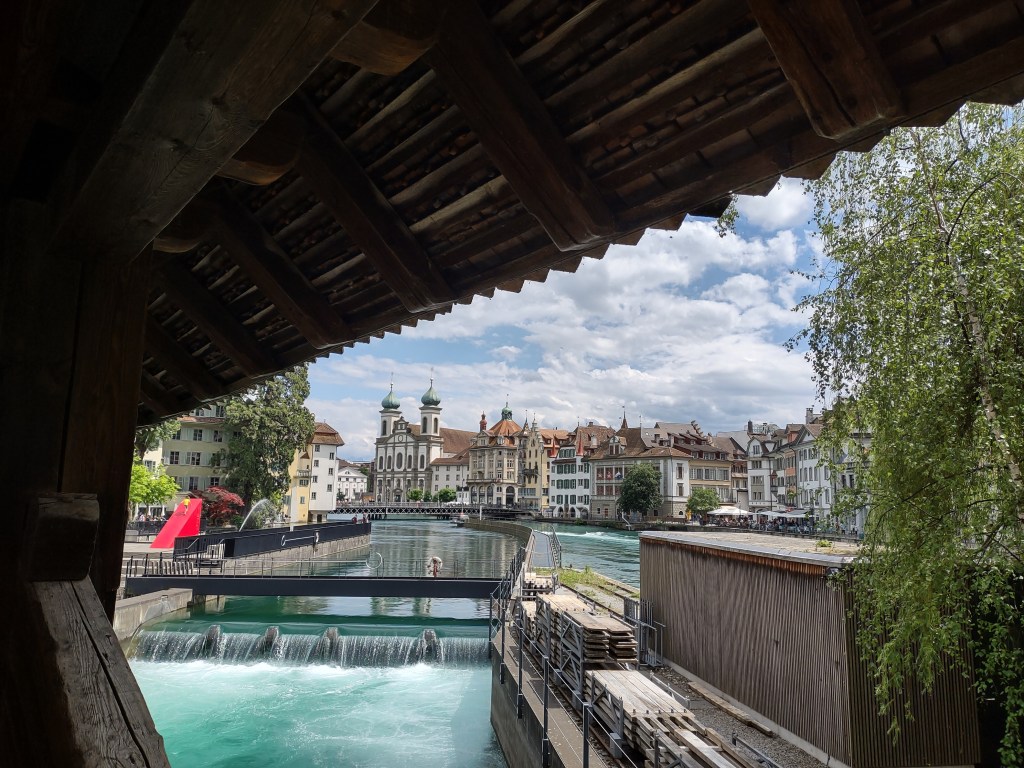
Back on the riverbank we find the Needle Dam, an interesting 19th century construction that uses an alignment of moveable staves – the “needles” – to restrict the water flow when necessary.
The dam allows the outflow from the lake to be increased to 430 cubic metres a sec…ok, you’re not following me, and it’s my fault.
I shouldn’t have showed you those distressing paintings from the Chapel Bridge. At the time I thought they would add something to the blog, but I should have realised that it might upset you. You’d probably preferred to go to that other bridge in Europe I mentioned where they have the paintings in the gables, they’re probably pretty and nicer and they’ll cheer you up.
Wait a minute, wait – a – minute, what’s that thing next to the Needle Dam, why it’s the Spreuerbrücke. It’s the other bridge!
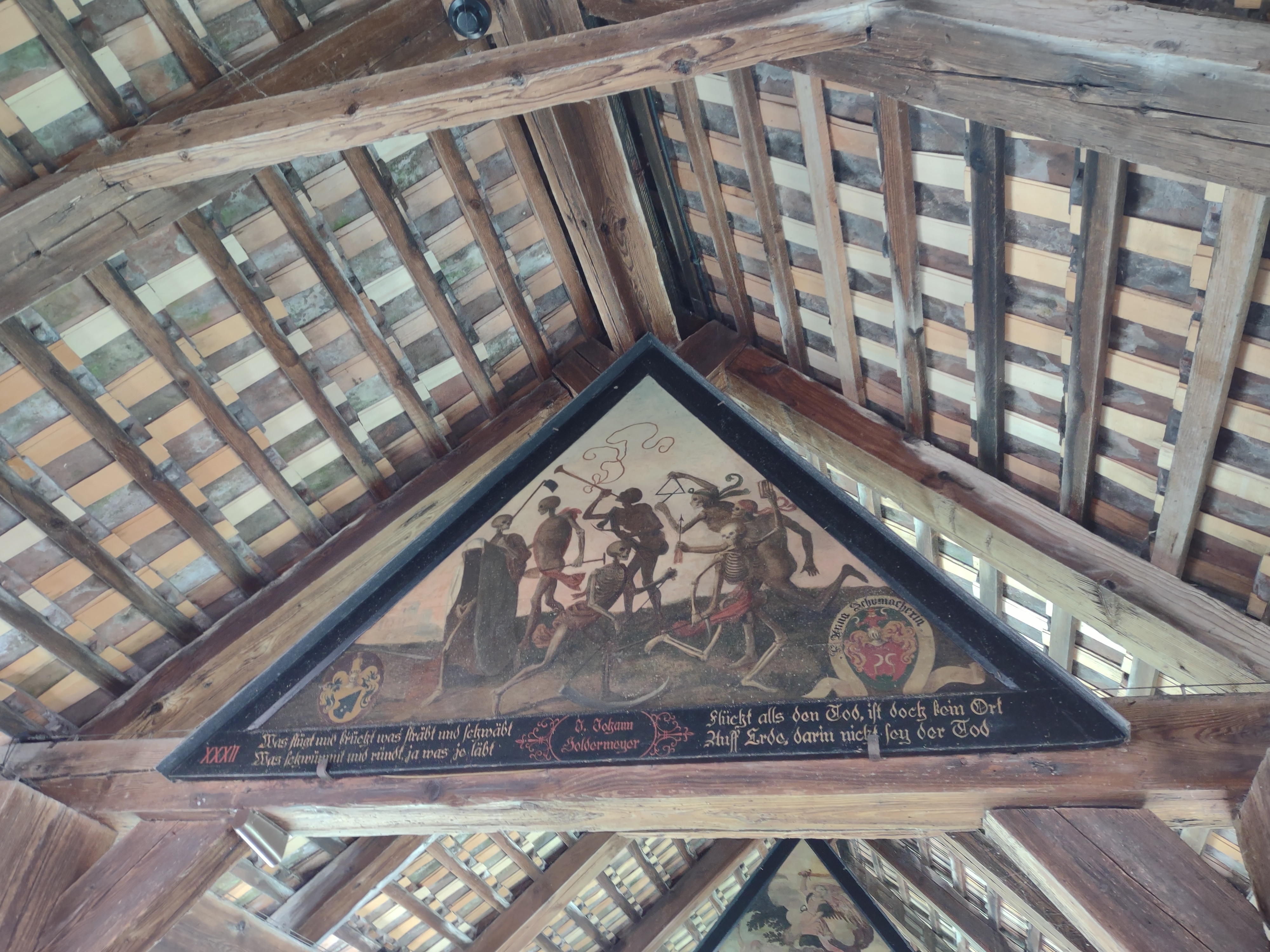
Right, here we go then. Spreuer, or chaff, as it was the only place they could dump the chaff from cereals. No fires recorded. All good. And the paintings?
All about the ever-presence and inevitability of death.
Well, I did my best.
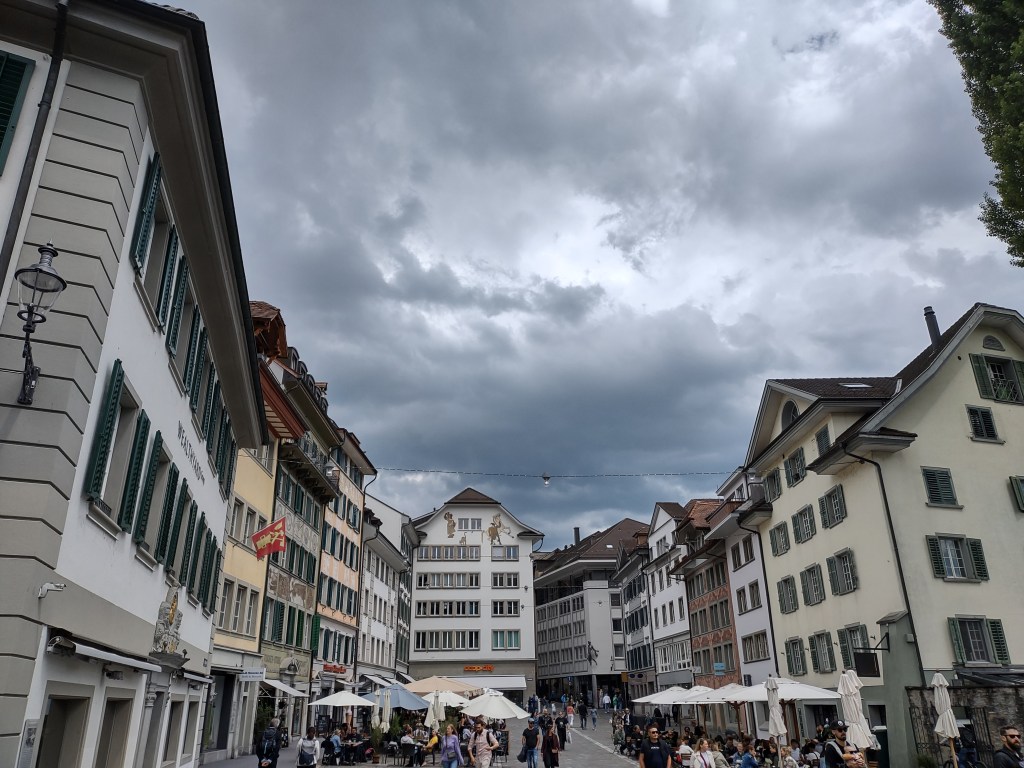
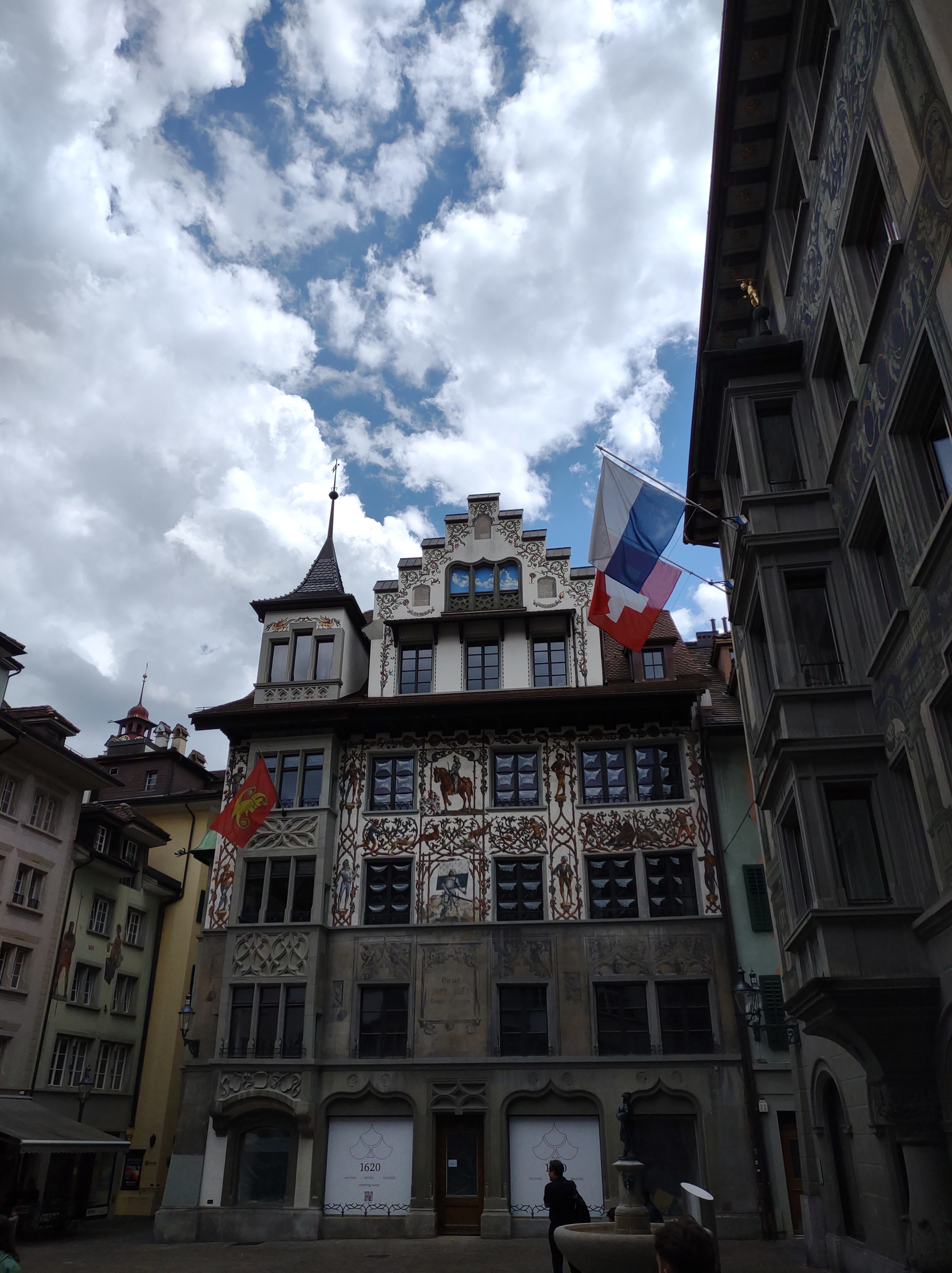
On the north bank now, and a quick look at some of the beautiful frontages in the Altstadt…
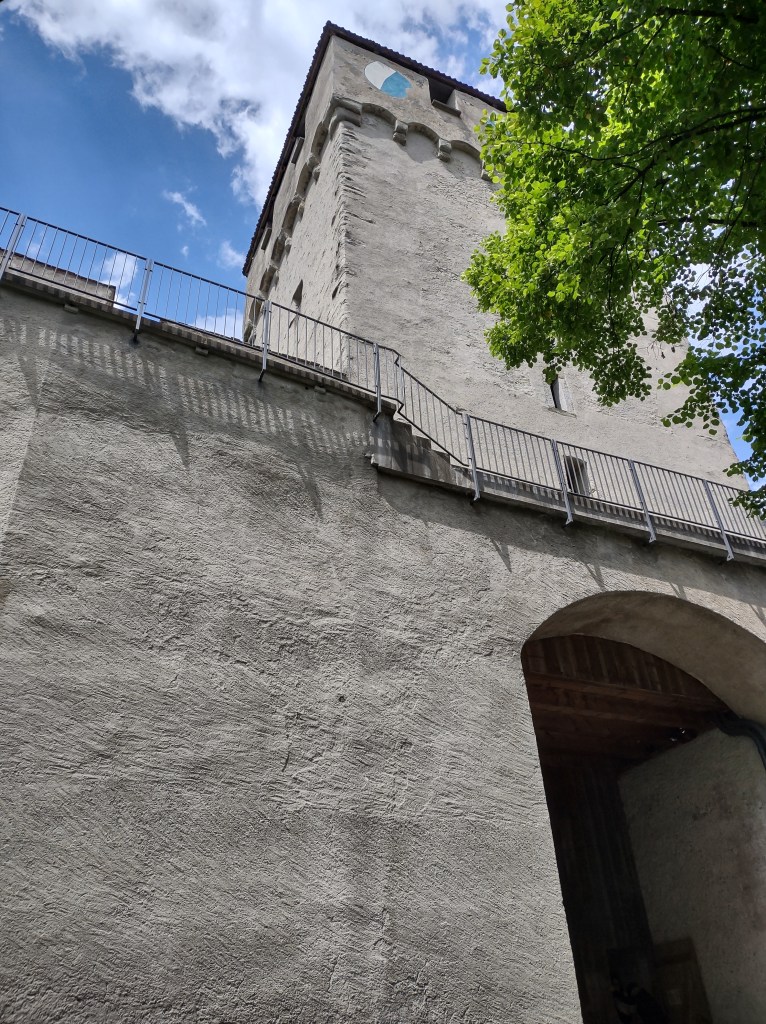
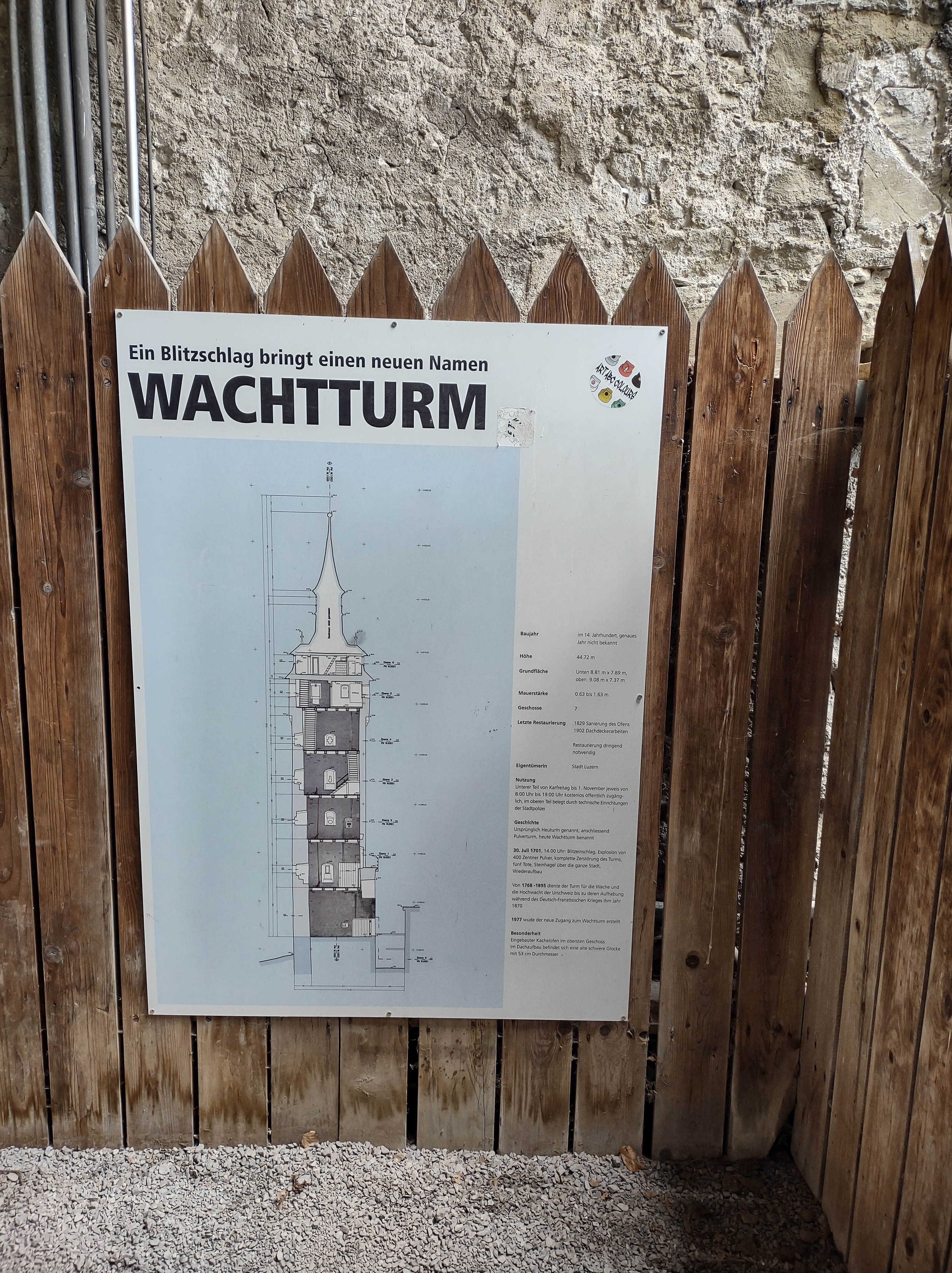
before we make our way up to the town’s remaining fortifications
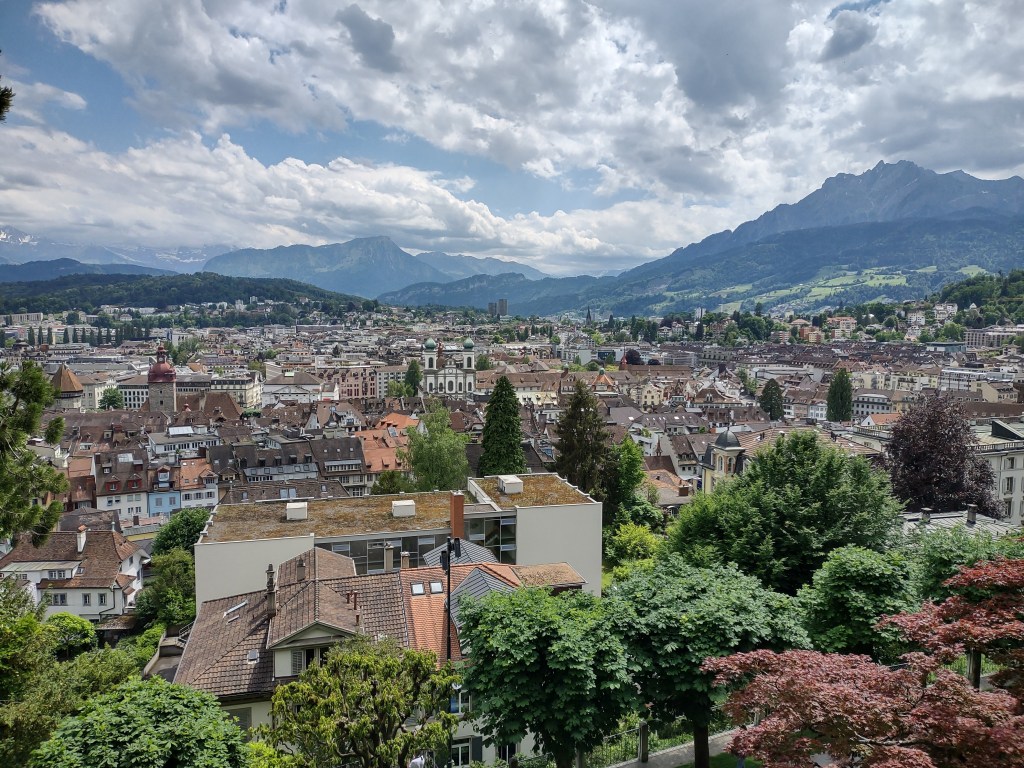
and take in the view.
Back down into town for a meal an a rest, and we’ll end the day with a nice evening view of picture-postcard-friendly, tranquil old Lucerne, beloved of tourists the world over.
And not a skeleton kicking around a human head in sight.
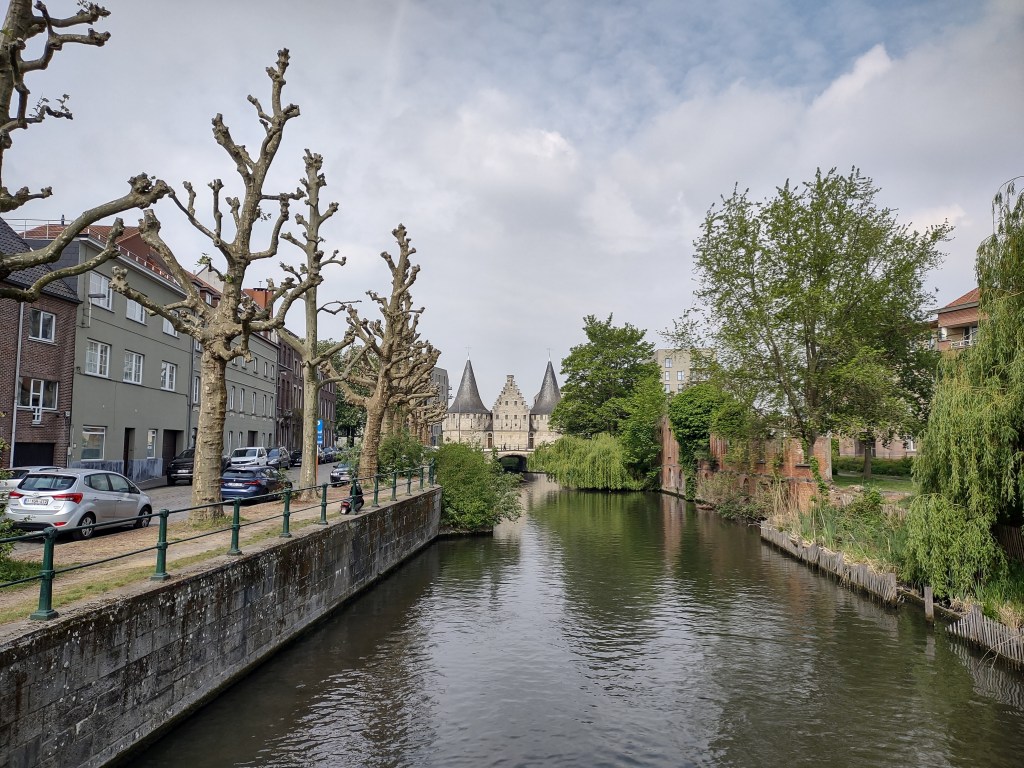
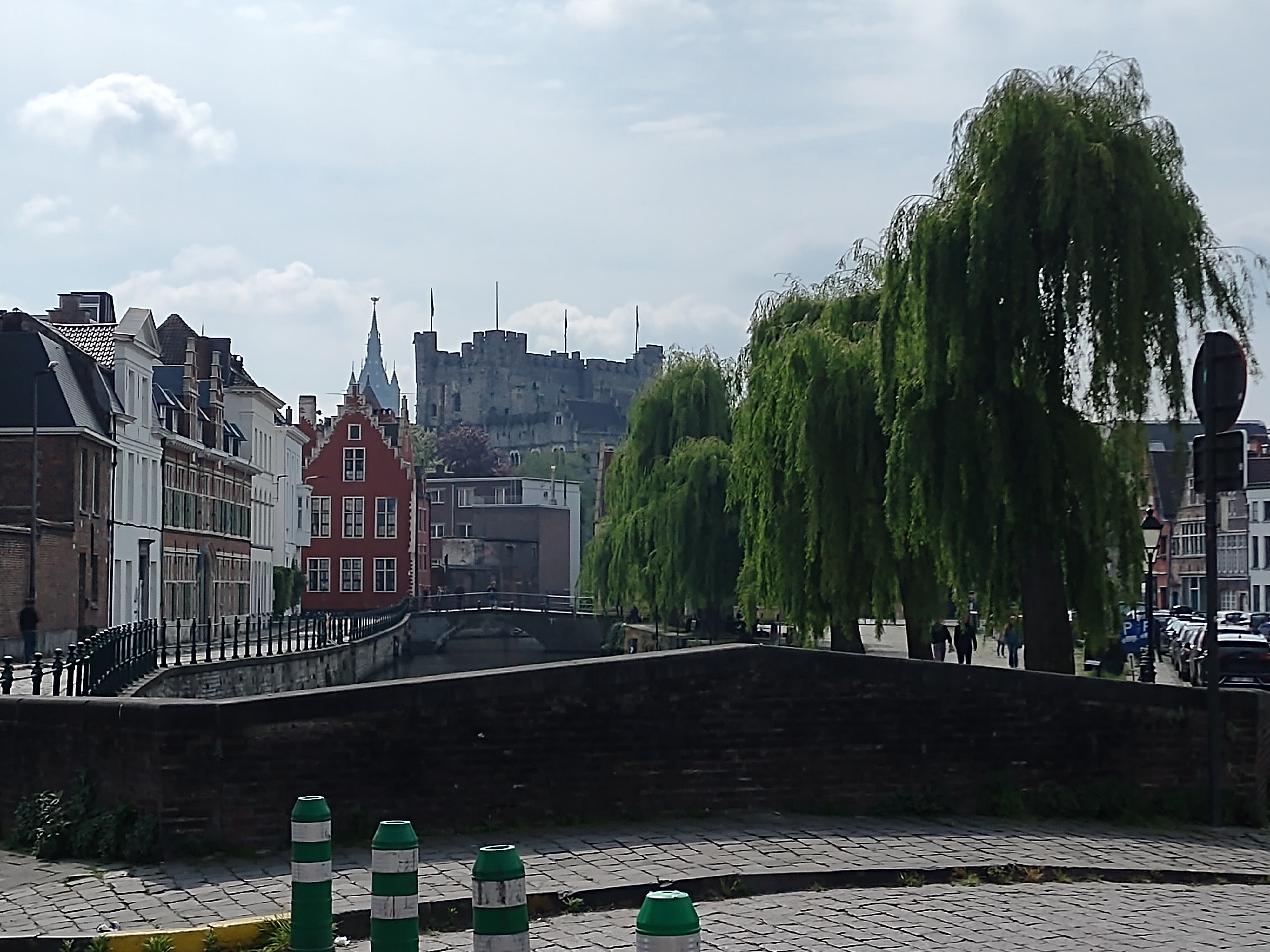
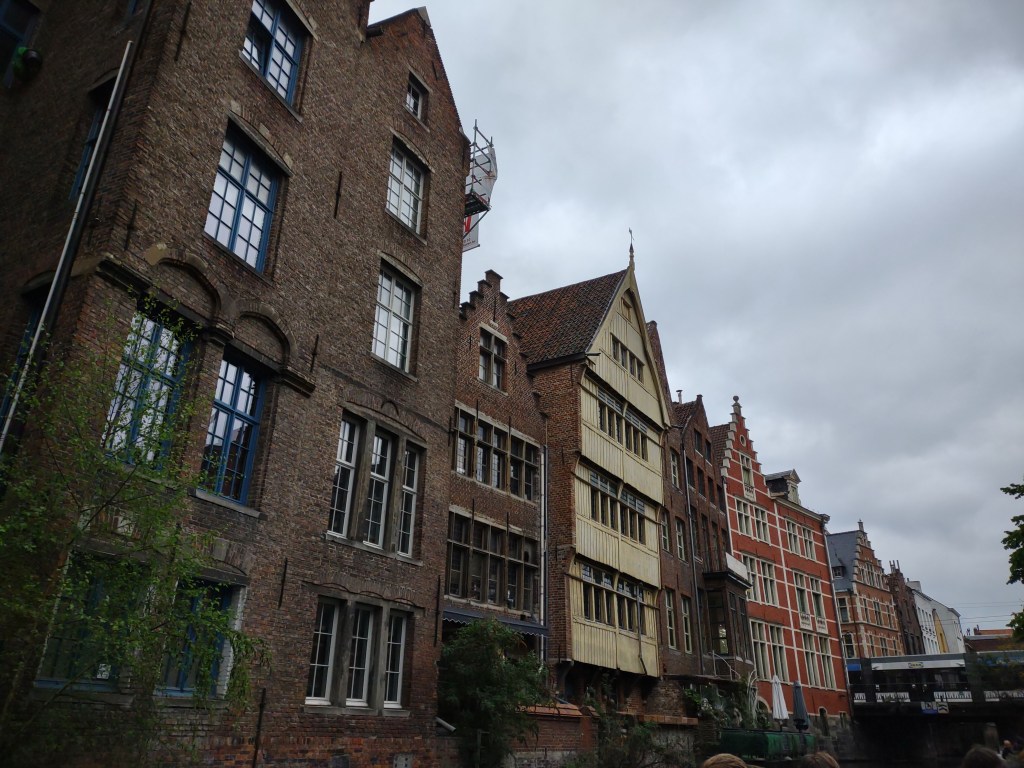
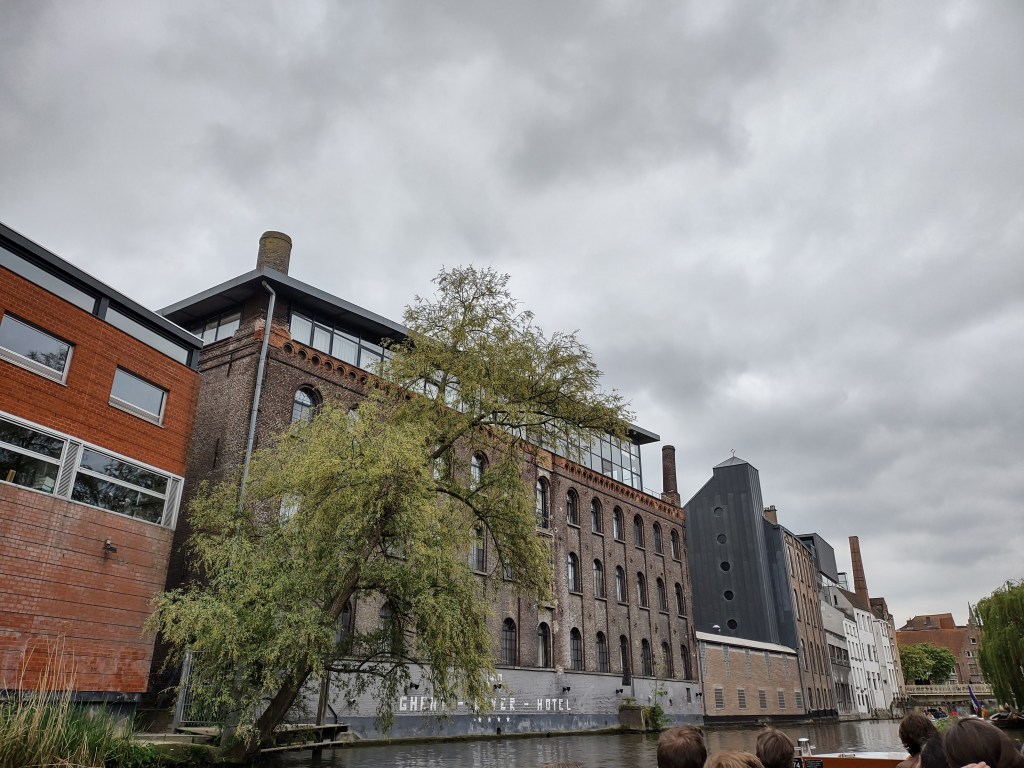
Some of the delights of Ghent are the quieter reaches of the various waterways that stream through the town. Take a guided boat-ride or go walking along the quayside and almost immediately you find yourself in an oasis of relative calm
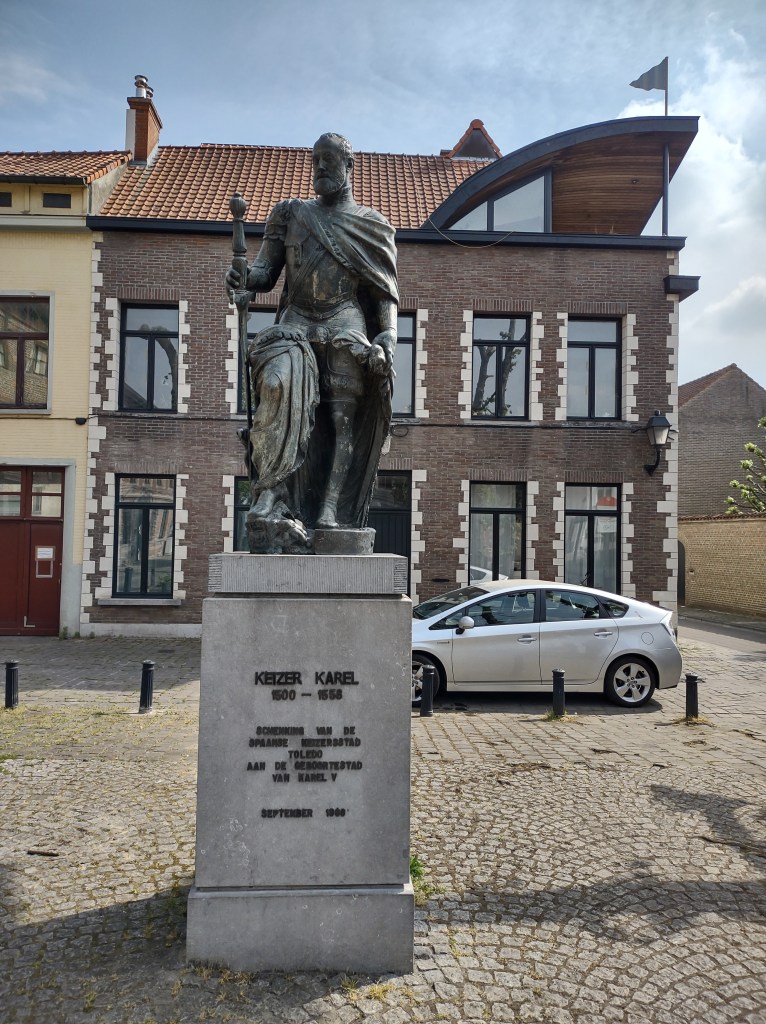
Just north of the main centre is a particularly peaceful courtyard, the Prinsenhof. Follow me, it’s not far, I’d like you to meet one of the locals.
Say hello to Charles V, or Charles Quint. He was born in the old Habsburg residence here in 1500 and would go onto inherit the Holy Roman Empire, and his home town with it
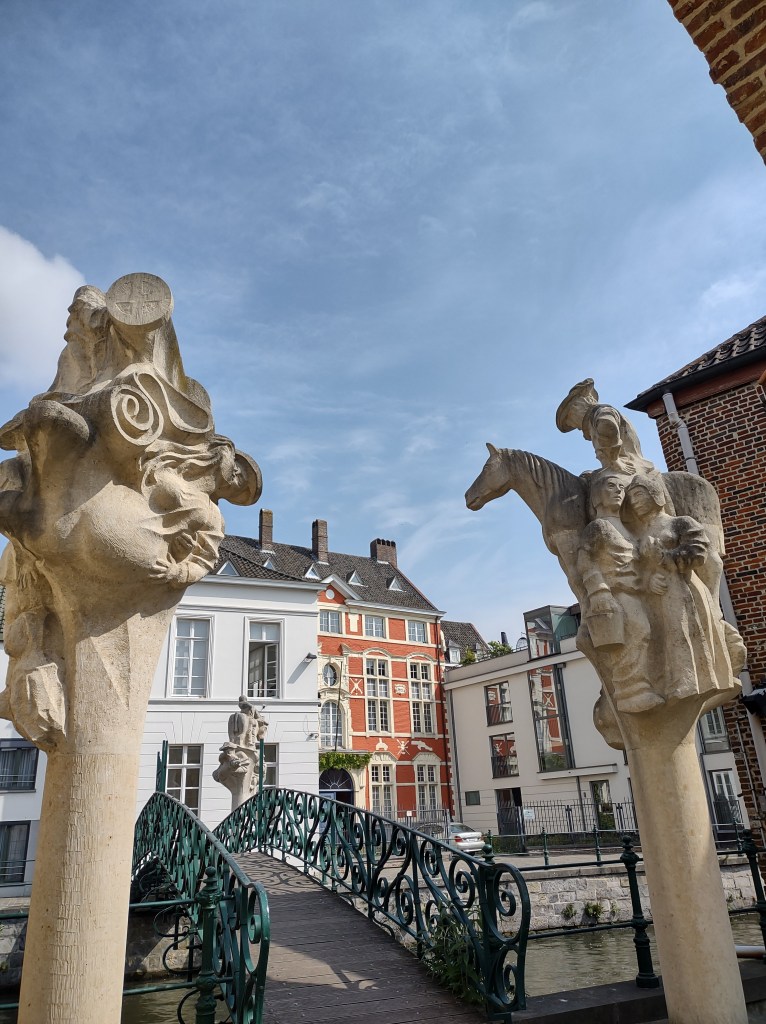
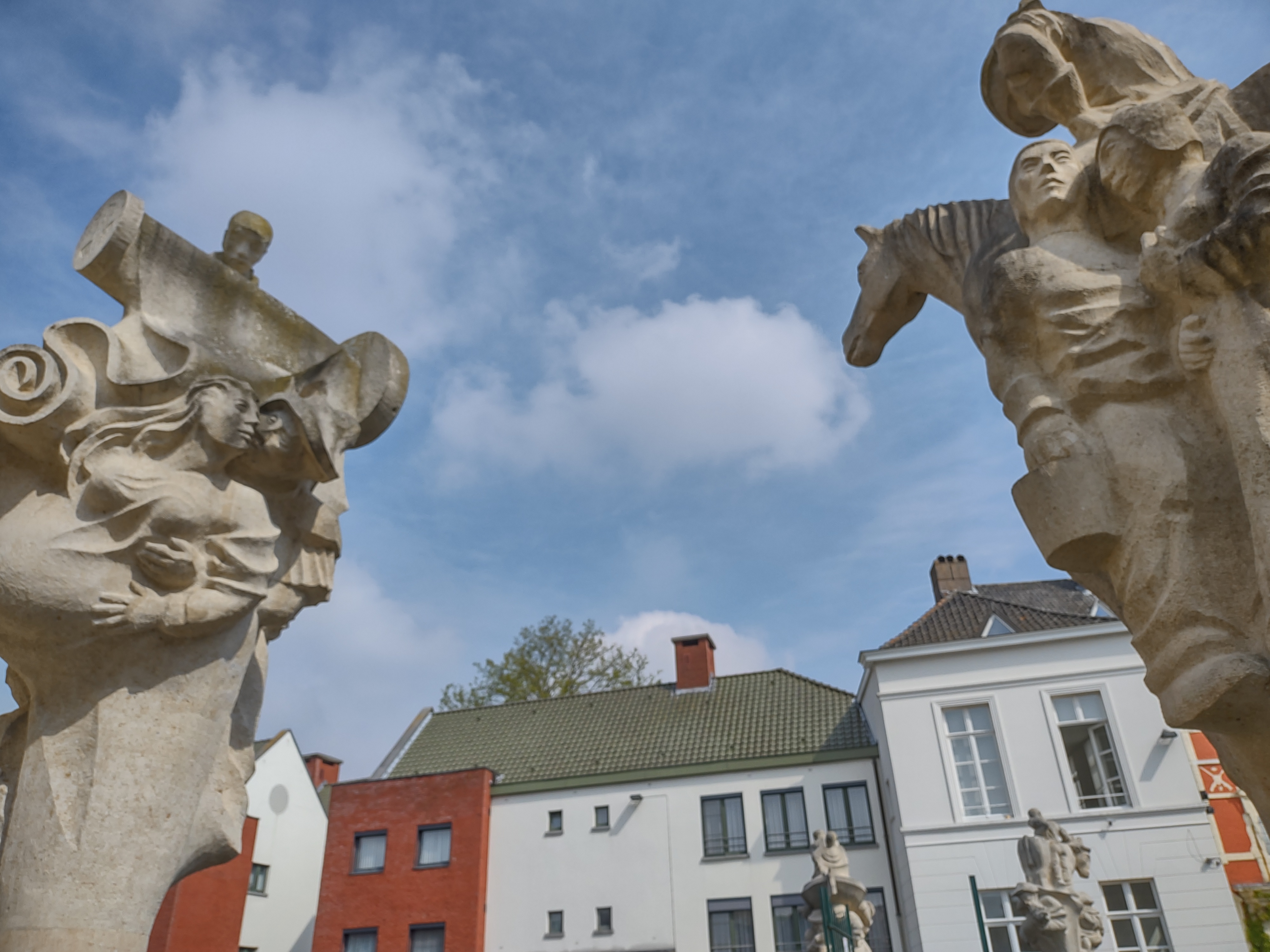
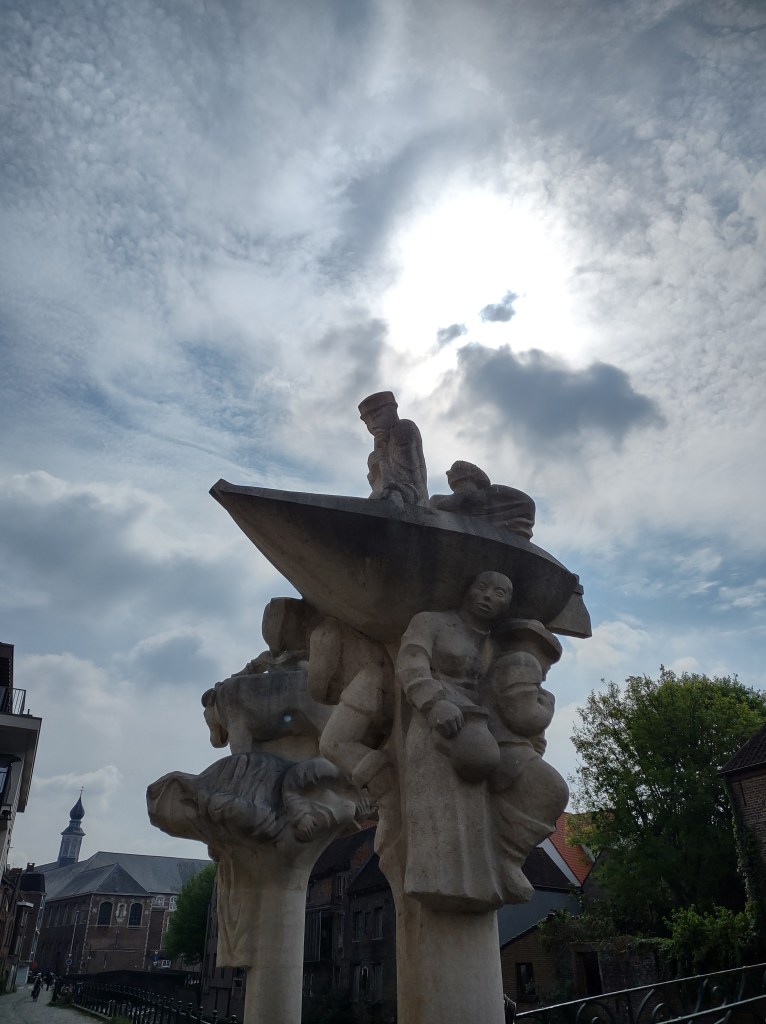
A little footbridge nearby is marked with four statues that celebrate Charles’ many contributions to the lives of his fellow citizens.
Which according to what they depict, seem to amount to… riding roughshod over the people, philandering, oppression…oh, and more philandering.
Looks like Ghent thinks that Charles was quite a Quint.
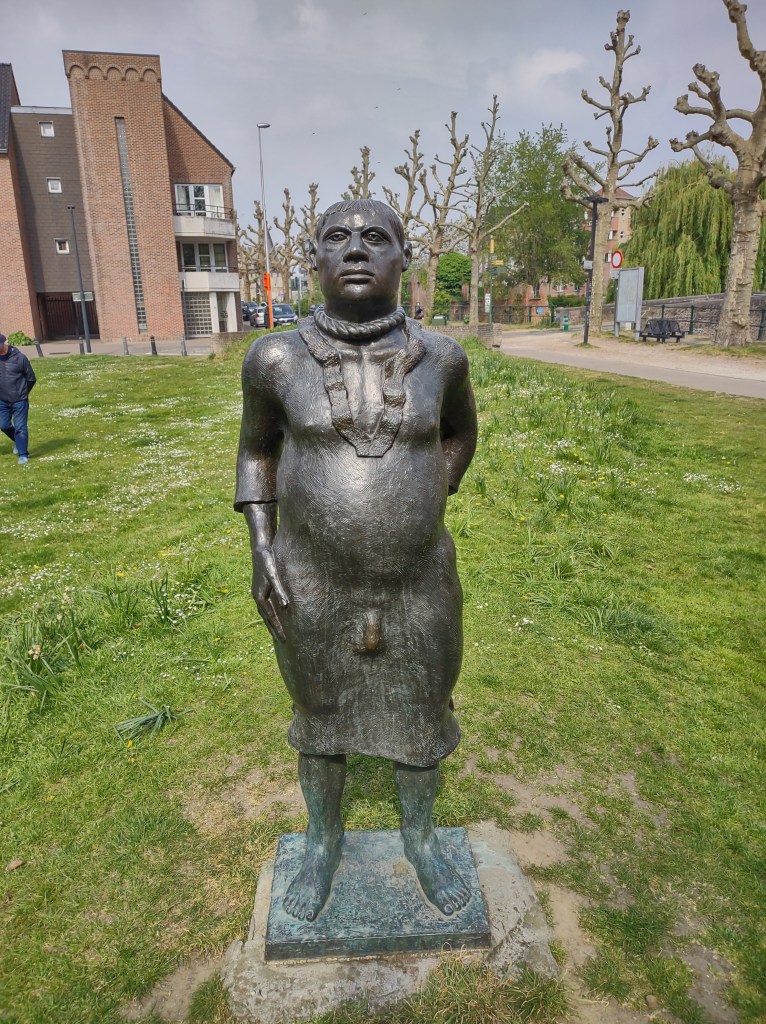
Any background to this? Ah hang on, another resident has stepped up to have a word with us.
It’s one of those burghers again. Why the noose?
Being in charge of a mighty empire Charles had a lot of mighty wars to fight. And wars cost money. In 1537 Ghent was asked to stump up some cash to support a campaign in Italy. They refused, claiming that previous ducal demands had left them in debt. The emperor was not happy, particularly when “indebted’ Ghent then managed to lay on a large city festival.
In 1539 Ghent rose in revolt against Charles, but it was put down within months. Charles had been made to feel a right Charlie by the whole thing, and it wasn’t happening again. Seventeen of the leaders of the revolt were simultaneously beheaded, apparently. Hundreds of other members of the city government, like our new friend here, were humiliatingly made to parade around the city with nooses around their necks to show that they obviously deserved to be hanged. To this day, the people of Ghent are known as “stropdragers‘, or “noose-draggers”, there is an annual procession that commemorates the parade, and the noose has become one of the symbols of the city.
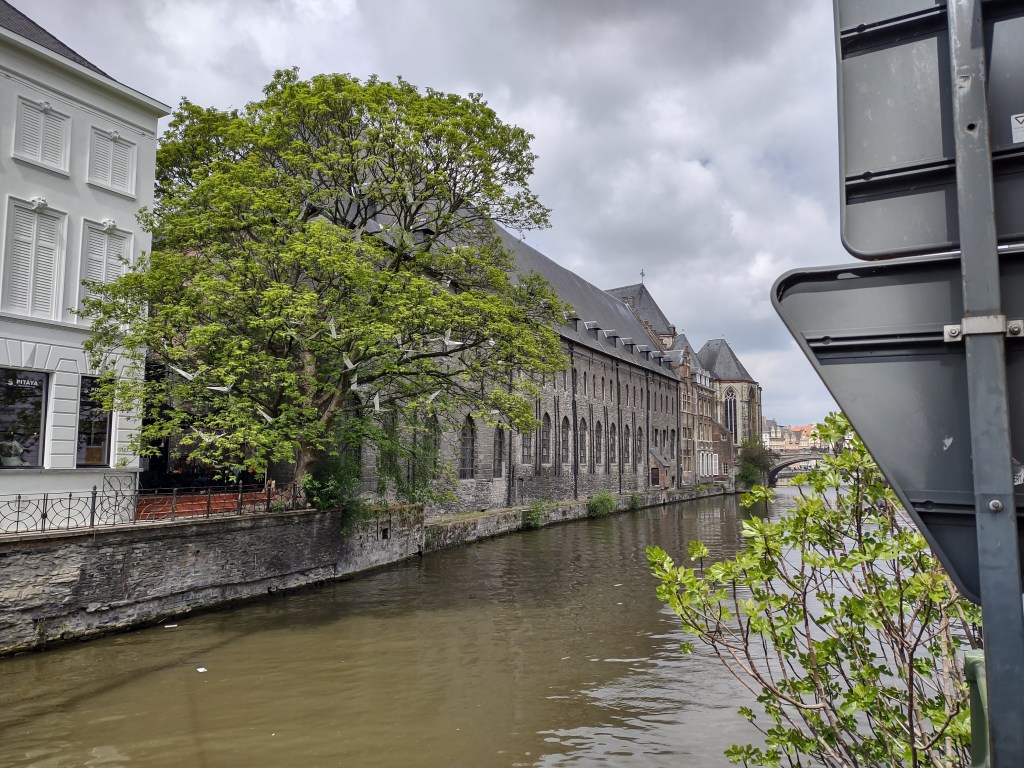
Charles had stamped things down for now, but chaos was around the corner. The grey building is the old Dominican monastery. There’s a couple of old pamphlets or something floating in the river. You look at them and think “someone’s been chucking litter into the river! Heavens, Ghent needs to do something and clean their waterways up y’know”.
Had you been at this spot in 1556, you’d have looked down and thought “someone’s been chucking books into the river – hang on, that’s every book in the monastery library! Heavens…well heaven is reserved for the Calvinist elect and I bet the Calvinists are behind it. Ghent needs to do something otherwise this widespread Iconoclastic Fury will only lead to further religious war and further antagonise the rebellion of the Dutch Provinces against the Catholic Spanish Habsburgs, y’know”. You descend to the river bank and see if you could walk across it by stepping on the books, as the legend said.
The subsequent Eighty Years War ended up with the northern Dutch Provinces breaking away from Spanish rule, but Flanders, and Ghent, didn’t make it out. That was the end of Ghent as a major European city, but this enterprising place wasn’t going to go away quietly.
Back to the river.
….quietly
As the Industrial Revolution rolled on in 18th-century England, a Ghent merchant, ahem, acquired the design of one of the new textile units and returned home, cough, withthem. That enabled Ghent to be one of the first places on the continent to industrialise and the two preceding photos show the now-gentrified factory district. And so Ghent prospered again, well, maybe not the poor sods in the mills but you know what I mean. In 1816, surprisingly late for a city of its stature, it established a university. Interestingly they took over the old monastery we saw before. But not the old books. They would have been a bit soggy.
And so onto that World’s Fair I mentioned before.
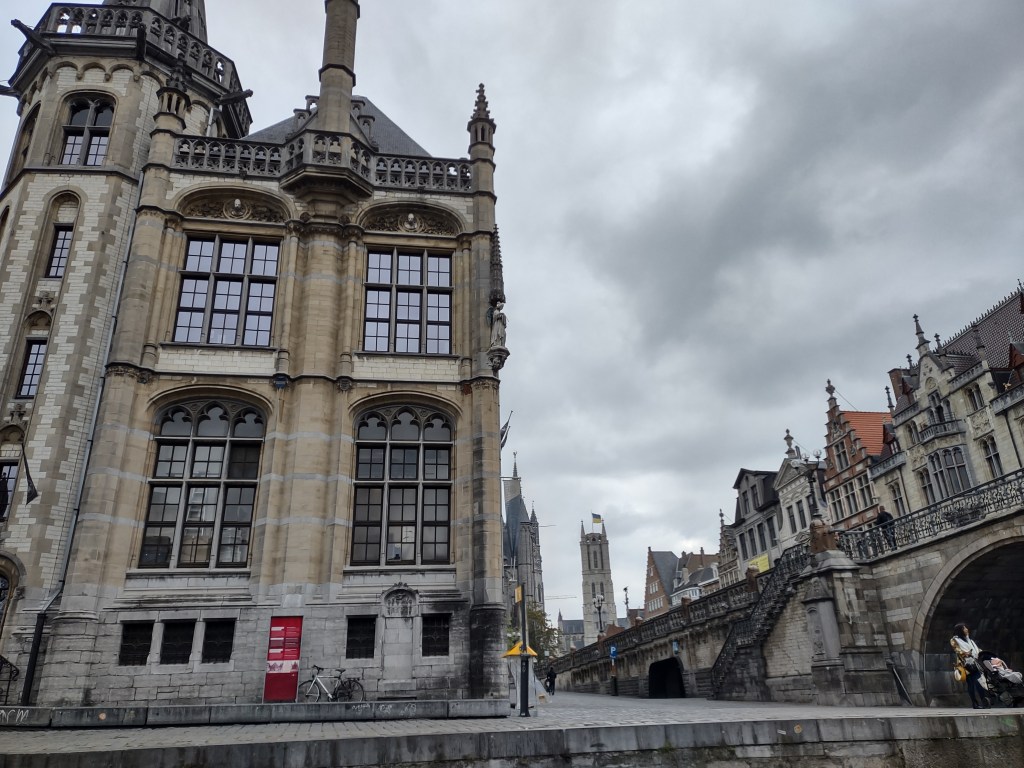
Ahhh, lovely old Ghent again. Just not so much of the “old”. The bridge was built for the World’s Fair and modelled on the Pont Neuf in Paris. The thing to the left? World’s Fair as well, a post office, built to resemble the Houses of Parliament in Westminster. Even has its own Big Ben. Looks nothing like the original.
But even with the fakery, and all the other stuff I haven’t covered, Ghent is a constant delight, a great place for a couple days wandering and exploring, a city with very friendly people. Lots of tourists around today, maybe “Europe”s best kept secret” is out.






 orwellianTwo