Cathedrals

Liverpool – oppressed, defiant, emotional, wild-hearted Liverpool – has a number of spectacular places of worship that seem to capture the passion and ambition of the city. Let’s visit the four most significant ones.

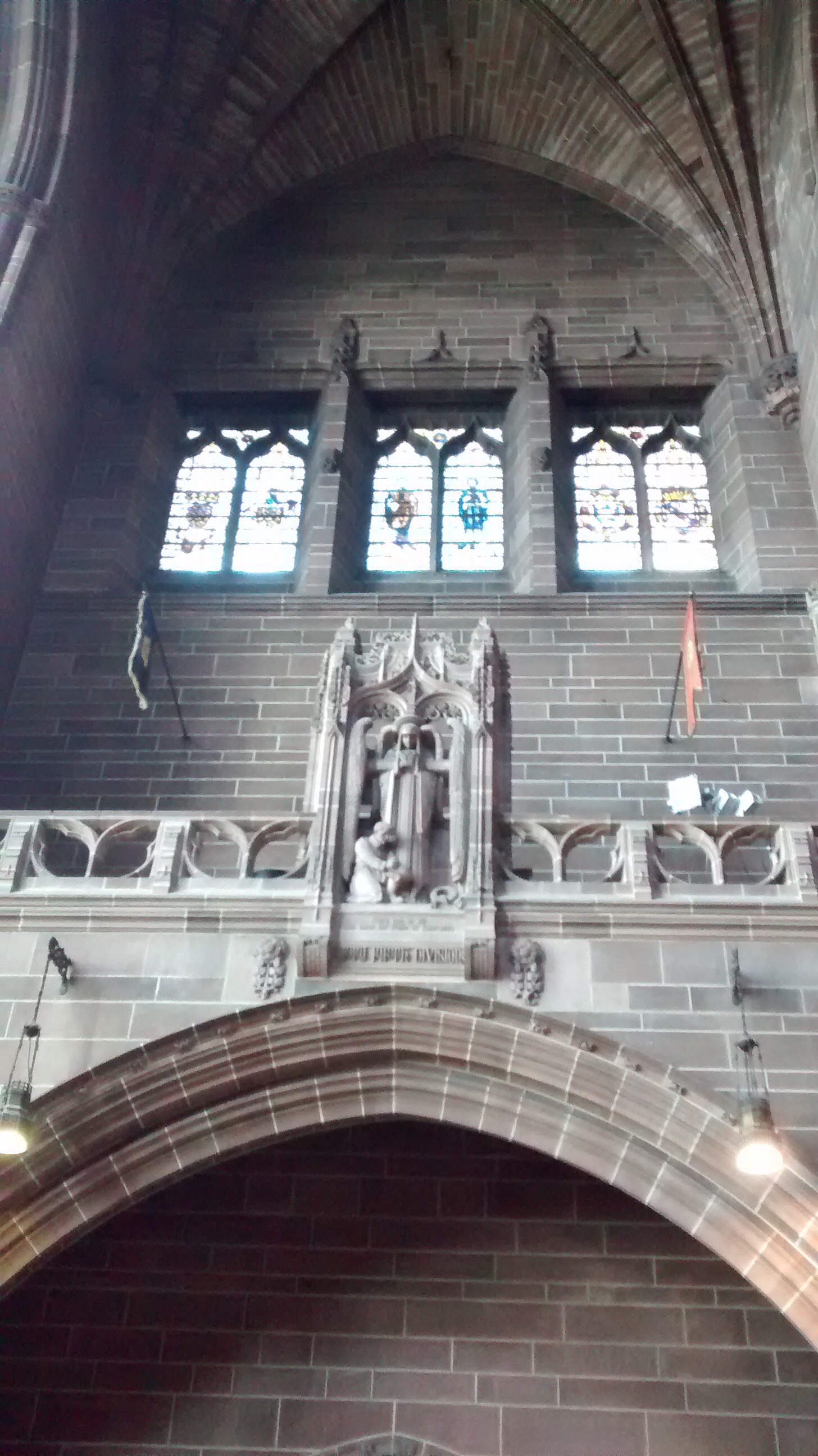
As the city expanded in the 19th century, the many parish churches around the town just weren’t sufficient to host the growing congregations. The Church of England thought their main church “ugly and hideous”. So they were first up and set about requesting submissions for a new cathedral. It would be only the third new CofE cathedral built after the Reformation (St Paul’s and our old friend Truro being the others). And it was Liverpool so it had to be enormous.

The winner was a young architect called Giles Gilbert Scott with his Gothic design, and the foundation stone of Liverpool’s Anglican Cathedral was laid in 1904. Scott was very inexperienced so it’s a mystery how this scion of a famous line of architects, whose famous architect dad was an in-law of one of the judges, had got the commission. Scott then changed his design in 1910 and it all had to be resubmitted for approval. Then there was a war. Then they started again, aiming to complete by 1940. Then there was another war. Then they had to fix the bomb damage. Then Scott died in 1960 (having also come up with the red telephone box) and his son took over the firm. Eventually it was all done and officially opened in 1978.

But if the customer contract stipulated “has to be absolutely ginormous and you have to be able to see it from everywhere”, well, tick in the box. At 189 metres from west to east, it’s the longest cathedral in the world. By volume it’s the fifth biggest. They even put it on a hill just in case you missed it the first time. Nice of them.
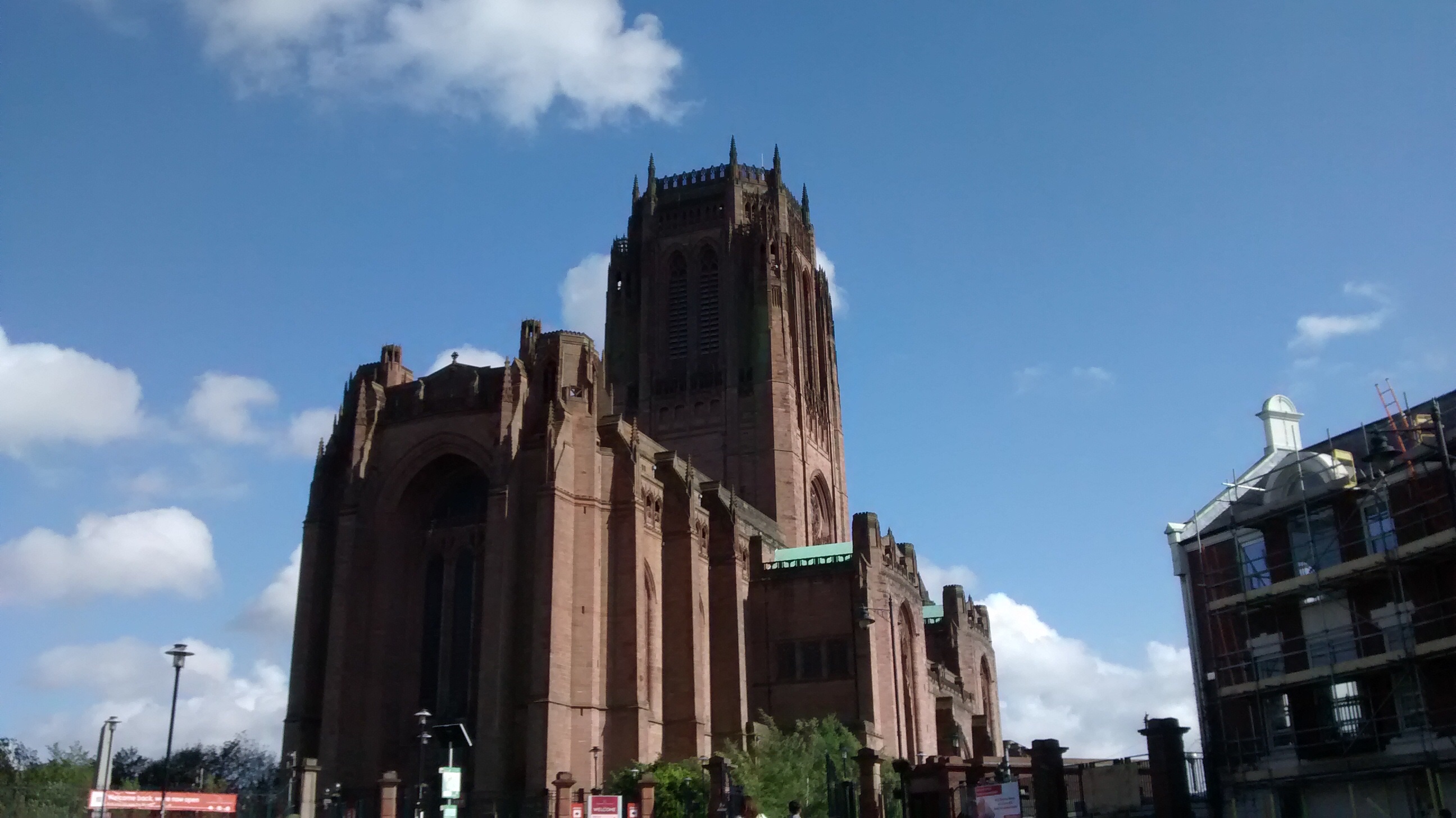
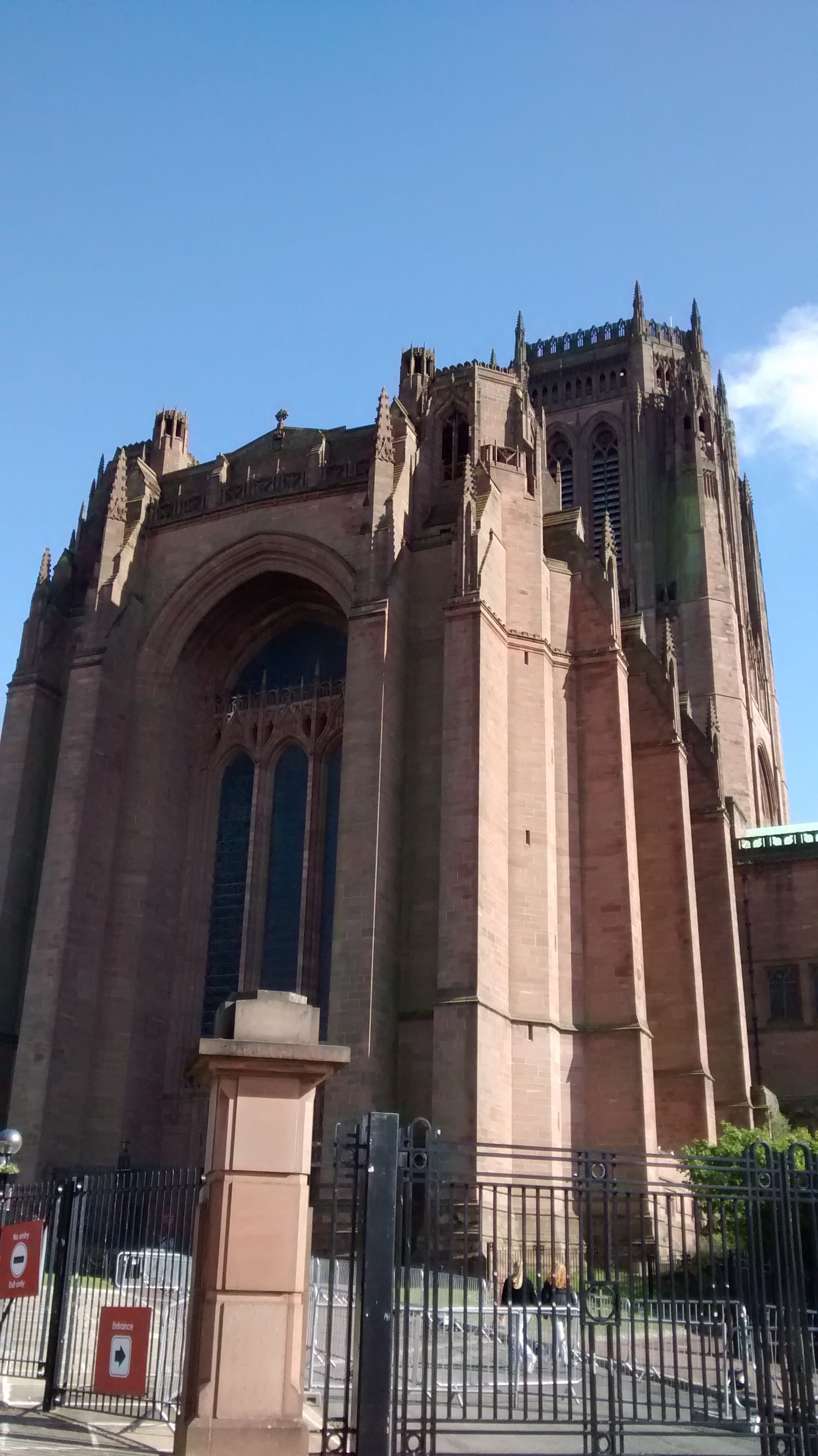
Don’t have nightmares.
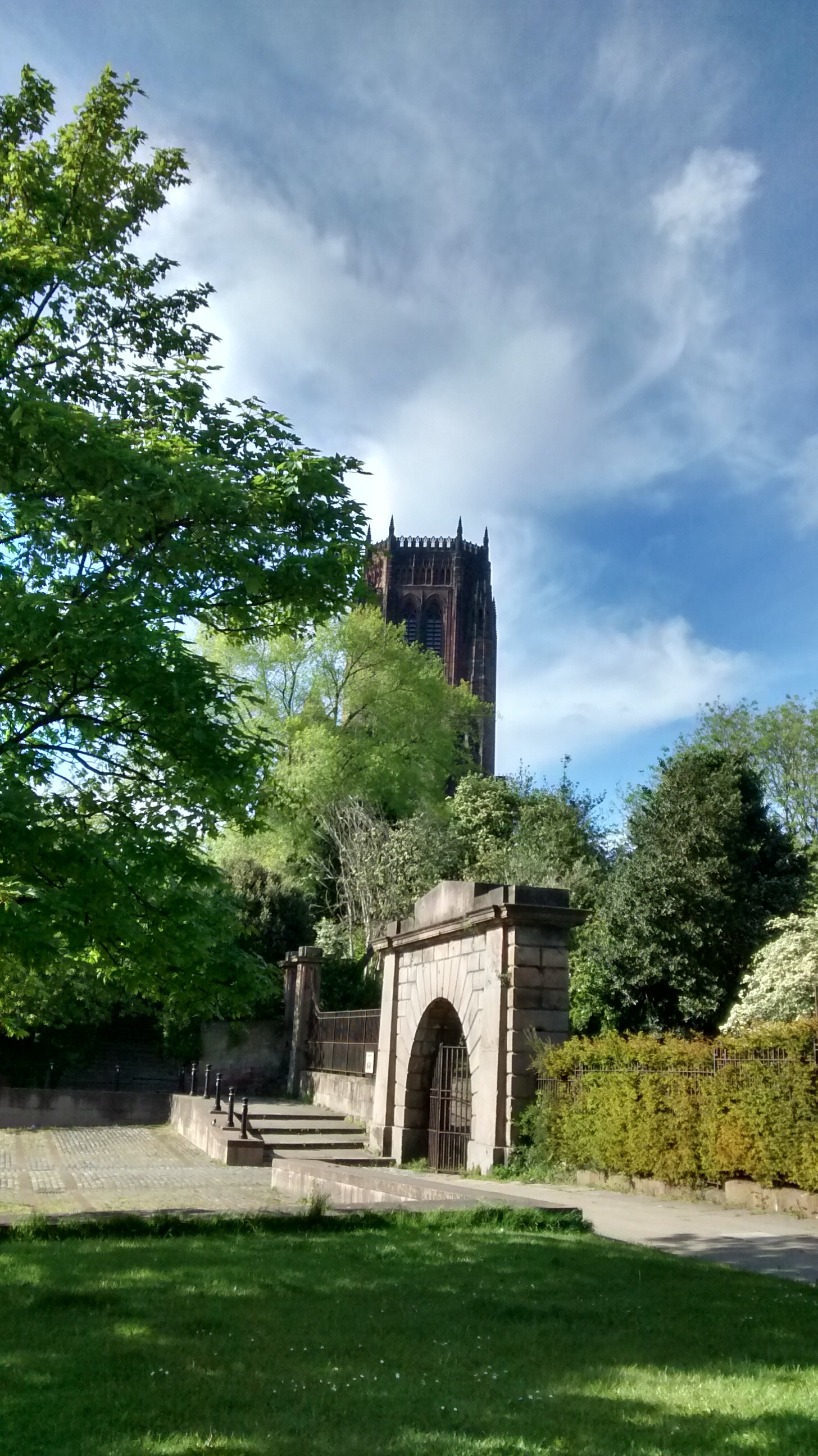
I managed to get inside a couple of days later. Fair to say, it hadn’t shrunk.
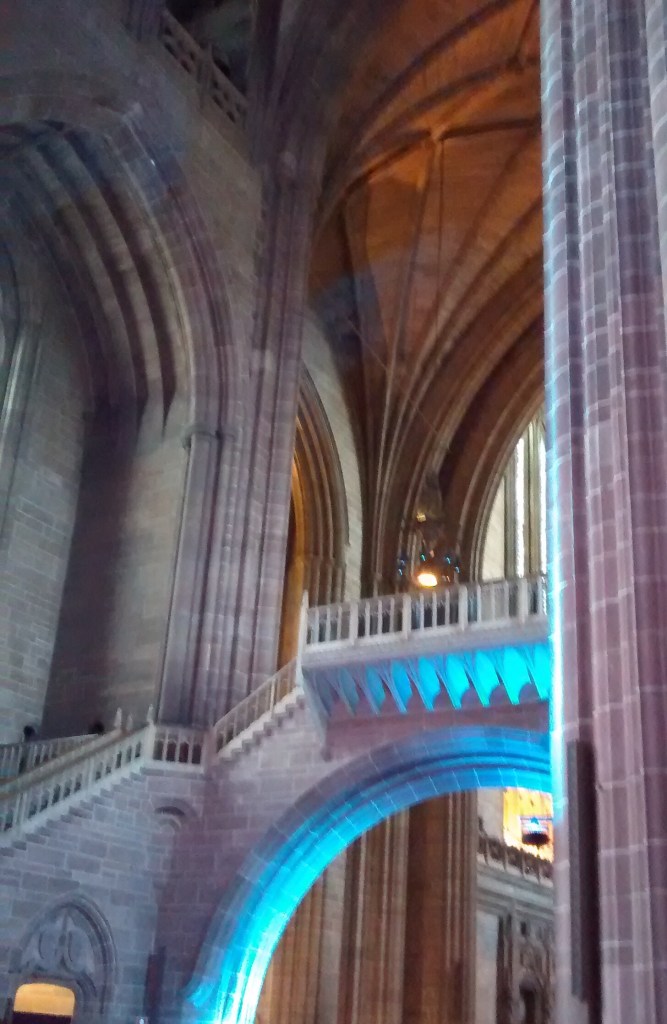
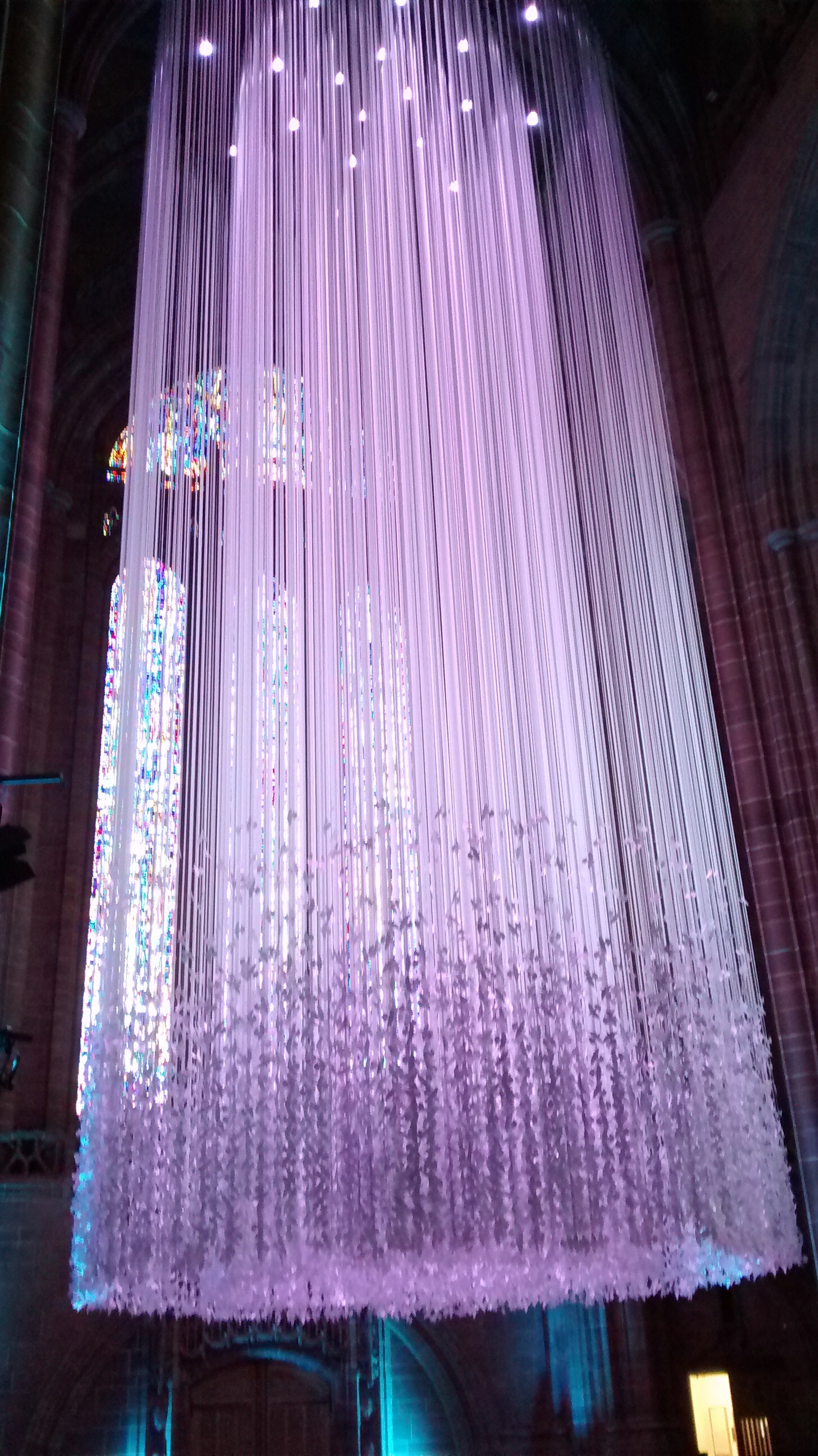
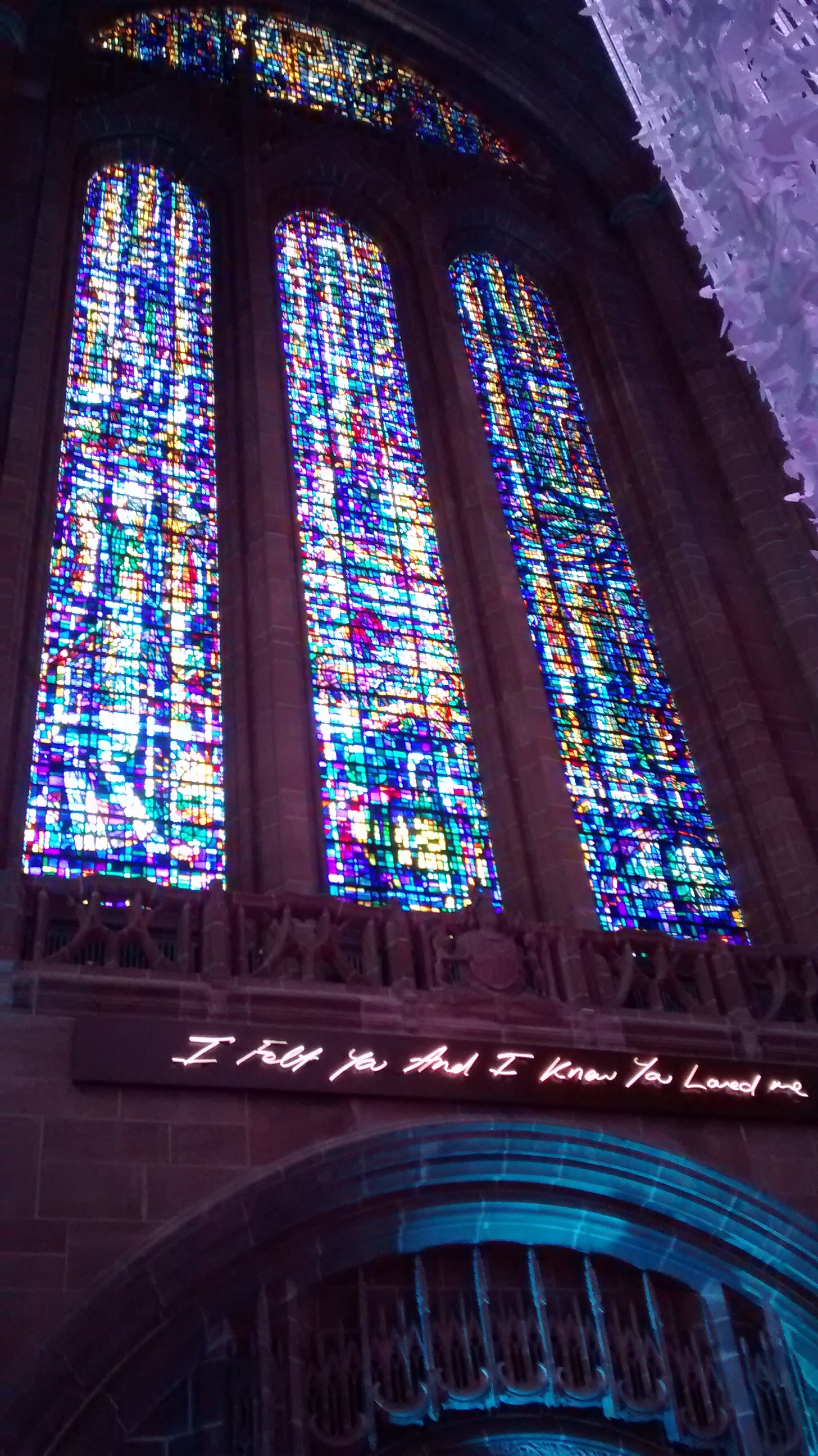
Peace Doves, a mass-participation art installation created by Peter Walker, containing 18000 paper doves each with a message from a member of the public.
The sign below the west window was created by Tracey Emin when Liverpool was European City of Culture in 2008. It was meant to be there for a month. Fortunately, they left it.

So that was the Anglicans sorted. What about the Catholics? Hundreds of thousands of Irish migrants poured into the city in the 1800s, and the Catholics amongst them needed their own new cathedral. And it had to be Liverpool-big too. Step forward the great Sir Edwin Lutyens and his plan to build the second-largest church in the world, with the biggest dome. And it was also going to be on a hill, at the other end of Hope Street to the Anglican Cathedral that it was meant to rival.

Work on the Metropolitan Cathedral started in 1933. Then there was a war. Then Lutyens died in 1944, surrounded by his drawings. When work restarted they only managed to finish the huge crypt before they realised they were running out of money. So they wiped the slate clean. The new architect, Gibberd, came up with something a little more space-age, a main circular space under a conical roof with Thunderbird 6 sticking out of it.
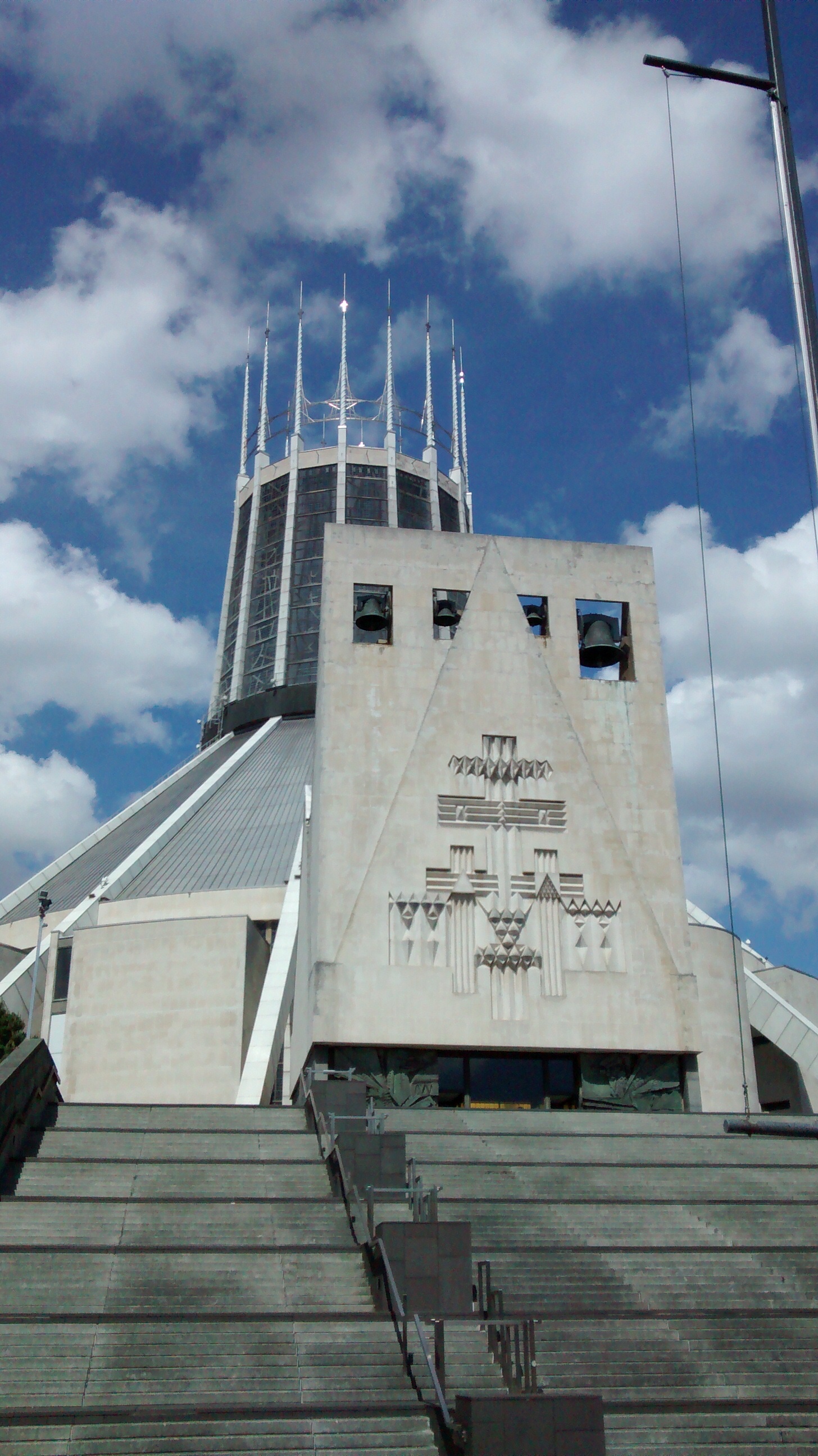
The Metropolitan Cathedral of Christ the King. Also known as “Paddy’s Wigwam” or “The Pope’s Launching Pad”. Scouse wit. Also known as “The Funnel”. Scouse practicality. Started in 1962 and finished five years later, eleven years before they finished off down the road. But act in haste…the church ended up suing Gibberd because bits of it leaked.

The four bells on that concrete screen at the front are known as Matthew, Mark, Luke and John. To the clergy, that is. Guess who the locals name them after. Hint: this is Liverpool.

Two great Liverpool cathedrals done, two to go. I went to the other two places earlier in the day, catching the bus from the city centre to the idyllic Stanley Park.

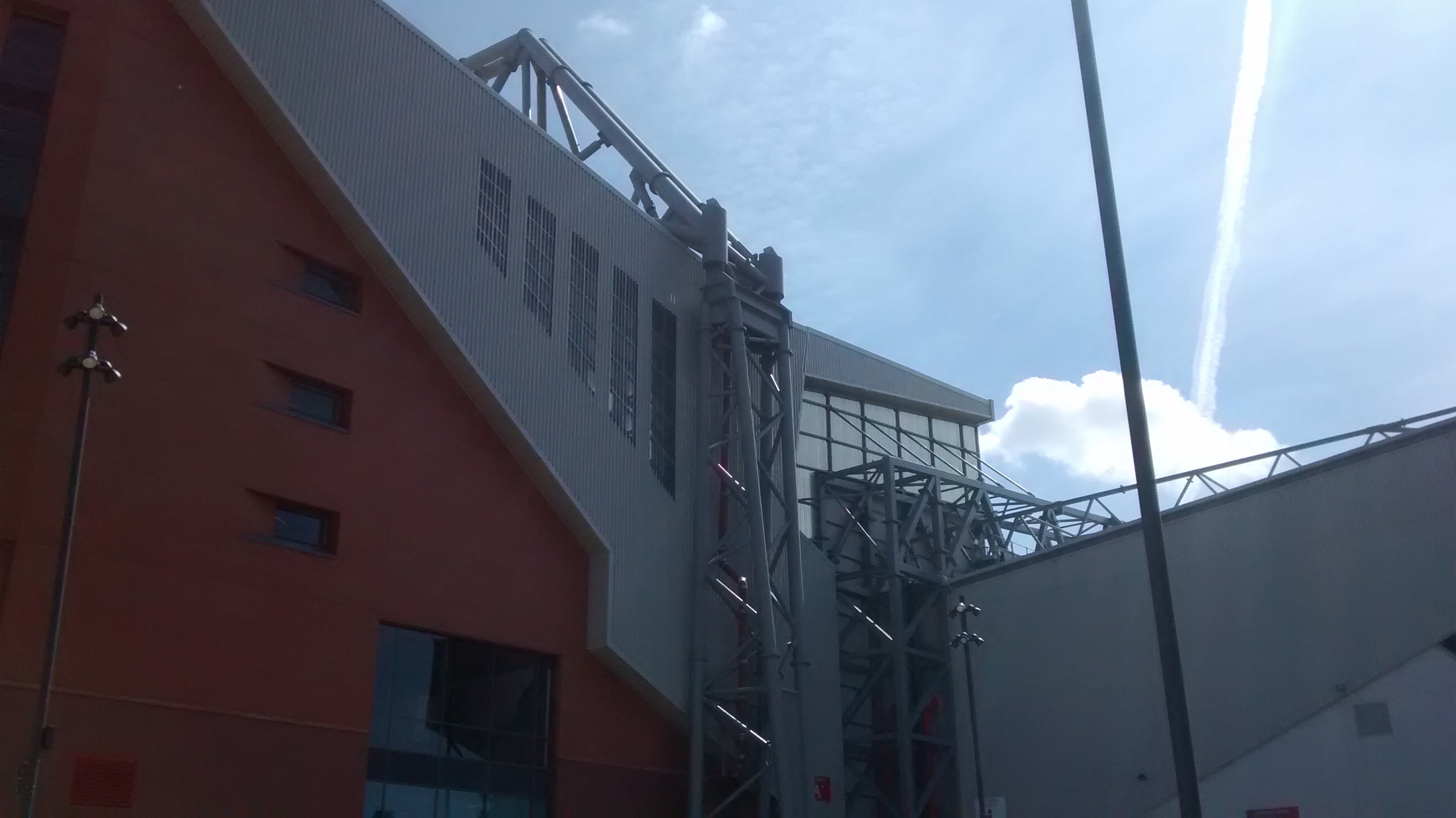
Another ginormous place of worship arising above the rather dilapidated housing all around…
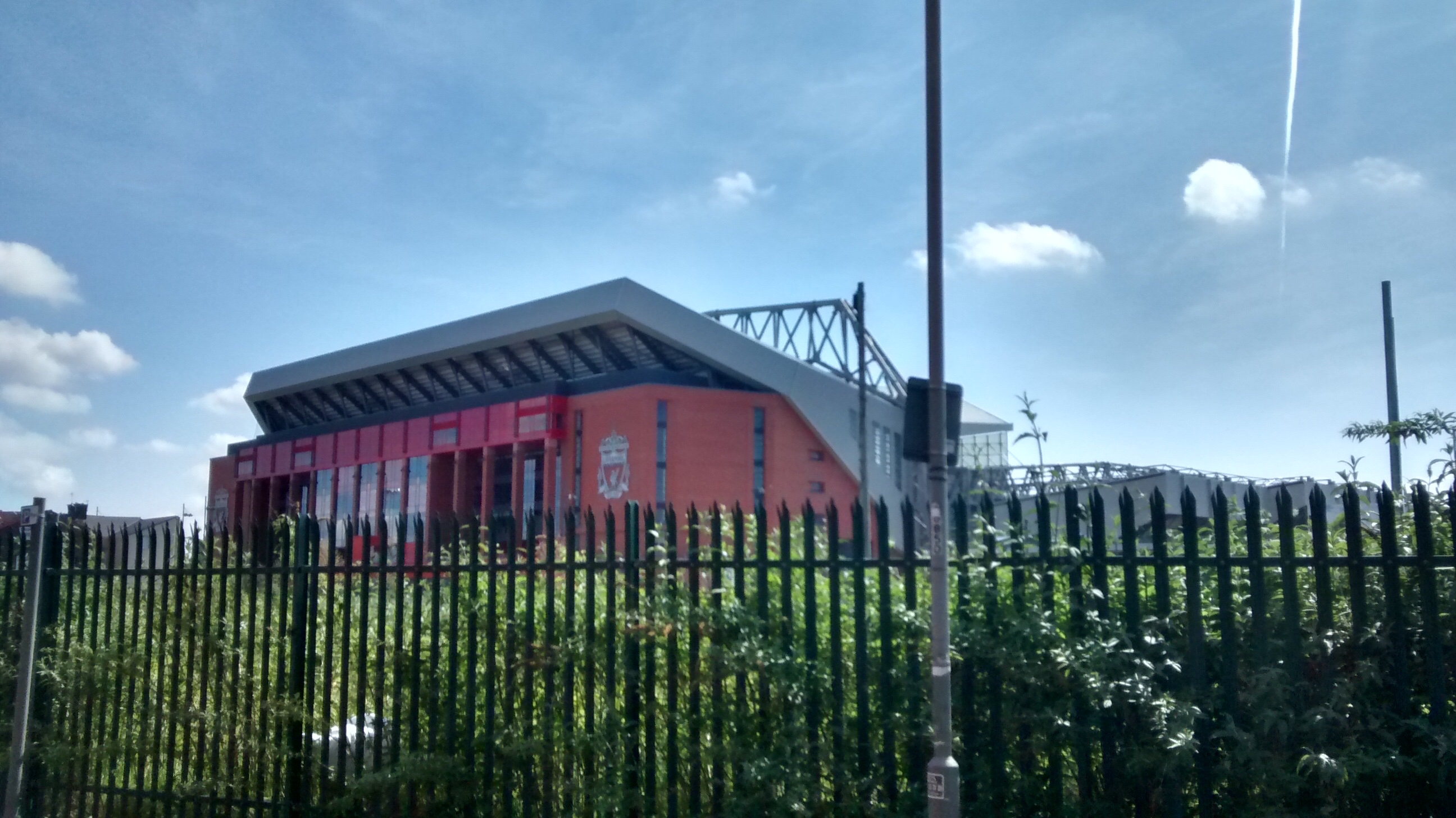
They were formed in 1878 from a local church team, and moved into this new stadium in Anfield in 1884, winning their first League title in 1891.
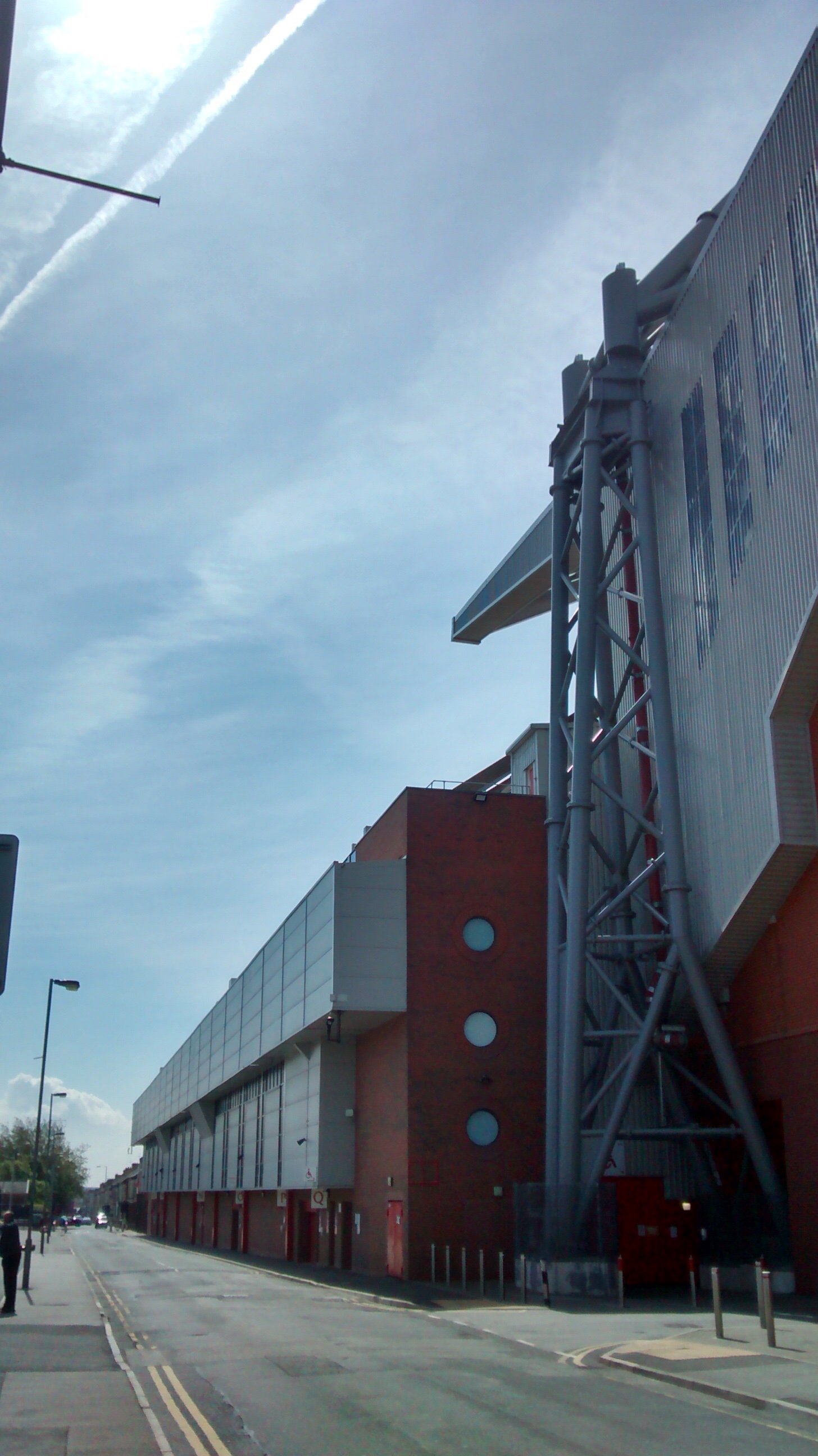
They, of course, were and still are, Everton.

The ground was owned by a man called John Houlding. Everton fell into a messy legal and political dispute with him, and in 1892 Houlding had a right hissy fit and created his own team, Liverpool FC. Everton responded by taking their ball away – literally, striding the ten minutes walk across the park to a new site, on Goodison Road.

From here…
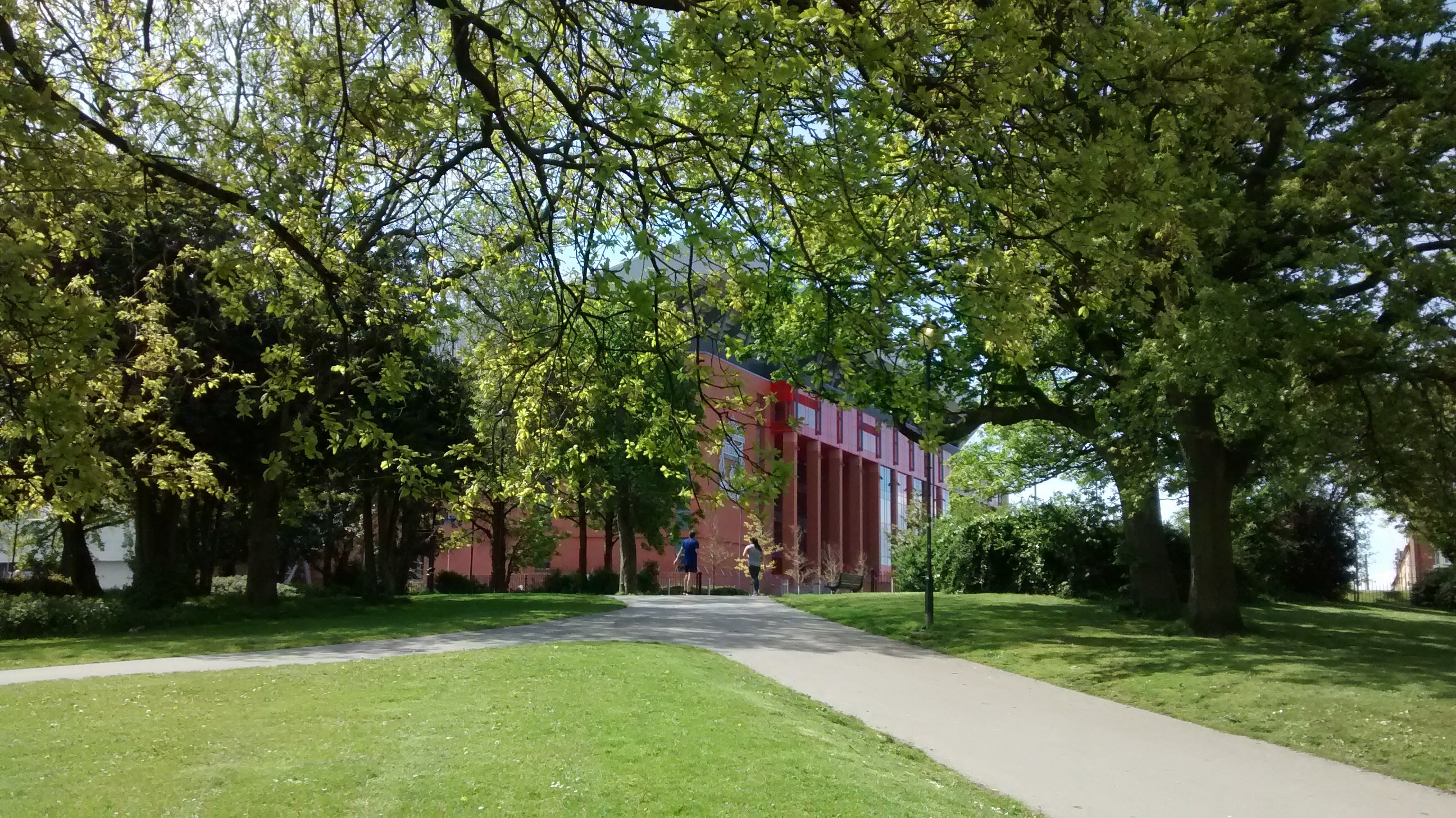
…to down there…
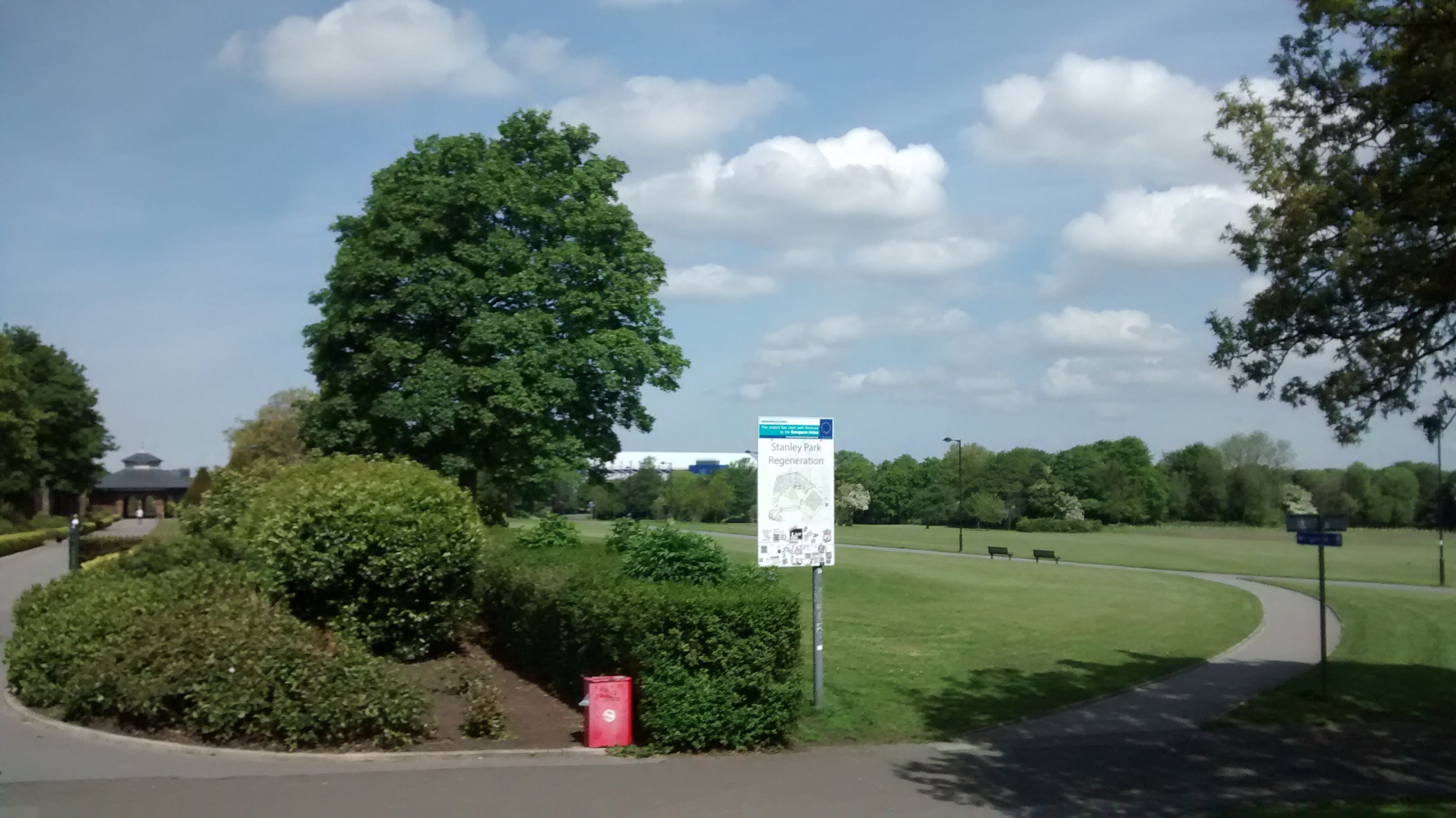
I’ve been following football now for decades and I feel I know so much about Liverpool and Everton, their history, their great players and the great matches they’ve played, the ups, the downs, the tragedies, the controversies – and yet I had no idea how tranquil Stanley Park could feel on a sunny day, as if everything that surrounds these teams – and football – didn’t exist at all.

Once you get down to Goodison, football truly reasserts itself.
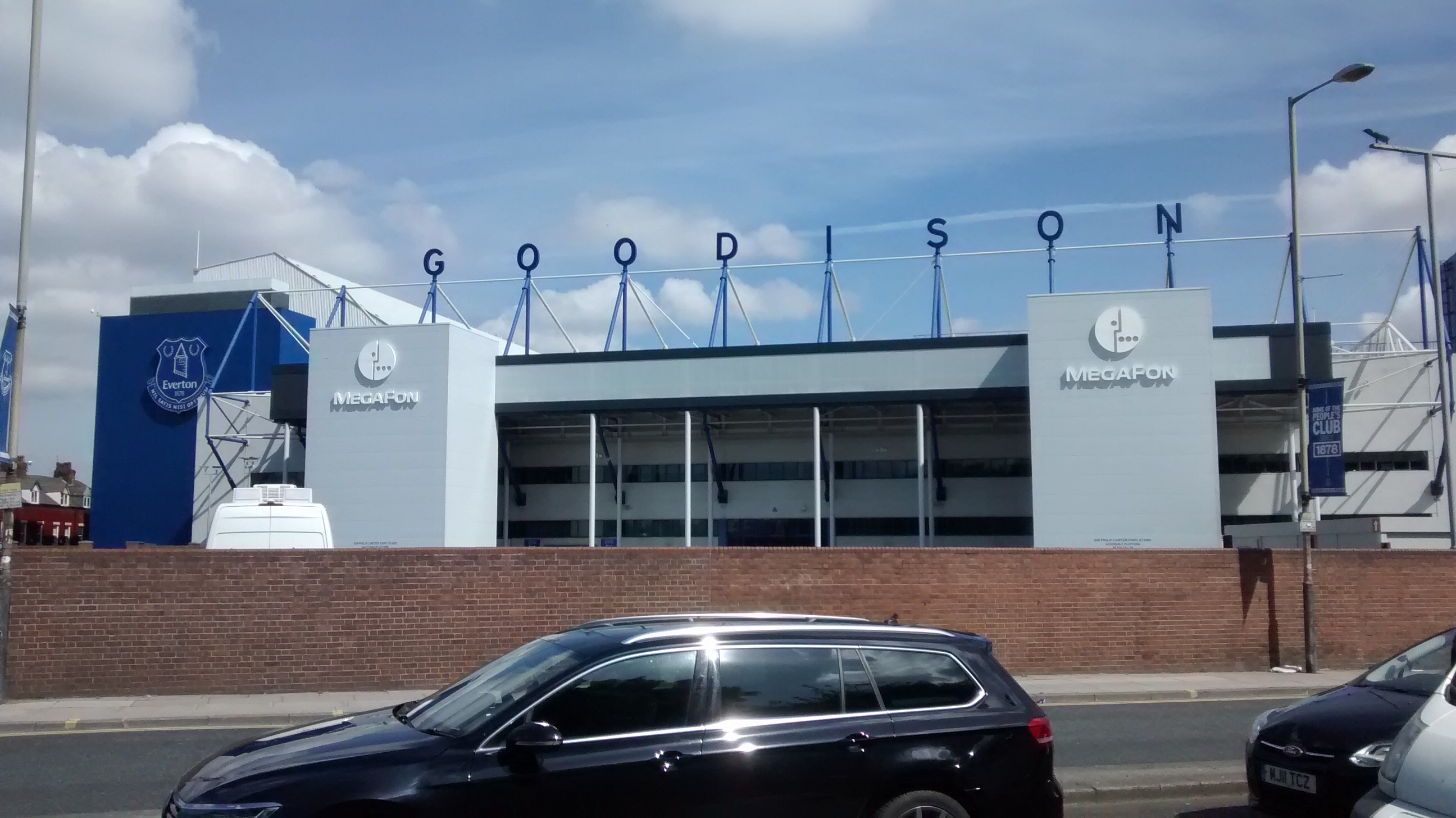
Whereas Anfield sits in its own extensive grounds, Goodison feels more homely, closer to the street, almost like a large car dealership or industrial park.
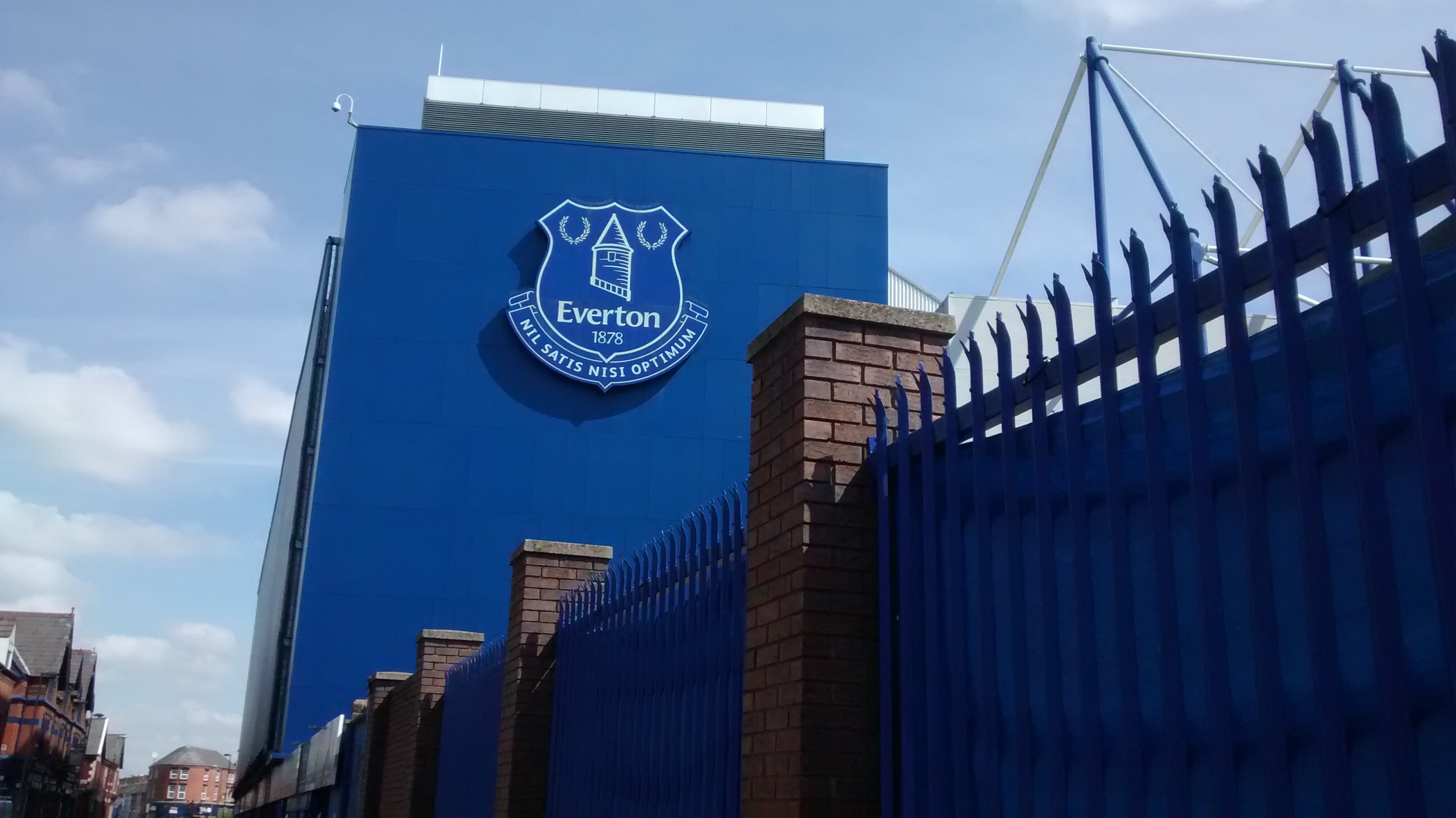
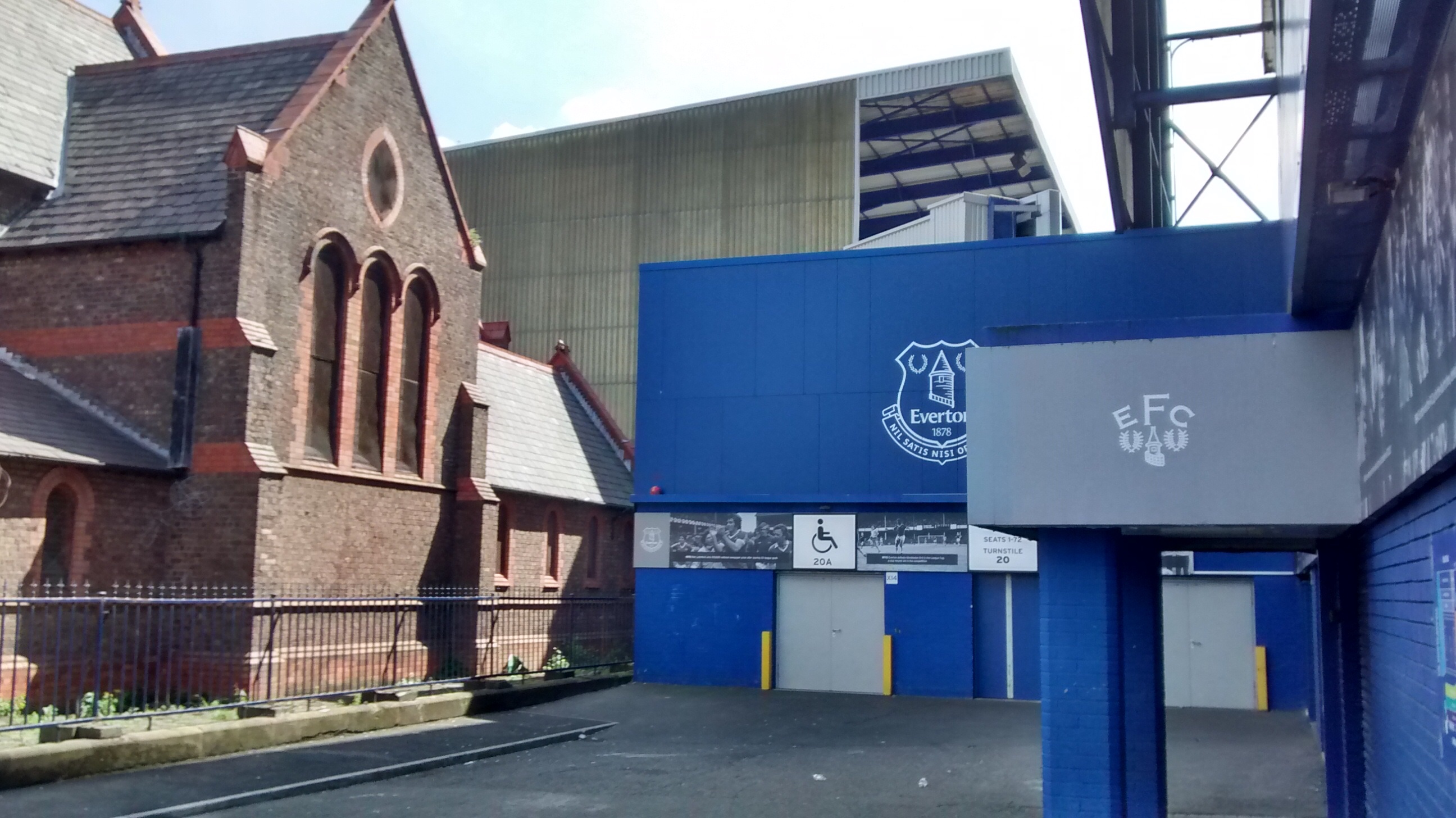
And that’s a problem. Everton need to grow that stadium to be competitive with the truly big boys, and there’s no room here. So in 2024 they’ll be moving to a new stadium by the docks.

It’ll be sad to lose one of the great historic British football grounds, but it’ll also be sad to break the ties between Liverpool, Everton, and the park that divides them but also binds them.
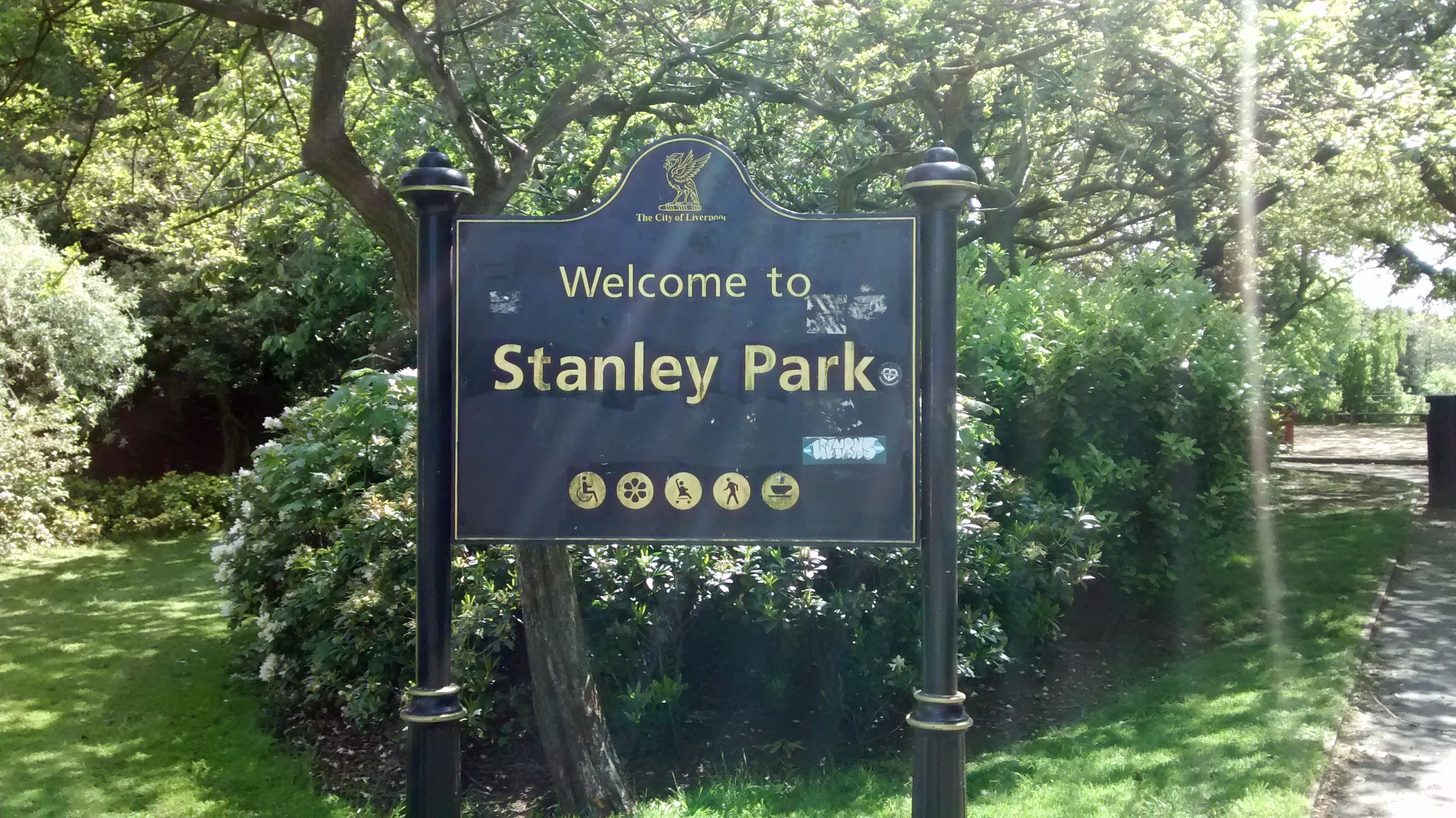
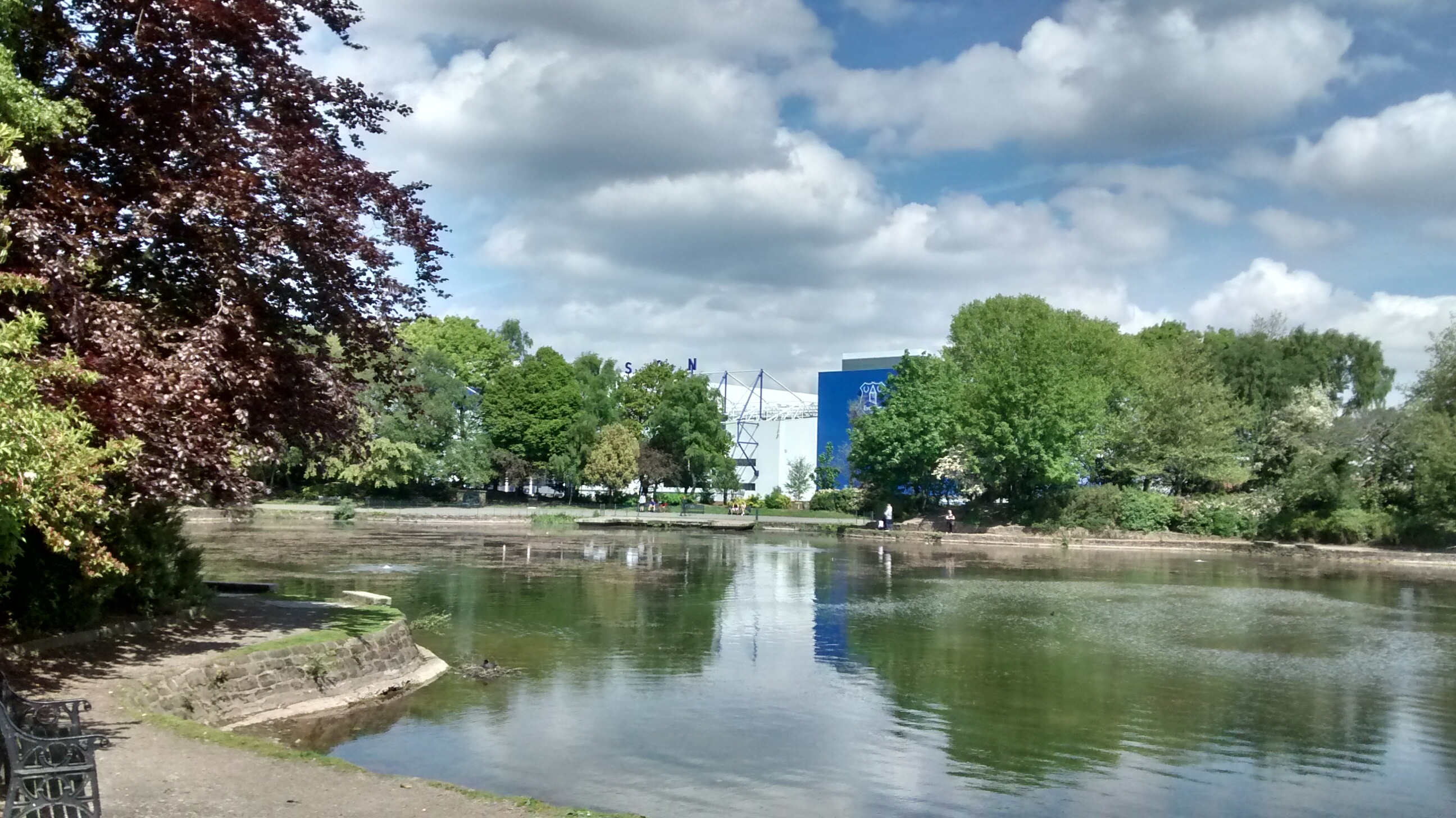
And we’ll never get to see this view on Match of the Day…
A day in the history of…

Unless you were someone peaceably living your life somewhere in West Africa when you were kidnapped and led in chains to the stinking hold of a slaver, to be transported (if you survived) to a life of back-breaking servitude in a West Indian sugar plantation, making fortunes for Liverpool merchants, well with that slight caveat the Georgian era was a golden era for the city of Liverpool. A fishing town that had taken advantage of its sheltered location at the banks of the Mersey, its traders had made themselves big players in the triangular trade between Europe, Africa and the Americas. I’m no expert in the economics of employee relations, but if you can get away without the bother of “employee relations”, treat your employees like animals, and stop them from seeking alternative employment – or retirement – you’re onto a winner.

And Liverpool was onto a winner. The centre of the city is still replete with fine Georgian-era buildings and terraces – Rodney Street is one of the longest Georgian terraces in the country – as the slave trading interest rolled in it and flaunted it. But they didn’t stand still. Rather than let their ships suffer the elements and the tides of the Mersey, they came up with the idea of sheltered docks. And as trade flourished into the 19th century, Liverpool kept pushing the envelope.

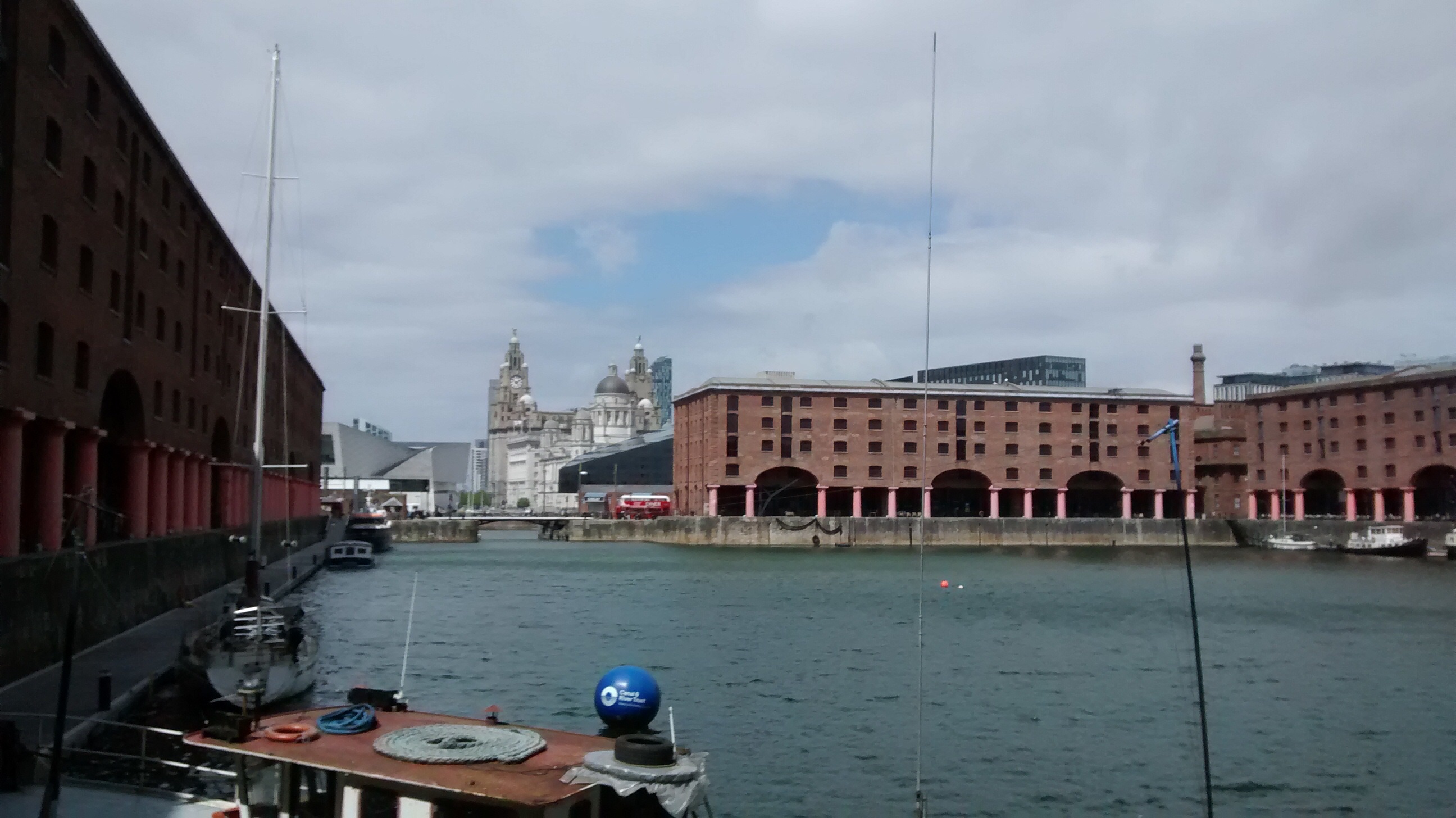
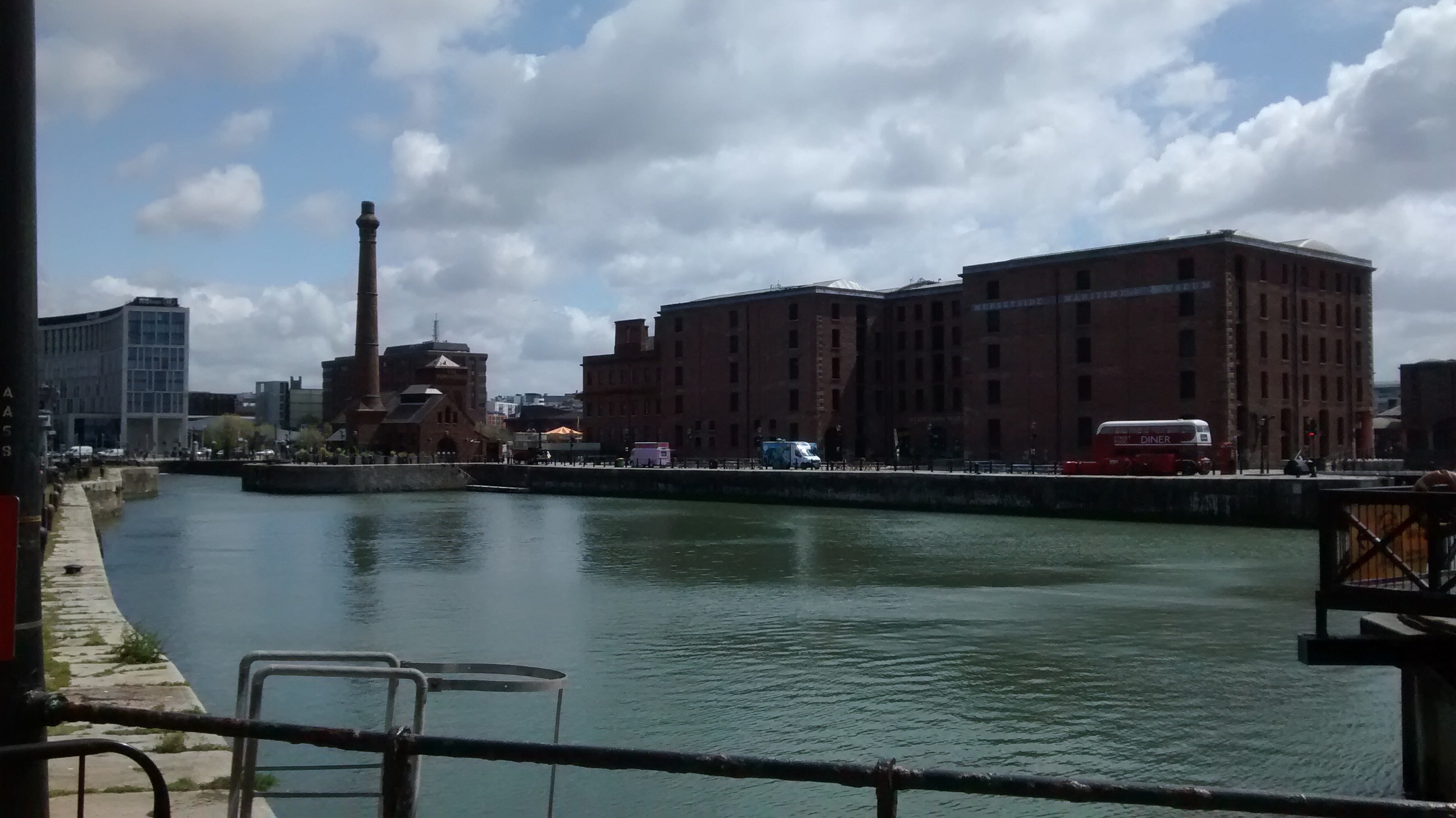
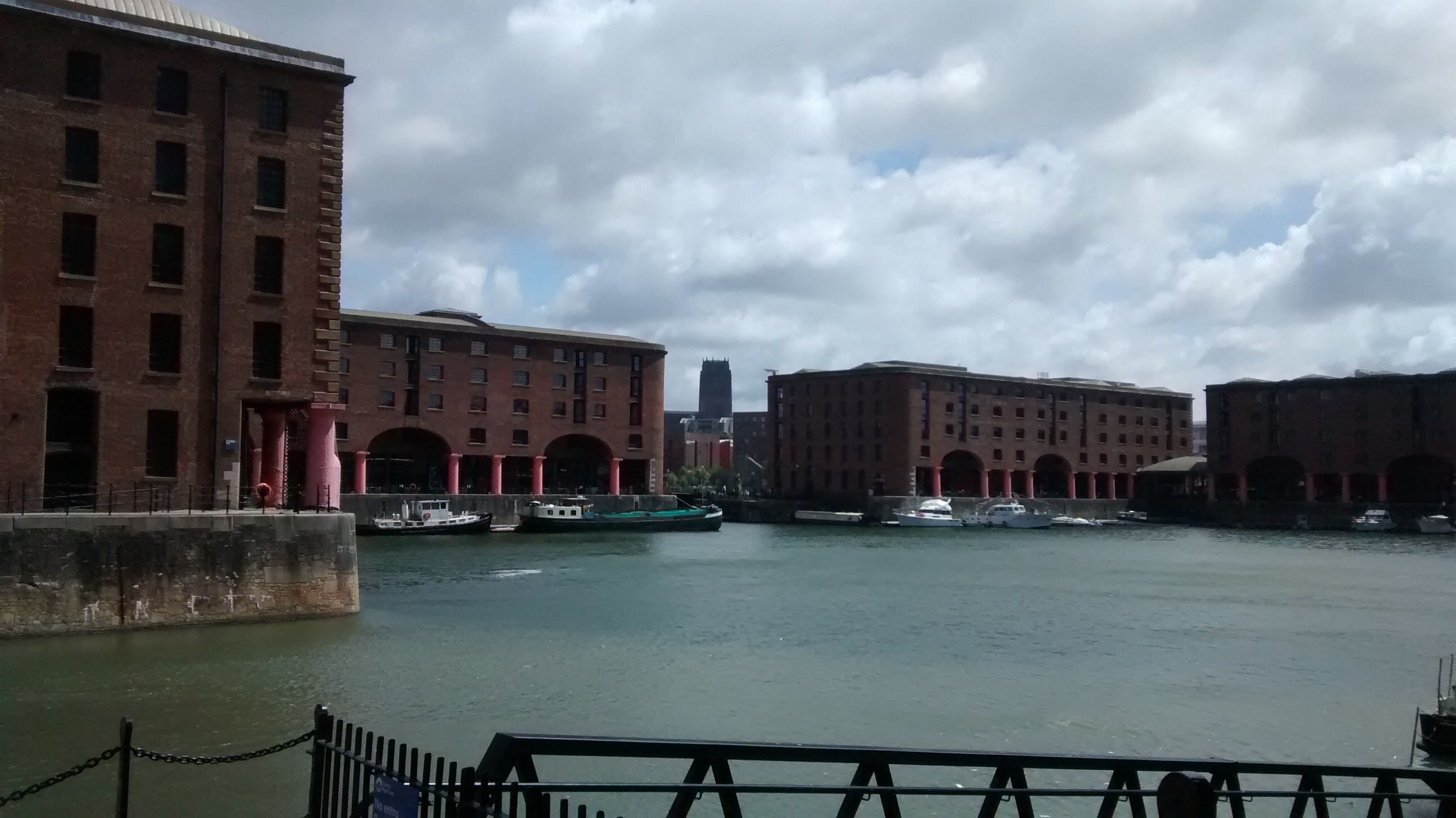
In the mid 1800s, one of their most prominent dock engineers, Jesse Hartley, came up with an idea to eliminate the effort involved in transporting goods between dock and warehouse. Why not build a dock with the warehouses on the dockside? Literally sail the ships to the warehouse door! By 1849, he had constructed a dock surrounded by a stunning set of fireproof warehouses which could store goods for long enough to avoid import taxes, and with the help of hydraulic cranes, loading times were cut in half. All at a snip of the equivalent of £41 million today. On July 30th the Albert Dock was ready for its opening, by the man himself, Prince A.

Sounds great, and it was. Until steamships started replacing the old sailing boats twenty years later. And the Albert Dock wasn’t big enough for steamers. Oops.

The warehouses were still used for storage, but the shipping itself disappeared from the docks until the second World War, when warships and support craft sailed in. Soon the Luftwaffe took an interest, and the south-west corner of the dock took a battering. That’s near where we’re standing.

There was no peace dividend for the Dock, and its days looked numbered. The board responsible for it didn’t clean up the bomb damage and really wanted rid of it. Plans to knock it down and build flats and shops here came and went, until the Thatcher government in the 80’s decided to facilitate its regeneration. Granada TV moved in and filmed breakfast telly here. Over the last twenty years or so this superb site has become the most-visited multi-use site in the country outside London, hosting museums, restaurants, bars, shops. In short, it’s great.

A good story of how one part of Liverpool has bounced back from long-term decline. But long-term decline was what was in store for the rest of Liverpool’s docks, and for the city itself. Right up to the 60s the docks were busy, and the army of dockers could find employment – however precarious. But then along came containerisation, along with the emergence of European markets across the North Sea, and Britain’s decline as a maritime power. The dockers lost their jobs, the city fell into poverty. However much it would recover some of its prosperity, the great seagoing, outgoing city of Liverpool had lost its place at the centre of the world.

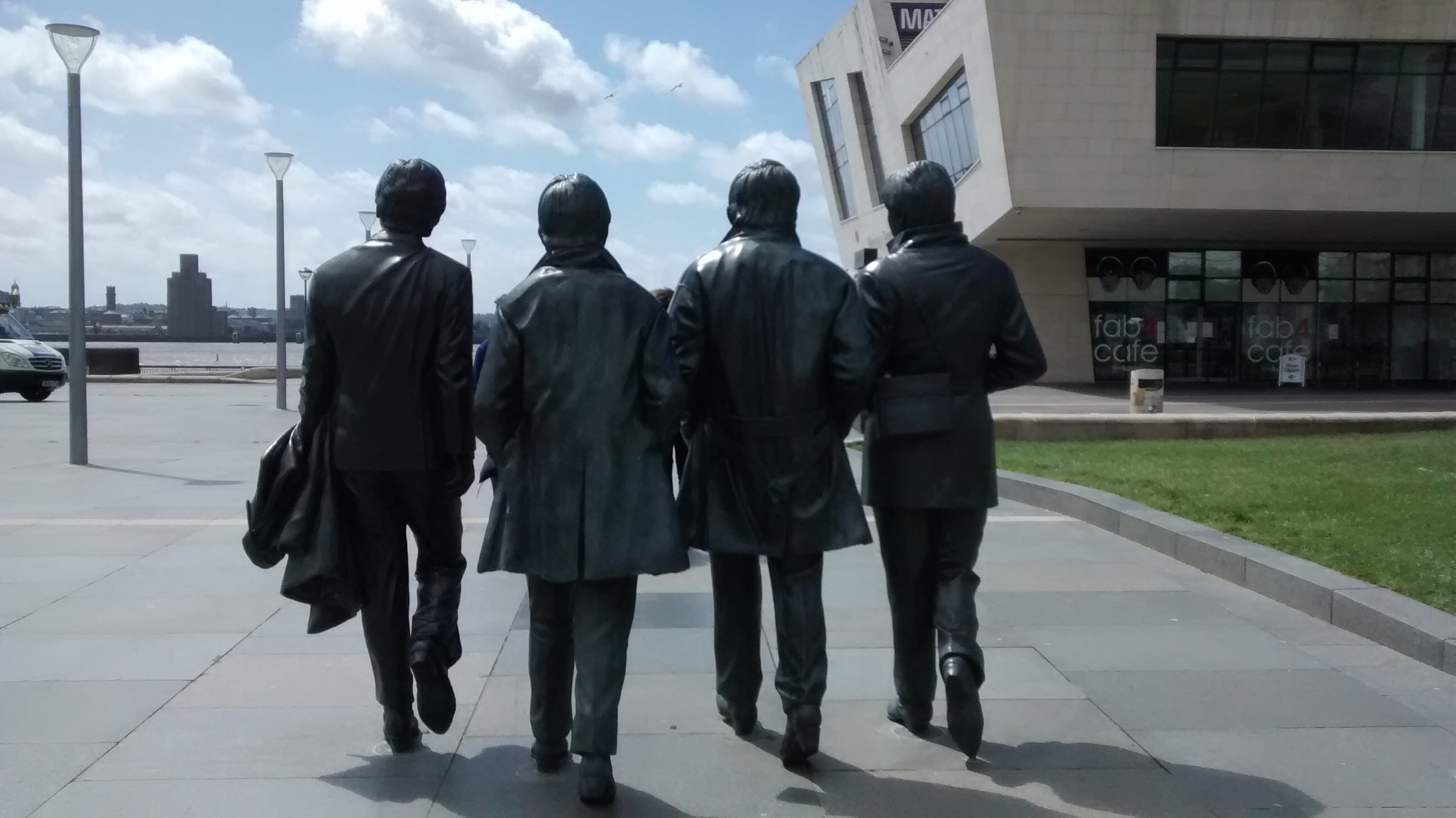
Until four local lads came along…

Birds of a feather

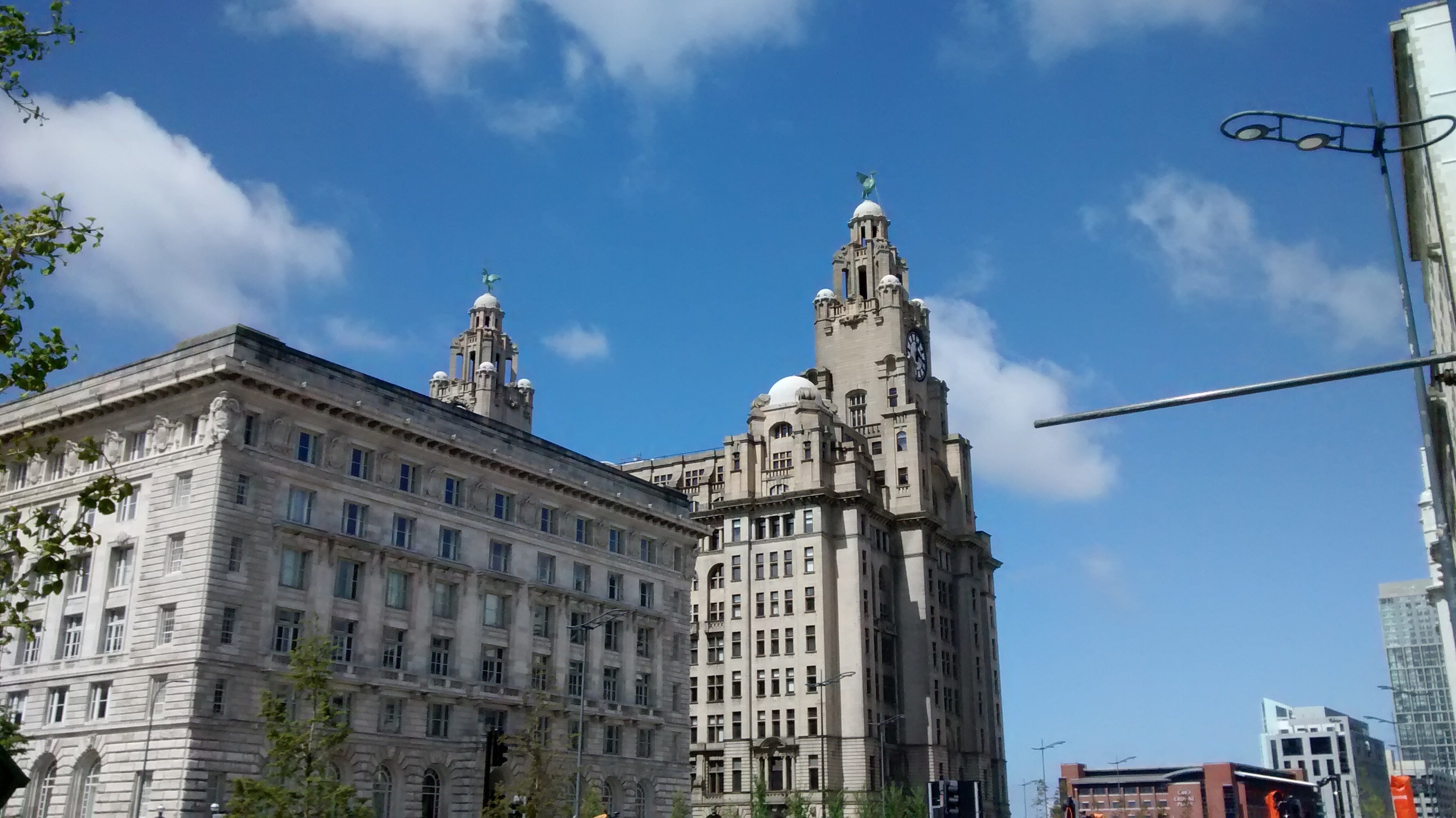
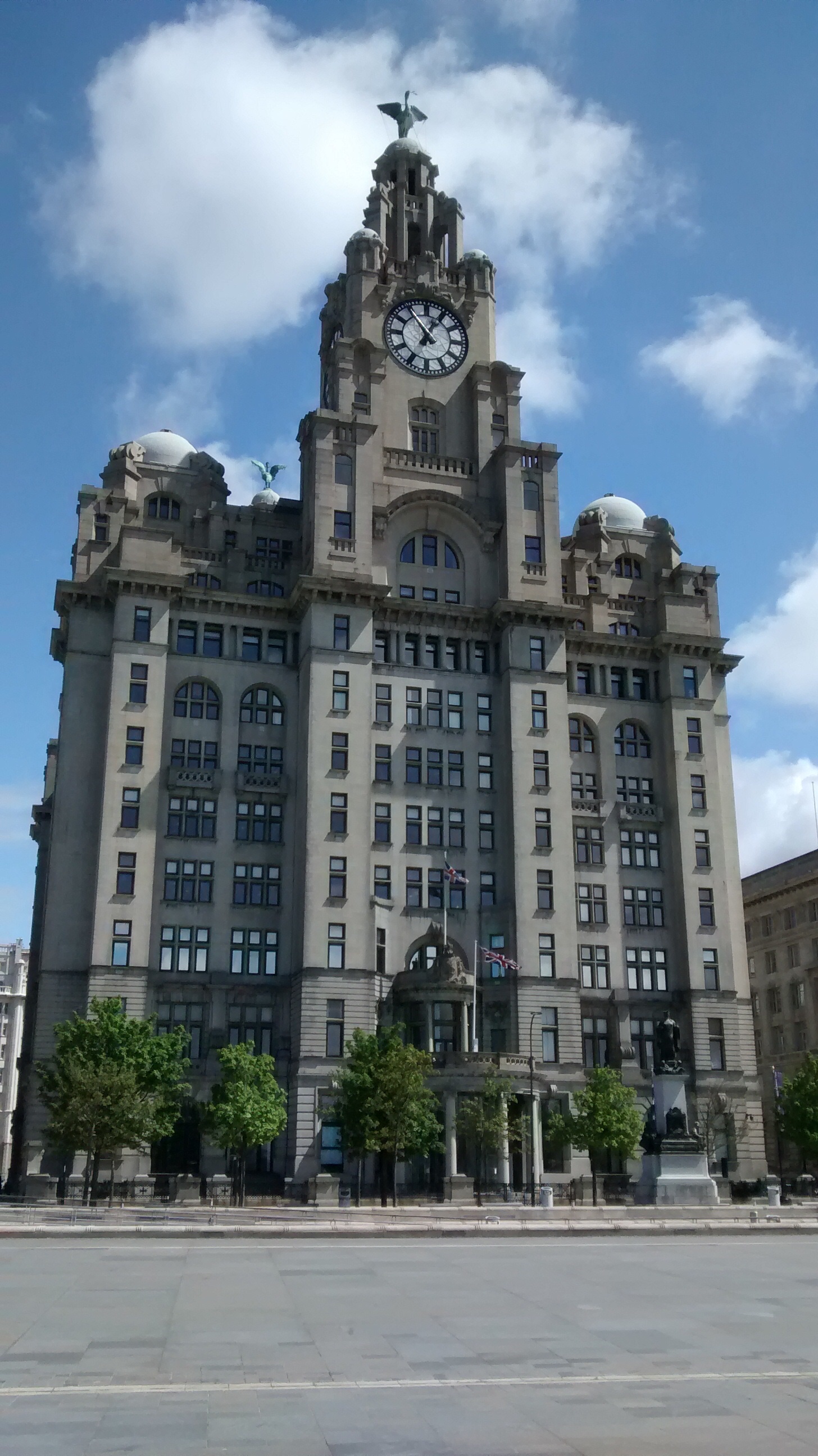
That sitcom from the Seventies was nearly right. There are indeed two Liver Birds, but one of them is male. Atop the Royal Liver Building they stand, one on each tower. She looks out to sea, representing the sailors’ wives watching over their menfolk and welcoming them home. Meanwhile, he looks landwards, over the city, as the men at sea contemplate their families left behind. And also to check that the pubs are still open. Scouse wit.

Whatever else you have heard about Liverpool, and there will have been a lot, it is a place first and foremost defined by the sea. Its fortune was made on it, brutally and cynically, it’s fine architecture was paid for by it – that and chattel slavery – and above all it’s vibrant culture was shaped by the people who were drawn over it from all over the world to service its maritime economy – sailors, dockers, navvies, migrants – until the bottom fell out of the ocean in the post-war years. And here we come in, staggering into the light after another COVID lockdown, ready to explore this world city’s unique heritage and its people, their individuality, their resilience, their wit, and of course, their music.

We’ll start our story at that Liver Building, as it encapsulates a lot about the unique history of this city. Let’s get those birds out the way first.

Liverpool received its royal charter as a borough in 1207, and that gave it the right to use a seal. The earliest seal we have dates from 1352, and shows a … well, is it an eagle with a sprig in its beak, or another bird? A spoonbill, a duck, maybe? The seal being so rubbish, it allowed all sorts of interpretations down the centuries, and by the 19th century consensus appeared to have agreed on a cormorant. Or some mythical bird representation. A mythical cormorant. (thing).

Anyway, there they are on what is probably Liverpool’s most iconic building. Opened in 1911 it resembles an early-20th century skyscraper that would fit nicely on the skyline of Manhattan or Chicago, as befitting a city that has always looked outwards, a chief port of a global empire. But Royal Liver Insurance itself grew out of a mutual aid society for poor working men. Mysticism and humour, Atlantic opulence, mixed with working-class self-sufficiency from a community that had always had to look out for themselves. A more “Liverpool” place is hard to find.

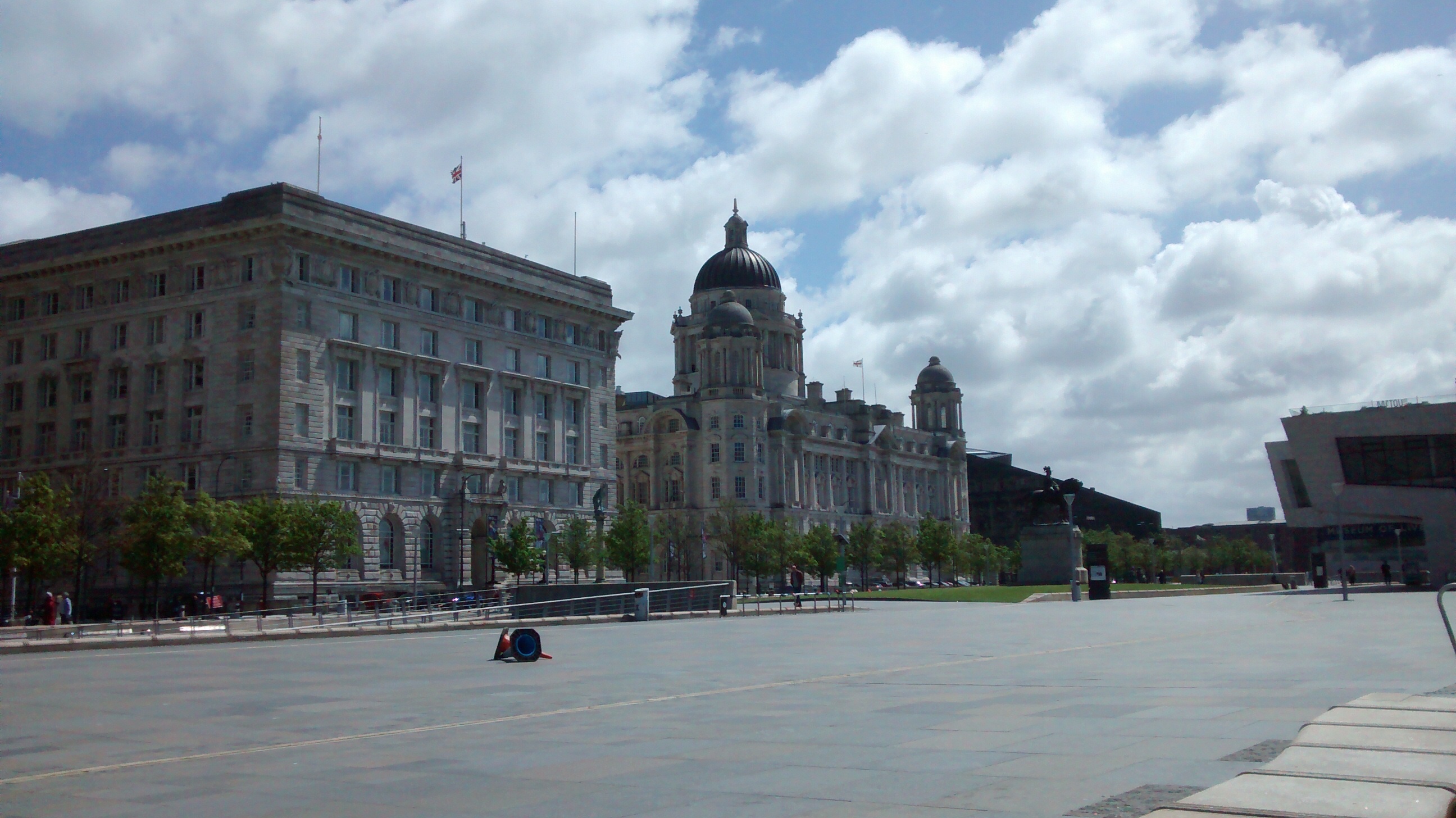
The Royal Liver Building sits on the quayside as one of the Three Graces, three gems of British 20th-century architecture. The other two are the old home of the Cunard shipping company and the domed home of the port authority (incidentally based on the abandoned plans for the Anglican Cathedral).

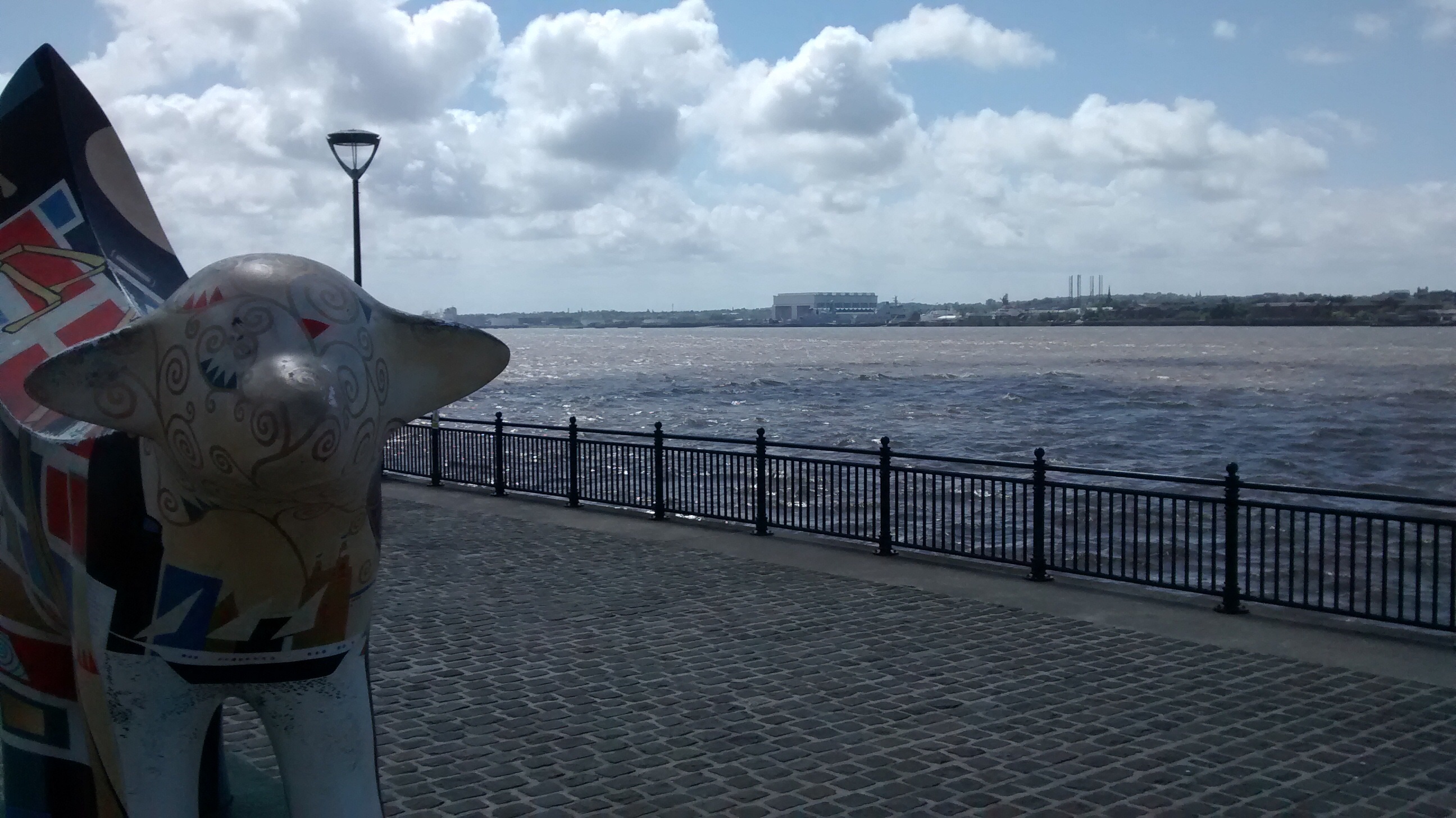
It’s a delightful place to be, Pier Head, a wide esplanade flanked by these fine buildings and the Mersey on the other (the building on the right is the ferry station. There you can get the ferry across the Mersey. Has a ring to it for some reason.) but there’s more to the waterfront than this, seven miles more if you want. That’s the length of the Liverpool docks during the truly great years, when the city was a world trading centre. To find out more about those times, and what happened next, let’s take a wander past the ferry station…

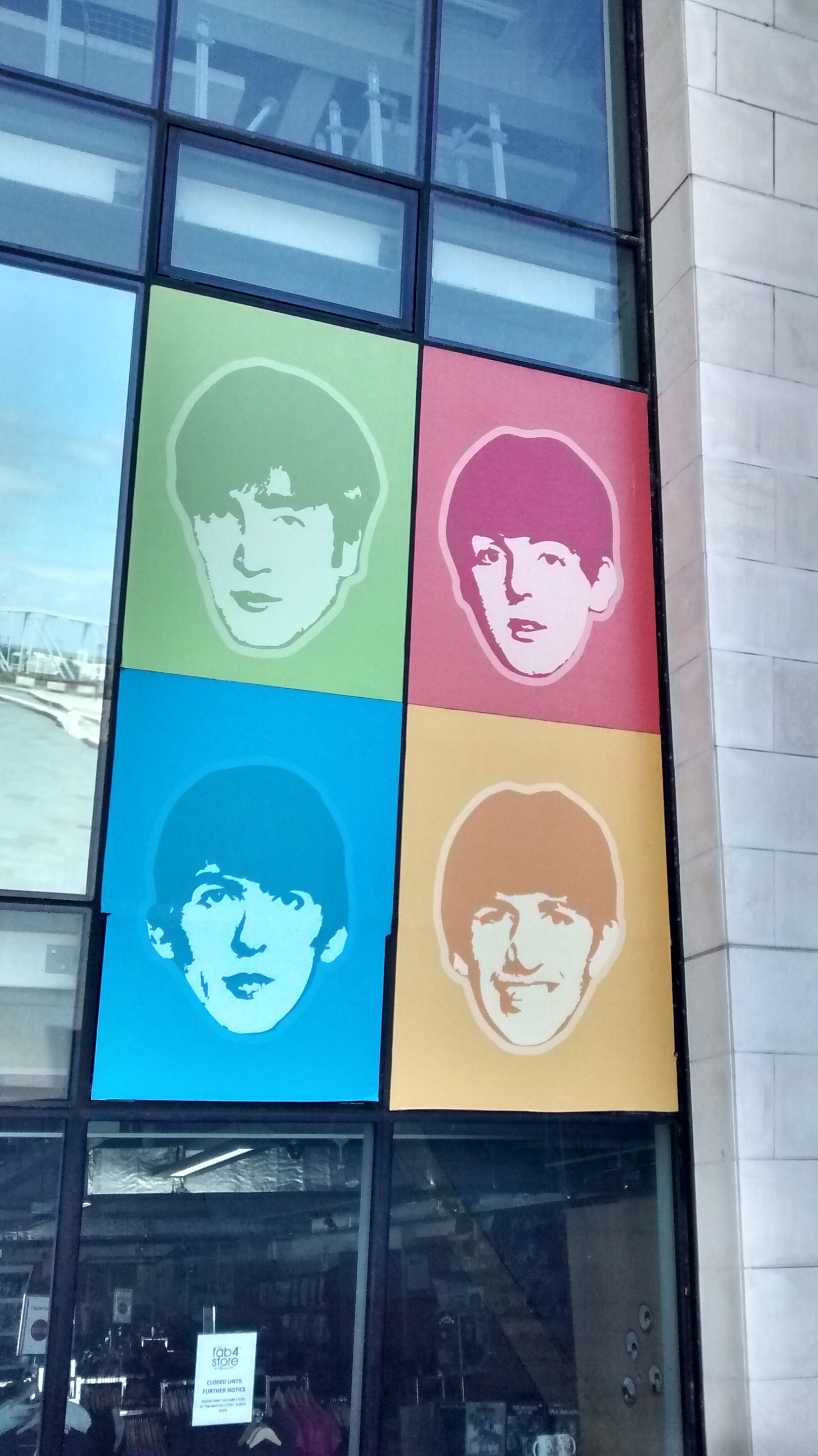
…past a promo for one of the local bands

and down to the Albert Dock.

But take a jumper. Yes it’s delightful, but it’s May 2021 – and God it’s windy!

Home Thoughts from Home

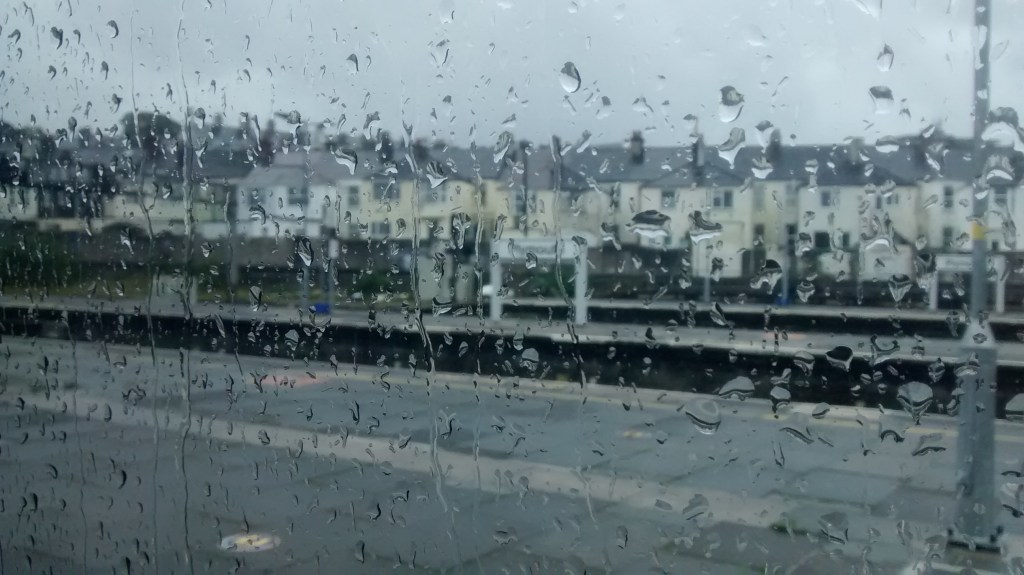
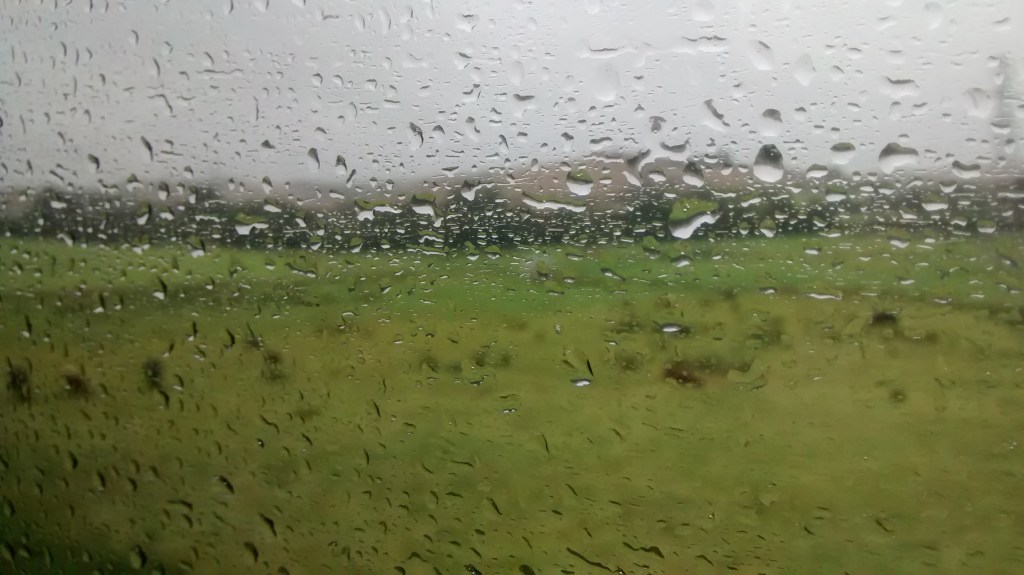
That was the last day of the trip. As I write, the train home is making its way out of a rain-sodden Plymouth on its way to a rain-sodden London

Well at least the speed of the train is no longer a surprise. I’ve got used to that now. And, slowly but surely all the other things I like doing on my travels – seeing interesting sights and understanding their stories, writing about it, travel itself – I’m getting back to as well. And you also get used to the face covering and just get on with it. The current moment is all about accommodation, making normality out of abnormality, hoping for the best while helping out by doing the right things.

Soon I’ll be back to my old life in an abnormal moment. It’s impossible to say where we’ll all be in the autumn, let alone the winter, let alone next year. So I’m not going to predict where I’ll be going next, or when, or even if.

But I’ll end with this; would I consider a longer trip through this fascinating, beautiful, infuriating, rain-sodden island? Yes. Because it is fascinating, beautiful, infuriating and rain-sodden. And it has one advantage over all the other wonderful places I’ve been lucky enough to see.

It’s home. And there’s no place like home.

Plymouth, Ancient, Modern, and Nautical

You know, once I’d got back from Truro I noticed I was becoming more taken by the monumental sweep of Plymouth’s city centre. But not enough to move hotels and stay in the middle of it. Give it a day or so and I’ll think I’d start seeing the dreary monotony in it.

But it turns out that not all of the old town was destroyed in the Plymouth Blitz after all.

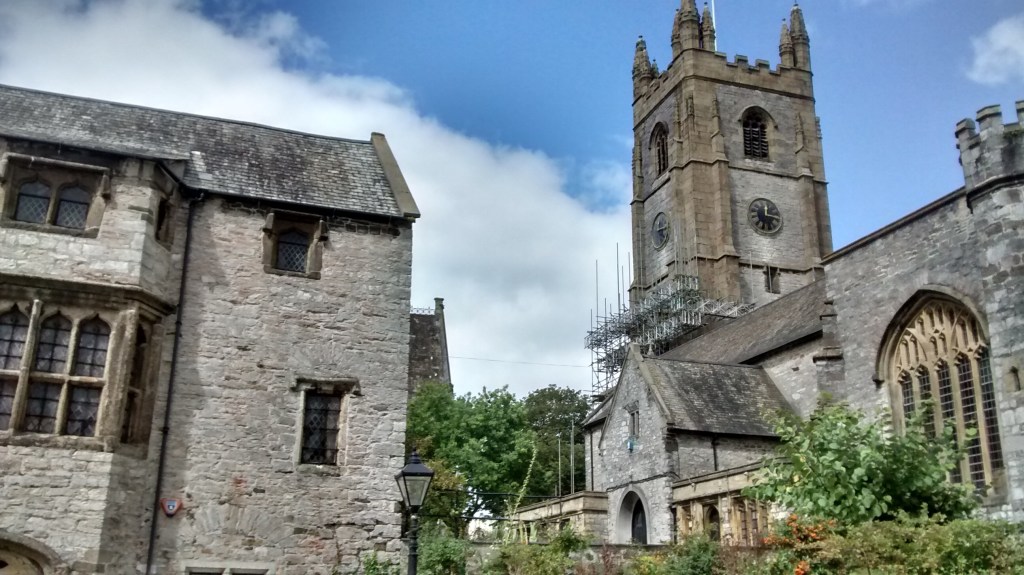
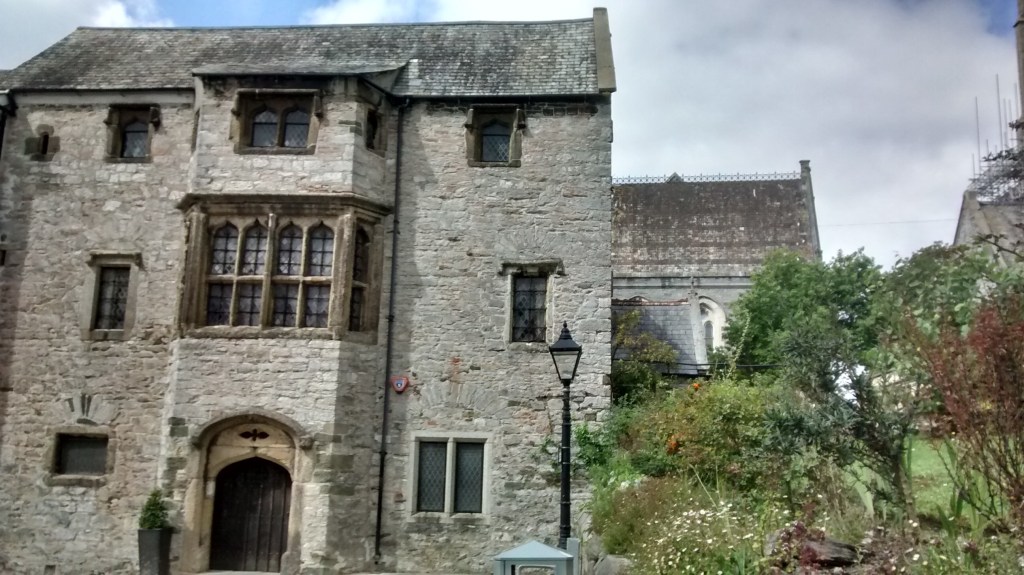
Just off the main avenues running through the centre of town we find peace and quiet on the corner of the Minster Church of St Andrew and the 15th-century Prysten House, the oldest building in the city.

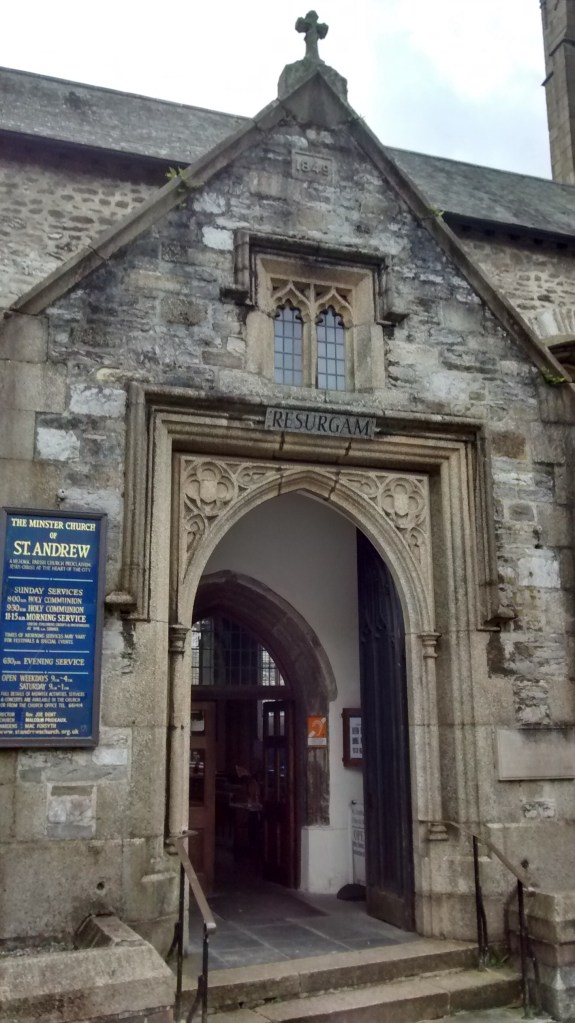
St Andrew’s was actually bombed. As an act of defiance a local headmistress nailed a wooden sign over the door. “I will rise again”. The old sign has been replaced, but the Church did rise again, and so did Plymouth.

But round the corner, the Charles Church didn’t.

It’s left as a memorial to the 1172 civilians who were killed here over the course of the war.

A couple of streets away we find another piece of unspoilt historic Plymouth hiding amongst the modern offices that predominate here.

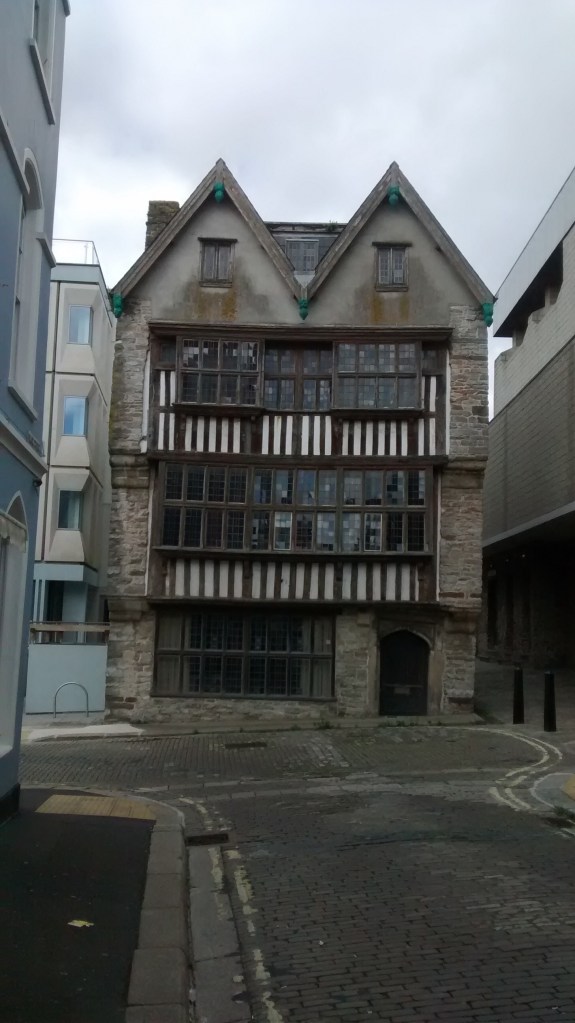
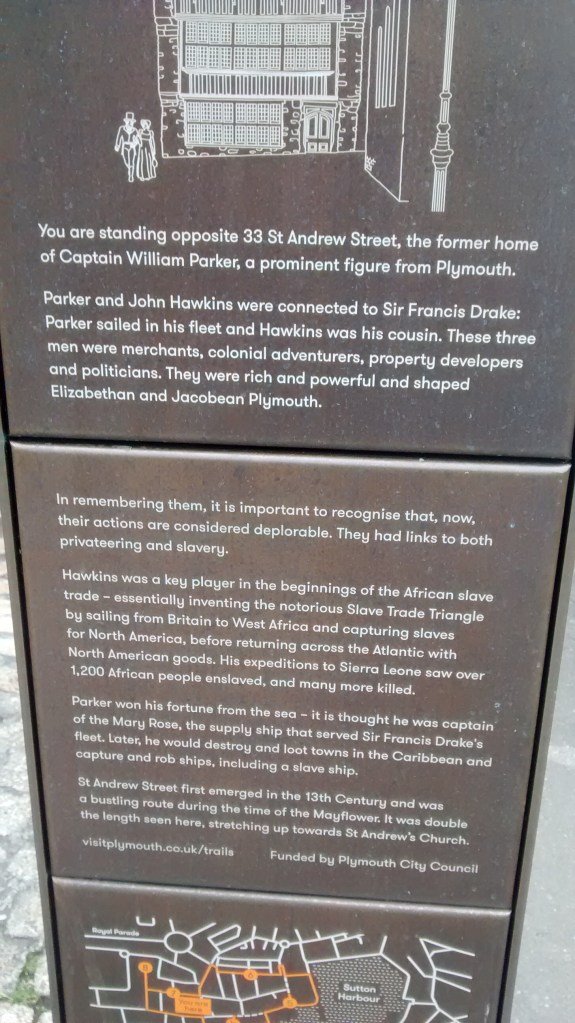
The Merchants House, a charming Elizabethan house belonging to one William Parker. So the city centre does retain its old delightful character after all!

Oh dear.

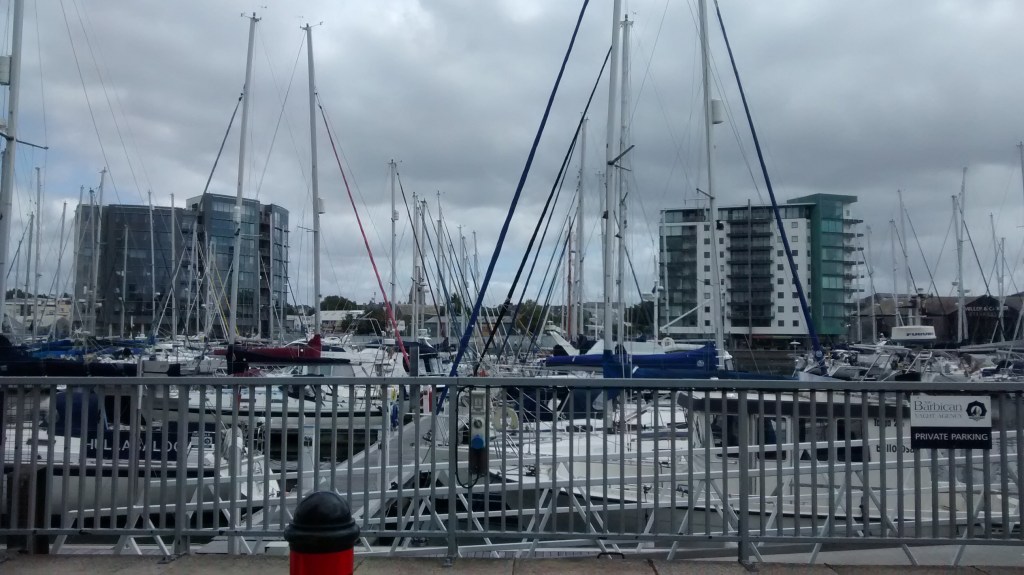
A few streets away lies a much more popular area of town. Old port, new marina, rabbit warren of old houses and warehouses turned into vibrant pubs, restaurants and cheesy craft shops, the Barbican is the oldest part of Plymouth and one of its most exciting. During Plymouth’s maritime heyday, many famous voyages set off from hereabouts, and voyagers such as Drake, Charles Darwin and Sir Francis Chichester clambered aboard here. As did a notable collection of religious refugees.

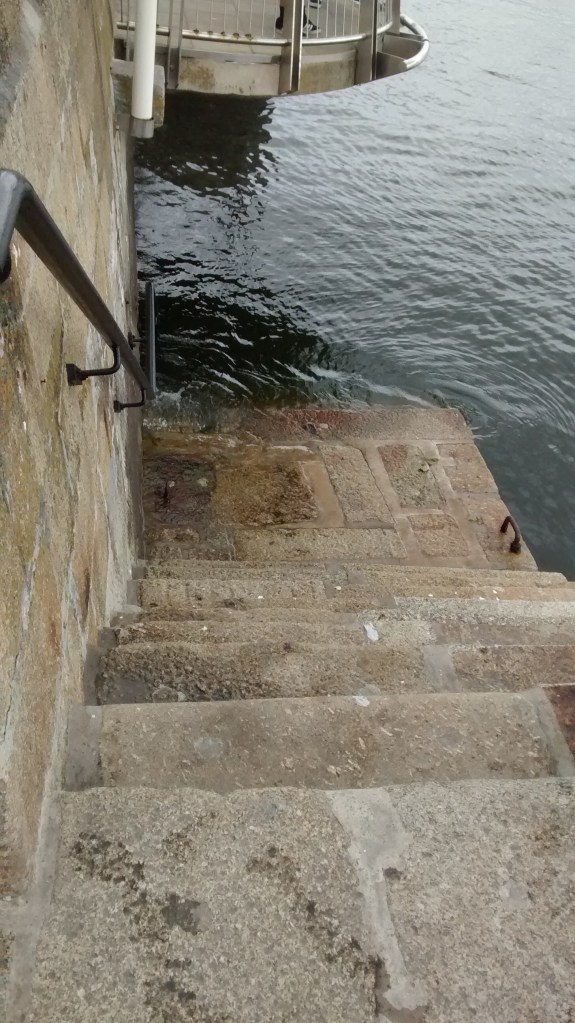
In 1620, a Puritan leader called William Bradford received an email from “AllTheNativeAmericans@gmail.com”. It read “Hi. We heard about the trouble you’re having with the established church in England. Here’s an idea. Why don’t you come over here and take over our land? We were kind of getting bored with the whole freedom thing and some of us are itching to find out what subjugation felt like. Don’t worry, it’ll all work out just fine. Just go easy on the genocide. See you soon!” Bradford dropped everything and got his congregation together, and soon they were in Plymouth descending these very steps to board the Mayflower, the ship that was to take them to a new life in the New World.

The Mayflower Steps

Now you may have your suspicions about what I’ve just said, and you’d be right. The Mayflower Steps aren’t authentic! They were created in the 20th century to commemorate the Pilgrim Fathers’ voyage and were placed here because the Mayflower would have been boarded somewhere around here, and this spot was as good as any.

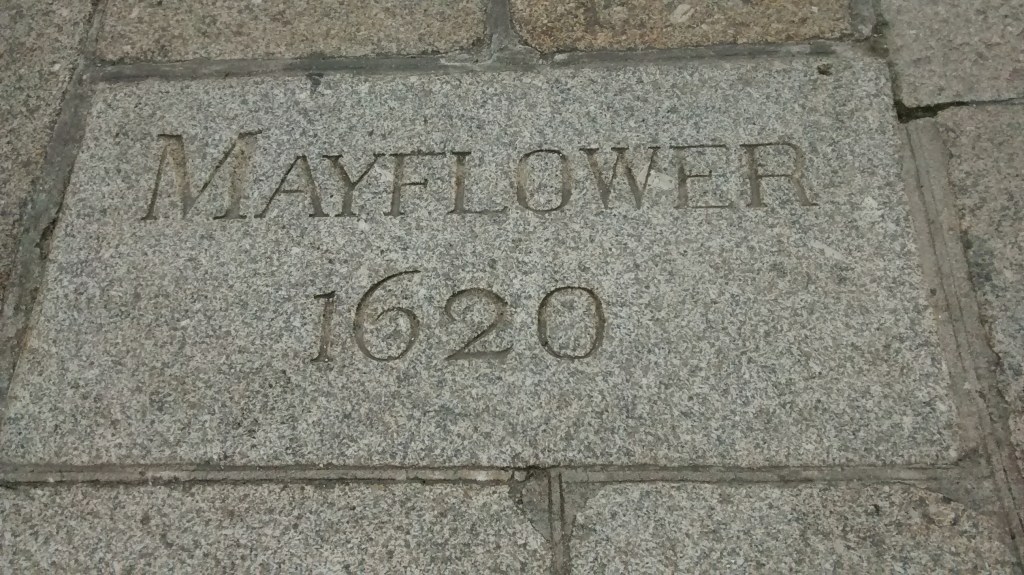
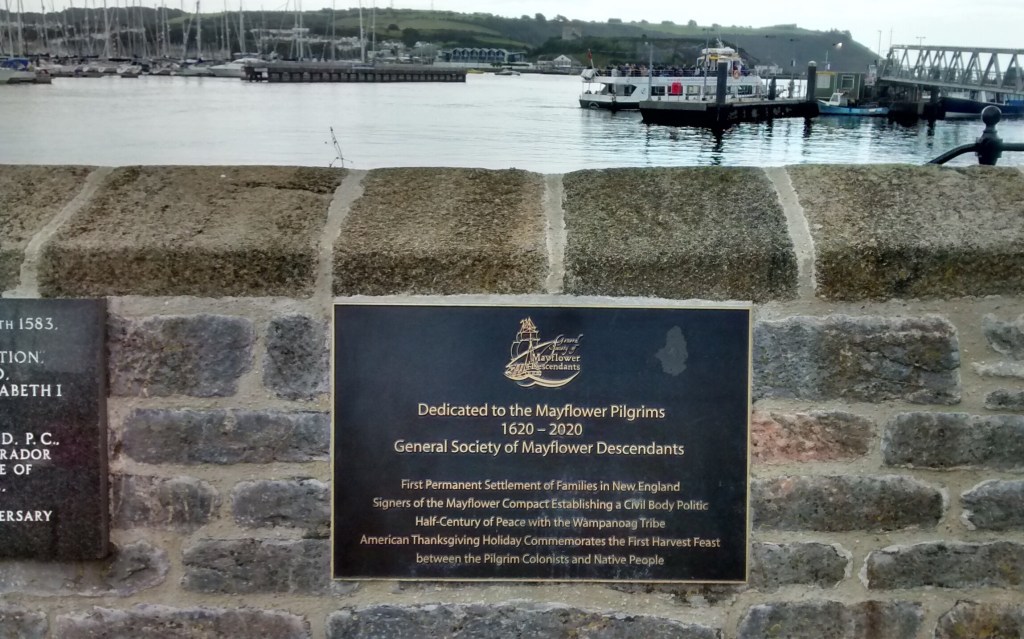
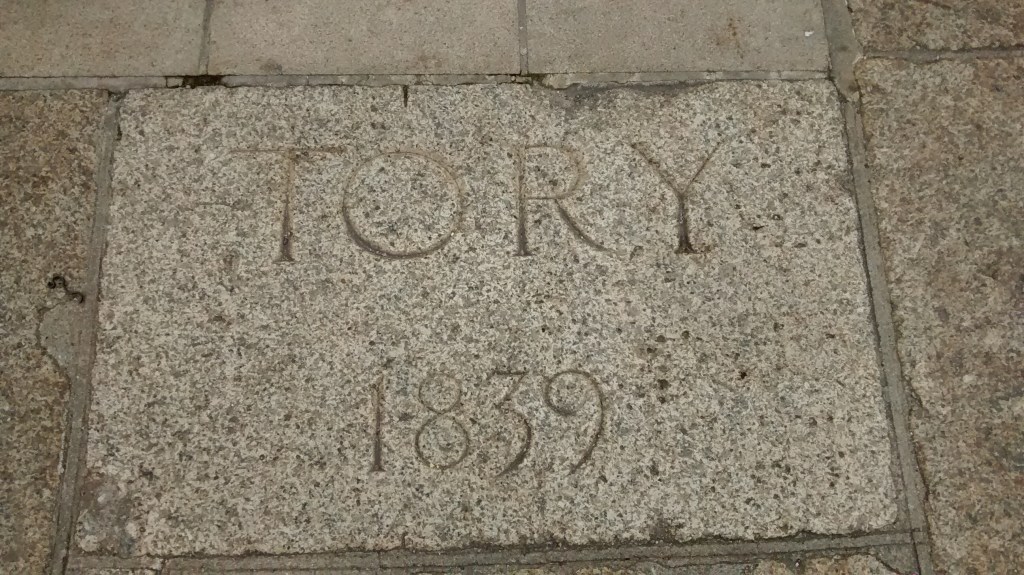
Never mind. A number of other important colonising voyages started out from Plymouth, and they each have their own commemorative plaque on the wall and their own stone in the ground.

(It only feels that long since they’ve been in.)

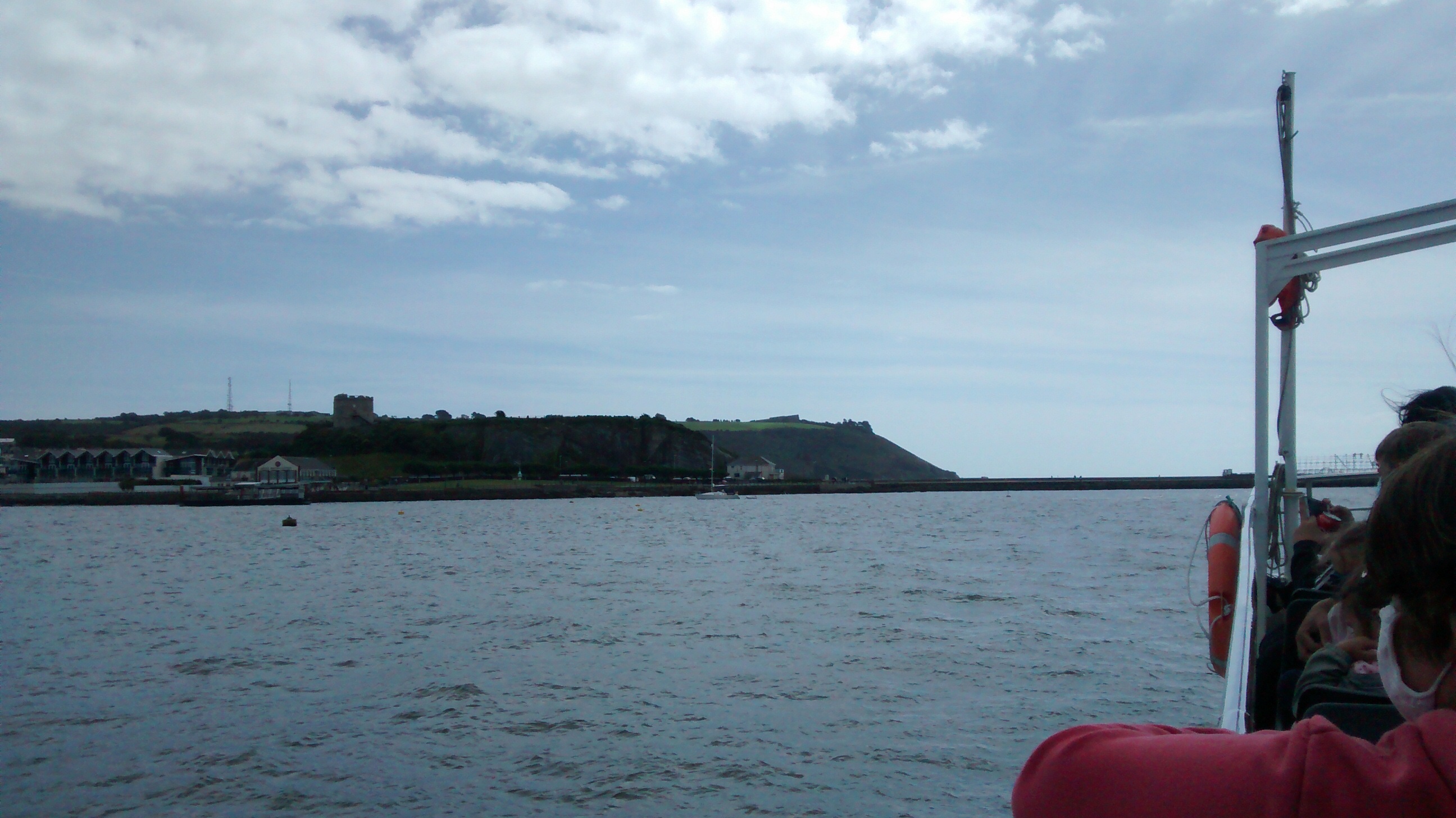
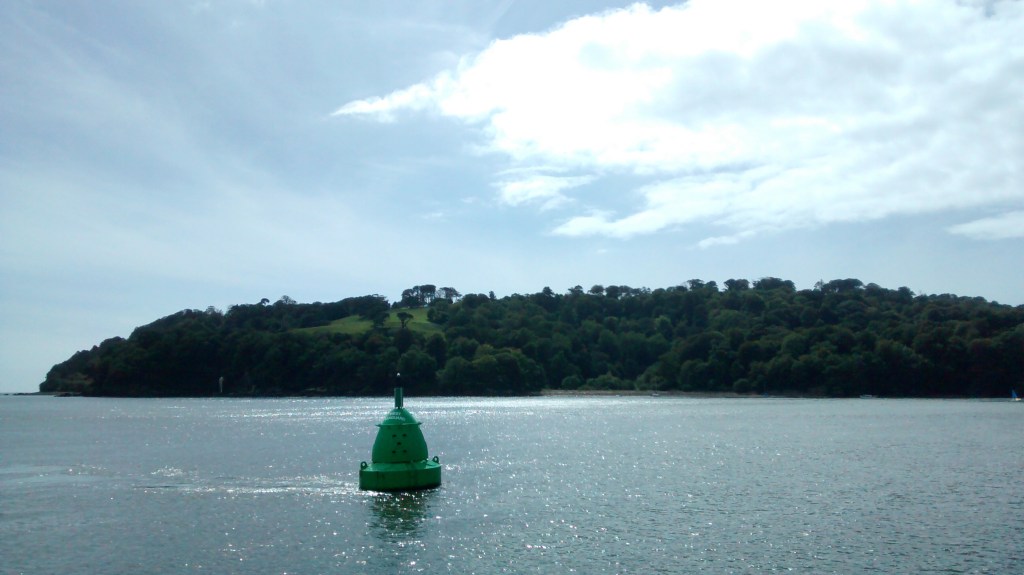
Another treat offered in the Barbican is the sightseeing boat trip. Plymouth is one of the biggest working harbours in the world and there’s quite a variety of places you can ride over to for visits to sights, hiking, or other fun. We’re just going to do the one-hour trip into the naval dockyard and point out interesting information along the way.

But the real reason is just to take some nice snaps on the water.

And so on.

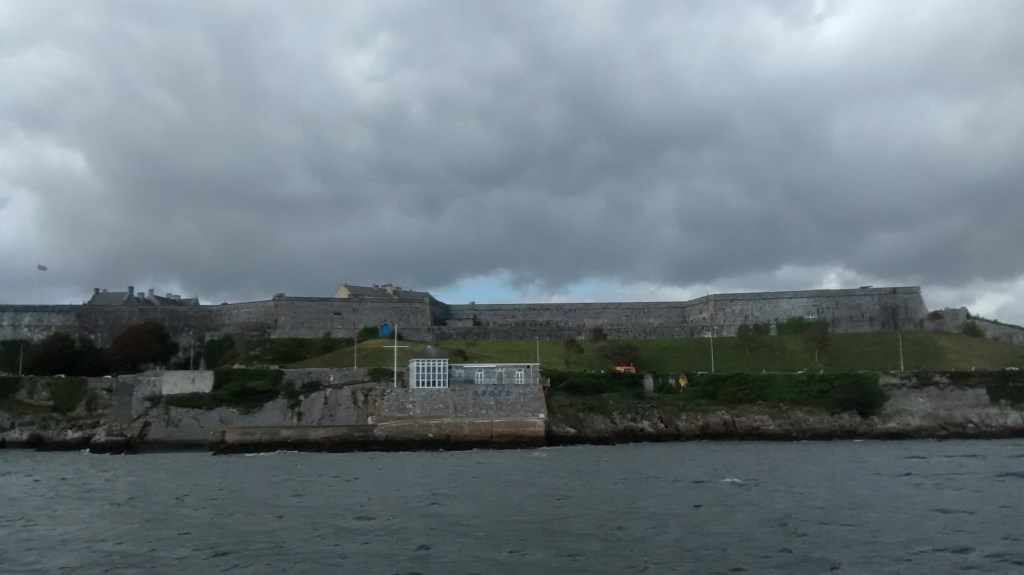
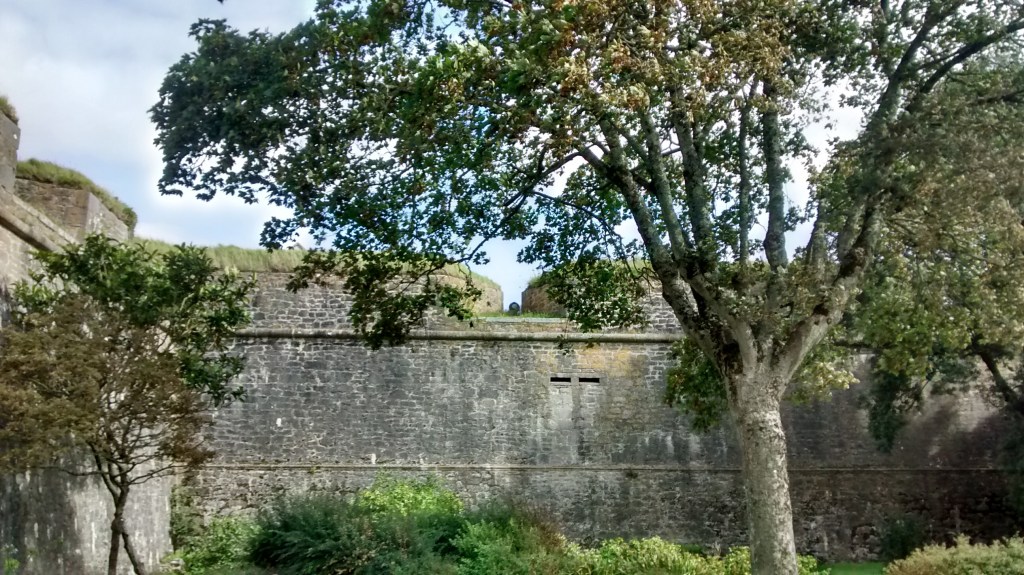
Coming back round again, we pass the Royal Citadel. An important naval asset such as Devonport (where the dockyard actually is) itself needs defending. The 17th-century Citadel was – and still is – a redoubtable fort with impressive seaward defences. You can see one of the old guns on the wall to the right. To this day an Army detachment is still based here.

I wonder what 17th-century Dutch is for “phew, we’d better not mess with these guys!”

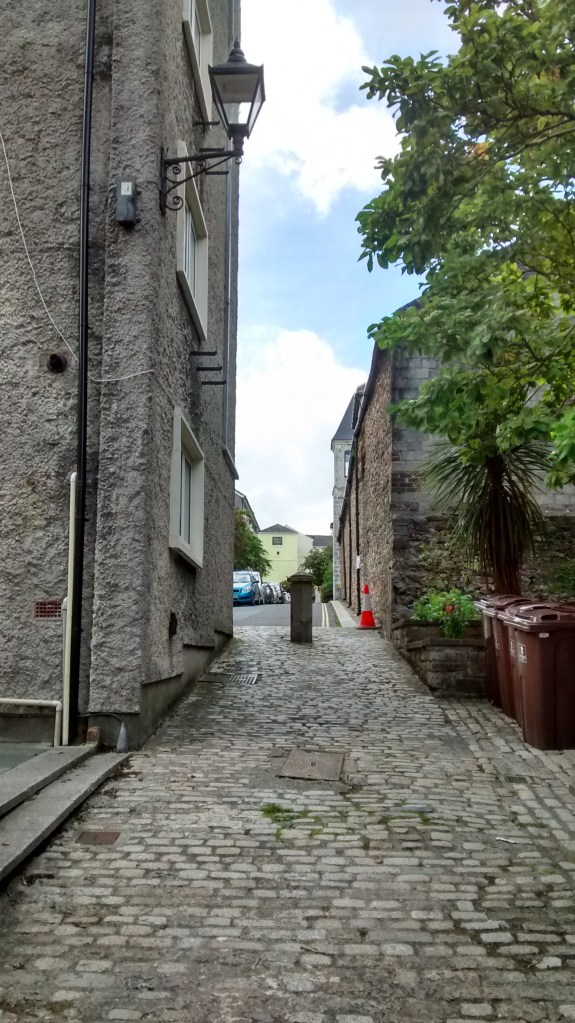
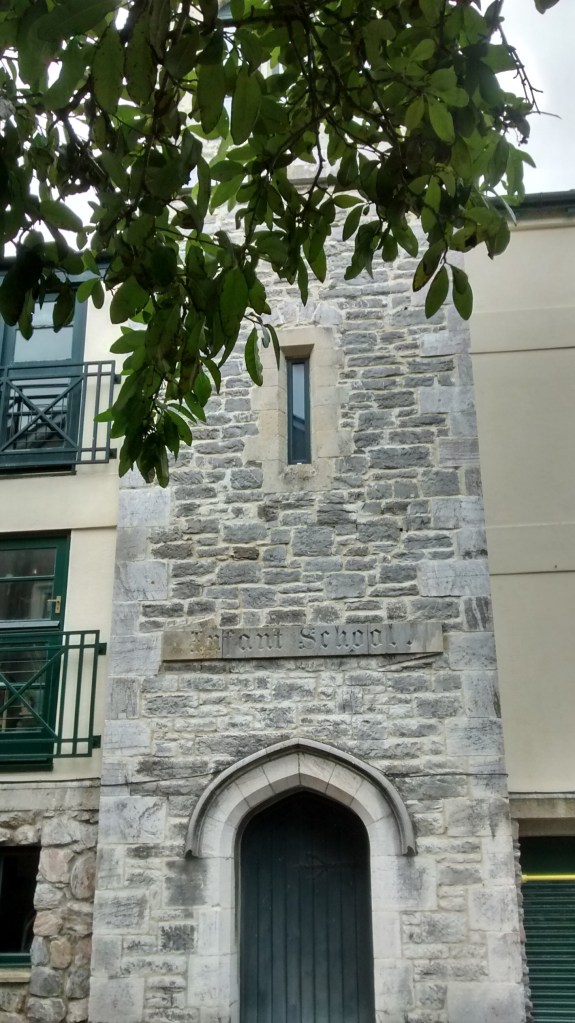
Ah, here comes the jetty again and we’re docking. It’s time to go back to our room, so let’s avoid the crowds by using the narrow residential back streets of the Barbican.

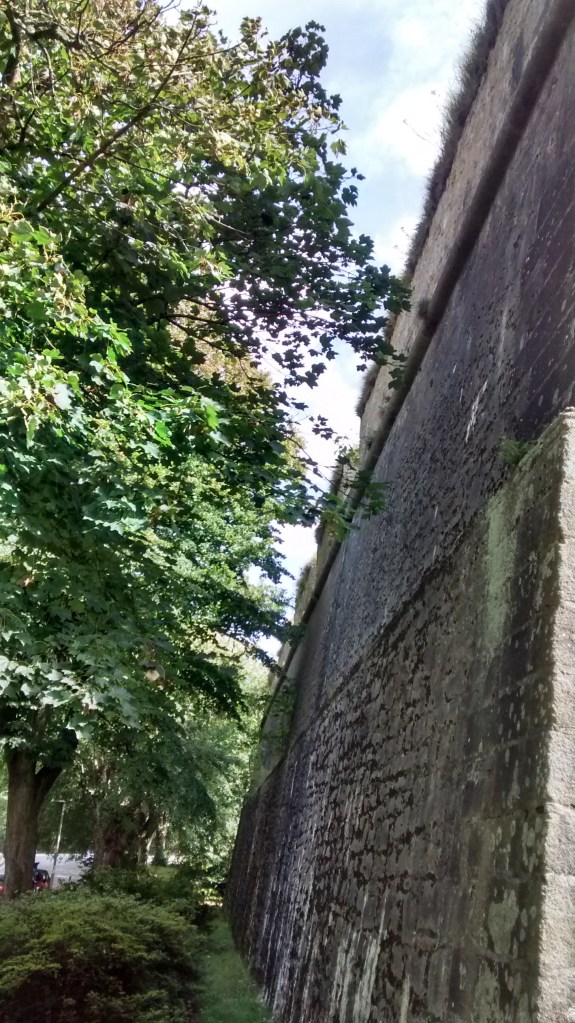
And, oh look, here now are the landward walls of the Citadel. Commissioned by King Charles II himself, you know.

Awkward.

Plymouth was Parliamentarian during the recent Civil War. Parliament cut Daddy’s head off.

So some of the guns point towards the city.

I wonder what 17th-century Devonian is for “phew, we’d better not mess with these Royalists again, guys!”

Well, hotel beckons and it’s time for a break.

That was fun.

Truro

Plymouth lies on the Devon side of the Tamar as it slides out into the Sound. On the other side lies Cornwall.

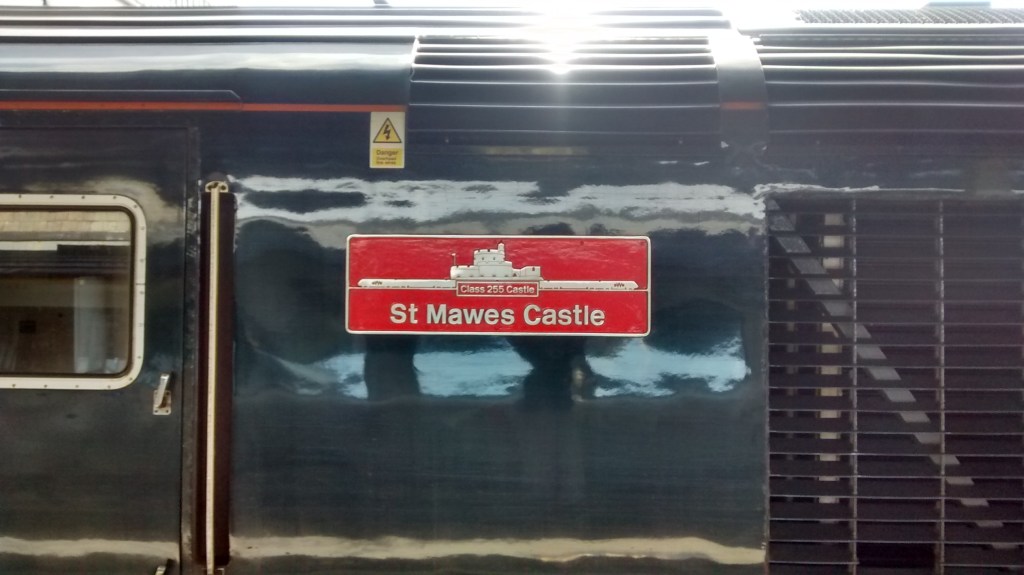
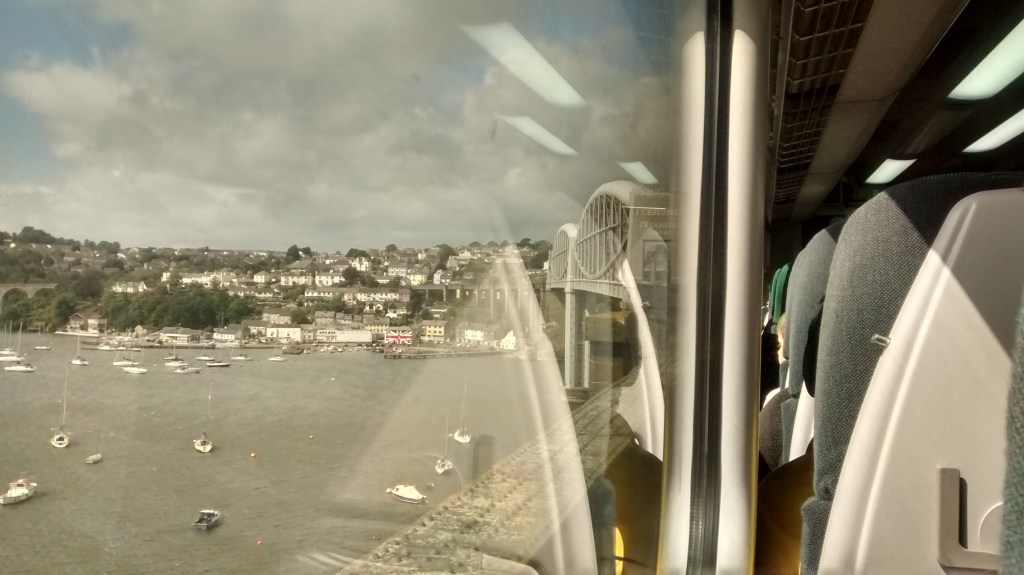
There’s something strangely magical about getting on a train here and crossing Brunel’s famous bridge over to the Celtic mysteries of Cornwall, England-but-not-quite, even if Cornish is not as prevalent here as Welsh is in the valleys over the Bristol Channel.

Unfortunately photos through a train window struggle to do justice to the rolling bucolic landscape, the steep green valleys and hidden estuaries, the old tin mines and overgrown slagheaps. You’ll have to come and see for yourself. As it’s one of the country’s most-visited counties, you probably already have.

An hour or so later, we’re there.

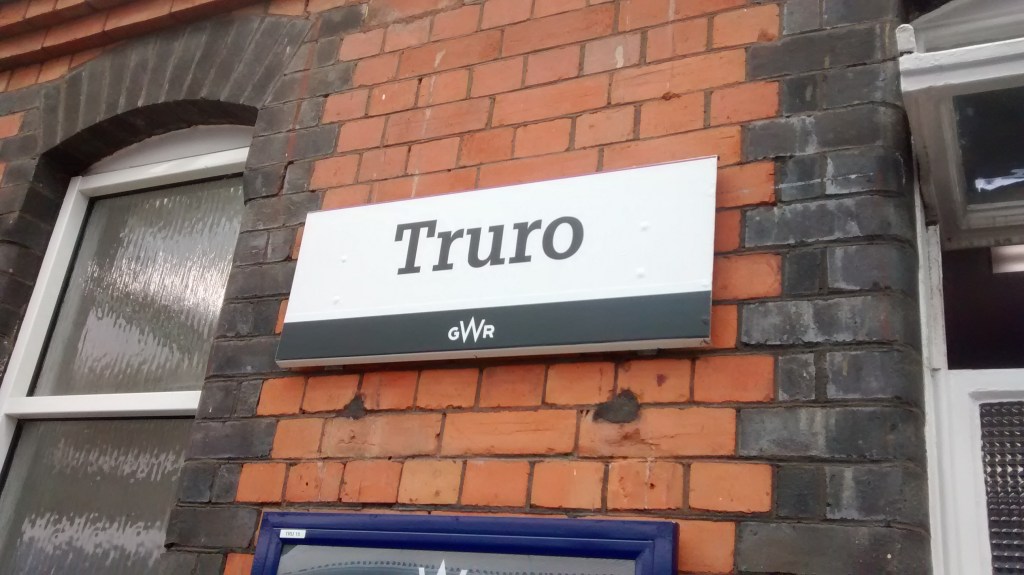
Once a port that made its money from tin, until the river silted up and the tin ran out, Truro turns out to be a delightful little big town that claims to be the southernmost city on the British mainland (Penzance doesn’t have a cathedral).

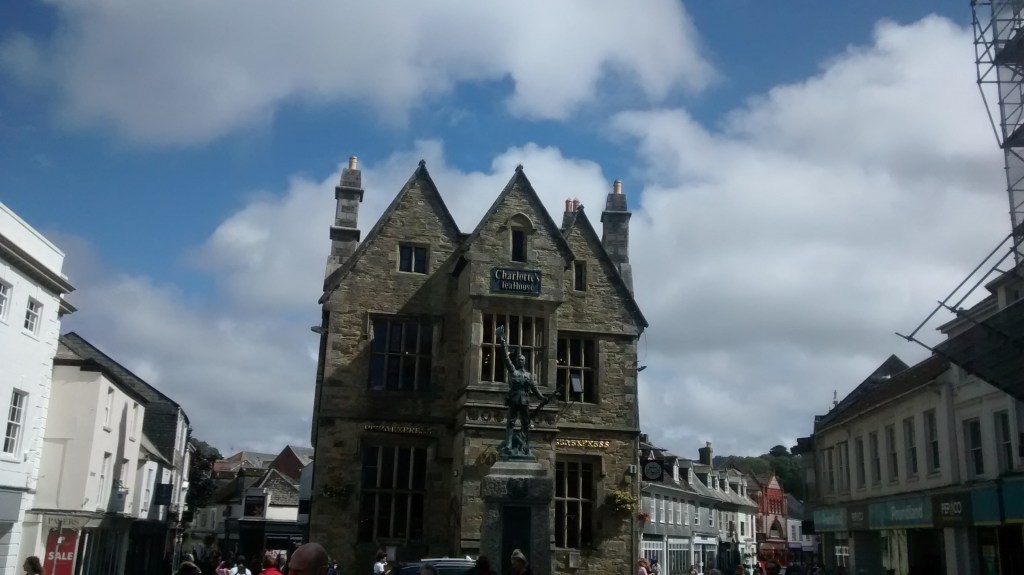
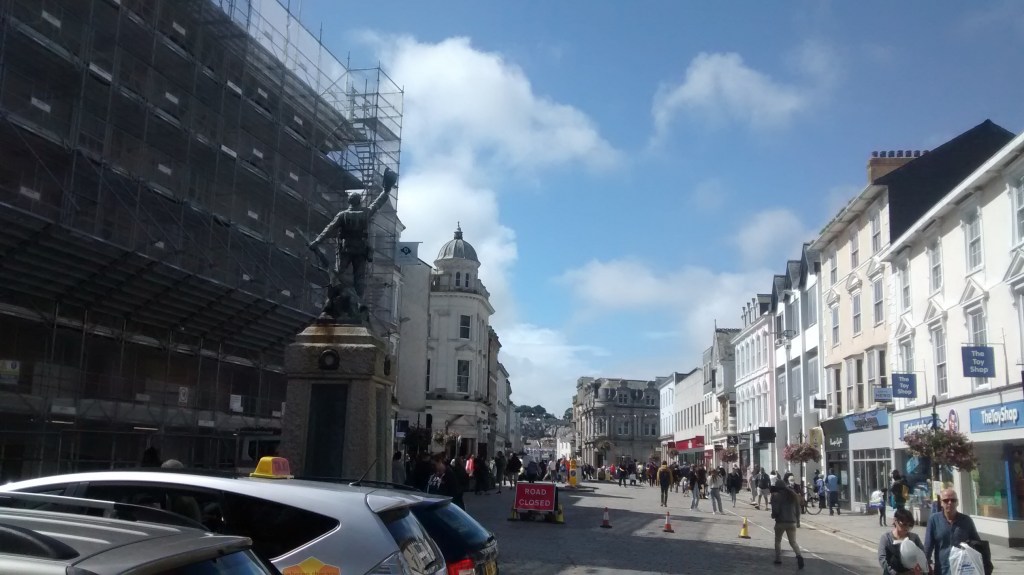
Boscawen Street

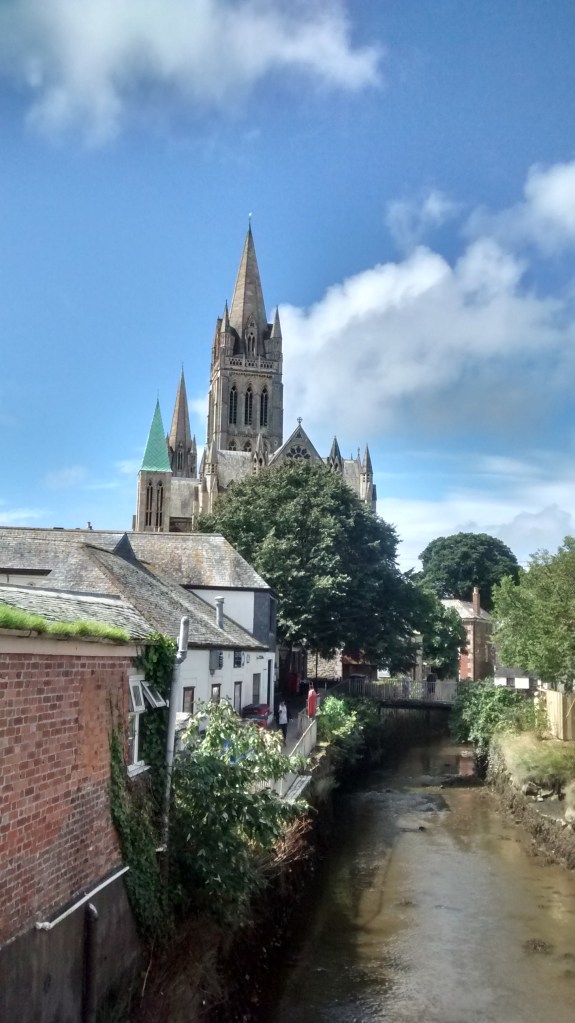
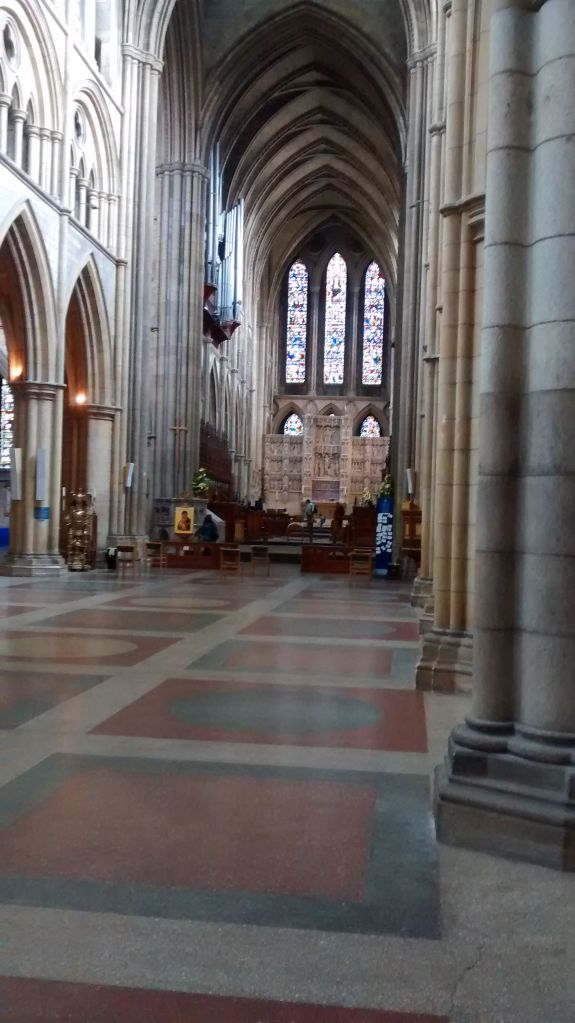
Truro’s cathedral, neo-Gothic, triple-spired, local rock, was built between 1880 and 1910. The town was incorporated as a city in 1876 so maybe someone just went, oops, we’d better have a cathedral then.

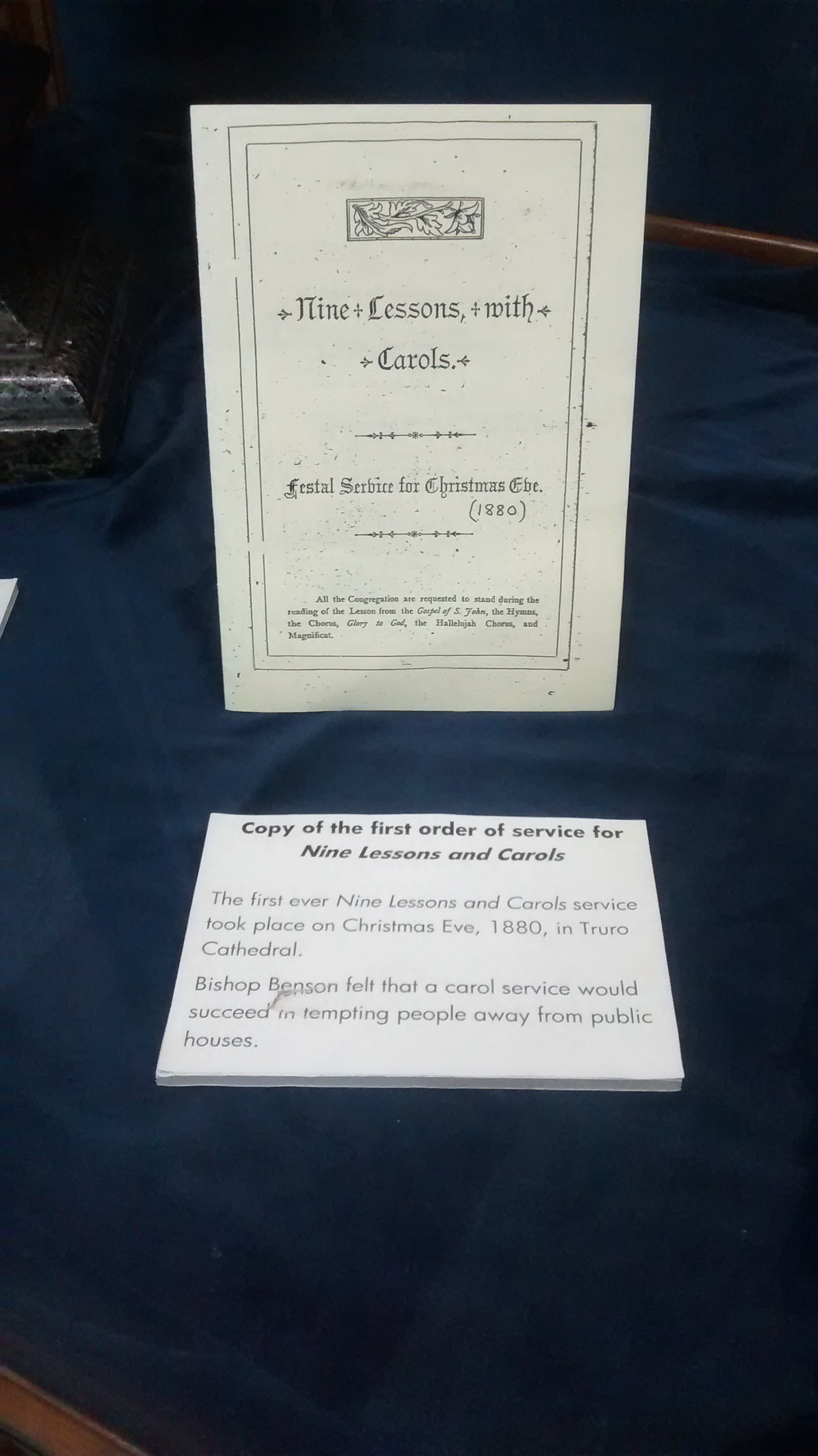
The first bishop of the new diocese which came with city status was one E F Benson and, if you like your Christmases traditional and choral, you have much to thank him for. For the Christmas of 1880, in the temporary wooden structure that was in place during the building of the cathedral, Bishop Benson came up with the idea of a service featuring nine lessons and carols, a format brought to glorious life by Kings College Cambridge at 3pm every Christmas Eve (at time of writing only God knows what will happen in 2020).

For many people that boy soloist’s shaky but tender delivery of the first verse of Once In Royal David’s City marks the beginning of the festive season. But back in Truro in 1880, Bishop Benson’s motives were much more blunt.

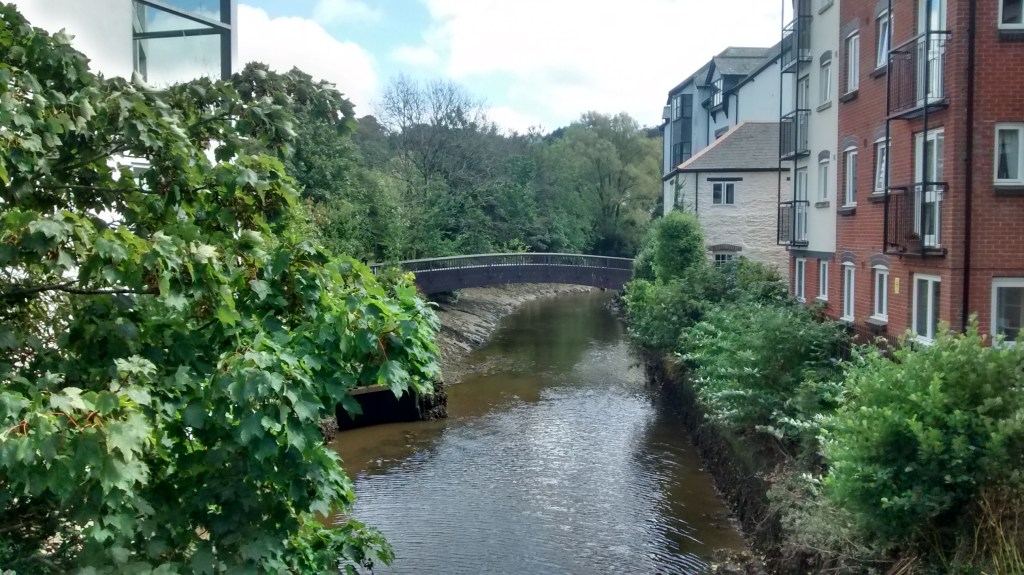
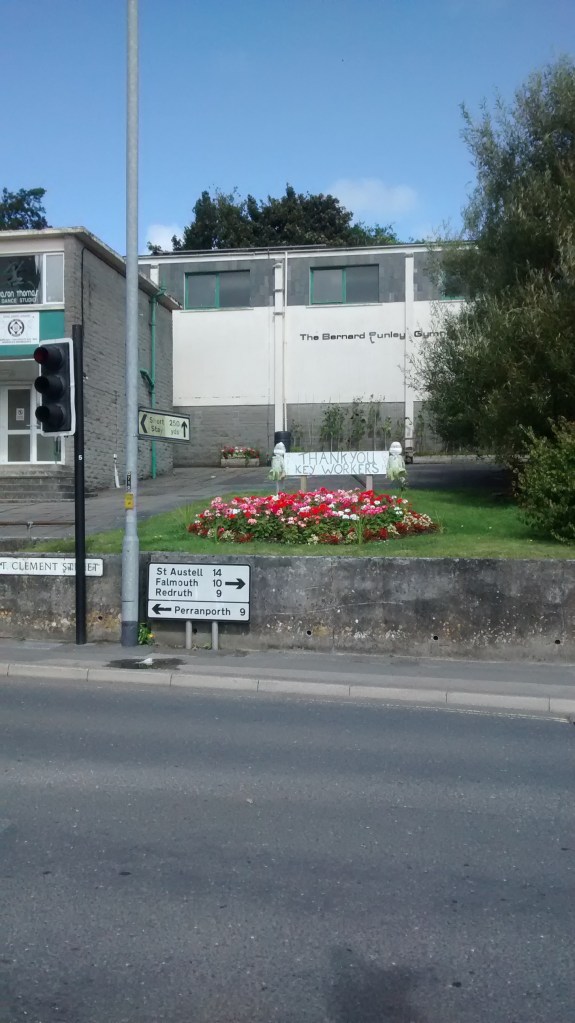
We leave the Cathedral, and it’s time for a relaxed stroll around town as we head back to the station. A couple more pics from earlier as we make our way.

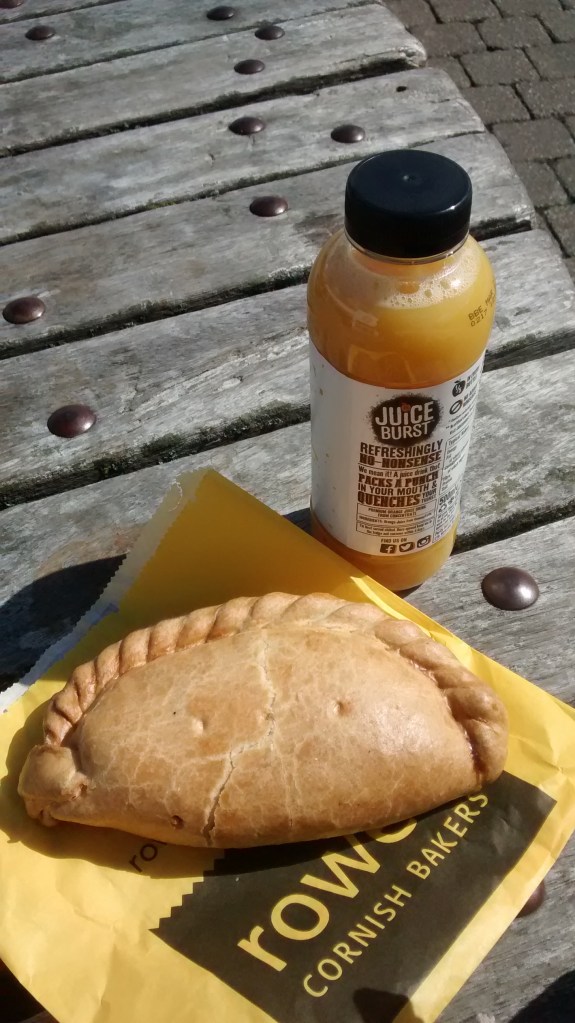
Ah, one moment. This is Cornwall so we need a pasty.

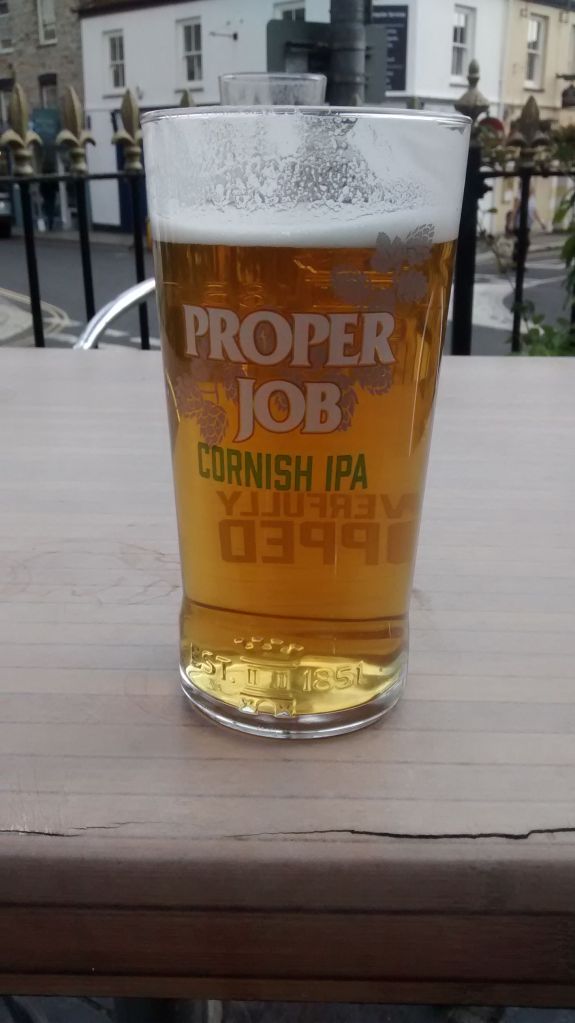
Oh, and a local beer.

Don’t tell Bishop Benson.

Yo Ho Hoe

Well the train carried on and I got used to the speed in the end. Which was fortunate because it was a three-hour journey down to Devon.

Travelling at home this summer presents a double whammy. Millions of Brits who would normally have gone abroad can’t this year and so are taking staycation holidays. And all the uncertainty about where the next outbreak is going to happen makes it risky to plan ahead too far. So, many of the nicer West Country bolt-holes I was interested in were booked out by the time I pinned my colours to the mast and decided to go.

In the end I settled on taking a short stay in Plymouth, a fascinating place in itself with a rich maritime history and a base for further exploration into Cornwall if I fancied it.

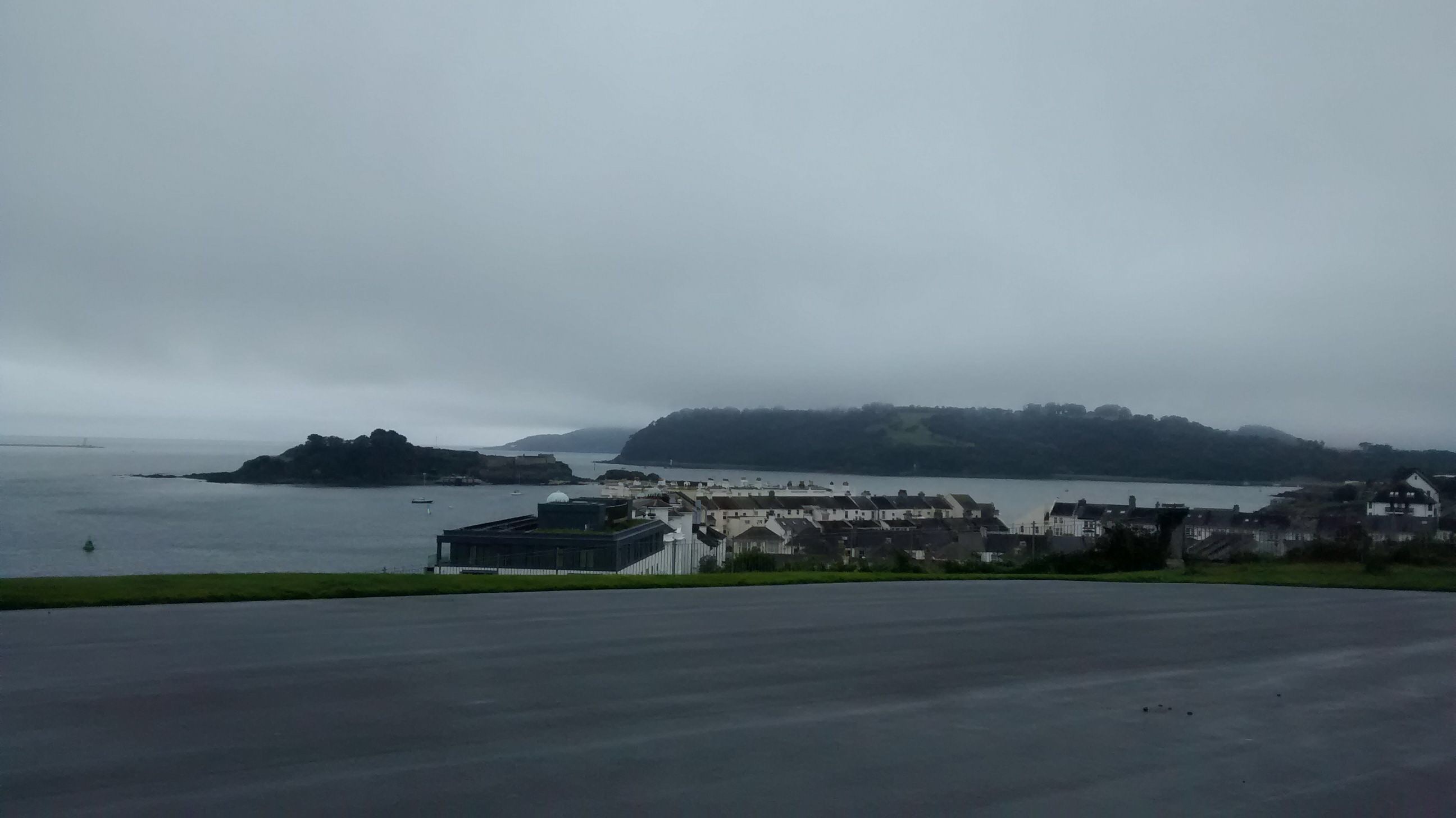
And so it was that I arrived on a slightly murky afternoon on the Hoe, with a storm on its way and ominous clouds across the Sound.

Plymouth Hoe. You’re probably already thinking about a game of bowls in 1588, Sir Francis Drake looking to win the match and go through to the next round to face the well-fancied Spanish Armada. The story is probably not true, but Drake’s association with Plymouth, from where he sailed out on his great missions of Spain-bothering derring-do, is indisputable. Drake is Plymouth and Plymouth is Drake.

And for some people, that’s a problem.

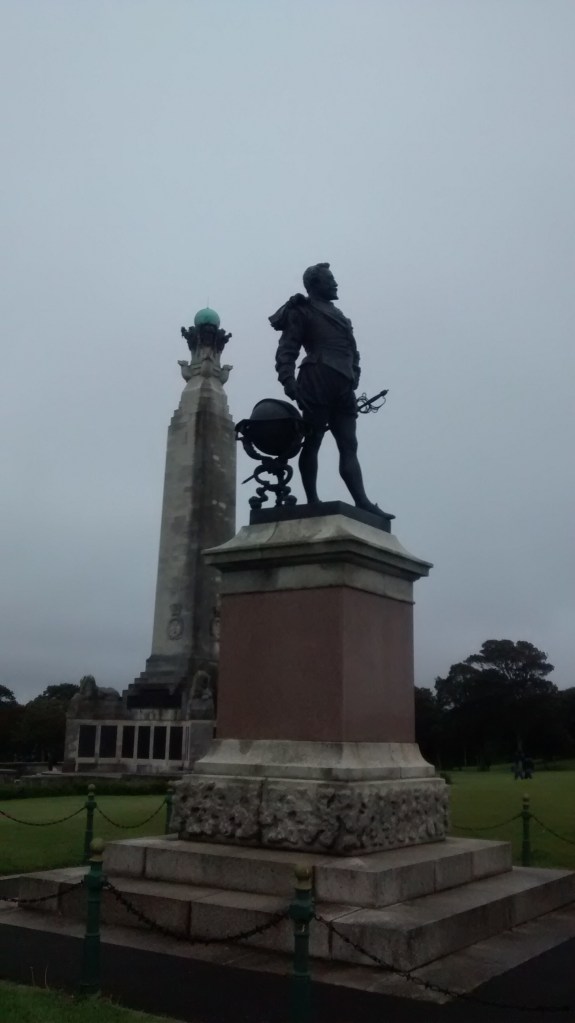
There he stands, proudly looking out over the Hoe, probably miffed at being represented in this blog by such a poor blurry photo. No, that won’t do for the ebullient figure of the one and only Sir Francis Drake – naval hero, explorer, master sailor – and slaver?

If you’ve read my posts from earlier this year on the Dominican Republic (you can find them in the Menu under – you’ll like this – “Dominican Republic”) you will know that we spent a great deal of time discussing the memorialisation of figures such as Christopher Columbus and Nicolas de Ovando, men who were crucial to the making of that nation but who inflicted much cruelty on the native populations and left a brutal legacy of slavery and colonialism to subsequent generations. Little did I know that, a few months later, the horrible death of a black man at the hands of US police would galvanise the Black Lives Matter movement and transform it into a global campaign against systemic racism in all its forms. And that it would train a laser focus on just these topics – history, memorials, statues, who is commemorated, who isn’t, and why.

Drake had an equally notable seafaring cousin, another local man called Sir John Hawkins. Together they got involved in the profitable new business of taking slaves from West Africa and sailing them across the Atlantic to be traded in Spanish colonies. It’s estimated that Drake was responsible for about a thousand people being enslaved and traded. And if it’s not clear to you already how bizarrely 2020 is working out right now, one of their main customers was the colony of Santo Domingo.

We are back where we started. Same argument, same sides. I don’t know about that statue of Columbus and Anacoana we talked about in DR, but there was talk of taking Drake down from the Hoe. And there then followed the equally predictable reaction. There’s a storm rolling in across the Sound alright, and the Met Office have called it Storm Francis. They think it will blow out in a day or so.

I’m not so sure…

Let’s get back to doing what we’re here to do, walk around a bit, take some more bad pictures, generally chill out and learn stuff.

Smeaton’s Tower, the old Eddystone Lighthouse

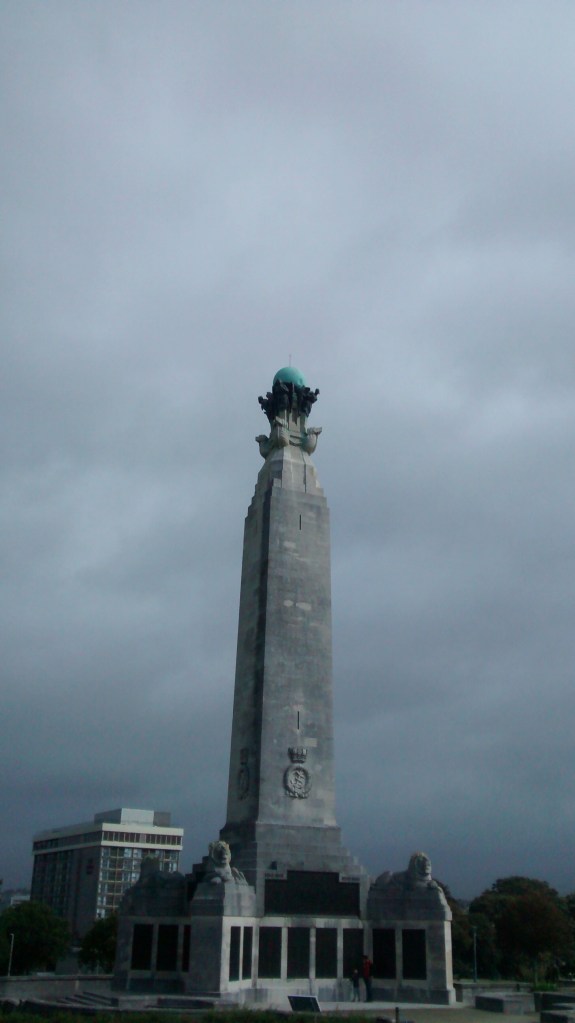
Going back to old rascal Drake, behind him you see another memorial but this time there’s no drama. The Plymouth Naval Memorial commemorates over 20000 naval personnel based at Plymouth or from other Commonwealth nations, who were lost in the world wars. The seemingly endless bronze panels are sobering enough, and that’s before you realise that there are two other memorials of the same design elsewhere. You may have seen them if you’ve been to those other historic dockyards, Portsmouth and Chatham.

The obelisk was raised after the First World War, the sunken garden commemorates the second. And it was in the 1939-1945 conflict that a cable holding a barrage balloon broke free and its shackle struck the sphere at the top of the obelisk. You can see the dent to this day.

Along with Portsmouth, Plymouth was the centre of Royal Navy operations during WW2. Which made the port particularly interesting to the Luftwaffe. A few errant balloons weren’t going to get in the way of the German desire to flatten the place. And, unfortunately for Plymouth and its people, they didn’t.

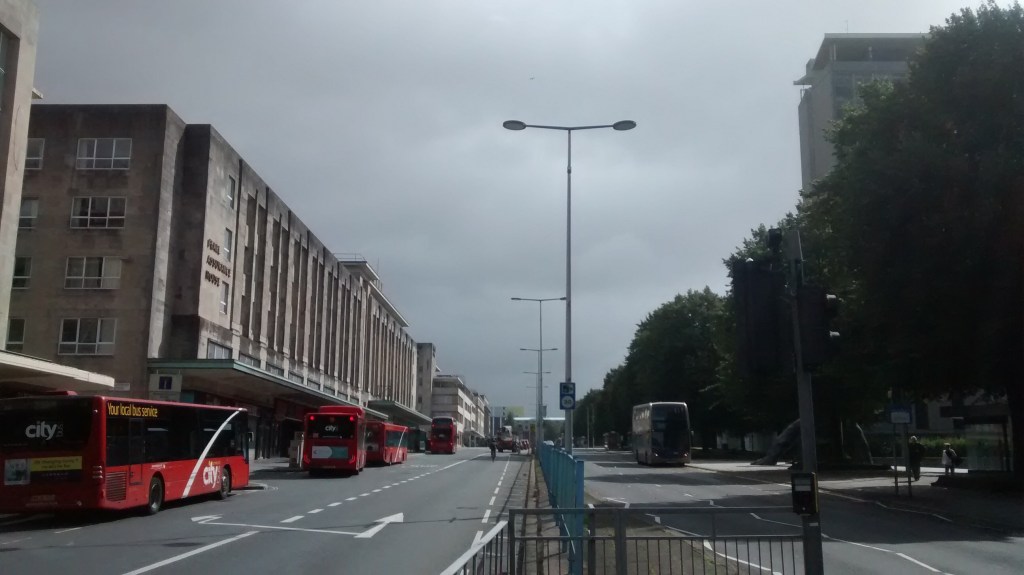
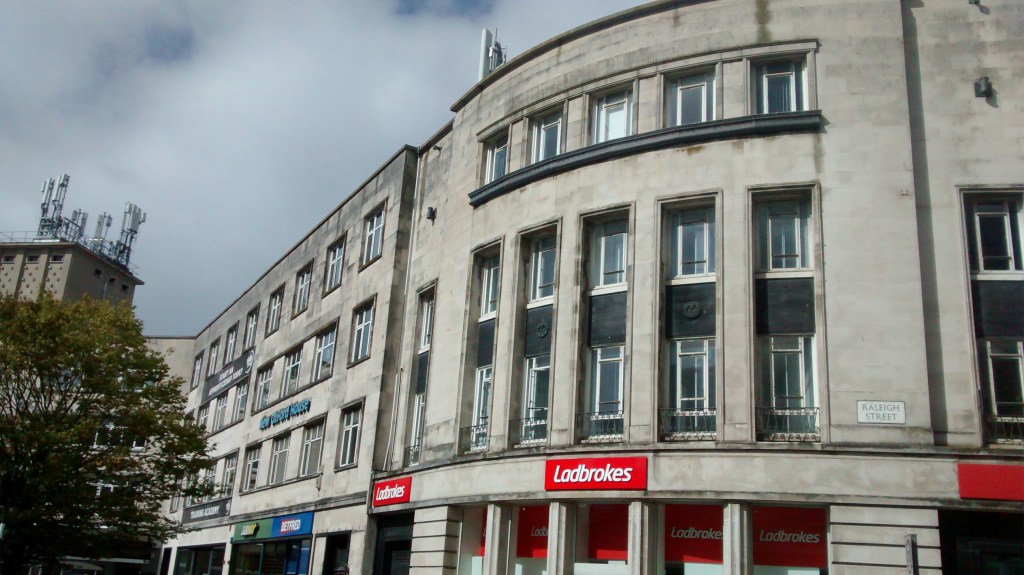
So if you’re after a little olde-world Devonian charm in your town centres, try Exeter. But if you like your grand Art-Deco-meets-restrained-Brutalism, the 50’s rebuild of the city centre might just do it for you, if you don’t mind the wind. Me? Well I sort of got the point of the grand unified styling of those broad avenues and the general clean-cut feel of the buildings with their Deco flourishes, but I could also understand why there were still rooms free in Plymouth hotels while Falmouth and Dartmouth seemed to be all booked out. Don’t get me started on St Ives.

There’s plenty more to see and do nearer the shoreline, and I won’t be able to fit it all in on this trip. For now we’re going for a little walk up into town…

Not to there. And don’t snigger.

…do the steepish climb into the wide expanse of Central Park, the version of Central Park where you actually get a decent view out…

…before heading back down to the station. We’re off to spend the afternoon in Cornwall!

Back on the bike

At first, the train edged gracefully away from platform 2 at London Paddington, a stately roll-out befitting a grand express service heading out onto an iconic route. Gradually it sped up as it glided through West London, and accelerated a little more, and more, imperceptibly, until you couldn’t avoid the fact this thing was absolutely flying! The whole carriage, the whole train, recklessly shooting along the narrow iron tracks below at an insane speed. Could they contain this bullet? Was this safe?

Down the years, I’d been on too many high-speed trains to count. If I’d ever even noticed how fast they were going it was only as subconscious reassurance that I’d be getting to where I was going in good time. Today, I needed reacquaintance with the experience. Over the last five months, I had only been taking suburban train journeys. And there had only been ten of them. All in the last two months. One long car journey, and maybe one bus. The rest of my world, suddenly constrained to the three or four miles I could comfortably walk until I could turn back and make for the safety of my own home, a refuge from an outside world that had suddenly, shockingly, turned deadly…
As I write this, it may still be too early to definitively assess how the Covid-19 pandemic has broken our world. We can count the bodies, think of the millions still struggling with the disease and its aftermath, feel for the millions more who have been ruined financially and psychologically, the lost businesses, the lost futures. But we are currently still in the middle of this thing. And it even seems trivial to fuss about travel and blogging while a global catastrophe continues to unfold, especially as the world of travel itself lies in ashes. We should at this point and in this place consider above all, what is going to become of all those fabulous tour guides, hotel staff, bar staff, etc, without whom none of us could meet the world with such ease and joy, without whom none of these posts could exist.

For now, the best we can do is rehearse the old lesson; take nothing, nothing, for granted. And look with a keener eye at those fundamental components of your life when they eventually reappear. What had you missed before through overfamiliarity, what had you overlooked, like the dawn chorus you never noticed on the way to work until the competition from the daily hubbub was taken away?

One thing I had become overfamiliar with, was Britain. In the summer of 2020, the pandemic had essentially made foreign travel impossible or impractical. As much as I could have sat the whole thing out at home, home was virtually the only place I’d been for months and it was time for a change of scenery. But if I was going anywhere I would have to take on the risk I had gone out of my way to avoid before, that I would find myself somewhere that felt too much like home, while all around was grey and bucketing down with rain.

I knew, of course, that I lived on a stunning island, with an almost unmatched resource of rich green landscape, tumultuous seascape, and a place that was a witness to centuries of stories that shape and shake the world. And now, with nowhere else to go, I had the opportunity to explore some of it. So off I went to Paddington, on my way to the West Country. And why not join me, socially-distanced of course, just grab your face mask, find your seat..there you go, strap yourself in nice and tight please – these things are fast!

And now…?

I’ll let you into a secret. I had not been overexcited about doing that last trip to Dominican Republic. For all the tropical beauty and the ancient colonial history, DR had always seemed to be the home of the all-inclusive. The idea of spending virtually your whole holiday trapped inside one great sanitised all-you-can-eat restaurant complex had never appealed before, and although it had its moments (like not being the office) I missed the local touch of staying somewhere more amenable near the main drag.

It hadn’t helped, I guess, that I was beginning to wonder whether I’d seen all the places I wanted to see, had gorged on all the travel excitement I wanted to indulge in, sat in all the departure lounges I ever wanted to sit in (easy really, because there’s only one departure lounge. And it’s in every airport. Ever built.)

So why did I go? Well, the original plan at the beginning of the year was Vietnam, but the beginning of the year is far too late to start planning for a trip there near the beginning of the year. I’d had a hankering to see the bigger Hispanic islands of the Caribbean, but Southeast Asia is one place I do still find endlessly beguiling and going back to Thailand was a strong and achievable backup plan.

But in the end it came down to reducing risk. At the time I was looking to book, January 2020, it appeared that a new variant of the SARS coronavirus of 2002 had reappeared in the region and cases were being reported in Thailand. So DR it was.

Far better to stay safe and keep yourself well away from something like that.

Thoughts from the Departure Lounge

A reader has requested that I end my blogging from DR with a detailed description of the departure lounge and the flight back. Maybe they’re just very bored. (I nearly wrote “boring”). Writing up the flight might be tricky as I hope to be asleep for most of it. But here we go with a description of Punta Cana Terminal B, Departures.

Sort of.

Ambience

My flight is one of only three to leave tonight, so it feels refreshingly empty and relaxed for an airport.

And the Dominican Republic is a relaxing place to come, as long as you’re firm with the persistent offers from taxi drivers, souvenir sellers, masseuses, both the good sort and…the other sort. The people are for the most part welcoming. Tourism is the number one industry here so they will go out of their way to make you feel at home.

As I say that, the airport staff behind me are making one hell of a racket with their chatter. Dominicans are ebullient, which can be engaging, but not that time in Puerto Plata old town when that woman started hurling abuse at someone for a good few minutes…I don’t know why, maybe he’d said something about the fact she only had one hand.

Green chairs

It all gets a bit green once you pass security – green chairs, big green disks on the tops of the pillars, green tea-table-things-you-only-see-in-airports.

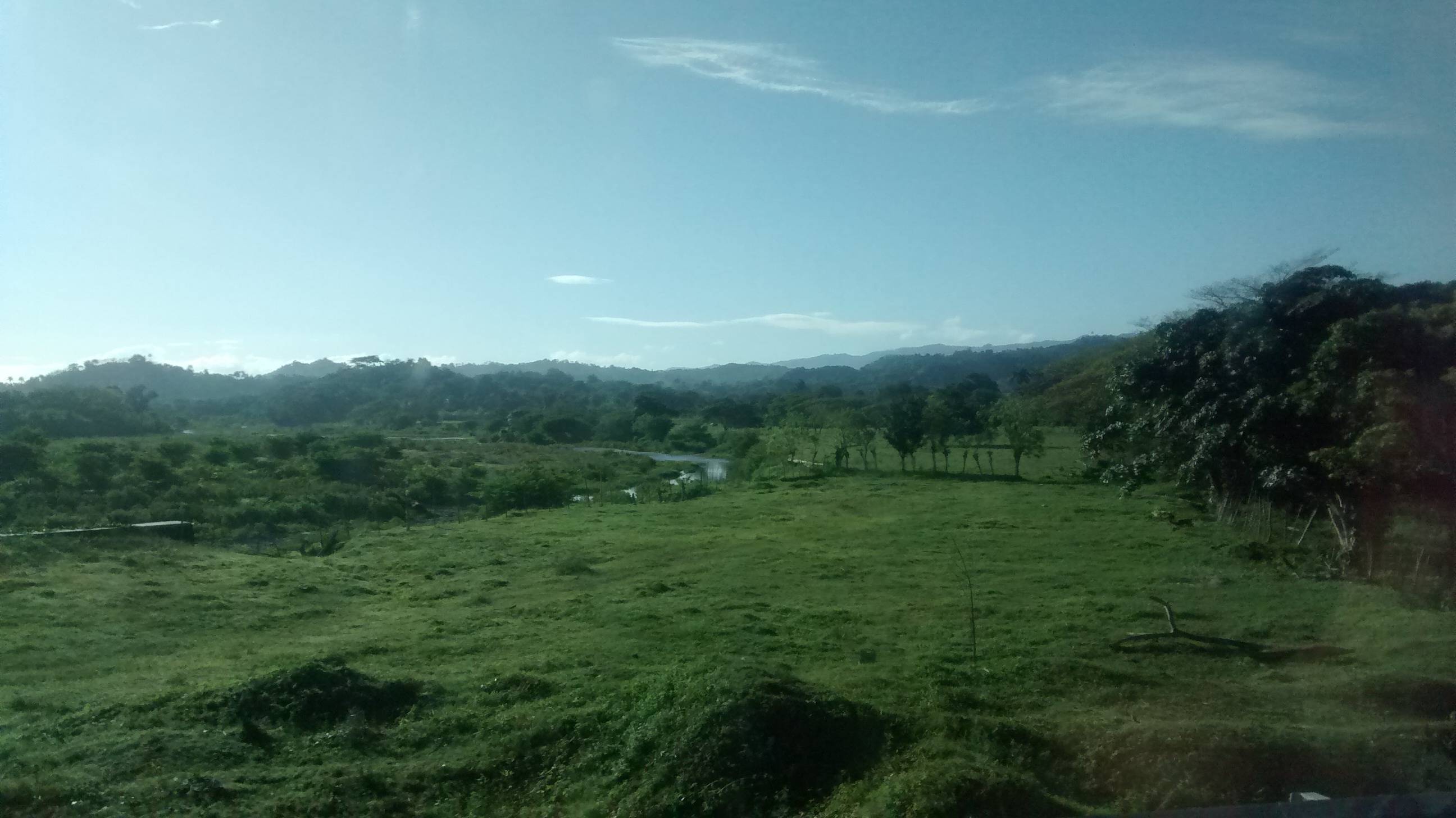
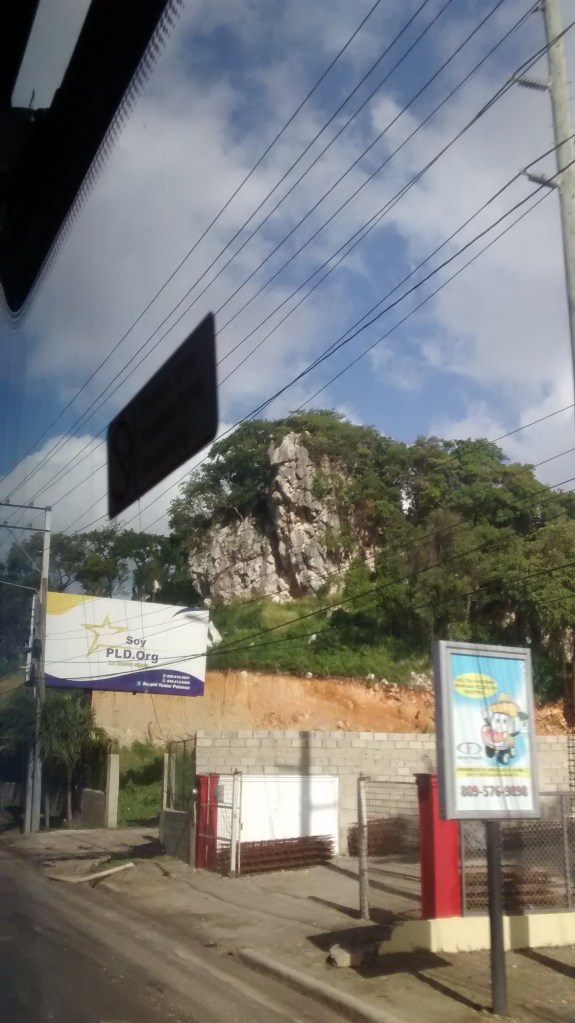
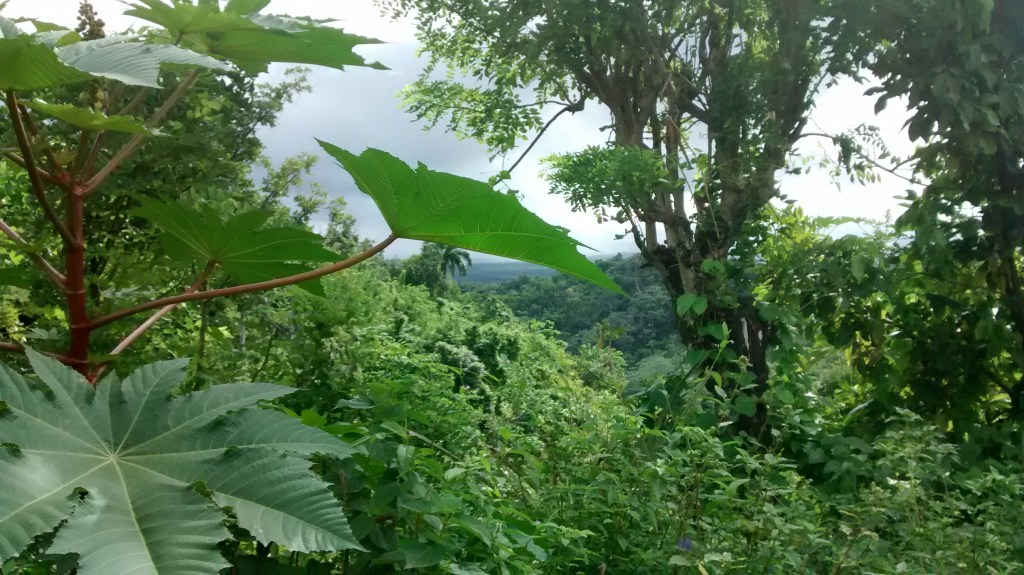
It reminds us that, like many tropical paradises, DR is brought to you by the colours Blue and Green. The stunning run through the mountains between Santo Domingo and Puerto Plata is particularly verdant but the scenery is engaging in most places I went through.

Recycling points

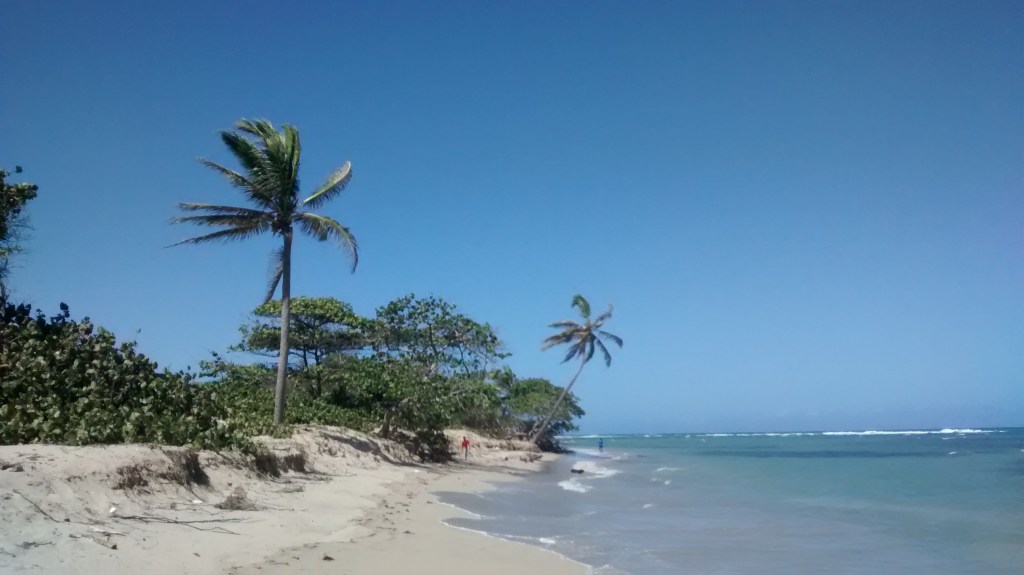
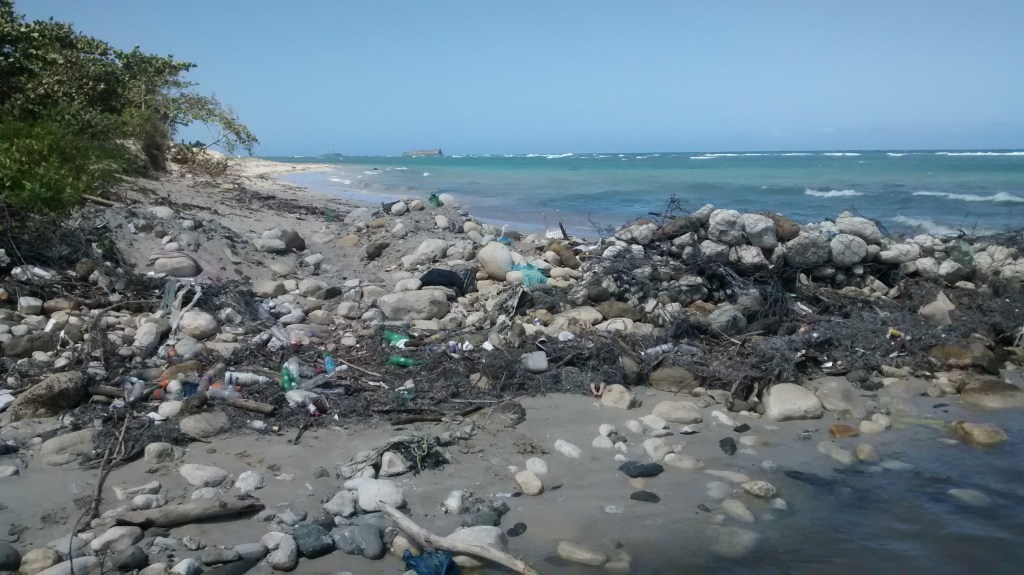
I’ve spotted a recycling bin to drop off my drink cup when I’m done here. And that’s not something the country is great at to be honest. You can take a photo like this

walk along a bit, and see this…
Some could argue that the environment is not the priority in a country where 40% live in poverty, but is it really either/or? And it’s a country heavily dependent on tourism, what do we go there for? It’s certainly not the driving.

Ah, still some time before my flight. Time to chill out and relax before the return to the cold drear of reality. And, in the same way, that’s what a holiday here is all about, general recuperation and fun in the sun. Not everything is as efficient as it could be, but don’t worry if your 3-hour bus ride to Santo Domingo takes an extra hour to negotiate three bus stops in Santiago de los Caballeros, just go with the flow and relax. And enjoy.

Adios!