Taking a Ganda

A great and beautiful medieval Flemish town, towering churches laden with masterpieces, opulent guildhalls and atmospheric spaces overlooking dreamy rivers and canals, and the best thing about it… it’s not Bruges.
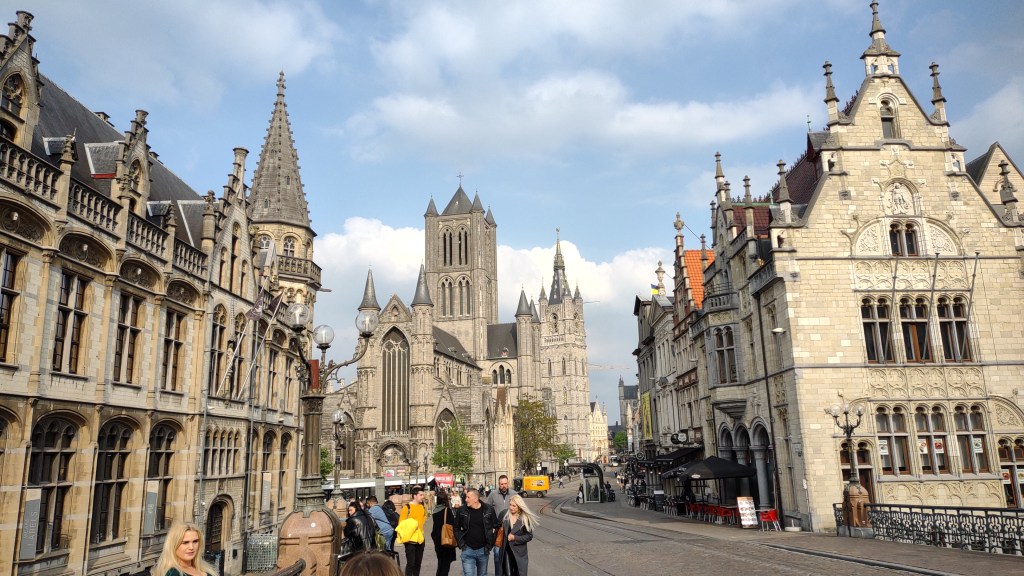
When I mentioned to people that I was in Ghent, someone responded that it looked good from my photos but they had had to Google it first. Everyone has heard of Bruges, and the result is that you can hardly move for your fellow visitors. Ghent gets its share of tourists, but to date this vibrant university city has been thriving happily under the broader travel radar and that means the place feels manageable and  – unlike Bruges when I was there three years ago – you can actually move.

Maybe it helps that the center of Ghent is more expansive and the streets wider, but then again that itself is a case against the sheep-like nature of tourism. The reason Ghent is bigger is that at one time during the Middle Ages it was just about the most significant European city north of the Alps. But we’re getting ahead of ourselves.
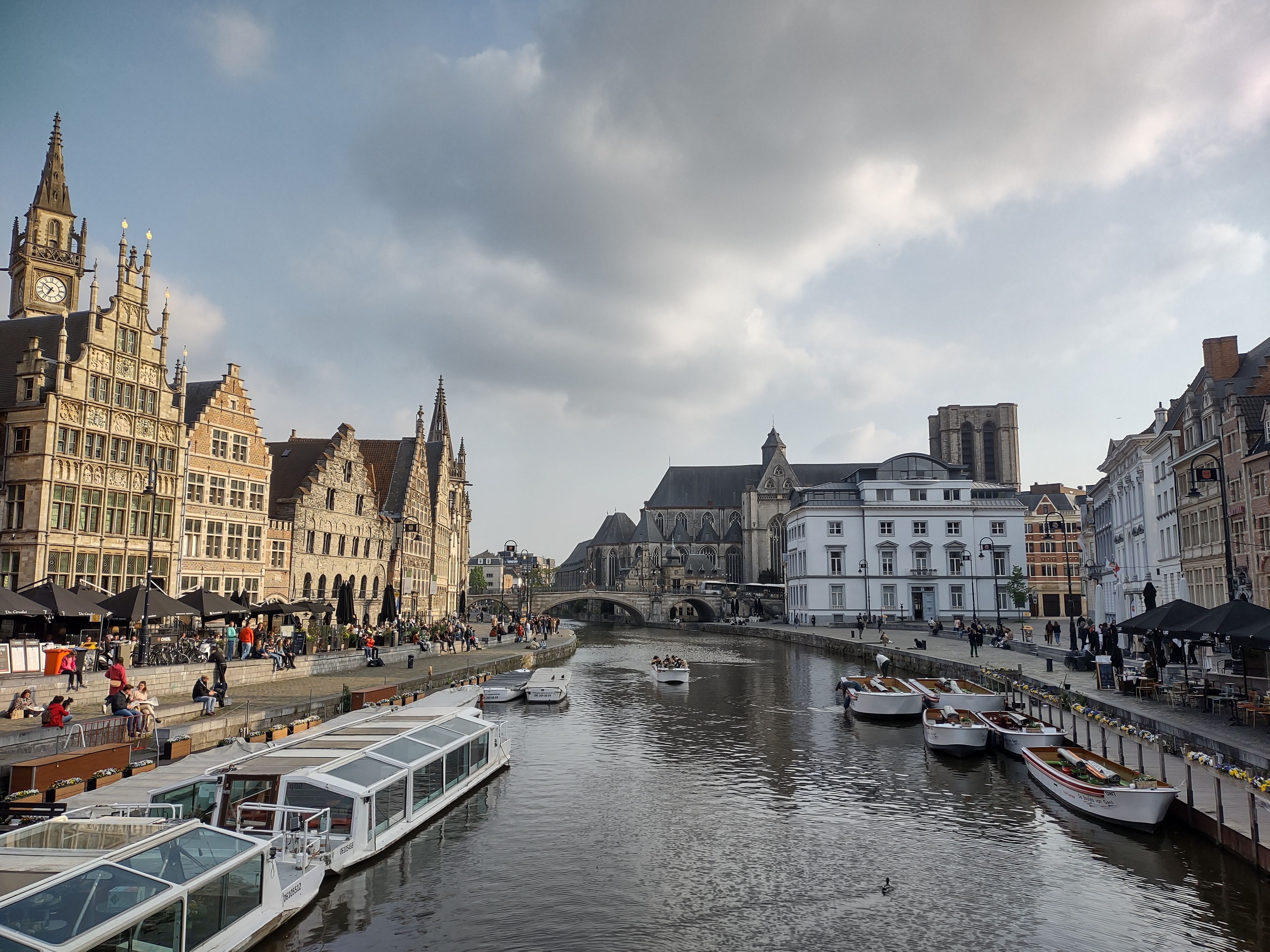
You usually find a long-standing settlement near rivers, and there has been a settlement at the confluence of the Lys and Scheldt rivers since prehistoric times. The Celts were recorded here first, and a Celtic word for confluence is Ganda. The French still call it Gand. You see where I’m going here. The Romans moved in, followed by the Franks, followed – terrifyingly – by the Vikings.

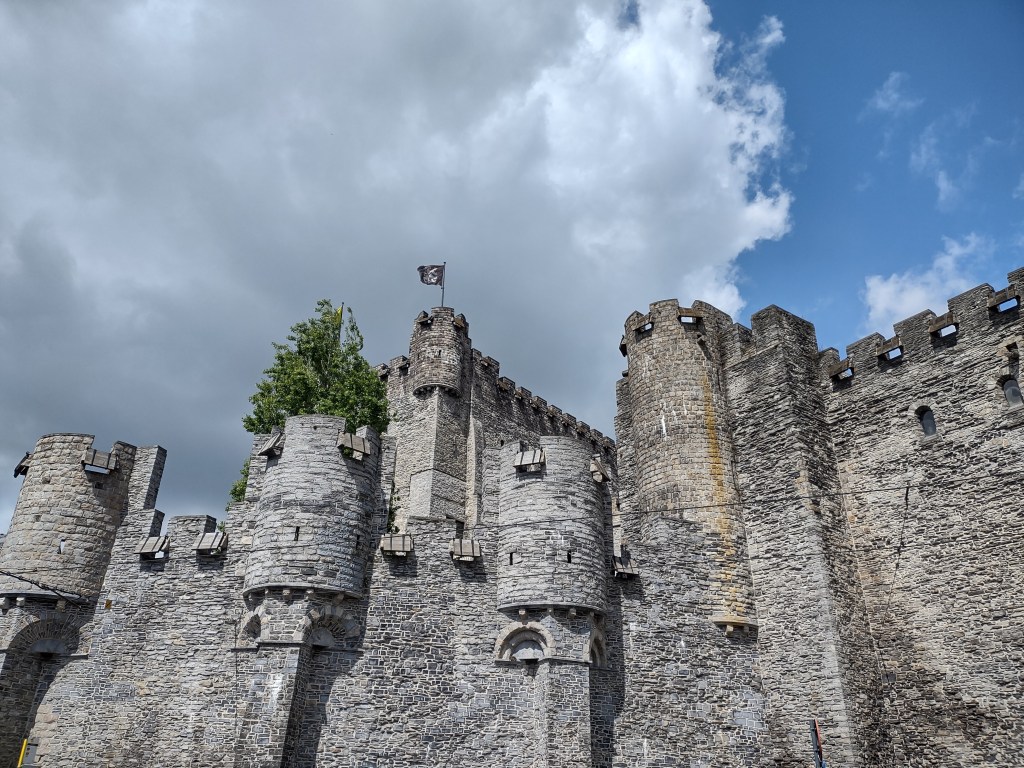
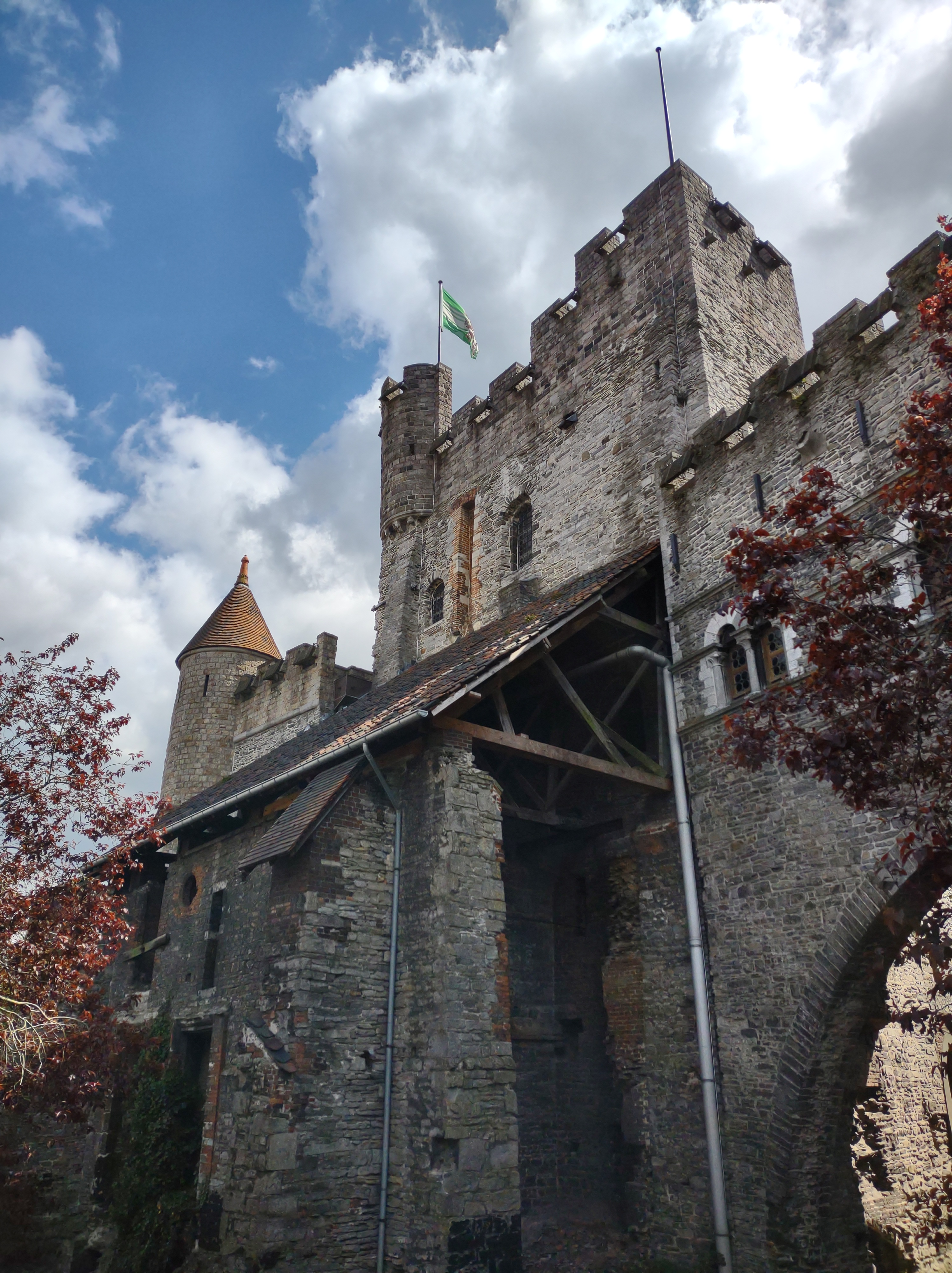
The settlement recovered and prospered, and by 1180, under the protection of the Count of Flanders, its notable citizens were rich enough to start building their houses in stone. The Count, one Philip of Alsace, found the city nobles to be, well, right city burghers. To put them in their place in 1180 he built his own collosal stone house, and in a style that would dissuade them from chatting over the garden fence about house prices.

The Gravensteen.
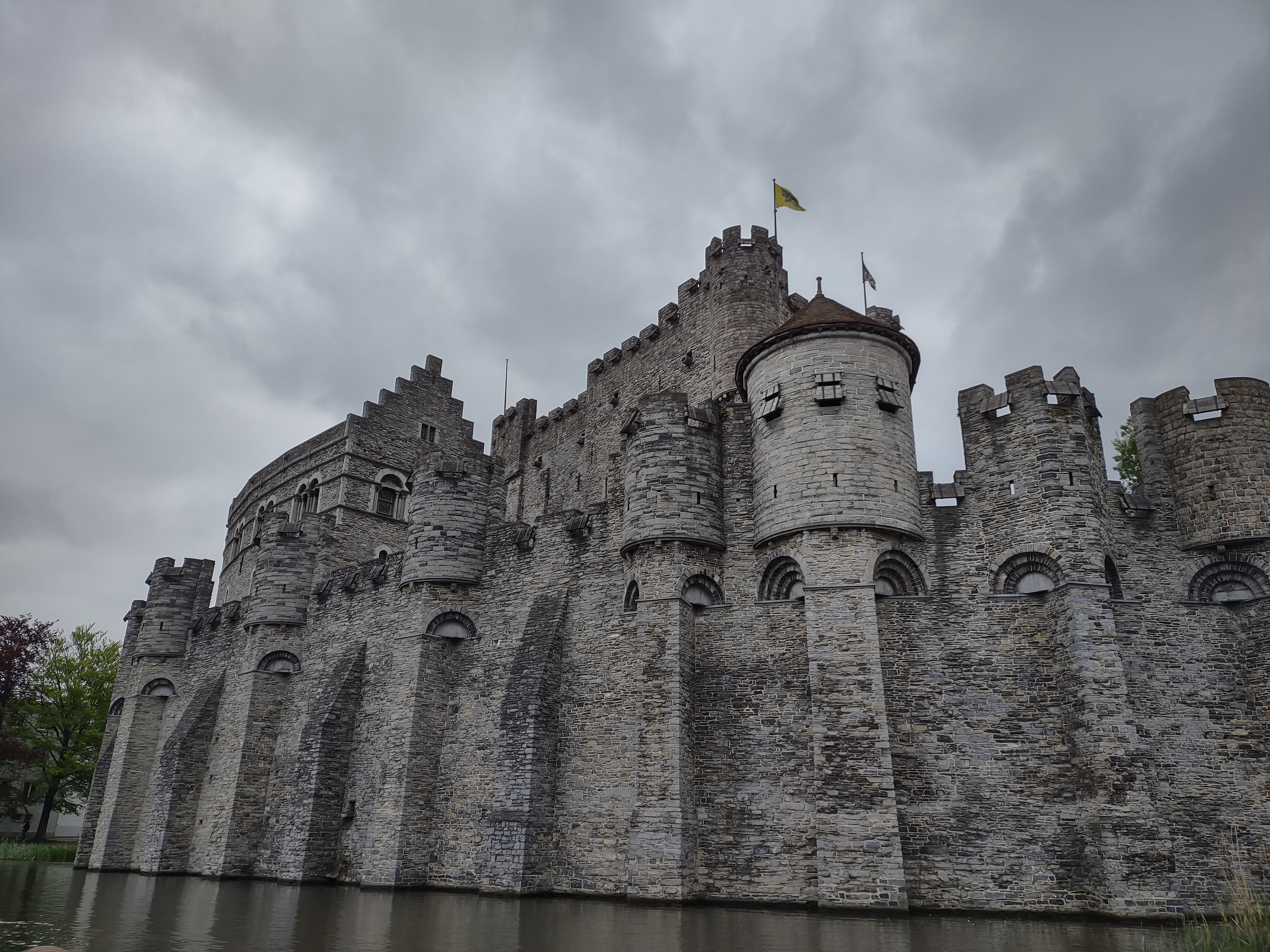
“No cold-callers please, the burning oil from the ramparts will not keep you cold for long.”

The Stone Castle of the Counts was used as their residence until 1353, from which point it was variously used as a court, prison, torture chamber, and nice stuff like that. Today’s Gravensteen is one of Ghent’s most popular attractions, which pays the bills until it manages to hire out its name to a villain in the next Harry Potter franchise blockbuster.

Message received, the city notables went on with their own business. And their own business was booming. There were plenty of sheep in the marshland of Flanders and Ghent got super-rich on making cloth out of the wool. The city-state grew and by the 13th century there were 60,000 people living here.

And if you got it, you flaunt it.
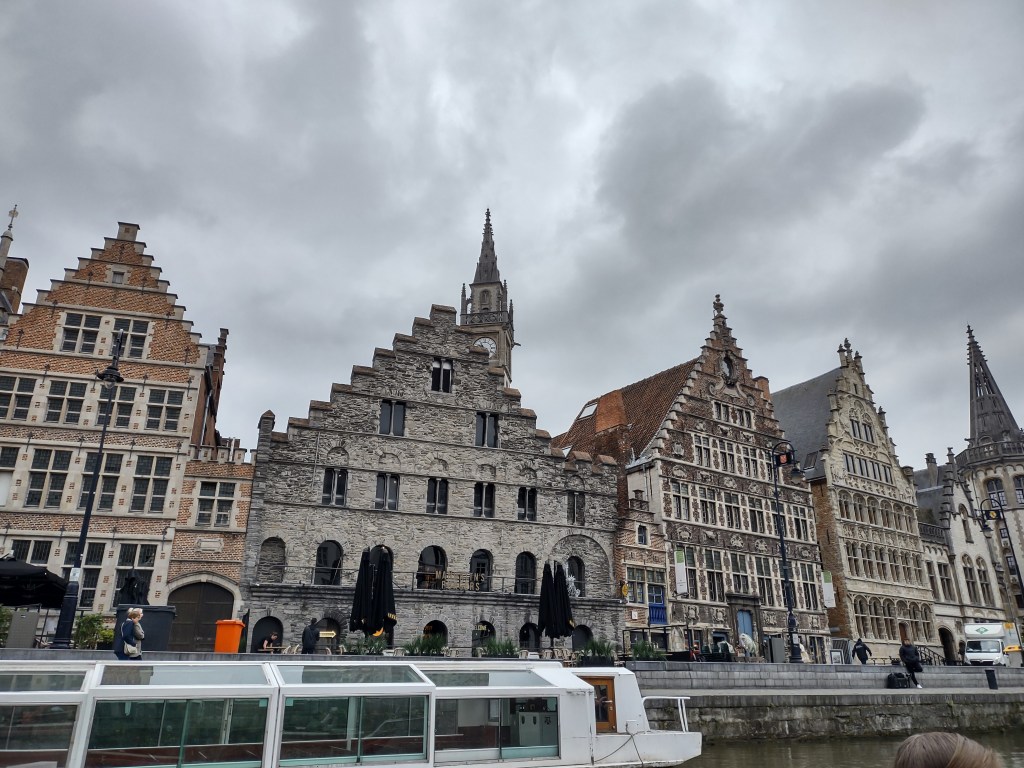
The splendid guildhalls of the Graslei

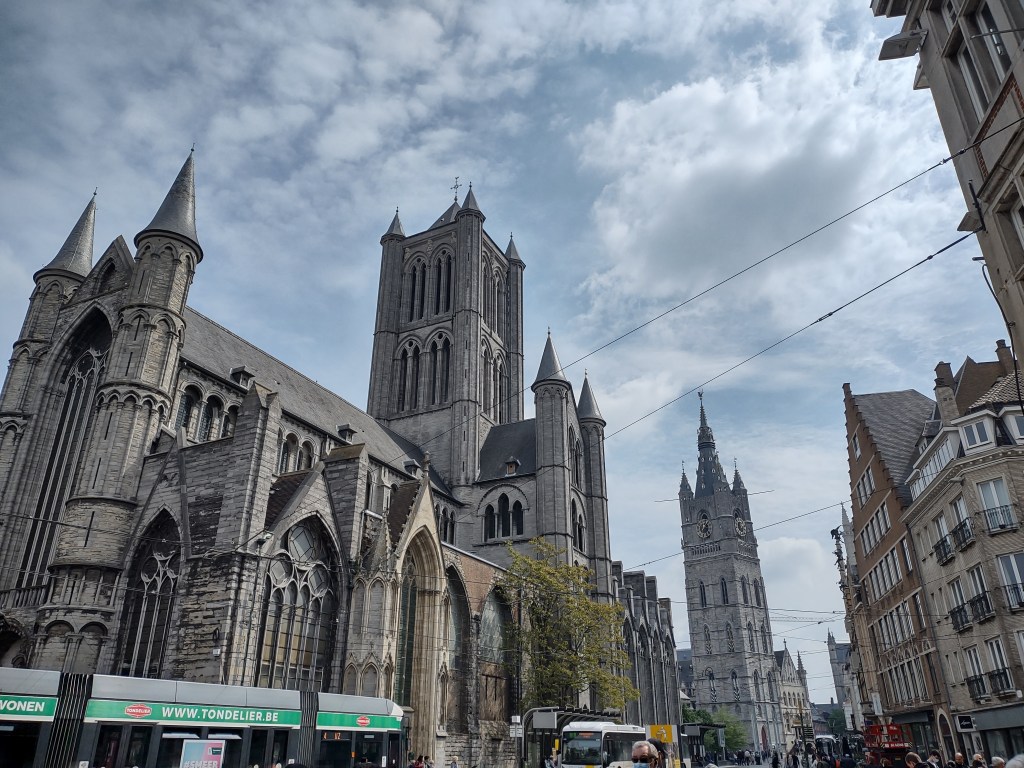
The historic centre of Ghent has two great cathedrals, St Nicholas and St Bavo. Here’s old Nick in all its glory, and behind it the Belfort, the great belfry symbolising Ghent’s independence and power.
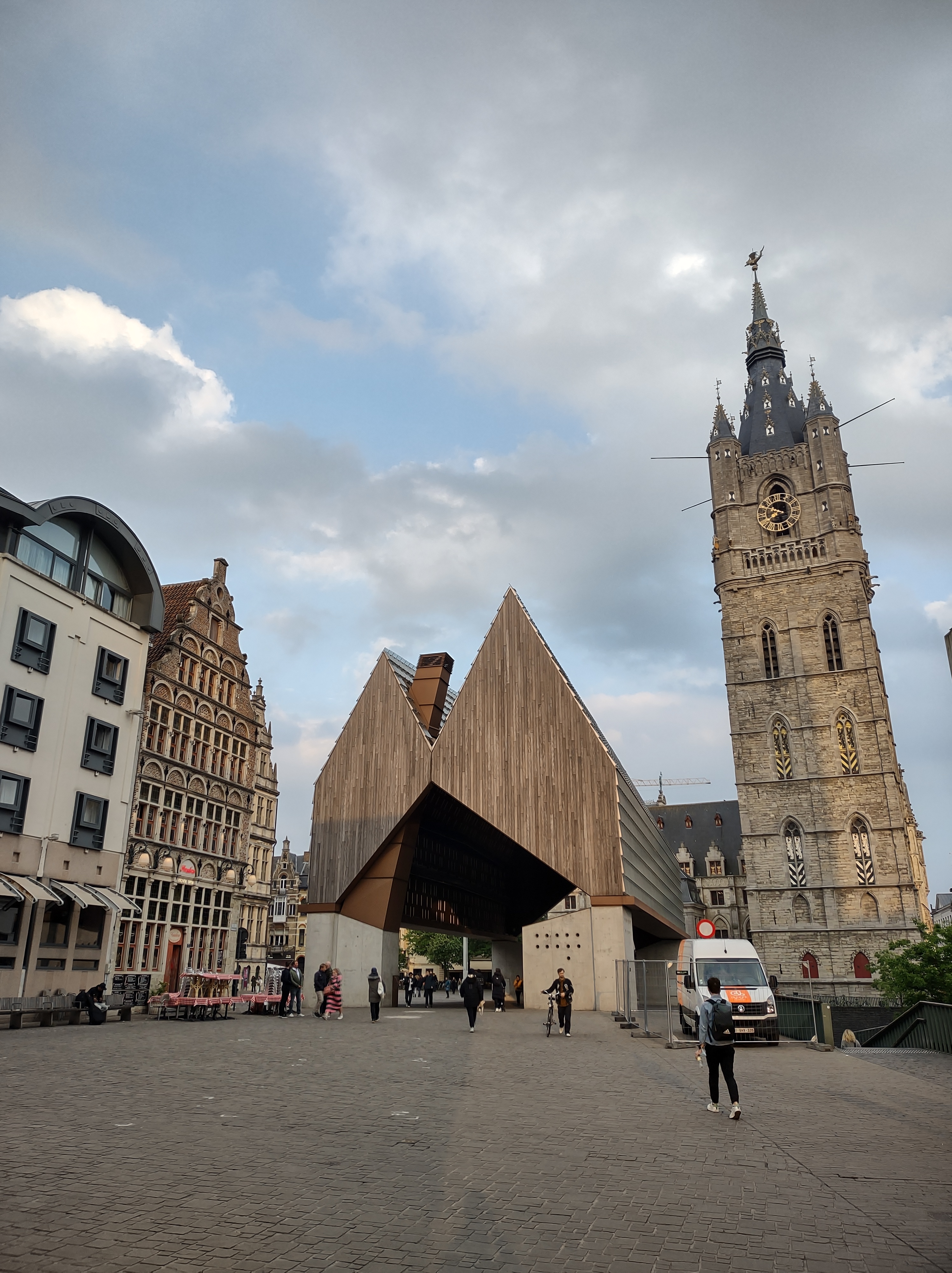
Belfort again, with the Stadhals, some modern thing

And as was common at the time, with great money came great art. St Bavo’s has the jewel, the world-famous Ghent Altarpiece and its Mystic Lamb, a precursor of the Renaissance and considered one of the most significant masterpieces in Western art.
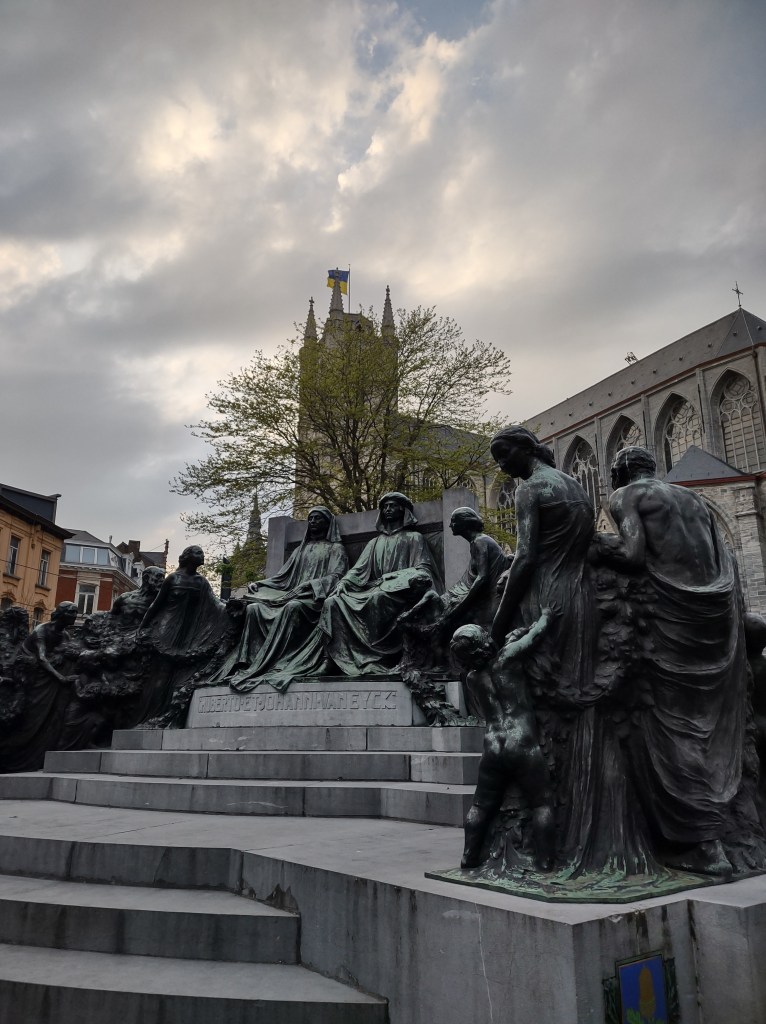
Its creators, the Van Eyck brothers, sit proudly in front of the cathedral in this sculpture dating from Ghent’s hosting of the World’s Fair in 1913. The city of Ghent has always produced sublime artists, from the Van Eycks of the late Middle Ages all the way down the years to their modern equivalent, Kevin de Bruyne.

But all that wealth couldn’t protect Ghent from the dynastic struggles of the time – nobles against counts, city against city, France vs Flanders, the Hundred Years War (Ghent sided with England because it needed the wool). There was the odd battle, the odd defeat, and so forth, and it ended up the hands of the Dukes of Burgundy. In the late 15th century Flanders passed from Burgundy to the House of Habsburg, just in time for the coming of Protestantism and religious war.

And that’s where the fun started.
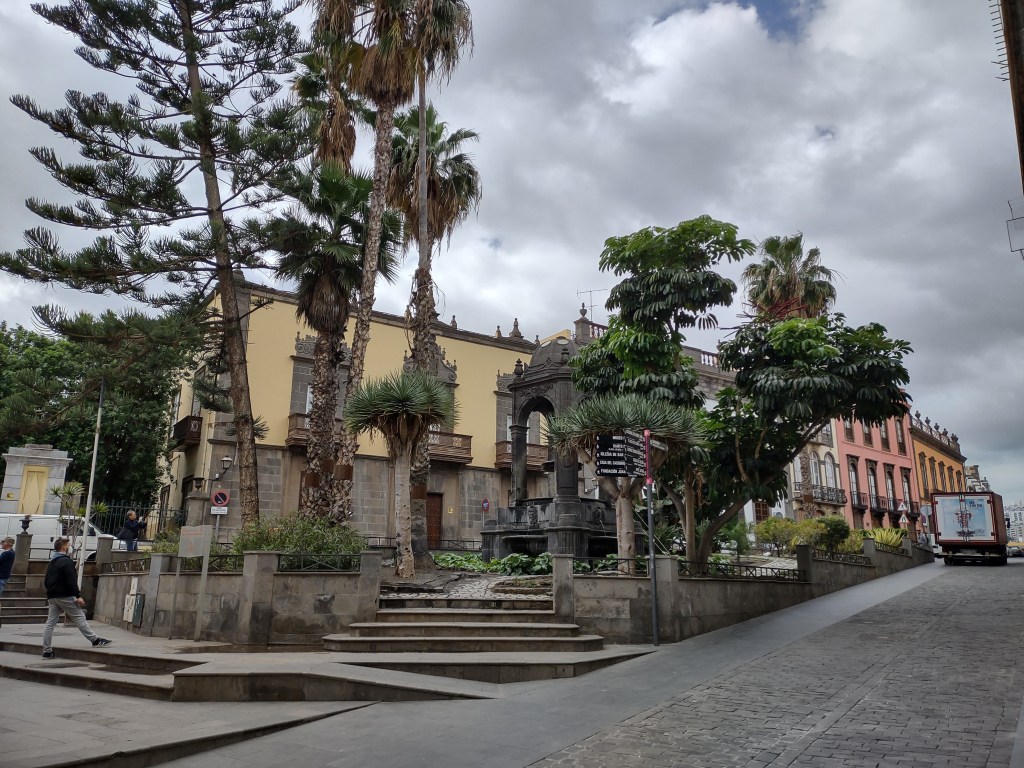
The three palms

First there were the Guanches.

Probably of North African Berber descent, the original inhabitants of the Canaries were cave-dwelling folk but more sophisticated than that might sound. Unfortunately for them, in the 15th century their island home off the coast of North Africa was right on the route to India and the Spice Islands that the Spanish and Portuguese were finding useful for getting around the pesky Turks in the eastern Mediterranean.

In 1478 the Castilians decided to take Gran Canaria for themselves. A naval man called Juan Rejón led the expedition and on 24th June they disembarked at a decent spot near a river mouth at the north-east end of the island. There’s a very slight rise away from the river, and for strategic reasons Rejón based his camp upon it.

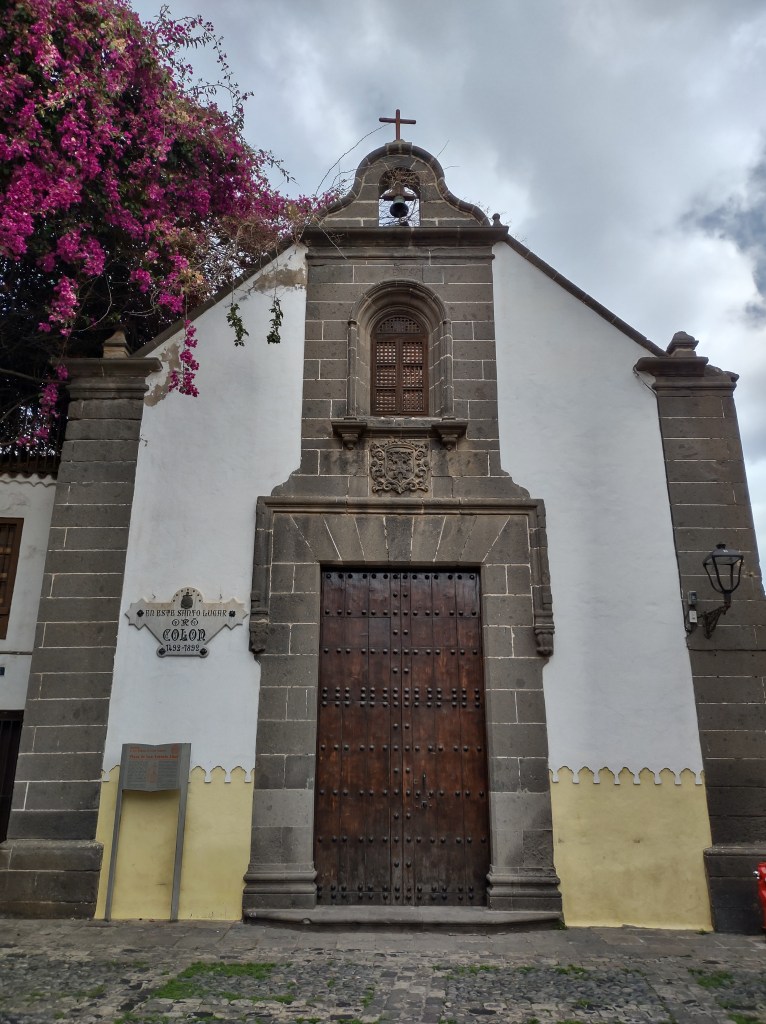
San Antonio Abad hermitage, a rebuild of the first church on Gran Canaria

There was another reason why the special Juan liked the spot. Just down the road to the right of the church there was a little grove he could use as a landmark wherever he was on site.

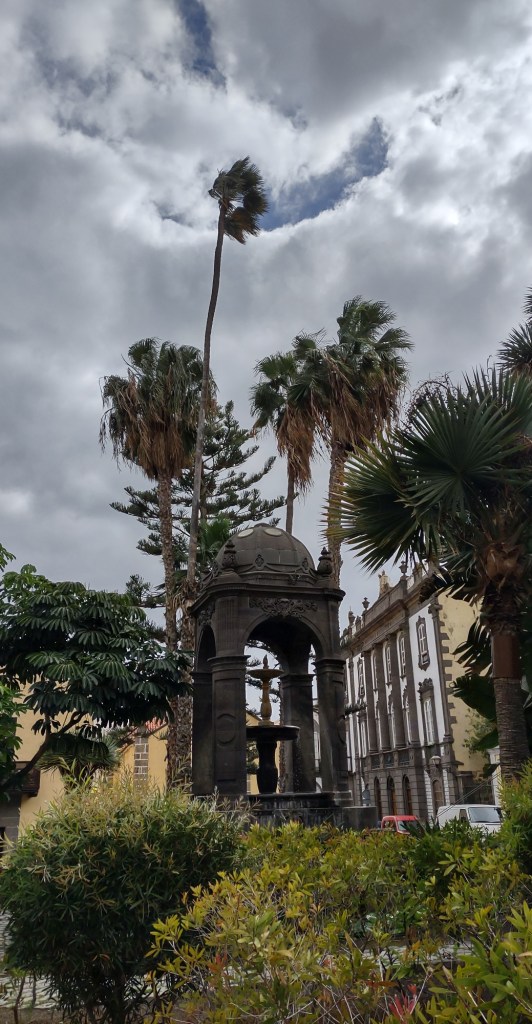
Easily spotted. It had three palm trees.
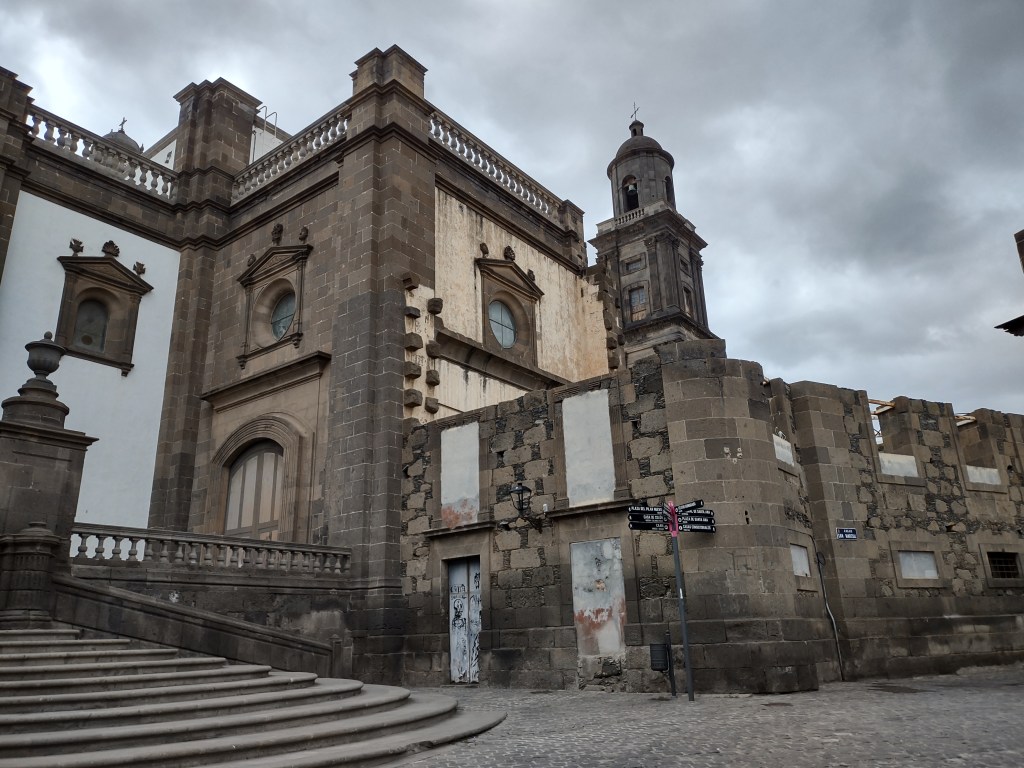
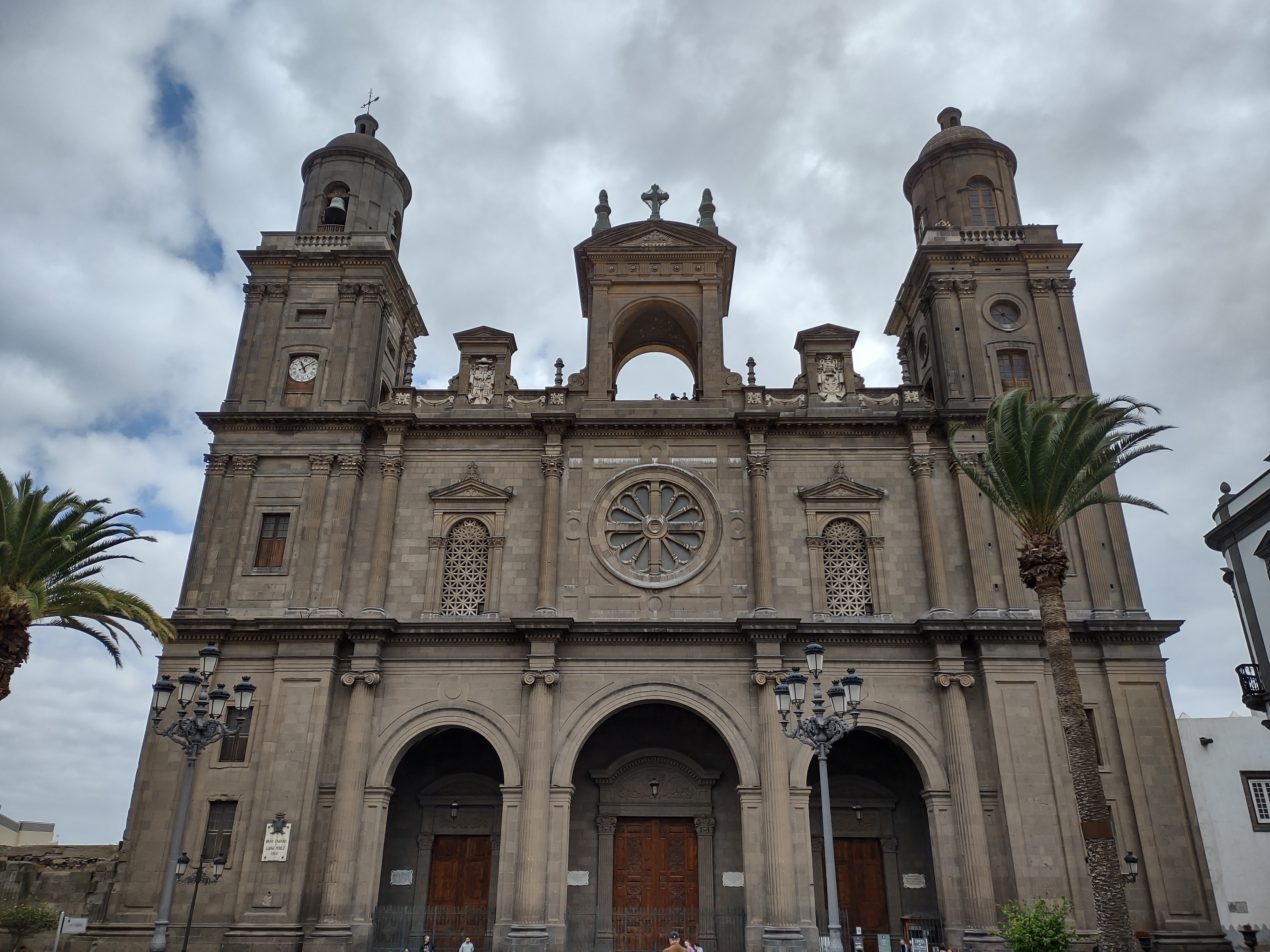
With the poor Guanches finally dealt with in 1483, El Real de Las Palmas, as the city came to be known, developed and soon the devout, Inquisition-loving Spaniards were building themselves a cathedral and a nice square to go with it just to show who’s boss.

The Catedral de Santa Ana began construction in 1497 but for various reasons it wasn’t completed until the 20th century. Reasons ranged from financial difficulties all the way to the Dutch – no, not architects or subcontractors, but a raiding party in 1599 who managed to destroy some of the town before being kicked out.

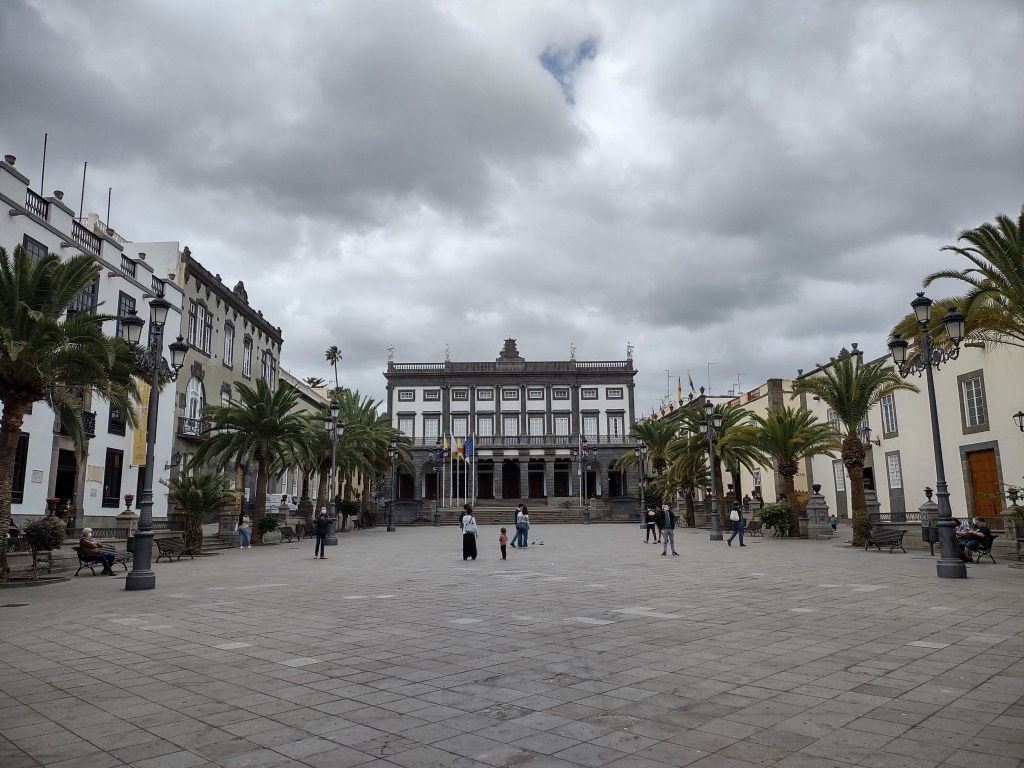
Turning away from the cathedral we see Plaza de Santa Ana, with its bishop’s seat to the right, town hall in front, very much the seat of power in the island.

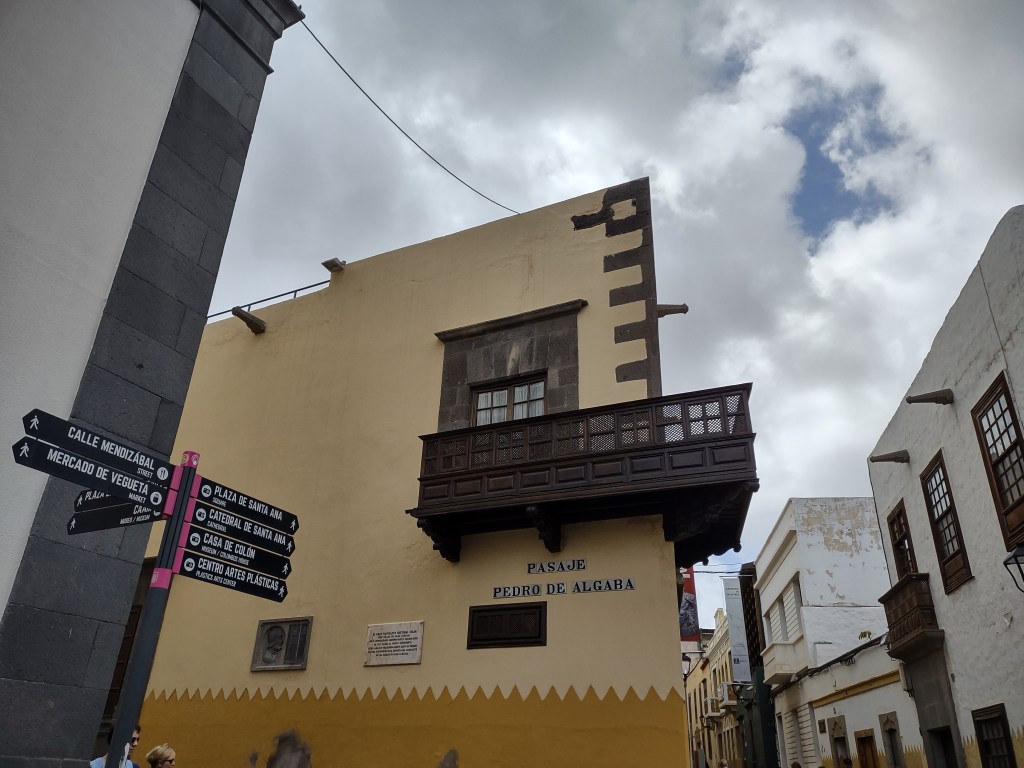
Soon Christopher Columbus was popping by on his way to, er, “India”. He met some local officials in the house below to discuss getting supplies for his ships, and other matters.

Expert opinion seems to think that all he did here was talk and he actually stayed somewhere else, most likely on his ship. But put Columbus’ name to anything and you have a tourist attraction, and the Casa de Colón is now a museum dedicated to the man and the connection between Las Palmas and the exploration of America.

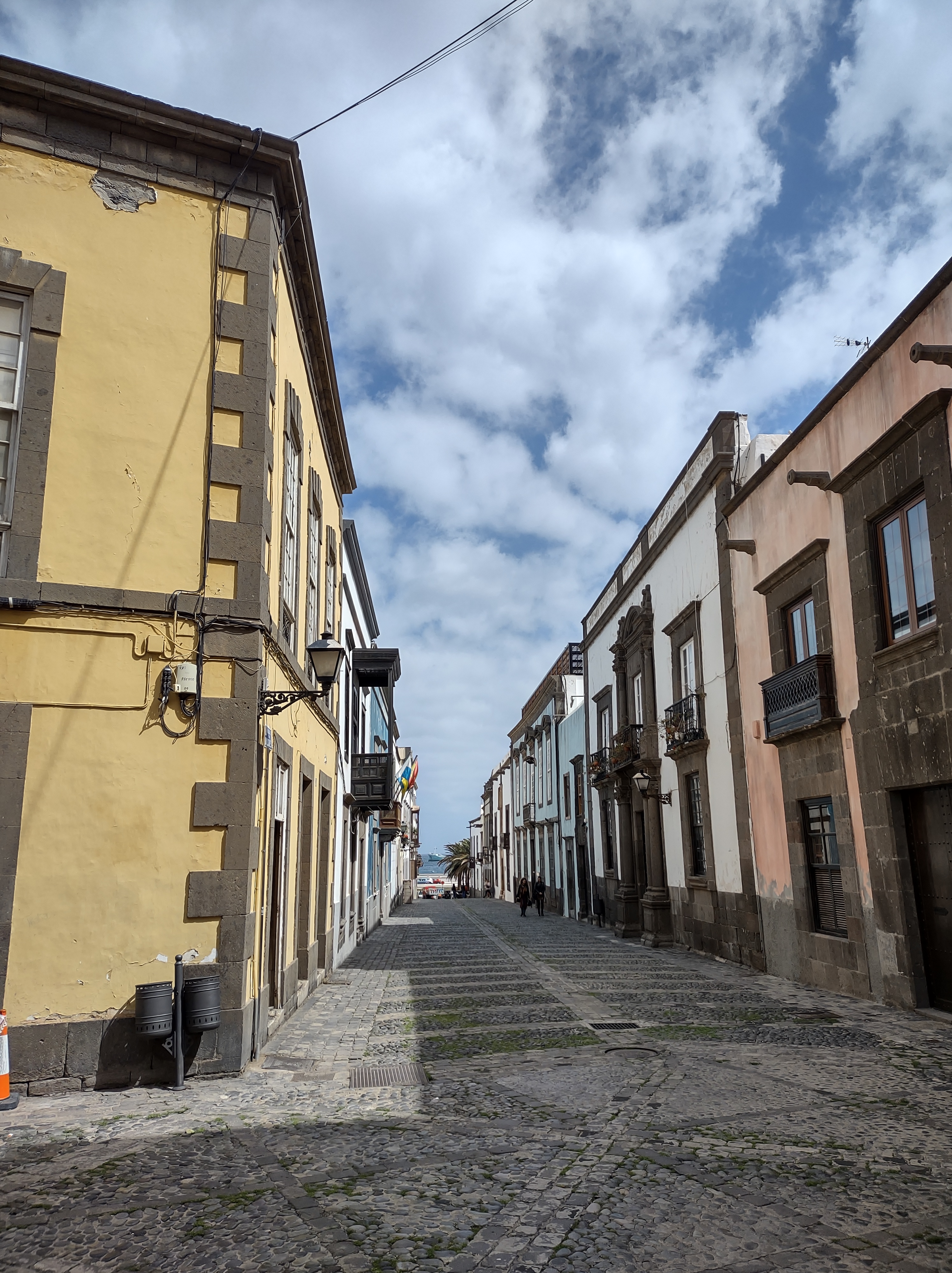
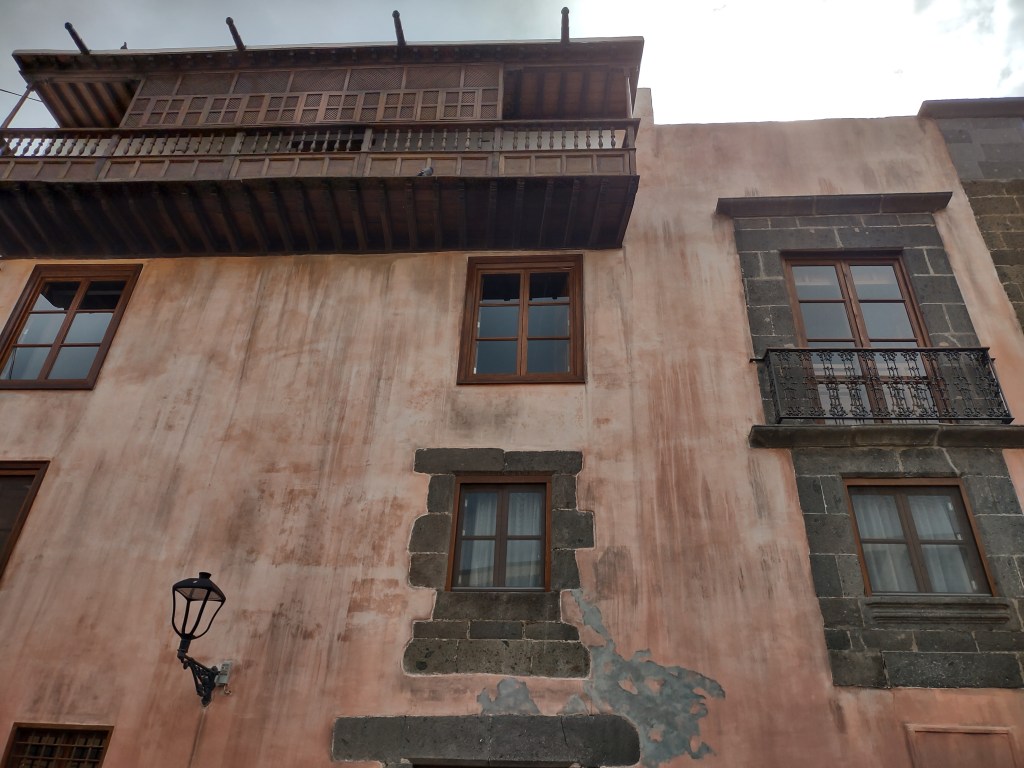
Over time a major port was developed a mile or two north and the new Las Palmas developed around it. The old capital rather vegetated into a lovely old quarter called Vegueta, full of atmospheric stone-washed alleyways overhung by wooden colonial-style balconies.

And apparently loved by the stars too. The old town is well preserved, so the tattiness of this house must be intentional. At the time they were using it as a film backdrop for something set in Havana but there was no sign of a film crew when my walking tour passed through, nor the main star – Jennifer Lopez.

If you’re in Las Palmas, or on the island, Vegueta is well worth half a day of your time. But soon I was back on the sightseeing bus to the new big city, camera in pocket…

Gran Canaria

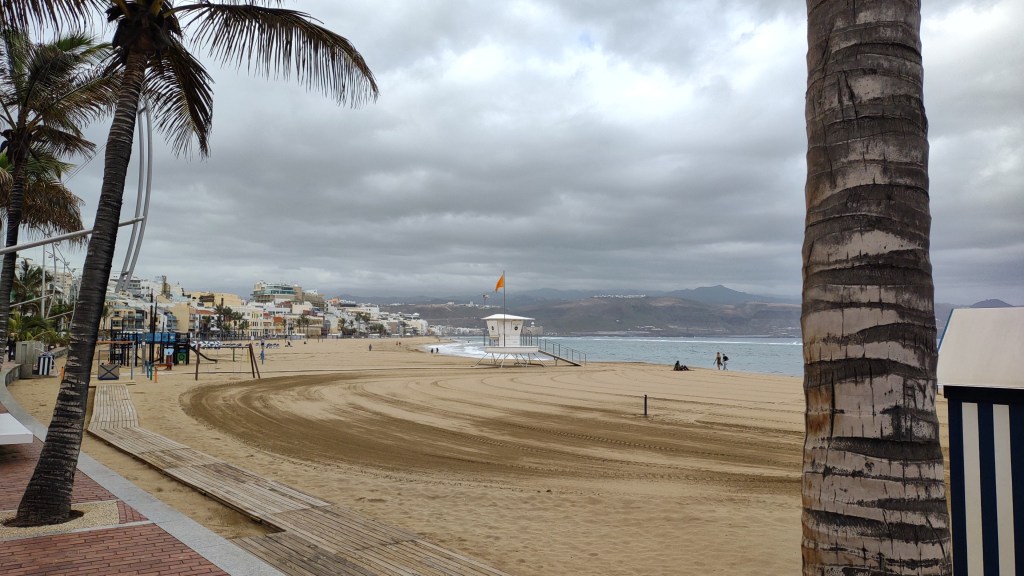
When going to the Canary Islands,  where you decide to stay depends on how you feel about the weather.

No not the chilly blast of late-February in Britain, but the weather on the islands – particularly across an island. On the two largest islands, Tenerife and Gran Canaria, the north-easterly trade winds coupled with the mountainous interior mean that southern resorts like Playa de las Americas and Maspalomas are usually slightly warmer and less windy than northern towns like Puerto de la Cruz and Las Palmas. There you go, winter sunseeker, time to take off those gloves and let your fingers do the booking.

But of course, life is never that simple. Because where you will base yourself for those precious days or weeks away will also depend on how you feel about the resort itself. On Gran Canaria, the warmer south offers sun, sand (lots of it in the sand dunes of Maspalomas), sea and of course, err,…Playa dos Ingles, party magnet for thirsty kids from across Northern Europe with youthful mischief in mind.

That’s perfectly fine. But if you would like a bit more history and authenticity – sorry, any history and authenticity, unless you’re researching the boom in Spanish tourism in the 60s and 70s – dig out that extra layer and come north. Las Palmas is not only the largest city on Gran Canaria, it’s one of the largest in the whole Spanish nation, a vibrant, living cosmopolis that includes a beautiful old town alongside all you’d expect of a great city. In other words, rather more material to blog about.

Of course I hope to see more of this fascinating island than just Las Palmas and I’m hoping to share as much of it with you as possible. But next up, we’ll introduce the big city. So wrap up… actually, don’t overdo it – even up here in the north it’s mild and spring-like in February.

COVID and the Riviera

Strolling along the grand promenades and charming side-streets of Nice, you could be forgiven for thinking that the pandemic had melted away just like the clouds in the shimmering blue sky above. But just try going inside any public space – shop, restaurant, tram, hotel – and it’ll be back quicker than you can say “masque obligatoire“. In this post let’s take a moment to look at where France is with COVID right now and how it’s affecting the lives of residents and travellers.

And we’ll do it through the medium of photos and tidbits of information that have nothing to do with COVID whatsoever.

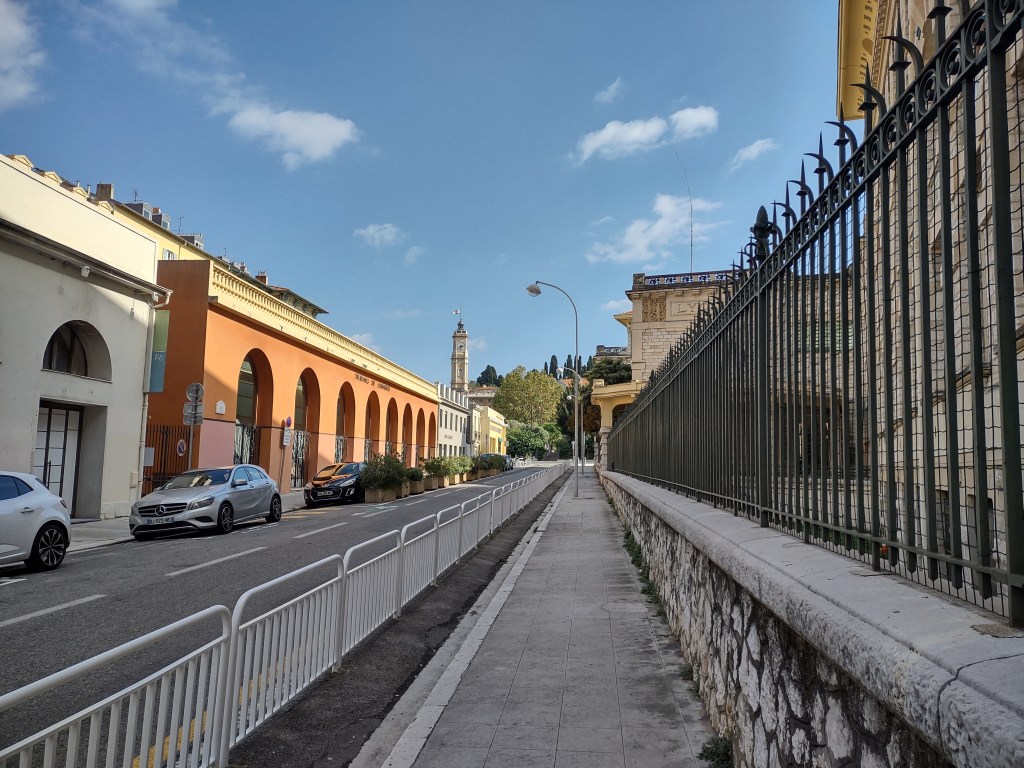
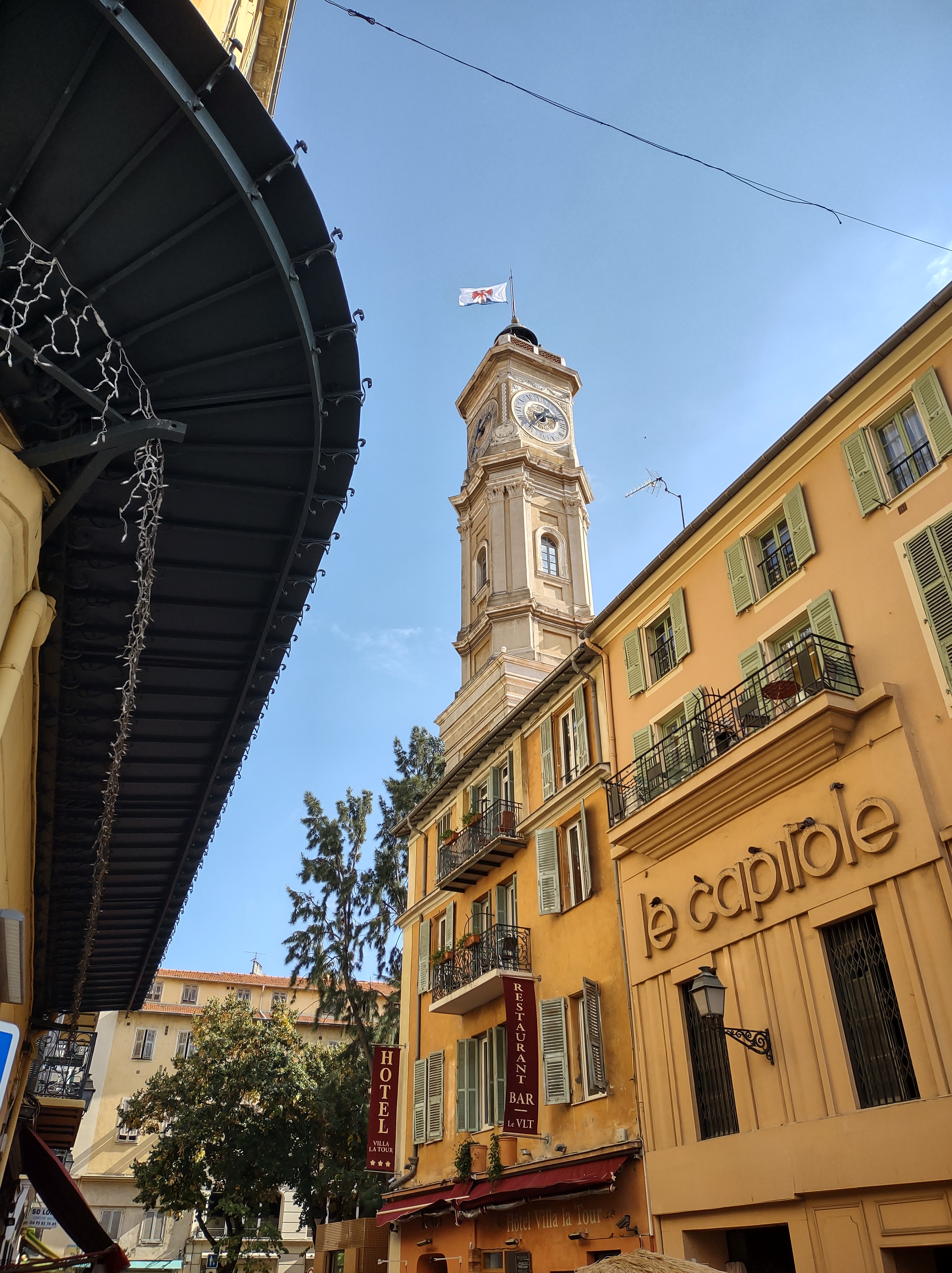
At 50 metres, the Tour St Francois has long stood proud as a symbol of the city below, which it affords fine views of. It was originally built as a clock tower for the adjacent Franciscan monastery before it was dissolved during the Revolution.

I don’t think there’s a bell in there anymore so I can’t tell you how it tolls, but we do know that the toll of COVID on France has been severe.  At time of writing a total of over seven million cases had been reported, and the final bell had been rung on the lives of 118,000 souls. France was one of the European nations that became the epicentre of the pandemic in March 2020 and its approach has usually been more forthright than in the UK (during the first lockdown for example, you needed a letter to be able to leave to your house).

Time to move on. I am happy to take requests and recommendations from readers and others while I’m travelling, and someone I know suggested I take a look at the small neighbouring resort of Villefranche-sur-mer to the east. So off I went and hopped on the 100 bus at the stop by the Vieux Port.

And promptly hopped off again when the driver told us waiting passengers we needed to go to some obscure stop “derriere l’eglise“, for some inexplicable reason. Eventually some minutes later another bus did indeed turn up at one of the two stops by the nearby church and we were on our way.

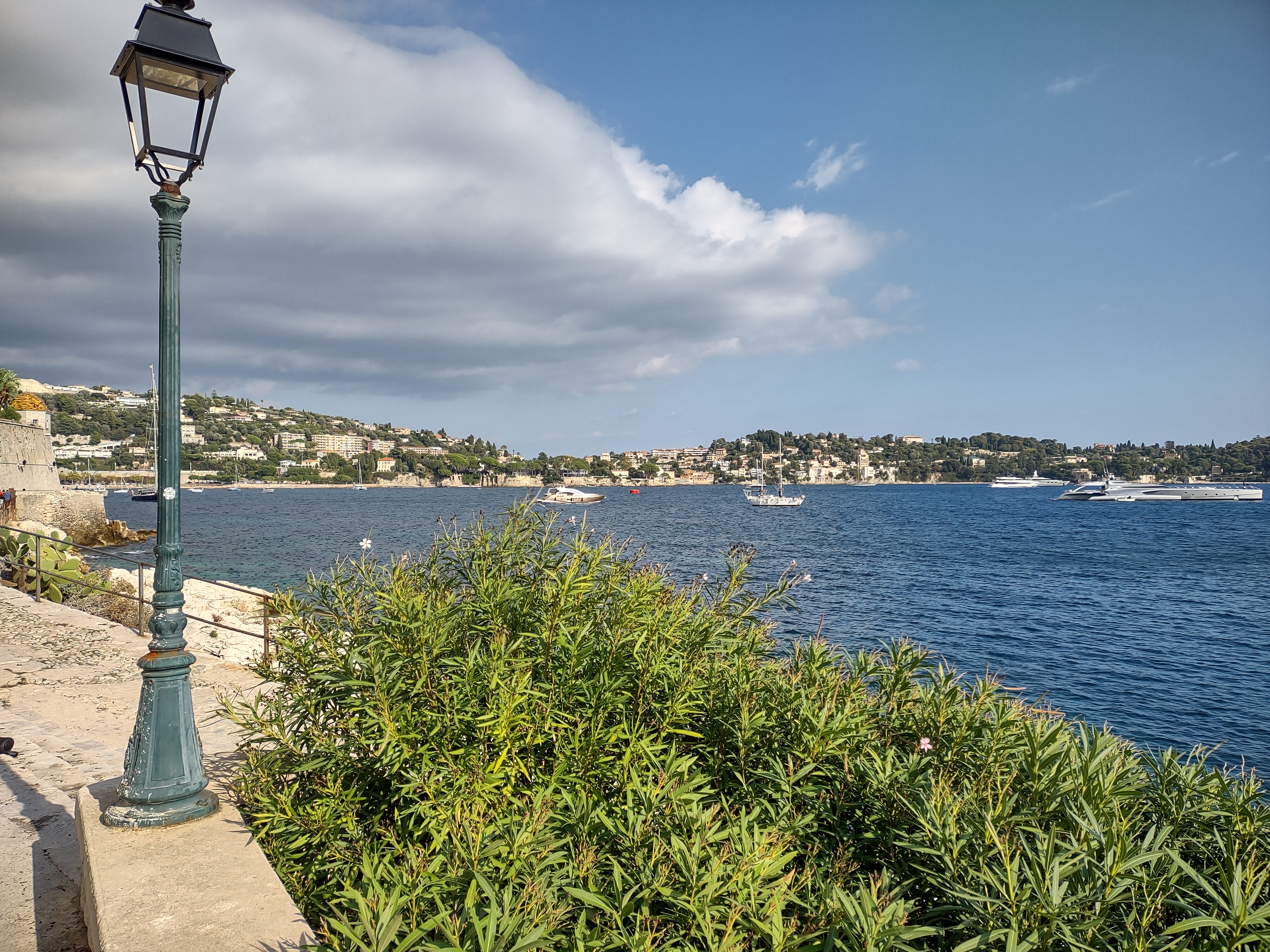
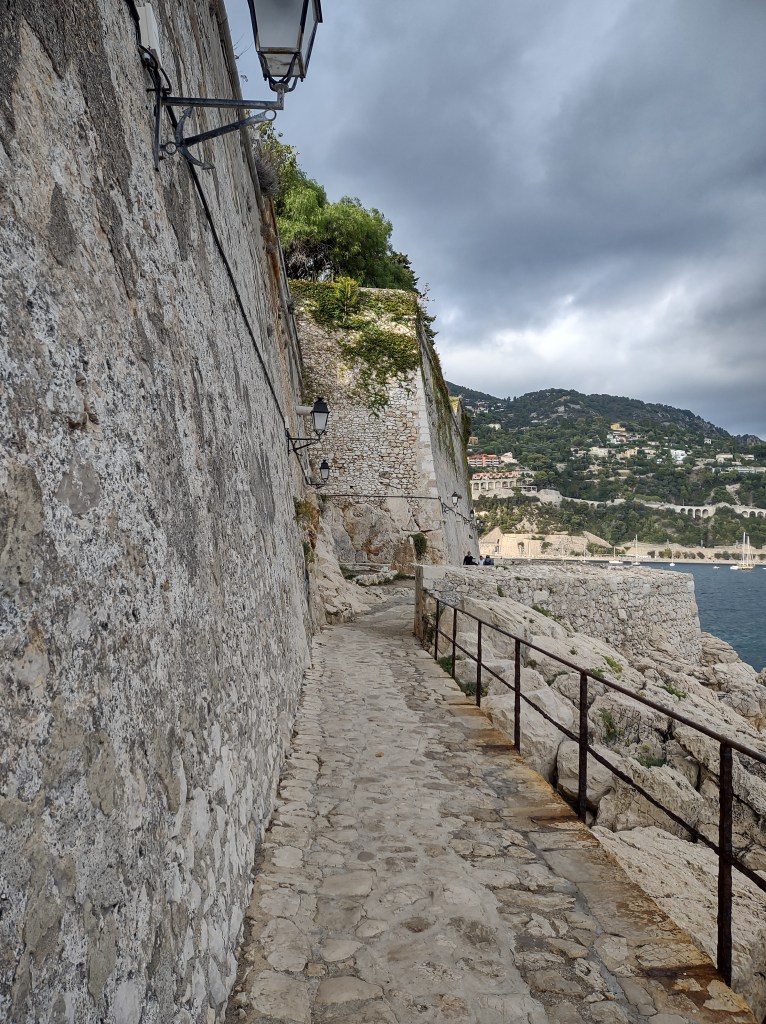
A delightful but busy haven contrasting with the all-out energy of pulsating Nice, steep-lying Villefranche-sur-mer was another of those old sleepy fishing communities that discovered tourism and went for it, in a sleepy fishing village way of course. But the pleasant mask (obligatoire, remember) of relaxed good-times hides another reality. The city of Villefranche has had a surprisingly rich military history down the centuries, and its deep harbour has allowed the French to invite the old Imperial Russian Navy and the US Sixth Fleet to set up shop here in the past.

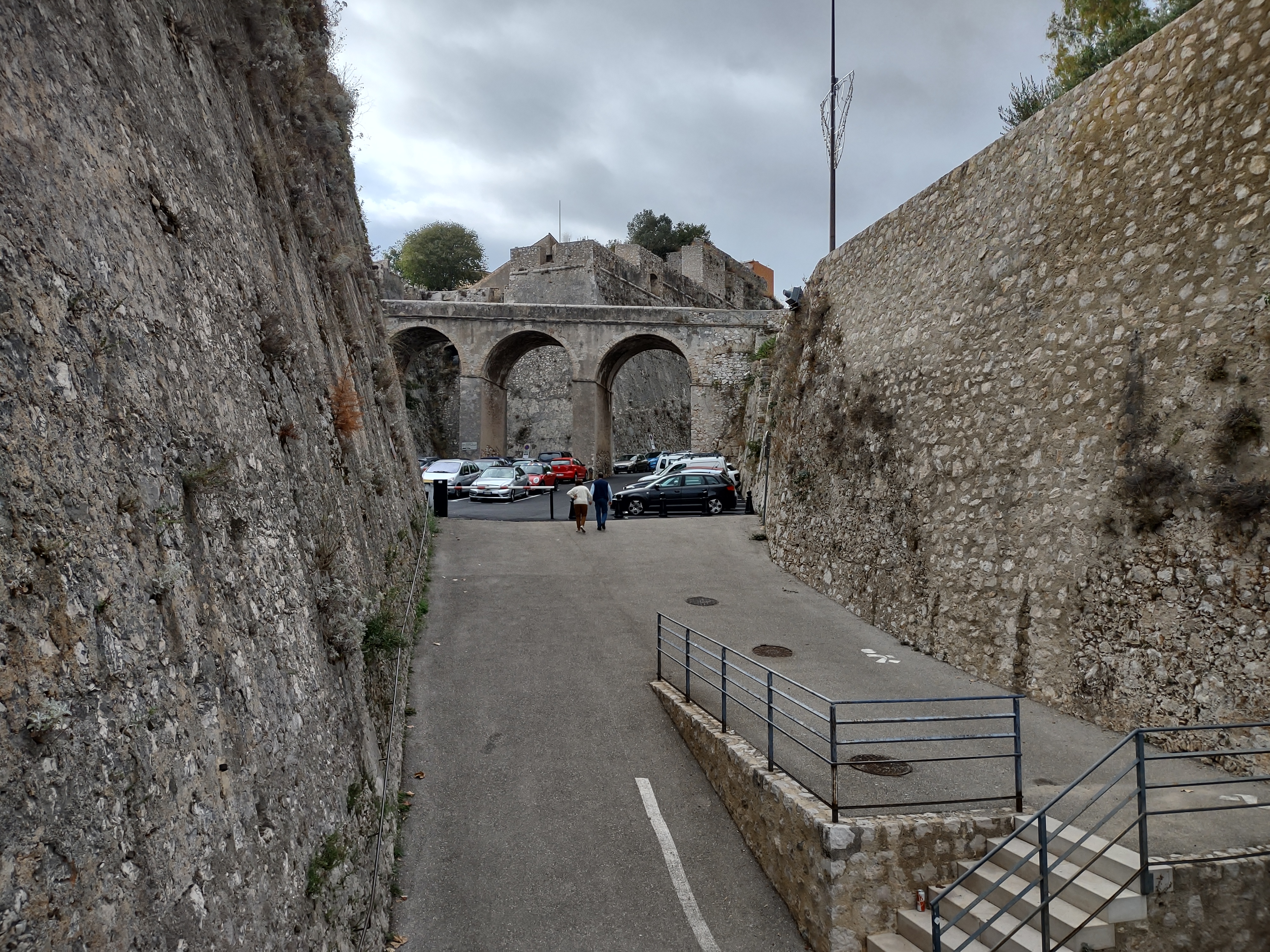
Another aspect of this heritage came after the French and Turks sacked the city in 1543. Remember that this region didn’t belong to France at the time. It was the Duke of Savoy’s, and no-one else was having it. Once the invaders had gone the Duke strengthened the defences with some impressive fortifications which are very much still there.

Modern France’s citadel against COVID-19 is the passe sanitaire, the health pass, without which you cannot enter most bars, restaurants, or other indoor spaces. The idea of this phone app is you download or scan in the QR code detailing your (fully)-vaccinated status or your recent recovery from infection. Now that some design issues have been addressed I found it easy to use TousAntiCovid to scan in my own NHS England vaccination QR code (sitting on the screen of another device) and away I went – able to pull it out when any member of staff wanted to check my status. It has been controversial in France, a land wedded to the idea of individual liberty, and there have been demonstrations against it. From my standpoint, whenever I was asked to show it (virtually everywhere I went for food or a drink) I took it out and the scanning was instant. There are human rights issues around it, and personal choice questions, but it was great sitting in enclosed spaces knowing that the chance of COVID-19 floating around in there was much reduced.
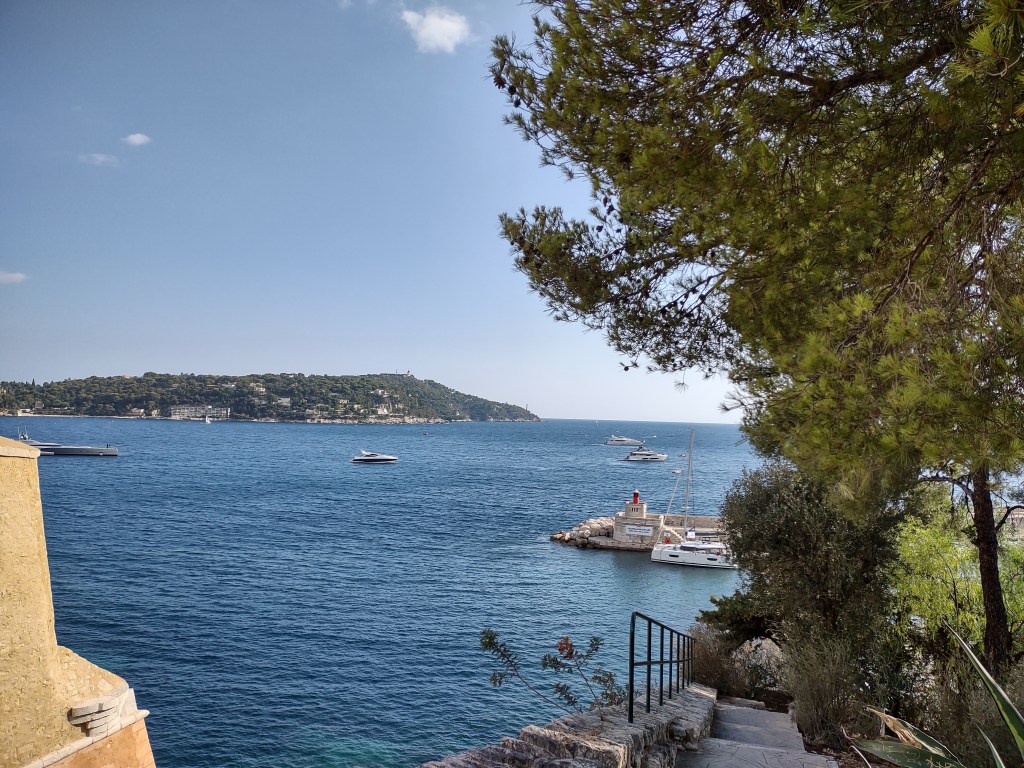
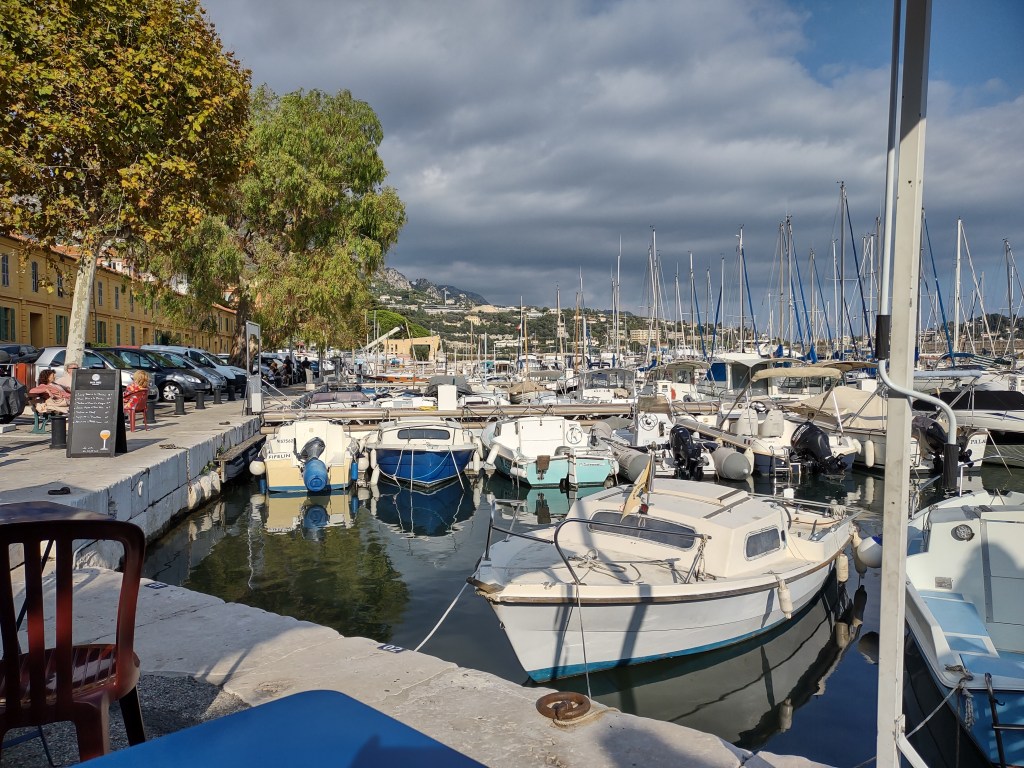
The boats bob around in the harbour at Villefranche, and so do the COVID case numbers. Over the last two or three months the incidence of cases (number per 100000 people) has fallen to 50 in France as a whole. Around Nice it’s been a little higher, around 80, but in the UK we’re about 300. So Nice is doing well. Meanwhile let’s hope we in Britain are not hanging ourselves at the end of a long rope – of the sort they used to make for the sailing ships in that long yellow building to the left.

It was now time to leave Villefranche, having had an interesting couple of hours, and time to hop on the 100 bus again to return to Nice.

…and hop off at speed again when the driver closed the doors on me as I was getting on.

How else was I to know that that gesture he made as he drove in didn’t mean “go to the back doors”? The bus was crowded, but some people got off so I assumed there was space to get on. The driver had other ideas, he’d meant “wait for the next bus”. And also “I’ll slice you like salami if you try to get on!” Luckily the doors were soft.

Like the drivers of the no. 100 bus between Nice, Monaco and Menton, COVID-19 remains an unpredictable and implacable foe, quiet and manageable one moment, dangerous and out-of-control the next. But like the passengers of the no. 100 bus between Nice, Monaco and Menton, the people of Nice – and probably France – are getting on with it, going with the flow, enjoying the new normality while they wait for the next bus, destination The End Of This Thing. The Cote d’Azur throbs with life, the restaurants are full enough, laughter and fun ring out from the bistros and the bars, the beaches and the promenades, the sun is still out and after a good night tonight we know it will be up and about again tomorrow.

We just have to wait.

Very nice

Ah, la belle France, land of life, country of culture, bounteous home of fine food and fine wine, home of very amenable entry requirements for fully-vaccinated Brits…

(… sorry, I meant to say “…and that special quintessential je ne sais quoi that is at the romantic heart of all that is French”.)

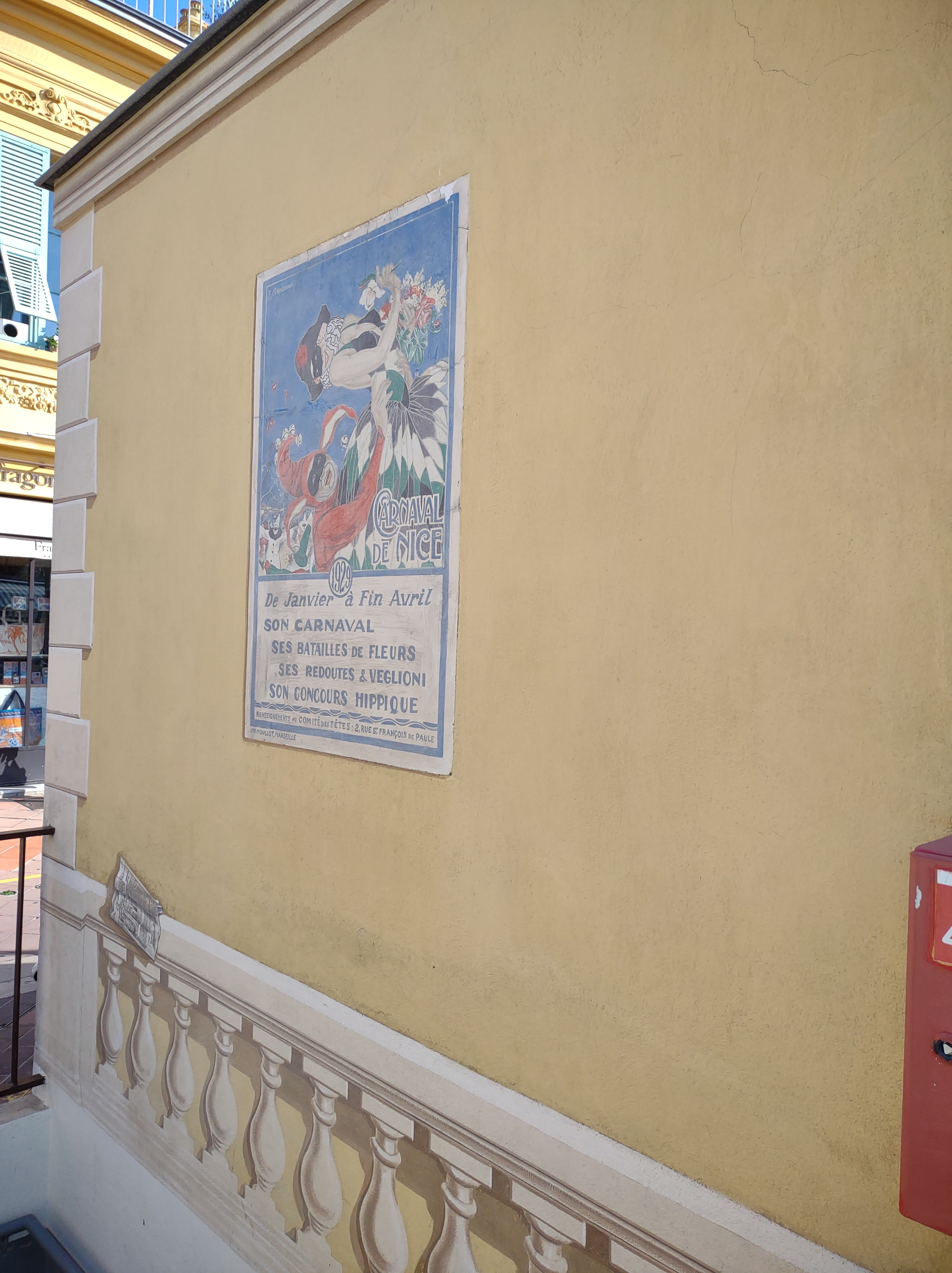
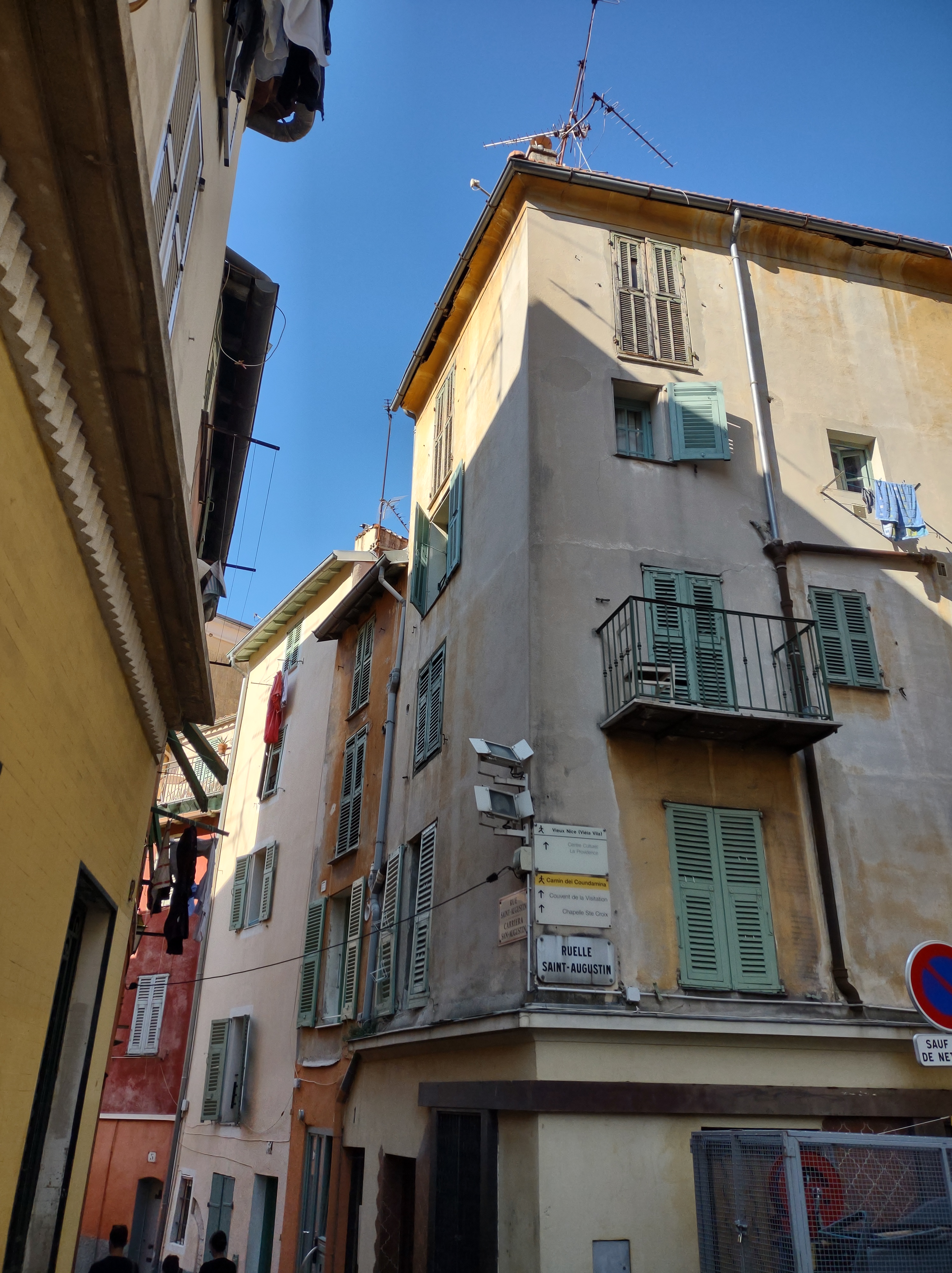
Anyway, we’ve come to spend an all-too-few nights in sumptuous Nice, a jewel on the Cote d’Azur, lying between those notorious slum-ridden shanty towns of Monaco and Antibes. Well, you gotta go somewhere y’know…

Founded in antiquity by the Greeks, who named it after the goddess Nike (in honour of the knock-off gear they all picked up in the flea markets around the Vieux Port), Nice has been an Italian place for much of its history. Which is not surprising as we are about 20 miles from the modern border. I say “modern” because the region actually belonged to various dukedoms up until the mid-19th century and that was before Italy became a unified state.

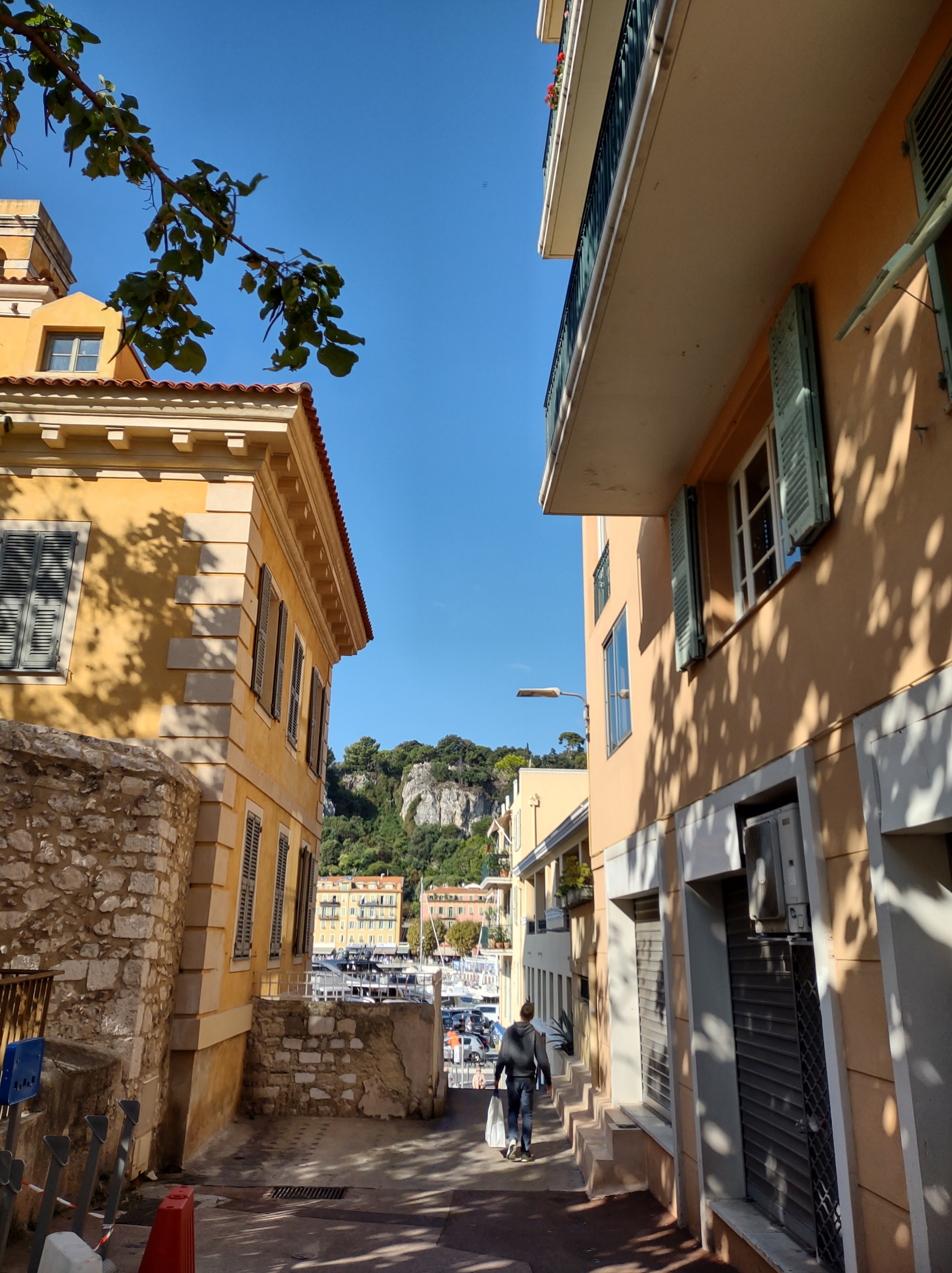
I’d go into more detail of how it flip-flopped between Italians and French and how the locals didn’t speak either language (they spoke Occitan), but, as I said I don’t have much time here and it’s lovely outside, so here are some more piccies…

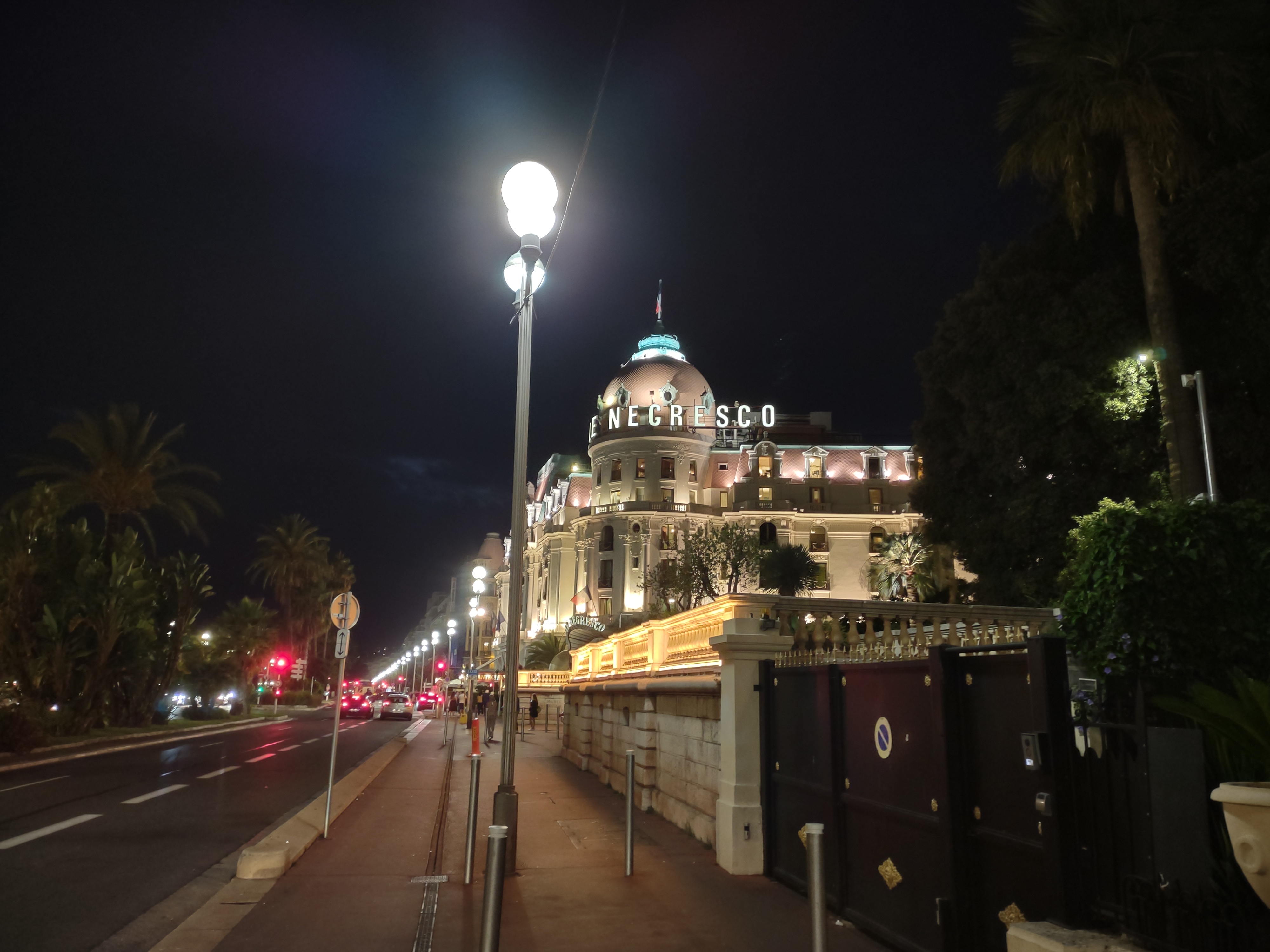
By the way, in the top photo you can see the world-famous Hotel Negresco, cheapest rooms this week around €300 a night. (Let me know when you’re coming). Like most of the big hotels it lies right on the Mediterranean shoreline, just as the British well-to-do liked it when they discovered the French Riviera in the 18th and 19th centuries. Staying over the winter months before the summer heat got too much for them, the poor dears, they kick-started tourism here and the legendary shoreline still bears witness to them – Promenade des Anglais.

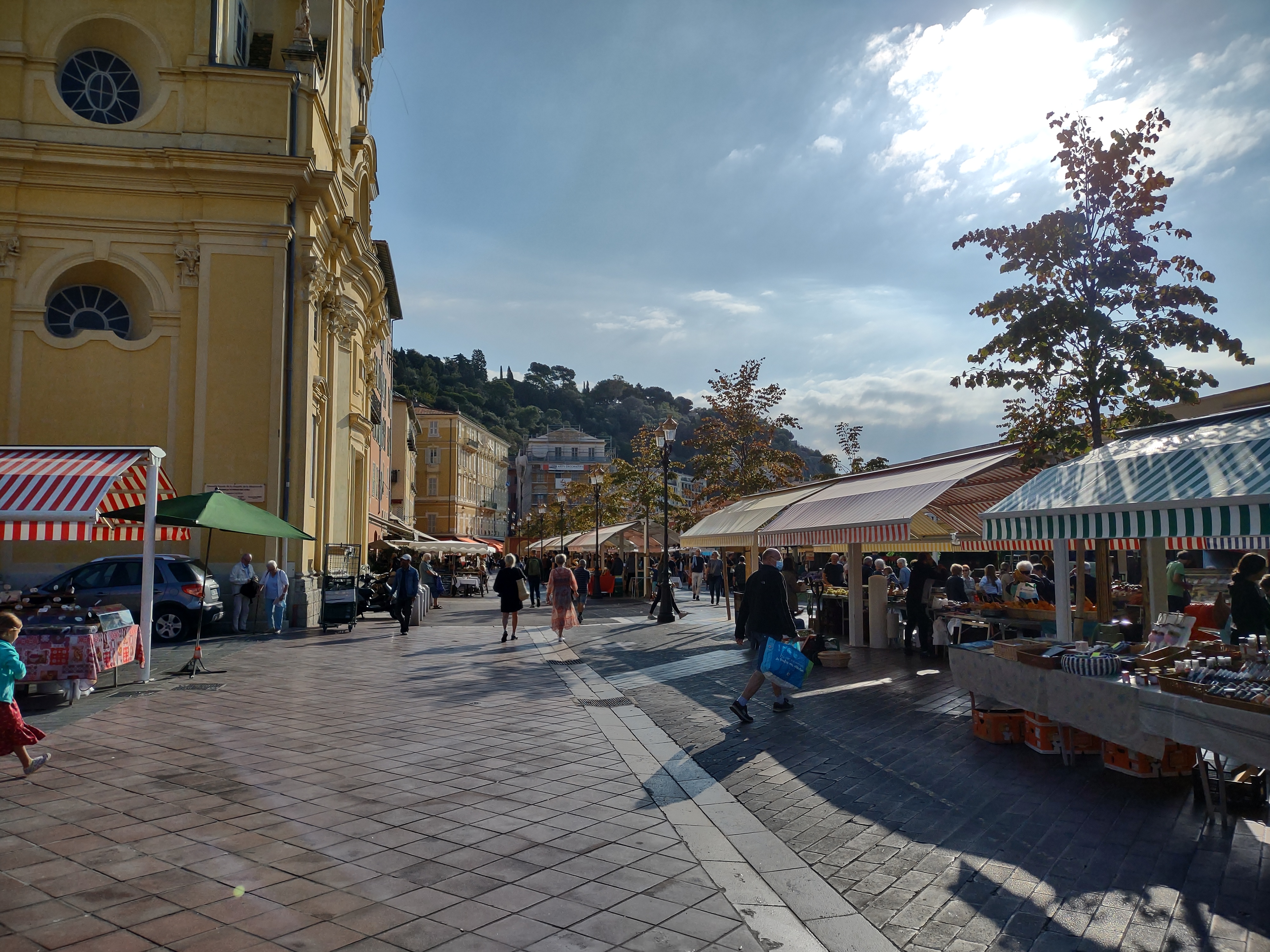
Market day on the Cours Saleya
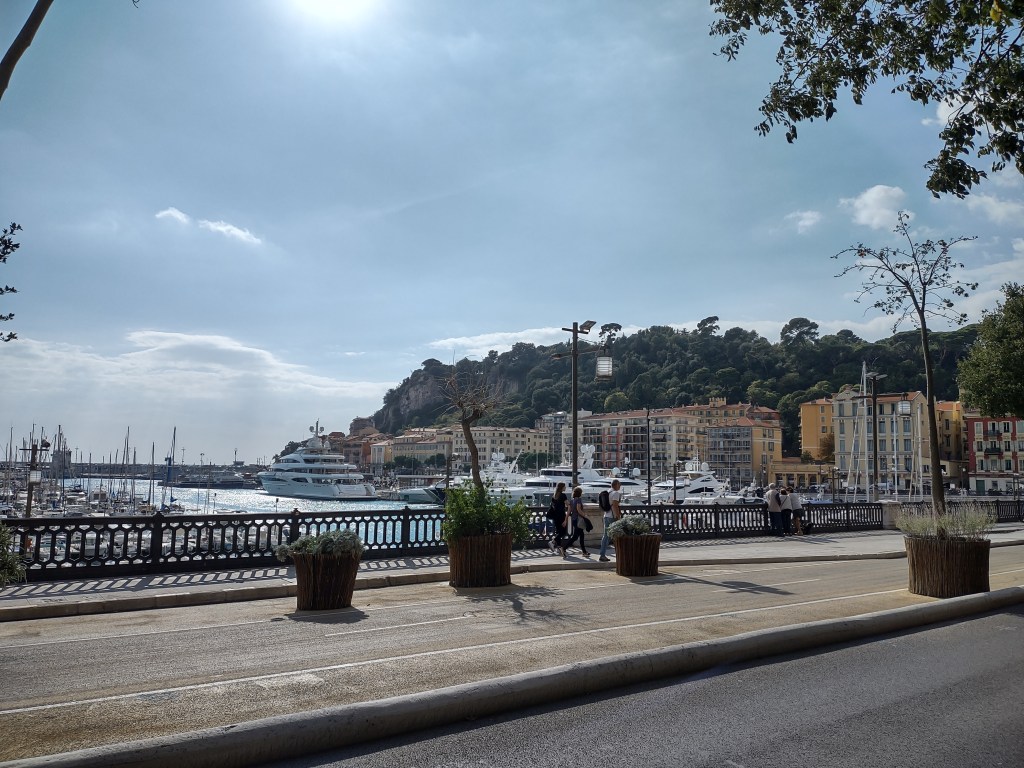
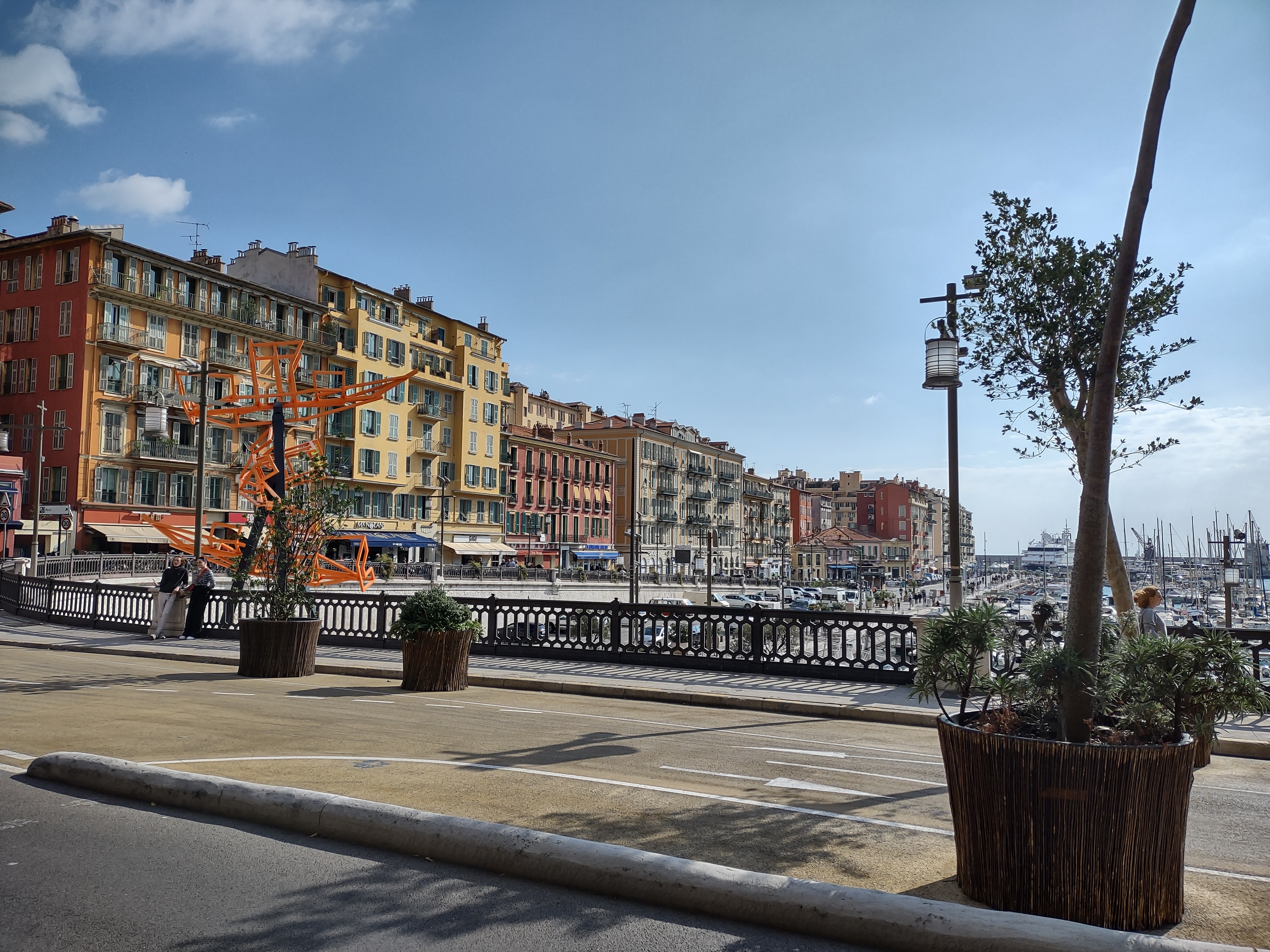
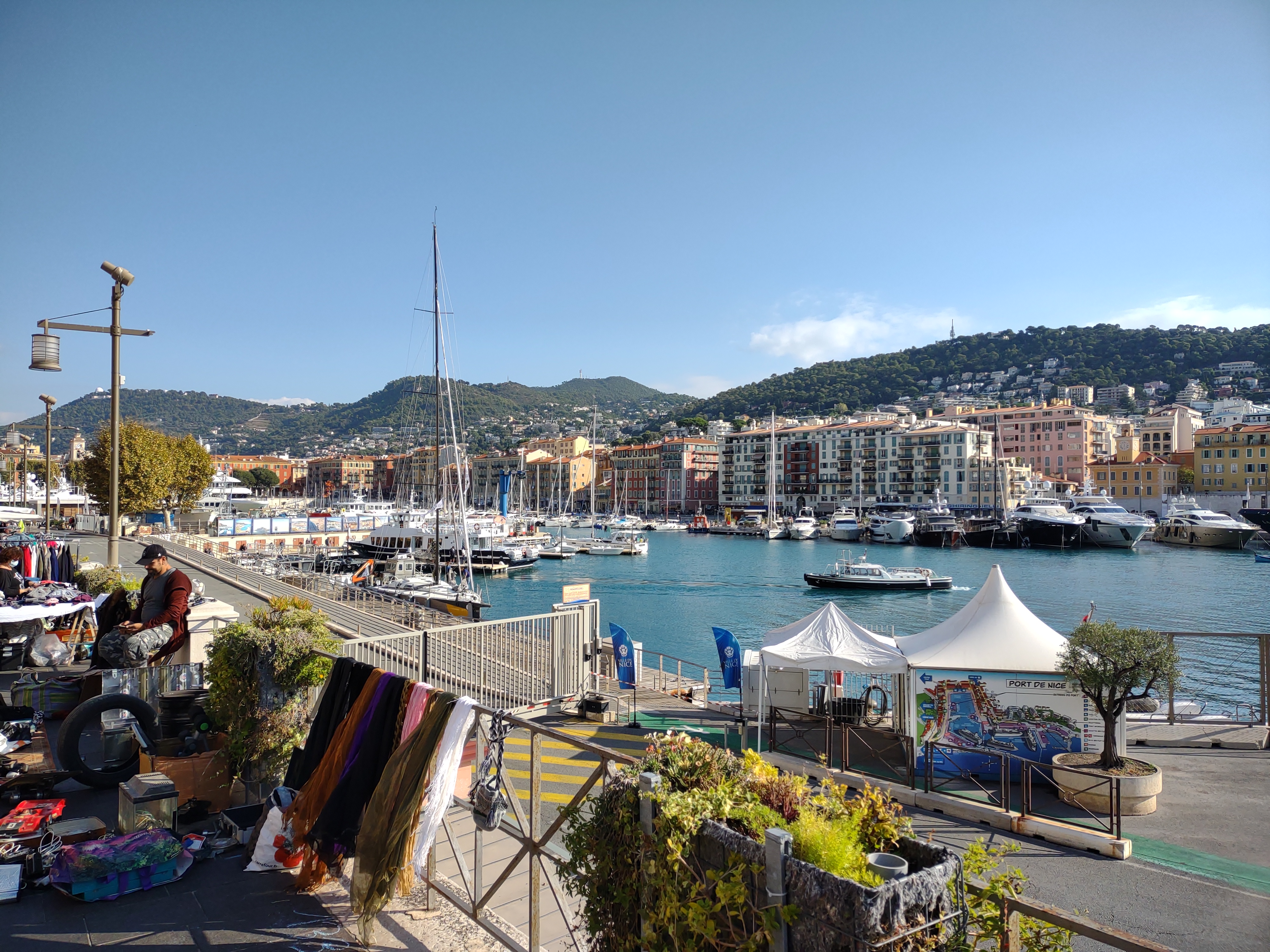
The Vieux Port, to the east of the Promenade and just below the Castle Hill. (I missed out Castle Hill. Maybe later. Note: there’s no Castle there any more. You can relax)
The green bit is Castle Hill. See the Castle? Didn’t think so.

Appetit whetted? Good. Look, I really have to go now, the Mediterranean’s happening outside. I promise I’ll be back later with more photos, more stories, more stuff. Until then, enjoy the pics. Au revoir!
Flight of fancy?

Well…going through security is as bad as ever – “go over there please” where’s the plastic bags?… “no take that out as well please sir…no more liquids, sir?” – crowded, panicky, pressurised. And that was just fast-track.

Maybe it doesn’t help that most of the people here have forgotten how to do flying. Including me. You can tell from the blog that I travel a fair deal. Normally. Today would be my first flight in a year and a half. Eighteen months of forced contemplation, sometimes wondering when I get to go on the road again, wondering if I’d ever want to. Until that is the COVID vaccination numbers rose and case numbers dropped, and travel restrictions across Europe started to un-buckle. And I realised how much I missed foreign travel.

So here I am again, through security now, Masked-up, vaccine-passported to death, did I download everything I needed to? Will my phone run out of charge before the border? OMG where’s the passport?Ah got it, now on board, about to jet off into a pandemic era of seeing old and new places, comparing their life and culture with what I had seen back home, but also bearing the new weight of paranoia about all the documentation the border guards would want to see and whether I’d missed something…

…too late now, we’ve taxied out, those two clear beeps have sounded to announce we are about to accelerate down the runway, the whole plane thundering and shuddering as it reaches rotation speed and the ground becomes the land below us as we lift away…

(Don’t tell Greta.)

Back in time

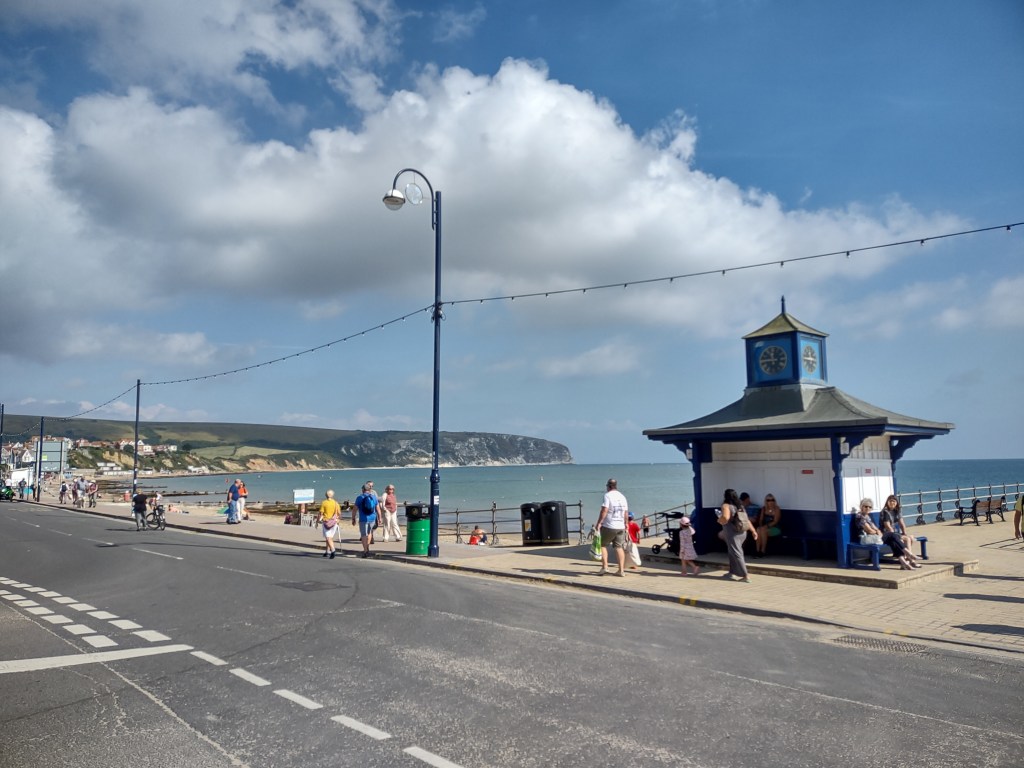
Onto the No.50 bus we jump, one of the “Purbeck Breezer” buses that takes the summer tourist across and around the Isle of Purbeck peninsula.

Unfortunately, bad planning regarding where to join the bus in Bournemouth meant that I found myself at the back on the lower deck, not the best place to take snaps of the deep chines of Bournemouth, the harbour at Sandbanks, or the chain ferry that takes the bus over to Studland and the dramatic scrubland and rolling dales of Purbeck. (If you’re coming to Bournemouth, join the bus at the train station. It’ll guarantee you a seat on the open top deck. Make sure it’s not raining).

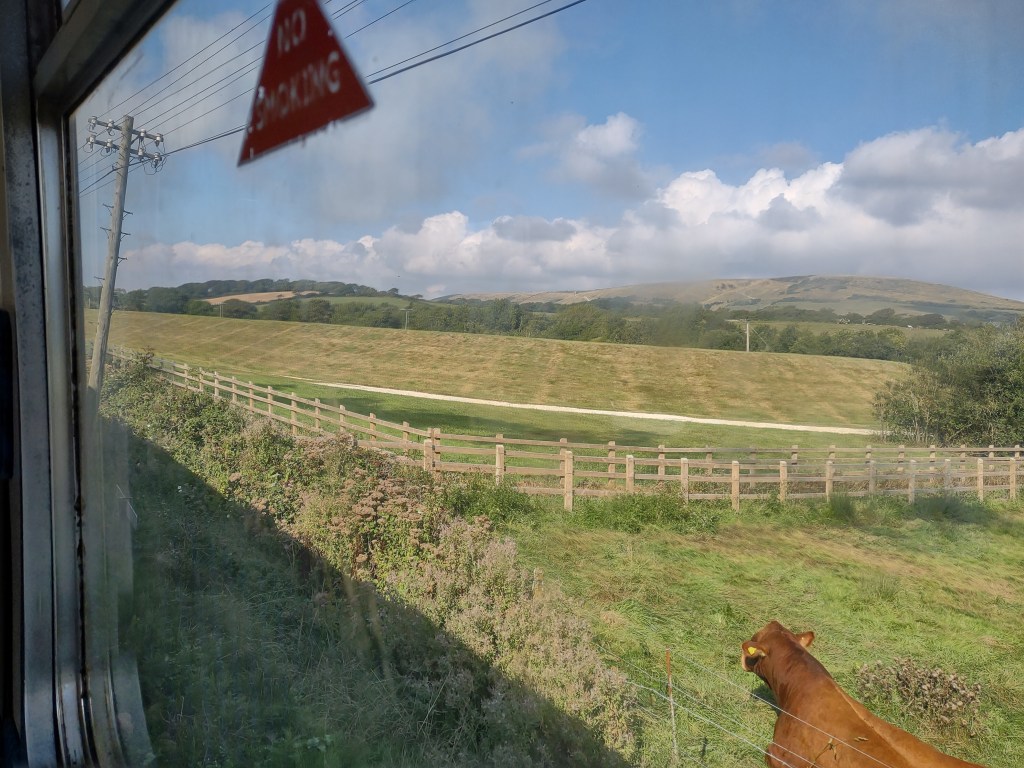
After the stunning scenery you’ll have to trust me about, the bus terminates at the charming beach town of Swanage.

Lovely. But there’s no time to waste, this isn’t our final destination today. To get there we’ll need a train.

“But”, you say, downloading your Network Rail route map, “the South Western Railway service between Bournemouth and Weymouth doesn’t have a formal scheduled connection to Swanage! What are you talking about?”

I’m talking about steam.

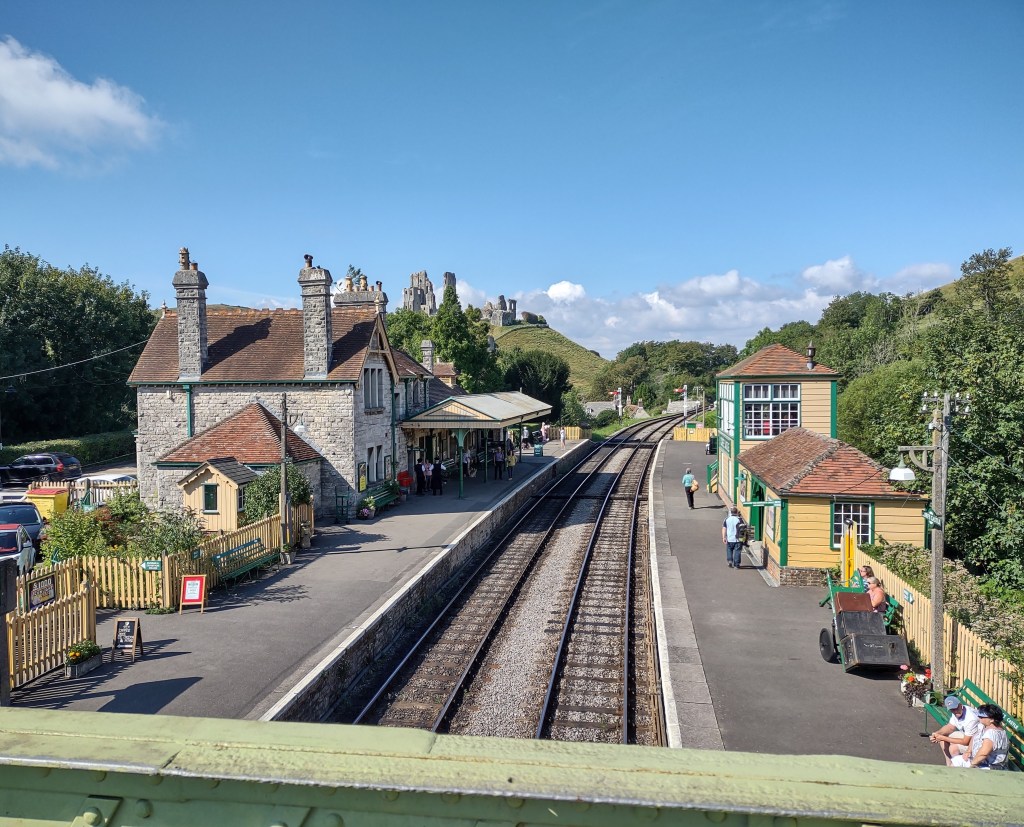
Swanage used to be joined to the main line at Wareham, and the branch line managed to survive the Beeching cuts of the mid-60s. But it did not survive 1972, when British Rail came to the genius decision of closing the branch line. When we see our final destination you will continue to scratch your heads – you may even start to draw blood. Just be careful.

Almost as soon as the decision was made, opposition grew. A campaigning group was formed to keep the line open, even just as a heritage railway, and they fought BR all the way. When the track was pulled up, the campaigners made sure it was set down again. When British Rail tried to sell Swanage station off to a property developer they got the local MP onside – and kept it open. Slowly, the tide turned. The volunteers re-established old stations and even built a couple of new ones. They also procured and restored old locomotives and rolling stock. And they won!

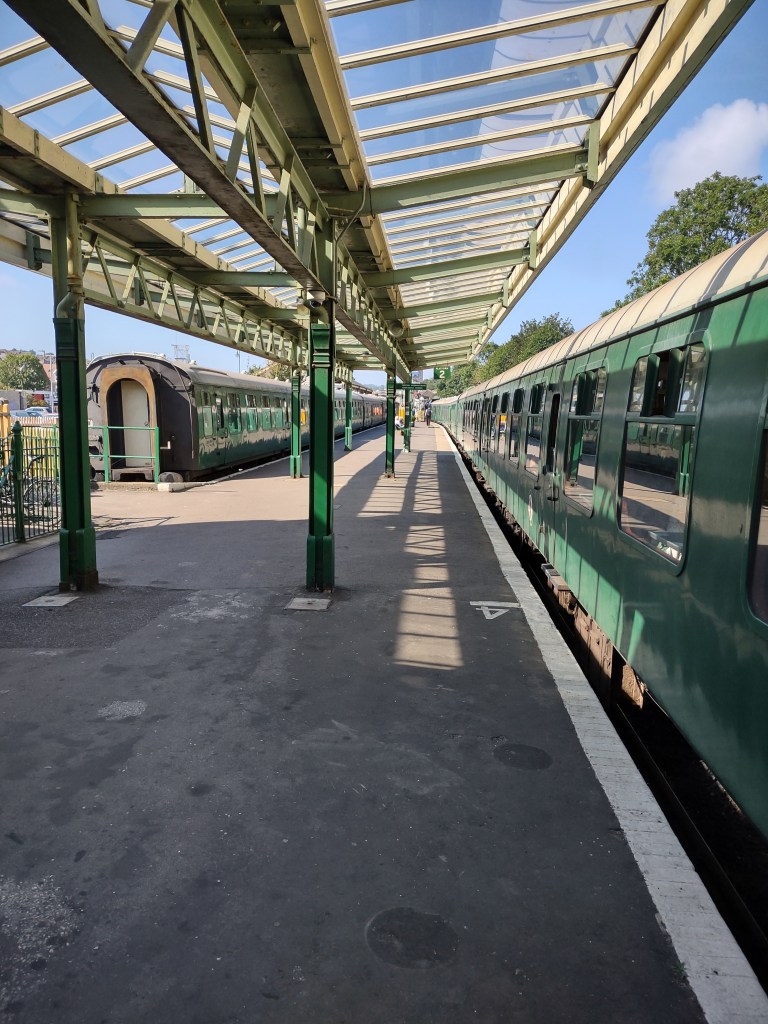
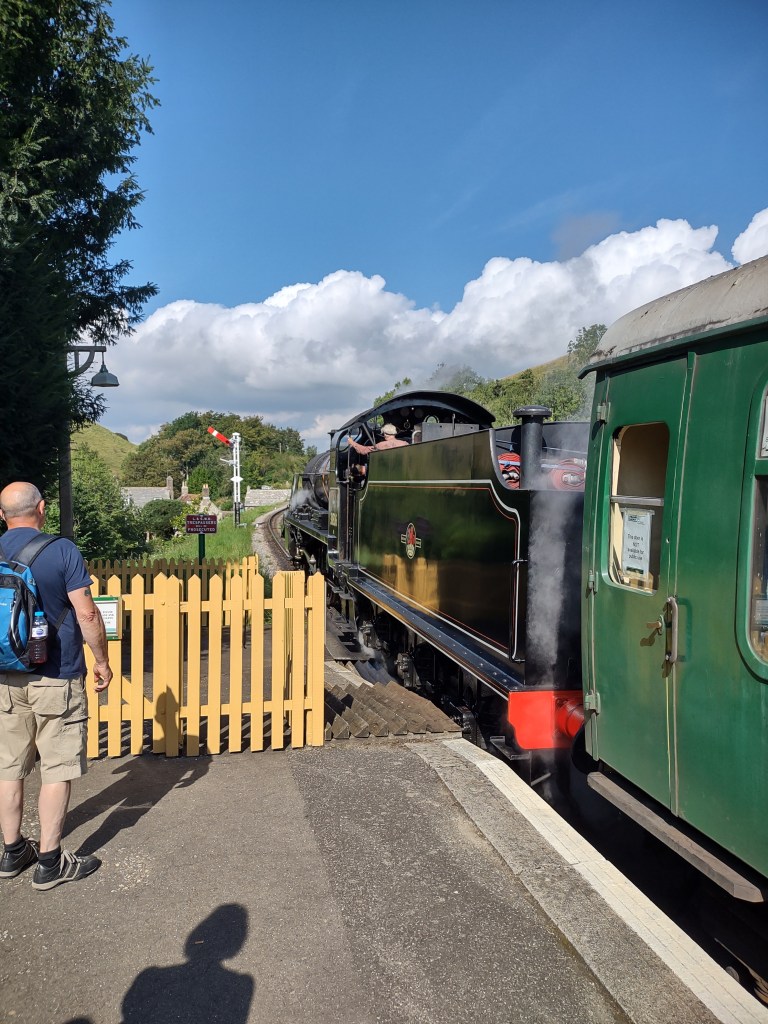
In 1995 the Swanage Railway ran its first train from Swanage to the restored station at our destination. And in 2002 the connection to the main line was re-made, thirty years after British Rail closed it. Today the Swanage Railway, an all-volunteer operation, runs a scheduled service from Swanage to Norden, mainly powered by ex-British Railways steam locomotives with old-style slam-door C1 carriages.

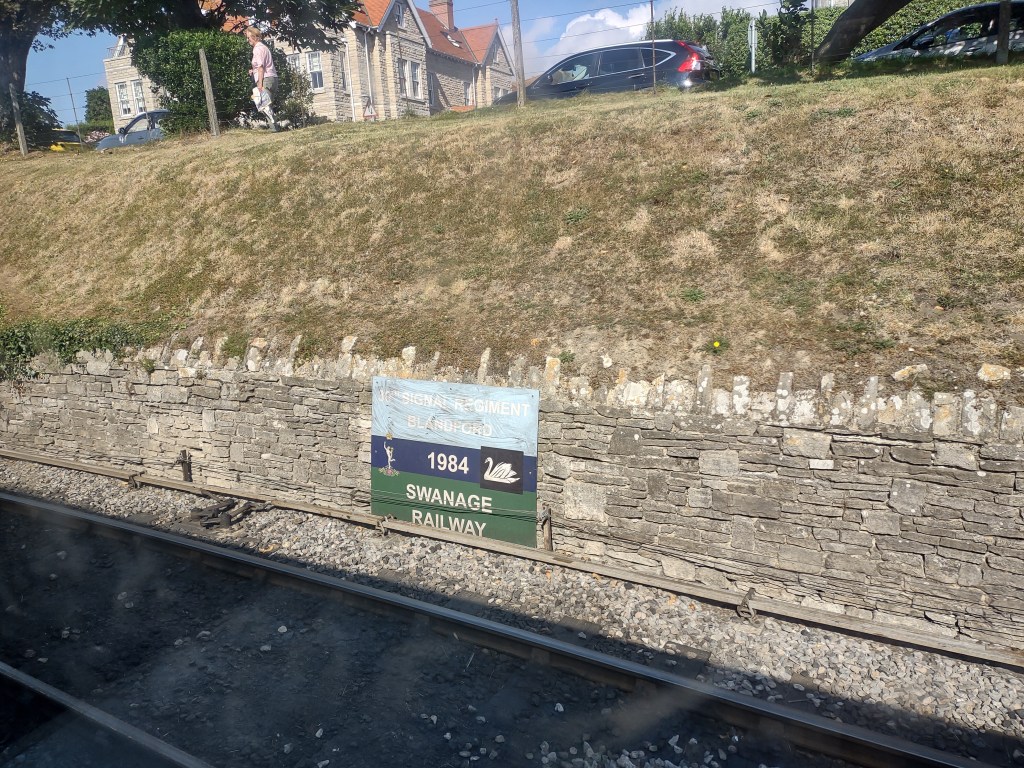
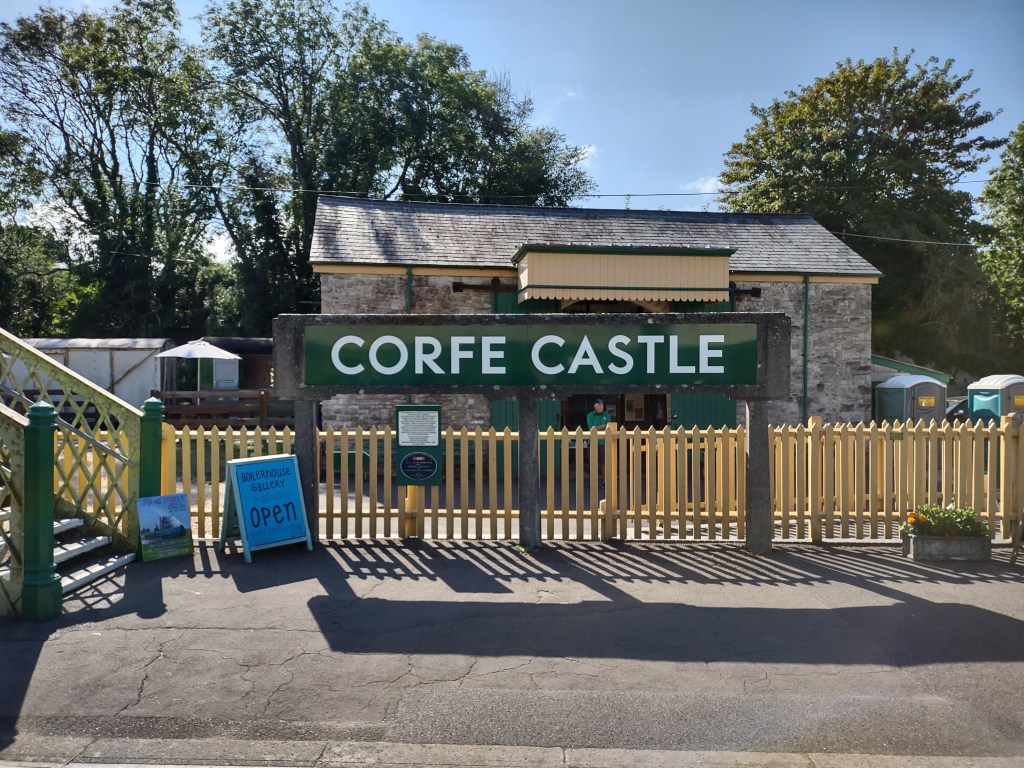
Of course, if you tried the railway out for yourself you might conclude the train actually goes from Swanage to 1953. All the platform staff are kitted out like the porters from Brief Encounter, and they serve freshly-baked cake at the station. (Improvement.) From the restored station signage to the retro posters, it feels like a retreat to that famous golden British past that may or may not have existed (half of the general information boards at the little museum at our destination describe the history of the line in the two World Wars). The only thing that is missing, you might think, is a Brexiter joyfully buzzing the place in a Spitfire.

What do I think? Too late! we’ve reached our destination.

Which is…

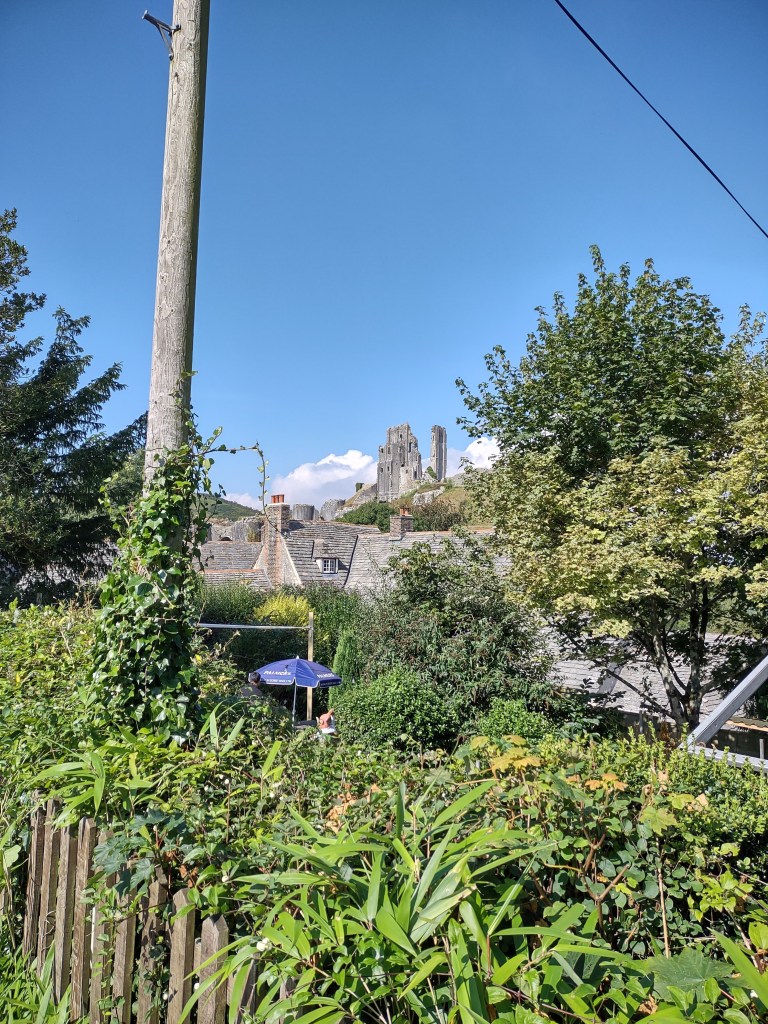
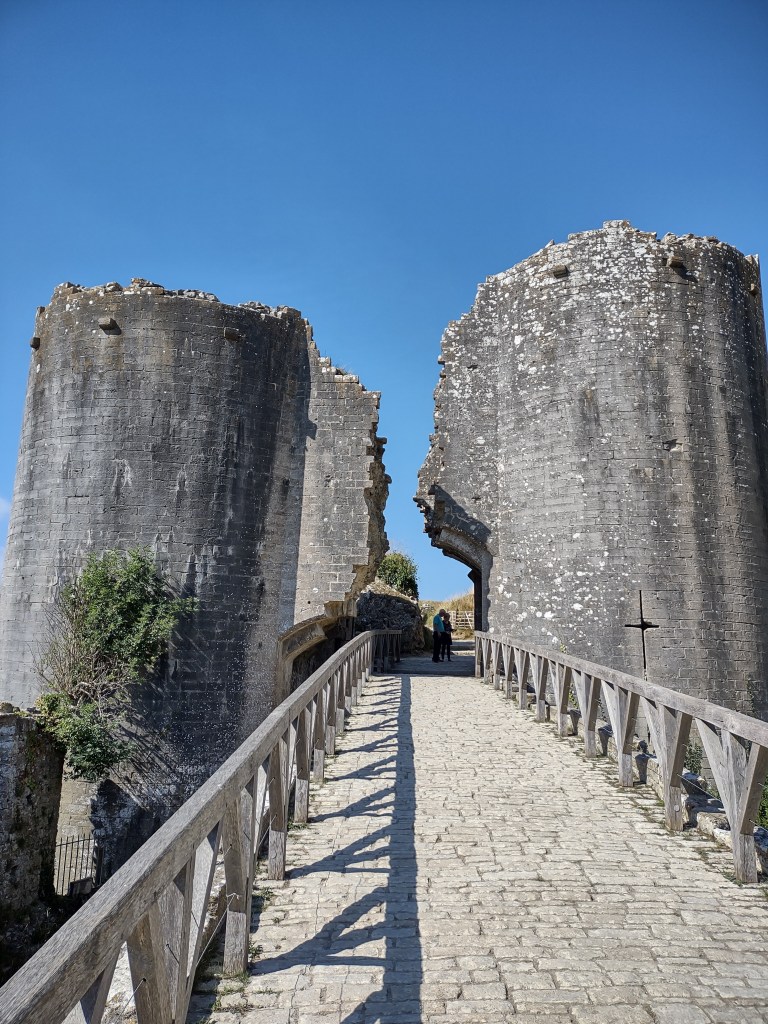
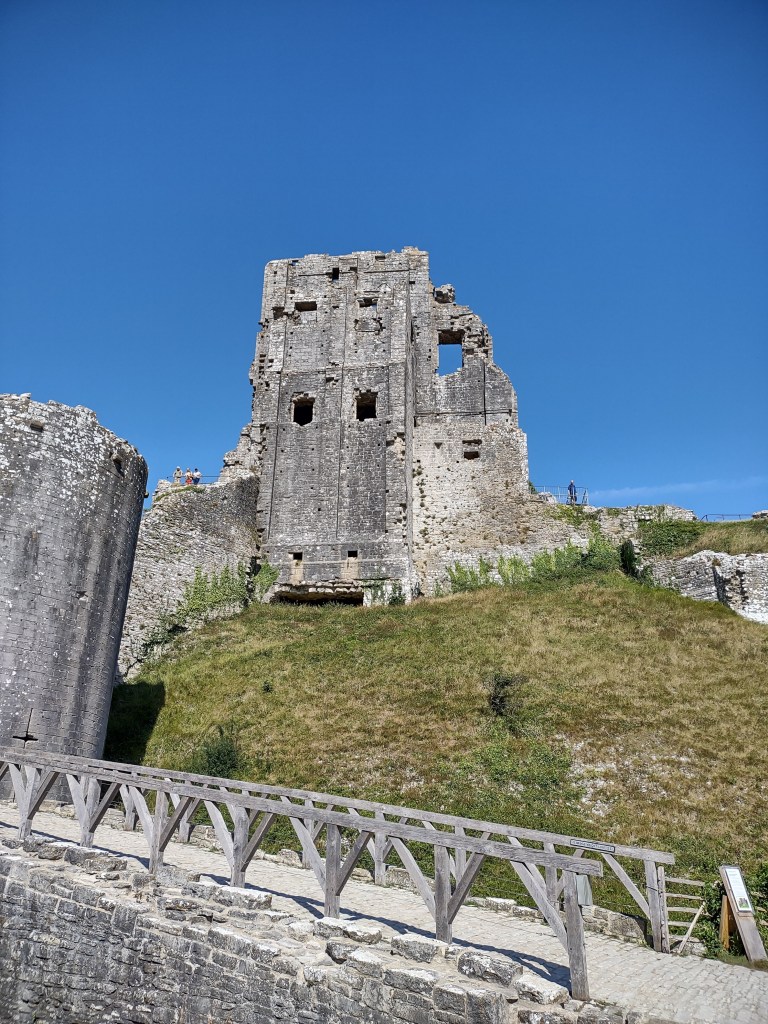
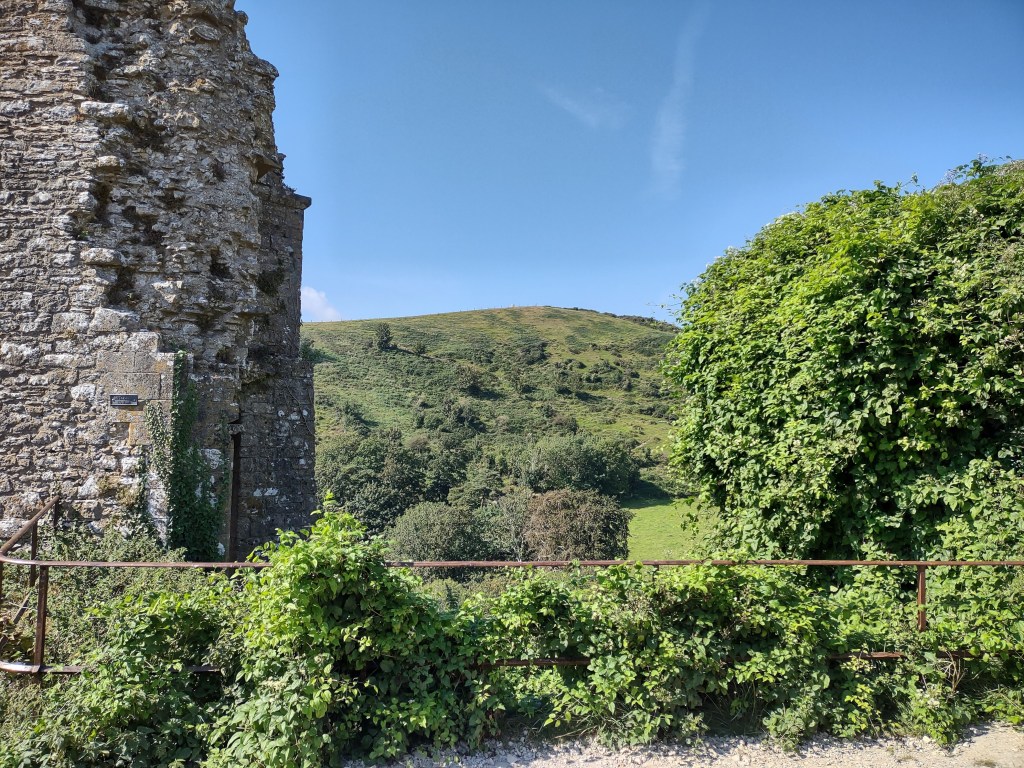
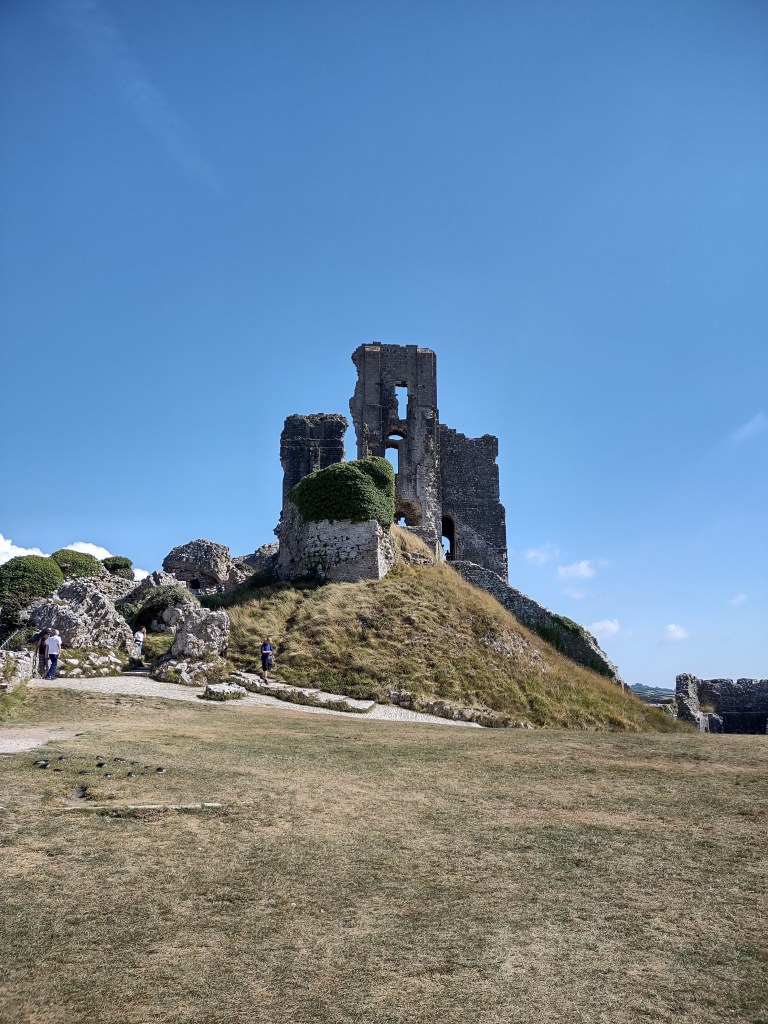
Corfe Castle is one of the most famous and romantic mediaeval ruins in the country. Built by various Norman kings on the site of an earlier Anglo-Saxon fortress, the castle is actually an outlier among British castles in being located atop a commanding height. In this case it controlled a gap between two lines of Purbeck hills, in the times when this part of the coast provided an invader with a decent backdoor route into England.

The three-storey central keep was started by Henry I and subsequently added to by his successors, and they turned it into a highly-desirable place for them to stay when passing through the region.

You can imagine the work that went on to build and maintain the property – the masons, the diggers, the bricklayers, later on the painters and decorators, all rubbing shoulders with the monarch and their lords and ladies of court…maybe even the cleaning ladies who were once paid to spend four days giving the place a good scrub.

It wasn’t all fun though, the Middle Ages in England were turbulent times. Corfe Castle had to withstand sieges and it was used to hold hostages from time to time.

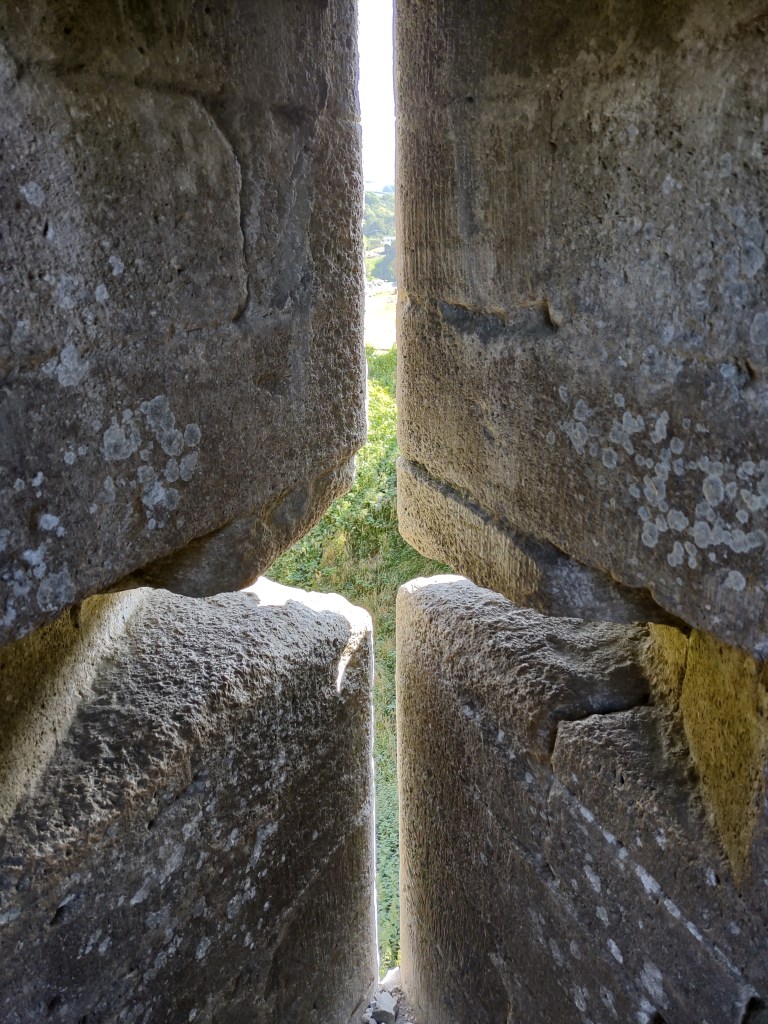
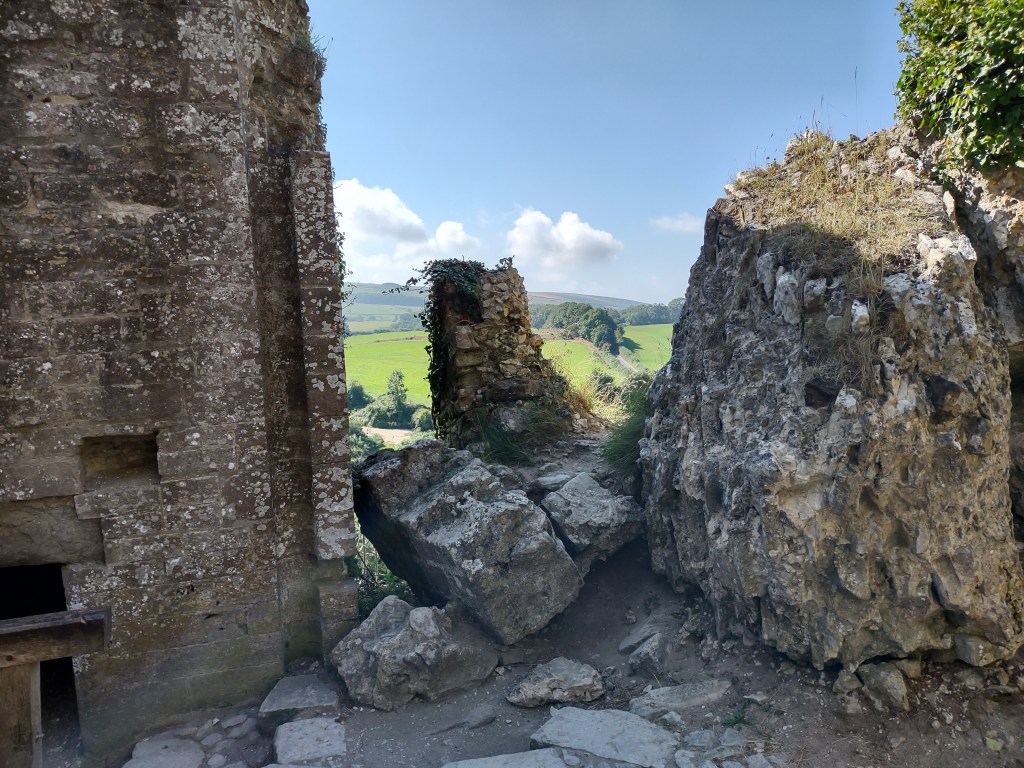
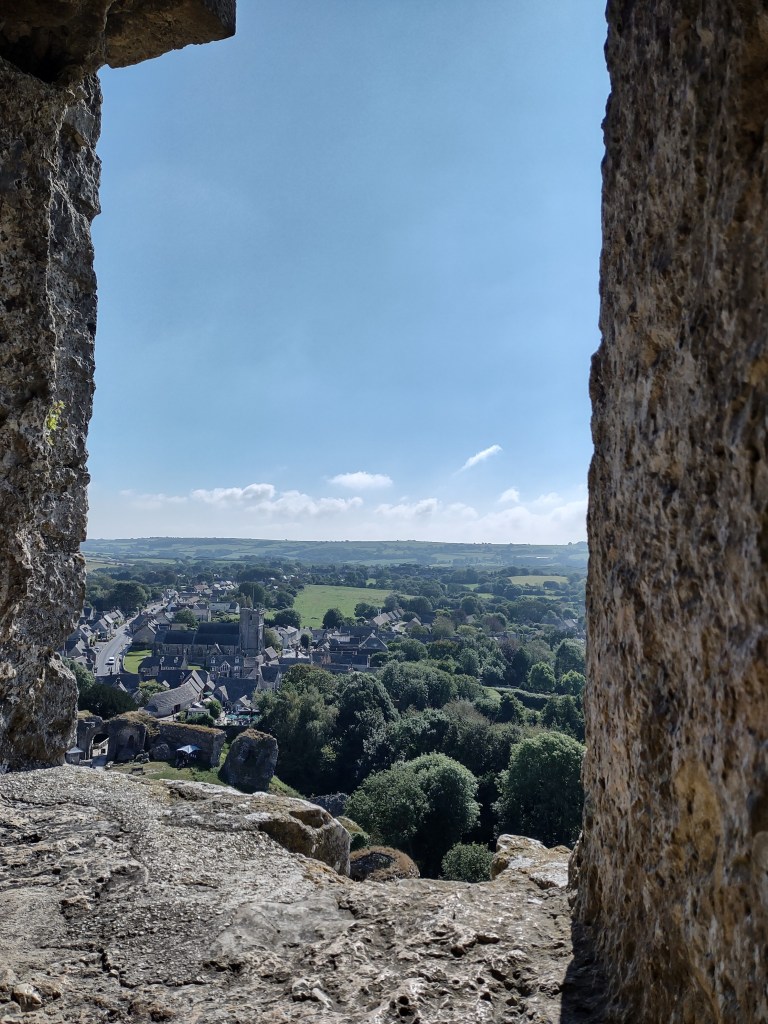
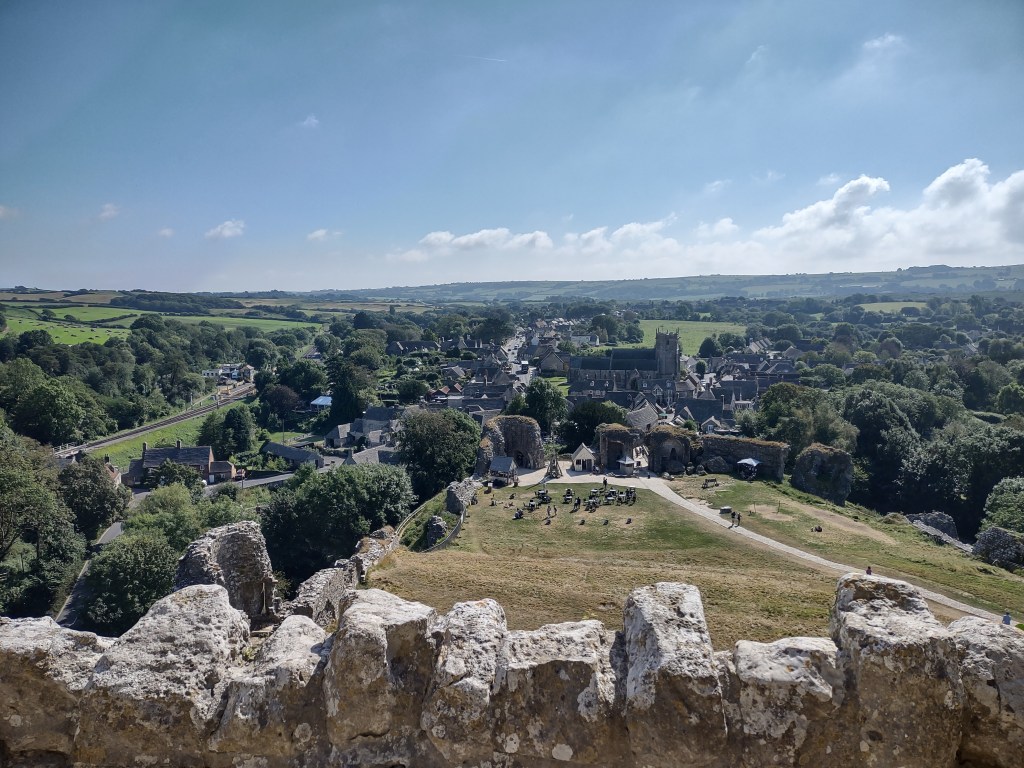
Another typically beautiful view of the Dorset countryside, this time from the Butavant Tower. Around 1206 when King John took his niece Eleanor hostage, 22 of her loyal French knights were lucky enough to stay in this tower. Unfortunately, I don’t think they got to enjoy the view. Or the dining options, it turns out, as King John had them dropped down a pit into an oubliette, a special dungeon where you leave the guests to rot (oublier : forget in French). So the reception desk forgot about them and they all starved to death. (The records do not state whether or not they were ABTA-protected.)

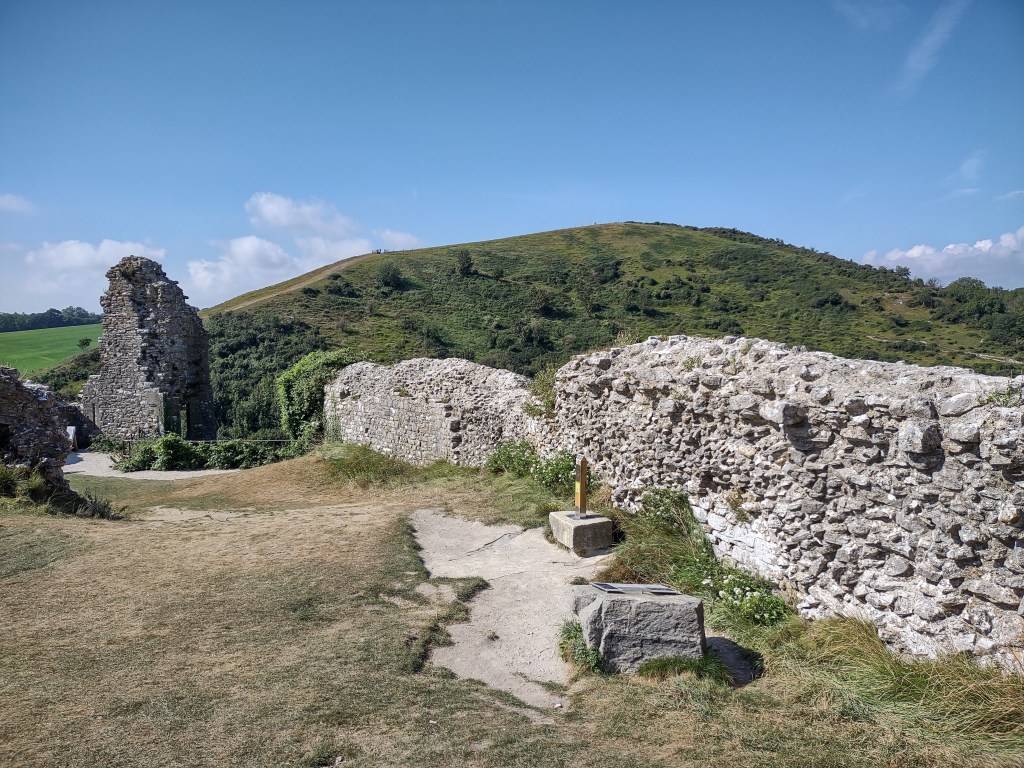
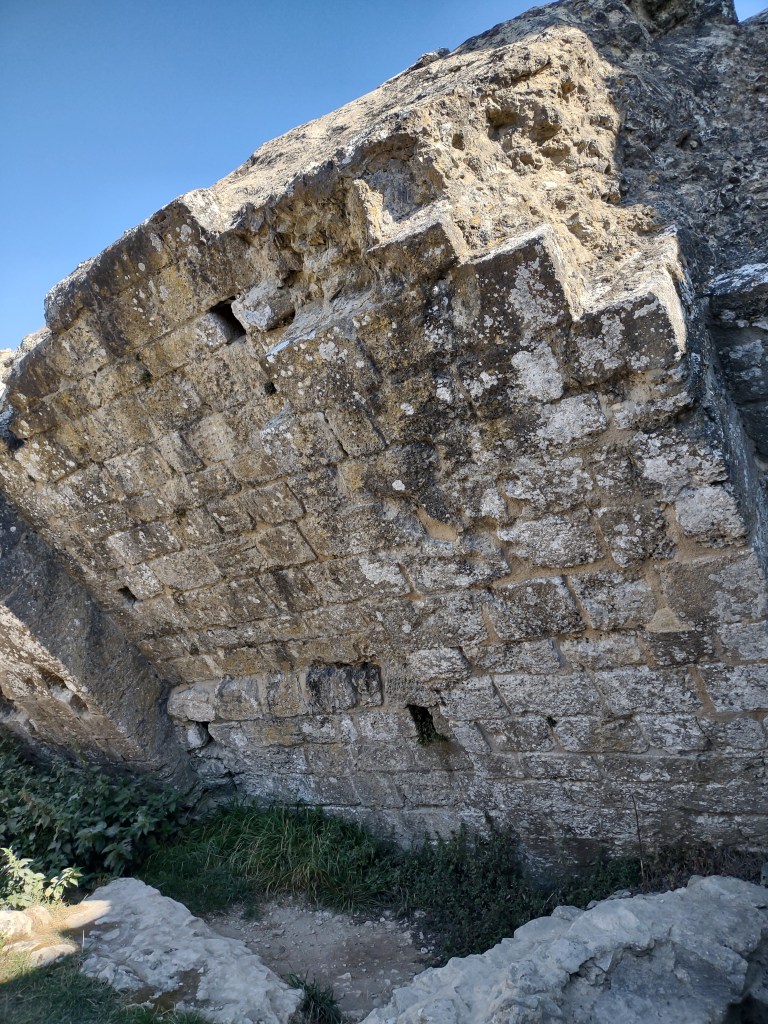
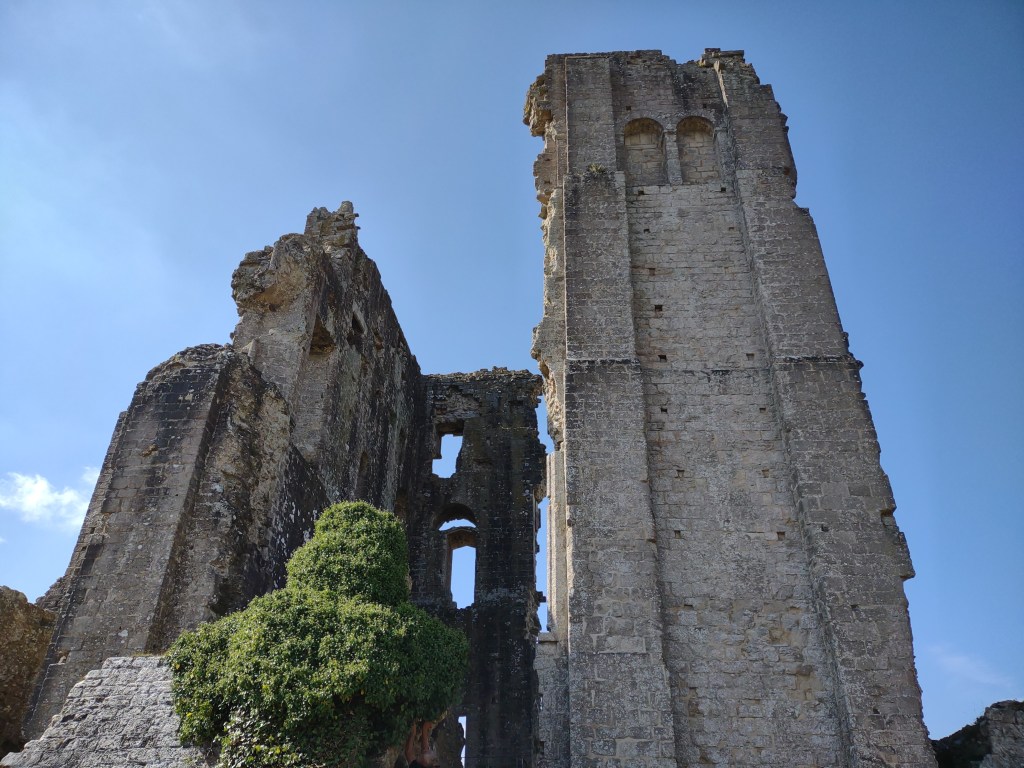
The weight of history.

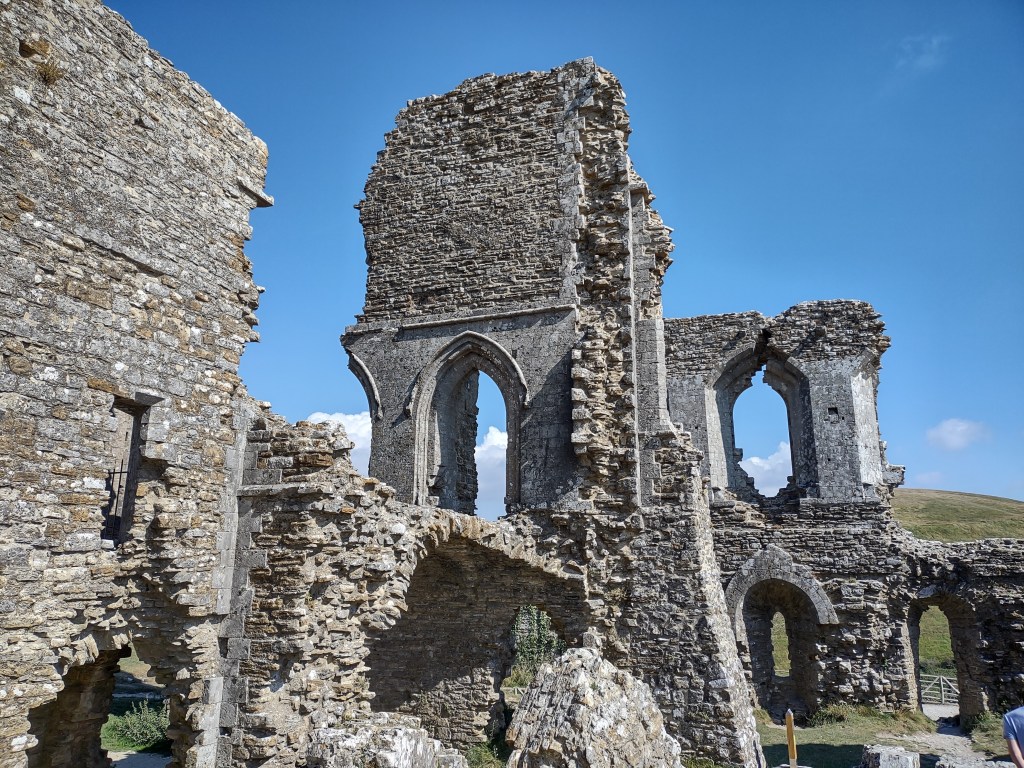
Surprisingly, it wasn’t all those mediaeval dynastic squabbles that left Corfe Castle in ruins.

Elizabeth I sold the castle in 1572 and eventually it ended up in the hands of the Bankes family. If you own a big property like this, you have to take all sorts of things into consideration; upkeep and maintenance, general estate management and security, not being on the Royalist side during the English Civil War and forcing the Parliamentarians to try and take the castle by force, marketing the castle to tourists, that sort of thing. The Bankes family got at least one of these wrong.

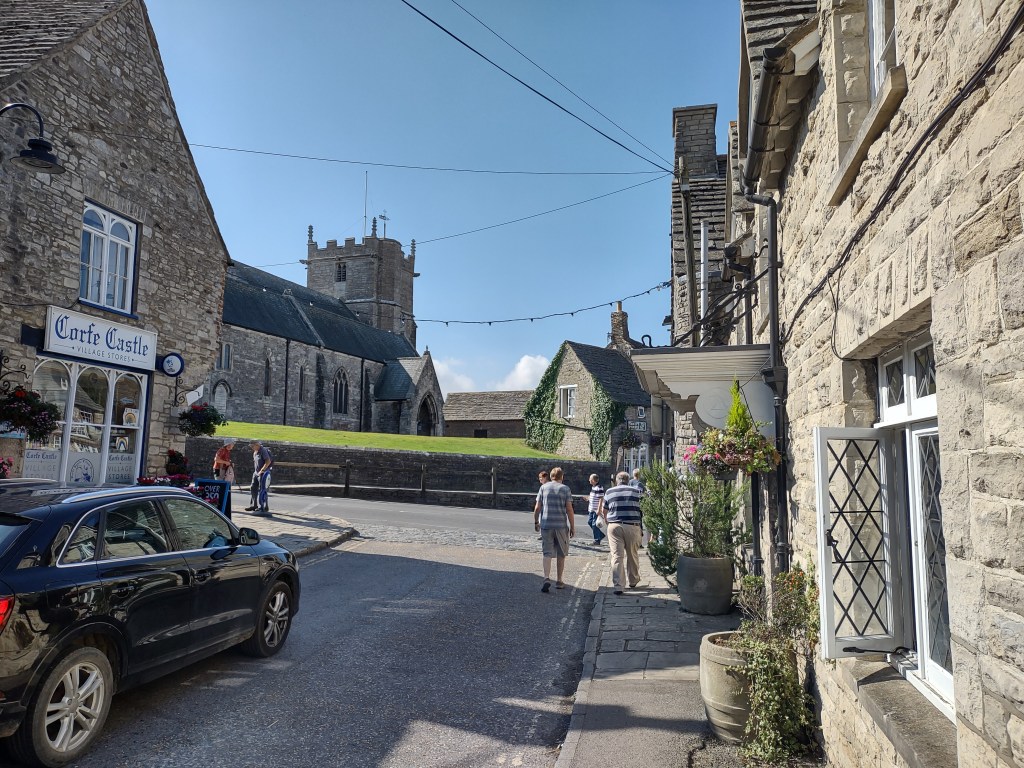
When Cromwell’s forces finally took the fortress in 1645, they were so impressed by the resistance Lady Mary Bankes, the owner, had put up, they gave her and her family free passage out. How nice. Then Parliament voted to blow the place up. And that was it. Much of the Purbeck stone used to build it ended up lining the walls in the village of the same name down the hill.

Well the Restoration came and the Bankeses got it all back, but they’d had enough – who can blame them! – and set up shop in Kingston Lacey. In 1981 a descendant bequeathed the whole place to the National Trust, with whom it remains – an evocative, fascinating, rather sad testament to the brutal but compelling story of these islands. That we can all agree on – unless we’re British Rail in 1972.

That reminds me, time to get back down the hill and get the train back to Swanage. Back we go to that rather marvellous full-size Hornby train set…

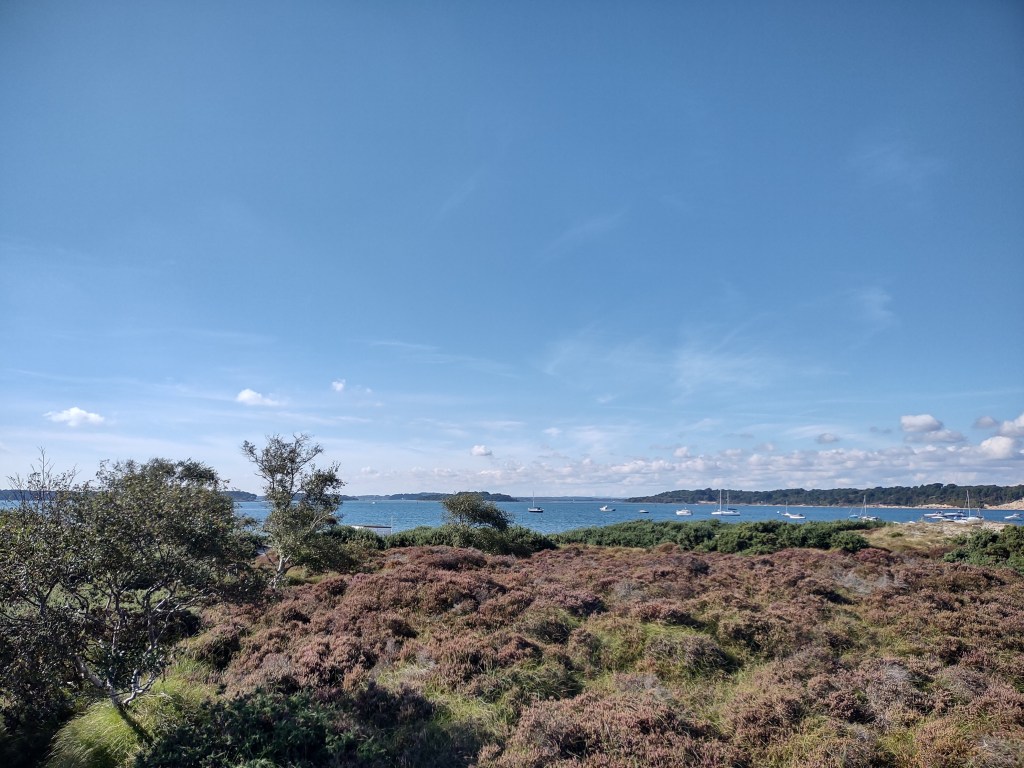
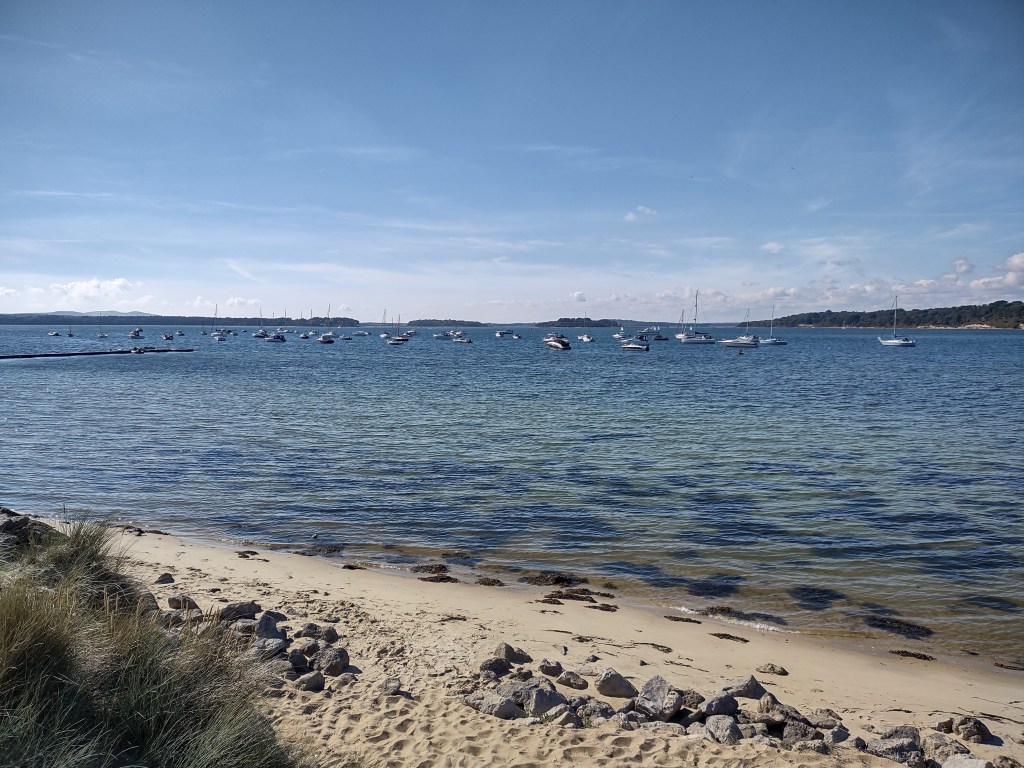
…and back to Swanage, the bus, top deck this time, and some final views of Poole Harbour from Shell Bay.

Well, you know you might prefer your 1950s Britain, or your 2020s Britain, but aren’t we all learning to discover and appreciate Britain itself, whichever year we fancy? I know I am.

P and C

Bournemouth in Dorset. Actually it was in Hampshire up until local government reorganisation in 1974 dragged it into Dorset. Further messing around a couple of years ago merged it into a unitary council with Christchurch and Poole (the BCP council). We’ve had a look at B, time for a peek at P and a call into C.

There’s more to Poole than my earlier snide suggestion of smuggling. The spectacular Poole Harbour is, after Sydney, the next largest natural harbour in the world. Sandbanks, as the name suggests, is a spit of land running alongside the east of the harbour that provides it with good protection from the wild English Channel. The fine location, decent weather, and great sailing also makes Sandbanks one of the most desirable – and expensive – places to live in the world.

In earlier times Poole had also made it rich, and the background behind it is truly fishy. The intrepid sailors here were some of the first to get to Newfoundland and corner the market in fishing the incredibly rich stocks of cod that swam around the island. They’d then trade their catch with the Catholics of the Mediterranean (no meat on Sundays or through much of Lent) in return for wines and other goods that they’d bring back to Poole. You can almost hear the local ne’er-do-wells licking their lips and sharpening their cutlasses.

Eventually other nations musseled in (sorry) on the trade and then Poole’s wide but shallow harbour was unable to host the larger ships of the 19th century and onwards. But it remains a pleasant and prosperous town and well worth a few hours of your time if you’re in the area.

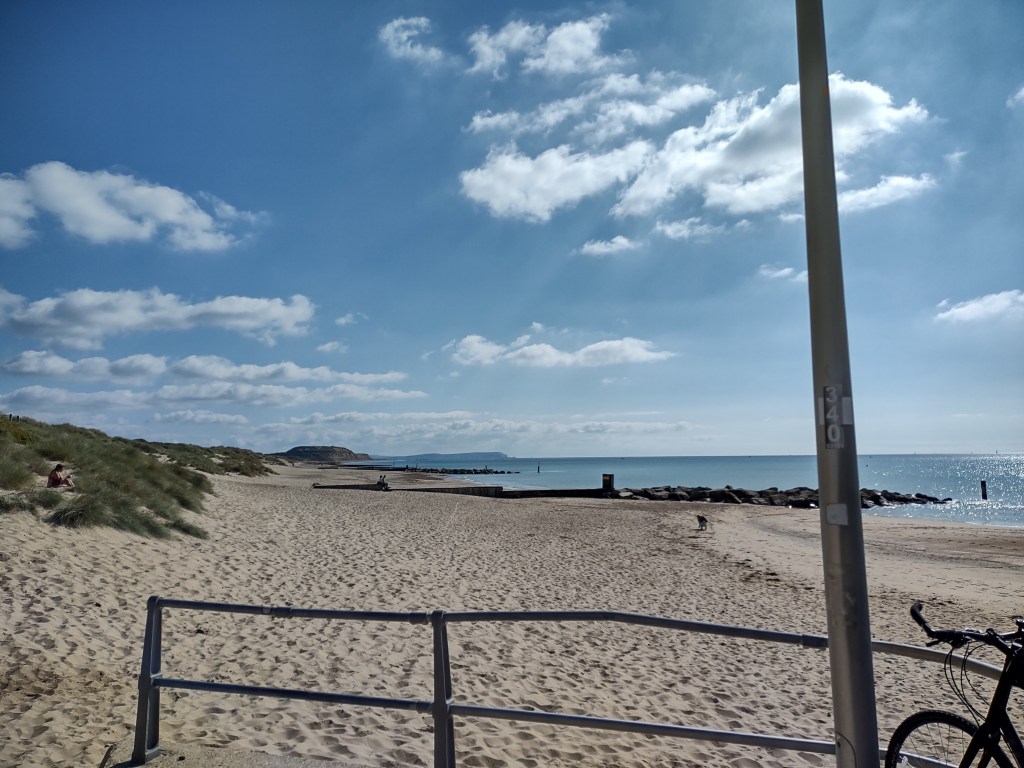
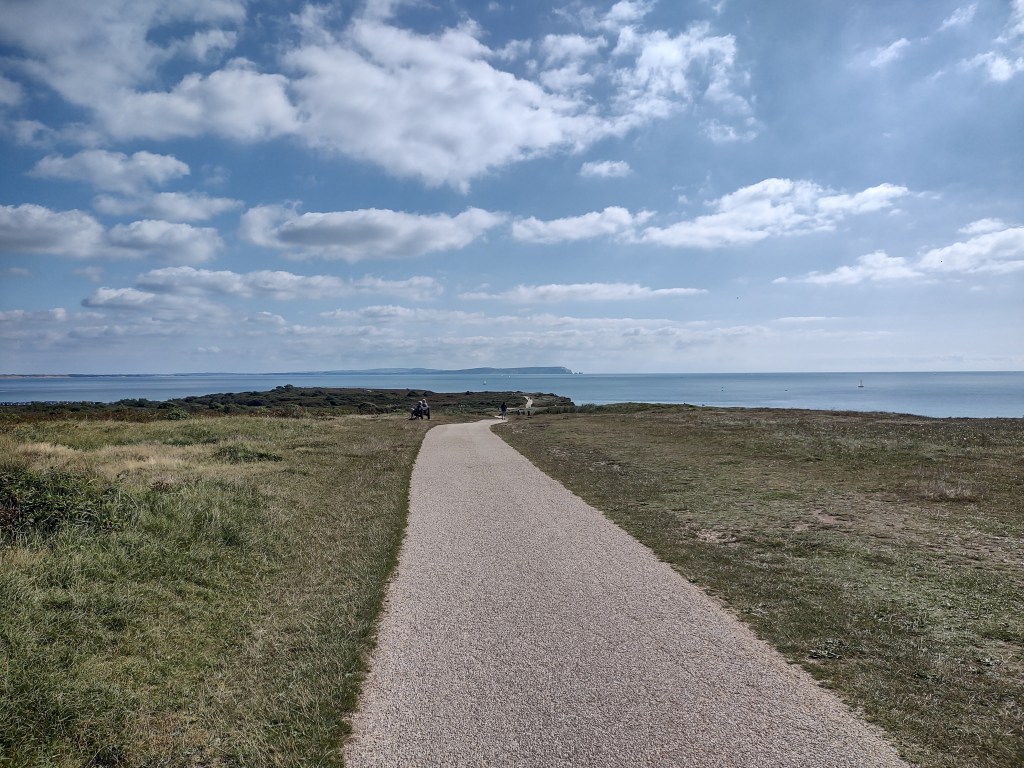
So that was a bus trip to Poole. But Bournemouth is in the middle of nine miles of sandy beach and cliff paths between Poole and Christchurch, and the following day I decided to walk the five miles east to Hengistbury Head, lying at the mouth of the entrance to Christchurch harbour.

Cue photos.

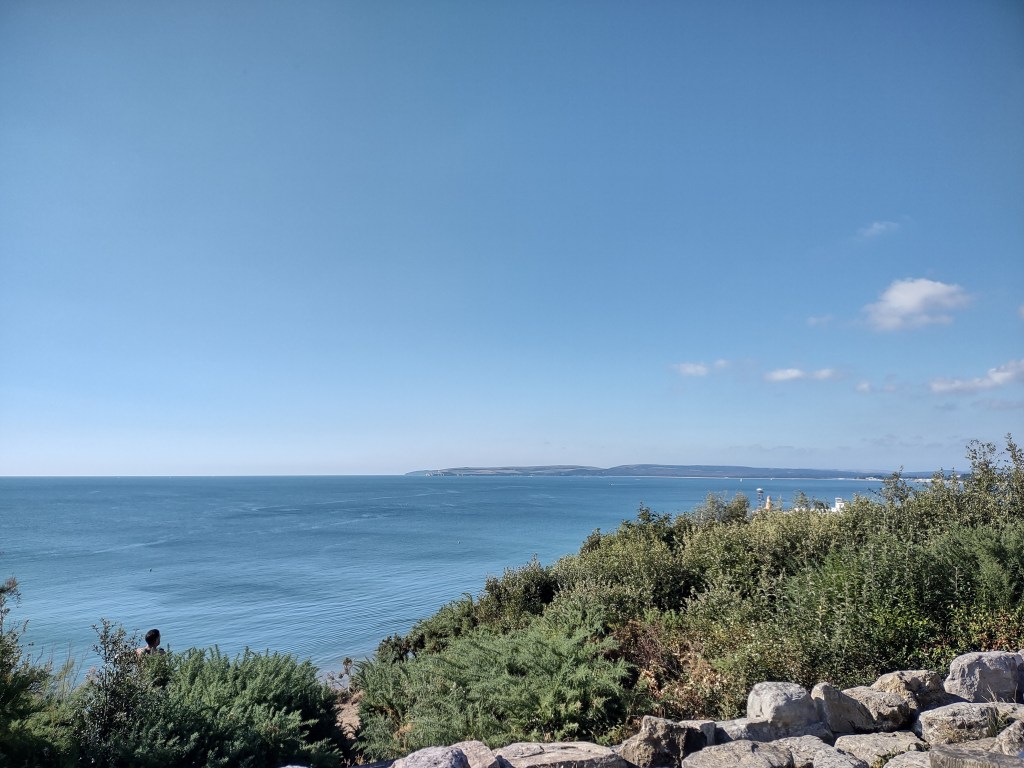
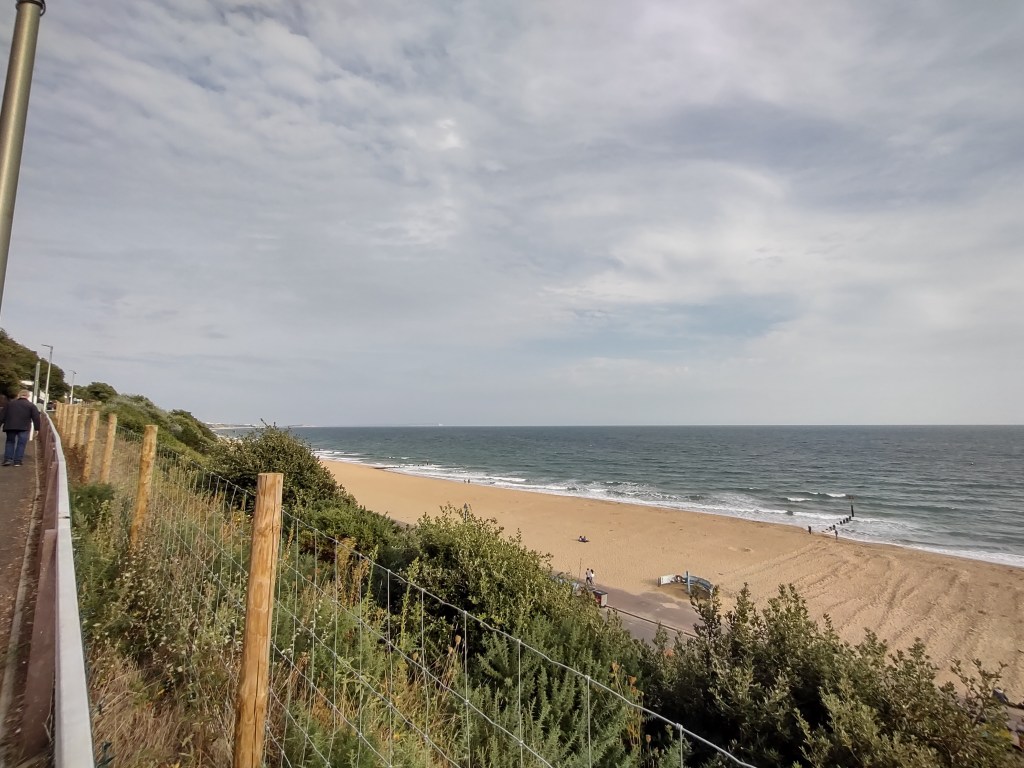
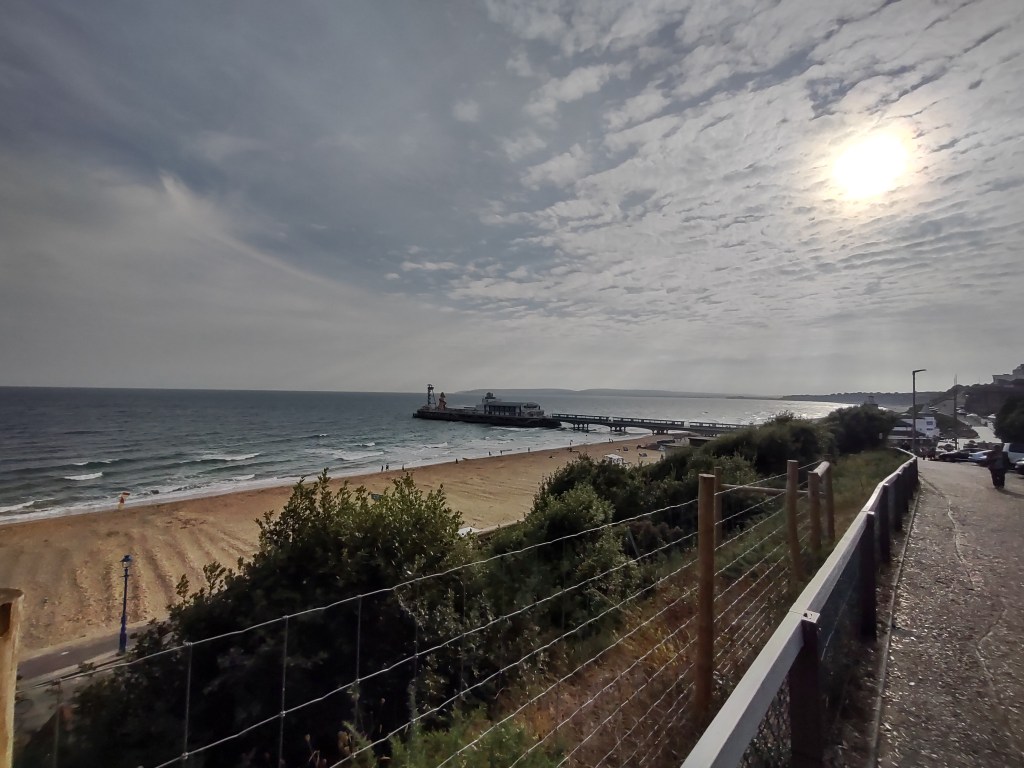
Looking back west to the Isle of Purbeck. You can just make out the red-and-white helter-skelter of Bournemouth pier in the bottom-right, just above the bush. (The Isle of Purbeck isn’t really an island. And the pier isn’t really up to much.)
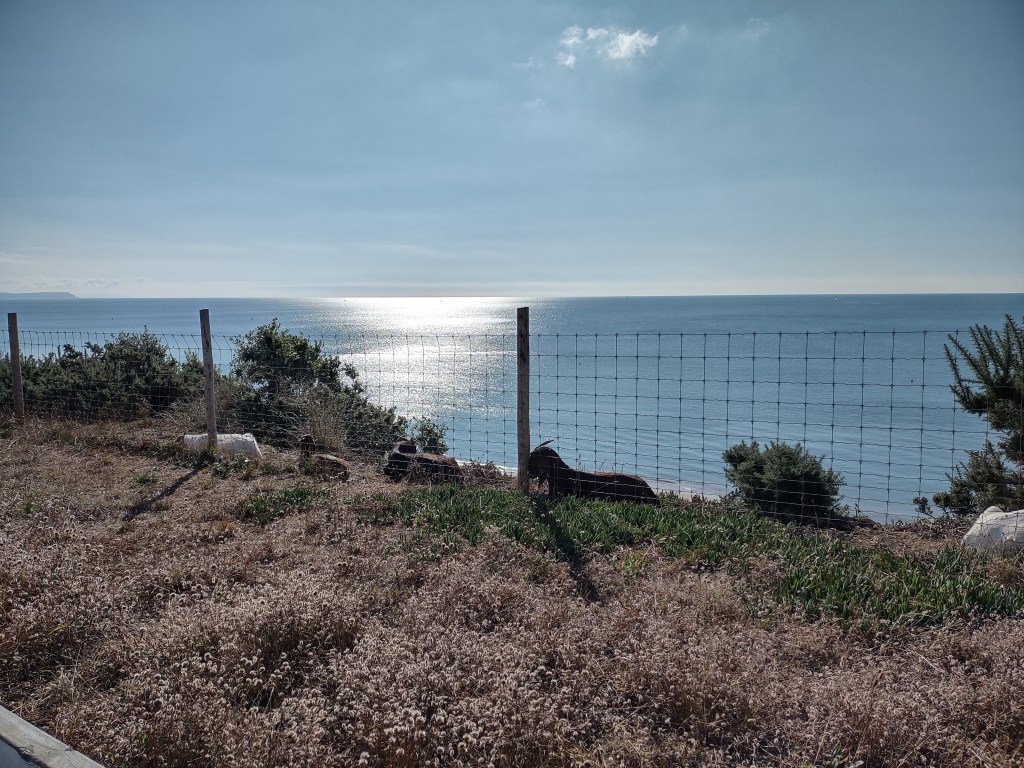
Overcliff, the cliff tops above the beach, is all that remains of the old heathland that used to cover Bournemouth. Goats are used to chomp at the bush to maintain the level of grass and scrub. The number of goats surprised me as I thought there were only two. (Messi and Federer.)
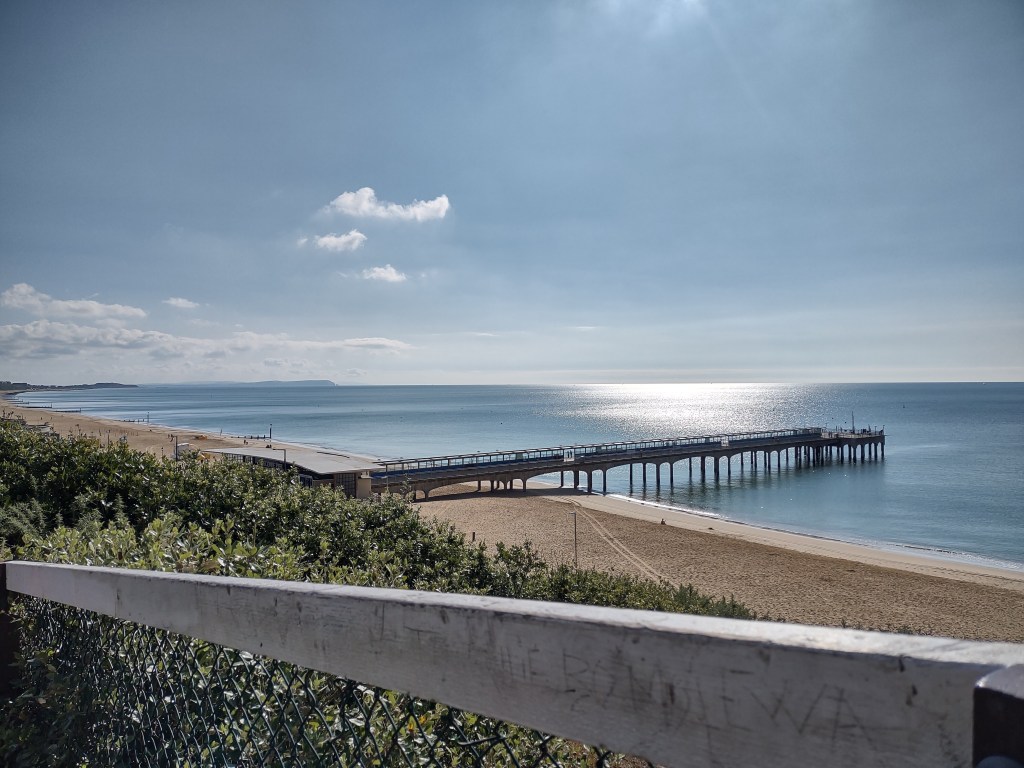
Boscombe Pier
The green hill in the distance is Warren Hill, overlooking Hengistbury Head. On the horizon is the Isle of Wight. You may just be able to make out the Needles. Later in the day, as the sun heads west and dips in the sky, that cliff face reflects the sunlight and turns a ghostly white set against the distant blue of the rest of the island. Magical.
Two hours later and we’ve made it to the top of the hill! To celebrate we turn around and take in the whole sweep of the beach, through Bournemouth and onto Sandbanks and Purbeck.
Looking east, across the mouth of the harbour and over to the Isle of Wight

That’s not the end of the walking though. Christchurch is another couple of miles away.

Another lovely little picture-postcard town, Christchurch is best known for its eponymous Priory.

This church and monastery dates back to Anglo-Saxon and Norman times, and survived the Dissolution when the clergy here promised Henry VIII they’d switch sides. It has gone through many alterations down the years, and one of the earliest involved the builders having to deal with their miraculous beam.

What? In the ceiling of the nave juts out a wooden beam. The story goes that during an Anglo-Saxon rebuild the workers noticed that one of their number came to work, did the job without speaking to anyone, and just as quietly left for home. At some point they’d realised they’d screwed things up a bit and one of the beams was a bit short. Worried about the embarrassment and the waste of a precious building resource they all went home to come up with some excuses. When they came back, the beam had amazingly become the right size – and the mysterious co-worker had disappeared!

Without thinking “well if the guy was so good why didn’t he stop us making a mess of the job in the first place?”, or “if he was who we think he was, well, aren’t Middle Easterners supposed to be a bit browner than that?” they did what any self-respected Dark Age person in a time of mystery and legend would do, and put it all down to Jesus himself. Jesus the Carpenter, no less. The church was renamed Christchurch, and eventually the town. So there you are. The Miraculous Beam. Go figure.

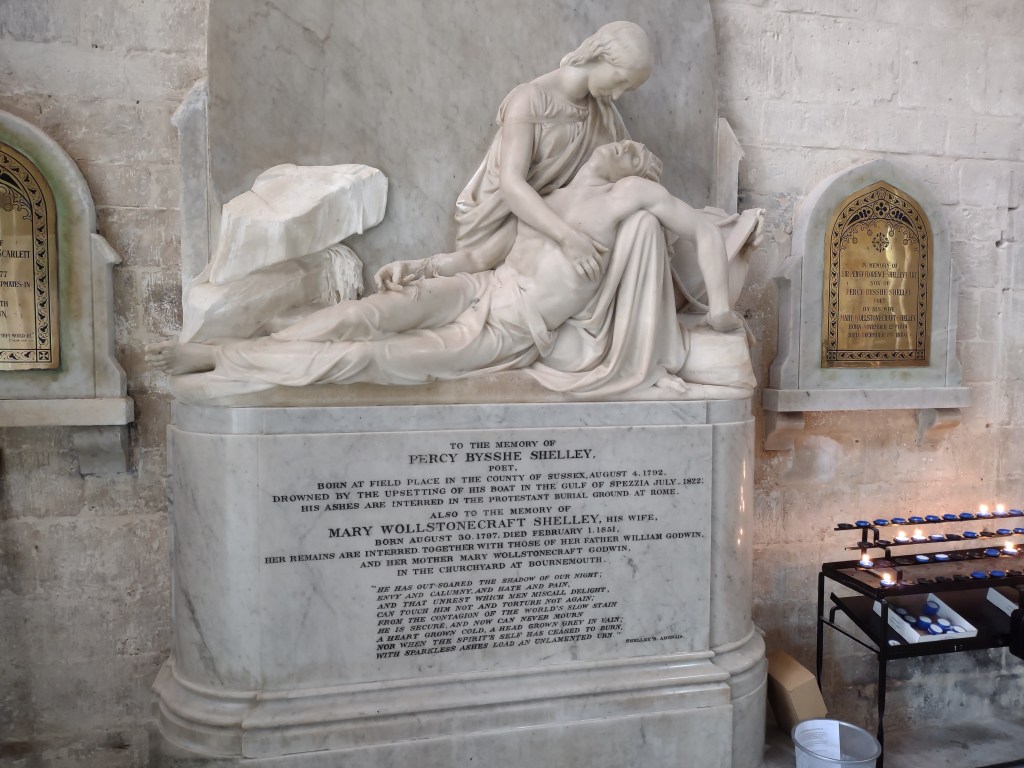
Before we leave C and head back to our base in B one more example of Christchurch craftiness, as told to me by one of the attendants at the church (I haven’t corroborated it as it’s too good a yarn to falsify; blame him if this is all rubbish). At the west end of the Priory is an elaborate 19th-century memorial to a local husband and wife. Well the wife had links with Bournemouth, but the church there thought the memorial too showy for them. Christchurch said “we’ll have it” and into the priory walls it went.

A few years later Bournemouth had second thoughts, for some reason, and asked for it back. At this point the good folk at the Priory turned to Holy Scripture, and they told Bournemouth to Go Forth and Multiply. And so to this day the memorial remains here – despite the woman being of Bournemouth stock and actually being buried in a Bournemouth church.

I can’t work out why Bournemouth would make such a fuss about a simple monument.

Nope, can’t see it at all.

Chines at Midnight

Well, if we’d been here when it was just heathland, we might have had more to write about.

Stretching along the coastal cliffline between the ancient harbours at Poole and Christchurch, jutted above nine miles of pristine sand, there was – nothing. Just a vast bracken heathland reminiscent of the New Forest a few miles to the east, a deserted spot mainly frequented by the odd fishermen…and lots of smugglers!

In fact even respectable Poole and Christchurch were happy now and again to make a few bob by pulling a fast one on the Revenue men. In one notorious incident in the 1800s it looks like the whole of Poole went out on the lash for a few days partying on some ill-gotten liquor. But the long stretch of heathland between them, known then as Westover, was particularly suited to the trade, being empty, desolate, and riven with lush deep valleys – or chines – where rivers cut through the sandy cliffs and many a dark deed could be done hidden away from prying eyes.

It sounds romantic, but for those on the wrong end of it, no it wasn’t. And no, it isn’t. Old-style big-time smugglers like Isaac Gulliver were really not much different to today’s drug trade kingpins and people smugglers. As far as Westover went, back in the late-eighteenth century the army decided to send an officer called Lewis Tregonwell to do something about the smugglers while he was watching out for the French during the Napoleonic Wars. Tregonwell kept at it until 1810, by which time the local bigwigs started inclosing the heaths.

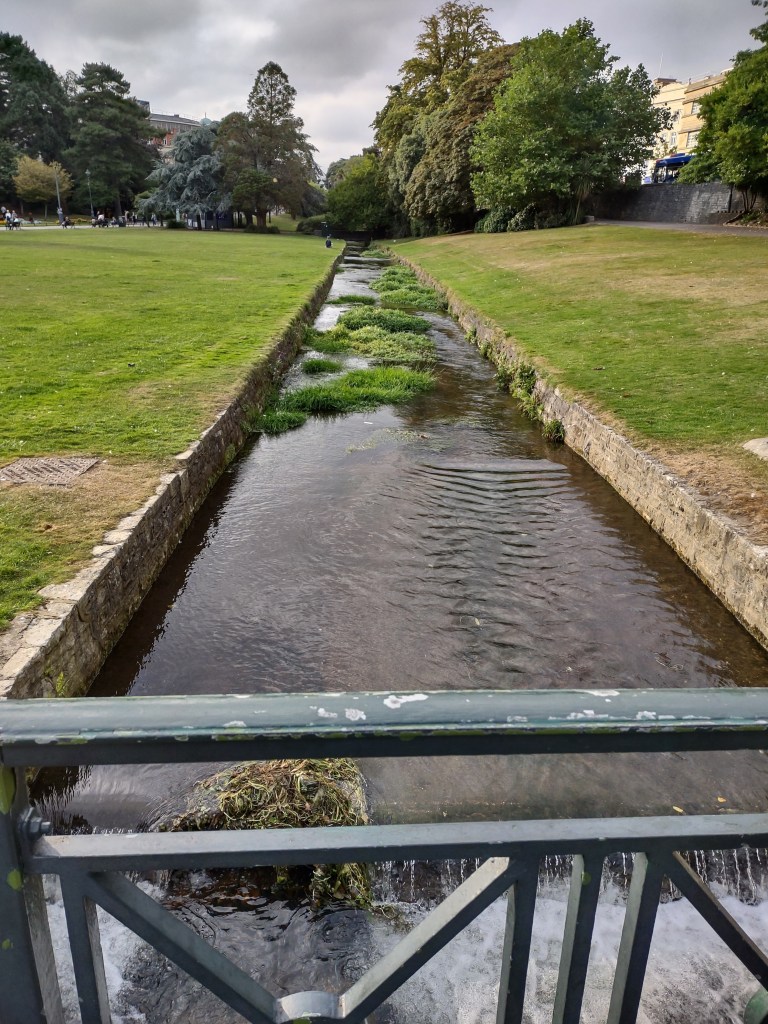
But he liked the area so much he and his wife had a house built here in 1812. Immediately following the parcelling-out of the now private land, it’s considered to be the first proper house of the town that would soon grow up on the Westover, all around the mouth of the little river Bourne . A town that would get a new name.

The Bourne, near its mouth
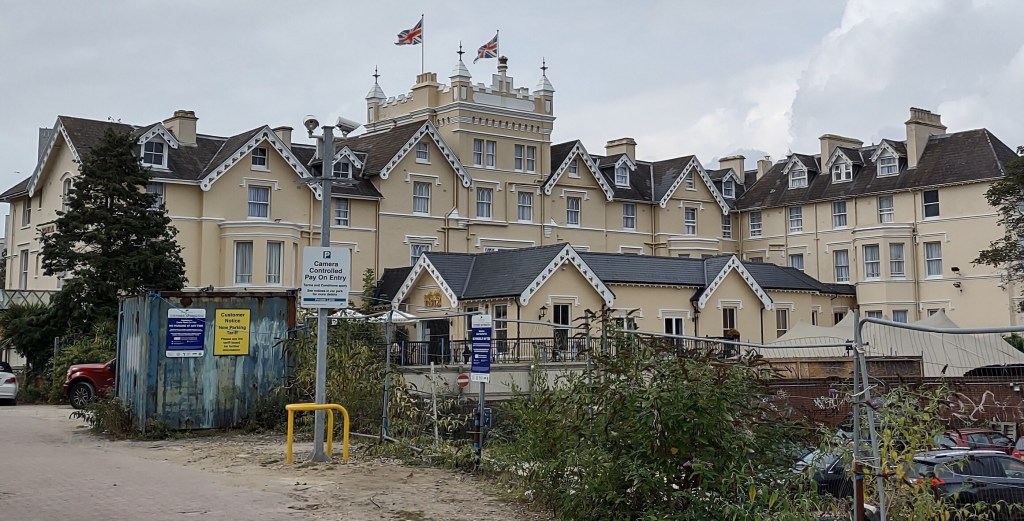
Part of Tregonwell’s house forms a wing of the Royal Exeter Hotel

And so developed a pretty little resort town just as the Victorians were developing a taste for the seaside, and just in time for Victorian railway mania. You can guess the rest – well-to-do tourists – hotels – retirees – genteel Edwardiana – bigger town – more tourists – yawn…once you get past the smuggling and the building of a town from scratch, the story becomes very predictable, very bland, very twee.

…still, if the inhabitants were lucky enough to have escaped the rawness of truly interesting history (apart from some bomb damage in the Second World War), they were also lucky to live in this lovely South Coast gem, with its beautiful walks, gardens, views along the coast to the Isles of Wight and Purbeck, and that glorious beach. And if I really can’t find anything else to write about here, that just means I have more time to enjoy it for myself.

Mersey miscellany

Well, soon it’ll be time to get the train out of town, so it’s time I jot down some final thoughts about my time here and push out some more snaps.

A good place to spend a few days

I’ve enjoyed my time here. Lots to see, decent sightseeing, interesting stories to uncover, good places to eat and drink (although not as cheap as it might have been before). I’ve mentioned before that this has always been an outward-looking and ambitious place so it somehow feels different to your average English city. Maybe it’s just the accent.

One regret: for various reasons I didn’t get to see the museums I wanted to visit, the Maritime Museum, the Slavery Museum, the Beatles one in Albert Dock. Well, if international travel restrictions remain in place for a good while yet then maybe I’ll come back and finish the job.

Talking about that last museum…

Not enough Beatles. Sorry

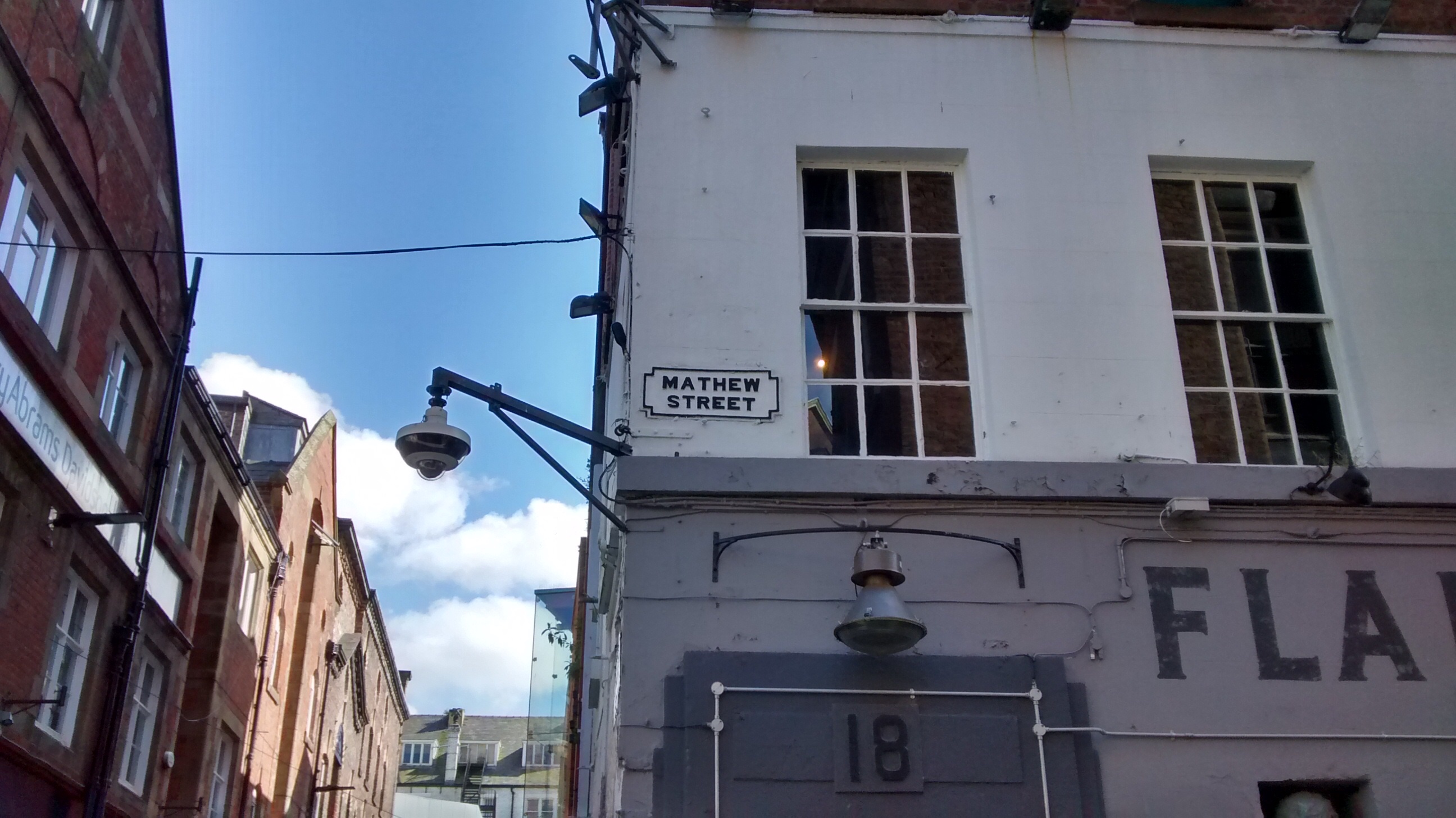
Well I did go to Mathew Street…

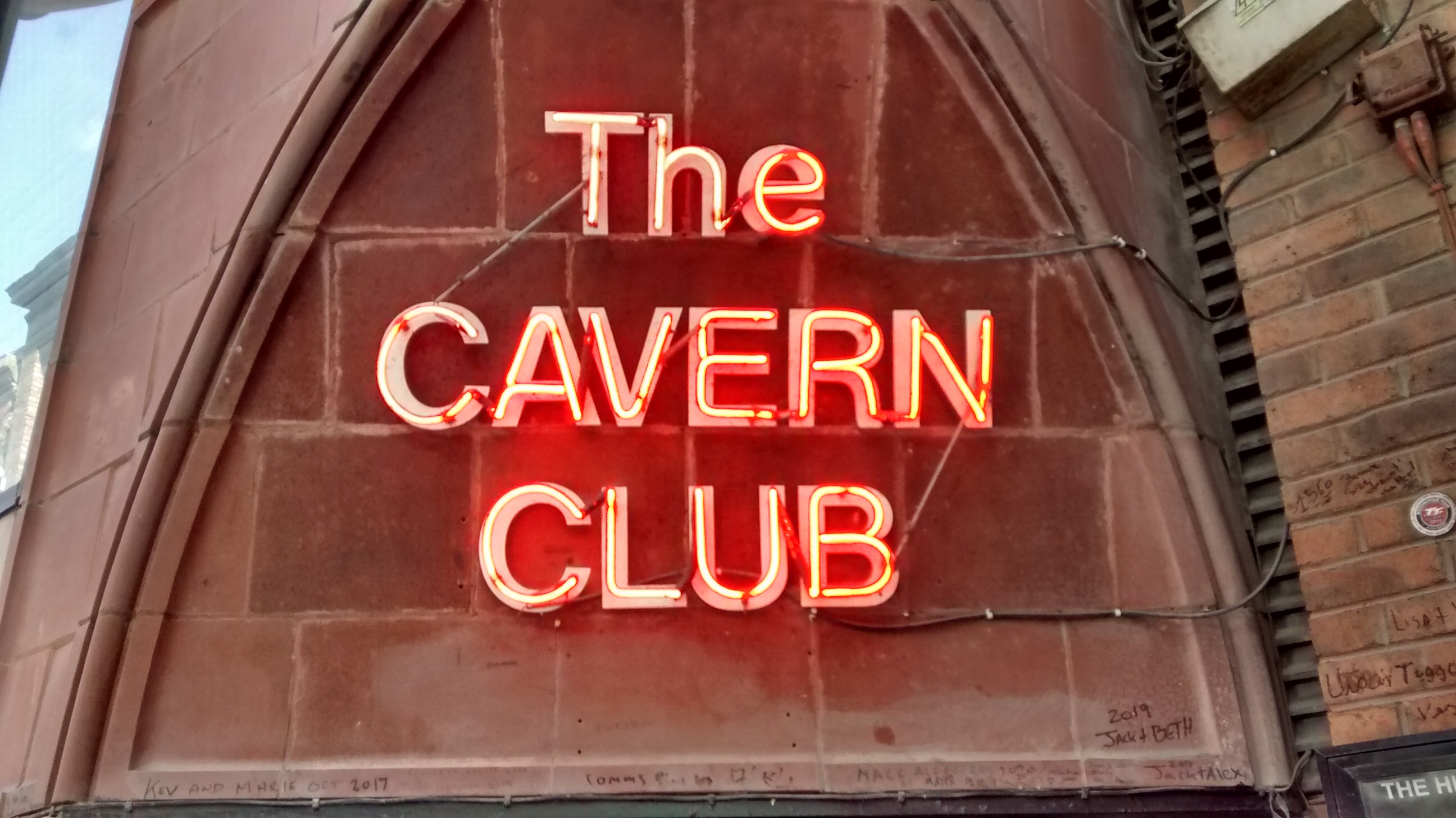
…and the Cavern…

…but I didn’t go in; despite the very few numbers of tourists there it was getting a bit leery at the door.

And I didn’t do any of the specialised Beatles tours that are available here, or visit Paul’s old house, or John’s LSD seller, etc. It was enough for me to be in the city where it all happened, a city that remains incredibly proud of them. And, anyway, I already have the best tourist souvenir of all. Their music.

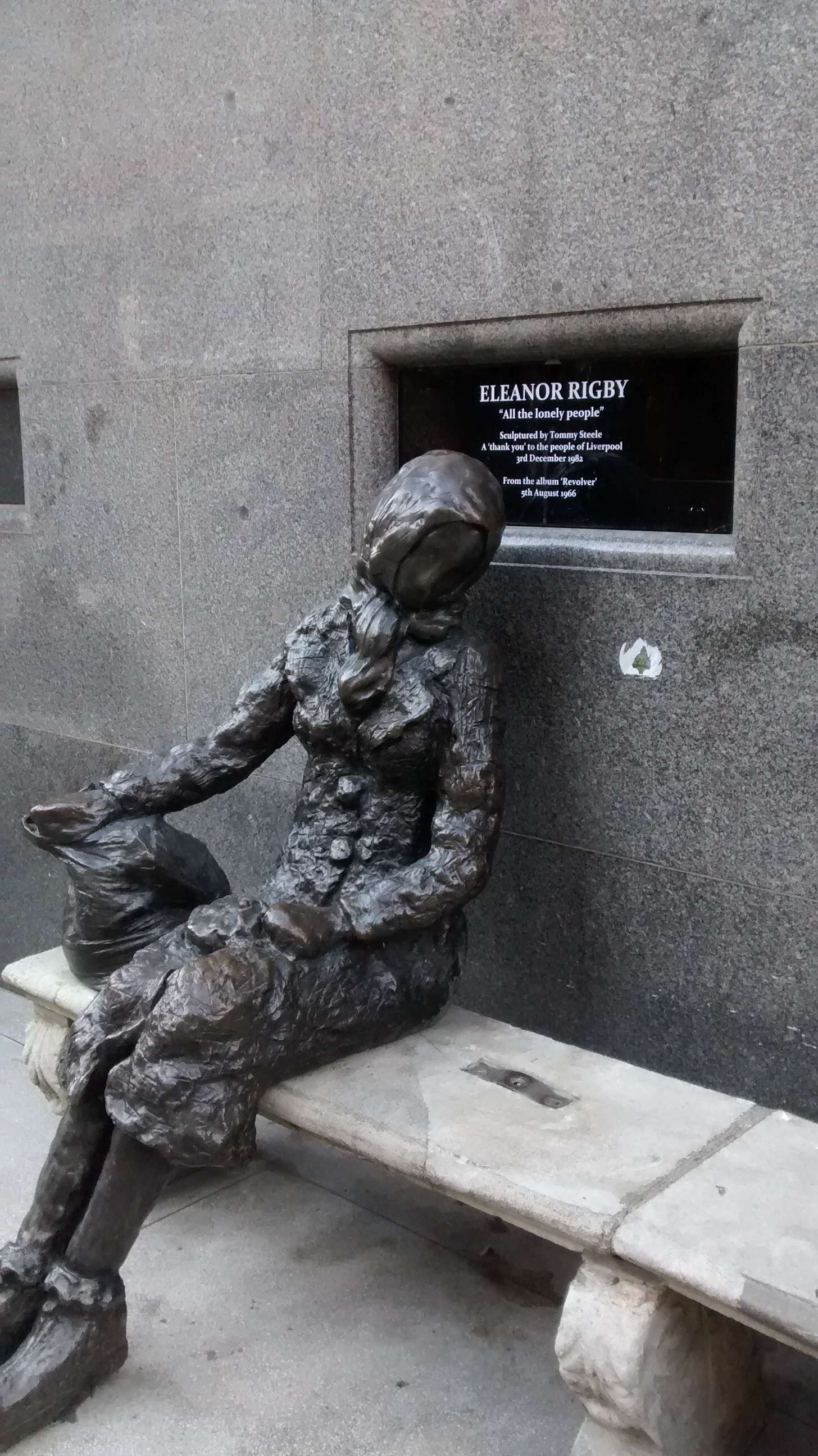
I did bump into an old friend of theirs though.

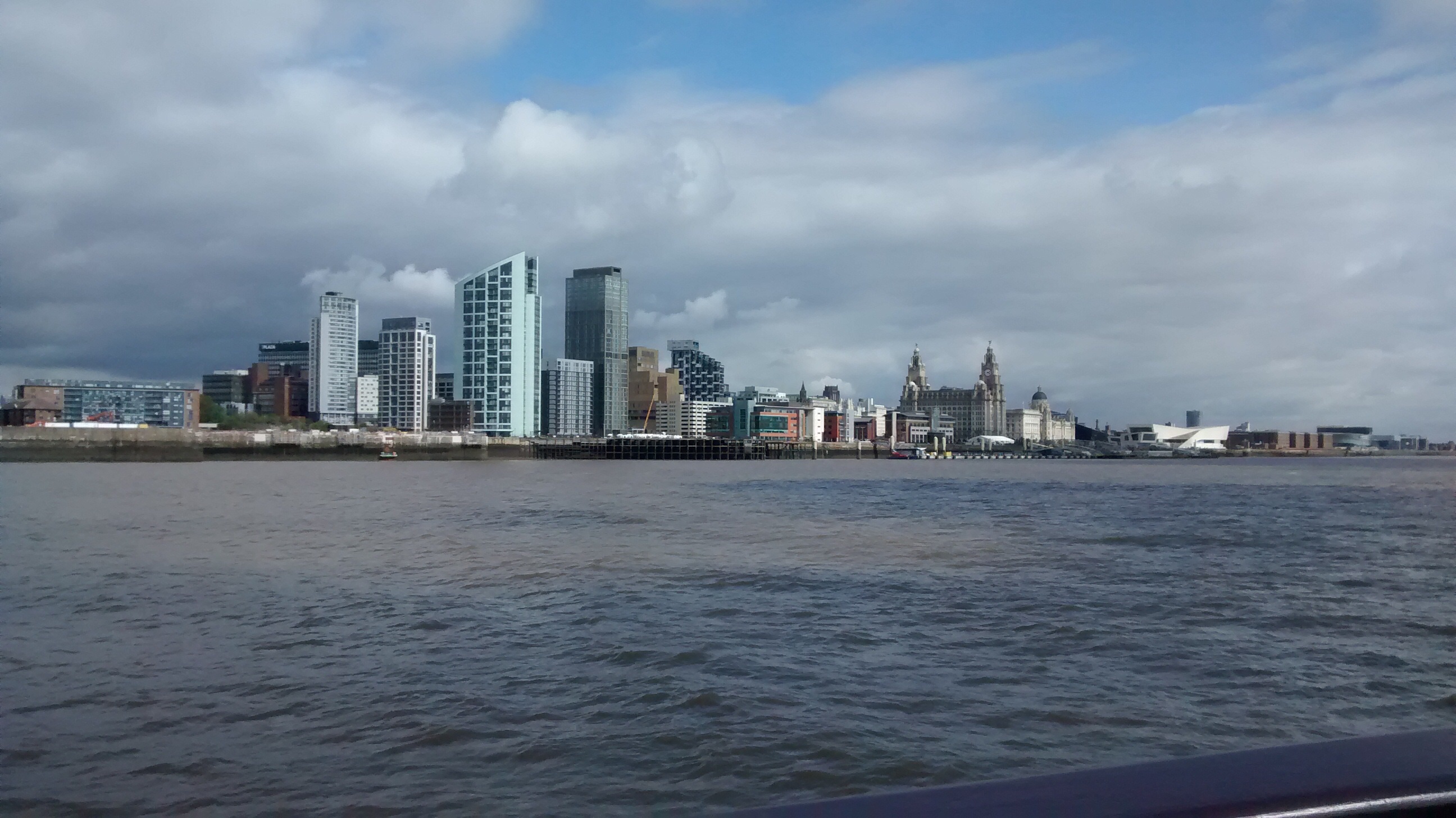
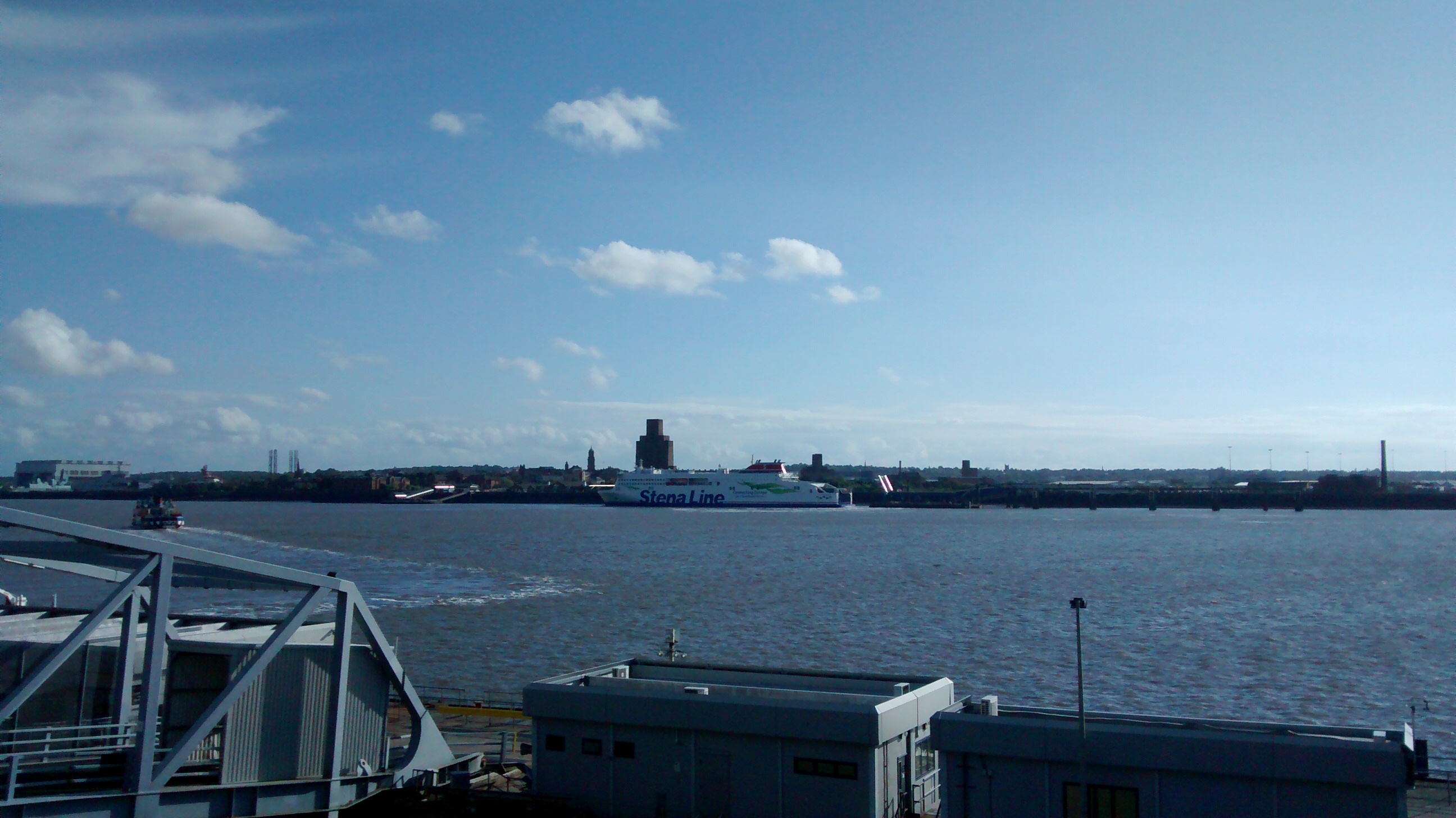
Ferry ‘cross the Mersey?

Yup.

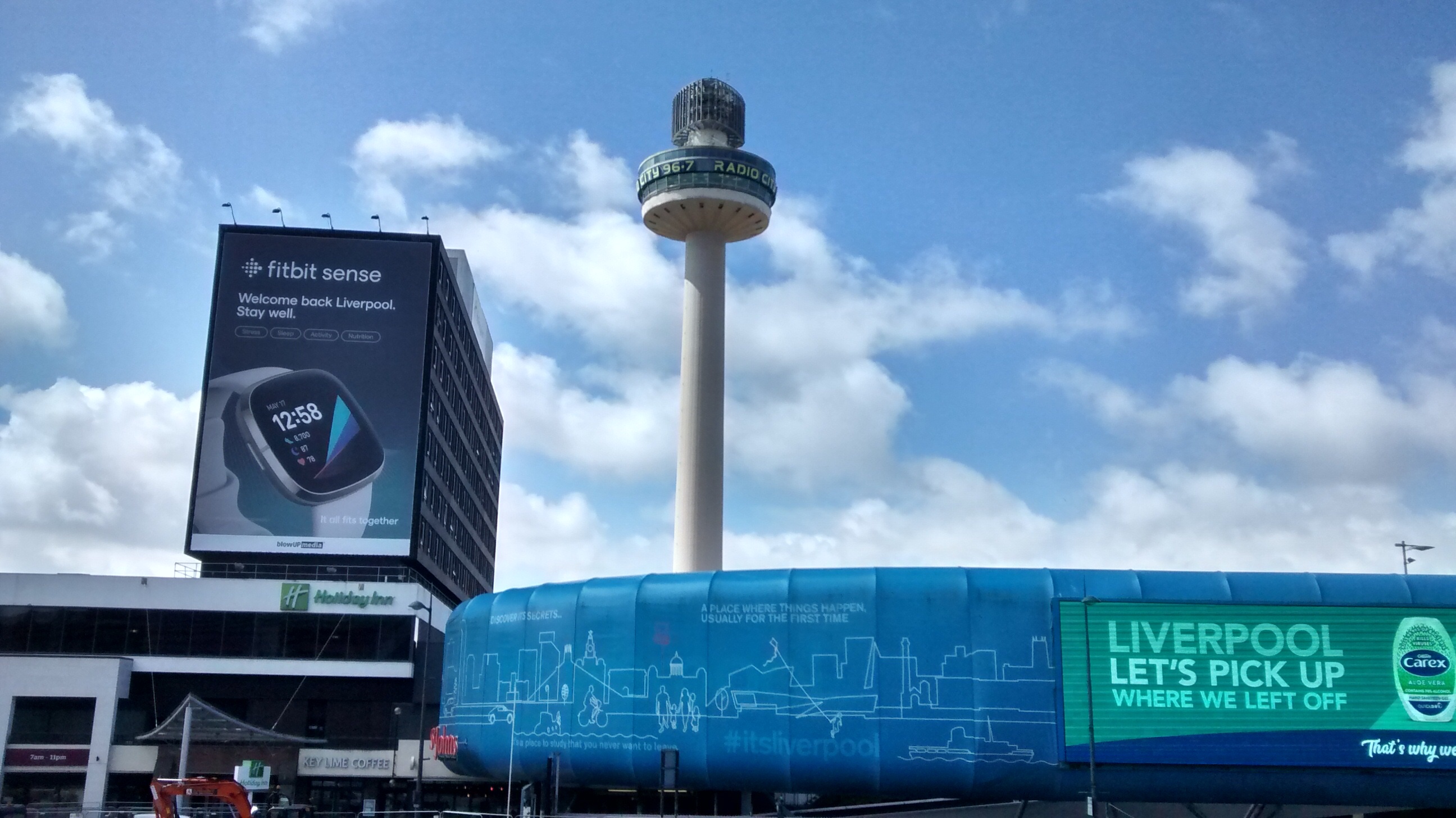
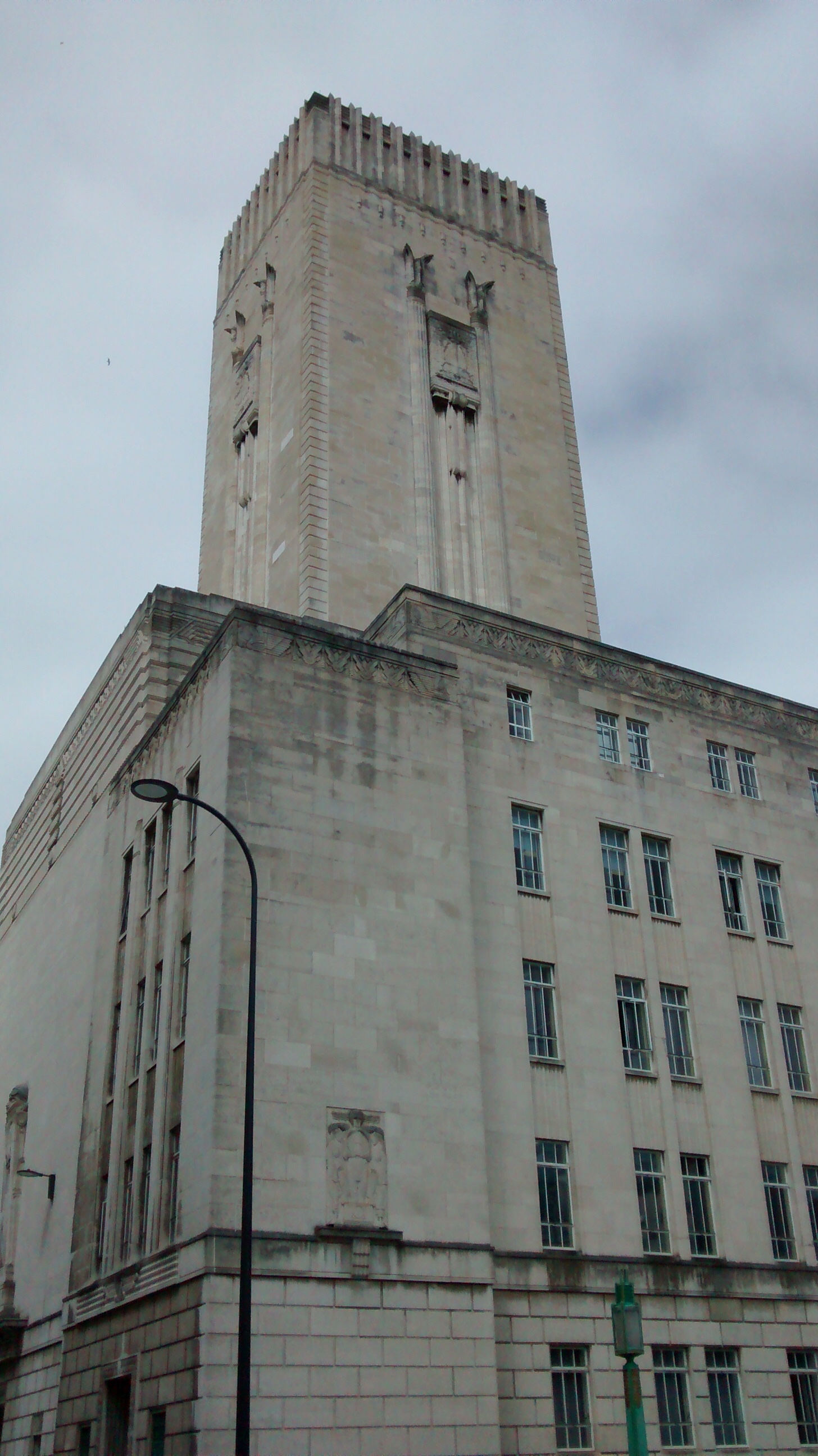
Merseyside loves its long rectangular obelisk things

Don’t worry, they’re ventilation shafts for the various Mersey tunnels.

I think.

An old friend of the blog

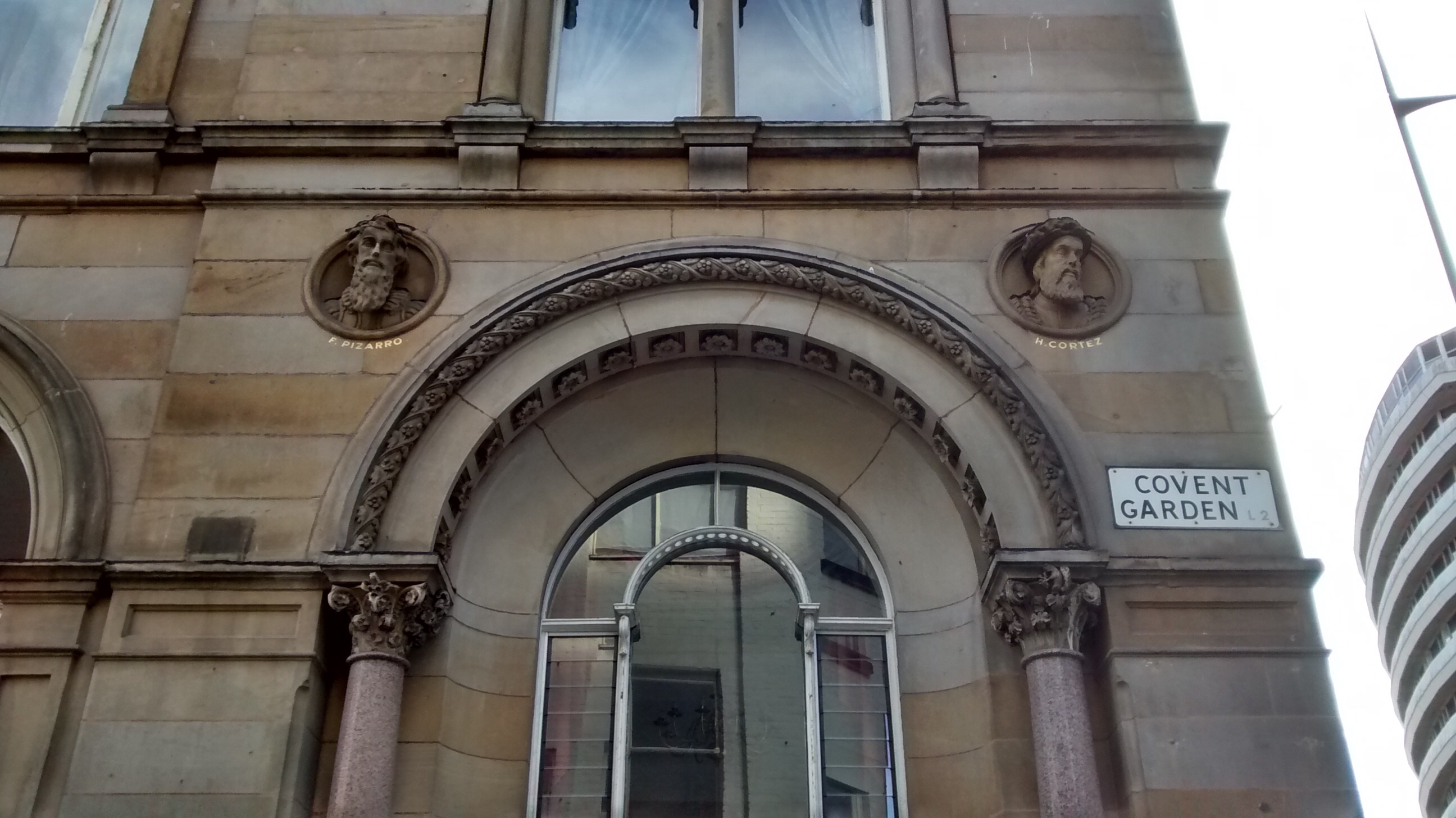
Despite the devastating May Blitz of 1941, Liverpool retains a decent amount of its pre-war architecture particularly in the city centre. The friezes on some of them commemorate the city’s global and imperial trading heritage, some more sensitively than others.

This old building near the waterfront pays tribute to a group of lads the city burghers obviously felt a kinship with, the old-time Spanish conquistadors of yore.

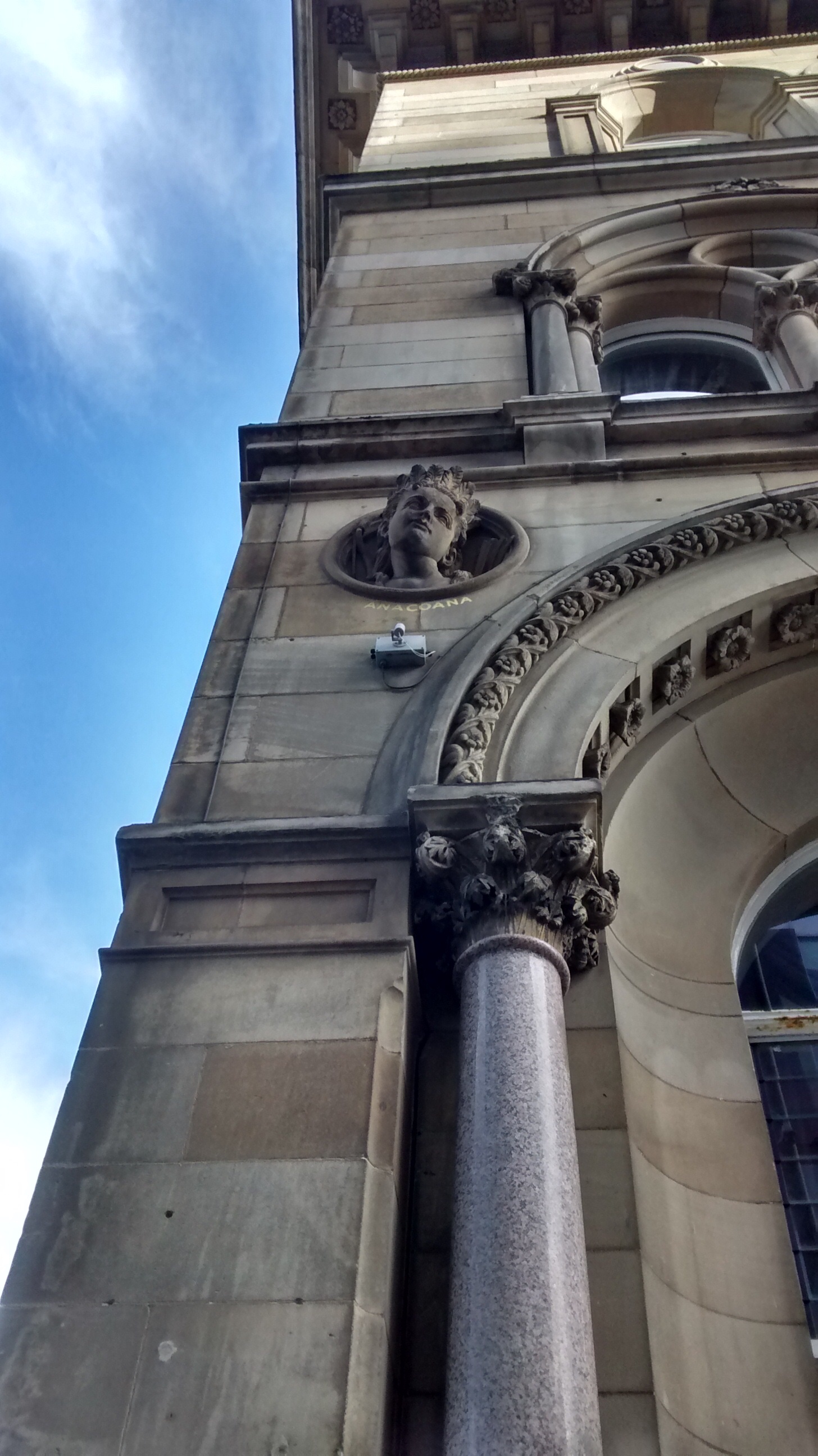
The medallions continue on around the corner, Columbus is there too, and … well who’d have thunk it!

It‘s none other than our old friend from the Dominican Republic posts, Taino queen Anacoana. If you read the blogs you’ll might understand her doleful expression, here surrounded by the guys who were going to make her’s and her people’s lives a misery. Interesting how all these stories tie up, isn’t it?

If you’d like to acquaint yourself with Anacoana and friends, you can check out my Dominican Republic posts. Just select Menu at the top, press the arrow next to Home and all the posts are under – guess what – Dominican Republic. While you do that…oh, is that the time? I need to check out and get that train. Hope you enjoyed the journey with me.

As they say here, taa-raar!