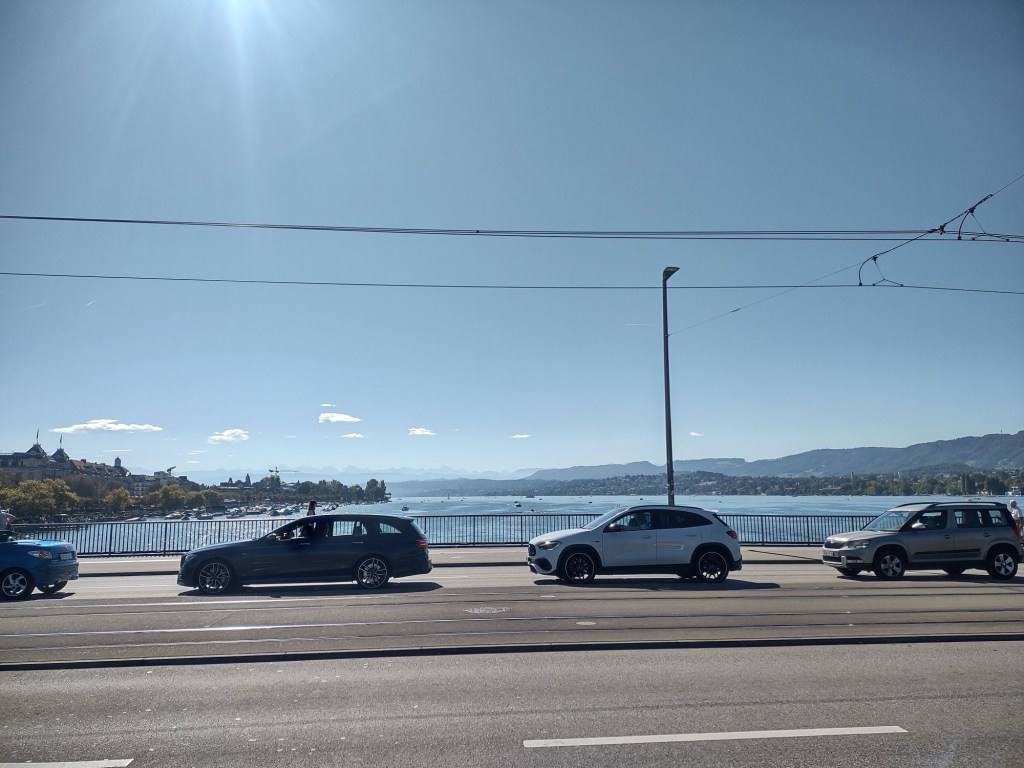
A city lying where a river runs into a lake, a steep-sided city surrounded by green hills with snow-capped Alps on the hazy horizon, so far so Swiss. But Zürich is the big one; the largest city in the country, a great world city, a global centre of banking and finance.
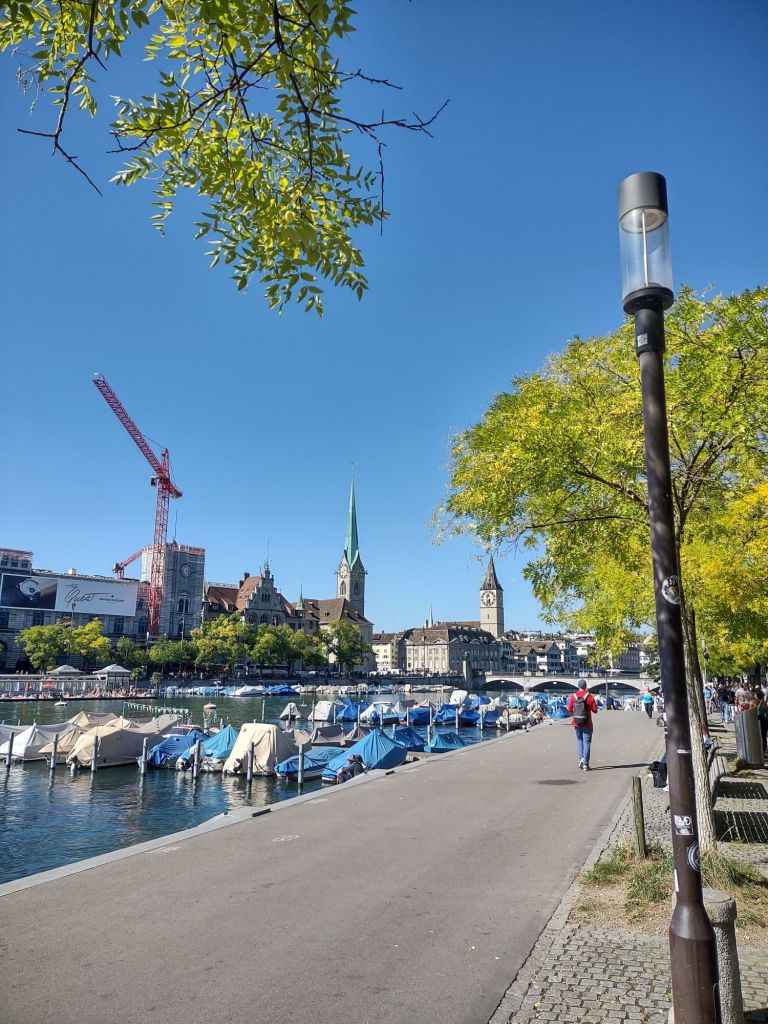
I have been through here a few times now, and what never fails to surprise me is how quaint this metropolis of money really is. There’s no great Manhatten of skyscrapers, no great glass towers with silly names as in the City of London, nothing like Frankfurt (actually Frankfurt does have its quaint quarters away from its surprisingly small district of skyscrapers).
You would of course assume that this is symbolic of Switzerland’s famously (infamously?) discreet way of doing finance; we’ll take your money, Mr President-Dictator for Life, no questions asked, it’s here when you need it.
But it does add up to a fine city that’s quite stunning on a sunny day.
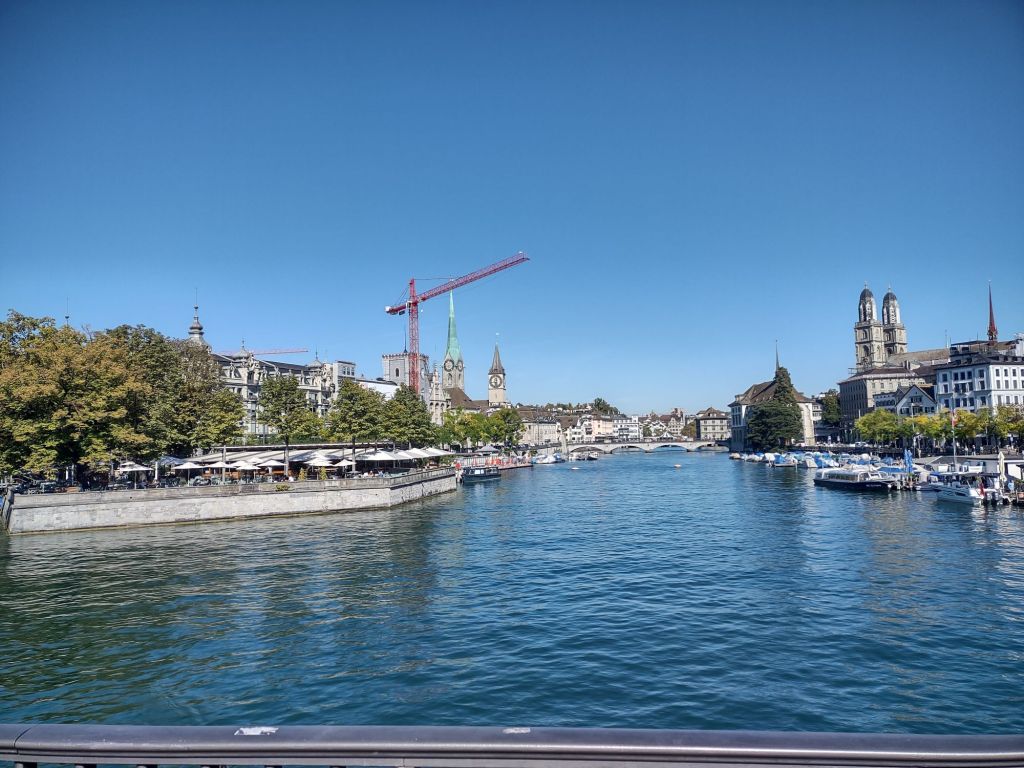
The original Zürich grew up by the river (Limmat) and after the Roman period a prosperous medieval city-state developed, joining the loose Old Swiss Confederacy in 1351. Then the Reformation came, in the form of a priest called Ulrich Zwingli. That’s his old church to the right, the twin-towered Grossmünster.
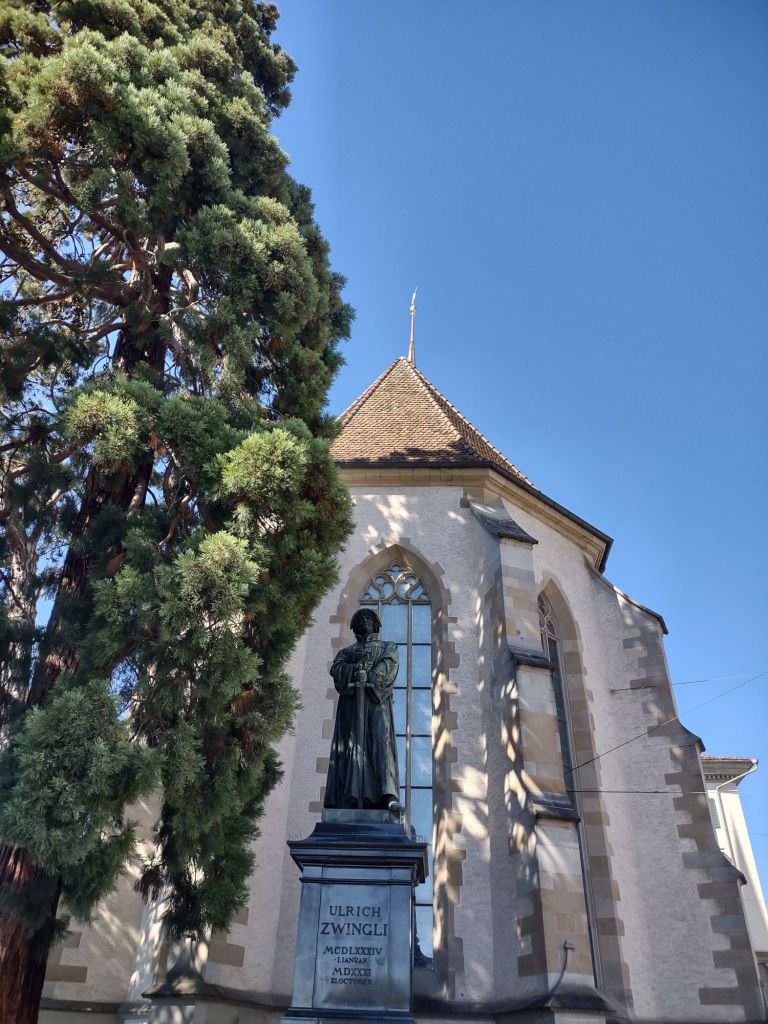
And here’s Herr Zwingli. The Swiss Reformation here featured the usual controversies, disputations and the odd execution but Zwingli appears to have been his own Mann. So much so that those other reformers of the time, Erasmus and Luther, were delighted to hear of his death. That came on the battlefield when he was 47, the Catholic cantons of the Confederacy not being so keen on giving up the old faith.
Over time Zürich developed, did its banking thing, and became well-off. Eventually it grew enough to extend down the lake. Go back to the photo before old Zwingli, and turn around 360 degrees.
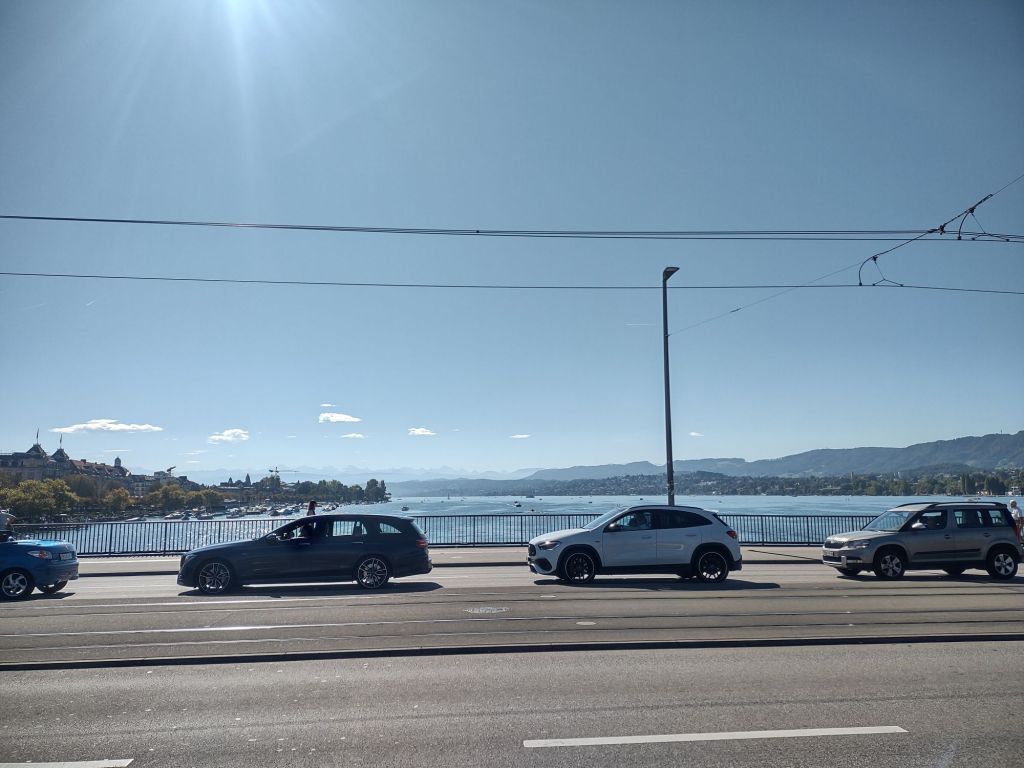
That’s Lake Geneva. And some Alps.
Turning back, we continue to cross over to the left bank, into the Altstadt. Twisty and steep, there were lots of photo opportunities here but it was too crowded to get good places to stop, and I was running out of data.
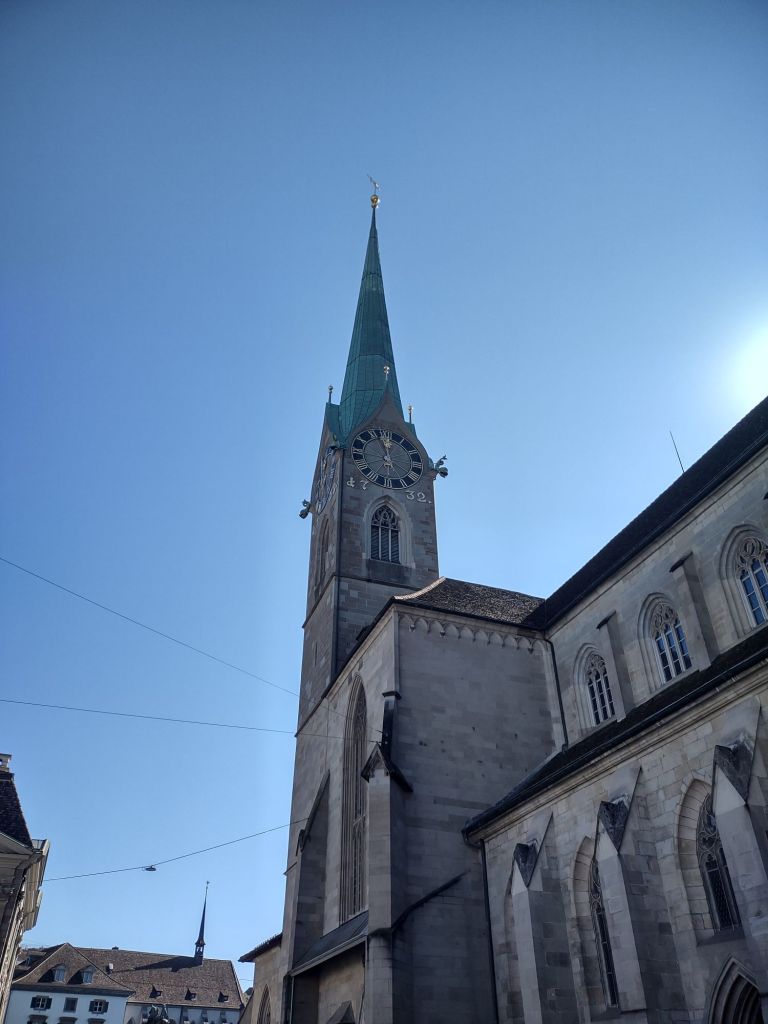
The Fraumünster. That’s the left-hand spire in that photo, the one that must really be irritating you now. (The one next to it in that pic is St. Peter, with the largest clock face of any church in Europe.)
Moving away from the Altstadt gets us closer to understanding where all those rich Swiss bankers and their clients spend their money.
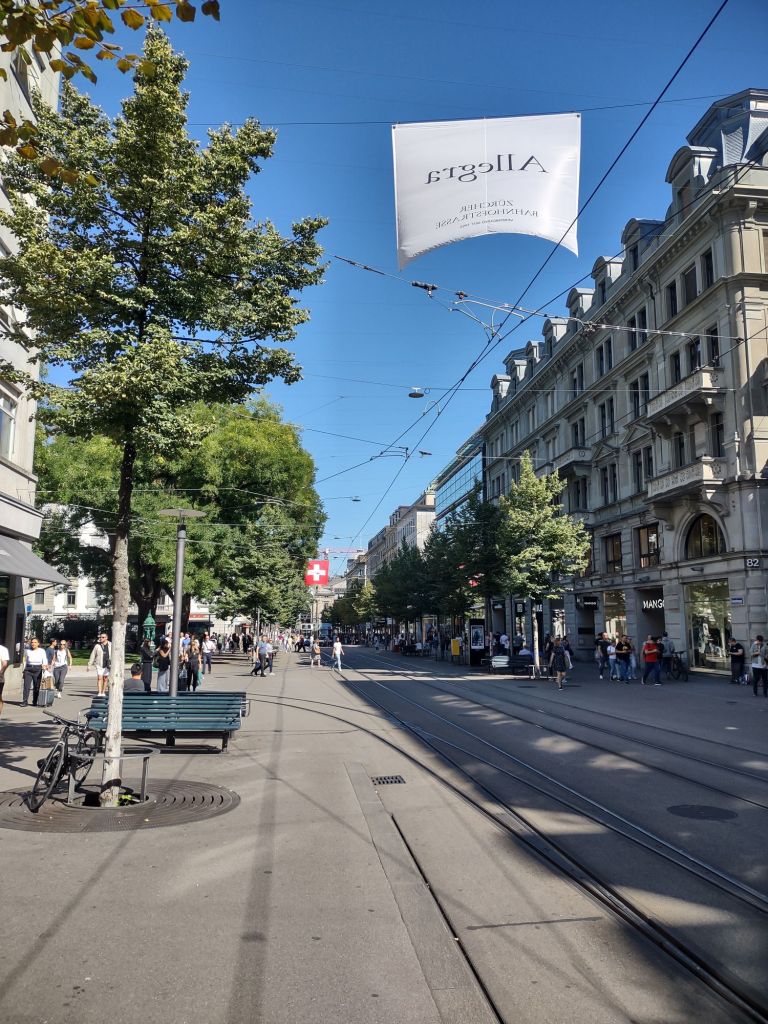
Bahnhofstrasse (Station Street) is one of the most exclusive shopping streets in the world. (You can’t get an 18000 franc watch down my local high street). Dear Mr President-Dictator-for-Life, please have a look at these fabulous goodies you can spend your nation’s wealth on. We even have parlours where you can top up your orange tan, sir. (There goes my trip to the Grand Canyon…)
I kept away from the other shop windows in case looking at something forces you to buy it. So it was on to the end of the road, the main station, the Hauptbahnhof, and an old friend.
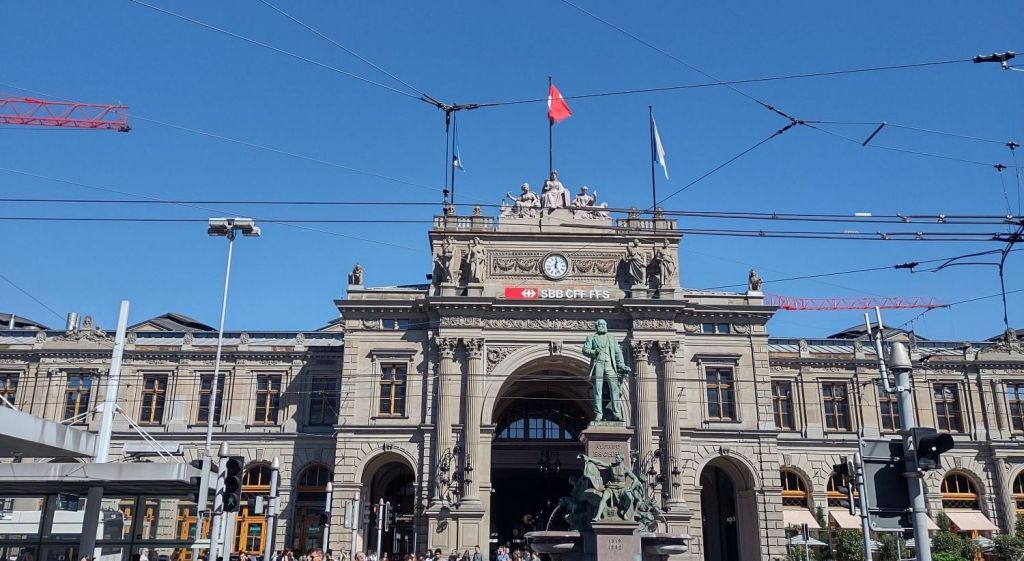
The railway reached here in the 1840s, the current Bahnhof went up in 1871. As for the statue, you may recall the great Alfred Escher from my post on the Gotthard Express in 2022. Switzerland is a great railway nation, and Herr Escher had a hand in much of the extensive railway network here.
Zürich is the busiest station in the country, but interestingly it’s also a terminus. How fitting, because my latest trip through this stunning country ends here. Just time for some last pictures of Zürich, a great city basking in some possibly unexpected late-summer warmth and blue skies.
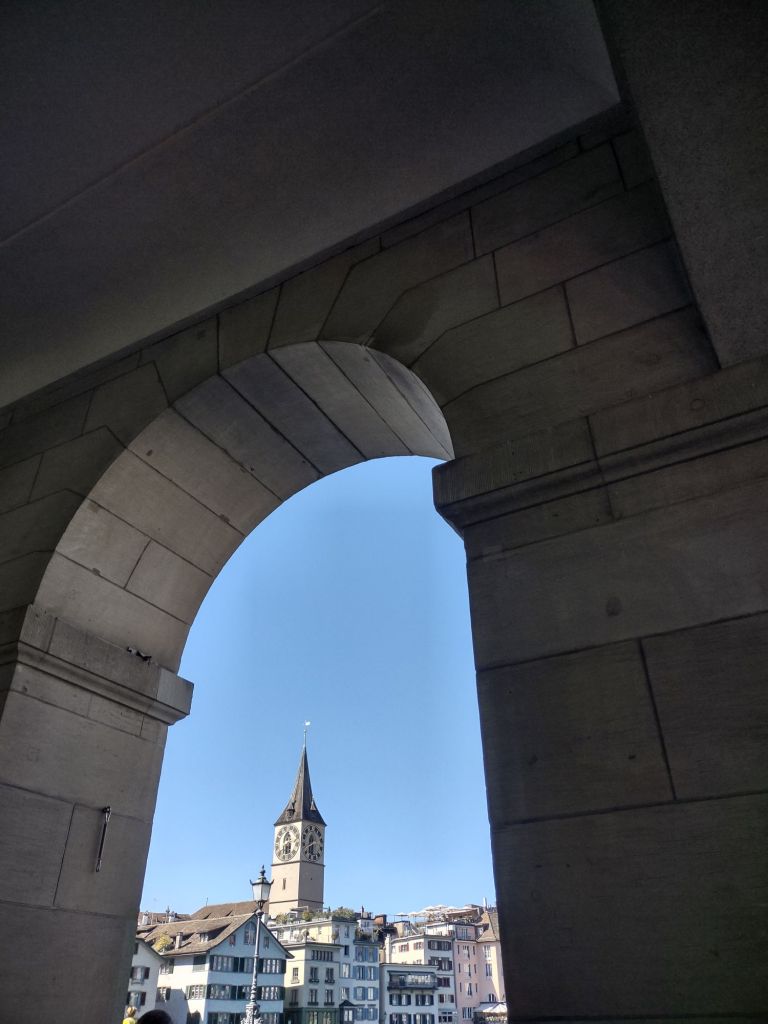
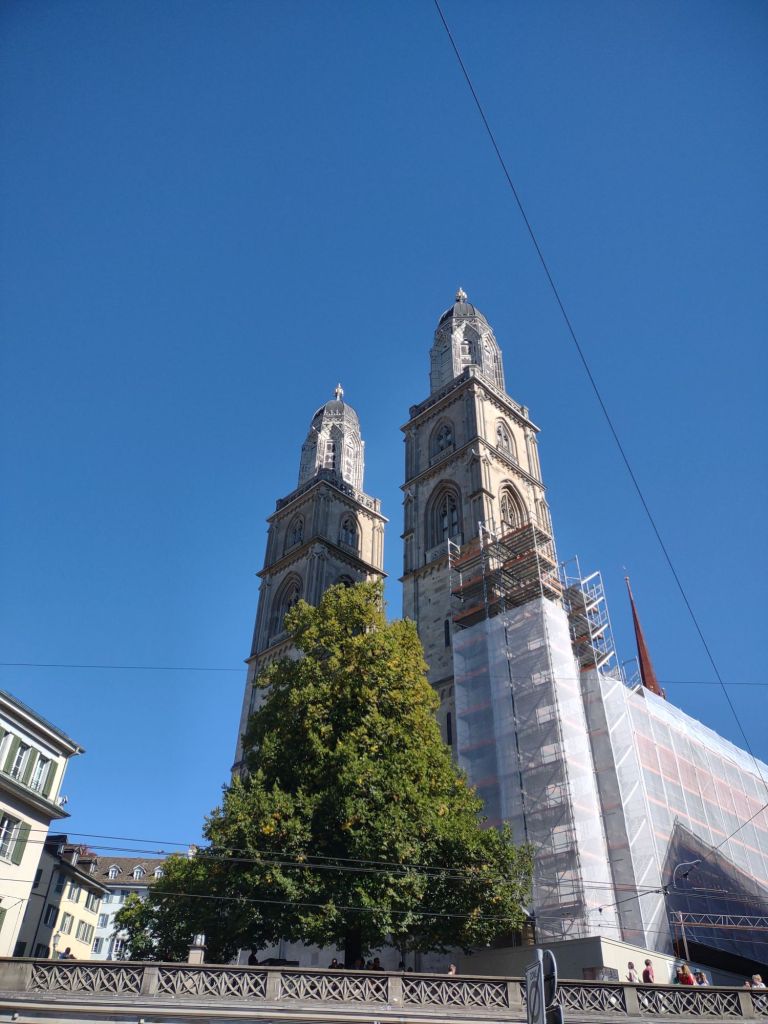
A last look over to the other bank, and the domed ETH Zürich, the world-class university where our patent inspector from Berne and his wife studied.
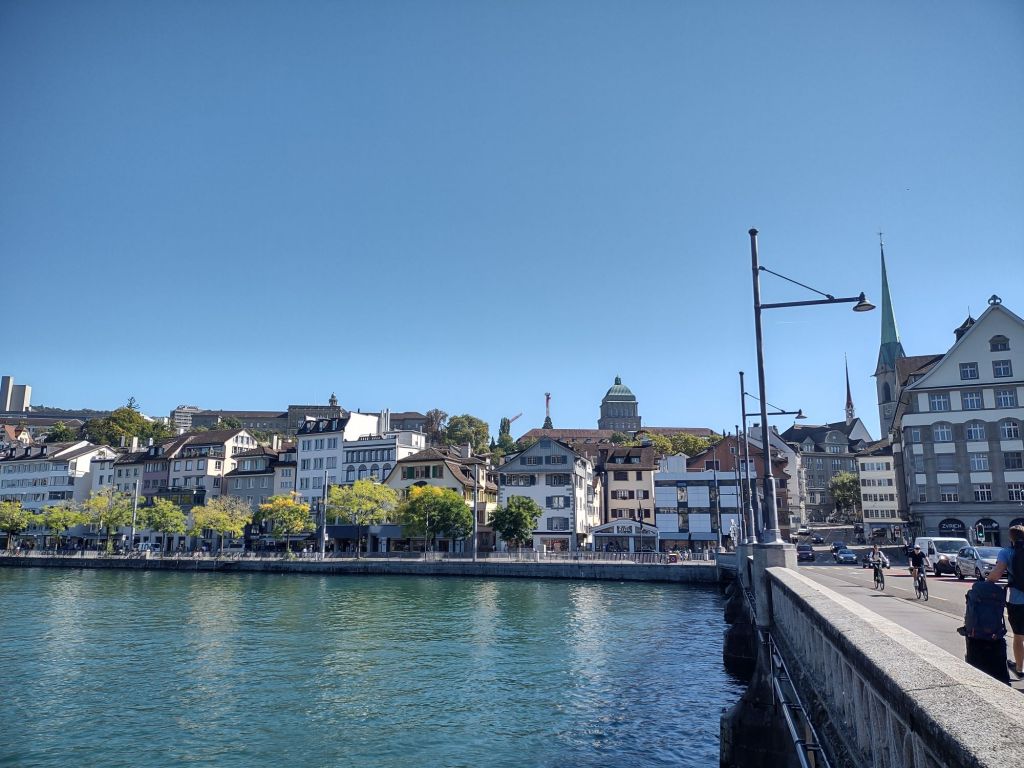
It’s, ahem, time to say goodbye for now. Who knows where my worldline through time and space will take me next!
 orwellianTwo
Leave a comment