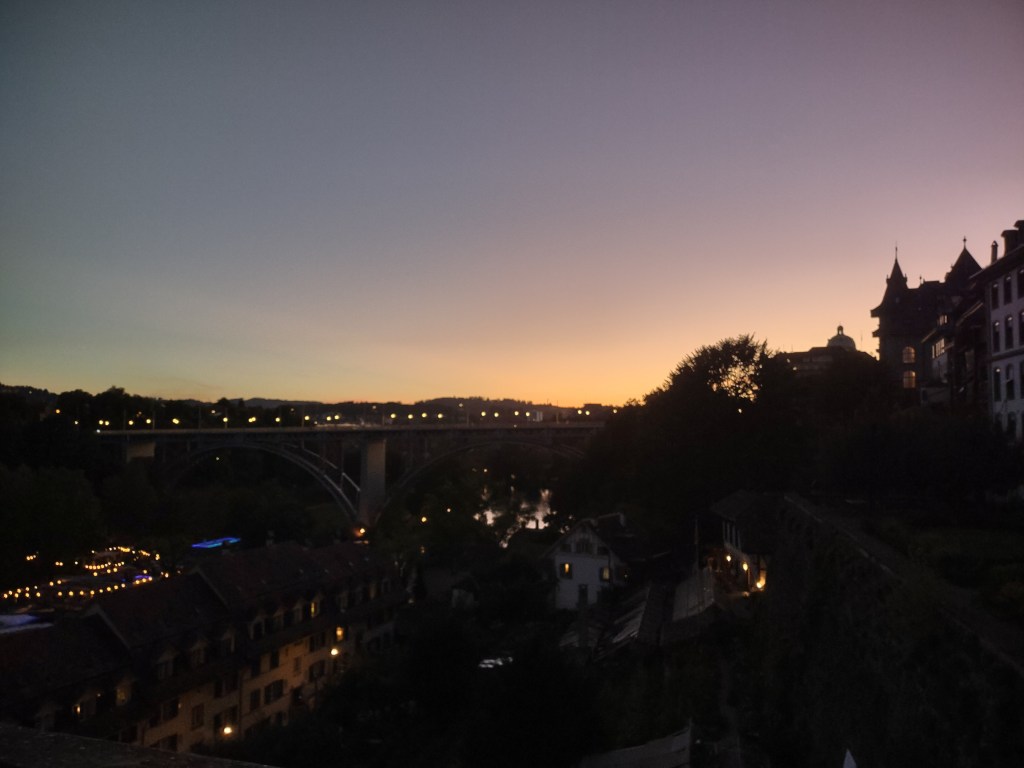
Up from Lake Geneva and away we head, across the high pastures of south-west Switzerland, until rural becomes urban, French becomes German, and we cross the river Aare and into the bustling but picturesque city of Berne.
It would be nice to introduce the city to you in the company of one of its more venerable citizens from history. I considered a figure no less than Berchtold V, Duke of Zähringen himself, who founded the city in 1191, and named it so because he’d just caught a bear.
But Berchtold is far too important for a mere traveller like me – or maybe he was out hunting more bears – so I had to go with a random functionary. The Swiss are famously punctilious and über-efficient – some might say officious – so what could be a more suitable guide for the streets of the federal capital than an early twentieth-century technical expert at the patent office.
Ah, here he comes, funnily enough, right on time…
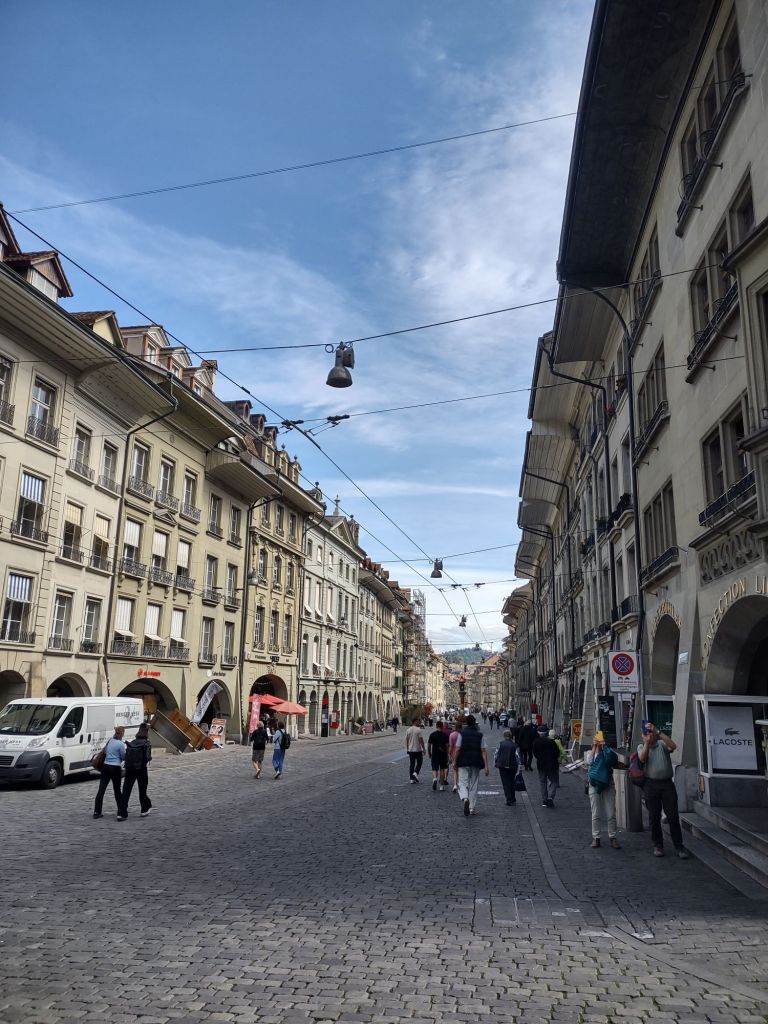
It’s a lovely street, the Kramgasse, at least if you’re a twenty-first century tourist and not a minor civil servant from the 1900s who has to live here. But even with the daily grubbiness of old-time Berne this would have been an impressive thoroughfare. Our companion is just coming out of his second-floor apartment, it’s one of the places on the right.
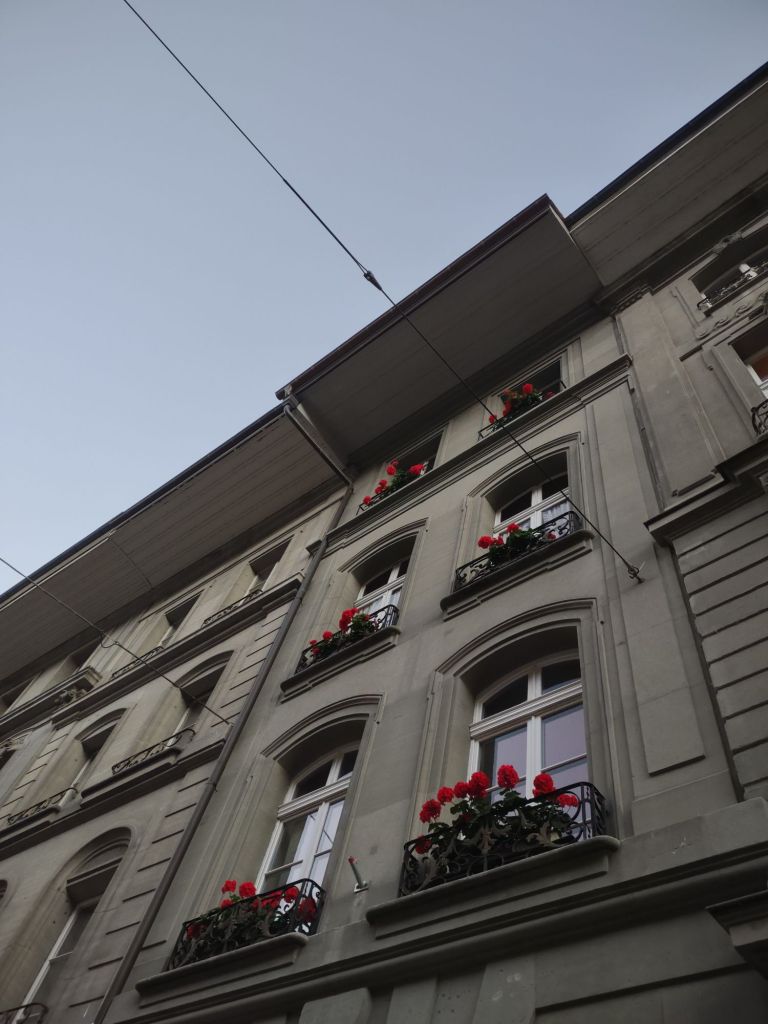
There it is, think it’s the one in the middle.
He looks ponderous. As we’re here, maybe he’s thinking about what to tell us about the origins of the road he lives on, an east-west axis which formed the central part of Zähringen’s original city. The whole street would have been a marketplace, hence its width. To the left you can see the open brown shutters of one of the two hundred-odd wine cellars that every premise here used to have (the French-speaking Suisse Romande nearby has long been renowned for it’s vineyards).
He’d normally walk towards us – westwards – to get to work, but today he’s in contemplative mood (we’ll find out he’s always contemplating something) and he’s going to turn right, and head down the hill a bit. We eventually arrive at Berne Minster.
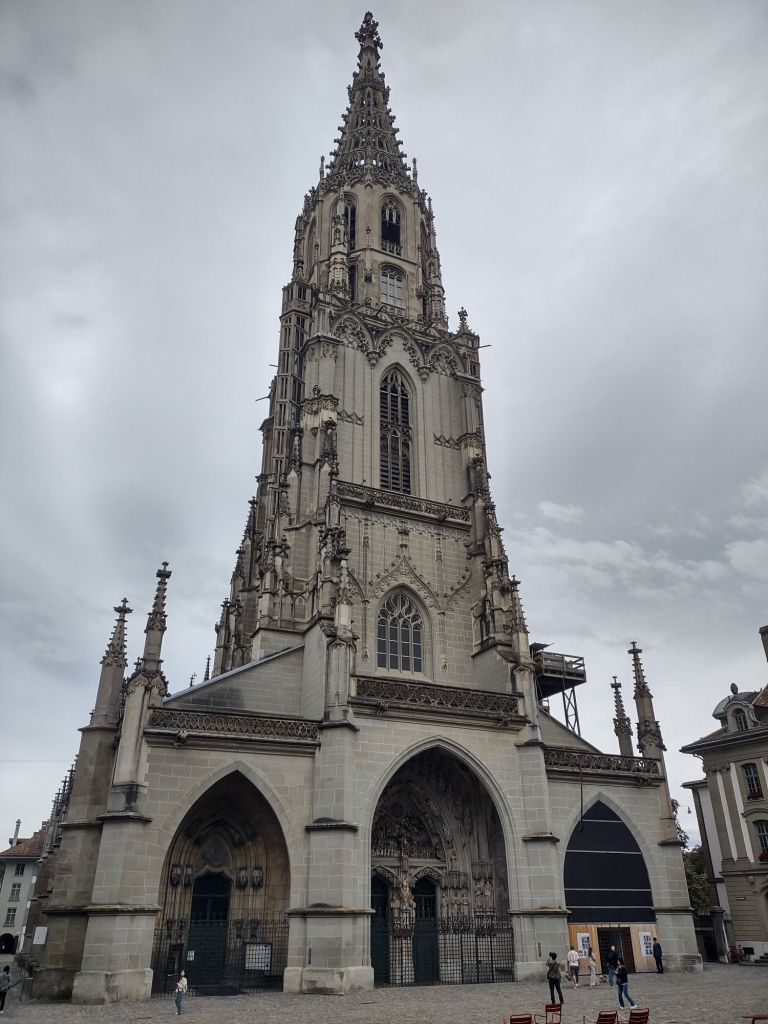
Berne Minster dates from 1421, at a time when the city-state was expanding and growing in power within the Swiss Confederacy it had signed-up to in 1323. And in those days, you flaunted that sort of fortune with a grand cathedral (if you had a bishop; Berne didn’t so had to make do with a minster).
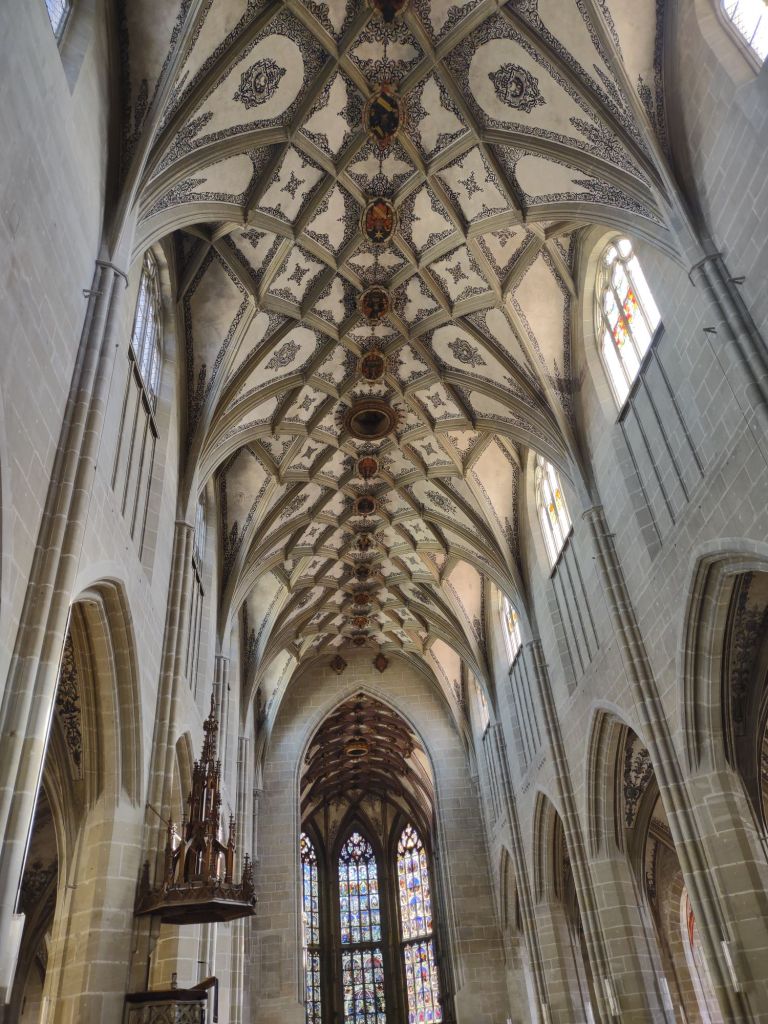
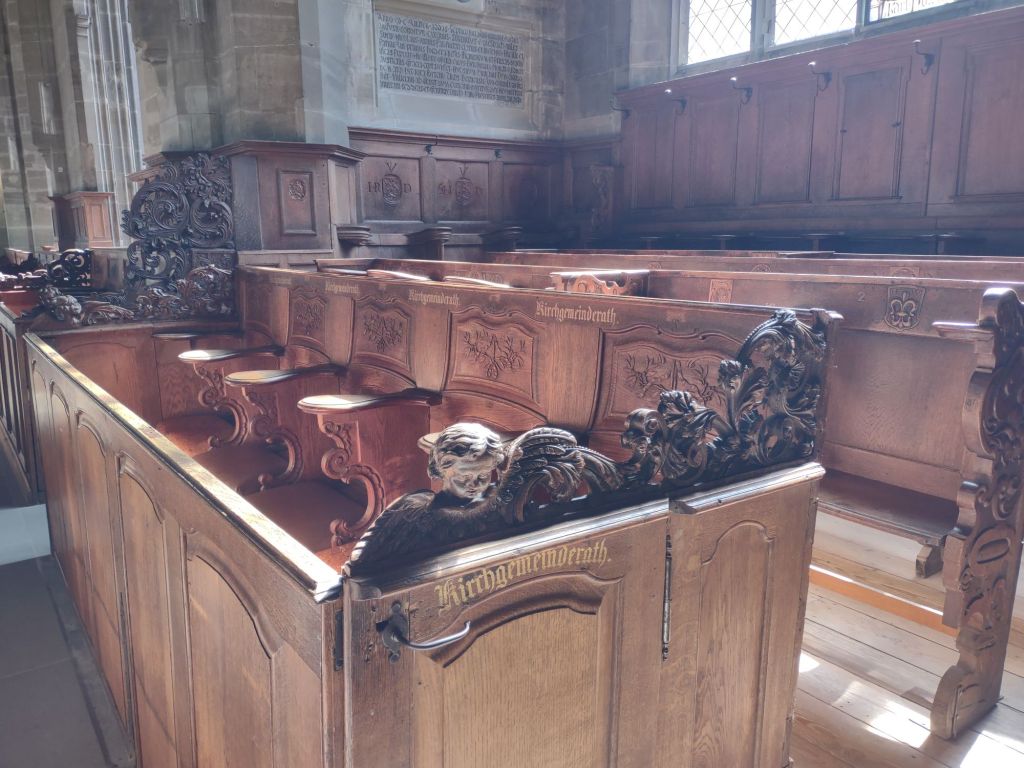
Unfortunately for the tourist, much of the iconography got flaunted out of there during the Reformation of the early 16th century, but there’s still a nice ceiling above the choir.
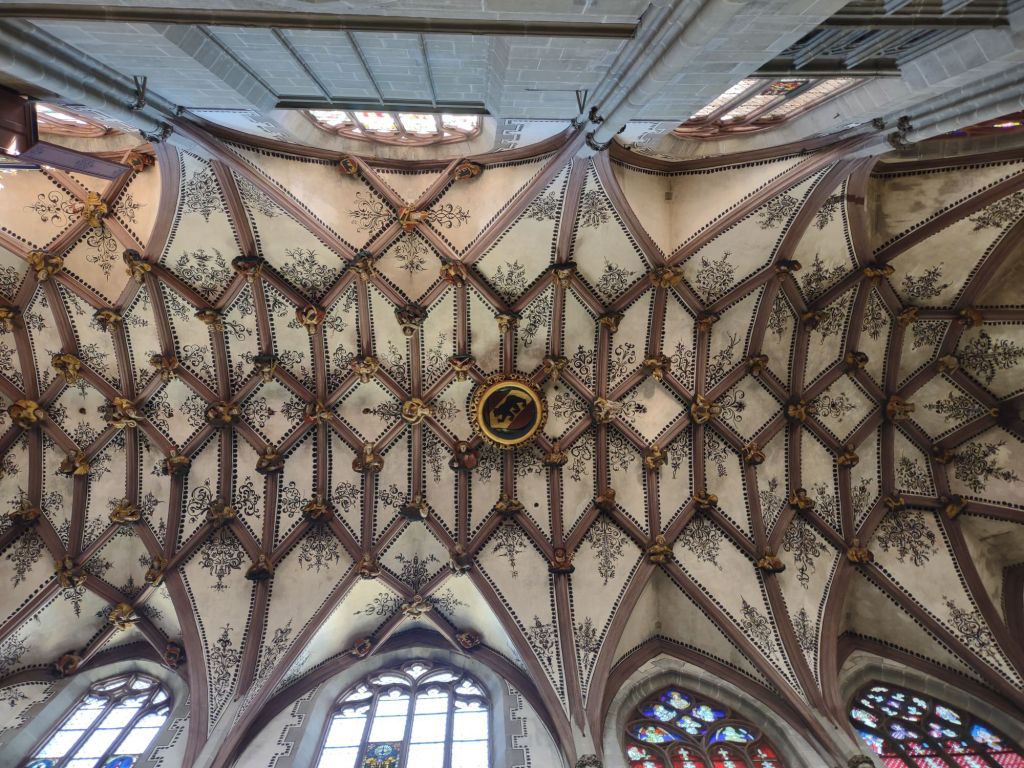
These represent the set of biblical figures who just got an invite to the #WeAreGoingToHeaven WhatsApp group. They get more important as you go left to right, where a dove represents the great Group Admin himself. But in the medallion in the middle, almost as important as far as the people of Berne are concerned, a bear. Very important here. It’s not shown how all that harp playing manages to keep it calm once it gets there.
But our patent inspector is proving a very patient inspector; this isn’t his church, it’s not even his religion, it turns out, he would be more at home in a synagogue – or would have been if he hadn’t rejected the faith a few years before. Anyway, it means he’s been indulging us, he needs to get on, but there’s still time to continue walking east until we get to the river.
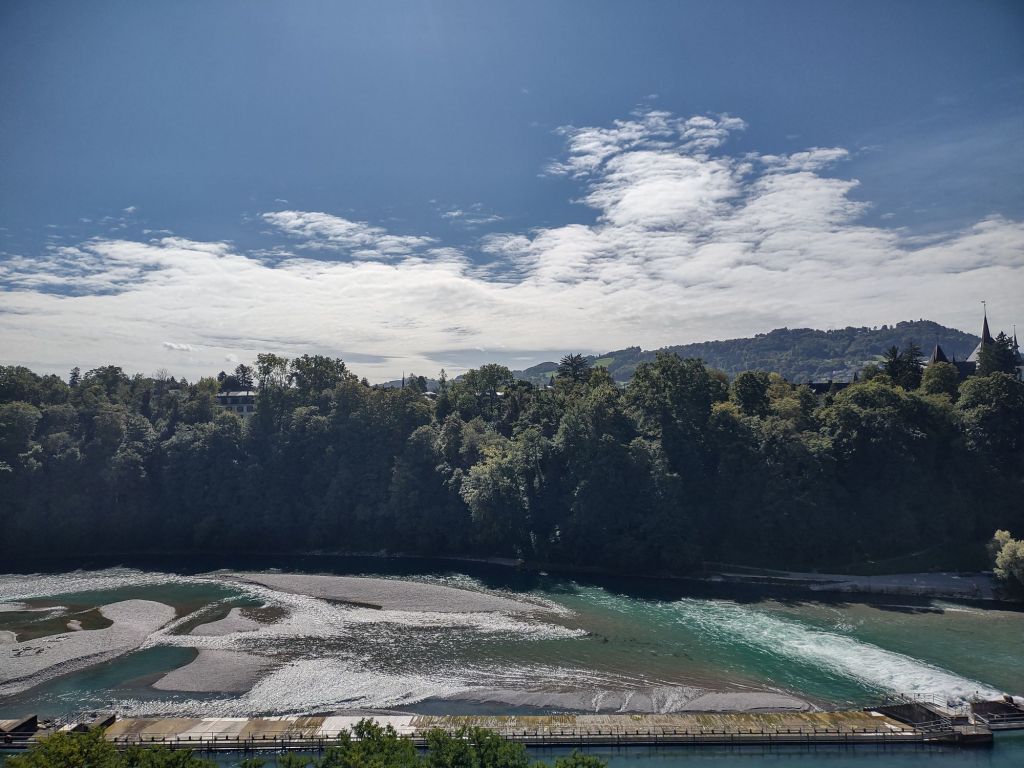
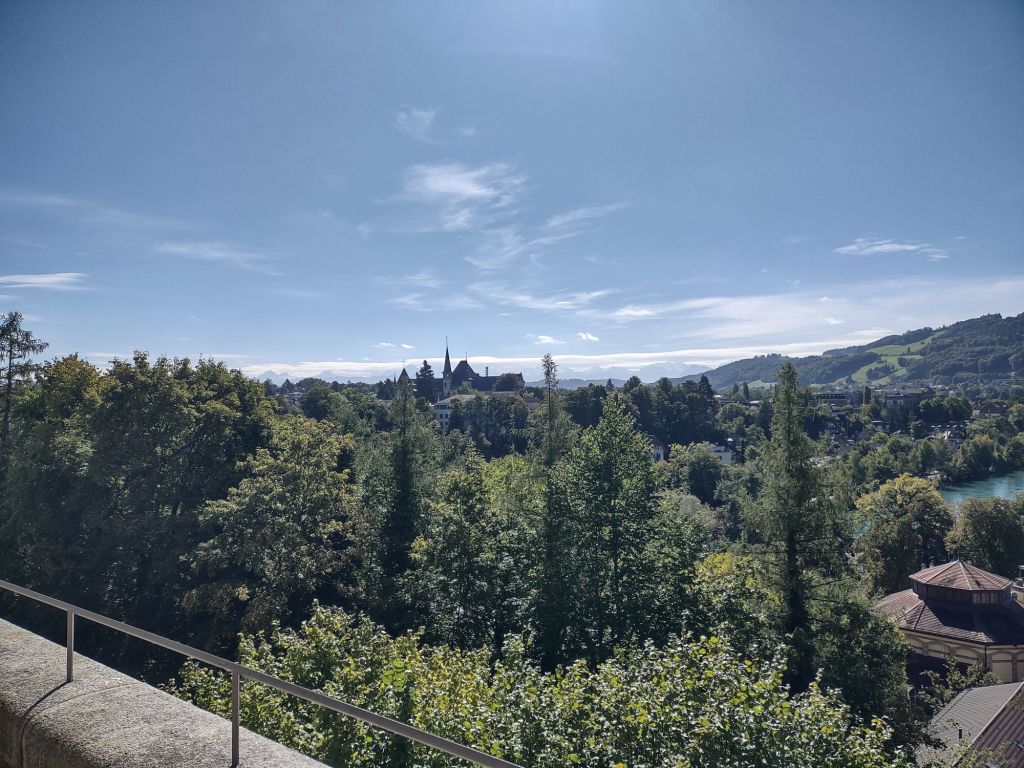
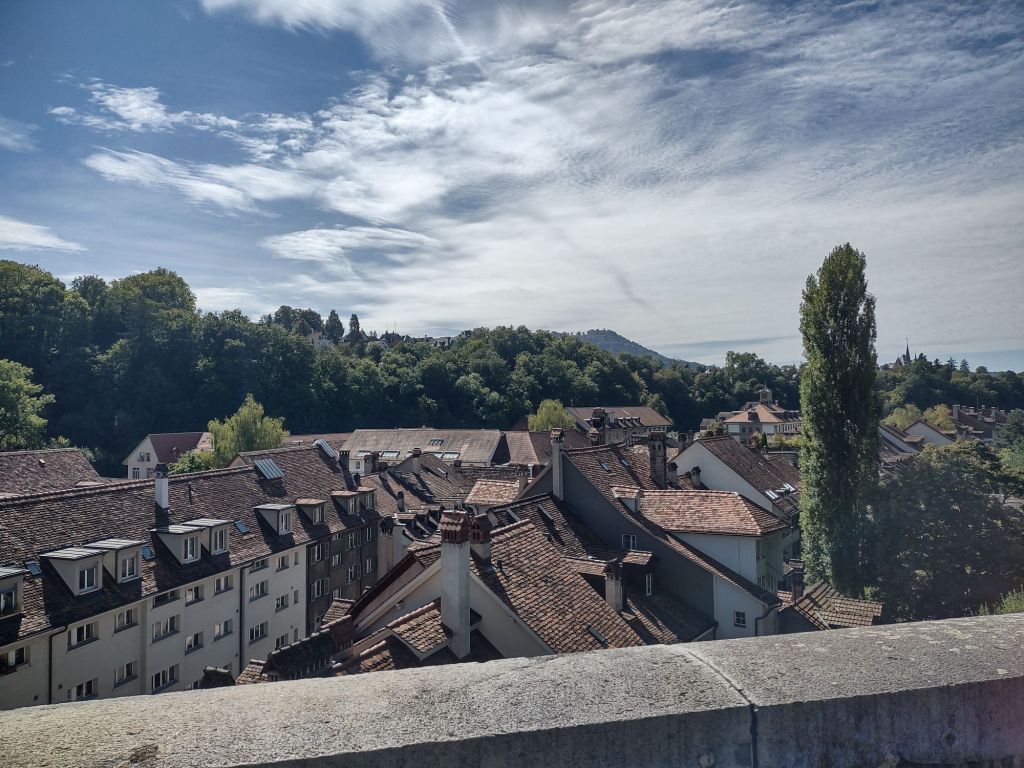
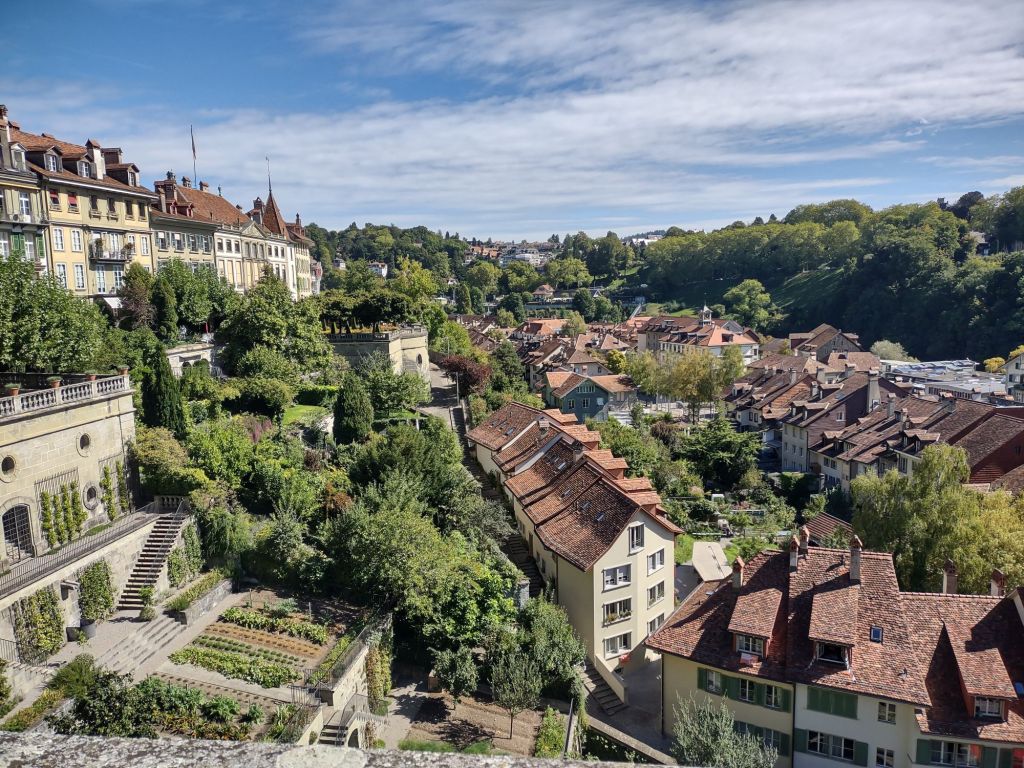
The Aare forms a horseshoe around the north, east and south of the old town. Because it sat on top of a small gorge and looked down on the river, the geography basically Told old Berch that he only needed to fortify Berne to the west. So that’s where he built his wall, and as our technical expert finally turns west to go to his office we make it to the main remnant of the wall, the old guard tower that’s now the famous Zytglogge, or clock tower.
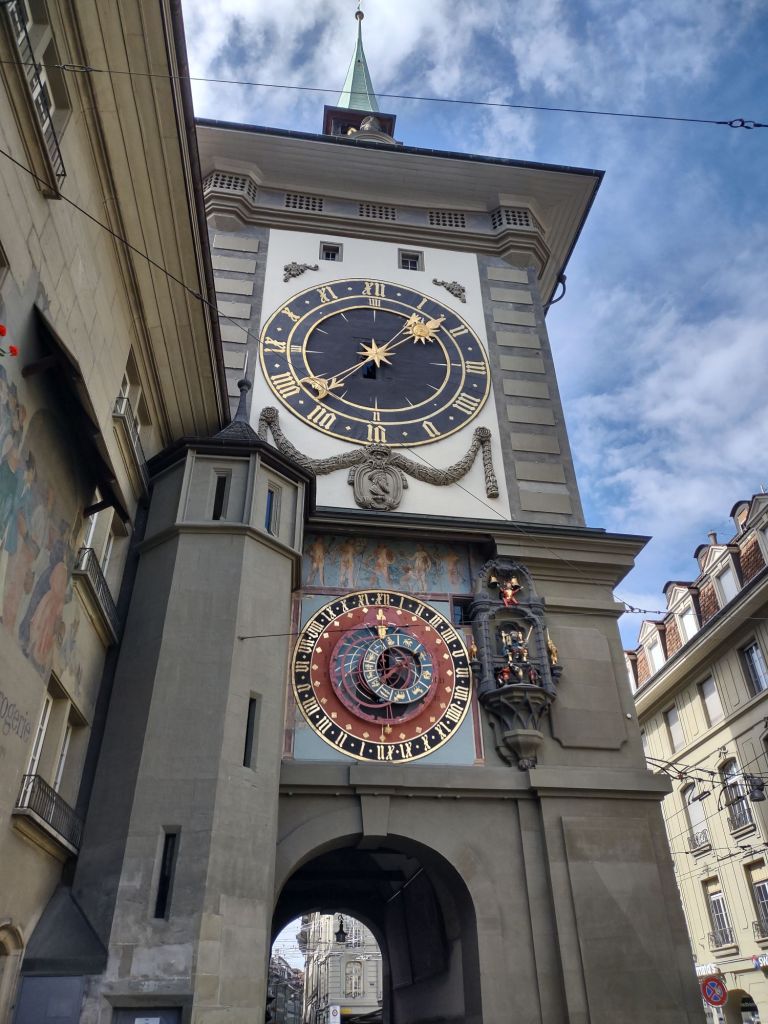
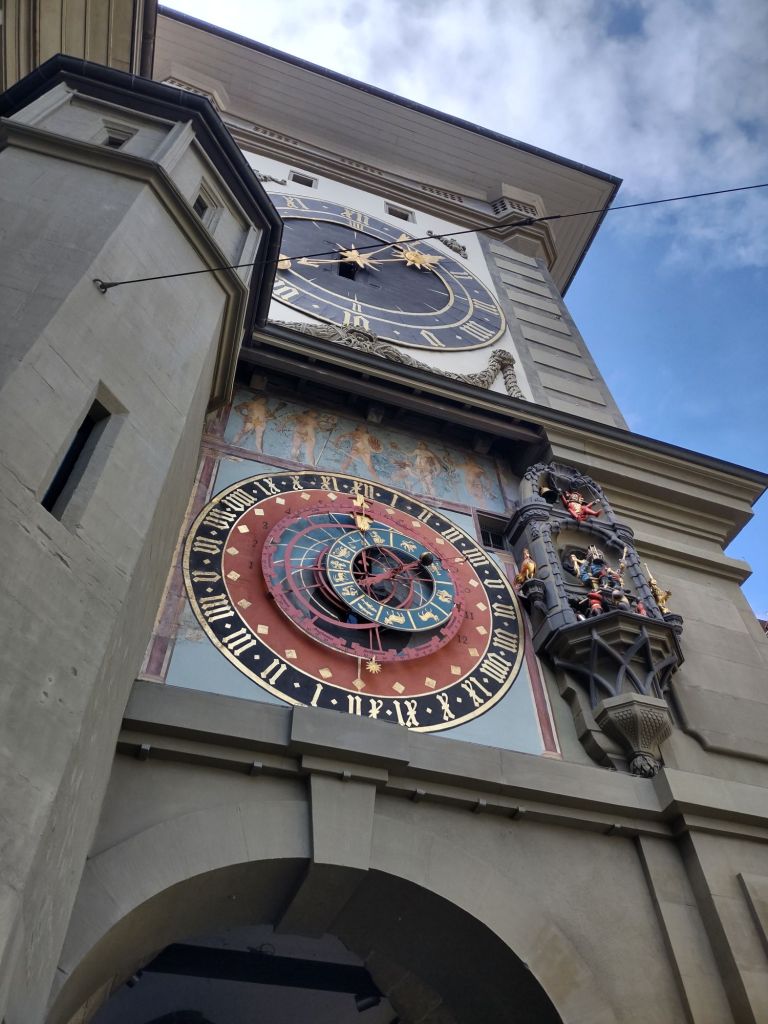
The clocks were installed in the early 15th century after a fire, and still works to this day ringing the hours and telling the time. The main clock shows local time, by the way. The figures next to the astronomical clock act out a show on the hour, there’s a cock who crows, a jester, a parade of elephants performing the town watch, Kronos himself in the middle, and for the last six hundred years they’ve all been having one hell of a time.
Hmm, time…for the patent guy to get moving? Well yes, but the way he’s staring up at this thing suggests he’s utterly fascinated by it. He’s muttering something about two clocks…I can’t understand what’s going on, he’s lived here for a few years, surely he’s got used to this tower by now? All of a sudden he jumps, realises what he’s doing, and apologises.
It turns out that he’s a bit of a frustrated would-be scientist, which explains the contemplating. He studied at the great technical uni in Zurich, where he met his current wife (sounds like they’re one clever couple). Marriage meant putting the whole science thing on hold for a bit so he ended up here paying the bills in the patent office. He has signed-off a few interesting things that came his way, like a gravel shifter, even an electric typewriter, but when I tell him “that’s impressive for the 1900s!” he shrugs. I reassure him “I meant the typewriter”, but it makes no difference. Clearly he’s bored by the drudgery of the day job, it’s his own secret research that keeps him going…
Before he tells us more, he takes a slight diversion off the main drag, and we find ourselves in front of the Federal Parliament.
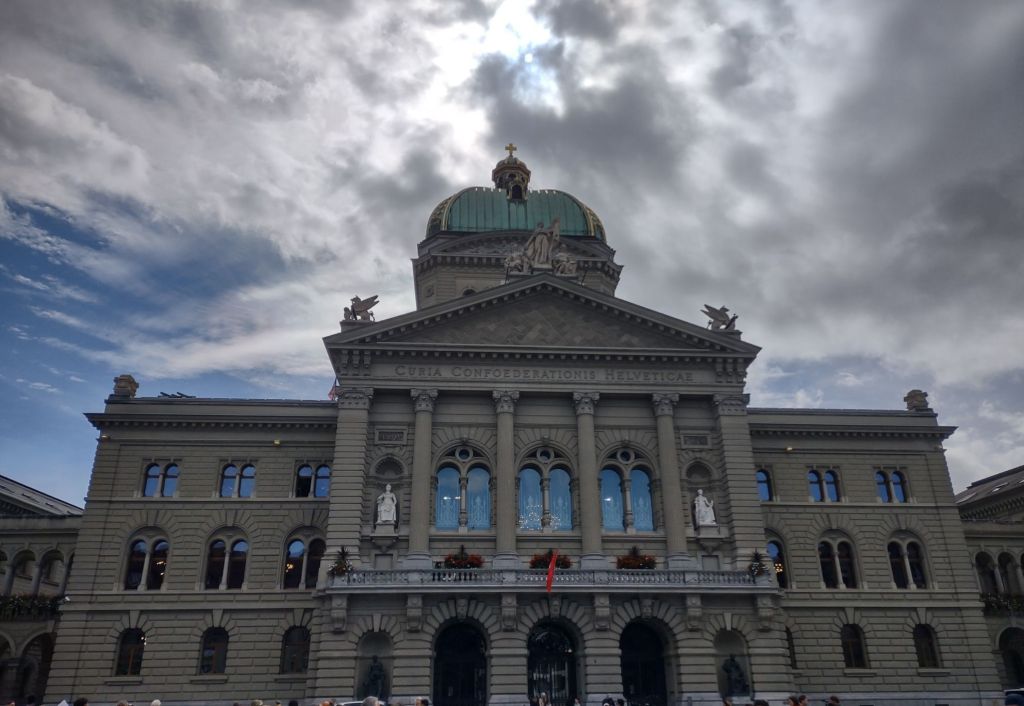
In 1848 Switzerland enshrined its federal status in a constitution and established a parliament. Berne is just the city that hosts the parliament, not the capital. This is arguably the most devolved political system in Europe; the cantons have all the power, there’s a lot of direct democracy, and the revolving-door president is elected by a consensus-driven council of ministers. This should mean some sort of competence at the highest levels of government. If so, there are some other federal states in the world that might be interested.
Our patent expert seems generally moved here, grateful to the country that welcomed him when he came down here from Germany to study. And, personally, I’m beginning to realise that even the most obscure civil servant may have the most compelling back-story – and who amongst us doesn’t? However my time here is short, his views on time seem more and more, elastic, shall we say?…and we need to press on and get to his office.
Because as the city grew they had to build two more sets of city wall.
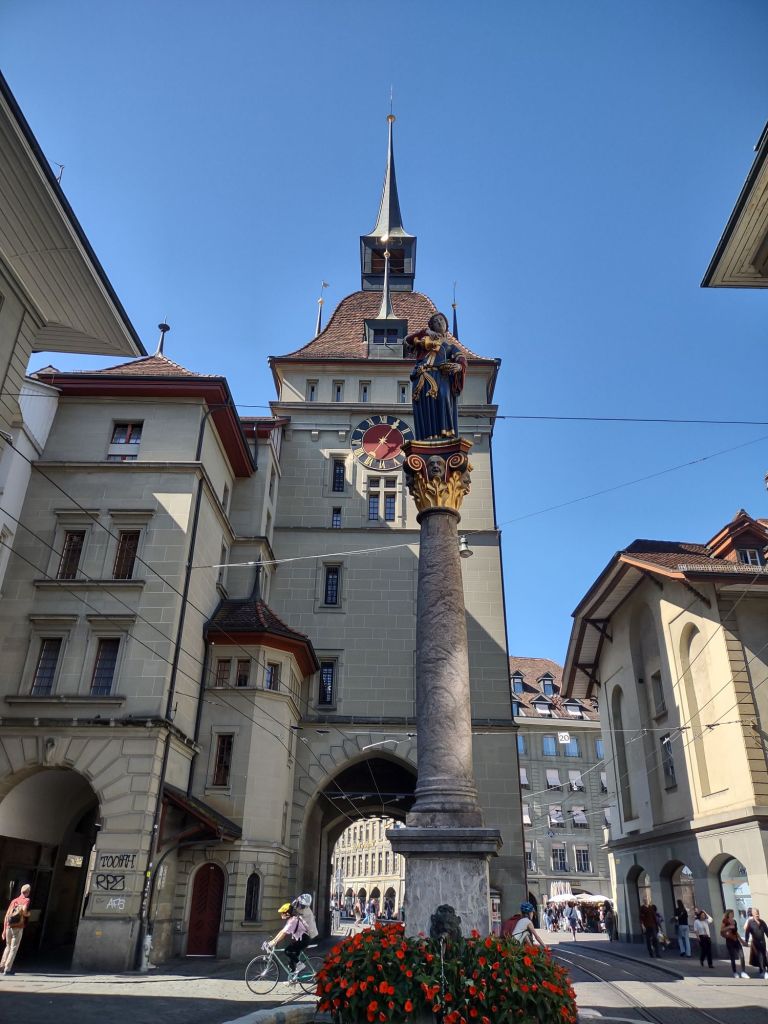
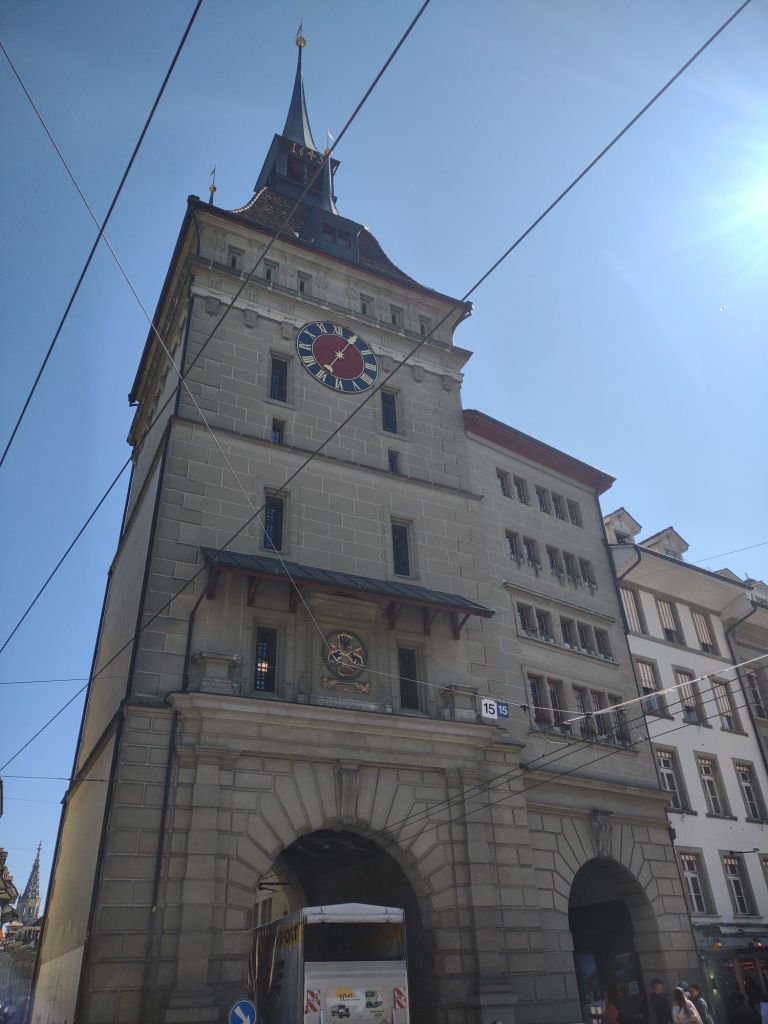
Here’s where Wall no. 2 used to be, the only remnant being the Käfigturm, or Prisoners’ Tower. And it did what it said on the Turm. In front of it is one of the many old fountains strategically dotted around the Altstadt. Pro tip: the Swiss water supply is famously clean and you can drink from the old fountains. If you’re here, fill your water bottle from the fountains and the sink taps in your lodgings. If you can afford to get something for free in Switzerland, do so. You’ll be paying through the nose for everything else!
You might have guessed that the Altstadt is pretty Altstanding, and the whole area between the three walls and the Aare is a UNESCO World Heritage Site. Along the main east-west drag runs colonnaded arched walkways sheltering high-end and affordable shops, bars and restaurants, and the side streets and cross roads are worth a look too.
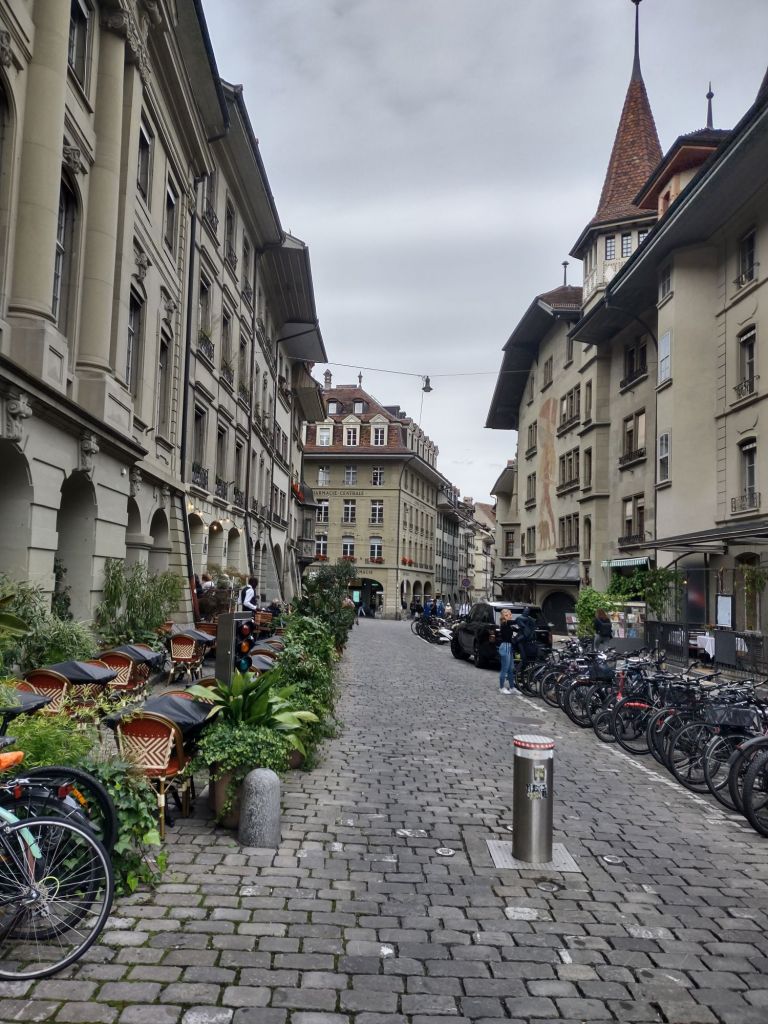
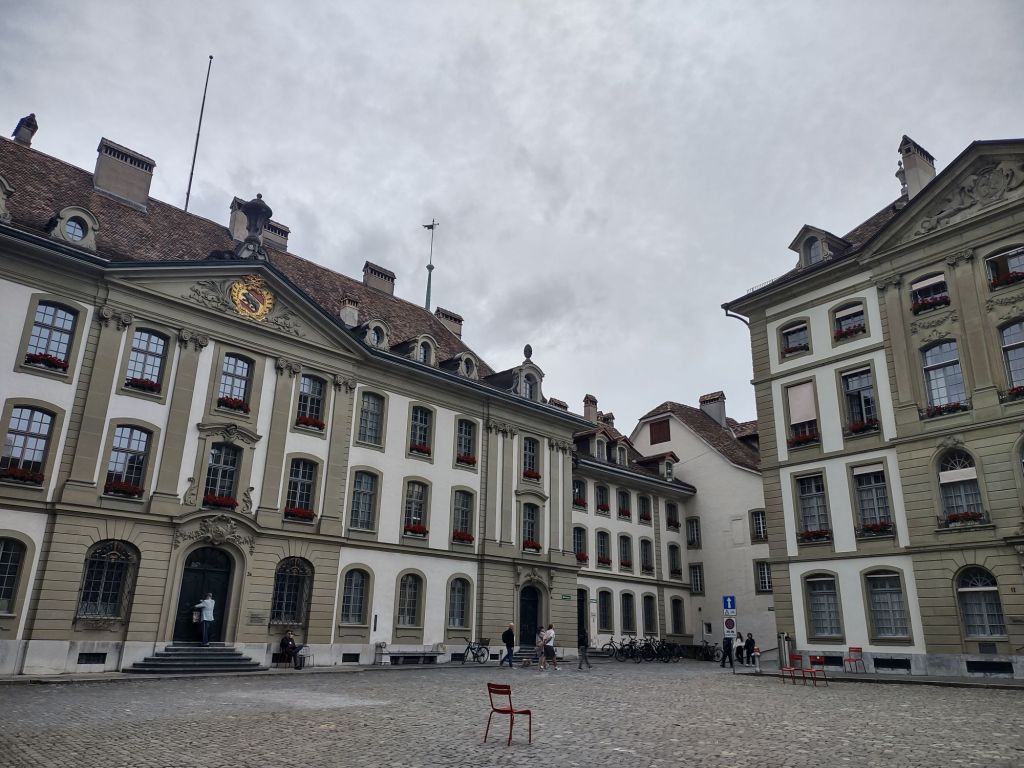
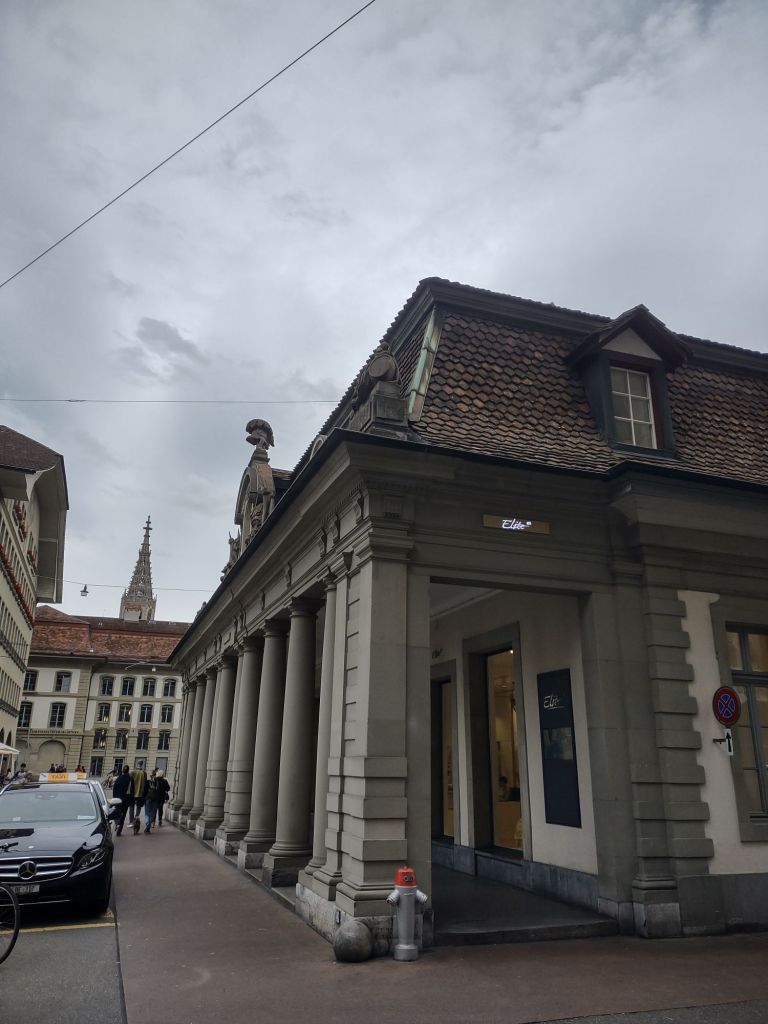
The third set of walls was pulled down in the 19th century when they built the train station. Our patent inspector’s office is nearby, at the western edge of the Altstadt, and we’ve arrived.
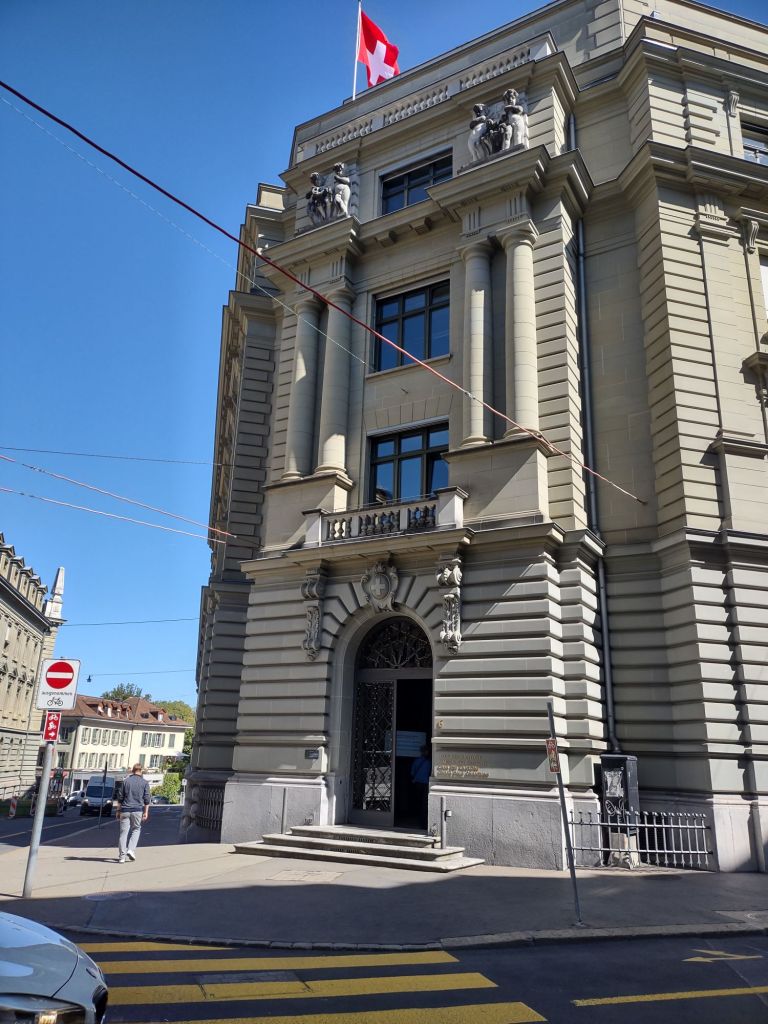
I’m about to thank him and say goodbye, but it turns out that he’s been noticing me noticing how unconcerned he was about how long it all took in the end, indeed how far we had to walk to get here. My legs are knackered and I need a rest. Somehow, he doesn’t seem to have gone anywhere at all.
Well he’s a ghost isn’t he, but he shrugs again and ushers me in to the Patent Office and we step into his own office. Checking that no-one can see, he carefully unlocks a secret draw where he keeps those secret papers he (and his maths-expert wife) have been working on. I suppose I’d better indulge him; he’s taken time out of his busy day to show me around this beautiful old city. I’ll have a quick look then it’s out of there and it’s time for a Bier looking over the Aare.
The first one, sounds like the gravel again, but with pollen. It’s his theory as to why pollen seeds in suspension jiggle around (so-called Brownian motion)
As I stifle a yawn, he excitedly gets out another one. Physicists apparently discovered that when you shine a light at certain surfaces, you get an electric current. The patent inspector thinks that’s because light – get this – is made of particles!
He’s really excited now, he even thinks he might win the Nobel Prize for that one. (I’m beginning to think he might be right).
He notices that, so he digs deep into the draw, looks like he’s looking for something he only shows to people he really trusts…here it is.
And – aha! that’s why he was so cavalier about how long this was all taking. Essentially it says that our common sense views on space and time are, well, just a load of old Newtonians. Oh – and while he was working out how weird it all is he came up with the formula you use to blow up the world.
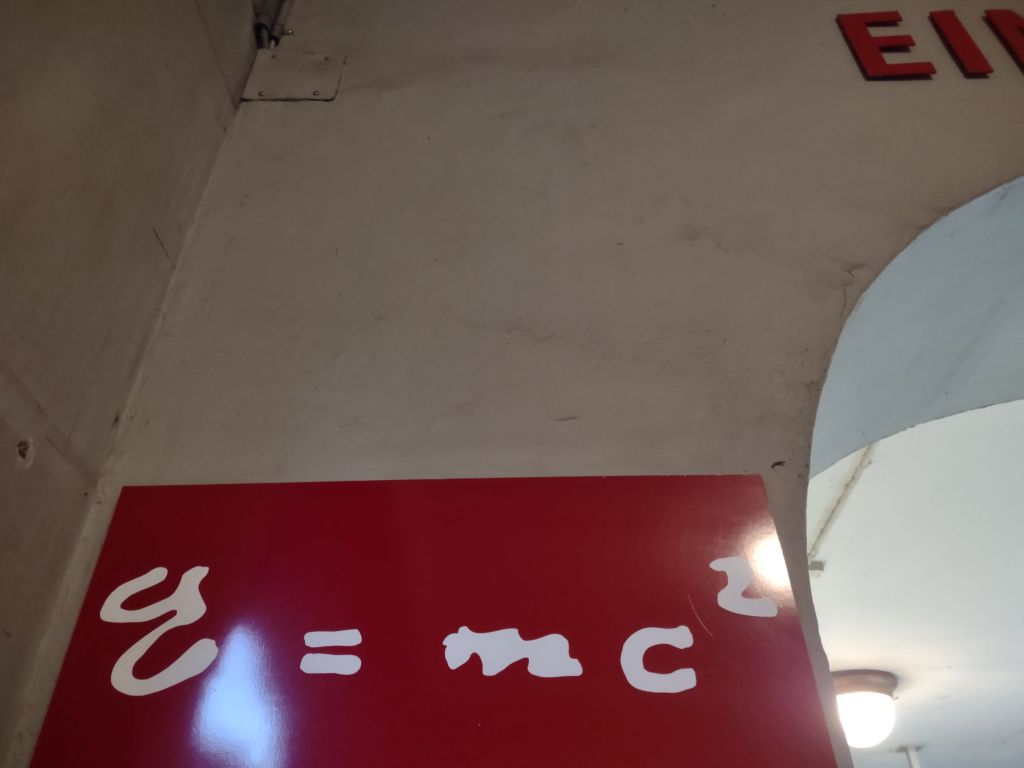
Later that day I’m back on the Kramgasse, back outside his old house (old because he moved out a couple of times, at last got a job at the local university, then the papers became public and the world became his oyster). You know it’s his from the signage and the little museum.
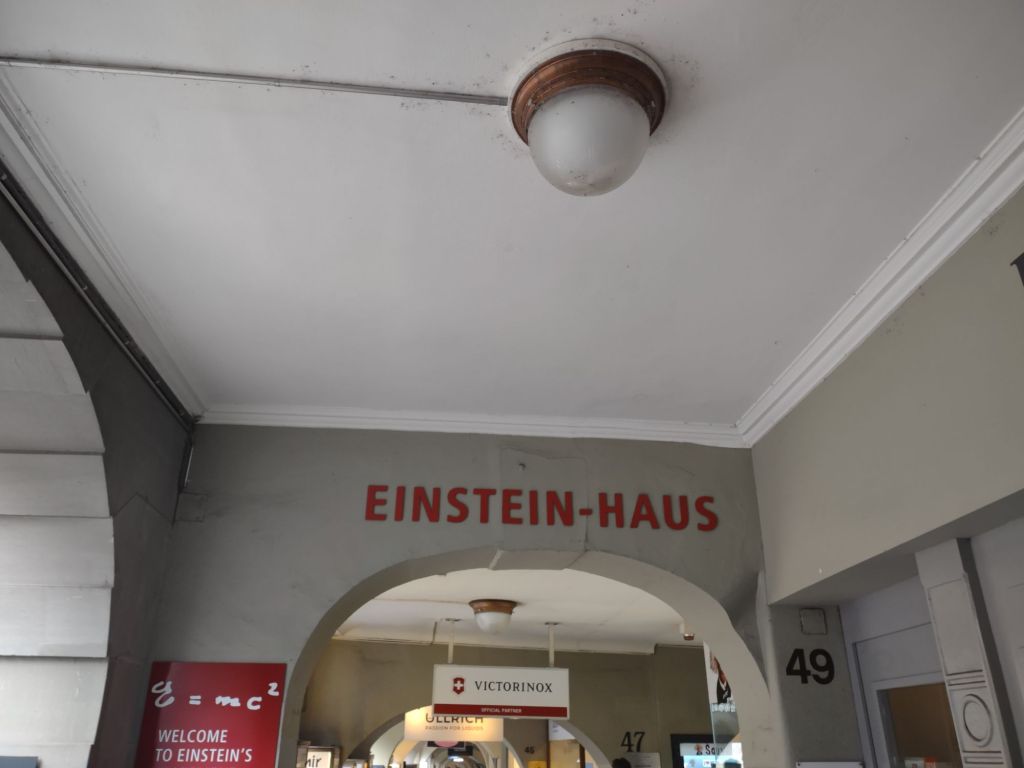
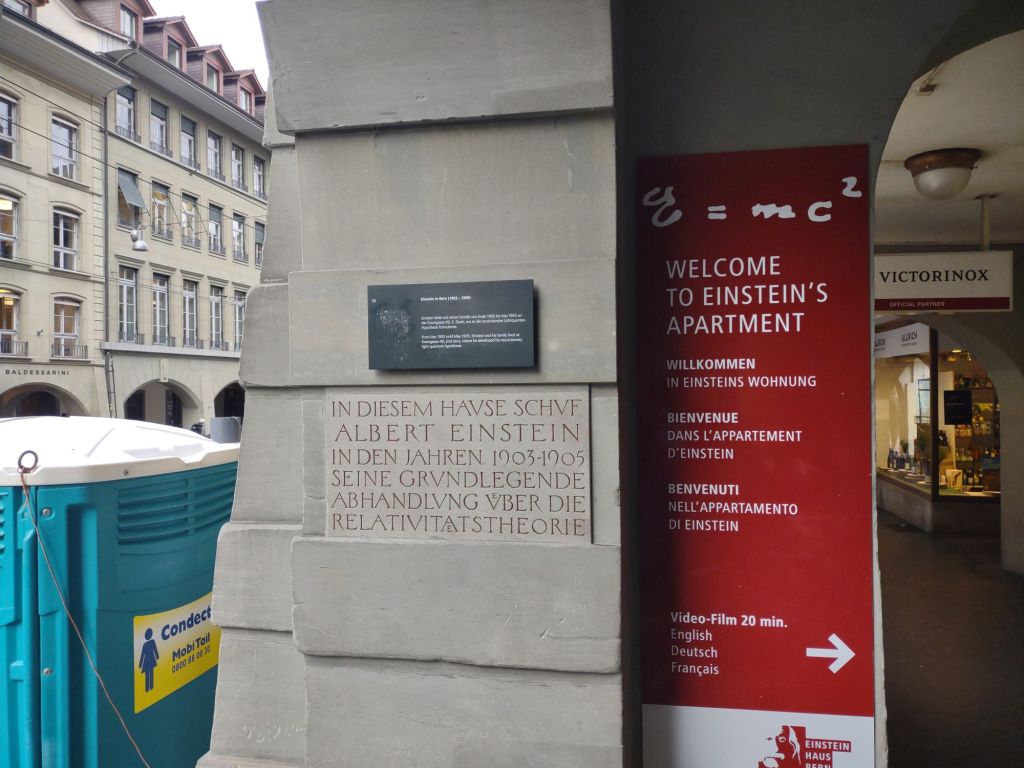
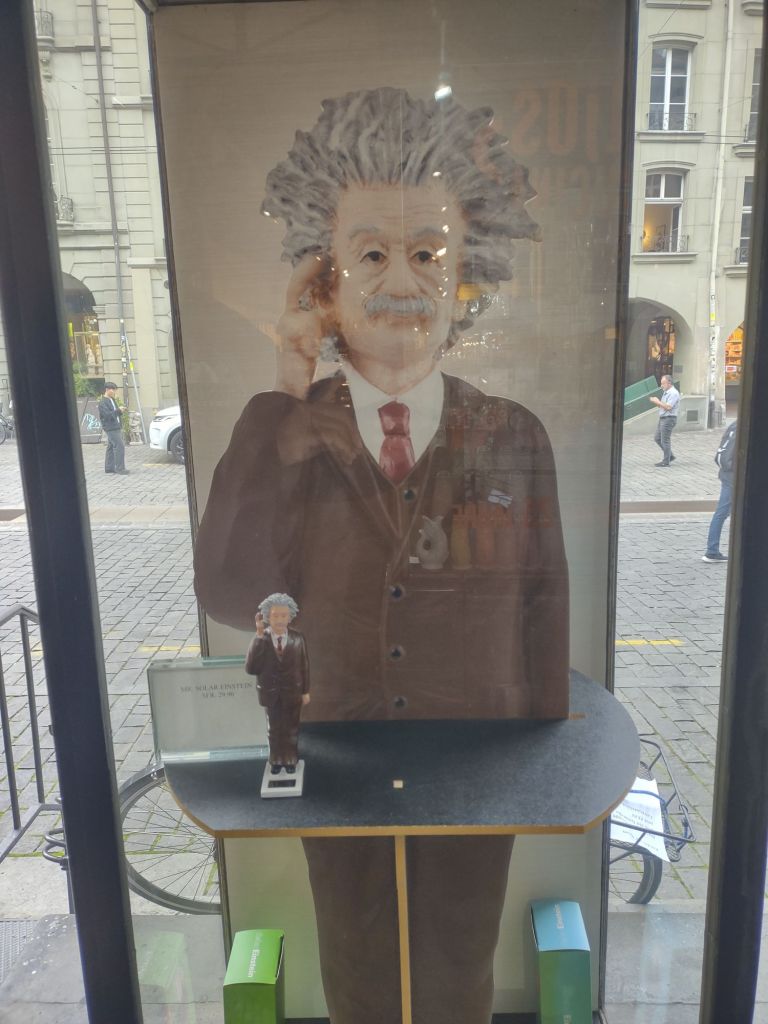
And look, there he is again back home, as if by magic.
Right on time again.
Just as he was all along.

 orwellianTwo
Leave a comment