Looking back over my posts, thinking about what I’ve been writing and photographing these last years, it’s occured to me that, whatever else is there, there are a hell of a lot of statues. Think about it, there’s one in every other post. You name it…kings, legends, smiley queens, slinky queens, stern clerics, rock gods – if they’re in stone or marble they seem to be in my blog. And you’re probably getting fed up with them all.
In my defence, statues are an extremely convenient encapsulation of something that happened somewhere, something the community wants to remember. They’re instructive not only about the history they tell and the figure being memorialized but the hidden history – why are the locals telling us this story, how are they telling it, what does (or did) it say about them? So they’re great in giving us a feel for the context of the place I’m visiting, but maybe you want some more pretty pictures and other stuff. I’d be interested to hear what you think about it, just pop something in the comments.
Meanwhile here I am spending a few days in Paris, the tourism capital of the world, a place with so many things to see that there’s no point trying to fit them into one blog, a history so rich and complex it’s impossible to tell in one handy marble block. Paris. Paris! Surely this is one place where I won’t need to resort to statues? Let’s see how I get on.
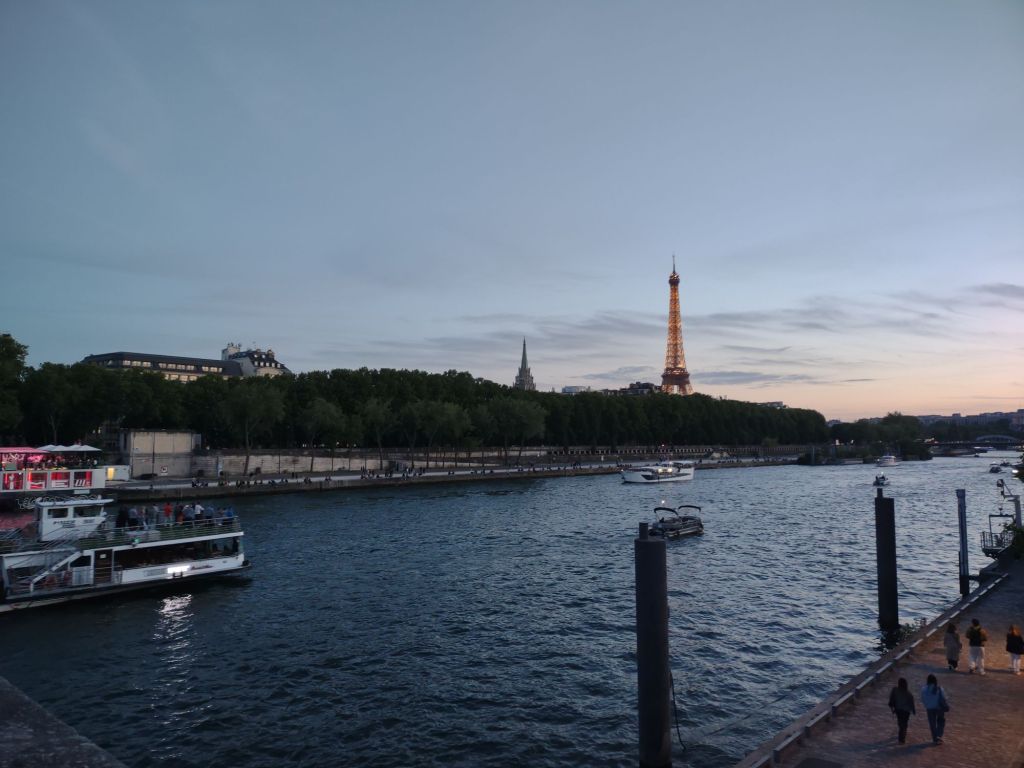
First, it’s the science bit. There’s an old radio mast near my hotel.
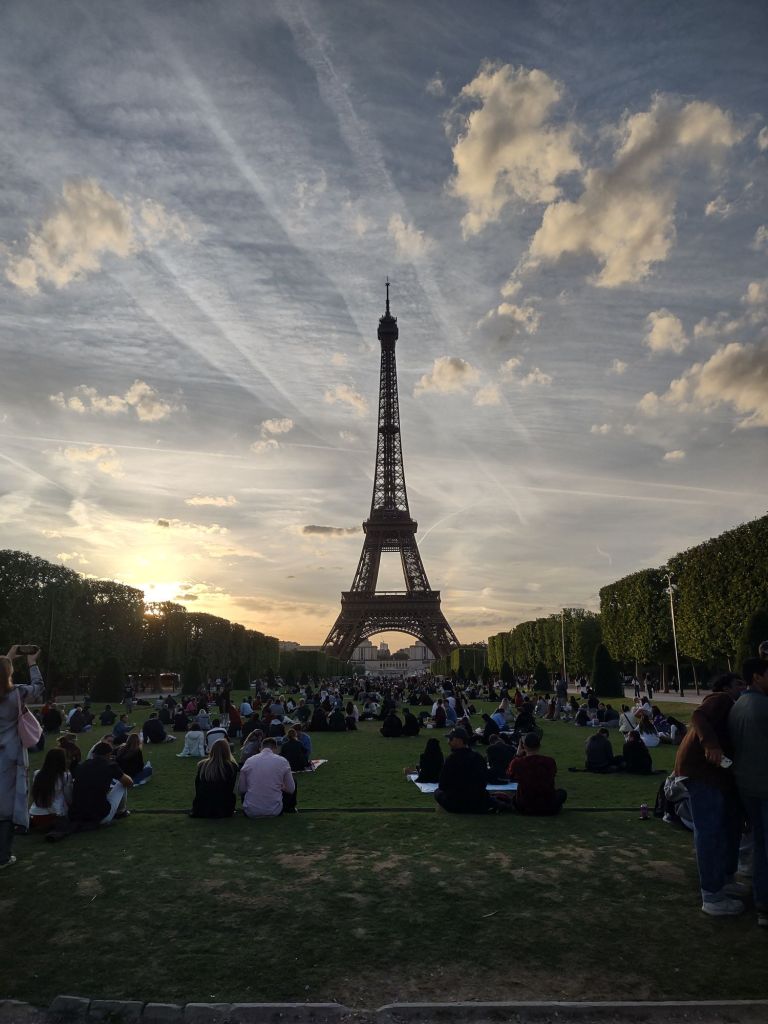
Built for the 1889 Paris Exposition, the Eiffel Tower was a controversial addition to the Paris skyline. The great writer Guy de Maupassant famously said he would be eating in the tower’s restaurant every day, as it was the only place in Paris from where you couldn’t see the Eiffel Tower. After his death de Maupassant was reincarnated as a 1960’s recording company executive, and his most famous decision was to pass up on signing up an up-and-coming band called the Beatles because guitar bands were going out of fashion.
Well we all make mistakes, and who was to know then that this 300m-high iron tower would become the indisputable symbol of Paris and of France, and possibly the most famous landmark in the world. But it’s no surprise really given its perfect blend of innovative engineering, simplicity of design, and drop-dead elegance.
There it stands, out and proud against the dying sun and against the evening shadows of Paris in the springtime. Unfortunately Wikipedia wants to throw some more shade. Eiffel didn’t design the tower; it was three employees of his that came up with it, he just bought the patents of them and agreed to take the profits for the next twenty years for himself. This may or may not have been standard practice, but it does mean that the names of Nouguier, Koechlin and Sauvestre get a bit lost in the acclaim. I suppose they didn’t exactly lose out financially in the end
Unlike the people of Haiti. The bank that financed the construction were benefiting from predatory loans exacted by France on the Haitian government, ultimately to recompense those poor little slaveholders from when those pesky Haitians fought for their freedom and independence. Haiti had to cough up nearly half of all their export taxes to the banks. Lord knows the Haitians could have done with the money. Doesn’t look so elegant now, does it?
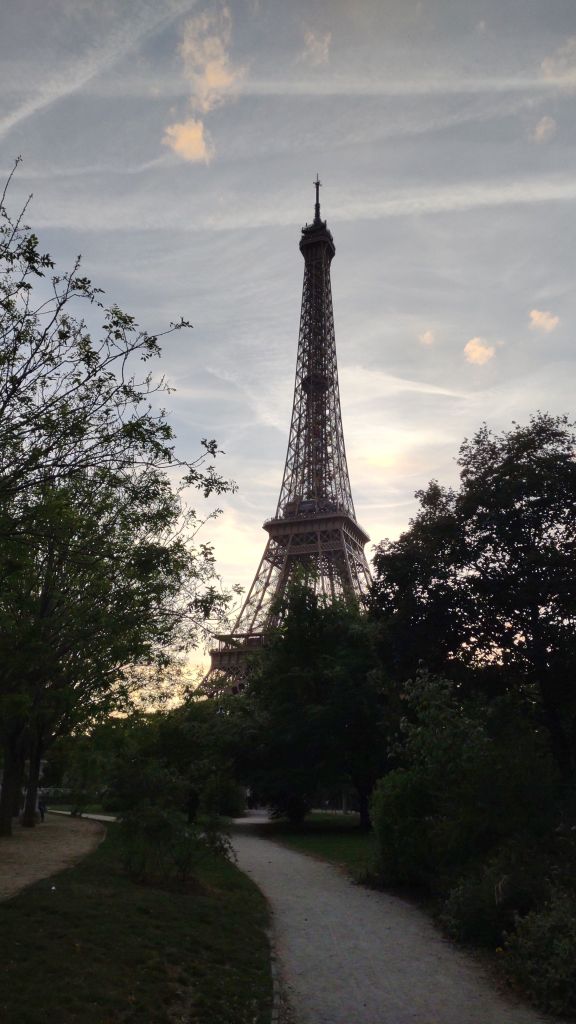
Maybe reality always intrudes on the picture postcard eventually.
Still, once it was built it was built, and there was a wireless telegraph station at the top for many years. In 1917 two great glamour icons of the early 20th century – the Eiffel Tower and Mata Hari – came together when the wireless station intercepted German coded messages about the latter, leading to her capture and execution. A bit more mystique for you there.
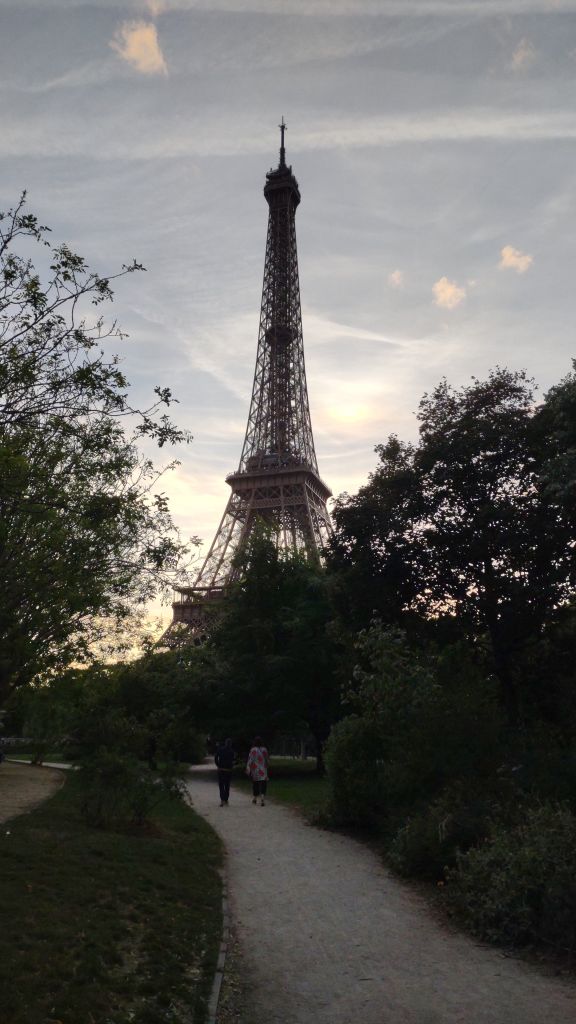
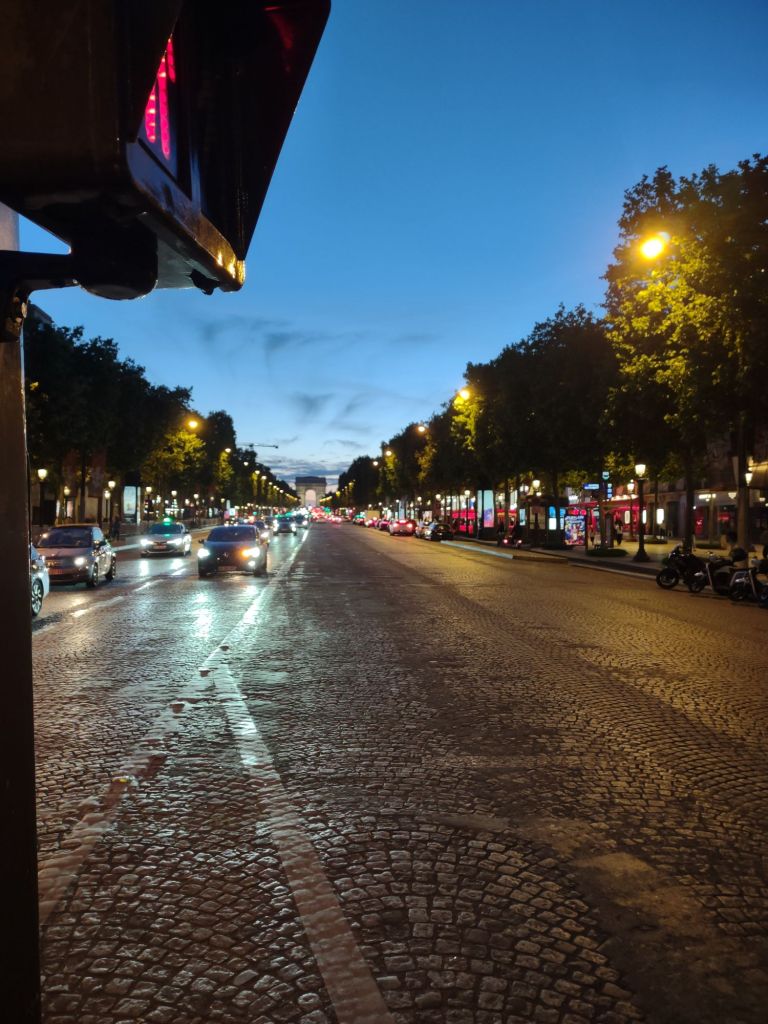
After that there was time for an evening stroll along the Seine and a crossing of the Champs-Elysees, before the effect of the Eurostar trip started to kick in and I turned in for the night.
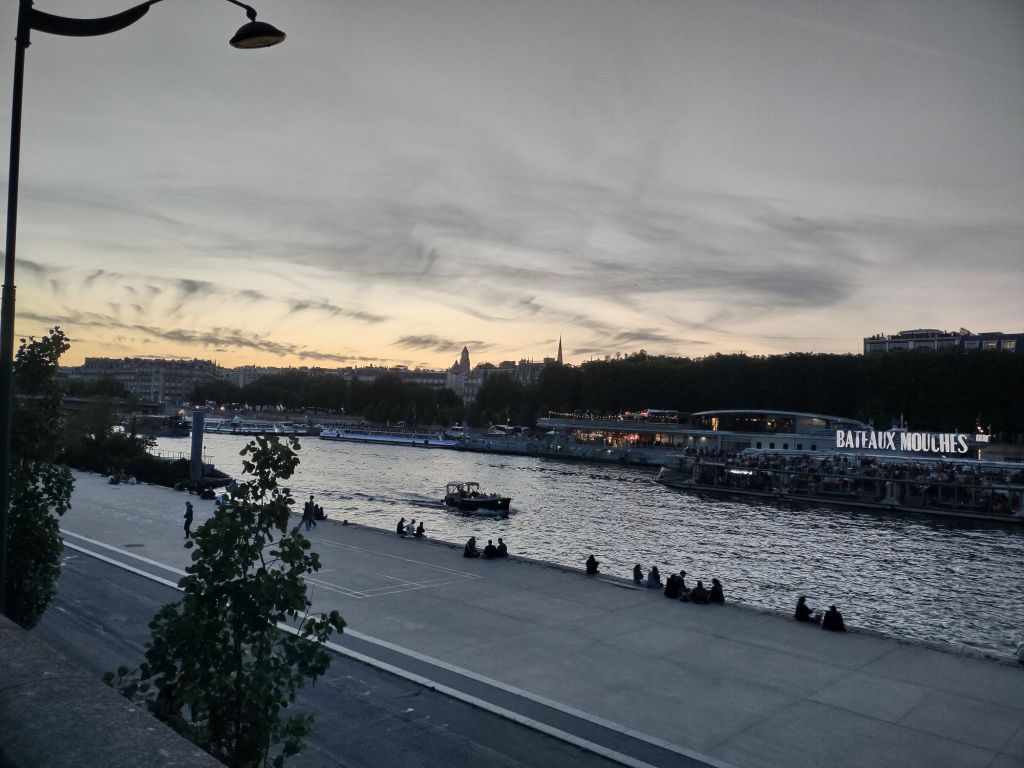

Statue-free so far. What would tomorrow bring?
 orwellianTwo
Leave a comment