Out of San José we go, heading west across the Central Highlands to the Pacific coast, driving over spectacular ravines and down winding stretches hugging the hillsides, while storied green volcanic hills shimmer around us under the stifling blue sky. Did I say “driving”? I meant “crawling”, always – always – crawling; the road is wide but twisty, hardly any overtaking is allowed, and there are always slow trucks to get stuck behind. I suppose we should be grateful for the shuttle driver’s safety-first approach, Costa Rica not having the best reputation for its road safety.
Eventually the road descends from the plateau as we turn south near the coast, and the land becomes incredibly verdant as we pass through Tarcoles and over its famous “crocodile bridge”. We hit the Pacific coast and pass through the party town of Jaco. This is where I stopped off on my trip in 2024, but not today. Southwards we drive, as the tropical sky seems to become even bluer and the fields even greener before they just simply turn into one great palm oil plantation around the town of Parrita. After about 3-4 hours, we are near our destination.
Costa Rica benefits from an incredible diversity of wildlife, the result of the Central American isthmus’s relatively recent (3 million years old) emergence from the sea to link the American subcontinents. Add to that the rich volcanic soil and the tropical climate, and the place was destined to become one of the centres of ecotourism, with visitors from all over the world drawn to its seemingly endless mountains, rainforests, mangrove swamps, beaches, and its equally impressive array of sloths, monkeys, birds, and all their furry mates.
You need months to experience even a little of each habitat, so if you’re here for a short time you have to choose. About 50 miles or so down the coast from Jaco lies the Manuel Antonio National Park, famed for its lush lowland rainforest, rich wildlife, and stunning beaches. Unfortunately it is so famed that they restrict the numbers who can visit, and you really have to get there early to avoid the midday crush. I didn’t fancy it, so instead decided to stay outside. Around the nearby towns of Quepos and Manuel Antonio there are a number of nature resorts that sit on the edge of the rainforest, and I spent a couple of days at one of them (La Foresta, if you’re interested. I don’t get commission).
By the way, that’s “nature” resorts – N-a-t-u-r-e – just to clarify things for one of my cheekier (ooh-err) readers.
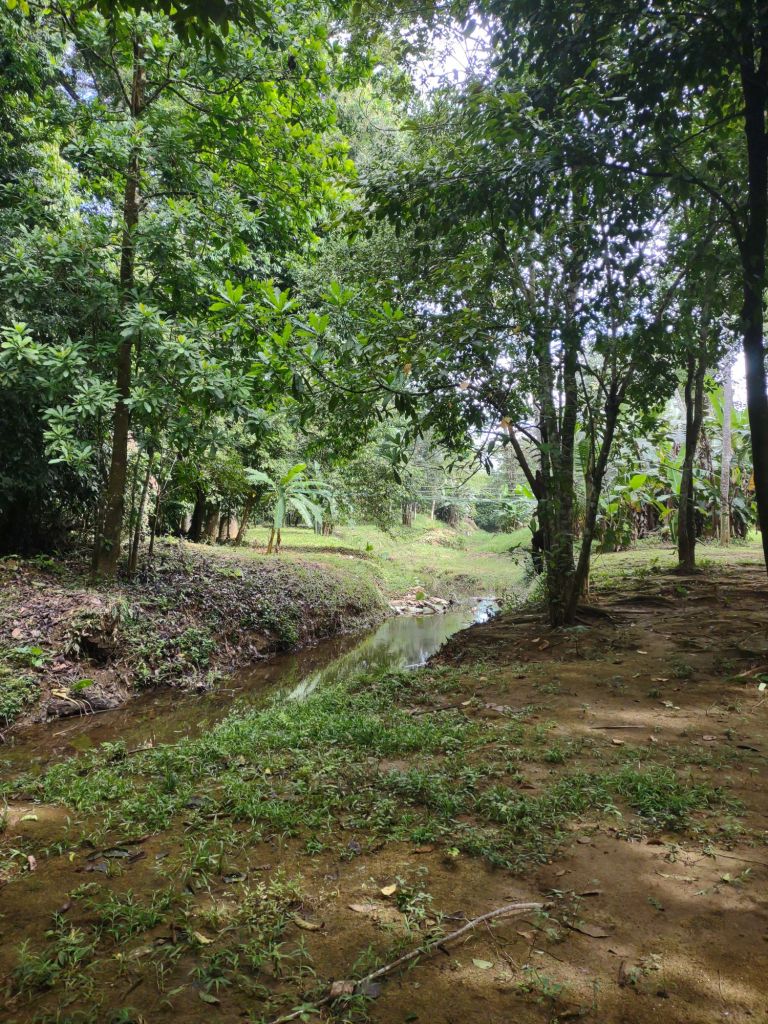
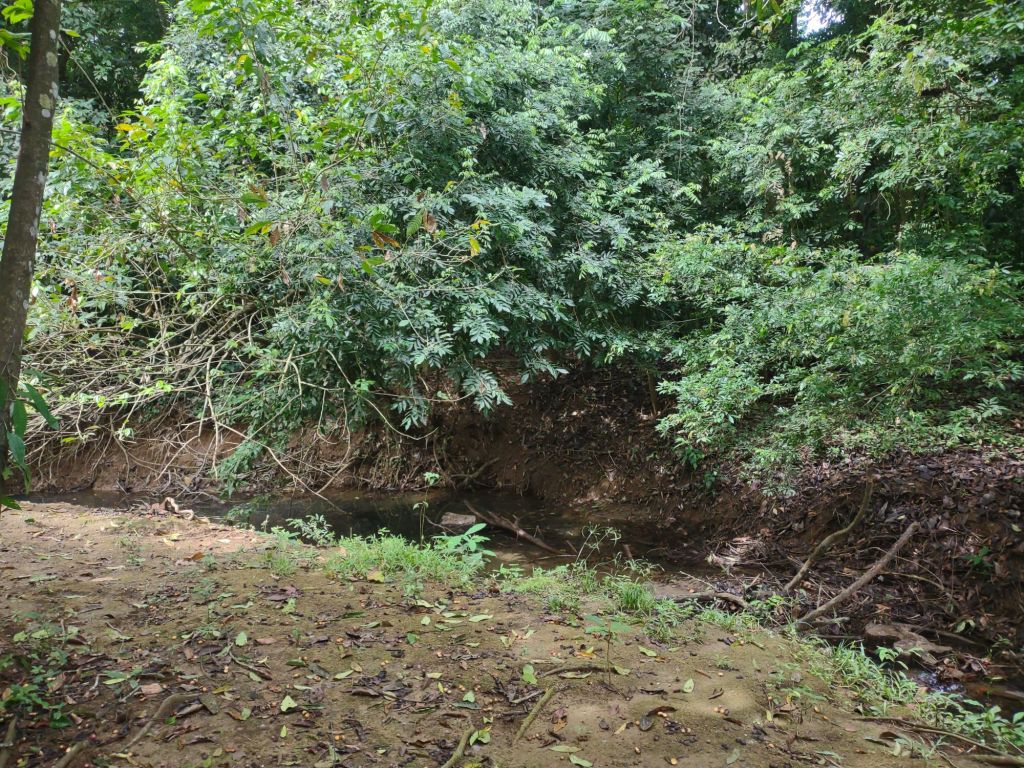
Here at La Foresta they have an inner grounds bit which is bordered by a little stream that curves around the edge of the resort like a horseshoe.
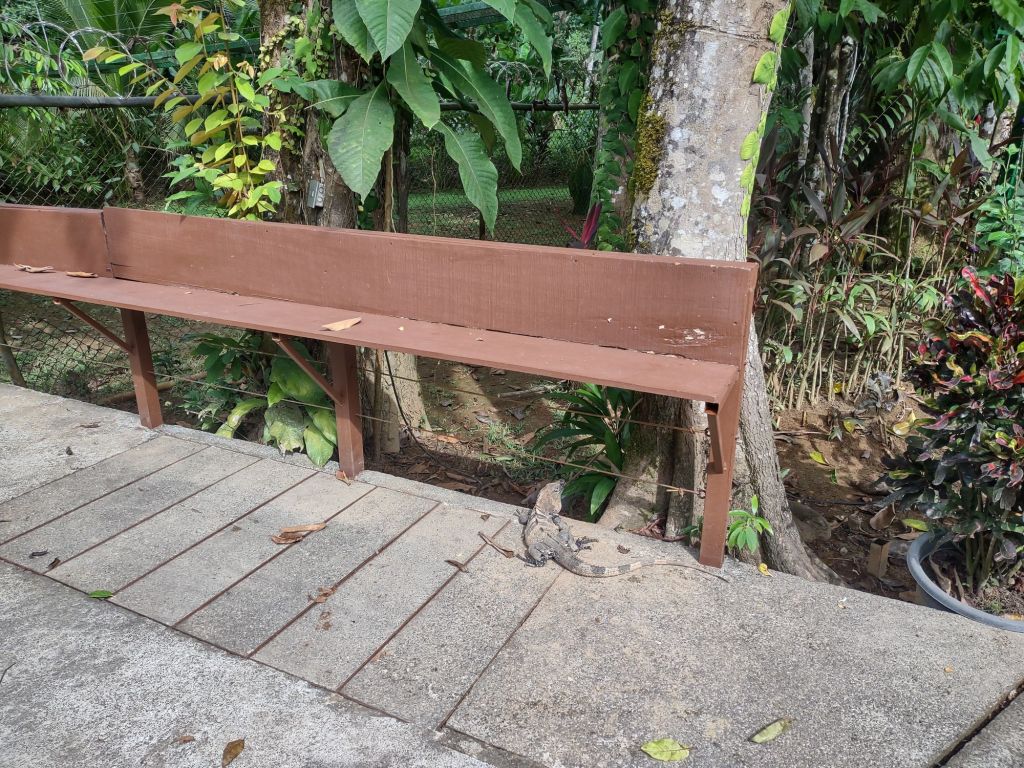
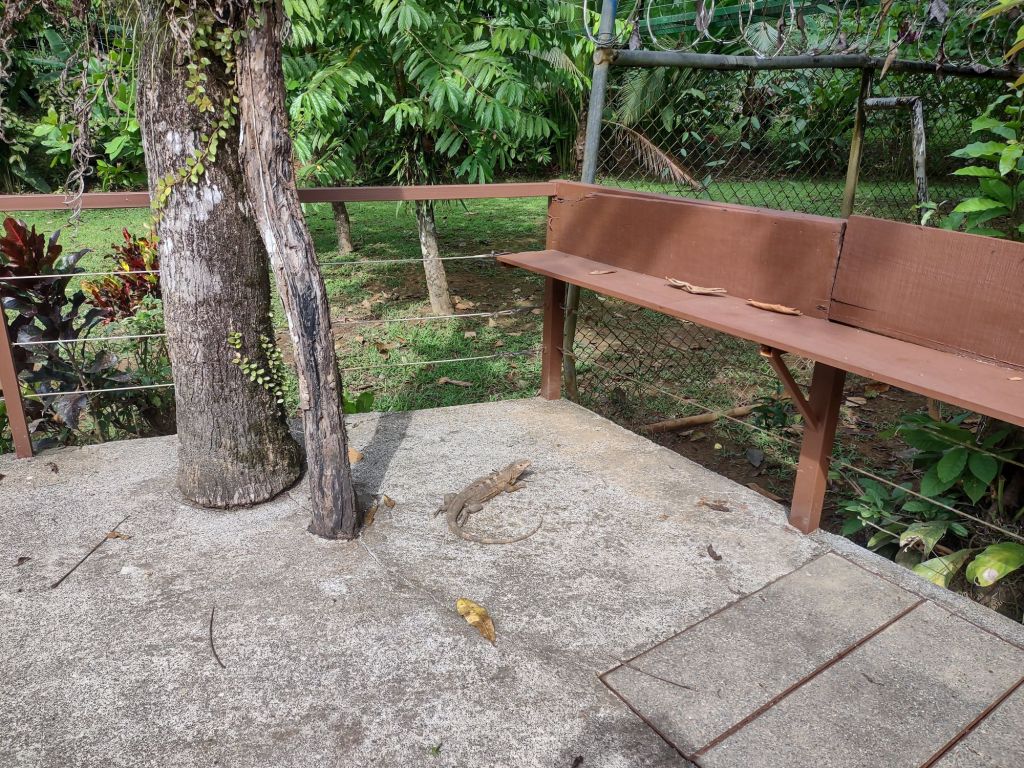
They also have iguanas.
But the real selling point is the access to the actual primary and secondary rainforest beyond the stream. There are two ways to get into it. You could do a zipline canopy tour (the idea of transporting yourself along a suspended line is ancient, but in the 1970s an American ecologist here in Costa Rica came up with the idea of extended zip lines above the rainforest canopy so he could make observations without disturbing the habitats).
Or you could cross the rope bridge into the dark interior.
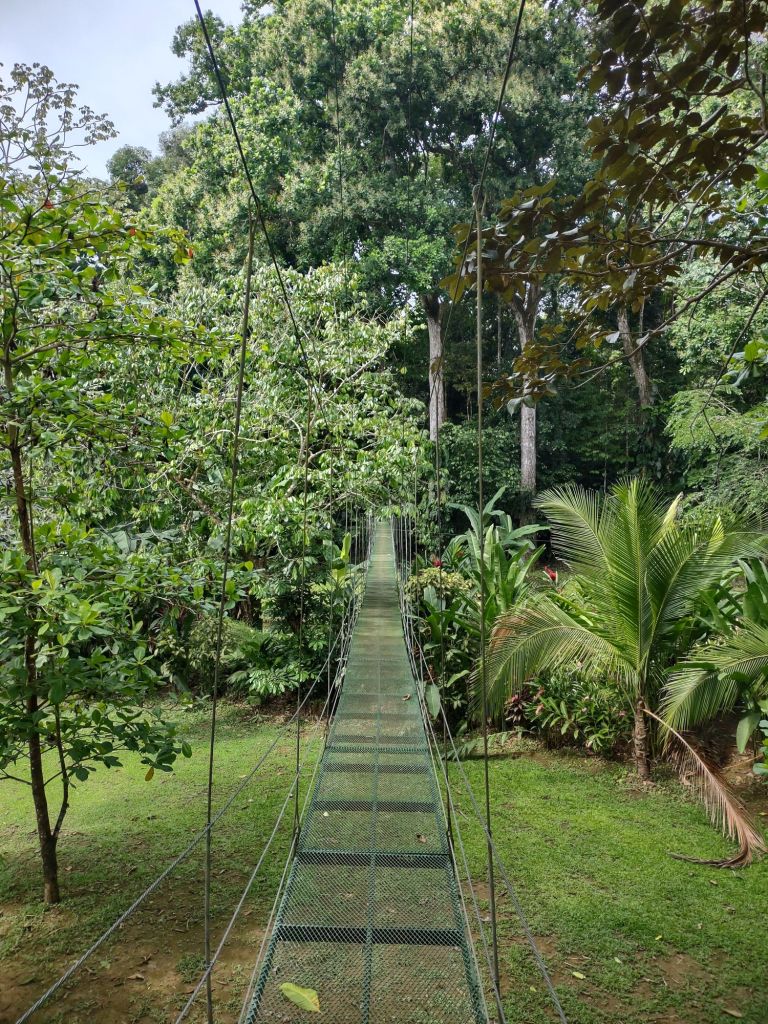
Dark and entrancing. Signs advise you not to enter alone, to follow the trails and stick to them, there’s wild animals. Primary rainforest. The edge of our world.
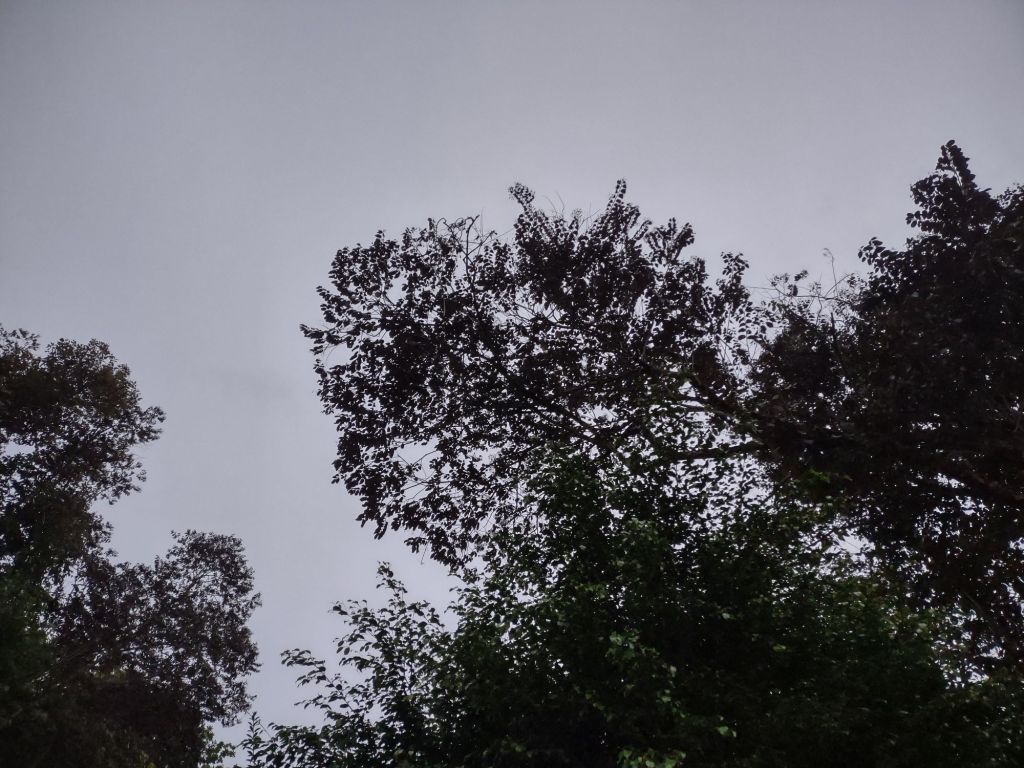
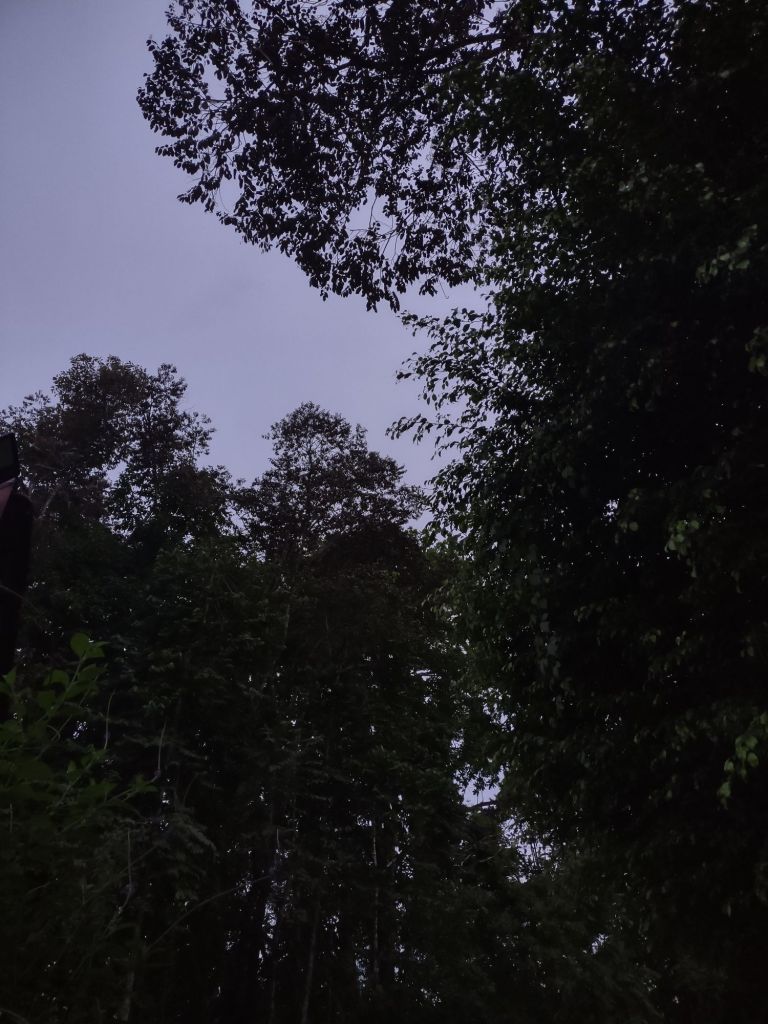
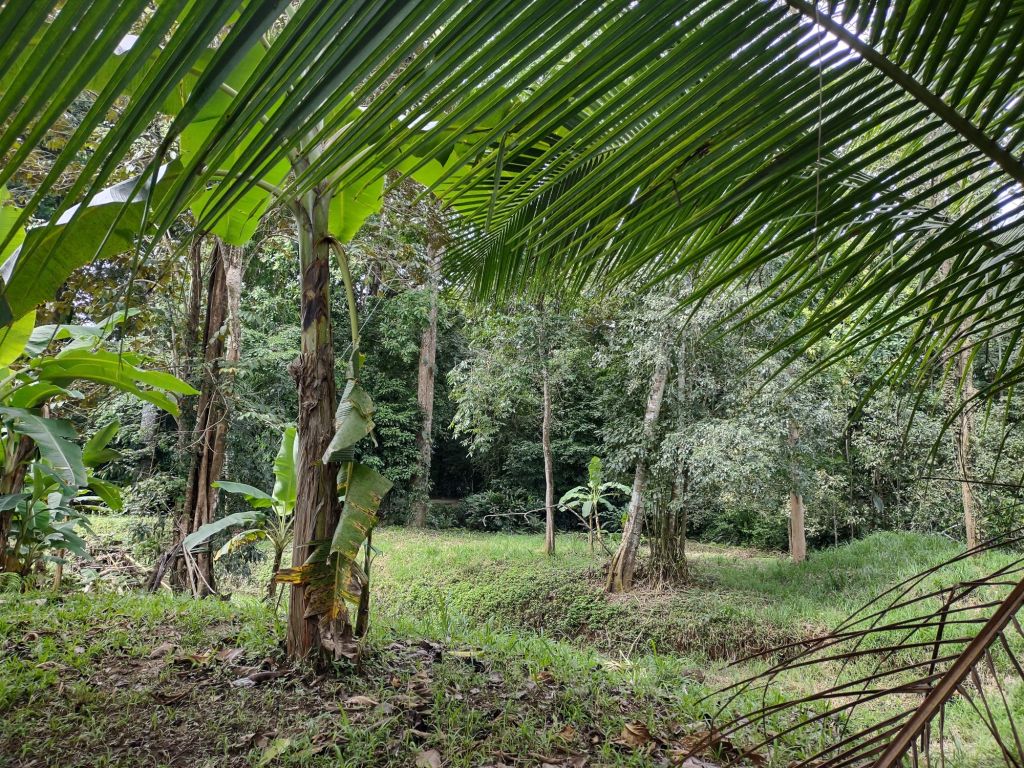
Spooky. There’s just one problem.
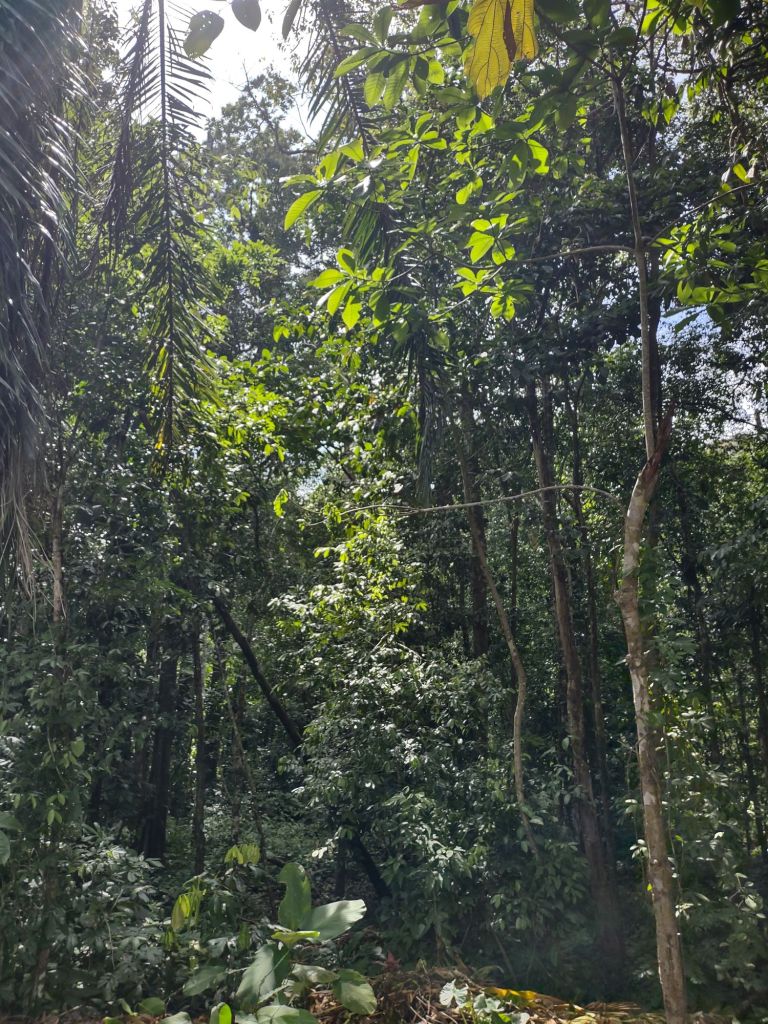
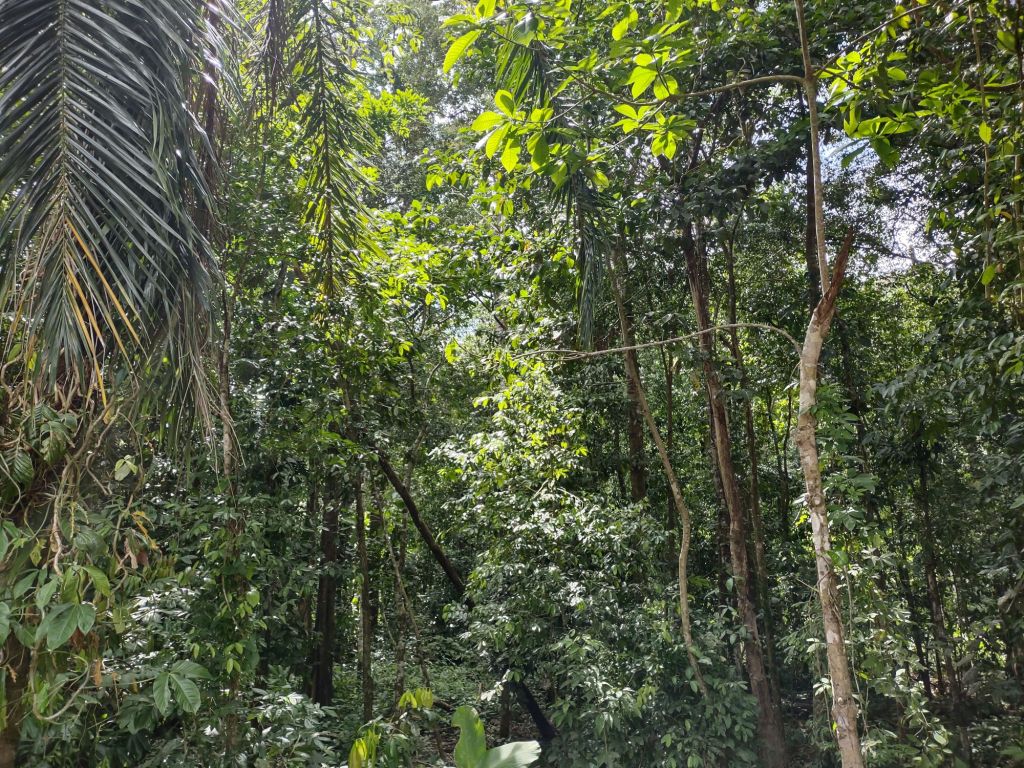
I’m still taking things gradually and didn’t fancy the rope bridge. In fact at this point I wasn’t keen on the whole business of going in there in the first place. Maybe another time, maybe another trip. So all the photos in this post were taken from the inner grounds.
Sorry about that. Have another iguana.
In fact, there was plenty of wildlife to enjoy from the hotel grounds itself. Raptors hovered menacingly above, effortlessly floating high upon the tropical air, while below, a couple of snarking parrots fussed about in the trees. Later, some birds from another species swooped in, declaring themselves unimpressed by the parrots and saying “Toucan play at that game!” There were also butterflies, lots of them, fluttering to and fro, showing off their extraordinary colours.
While waiting for my shuttle bus to my next place I went back out and finally spotted some monkeys.
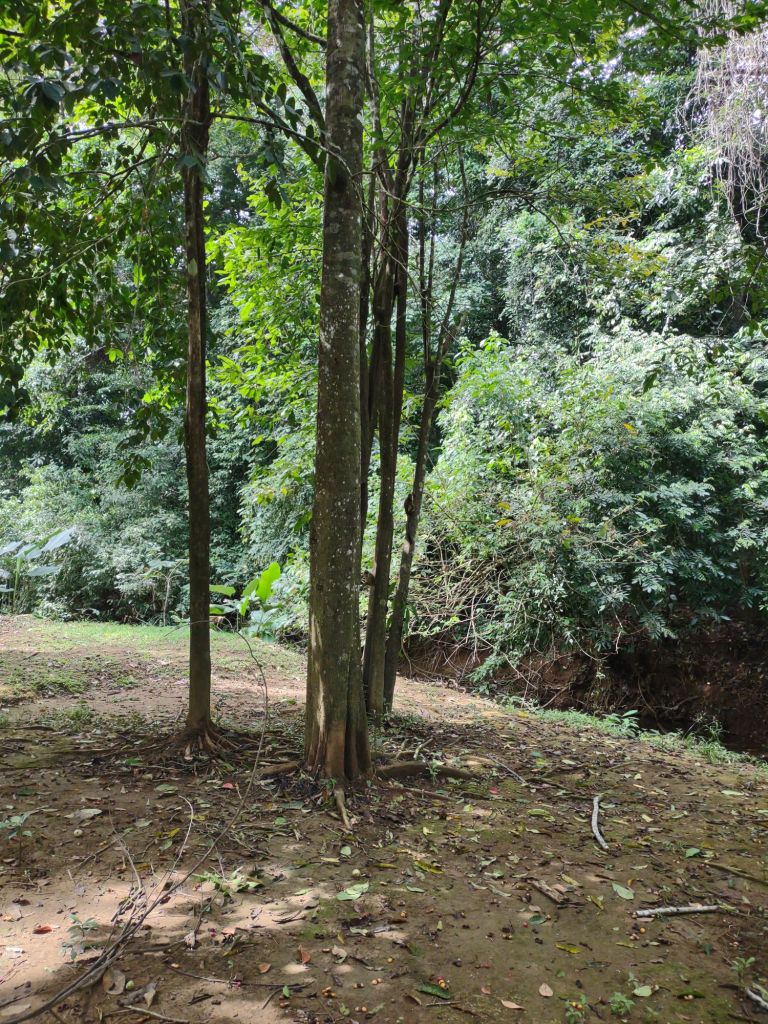
You can just make out the squirrel monkey hugging the right-hand tree, just below the leaves.
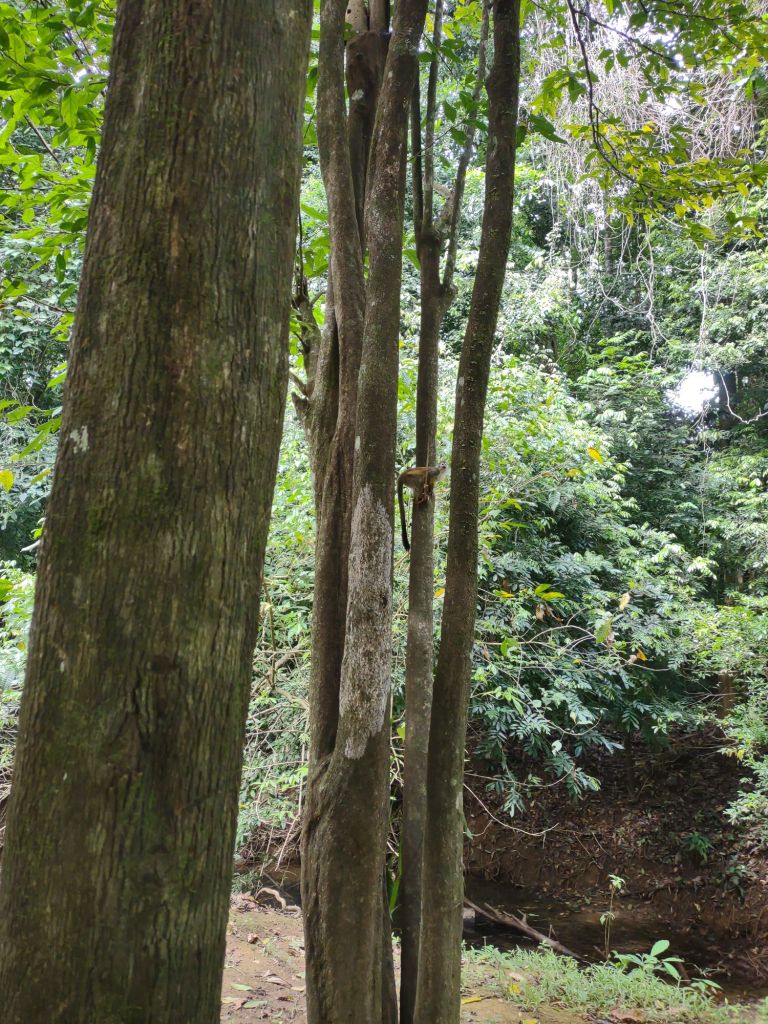
In this one, just follow the tail. (Which, interestingly, is not prehensile, just used for balance on squirrel monkeys.)
A regular reader of my posts will know that ecotourism and safaris don’t figure as much as cities, scenery, and stories. So my nature photography is not up-to-scratch and I couldn’t work out how to get close enough for a decent shot without scaring it away. Maybe some nuts would have helped. They once worked a treat in Cambodia.
Meanwhile the monkey’s friends came along, checking out this human dude, wary but essentially curious and confident through their strength in numbers, before getting bored and leaping back home through the trees. The interaction between us was quite the thing, but you’ll have to trust me on that.
So that was it, my short experience of life on the edge of Costa Rican nature. The nearest town was a longish walk away along one of the inter-American highways, so for three days it was me, the small resort, the rainforest, and the iguanas. I will look back on this stay as being very relaxing and contemplative and an interesting contrast to what I normally do. As I started to process all of that, the shuttle arrived – and it was beach resort time!
 orwellianTwo
Leave a comment