As I sit here on Alicante’s fine esplanade, struggling to keep my eyes open, I realise that this looks like being the last blog post. Although I don’t fly home for two more days this first trip since the…the thing happened has taken a bit out of me and I only have energy left for soaking things in from a sedentary position with cerveza in hand and street scene in front of me. I am hopeful that I’ll have more energy on my next trip. Of course it’s getting accustomed again to walking around on hot city streets which has drained me – not the cervezas in hand.
So while I spin out my remaining time here, as usual I’ve rummaged through my photos to tick off anything I haven’t covered yet. And this time, let’s get the grim history bit out of the way first rather than leave it to the end, shall we?
The Stanbrook
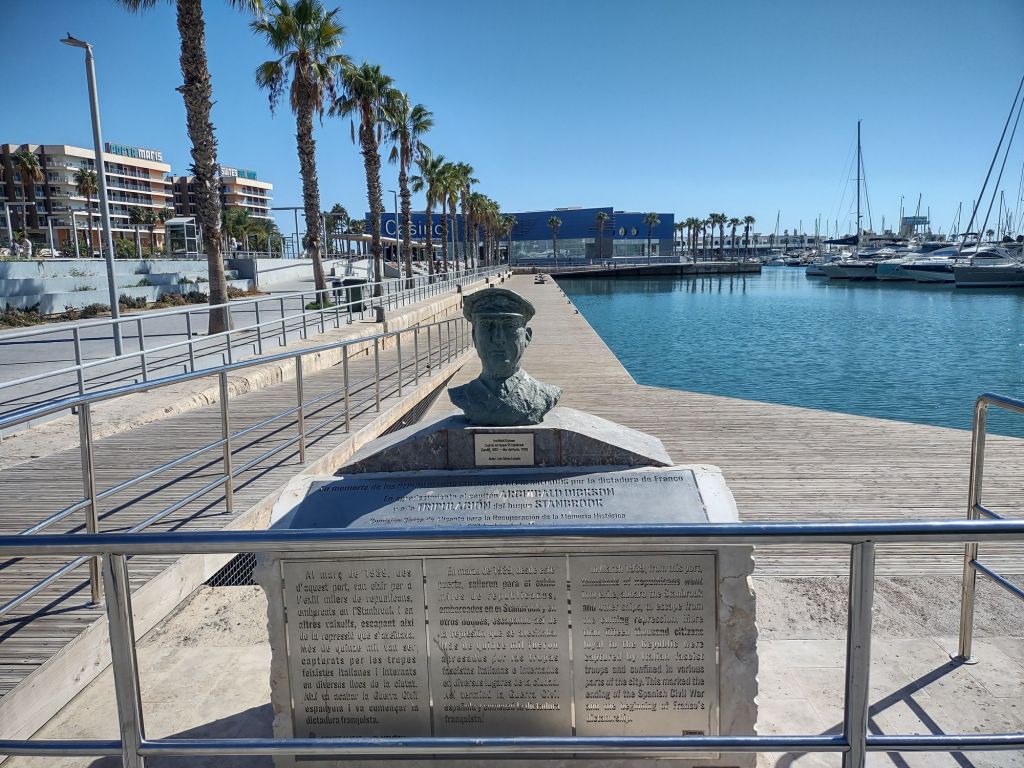
On the quayside of the marina stands a little monument to a sailor and his ship. You’d hardly notice it, rushing past to spin the wheel at the grandiose Casino Mediterraneo in the distance or stepping onto the jetty to clamber down to your yacht. But stop awhile, and discover another important story from this city’s past, one that deserves a moment of remembrance and respect.
The sailor is one Archibald Dickson, captain of the SS Stanbrook, a British cargo steamer. During the Civil War much of that cargo was destined for the Republicans and the Nationalists actually managed to sink it, only for it to be repaired and carry on the blockade-running.
Captain Dickson had taken over command just as the Civil War was concluding in a win for the Nationalists. Thousands of Republicans now had to get out and flee for their lives. In March 1939, Stanbrook was lying at anchor in Alicante port, and you may remember from my previous post that Alicante was a Republican city. With so many refugees here desperate to escape, and against the orders of the ship’s manager Dickson decided to see what he could do to help and take on as many as he could fit. If his manager wasn’t happy, the Nationalists were even less impressed. The now cramped and overloaded boat managed to avoid the incoming fire from Franco’s ships and, with the help of the Royal Navy it made it to Oran in French-held Algeria.
That wasn’t the end of the story. Franco wanted the men back, and there was a diplomatic spat with the French who eventually put them up in a dismal concentration camp in the Sahara where they were treated badly. Meanwhile the Stanbrook went on its own way – a road which led to the Second World War. On 18th November that year, she was en-route from Belgium back to Britain when a single torpedo from a U-boat sent her, the heroic Captain Dickson, and his crew, to the bottom of the sea.
A little spot that deserves at least a couple of minutes of reflection.
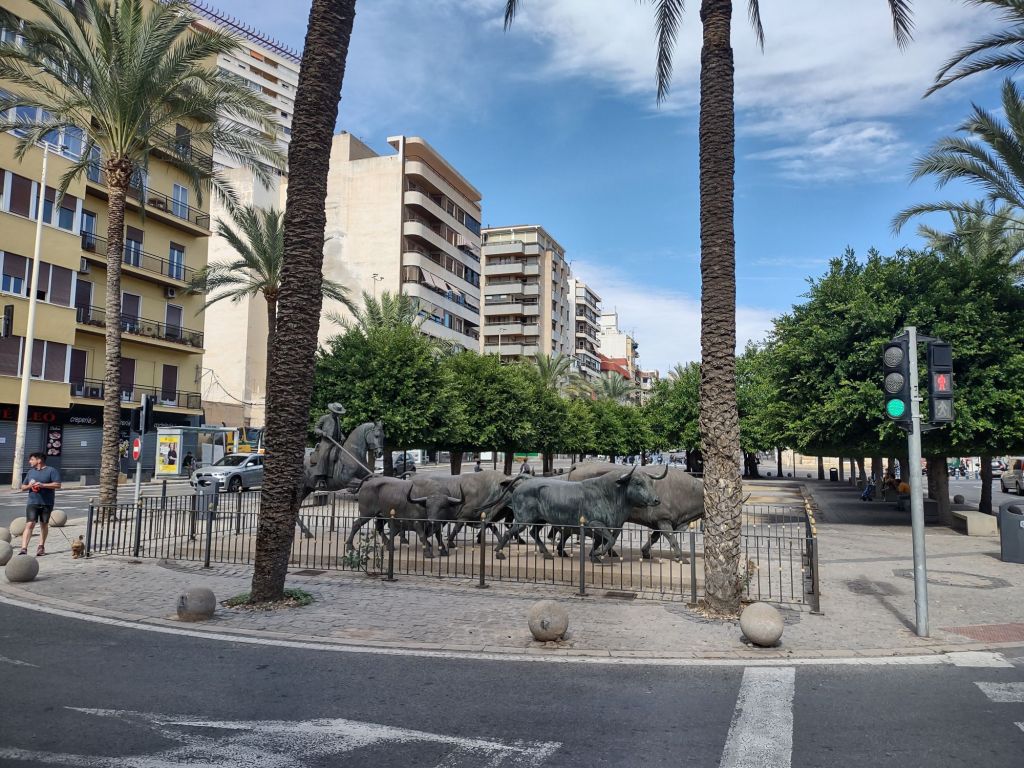
They could be heroes
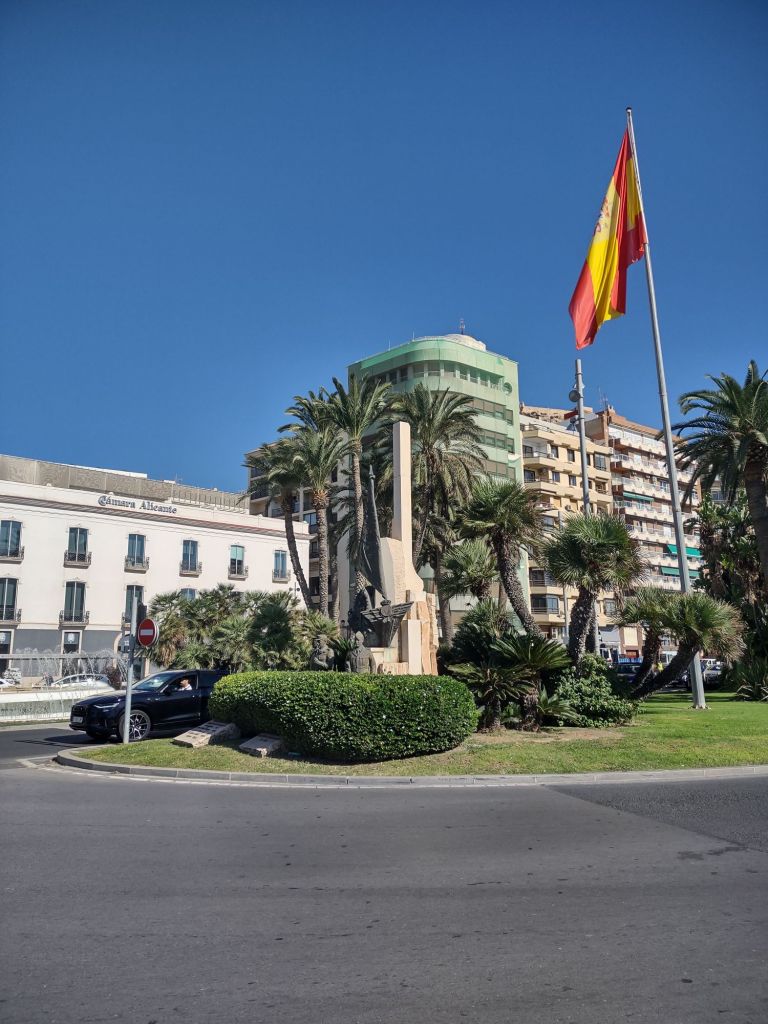
I had promised to find out some more about these statues close to the Stanbrook memorial.
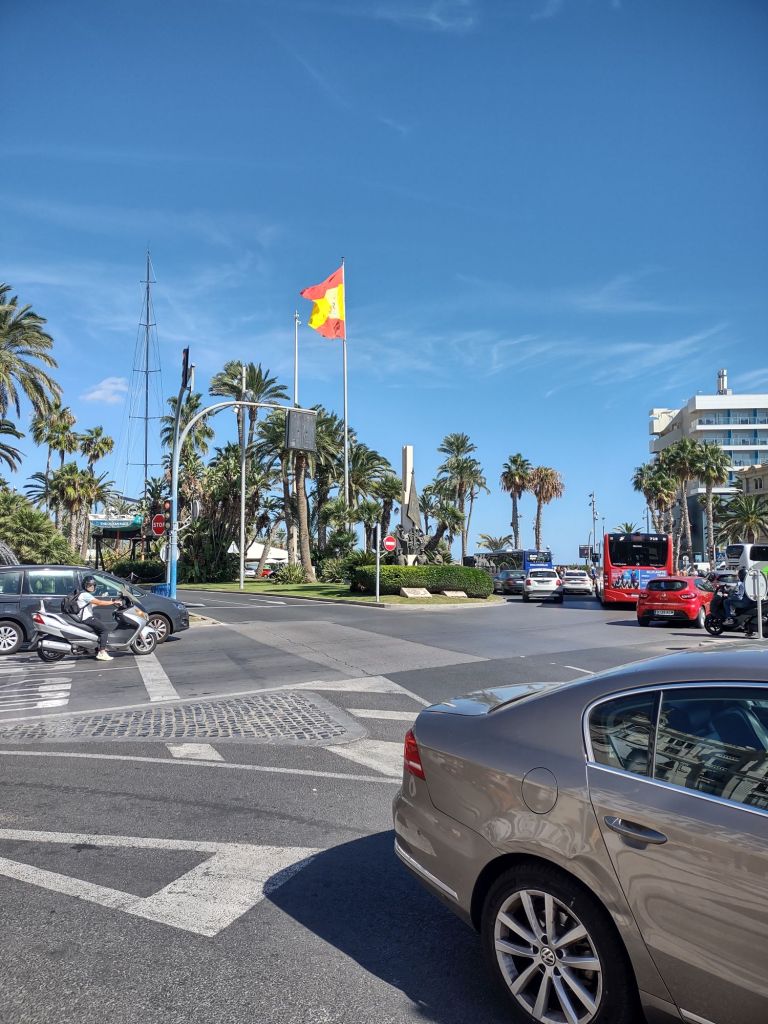
But as you can see it’s on a traffic island slap-bang in the middle of a busy road, and there’s no easy place to cross. So I had no choice but to yield to G…e after all.
It turns out to be the Monument to the Replacement Soldier, commemorating conscripts in the Civil War.
A warm welcome
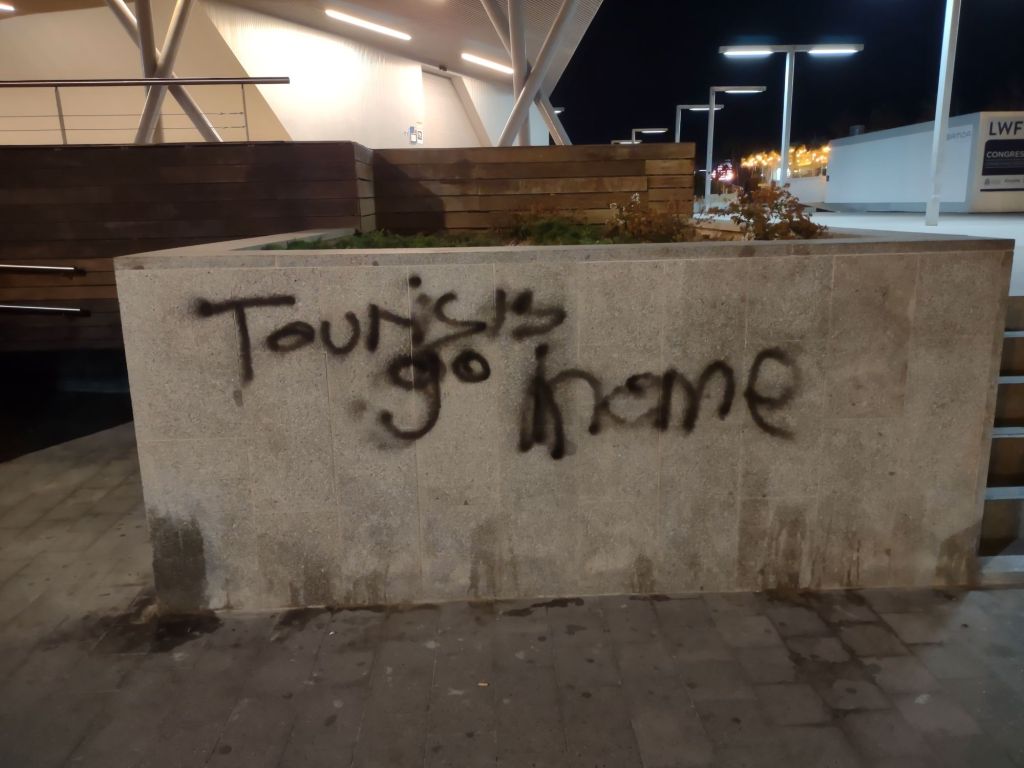
As the declension of the verb “to travel” goes:
I travel
You are a tourist
They are lager louts staying in Benidorm
Alicante has not been immune to the growing resistance to over-tourism across the popular European hotspots like Venice, Barcelona and Lisbon. This July some locals here held a protest against the impact they say tourism is having on the town, such as driving up local house prices and driving down job security.
Much of the ire is focussed at house-lets, which takes a significant amount of property out of the means of local people. I tend to stay in hotels anyway (“I am a traveller…”).but hotels bring their own ecological footprint and anyway wherever you’re staying, if you’re a visitor you are adding to the problem that the place you want to experience in an “authentic” way has in fact turned into an over-crowded theme park.
It’s the end of the season, and although I’m guessing that most of the people gliding down the esplanade are foreign tourists, it’s busy but not packed and I have been to places where you literally cannot move (back to Barcelona’s Rambla). However all the food outlets on this popular street seem all set up for the (undiscriminating) tourist trade, in other words not very good, and if it’s not a restaurant it’s a souvenir shop, and so on. I’ve not seen any organized aggro towards tourists while I’ve been here, and the whole experience this week has been a delight. But the cruise ship came in yesterday and things are a little busier…let’s keep an eye on things.
Oh, and the beach is packed.
Some more pics
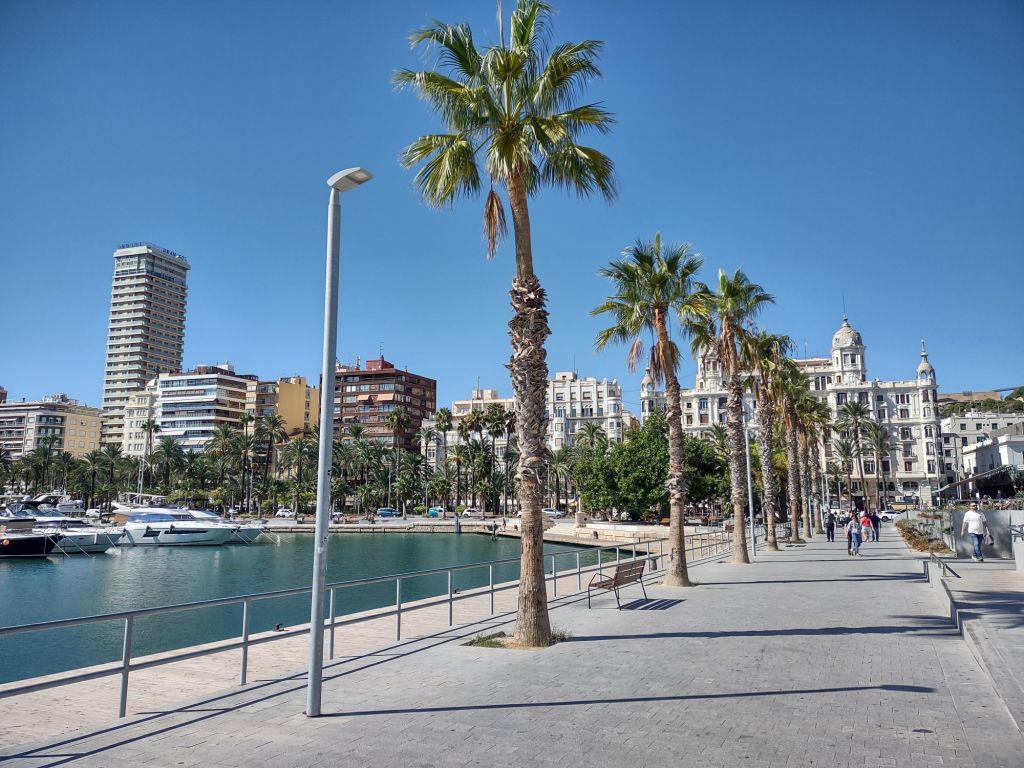
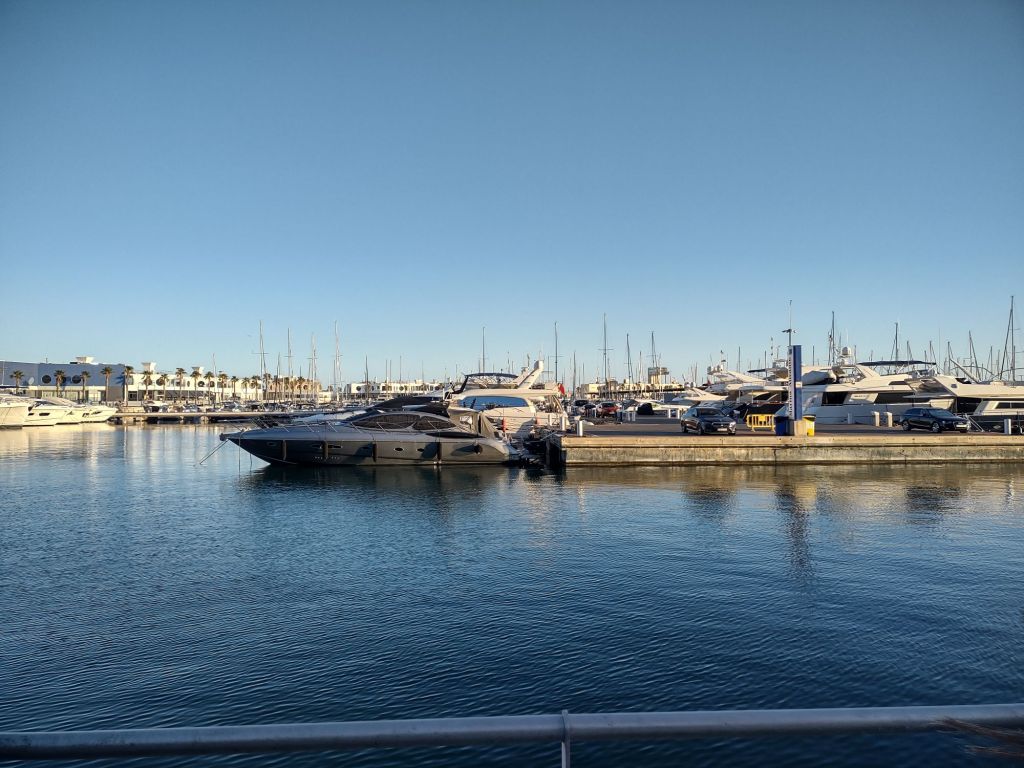
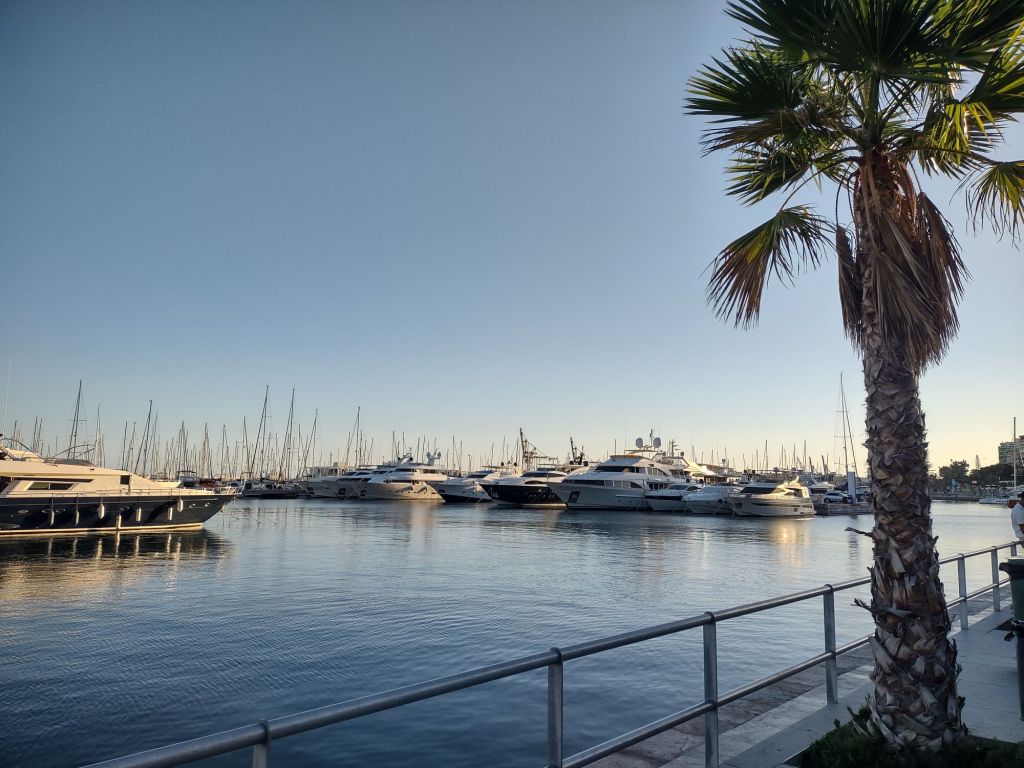
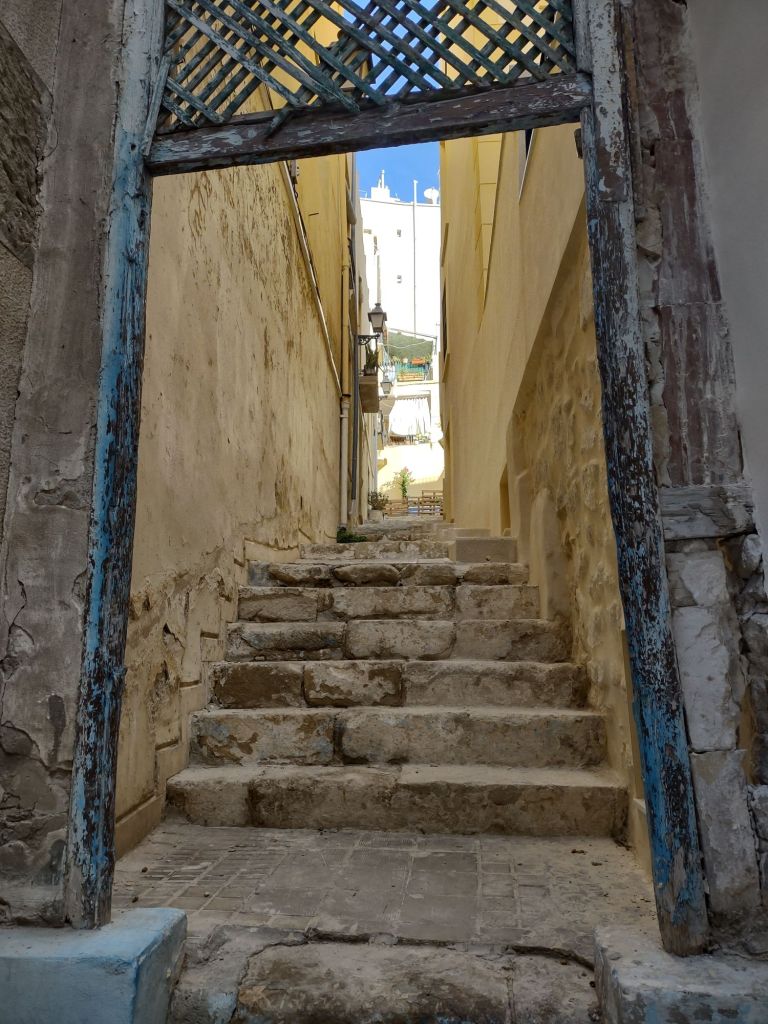
What’s it got on?
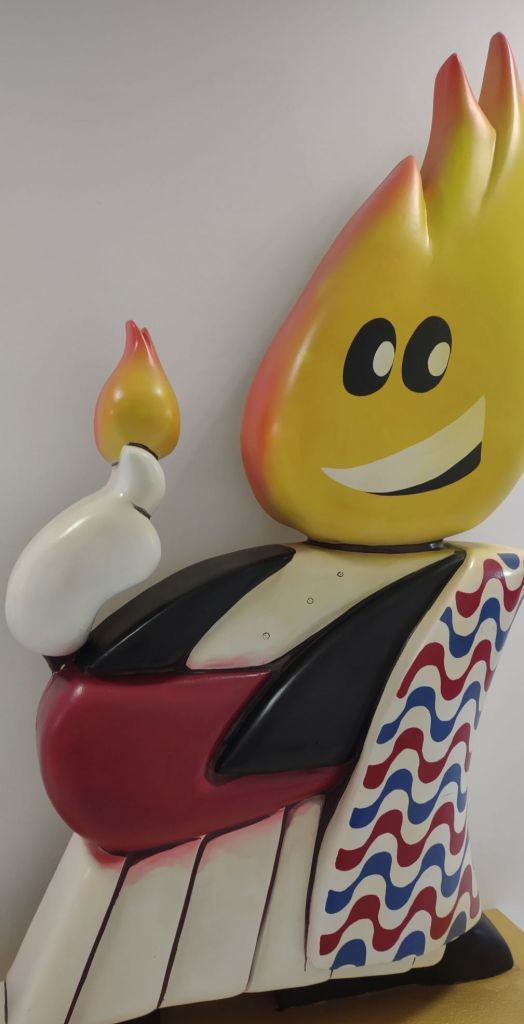
Finally, a puzzle to keep you going until my next trip.
It’s back to the Bonfire Museum, and every big event such as Alicante’s Feast of Saint John needs a self-important committee deciding that they really need a silly mascot. So here is Foguet, a flamy thing bearing various references to the town and its surroundings such as the local dress, and the blue and white of the local flag.
But what’s that wavy thing? You’ve already seen it, I’ve posted a photo of it during this trip. But which one? What is it? Hit the comments and let me know. Until then, hasta la vista!
 orwellianTwo
Leave a comment