Round objects. Round, stone spheres. Perfectly circular, mysterious and monumental, very, very round. As round as the moon, as circular as an argument, going round in circles. So stony, so…round.
No-one is quite sure why they were created, but there they were, large stone spheres carved about fifteen hundred years ago in the south of what is now Costa Rica. And here is one of them, sitting in the National Museum in the capital San Jose, representing the very heart of Costa Rican cultural identity.
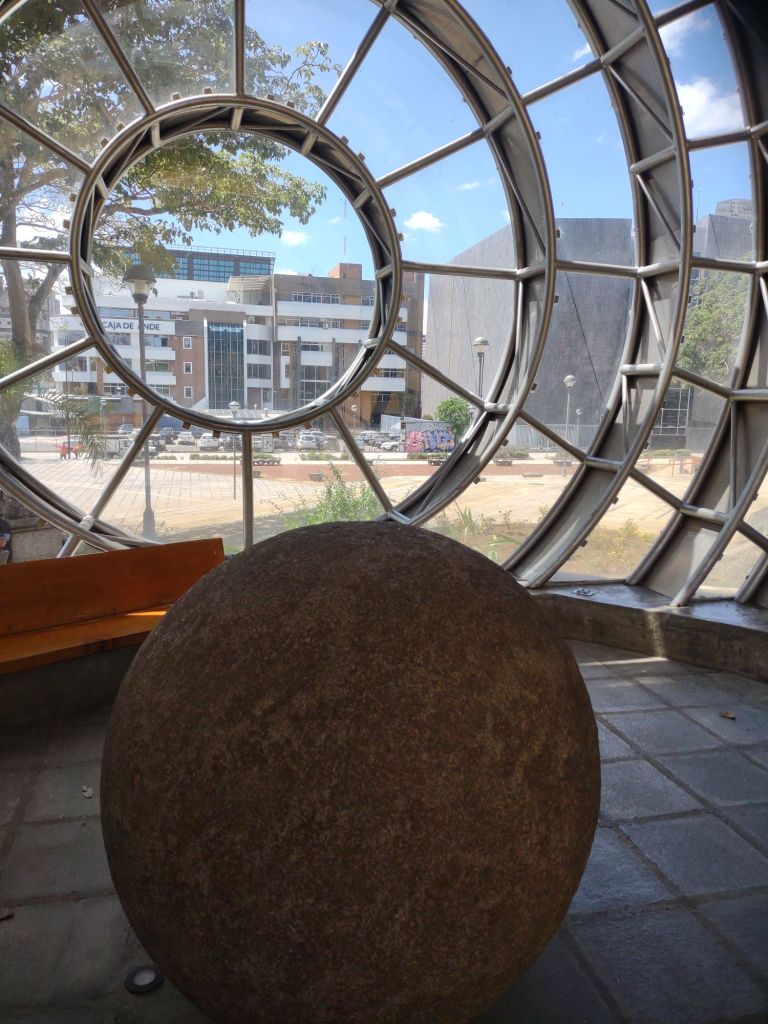
There’s another reason to start a blog about Costa Rica here, because the general advice to visitors to this country is to go around San Jose as quickly as possible to get to the glorious natural treasures waiting for you in the rainforests, the mountains and the lovely beaches. But I usually like to make sure I feel the pulse of a country’s great urban centres before I head to the nice bits so I decided to spend a couple of nights here first, indeed, have a look, ahem, around.
Some history to begin with. Costa Rica’s story is similar to their Central American neighbours, well up to a point. First up were the indigenous Mesoamericans, and as we’ve seen they were handy with their stonework though there are none of the great pyramids that Mexico and Guatemala can boast. There are more wonderful examples of these peoples’ handiwork inside the museum, and if you’re in the neighbourhood they’re worth a look
Christopher Columbus was in the neighbourhood in the late fifteenth century, but lovely carved tables wasn’t his thing. And so began the Columbian era, in which the region was claimed for the Christian god and the Kingdom of Spain. Furthering the divine interests of God and Spain of course meant dispossession and forced labour for the locals on the new plantations and down the goldmines. Alongside the new diseases this had the unfortunate effect of killing a lot of them. But the blessed mission of Christ and Europe could – must – not be stopped, so unwilling replacements from Africa were dragged over in shackles and into enslavement.
Well that’s the usual story, but there were slight differences in Costa Rica. There apparently weren’t enough native people here to make the system work, not enough gold either. So the province slipped into poverty and relative obscurity, with the mestizo class (mixed Spanish and Amerindian) having to literally dig out a living for themselves. It’s said (well Wikipedia anyway) that this led to Costa Rica being more egalitarian and democratic than its neighbours.
And to see what that led to, we’ll skip the rather complex evolution of Costa Rican independence in the early 19th century, and end up inside the Museum, right by a wall.
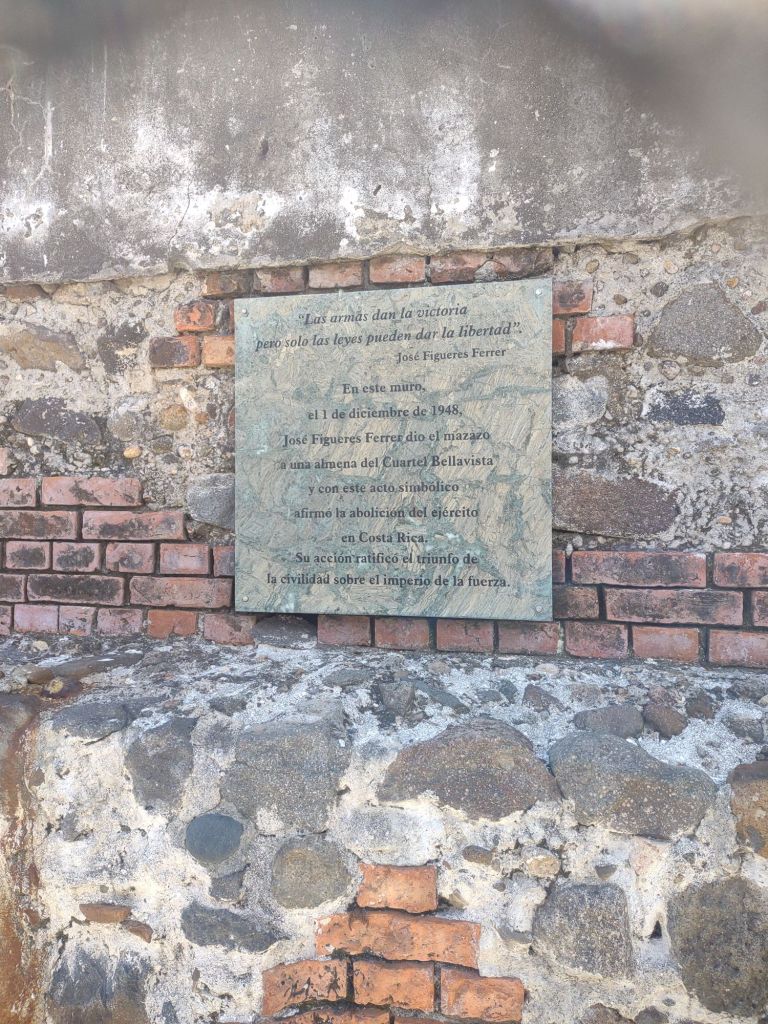
The elections in 1948 were disputed and ended up in a civil war. A local businessman called José Figueres Ferrer joined in, and ended up on the winning side. This museum was originally a barracks, and after the victory Ferrer walked up to this spot, and swung a hammer at the wall to signify his big idea.
Abolishing the army as a standing institution.
Now, the reasons are complex and he didn’t come up here dressed like a Woodstock hippy with his peace pipe and lack of soap. But even today the Ticos are proud that, in a troubled region with a history of brutal coups, all they have is a police and defence corps and a stable, progressive democracy which has had no civil war since 1949. It’s the one thing you might have heard about Costa Rica, and I’m hoping to show you a few more things about the place in the next few posts.
So, Costa Rican history. From a stone to a wall. In a roundabout way, of course.
 orwellianTwo
Leave a comment