WARNING: this post contains some surprisingly uncomplimentary comments about the life and work of Pablo Picasso. If you are a particularly sensitive Arts person, read it at your own risk.
A good place to start a walk around Malaga is where Alamada Principal, the city centre’s main artery, meets its most fashionable street Calle Marqués de Larios.
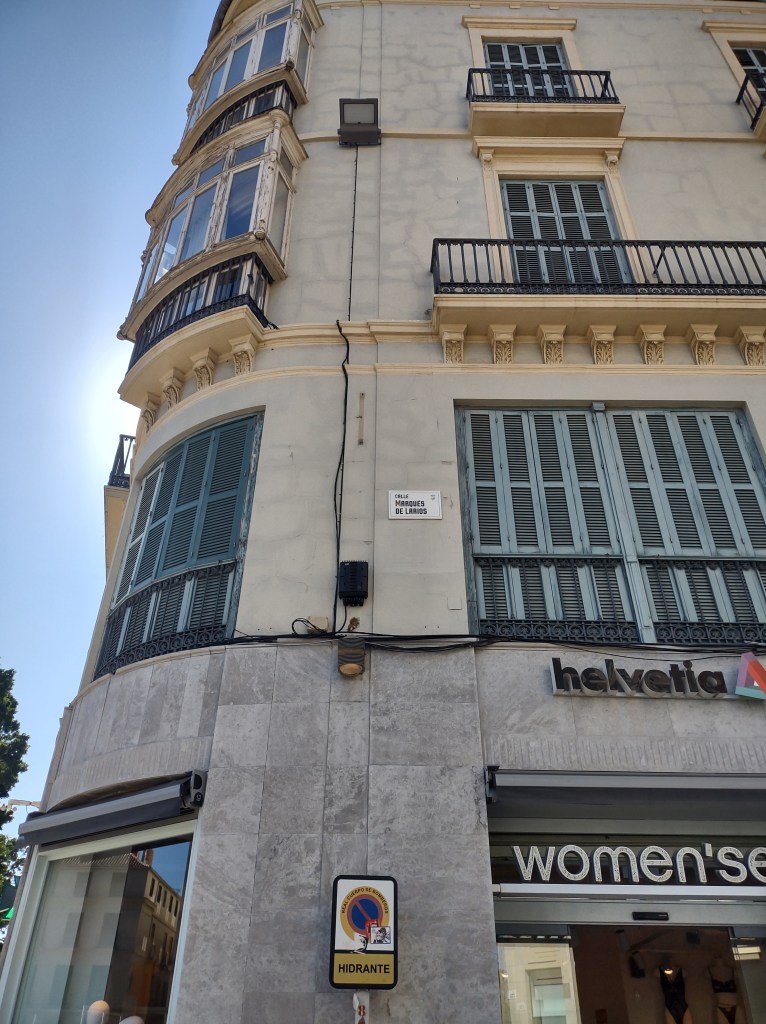
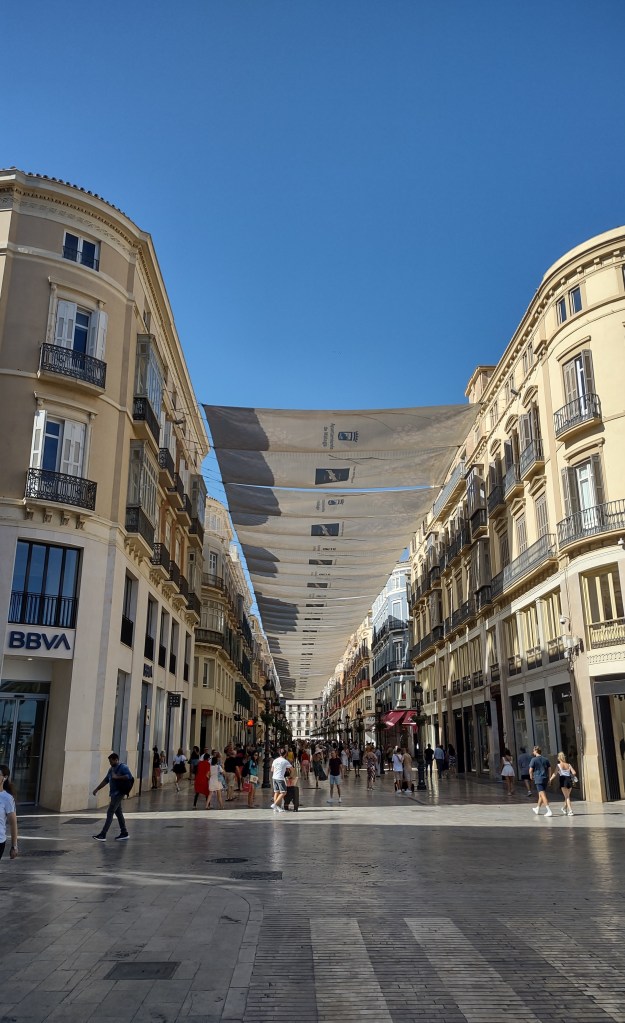
The Marquis made his money out of textiles and sugar and the Larios family became instrumental as Malaga industrialised in the 19th century. And their money was also instrumental in financing this street, possibly the most notable in the city when it was built.
Let’s turn around.
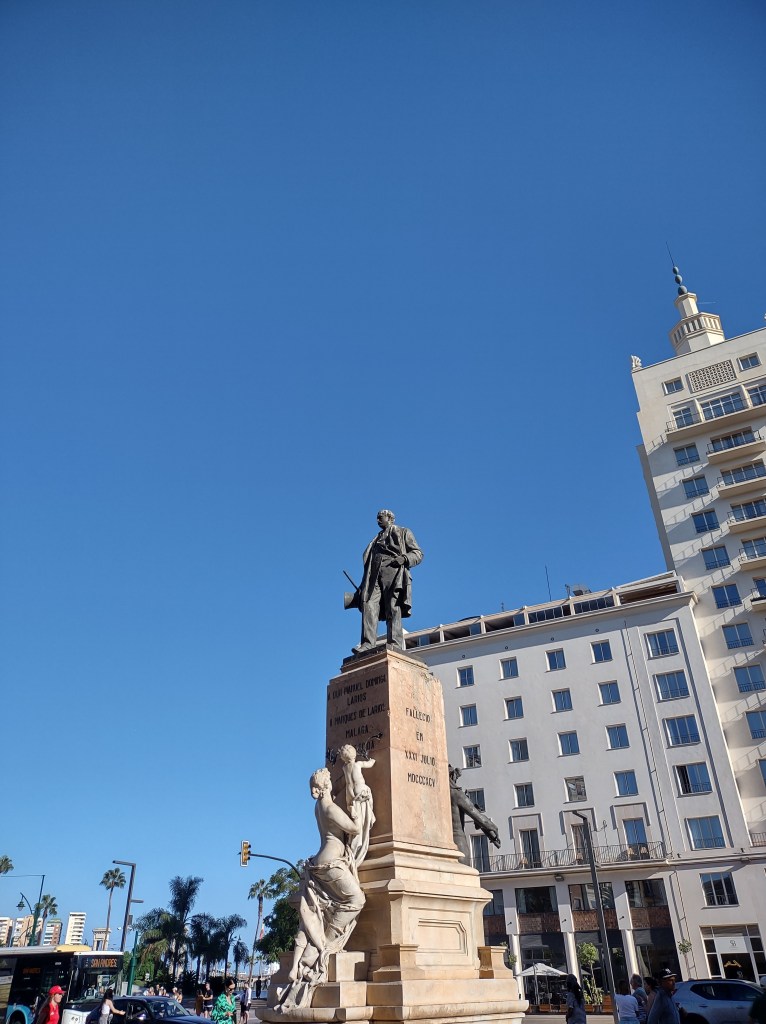
And there’s the old man himself, looking rather smug-serious as he admires his city while a grateful populace reach out and offer their praises. Or maybe they’re passing him the suncream and water bottle he’s irresponsibly left behind in the mansion. It’s touching 30 degrees Centigrade today. If that’s a hat in his hand he’d better put it on.
Walking up the Calle Larios we eventually reach Plaza de la Constitución, another important centre of city life.
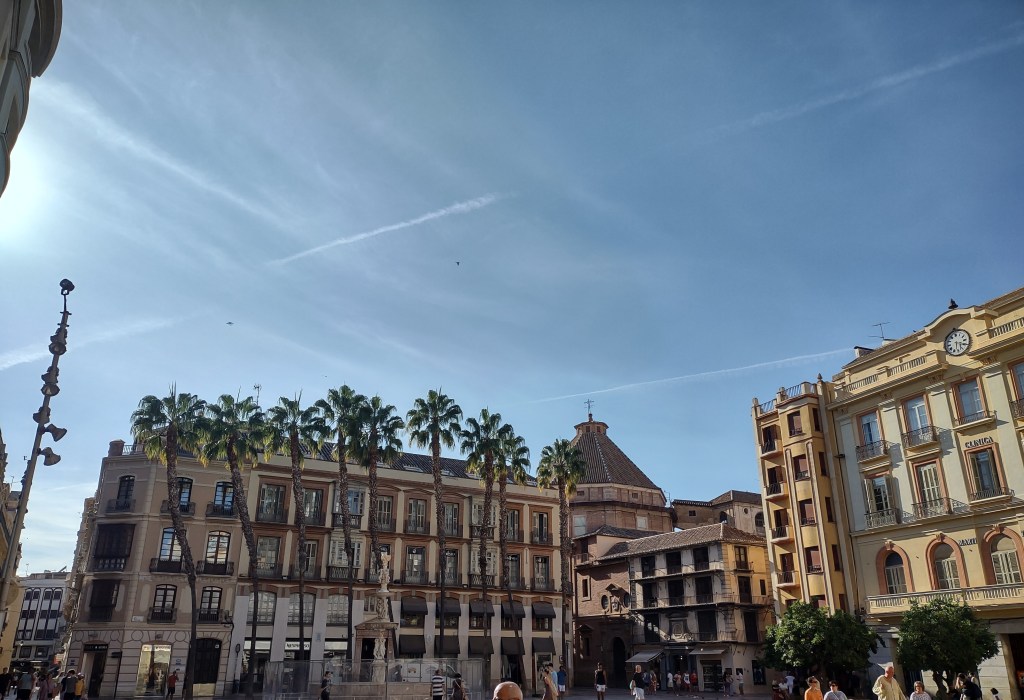
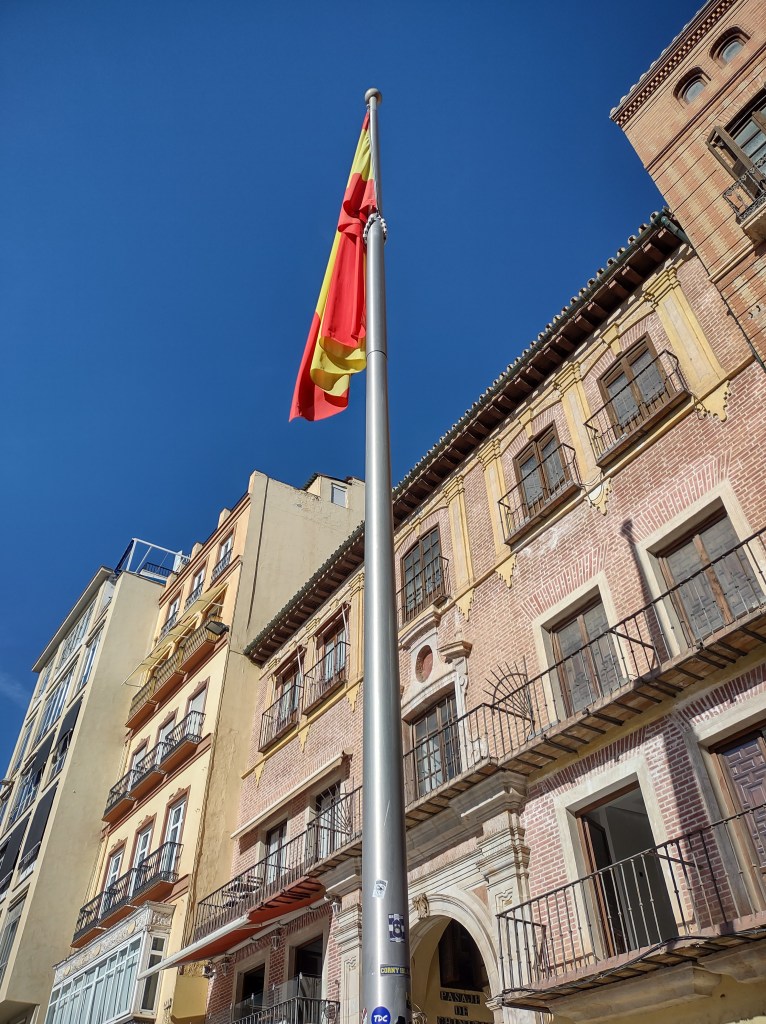
A short turn down an alley eventually leads to Malaga’s monumental Cathedral.
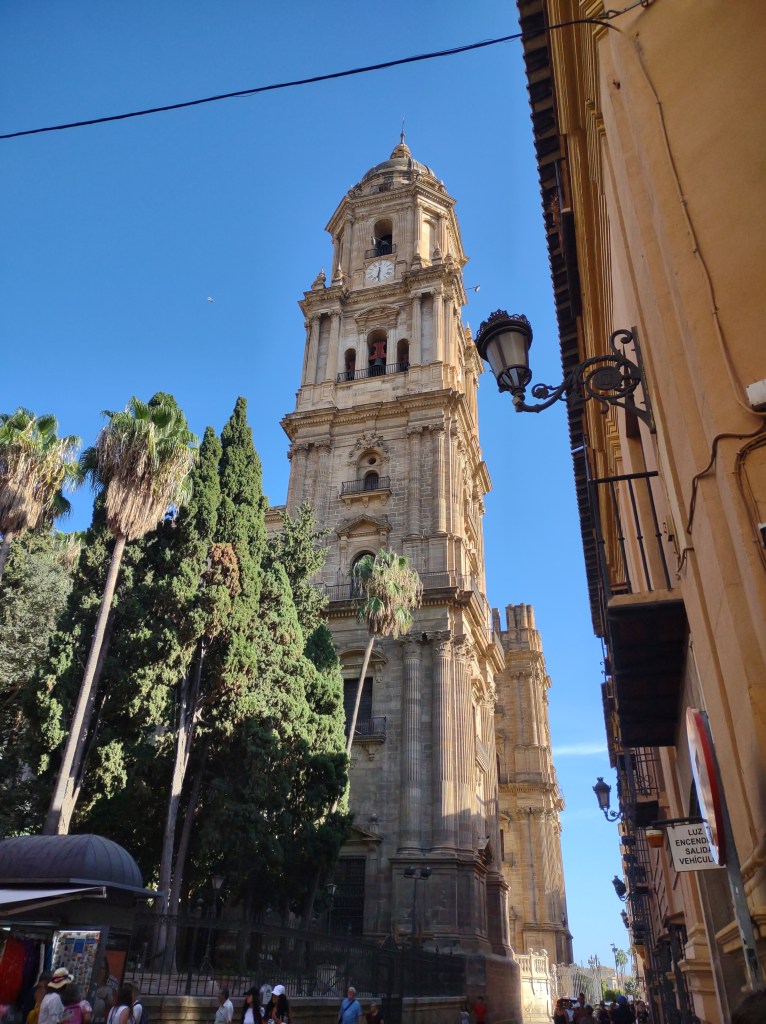
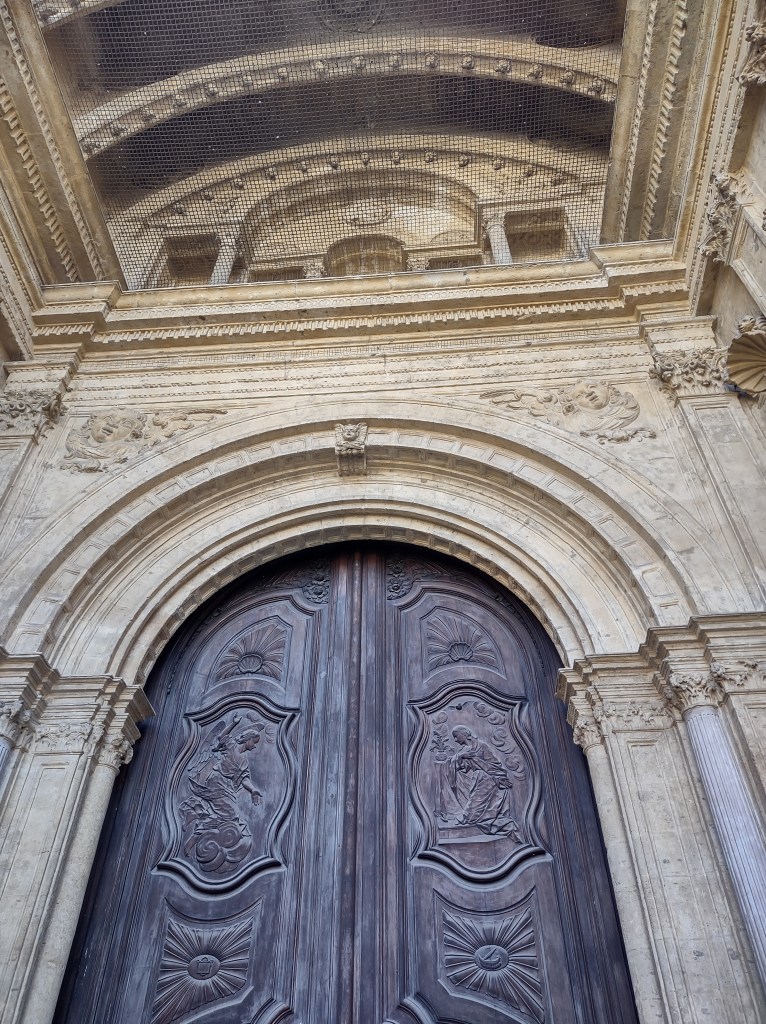
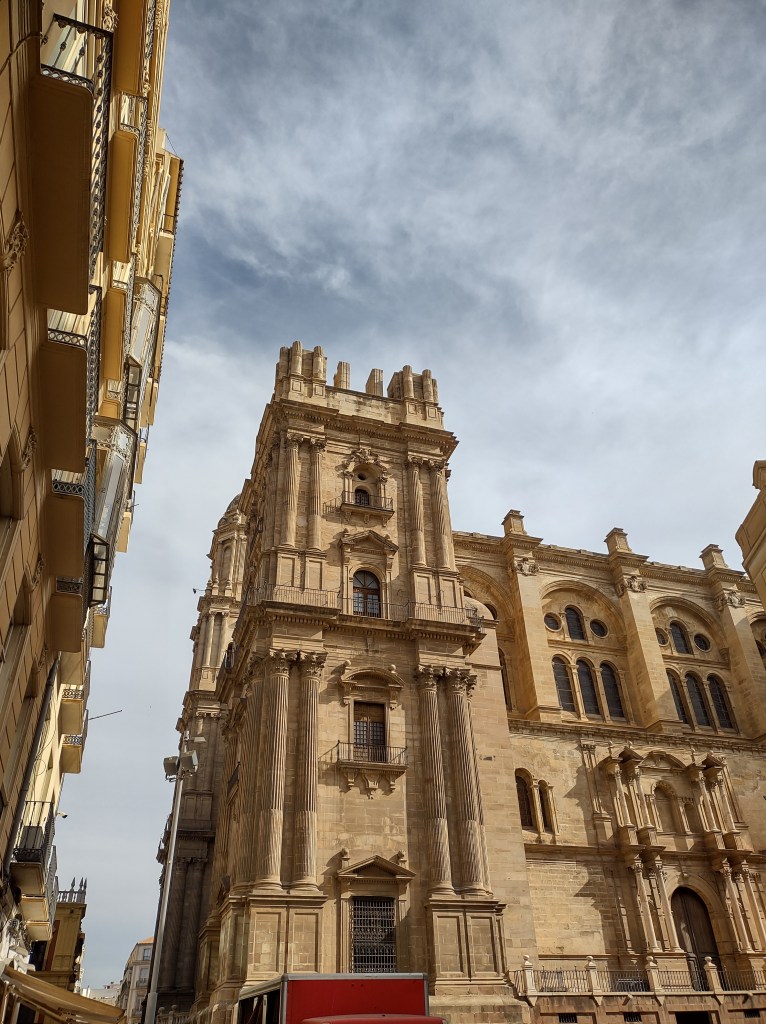
Unlike in Seville and Cordoba, the new cathedral bore no trace of the grand mosque that was here before. So consider it to be a new build, a new massive Baroque pile. Much of the work is 18th century, and it continued into the 19th until the money wore out. That’s why the south tower we see here isn’t topped out.
The presence of the old great mosque would suggest we’re at the centre of power in old Malaga, and indeed we are right at the edge of the hills on which rest the great Moorish redoubts of the Alcazaba and Gibralfaro Castle.
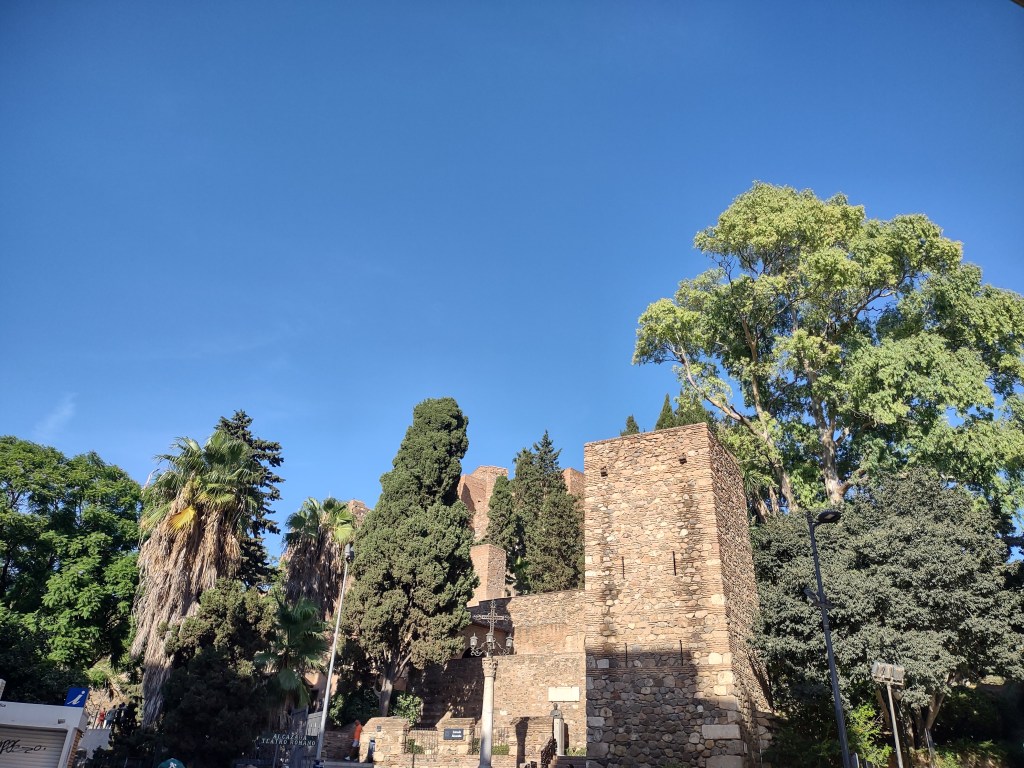
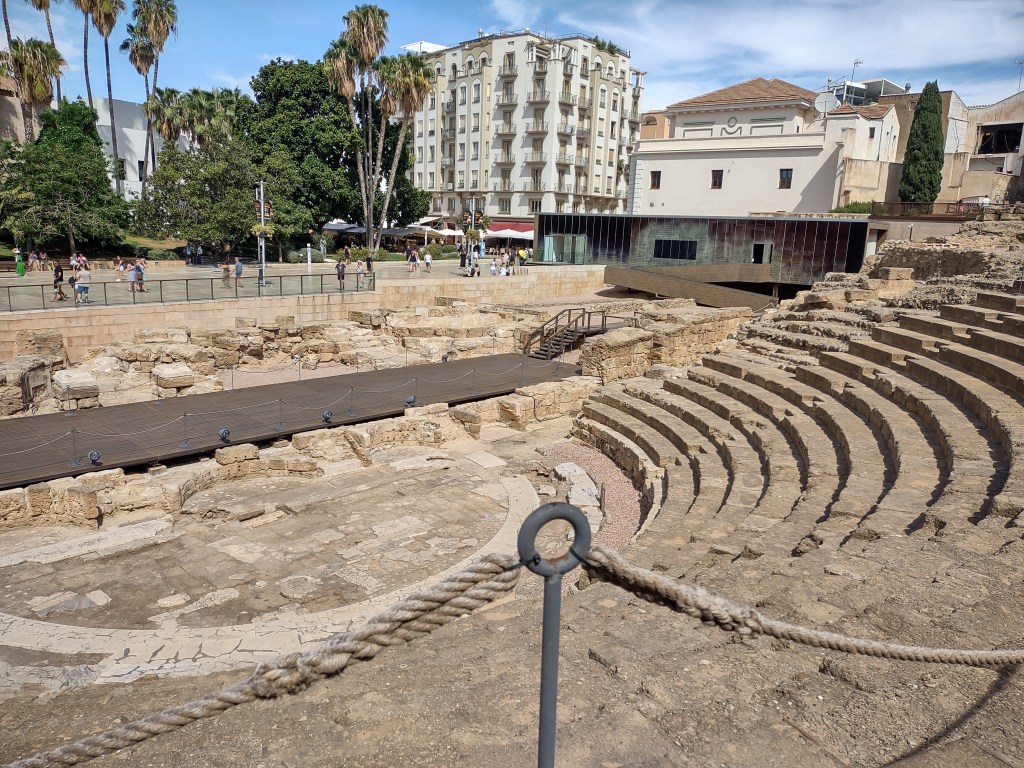
Rising out of the plaza is the Alcazaba. There is evidence that the Phoenicians had established trading settlements right here, also that the Romans used the site too. Well in the case of the Romans, more than evidence, just take the theatre in the shadow of the battlements.
The Alcazaba itself served as a fortified residence and administrative centre for the various Arab rulers that were here before the end in 1487. As you ascend through the site you pass through a number of gateways that betray the Arabic heritage and the syncretic use of Roman columns from the old regime.
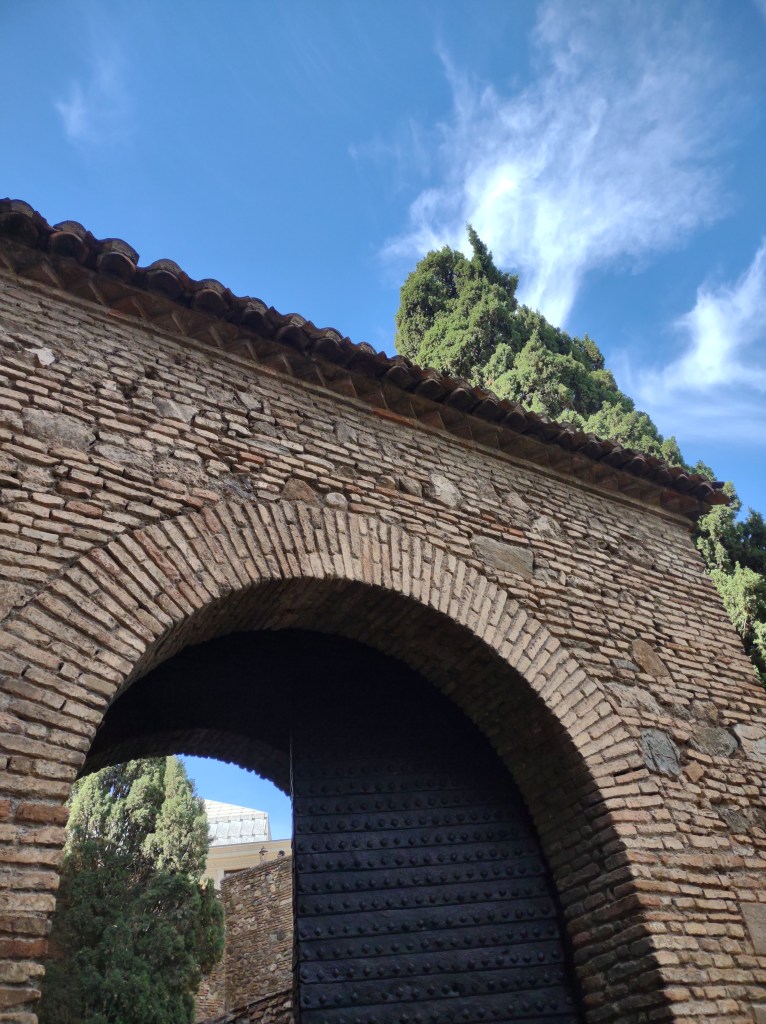
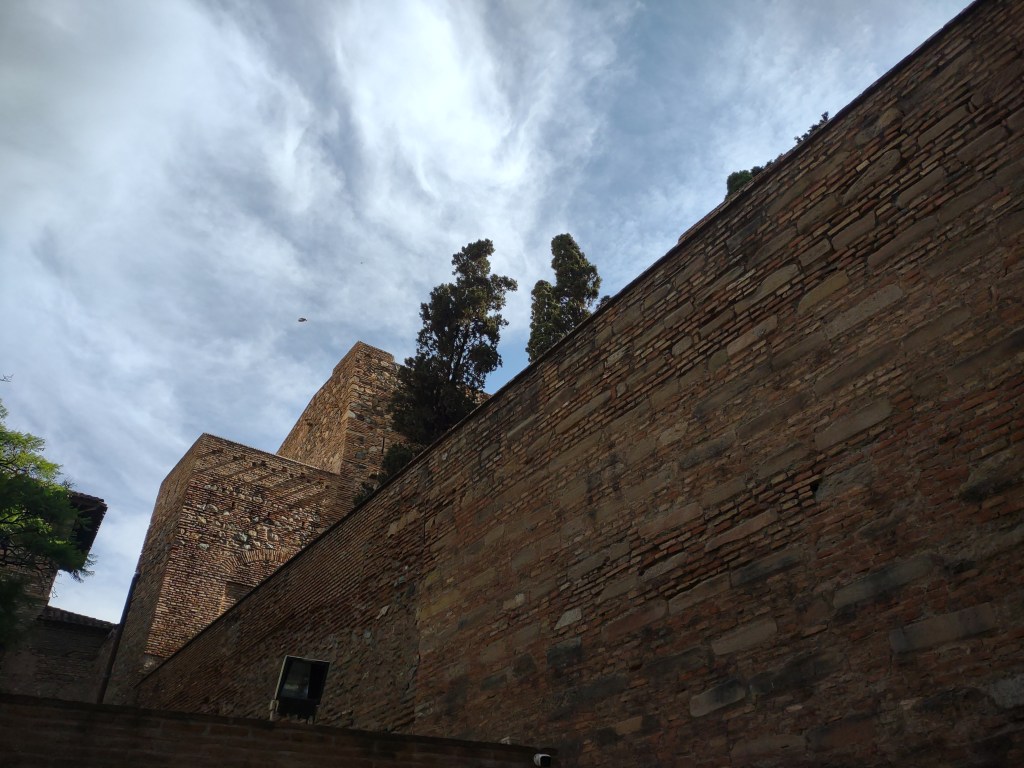
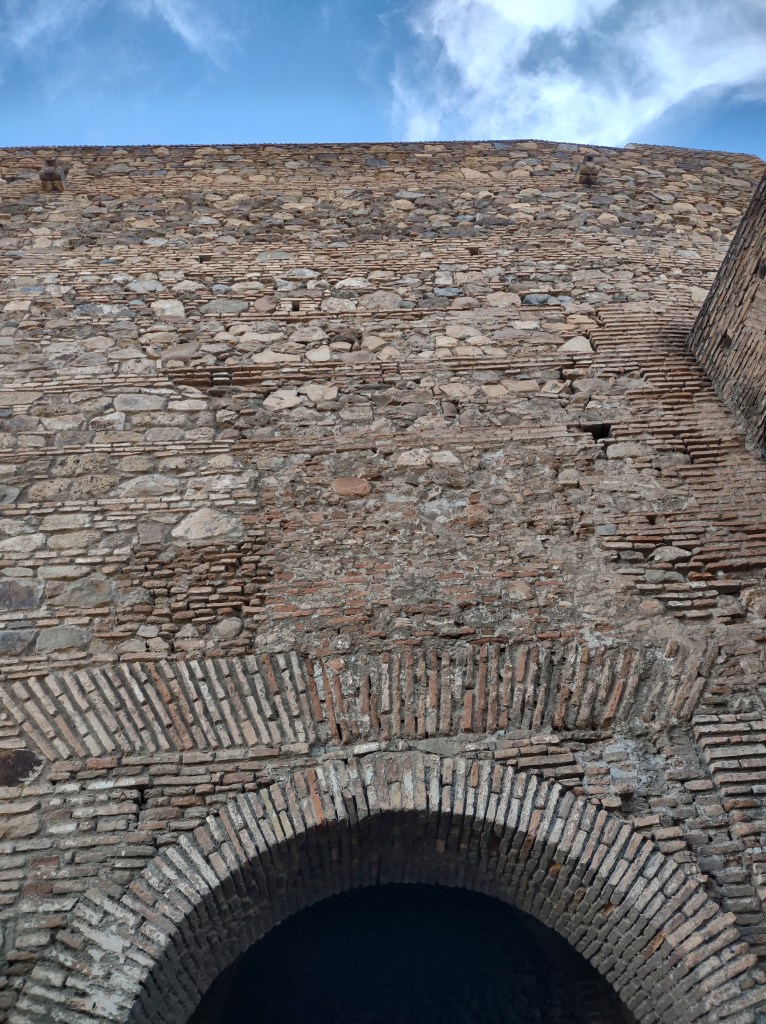
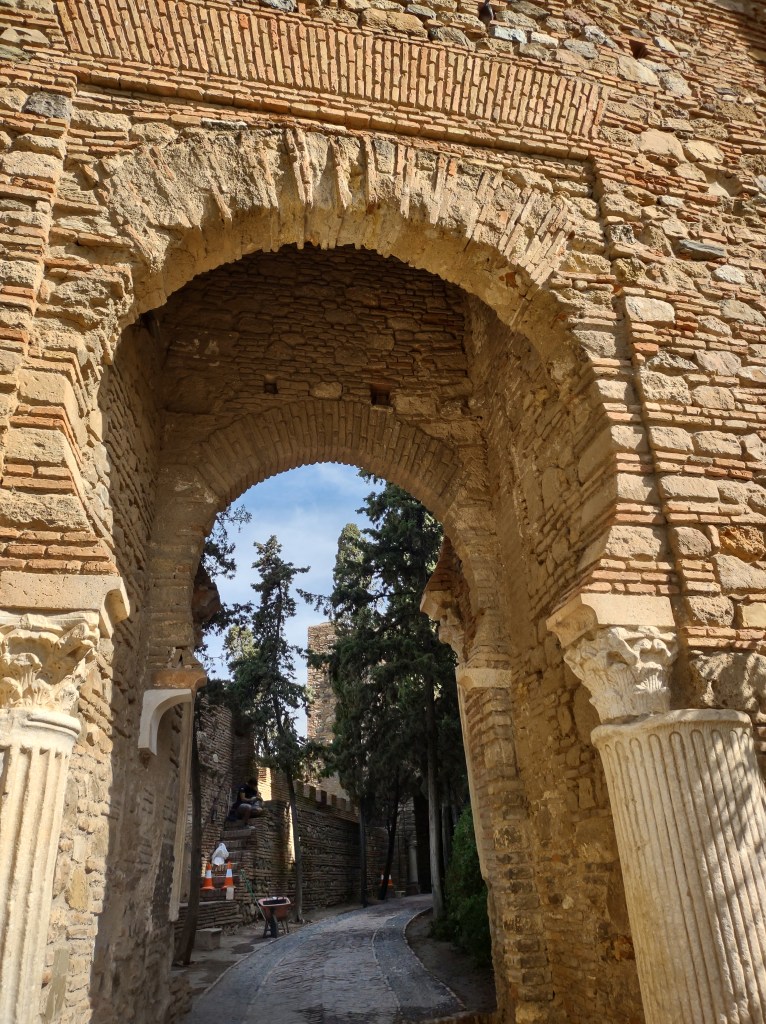
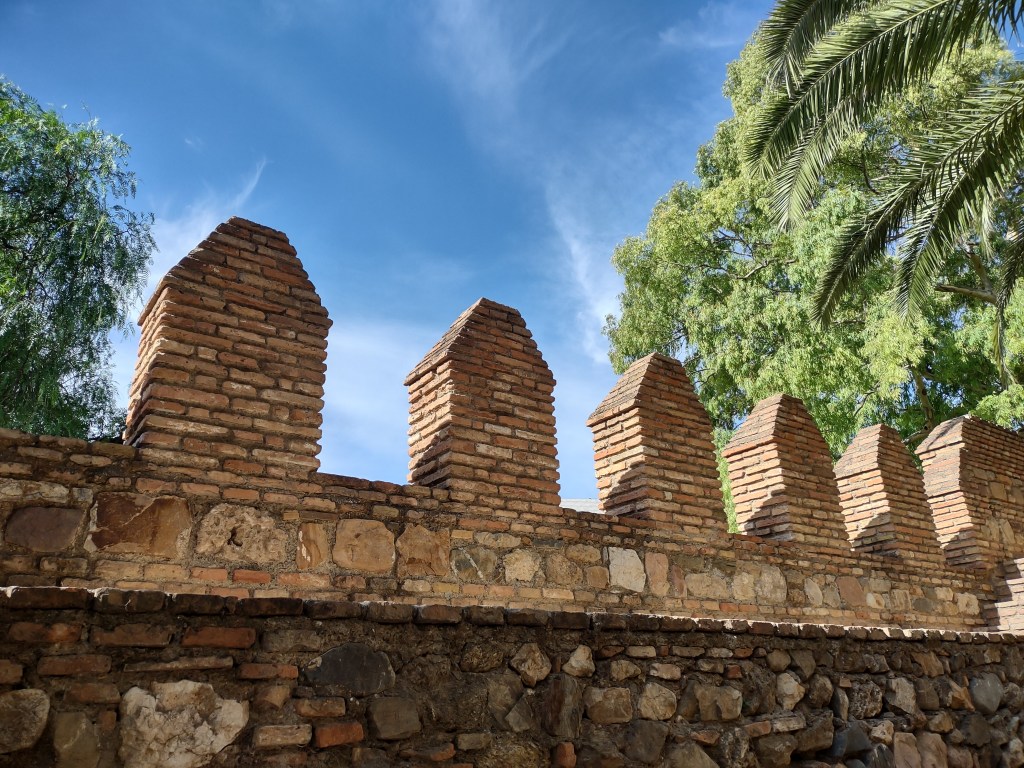
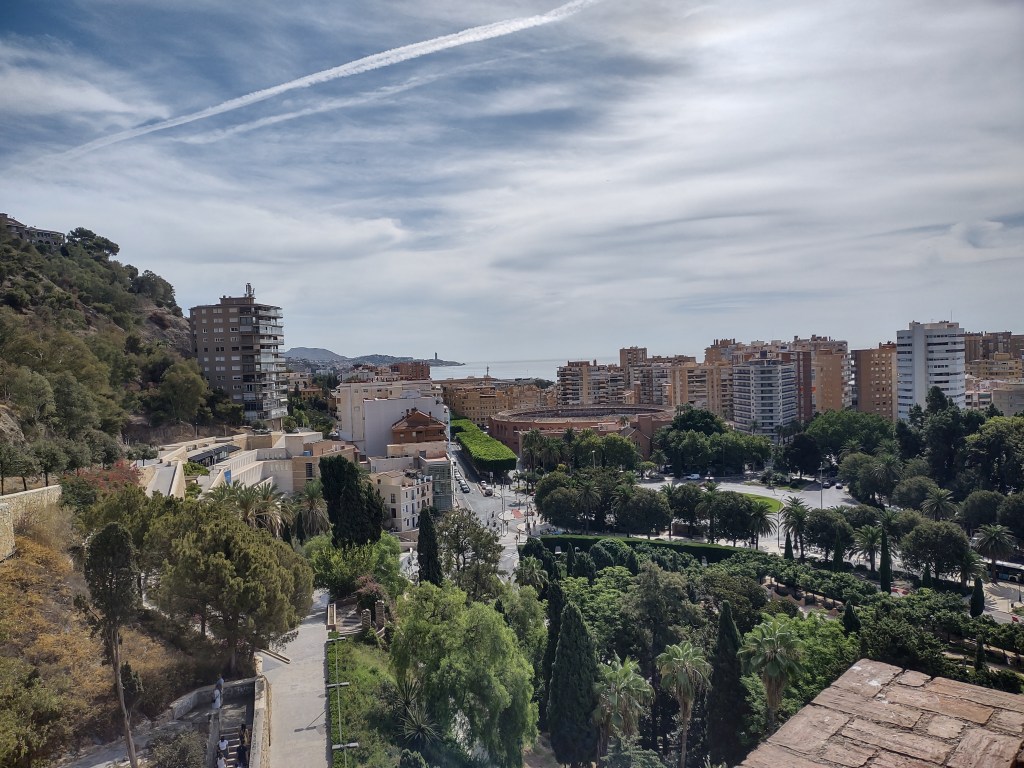
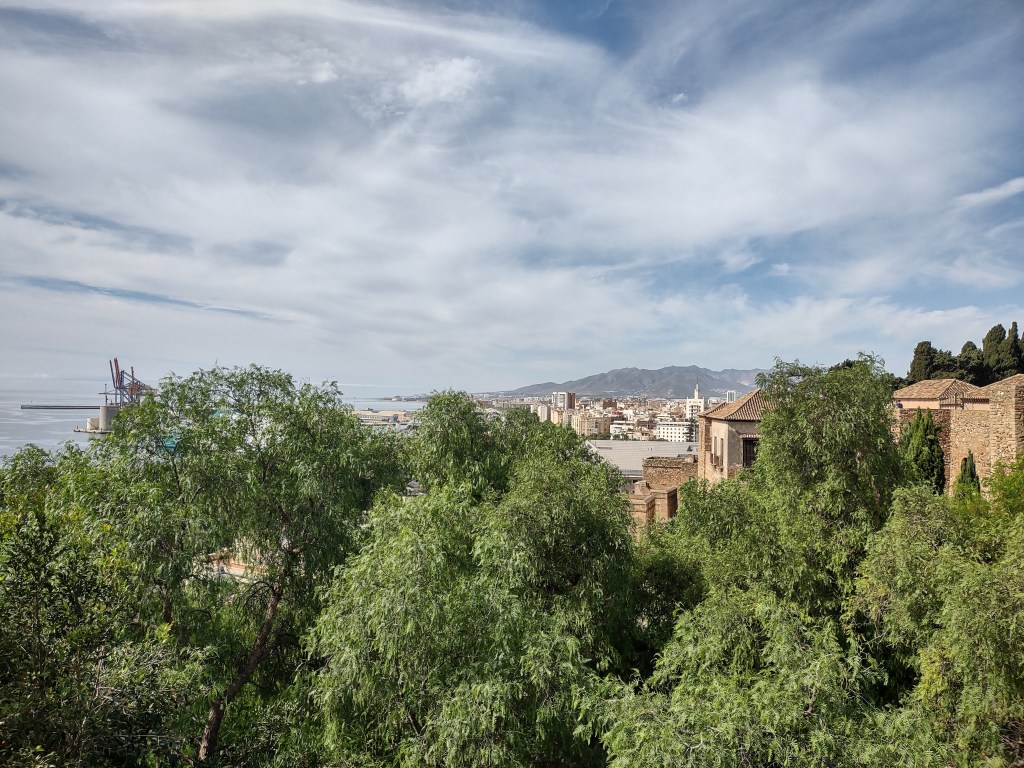
There has been a fair bit of restor byation over the last hundred years, so you have to do some thinking about whether you’re seeing something authentic or a reconstruction. Take the Door of the Halls of Granada here.

Spectacular, but much of it is a reconstruction by the great Malagan architect and sometime mayor Fernando Guerrero Strachan. I think you’d agree with me though that not even brother Gordon could have made a better job of it.
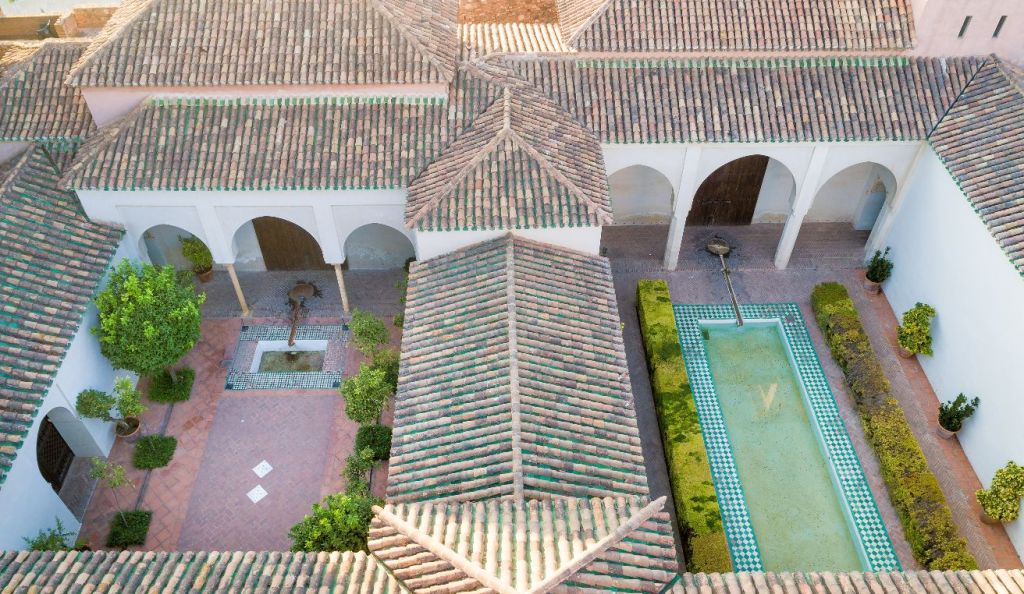
At the very top are complete rebuilds of the old palace residences. Not exactly Granada, but still well done.
The Moors used to have a parapet that led up from the Alcazaba to the Gibralfaro up on the top of the hill, but it’s gone now and you have to come all the way down and start again. However buses and cabs are there to help you avoid the steep 130 metre climb to the top, a very good idea if it’s hot. So I headed for the bus.
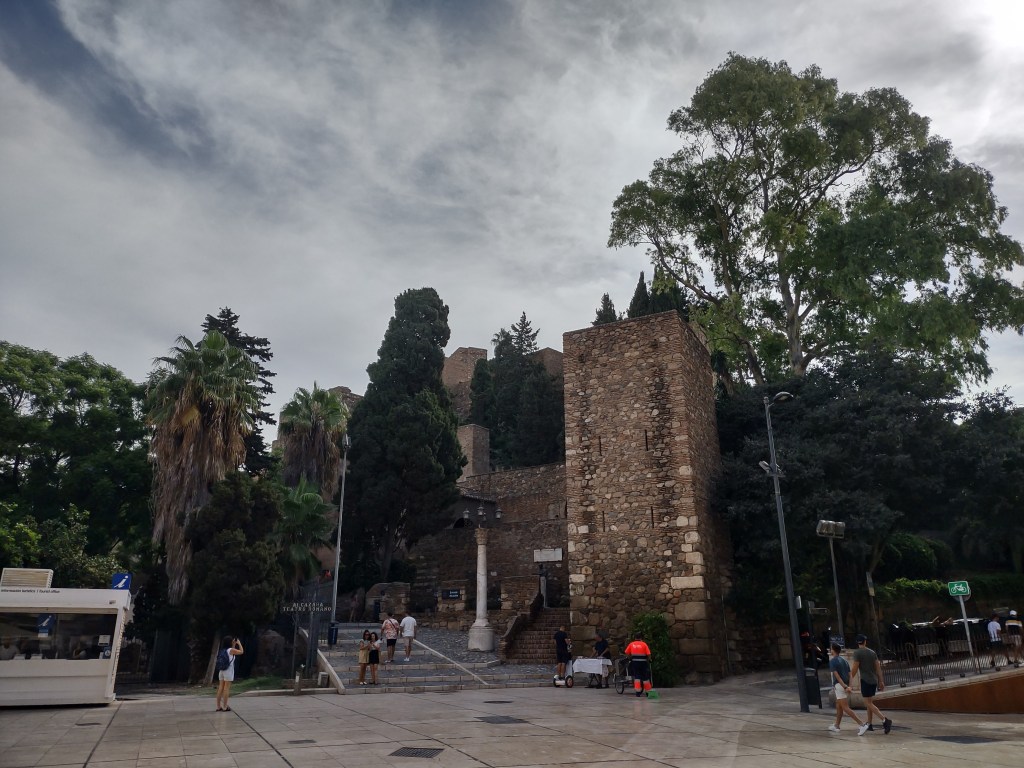
You can see the path to Gibralfaro to the right here. Well I saw the path as well and just thought “sod the bus’. Twenty hot, heavy-breathing minutes later I was there!
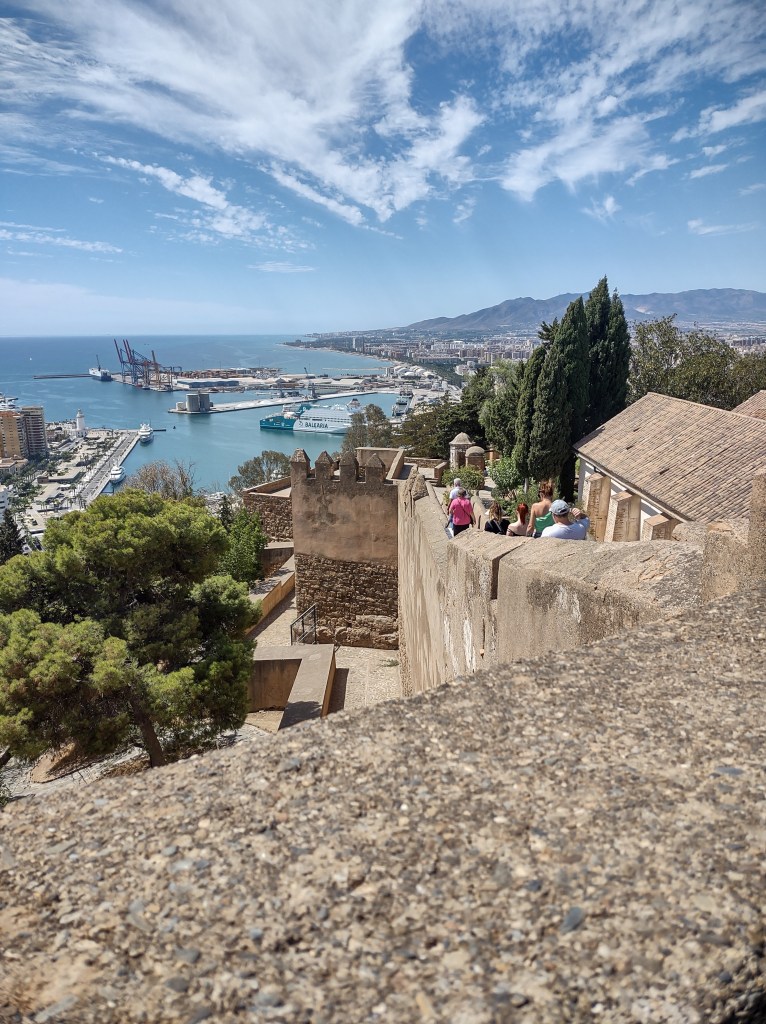
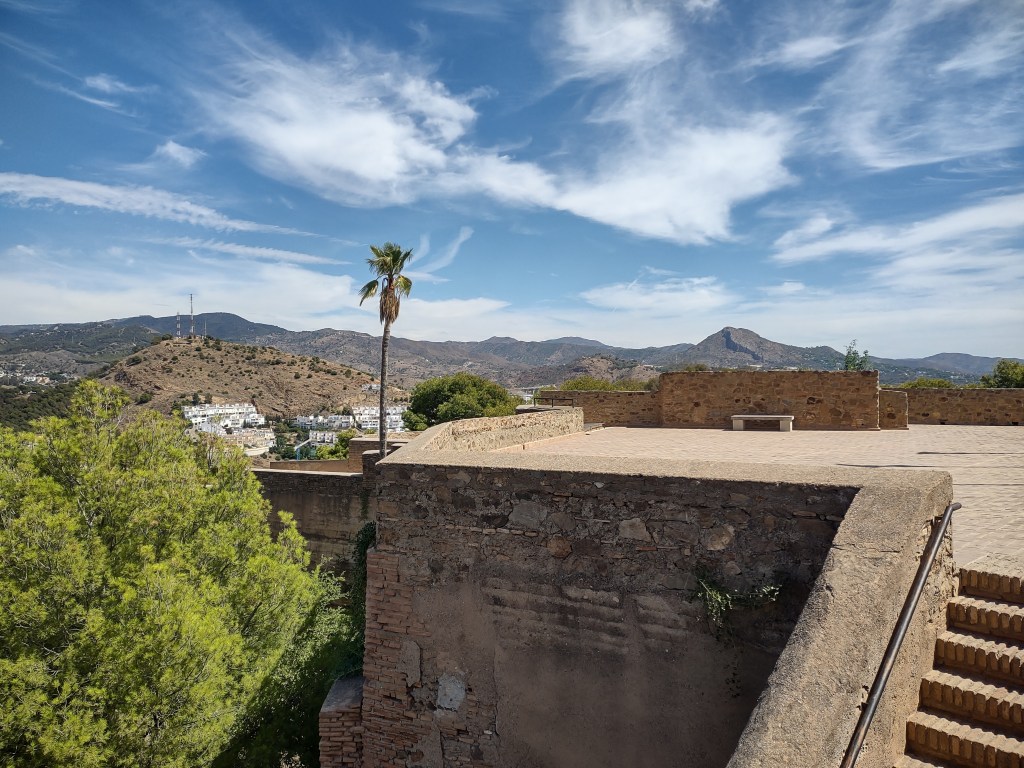
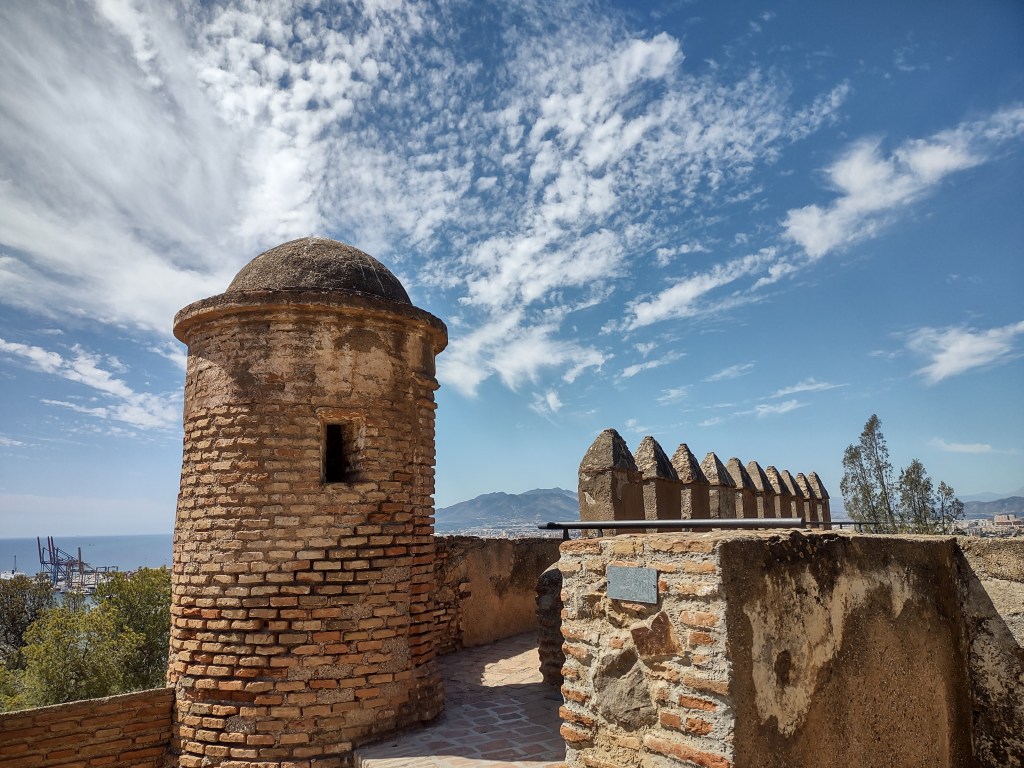
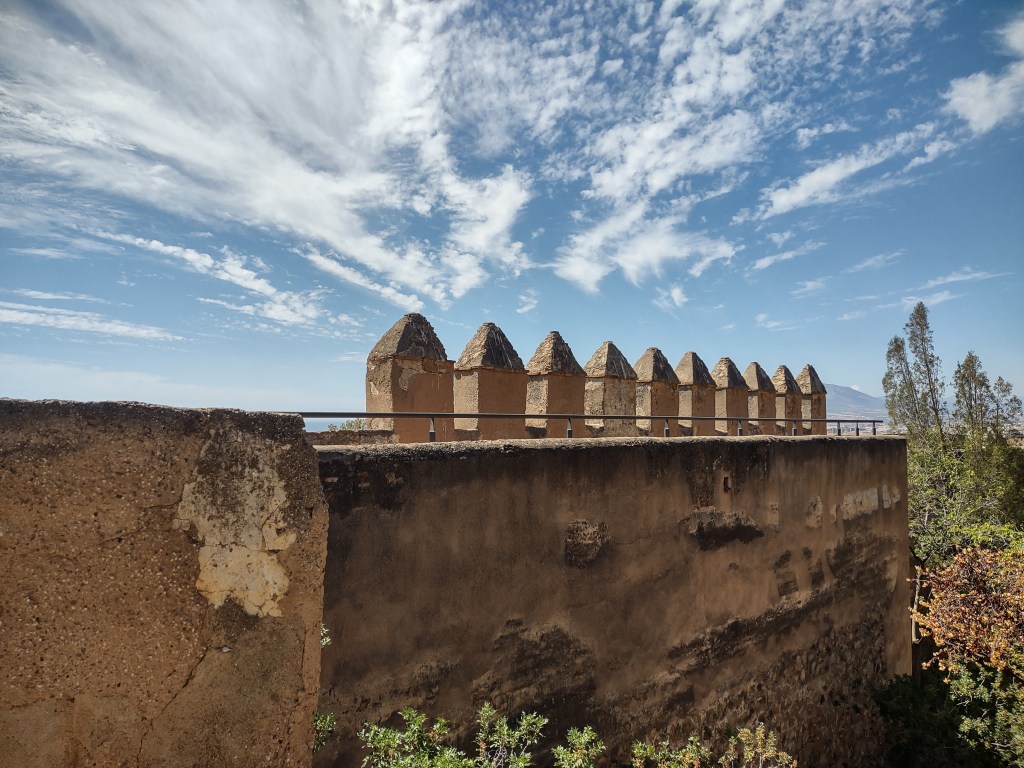
If anything Gibralfaro looks to be even more of a rebuild job than the Alcazaba. The name comes from Jebel (Arabic -rock) and Faro (Arabic-Greek borrowing – lighthouse), testifying to the presence of the old Phoenician lighthouse. The Arabs built the castle to house the troops who were defending the bigwigs down the hill. Once they were kicked out the place was sort-of used, then Napoleon’s hommes moved in during the Peninsular War. When they were kicked out in 1812 the French decided to destroy as much of the site as possible. Reconstruction, real, a-bit-of-both, whatever, it’s a fine place to wander around, a good place to recognize Spain’s links to the Arab world, a great way to burn off those cervezas, and it offers fantastic views.
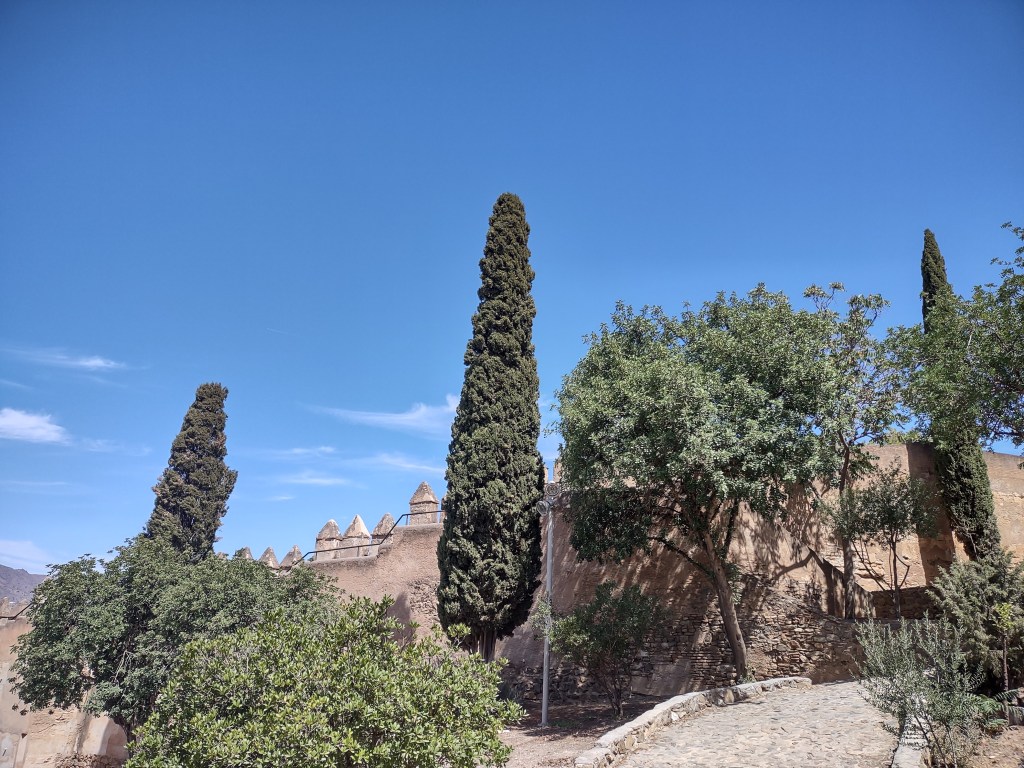
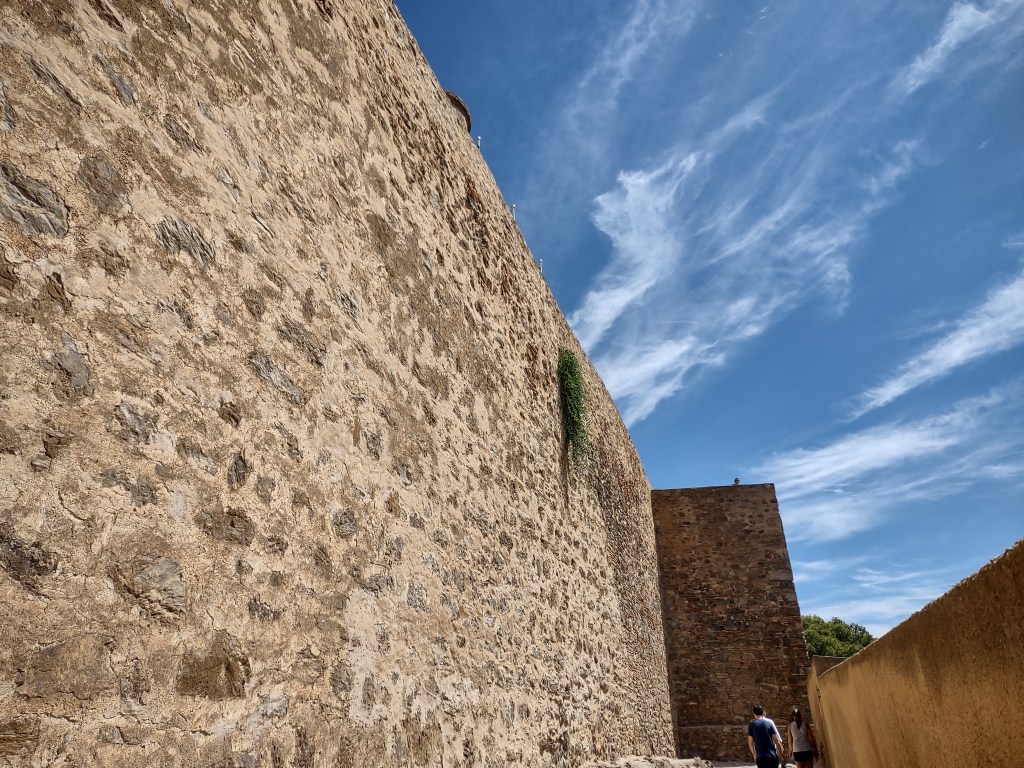
Back down to earth, and it’s all happening around here. Opposite the Roman theatre is a museum dedicated to local boy-made-good Pablo Picasso whose childhood home is around the corner. The day before the ascent of Gibralfaro I paid it a visit.
Big mistake. I wasn’t as impressed as I thought I might be. Turned out I wasn’t the intended audience.
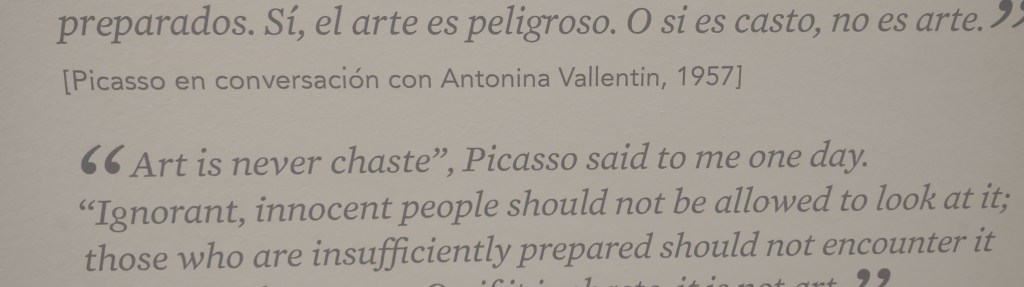
And being a simpleton, all I could see was lots of pornographic drawings of his many mistresses with lots of triangles and circles in there.
Well I may not know much about art, but I know what I like. And I do like Malaga. Unfortunately I appear to have run out of snaps. So I’d better get on and grab some more, hadn’t I? One more day to go, let’s see if there’s something more to say shall we?
 orwellianTwo
Leave a comment