First of all, we need to deal with that bat.
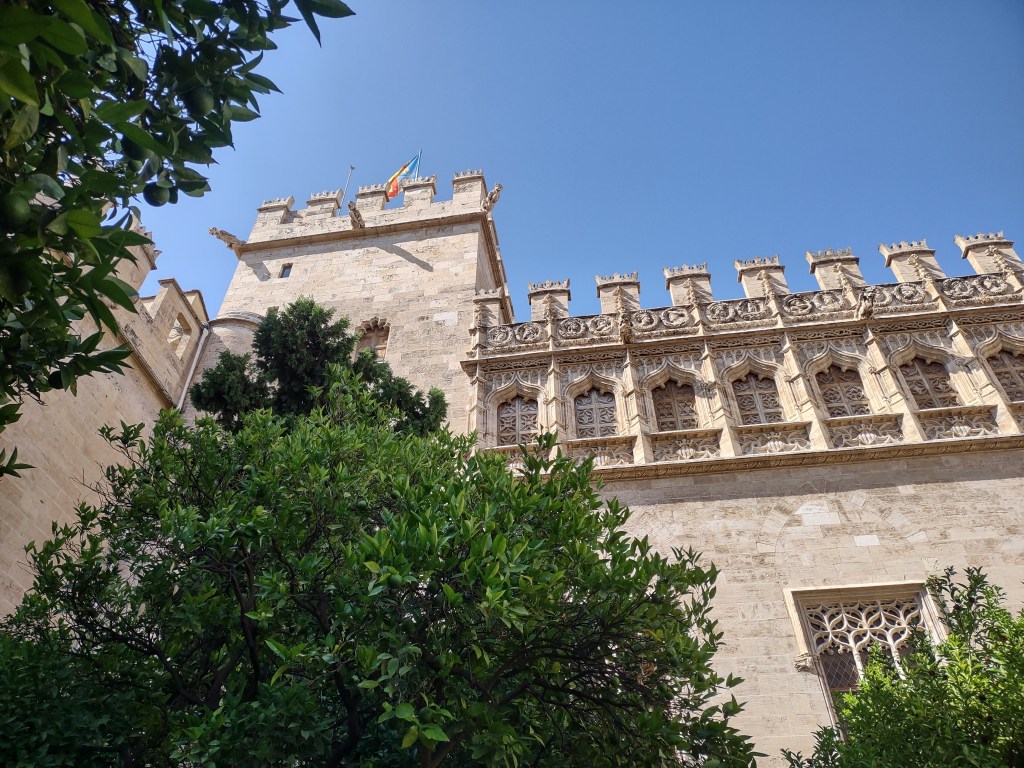
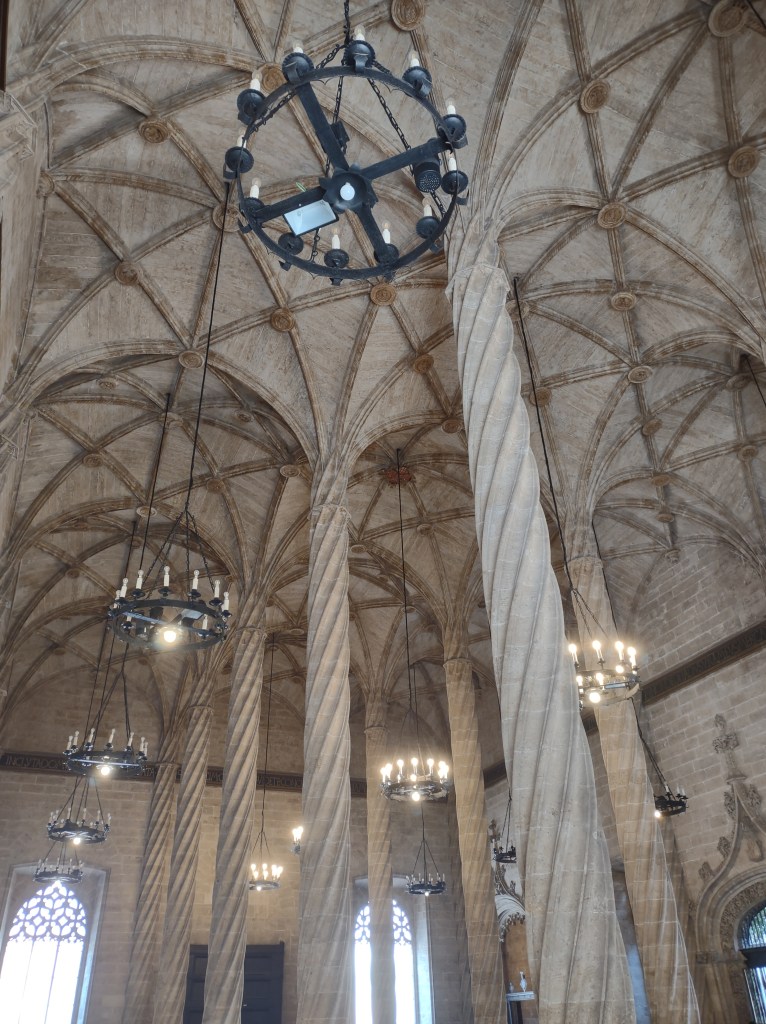
Here we are inside the Lonja de la Seda, the superbly elegant silk trading hall that stands as a monument to mediaeval Valencia and its power and riches. But wind back a bit. Like all three of the great Spanish cities I’ll be visiting, Valencia had a Roman period, a Visigothic period, a Moorish period, and the post-Reconquista Christian period we are more-or-less seeing today. Let’s go towards the windows, turn right and stand by the gate.
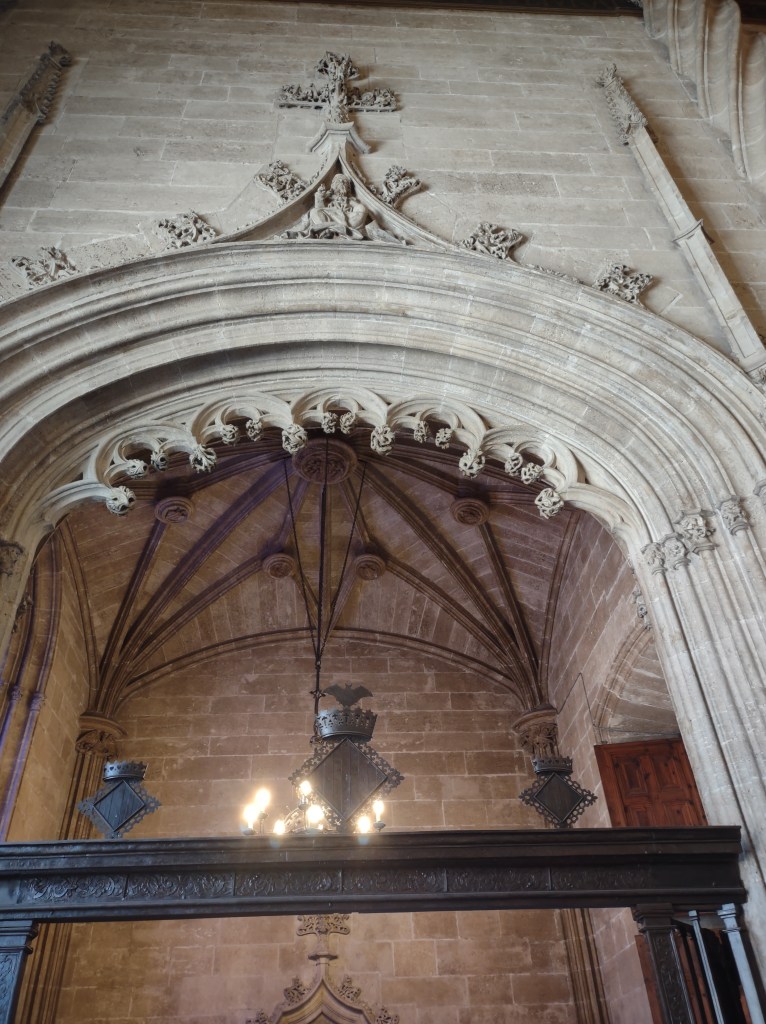
At the top of the wooden frame stand three representations of Valencia’s coat of arms, and one has a bat on top.
In the 13th century, James I of Aragon fancied extending the Reconquest to Muslim Balansiyya, (the Arabised version of Roman Valentia). James seemed to have some sensitivity about him; during the siege a bat landed on his tent/head/storyteller-specific, and he pardoned it and let it go, claiming it to be a good luck symbol.
But he was in no mood to extend his good will to the Moors of Balansiyya, and they weren’t in a mood to be conquered, reconquered, whatever. One night, drums alerted James and his fellow besiegers to a surprise attack by the defenders. The surprise element was thus lost, and so were the Muslims, and Balansiyya became Valencia, and the final element in this beautiful city’s rich multicultural history was in place. All thanks to those brave drummers.
Drummers? What drummers?
None of James’ soldiers discovered the incursion, let alone alerted the rest of the army. The Muslims wouldn’t have given the game away of course. Surely there were collaborators within the city! A good shout, but no. James looked far, and he looked wide, until someone found out that the drumming came from the walls of one of the tents – made by the little feet of a very astute and very grateful little bat…
That’s one possible reason why the bat sits on top of the symbol of Valencia. Another, more boring, answer is that the bat evolved from an earlier depiction of a dragon.
The third option is my own. The figure represents the fact that you’d be batty to spend your time in Barcelona instead. Valencia has the sites – silk hall, a great market, magnificent cathedral, lovely old town – an elegant city centre, and great beaches. Even its language is very much like Catalan. But, although there are quite a few tourists here it doesn’t feel as overwhelmed as Barcelona, and all this without an overrated, overcrowded Las Ramblas or an increasingly overrated football team (Valencia’s two teams were never much rated in the first place). People are beginning to discover this little Mediterranean jewel so if you want to discover it for yourself, now’s the time to come, before the rest of us come over and ruin it for the locals. Here’s some evidence to help convince you (as long as you promise not to tell anyone).
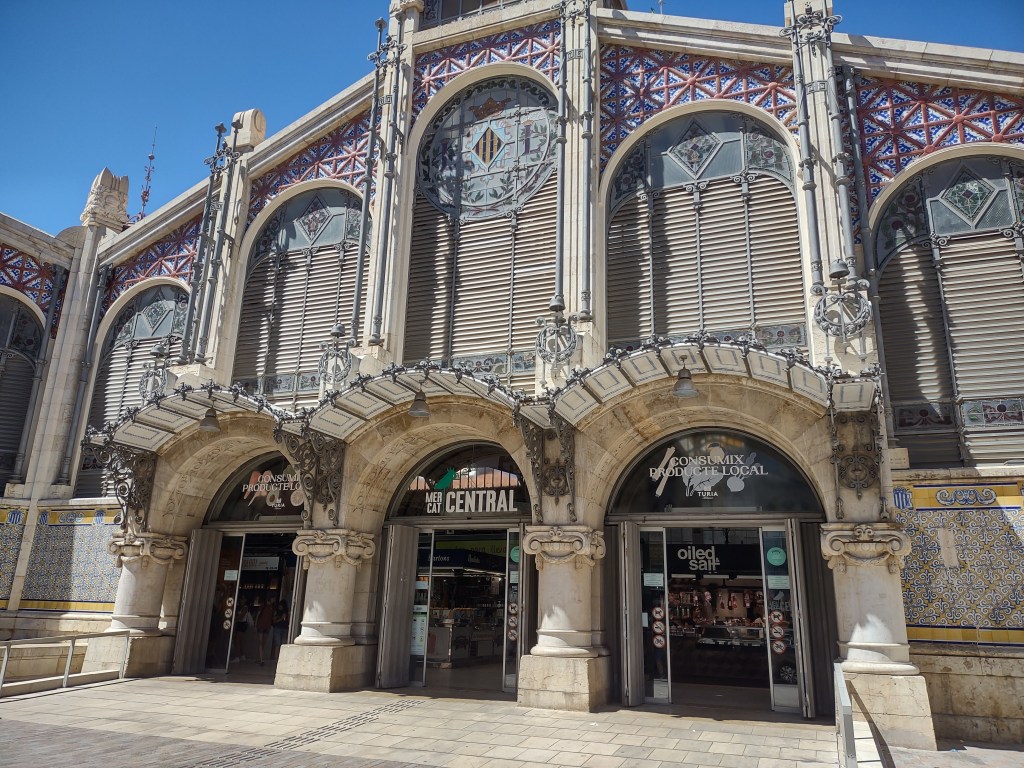
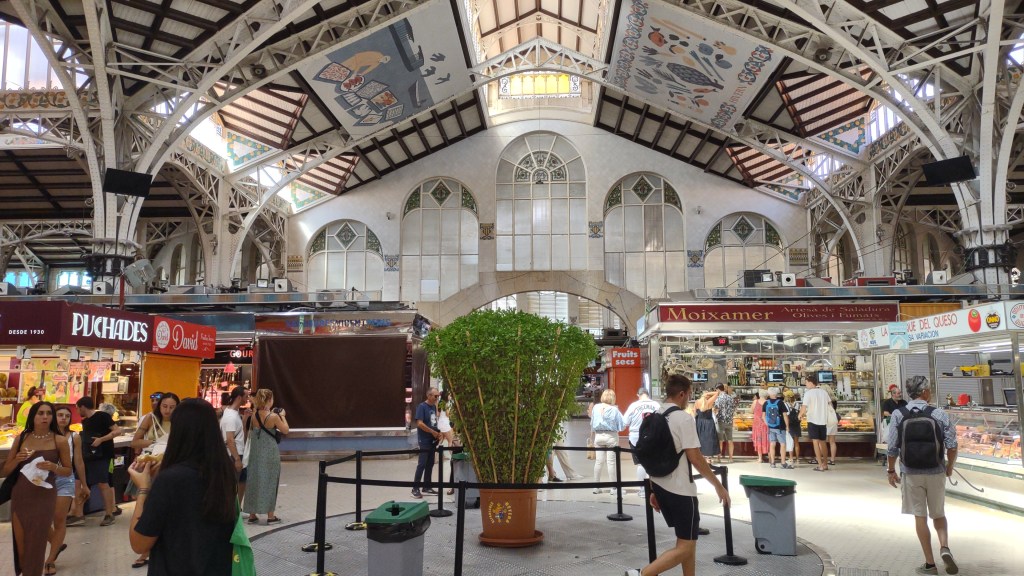
I thought the very splendid Central Market was an old train station until I took a closer look. Barca has a nice wrought-iron market on Las Ramblas as well, but, y’know.
The market is on the edge of the Ciutat Vella, the Old Town, and it’s a delight.
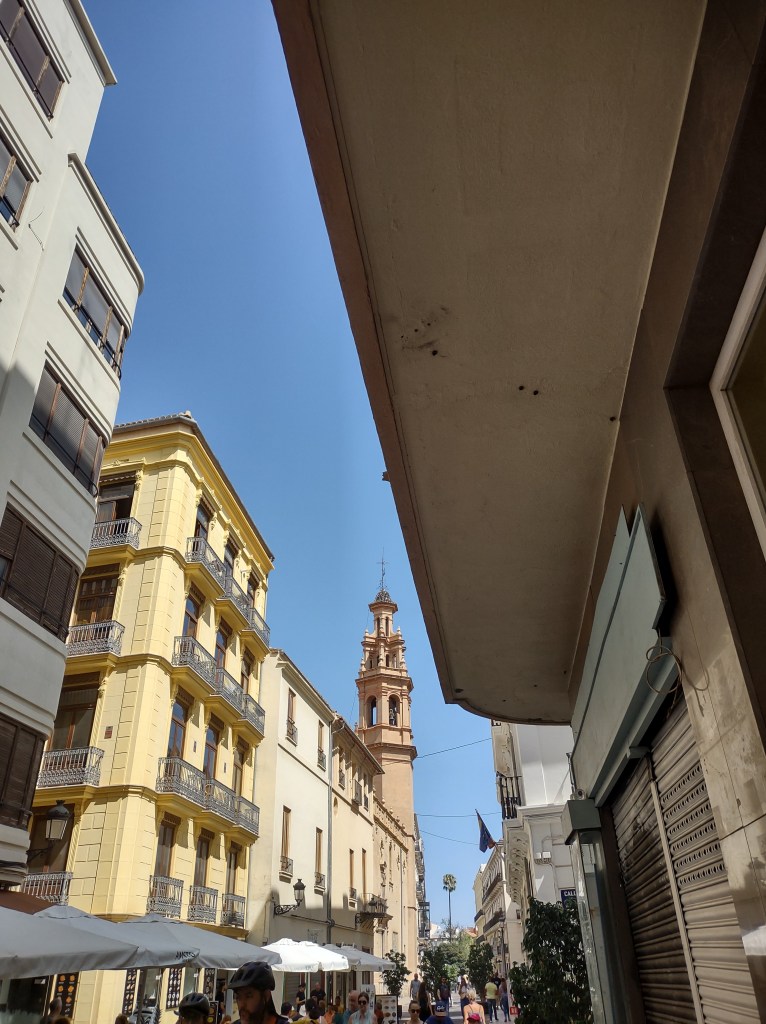
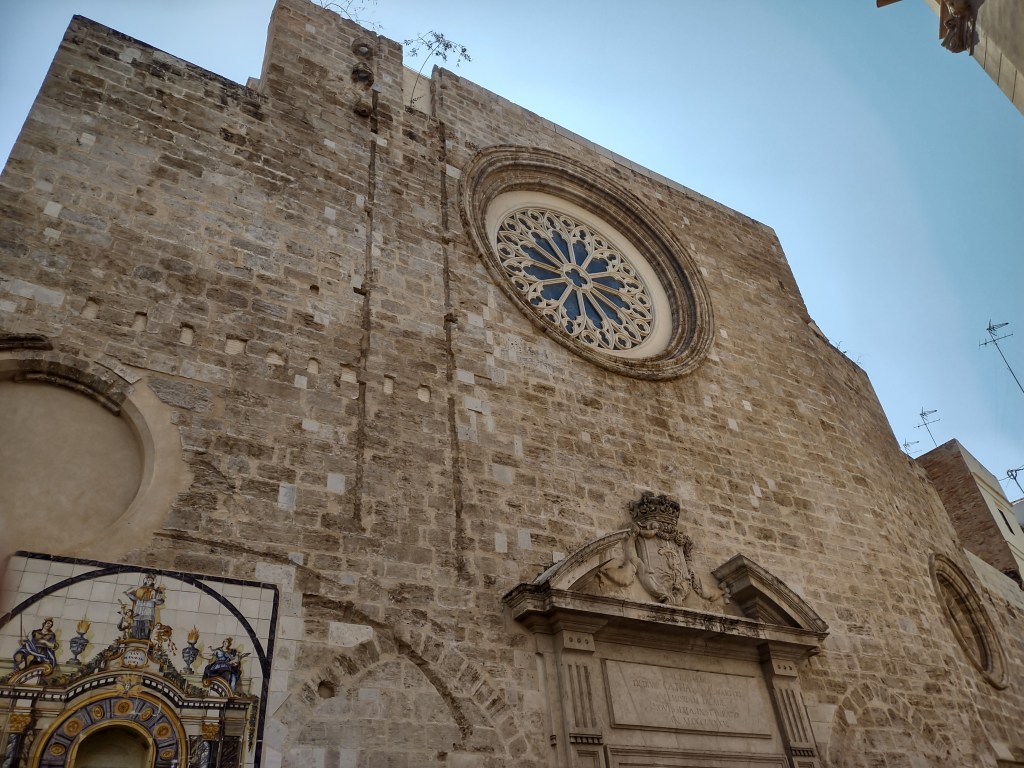
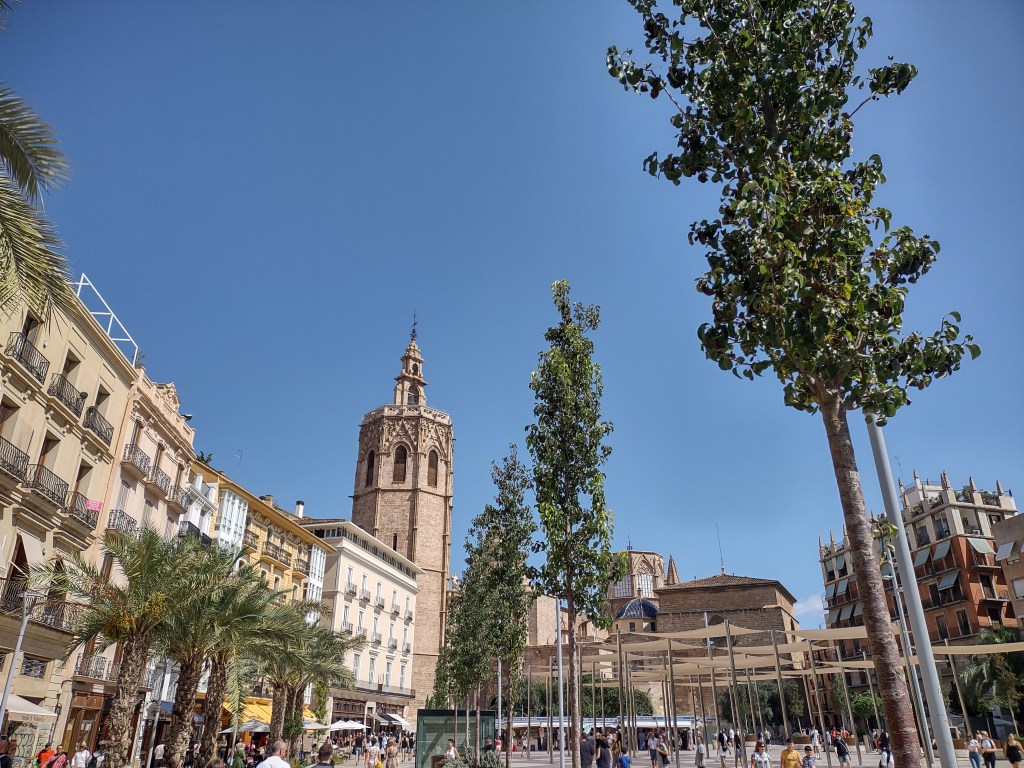
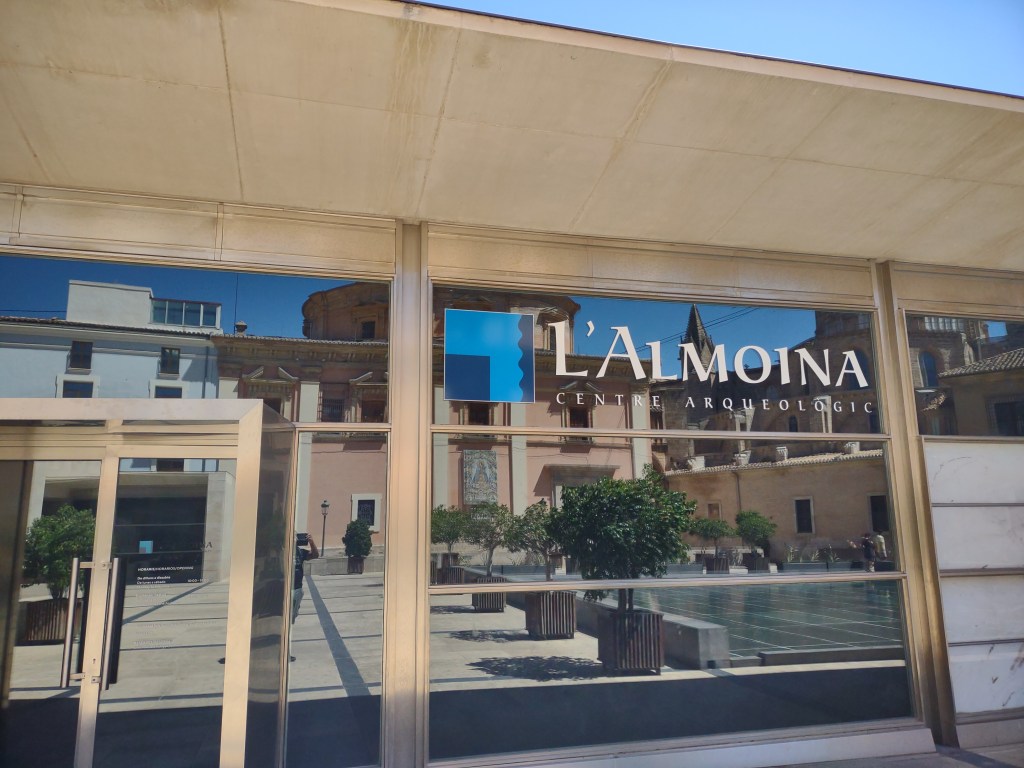
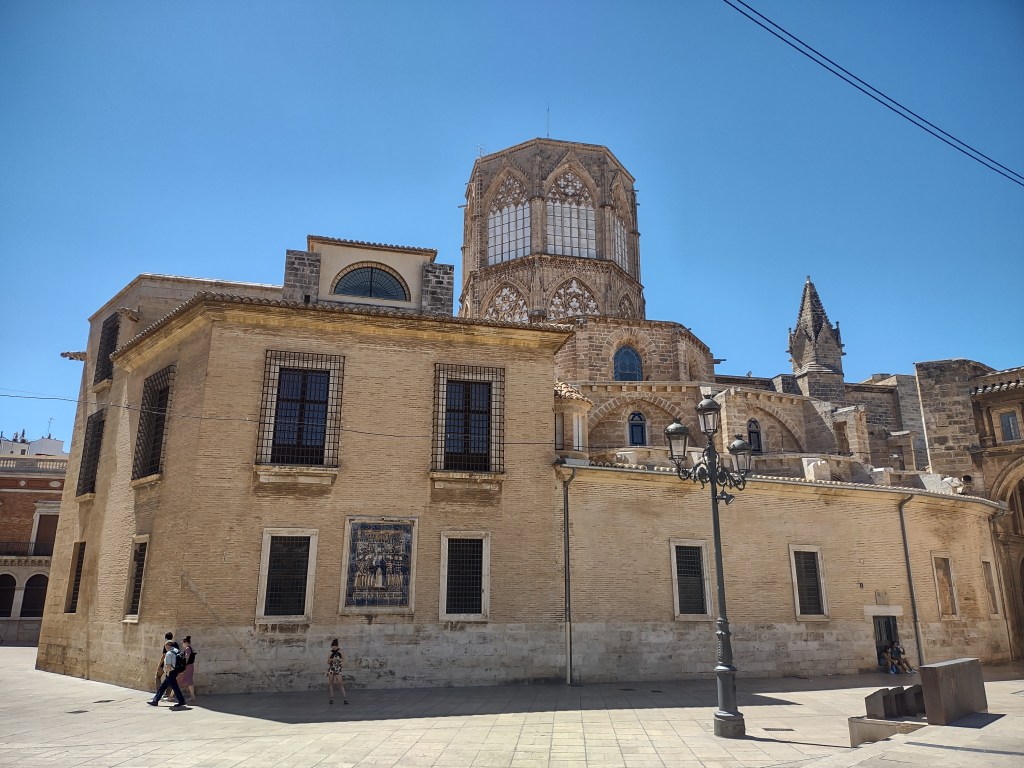
That’s the Plaza de la Reina, and at the top is the Cathedral. Usual Spanish story, built over the old great mosque which was itself probably built over a Visigothic site. And this was always the centre of things in town, because the site is right next to the old Roman forum of Valentia, brilliantly preserved by the L’Almoina museum and absolutely fascinating.
On the edge of the old town is bounded by the Turia river. A number of old bridges attest to the times when various notables would live across from the city in their palaces
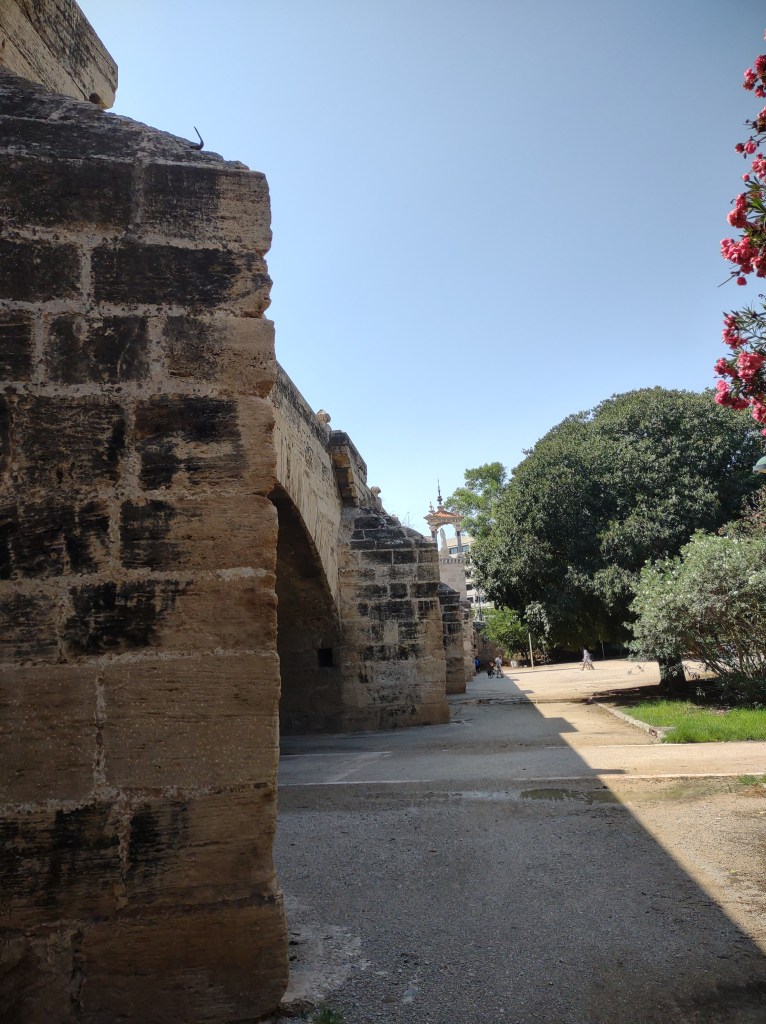
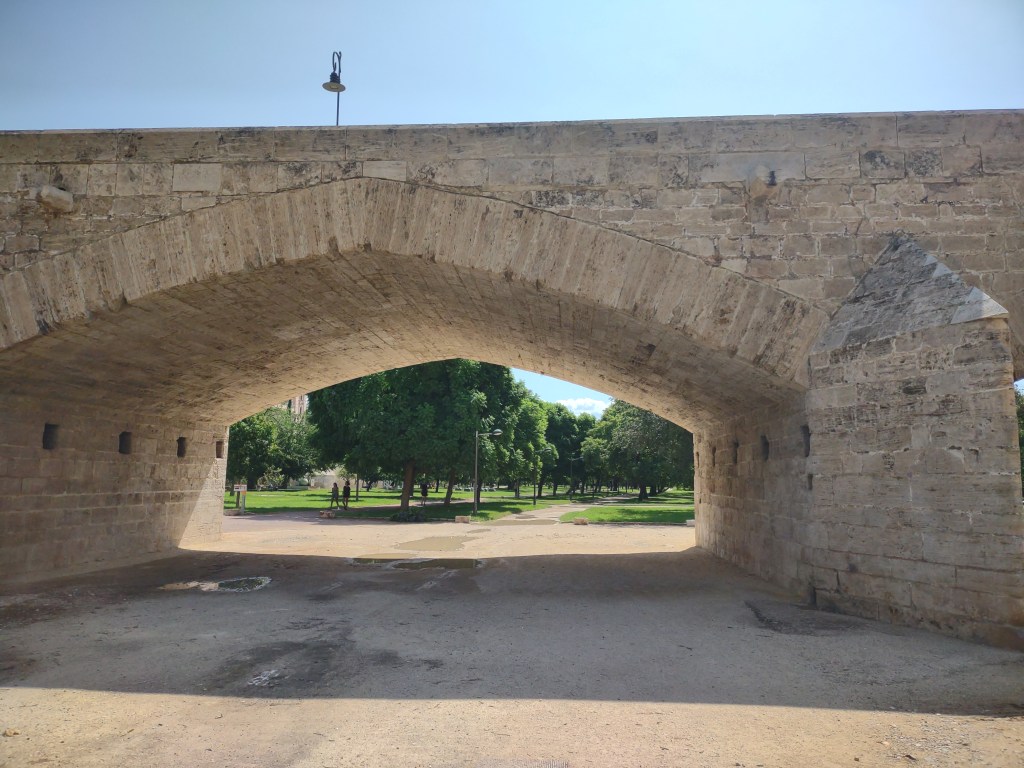
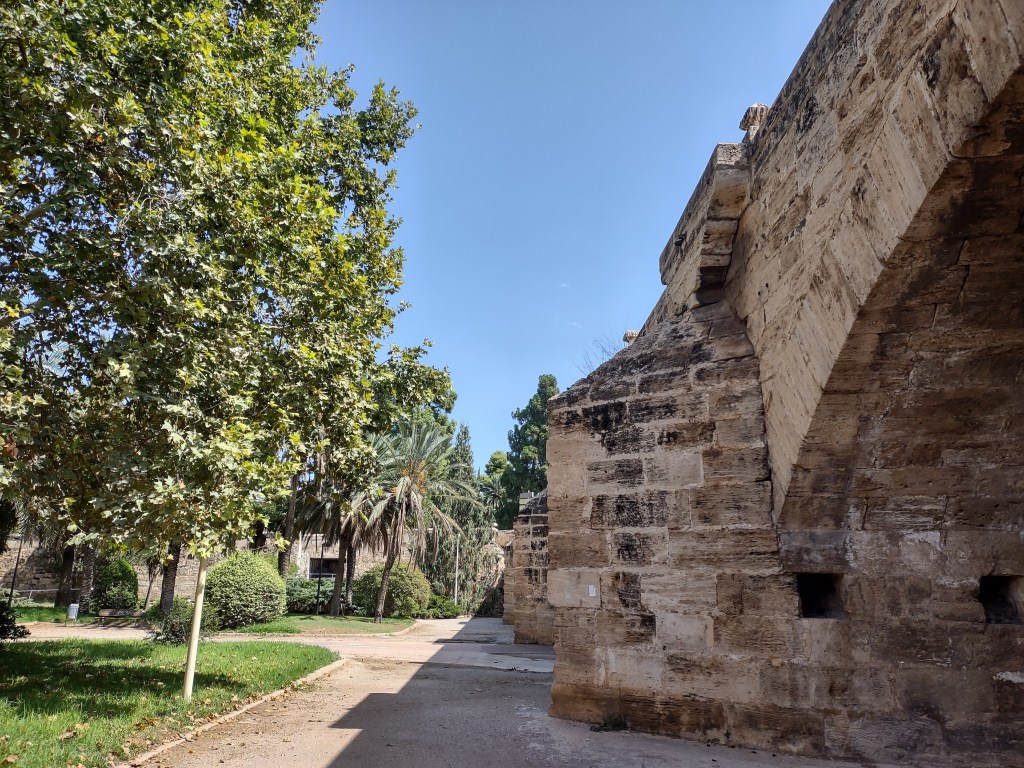
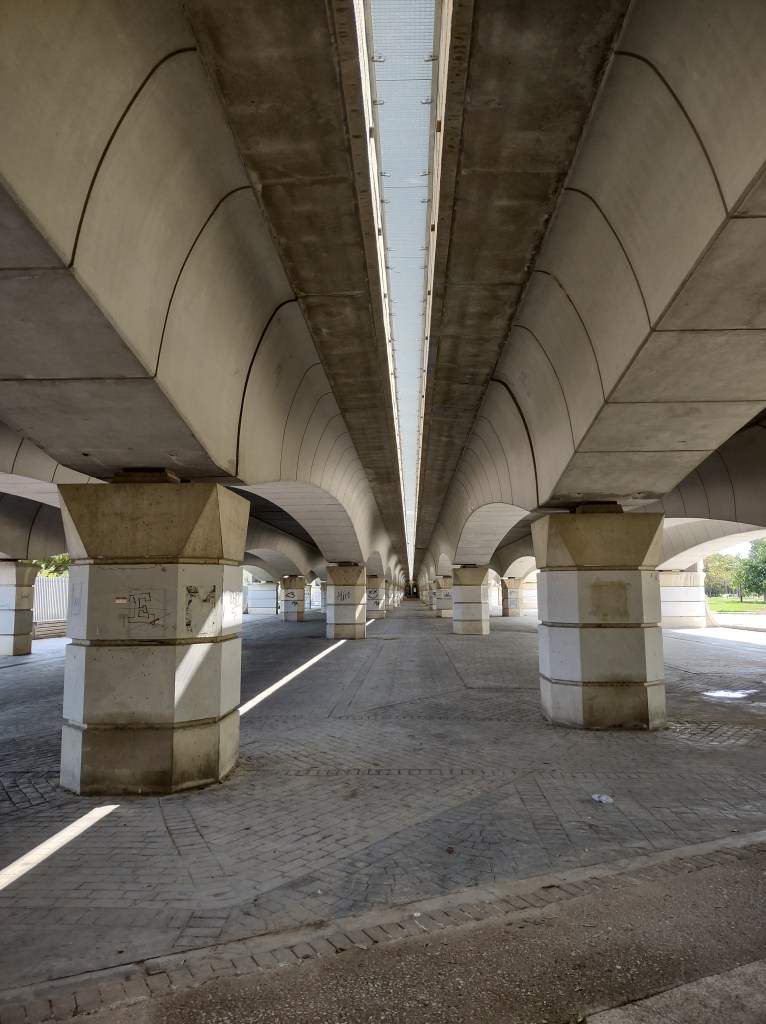
Now I know what you’re thinking, and you’re right. That last river bridge is a bit younger. I don’t know how old it is.
…oh, hang on, you’re on about how the river looks very…green and gravelly…
Well there really was a river here once, but it was prone to flooding and in 1957 it really burst its banks with much loss of life. The city had had enough and over the next ten years they’d diverted it to run outside the town centre. They did a brilliant job of turning the old waterway into a park with walkways and cycle paths.
And there’s no better way to get to Valencia’s modern masterpiece, probably its jewel in the crown.
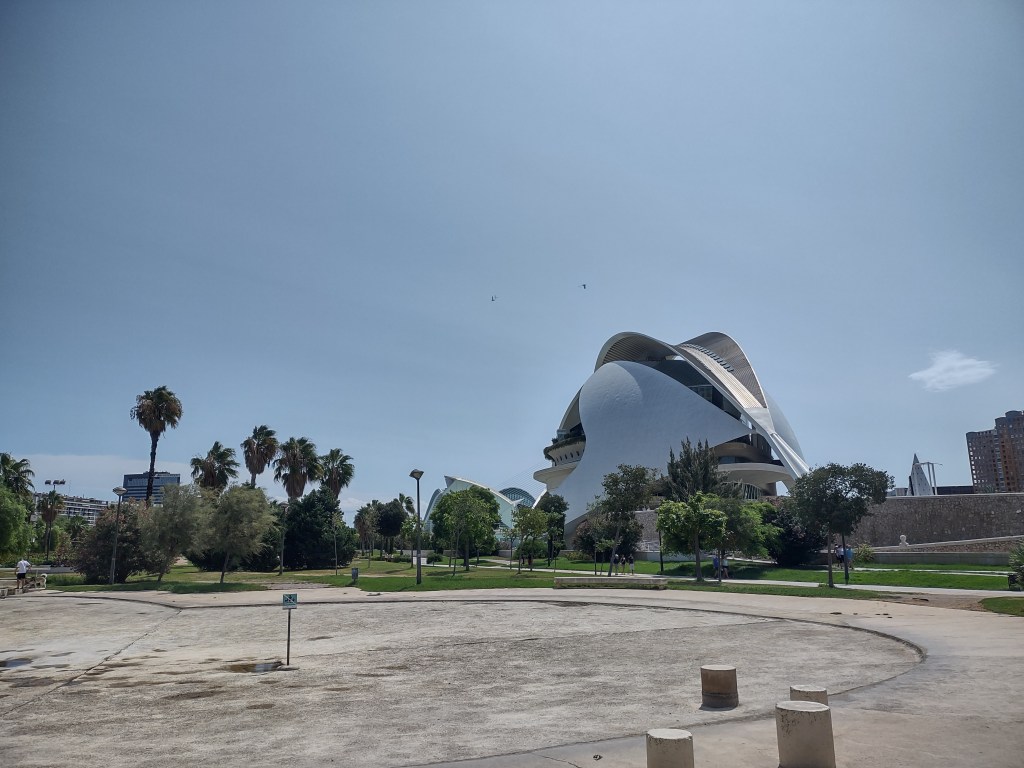
Ciudad de las Artes y las Ciencias. The City of Arts and Sciences.
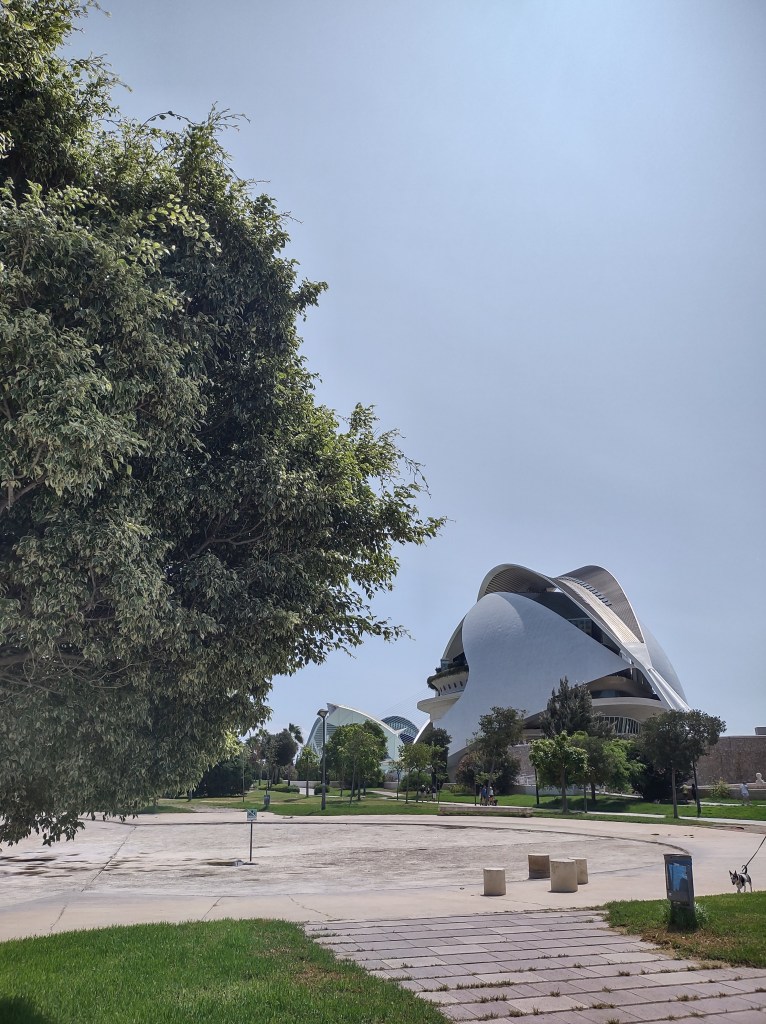
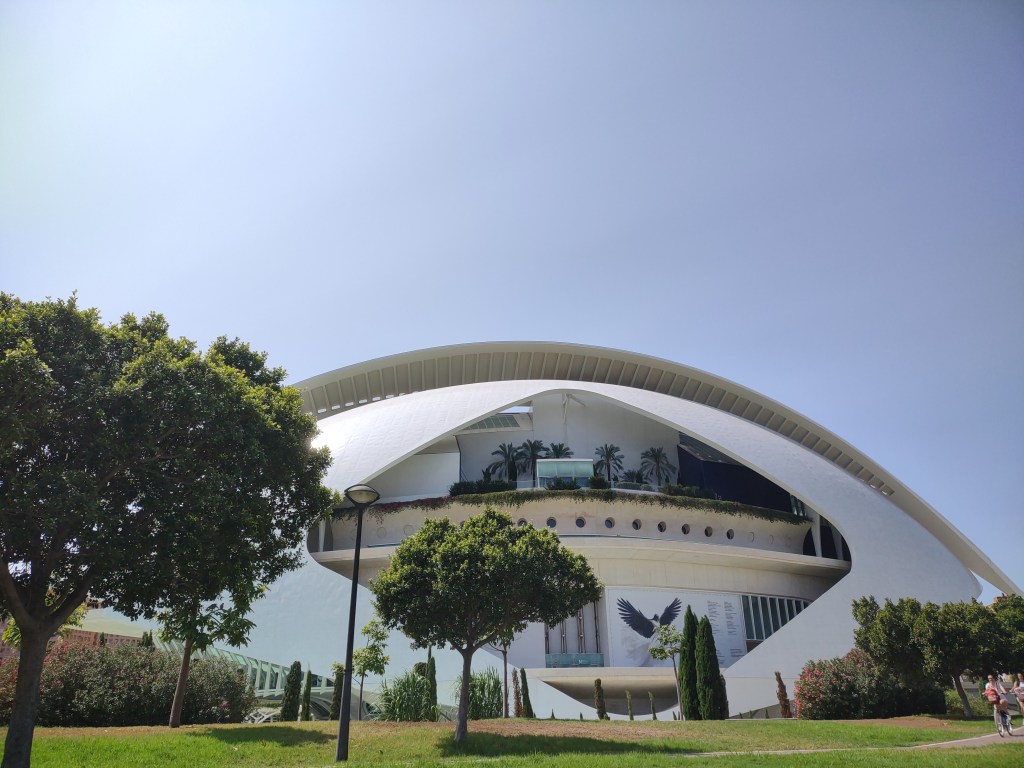
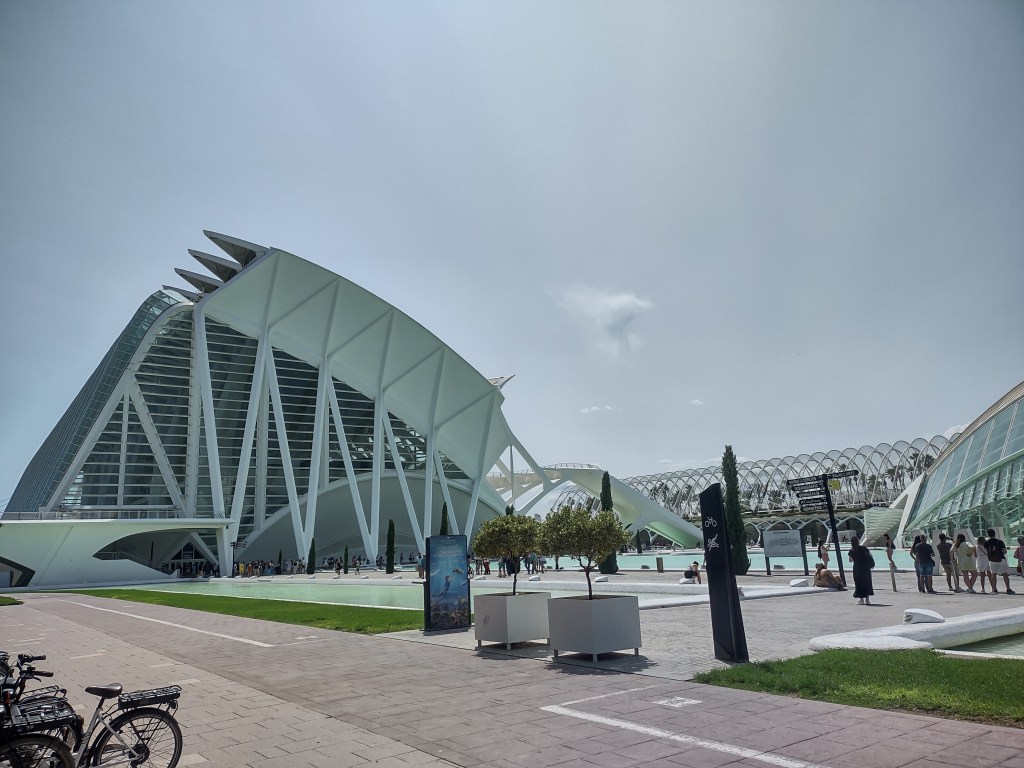
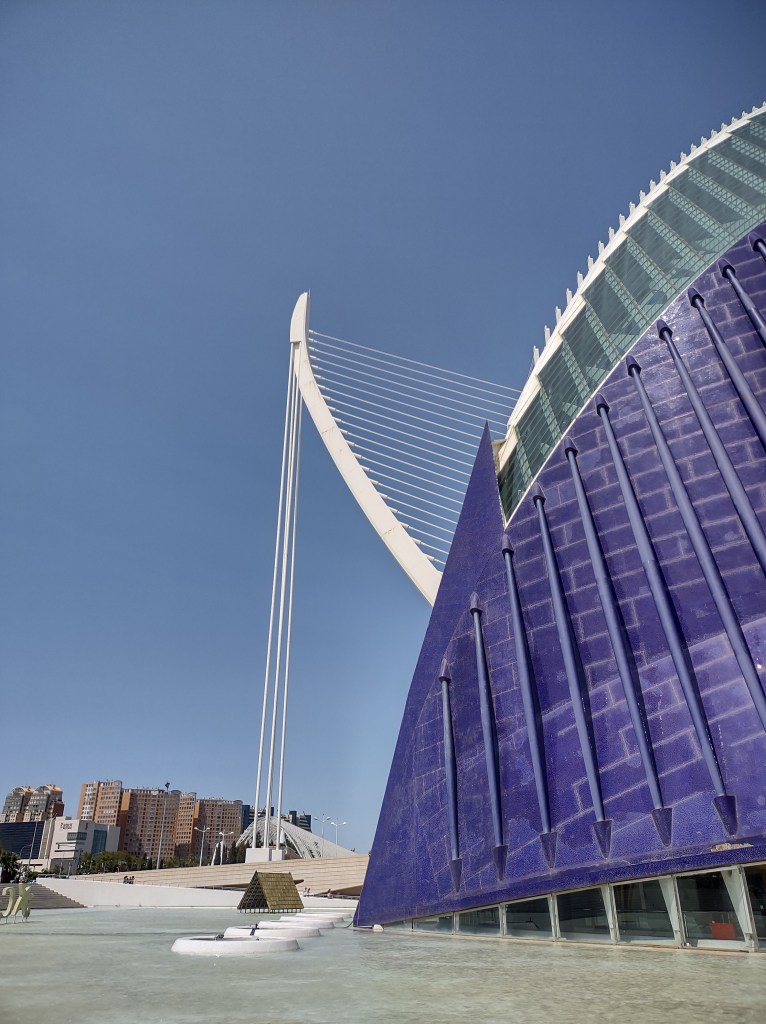
Designed by star architects Calatrava and Candela, this complex of opera house, science museum and – I wasn’t sure what the blue thing was meant to be, except super-sized gift shop – this magnificent futuristic fantasy is apparently Valencia’s most-visited site. Honestly I don’t know from where they got the whole idea of dumping some science-fiction idea of an opera house into a harbour city. (This might help. https://wp.me/p7aqDB-38)
From Roman roads to Galactic Premier League player’s personal spaceship, Valencia has got it all. Oh, I forgot the beaches…
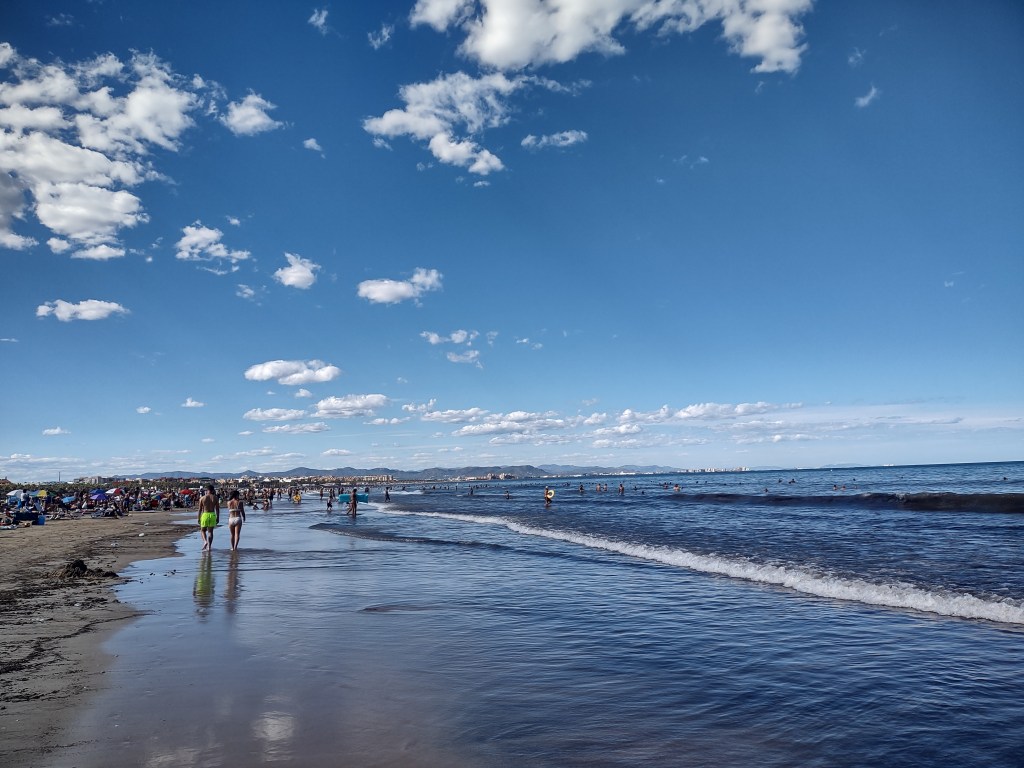
S’not fair. Drives me batty.
 orwellianTwo
Leave a comment