So here I am, heading over to Faro airport ahead of flying home tonight. This last post is kindly sponsored by my airline who have given me an extra two hours to get tapping and round off my tales from Portugal. Very good of them to cancel my original flight and rebook me on one that gets in so late I’ll only get home well after midnight. Maybe not the world’s favourite airline after all.
Still, we are where we are and where I am is rummaging through my photos looking for interesting ones that I haven’t put out yet. So out they come now.
Portugal on a Wall
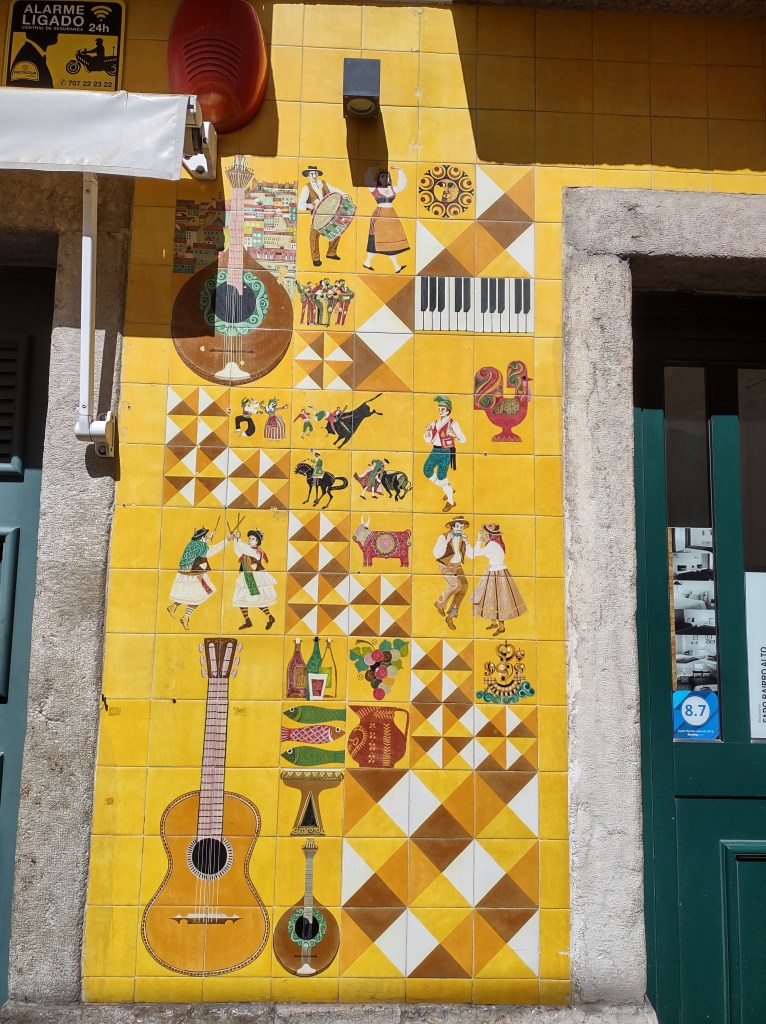
The lively Barrio Alto area of central Lisbon (the western hilly bit) and a nice bit of artwork that neatly captures much of what characterises the country. Next to the guitar is Portugal’s own six strings, maybe some of the dancers are cavorting to its strains. They might be fisherfolk enjoying some well-deserved downtime after bringing in that catch of Lisbon’s famous sardines, out of which the garum, the fish oil much prized by the Romans, has been processed and poured into the urn. And the port wine has been flowing and it’s all going on, some bullfighting is happening too and do I hear the sombre tones of, fado?
Oh, and there’s a cock. Which you see everywhere. But why?
Many years ago a pilgrim was making his way to Santiago de Compostela over the border in Galicia, when he stopped off in a small village. The following morning one of the locals reported a theft, and there could only be one suspect, right? The villagers acted swiftly and picked up the outsider and dragged him to the local judge, ignoring his protestations of innocence.
The judge had protestations of his own once the mob reached his house. There he was, about to settle down to a sumptuous lunch when they arrived. Now he’d have to go off and do something onerous like administer justice instead. Leaving that big succulent roast cockerel to go cold.
So he decided to make it quick. When the suspect again protested his innocence, the judge was not interested. With the big bird clearly still on his mind, he pronounced “look you’re bound to rights mate, in fact you’re so guilty the only way I’ll believe you is if that roast cockerel you’ve stopped me from eating gets up from the table and says you didn’t do it! Case closed.”
Case closed indeed. Because as you can guess, that’s exactly what the chicken did!
As the exonerated pilgrim went safely on his way to Santiago, the figure of the cockerel became what it is today, a national symbol of hospitality and respect to visitors and outsiders, and there’ll be a few at every souvenir shop you visit here.
Of course it’s all – literally – a cock-and-bull story from more backward, credulous times and today none of that would happen. In these more modern days the judge would be a rightwing populist and as soon as the cock got up to say its piece, he would shout over it calling it a “woke cancel-culture expert who loves these outsiders and hates us” and then have its neck wrung to make sure it was, er, cancelled. Meanwhile, as the outsider slowly roasts on the spit, the mob would dance around it celebrating having “taken back control” and “stopped the visitors”. And all of the souvenir shops would be selling the spit. Yes, we are much, much more advanced these days.
Lisbon views
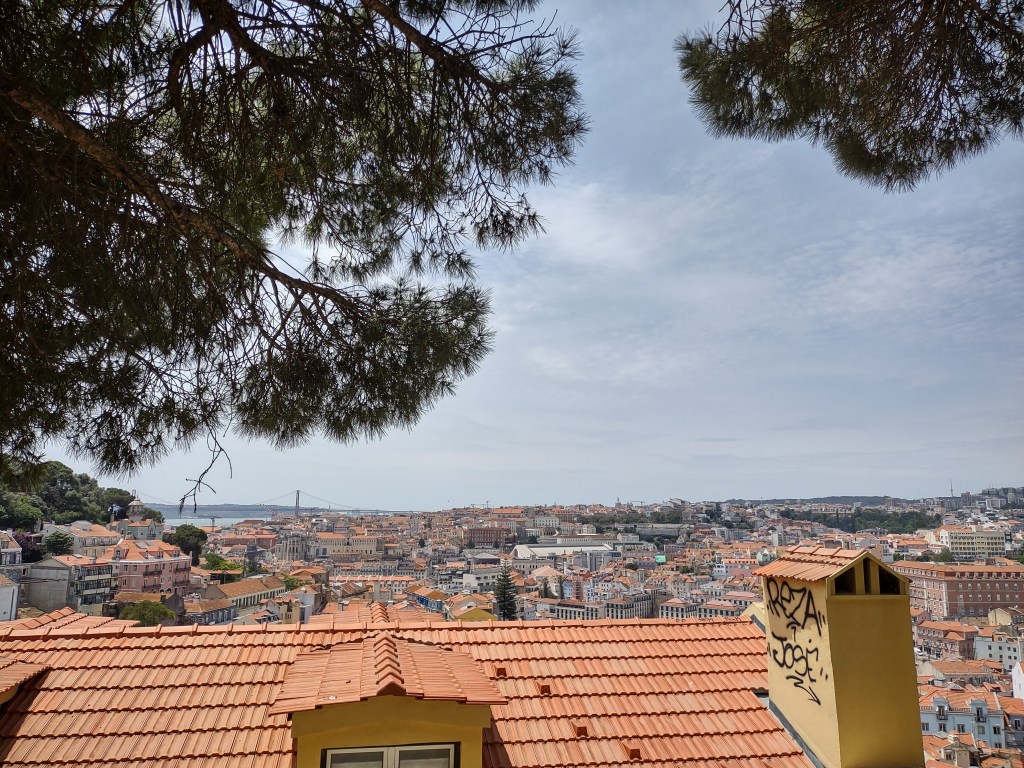
I mentioned in my Lisbon post that the Santa Justa lift is a bit of a tourist trap. There are huge queues to go up it just to get a view you can get for free by other means.
However I didn’t show you the views.
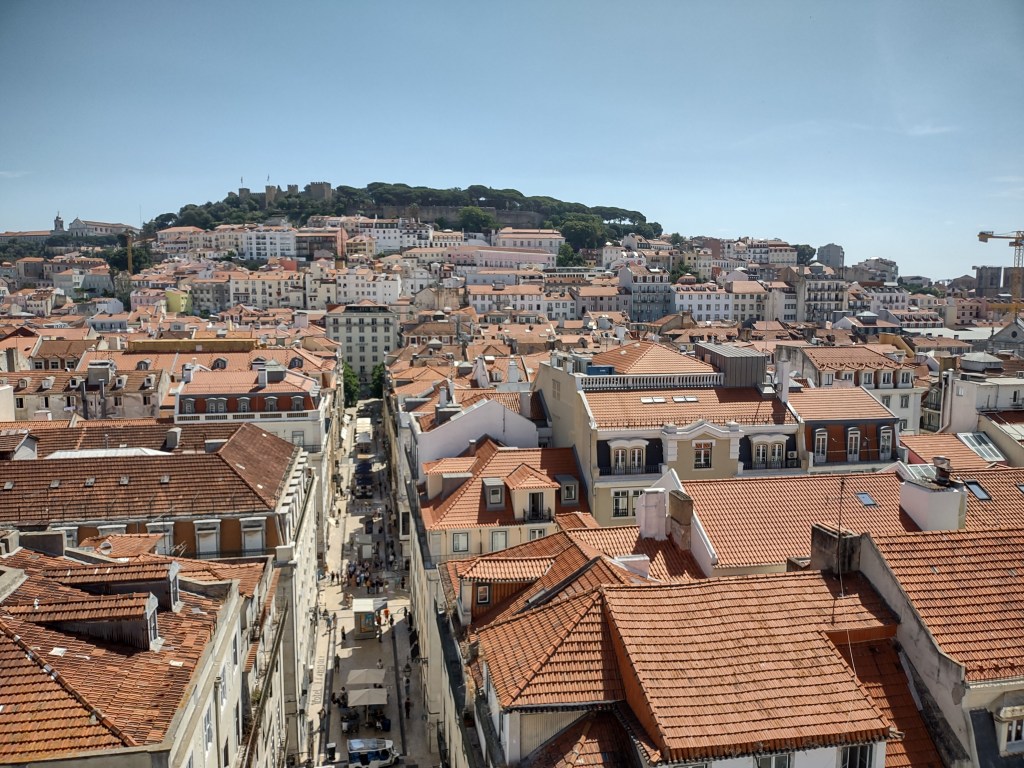
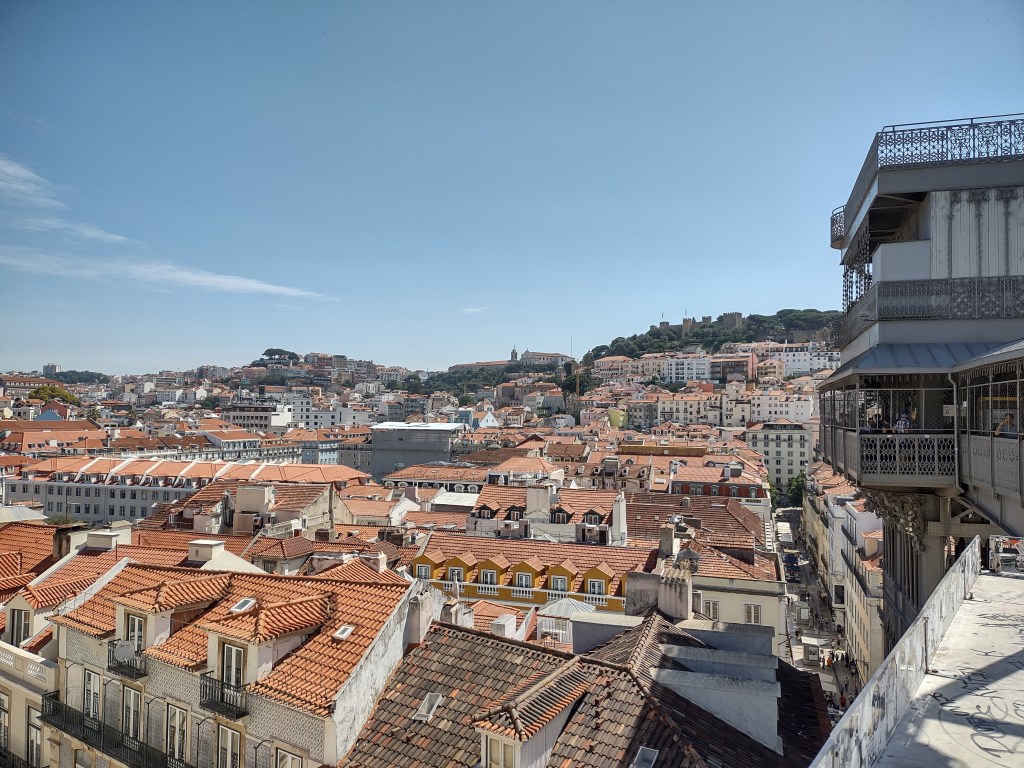
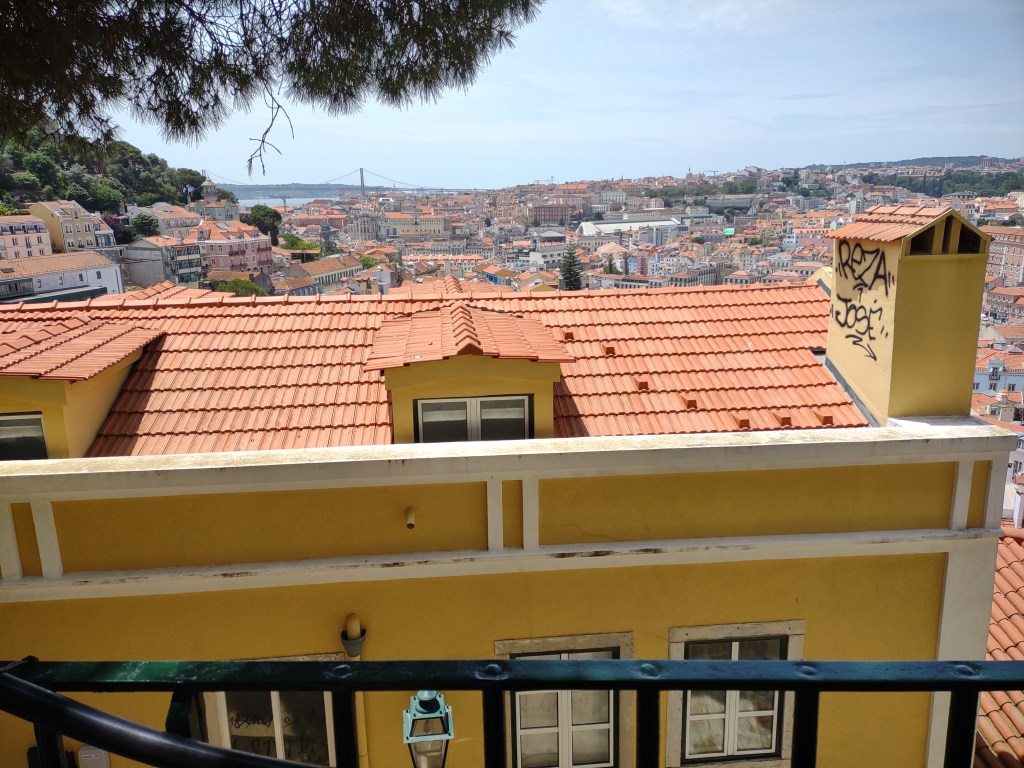
The middle of the three rises in the background, all atop the Alfama, is where I headed for the reverse viewpoint.
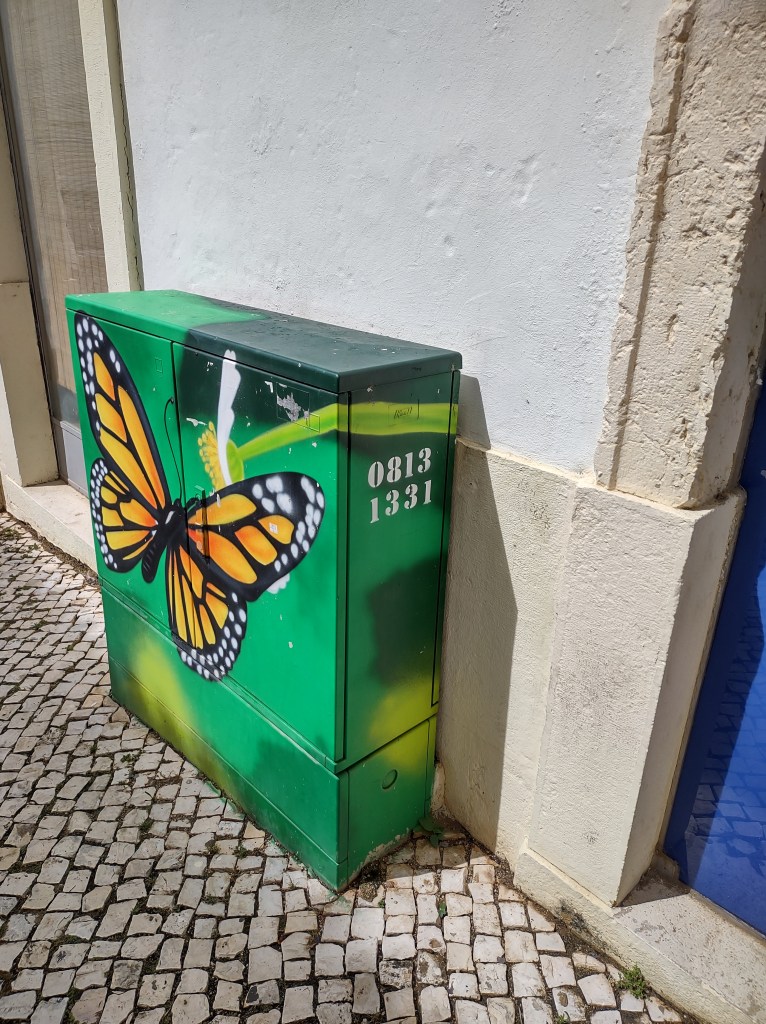
A history of the Algarve in electrical infrastructure components
In parts of the Algarve there appears to be a thing for painting up electrical and telecoms junction boxes with pretty artwork. These two are from the town of Silves.
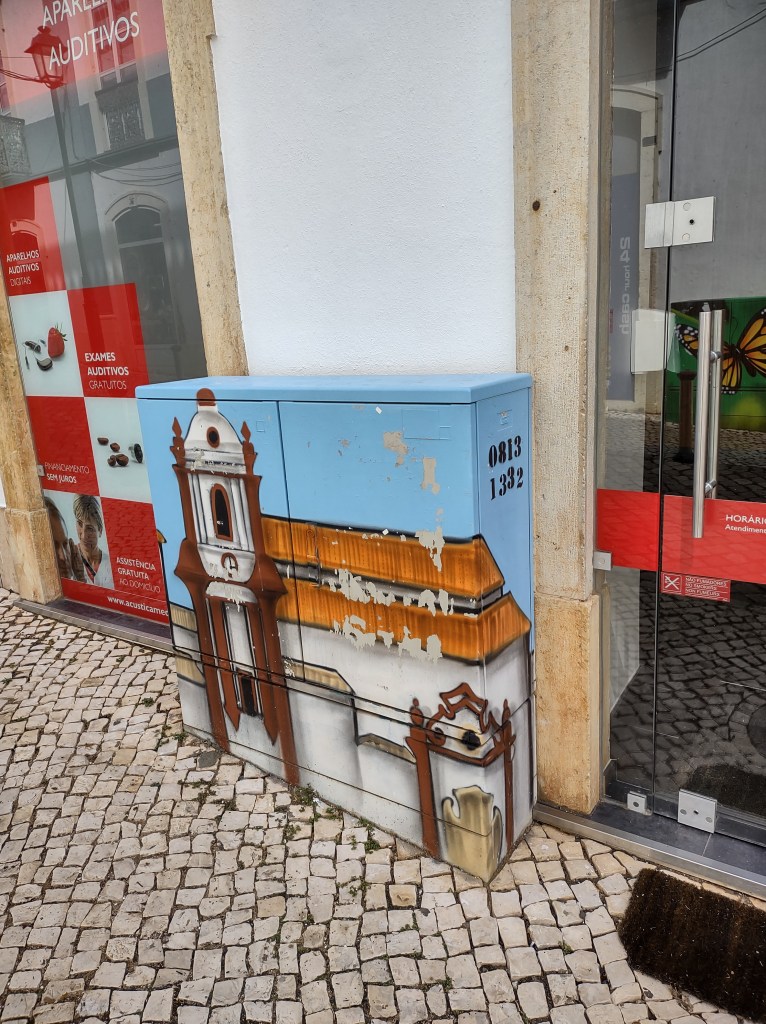
Considering that Albufeira is the party town, its artwork is surprisingly more educational. There are some paintings of general life, fishermen, fashion, but most of the ones I photographed captured scenes from the town’s long history.
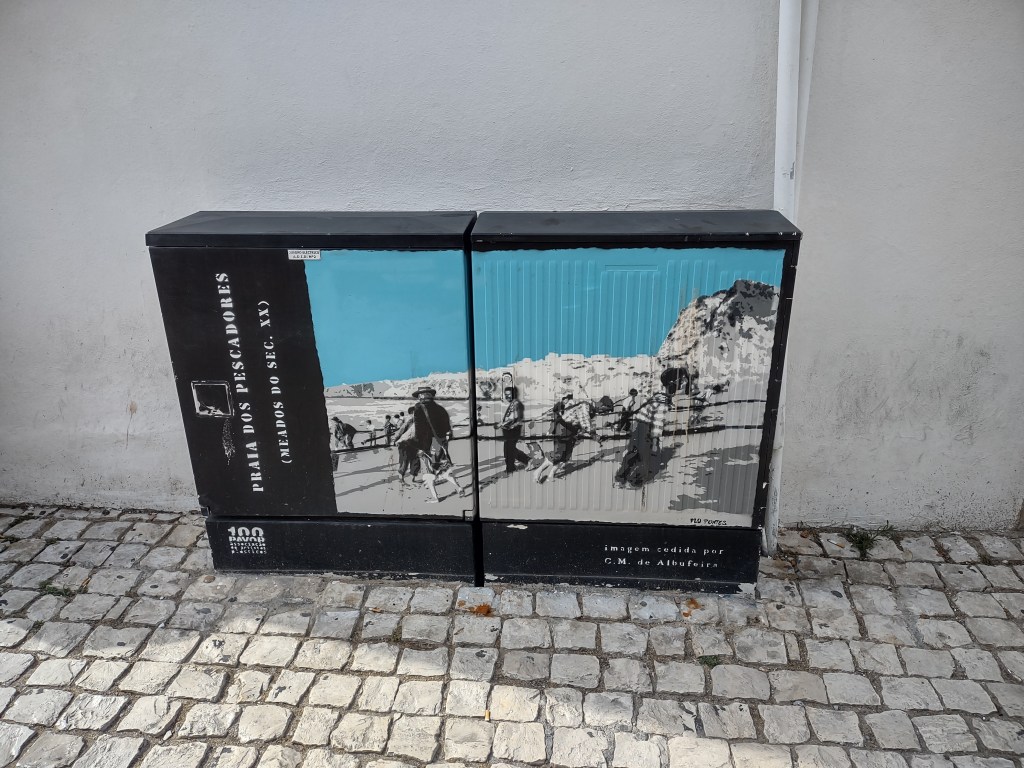
Starting off from when Albufeira was an important Moorish fortress and when the Christians tried to take it…
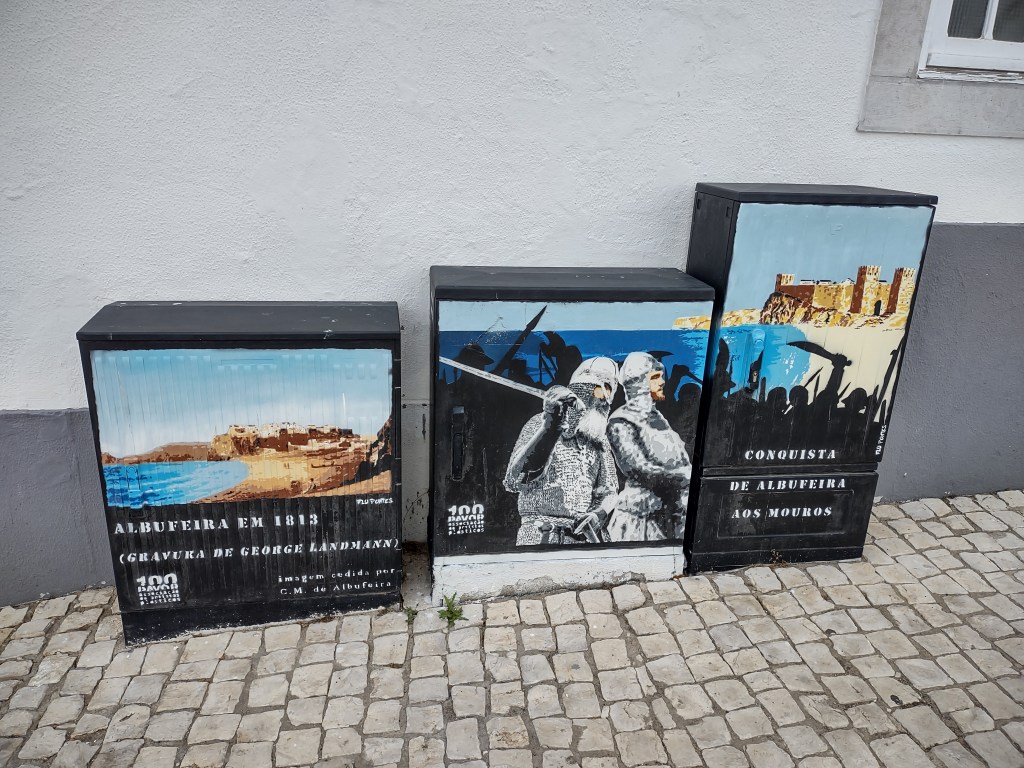
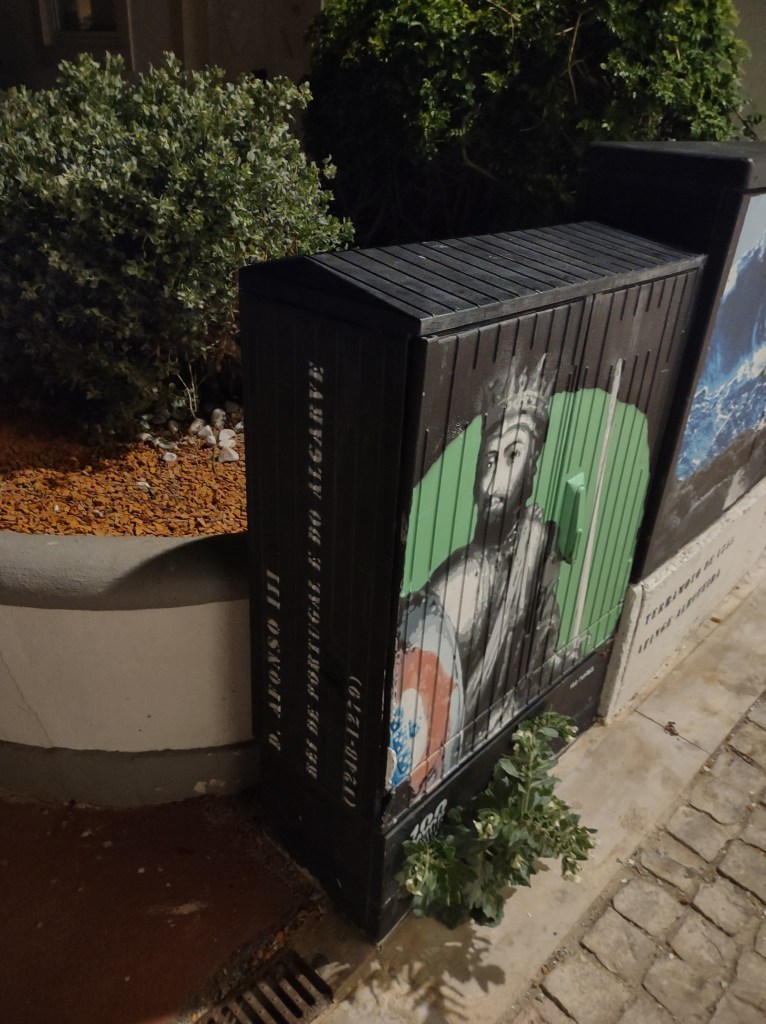
Albufeira, no stranger to natural disasters, was virtually destroyed by the tsunami that followed the 1755 earthquake. The artwork gives a good sense of the size of the wave. (I think).
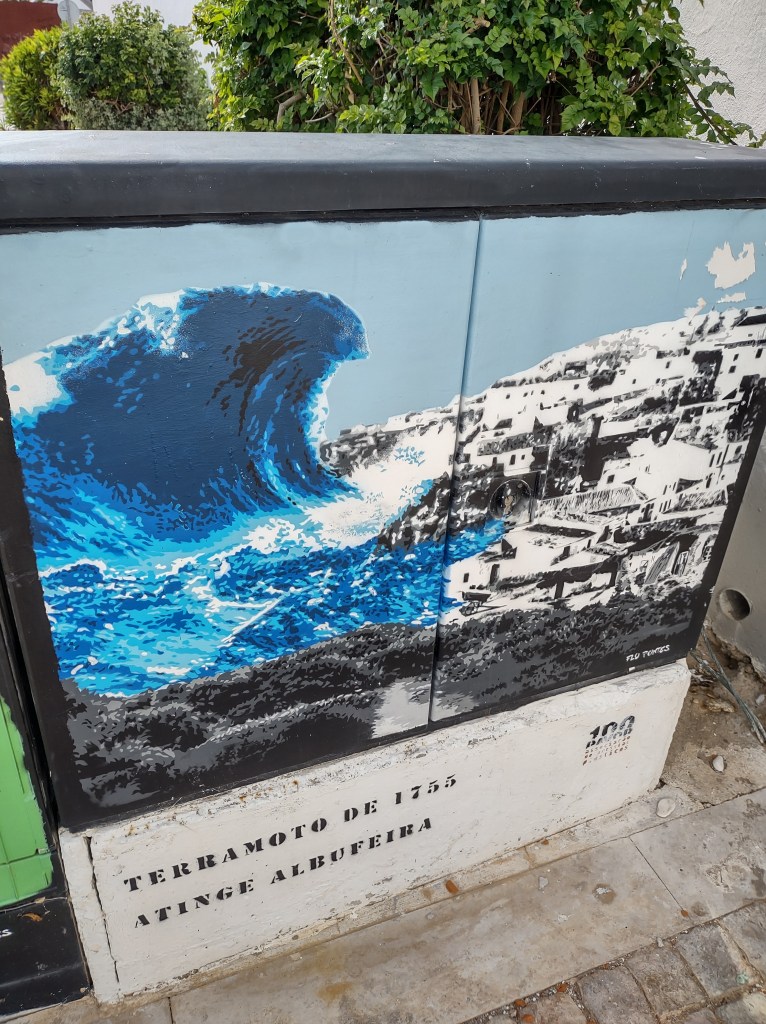
All the buildings along the waterfront were lost, as were around 200 souls when the church they had sought refuge in, collapsed.
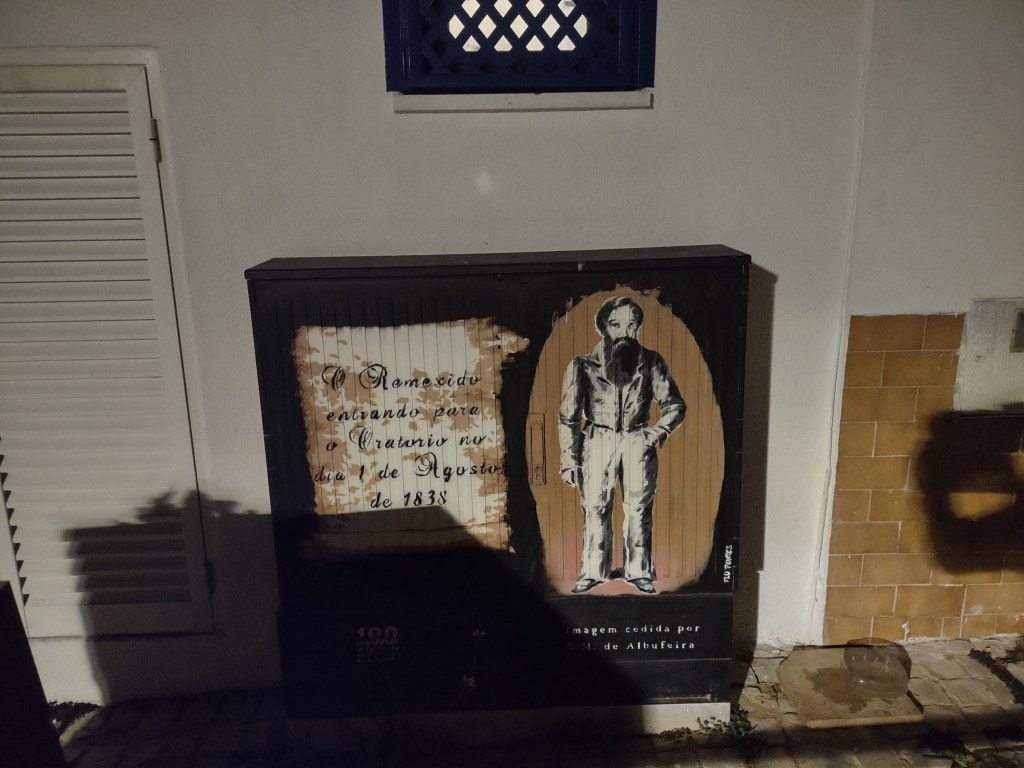
Finally, this fine chap is one Remexido, a key figure of the 1833 Liberal Wars. As you all know, the Liberal Wars was a dispute about whether you should be eating lentil or muesli whenever you read The Guardian. Somehow it metamorphosed from something I just made up into an actual struggle between absolutist and liberal forces in Portugal. The people of Albufeira weren’t laughing, however, when the anti-liberal Remexido arrived in town with his men, executing many of the inhabitants and damaging many buildings. After the liberals won Remexido would eventually end up in front of a firing squad after further intrigue, including the government killing his young son when his wife didn’t tell them where her husband was holed up.
Hmm, that’s a pretty grim note to wrap up these blog posts on an enjoyable trip through a beautiful, friendly country. So during the two or three hours I was in Faro waiting for my bus to the airport I took some final snaps, this time of the lovely little old town. Unfortunately I didn’t do any research into the background of either the town or the buildings.
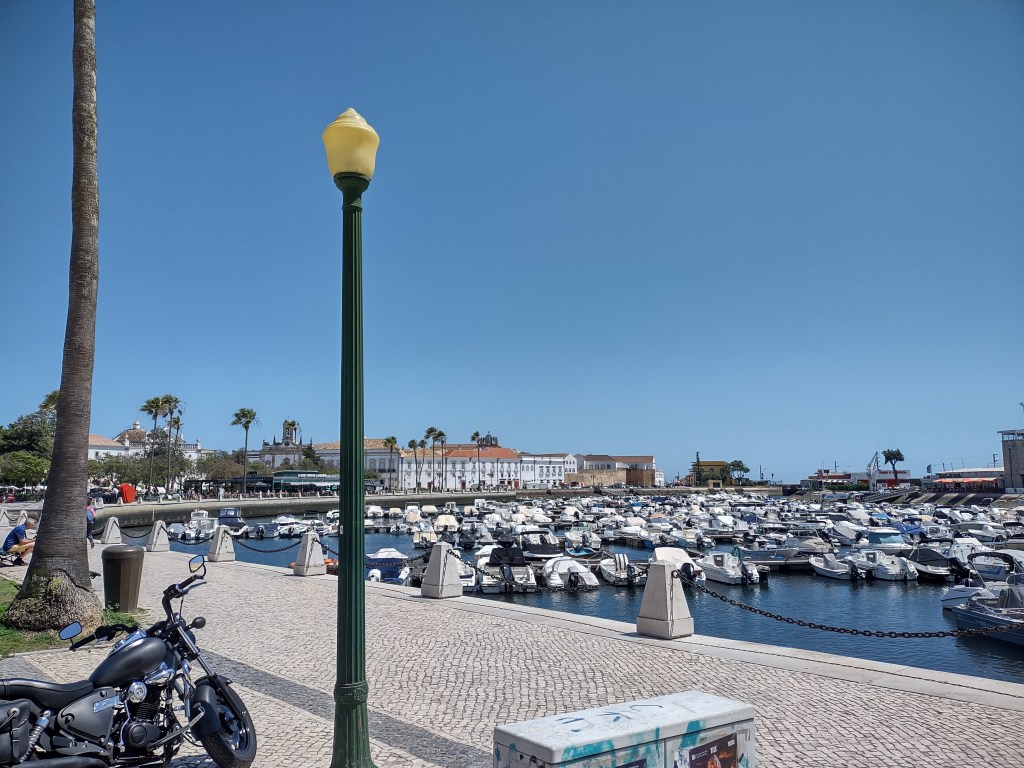
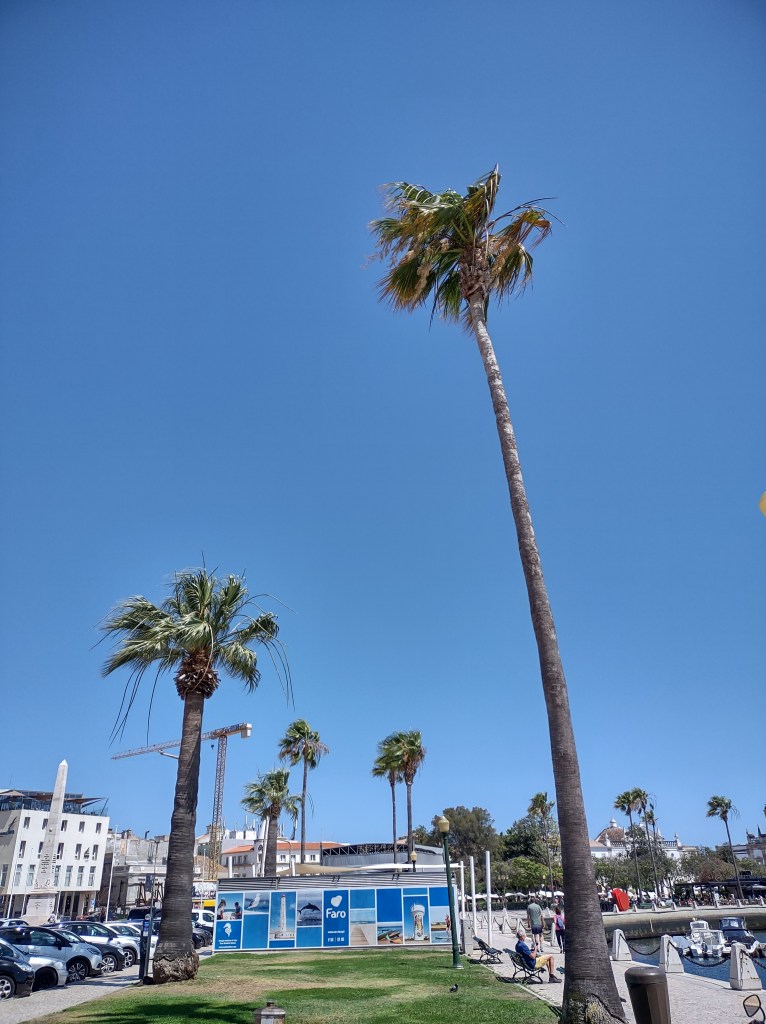
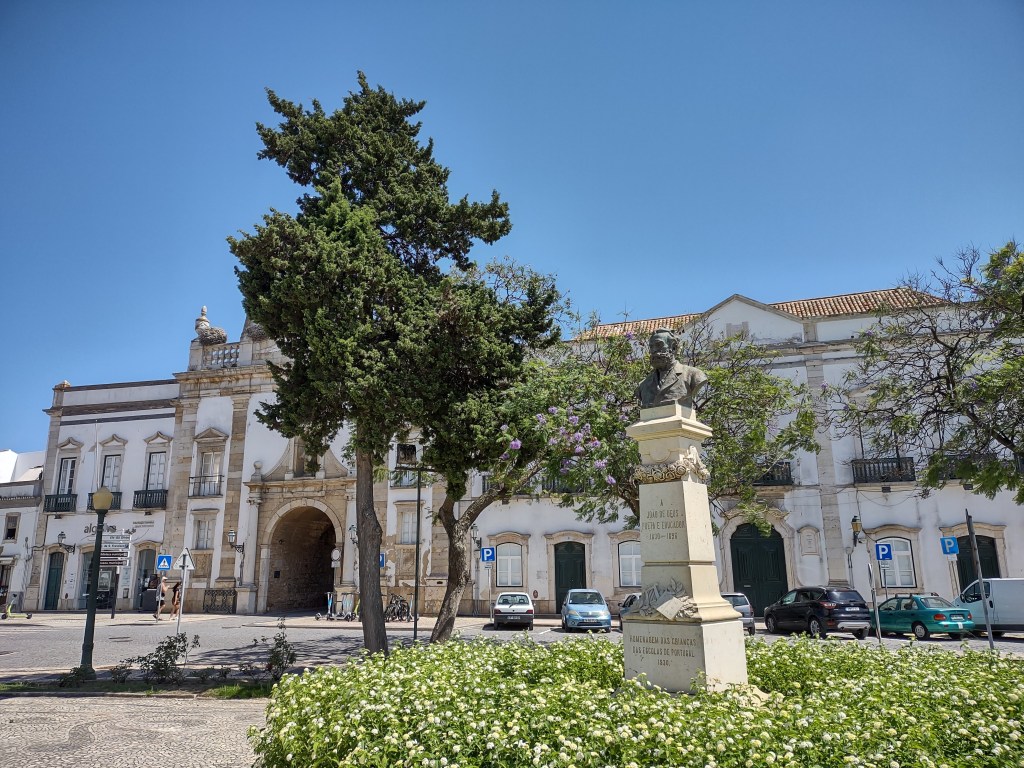
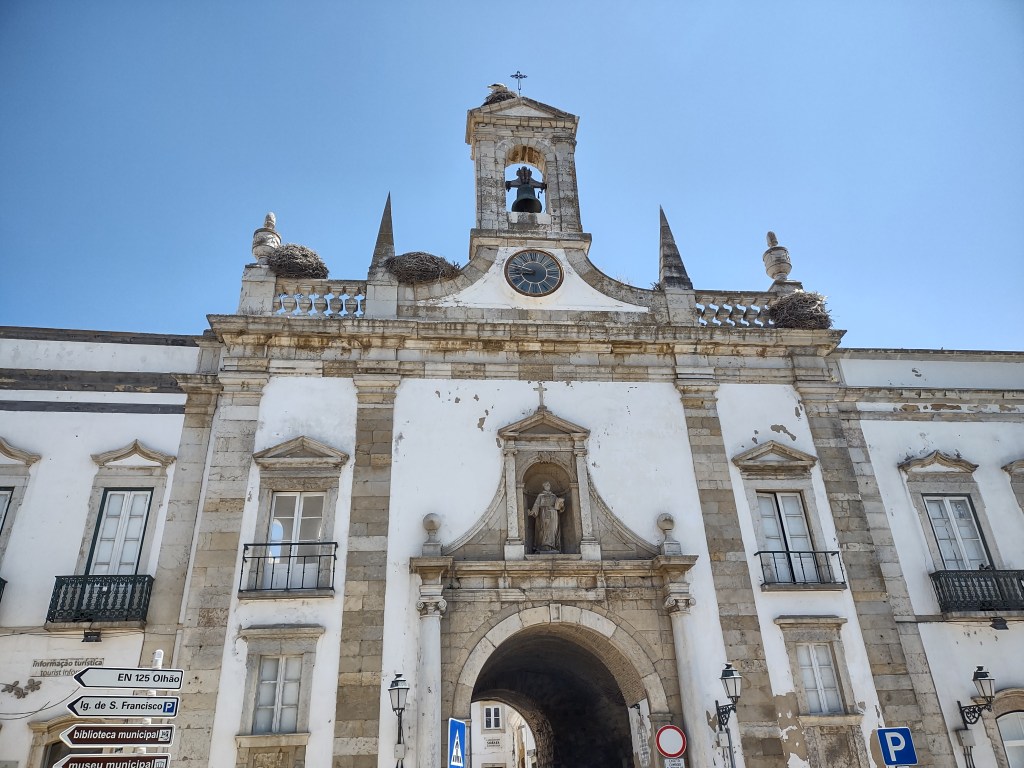
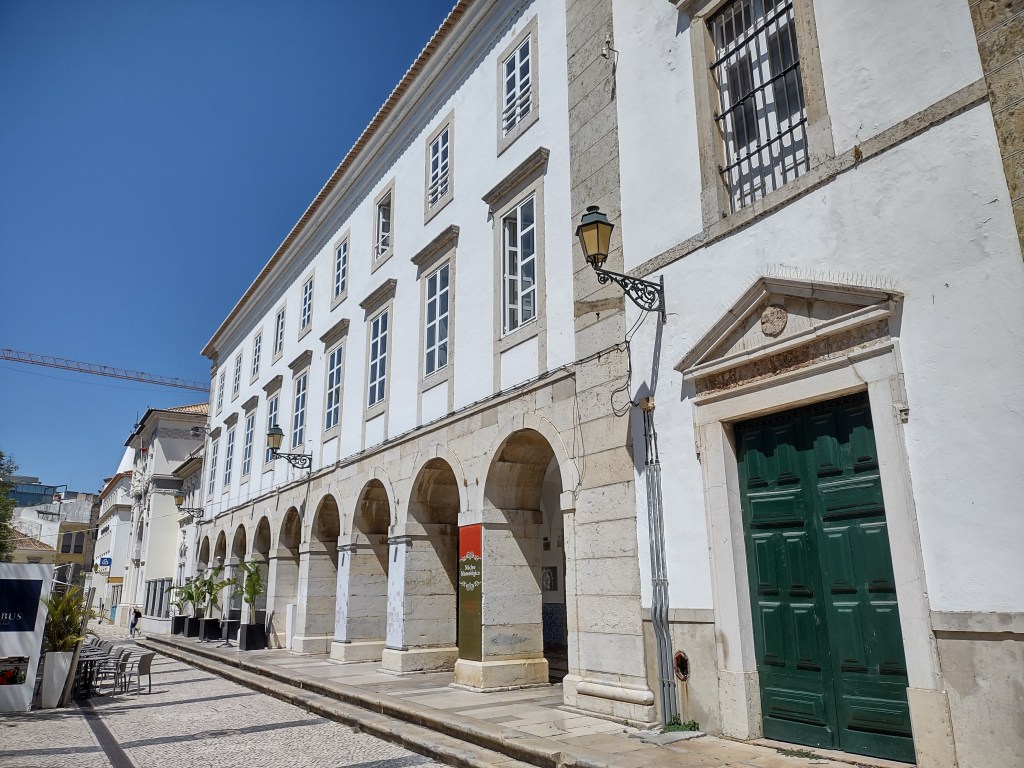
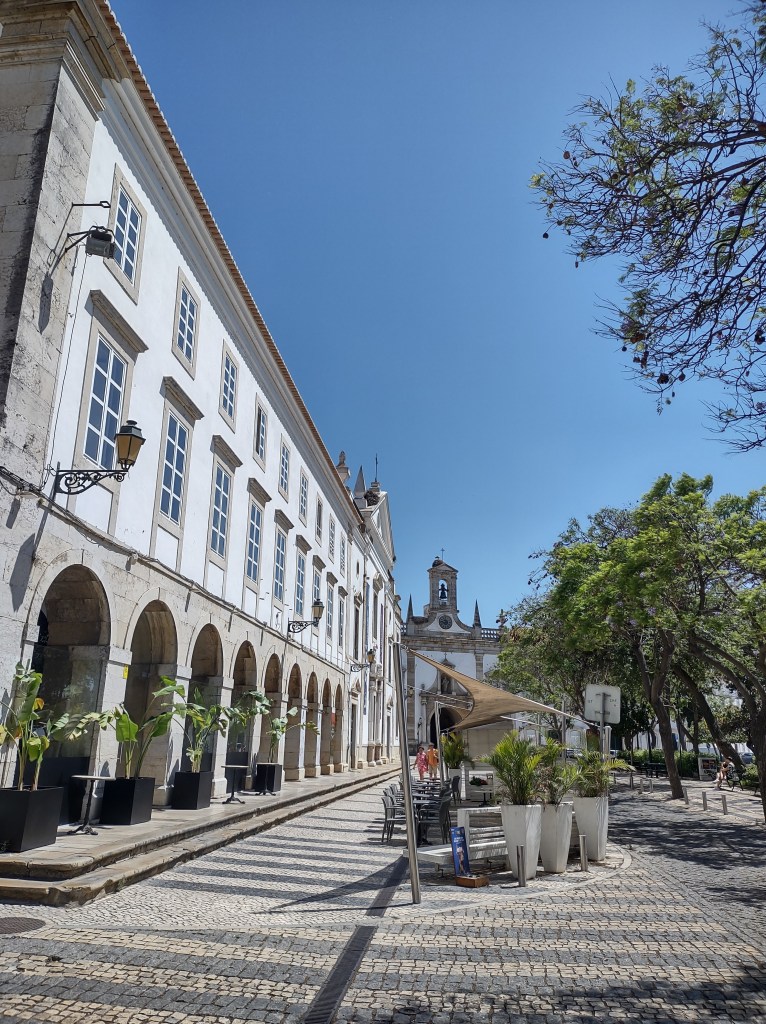
So, if you want to find out more, why don’t you come out here yourself?
 orwellianTwo
Leave a comment