They say that Lisbon is built on seven hills, like Rome. I’m sure I climbed dozens more during my short stay, and my legs and back muscles are claiming they bagged hundreds. But the cliche does hide a truth; it’s a hilly city. To really get the most out of it (I’m not sure I did this time) you have to face up to the climbs. There are ways of mitigating the challenge, which we’ll come on to (and which you probably know about already).
I spent four days there. As I write it all up in my new – and very different – location, I checked and found that I didn’t take as many photos as I thought I had. So this will by definition be a whistle-stop tour of what I saw and what it meant. And it’s a city I will need to return to someday to fill in the gaps, so what follows is not exhaustive.
Lisbon is a large harbour city, but for the purposes of the exercise just concentrate on the northern bank where the heart of the city lies. I’ll simplify it further; there’s a hilly western bit, the flat bit in the middle, and a hilly bit to the east. Which is the bit we’ll look at first. The Alfama.
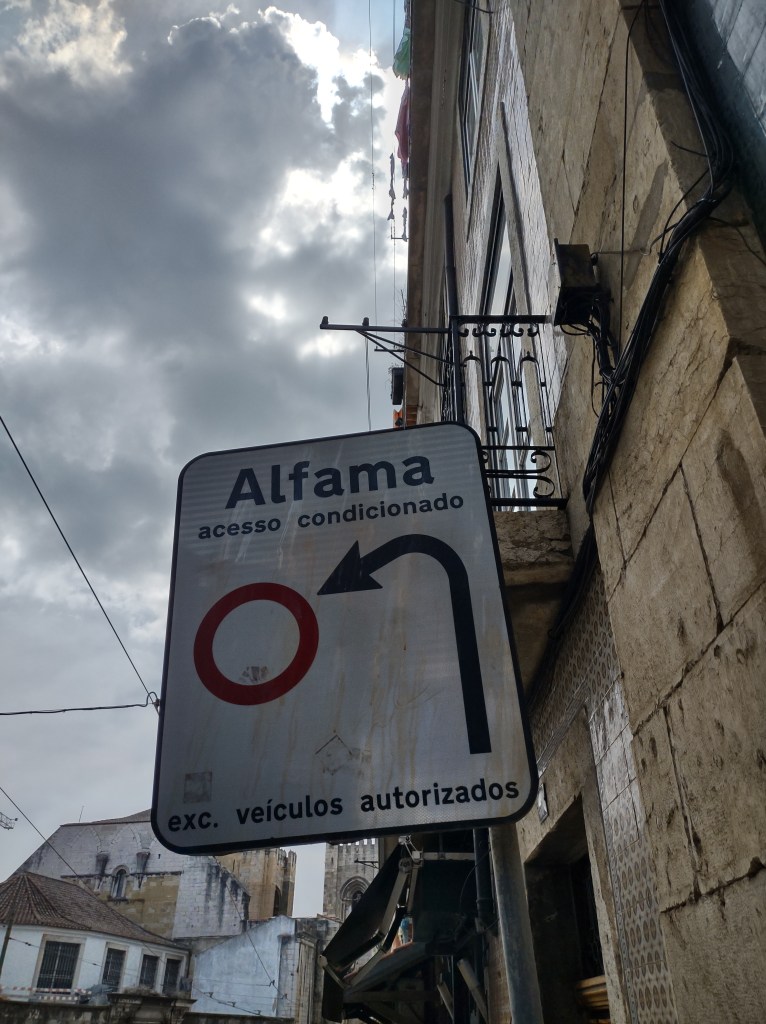
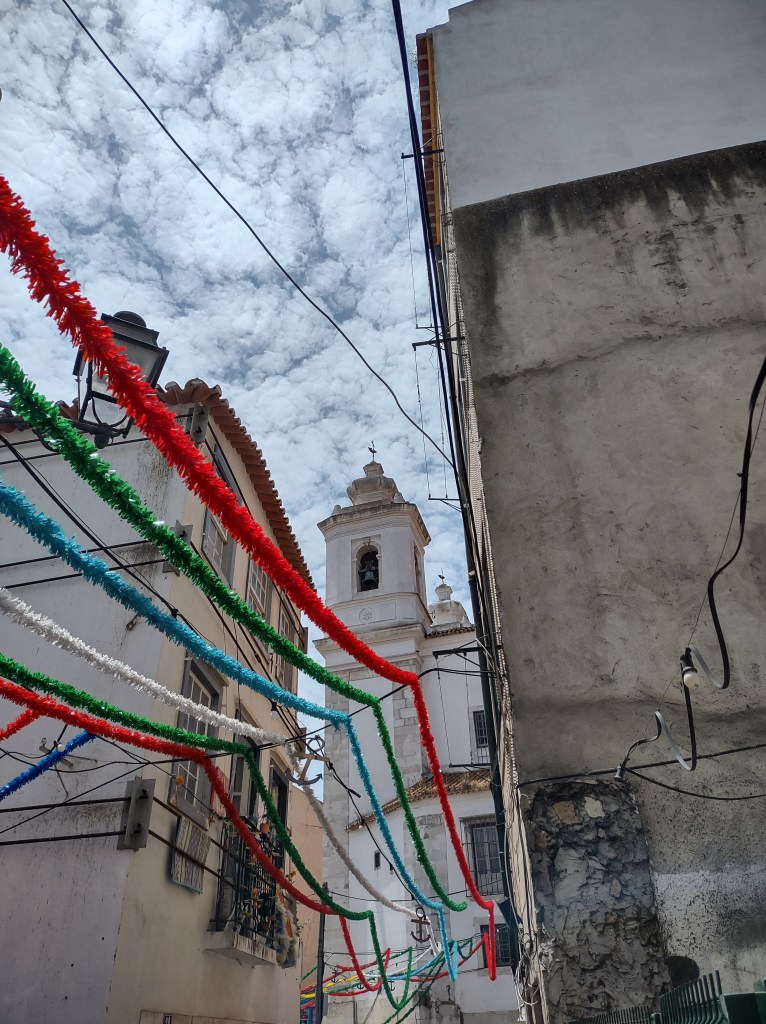
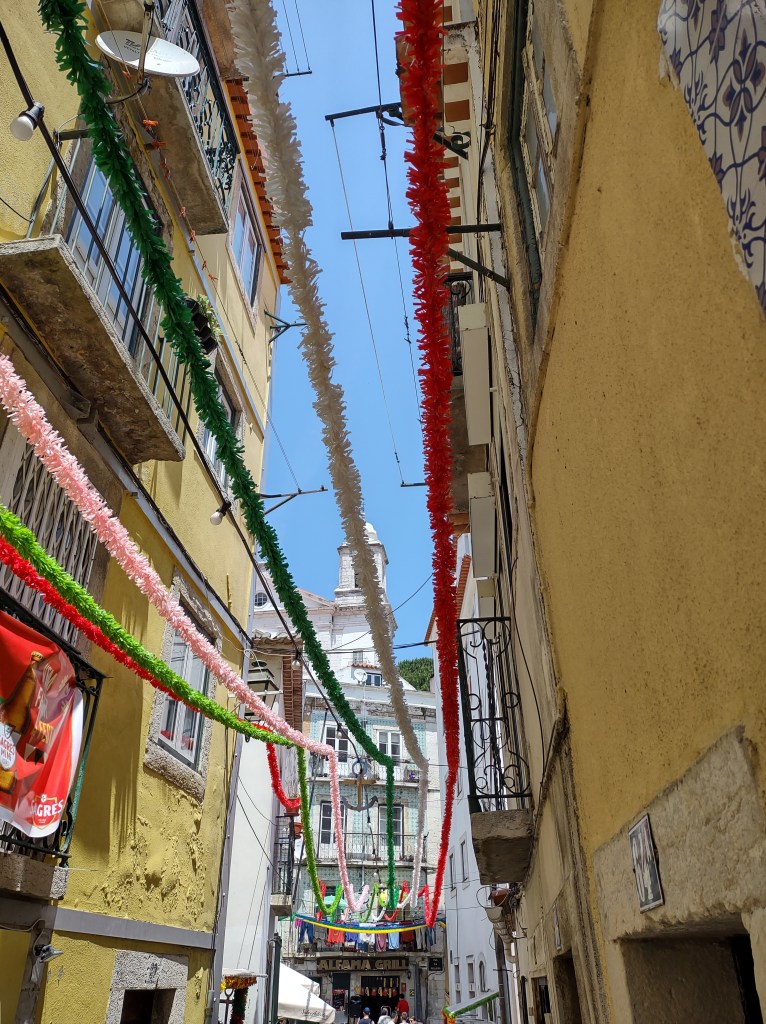
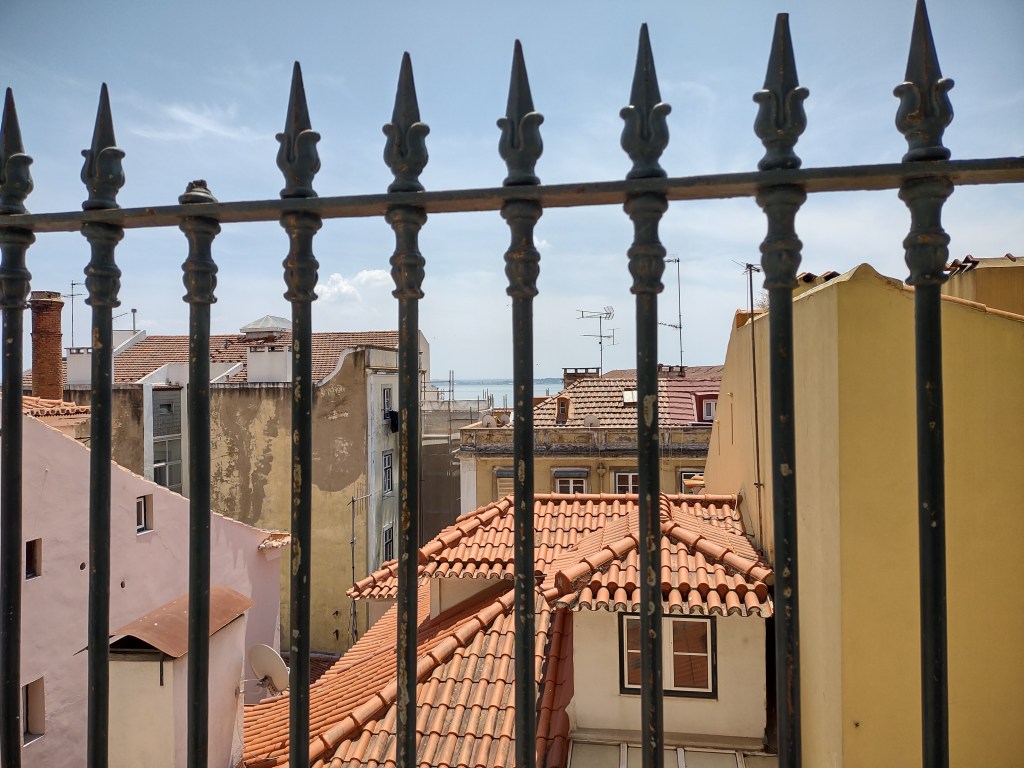
Moorish Arabs ruled southern Portugal from the 8th to the 12th century, and wherever Moorish Arabs went, they left a medina. The oldest part of the city, the Alfama has the incredibly narrow streets you’d expect, it’s just that they are perched up on steep slopes and if you were living here you don’t want to traipse up all the way from the centre of town only to discover you’d forgotten the milk. It’s no surprise then that the Alfama is also the most intimate and villagey of all the central districts, and if you come up here you’d find it hard to believe you’re in the middle of one of Europe’s great capitals.
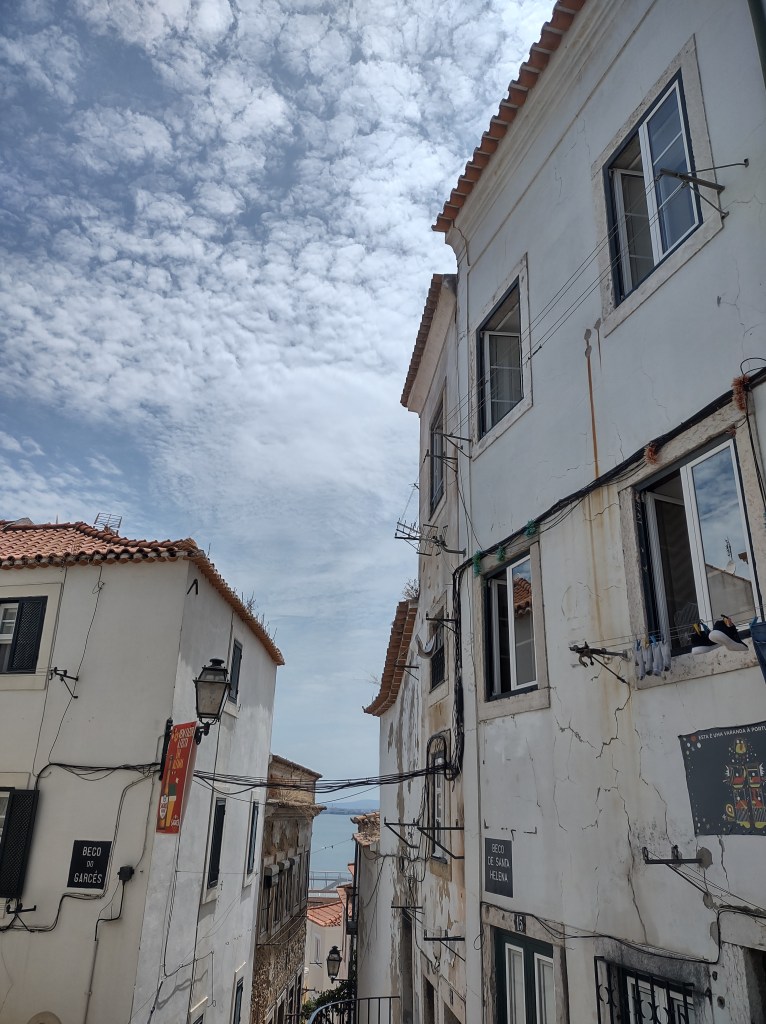
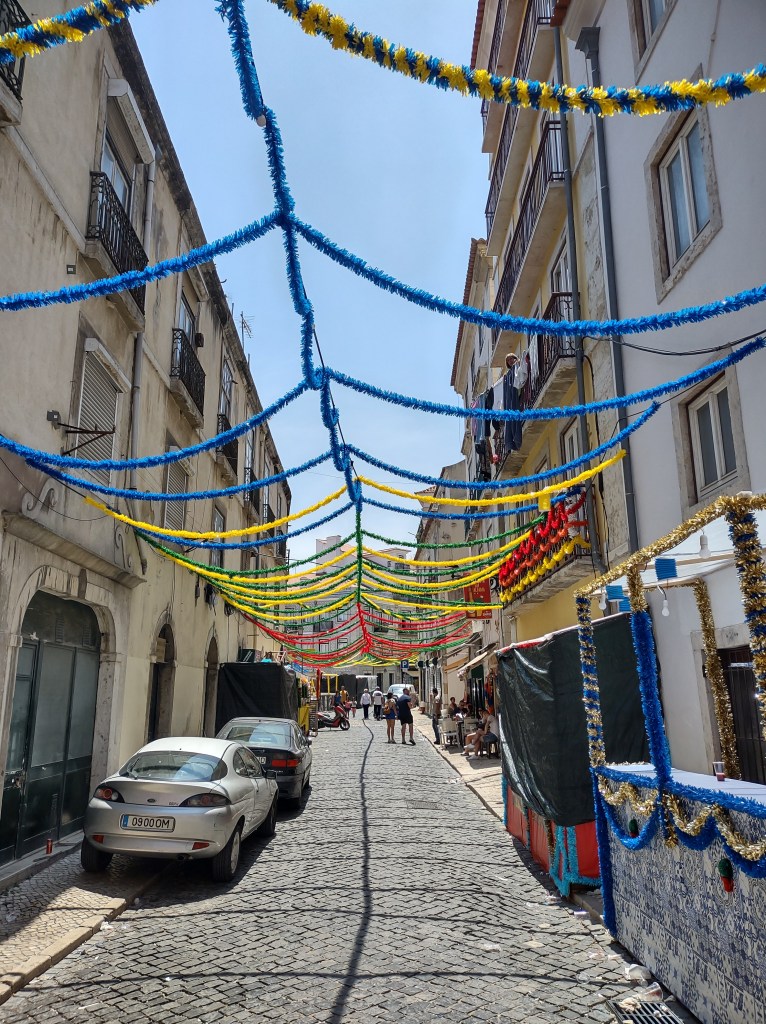
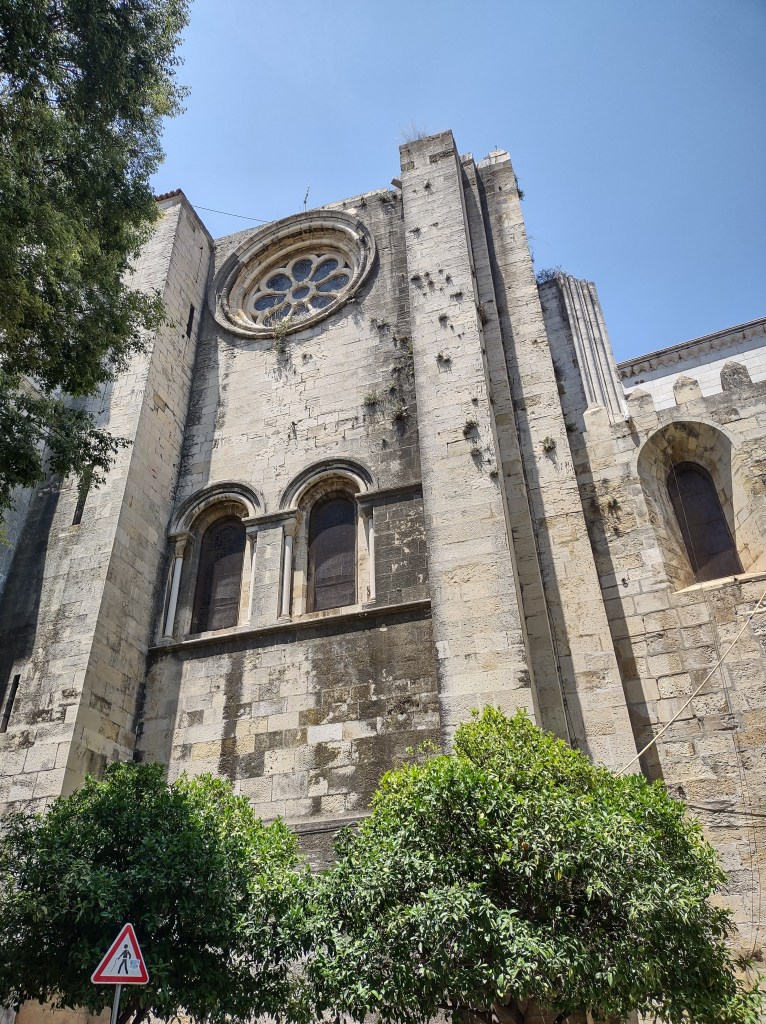
Lovely place, and it would be lovelier if you could get around it. The western hilly bit is also steep in places, and so in the late-19th century the city worthies installed a horse-drawn tram system. The old electric teams still run the routes, and they have become as symbolic of Lisbon as the red double-decker has of London.
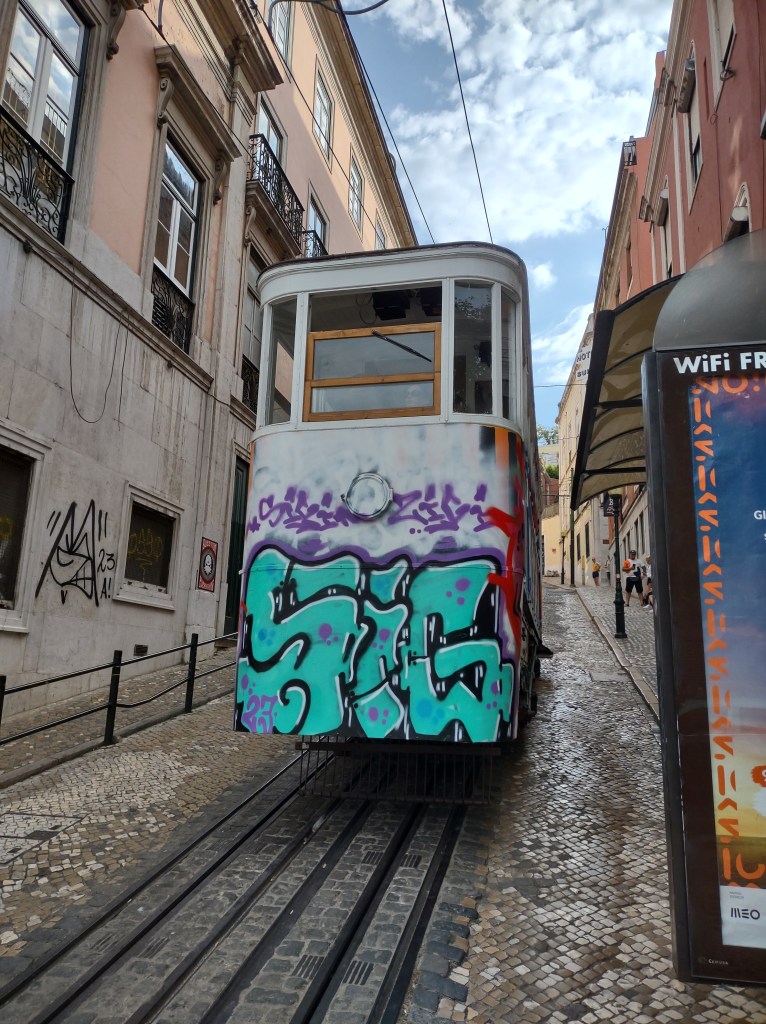
Though maybe in London our buses don’t get quite as graffitied as the Lisbon funiculars. Especially if there’s no garage.
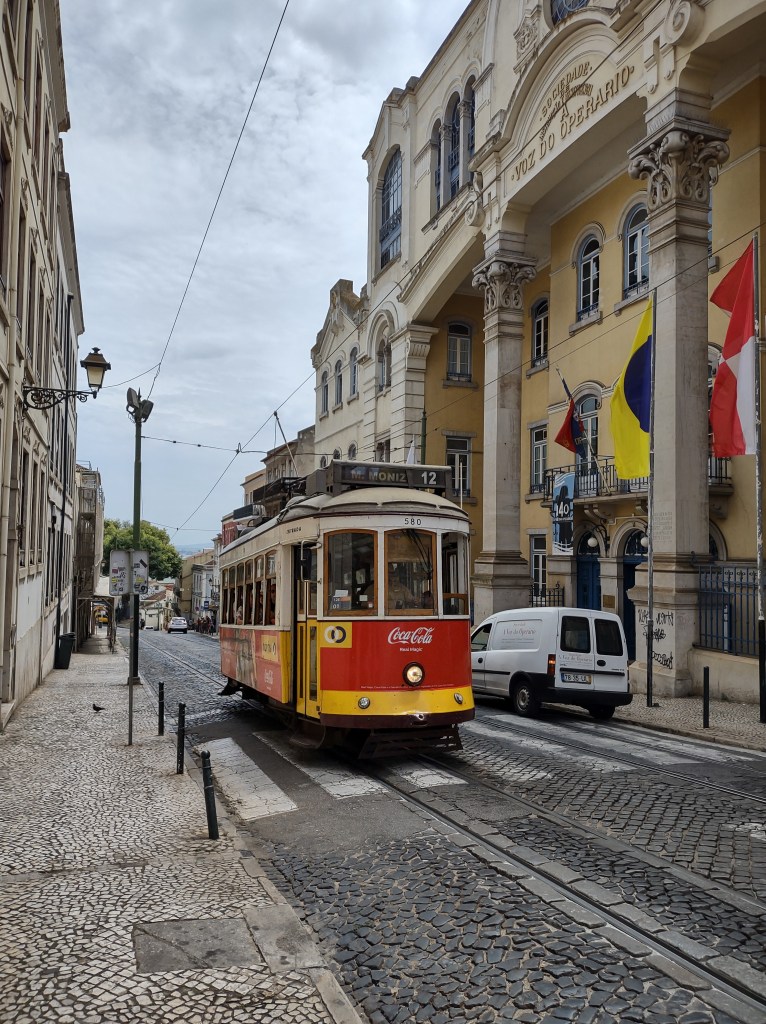
The most famous of the Lisbon trams is no. 28, running past the biggest sites in the west, the middle bit (the Baixa) and the Alfama.
But add “most famous” to “small tram” with a touch of “heavily-touristed”, and you end up with long queues to get on. Unless you know where to get on. Instead, I decided just to walk the route down through the Alfama and take some photos. Have a look at them, but to get the full Lisbon experience you need to imagine you can only glimpse a tiny bit of each one while being thrown around hanging onto a strap and getting up close and personal with some American guy’s sweaty armpit.
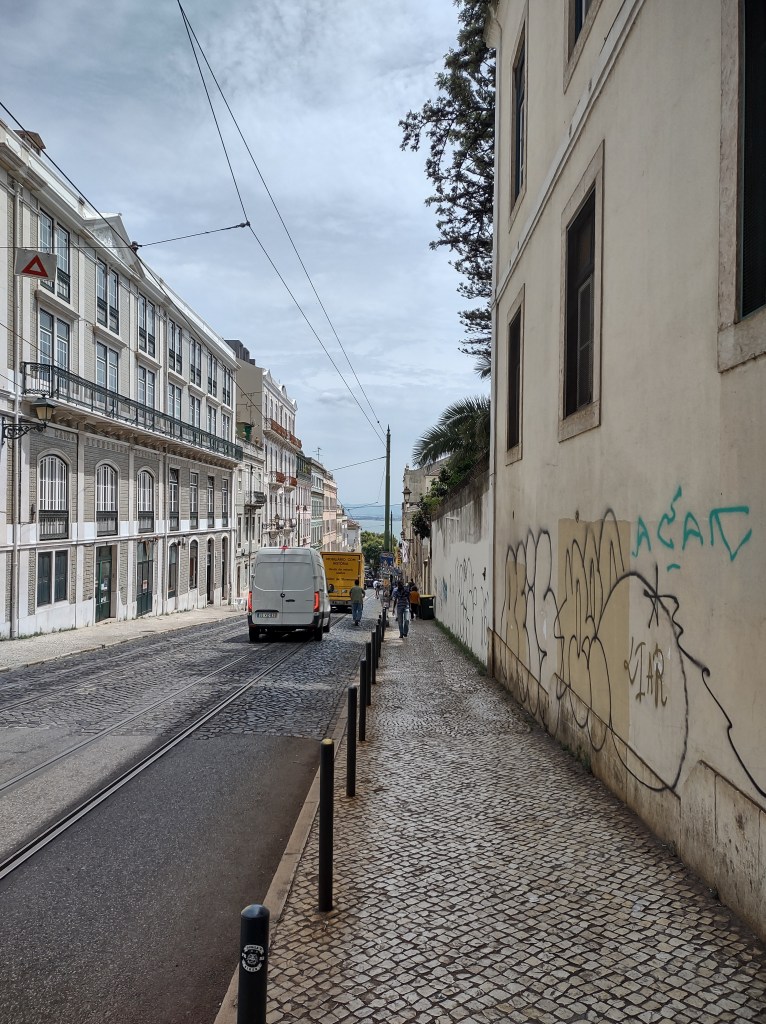
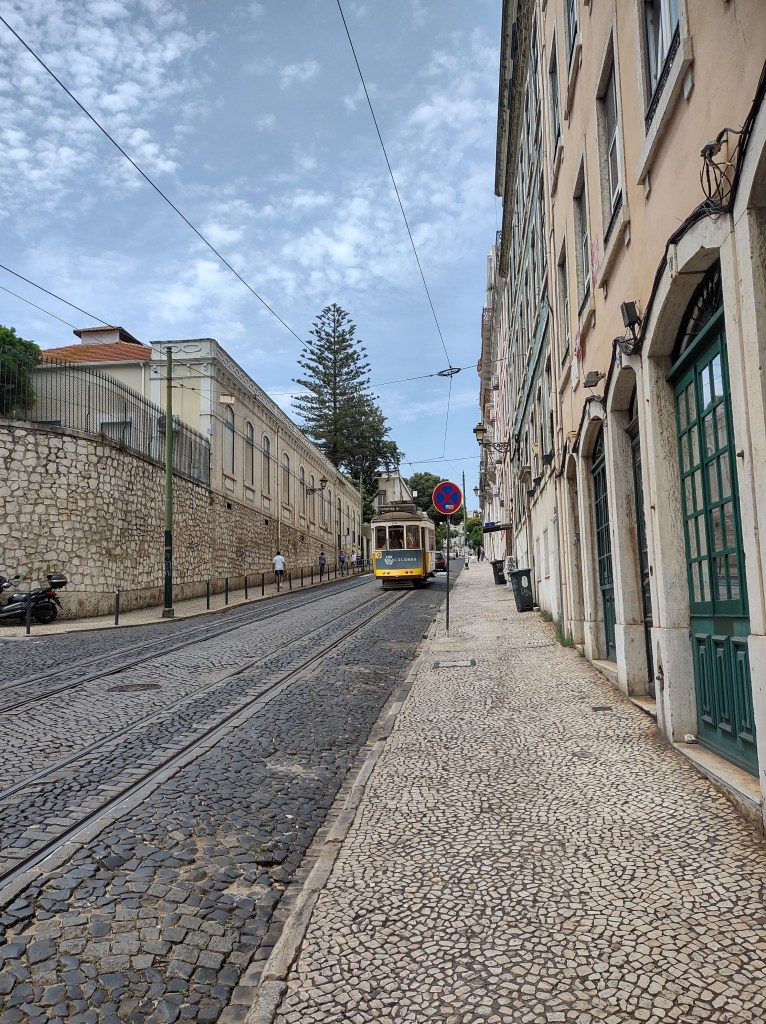
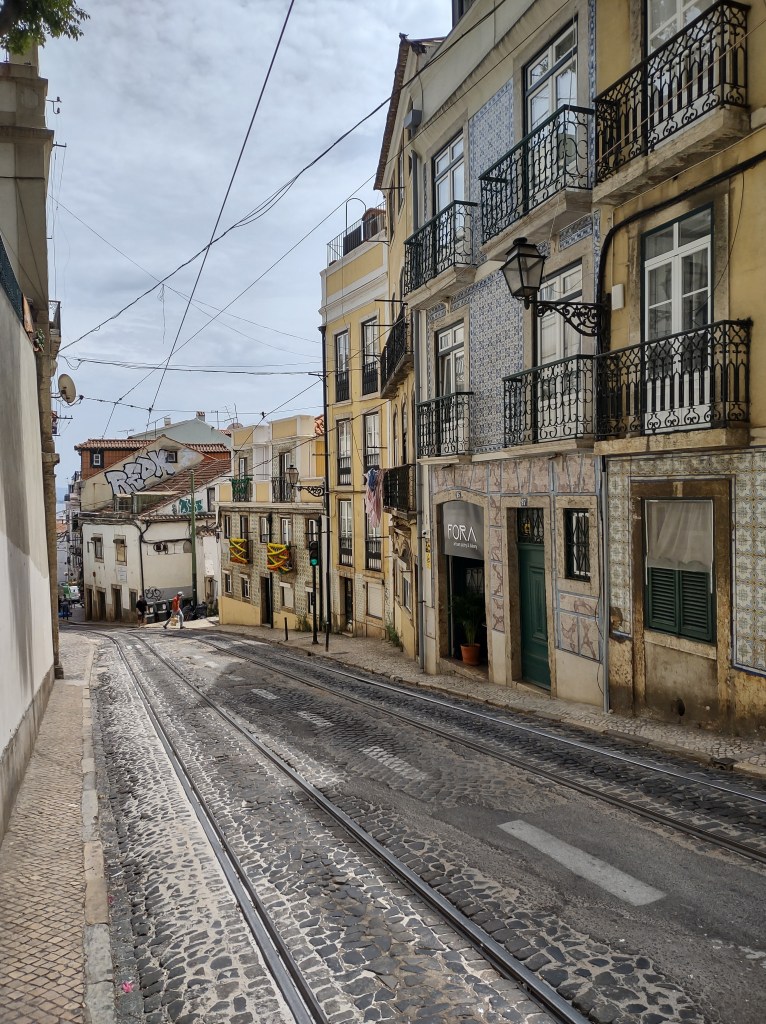
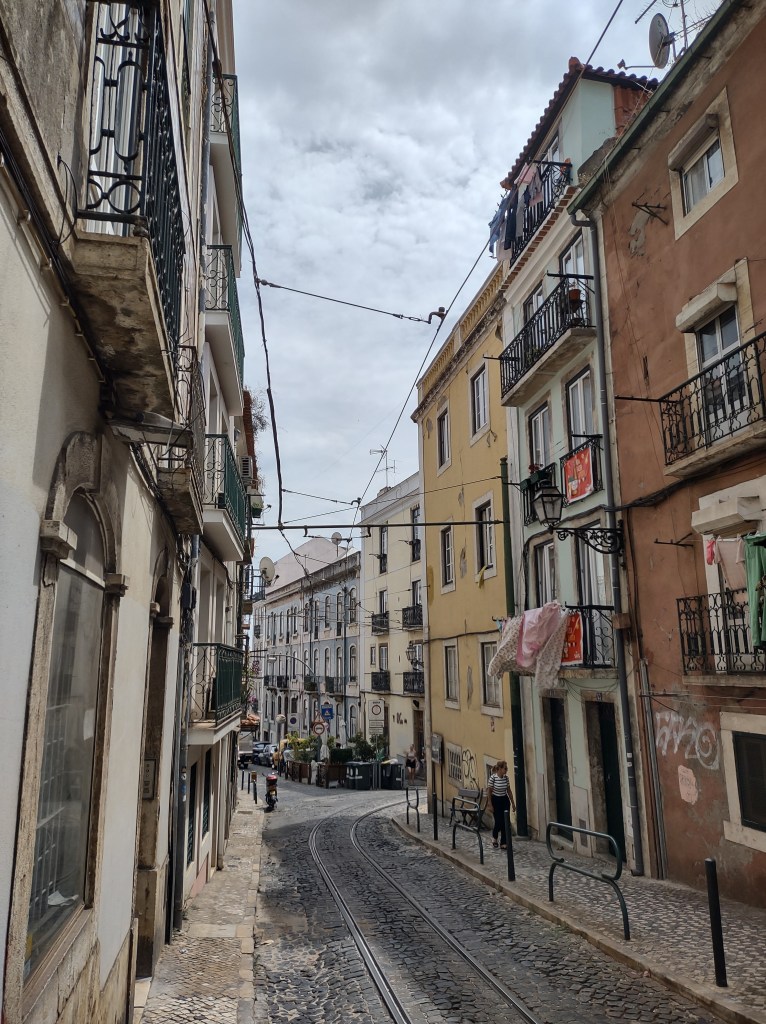
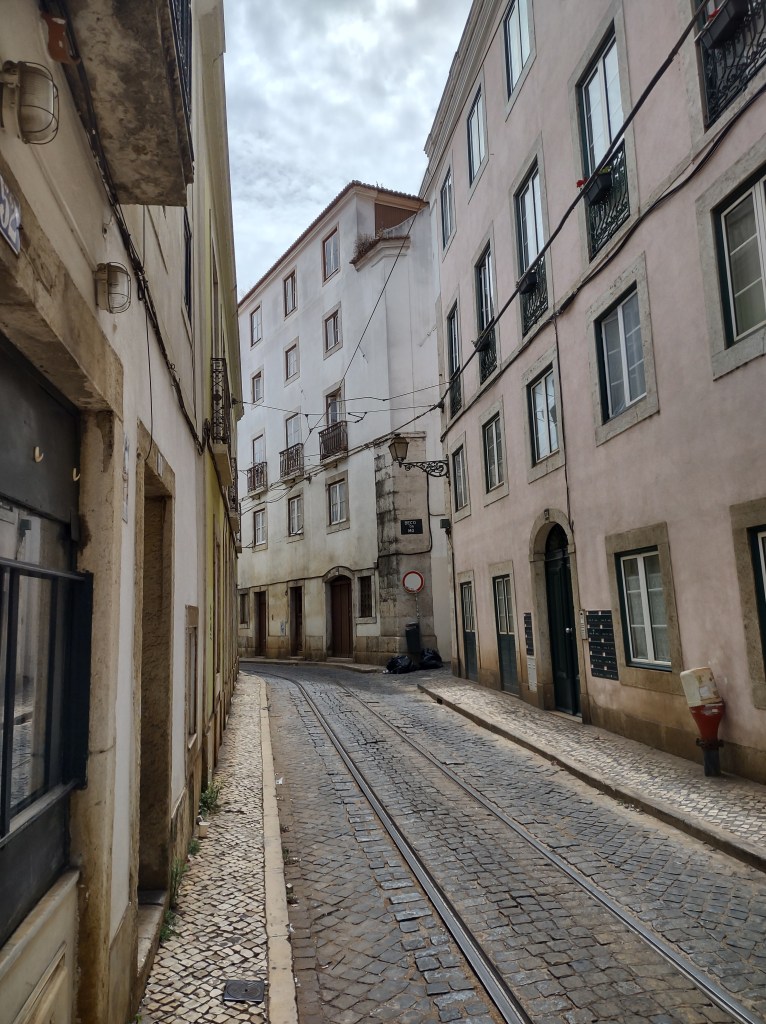
We finally make our way down into the central strip, the Baixa.
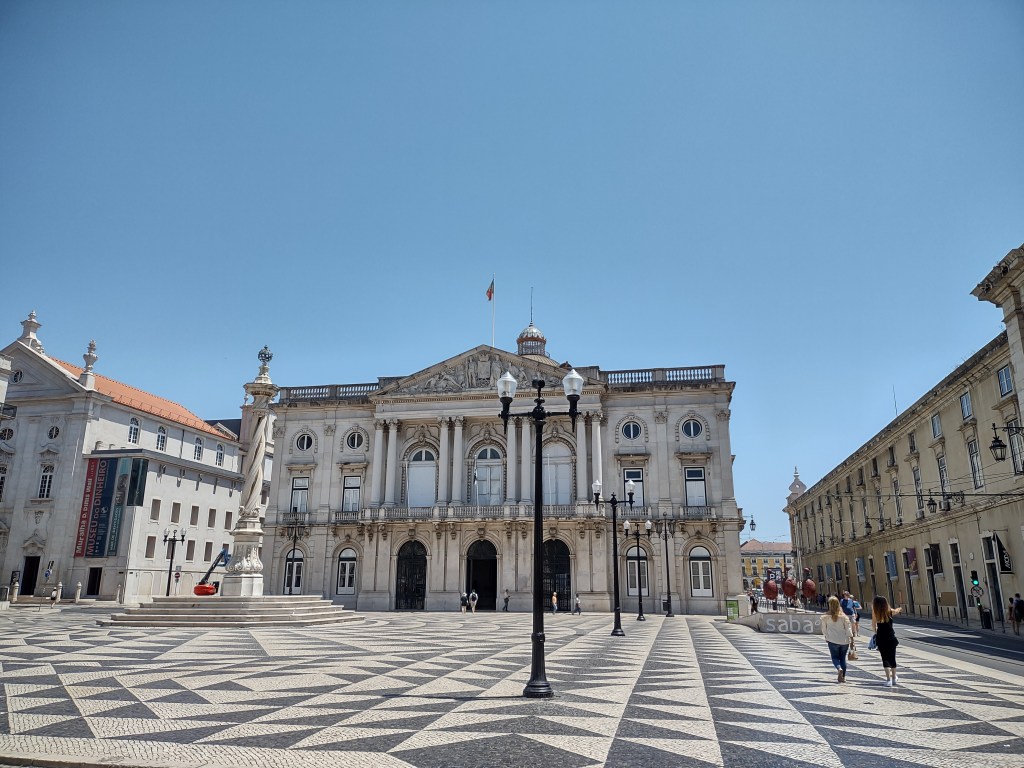
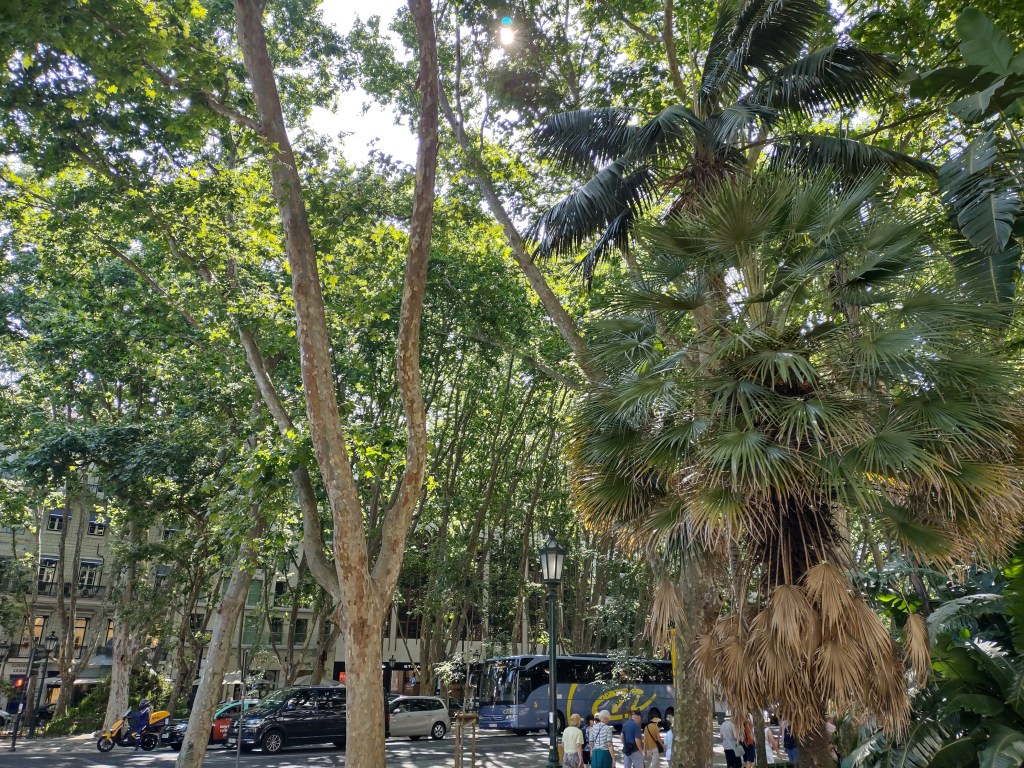
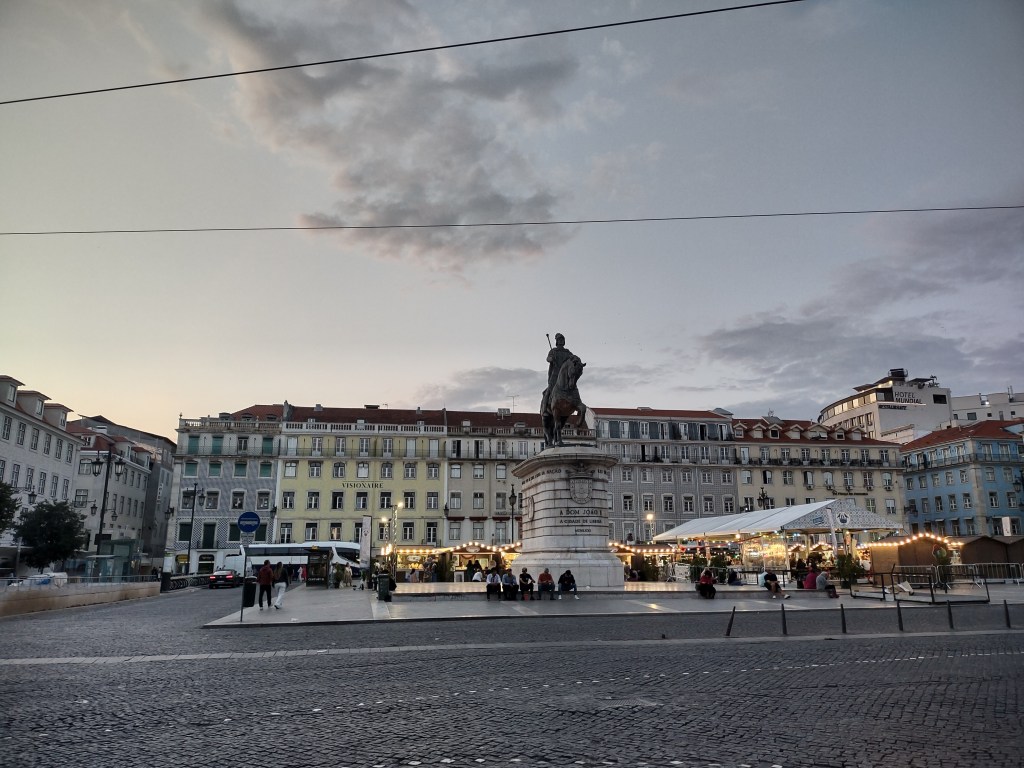
There’s also one great plaza, we’ll come onto it later. The Baixa dates back to the 19th century, completely replacing the old Alfama- and Manueline-style buildings that were here before.
I’ve not spoken about the Discovery Age buildings of the Manueline, though you have seen the Belem Tower. Here’s the nearby Belem Palace.
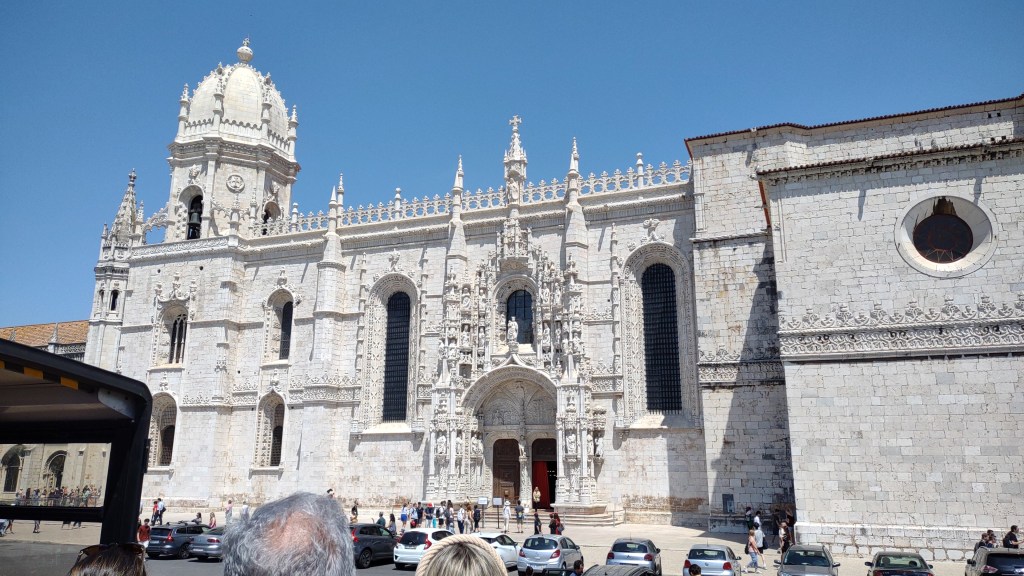
Rather stunning, you’d agree. And you’d agree that the Alfama was pretty cool. But hardly any of it survives in the Baixa. Why would they want to get rid of so many fine buildings?
Well they may have wanted to modernise anyway, but the truth is their hand was forced. To understand more, up we go into the western districts of Barrio Alto and Chiado.
It is the 14th of August 1385, and Nuno Álvares Pereira is a worried man. He is a soldier in the Portuguese army, and here in central Portugal, near the town of Aljubarrota, the home team are facing a vast Castilian Spanish force. Lose, and they can say goodbye to Portuguese independence.
No pressure then, thinks Nuno through gritted teeth. It’s bad enough being a common footsoldier. Imagine having to lead this outnumbered army into a battle against such overwhelming opposition, when the stakes are so high.
Unfortunately for Nuno Álvares Pereira, the man in charge of the Portuguese is Nuno Álvares Pereira.
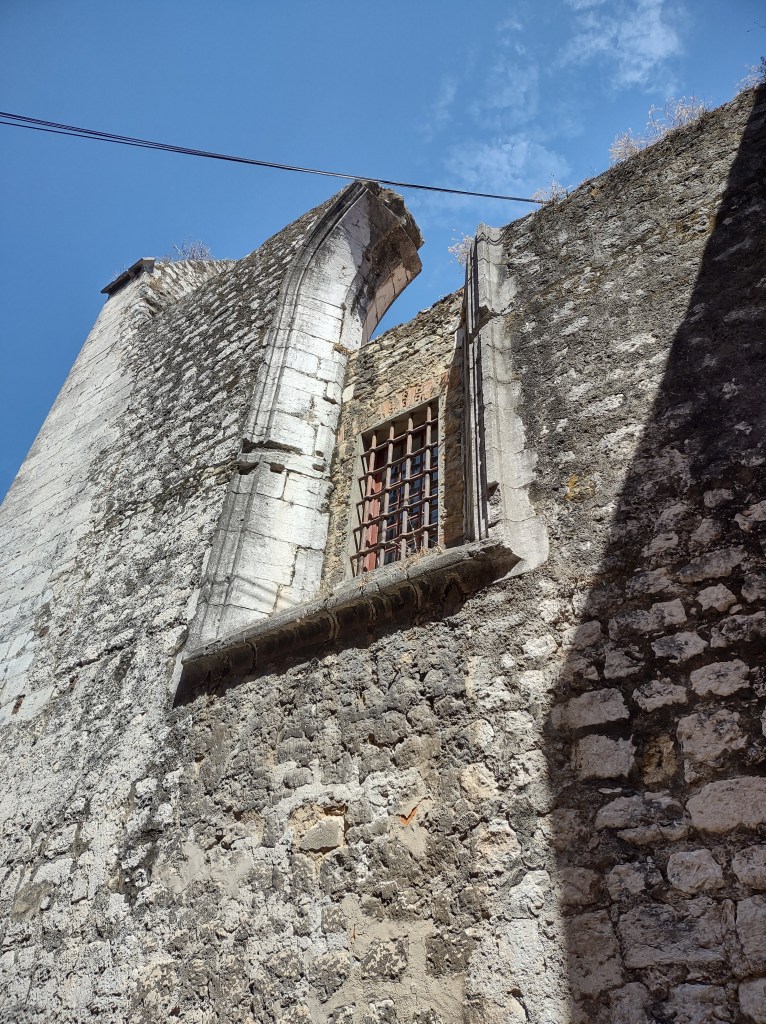
With all hope apparently lost, Nuno makes a bargain with the great Military Strategist in the heavens. If we win, I promise to build churches across Portugal, in particular the Carmelite convent in Lisbon, and dedicate them to you, Holy Mary mother of grace. Yes, holy mother of Jesus, it’s the one without a roof near the top of the most rubbish tourist trap in Lisbon, the Santa Justa lift. Except that the alfresco bit will come later. As will the lift. Anyway, Holy Mary, I pray to you, help us!
And – by the grace of God – the battle of Aljubarrota was a shock home win! Up went the churches, and up rose the convent. And so Lisbon survived and flourished under the blessed protection of heaven, discovered an empire, enjoyed riches beyond compare.
There were of course the odd hiccups – the odd conflict with Spain, competition with the Dutch and the British empires, even – God forbid – an earthquake every now and again. But Lisbon thrived, and no doubt the good people of the city had much to thank the Lord for as they congregated in the city’s many fine churches.
And such a day of congregation was All Saint’s Day, 1755. Once again the churches were packed with the devout citizenry, and maybe some within the convent walls thought of Nuno’s promise and gave thanks to the Virgin Mary for her continuing benevolence to city and nation.
Which was a mistake. If the Virgin had blessed Lisbon, she’d inserted some very small print. And as the walls shook and tumbled upon the congregations across the city that November 1st, the warranty ran out.
The earthquake rumbled on for an unprecedented ten minutes or so, virtually destroying the whole city and leaving the convent roofless. Those who clamboured out of the ruins thought themselves lucky, maybe blessed. A faith strengthened by a new miracle that now made manifest. Thousands of survivors headed down towards the Tagus river, which – blessed be God – had astonishingly started to recede!
During the Age of Discoveries, the Portuguese had been the first Europeans to establish contact with Japan, but had obviously not listened enough to what the Japanese had told them about earthquakes and what happens afterwards. For it wasn’t another blessing from God. Not only had the warranty expired on blessings. He was now sending in the bailiffs…
Whatever survived the main earthquake was finished off by the massive tsunami wave that now thundered in. It’s estimated that 30-40,000 people, maybe twice as many, lost their lives in the catastrophe, Europe’s worst natural disaster for which we have record. Earthquake and tsunami were followed by fire, started by looters as they ransacked anything they could.
Meanwhile the tsunami barrelled its way through Europe, this time as a psychological and political storm surge through the academies and the world of letters. If there was a rational God, as Enlightenment thinkers believed, how could he let something like this happen when people were in church? Voltaire, for one, lost his belief in Optimism after the earthquake, mercilessly skewering the very idea in Candide. And so out from the rubble of Lisbon would emerge a more radical Enlightenment that would eventually lead to the French Revolution.
Also arising from the rubble of Lisbon would be…a new Lisbon. With virtually everything gone except the Alfama, city planners now had the opportunity they’d been waiting for, to create the 18th-century city of their dreams – Neoclassical, wide avenues, even earthquake-proof. The king having essentially given up the tiresome business of doing anything, the job fell to his PM, the Marquis of Pombal, a great social reformer as well as town planner. He is still revered in Lisbon, and his orders after the earthquake still reverberate down the centuries – “bury the dead and then heal the living”.
So we have the newish central strip of the city, and it runs down to the Tagus harbour at Terreiro do Paço. This is probably Pombal’s masterpiece, the great gateway to Lisbon that represents the rebirth of the city, through which countless VIPs have entered the city over time, and on which so many celebrations and festivals, commemorations and demonstrations, have been held. The true heart of the city.
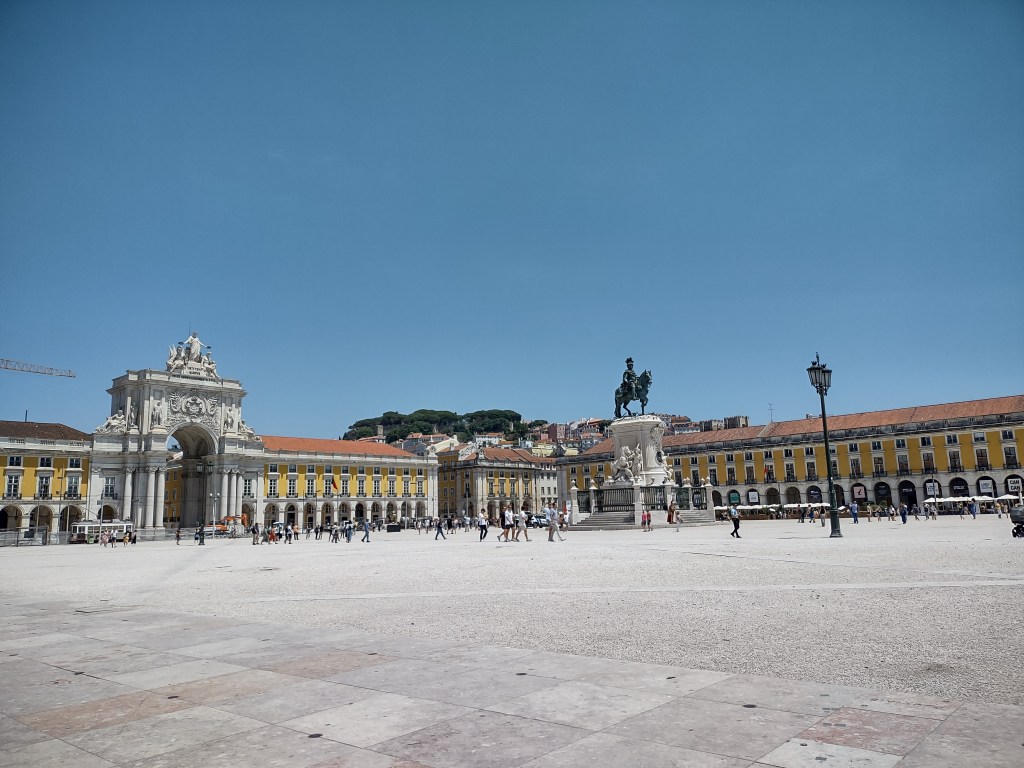
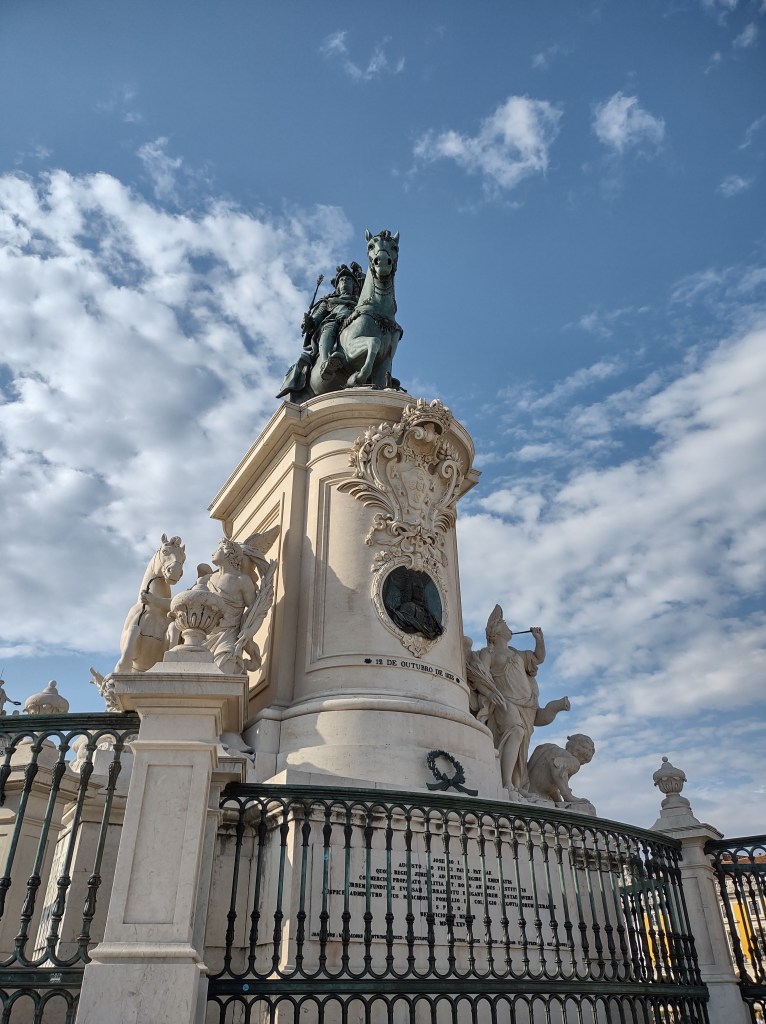
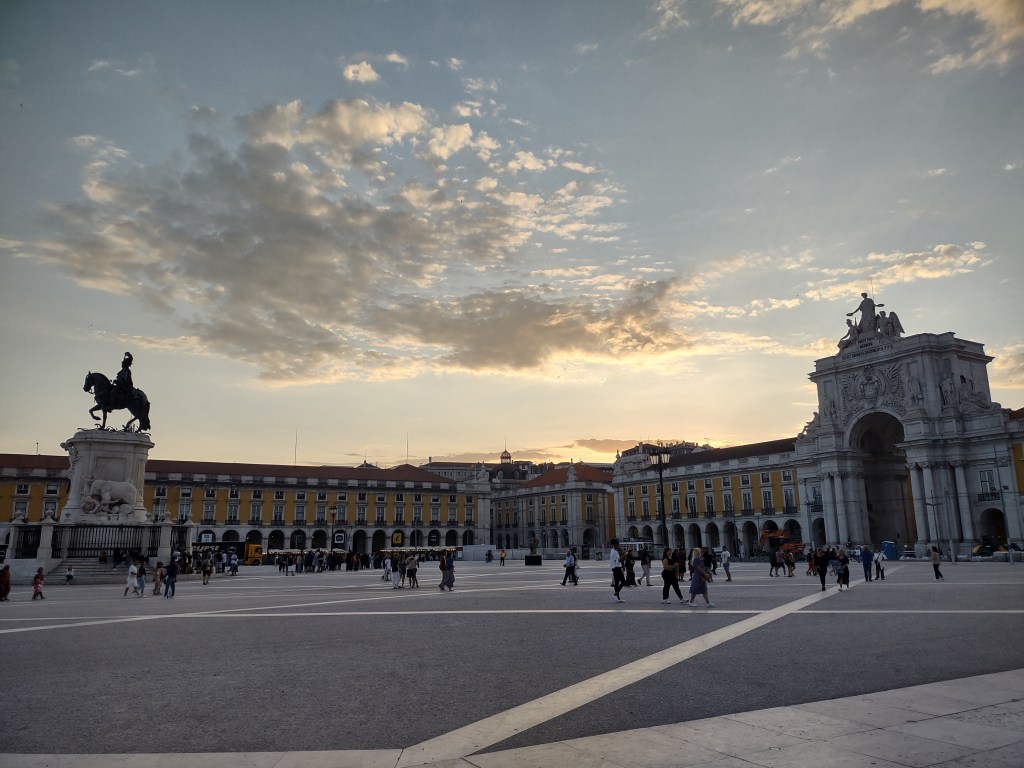
And a finer icon of Lisbon than any tram.
 orwellianTwo
Leave a comment