And so the mighty Tagus river, the greatest in Iberia, slips slowly out of the great lagoons of Lisbon, and out through the breakwater and into the wide Atlantic itself.
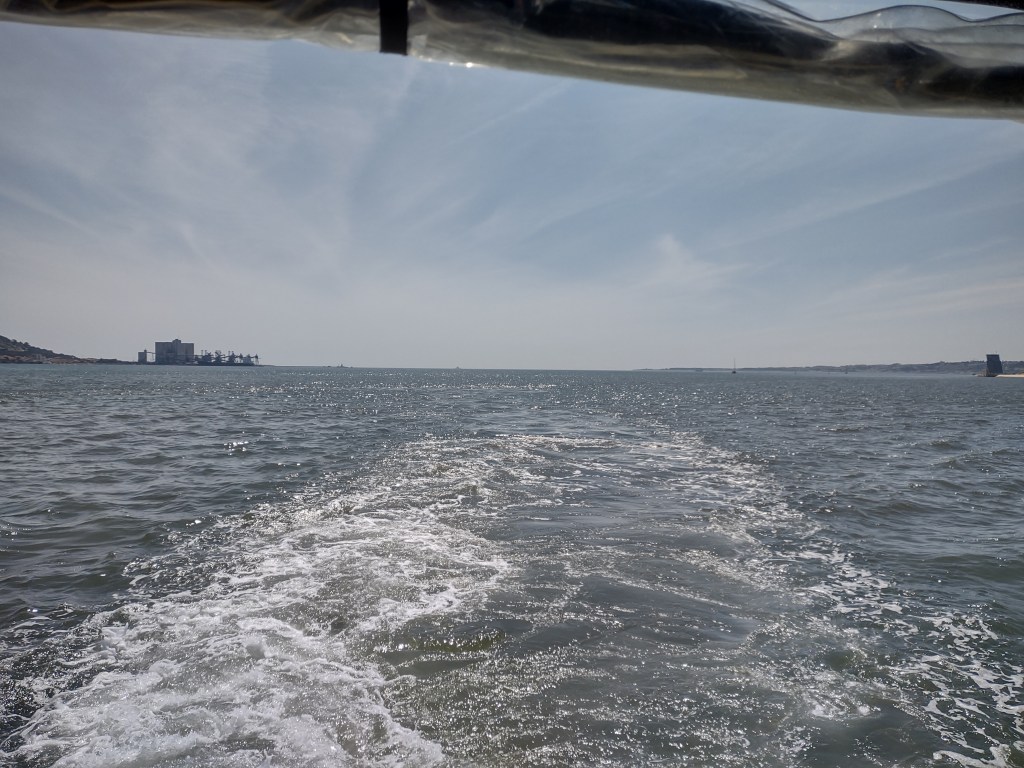
Take a look at that horizon, that gap between shore and shore, mysterious and alluring, the unknown open sea. Not completely unknown to Phonecian, Roman, Moor; the growth of Lisbon had always been rooted in its superb harbour and seaborne trade. But in the 15th century Portuguese sailors took it upon themselves to truly extend the margins of this unknowable sea, to go in new directions, to follow old directions further than those who had gone before.
Lisbon and Portugal continues to celebrate this Age of Discoveries, when Portuguese adventurers like Vasco de Gama discovered the sea route to India, and others sailed west and ran into what we now know as Brazil. And so Portugal grew a great maritime empire, stretching from South America to the coasts of Africa and across the Indian Ocean.
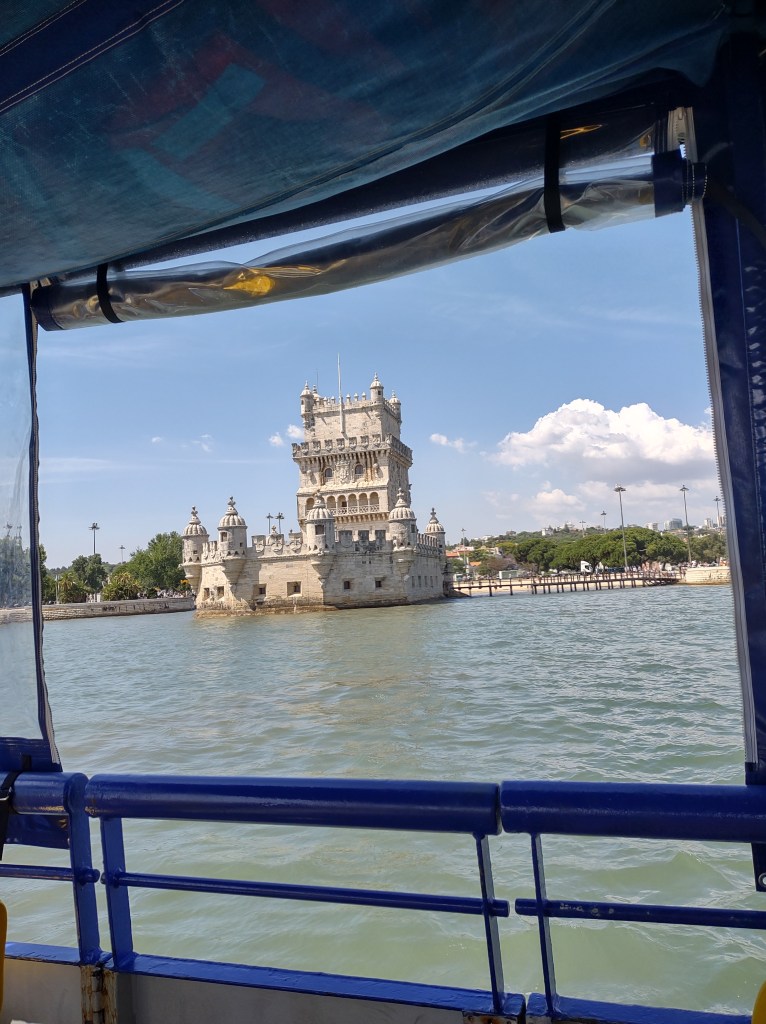
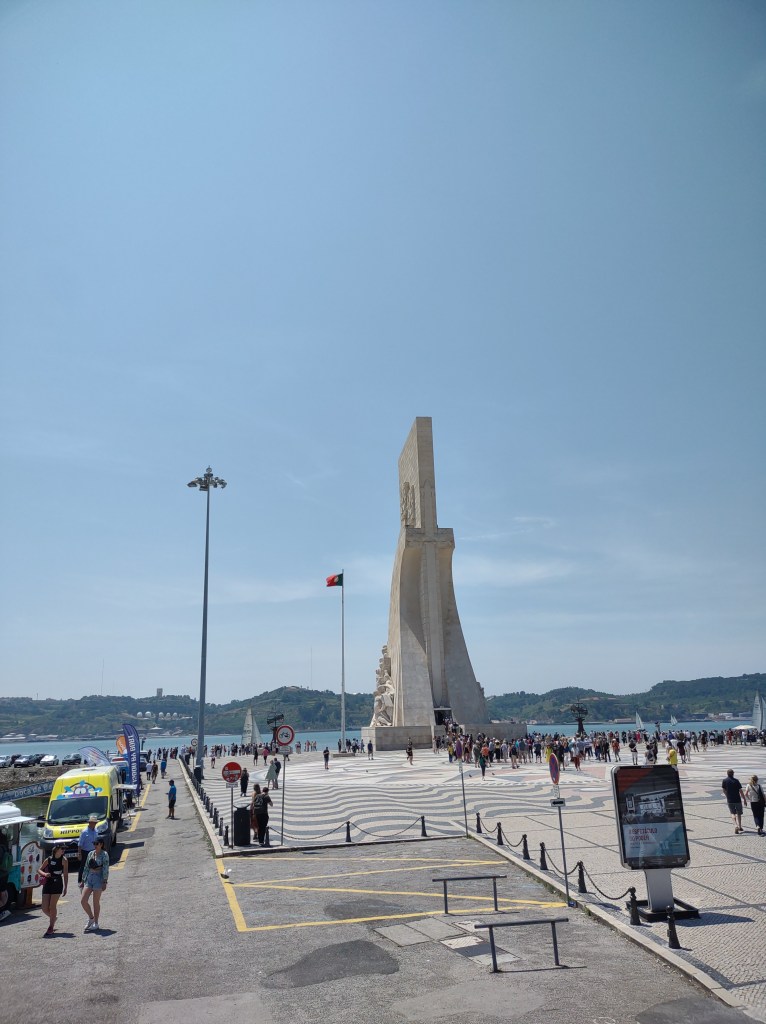
So come with me to the bustling streets and jetties of Lisbon in this Golden Age as the great ships sail out and the gold and spices roll in. Smell the exotic scents, marvel at the spectacular Manueline architecture as a new city emerges, rub shoulder-to-shoulder with people from across this new world, marvel again at the strange animals that have been brought across to the amazement of the locals. Look over there! some elephants, from India, or Africa, who knows, but they look quite the sight…ah, good, the handler has seen us and he’s leading one of them over to us.
It’s the Elephant in the Room.
What Portugal calls the Age of Discoveries was not so golden for the “discovered” of course. The mere fact that you were considered “discovered” suggests you had no independent existence in the first place, leaving you ready for dispossession, enslavement and colonisation. That’s if you were lucky. Vasco de Gama was no innocent tourist; his ship was armed and for example he used them on unarmed Arab boats on the East African leg of his trip. (He eventually stopped off at Malindi in Kenya to ask the locals how to get across to India.)
You don’t see much about the other side of the ledger in the tourist stuff here. Undoubtedly Portugal is one of a number of European countries struggling to deal with its colonial past, but I was surprised by how unapologetic it was until I was reminded of something else.
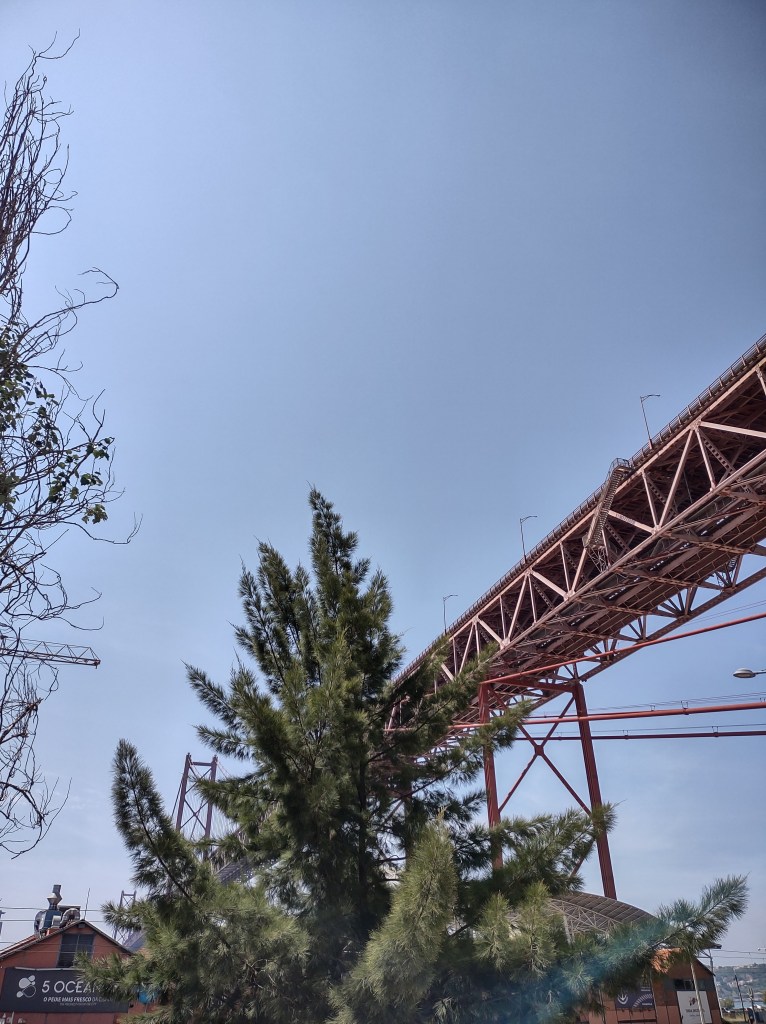
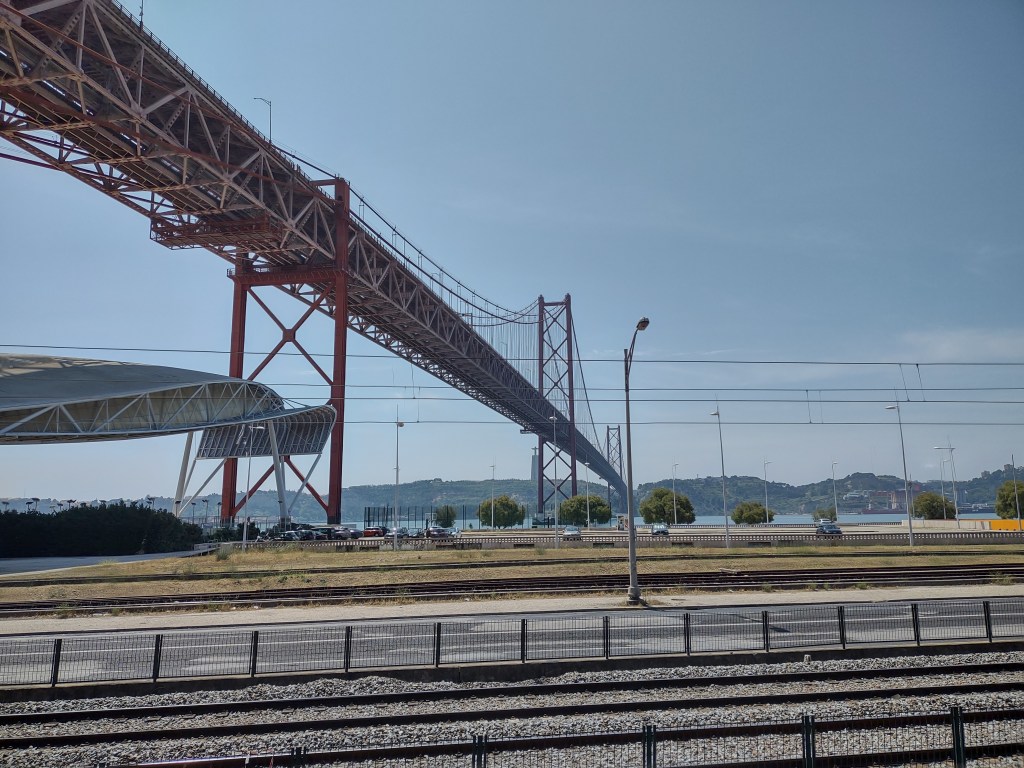
The graceful span of the Antonio Salazar suspension bridge across the Tagus, a few minutes from the Belem Tower and all that discovery glory.
Well that was what it was called up to 1974, named after the de facto dictator who ruled Portugal from 1933 to 1968. In 1974 it was renamed the 25th of April Bridge. Why? Because that was the day the army rose up against the hard-right regime, after years of young men being forced to fight in anti-independence wars, years of people risking everything in their fight for democracy.
It was a unique revolution. Triggered by the radio playing Portugal’s Eurovision Song Contest entry, and then a more militant song, the troops left their barracks and took all the usual strategic points in Lisbon including the one where the then dictator was held up. Meanwhile, a local shop owner was getting ready to celebrate the anniversary of her store by decorating it with red carnations. But when she saw the squaddies out on the streets, she handed the flowers out to them instead. Some of them stuck them in their gun barrels – which were never fired in anger.
Back to my theory. It’s only 50 years since the Carnation Revolution. Portugal’s democracy is still young. And the habits that come with being an open society – including a self-critical approach to your own history – are still developing. How Portugal develops during this new Age of Self-Discovery is up to the Portuguese. But as a small country in a wider world that is breaking free of the social and psychological chains of the colonial past, the routes it charts this time will not always be the ones it chooses.
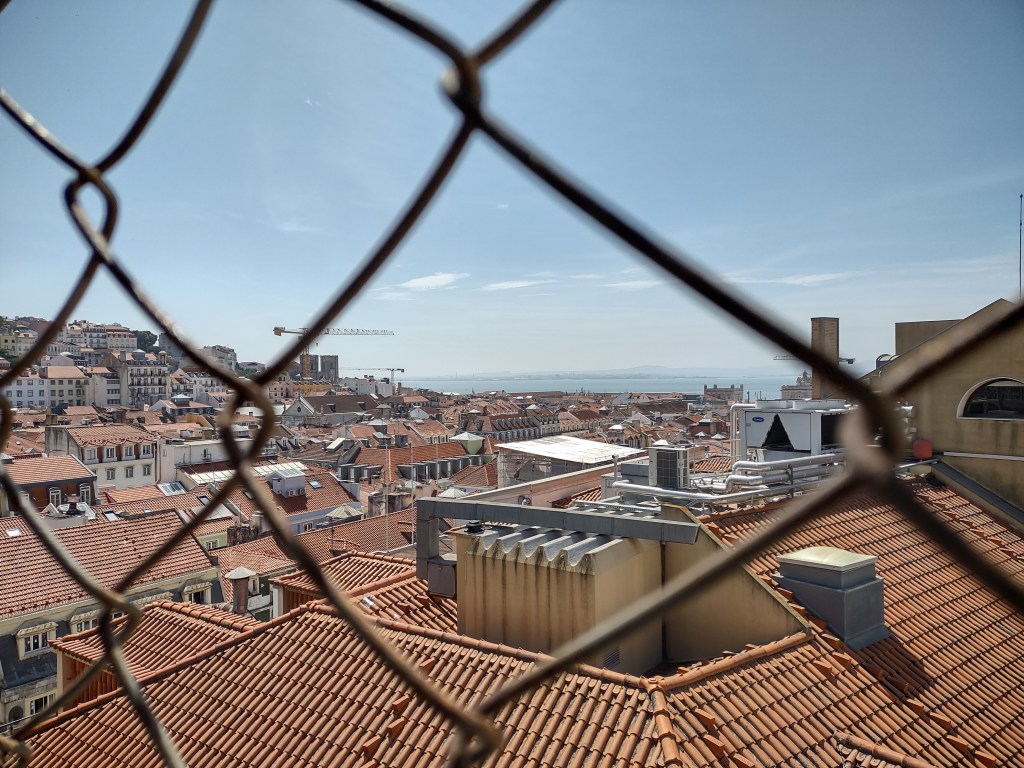
Enough history for now. I’ve come to Lisbon on the recommendation of a number of people, and it was time to put aside my fears about the place being over-touristed (there are lots of tourists and the pavements are narrow) and just see for myself, to establish, to paraphrase Portugal’s most notorious son, whether or not it is a special one.
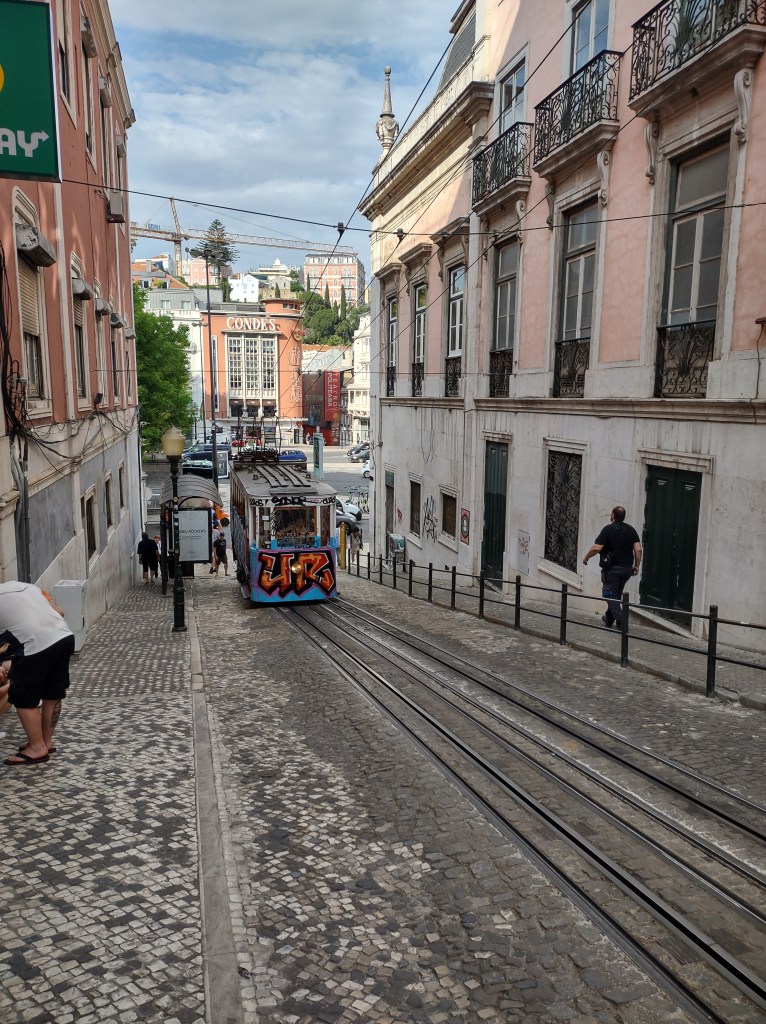
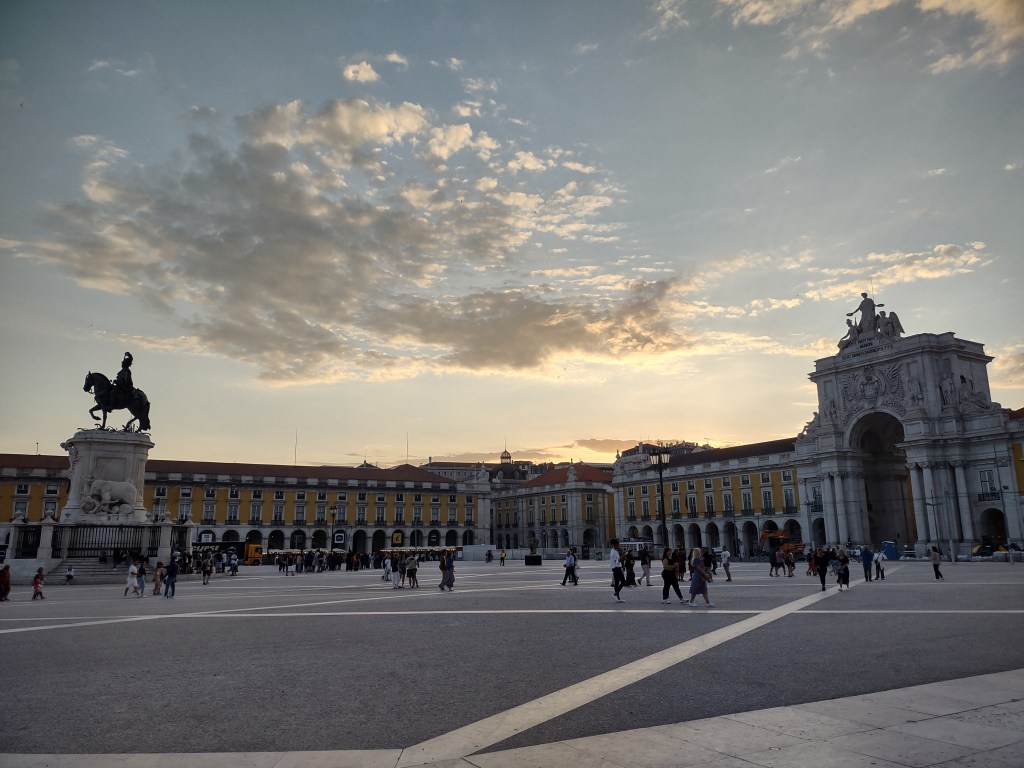
Spoiler alert: Lisbon is … glorious. More later!


 orwellianTwo
Leave a comment