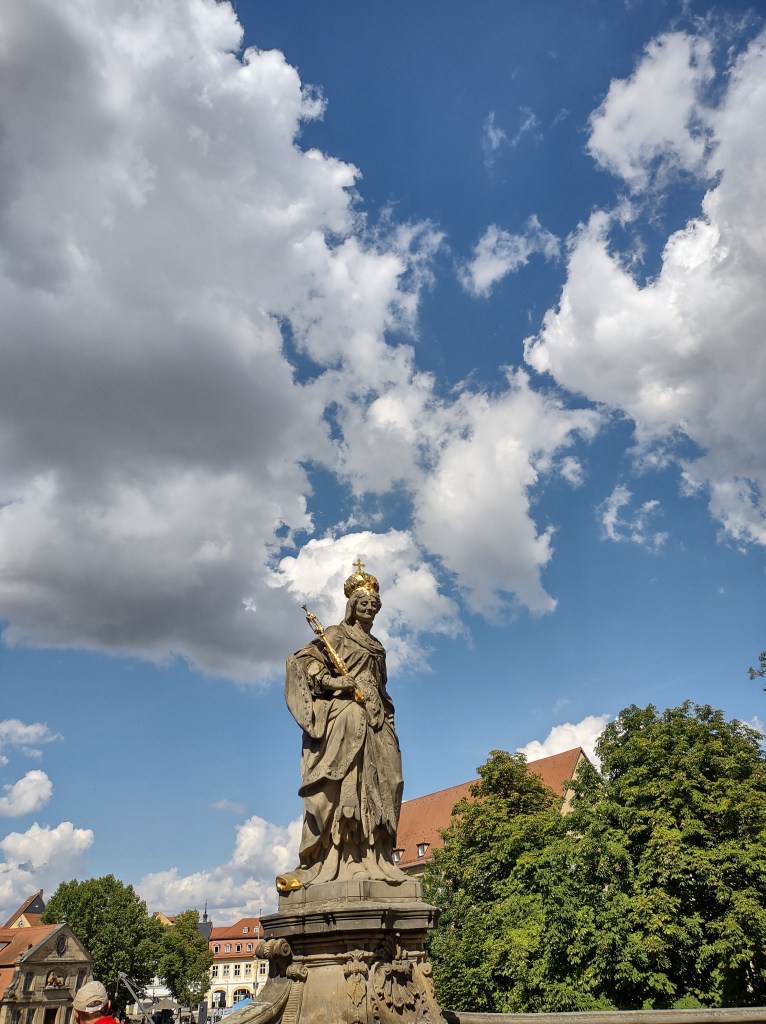
Say hello to Kunigunde, everyone. (Kunigunde says Hi.) There she is, right in front of us, on her favourite spot on the old bridge right in the heart of beautiful old Bamberg.
And that’s not the only reason why she’s smiling. Her husband Heinrich, son of a Bavarian duke no less, has given her a most romantic “morning gift”. Now what could it be? The finest jewels, the most elegant dresses?
A booking for two at one of Bamberg’s picturesque restaurants? No. Fish from Bamberg:s own “Little Venice”? Nein. A lifetime consignment of smoked beer from one of Bamberg’s sixty-five old breweries? Nope.
No, hubby isn’t interested in any of the wonderful things the good people of Bamberg can come up with. Oh no.
She’s getting the whole of Bamberg itself. Now, look at that smile again. Smug, isn’t it?
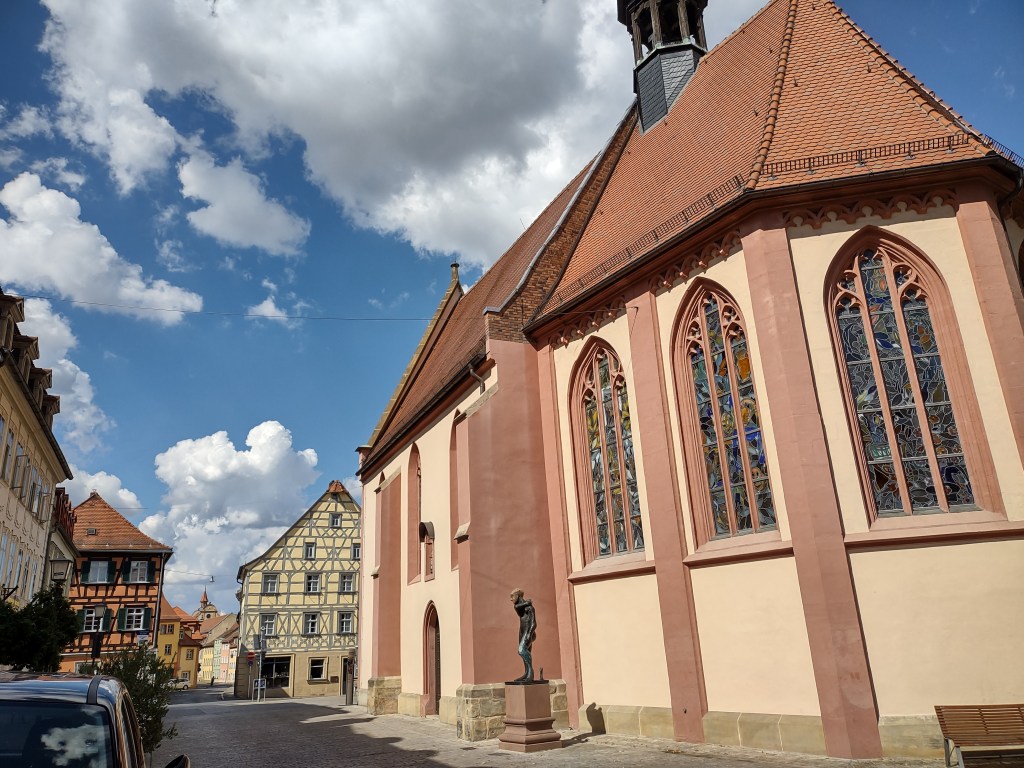
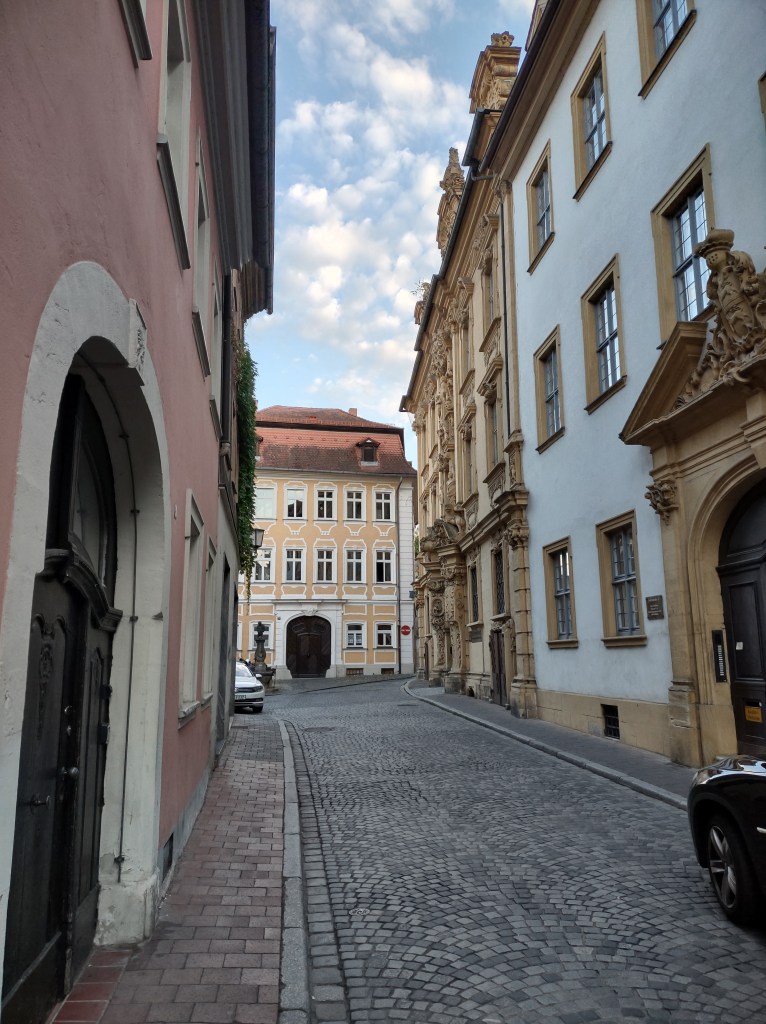
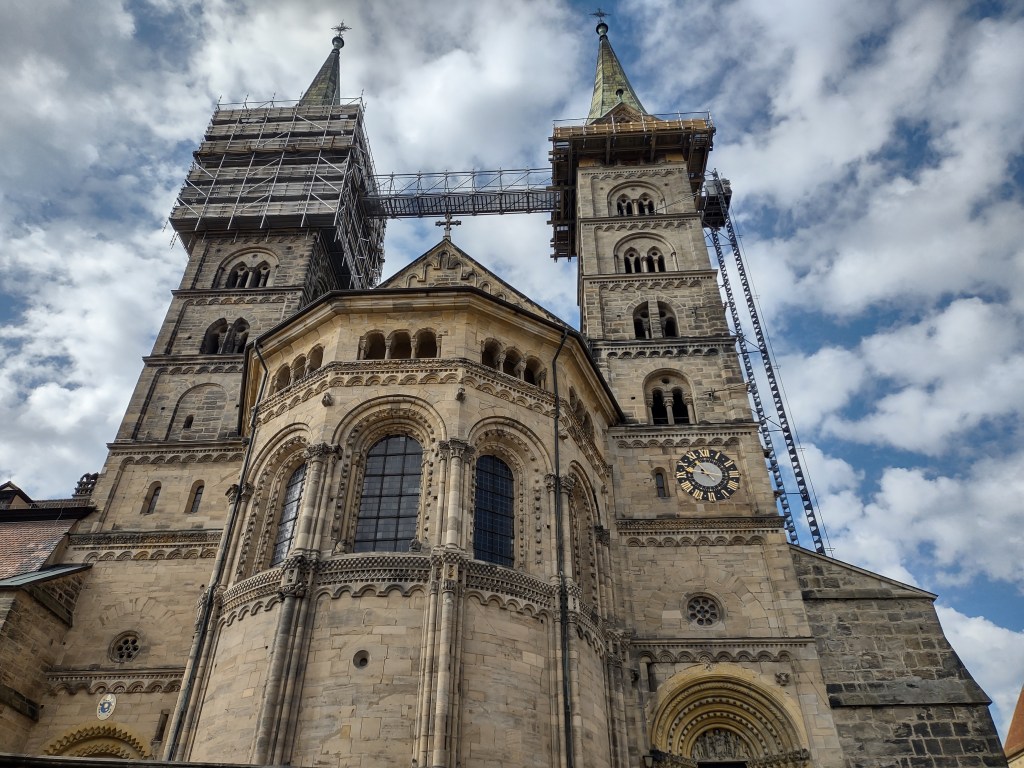
Still, the locals wouldn’t begrudge them anything, since Heinrich (who became Holy Roman Emperor) and Kunigunde were heavily responsible for Bamberg’s development having founded a bishopric here in 1007. In fact Kunigunde, a key political advisor to her husband, was loved so much they made her a saint. The power couple even had a cathedral built in 1002. After a few fires we’re left with a reconstruction that dates back to the early 13th century.

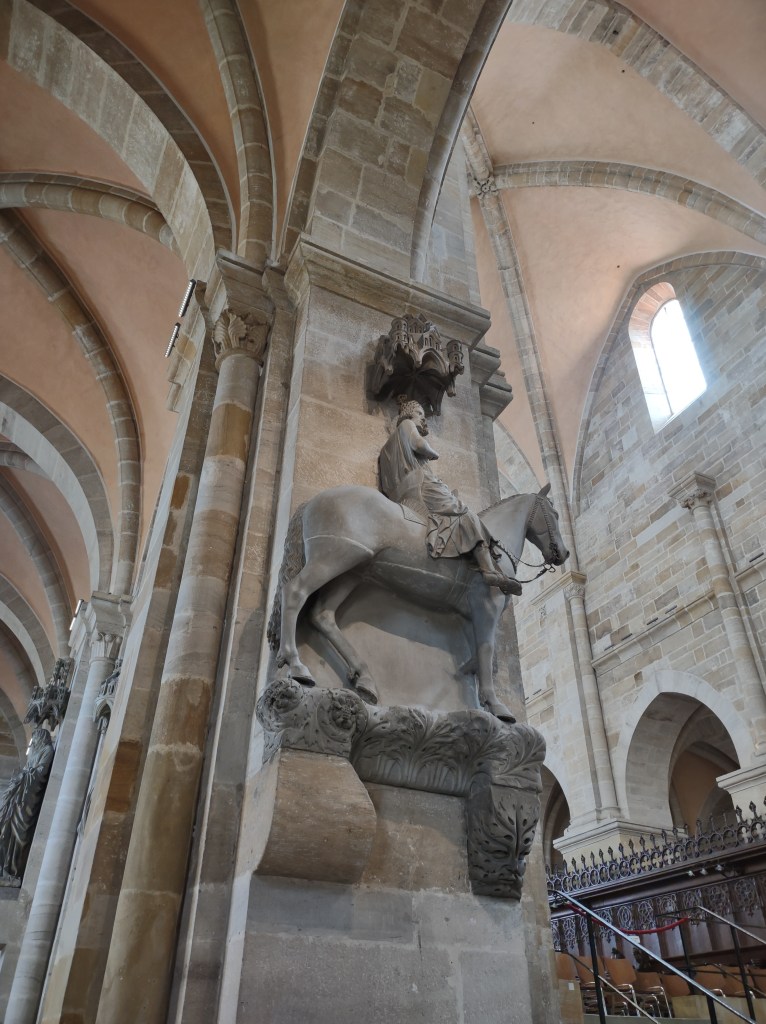
Ah, you’ve found him, the enigmatic Rider. Rather distractedly, as if he’s thinking about checking his phone for texts, he’s looking towards the tomb of Heinrich and Kunigunde. A pilgrim? King Stephen of Hungary? No-one knows, although scholarship is tending to the latter. What we do know is that he was originally painted and with dark hair. And what you probably already guessed was that Hitler and the Nazis tried to pretend the Rider had been painted with blond hair and blue eyes. But that was eighty years ago. Such a good thing that things have moved on and we no longer have to deal with the lies and misinformation of the far-right.
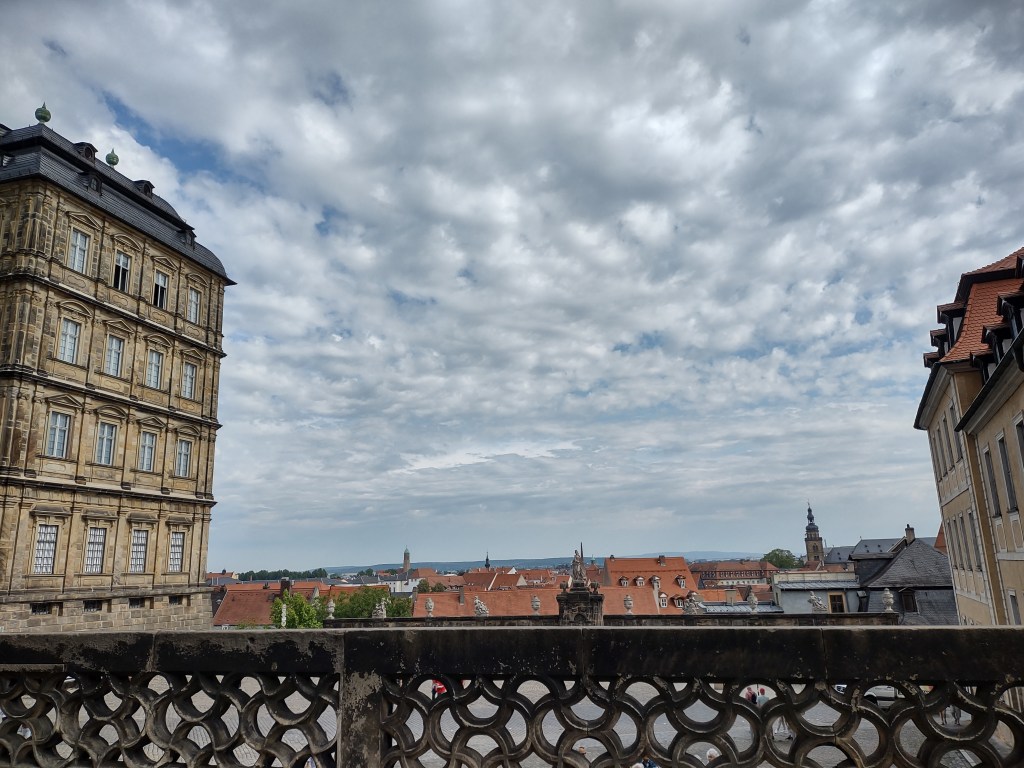
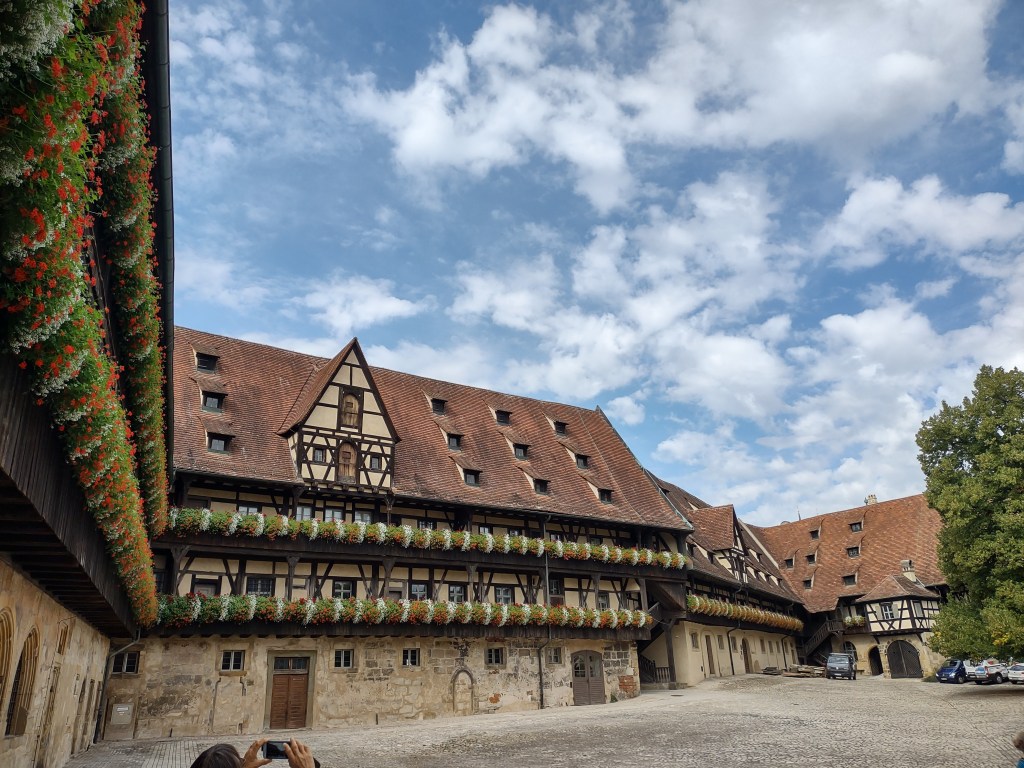
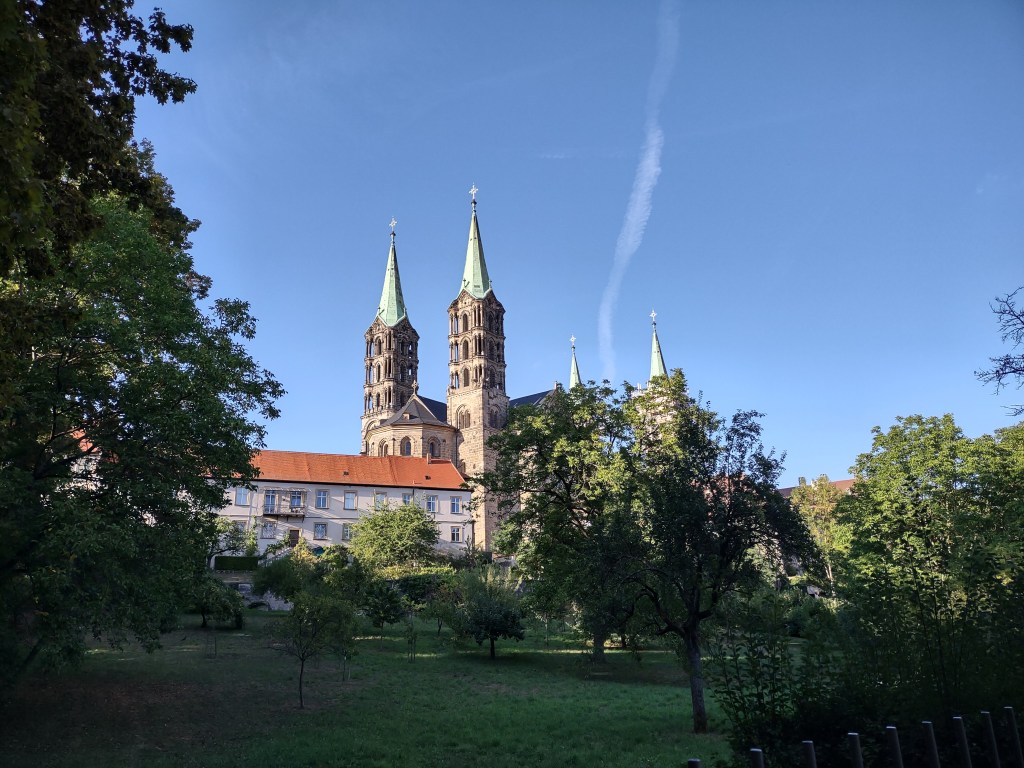
The cathedral lies on one of the supposed seven hills of Bamberg, on the town’s south west corner. Here the prince-bishops had their very-splendid residences and Bamberg continued being lovely as it developed from the medieval through the Counter-Reformation and onto the Baroque. It wasn’t all wonderful though. There were wars now and again, but the worst came with the witch-burning mania of the early 17th century. It’s estimated that around 800 people, mostly women, were murdered until the Swedes occupied the place during the Thirty Years War and the madness came to an end.
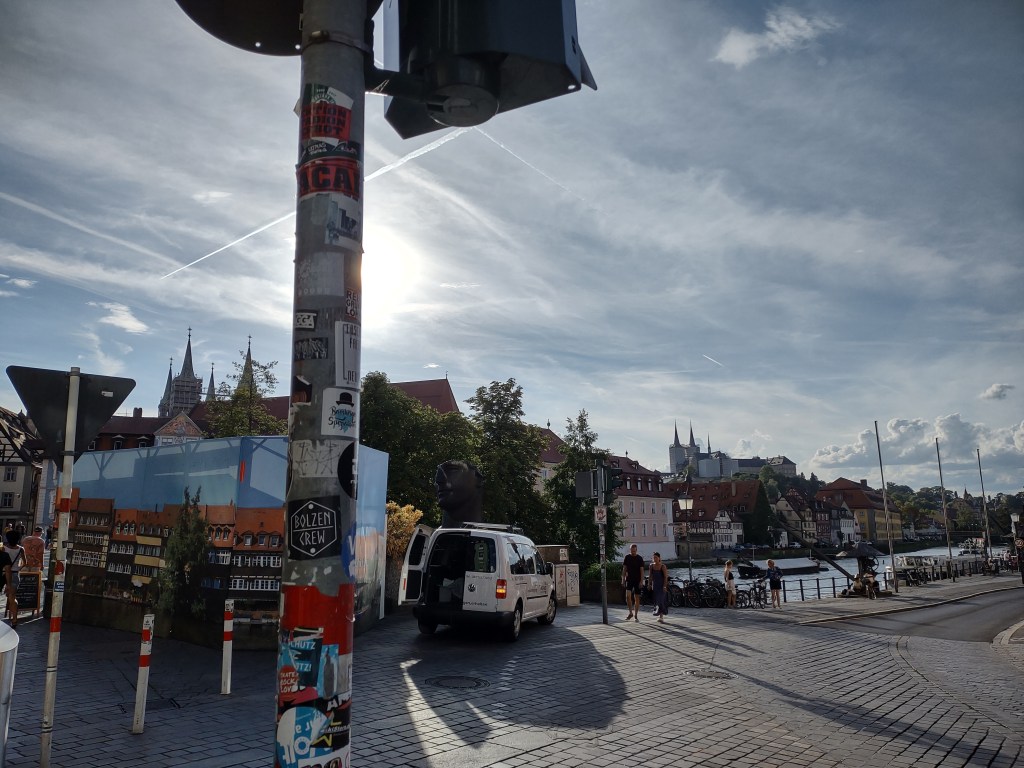
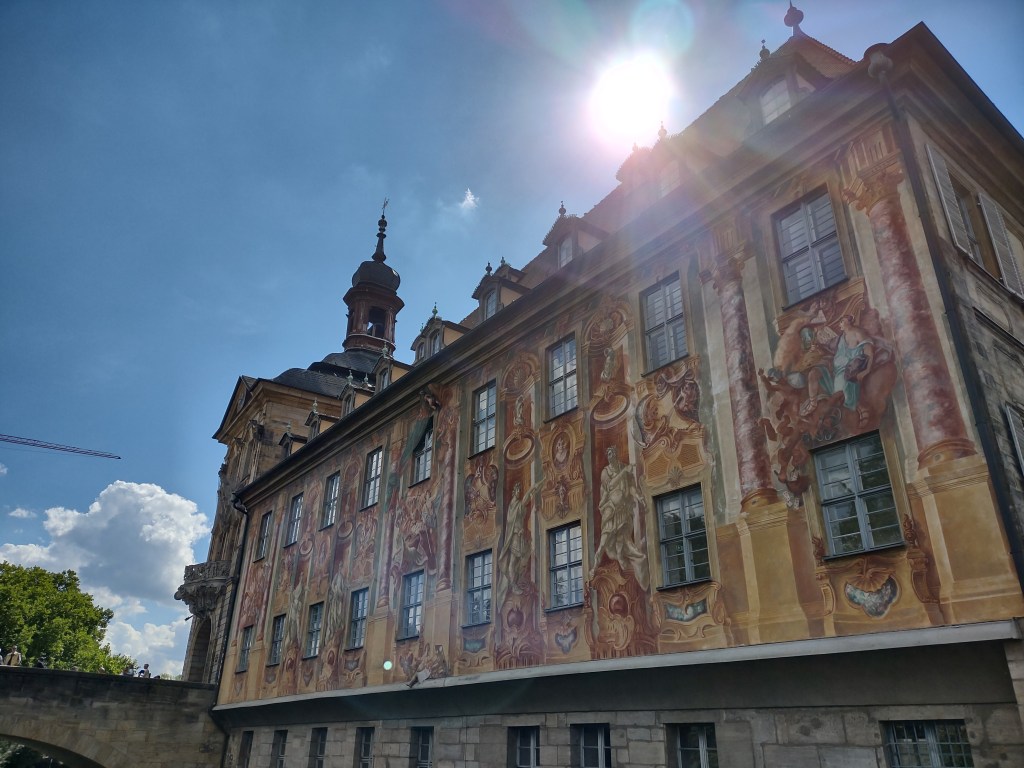
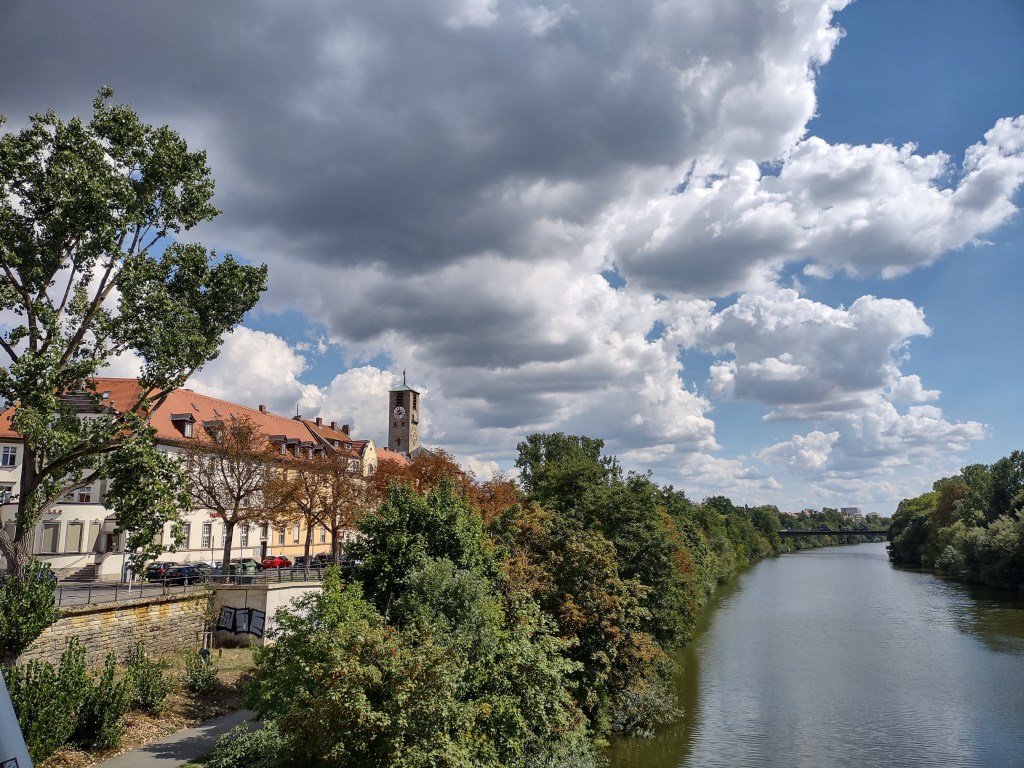
So there’s two spires of the Cathedral to the left, a monastery on the hill to the right, and you can also see the river Regnitz. Note the buildings on the riverside, a very narrow stretch of land called the Strand. The hills belonged to power – the church, the Franconian nobility, the prince-bishops – and the local people had to find somewhere else if they were going to have a decent-sized town hall. It’s not clear to me why they didn’t just plonk it on the bank from where we observe the scene, maybe it belonged to someone else. So the story goes that the frustrated burghers just dug some stakes in the middle of the Regnitz, created an artificial island, and went on to build one of Germany’s most famous sights, the Altes Rathaus.
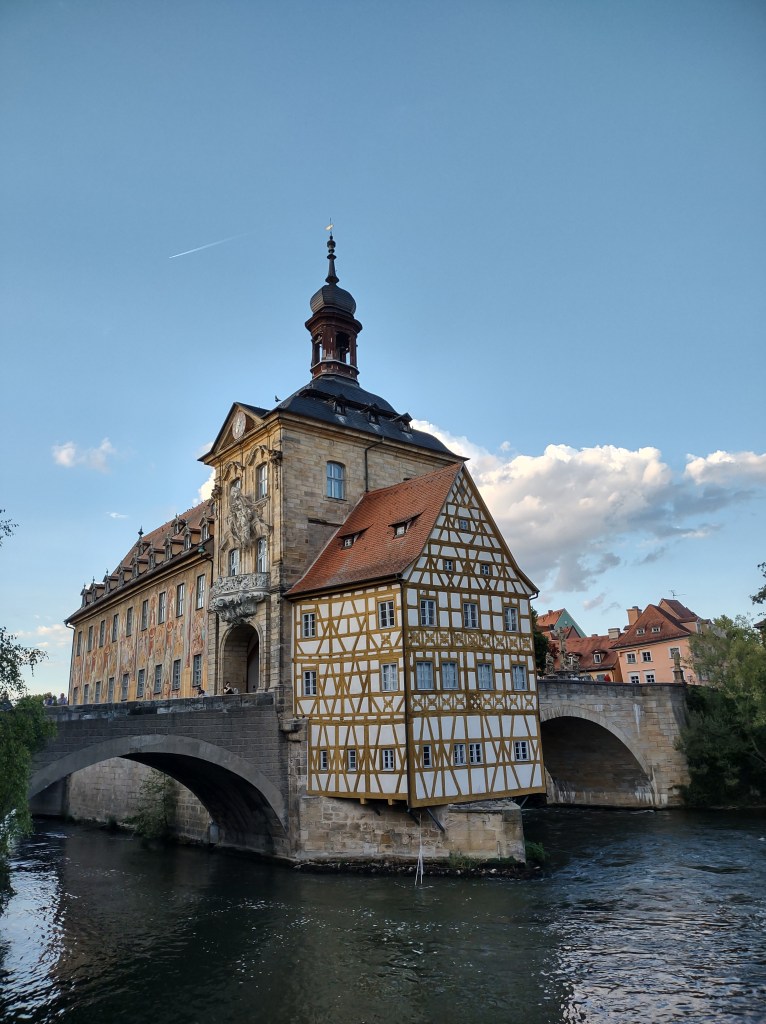
With the fine Baroque additions, the gatehouse, the frescoes, it’s quite a thing to see from any angle. There’s another bridge through the other wing by the way, and that’s where you’ll find smiling Kunigunde.
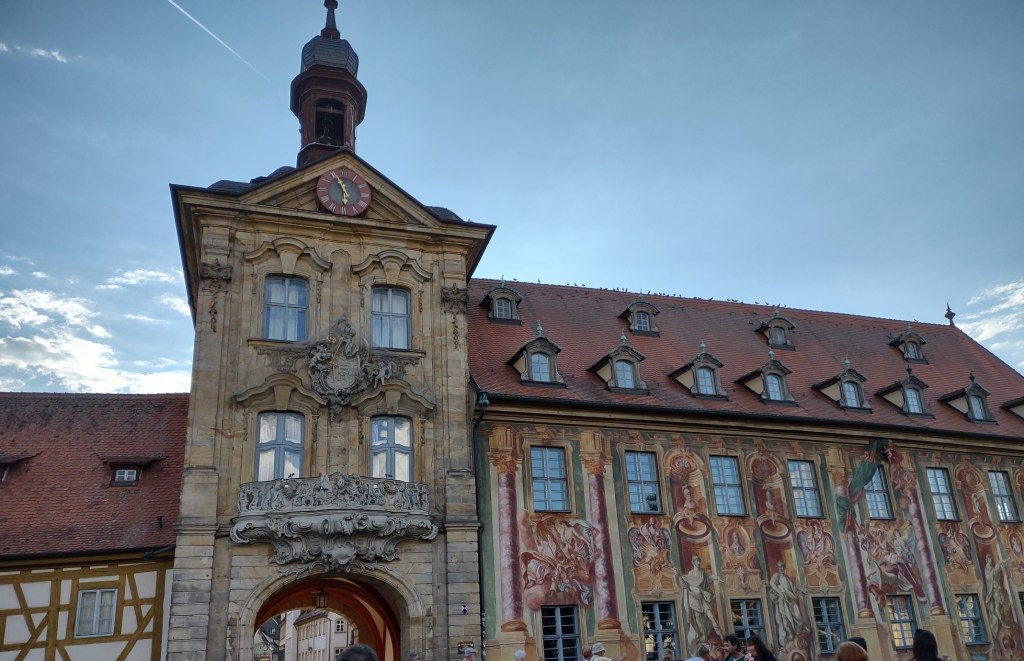
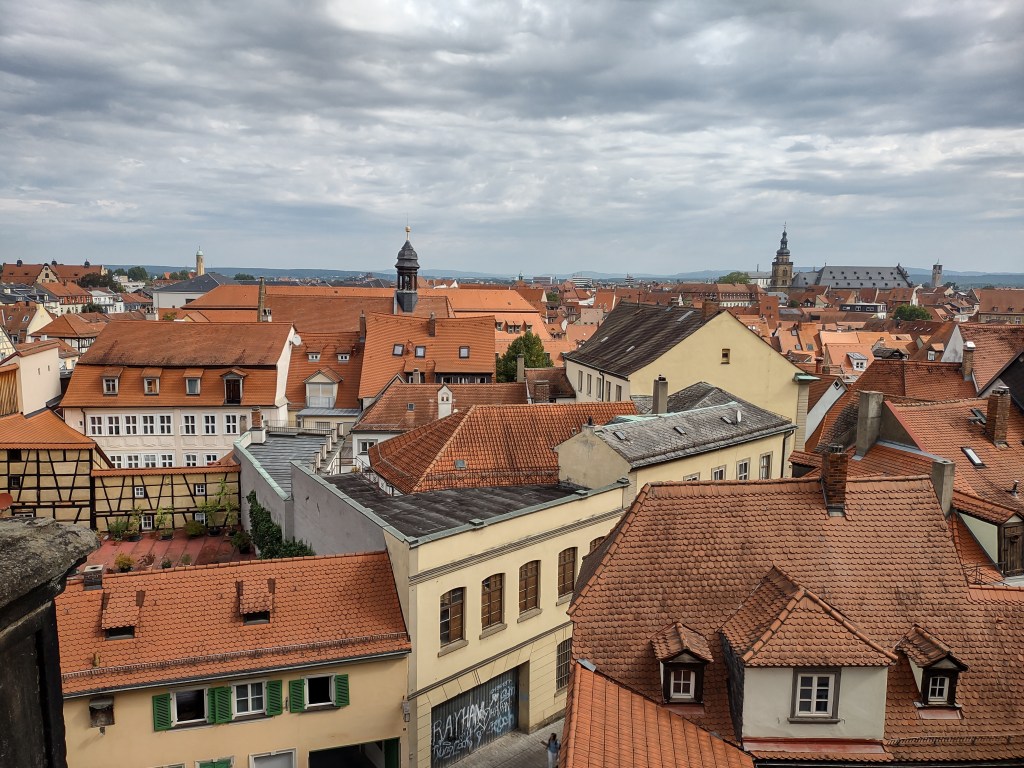
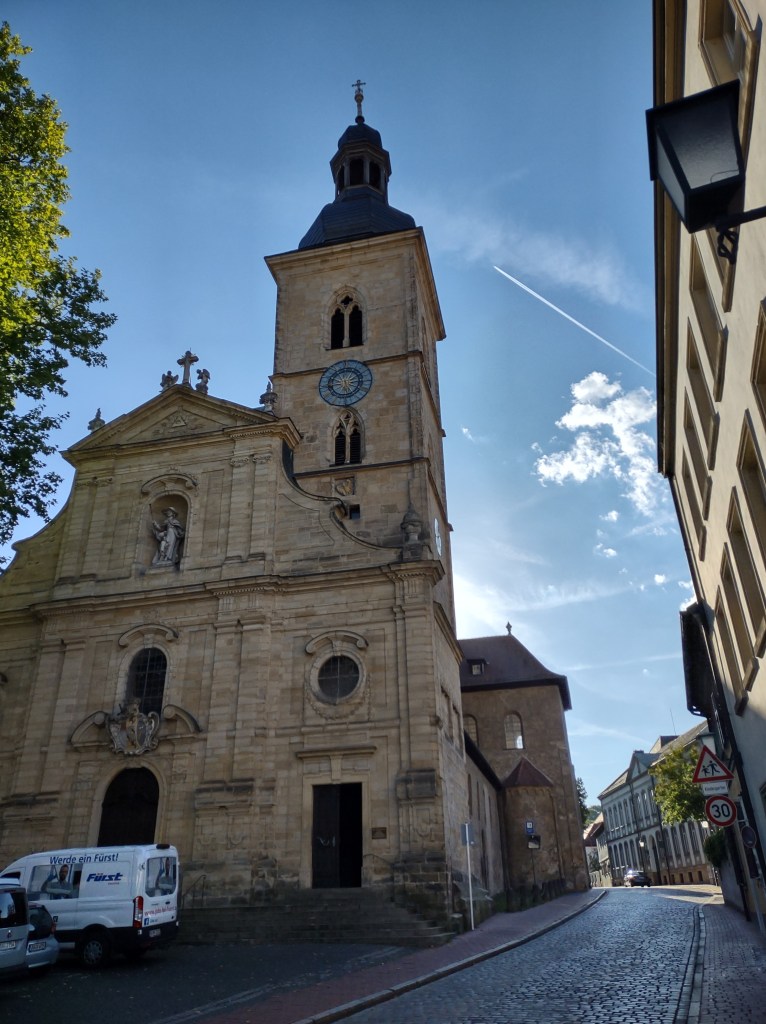
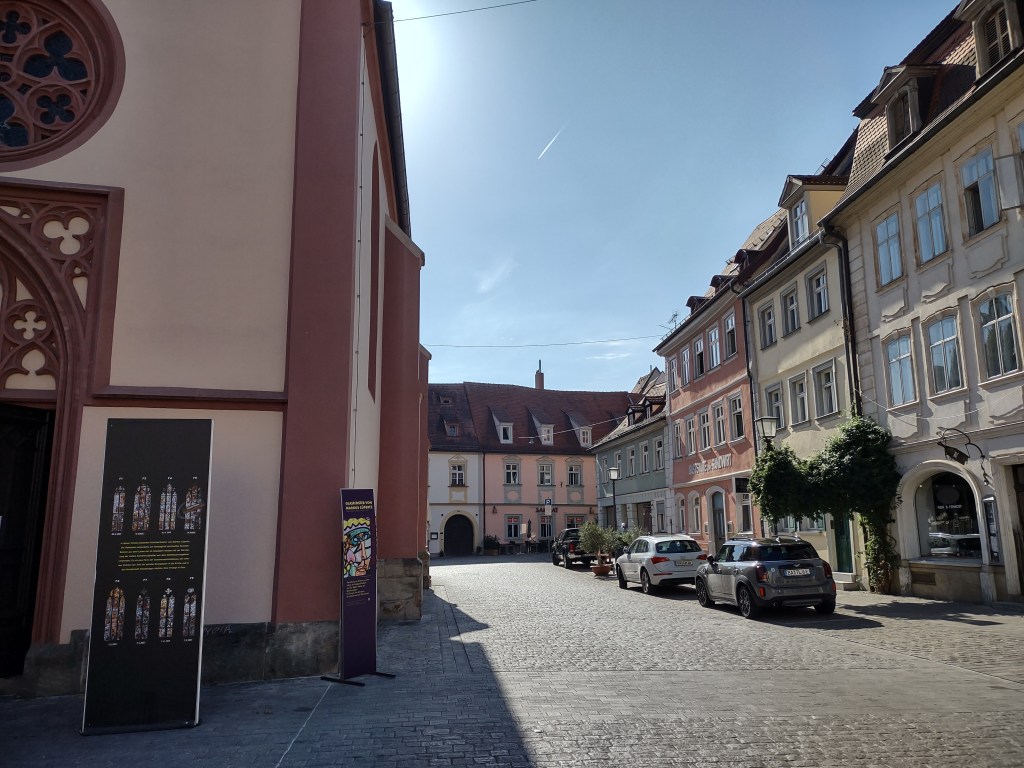
Now you’re probably asking yourself something. Given what we said about Cologne, is what we’re seeing here original, or a post-war reconstruction? (The answer to your other question is easy. Rat is German for “council”. I don’t know where the pest controllers work).
It turns out Bamberg was cleverer. The city prospered through the Middle Ages and onwards to the 18th century, but it started to slide in influence and in 1802 it was ceded to Bavaria from Franconia. So they’d managed to jettison their economic and strategic importance well before the Second World War! In the end only about 4 percent of the town was destroyed and everything I’m showing you is original. Happy days. (Unless you were in the 4%…)
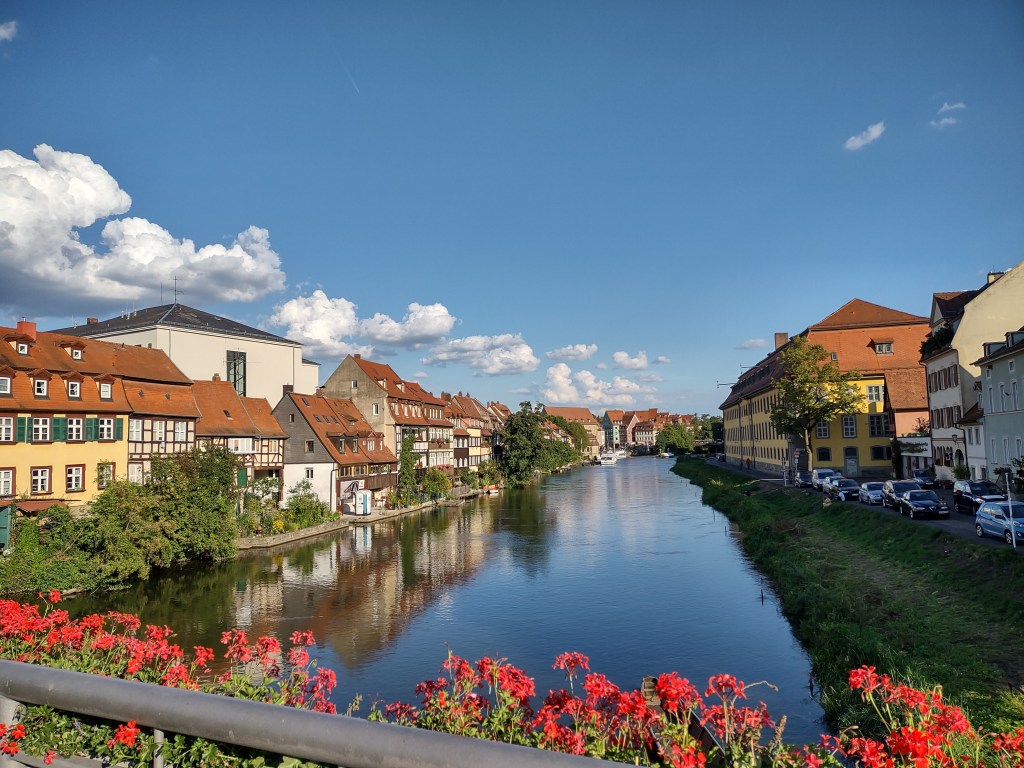
Bamberg then. A special jewel in the heart of old Franconia-sorry-Bavaria. I’ve been lucky with the weather while I’ve been here, and I hope it holds as I push on further on into Bavaria tomorrow. So much more I could have said, so much more I could have shown you, but I hope this is enough for you to feast upon, maybe encourage you to come out sometime to have a look for yourself. (If you do, I suggest you crack open your Duolingo and brush up your German; unless the inland cruise ships are in town it’s very much set up for domestic tourism).
One more tidbit to leave you with. I implied that Bamberg wasn’t bombed because the Allies saw no reason to concentrate on it. Apparently some of the locals have another explanation. The RAF and the Americans did give it a go but they came up against a impregnable defensive shield which no munition could get through.
The name of the person responsible for this defence system is probably still top secret, but I’ll give you a hint. She’s got a lovely smile…
 orwellianTwo
Leave a comment