While the old town of Lucerne is worth seeing in itself, the real jewel here is natural – the glorious expanse of Lake Lucerne, gliding its way through magnificent mountain scenery.
We’re now going out on the lake, and when we get off we’ll join a mountain railway and head to one of the local peaks. Then do a short recce at the top, short because the clouds are in and it’s chilly up there. Then head back. Along the way I’ll talk a little more about the area and, at the end, introduce you to a very sad lion.
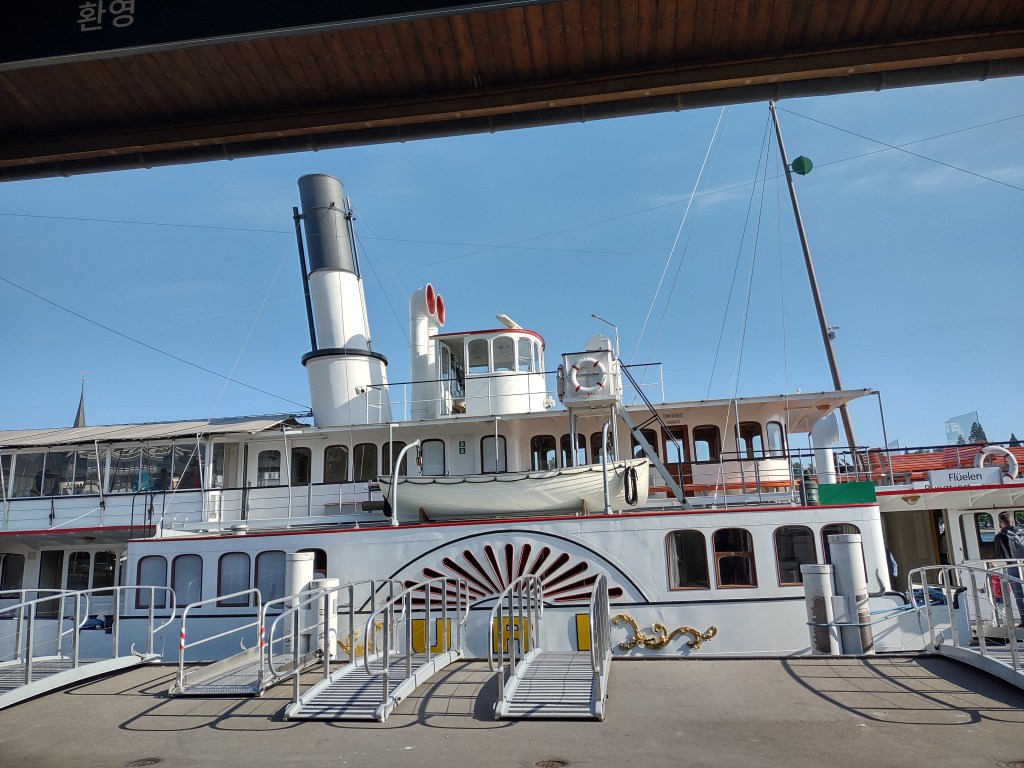
Here’s our boat, built in 1901, the oldest of the paddle steamers that work the tourist trips up and down the lake. It’s name, Uri is taken from a lakeside settlement (Stätt), one of the four (Vier) that border the lake (See). They are all heavily-forested (Wald) which adds to the beauty of the landscape. And also gives us the Swiss-German name for Lake Lucerne – Vierwaldstättersee. Not such a mouthful really. No, really.
In the last post I said that Lucerne joined the nascent Swiss Confederation in 1332. The three other lakeside settlements had already signed up, they were similarly hacked-off with the Habsburgs and their federation was up and running by 1309. Uri was one of the three, Unterwalden another.
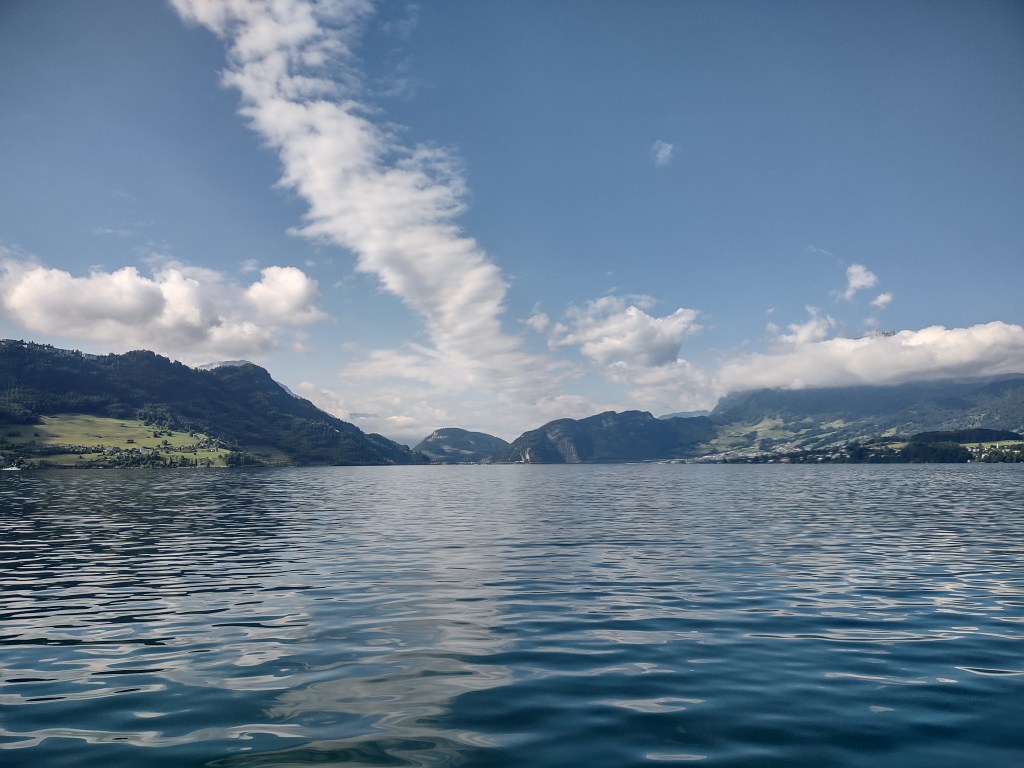
Making our way south-eastwards along the lake now, and to the right you can just make out the town of Küssnacht am Rigi, which lies in a canton that was the remaining founder member of the federation.
Schwyz.
It’s lucky that Schwyz was there at the beginning in some ways. Unterwaldenland has a ring to it but sounds unwieldy, while Uriland sounds like a theme park full of lots of bent spoons. “Uriland has declared its neutrality!” “Wow, I bet they didn’t see that coming!”
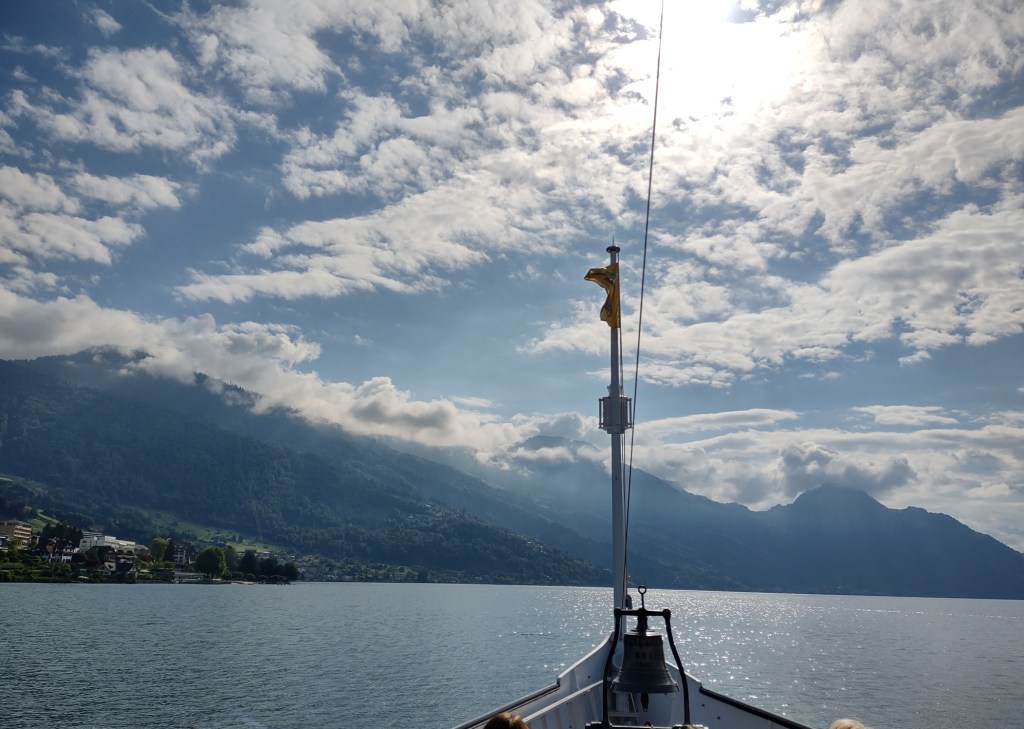
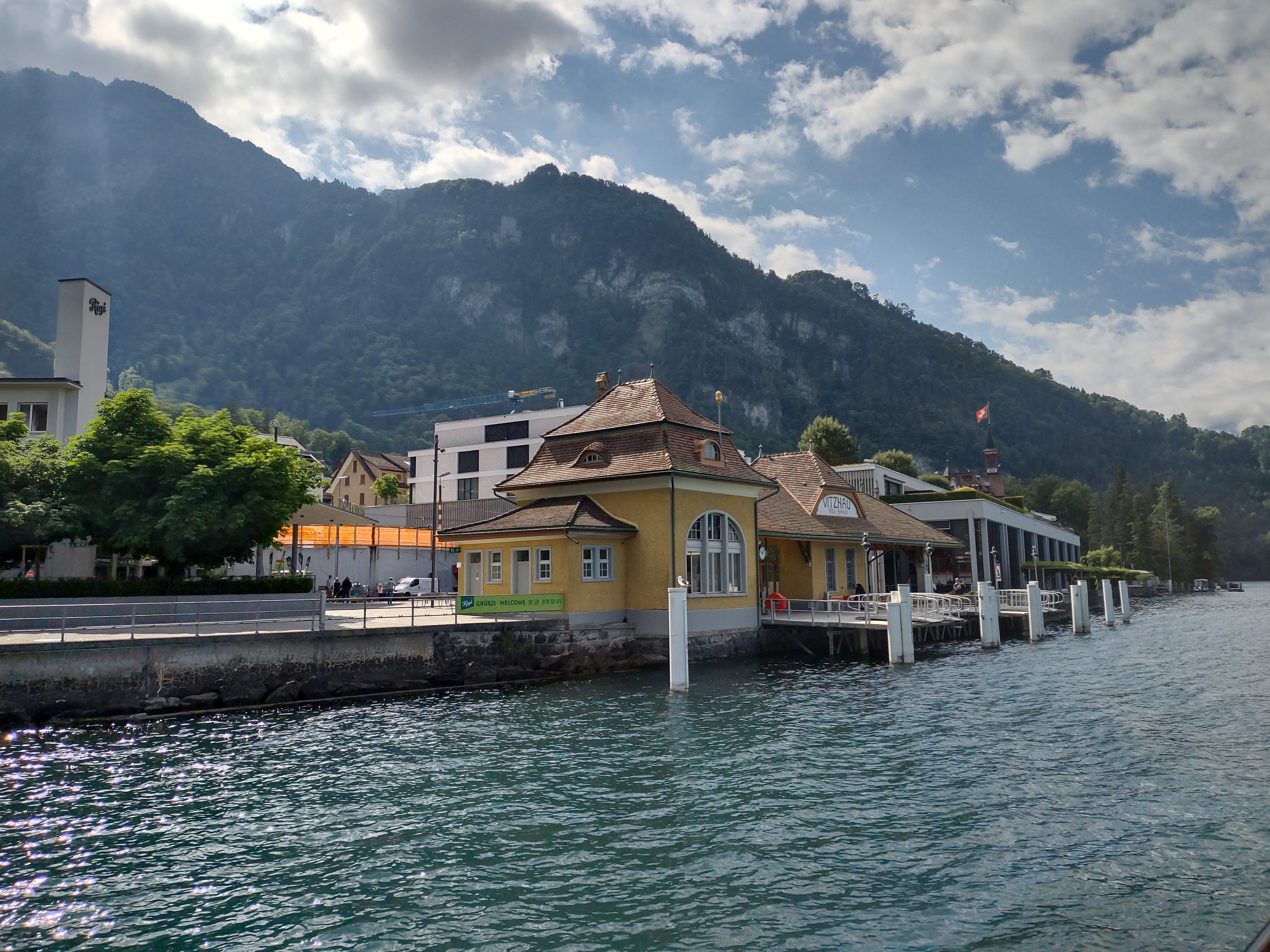
Nearly there now. Out of shot to the left (sorry, I was having problems getting all the right shots) is Mount Rigi, at 6000 feet one of the peaks that overlook Lucerne and a major attraction. The boat slides gently into the stop at Vitznau, where one of the remarkable mountain railways the Swiss specialise in takes you on a 45-minute ride to the top.
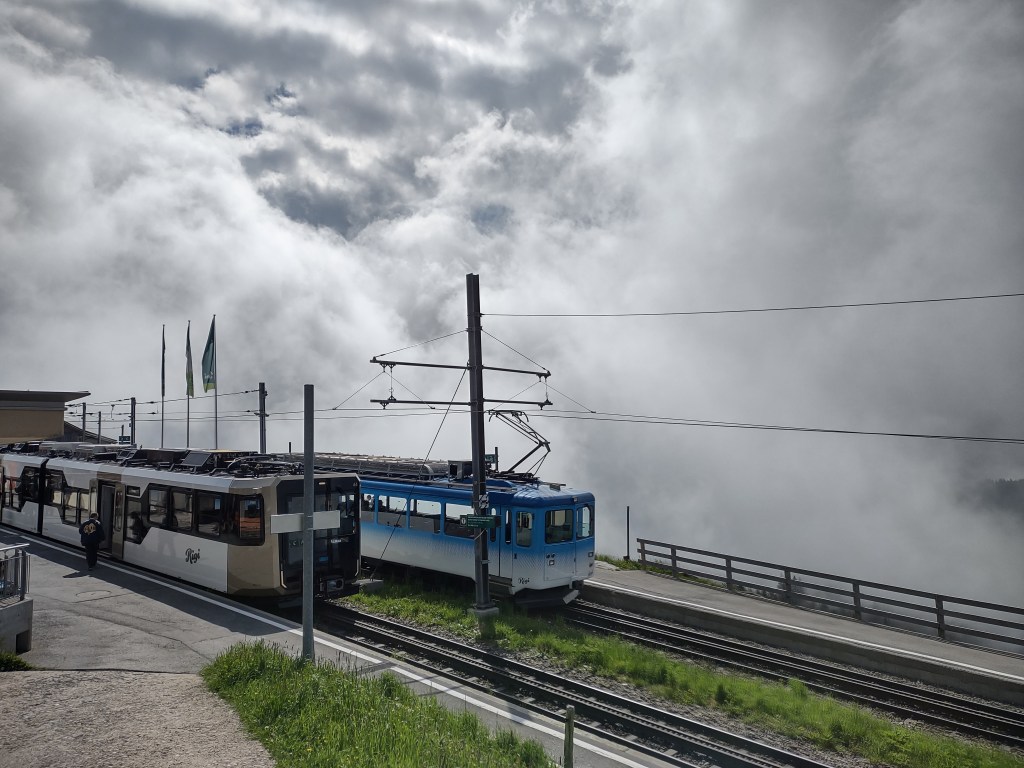
Here’s the station at the top but a warning; the journey up is steep. Really steep! In fact it’s around 60 quid and I bitterly regretted not getting the visitor’s card that would have earned a discount. The line runs at a high gradient in places as well.
Notice the cloud cover; had I stayed a bit longer it would have cleared and conditions would have been a bit more amenable for a bit of a hike, but I decided to take a couple of pictures and get the next train down to the warmth of the boat. So here they are.
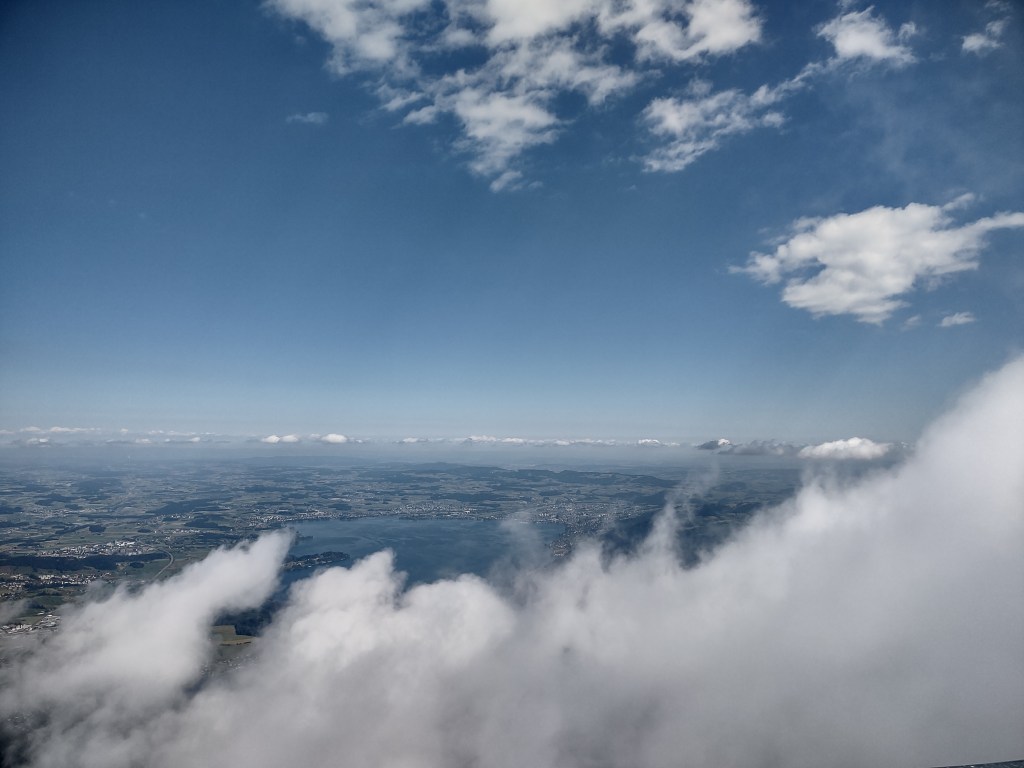
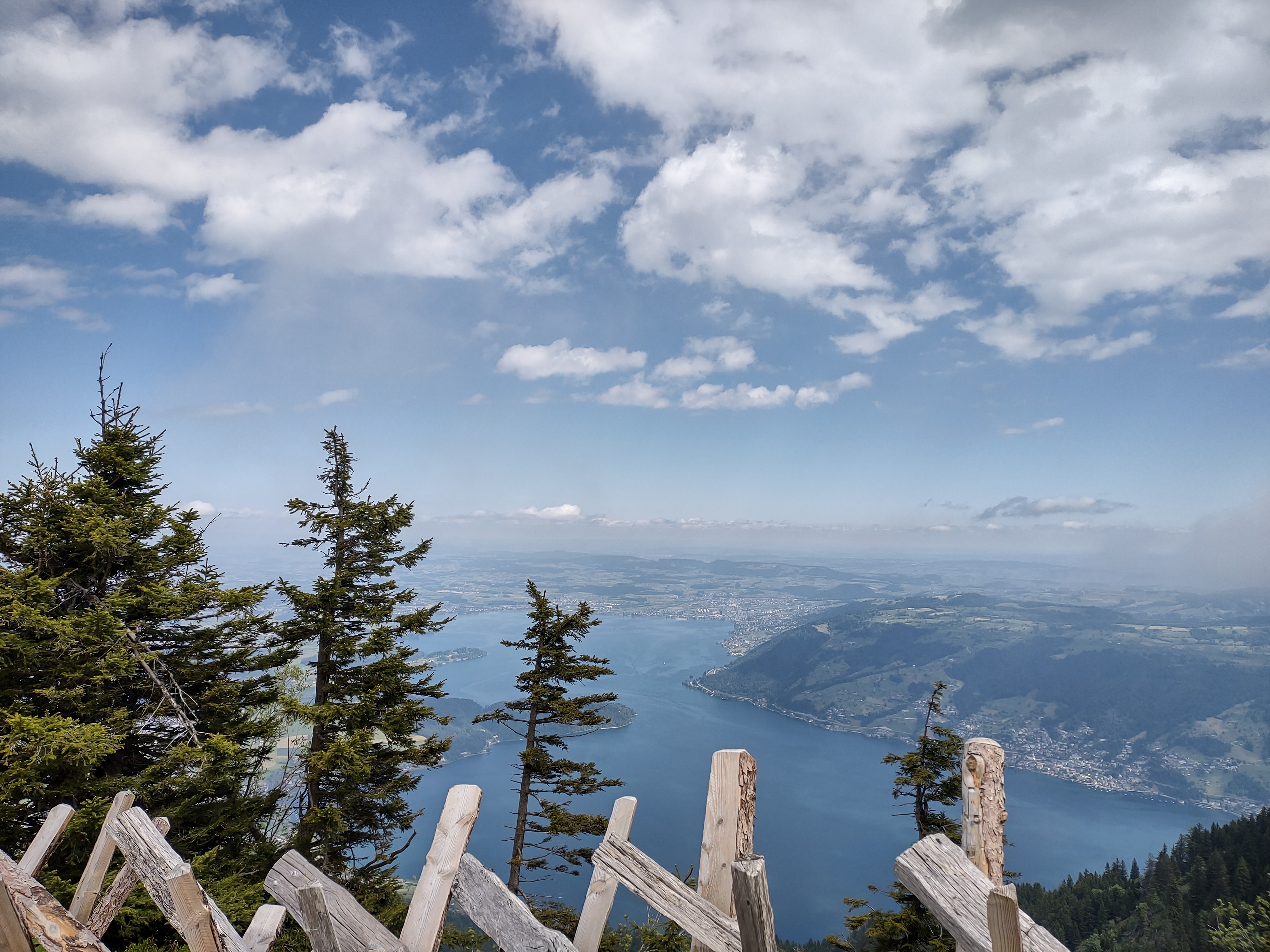
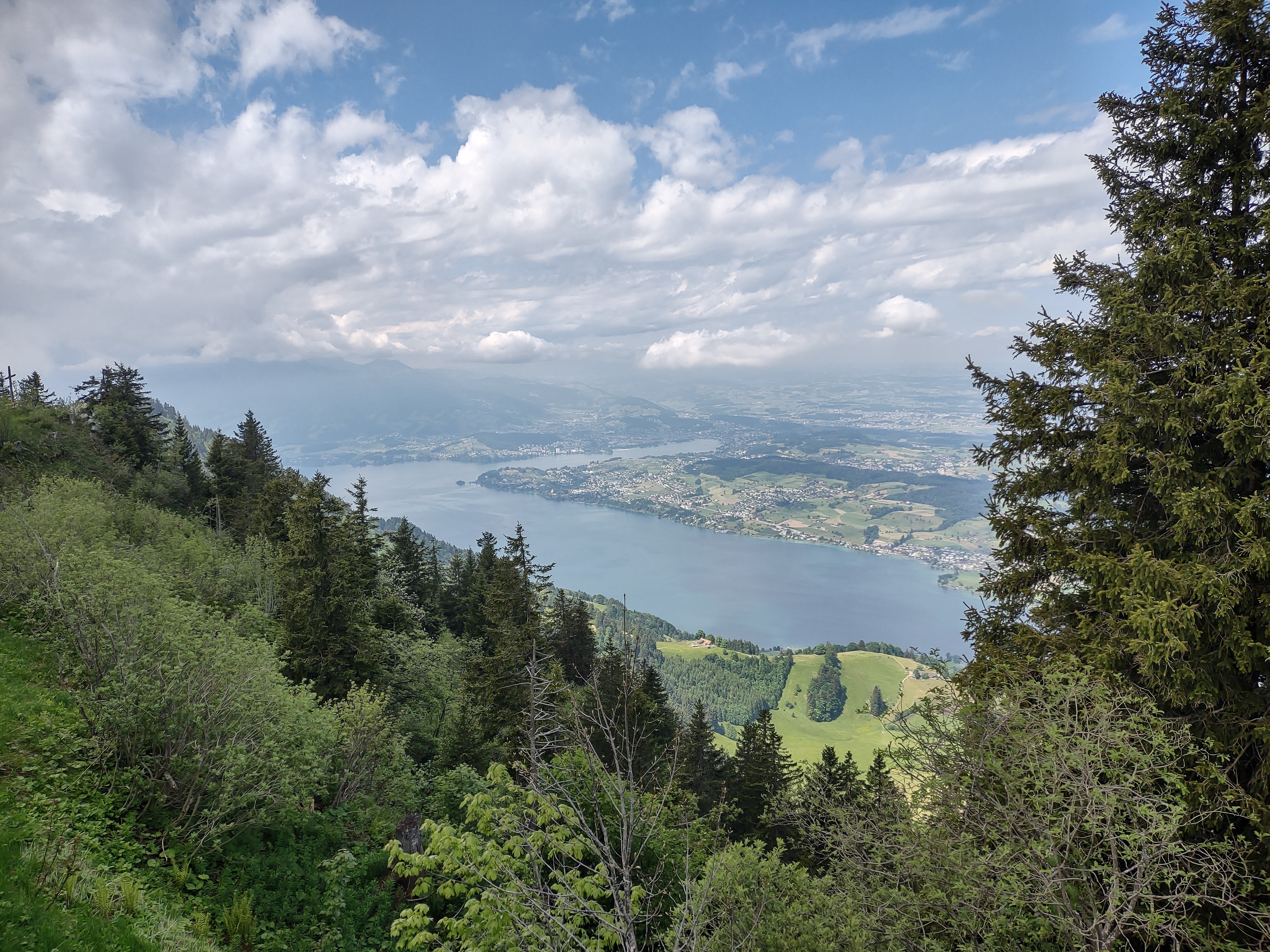
As Switzerland grew in influence during the Middle Ages and more communities joined, stories began to appear claiming to chronicle the origins of this powerful nation. Mountains, forests, glistening lakes, hardy independent mountain people…you can almost see the legendary and the mythological arise from the hillside like mists burning off in the noonday sun. And sure enough, by the late 15th century the chronicles were starting to refer to one particular name, one particular resident of Altdorf in Uri, who was apparently there at the birth of the Confederation, and a dab hand with bow and arrow.
His name was William Tell.
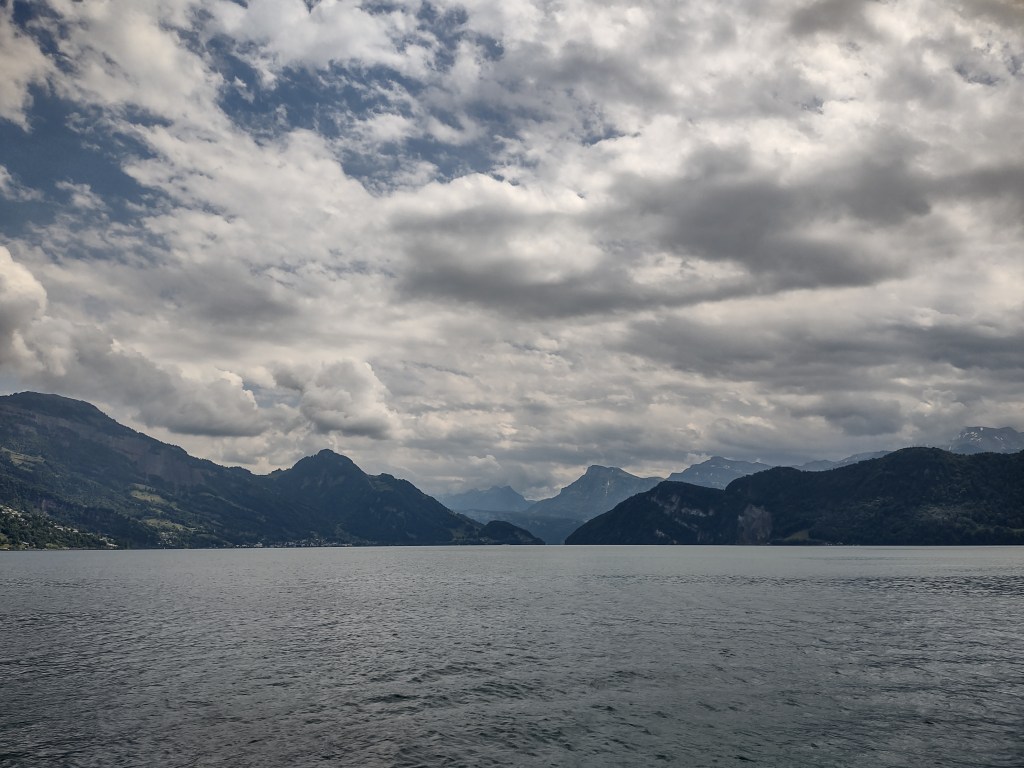
Looking astern as the ship heads home, looking roughly in the direction of Altdorf (although it’s much further down the lake at its southern end). By the 18th century their boy’s legend was all in place – the struggle against the evil Habsburg representative Gessler, his refusal to bow to Gessler’s hat, Tell being punished by being forced to shoot the apple on his son’s head, Tell eventually killing Gessler and helping to found the confederation. Soon Schiller had written his play, Rossini his opera and overture and the Lone Ranger was riding off to it.
Surprisingly early you might say, by the mid-eighteenth century, scholars started to raise doubts. It turns out that various Germanic peoples told stories of heroes forced to shoot stuff off their sons’ heads. One such was the Danish figure of Palnatoki, and when a book appeared in 1760 making the link, one of the authors was invited to re-critique his historical analysis from a different textual perspective. The perspective of being put to death unless he withdrew his claims. Funnily enough he agreed with this line of argument. Meanwhile they burnt the book in the main square in Altdorf.
To this day – as we’ll see in the next post – Tell’s story is at the heart of Swiss national foundation myth and Swiss self-identify, despite it being as full of holes as Swiss cheese. But it’s a great story, and it goes well with the dramatic, epic landscape. Which we’ve come to the end of, as our boat has returned to Lucerne
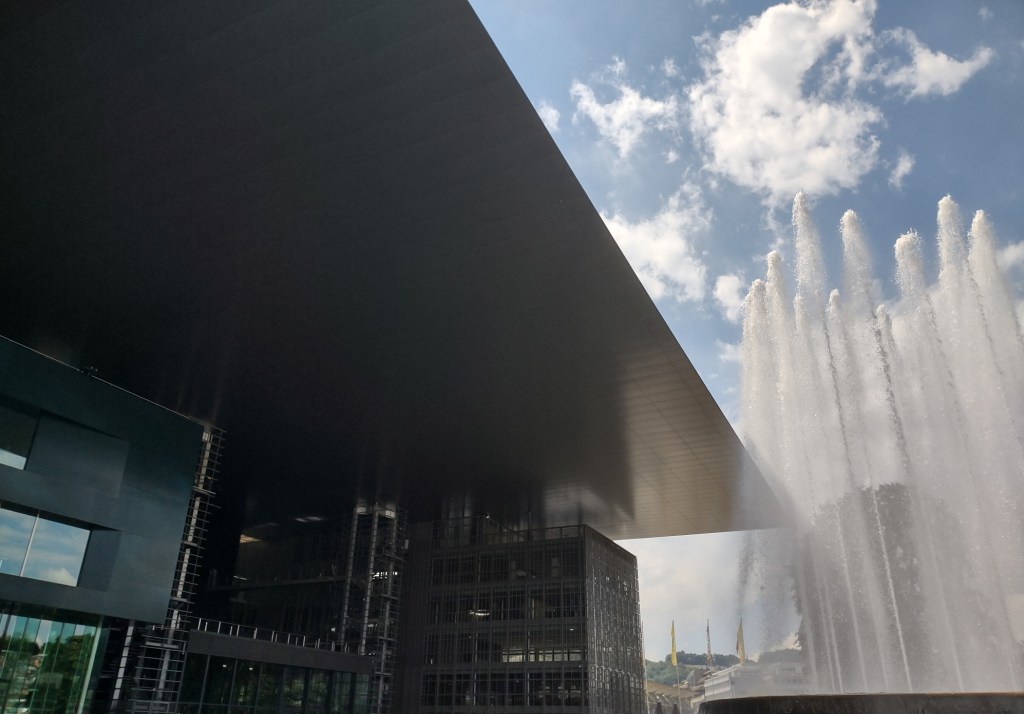
By the jetty we find that the old town isn’t stuck in the past – this is KKL Luzern, the cutting-edge cultural centre designed by Jean Nouvel and opened in 1998. There’s one other landmark I want to show you, we didn’t see it last time as it’s a few minutes away from the other places.
Switzerland is known for its neutrality, but that doesn’t mean it doesn’t know how to fight a good war. From the medieval period onwards its mercenaries were prized across Europe – for example the Swiss Guards that ceremonially guard the pope to this day (they didn’t always stand on ceremony). The Swiss also guarded the French royal family, until the revolutionaries ran into them in 1792. About 800 Swiss Guards were killed or massacred, and in 1820 the Lion Monument was carved in their memory.
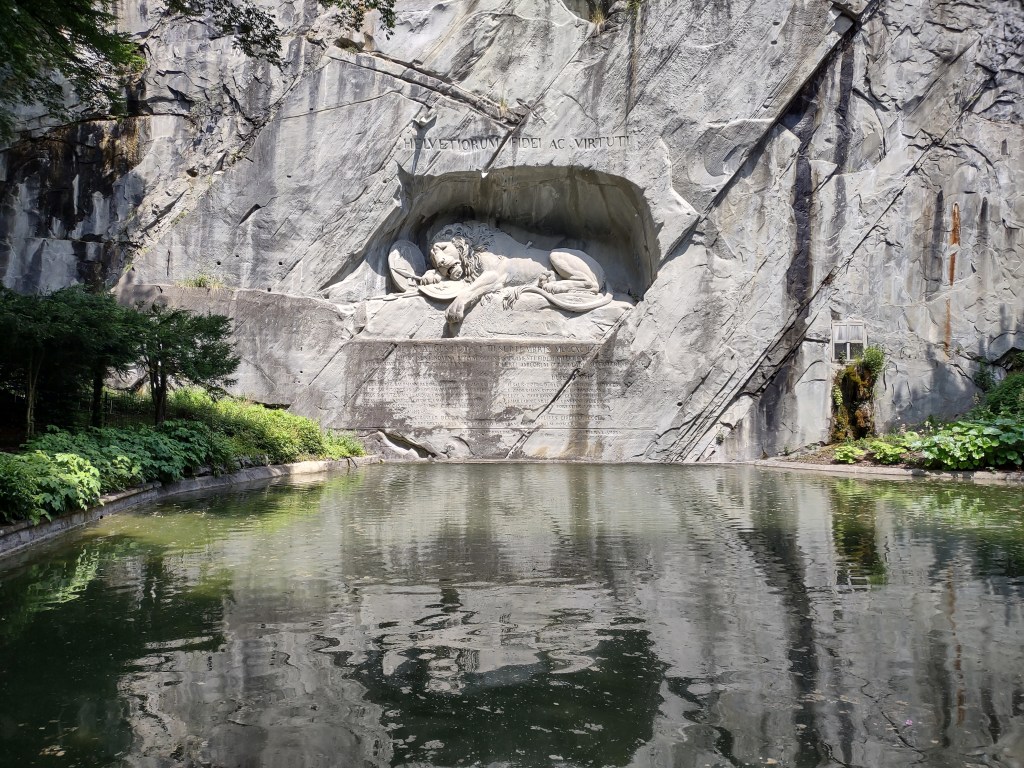
Look closely and you’ll see the broken spear in the side of the brave but dying lion, as he draws his last breaths over shields bearing the fleur-de-lis and the Swiss coat-of-arms. Mark Twain was particularly moved by this monument, and coming from a great humorist writer that’s saying something.
Whatever your views about the French Revolution – and Swiss liberals were enraged when it was first displayed – it’s an incredibly moving piece of work. And however much you cherish your William Tell stories, this is one tale of Swiss heroism that is definitely true.
 orwellianTwo
Leave a comment