A short train ride down from Zurich takes you to Lucerne, historic, stunningly-placed, beautifully well-preserved, Switzerland’s most touristed city.
First off there was a medieval monastery somewhere around here, the point where Lake Lucerne drains into the River Reuss, and eventually a prosperous little trading town grew up. The Habsburgs acquired the locality, but the locals didn’t fancy any of that so they joined the Swiss Confederacy in 1332.
There were plagues, religious tensions with neighbouring Protestant cantons, and a temporary takeover by revolutionary France, but Lucerne continued to grow. Industry came, so did the railway, and that brought extremely fashionable Victorian tourists, including Queen Vic herself, to enjoy the city’s spectacular location. And Lucerne remains an upmarket destination.
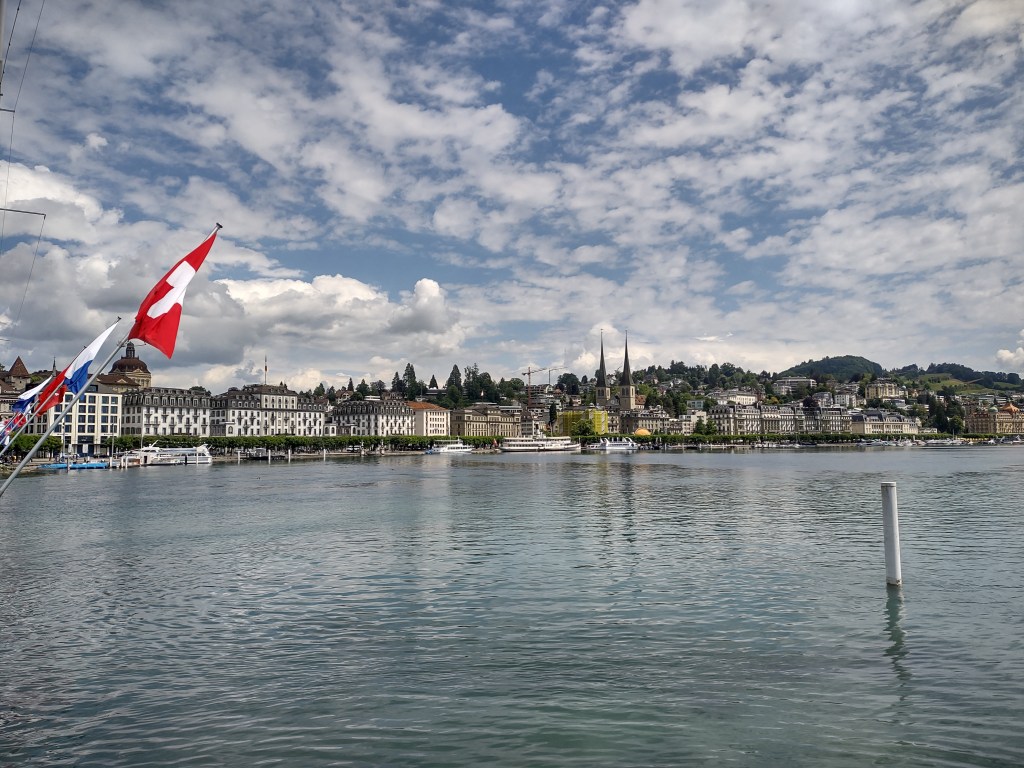
To start off, let’s take a quick whizz through the main sights.
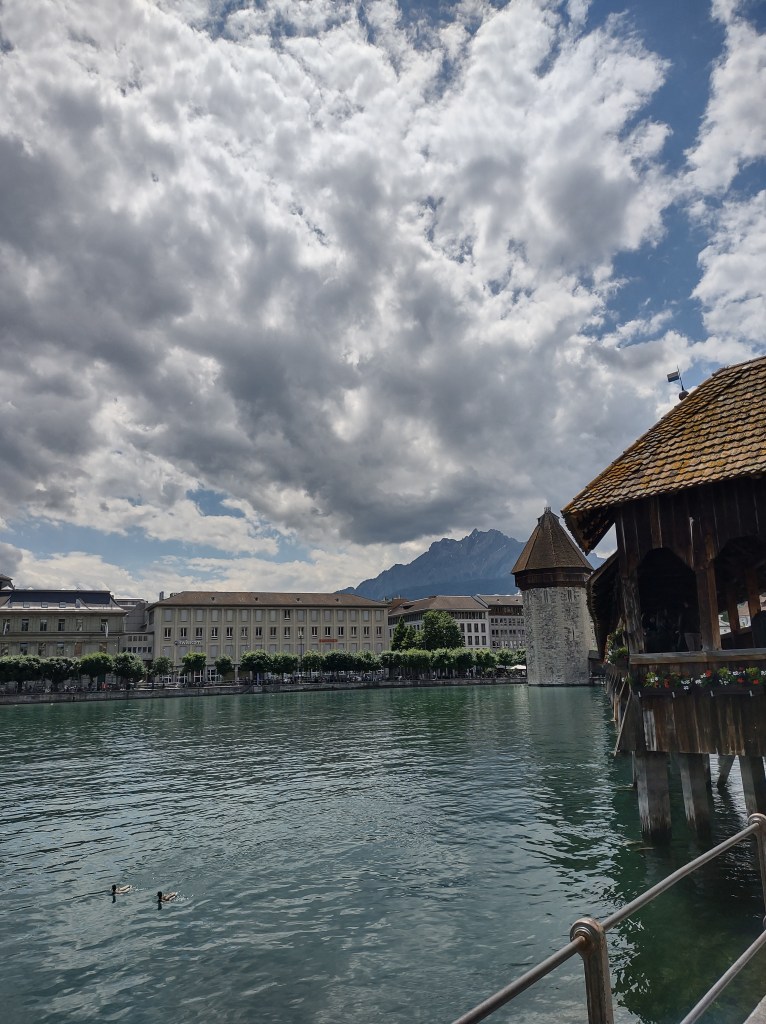
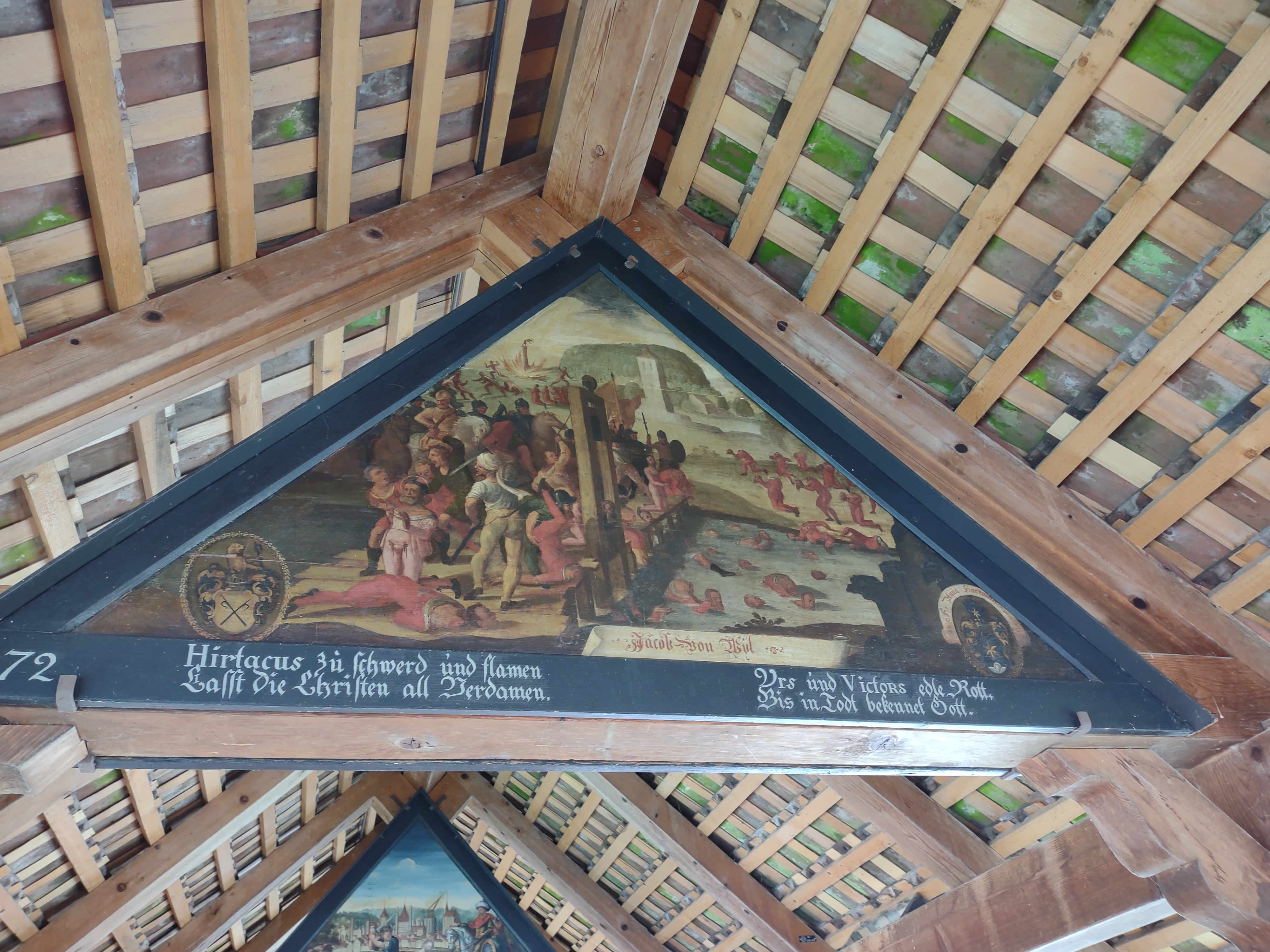
We’re in the Altstadt, the Old Town, and we’re heading onto the Kapellbrücke, the Chapel Bridge. One of the symbols of the town this 14th-century covered wooden bridge is almost unique in Europe in the paintings lodged in the triangular gables in the roof. In fact only one other bridge in Europe has this feature. Commissioned in the 17th century the Chapel Bridge’s paintings show scenes from the town’s history and the lives of locally-venerated saints.
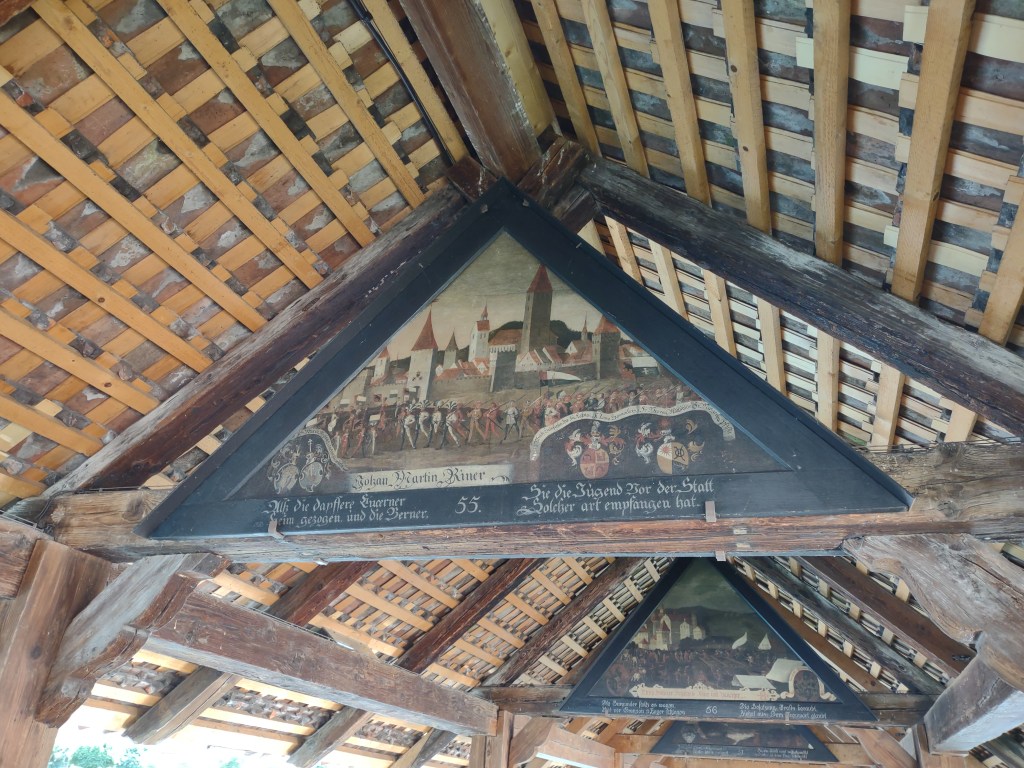
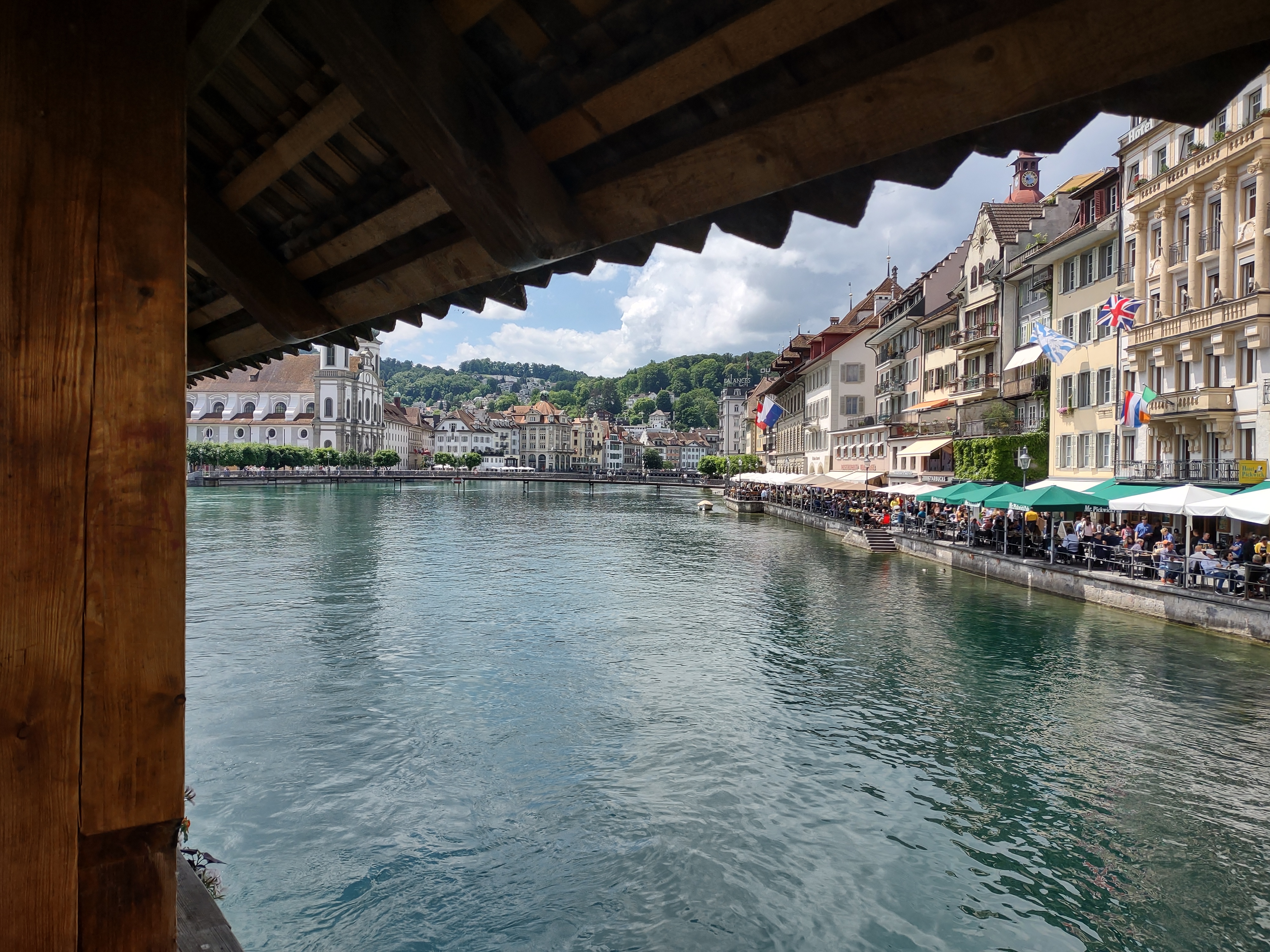
And there’s a gap. Not because the citizens forgot to keep making their payments to their Seventeenth Century Netflix account and missed out on Series II.
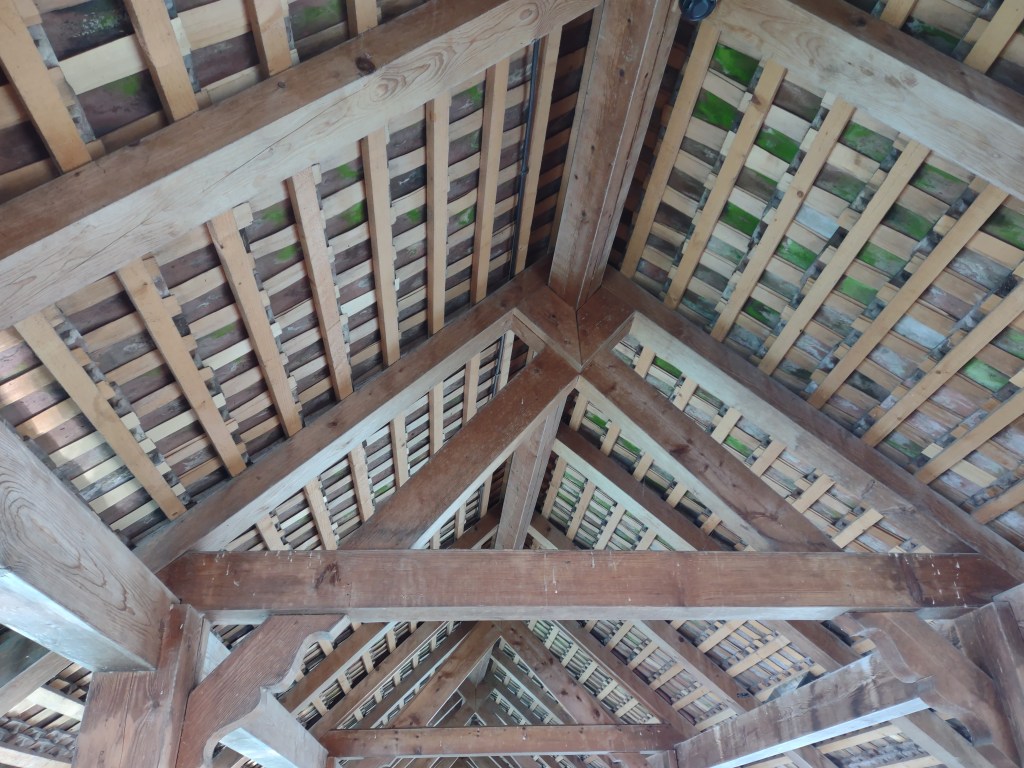
The bridge almost burned down on 18 August 1993. It had 147 paintings beforehand but was left with only 47 and they only restored 30.
That’s the sad story behind these empty gables. But it could also represent a deep breath to prepare you for the remaining paintings.
The ones about martyrdom, beheadings and dismemberment.
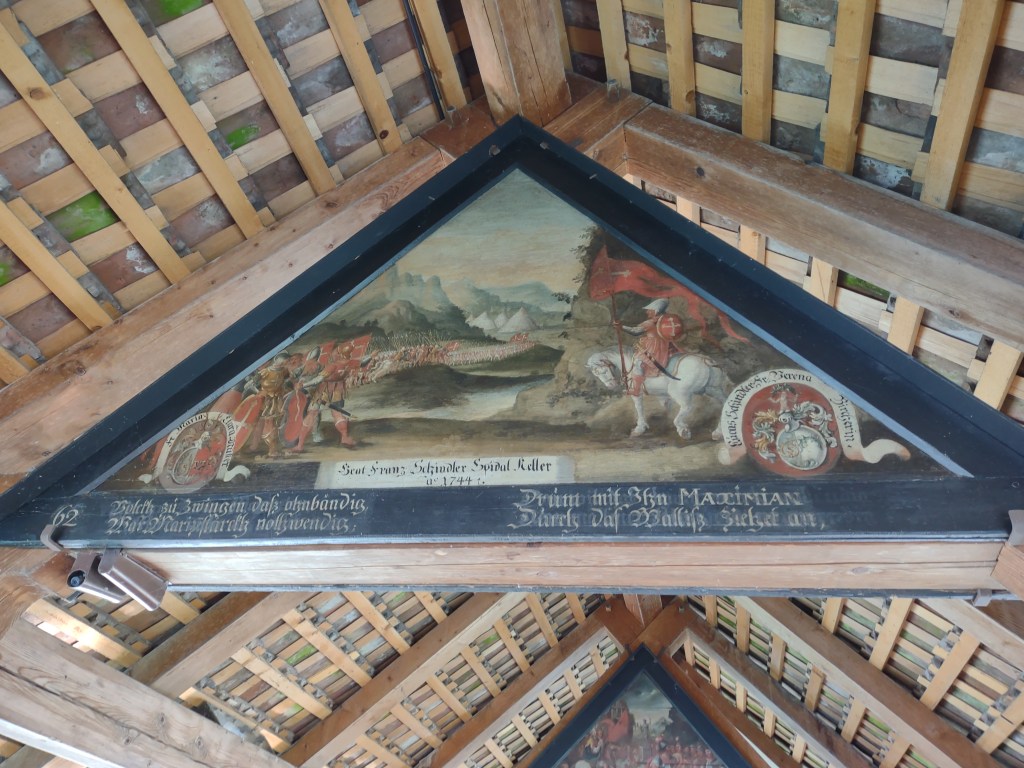
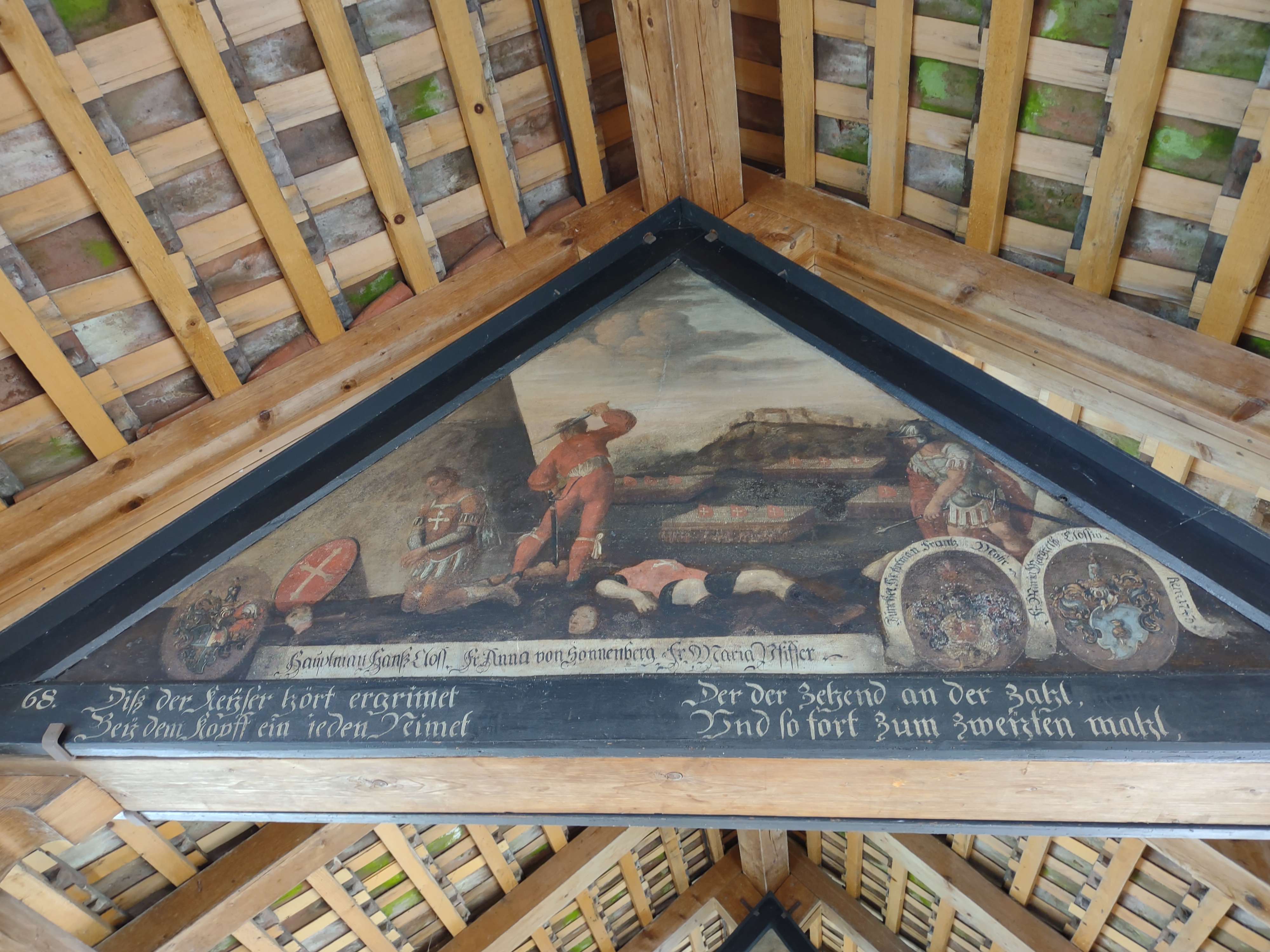
Apparently one of the saints martyred in these paintings is Leodegar, or St Leger. The result of the stewards’ inquiry is, sadly, not shown.
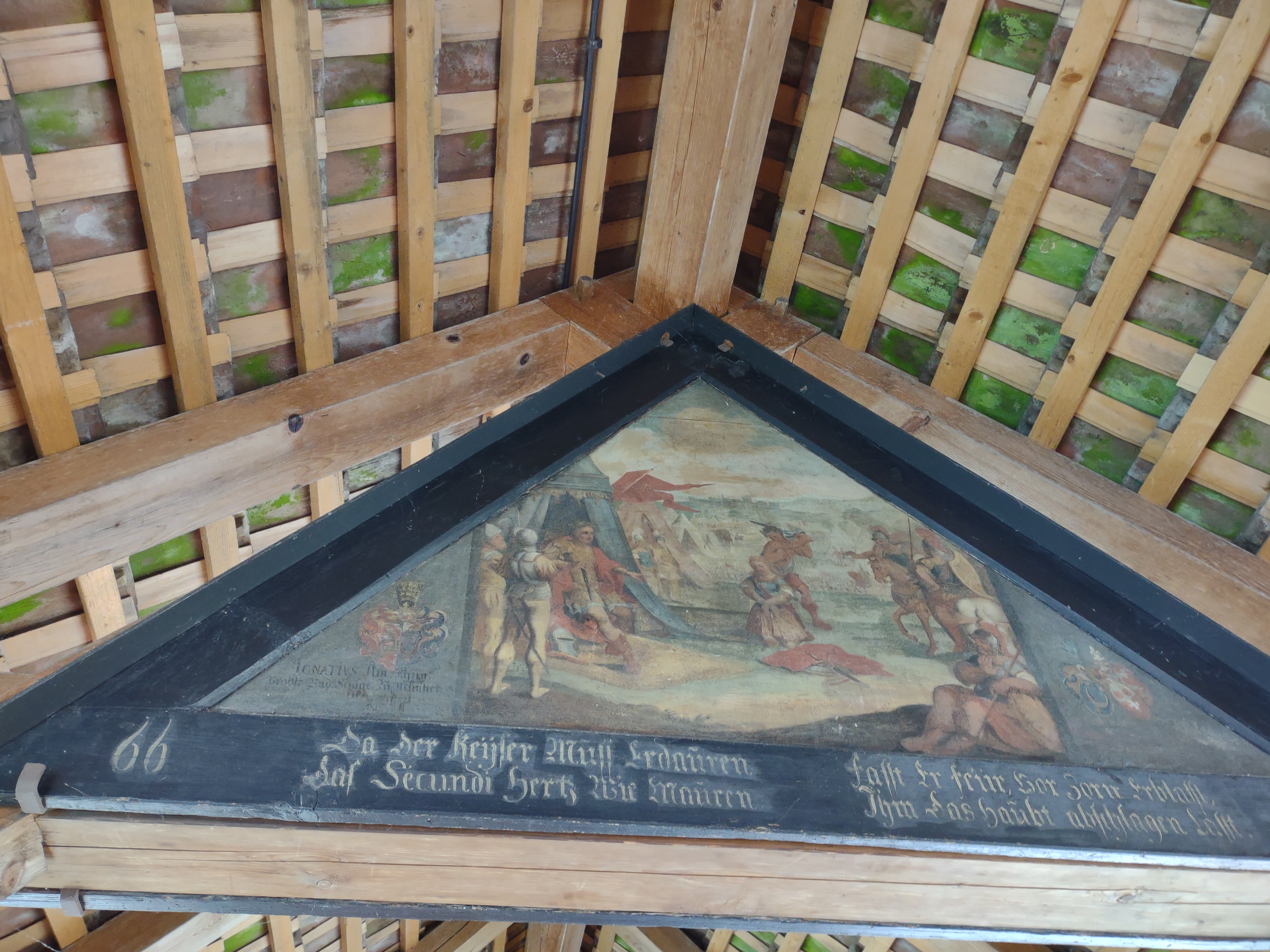
Rather missing from the tourist blurb about Lucerne and its lovely bridge don’t you think?
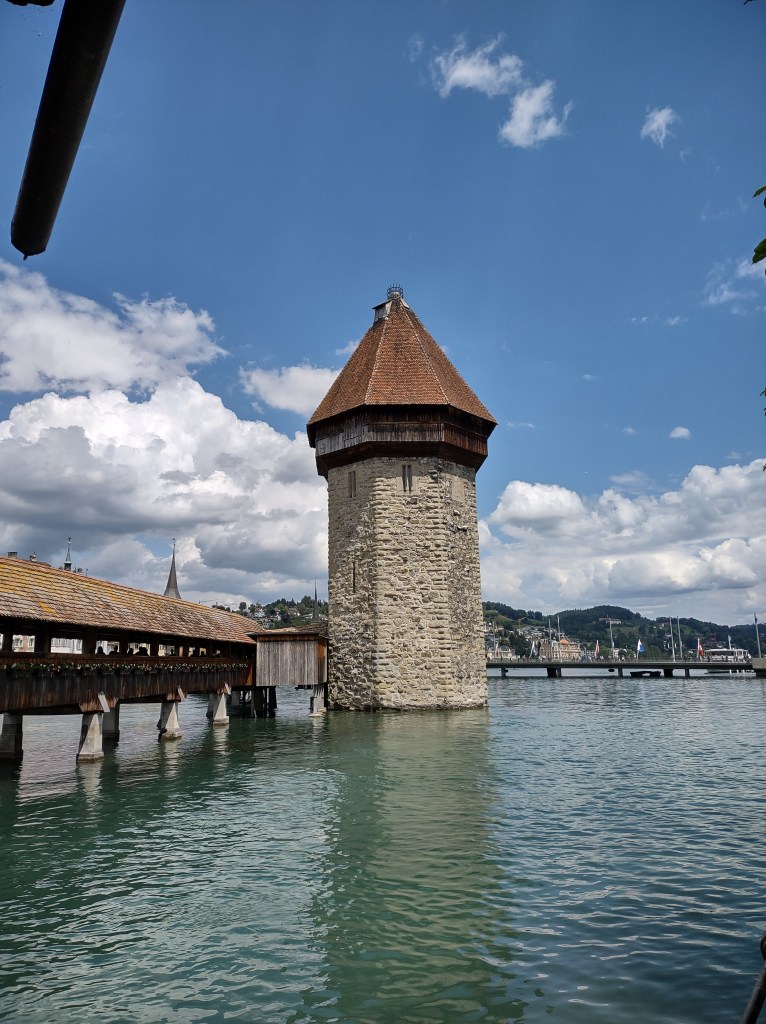
But what you certainly do see is the sight that thankfully greets us at the other end, the Kapellbrücke paired up with its lifelong pal, the Wasserturm, the Water Tower. Together with the bridge, built thirty years afterwards, this stalwart of the town’s fortifications is not only Lucerne’s most famous sight, but Switzerland’s.
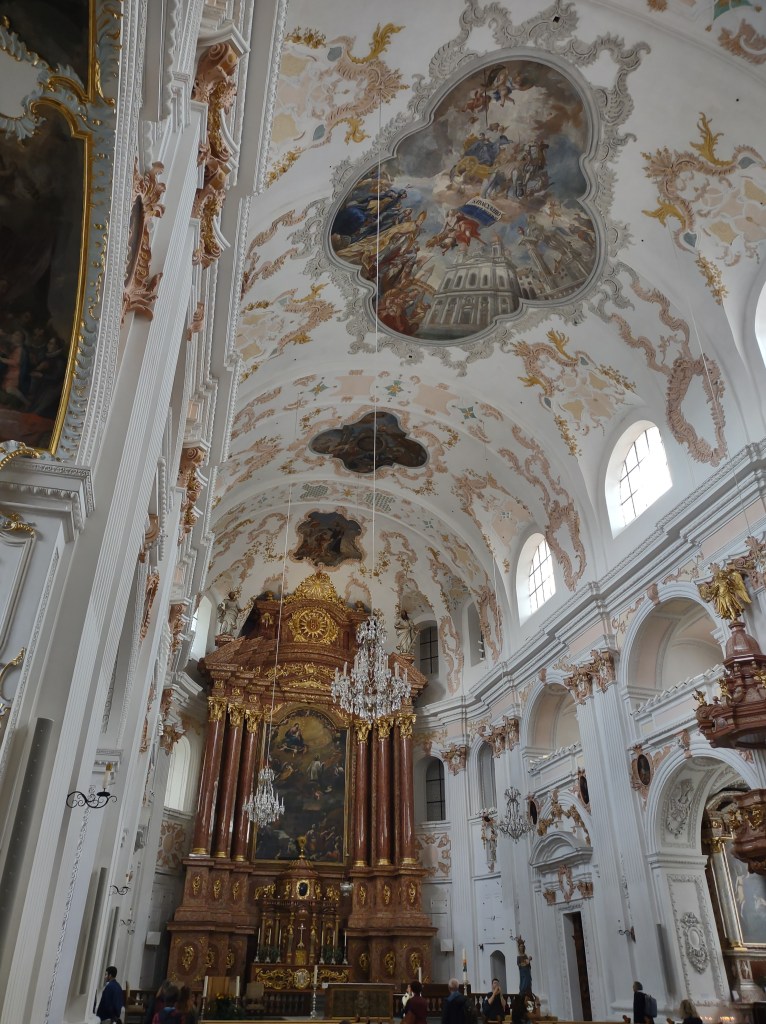
Now, on the south bank of the Reuss let’s pop into the Jesuit Church. It’s a Counter-Reformation offering built in 1666, and Counter-Reformation churches are all about lavish, gold-plated restatements of Catholic doctrine to get the waverers back onside.
And that means magnificent interiors and above all, eye-popping ceilings.
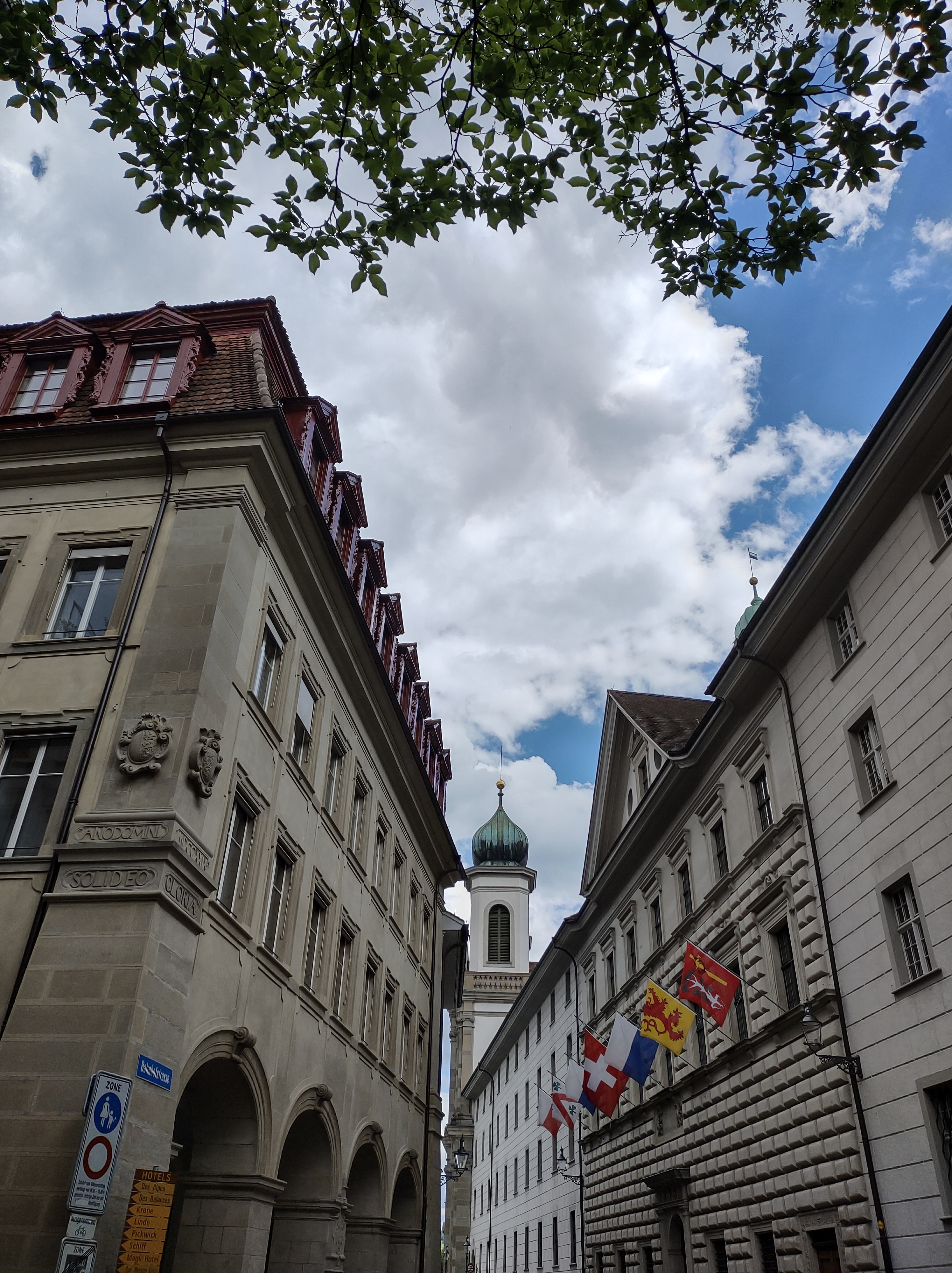
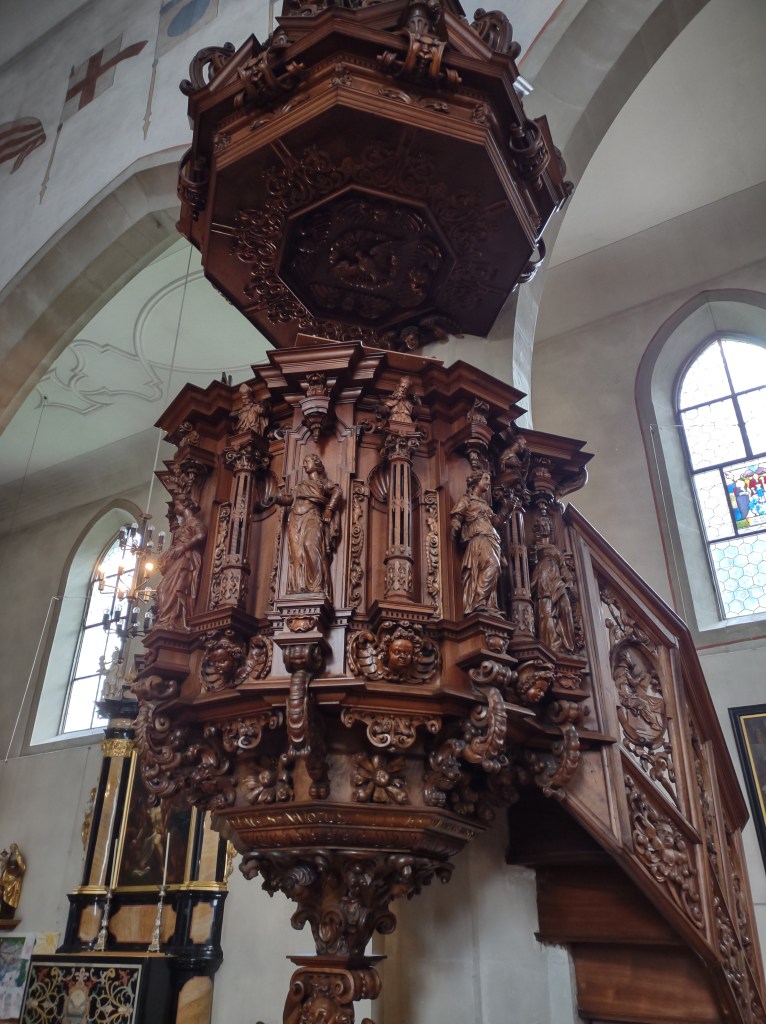
Nearby is the Franciscan Church with its stunning pulpit
Back on the riverbank we find the Needle Dam, an interesting 19th century construction that uses an alignment of moveable staves – the “needles” – to restrict the water flow when necessary.
The dam allows the outflow from the lake to be increased to 430 cubic metres a sec…ok, you’re not following me, and it’s my fault.
I shouldn’t have showed you those distressing paintings from the Chapel Bridge. At the time I thought they would add something to the blog, but I should have realised that it might upset you. You’d probably preferred to go to that other bridge in Europe I mentioned where they have the paintings in the gables, they’re probably pretty and nicer and they’ll cheer you up.
Wait a minute, wait – a – minute, what’s that thing next to the Needle Dam, why it’s the Spreuerbrücke. It’s the other bridge!
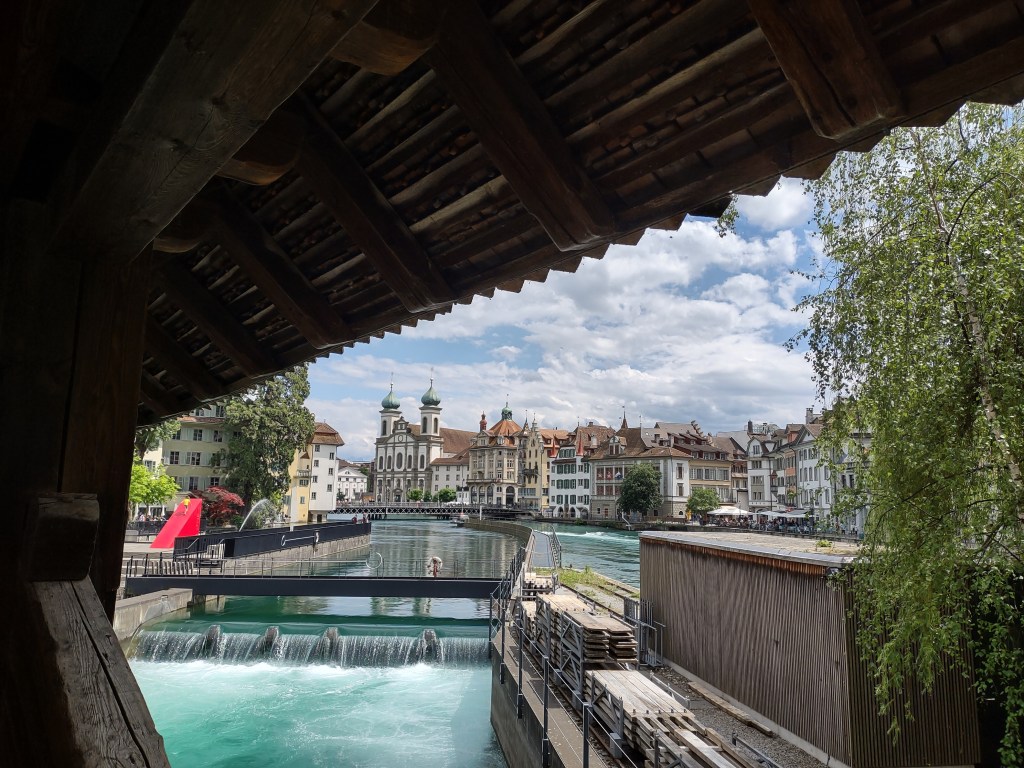
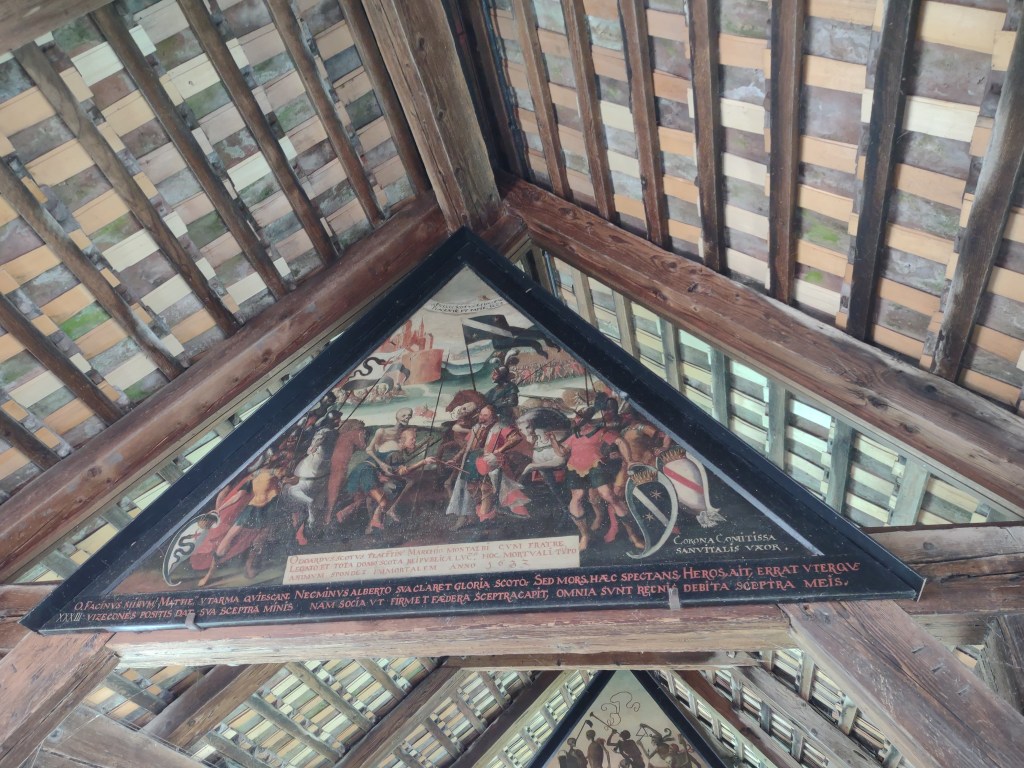
Right, here we go then. Spreuer, or chaff, as it was the only place they could dump the chaff from cereals. No fires recorded. All good. And the paintings?
All about the ever-presence and inevitability of death.
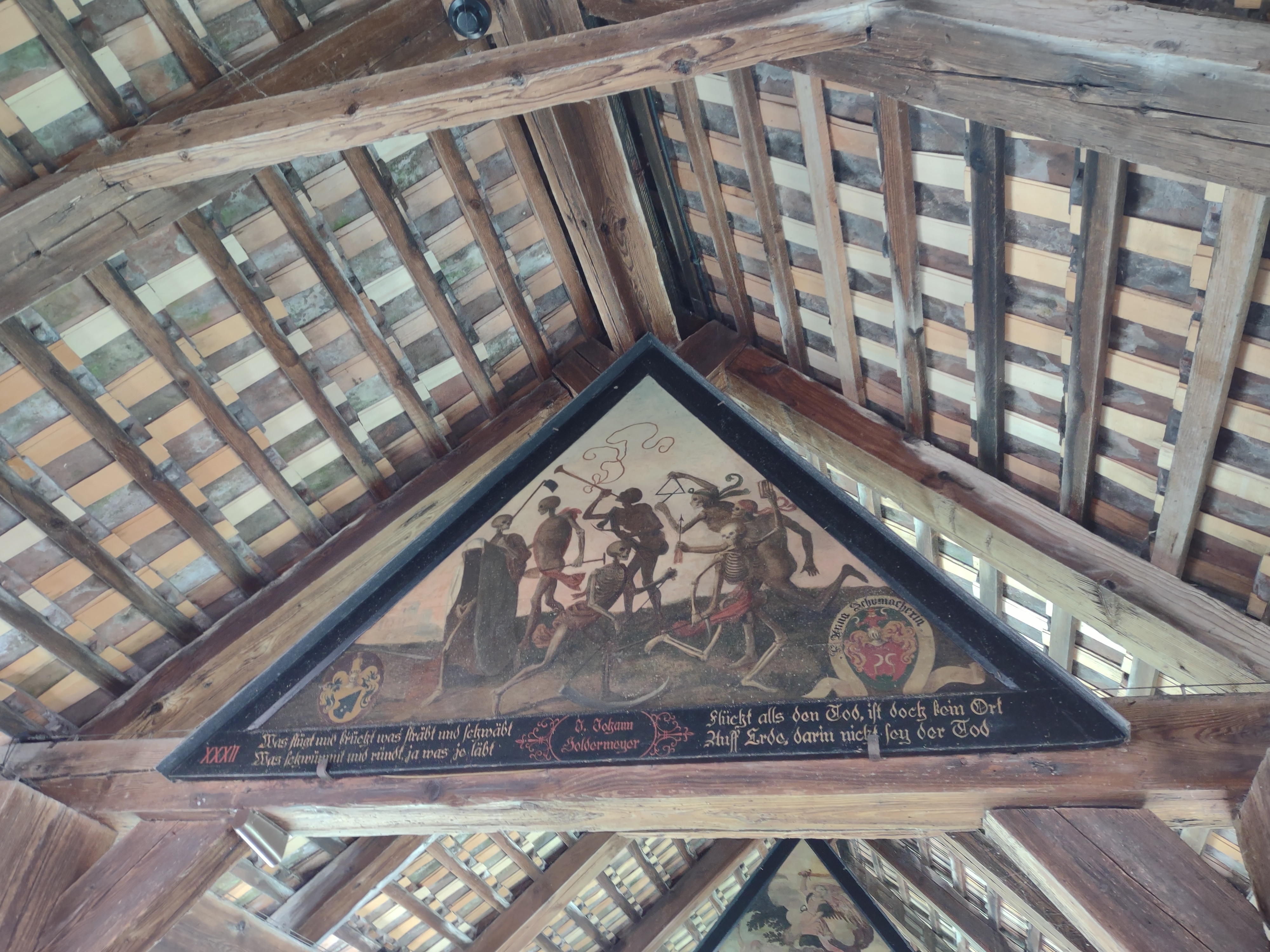
Well, I did my best.
On the north bank now, and a quick look at some of the beautiful frontages in the Altstadt…
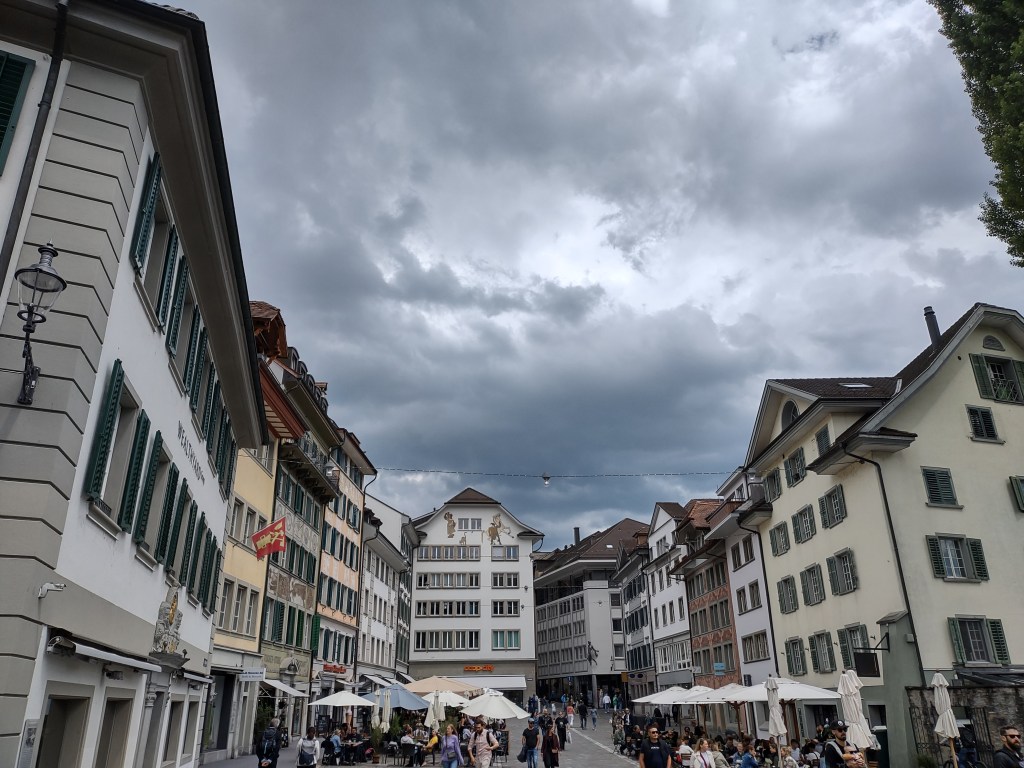
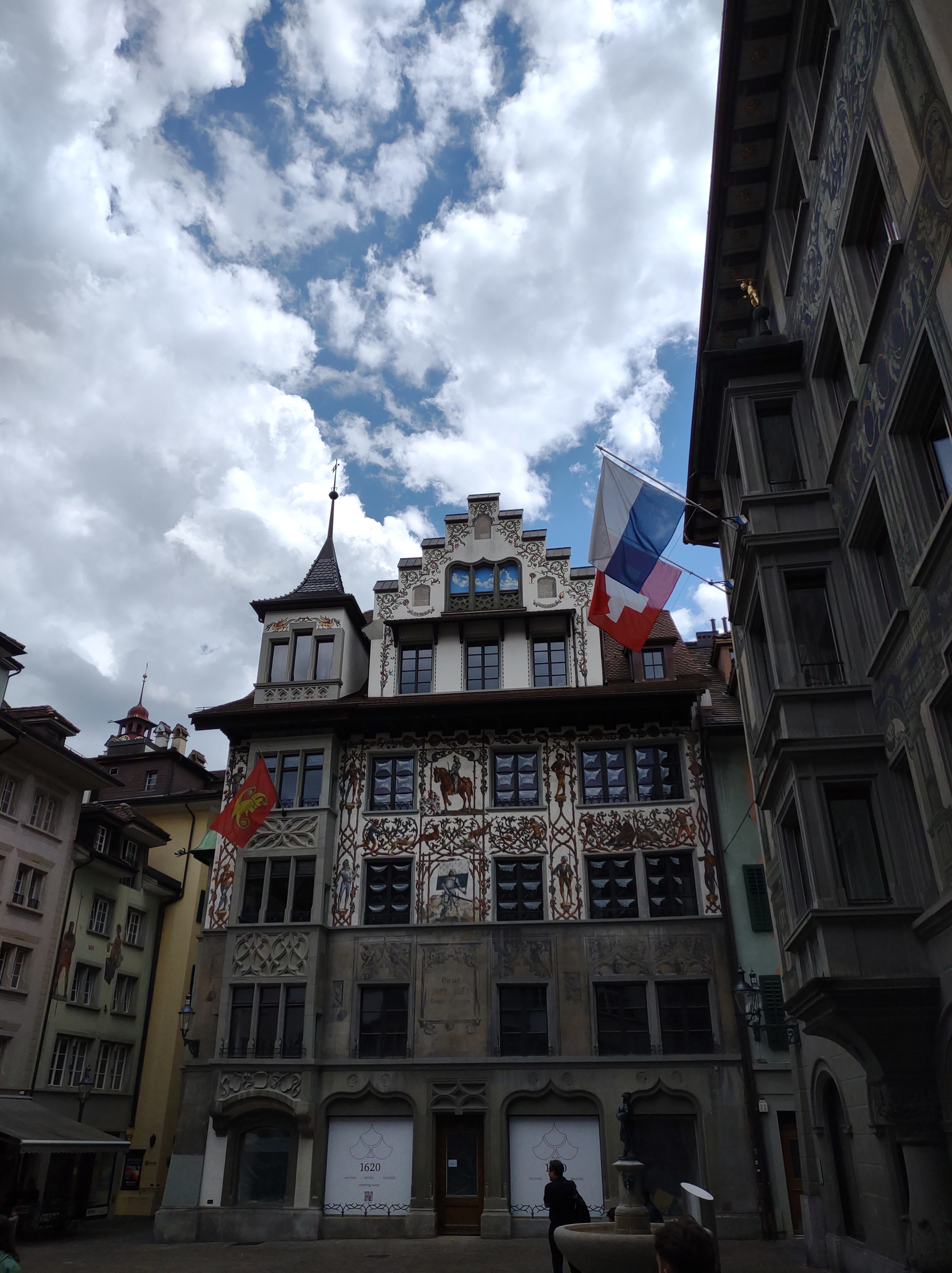
before we make our way up to the town’s remaining fortifications
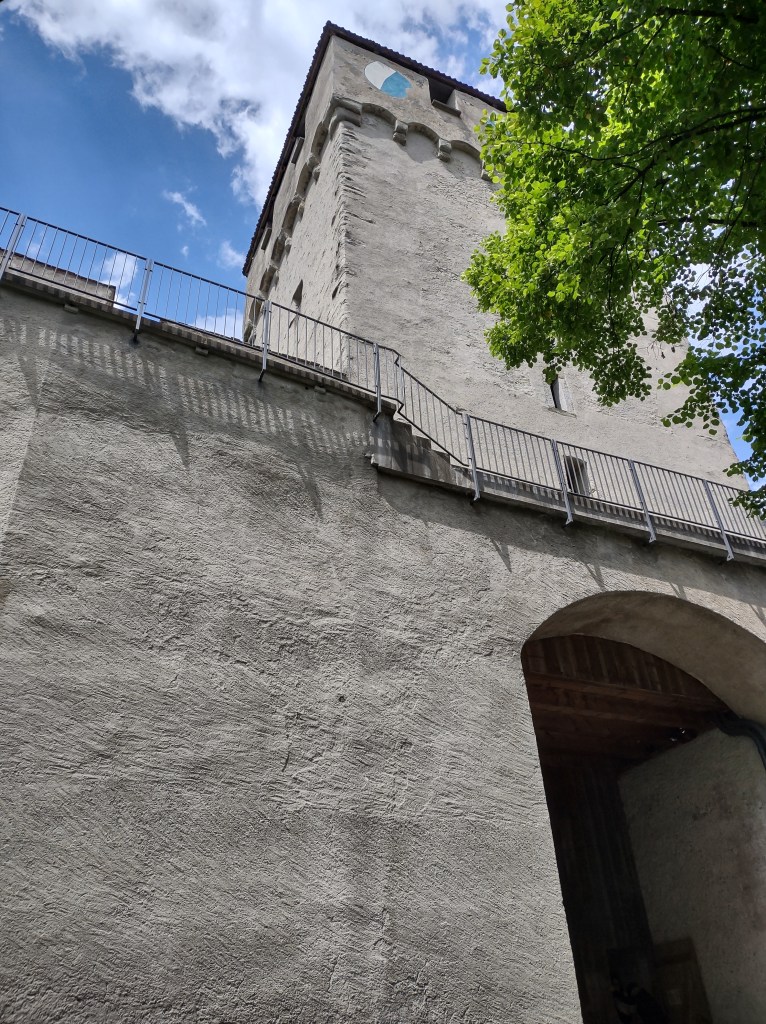
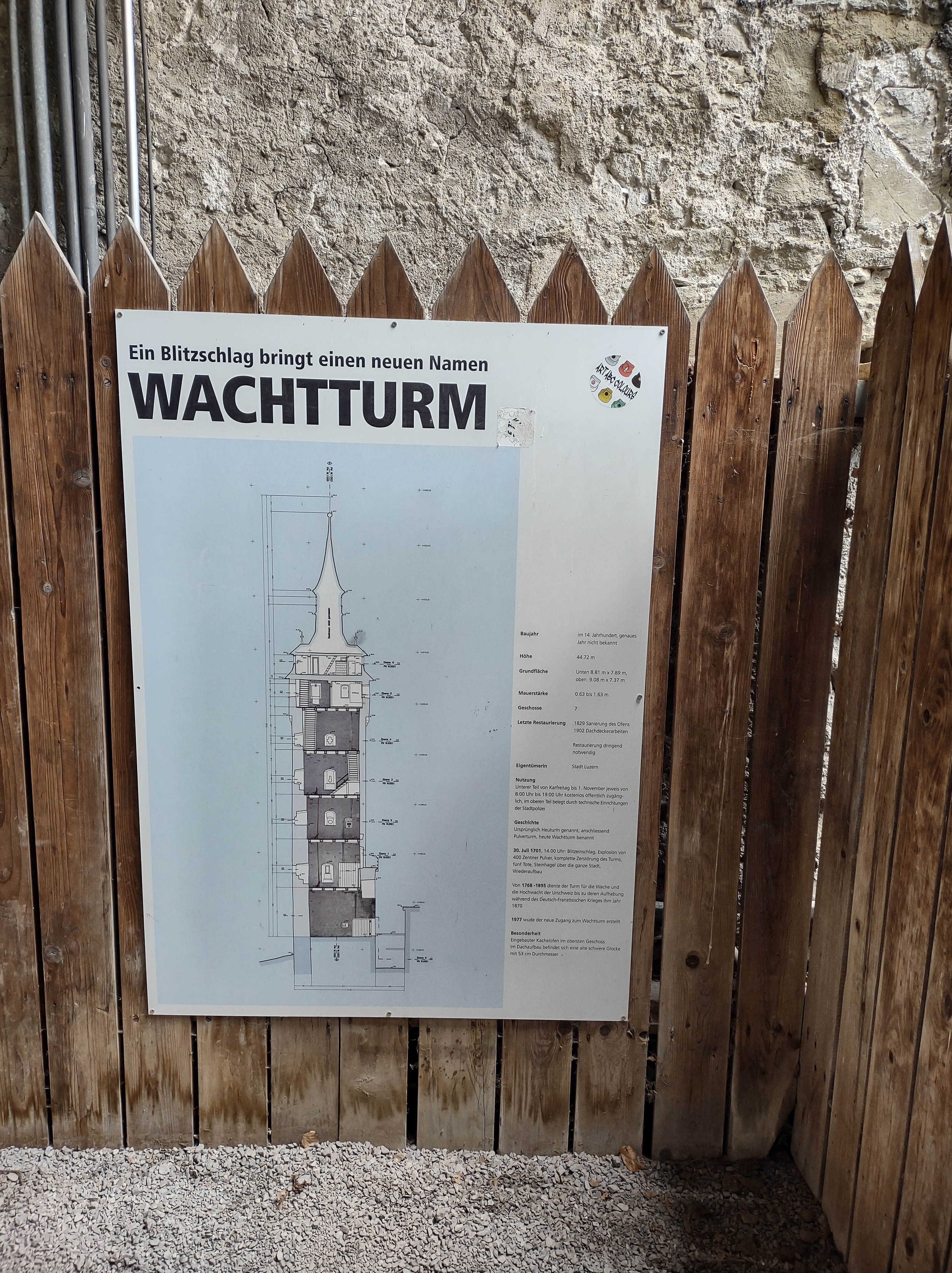
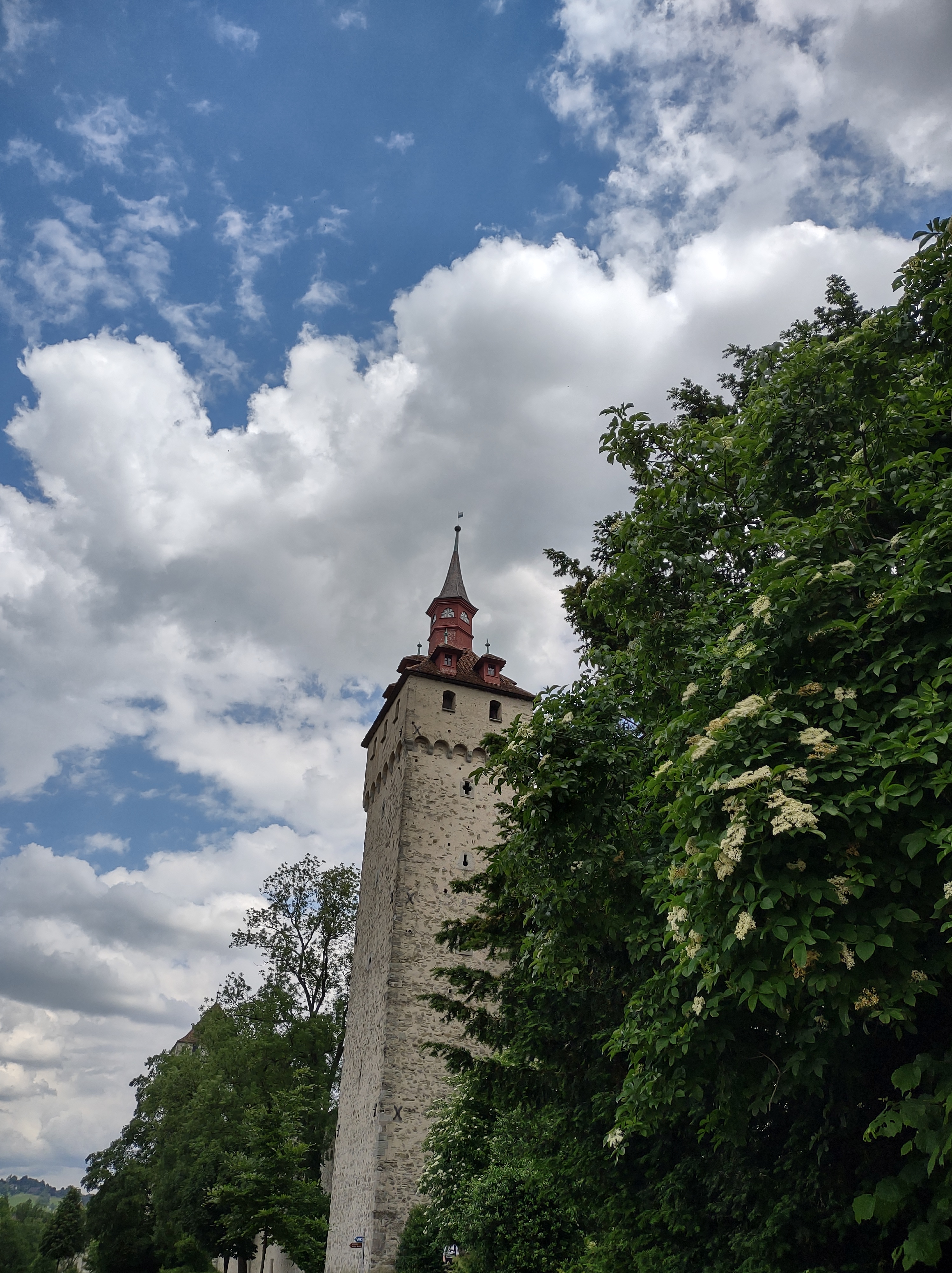
and take in the view.
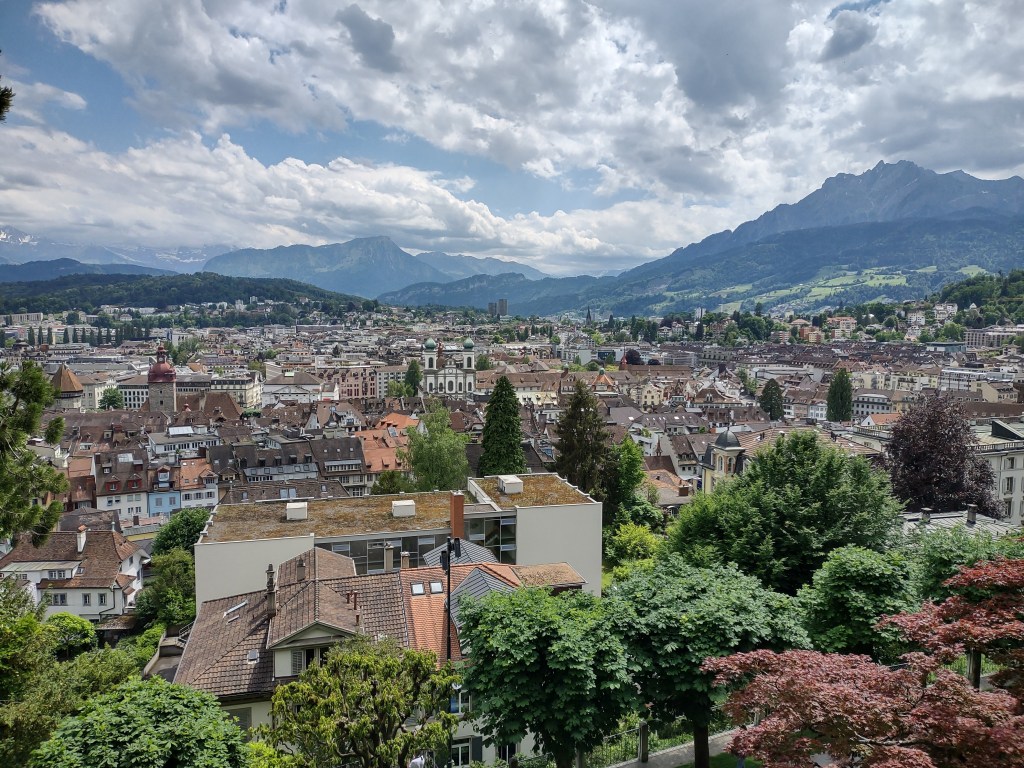
Back down into town for a meal an a rest, and we’ll end the day with a nice evening view of picture-postcard-friendly, tranquil old Lucerne, beloved of tourists the world over.
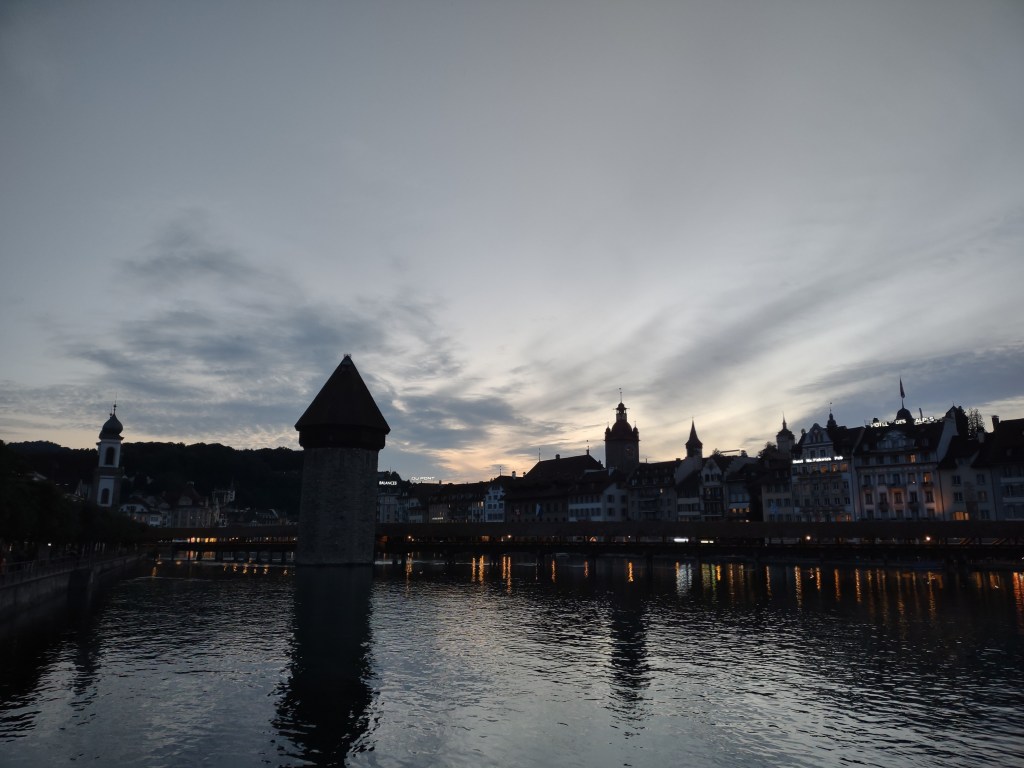
And not a skeleton kicking around a human head in sight.
 orwellianTwo
Leave a comment