Unless you were someone peaceably living your life somewhere in West Africa when you were kidnapped and led in chains to the stinking hold of a slaver, to be transported (if you survived) to a life of back-breaking servitude in a West Indian sugar plantation, making fortunes for Liverpool merchants, well with that slight caveat the Georgian era was a golden era for the city of Liverpool. A fishing town that had taken advantage of its sheltered location at the banks of the Mersey, its traders had made themselves big players in the triangular trade between Europe, Africa and the Americas. I’m no expert in the economics of employee relations, but if you can get away without the bother of “employee relations”, treat your employees like animals, and stop them from seeking alternative employment – or retirement – you’re onto a winner.
And Liverpool was onto a winner. The centre of the city is still replete with fine Georgian-era buildings and terraces – Rodney Street is one of the longest Georgian terraces in the country – as the slave trading interest rolled in it and flaunted it. But they didn’t stand still. Rather than let their ships suffer the elements and the tides of the Mersey, they came up with the idea of sheltered docks. And as trade flourished into the 19th century, Liverpool kept pushing the envelope.
In the mid 1800s, one of their most prominent dock engineers, Jesse Hartley, came up with an idea to eliminate the effort involved in transporting goods between dock and warehouse. Why not build a dock with the warehouses on the dockside? Literally sail the ships to the warehouse door! By 1849, he had constructed a dock surrounded by a stunning set of fireproof warehouses which could store goods for long enough to avoid import taxes, and with the help of hydraulic cranes, loading times were cut in half. All at a snip of the equivalent of £41 million today. On July 30th the Albert Dock was ready for its opening, by the man himself, Prince A.
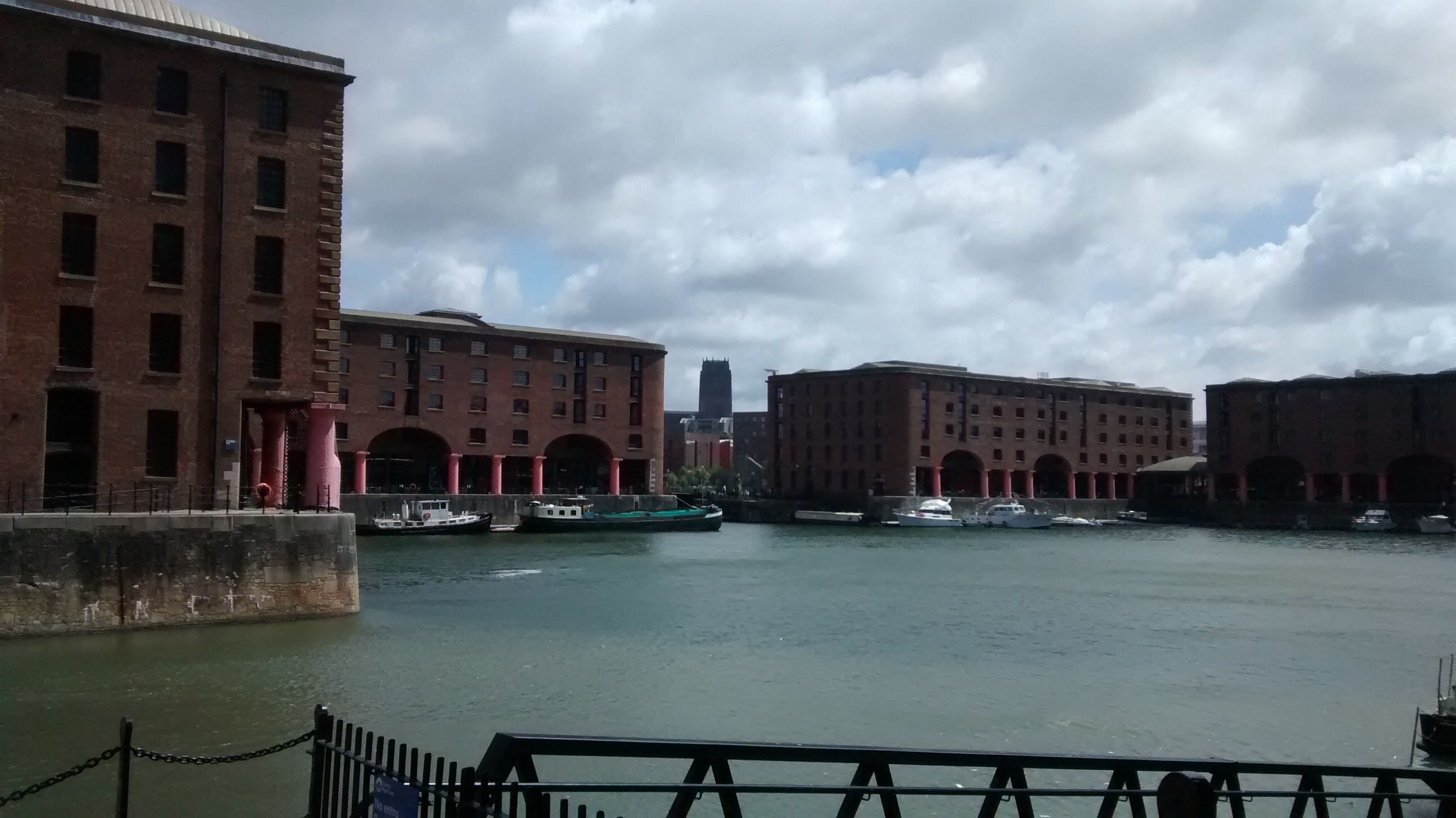
Sounds great, and it was. Until steamships started replacing the old sailing boats twenty years later. And the Albert Dock wasn’t big enough for steamers. Oops.
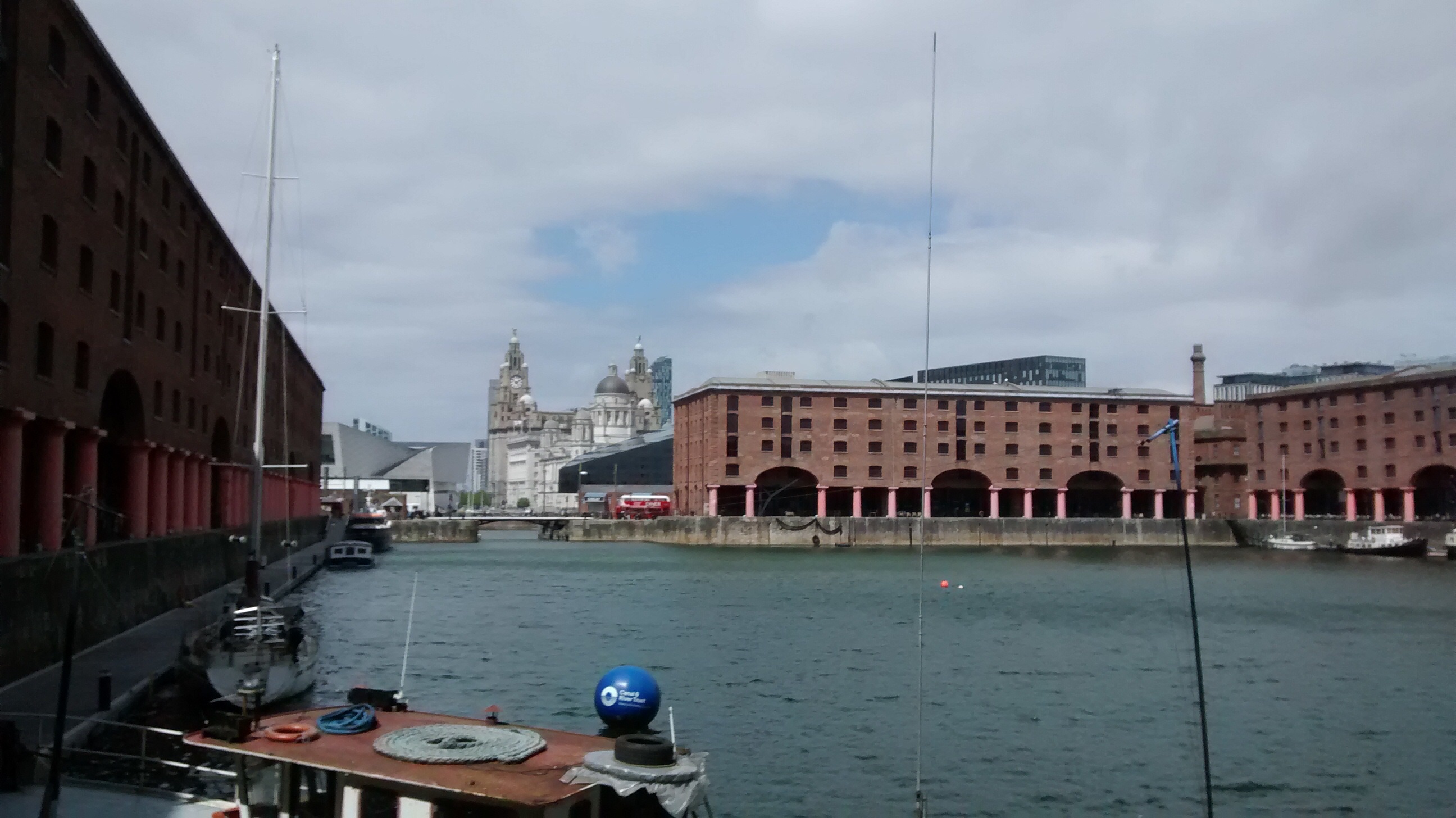
The warehouses were still used for storage, but the shipping itself disappeared from the docks until the second World War, when warships and support craft sailed in. Soon the Luftwaffe took an interest, and the south-west corner of the dock took a battering. That’s near where we’re standing.
There was no peace dividend for the Dock, and its days looked numbered. The board responsible for it didn’t clean up the bomb damage and really wanted rid of it. Plans to knock it down and build flats and shops here came and went, until the Thatcher government in the 80’s decided to facilitate its regeneration. Granada TV moved in and filmed breakfast telly here. Over the last twenty years or so this superb site has become the most-visited multi-use site in the country outside London, hosting museums, restaurants, bars, shops. In short, it’s great.
A good story of how one part of Liverpool has bounced back from long-term decline. But long-term decline was what was in store for the rest of Liverpool’s docks, and for the city itself. Right up to the 60s the docks were busy, and the army of dockers could find employment – however precarious. But then along came containerisation, along with the emergence of European markets across the North Sea, and Britain’s decline as a maritime power. The dockers lost their jobs, the city fell into poverty. However much it would recover some of its prosperity, the great seagoing, outgoing city of Liverpool had lost its place at the centre of the world.
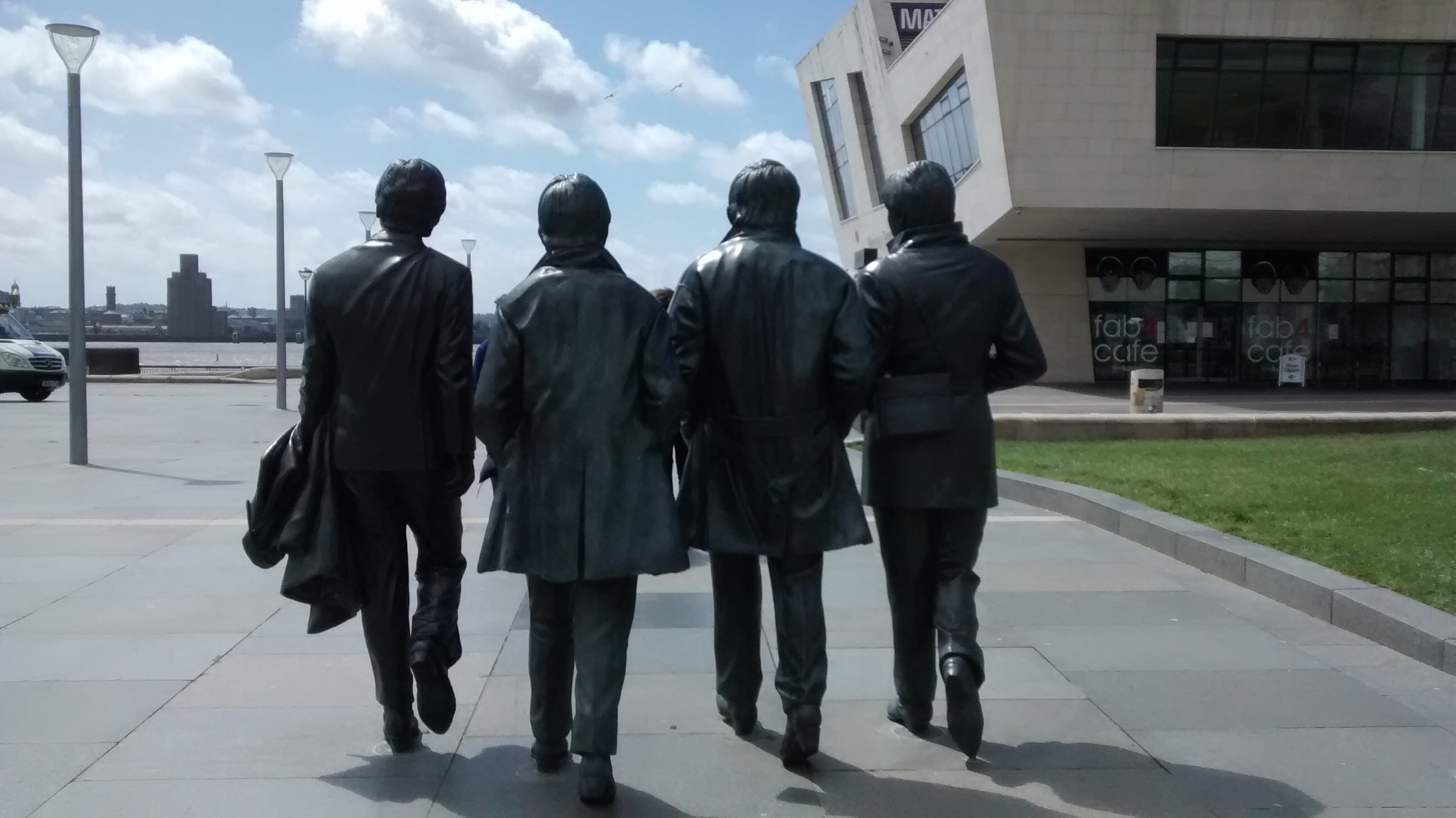
Until four local lads came along…
 orwellianTwo
Leave a comment