“Why are you spending so long there?”. The response when people in Siem Reap heard I was going to spend three nights in Phnom Penh. And when I arrived, I began to wonder too.
One thing I’ve not done is convey a sense of the street life in Siem Reap. So, think – what’s the easiest thing you’ve done in your life? Breathing? Responding to the offer of a free luxury holiday in the Caribbean – No! sitting on a beach during said holiday, supping rum punches!
They’re all very easy, but surely not as easy as Passing the Cambodian Driving Test. Imagine a place where the roads are full of weaving tuk-tuks and mopeds, ignoring lane indications and discipline, Give Way markers at intersections (no worries there – they don’t exist), and sometimes even the direction of travel. Even on one-ways.
In relatively laid-back Siem Reap, that does have its charm, even if you can’t escape the mayhem because the back roads don’t have pavements, or you’re just trying to cross the road and suddenly find yourself become a track marshal at MotoGP. At least you’ve got all the lively bars and food places to dive into and cheer you up.
But on first impressions Phnom Penh is worse, just another faceless big city but with the traffic problems (Except there’s twice as much traffic. And there are pavements but they’re chokka with cars, or motorbikes, or people eating at table). And it’s steamy and as noisy as hell. After my bus journey from Siem Reap (just the six hours), the tuk-tuk ride to the hotel was not an encouraging plunge into the madness (particularly when the driver forgot where he was going).
But once you draw breath and get your bearings, and venture a few streets away from the businesses and the offices and the big expressways, you discover that like all cities, Phnom Penh has another side and a charm of its own.
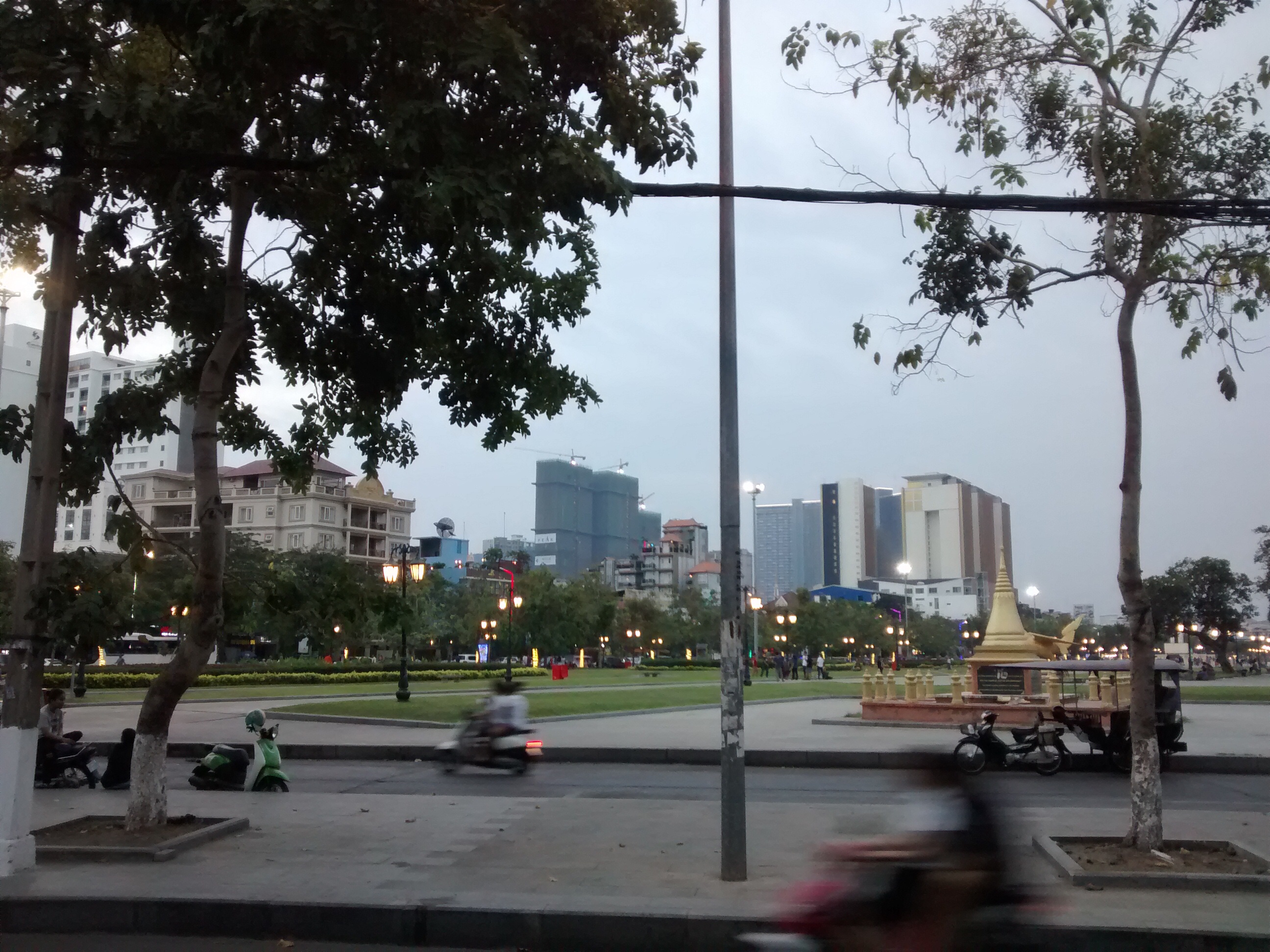
It’s main attractions (if we ignore the Elephant in the Room for a moment) are the Royal Palace-Silver Pagoda complex, and the vibrant Sisowath Quay area on the green embankment of the Tonlé Sap River). Here we are now, near the palace grounds.
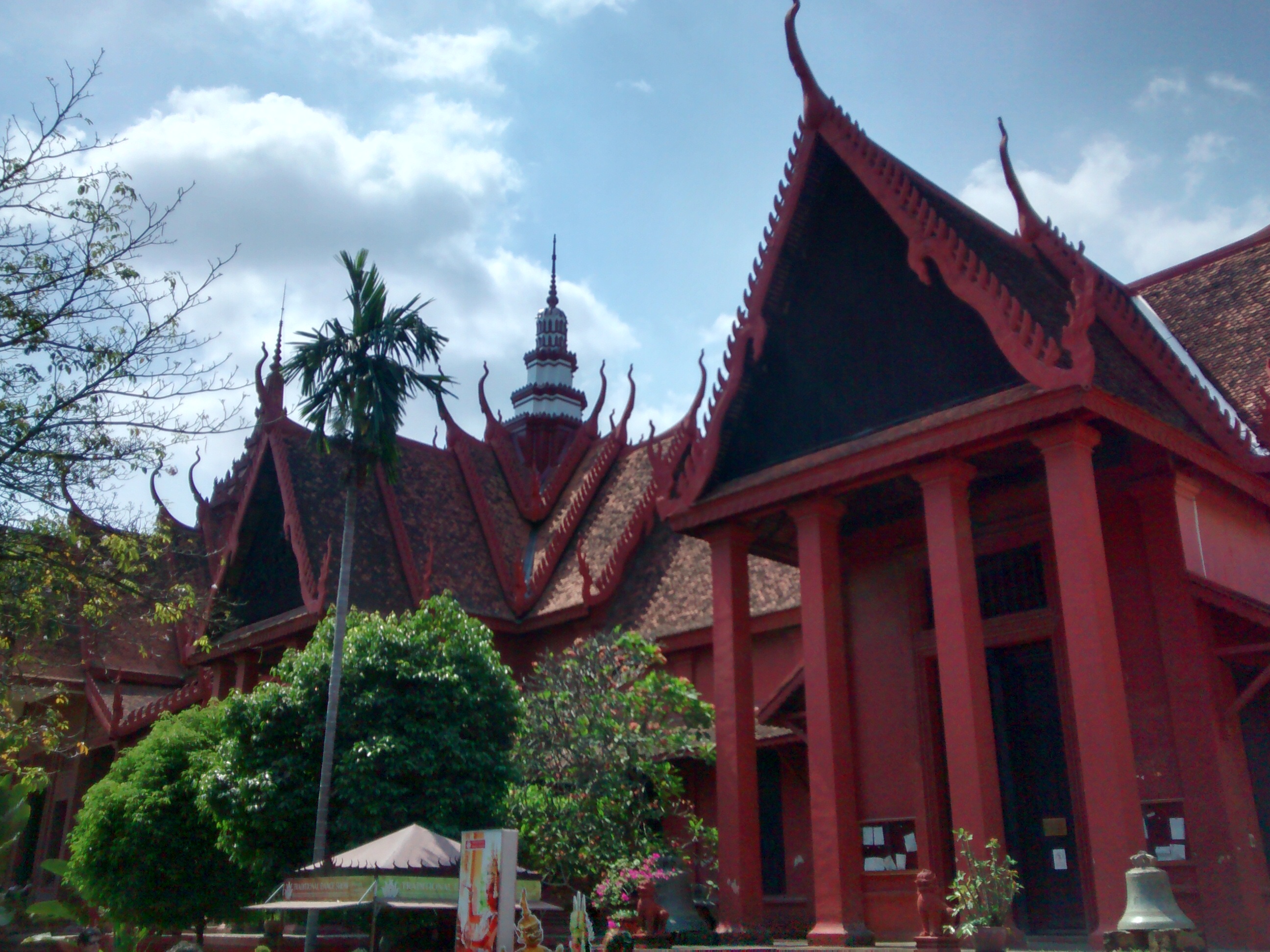
The beautiful National Museum.
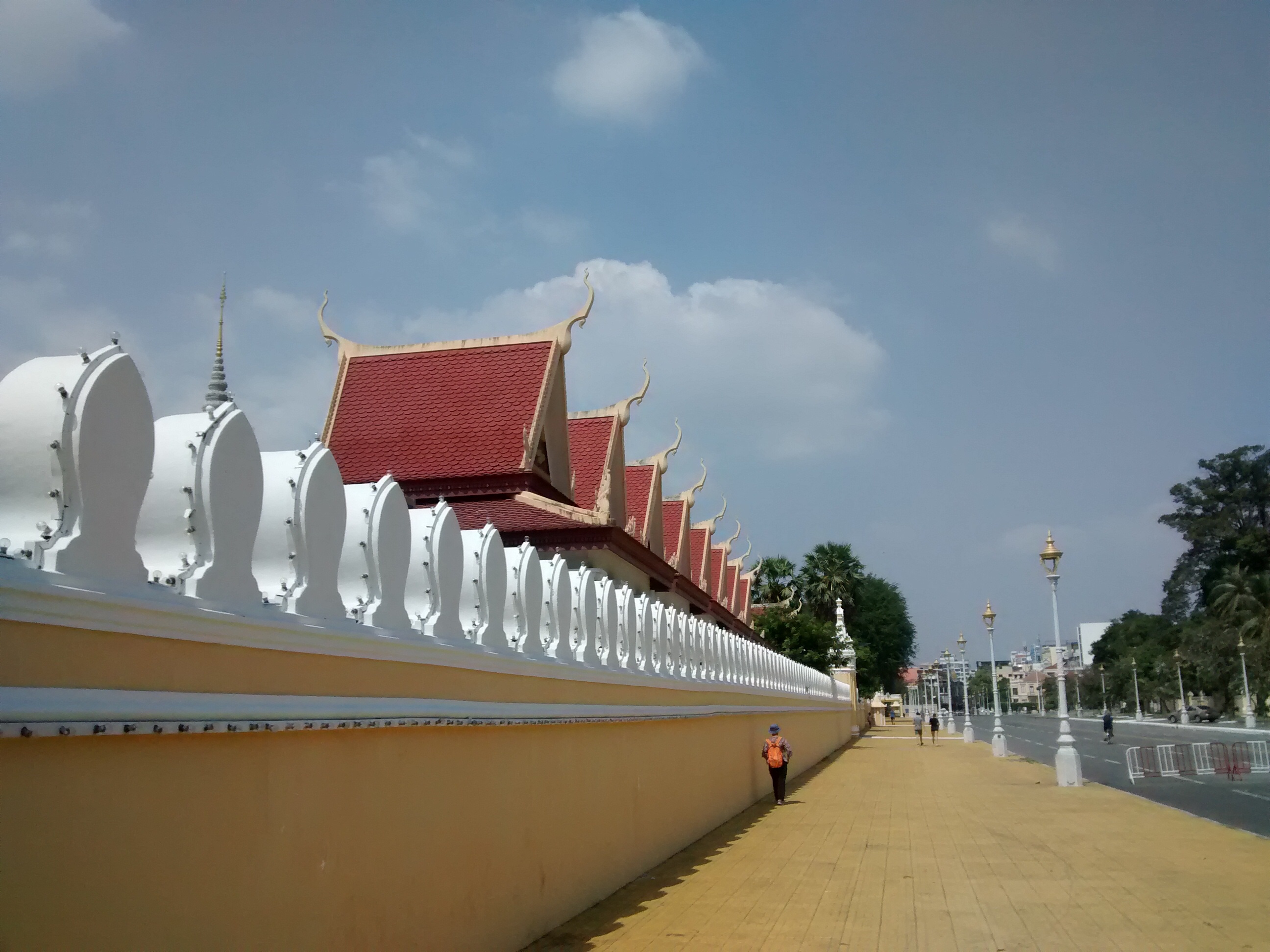
The Royal Palace.
Which was closed until 2pm. Never mind, an enterprising (and persistent) tuk-tuk driver came along and roped me into a quick spin around the city.
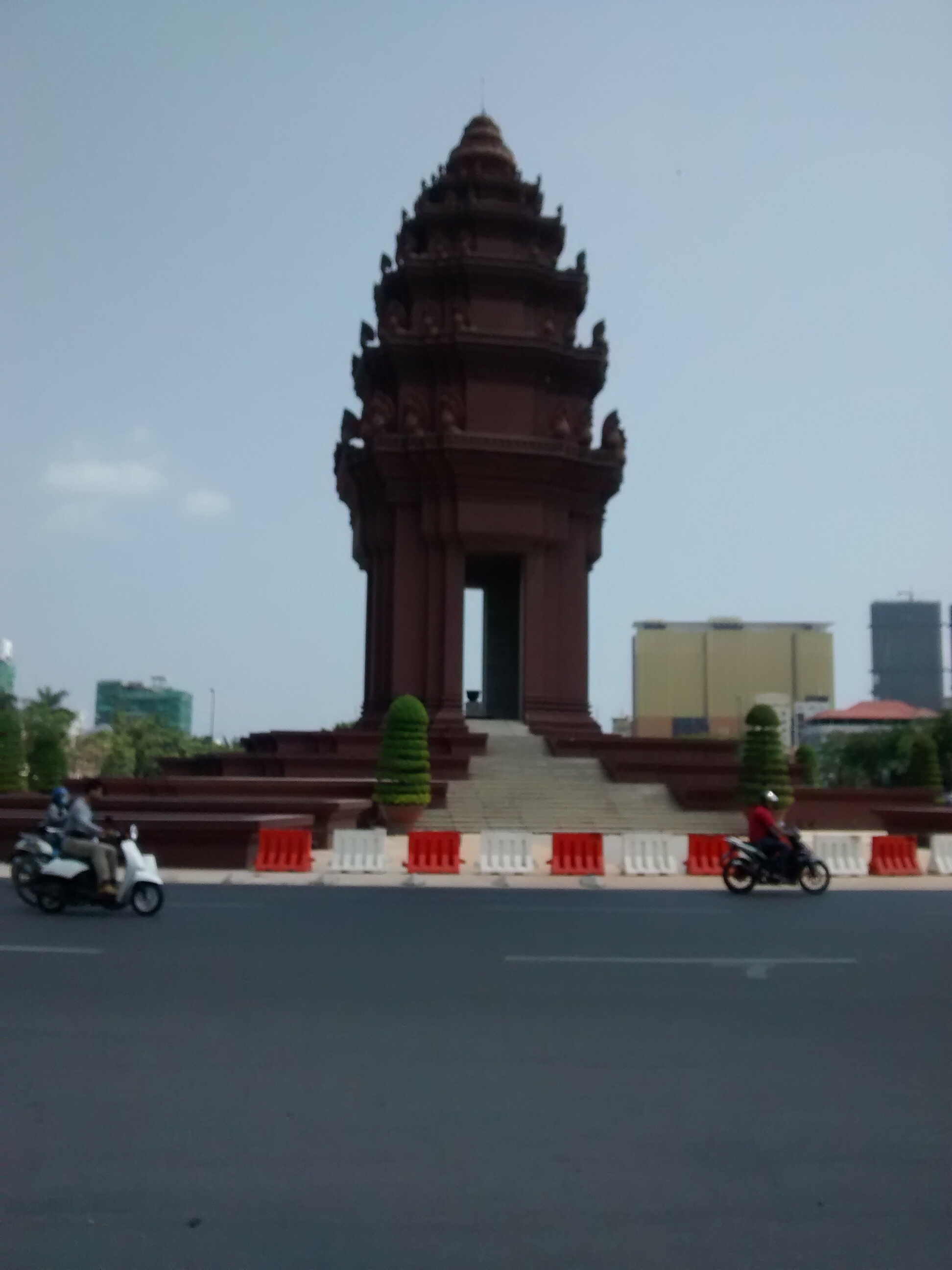
The Independence Monument. Cambodia said Adieu to its French rulers in November 1953.
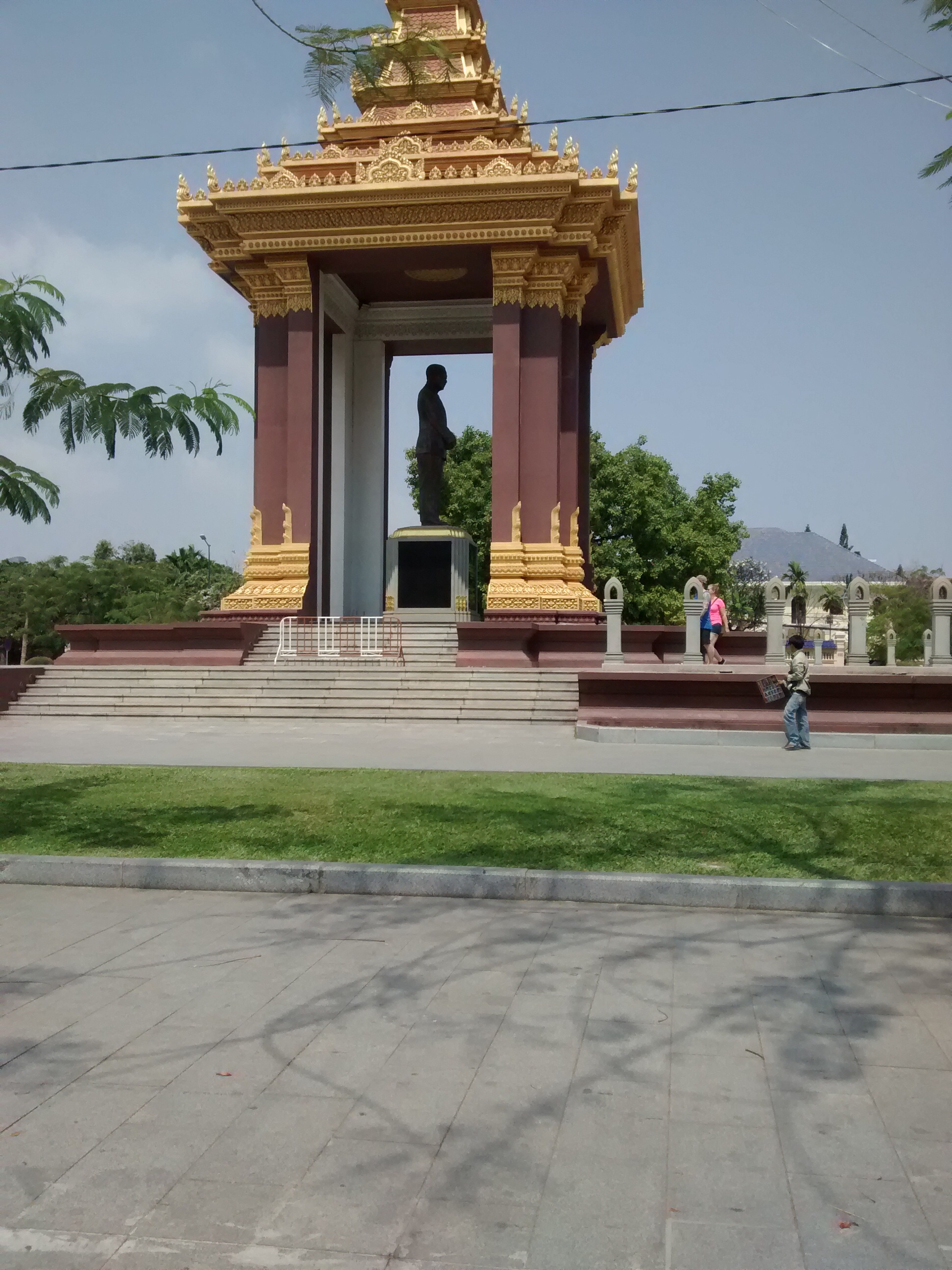
Sihanouk.
We span down the Quay, along the riverbank, then over the river to a more homely world on the other bank. Still with the golden temples…
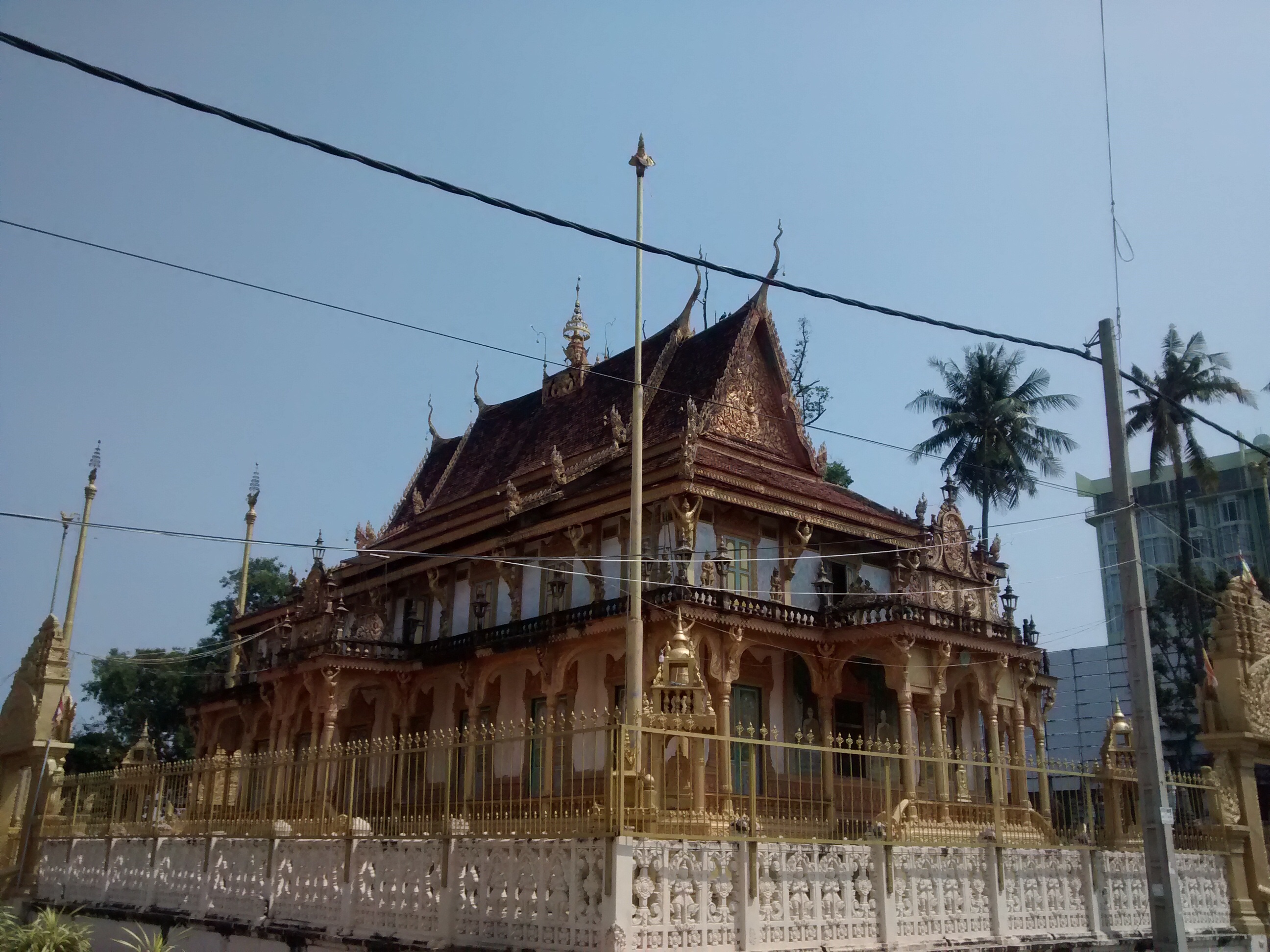
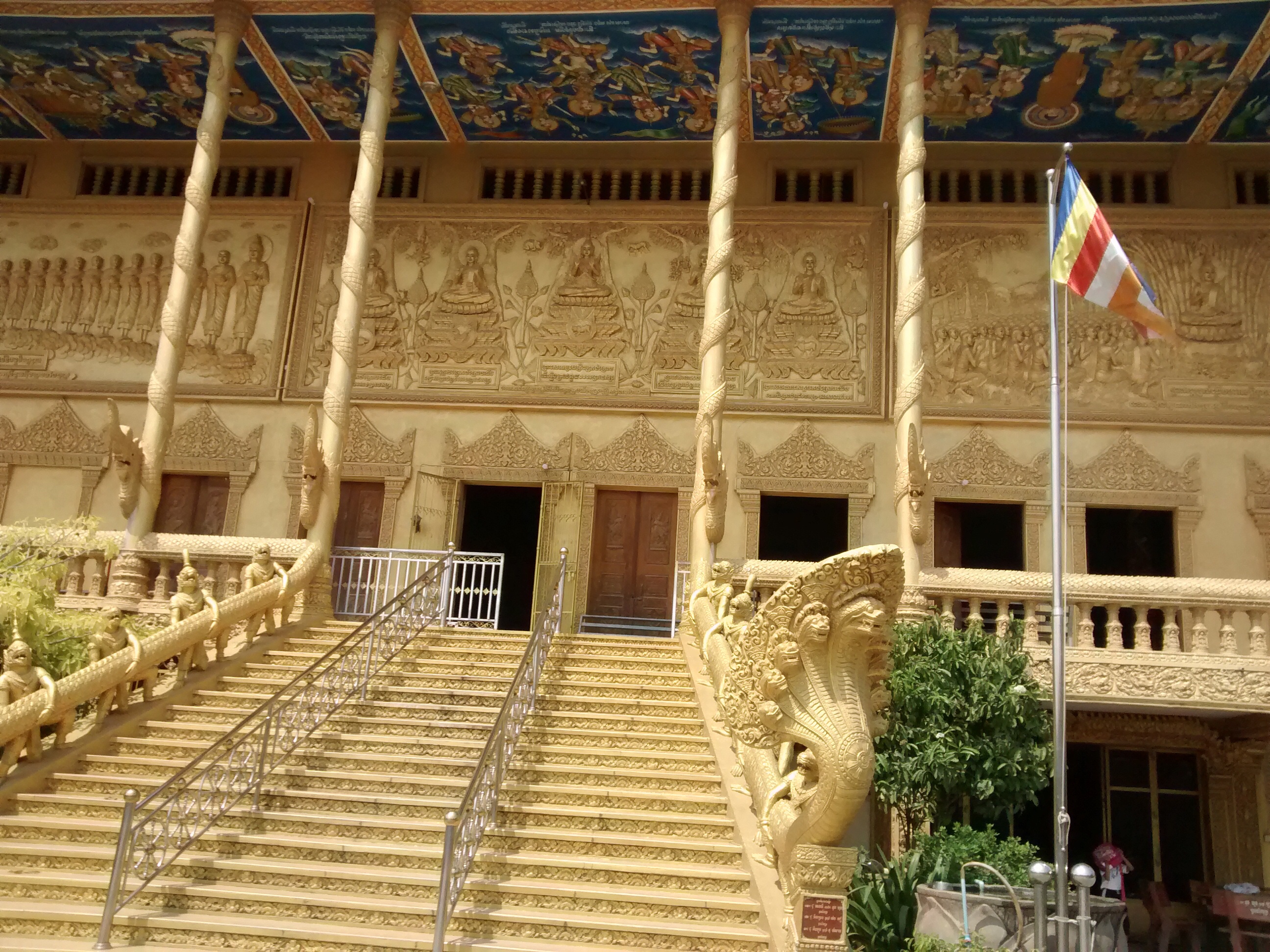
… but more villagey. And even poorer.
We randomly ventured into one village compound where, as I understand it, the monks had relocated from one of the temples.
Tuk-Tuk’s English was viable but not great, and it became very clear that he’d not said “monks”.
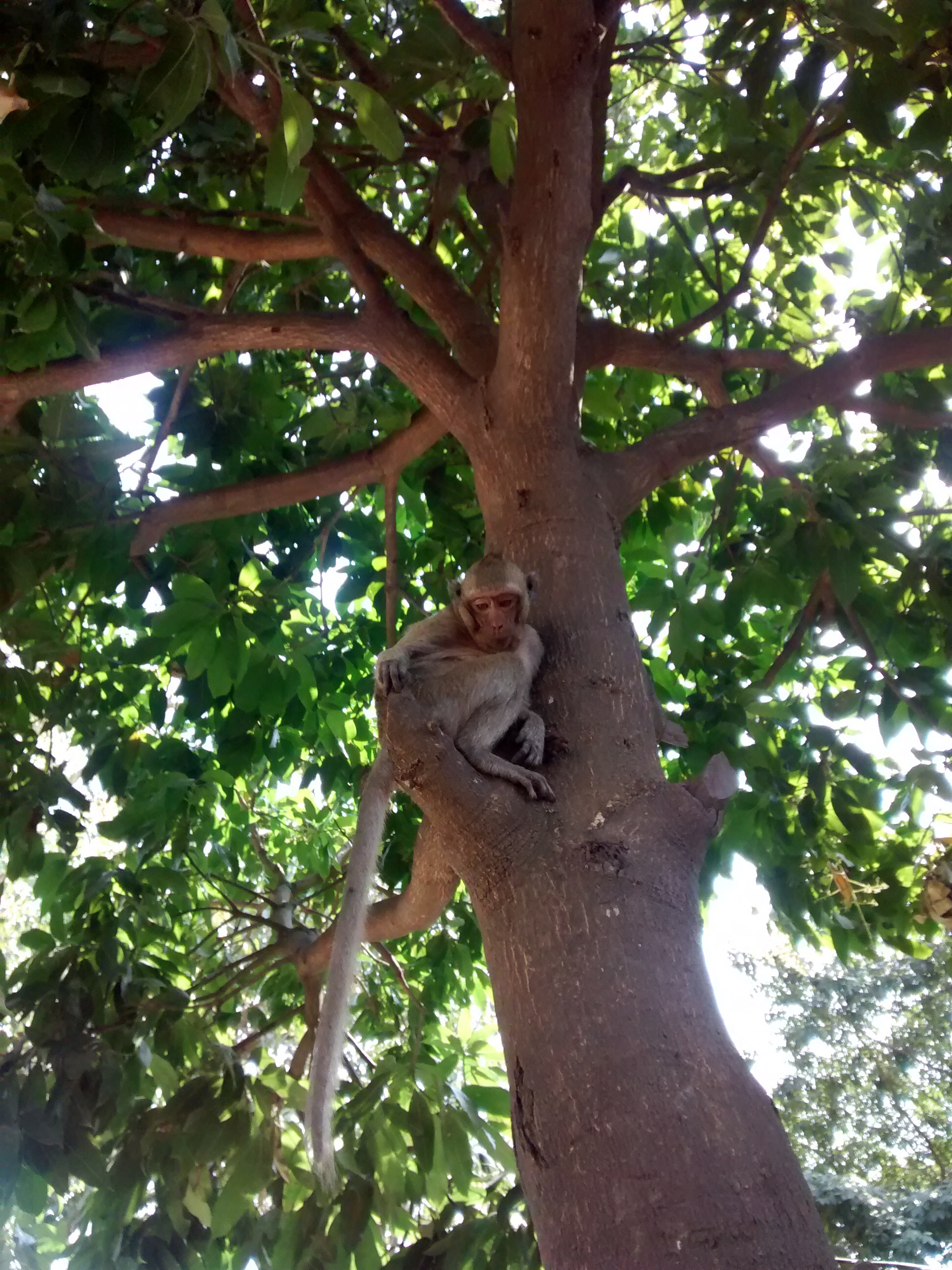
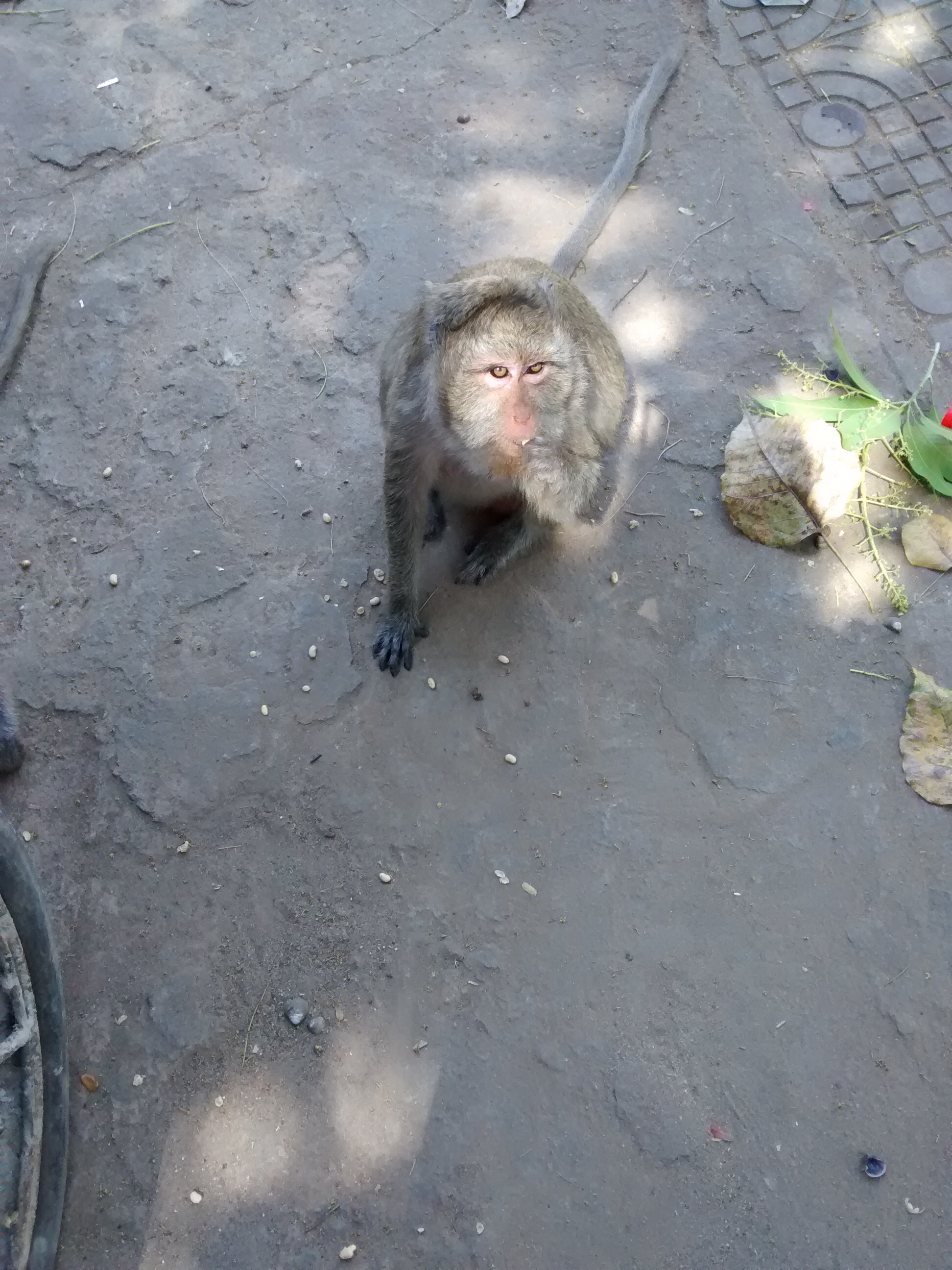
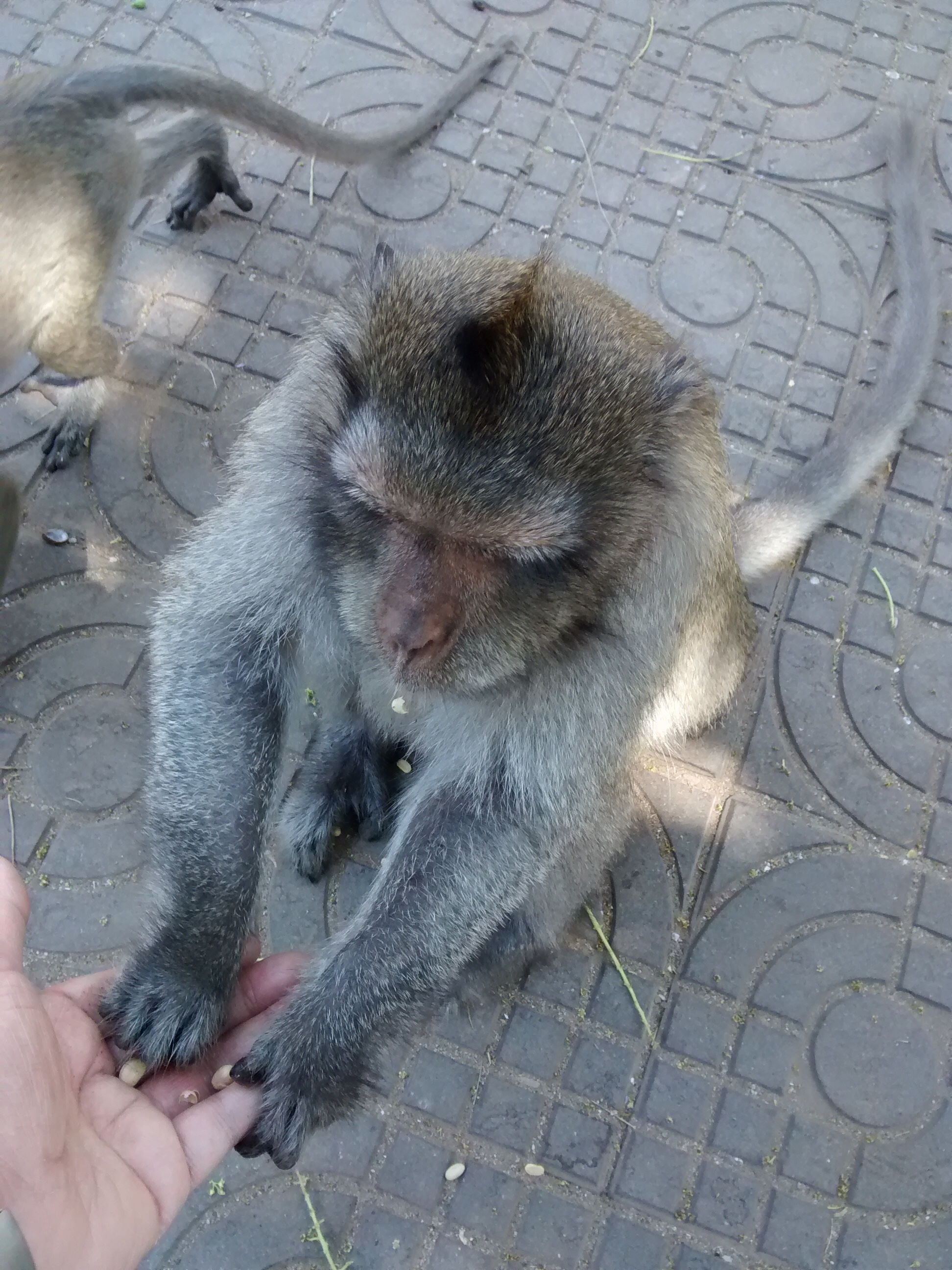
Feeding big-city macaques normally encourages them to grow into a nuisance, but the locals here didn’t seem to mind. And I’ve said that our guy was persistent.
So, when in Rome…
We sped out of monkey village, and down to a small fishing village on the riverbank. And here, laughs were in short supply.
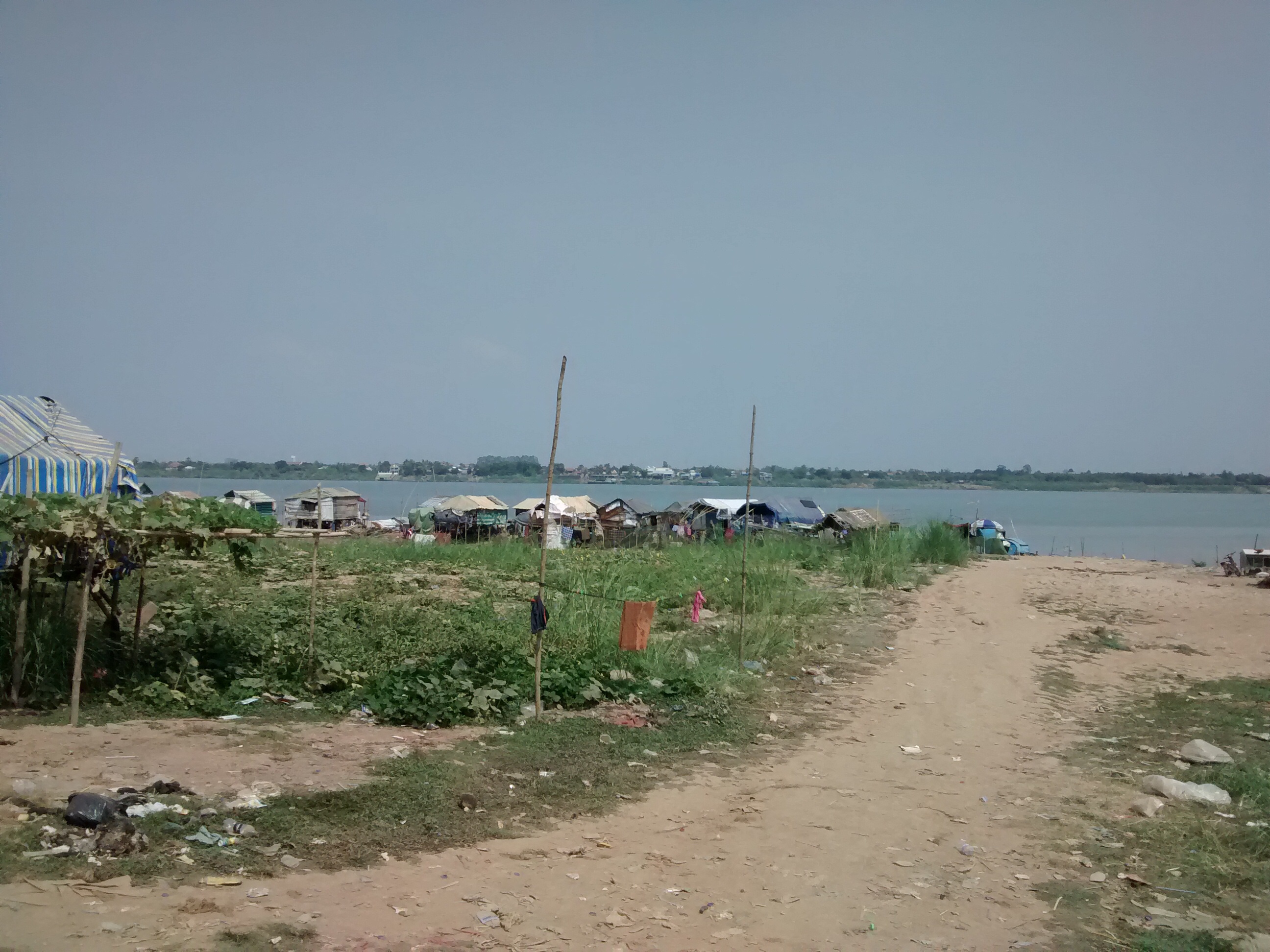
The inhabitants are Muslim Cham people from Vietnam. The Cham nation was once a great rival to Angkor, dangerous enough to have their defeats celebrated on the temple walls.
Looks like those days are long gone.
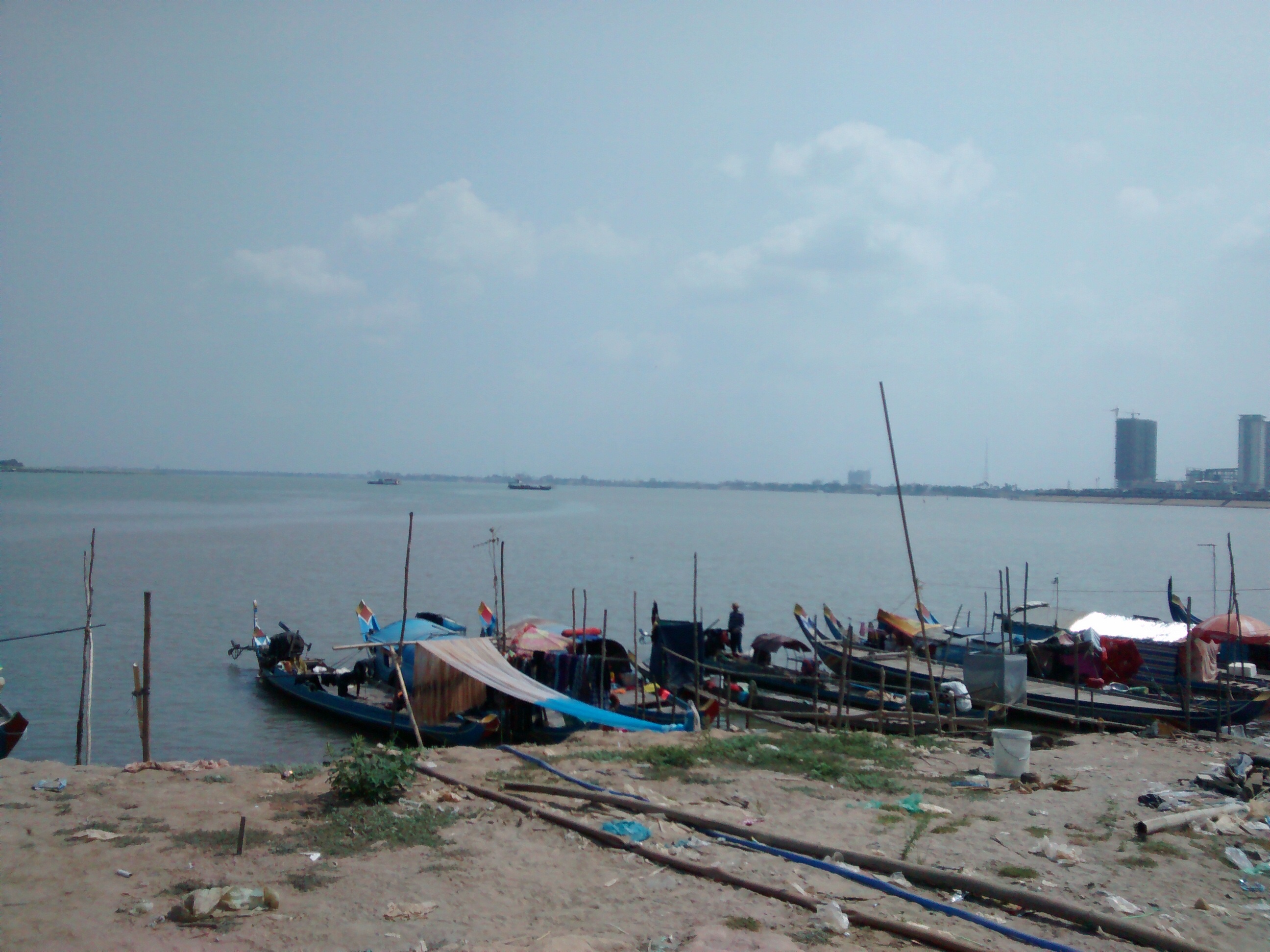
Turning round from this viewpoint…
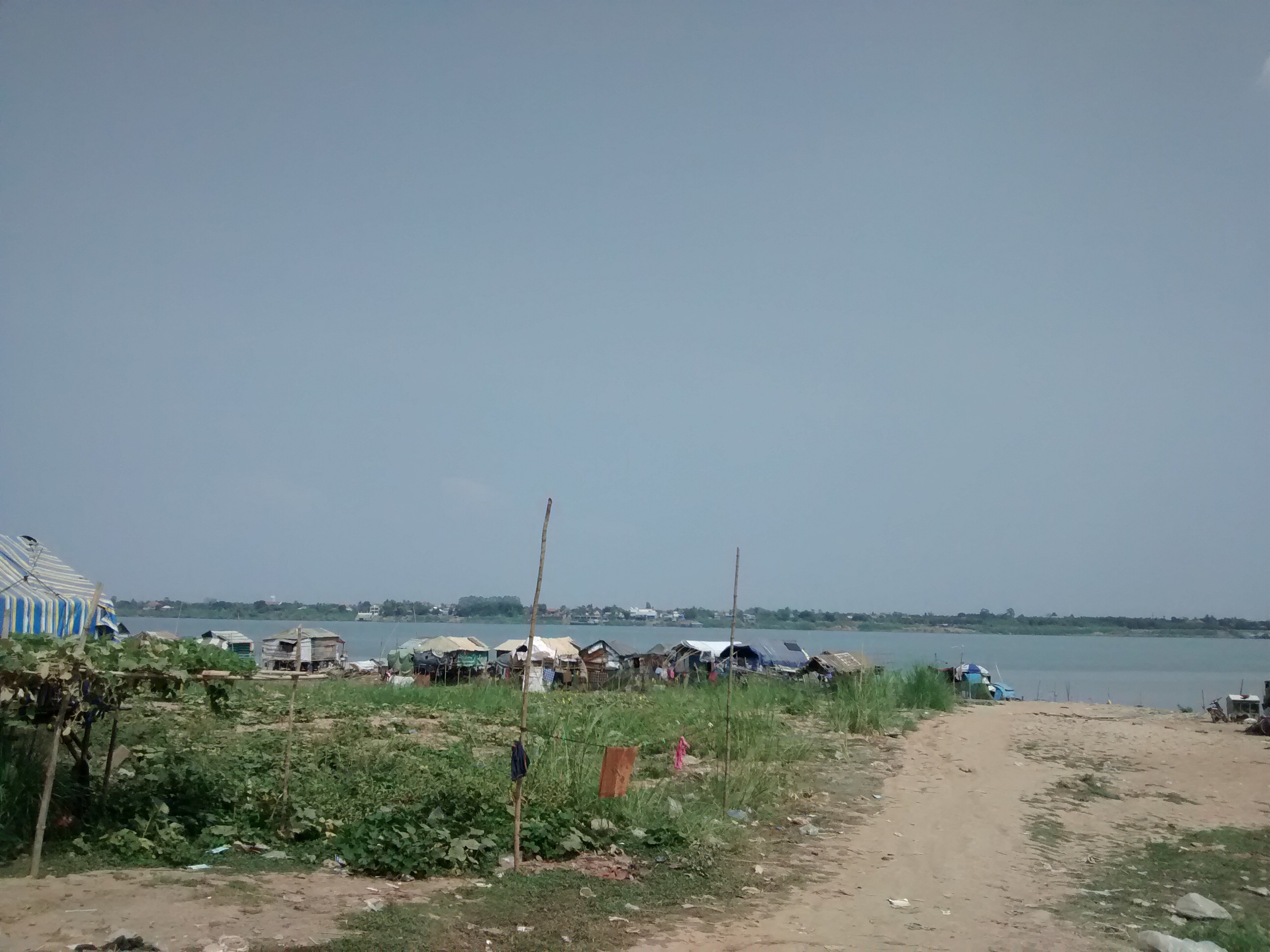
…brings you to this…
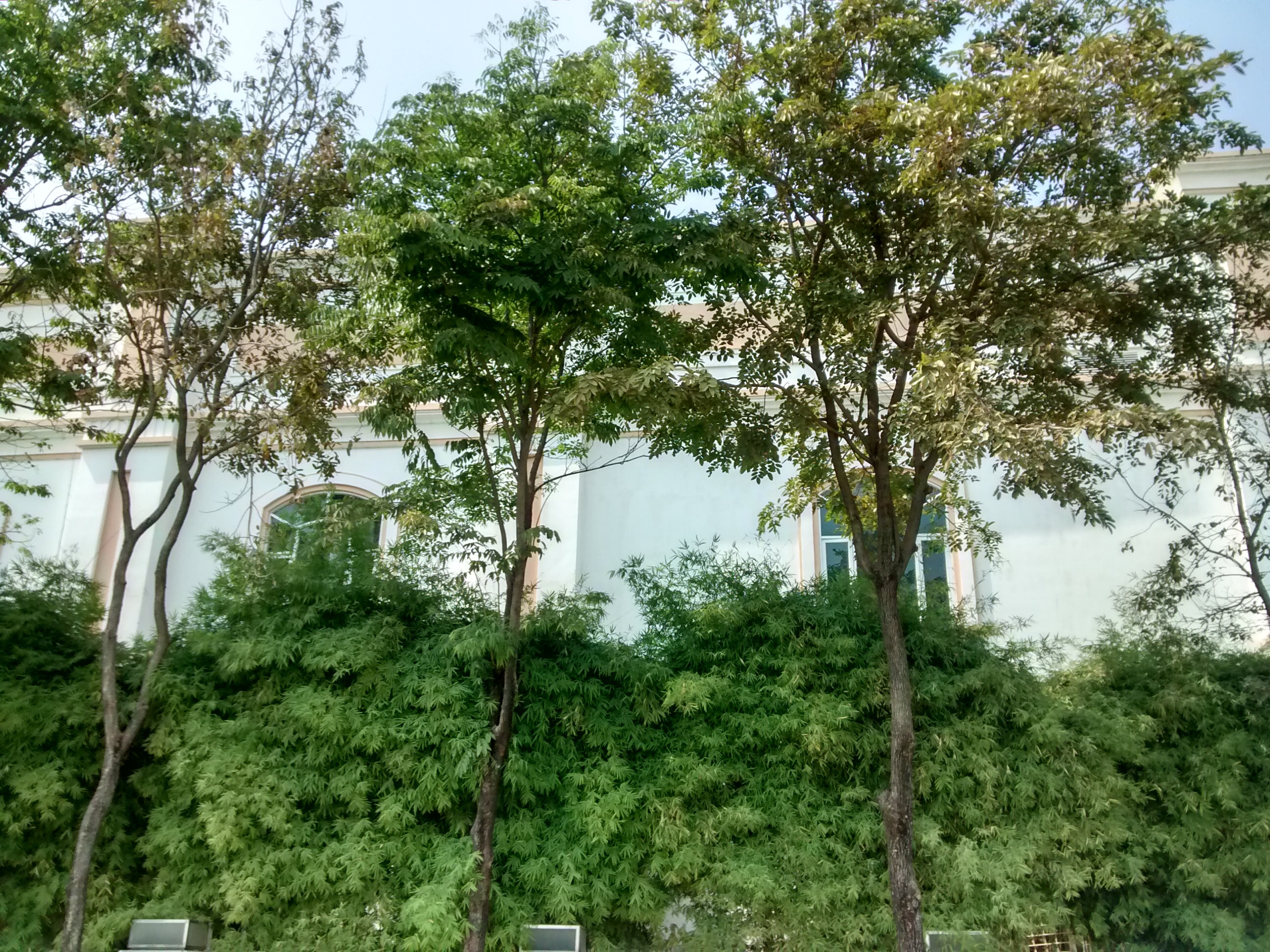
A five-star hotel.
No wonder they need the trees.
We made our way back and finished up back in town. Before heading to the palace, I popped into a famous institution on the Quay for something to eat.
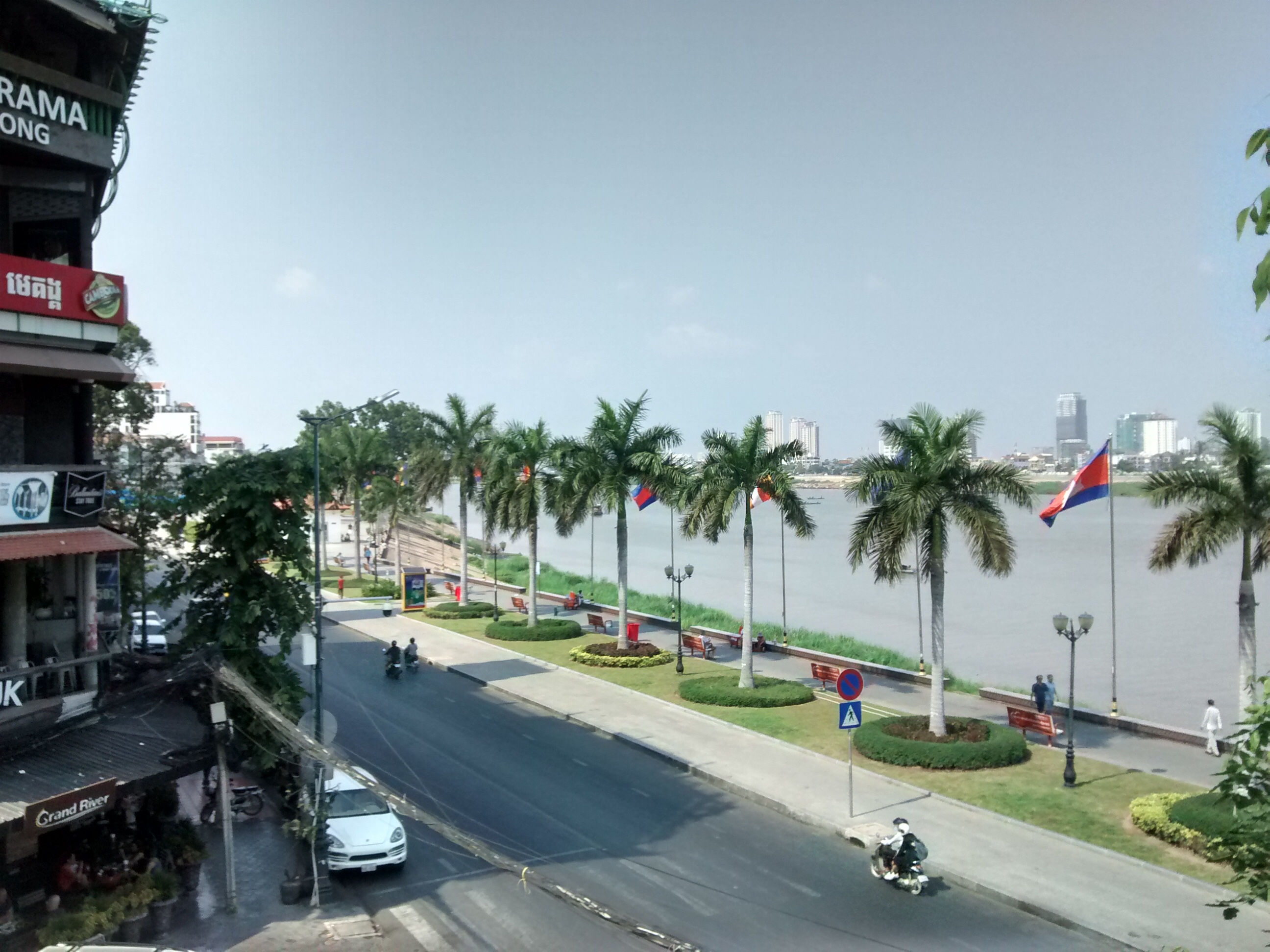
Cambodia became a UN protectorate in 1992, and free elections were organised. The improving security situation lured foreign journalists back into the country, and a couple of them set up the Foreign Correspondents Club in this building. It became iconic as the hacks who frequented it covered the final days of the Khmer Rouge as a fighting force and then the disappointingly un-gruesome death of Pol Pot.
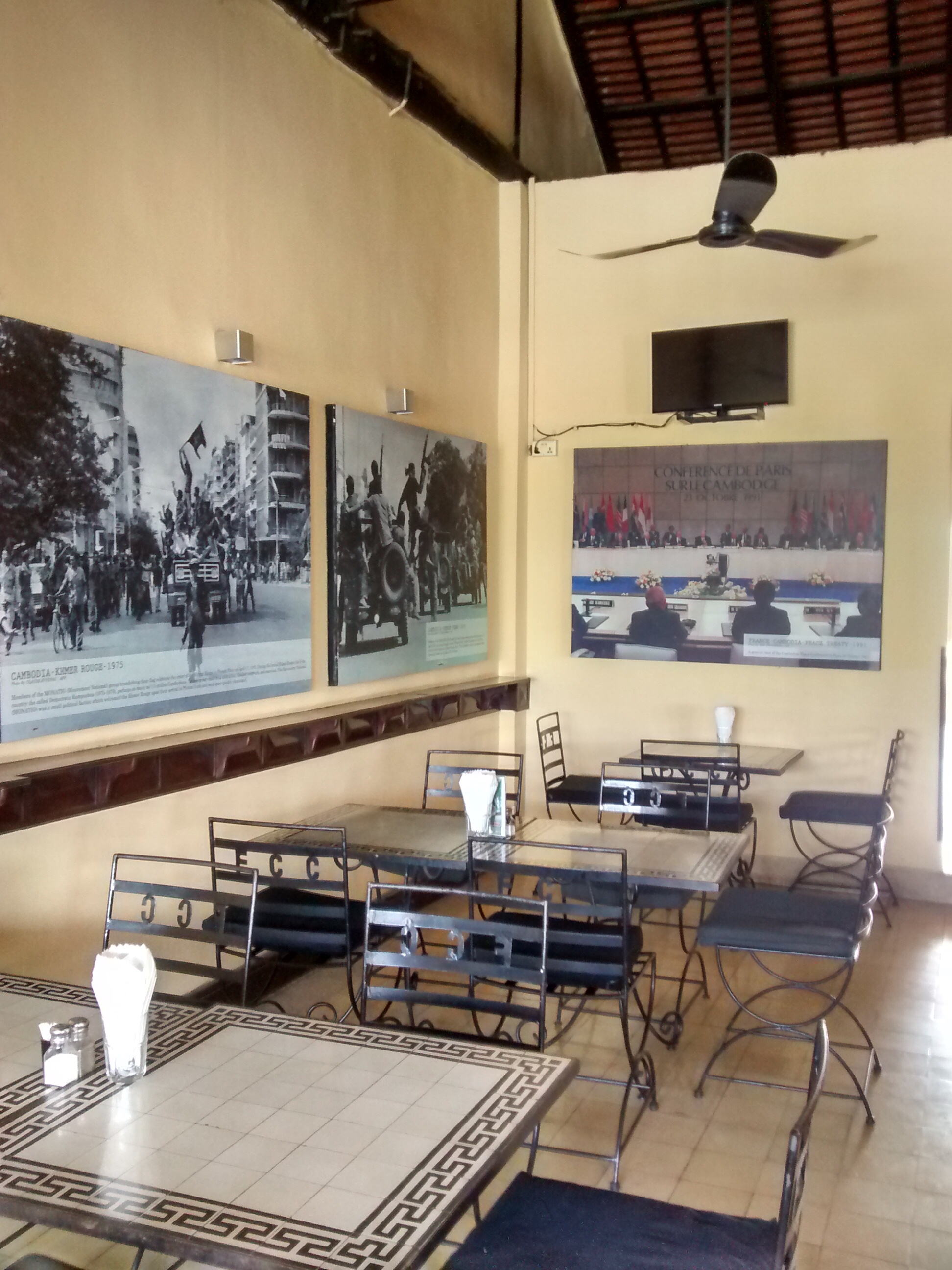
Today, the journalists have gone and the FCC is just another three-star hotel and restaurant/bar, but they’ve managed to keep that feel of a journalist’s hideaway in a country in turmoil.
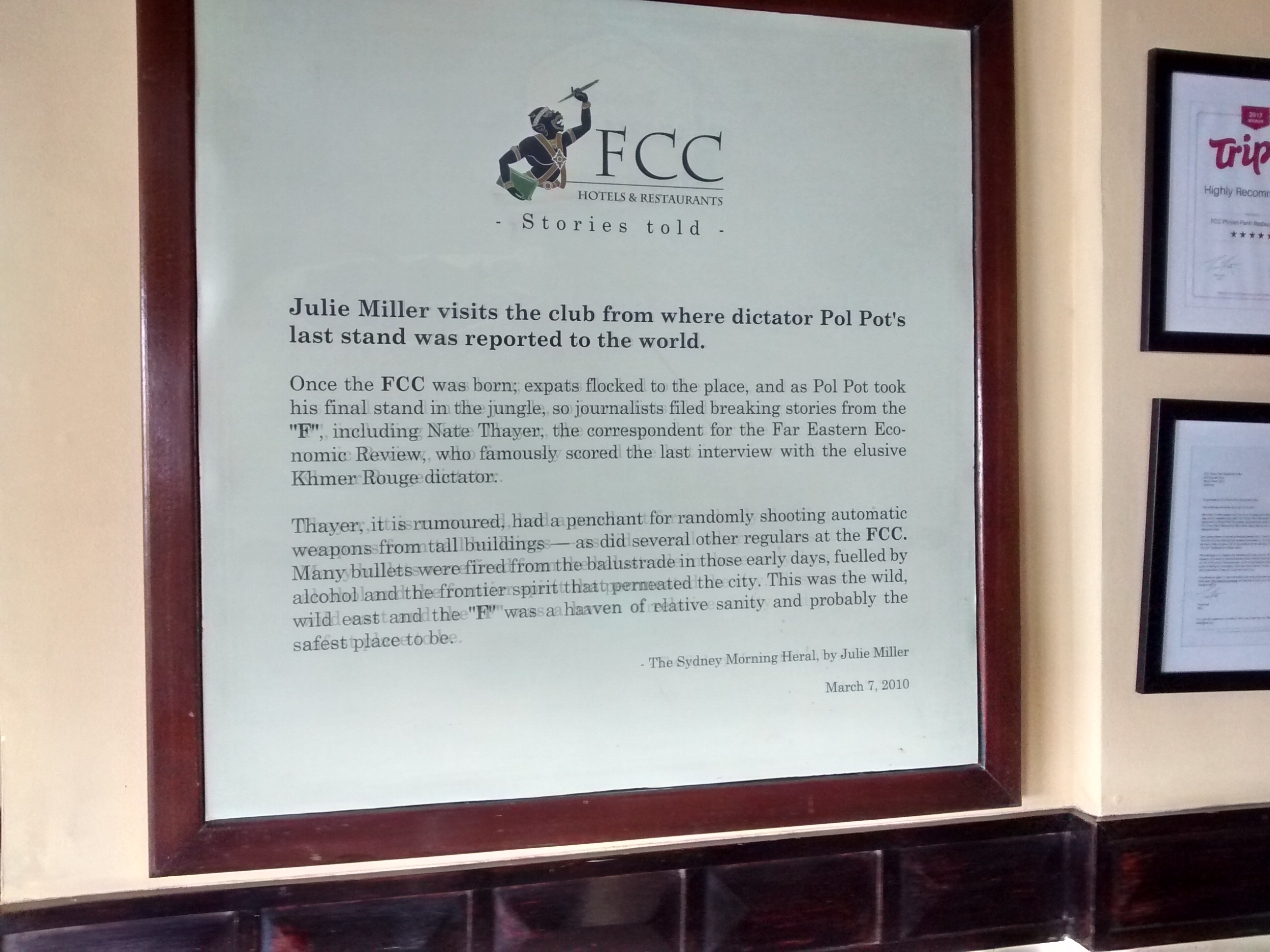
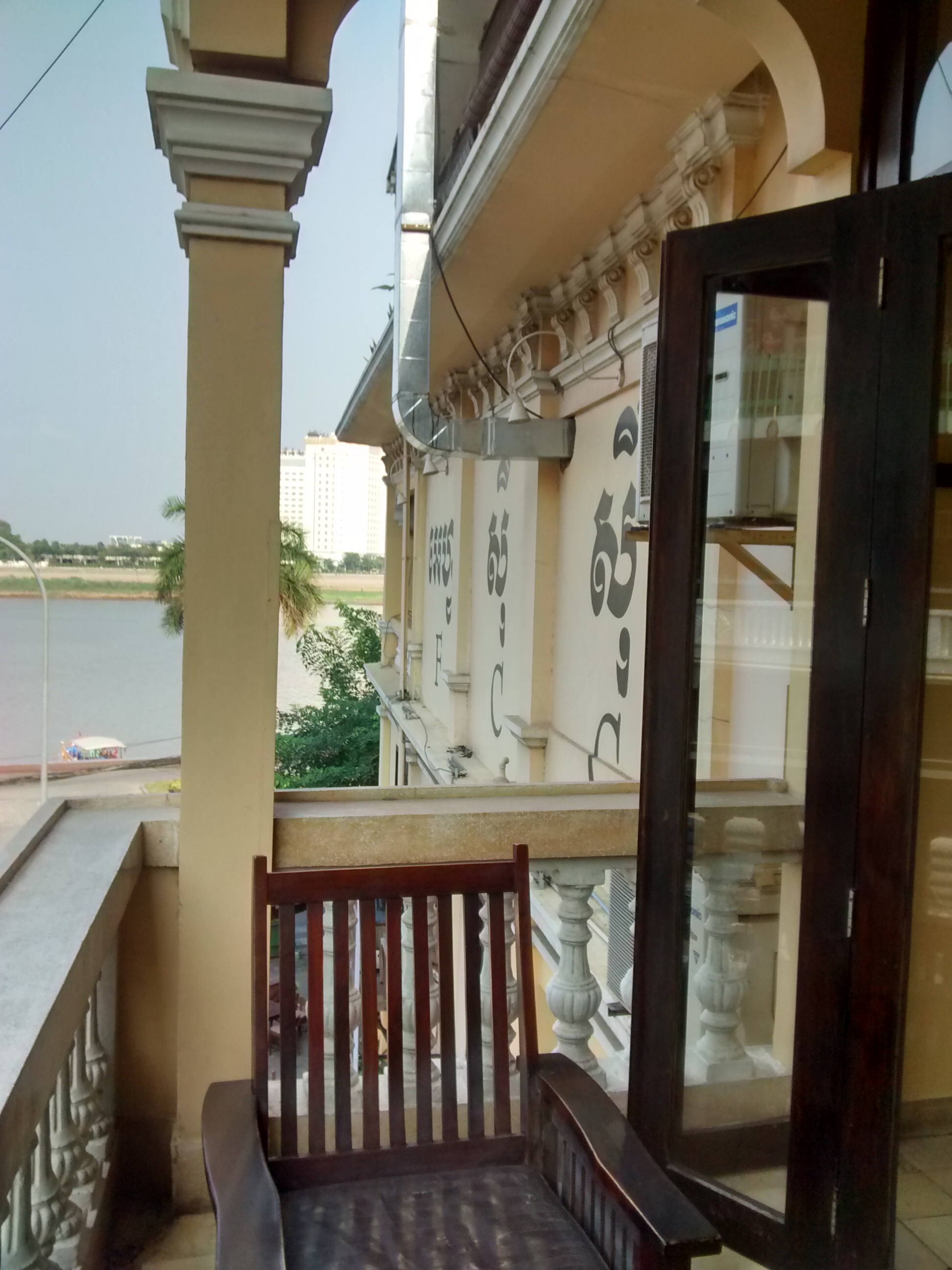
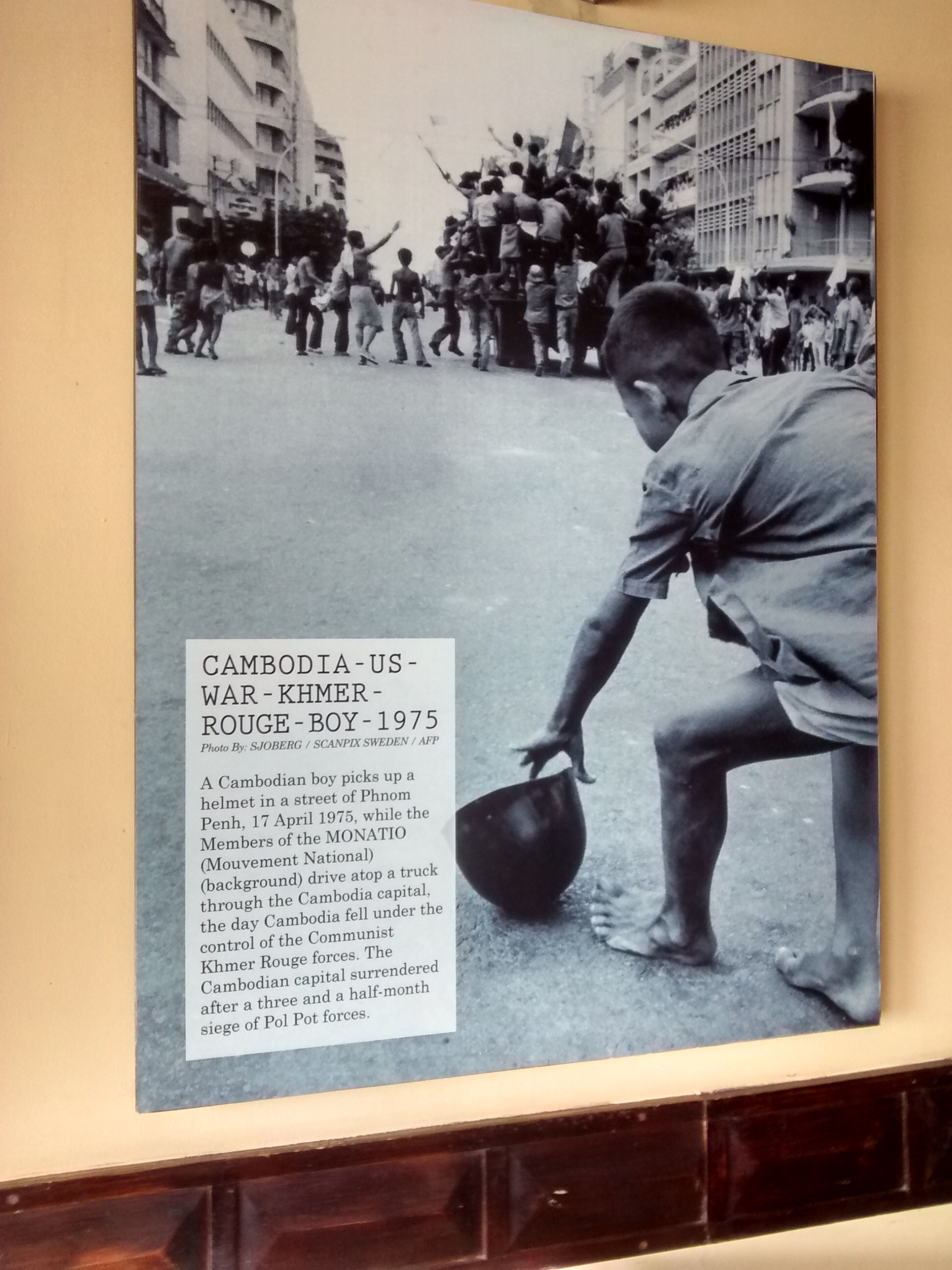
I do have to say, I was half-expecting the servant to come up to tell me my rickshaw-wallah had arrived; it does have that colonial feel to it. But, for someone like me growing up in the 70s and early 80s, Phnom Penh wasn’t so much a real place as a news headline, so it was fascinating to be in the rooms where those stories would have been crafted in the 90s. And it’s a delightful, atmospheric place to be as well.
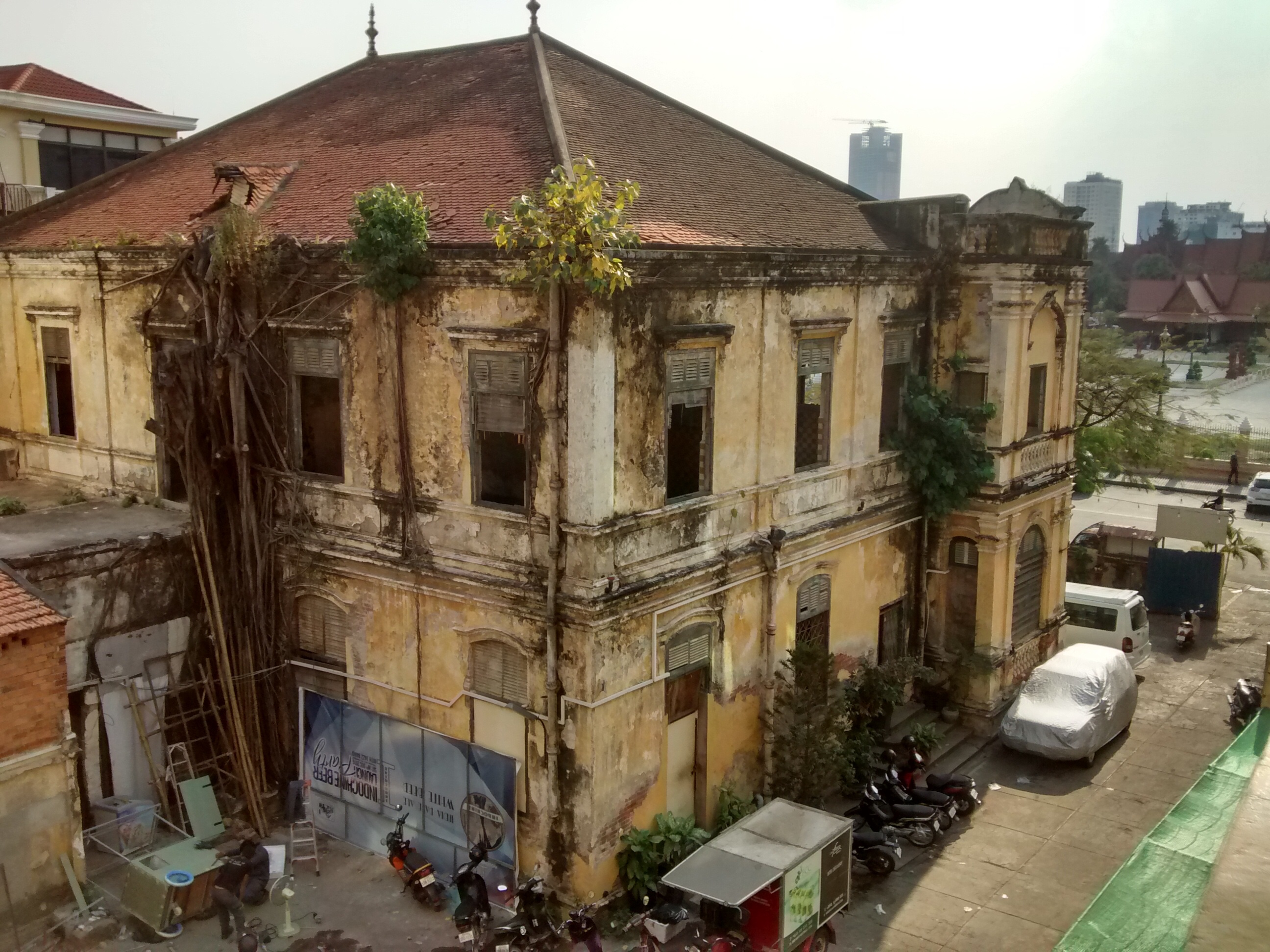
The FCC overlooks this old ruin of a French colonial building, now used as a performance venue.
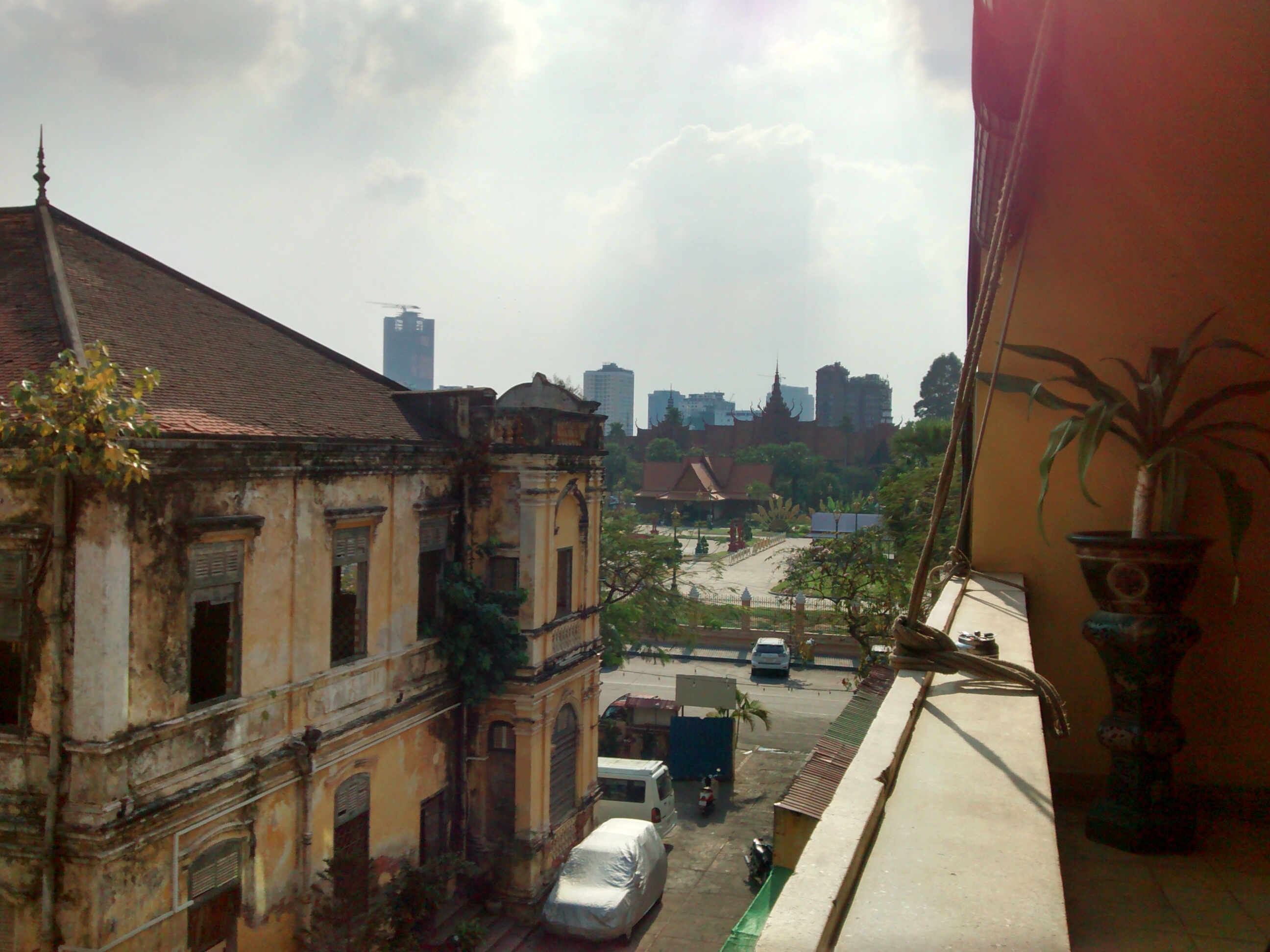
Ah, the Palace should be open by now, let’s pop in.
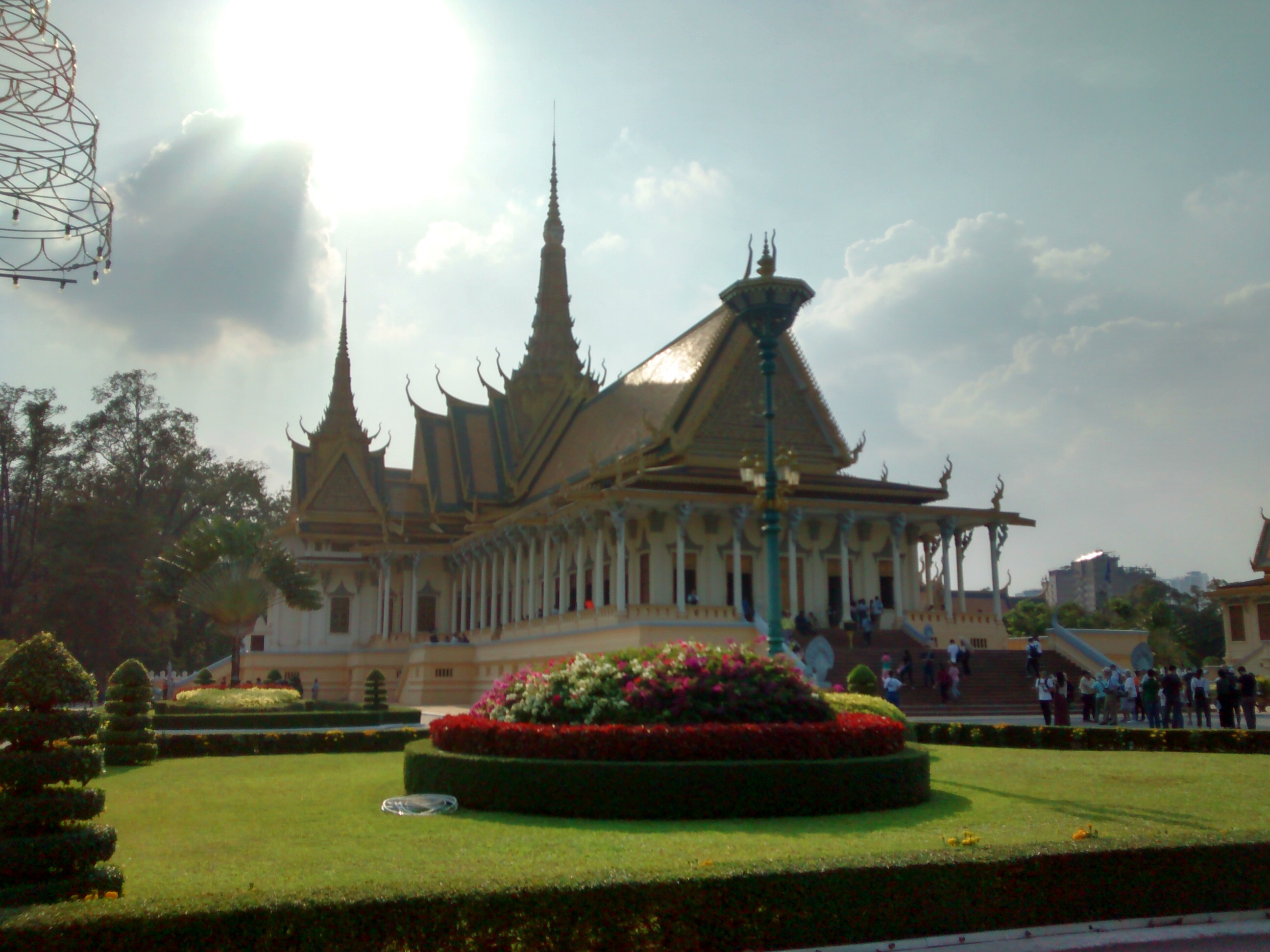
The palace we see today (this is just the Throne Hall) was sited here in the 1860s and many buildings were rebuilt between 1913 and 1919. Together with the Silver Pagoda, highlights include some gorgeous stupas containing the ashes of former monarchs, and the stunning collection of golden Buddhas in the Silver Pagoda.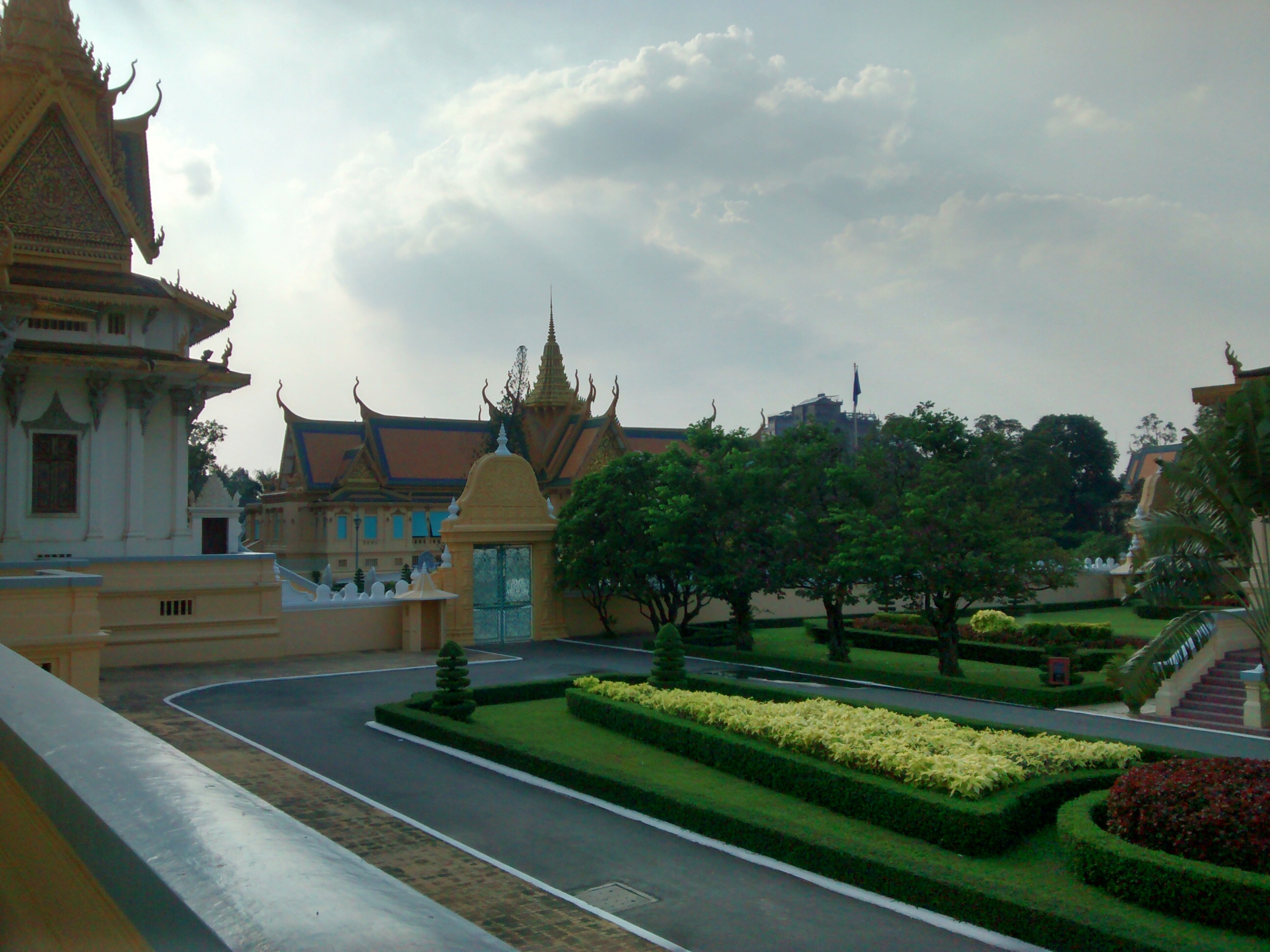
The current king is the 65-year-old Norodom Sihamoni (those are his private quarters behind that low yellow wall). One of Sihanouk’s children, crowned in 2004 in the Throne Hall, he’d been out that morning delivering ambulances to medical facilities elsewhere in Cambodia. But he’s back now – as shown by the blue royal standard in the centre-right.
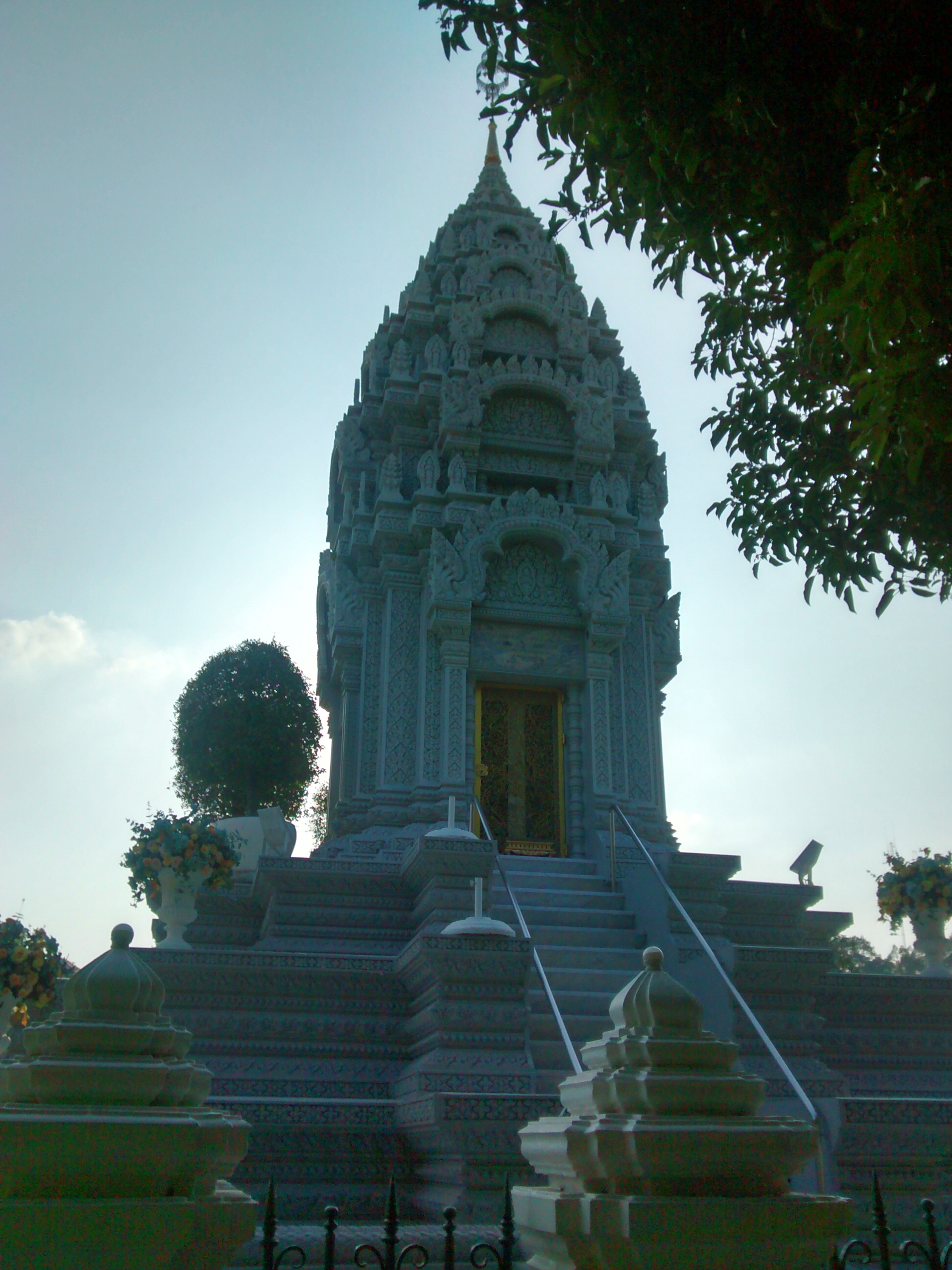
Sihanouk again – this time, his stupa.
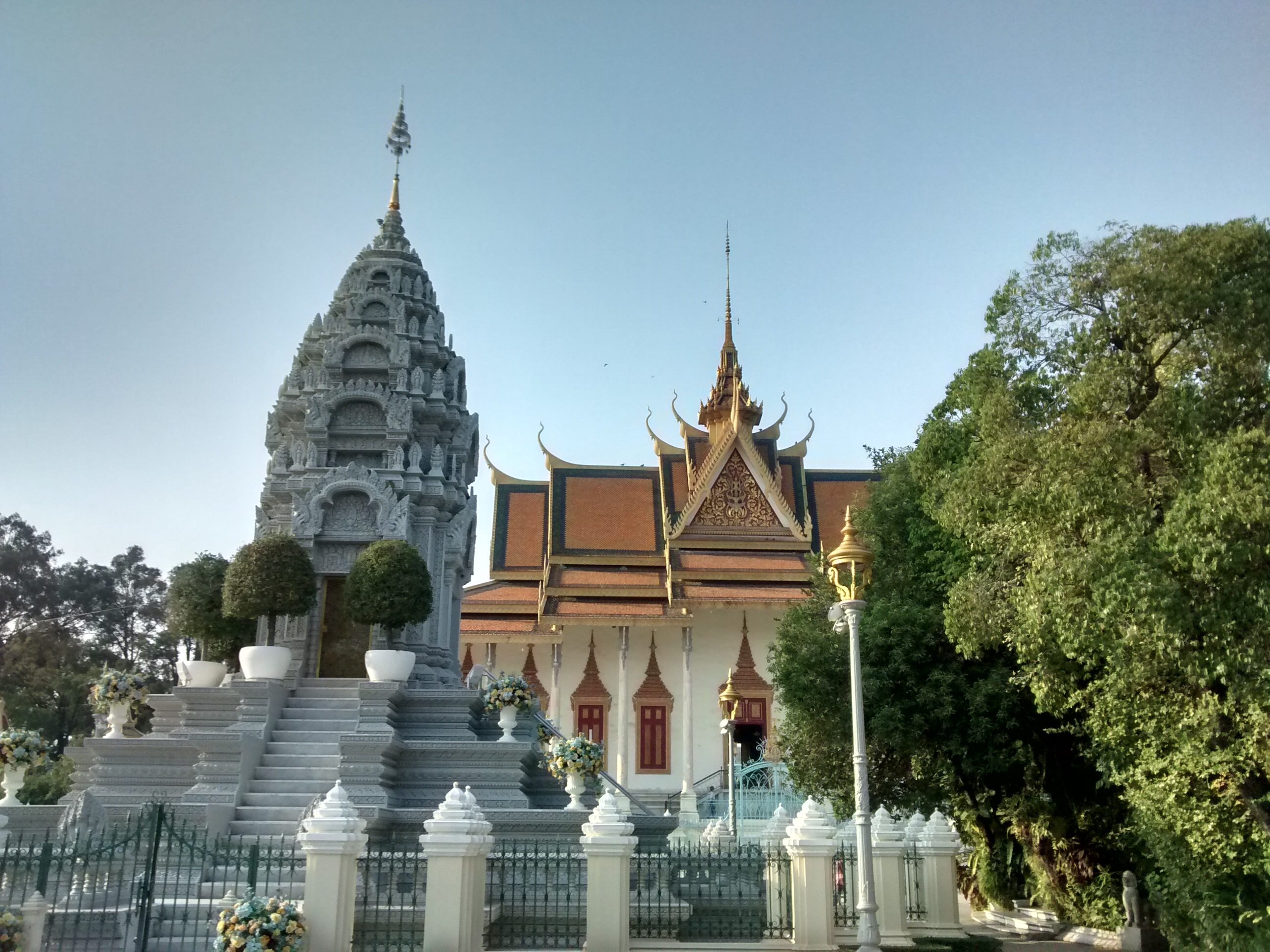
Time to leave the palace and time to call a halt for the day. Now I’m beginning to rethink my Phnom Penh expectations. Is three nights enough?
 orwellianTwo
Leave a comment