Time for a break from all that temple-ing. Let’s have something different.
War and genocide.
In 1431 the Thais sacked Angkor, marking the start of what the Khmer call their Dark Ages. A weakening, declining state gradually became the prey of their Thai and Vietnamese neighbours until, in the nineteenth century, they had no choice but to become a protectorate of the newly-arriving French.
Officially the Dark Ages end at this point, but they surely saw nothing as dark as what was to follow in the 20th century. To find out more, we head to the sobering War Museum on the outskirts of Siem Reap.
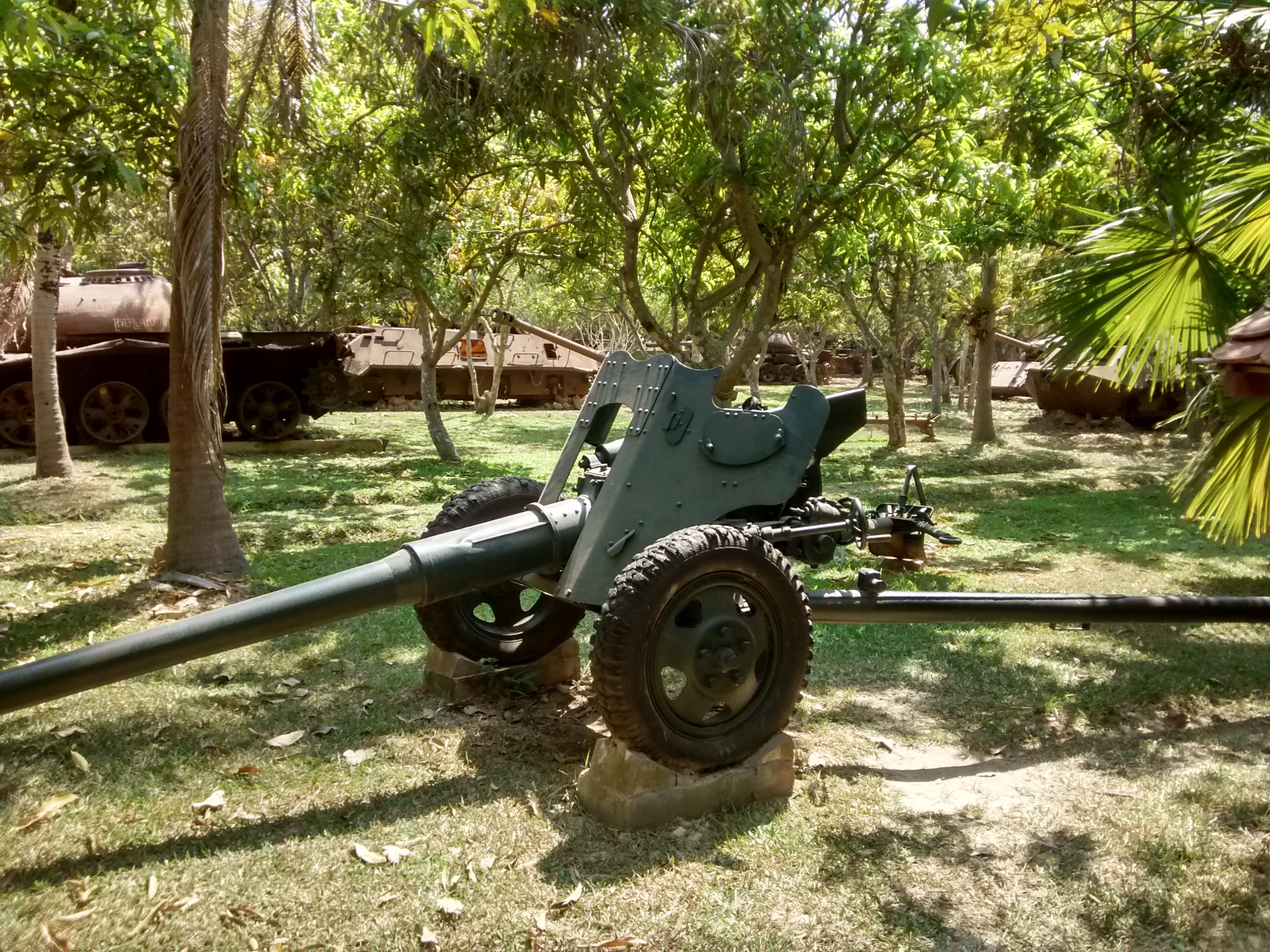
“Poor Cambodia”, Porfirio Diaz might have said. “So far from peace, so close to Vietnam”. Cambodians won their independence in the 50s, but could not isolate itself from the conflict over the border. Sihanouk, the prince-turned-PM, favoured the North, and allowed them to pop over to the Cambodian side to establish supply lines to the South. Uncle Sam was, to say the least, unimpressed. Between 1968 and 1973 the US pounded Cambodia with 2.7 million tonnes of bombs. Even Japan only got 1.7 million – including the nuclear ones.
That was only the start of the misery. And of the unexplored ordinance problem.
Meanwhile the generals sided with the South and Sihanouk was deposed in 1970. Then it all kicked off. Civil war. More ordnance. Sihanouk joined the anti-US resistance, which included a Maoist group called the Red Khmer. What’s that in French? Khmer Rouge.
The Communists entered the capital in triumph in 1975, just as in Vietnam. Then the slaughter, as we all know, really began, as the new leader Pol Pot tried to rid his country of any traces of opposition, the 20th century, and then everything else. Our tour guide’s telling of the story was informative, moving, and shocking, especially when it came to his own family. More about the horror when we get to Phnom Penh.
Eventually the Soviet-backed Vietnamese had had enough and invaded in 1979. The Khmer Rouge were forced to the Thai border where they continued to fight on until the 90s. Cambodia is now one of the poorest countries in the region and is only now beginning to recover.
It’s also one of the most heavily mined in the world. Both sides in the later war used landmines – the resistance (who also started upon each other) and the Vietnamese (who had ulterior motives for their good-guy invasion). They think they’ve cleared most of the mortar bombs, anti-tank, anti-personnel, unexplored bombs. They’re hoping the rest will be sorted by 2025. Meanwhile a dozen people were killed this January.
2025 is a lot of months away.
Let’s look at some hardware.
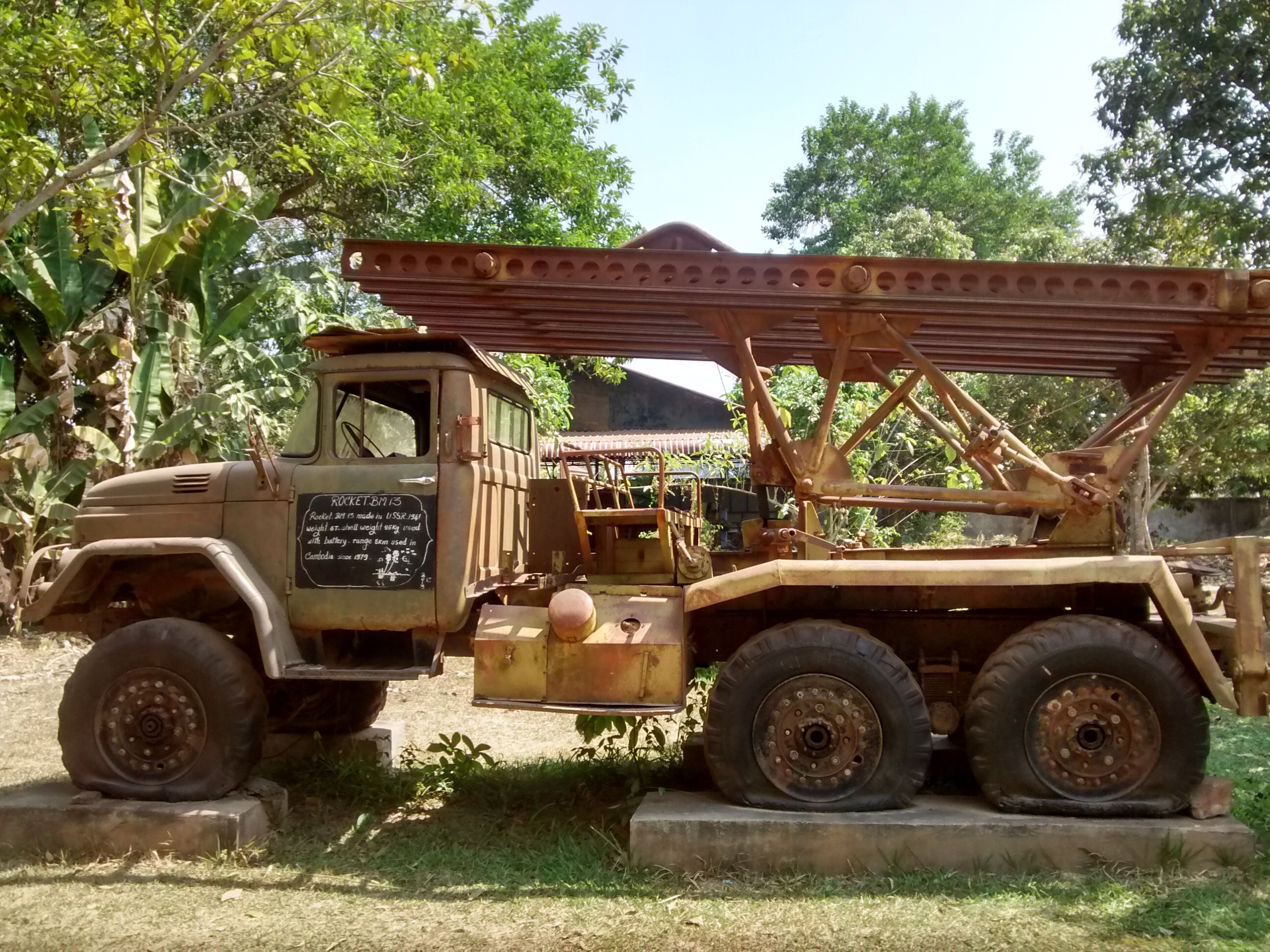
Everything we see here was supplied by the Soviets to the Vietnamese.
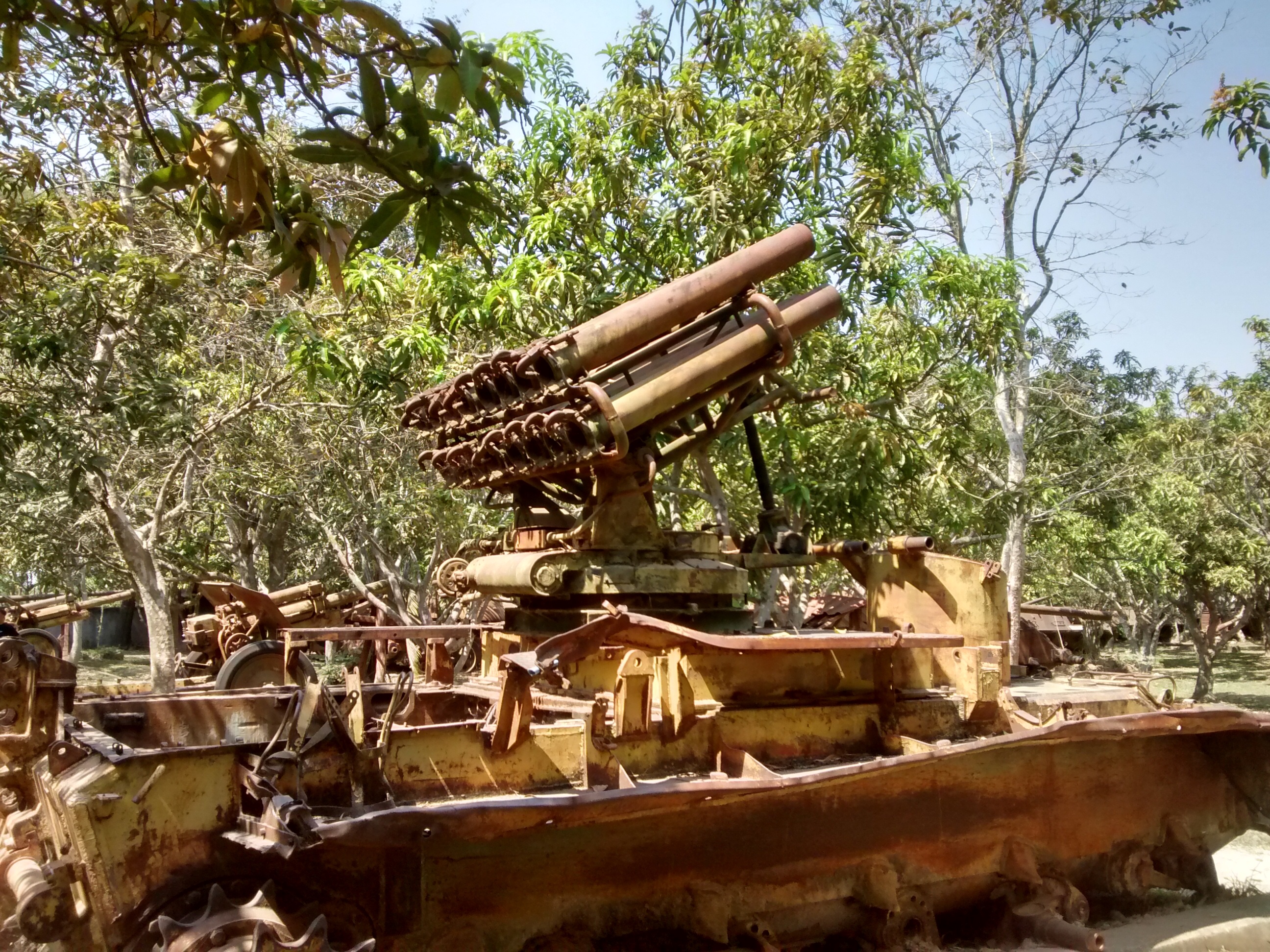
They even let you climb on them.
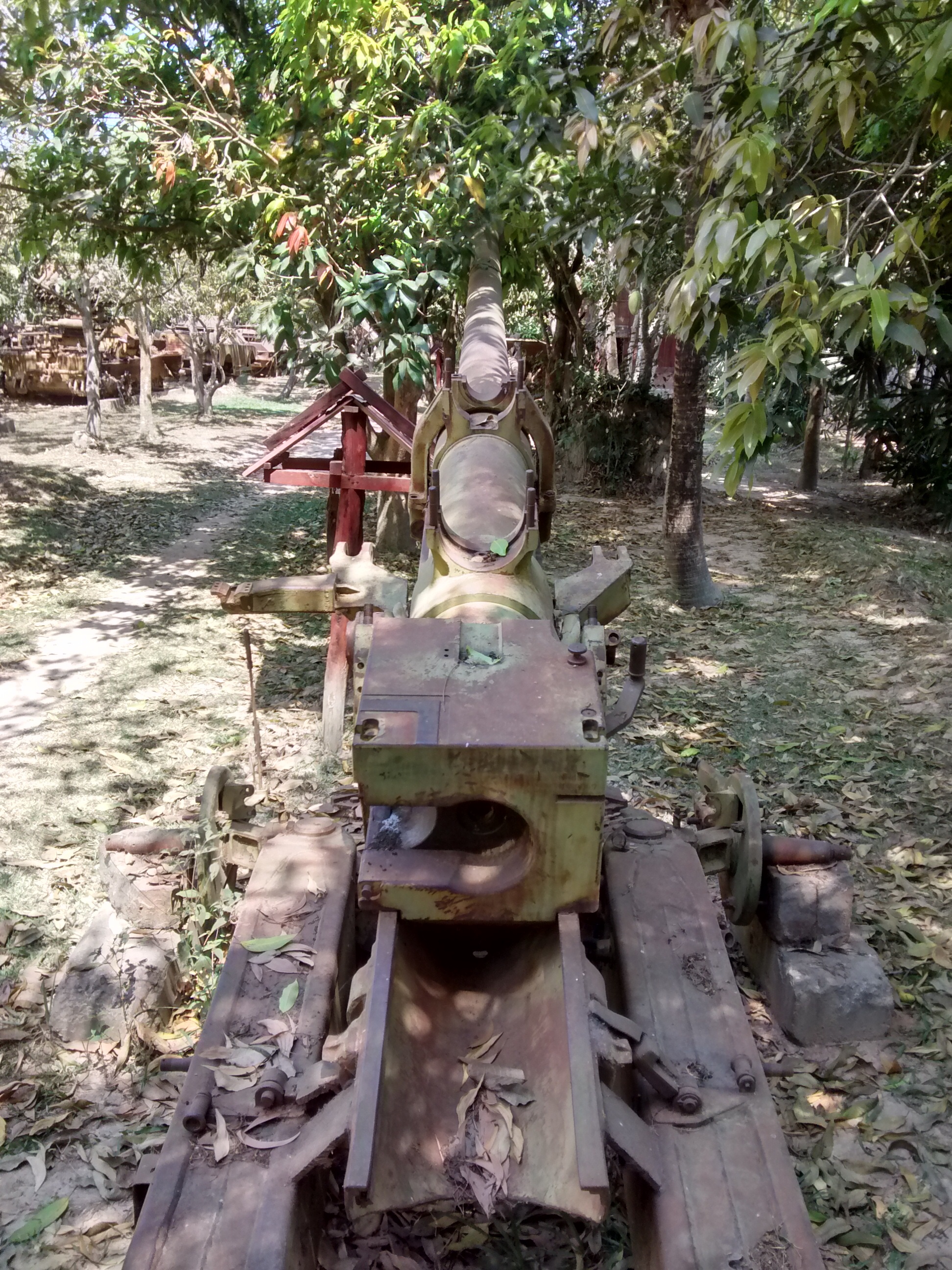
What became of the soldiers who were using them? How were these armaments captured?
We have to imagine.
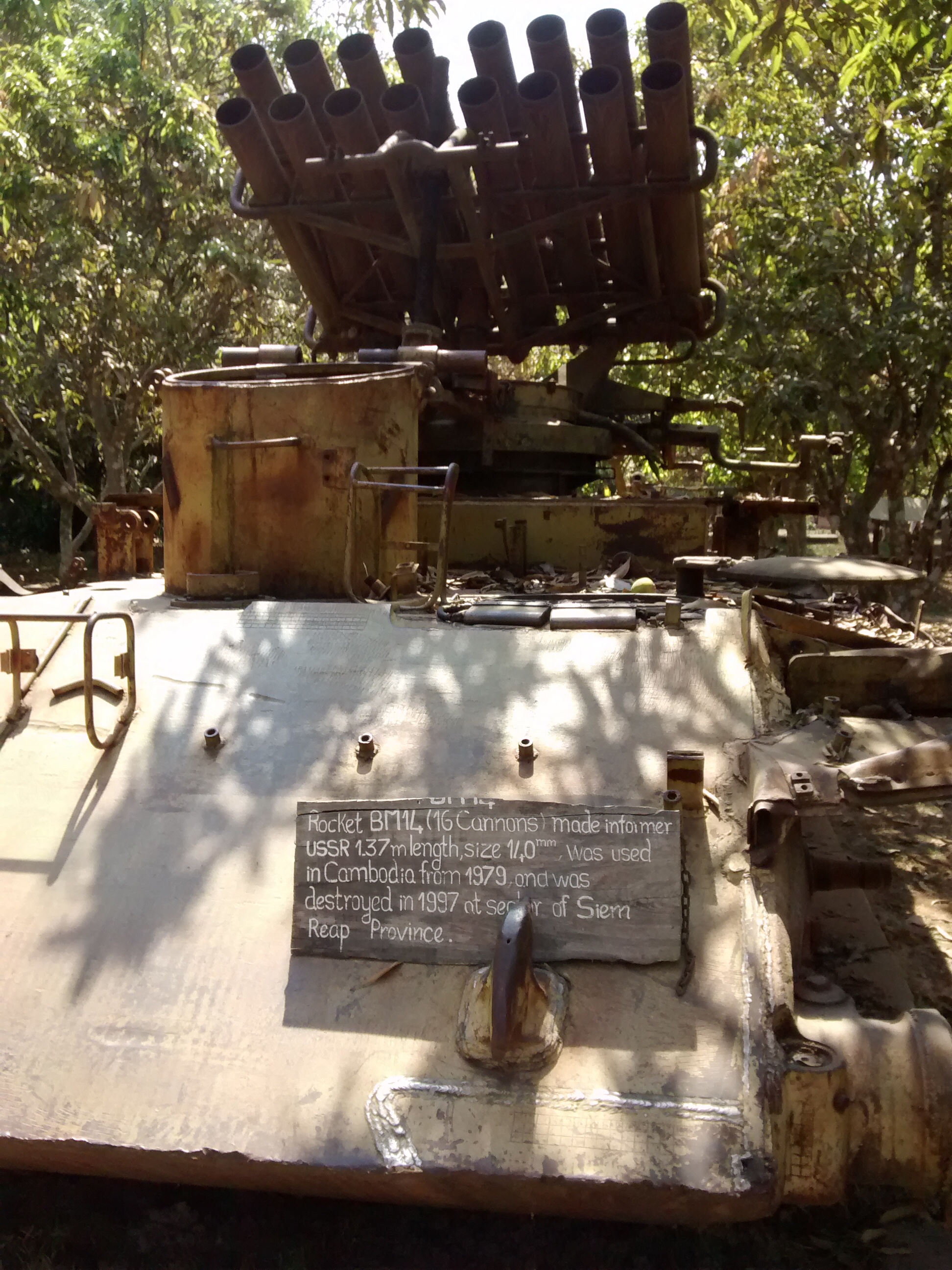
And what about those on the receiving end?
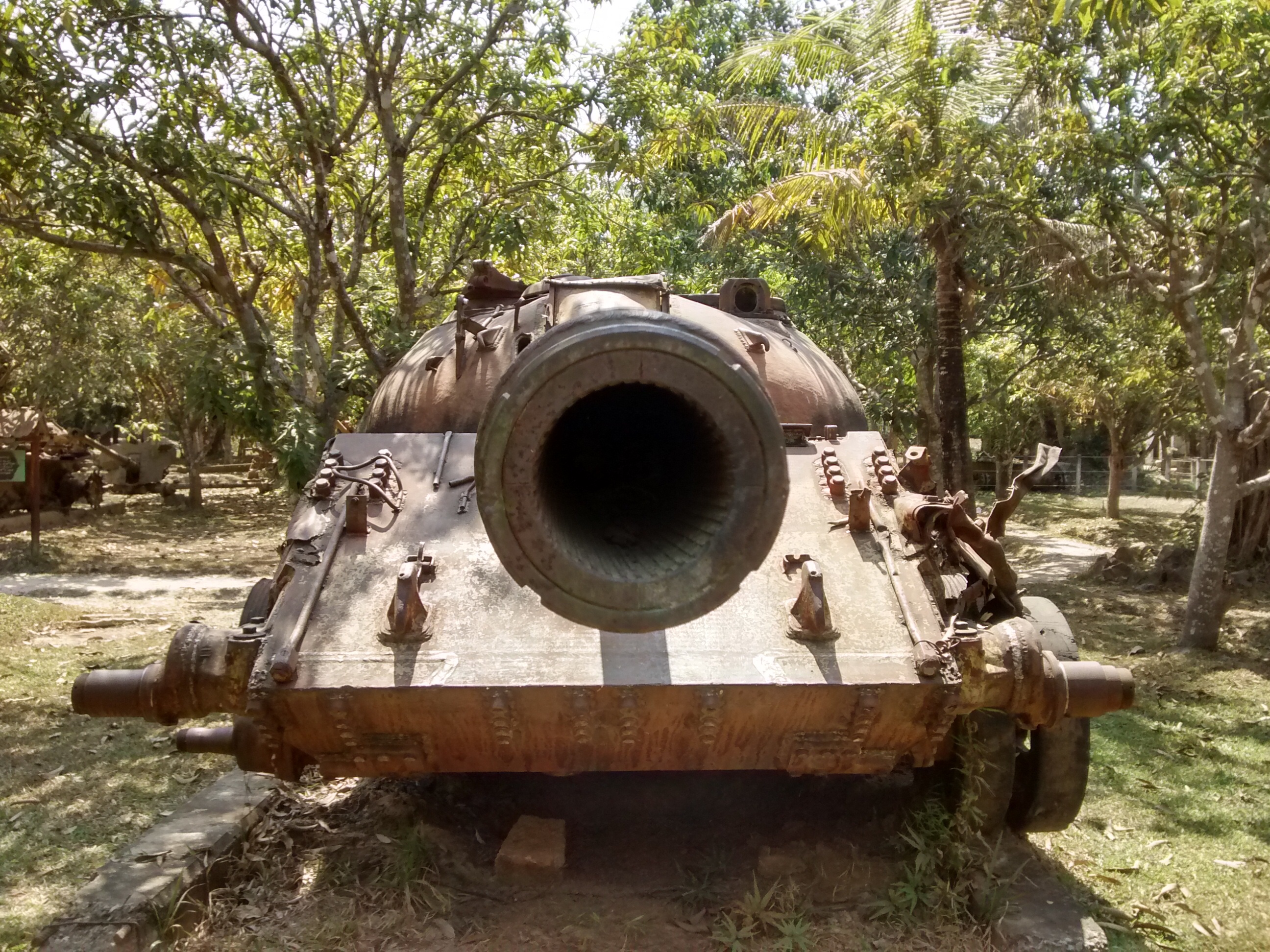
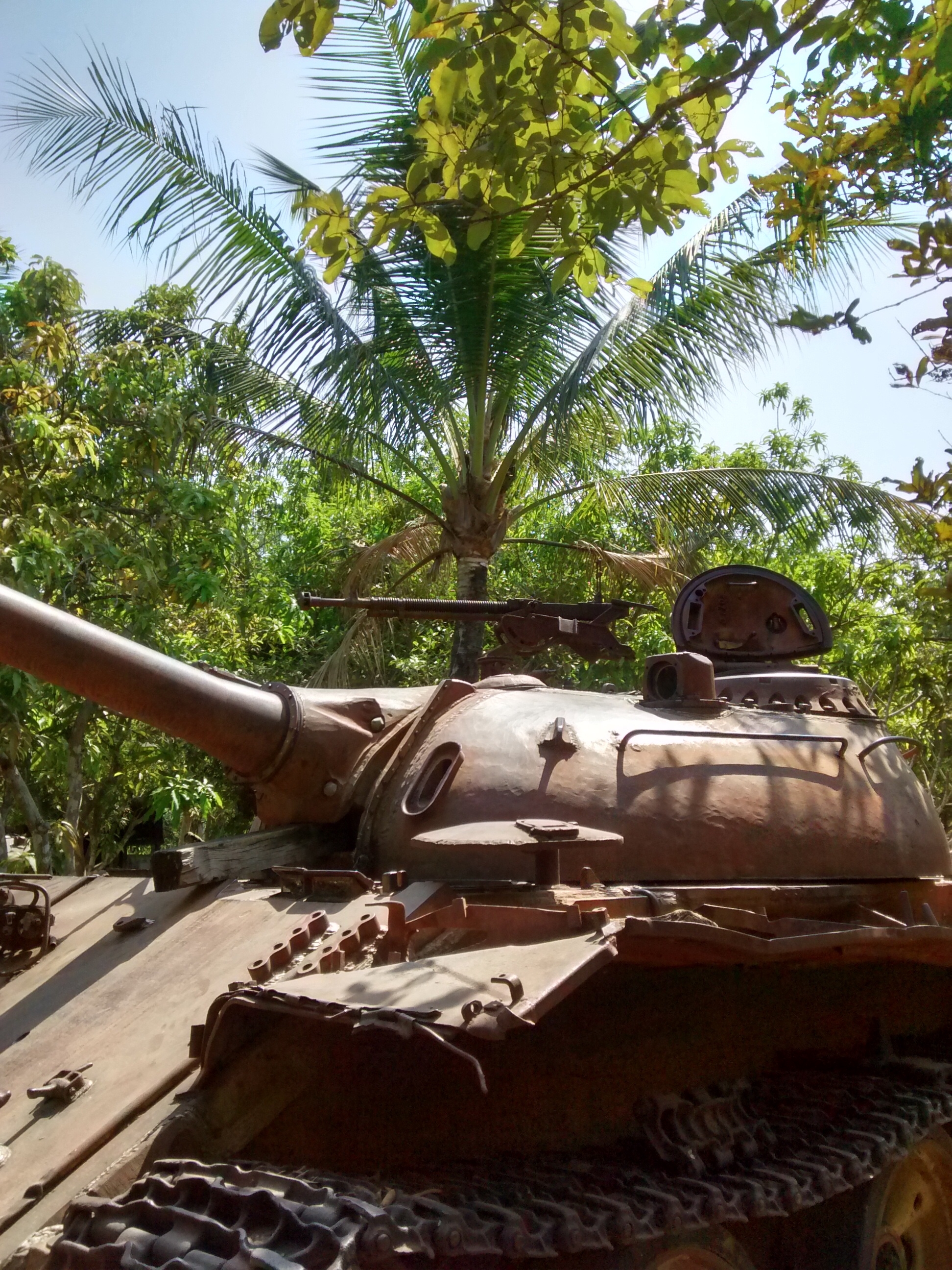
Up we go.
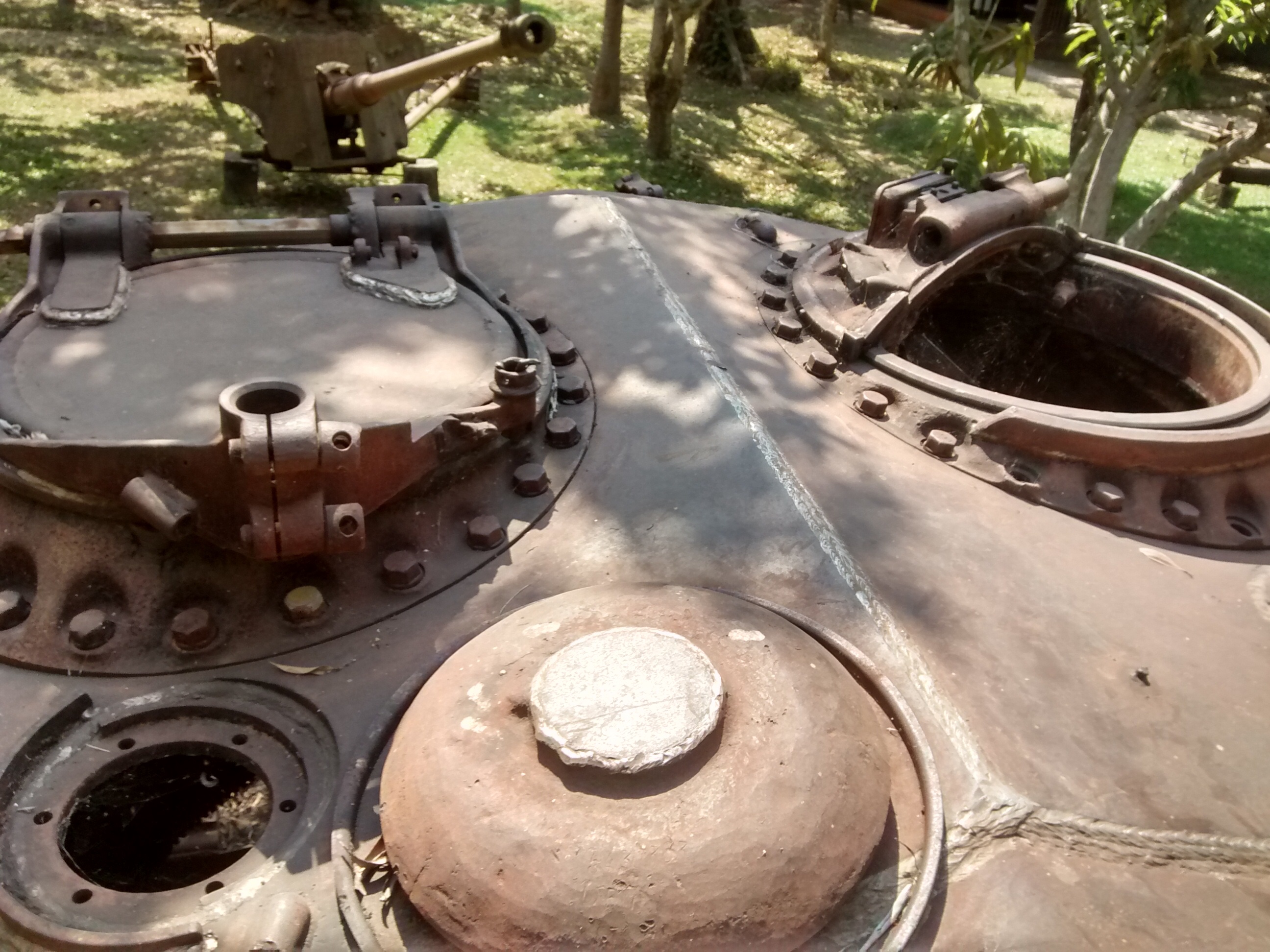
Eerie, thinking what must have gone on in those portholes, standing here, in the shadows of ghosts.
And it had one more casualty to take. How to get down? Gradually. But I still grazed my thumb on the side. In case you’re worried, it was a small cut and it got washed and they put a plaster on it.
And I still managed to go out again and play with an AK-47. So you can stop worrying about that too.
 orwellianTwo
Leave a comment