Cambodia.
A different destination to the normal. Rawer, poorer, more troubled, not many holiday destinations have undergone a genocide within my lifetime. But certainly friendlier than most places I’ve been to.
We start in the north at Siem Reap, the centre of the country’s tourist industry. Once a small village on the river, it’s grown into a lively backpacker hotspot full of boutique hotels, all-bases-covered eating places, and pulsating bars. Hence Pub Street, the Ground Zero of all the fun.
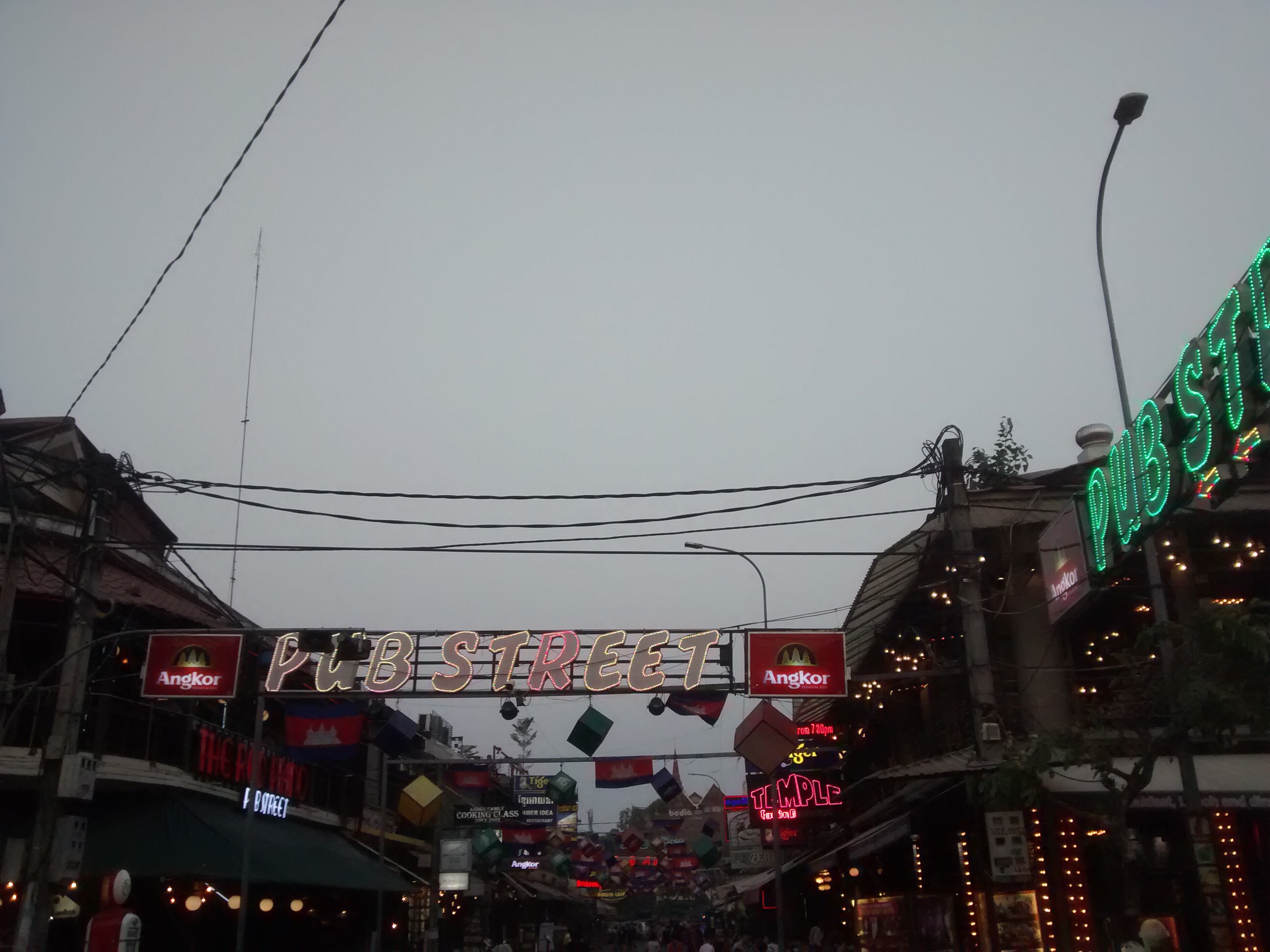
You get the feeling that Cambodia’s miserable recent history has left it well behind its neighbours and it’s desperately trying to catch up with Thailand and Vietnam. We’ll tease out some of that tragedy as we go on. We have no choice here, it’s unavoidable.
But why are we in Siem Reap? Why is everyone else? Because Cambodia did have a golden age, and it left us one of the wonders of the world…
The majority of Cambodians are Khmers, and after a millennia of Indian influence the Khmers felt ready to establish a mighty Asian empire from about the 9th century AD. The empire had evolved from a number of city-states, so they gave it a name based on their word for “city”.
Angkor.
Soon the capital ended up about 4-5 miles north of Siem Reap. And what a capital it was. 77 sq miles of royal palaces, Hindu temples, hospitals, schools, irrigation, possibly the largest city of its time, anywhere.
Sorry, we should say “what a capital it is“. Because although the wooden houses and the rest gradually vanished after the empire fell in the 15th century, the majestic temples remained, although they fell to ruin and were reclaimed by the rainforest as the centuries passed. The French, who like that sort of thing, colonised Cambodia in the 1800s and set about their restoration. And today tourists from around the world come to gasp at their glory, or just gasp for breath getting around the vast site in the hot sun.
Fortunately the tour starts with what most people come to see. Founded in the 12th century as a Hindu temple, later converted to Buddhism, but still retaining its wonderful Hindu engravings along the walls of its endless side-galleries. The whole place feels endless. It’s the largest religious monument in the world.
It is, of course, Angkor Wat.
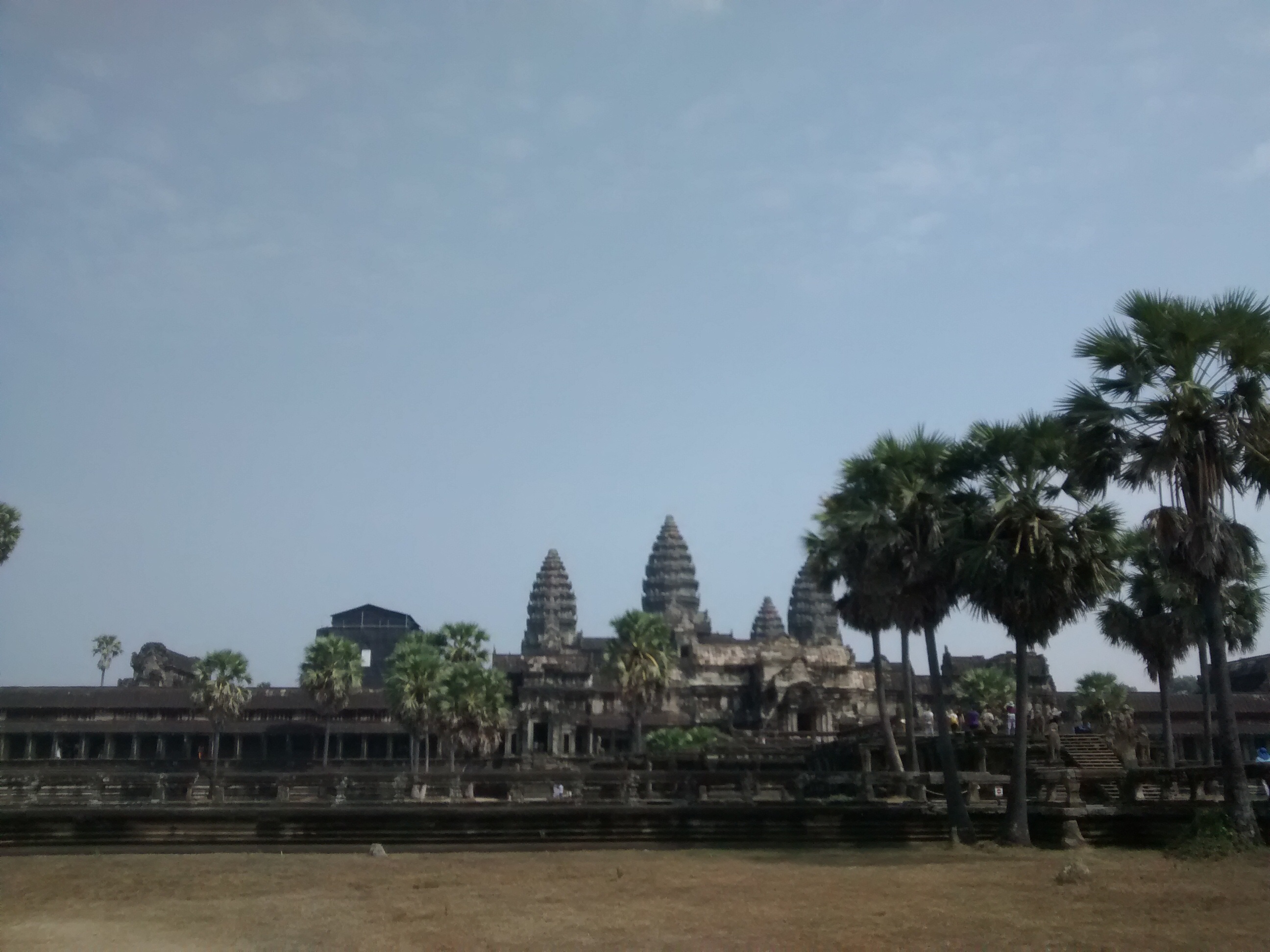
Those famous five central towers (well, four of them anyway) representing the mystical Mount Meru, a common theme in Angkor architecture.
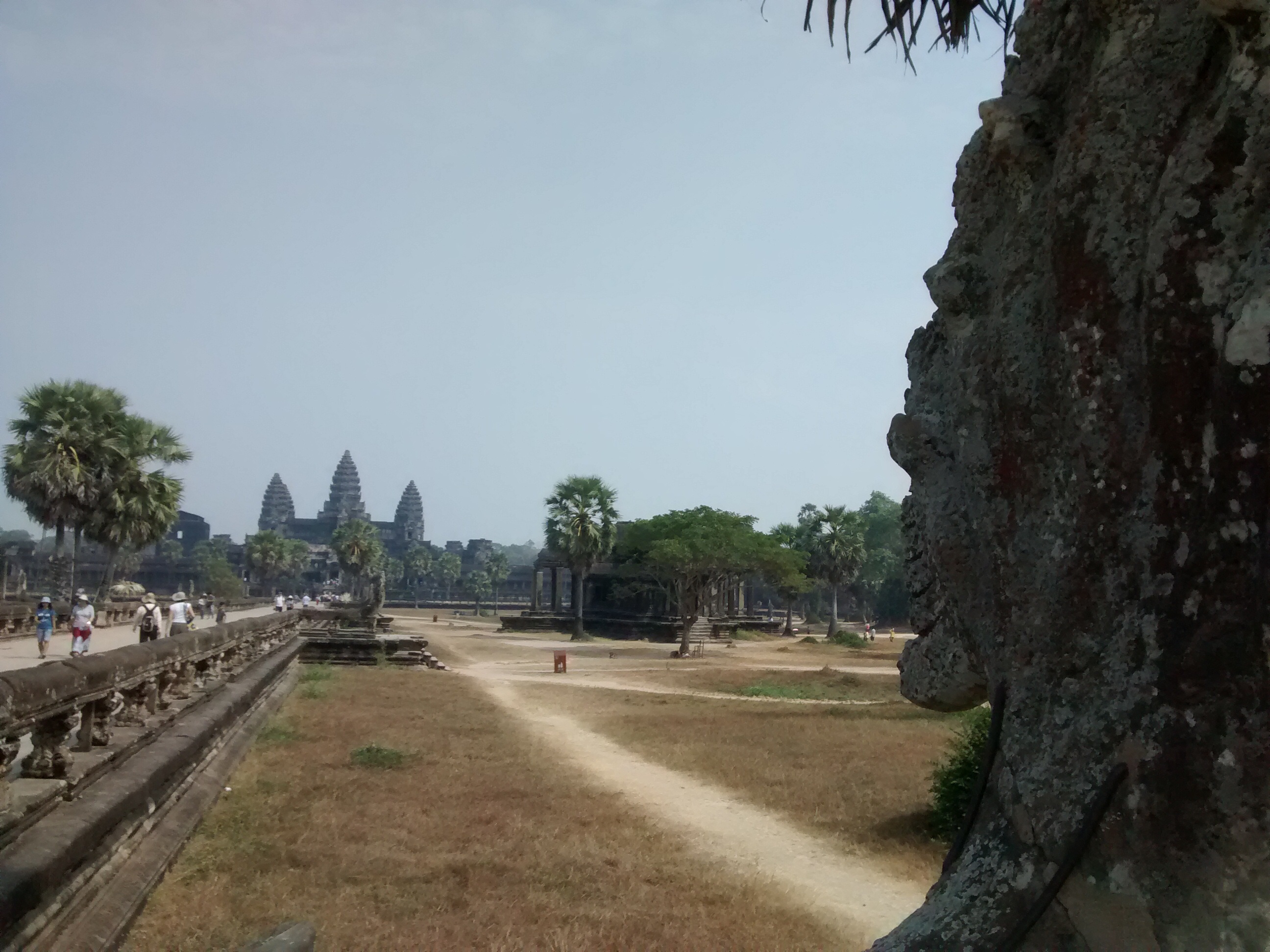
The causeway into the temple is contemporary with it. The paths to the side are reconstructions of how the old town inside the outer walls might have looked. Oh, yes, we’ve already passed through the west gate of the outermost wall. Now do you realise just how big this place is?
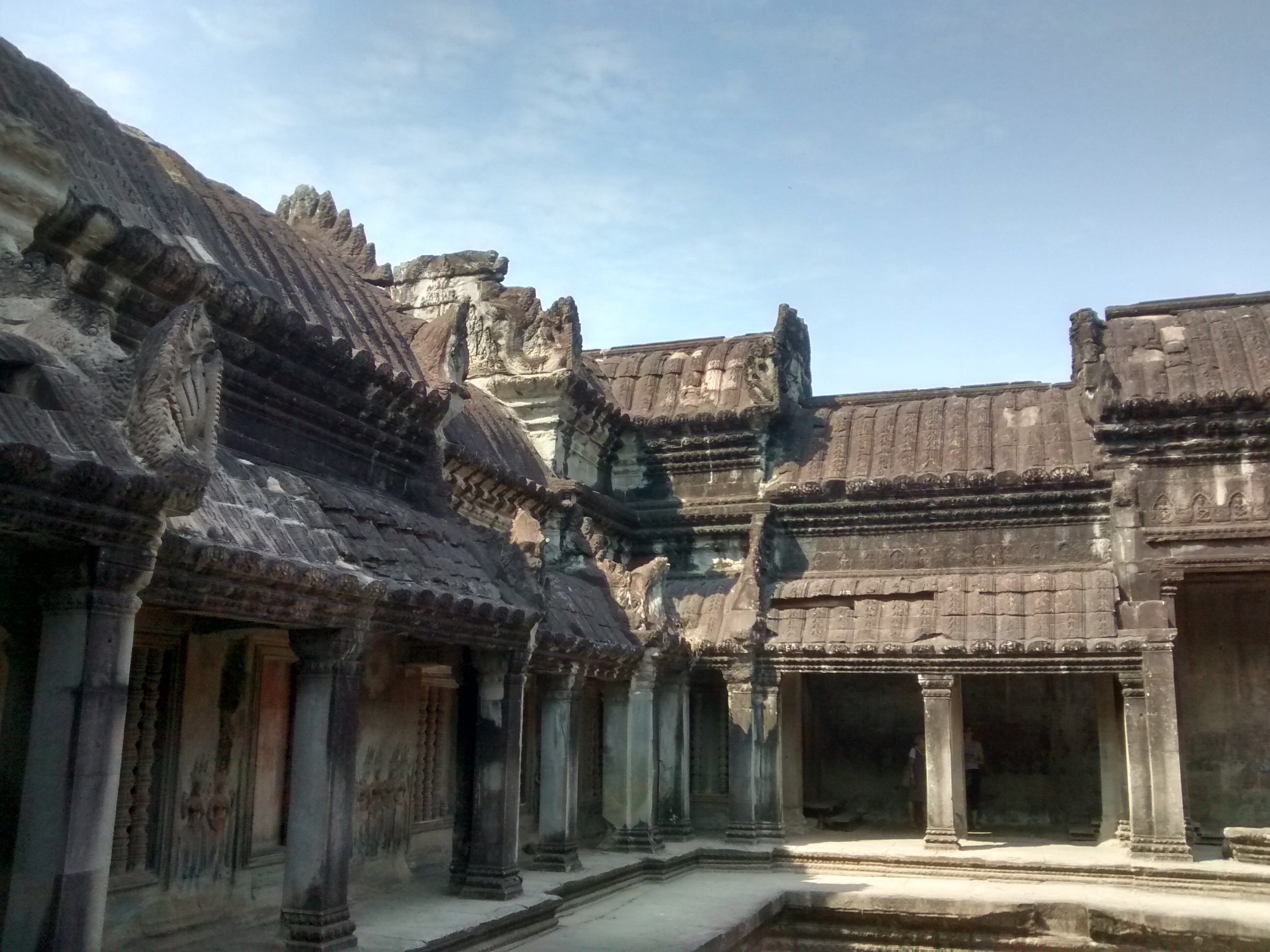
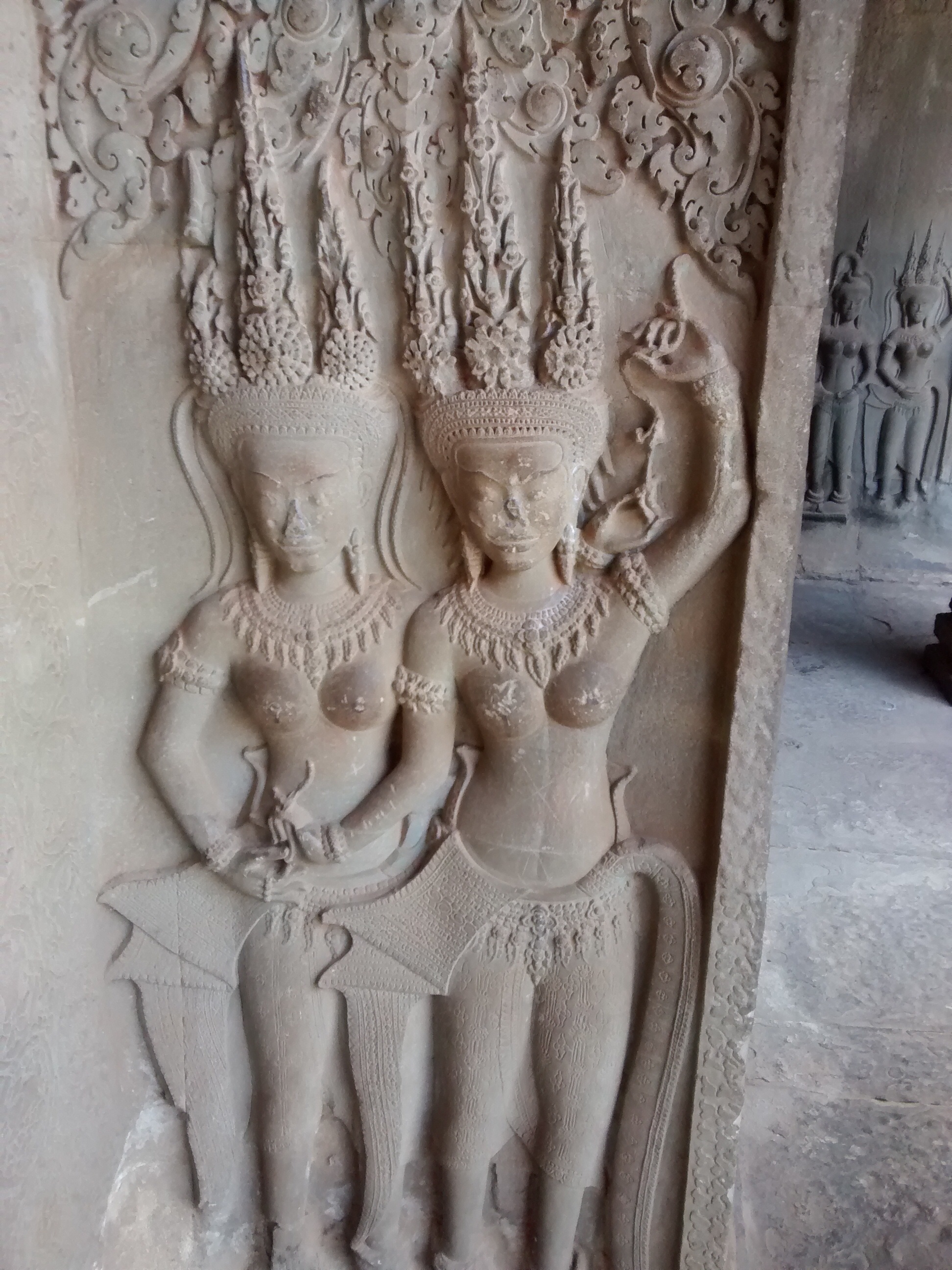
The legendary apsara dancers. The graceful tradition of Apsara has always been at the heart of Cambodian art and culture – even after Pol Pot got his blood-soaked hands on it – but the dancers themselves arise from Hindu mythology. More about that later, but here’s a clue – it involves a tug-of-war, grumpy demons, and lots of milk.
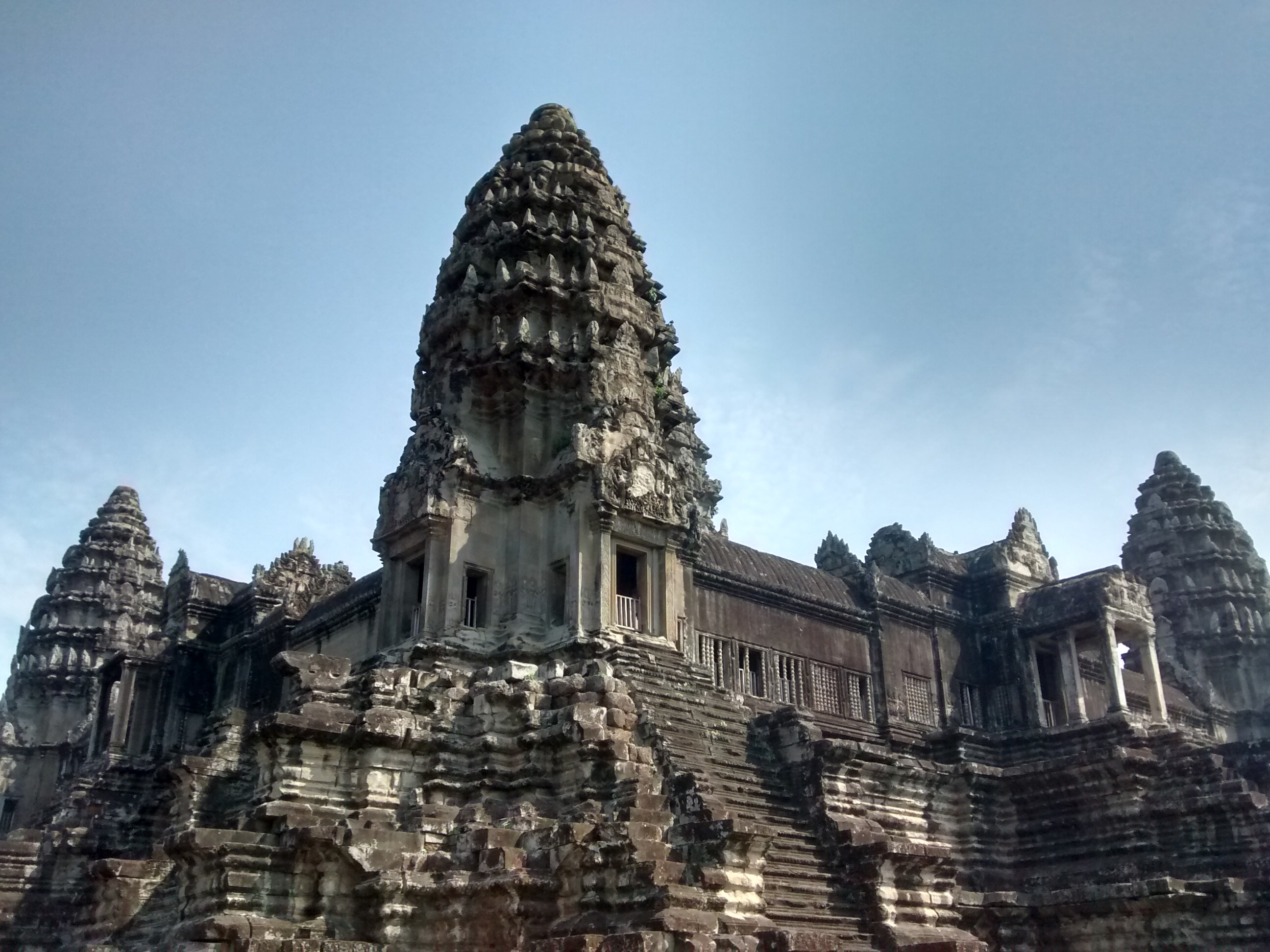
Ninety minutes would never do justice to Angkor Wat, but we have other sites to see. So back down that long causeway, out through the outer wall, across the famous moat – time to drop in to the old capital itself, Angkor Thom.
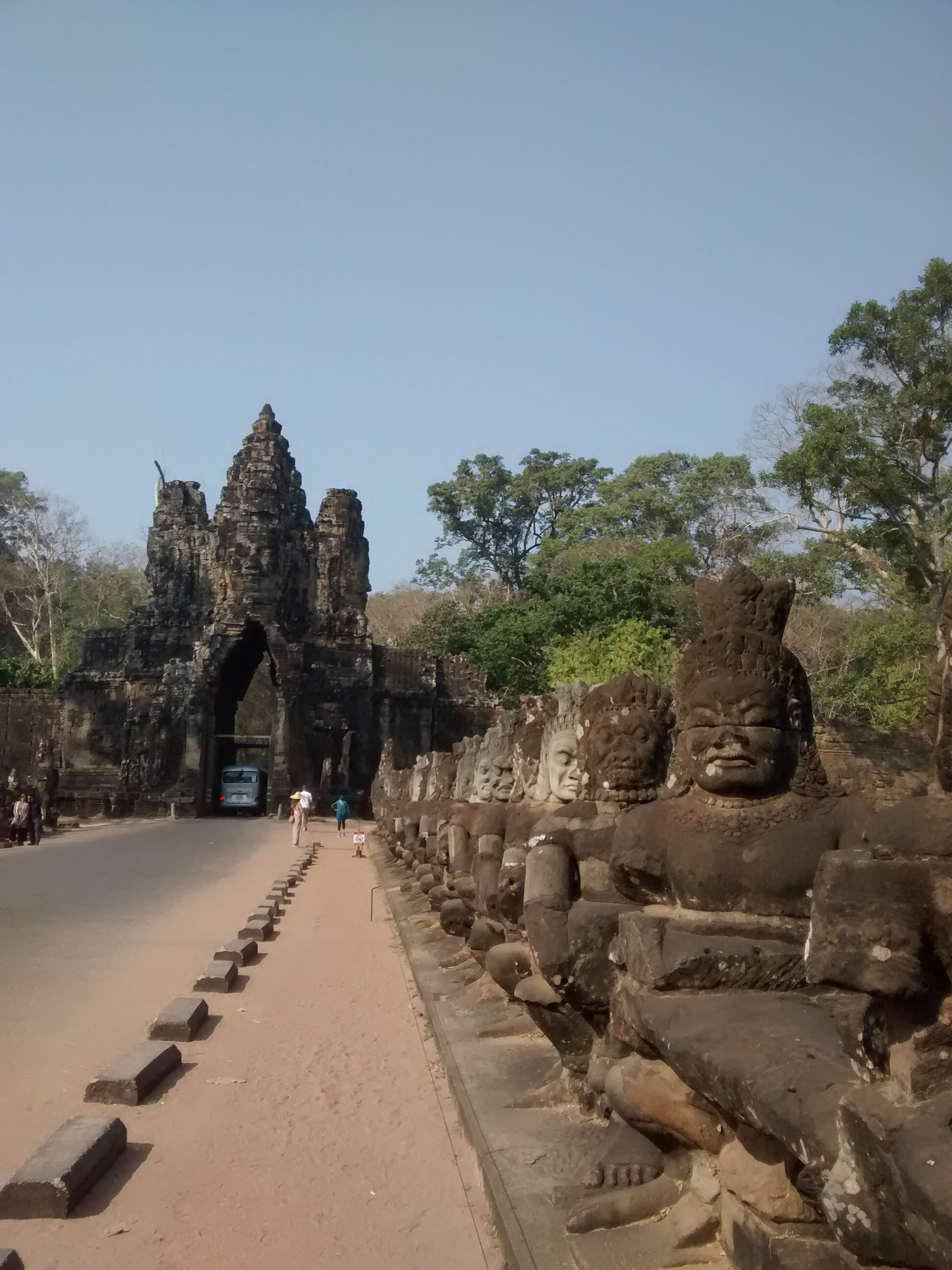
You’ve grasped how big the Angkor Wat site was. Angkor Thom was about four times as big. Most of that is now gone, replaced by scrubby parkland, the inhabitants replaced by cheeky macaques. Here’s the South Gate.
So, let’s deal with apsara then. You know sometimes, you don’t know how you did it but you come up with a plan. It might be an itinerary for a trip, or how to split a restaurant bill, or if you’re a Hindu divinity it could be to team up your fellow devas with the Hindu demons and pull on a snake to churn the ocean of milk and release the elixir of life. Or you might just stay in and watch TV.
They were at it for a thousand years, demons on one side, devas on the other, snake wrapped around another mystical mountain, mountain churning the milk. Mountains are heavy, and so one of the gods very sensibly supported its weight, by becoming a tortoise.
Eventually the milk was churned, the elixir was produced, and amongst many things that flowed out, out flew the first apsaras.
Demons, right? Clue’s in the name. They were supposed to share the elixir but they reneged and tried to grab the lot. The gods weren’t pleased and gave their share to the saintly devas. See the demons, on the right, still pulling that snake. Look at their faces. Not happy.
Talking of faces, can you make out the one in the gate? Look closer. No? Ok then, no worries, there’ll be a few more in my next post!
 orwellianTwo
Leave a comment