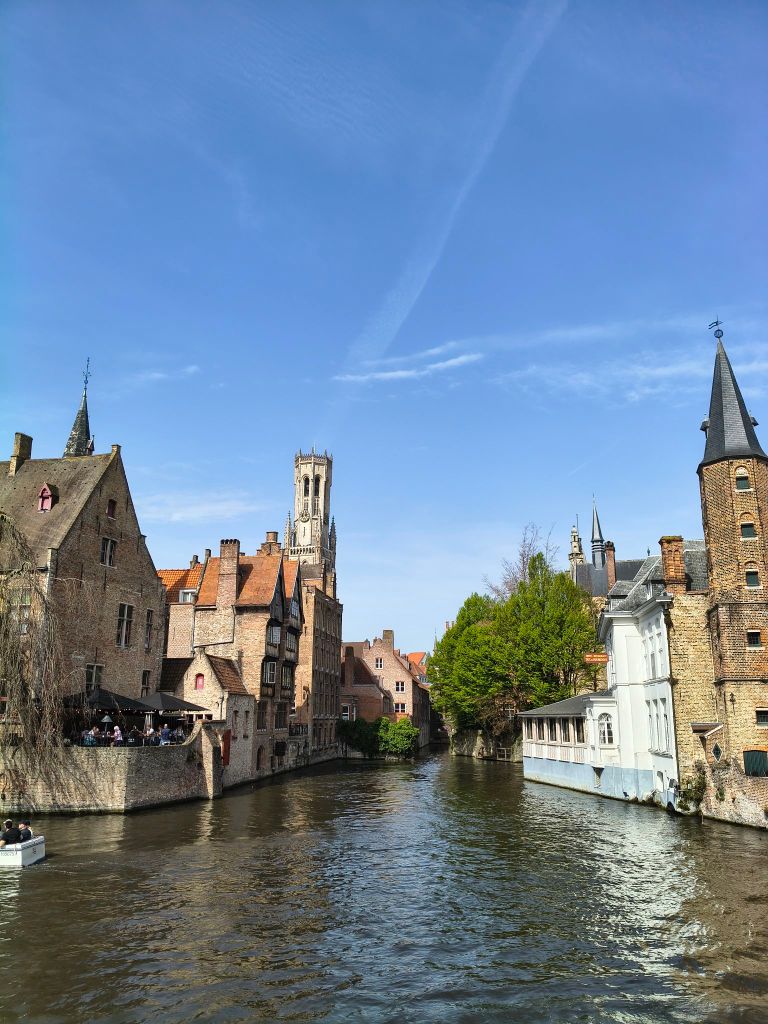
Historic, beautifully-preserved, charming, the canal-lined old town of Bruges is one of the most popular attractions in Europe. And you’ll soon find out just how popular; it won’t be long before you have to step out into the cobbled streets because the narrow pavements are thronged with visitors.
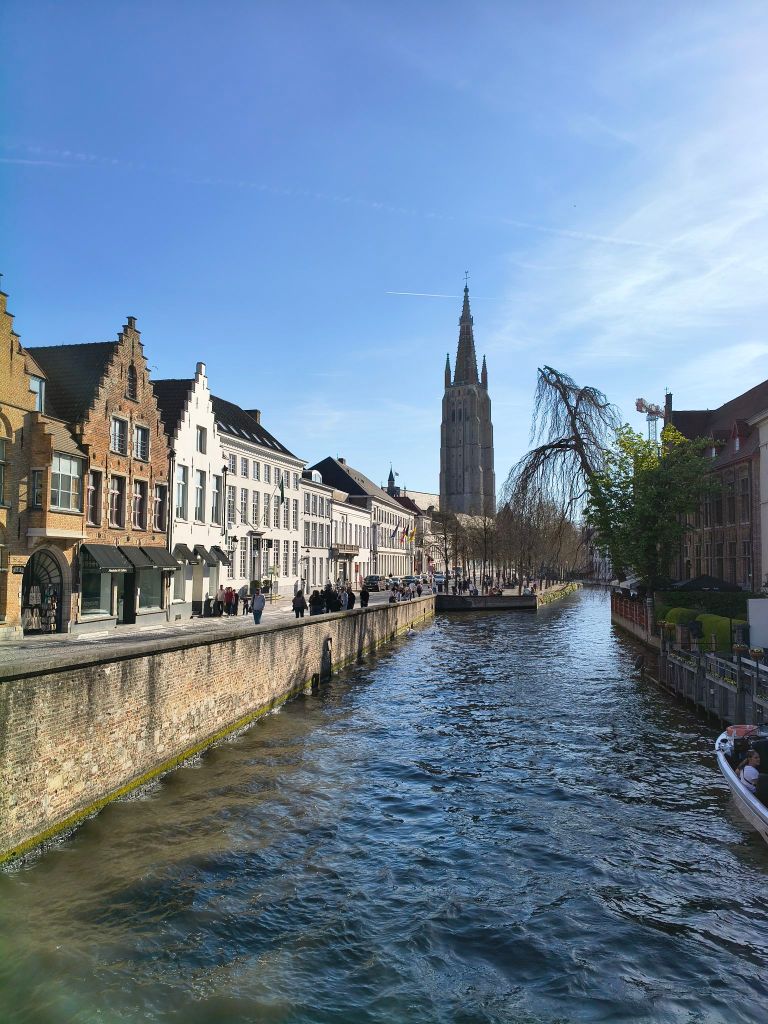
Like other Flemish trading cities such as Ghent, Bruges’ prosperity was built on its access to the North Sea. Ah…if you’ve actually clicked on that link, you’ll see what I really used to think about Bruges. Well, the background is that three years before my posts on Ghent I spent a day in Bruges while on another trip. It was July and Bruges was heaving. Obviously that was high-season and we’re now here in early spring, and Bruges is still busy, and there are long queues for the canal boat tours, but it doesn’t feel as crowded as on my last trip. We’ll see if my views have changed. Anyway, back to the Middle Ages…
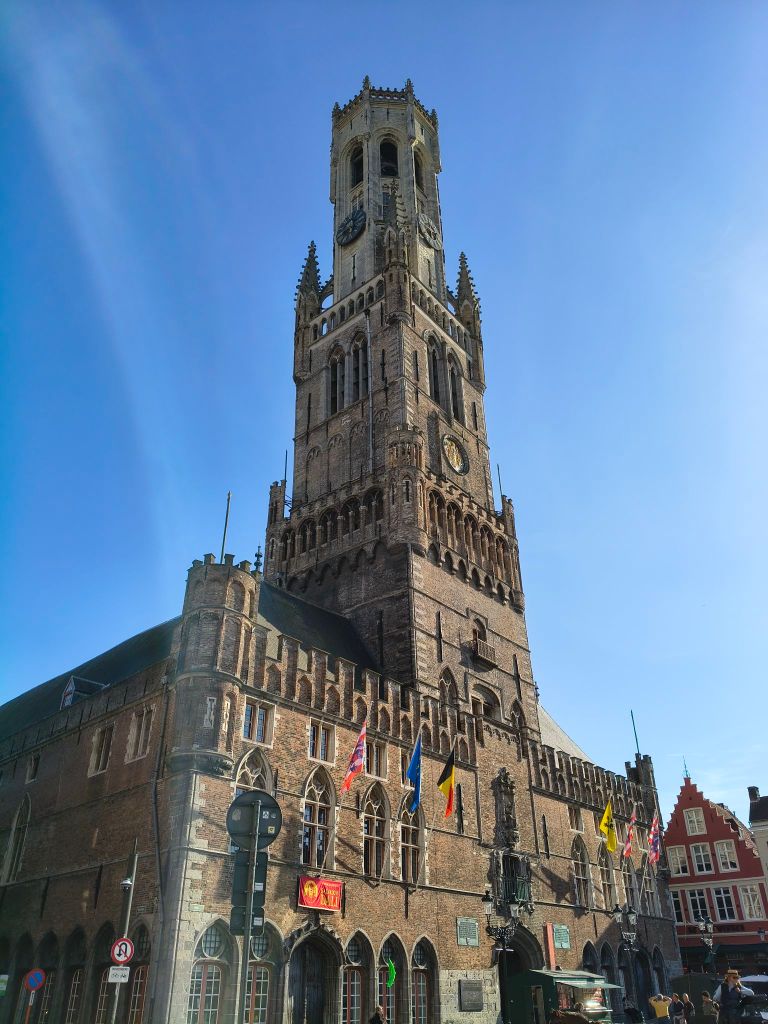
The 83-metre tall Belfry is probably Bruges’ signature landmark and looks proudly over the great Market Square – to be frank, it looks over much of the old town. To put something up that size requires serious self-confidence and hard cash, and after the storm in 1134 that re-flooded its silted inlet to the sea, Bruges spent the Middle Ages getting very rich. The wool trade was the foundation, and then the canny locals built on Italian innovations in commerce and finance to create the world’s first stock exchange in 1309. Traders from go-ahead cities such as Genoa and Venice set up shop here, and the place was buzzing.
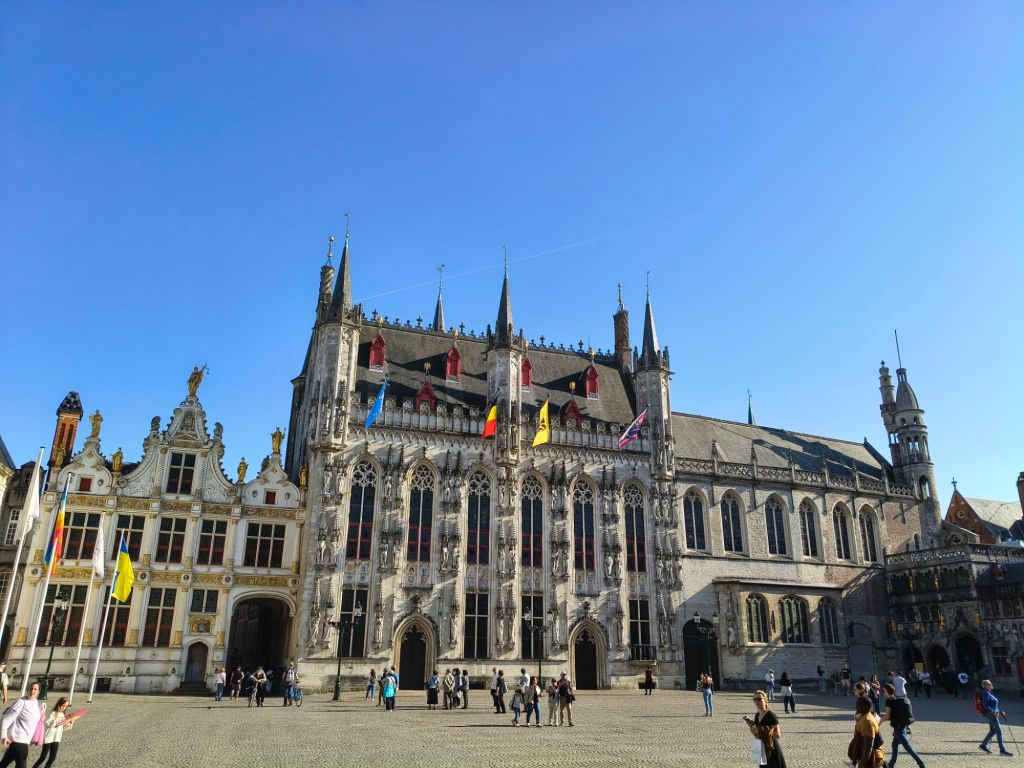
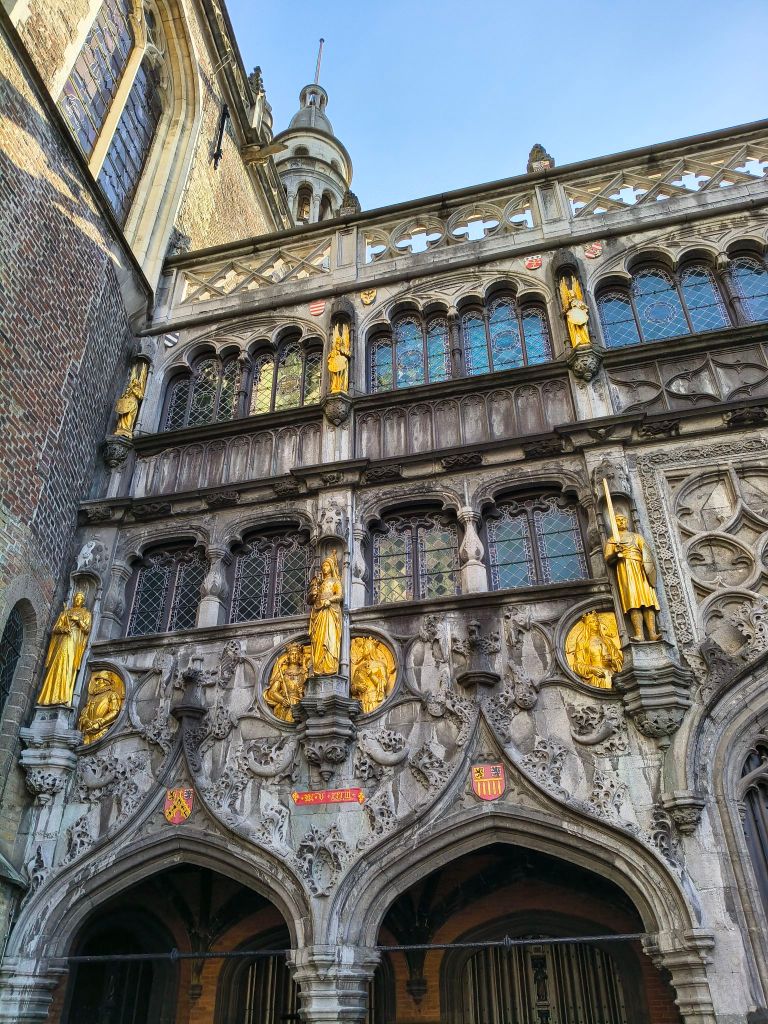
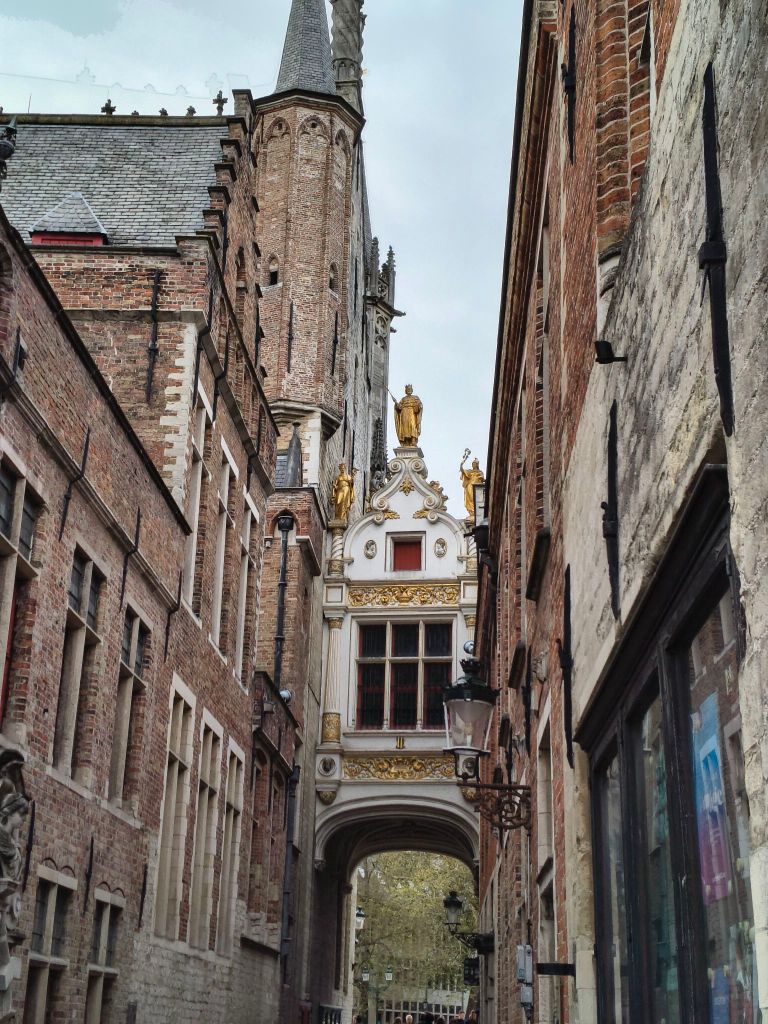
As usual, fine bank accounts led to fine buildings, and Bruges’s magnificent old town took shape, full of opulent municipal edifices, palazzos and churches. The last of the photos above is of the Bloedbasiliek, the Church of the Holy Blood. Bruges became an important pilgrimage centre as holy relics flooded into the town, and this one holds a relic of Christ’s blood collected by Joseph of Arimathea after the Crucifixion. (Bloedbasiliek‘s literal English translation? Blood Basilica. I can’t say if I’m a fan or not, I’m not familiar with Black Sabbath’s albums.)
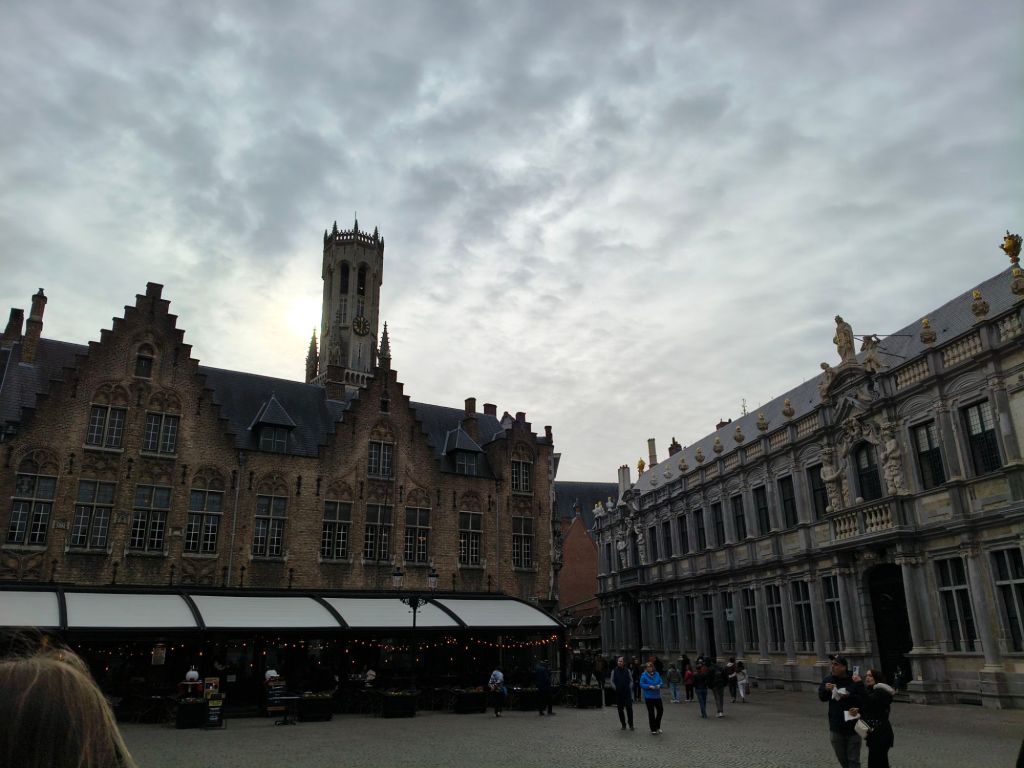
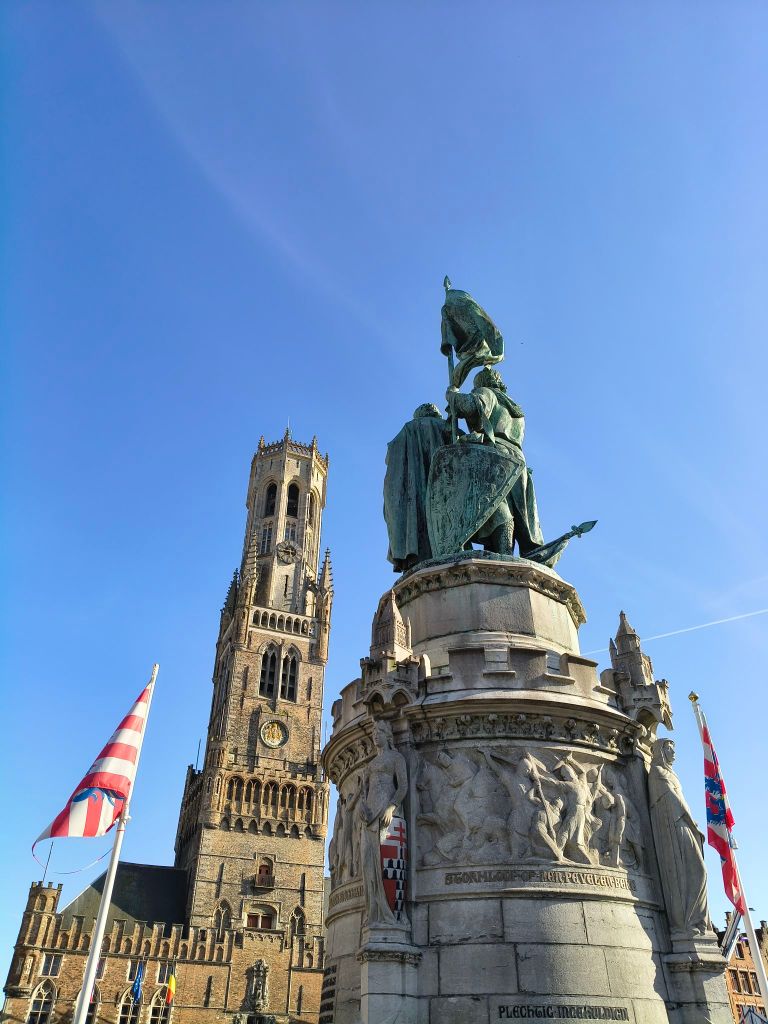
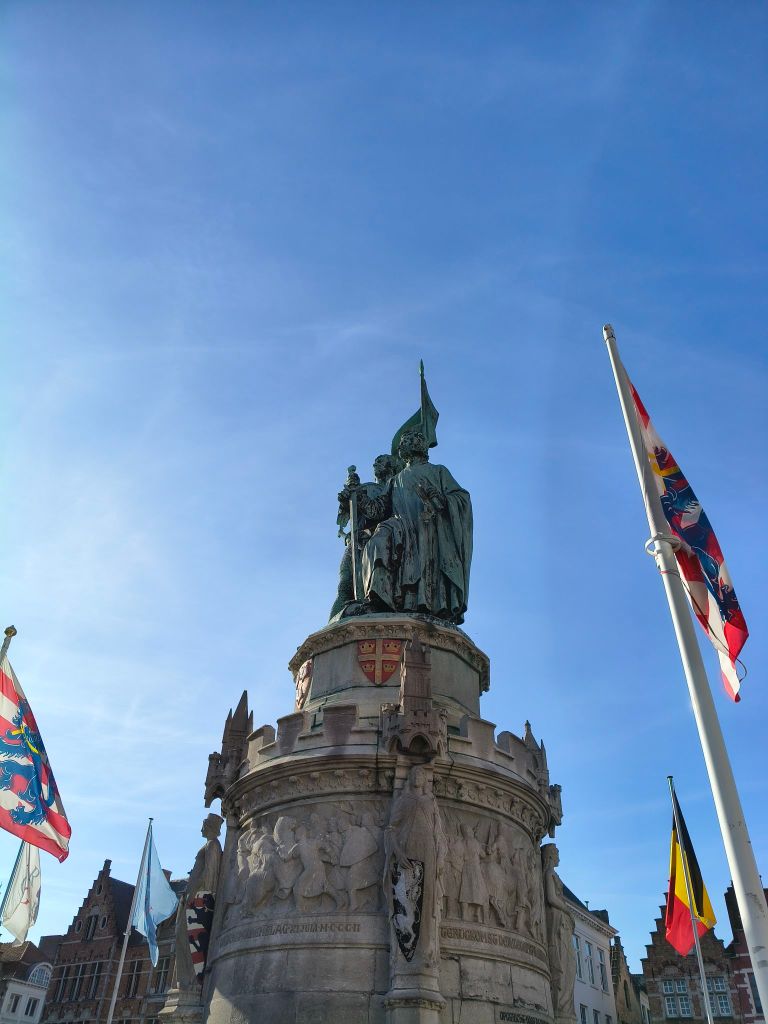
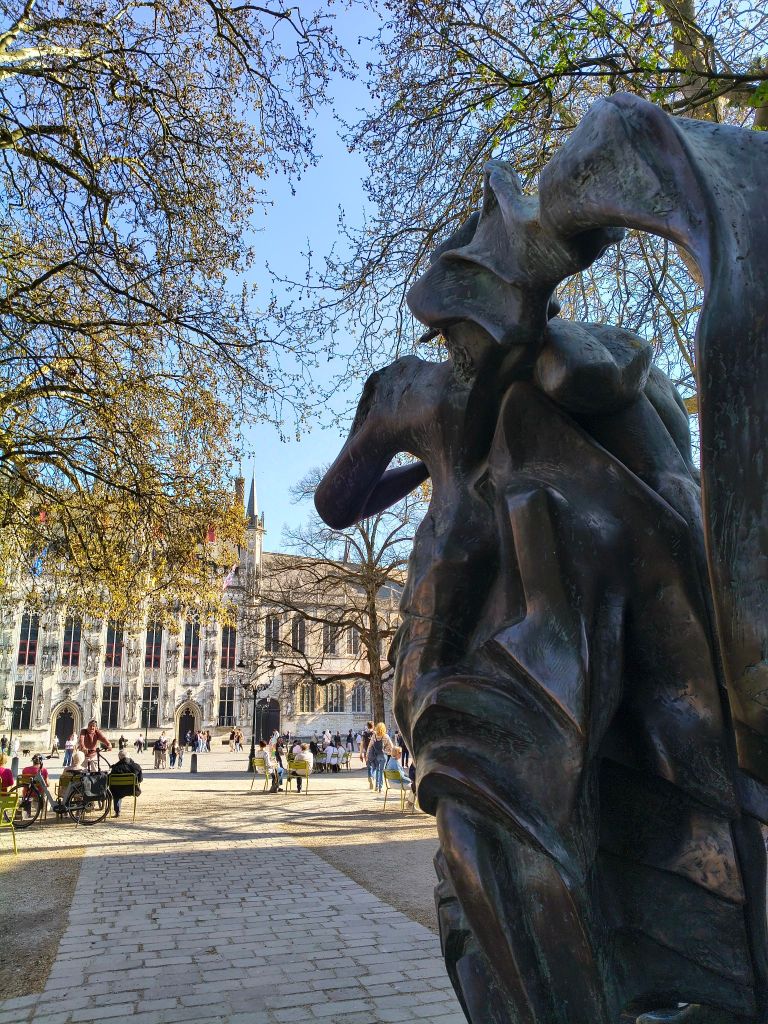
Now that you’ve read both my posts from Ghent, you may be wondering, did Bruges suffer the same upheavals that other parts of Flanders suffered under the Habsburgs and during the Wars of Religion? Well it doesn’t appear so, not quite to the same extent. But ructions did happen from time to time. Facing the Belfry in the two photos above are two fine chaps, the weaver Pieter de Coninck and his mate, the butcher Jan Breydal. They were 14th-century weavers and butchers, living at a time when the now-prosperous city fancied going it alone as a city-state separate from the County of Flanders. Unfortunately, the County of Flanders begged to differ, and French troops were garrisoned in the town. In an echo of the infamous Sicilian Vespers, the troops held a feast on the 17th May 1302, and that night de Coninck and Breydal led their fellow insurrectionists in giving two thousand of them the ultimate hangover cure. They followed up their Bruges Matins by defeating the French at the Battle of the Golden Spurs (remember, football fans, this was a very, very long time ago, back in the distant past when Spurs could be thought of as golden). The statue went up in the 19th century, reflecting how our two heroes were venerated as early icons of Belgian independence.
A bit more from the stroppy Bruggers in a moment, but let’s go wandering again.
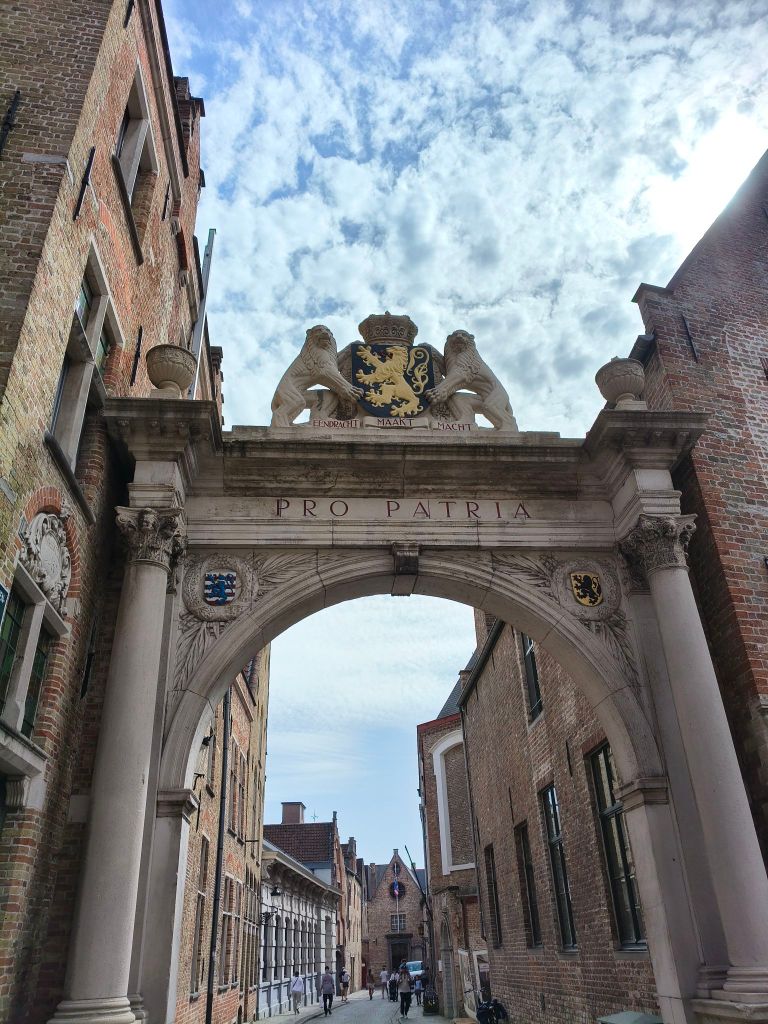
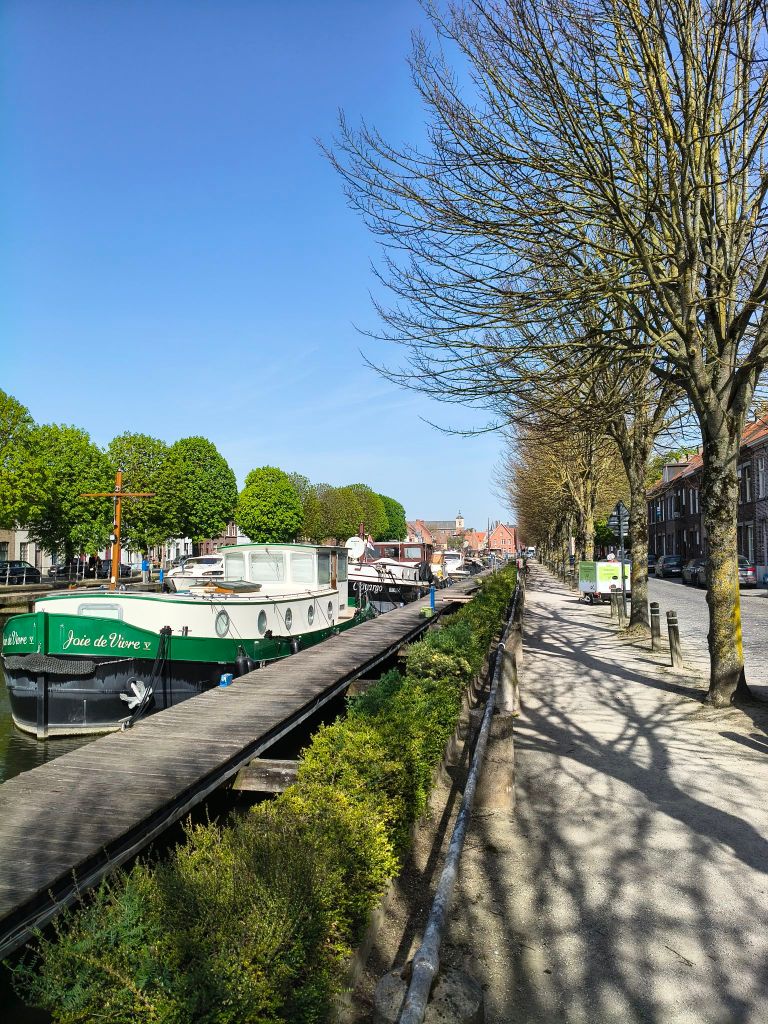
Historic, charming, untouched Bruges, and you must be heartened by the foresightedness of the city leaders to have maintained this medieval jewel for so many future generations. But it’s not so simple.
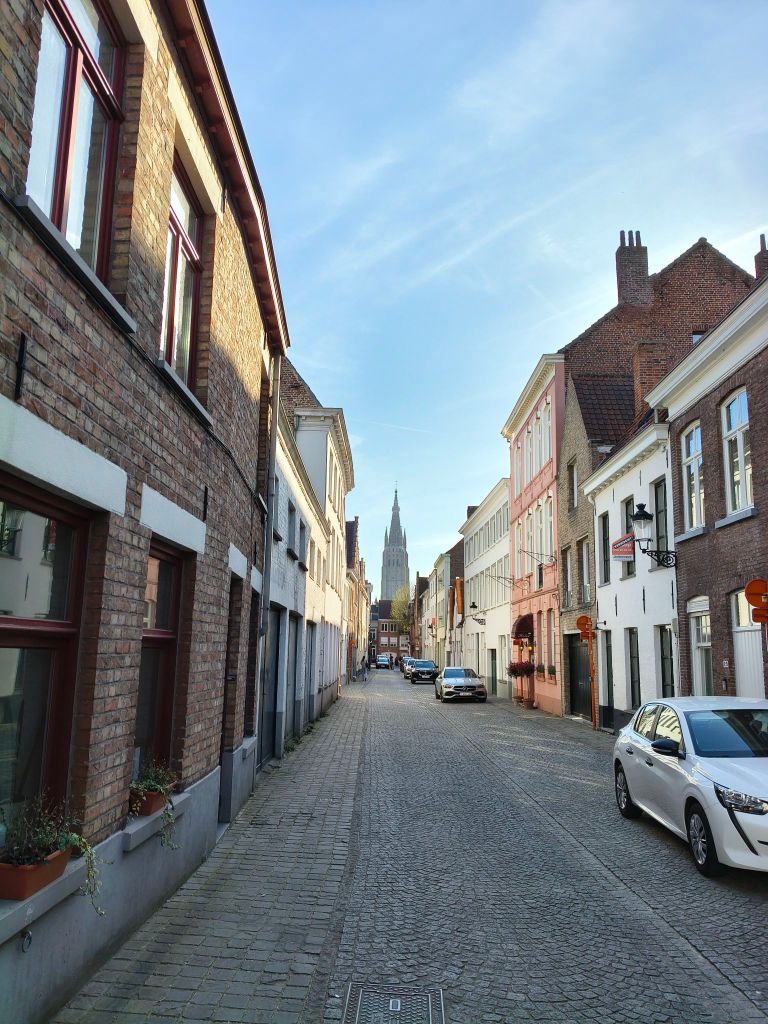
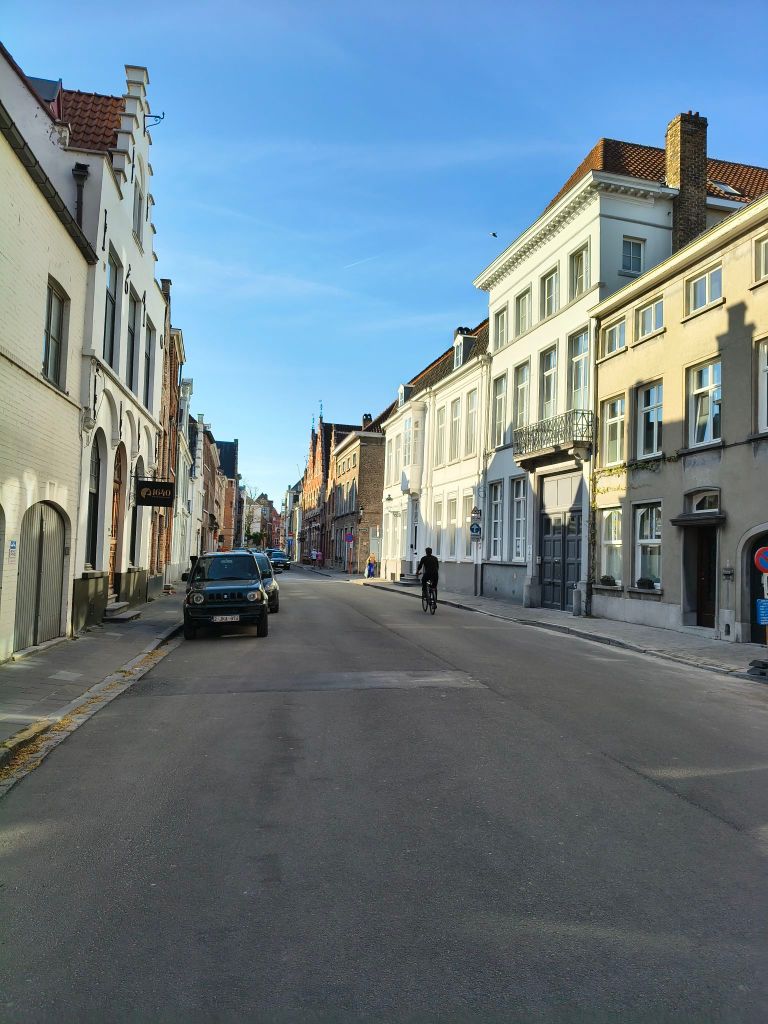
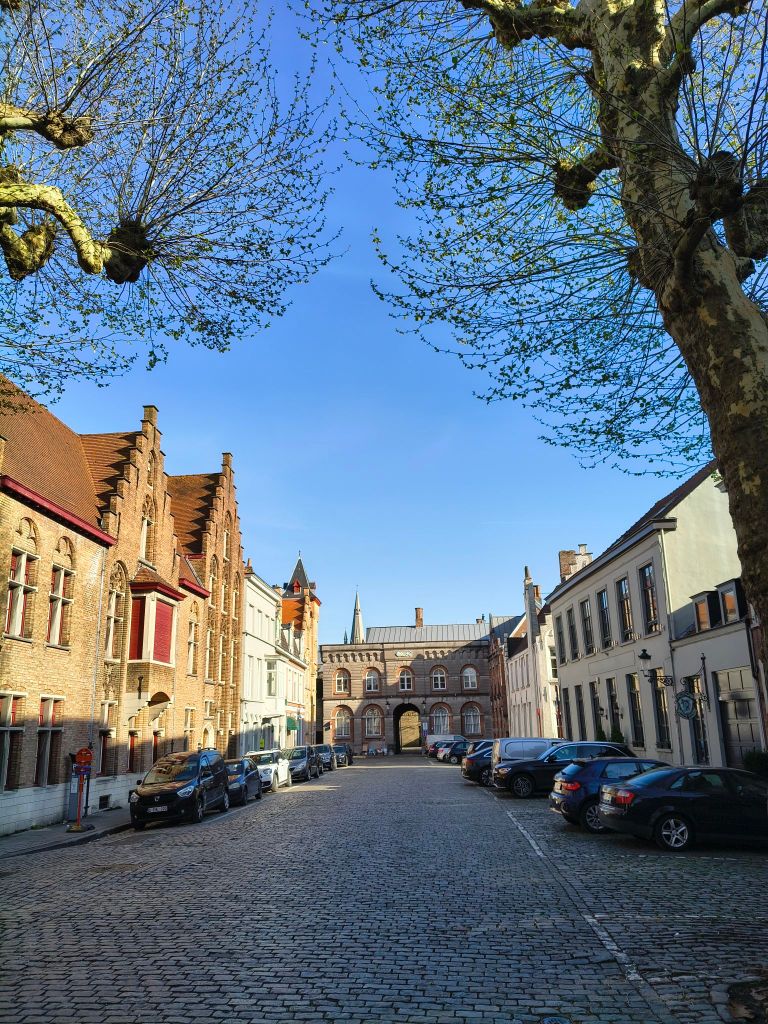
Bruges might be defined by wool, or its famous lace, or any number of nice four-letter words. But in the end the one that matters above all is: silt. What the weather gods give us they can assuredly take away, and in 1500 the Zwin inlet began silting up again. The enterprising citizens turned to lace-making to revive their fortunes, but their town couldn’t avoid being eclipsed by Antwerp’s rise to prominence. Unlike Ghent, the Industrial Revolution passed Bruges by and it fell into a deep decline. The town therefore remained untouched and unmodernised, which came in handy as the nascent tourist industry developed in the 19th century.
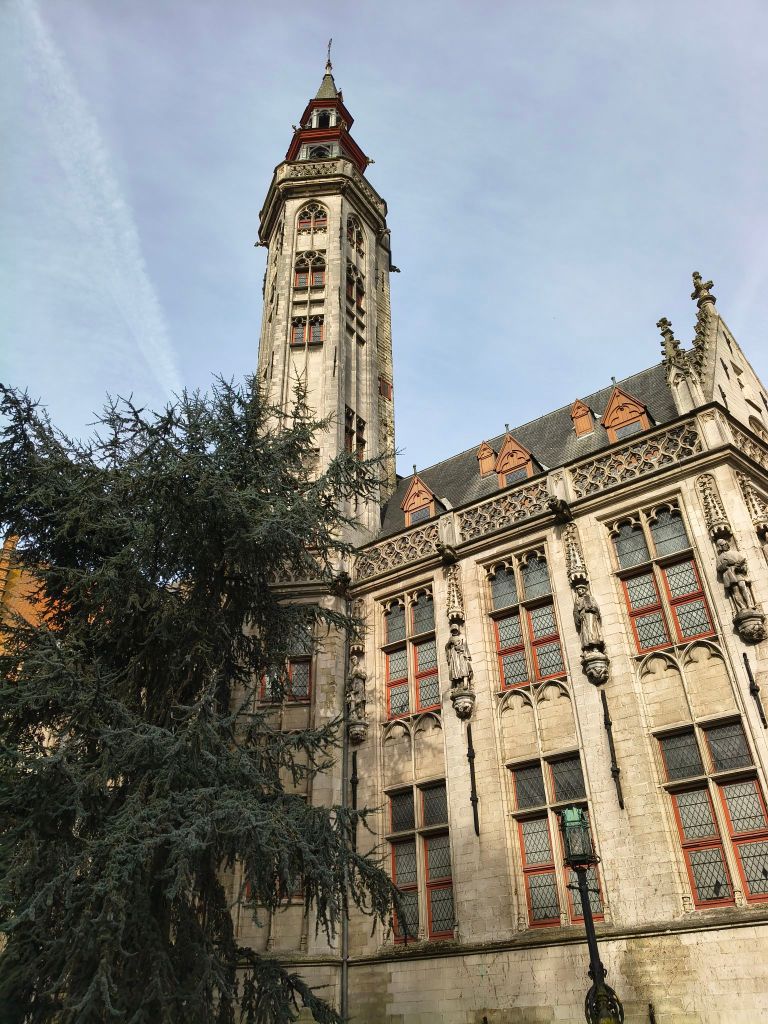
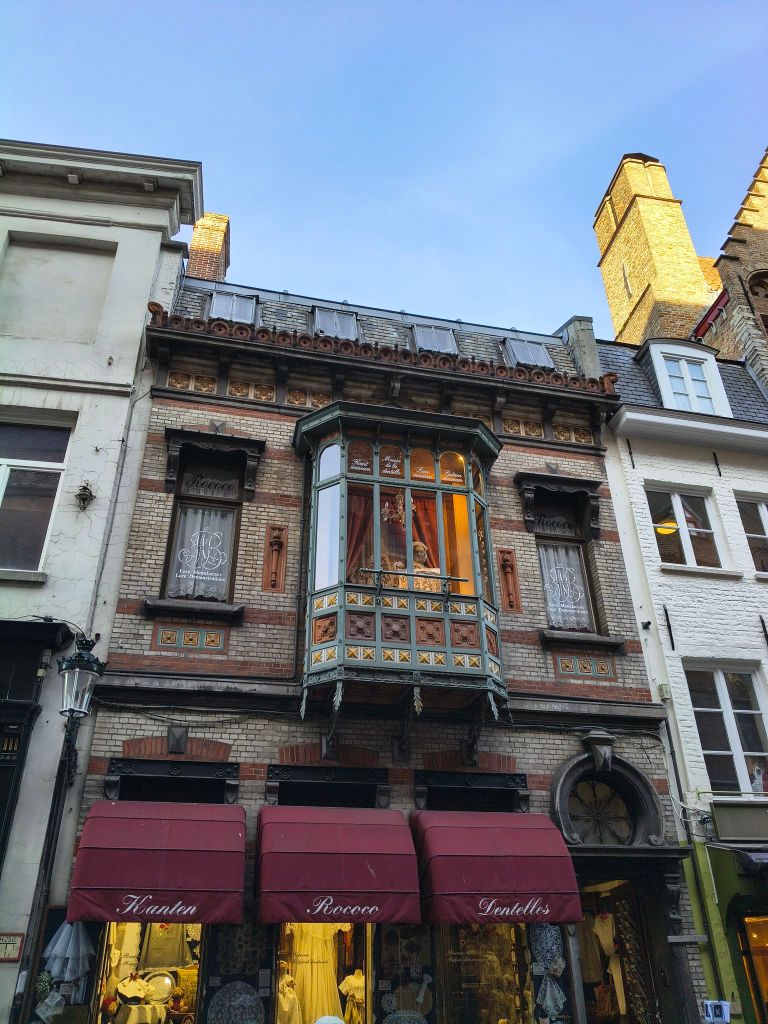
Not every shop or house in the town centre is original, of course, but it does feel as quiet and laid-back as a large village, and for a large city it is astounding how much quiet wandering you can do along character-filled byways literally yards from the tourist hotspots. And, of course, it’s equally astonishing how it is that so many thousands of tourists can just congregate in the same old places and completely miss said backstreets literally around the corner from them.
One place everyone ends up in is probably Bruges’ most famous church, Onze Lievre Vrouwekerk, the Church of Our Lady.
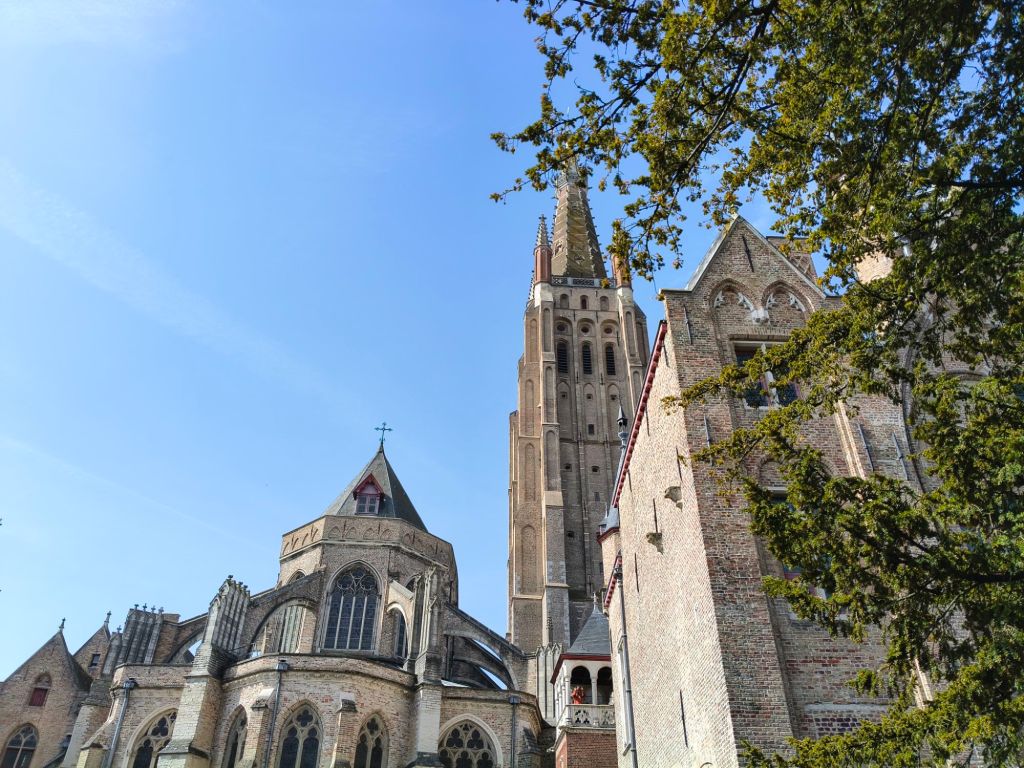
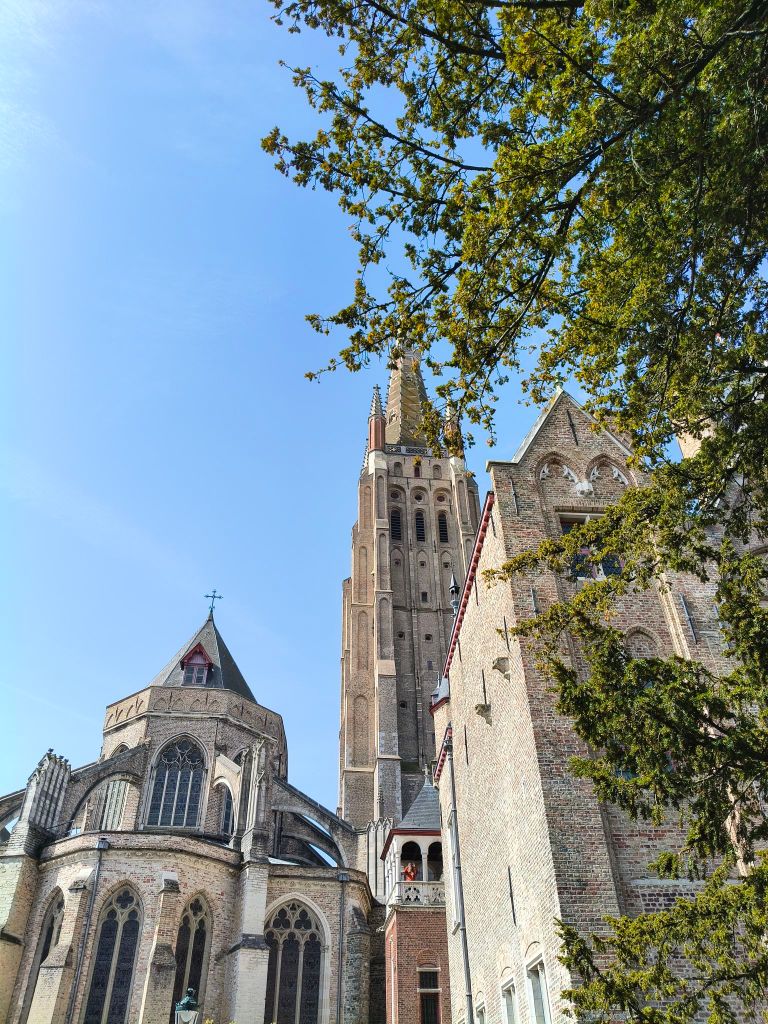
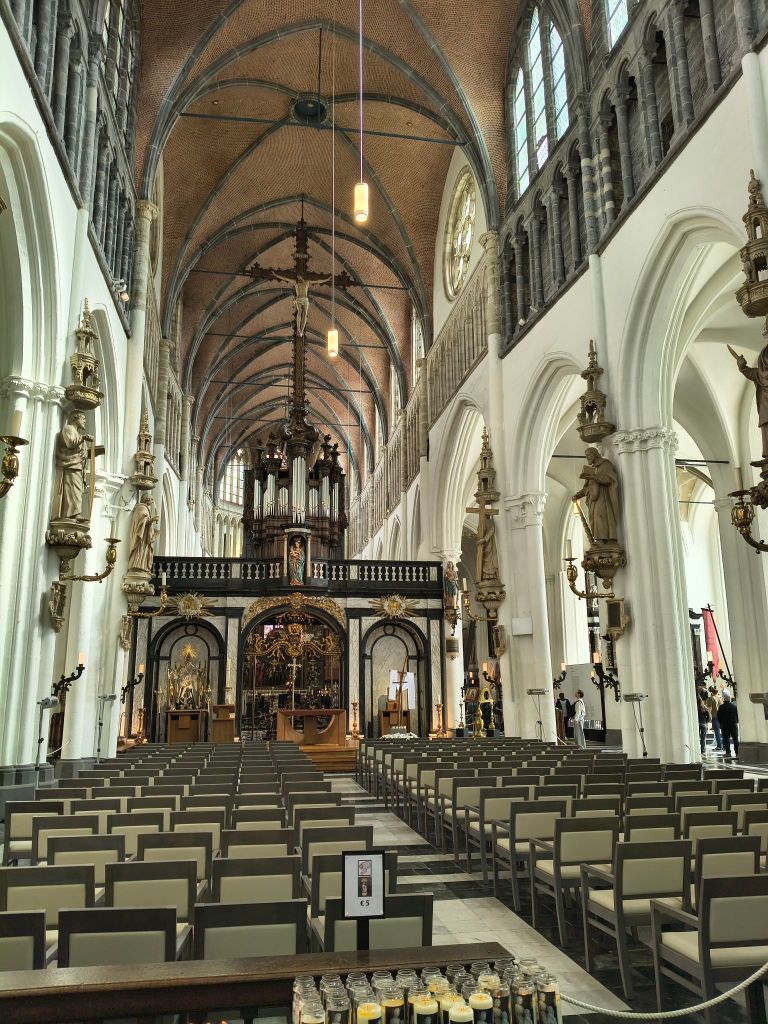
At 115 metres high the tower of this 13th-15th century church even out-towers the belfry, but there is much more to see within the lovely interior. Steering away from the fine paintings and the relics, there are one or two attractions here that are worth talking about.
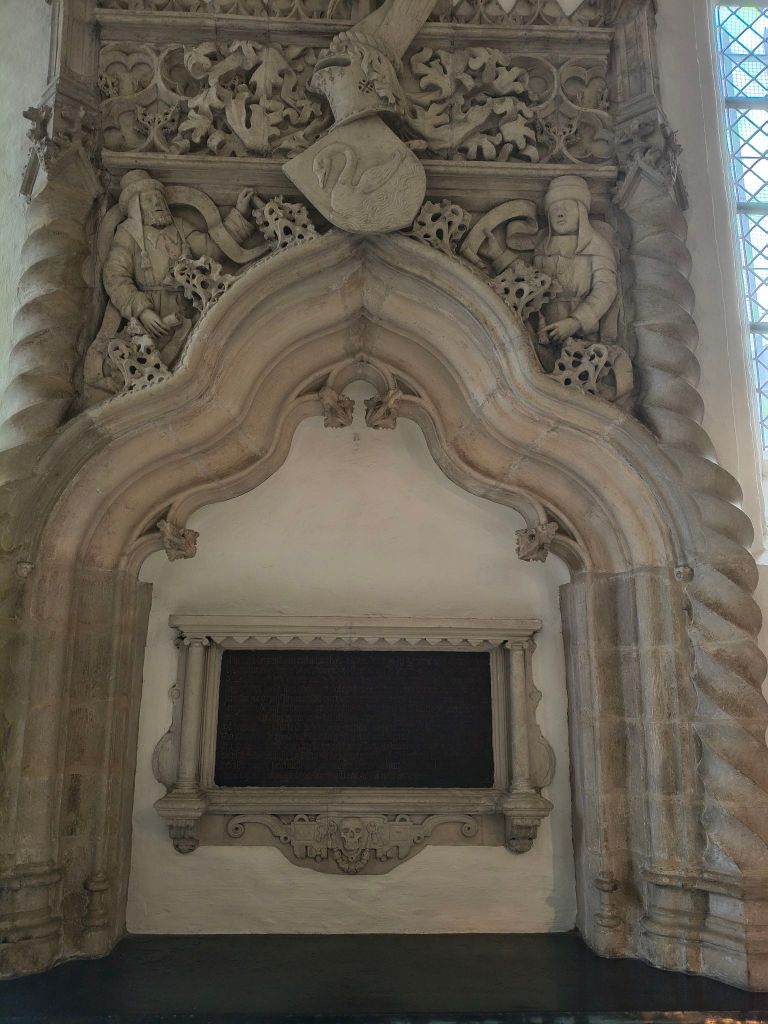
Inside the Lanchals Chapel, we find ourselves looking at the tomb of Pieter Lanchals, a friend of Maximilian of Austria, Holy Roman Emperor. Look up at the top and you’ll see a swan emblem on his heraldic shield. Keep it in mind for later.
Much of the Golden Age happened when the Duke of Burgundy set up court here in the 15th century. All good in the Flemish hood, right? Well, I did warn you that some more local stroppiness was on its way. Maximilian married into the Burgundians and Bruges bristled under the heavy taxes the Habsburgs levied on the town. In the late 15th century their patience snapped.
While Maximilian was visiting his old mate Lanchals in 1488, the stroppy bruggers found them and imprisoned them. Then they really got nasty. Forcing the emperor to watch, they tortured poor old Lanchals and then beheaded him, sticking his head on a spike. Lanchals translates as “long-neck” – hence the swan emblem – and I suppose if his neck was long enough the executioner would have had a pretty easy job of it.
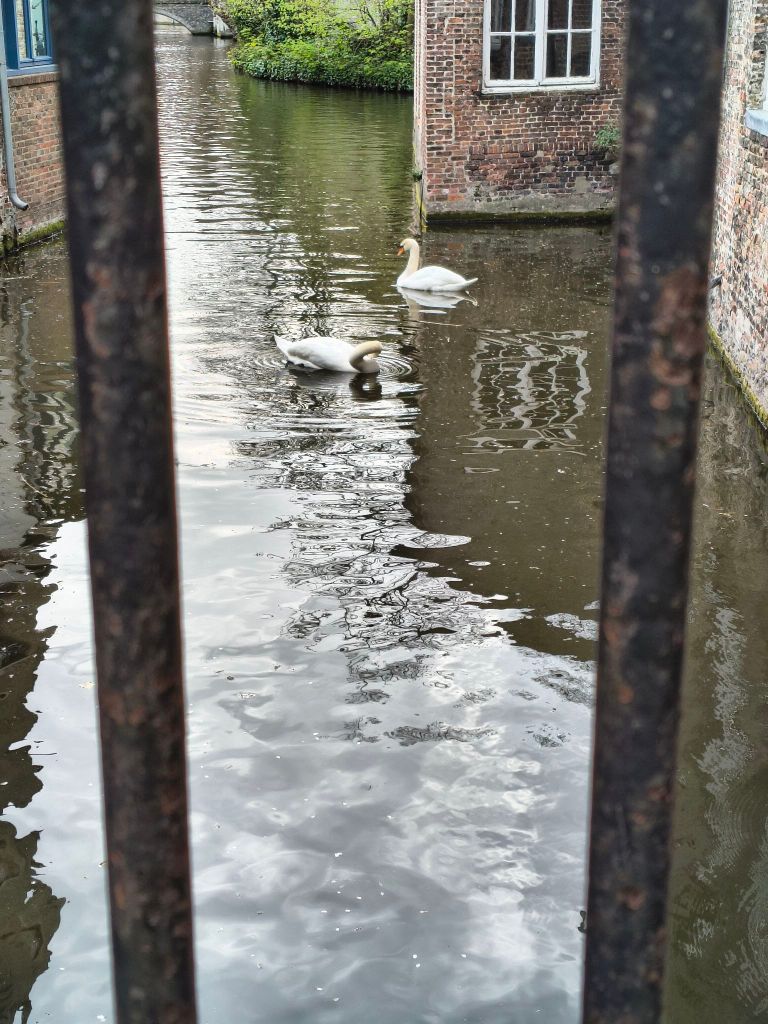
But eventually Maximilian escaped, and when he returned to his throne he turned the whole swan-neck thing back on Bruges. And at the same time, history was doing its own turning – into legend. He is said to have decreed that as punishment the people of Bruges had to look after the swans in the canal until the city falls. And there the swans remain, to this day.
(There’s another legend about the swans, something to do with a woman who was locked up by her father because she wanted to marry someone he didn’t approve of, she escaped somehow and got Bruges to promise to keep their swans because she saw two of them during her imprisonment and they cheered her up. But I didn’t see her tomb in the church, so there)
(The more likely story is that medieval Bruges started keeping the swans as a sign of wealth and prestige and has just kept the tradition going. Borrrrr-riiiiing!)
Fascinating the story behind the Lanchals tomb may be, it’s not the main draw of the church. And it’s not the reason why they charge €10 to enter the east end. The real reason can be found in the neighbouring Mouscron tomb. (It’s the statue in the middle).
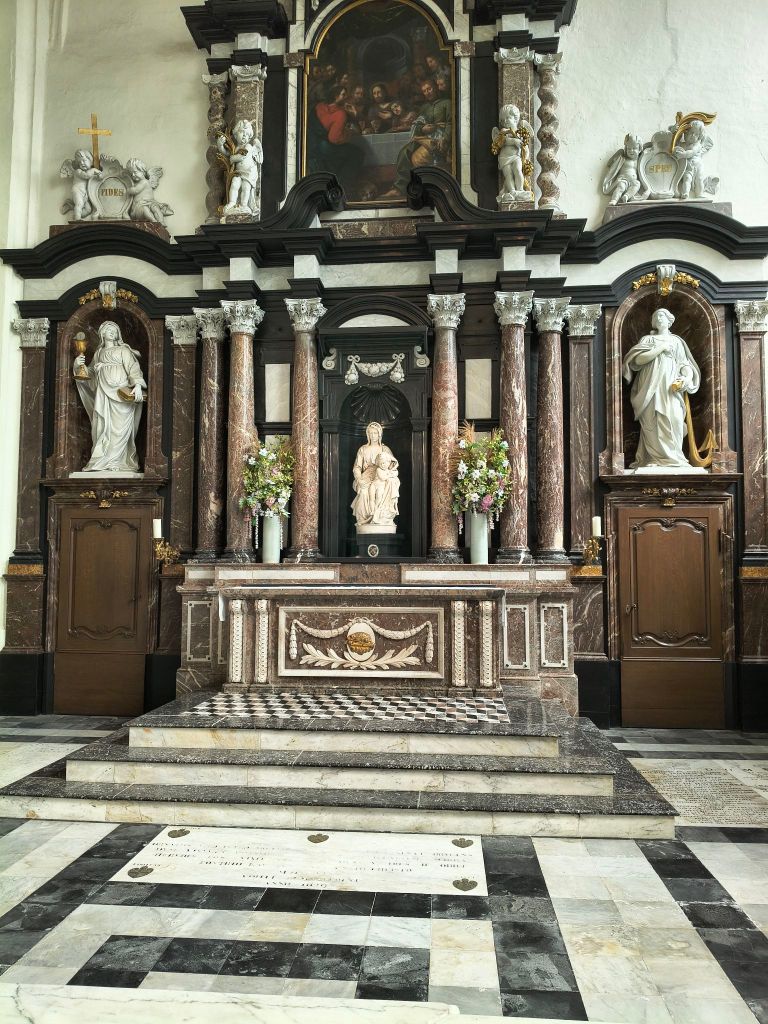
Michaelangelo’s exquisite Madonna and Child is the only example of his work that left Italy in his lifetime. It was originally commissioned for the huge sum of 100 ducats, and the Mouscrons got hold of it following a dispute between the artist and the original patrons. Such a gorgeous piece of work merited strict conditions of use, and the family expressly stipulated that no alterations could be made and that the statue could not be moved from the tomb.
Ah. About that last bit.
In 1794, much of Belgium, including Bruges, fell to the armies of the French Revolution. The French Revolution then became Napoleon, and he thought the statue would look good in the National Museum in Paris. It was only returned to Bruges in 1815 after the little corporal’s defeat at Waterloo. Only then could the Mouscrons’ wishes be fulfilled and the statue remain in the tomb.
Oops. Sorry again.
In 1940, all of Belgium, including Bruges, fell to the Blitzkrieg of Nazi Germany. Hitler thought the statue would look good in his planned new museum in Linz. This time it took the famous “Monuments Men” to go down a salt mine in Austria after the war and bring it back.
Today it’s back here in the Mouscron tomb and their request can finally be fulfilled, as we are in more enlightened days, the world is at peace, and our leaders aren’t corrupt, maniacal dictators and fascists who start illegal wars at the drop of a set of incriminating files.
Fingers crossed.
I think that the Madonna and Child does stand out amongst all the pretty decent artworks in the church, but the one that really struck me personally was Adriaen Isenbrandt’s Our Lady of the Seven Sorrows (1528-35).
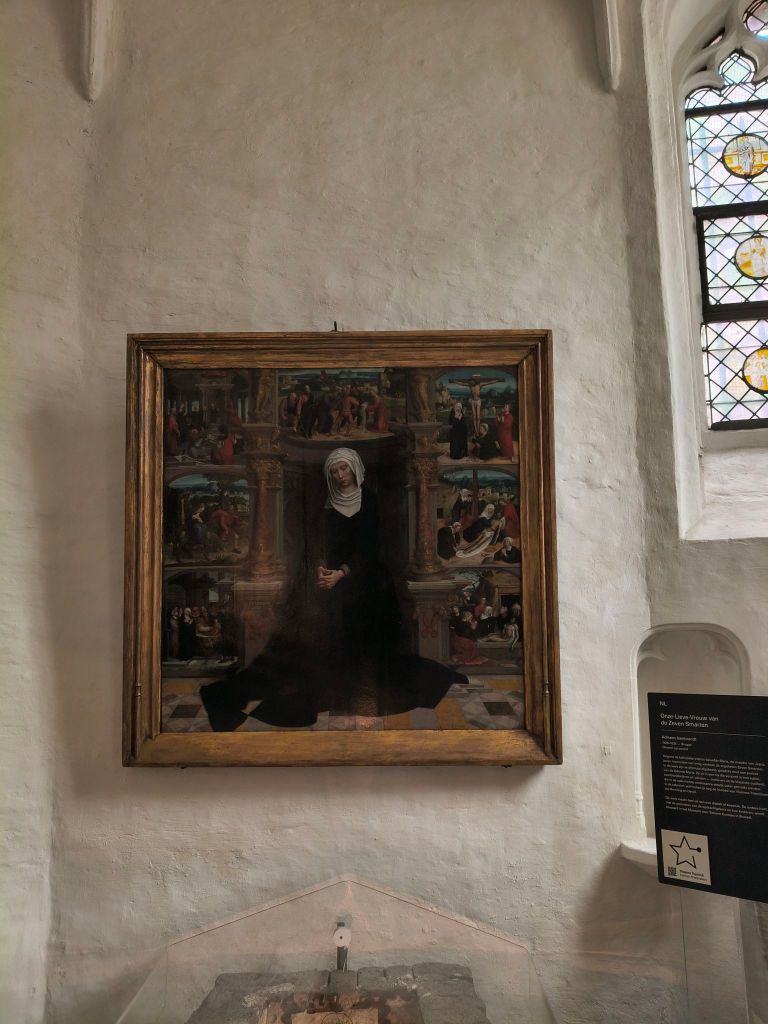
Catholic teaching holds that the Virgin Mary experienced seven sorrows during the life of her son Jesus Christ, from the time of his circumcision to his crucifixion. And here they are, laid out around an unusually contemplative Mary. Virtually all the great religious artworks of medieval and Renaissance times seem to always depict the subjects in mannered, classical poses, with very formal expressions of ecstasy, agony, astonishment, fear, joy, as weird divinely-directed stuff happens to them. Here we get to see a Biblical figure taking a few moments to reflect for herself on all the devastating and extraordinary experiences that have been thrown at her, in contrast to the riot of stylised action all around her. It seems like an arresting and profoundly human representation for the time, well compared with the artwork I’m familiar with from those years.
And if you come to Bruges you may also feel your own connection with this figure, as you take a break from running around to and from this tourist trap here, that tacky souvenir shop there, the even tackier “attraction” over there, and sit yourself down for a moment of stillness as the throng of tour groups rushes past and around you the way the tour boats plough through the stillness of the bucolic canals.
 orwellianTwo
Leave a comment