London isn’t a city you can just “do”. It is just too vast. A day in London can only reveal the smallest details of this incomprehensibly multidimensional place, and the bad news is that not even a lifetime of London would capture the whole story. Today I decided to take the plunge, but I did the sensible thing and chose a very specific route from an authoritative guidebook. So it’s off to Trafalgar Square and we’ll be trying to follow the pages of Touring London by W. Teignmouth Shore. (Batsford, £2.25).
According to Teignmouth Shore “Trafalgar Square is one of the most beautiful and historically interesting places in London“. In fact WTS (we’re using an acronym) likes it so much it’s the starting point of all four tours in the book. We’re going to sample a few parts of two of them.
But there is very good reason to start here; the streets that radiate out from here will in short time lead you off to some of the most famous landmarks in the world – Big Ben, Downing Street, Westminster Abbey, Buckingham Palace, Piccadilly Circus, Leicester Square – while right here on the northern edge stands the National Gallery. St Paul’s Cathedral is a bit more of a trek but theoretically doable by striding off down the Strand.
And there’s one world-famous landmark I left off the list. Trafalgar Square itself, of course.
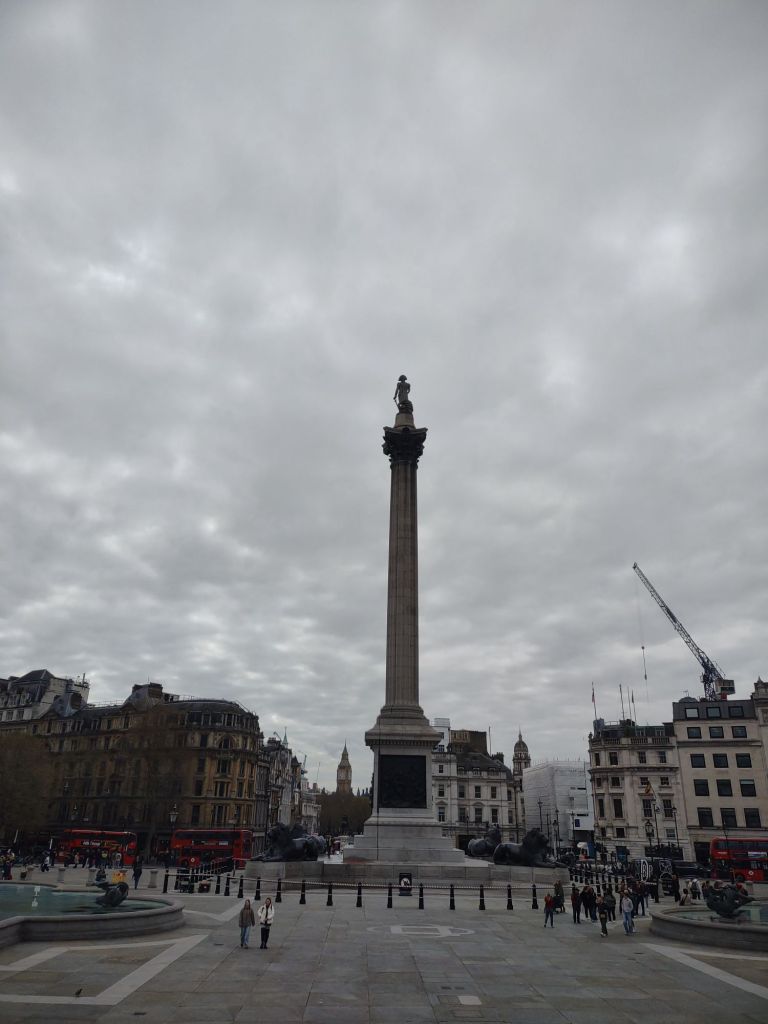
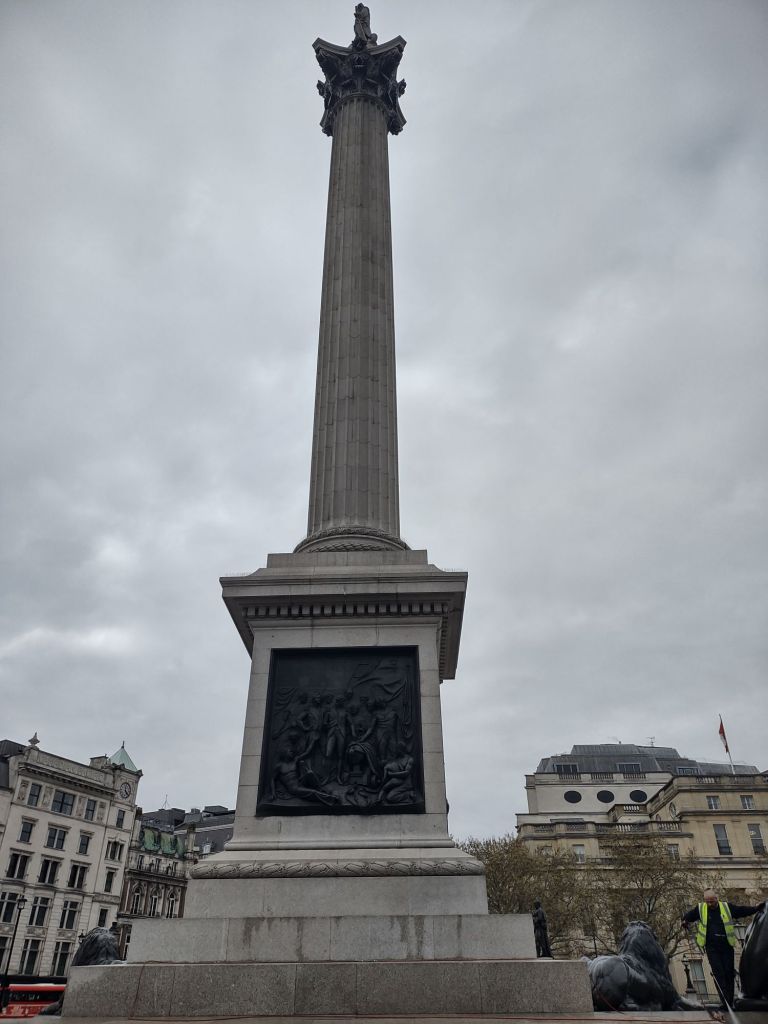
“The tall pillar in front of you” WTS tells us “is the Nelson Monument, which the guide books tell us is 184 feet and 11 inches high, including the statue, which much feel a bit undignified being mast-headed like this.” A bit of a one, this tour guide, he’s got (it is a “he”) a touch of the cheery cussedness you’d expect of yer old-school London cabbie. Except a lot posher. Anyway there it is, Nelson’s Column.
This area was originally the royal mews, established in the 1200s. But Britain’s victory over France and Spain at the Battle of Trafalgar in 1805 was such a seismic naval triumph, one which would establish Britain as the world’s supreme naval power for the next hundred years, that the nation demanded a fitting memorial for Admiral Nelson, who won the battle but famously lost his life onboard HMS Victory just as the ref was blowing the final whistle (never has the idea of “injury time” felt so poignant).
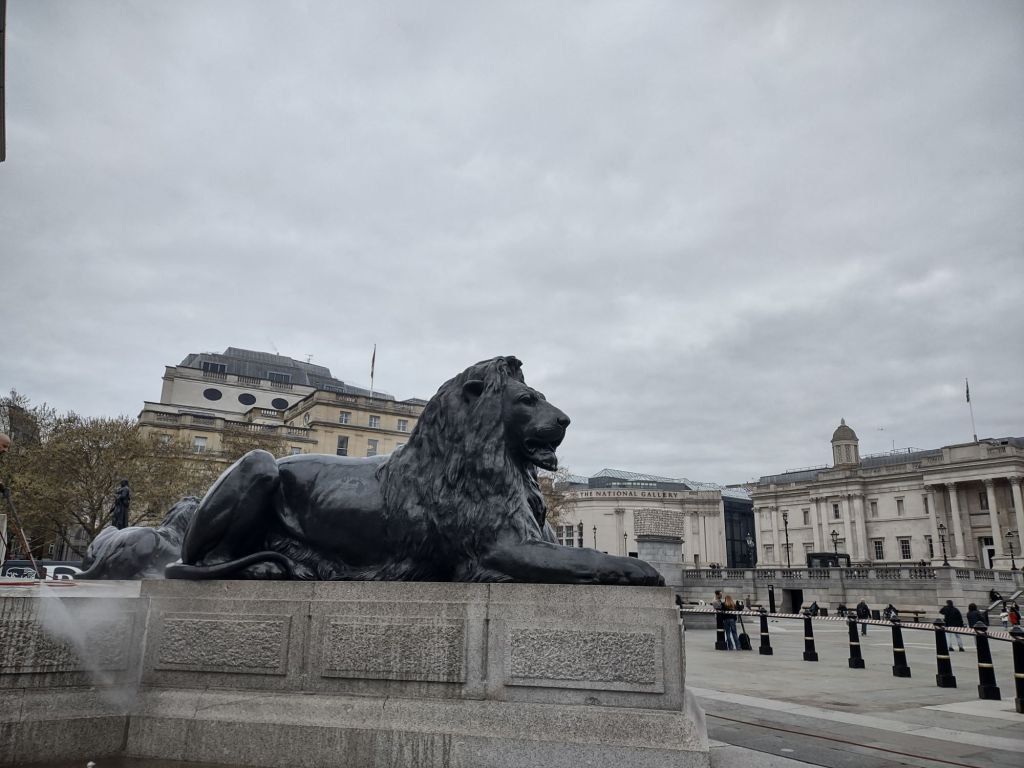
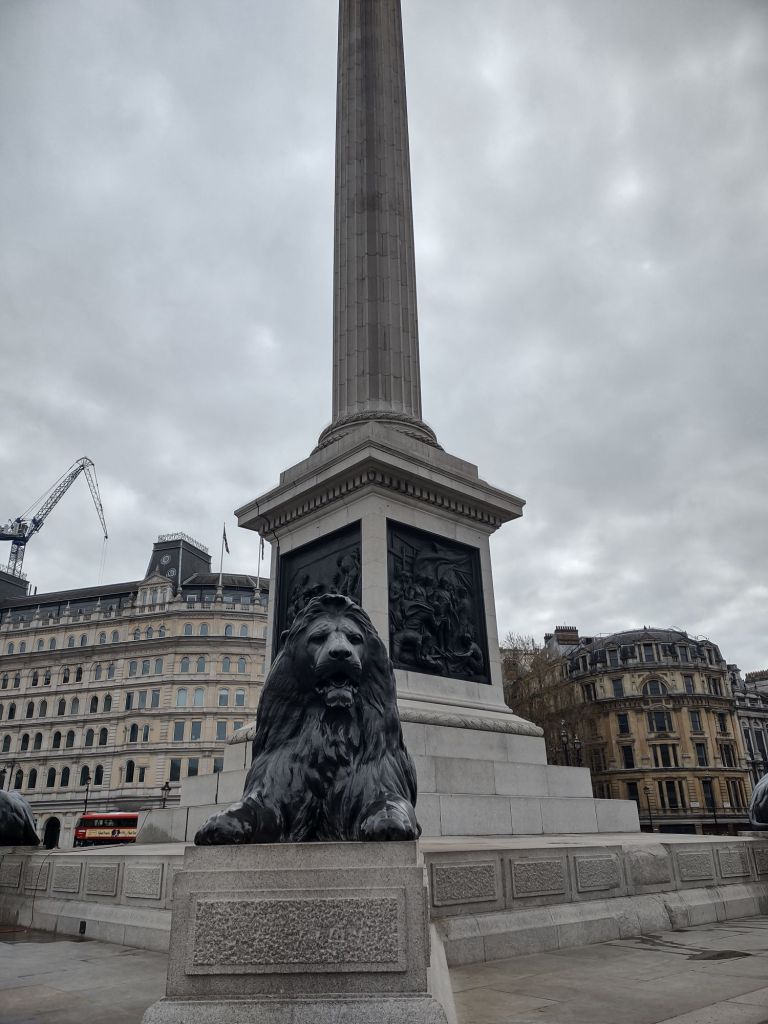
Nelson, the four monumental lions, the grand square, have been at the centre of British public life since the work was completed in the mid-19th century. Celebrations, demonstrations, commemorations, all have found such a focus here over nearly two hundred years now that it feels like the open, beating heart of London, England, Britain. Even without the events there’s always a throng of visitors, but there’s enough space for everyone in this magnificent square.
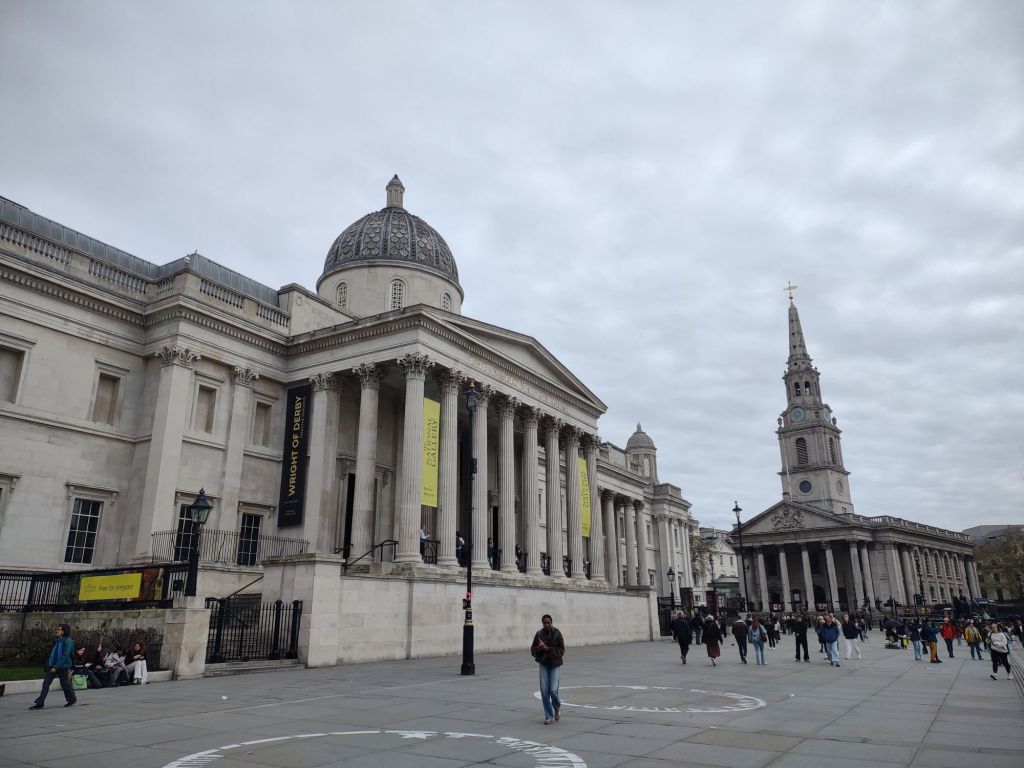
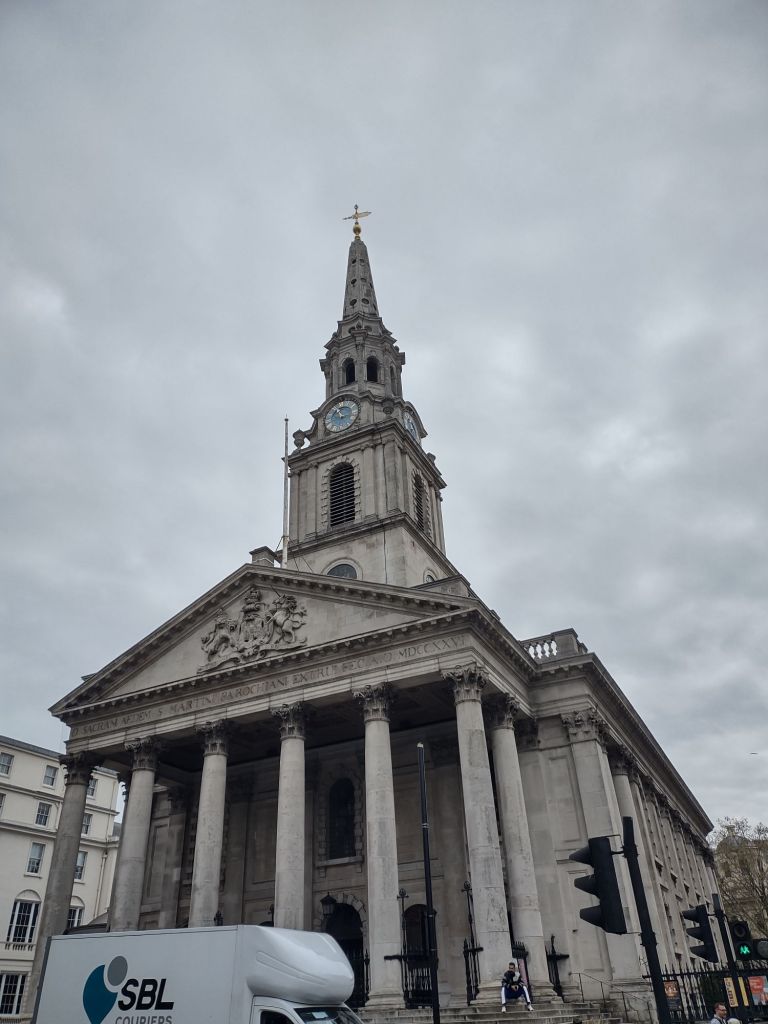
“The church on your left hand is St Martin’s-in-the-Fields, which it once actually was, where hereabouts it was mostly country-side, fields and lanes, green grass and flowers“. Those fields WTS is talking about were the fields that separated the two cities that came to form the core of the great city we know today, the City of London (Roman, trading, later business and finance) and the City of Westminster (post-Roman, royal palaces and political power). Today the two are separate boroughs within Greater London, and the City of London still of course retains its own Lord Mayor (and also virtually all of the country’s money. Well it feels like it). We’ll be heading further into Westminster in a moment. First let’s pop inside this lovely 18th century church.
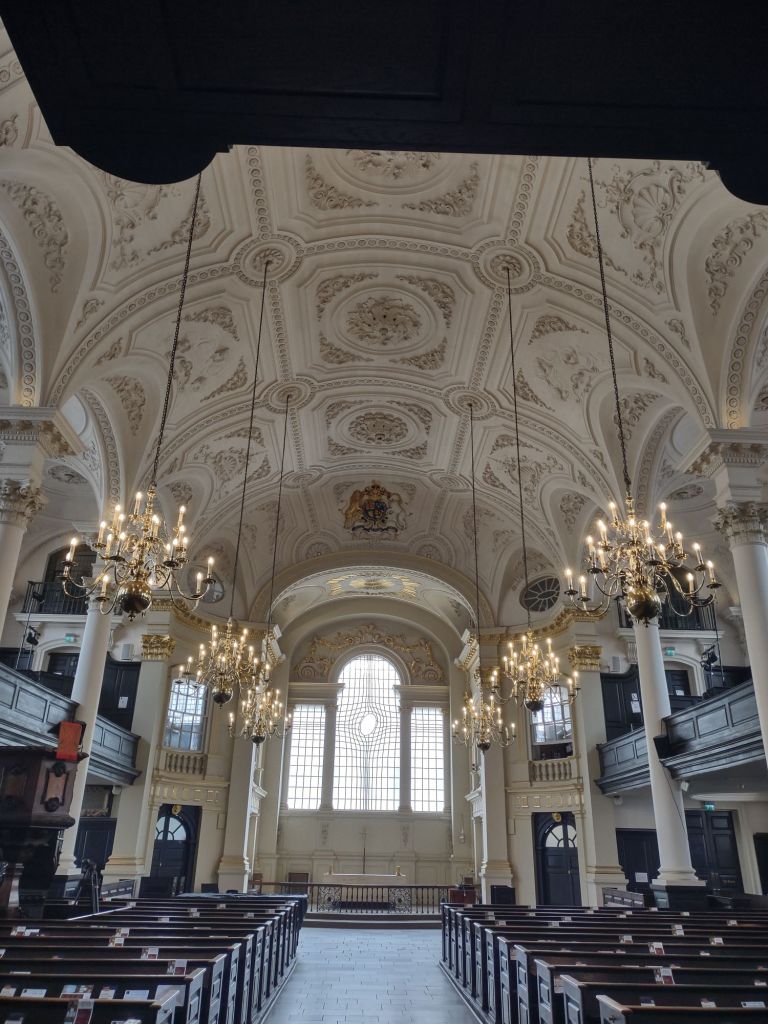
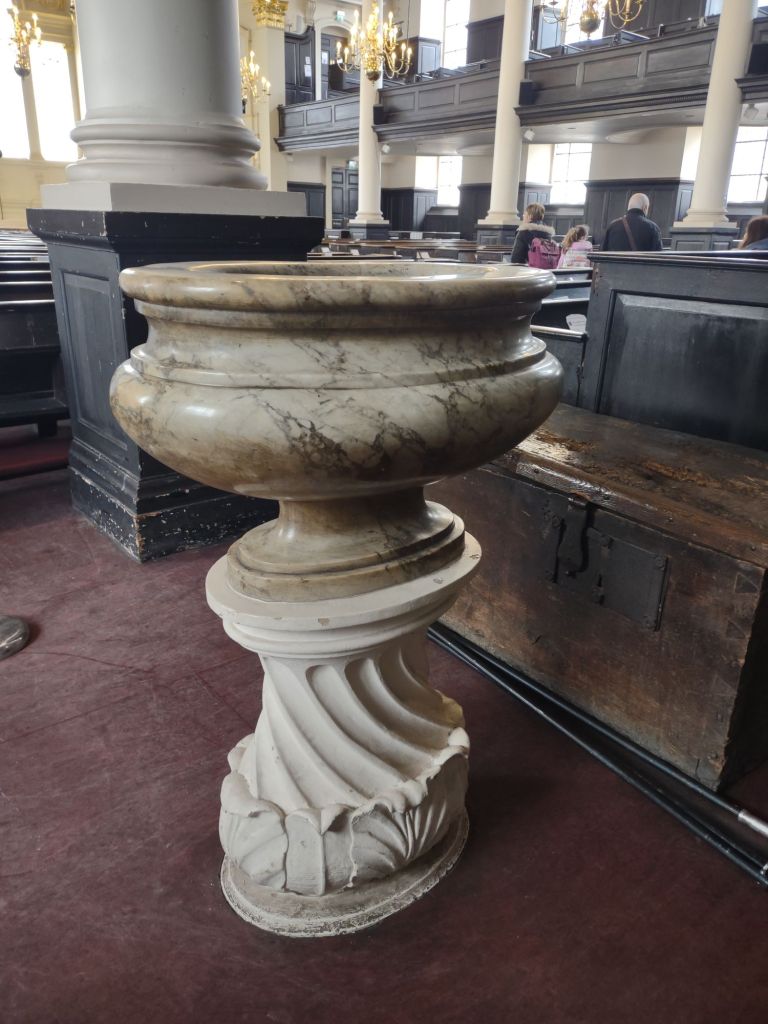
St Martin’s-in-the-Fields makes a charming, quiet escape from the hustle of London outside. It is a little austere though, and apart from the occasional war memorial the most interesting thing is the font. Older than the current church, WTS says that “Francis Bacon, John Hampden, Charles II, and other worthies and unworthies” were baptised in it, although I can’t corroborate that online at this point. Charles II might be a fair shout; this is after all the parish church of the British royal family.
A famous church whose simple, functional design inspired a whole genre of Protestant church architecture throughout the British Empire, the church is also famous for the concert space in its crypt and its charity work with the homeless (although I think that WTS might be a little out of date in saying “you will find the crypt here open as a night shelter for the homeless“.)
On the other side of the Column there’s an interesting statue of Charles I. Well not so much the statue – I was supposed to have given up on statues, wasn’t I? – but what it replaced.
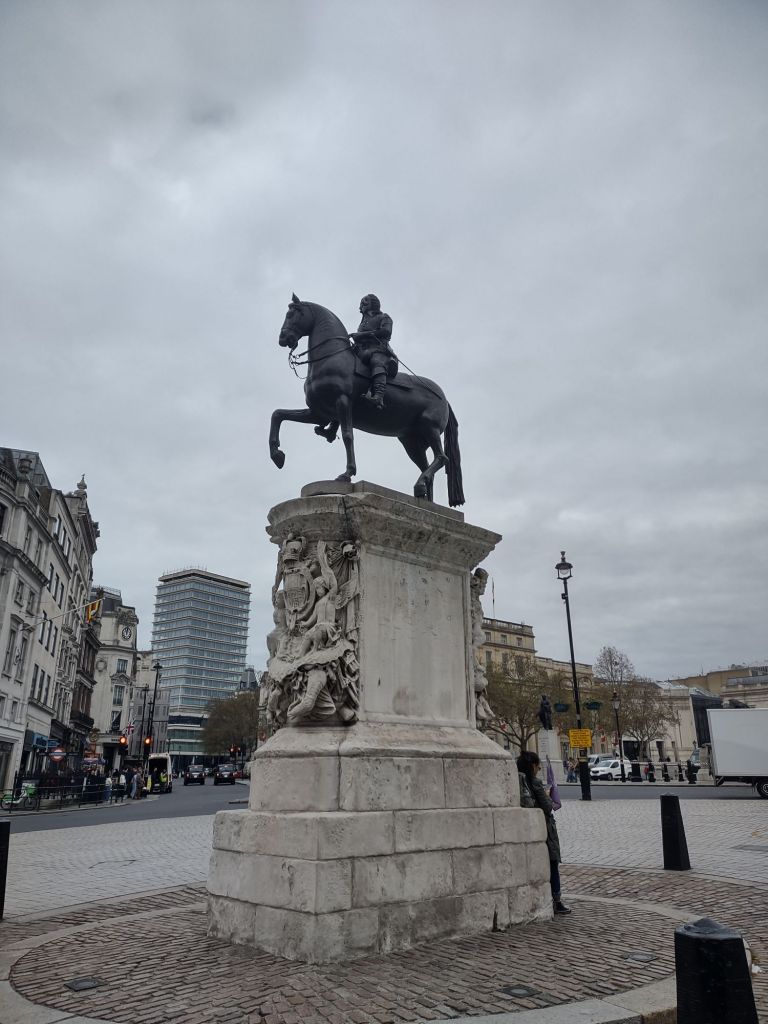
In 1290 Eleanor of Castille, the “greatly loved wife of Edward I“, died in Lincoln aged 49. Edward was so heartbroken that he ordered a stone cross built at every stopping place of her funeral procession down to Westminster. The last cross was on this spot, then known as Charing – hence Charing Cross.
Well, the Puritans didn’t share Edward’s grief and tore down the Charing cross, and after the Restoration up went a statue of their most-famous victim. As history moved on, Charing Cross became more known for the fact that six thoroughfares ran through this point, and in the 19th century this spot became the point from which all distances from London are measured from
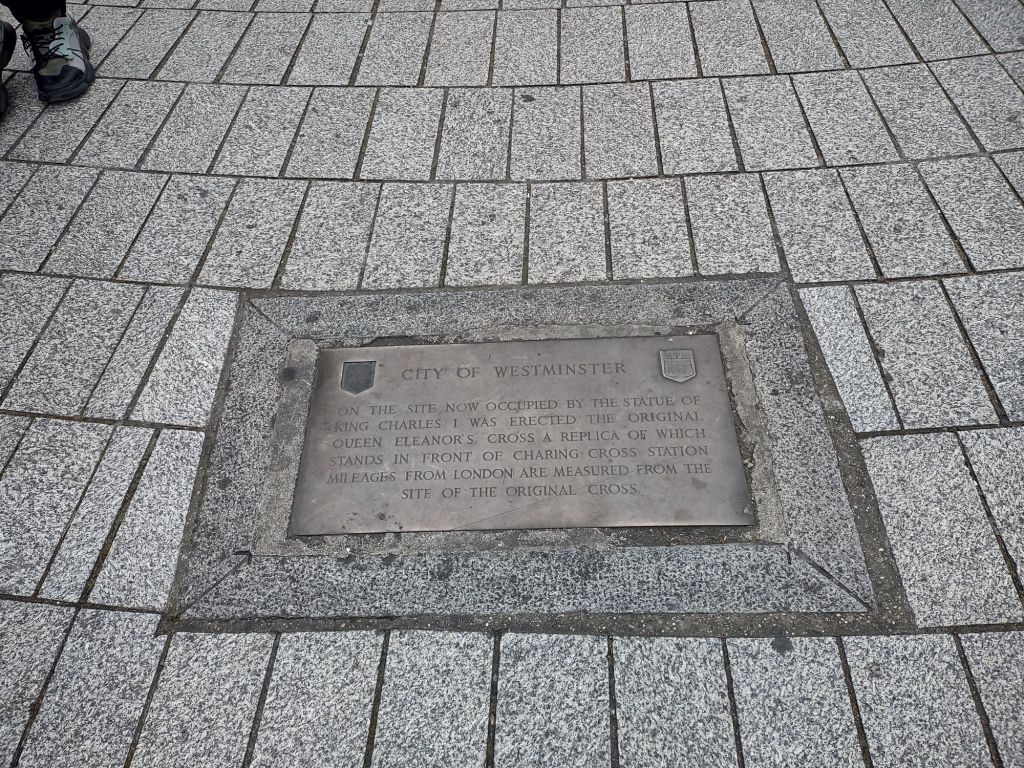
Err, hang on, you might be asking, what about Charing Cross train station? Isn’t there an Eleanor Cross outside of that?
Well, yes. And no.
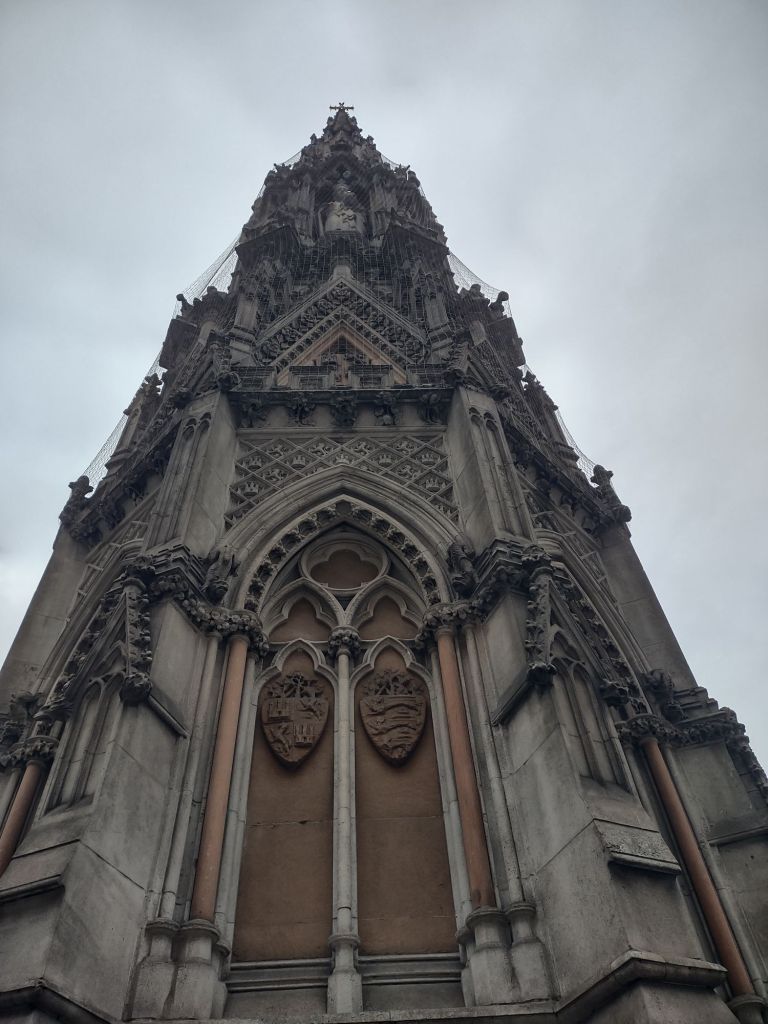
A major London terminus serving south-east London and Kent, Charing Cross station lies on the Strand a few hundred metres from, ahem, Charing Cross. Opened in 1864, at the height of the rapaciously-competitive railway boom, the railway people decided to publicise their links to such an historic part of London by building a new Eleanor Cross. (They could hardly stick up a second dirty great big Nelson’s Column outside the left luggage facilities, could they). So the one you see outside the station isn’t the original and it’s not even the reference point for distances from London. Worth making the point if you’d had the wrong idea all this time (I certainly had the wrong idea for a while, and I might have had that wrong idea right up to this trip today…)
Certainly Touring London was no help at all on the matter, so while we’re headed towards Whitehall let’s see if there are any general tips WTS can give us about getting the best out of a stay in the metropolis.
Getting about
“By far the most pleasant and most profitable way to travel London is to walk it…” which I would agree with in any city or town, even in London – as long as you have a particular route in mind and a particular neighbourhood you want to experience. It’s too big otherwise.
If you want to go further, or come from outside, what are the options?
“If you have your own car, no more need be said; you are able to go when and where you will.“
Definite no-no WTS, sorry, central London is a nightmare to drive in, and that’s before congestion charging comes into the picture.
“Next best is to hire a taxi-cab, which will probably work out less costly than hiring a car from your hotel“
…ok let’s forget transport. (I didn’t even get to ask him about the Oyster card)
Entertainment
London is one of the most vibrant, pulsating cities in the world, up there with New York when it comes to theatre, cinemas, live music, nightclubs, bars, and food from every nation on the planet. Isn’t that right WTS?
“The amusements of London are much of a muchness with those of other big cities”.
Ah ok.
Next time I’m going to go travelling with ChatGPT. Much better company.
“Theatrical entertainments are plentiful, something to suit every liking…the play is the thing at each theatre, and you can make your choice of musical shows, melodramas, comedies, farces: occasionally a new piece by a famous writer or the revival of an old one by a dead-and-goner.“
Maybe he’ll cheer up when it comes to food.
Eating out
WTS has a few recommendations about Italian and French restaurants “in that curious quarter of London called Soho”, but this blog isn’t big enough to list all the options out there. To be honest, I could just do with a takeaway egg fried rice or a biryani, nothing fancy really.
Ah.
“Warning; at any rate with ladies do not patronise a Chinese or other Oriental restaurant, without first assuring yourself that it is reputable.“
Not exactly Lonely Planet is it?
Well I suppose that’s not surprising. Maureen and Tony Wheeler launched Lonely Planet in 1973.
Batsford Books published Touring London in the spring of 1930…
Oh good, we’re now on Whitehall.
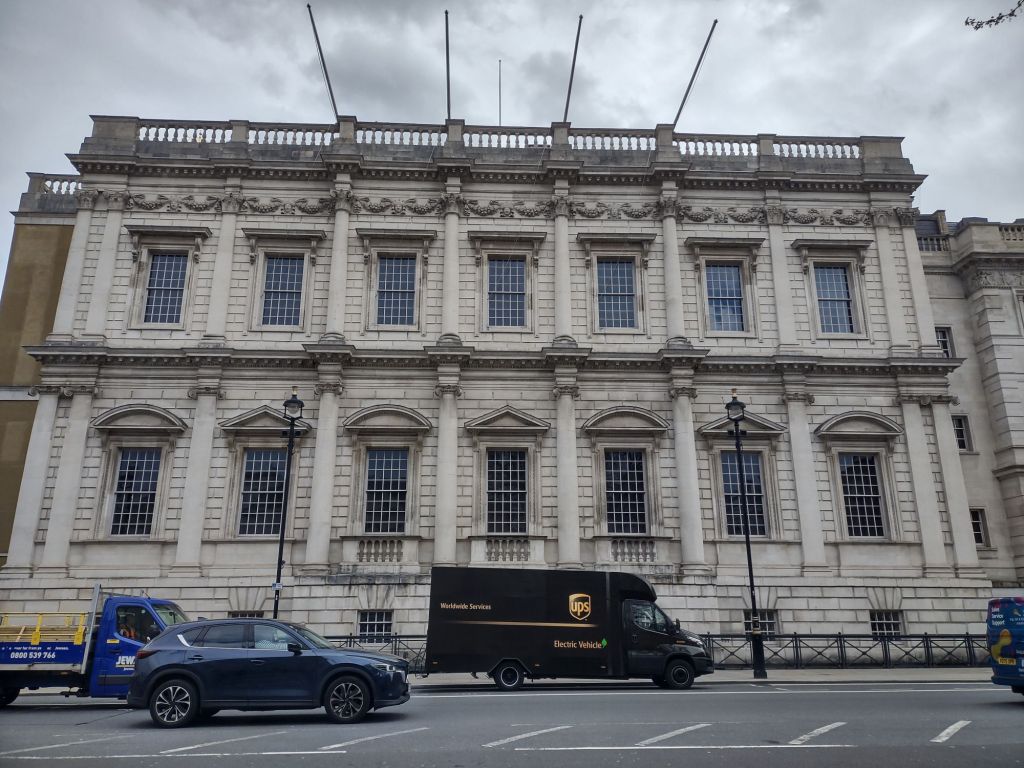
The Banqueting House is all that remains of Whitehall Palace, “the great palace built there by Cardinal Wolsey, who discreetly handed it over to his master, Henry VIII”. Today Whitehall is government, ministries, civil service, war memorials, crowds of tourists trying to photograph the mounted Horse Guards without spooking them. The guards and the horses never seem to lose their heads. Charles I wasn’t so lucky in the Banqueting House in 1649.
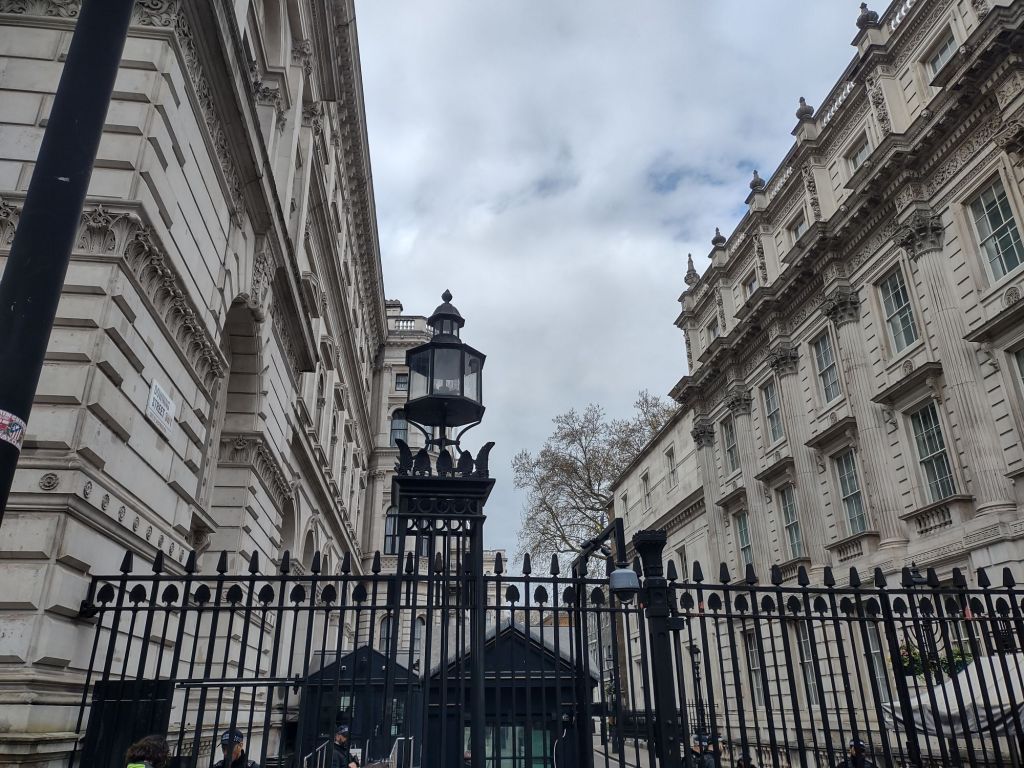
“Downing Street, where since 1735 Prime Ministers have come and gone. Queer stories its walls could tell, making some and marring other reputations.” If only WTS could have written a new edition ninety years later.
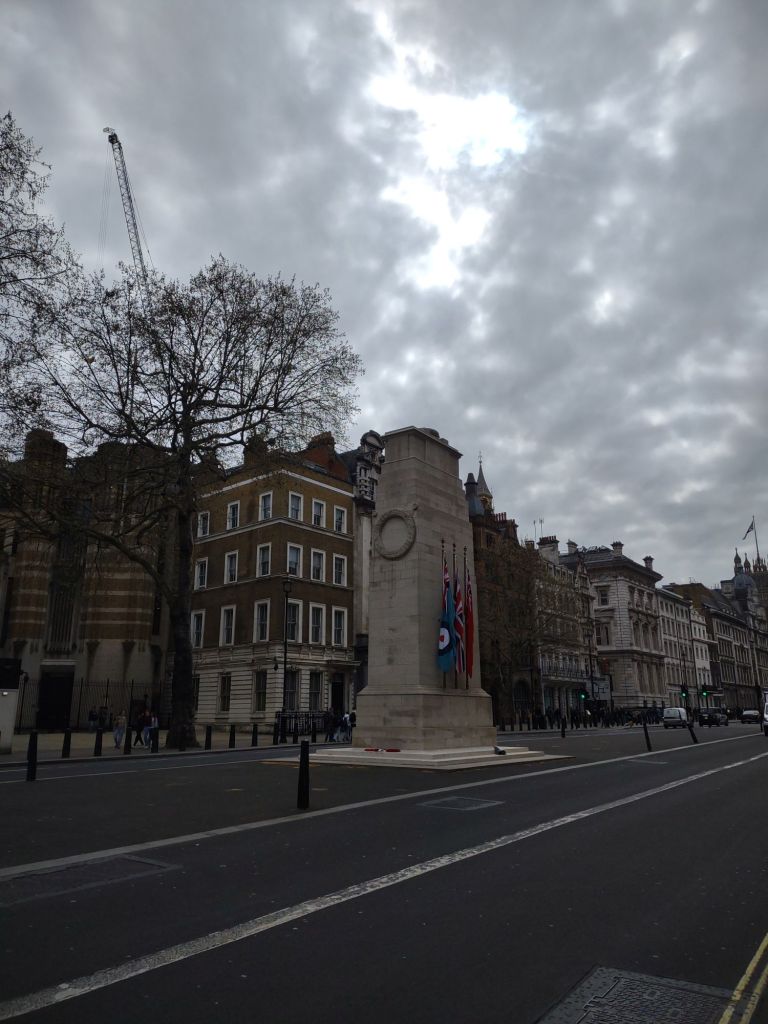
The Cenotaph, “erected to the memory of British citizens who died in the Great War. It has a dignified simplicity too often lacking in British memorials“.
Sadly, there would be other wars, other deaths, that would need to be commemorated here. And tragically for WTS’s London, the first and most catastrophe of those wars would begin just nine years after Touring London was published.
Whitehall runs into Parliament Square. Incredibly I took no close-up photos of the Houses of Parliament, but I think you know what it looks like. Instead I followed WTS, just as he was getting increasingly stroppy…
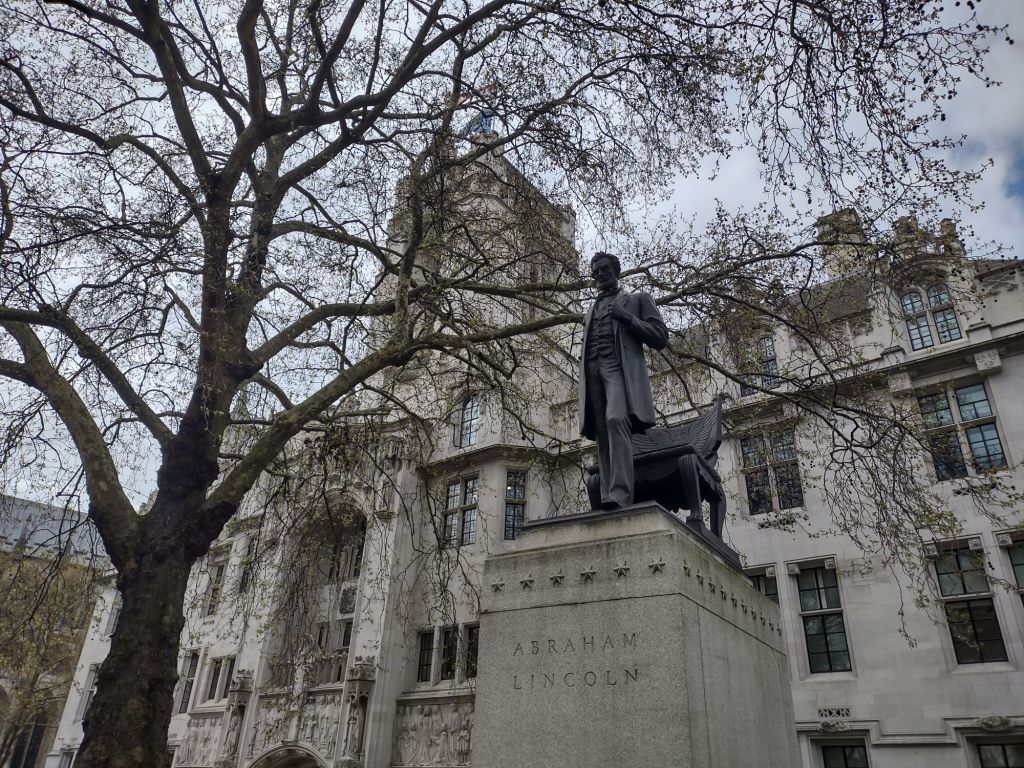
“The big open space is Parliament Square, as stupidly misused in the way of statuary as are most of the open places of London”. WTS only had time for this replica of a statue of Abraham Lincoln, “close by the Middlesex Town Hall” nowadays the UK Supreme Court (free to enter and somewhere I’ll pop in next time).
Fortunately WTS couldn’t include the famous statue of Churchill in his hit-list of “dreadful” statues as it’s post-war. Otherwise the right-wing press and social media would probably have had him sent to the Tower.
Over the road to Westminster Abbey, which was too busy for me to fancy popping in.
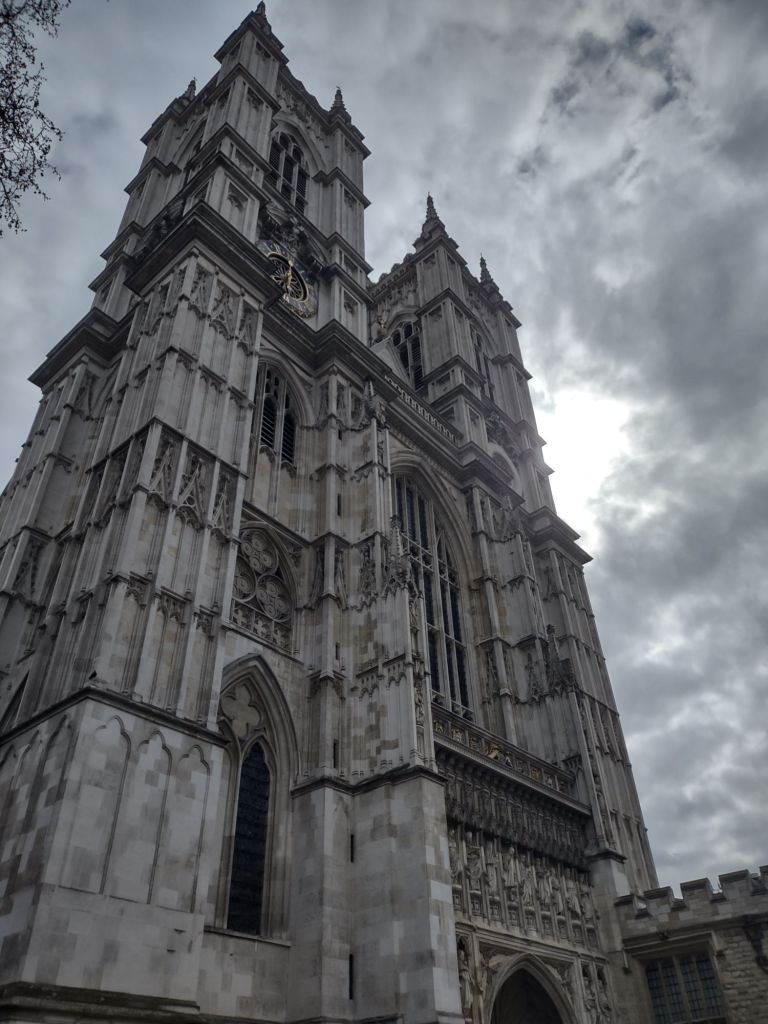
According to WTS, “What can I say? The less said the better”. For goodness sake man! …hang on…
“My advice is this; if you cannot spend many hours here, be content with gaining a general impression of its almost overwhelming beauty.”
I was last in Westminster Abbey many many years ago, but I don’t really think I appreciated the history and the architecture then. If a really hard-to-please critic such as WTS was in raptures over it, it’s a must-(re)visit. And the huge queue to get in is its own recommendation.
The Houses of Parliament is apparently “a mass of sham Gothic” though.
From there I headed up the Embankment and up the Strand, but those photos and observations are for another day. I was left pretty cream-crackered at the end, and not just trying to match Touring London’s advice to the modern city. So I’ll be revisiting from time to time, maybe heading eastwards into spaces where I imagine the Luftwaffe and the planners would have really swept away the world that Teignmouth Shore would have written about.
After all, it’s not much of a trip for me, doing London again, and again. It’s my city.

 orwellianTwo
Leave a comment