It was soon time to leave Lisbon and start the three-hour coach journey down to the Algarve where I shall be finishing up my trip.
I’m staying in Albufeira, lovely white-walled Albufeira, dreamy, sandy, blue-sea Albufeira.
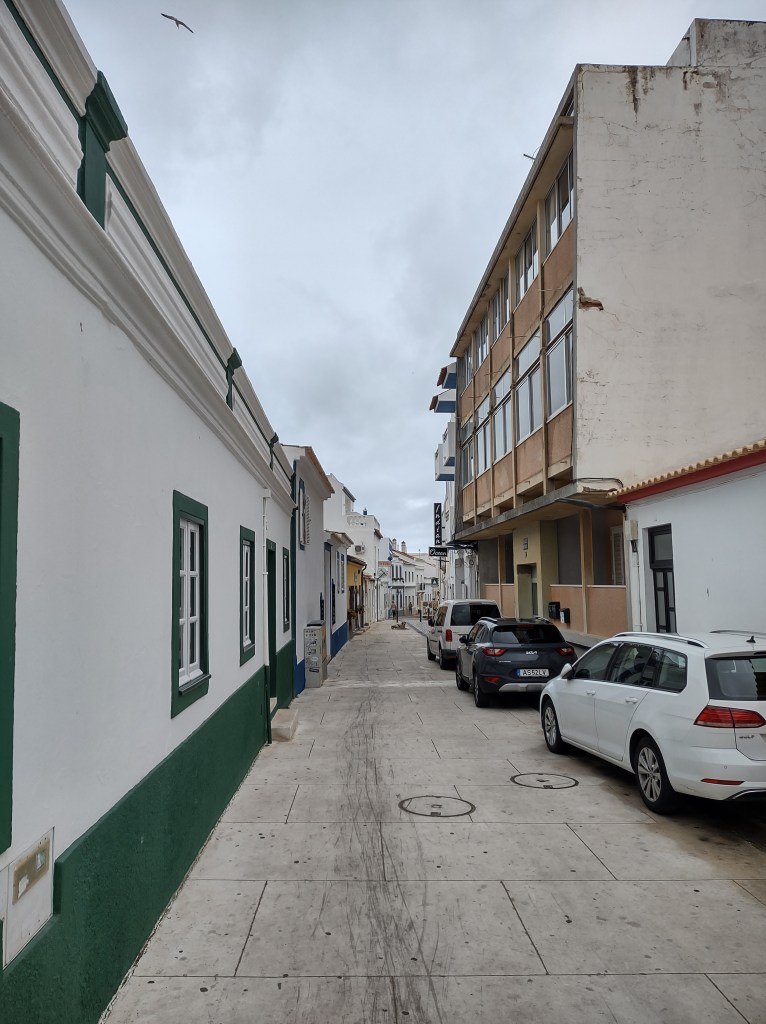
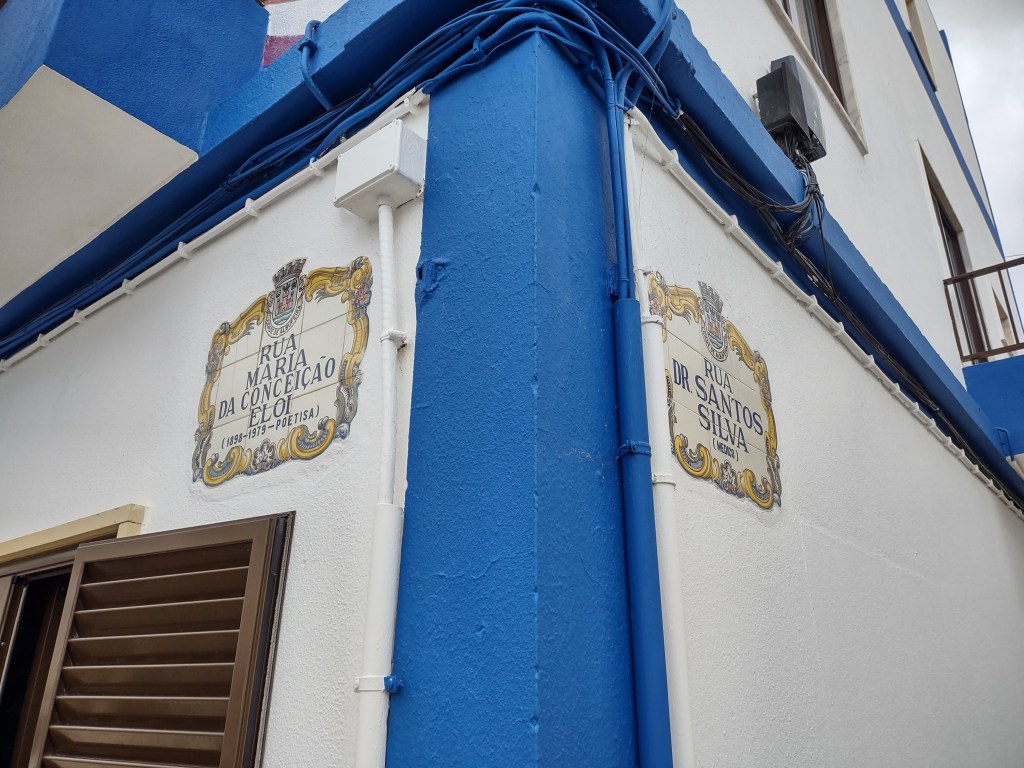
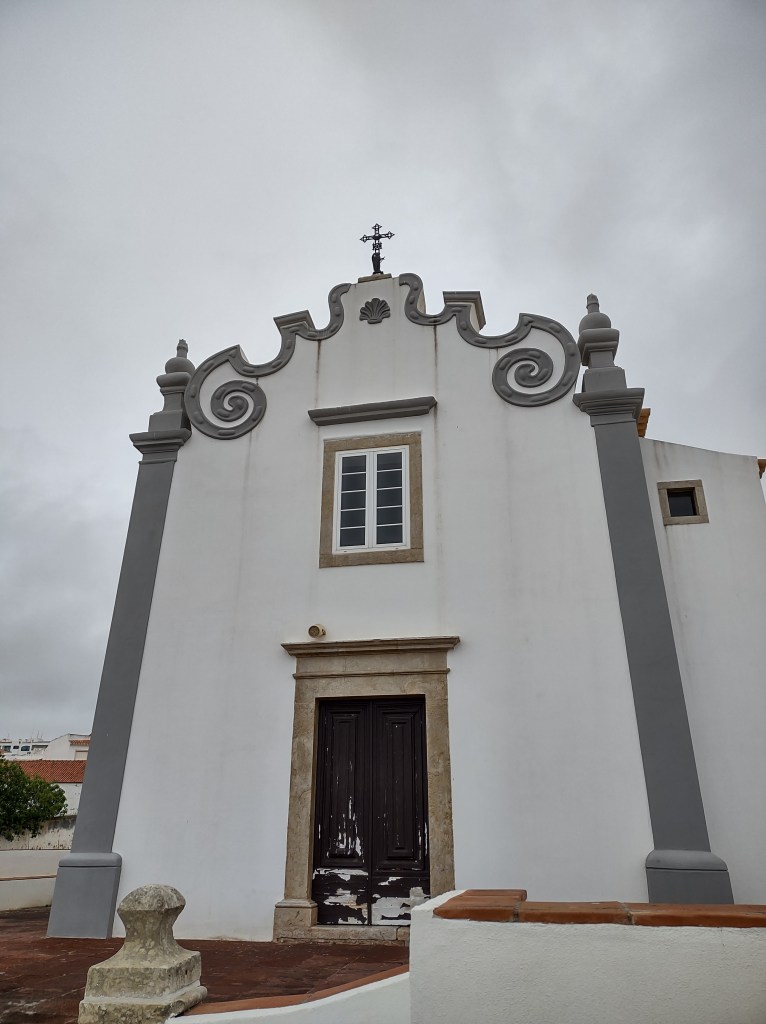
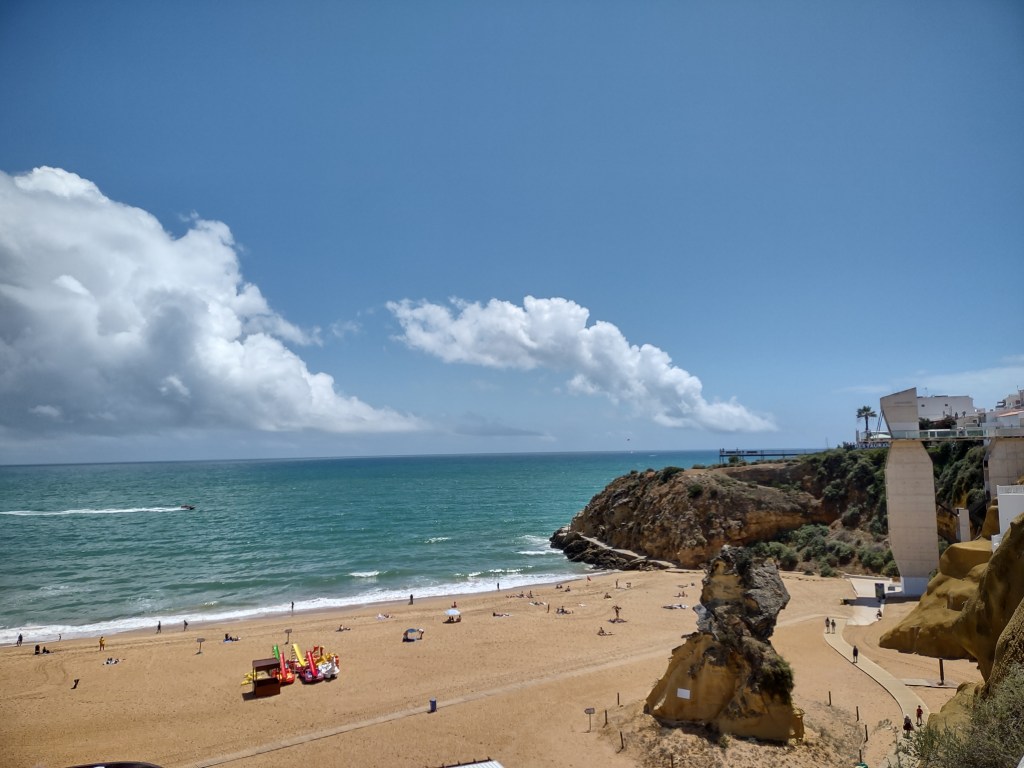
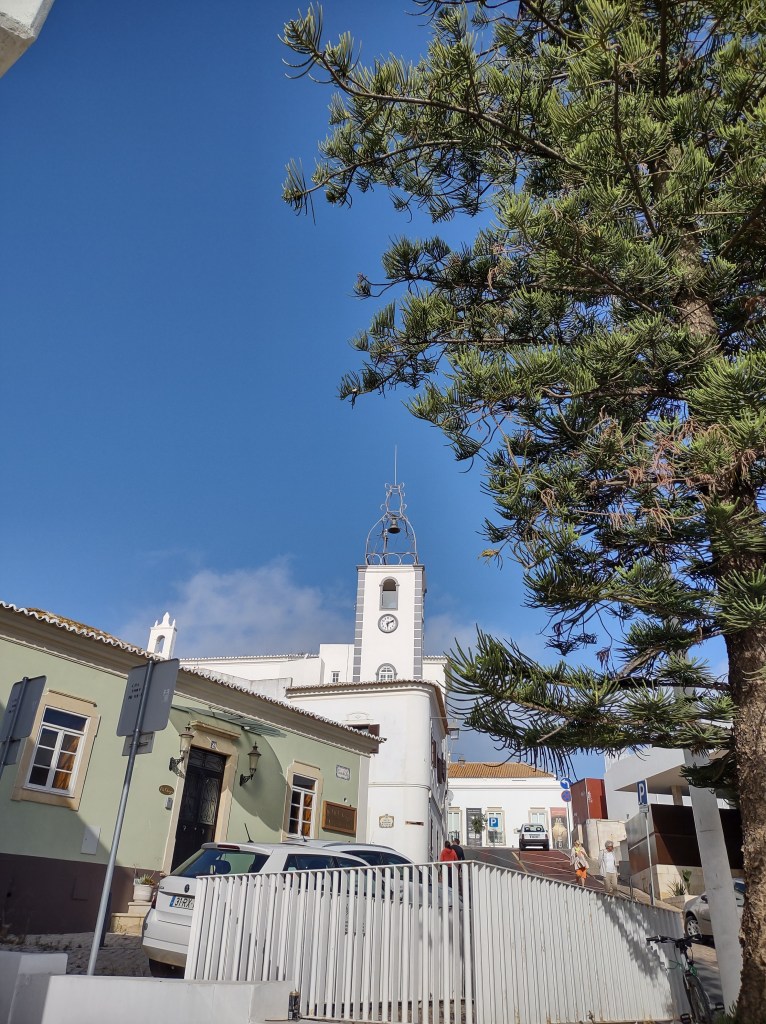
And, as some of you Algarve experts will know, lager-louty, yobbish Albufeira. Because there is no doubt this is the raucous banging nightlife hub of the region with an Old Town full of lad pubs, lad clubs, lad everything. But even here you can find the odd trace of the old fishing village if you look for it. And if you find the right place to stay you can also find the odd trace of sleep.
Yesterday I went on a tour of some other spots around the Algarve. First up was the lovely old town of Silves.
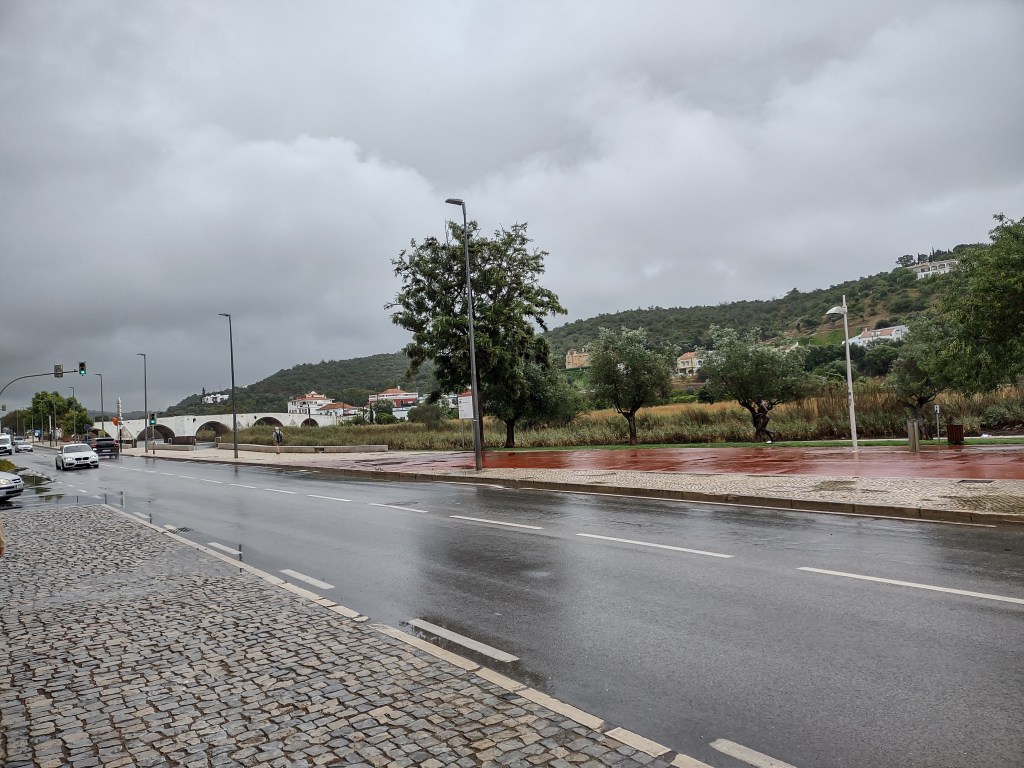
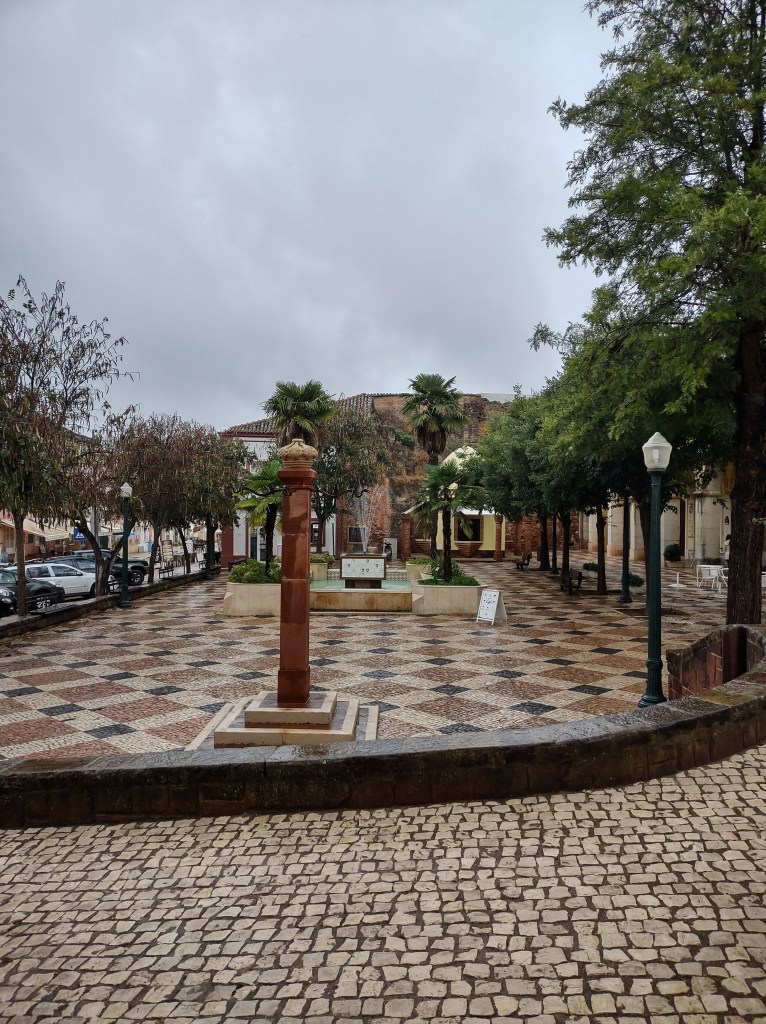
Moorish Arabs ruled Silves from the 8th to the 13th century, and they ran the region from their great castle, the most significant in the Algarve.
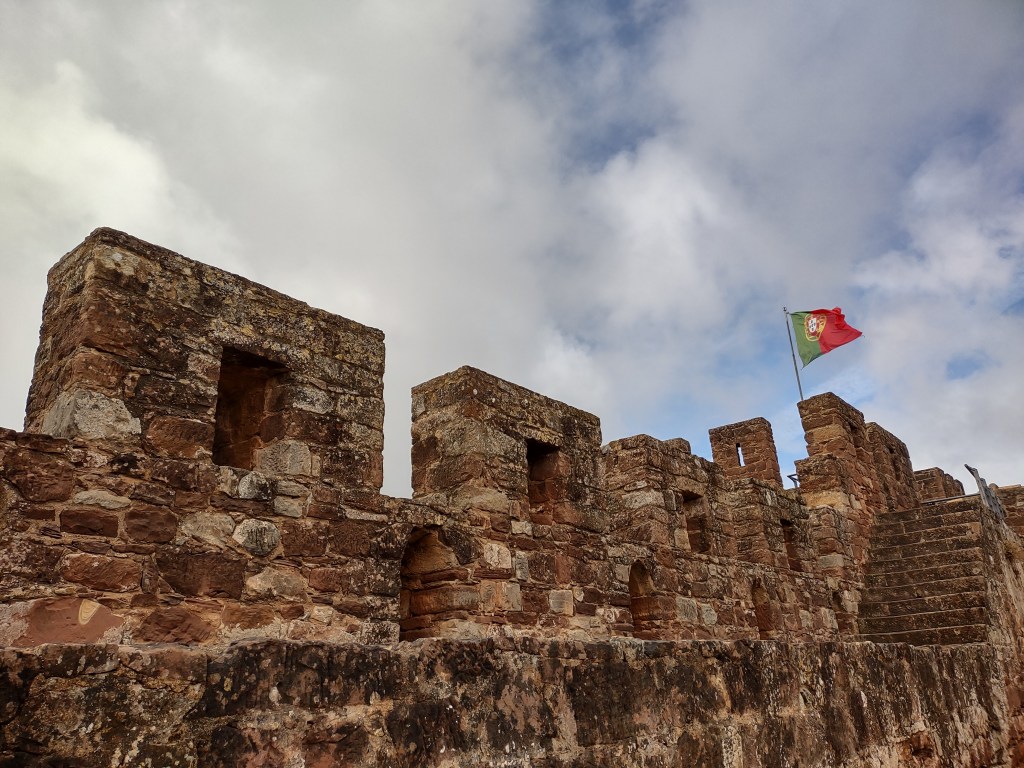
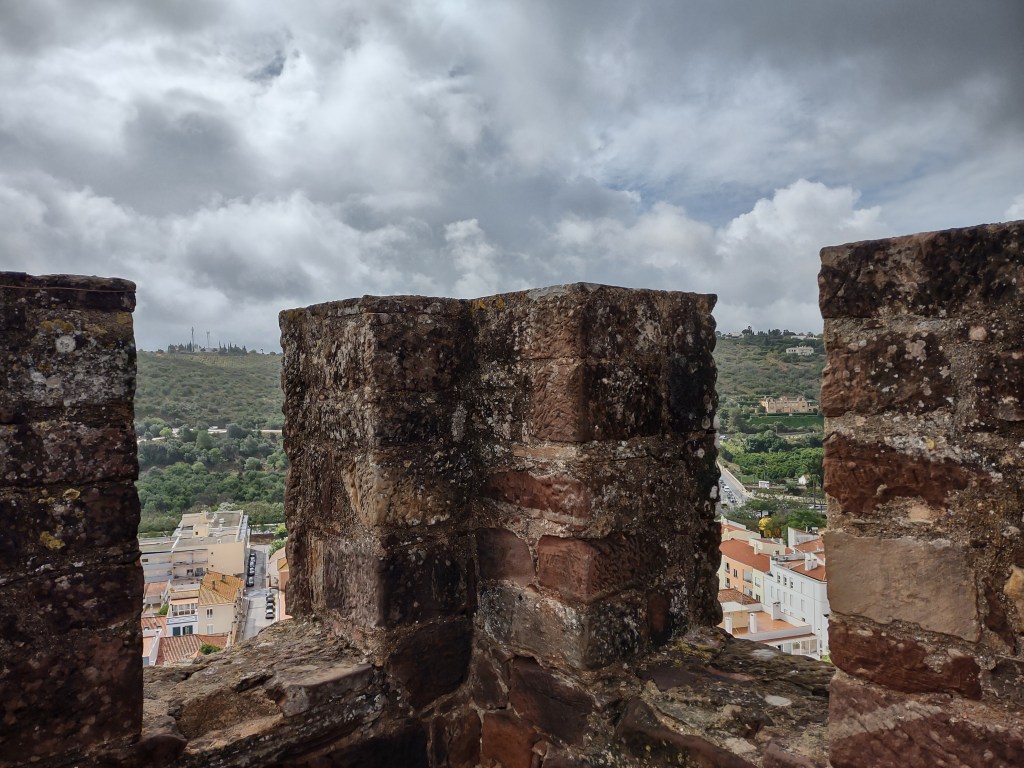
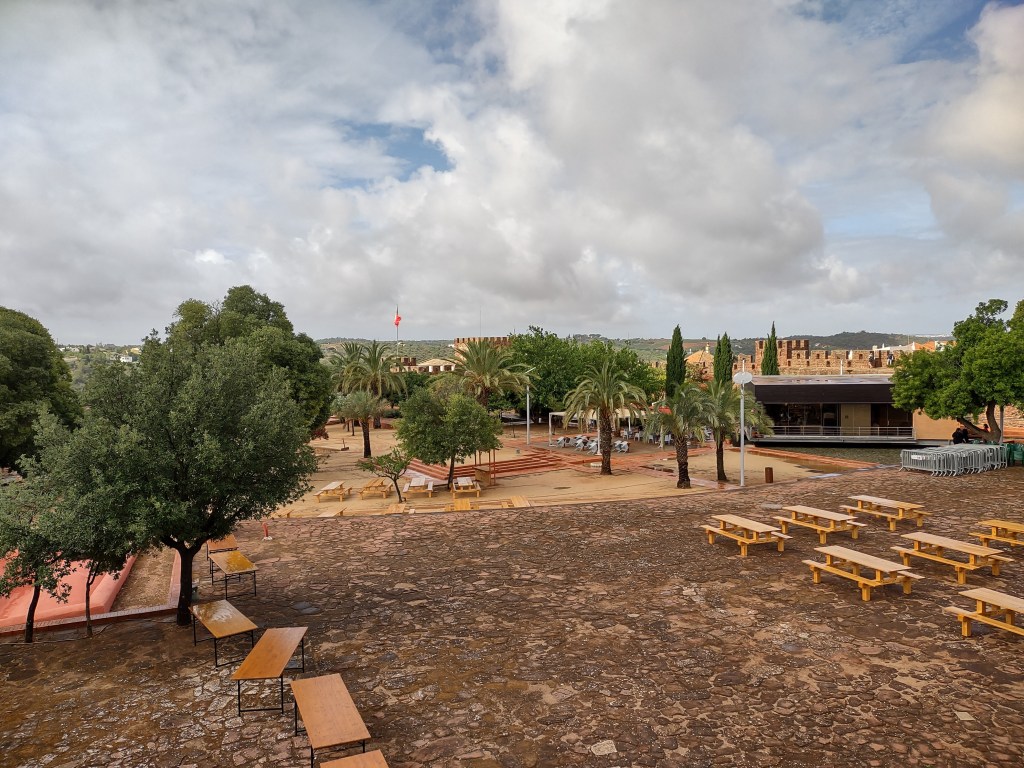
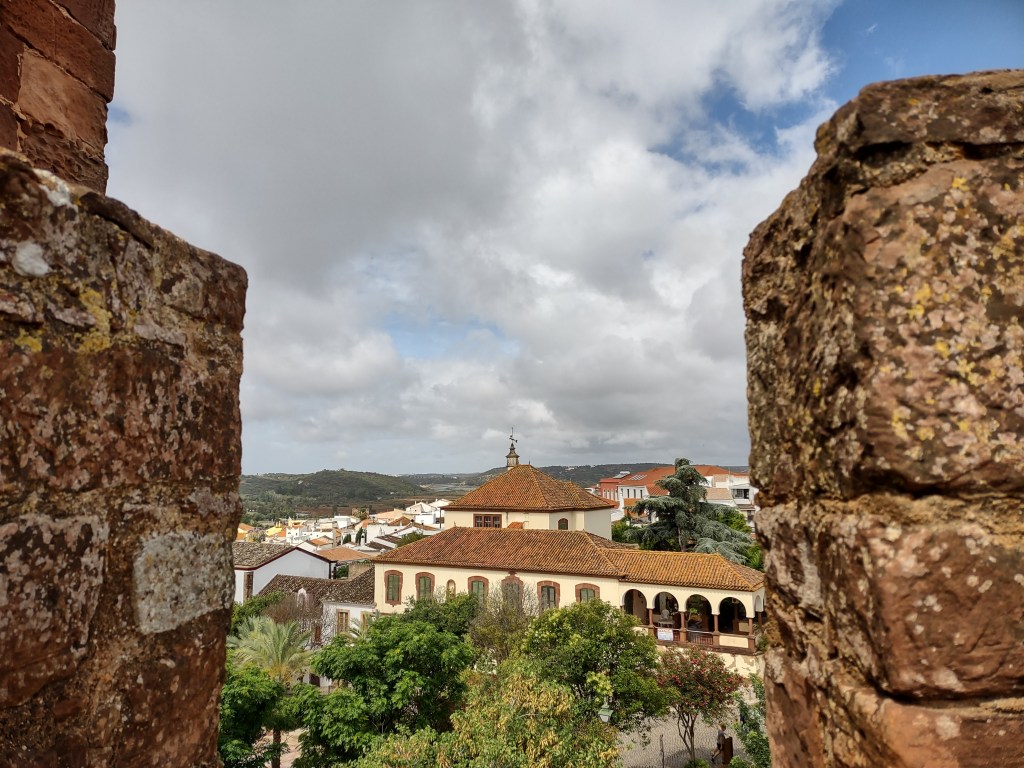
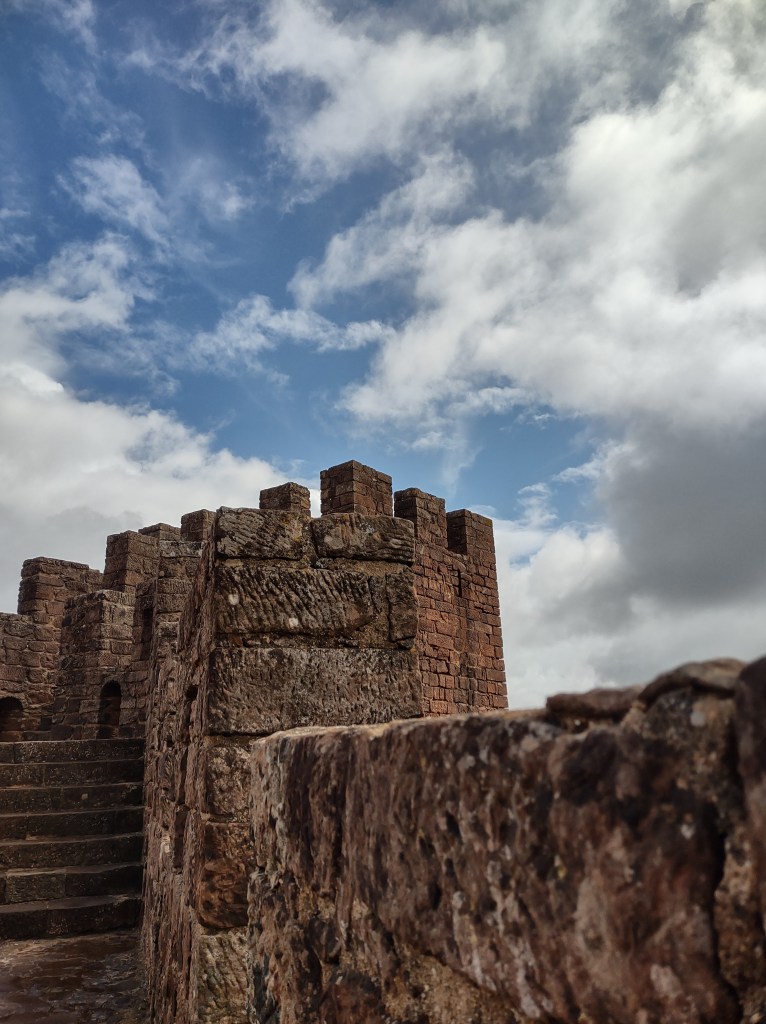
The Christians had a couple of goes at taking the castle and the town, and they first succeeded in 1189 under Sancho I, King of Portugal.
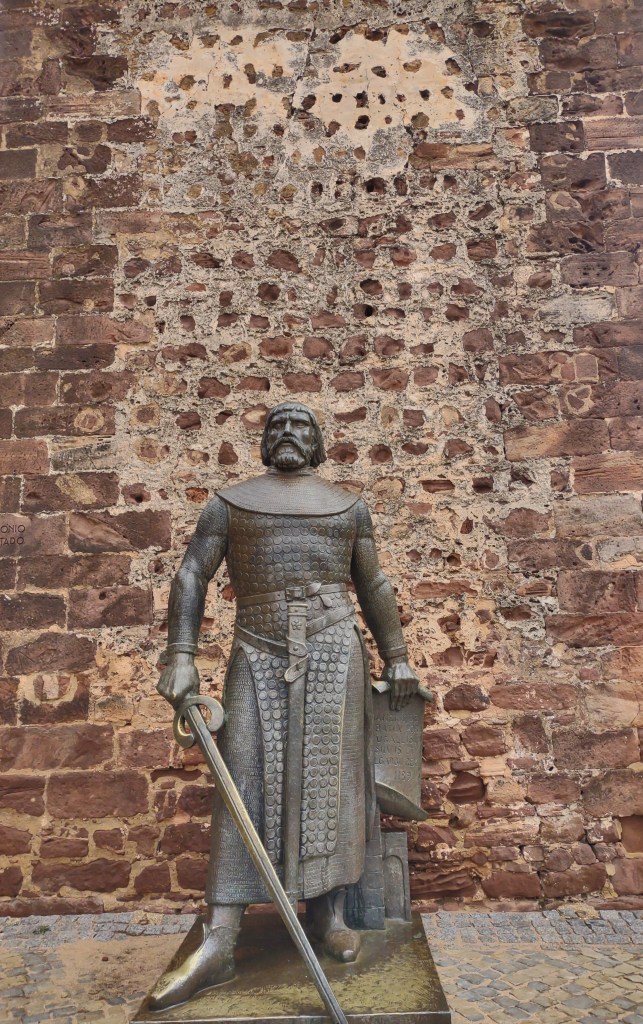
Here’s the man himself, standing outside the castle walls. In the words of the official chronicler of the Almohad court – excuse me while I translate from the original Arabic…
“and, behold! the Infidel has arisen. May mighty Allah – good grief look at the guns on that guy! He must be twelve feet tall as well. Has the enemy discovered anabolic steroids already? My brothers, we need to scarper!”
A few years later the Moors retook Silves, having realised it was just an over-the-top statue. But the Reconquest would not be stopped, leaving behind a nice old town with delightful traces of the Moorish years.
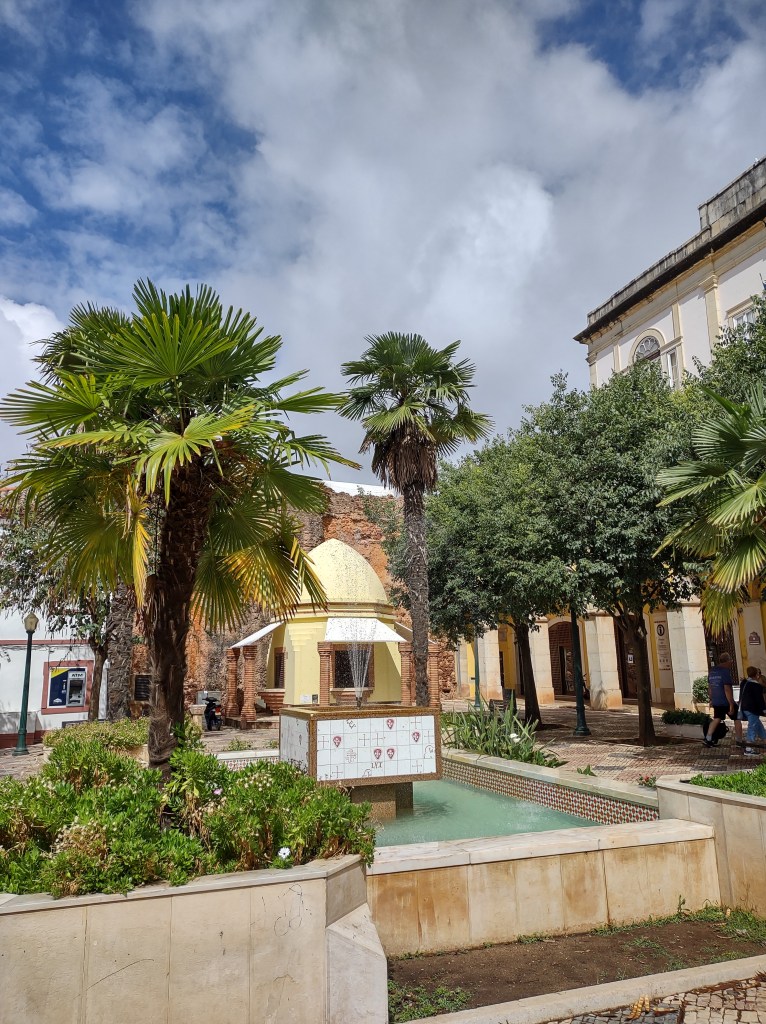
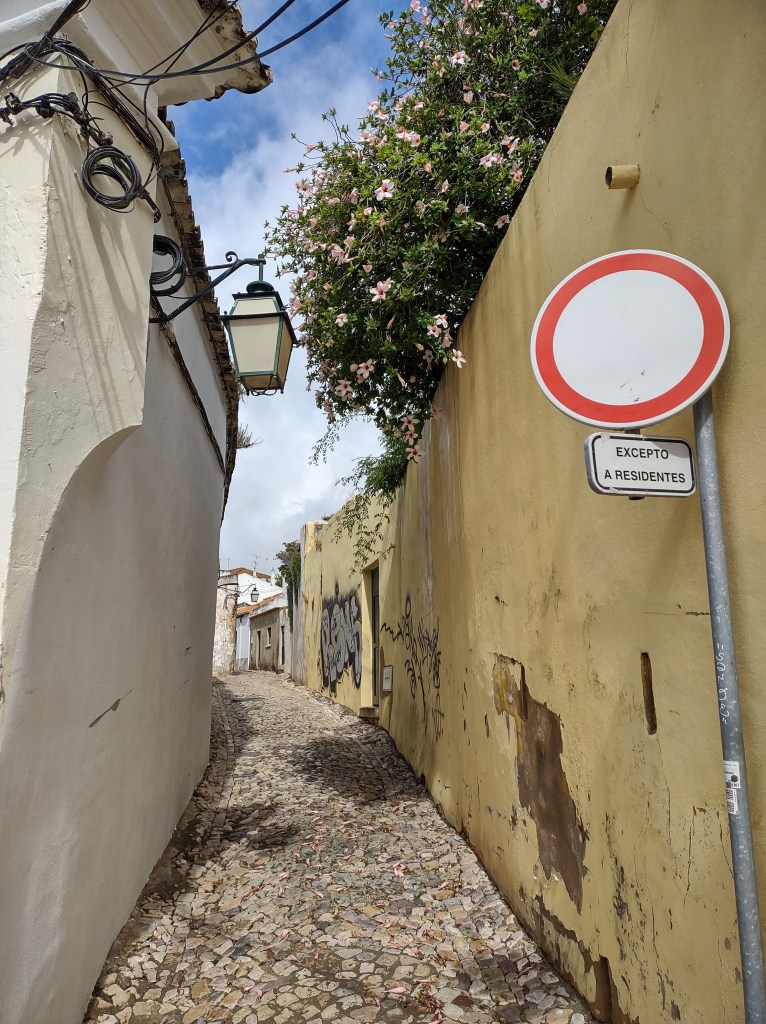
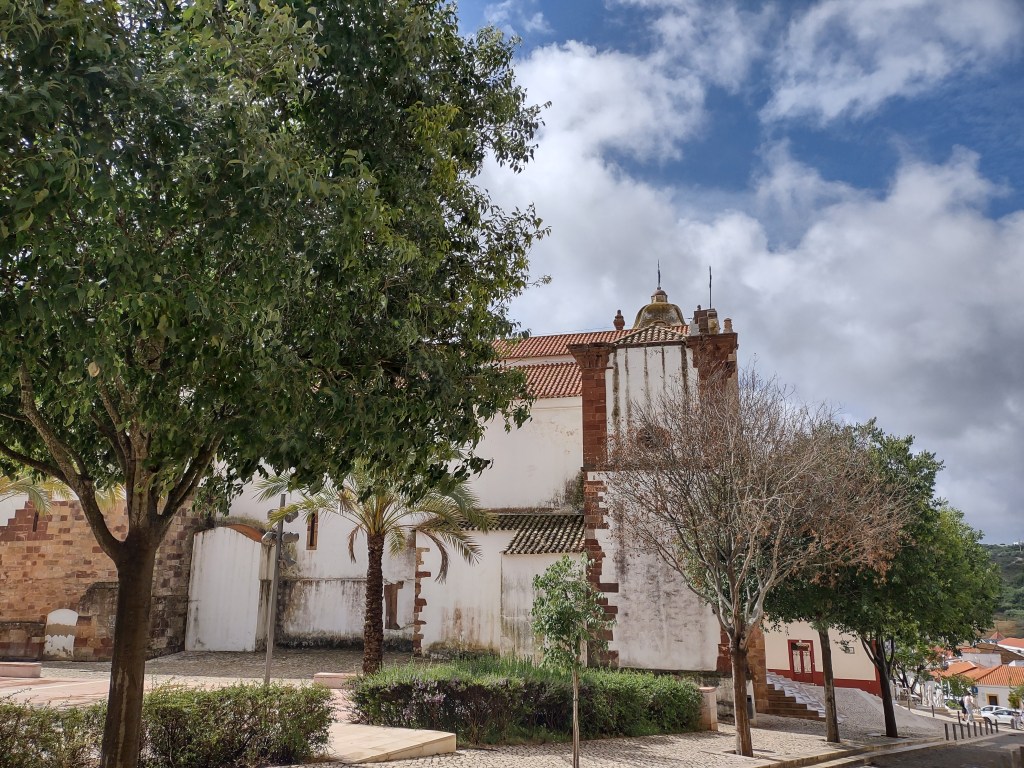
After a drive up to the highest peak in the Algarve…
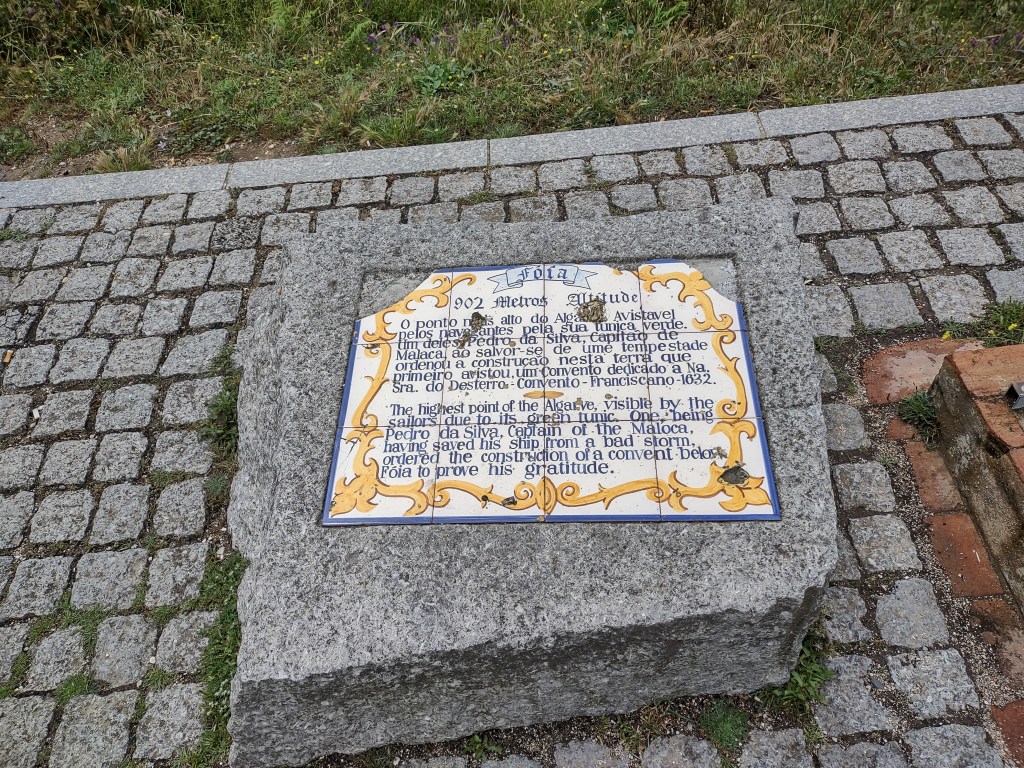
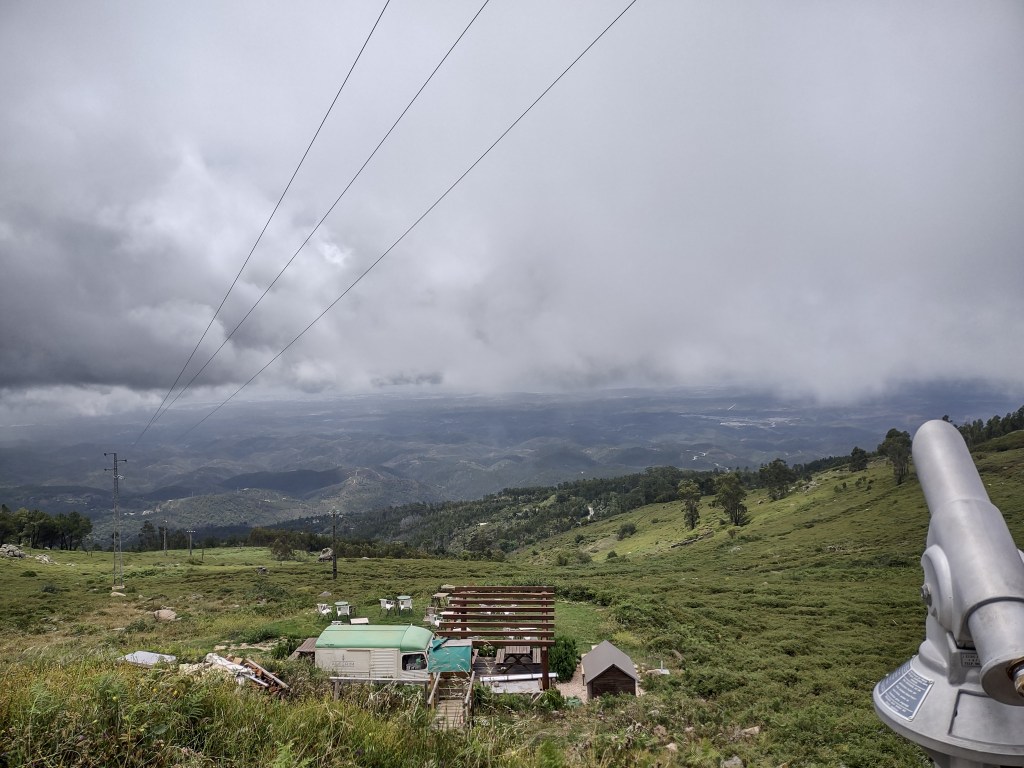
…it was time to head out to the south-west, and I mean the south-west. Cape St Vincent is the south-westerly point of the whole of Continental Europe.
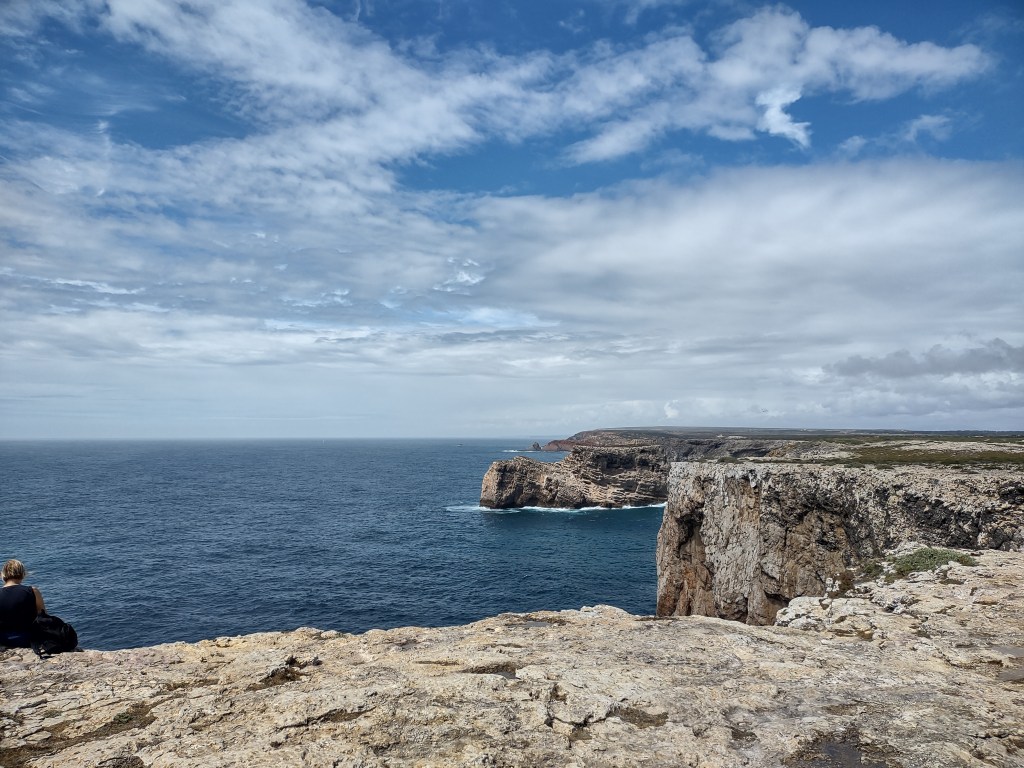
An important spiritual center since prehistoric times, there is a legend that after the Muslim takeover, the Moors brought the relics of St Vincent here so that the Christians wouldn’t know where to go to venerate him. Fortunately, the saint’s raven friends were on hand to protect his body (as they had done after his martyrdom) and so around 1187 the reconquesting Christians knew where to find him. To quote from the Ludex Pontifexus Dominus of Pope Alexander III – let me just translate from the original Latin…
“Your Holiness, Vicar of Christ – listen, the raven is trying to tell us something! [Latin for “chirp, chirp”.] He’s buried where? ”
The relics went off to Lisbon Cathedral where they remain to this day. It’s not recorded whether they gave the raven some well-deserved worms. If they hadn’t, well that would be crazy, almost as crazy as the Moors trying to snuff out a religion by just burying its relics at an enormously resonant location, rather than just throwing them over the cliffs.
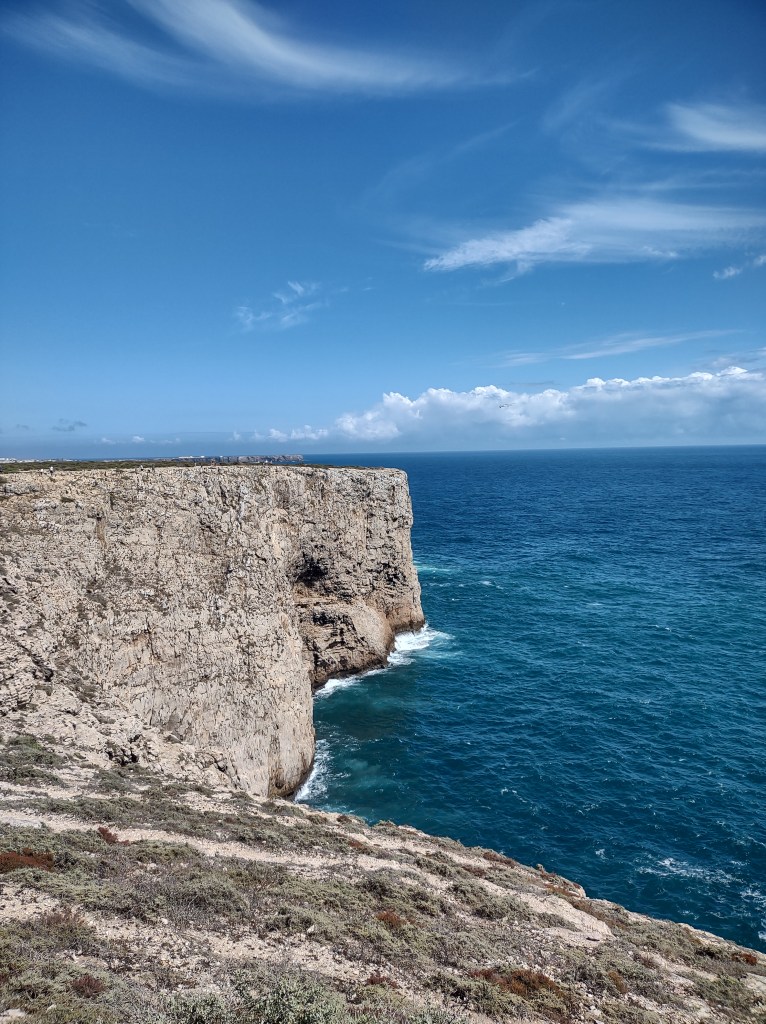
And a resonant spot Cape St Vincent is, even with the coachloads coming in to experience it. A lighthouse stands right on the edge of the main promentary, and unless you work there the closest you can get to the south-west point is via a window in the gift shop.
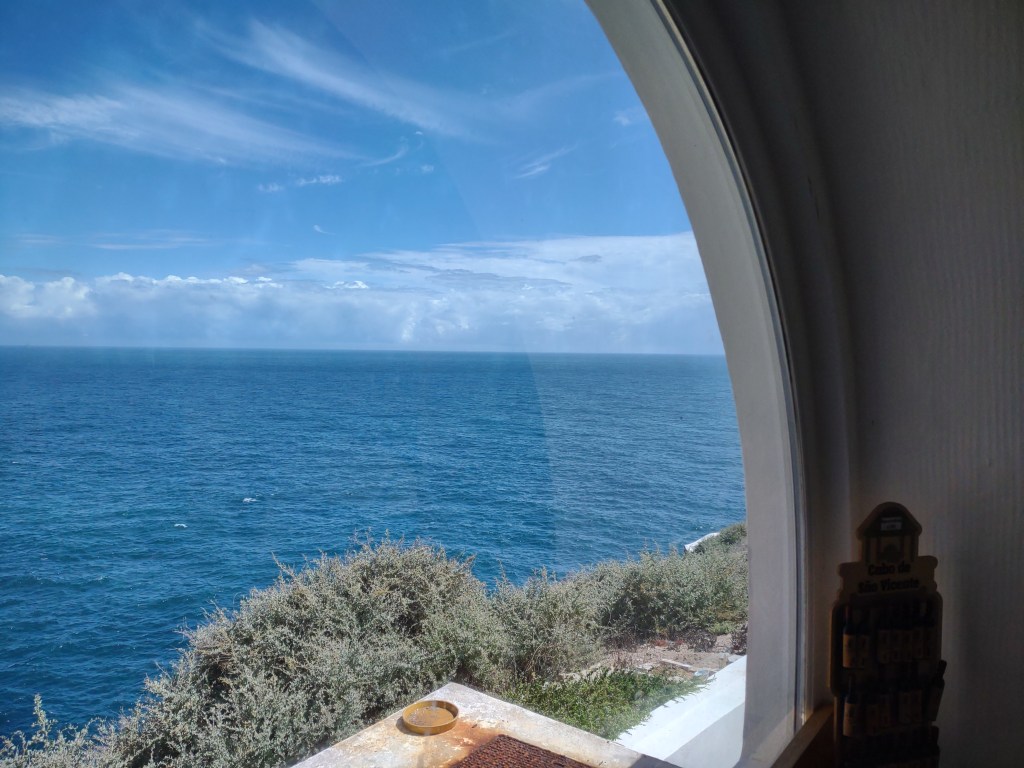
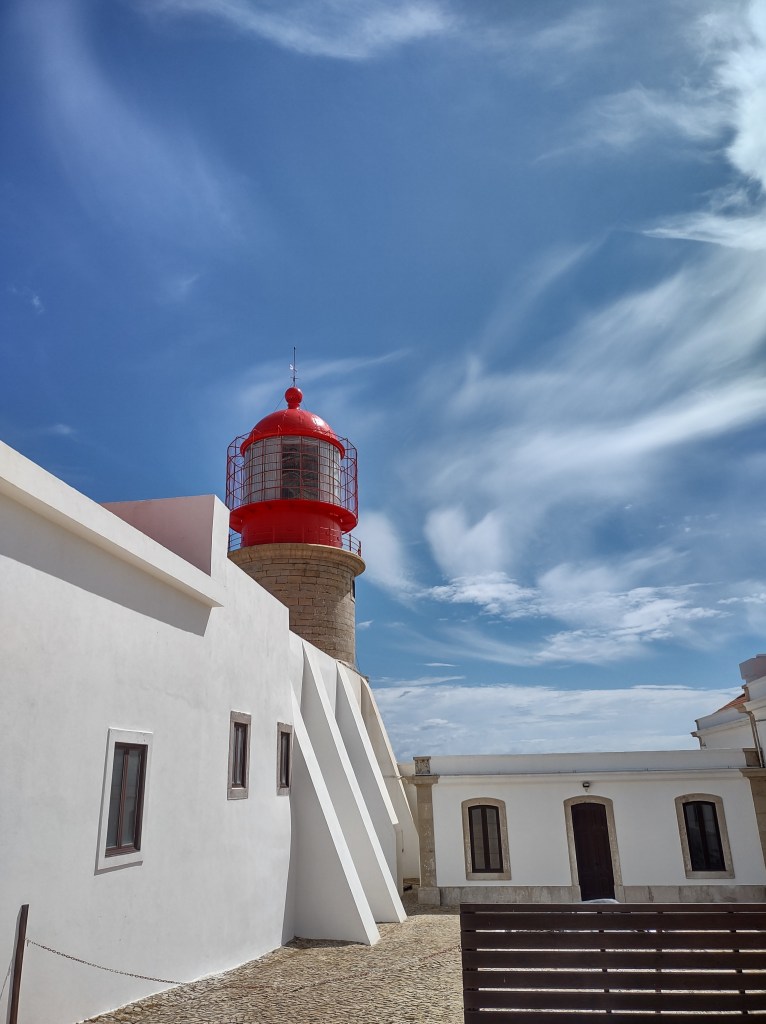
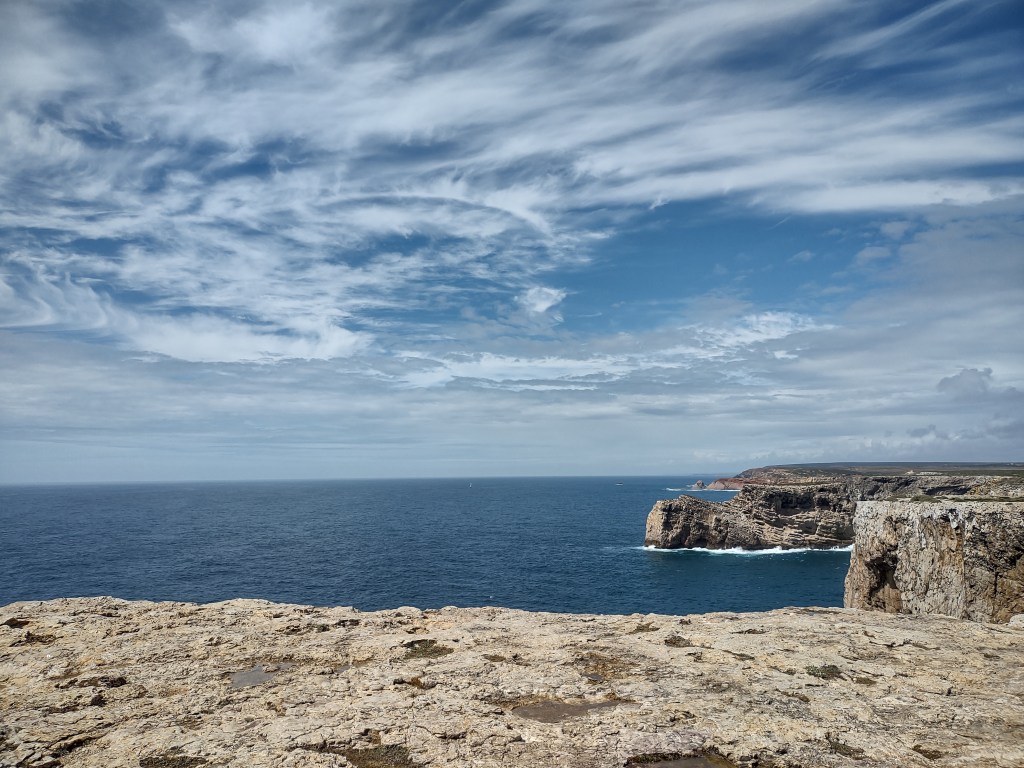
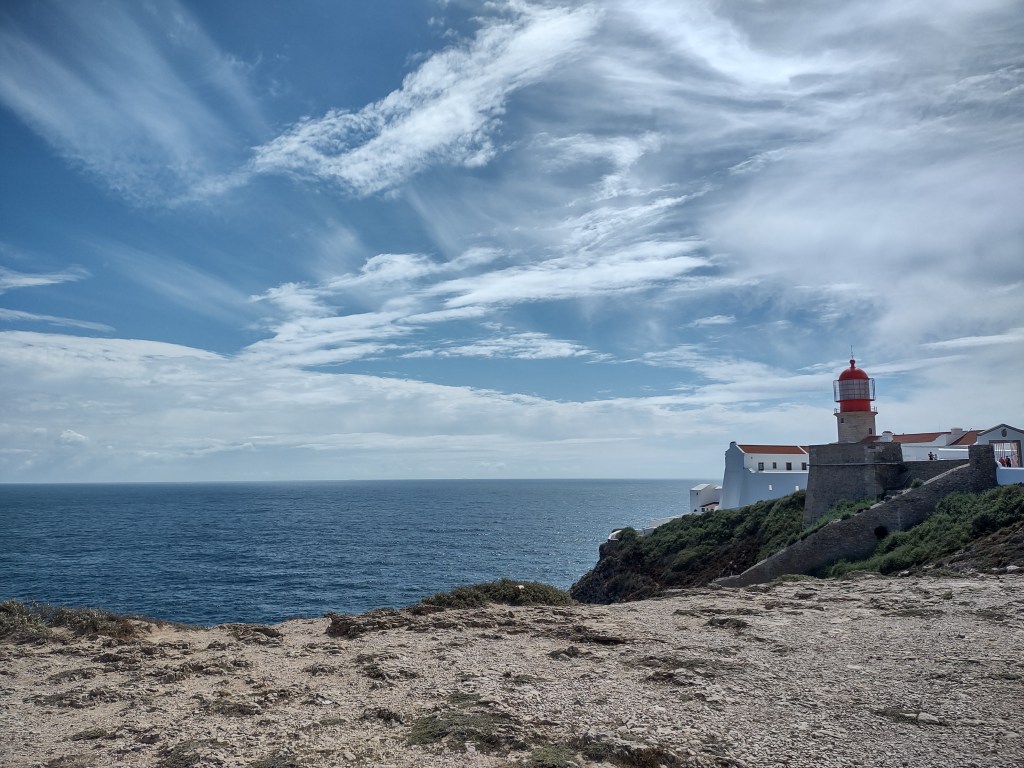
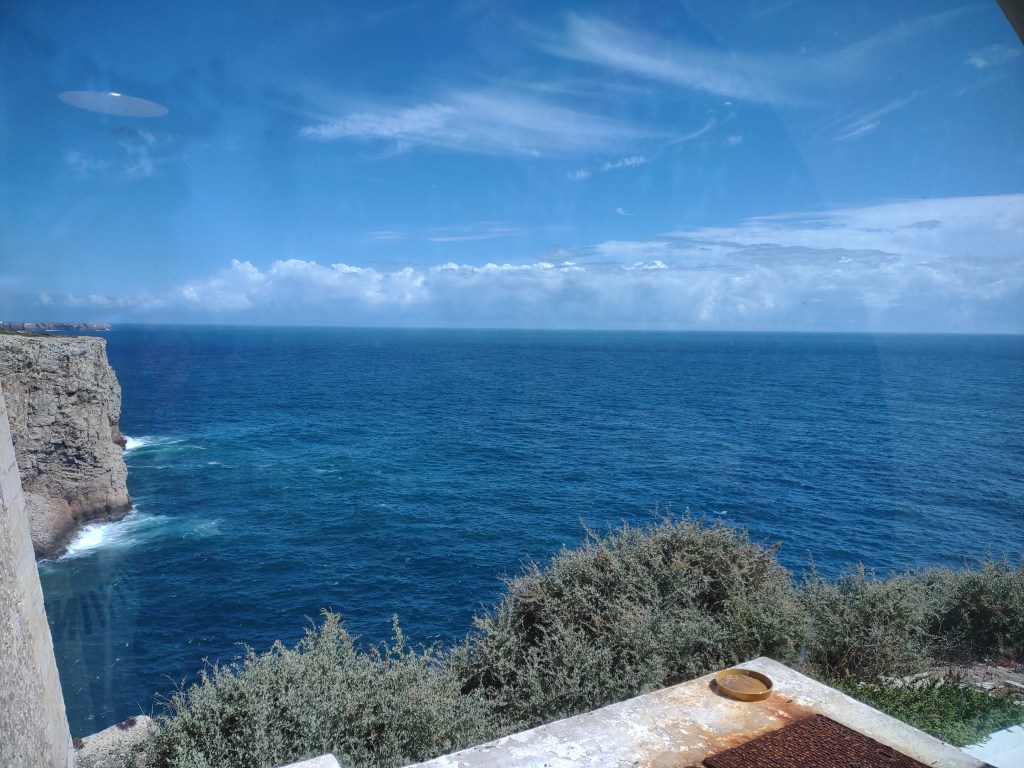
After the cape the tour headed back, making a final stop at the coastal town of Lagos (here pronounced, Portuguese-style, as La-gosh.)
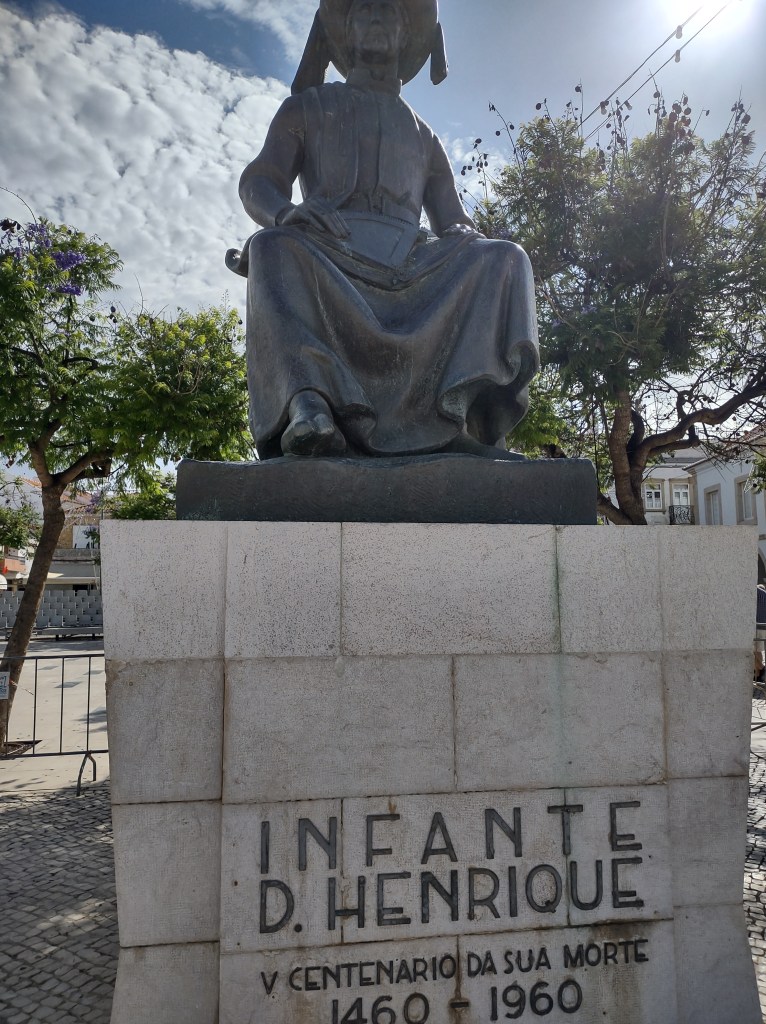
Here’s Henry the Navigator, the prince who set about making Portugal a great seafaring nation, creating a school of navigation down the road at Sagres. It was from Lagos that some of the earliest feats of Portuguese exploration slipped anchor. One of the most famous locals was a sailor called Gil Eames, who managed to get his ships around the West African coast.
A lovely little spot, Lagos, full of history, worth a longer stay.
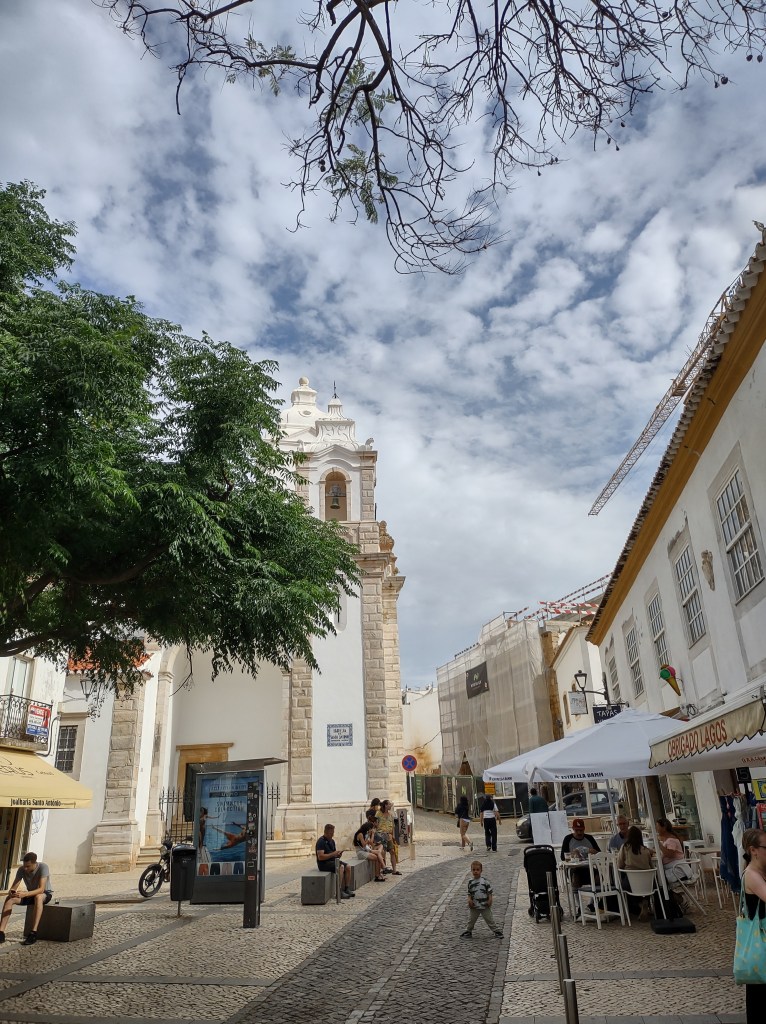
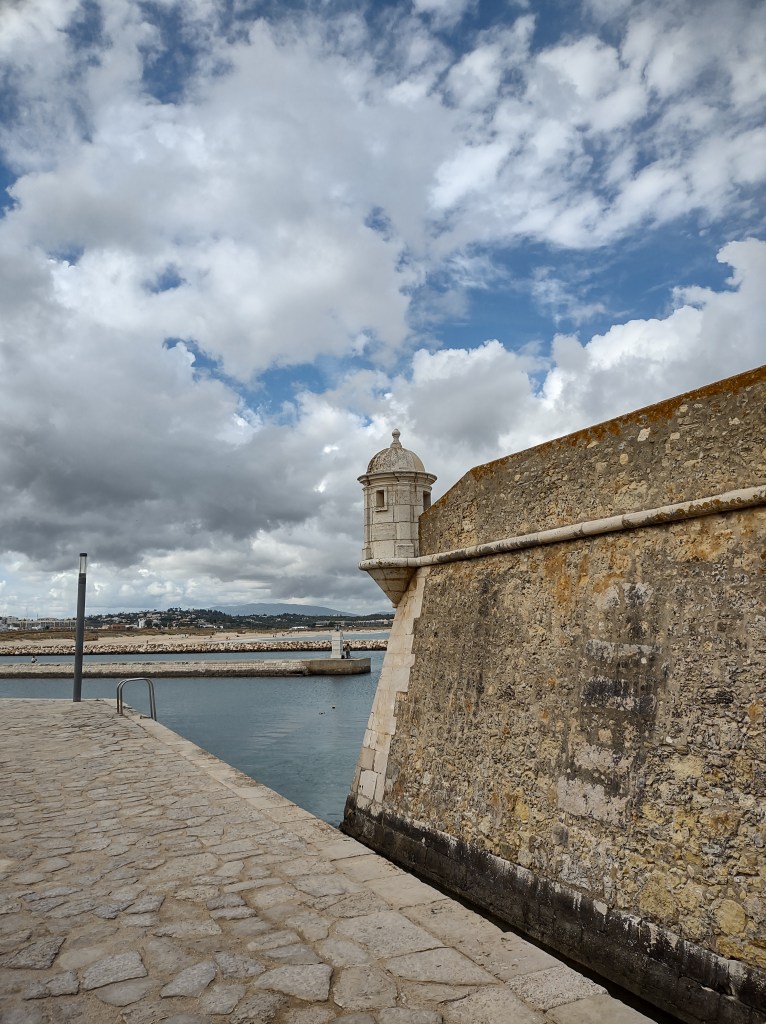
Ah, here’s a nice little collonaded spot. Charming.
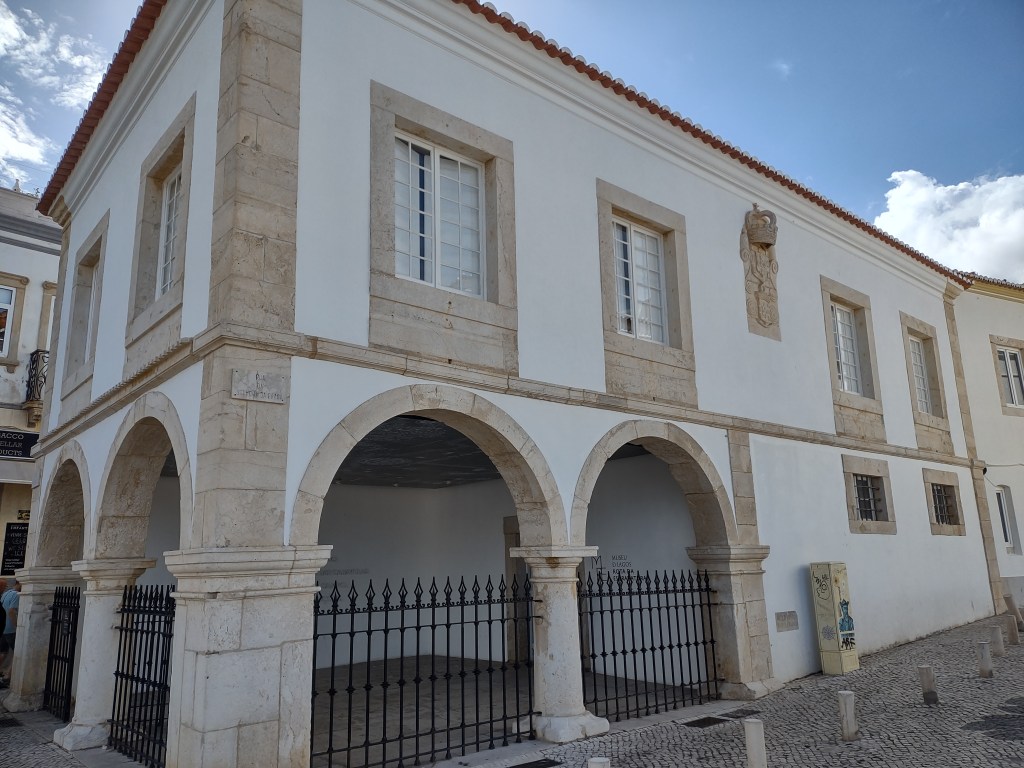
There’s a little museum inside, which I arrived too late to visit. Never mind, let’s check out the guidebook. Such a pleasant town this.
…riiight. It’s the oldest slave market in Europe.
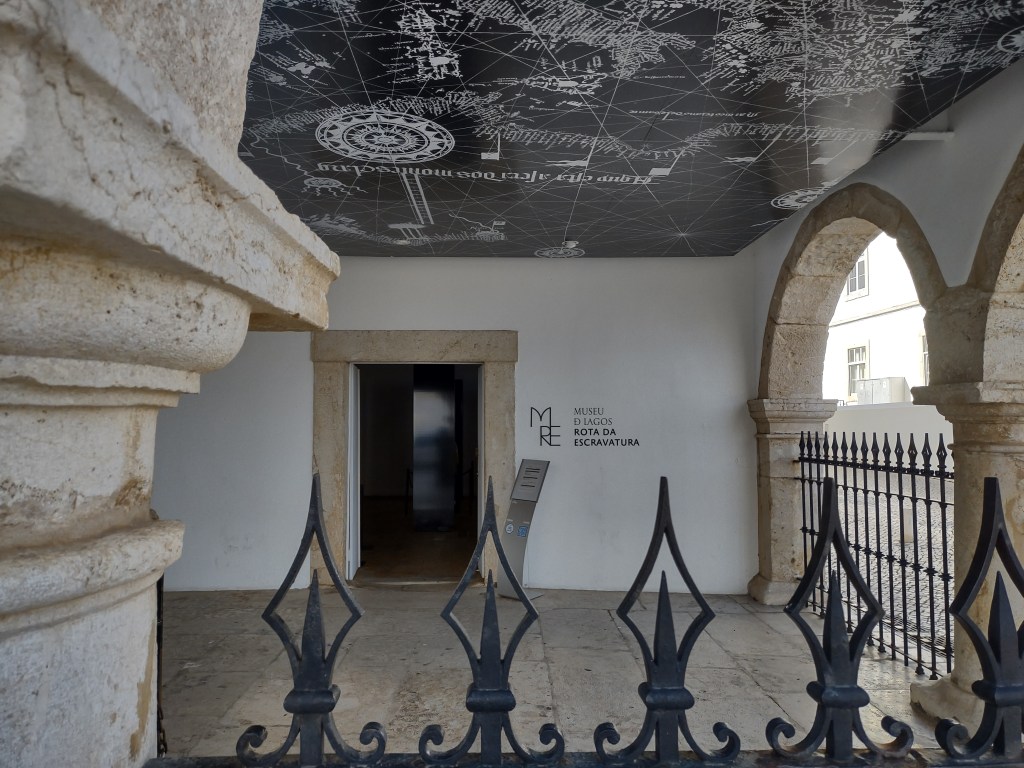
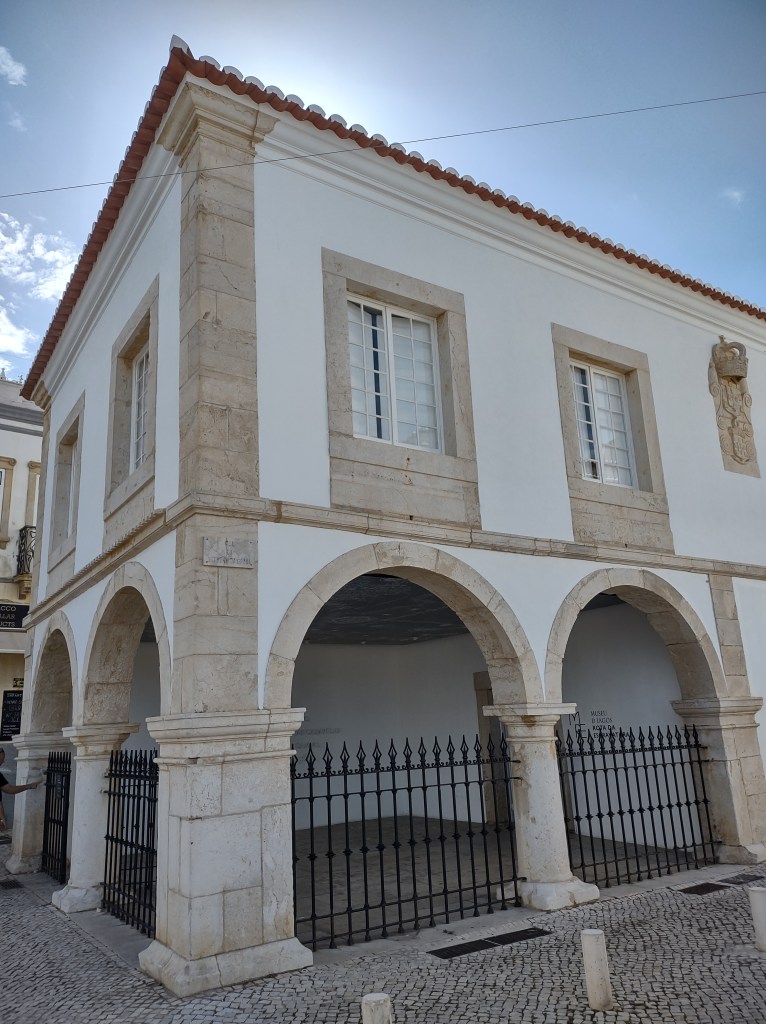
Let me translate from the original chronicles – sorry everyone, no jokes this time.
A sobering and appropriate point on which to end this quick tour of a fascinating region with a rich, diverse, complex heritage that continues to influence – and haunt – the world of today.
 orwellianTwo
Leave a comment