Well the train carried on and I got used to the speed in the end. Which was fortunate because it was a three-hour journey down to Devon.
Travelling at home this summer presents a double whammy. Millions of Brits who would normally have gone abroad can’t this year and so are taking staycation holidays. And all the uncertainty about where the next outbreak is going to happen makes it risky to plan ahead too far. So, many of the nicer West Country bolt-holes I was interested in were booked out by the time I pinned my colours to the mast and decided to go.
In the end I settled on taking a short stay in Plymouth, a fascinating place in itself with a rich maritime history and a base for further exploration into Cornwall if I fancied it.
And so it was that I arrived on a slightly murky afternoon on the Hoe, with a storm on its way and ominous clouds across the Sound.
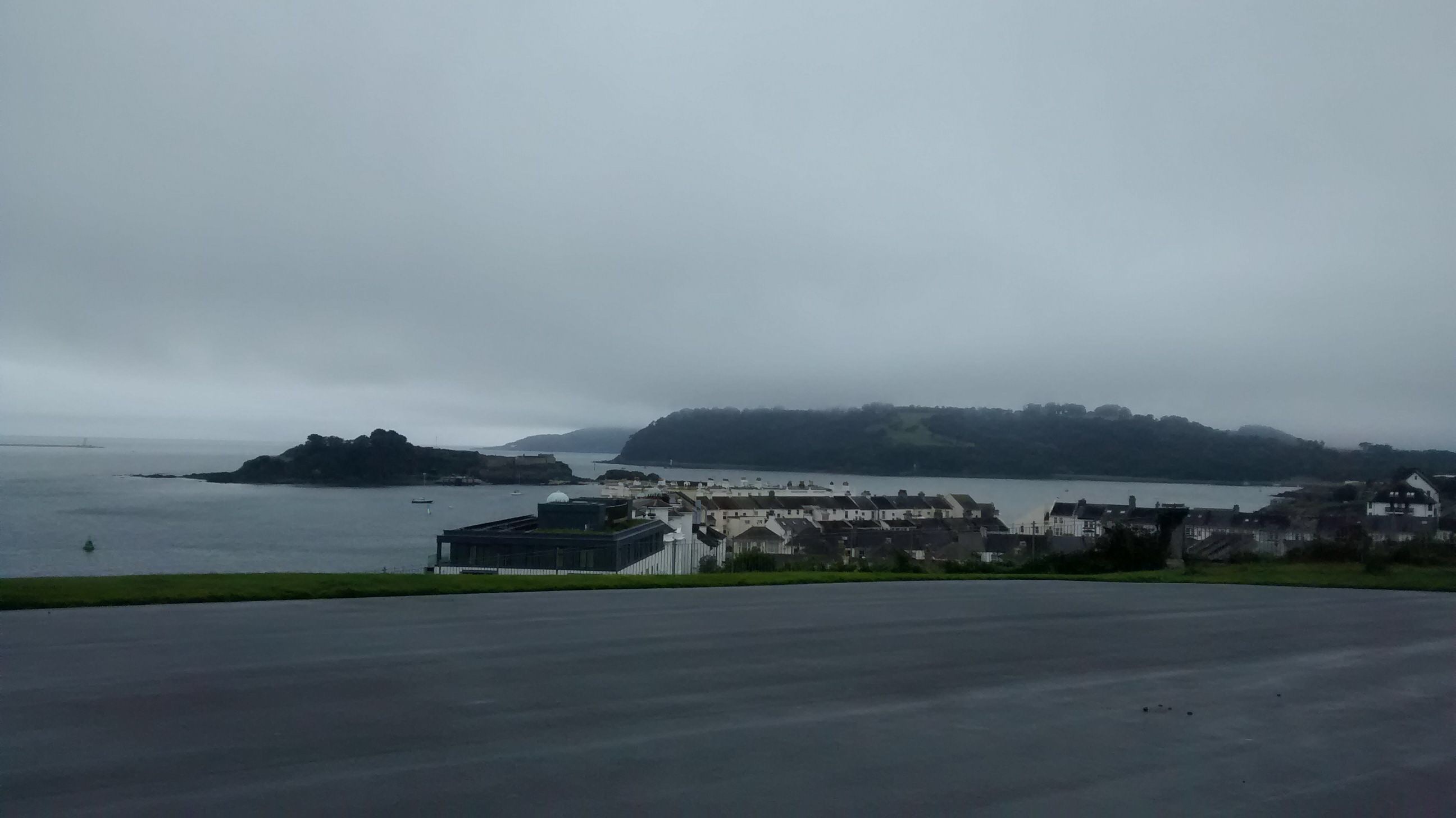
Plymouth Hoe. You’re probably already thinking about a game of bowls in 1588, Sir Francis Drake looking to win the match and go through to the next round to face the well-fancied Spanish Armada. The story is probably not true, but Drake’s association with Plymouth, from where he sailed out on his great missions of Spain-bothering derring-do, is indisputable. Drake is Plymouth and Plymouth is Drake.
And for some people, that’s a problem.
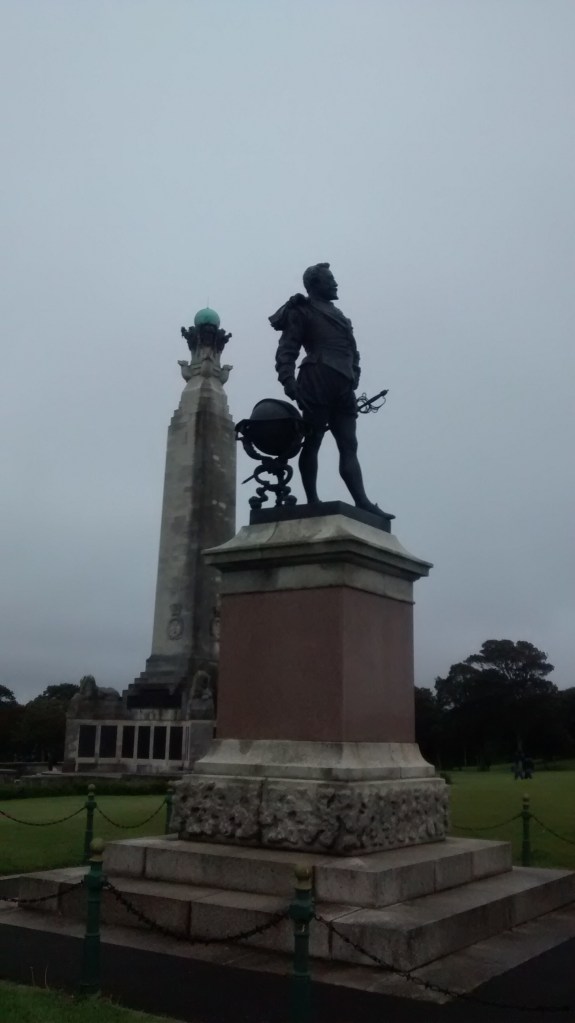
There he stands, proudly looking out over the Hoe, probably miffed at being represented in this blog by such a poor blurry photo. No, that won’t do for the ebullient figure of the one and only Sir Francis Drake – naval hero, explorer, master sailor – and slaver?
If you’ve read my posts from earlier this year on the Dominican Republic (you can find them in the Menu under – you’ll like this – “Dominican Republic”) you will know that we spent a great deal of time discussing the memorialisation of figures such as Christopher Columbus and Nicolas de Ovando, men who were crucial to the making of that nation but who inflicted much cruelty on the native populations and left a brutal legacy of slavery and colonialism to subsequent generations. Little did I know that, a few months later, the horrible death of a black man at the hands of US police would galvanise the Black Lives Matter movement and transform it into a global campaign against systemic racism in all its forms. And that it would train a laser focus on just these topics – history, memorials, statues, who is commemorated, who isn’t, and why.
Drake had an equally notable seafaring cousin, another local man called Sir John Hawkins. Together they got involved in the profitable new business of taking slaves from West Africa and sailing them across the Atlantic to be traded in Spanish colonies. It’s estimated that Drake was responsible for about a thousand people being enslaved and traded. And if it’s not clear to you already how bizarrely 2020 is working out right now, one of their main customers was the colony of Santo Domingo.
We are back where we started. Same argument, same sides. I don’t know about that statue of Columbus and Anacoana we talked about in DR, but there was talk of taking Drake down from the Hoe. And there then followed the equally predictable reaction. There’s a storm rolling in across the Sound alright, and the Met Office have called it Storm Francis. They think it will blow out in a day or so.
I’m not so sure…
Let’s get back to doing what we’re here to do, walk around a bit, take some more bad pictures, generally chill out and learn stuff.

Going back to old rascal Drake, behind him you see another memorial but this time there’s no drama. The Plymouth Naval Memorial commemorates over 20000 naval personnel based at Plymouth or from other Commonwealth nations, who were lost in the world wars. The seemingly endless bronze panels are sobering enough, and that’s before you realise that there are two other memorials of the same design elsewhere. You may have seen them if you’ve been to those other historic dockyards, Portsmouth and Chatham.
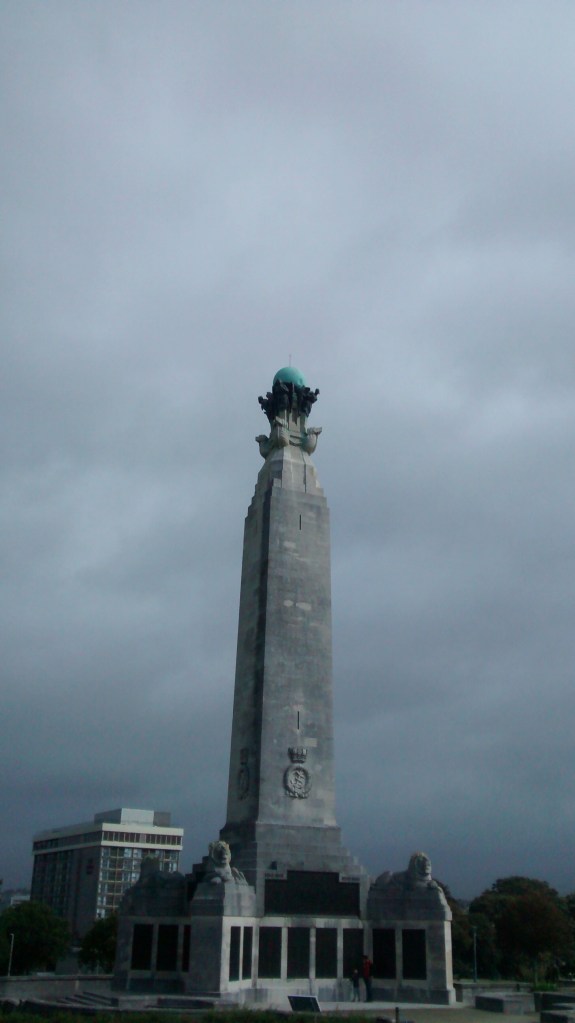
The obelisk was raised after the First World War, the sunken garden commemorates the second. And it was in the 1939-1945 conflict that a cable holding a barrage balloon broke free and its shackle struck the sphere at the top of the obelisk. You can see the dent to this day.
Along with Portsmouth, Plymouth was the centre of Royal Navy operations during WW2. Which made the port particularly interesting to the Luftwaffe. A few errant balloons weren’t going to get in the way of the German desire to flatten the place. And, unfortunately for Plymouth and its people, they didn’t.
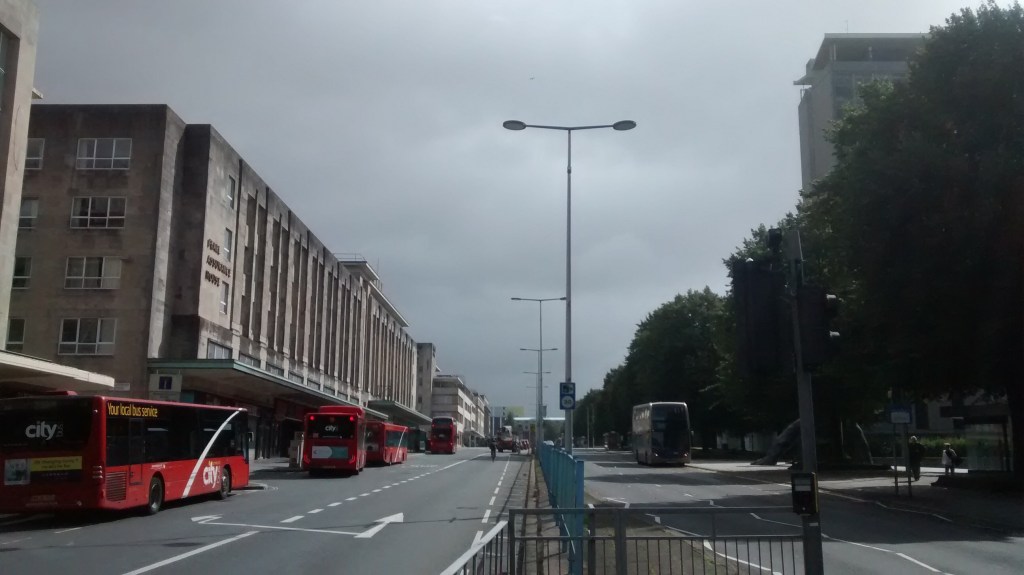
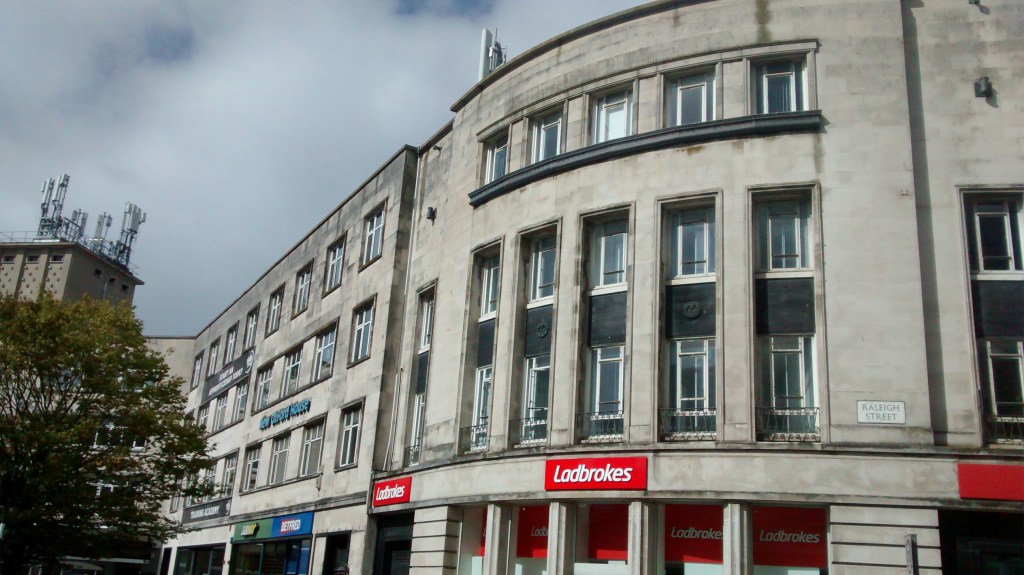
So if you’re after a little olde-world Devonian charm in your town centres, try Exeter. But if you like your grand Art-Deco-meets-restrained-Brutalism, the 50’s rebuild of the city centre might just do it for you, if you don’t mind the wind. Me? Well I sort of got the point of the grand unified styling of those broad avenues and the general clean-cut feel of the buildings with their Deco flourishes, but I could also understand why there were still rooms free in Plymouth hotels while Falmouth and Dartmouth seemed to be all booked out. Don’t get me started on St Ives.
There’s plenty more to see and do nearer the shoreline, and I won’t be able to fit it all in on this trip. For now we’re going for a little walk up into town…
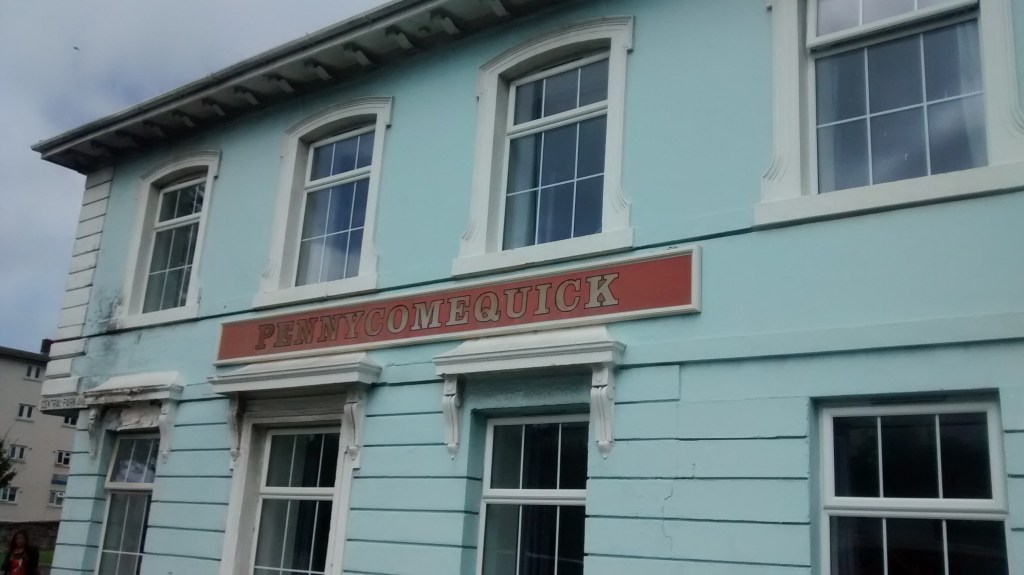
…do the steepish climb into the wide expanse of Central Park, the version of Central Park where you actually get a decent view out…
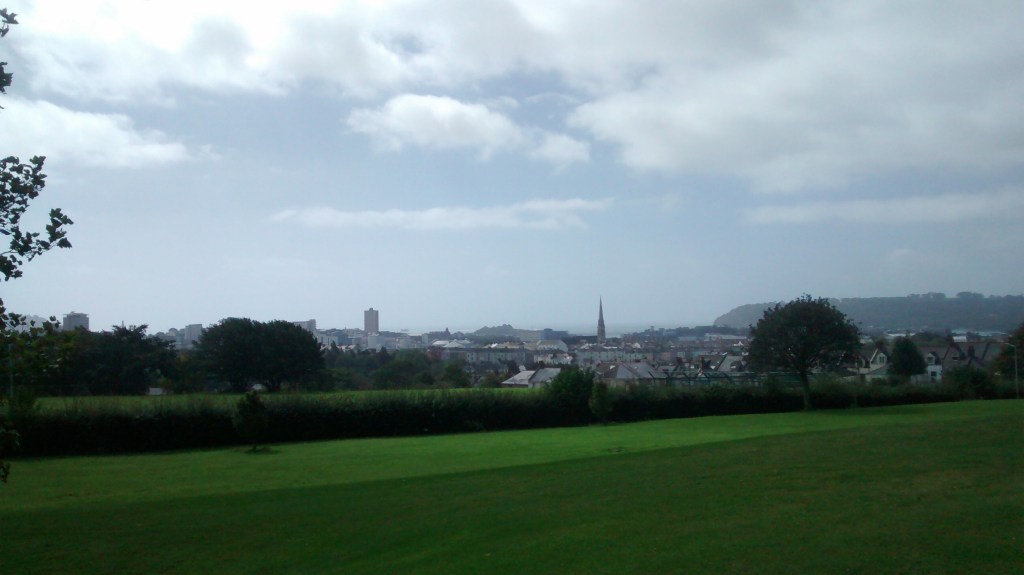
…before heading back down to the station. We’re off to spend the afternoon in Cornwall!
 orwellianTwo
Leave a comment